talk-data.com talk-data.com

Topic

Kafka

Apache Kafka

distributed_streaming message_queue event_streaming

240

tagged

Activity Trend

20 peak/qtr
2020-Q1 2026-Q1

Activities

240 activities · Newest first

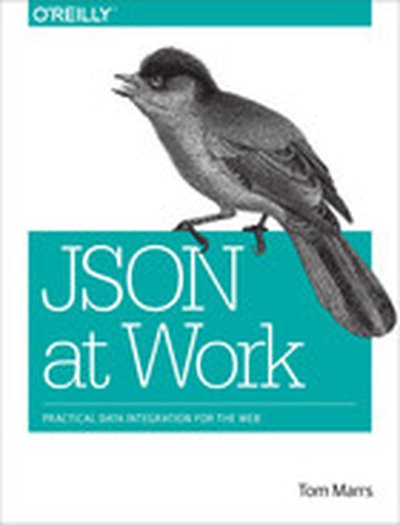
JSON at Work

JSON is becoming the backbone for meaningful data interchange over the internet. This format is now supported by an entire ecosystem of standards, tools, and technologies for building truly elegant, useful, and efficient applications. With this hands-on guide, author and architect Tom Marrs shows you how to build enterprise-class applications and services by leveraging JSON tooling and message/document design. JSON at Work provides application architects and developers with guidelines, best practices, and use cases, along with lots of real-world examples and code samples. You’ll start with a comprehensive JSON overview, explore the JSON ecosystem, and then dive into JSON’s use in the enterprise. Get acquainted with JSON basics and learn how to model JSON data Learn how to use JSON with Node.js, Ruby on Rails, and Java Structure JSON documents with JSON Schema to design and test APIs Search the contents of JSON documents with JSON Search tools Convert JSON documents to other data formats with JSON Transform tools Compare JSON-based hypermedia formats, including HAL and jsonapi Leverage MongoDB to store and access JSON documents Use Apache Kafka to exchange JSON-based messages between services

Summary

Yelp needs to be able to consume and process all of the user interactions that happen in their platform in as close to real-time as possible. To achieve that goal they embarked on a journey to refactor their monolithic architecture to be more modular and modern, and then they open sourced it! In this episode Justin Cunningham joins me to discuss the decisions they made and the lessons they learned in the process, including what worked, what didn’t, and what he would do differently if he was starting over today.

Preamble

Hello and welcome to the Data Engineering Podcast, the show about modern data infrastructure When you’re ready to launch your next project you’ll need somewhere to deploy it. Check out Linode at www.dataengineeringpodcast.com/linode?utm_source=rss&utm_medium=rss and get a $20 credit to try out their fast and reliable Linux virtual servers for running your data pipelines or trying out the tools you hear about on the show. Go to dataengineeringpodcast.com to subscribe to the show, sign up for the newsletter, read the show notes, and get in touch. You can help support the show by checking out the Patreon page which is linked from the site. To help other people find the show you can leave a review on iTunes, or Google Play Music, and tell your friends and co-workers Your host is Tobias Macey and today I’m interviewing Justin Cunningham about Yelp’s data pipeline

Interview with Justin Cunningham

Introduction How did you get involved in the area of data engineering? Can you start by giving an overview of your pipeline and the type of workload that you are optimizing for? What are some of the dead ends that you experienced while designing and implementing your pipeline? As you were picking the components for your pipeline, how did you prioritize the build vs buy decisions and what are the pieces that you ended up building in-house? What are some of the failure modes that you have experienced in the various parts of your pipeline and how have you engineered around them? What are you using to automate deployment and maintenance of your various components and how do you monitor them for availability and accuracy? While you were re-architecting your monolithic application into a service oriented architecture and defining the flows of data, how were you able to make the switch while verifying that you were not introducing unintended mutations into the data being produced? Did you plan to open-source the work that you were doing from the start, or was that decision made after the project was completed? What were some of the challenges associated with making sure that it was properly structured to be amenable to making it public? What advice would you give to anyone who is starting a brand new project and how would that advice differ for someone who is trying to retrofit a data management architecture onto an existing project?

Keep in touch

Yelp Engineering Blog Email

Links

Kafka Redshift ETL Business Intelligence Change Data Capture LinkedIn Data Bus Apache Storm Apache Flink Confluent Apache Avro Game Days Chaos Monkey Simian Army PaaSta Apache Mesos Marathon SignalFX Sensu Thrift Protocol Buffers JSON Schema Debezium Kafka Connect Apache Beam

The intro and outro music is from The Hug by The Freak Fandango Orchestra / CC BY-SA Support Data Engineering Podcast

Understanding Message Brokers

Messaging is one of the more poorly understood areas of IT; most developers and architects have only a passing familiarity with how broker-based messaging technologies work. This practical report not only helps you get up to speed on the essentials of messaging, but also compares two of today’s most popular messaging technologies—Apache ActiveMQ and Apache Kafka. Author and consultant Jakub Korab describes use cases and design choices that lead developers to very different approaches for developing message-based systems. You’ll come away with a high-level understanding of both ActiveMQ and Kafka, including how they should and should not be used, how they handle concerns such as throughput and high-availability, and what to look out for when considering other messaging technologies in future. Understand the types of problems that messaging systems address Explore three primary messaging patterns: point-to-point, publish-subscribe, and a hybrid of both Dive into ActiveMQ, a classic broker-centric design implemented through Java libraries that works for a broad range of messaging use cases Examine Kafka, a distributed system that can be scaled to provide massive performance and fault tolerance through replication Learn the mechanical complexities that message-based systems need to address, and some patterns you can apply to deal with those complexities

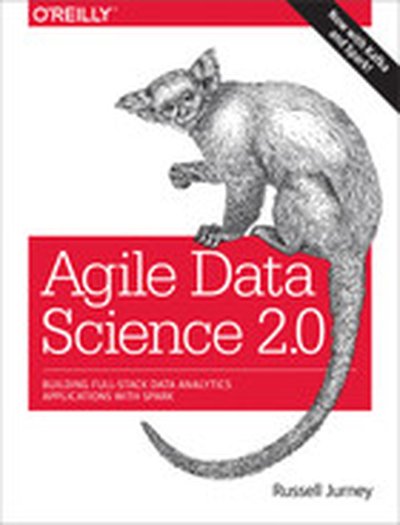
Agile Data Science 2.0

Data science teams looking to turn research into useful analytics applications require not only the right tools, but also the right approach if they’re to succeed. With the revised second edition of this hands-on guide, up-and-coming data scientists will learn how to use the Agile Data Science development methodology to build data applications with Python, Apache Spark, Kafka, and other tools. Author Russell Jurney demonstrates how to compose a data platform for building, deploying, and refining analytics applications with Apache Kafka, MongoDB, ElasticSearch, d3.js, scikit-learn, and Apache Airflow. You’ll learn an iterative approach that lets you quickly change the kind of analysis you’re doing, depending on what the data is telling you. Publish data science work as a web application, and affect meaningful change in your organization. Build value from your data in a series of agile sprints, using the data-value pyramid Extract features for statistical models from a single dataset Visualize data with charts, and expose different aspects through interactive reports Use historical data to predict the future via classification and regression Translate predictions into actions Get feedback from users after each sprint to keep your project on track

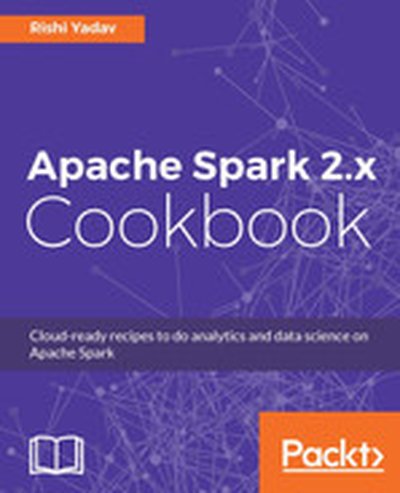
Apache Spark 2.x Cookbook

Discover how to harness the power of Apache Spark 2.x for your Big Data processing projects. In this book, you will explore over 70 cloud-ready recipes that will guide you to perform distributed data analytics, structured streaming, machine learning, and much more. What this Book will help me do Effectively install and configure Apache Spark with various cluster managers and platforms. Set up and utilize development environments tailored for Spark applications. Operate on schema-aware data using RDDs, DataFrames, and Datasets. Perform real-time streaming analytics with sources such as Apache Kafka. Leverage MLlib for supervised learning, unsupervised learning, and recommendation systems. Author(s) None Yadav is a seasoned data engineer with a deep understanding of Big Data tools and technologies, particularly Apache Spark. With years of experience in the field of distributed computing and data analysis, Yadav brings practical insights and techniques to enrich the learning experience of readers. Who is it for? This book is ideal for data engineers, data scientists, and Big Data professionals who are keen to enhance their Apache Spark 2.x skills. If you're working with distributed processing and want to solve complex data challenges, this book addresses practical problems. Note that a basic understanding of Scala is recommended to get the most out of this resource.

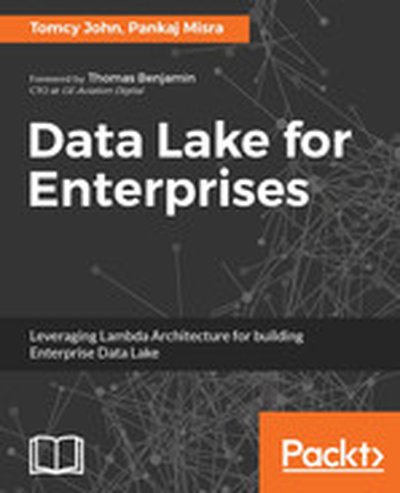
Data Lake for Enterprises

"Data Lake for Enterprises" is a comprehensive guide to building data lakes using the Lambda Architecture. It introduces big data technologies like Hadoop, Spark, and Flume, showing how to use them effectively to manage and leverage enterprise-scale data. You'll gain the skills to design and implement data systems that handle complex data challenges. What this Book will help me do Master the use of Lambda Architecture to create scalable and effective data management systems. Understand and implement technologies like Hadoop, Spark, Kafka, and Flume in an enterprise data lake. Integrate batch and stream processing techniques using big data tools for comprehensive data analysis. Optimize data lakes for performance and reliability with practical insights and techniques. Implement real-world use cases of data lakes and machine learning for predictive data insights. Author(s) None Mishra, None John, and Pankaj Misra are recognized experts in big data systems with a strong background in designing and deploying data solutions. With a clear and methodical teaching style, they bring years of experience to this book, providing readers with the tools and knowledge required to excel in enterprise big data initiatives. Who is it for? This book is ideal for software developers, data architects, and IT professionals looking to integrate a data lake strategy into their enterprises. It caters to readers with a foundational understanding of Java and big data concepts, aiming to advance their practical knowledge of building scalable data systems. If you're eager to delve into cutting-edge technologies and transform enterprise data management, this book is for you.

Summary

Do you wish that you could track the changes in your data the same way that you track the changes in your code? Pachyderm is a platform for building a data lake with a versioned file system. It also lets you use whatever languages you want to run your analysis with its container based task graph. This week Daniel Whitenack shares the story of how the project got started, how it works under the covers, and how you can get started using it today!

Preamble

Hello and welcome to the Data Engineering Podcast, the show about modern data infrastructure Go to dataengineeringpodcast.com to subscribe to the show, sign up for the newsletter, read the show notes, and get in touch. You can help support the show by checking out the Patreon page which is linked from the site. To help other people find the show you can leave a review on iTunes, or Google Play Music, and tell your friends and co-workers Your host is Tobias Macey and today I’m interviewing Daniel Whitenack about Pachyderm, a modern container based system for building and analyzing a versioned data lake.

Interview with Daniel Whitenack

Introduction How did you get started in the data engineering space? What is pachyderm and what problem were you trying to solve when the project was started? Where does the name come from? What are some of the competing projects in the space and what features does Pachyderm offer that would convince someone to choose it over the other options? Because of the fact that the analysis code and the data that it acts on are all versioned together it allows for tracking the provenance of the end result. Why is this such an important capability in the context of data engineering and analytics? What does Pachyderm use for the distribution and scaling mechanism of the file system? Given that you can version your data and track all of the modifications made to it in a manner that allows for traversal of those changesets, how much additional storage is necessary over and above the original capacity needed for the raw data? For a typical use of Pachyderm would someone keep all of the revisions in perpetuity or are the changesets primarily just useful in the context of an analysis workflow? Given that the state of the data is calculated by applying the diffs in sequence what impact does that have on processing speed and what are some of the ways of mitigating that? Another compelling feature of Pachyderm is the fact that it natively supports the use of any language for interacting with your data. Why is this such an important capability and why is it more difficult with alternative solutions?

How did you implement this feature so that it would be maintainable and easy to implement for end users?

Given that the intent of using containers is for encapsulating the analysis code from experimentation through to production, it seems that there is the potential for the implementations to run into problems as they scale. What are some things that users should be aware of to help mitigate this? The data pipeline and dependency graph tooling is a useful addition to the combination of file system and processing interface. Does that preclude any requirement for external tools such as Luigi or Airflow? I see that the docs mention using the map reduce pattern for analyzing the data in Pachyderm. Does it support other approaches such as streaming or tools like Apache Drill? What are some of the most interesting deployments and uses of Pachyderm that you have seen? What are some of the areas that you are looking for help from the community and are there any particular issues that the listeners can check out to get started with the project?

Keep in touch

Daniel

Twitter – @dwhitena

Pachyderm

Website

Free Weekend Project

GopherNotes

Links

AirBnB RethinkDB Flocker Infinite Project Git LFS Luigi Airflow Kafka Kubernetes Rkt SciKit Learn Docker Minikube General Fusion

The intro and outro music is from The Hug by The Freak Fandango Or

Fast Data Processing Systems with SMACK Stack

Fast Data Processing Systems with SMACK Stack introduces you to the SMACK stack-a combination of Spark, Mesos, Akka, Cassandra, and Kafka. You will learn to integrate these technologies to build scalable, efficient, and real-time data processing platforms tailored for solving critical business challenges. What this Book will help me do Understand the concepts of fast data pipelines and design scalable architectures using the SMACK stack Gain expertise in functional programming with Scala and leverage its power in data processing tasks Build and optimize distributed databases using Apache Cassandra for scaling extensively Deploy and manage real-time data streams using Apache Kafka to handle massive messaging workloads Implement cost-effective cluster infrastructures with Apache Mesos for efficient resource utilization Author(s) None Estrada is an expert in distributed systems and big data technologies. With years of experience implementing SMACK-based solutions across industries, Estrada offers a practical viewpoint to designing scalable systems. Their blend of theoretical knowledge and applied practices ensures readers receive actionable guidance. Who is it for? This book is perfect for software developers, data engineers, or data scientists looking to deepen their understanding of real-time data processing systems. If you have a foundational knowledge of the technologies in the SMACK stack or wish to learn how to combine these cutting-edge tools to solve complex problems, this is for you. Readers with an interest in building efficient big data solutions will find tremendous value here.

Practical Hadoop Ecosystem: A Definitive Guide to Hadoop-Related Frameworks and Tools

Learn how to use the Apache Hadoop projects, including MapReduce, HDFS, Apache Hive, Apache HBase, Apache Kafka, Apache Mahout, and Apache Solr. From setting up the environment to running sample applications each chapter in this book is a practical tutorial on using an Apache Hadoop ecosystem project. While several books on Apache Hadoop are available, most are based on the main projects, MapReduce and HDFS, and none discusses the other Apache Hadoop ecosystem projects and how they all work together as a cohesive big data development platform. What You Will Learn: Set up the environment in Linux for Hadoop projects using Cloudera Hadoop Distribution CDH 5 Run a MapReduce job Store data with Apache Hive, and Apache HBase Index data in HDFS with Apache Solr Develop a Kafka messaging system Stream Logs to HDFS with Apache Flume Transfer data from MySQL database to Hive, HDFS, and HBase with Sqoop Create a Hive table over Apache Solr Develop a Mahout User Recommender System Who This Book Is For: Apache Hadoop developers. Pre-requisite knowledge of Linux and some knowledge of Hadoop is required.

Big Data SMACK: A Guide to Apache Spark, Mesos, Akka, Cassandra, and Kafka

Learn how to integrate full-stack open source big data architecture and to choose the correct technology—Scala/Spark, Mesos, Akka, Cassandra, and Kafka—in every layer. Big data architecture is becoming a requirement for many different enterprises. So far, however, the focus has largely been on collecting, aggregating, and crunching large data sets in a timely manner. In many cases now, organizations need more than one paradigm to perform efficient analyses. Big Data SMACK explains each of the full-stack technologies and, more importantly, how to best integrate them. It provides detailed coverage of the practical benefits of these technologies and incorporates real-world examples in every situation. This book focuses on the problems and scenarios solved by the architecture, as well as the solutions provided by every technology. It covers the six main concepts of big data architecture and how integrate, replace, and reinforce every layer: What You'll Learn The language: Scala The engine: Spark (SQL, MLib, Streaming, GraphX) The container: Mesos, Docker The view: Akka The storage: Cassandra The message broker: Kafka What You Will Learn: Make big data architecture without using complex Greek letter architectures Build a cheap but effective cluster infrastructure Make queries, reports, and graphs that business demands Manage and exploit unstructured and No-SQL data sources Use tools to monitor the performance of your architecture Integrate all technologies and decide which ones replace and which ones reinforce Who This Book Is For Developers, data architects, and data scientists looking to integrate the most successful big data open stack architecture and to choose the correct technology in every layer

Big Data Analytics

Dive into the world of big data with "Big Data Analytics: Real Time Analytics Using Apache Spark and Hadoop." This comprehensive guide introduces readers to the fundamentals and practical applications of Apache Spark and Hadoop, covering essential topics like Spark SQL, DataFrames, structured streaming, and more. Learn how to harness the power of real-time analytics and big data tools effectively. What this Book will help me do Master the key components of Apache Spark and Hadoop ecosystems, including Spark SQL and MapReduce. Gain an understanding of DataFrames, DataSets, and structured streaming for seamless data handling. Develop skills in real-time analytics using Spark Streaming and technologies like Kafka and HBase. Learn to implement machine learning models using Spark's MLlib and ML Pipelines. Explore graph analytics with GraphX and leverage data visualization tools like Jupyter and Zeppelin. Author(s) Venkat Ankam, an expert in big data technologies, has years of experience working with Apache Hadoop and Spark. As an educator and technical consultant, Venkat has enabled numerous professionals to gain critical insights into big data ecosystems. With a pragmatic approach, his writings aim to guide readers through complex systems in a structured and easy-to-follow manner. Who is it for? This book is perfect for data analysts, data scientists, software architects, and programmers aiming to expand their knowledge of big data analytics. Readers should ideally have a basic programming background in languages like Python, Scala, R, or SQL. Prior hands-on experience with big data environments is not necessary but is an added advantage. This guide is created to cater to a range of skill levels, from beginners to intermediate learners.

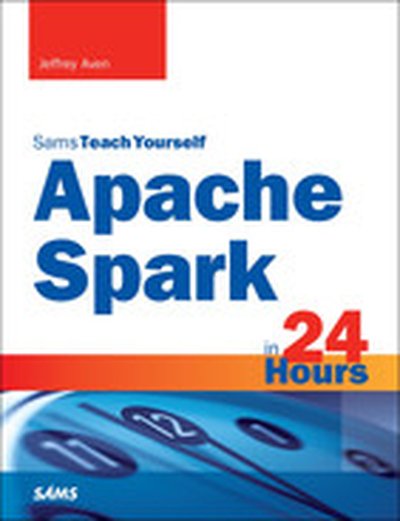
Sams Teach Yourself Apache Spark™ in 24 Hours

Apache Spark is a fast, scalable, and flexible open source distributed processing engine for big data systems and is one of the most active open source big data projects to date. In just 24 lessons of one hour or less, Sams Teach Yourself Apache Spark in 24 Hours helps you build practical Big Data solutions that leverage Spark’s amazing speed, scalability, simplicity, and versatility. This book’s straightforward, step-by-step approach shows you how to deploy, program, optimize, manage, integrate, and extend Spark–now, and for years to come. You’ll discover how to create powerful solutions encompassing cloud computing, real-time stream processing, machine learning, and more. Every lesson builds on what you’ve already learned, giving you a rock-solid foundation for real-world success. Whether you are a data analyst, data engineer, data scientist, or data steward, learning Spark will help you to advance your career or embark on a new career in the booming area of Big Data. Learn how to • Discover what Apache Spark does and how it fits into the Big Data landscape • Deploy and run Spark locally or in the cloud • Interact with Spark from the shell • Make the most of the Spark Cluster Architecture • Develop Spark applications with Scala and functional Python • Program with the Spark API, including transformations and actions • Apply practical data engineering/analysis approaches designed for Spark • Use Resilient Distributed Datasets (RDDs) for caching, persistence, and output • Optimize Spark solution performance • Use Spark with SQL (via Spark SQL) and with NoSQL (via Cassandra) • Leverage cutting-edge functional programming techniques • Extend Spark with streaming, R, and Sparkling Water • Start building Spark-based machine learning and graph-processing applications • Explore advanced messaging technologies, including Kafka • Preview and prepare for Spark’s next generation of innovations Instructions walk you through common questions, issues, and tasks; Q-and-As, Quizzes, and Exercises build and test your knowledge; "Did You Know?" tips offer insider advice and shortcuts; and "Watch Out!" alerts help you avoid pitfalls. By the time you're finished, you'll be comfortable using Apache Spark to solve a wide spectrum of Big Data problems.

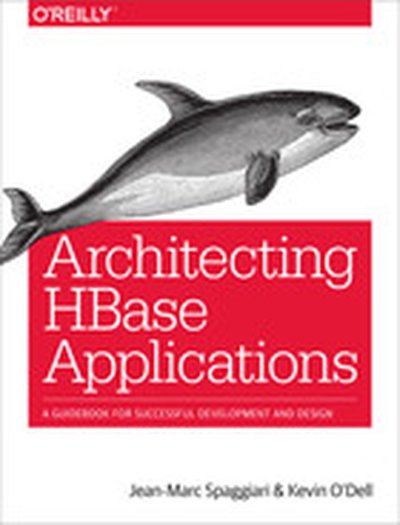
Architecting HBase Applications

HBase is a remarkable tool for indexing mass volumes of data, but getting started with this distributed database and its ecosystem can be daunting. With this hands-on guide, you’ll learn how to architect, design, and deploy your own HBase applications by examining real-world solutions. Along with HBase principles and cluster deployment guidelines, this book includes in-depth case studies that demonstrate how large companies solved specific use cases with HBase. Authors Jean-Marc Spaggiari and Kevin O’Dell also provide draft solutions and code examples to help you implement your own versions of those use cases, from master data management (MDM) and document storage to near real-time event processing. You’ll also learn troubleshooting techniques to help you avoid common deployment mistakes. Learn exactly what HBase does, what its ecosystem includes, and how to set up your environment Explore how real-world HBase instances were deployed and put into production Examine documented use cases for tracking healthcare claims, digital advertising, data management, and product quality Understand how HBase works with tools and techniques such as Spark, Kafka, MapReduce, and the Java API Learn how to identify the causes and understand the consequences of the most common HBase issues

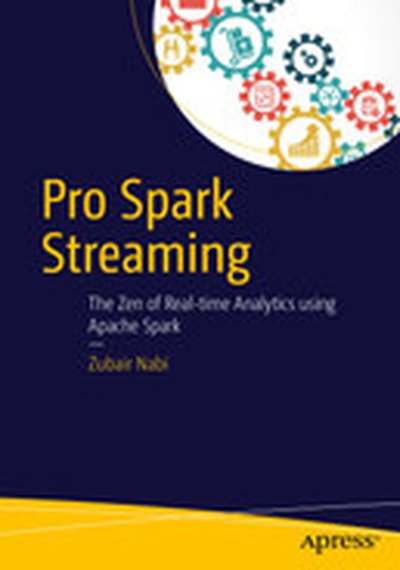
Pro Spark Streaming: The Zen of Real-Time Analytics Using Apache Spark

Learn the right cutting-edge skills and knowledge to leverage Spark Streaming to implement a wide array of real-time, streaming applications. This book walks you through end-to-end real-time application development using real-world applications, data, and code. Taking an application-first approach, each chapter introduces use cases from a specific industry and uses publicly available datasets from that domain to unravel the intricacies of production-grade design and implementation. The domains covered in Pro Spark Streaming include social media, the sharing economy, finance, online advertising, telecommunication, and IoT. In the last few years, Spark has become synonymous with big data processing. DStreams enhance the underlying Spark processing engine to support streaming analysis with a novel micro-batch processing model. Pro Spark Streaming by Zubair Nabi will enable you to become a specialist of latency sensitive applications by leveraging the key features of DStreams, micro-batch processing, and functional programming. To this end, the book includes ready-to-deploy examples and actual code. Pro Spark Streaming will act as the bible of Spark Streaming. What You'll Learn Discover Spark Streaming application development and best practices Work with the low-level details of discretized streams Optimize production-grade deployments of Spark Streaming via configuration recipes and instrumentation using Graphite, collectd, and Nagios Ingest data from disparate sources including MQTT, Flume, Kafka, Twitter, and a custom HTTP receiver Integrate and couple with HBase, Cassandra, and Redis Take advantage of design patterns for side-effects and maintaining state across the Spark Streaming micro-batch model Implement real-time and scalable ETL using data frames, SparkSQL, Hive, and SparkR Use streaming machine learning, predictive analytics, and recommendations Mesh batch processing with stream processing via the Lambda architecture Who This Book Is For Data scientists, big data experts, BI analysts, and data architects.

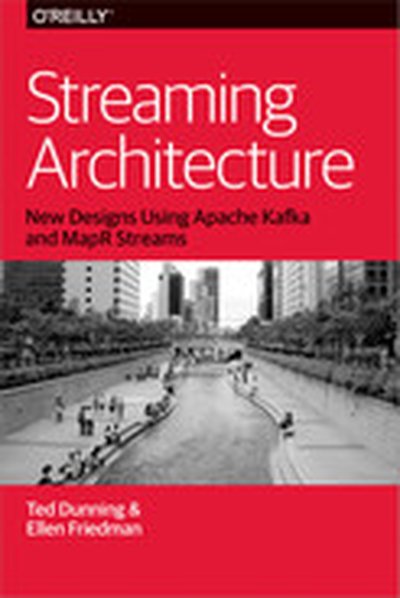
Streaming Architecture

More and more data-driven companies are looking to adopt stream processing and streaming analytics. With this concise ebook, you’ll learn best practices for designing a reliable architecture that supports this emerging big-data paradigm. Authors Ted Dunning and Ellen Friedman (Real World Hadoop) help you explore some of the best technologies to handle stream processing and analytics, with a focus on the upstream queuing or message-passing layer. To illustrate the effectiveness of these technologies, this book also includes specific use cases. Ideal for developers and non-technical people alike, this book describes: Key elements in good design for streaming analytics, focusing on the essential characteristics of the messaging layer New messaging technologies, including Apache Kafka and MapR Streams, with links to sample code Technology choices for streaming analytics: Apache Spark Streaming, Apache Flink, Apache Storm, and Apache Apex How stream-based architectures are helpful to support microservices Specific use cases such as fraud detection and geo-distributed data streams Ted Dunning is Chief Applications Architect at MapR Technologies, and active in the open source community. He currently serves as VP for Incubator at the Apache Foundation, as a champion and mentor for a large number of projects, and as committer and PMC member of the Apache ZooKeeper and Drill projects. Ted is on Twitter as @ted_dunning. Ellen Friedman, a committer for the Apache Drill and Apache Mahout projects, is a solutions consultant and well-known speaker and author, currently writing mainly about big data topics. With a PhD in Biochemistry, she has years of experience as a research scientist and has written about a variety of technical topics. Ellen is on Twitter as @Ellen_Friedman.

Professional Hadoop

The professional's one-stop guide to this open-source, Java-based big data framework Professional Hadoop is the complete reference and resource for experienced developers looking to employ Apache Hadoop in real-world settings. Written by an expert team of certified Hadoop developers, committers, and Summit speakers, this book details every key aspect of Hadoop technology to enable optimal processing of large data sets. Designed expressly for the professional developer, this book skips over the basics of database development to get you acquainted with the framework's processes and capabilities right away. The discussion covers each key Hadoop component individually, culminating in a sample application that brings all of the pieces together to illustrate the cooperation and interplay that make Hadoop a major big data solution. Coverage includes everything from storage and security to computing and user experience, with expert guidance on integrating other software and more. Hadoop is quickly reaching significant market usage, and more and more developers are being called upon to develop big data solutions using the Hadoop framework. This book covers the process from beginning to end, providing a crash course for professionals needing to learn and apply Hadoop quickly. Configure storage, UE, and in-memory computing Integrate Hadoop with other programs including Kafka and Storm Master the fundamentals of Apache Big Top and Ignite Build robust data security with expert tips and advice Hadoop's popularity is largely due to its accessibility. Open-source and written in Java, the framework offers almost no barrier to entry for experienced database developers already familiar with the skills and requirements real-world programming entails. Professional Hadoop gives you the practical information and framework-specific skills you need quickly.

Making Sense of Stream Processing

How can event streams help make your application more scalable, reliable, and maintainable? In this report, O’Reilly author Martin Kleppmann shows you how stream processing can make your data storage and processing systems more flexible and less complex. Structuring data as a stream of events isn’t new, but with the advent of open source projects such as Apache Kafka and Apache Samza, stream processing is finally coming of age. Using several case studies, Kleppmann explains how these projects can help you reorient your database architecture around streams and materialized views. The benefits of this approach include better data quality, faster queries through precomputed caches, and real-time user interfaces. Learn how to open up your data for richer analysis and make your applications more scalable and robust in the face of failures. Understand stream processing fundamentals and their similarities to event sourcing, CQRS, and complex event processing Learn how logs can make search indexes and caches easier to maintain Explore the integration of databases with event streams, using the new Bottled Water open source tool Turn your database architecture inside out by orienting it around streams and materialized views

Scalable Big Data Architecture: A Practitioner’s Guide to Choosing Relevant Big Data Architecture

This book highlights the different types of data architecture and illustrates the many possibilities hidden behind the term "Big Data", from the usage of No-SQL databases to the deployment of stream analytics architecture, machine learning, and governance. Scalable Big Data Architecture covers real-world, concrete industry use cases that leverage complex distributed applications , which involve web applications, RESTful API, and high throughput of large amount of data stored in highly scalable No-SQL data stores such as Couchbase and Elasticsearch. This book demonstrates how data processing can be done at scale from the usage of NoSQL datastores to the combination of Big Data distribution. When the data processing is too complex and involves different processing topology like long running jobs, stream processing, multiple data sources correlation, and machine learning, it’s often necessary to delegate the load to Hadoop or Spark and use the No-SQL to serve processed data in real time. This book shows you how to choose a relevant combination of big data technologies available within the Hadoop ecosystem. It focuses on processing long jobs, architecture, stream data patterns, log analysis, and real time analytics. Every pattern is illustrated with practical examples, which use the different open sourceprojects such as Logstash, Spark, Kafka, and so on. Traditional data infrastructures are built for digesting and rendering data synthesis and analytics from large amount of data. This book helps you to understand why you should consider using machine learning algorithms early on in the project, before being overwhelmed by constraints imposed by dealing with the high throughput of Big data. Scalable Big Data Architecture is for developers, data architects, and data scientists looking for a better understanding of how to choose the most relevant pattern for a Big Data project and which tools to integrate into that pattern.

Big Data Analytics with Spark: A Practitioner’s Guide to Using Spark for Large-Scale Data Processing, Machine Learning, and Graph Analytics, and High-Velocity Data Stream Processing

This book is a step-by-step guide for learning how to use Spark for different types of big-data analytics projects, including batch, interactive, graph, and stream data analysis as well as machine learning. It covers Spark core and its add-on libraries, including Spark SQL, Spark Streaming, GraphX, MLlib, and Spark ML. Big Data Analytics with Spark shows you how to use Spark and leverage its easy-to-use features to increase your productivity. You learn to perform fast data analysis using its in-memory caching and advanced execution engine, employ in-memory computing capabilities for building high-performance machine learning and low-latency interactive analytics applications, and much more. Moreover, the book shows you how to use Spark as a single integrated platform for a variety of data processing tasks, including ETL pipelines, BI, live data stream processing, graph analytics, and machine learning. The book also includes a chapter on Scala, the hottest functional programming language, and the language that underlies Spark. You’ll learn the basics of functional programming in Scala, so that you can write Spark applications in it. What's more, Big Data Analytics with Spark provides an introduction to other big data technologies that are commonly used along with Spark, such as HDFS, Avro, Parquet, Kafka, Cassandra, HBase, Mesos, and so on. It also provides an introduction to machine learning and graph concepts. So the book is self-sufficient; all the technologies that you need to know to use Spark are covered. The only thing that you are expected to have is some programming knowledge in any language.

Hadoop in Practice, Second Edition

Hadoop in Practice, Second Edition provides over 100 tested, instantly useful techniques that will help you conquer big data, using Hadoop. This revised new edition covers changes and new features in the Hadoop core architecture, including MapReduce 2. Brand new chapters cover YARN and integrating Kafka, Impala, and Spark SQL with Hadoop. You'll also get new and updated techniques for Flume, Sqoop, and Mahout, all of which have seen major new versions recently. In short, this is the most practical, up-to-date coverage of Hadoop available anywhere About the Technology About the Book It's always a good time to upgrade your Hadoop skills! Hadoop in Practice, Second Edition provides a collection of 104 tested, instantly useful techniques for analyzing real-time streams, moving data securely, machine learning, managing large-scale clusters, and taming big data using Hadoop. This completely revised edition covers changes and new features in Hadoop core, including MapReduce 2 and YARN. You'll pick up hands-on best practices for integrating Spark, Kafka, and Impala with Hadoop, and get new and updated techniques for the latest versions of Flume, Sqoop, and Mahout. In short, this is the most practical, up-to-date coverage of Hadoop available. Readers need to know a programming language like Java and have basic familiarity with Hadoop. What's Inside Thoroughly updated for Hadoop 2 How to write YARN applications Integrate real-time technologies like Storm, Impala, and Spark Predictive analytics using Mahout and RR About the Reader About the Author Alex Holmes works on tough big-data problems. He is a software engineer, author, speaker, and blogger specializing in large-scale Hadoop projects. Quotes Very insightful. A deep dive into the Hadoop world. - Andrea Tarocchi, Red Hat, Inc. The most complete material on Hadoop and its ecosystem known to mankind! - Arthur Zubarev, Vital Insights Clear and concise, full of insights and highly applicable information. - Edward de Oliveira Ribeiro, DataStax, Inc. Comprehensive up-to-date coverage of Hadoop 2. - Muthusamy Manigandan, OzoneMedia