We will introduce some core Bigtable data concepts, write some data and explore it in the Cloud Console. Then we'll jump into using techniques to analyze the data in other tools, primarily BigQuery and Looker. We will set up the "Bigtable change streams to BigQuery" Dataflow pipeline, ingest data, query the change log in BigQuery and use Looker to create a visual dashboard. Throughout, we'll compare and contrast different ways to work with your big data in Bigtable to build a foundational understanding of best practices.
Click the blue “Learn more” button above to tap into special offers designed to help you implement what you are learning at Google Cloud Next 25.
 talk-data.com
Topic
Looker
bi
data_exploration
analytics
143
tagged
Activity Trend
14
peak/qtr
2020-Q1
2026-Q2
Top Events
Data Engineering Podcast
67
Google Cloud Next '25
22
Google Cloud Next '24
15
DataFramed
4
O'Reilly Data Science Books
3
dbt Coalesce 2022
3
dbt Coalesce 2023
3
Superweek 2024
3
dbt Coalesce 2020
2
Data Council 2023
2
Experiencing Data w/ Brian T. O’Neill (AI & data product management leadership—powered by UX design)
2
London Looker Meetup - October 2025
2
Explore your Looker data with natural language. This session dives into our open-source generative AI Looker extension, powered by Vertex AI large language models (LLM). Learn how to: - Ask questions using natural language: Explore data and gain insights intuitively - Deploy and manage: Understand the extension's architecture and set it up for your needs - Customize the extension: Change prompts if needed, give more examples, or fine-tune the LLM model for tailored results
Unleash the power of generative AI for data-driven decision making.
Click the blue “Learn more” button above to tap into special offers designed to help you implement what you are learning at Google Cloud Next 25.
by
Yasmeen Ahmad
(Google Cloud)
,
Irina Farooq
(Google Cloud)
,
Gerrit Kazmaier
(Google Cloud)
,
Allie Dixon
(Priceline.com)
,
Kate Wright
(Google Cloud)
With the surge of new generative AI capabilities, companies and their customers can now interact with systems and data in new ways. To activate AI organizations require a data foundation with the scale and efficiency to bring business data together with AI models and ground them in customer reality. Join this session to learn the latest innovations for data analytics and BI, and why tens of thousands of organizations are fueling their journey with BigQuery and Looker.
Click the blue “Learn more” button above to tap into special offers designed to help you implement what you are learning at Google Cloud Next 25.
In this session we will show how you can query, connect, and report on your data insights across clouds, including AWS and Azure, with BigQuery Omni and Looker. Reduce costly copying and customization and get answers quickly, so you can get back to work.
Click the blue “Learn more” button above to tap into special offers designed to help you implement what you are learning at Google Cloud Next 25.
With GA4 putting web and behavioural data in a data warehouse into the hands of more analysts than ever before, you may be wondering how to get the best from your data in BigQuery (or any data warehouse), keep costs manageable, and how to give your users the best performance possible. This talk will cover different approaches to data modelling, the trade-offs associated with each approach, and how the dashboard/BI tool you’re using (whether it be Looker or Looker Studio, Tableau, Power BI etc) impacts your data modelling.
How taking advantages of the self-service data viz software of Google for demanding requirements, as part of various processes and premium digital analytics devices.
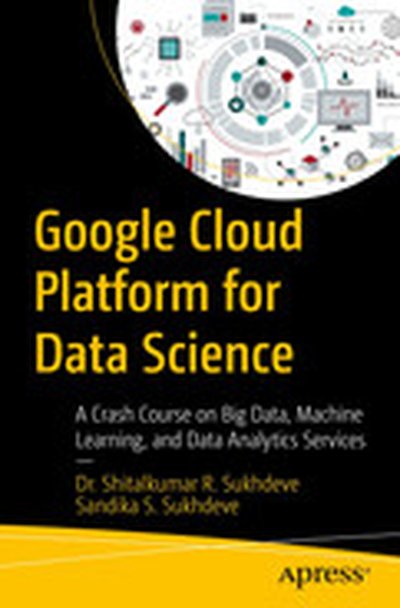
This book is your practical and comprehensive guide to learning Google Cloud Platform (GCP) for data science, using only the free tier services offered by the platform. Data science and machine learning are increasingly becoming critical to businesses of all sizes, and the cloud provides a powerful platform for these applications. GCP offers a range of data science services that can be used to store, process, and analyze large datasets, and train and deploy machine learning models. The book is organized into seven chapters covering various topics such as GCP account setup, Google Colaboratory, Big Data and Machine Learning, Data Visualization and Business Intelligence, Data Processing and Transformation, Data Analytics and Storage, and Advanced Topics. Each chapter provides step-by-step instructions and examples illustrating how to use GCP services for data science and big data projects. Readers will learn how to set up a Google Colaboratory account and run Jupyternotebooks, access GCP services and data from Colaboratory, use BigQuery for data analytics, and deploy machine learning models using Vertex AI. The book also covers how to visualize data using Looker Data Studio, run data processing pipelines using Google Cloud Dataflow and Dataprep, and store data using Google Cloud Storage and SQL. What You Will Learn Set up a GCP account and project Explore BigQuery and its use cases, including machine learning Understand Google Cloud AI Platform and its capabilities Use Vertex AI for training and deploying machine learning models Explore Google Cloud Dataproc and its use cases for big data processing Create and share data visualizations and reports with Looker Data Studio Explore Google Cloud Dataflow and its use cases for batch and stream data processing Run data processing pipelines on Cloud Dataflow Explore Google Cloud Storageand its use cases for data storage Get an introduction to Google Cloud SQL and its use cases for relational databases Get an introduction to Google Cloud Pub/Sub and its use cases for real-time data streaming Who This Book Is For Data scientists, machine learning engineers, and analysts who want to learn how to use Google Cloud Platform (GCP) for their data science and big data projects
In this session, Vida Health’s senior director of data, mobile, and web engineering shares a story that can help other data and business leaders capitalize on the opportunities being created by current technology innovations, market realities, and real-world problems. This includes a playbook on how Vida Health uses modern data technologies like dbt Cloud, Fivetran, Looker, BigQuery, BigQueryML/dbtML, Vertex AI, LLMs, and more to put data in the driver’s seat to solve meaningful problems in complex industries like healthcare.
Speaker: Trenton Huey, Senior Director, Data and Frontend Engineering, Vida Health
Register for Coalesce at https://coalesce.getdbt.com

The self-serve revolution remains unrealized despite BI tools from Business Objects to Tableau and Looker all aiming for that holy grail. What went wrong? This talk argues that for self-serve to work, it has to work the way humans already work.
Speaker: Paul Blankley, CTO / Co-founder, Zenlytic
Register for Coalesce at https://coalesce.getdbt.com
Business processes are the foundation of any organization, directing entities towards achieving specific outcomes. These processes can be simple or complex and may take days or even months to complete. Insights into business processes can be determined through three categories: occurrence, volume, and velocity.
In this presentation, Routable’s Director of Data & Analytics discusses the technical and process complexities involved in creating data models in a data warehouse using dbt Cloud. The session also provides tips to make the process easier and explains how to expose this data to users using Looker.
Speaker: Jason Hodson, Director, Data & Analytics, Routable
Register for Coalesce at https://coalesce.getdbt.com
Summary
All software systems are in a constant state of evolution. This makes it impossible to select a truly future-proof technology stack for your data platform, making an eventual migration inevitable. In this episode Gleb Mezhanskiy and Rob Goretsky share their experiences leading various data platform migrations, and the hard-won lessons that they learned so that you don't have to.
Announcements
Hello and welcome to the Data Engineering Podcast, the show about modern data management Introducing RudderStack Profiles. RudderStack Profiles takes the SaaS guesswork and SQL grunt work out of building complete customer profiles so you can quickly ship actionable, enriched data to every downstream team. You specify the customer traits, then Profiles runs the joins and computations for you to create complete customer profiles. Get all of the details and try the new product today at dataengineeringpodcast.com/rudderstack Modern data teams are using Hex to 10x their data impact. Hex combines a notebook style UI with an interactive report builder. This allows data teams to both dive deep to find insights and then share their work in an easy-to-read format to the whole org. In Hex you can use SQL, Python, R, and no-code visualization together to explore, transform, and model data. Hex also has AI built directly into the workflow to help you generate, edit, explain and document your code. The best data teams in the world such as the ones at Notion, AngelList, and Anthropic use Hex for ad hoc investigations, creating machine learning models, and building operational dashboards for the rest of their company. Hex makes it easy for data analysts and data scientists to collaborate together and produce work that has an impact. Make your data team unstoppable with Hex. Sign up today at dataengineeringpodcast.com/hex to get a 30-day free trial for your team! Your host is Tobias Macey and today I'm interviewing Gleb Mezhanskiy and Rob Goretsky about when and how to think about migrating your data stack
Interview
Introduction How did you get involved in the area of data management? A migration can be anything from a minor task to a major undertaking. Can you start by describing what constitutes a migration for the purposes of this conversation? Is it possible to completely avoid having to invest in a migration? What are the signals that point to the need for a migration?
What are some of the sources of cost that need to be accounted for when considering a migration? (both in terms of doing one, and the costs of not doing one) What are some signals that a migration is not the right solution for a perceived problem?
Once the decision has been made that a migration is necessary, what are the questions that the team should be asking to determine the technologies to move to and the sequencing of execution? What are the preceding tasks that should be completed before starting the migration to ensure there is no breakage downstream of the changing component(s)? What are some of the ways that a migration effort might fail? What are the major pitfalls that teams need to be aware of as they work through a data platform migration? What are the opportunities for automation during the migration process? What are the most interesting, innovative, or unexpected ways that you have seen teams approach a platform migration? What are the most interesting, unexpected, or challenging lessons that you have learned while working on data platform migrations? What are some ways that the technologies and patterns that we use can be evolved to reduce the cost/impact/need for migraitons?
Contact Info
Gleb
LinkedIn @glebmm on Twitter
Rob
LinkedIn RobGoretsky on GitHub
Parting Question
From your perspective, what is the biggest gap in the tooling or technology for data management today?
Closing Announcements
Thank you for listening! Don't forget to check out our other shows. Podcast.init covers the Python language, its community, and the innovative ways it is being used. The Machine Learning Podcast helps you go from idea to production with machine learning. Visit the site to subscribe to the show, sign up for the mailing list, and read the show notes. If you've learned something or tried out a project from the show then tell us about it! Email [email protected]) with your story. To help other people find the show please leave a review on Apple Podcasts and tell your friends and co-workers
Links
Datafold
Podcast Episode
Informatica Airflow Snowflake
Podcast Episode
Redshift Eventbrite Teradata BigQuery Trino EMR == Elastic Map-Reduce Shadow IT
Podcast Episode
Mode Analytics Looker Sunk Cost Fallacy data-diff
Podcast Episode
SQLGlot Dagster dbt
The intro and outro music is from The Hug by The Freak Fandango Orchestra / CC BY-SA
Sponsored By:
Hex: 
Hex is a collaborative workspace for data science and analytics. A single place for teams to explore, transform, and visualize data into beautiful interactive reports. Use SQL, Python, R, no-code and AI to find and share insights across your organization. Empower everyone in an organization to make an impact with data. Sign up today at [dataengineeringpodcast.com/hex](https://www.dataengineeringpodcast.com/hex} and get 30 days free!Rudderstack: 
Introducing RudderStack Profiles. RudderStack Profiles takes the SaaS guesswork and SQL grunt work out of building complete customer profiles so you can quickly ship actionable, enriched data to every downstream team. You specify the customer traits, then Profiles runs the joins and computations for you to create complete customer profiles. Get all of the details and try the new product today at dataengineeringpodcast.com/rudderstackSupport Data Engineering Podcast
Comcast Effectv, the 2,000-employee advertising wing of Comcast, America’s largest telecommunications company, provides custom video ad solutions powered by aggregated viewership data. As a global technology and media company connecting millions of customers to personalized experiences and processing billions of transactions, Comcast Effectv was challenged with handling massive loads of data, monitoring hundreds of data pipelines, and managing timely coordination across data teams.
In this session, we will discuss Comcast Effectv’s journey to building a more scalable, reliable lakehouse and driving data observability at scale with Monte Carlo. This has enabled Effectv to have a single pane of glass view of their entire data environment to ensure consumer data trust across their entire AWS, Databricks, and Looker environment.
Talk by: Scott Lerner and Robinson Creighton
Connect with us: Website: https://databricks.com Twitter: https://twitter.com/databricks LinkedIn: https://www.linkedin.com/company/databricks Instagram: https://www.instagram.com/databricksinc Facebook: https://www.facebook.com/databricksinc
Summary
Data has been one of the most substantial drivers of business and economic value for the past few decades. Bob Muglia has had a front-row seat to many of the major shifts driven by technology over his career. In his recent book "Datapreneurs" he reflects on the people and businesses that he has known and worked with and how they relied on data to deliver valuable services and drive meaningful change.
Announcements
Hello and welcome to the Data Engineering Podcast, the show about modern data management Introducing RudderStack Profiles. RudderStack Profiles takes the SaaS guesswork and SQL grunt work out of building complete customer profiles so you can quickly ship actionable, enriched data to every downstream team. You specify the customer traits, then Profiles runs the joins and computations for you to create complete customer profiles. Get all of the details and try the new product today at dataengineeringpodcast.com/rudderstack Your host is Tobias Macey and today I'm interviewing Bob Muglia about his recent book about the idea of "Datapreneurs" and the role of data in the modern economy
Interview
Introduction How did you get involved in the area of data management? Can you describe what your concept of a "Datapreneur" is?
How is this distinct from the common idea of an entreprenur?
What do you see as the key inflection points in data technologies and their impacts on business capabilities over the past ~30 years? In your role as the CEO of Snowflake you had a first-row seat for the rise of the "modern data stack". What do you see as the main positive and negative impacts of that paradigm?
What are the key issues that are yet to be solved in that ecosmnjjystem?
For technologists who are thinking about launching new ventures, what are the key pieces of advice that you would like to share? What do you see as the short/medium/long-term impact of AI on the technical, business, and societal arenas? What are the most interesting, innovative, or unexpected ways that you have seen business leaders use data to drive their vision? What are the most interesting, unexpected, or challenging lessons that you have learned while working on the Datapreneurs book? What are your key predictions for the future impact of data on the technical/economic/business landscapes?
Contact Info
Parting Question
From your perspective, what is the biggest gap in the tooling or technology for data management today?
Closing Announcements
Thank you for listening! Don't forget to check out our other shows. Podcast.init covers the Python language, its community, and the innovative ways it is being used. The Machine Learning Podcast helps you go from idea to production with machine learning. Visit the site to subscribe to the show, sign up for the mailing list, and read the show notes. If you've learned something or tried out a project from the show then tell us about it! Email [email protected]) with your story. To help other people find the show please leave a review on Apple Podcasts and tell your friends and co-workers
Links
Datapreneurs Book SQL Server Snowflake Z80 Processor Navigational Database System R Redshift Microsoft Fabric Databricks Looker Fivetran
Podcast Episode
Databricks Unity Catalog RelationalAI 6th Normal Form Pinecone Vector DB
Podcast Episode
Perplexity AI
The intro and outro music is from The Hug by The Freak Fandango Orchestra / CC BY-SA
Sponsored By:
Rudderstack:
Introducing RudderStack Profiles. RudderStack Profiles takes the SaaS guesswork and SQL grunt work out of building complete customer profiles so you can quickly ship actionable, enriched data to every downstream team. You specify the customer traits, then Profiles runs the joins and computations for you to create complete customer profiles. Get all of the details and try the new product today at dataengineeringpodcast.com/rudderstackSupport Data Engineering Podcast
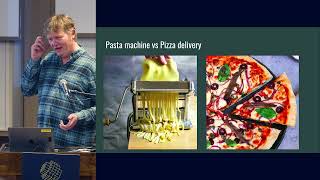
ABOUT THE TALK Apache Calcite has extended SQL to support metrics (which we call ‘measures’), filter context, and analytic expressions. With these concepts you can define data models (which we call Analytic Views) that contain metrics, use them in queries, and define new metrics in queries.
This talk, hosted by the original developer of Apache Calcite describes the SQL syntax extensions for metrics, and how to use them for cross-dimensional calculations such as period-over-period, percent-of-total, non-additive and semi-additive measures. It details how we got around fundamental limitations in SQL semantics, and approaches for optimizing queries that use metrics.
ABOUT THE SPEAKER Julian Hyde is the original developer of Apache Calcite, an open source framework for building data management systems, and Morel, a functional query language. Previously he created Mondrian, an analytics engine, and SQLstream, an engine for continuous queries. He is a staff engineer at Google, where he works on Looker and BigQuery.
ABOUT DATA COUNCIL: Data Council (https://www.datacouncil.ai/) is a community and conference series that provides data professionals with the learning and networking opportunities they need to grow their careers.
Make sure to subscribe to our channel for the most up-to-date talks from technical professionals on data related topics including data infrastructure, data engineering, ML systems, analytics and AI from top startups and tech companies.
FOLLOW DATA COUNCIL: Twitter: https://twitter.com/DataCouncilAI LinkedIn: https://www.linkedin.com/company/datacouncil-ai/

ABOUT THE TALK: Forcing data through a rectangle shapes the way we solve problems (for example, dimensional fact tables, OLAP Cubes).
Most Data isn’t rectangular it rather exists in hierarchies (orders, items, products, users). Most query results are better returned as a hierarchy (category, brand, product).
Malloy is a new experimental data programming language that, among other things, breaks the rectangle paradigm and several other long held misconceptions in the way we analyze data.
In this talk, Lloyd Tabb shares the ideas behind the Malloy language, semantic data modeling, and his vision for the future of data.
ABOUT THE SPEAKER: Lloyd Tabb spent the last 30 years revolutionizing how the world uses the internet and, by extension, data. He is one of the internet pioneers, having worked at Netscape during the browser wars as the Principal Engineer on Navigator Gold, the first HTML WYSIWYG editor.
Originally a database & languages architect at Borland, Lloyd founded Looker,, which Google acquired in 2019. Lloyd's work at Looker helped define the Modern Data Stack.
At Google, Lloyd continues to pursue his passion for data, and love of programming languages through his current project, Malloy.
ABOUT DATA COUNCIL: Data Council (https://www.datacouncil.ai/) is a community and conference series that provides data professionals with the learning and networking opportunities they need to grow their careers.
Make sure to subscribe to our channel for the most up-to-date talks from technical professionals on data related topics including data infrastructure, data engineering, ML systems, analytics and AI from top startups and tech companies.
FOLLOW DATA COUNCIL: Twitter: https://twitter.com/DataCouncilAI LinkedIn: https://www.linkedin.com/company/datacouncil-ai/
In his talk, Ahmad is going to share the tools, solutions, and strategies he and his team developed in-house using Looker Studio, BigQuery and Google Cloud to be able to manage, maintain, and monitor data pipelines and dashboards for their clients efficiently and at scale.
Summary
Business intelligence has gone through many generational shifts, but each generation has largely maintained the same workflow. Data analysts create reports that are used by the business to understand and direct the business, but the process is very labor and time intensive. The team at Omni have taken a new approach by automatically building models based on the queries that are executed. In this episode Chris Merrick shares how they manage integration and automation around the modeling layer and how it improves the organizational experience of business intelligence.
Announcements
Hello and welcome to the Data Engineering Podcast, the show about modern data management Truly leveraging and benefiting from streaming data is hard - the data stack is costly, difficult to use and still has limitations. Materialize breaks down those barriers with a true cloud-native streaming database - not simply a database that connects to streaming systems. With a PostgreSQL-compatible interface, you can now work with real-time data using ANSI SQL including the ability to perform multi-way complex joins, which support stream-to-stream, stream-to-table, table-to-table, and more, all in standard SQL. Go to dataengineeringpodcast.com/materialize today and sign up for early access to get started. If you like what you see and want to help make it better, they're hiring across all functions! Your host is Tobias Macey and today I'm interviewing Chris Merrick about the Omni Analytics platform and how they are adding automatic data modeling to your business intelligence
Interview
Introduction How did you get involved in the area of data management? Can you describe what Omni Analytics is and the story behind it?
What are the core goals that you are trying to achieve with building Omni?
Business intelligence has gone through many evolutions. What are the unique capabilities that Omni Analytics offers over other players in the market?
What are the technical and organizational anti-patterns that typically grow up around BI systems?
What are the elements that contribute to BI being such a difficult product to use effectively in an organization?
Can you describe how you have implemented the Omni platform?
How have the design/scope/goals of the product changed since you first started working on it?
What does the workflow for a team using Omni look like?
What are some of the developments in the broader ecosystem that have made your work possible?
What are some of the positive and negative inspirations that you have drawn from the experience that you and your team-mates have gained in previous businesses?
What are the most interesting, innovative, or unexpected ways that you have seen Omni used?
What are the most interesting, unexpected, or challenging lessons that you have learned while working on Omni?
When is Omni the wrong choice?
What do you have planned for the future of Omni?
Contact Info
LinkedIn @cmerrick on Twitter
Parting Question
From your perspective, what is the biggest gap in the tooling or technology for data management today?
Closing Announcements
Thank you for listening! Don't forget to check out our other shows. Podcast.init covers the Python language, its community, and the innovative ways it is being used. The Machine Learning Podcast helps you go from idea to production with machine learning. Visit the site to subscribe to the show, sign up for the mailing list, and read the show notes. If you've learned something or tried out a project from the show then tell us about it! Email [email protected]) with your story. To help other people find the show please leave a review on Apple Podcasts and tell your friends and co-workers
Links
Omni Analytics Stitch RJ Metrics Looker
Podcast Episode
Singer dbt
Podcast Episode
Teradata Fivetran Apache Arrow
Podcast Episode
DuckDB
Podcast Episode
BigQuery Snowflake
Podcast Episode
The intro and outro music is from The Hug by The Freak Fandango Orchestra / CC BY-SA
Sponsored By:
Materialize: 
Looking for the simplest way to get the freshest data possible to your teams? Because let's face it: if real-time were easy, everyone would be using it. Look no further than Materialize, the streaming database you already know how to use.
Materialize’s PostgreSQL-compatible interface lets users leverage the tools they already use, with unsurpassed simplicity enabled by full ANSI SQL support. Delivered as a single platform with the separation of storage and compute, strict-serializability, active replication, horizontal scalability and workload isolation — Materialize is now the fastest way to build products with streaming data, drastically reducing the time, expertise, cost and maintenance traditionally associated with implementation of real-time features.
Sign up now for early access to Materialize and get started with the power of streaming data with the same simplicity and low implementation cost as batch cloud data warehouses.
Go to materialize.comSupport Data Engineering Podcast
Today I’m chatting with Bruno Aziza, Head of Data & Analytics at Google Cloud. Bruno leads a team of outbound product managers in charge of BigQuery, Dataproc, Dataflow and Looker and we dive deep on what Bruno looks for in terms of skills for these leaders. Bruno describes the three patterns of operational alignment he’s observed in data product management, as well as why he feels ownership and customer obsession are two of the most important qualities a good product manager can have. Bruno and I also dive into how to effectively abstract the core problem you’re solving, as well as how to determine whether a problem might be solved in a better way.
Highlights / Skip to:
Bruno introduces himself and explains how he created his “CarCast” podcast (00:45) Bruno describes his role at Google, the product managers he leads, and the specific Google Cloud products in his portfolio (02:36) What Bruno feels are the most important attributes to look for in a good data product manager (03:59) Bruno details how a good product manager focuses on not only the core problem, but how the problem is currently solved and whether or not that’s acceptable (07:20) What effective abstracting the problem looks like in Bruno’s view and why he positions product management as a way to help users move forward in their career (12:38) Why Bruno sees extracting value from data as the number one pain point for data teams and their respective companies (17:55) Bruno gives his definition of a data product (21:42) The three patterns Bruno has observed of operational alignment when it comes to data product management (27:57) Bruno explains the best practices he’s seen for cross-team goal setting and problem-framing (35:30)
Quotes from Today’s Episode
“What’s happening in the industry is really interesting. For people that are running data teams today and listening to us, the makeup of their teams is starting to look more like what we do [in] product management.” — Bruno Aziza (04:29)
“The problem is the problem, so focus on the problem, decompose the problem, look at the frictions that are acceptable, look at the frictions that are not acceptable, and look at how by assembling a solution, you can make it most seamless for the individual to go out and get the job done.” – Bruno Aziza (11:28)
“As a product manager, yes, we’re in the business of software, but in fact, I think you’re in the career management business. Your job is to make sure that whatever your customer’s job is that you’re making it so much easier that they, in fact, get so much more done, and by doing so they will get promoted, get the next job.” – Bruno Aziza (15:41)
“I think that is the task of any technology company, of any product manager that’s helping these technology companies: don’t be building a product that’s looking for a problem. Just start with the problem back and solution from that. Just make sure you understand the problem very well.” (19:52)
“If you’re a data product manager today, you look at your data estate and you ask yourself, ‘What am I building to save money? When am I building to make money?’ If you can do both, that’s absolutely awesome. And so, the data product is an asset that has been built repeatedly by a team and generates value out of data.” – Bruno Aziza (23:12)
“[Machine learning is] hard because multiple teams have to work together, right? You got your business analyst over here, you’ve got your data scientists over there, they’re not even the same team. And so, sometimes you’re struggling with just the human aspect of it.” (30:30)
“As a data leader, an IT leader, you got to think about those soft ways to accomplish the stuff that’s binary, that’s the hard [stuff], right? I always joke, the hard stuff is the soft stuff for people like us because we think about data, we think about logic, we think, ‘Okay if it makes sense, it will be implemented.’ For most of us, getting stuff done is through people. And people are emotional, how can you express the feeling of achieving that goal in emotional value?” – Bruno Aziza (37:36)
Links As referenced by Bruno, “Good Product Manager/Bad Product Manager”: https://a16z.com/2012/06/15/good-product-managerbad-product-manager/ LinkedIn: https://www.linkedin.com/in/brunoaziza/ Bruno’s Medium Article on Competing Against Luck by Clayton M. Christensen: https://brunoaziza.medium.com/competing-against-luck-3daeee1c45d4 The Data CarCast on YouTube: https://www.youtube.com/playlist?list=PLRXGFo1urN648lrm8NOKXfrCHzvIHeYyw
Summary The data ecosystem has been growing rapidly, with new communities joining and bringing their preferred programming languages to the mix. This has led to inefficiencies in how data is stored, accessed, and shared across process and system boundaries. The Arrow project is designed to eliminate wasted effort in translating between languages, and Voltron Data was created to help grow and support its technology and community. In this episode Wes McKinney shares the ways that Arrow and its related projects are improving the efficiency of data systems and driving their next stage of evolution.
Announcements
Hello and welcome to the Data Engineering Podcast, the show about modern data management When you’re ready to build your next pipeline, or want to test out the projects you hear about on the show, you’ll need somewhere to deploy it, so check out our friends at Linode. With their new managed database service you can launch a production ready MySQL, Postgres, or MongoDB cluster in minutes, with automated backups, 40 Gbps connections from your application hosts, and high throughput SSDs. Go to dataengineeringpodcast.com/linode today and get a $100 credit to launch a database, create a Kubernetes cluster, or take advantage of all of their other services. And don’t forget to thank them for their continued support of this show! Atlan is the metadata hub for your data ecosystem. Instead of locking your metadata into a new silo, unleash its transformative potential with Atlan’s active metadata capabilities. Push information about data freshness and quality to your business intelligence, automatically scale up and down your warehouse based on usage patterns, and let the bots answer those questions in Slack so that the humans can focus on delivering real value. Go to dataengineeringpodcast.com/atlan today to learn more about how Atlan’s active metadata platform is helping pioneering data teams like Postman, Plaid, WeWork & Unilever achieve extraordinary things with metadata and escape the chaos. Struggling with broken pipelines? Stale dashboards? Missing data? If this resonates with you, you’re not alone. Data engineers struggling with unreliable data need look no further than Monte Carlo, the leading end-to-end Data Observability Platform! Trusted by the data teams at Fox, JetBlue, and PagerDuty, Monte Carlo solves the costly problem of broken data pipelines. Monte Carlo monitors and alerts for data issues across your data warehouses, data lakes, dbt models, Airflow jobs, and business intelligence tools, reducing time to detection and resolution from weeks to just minutes. Monte Carlo also gives you a holistic picture of data health with automatic, end-to-end lineage from ingestion to the BI layer directly out of the box. Start trusting your data with Monte Carlo today! Visit dataengineeringpodcast.com/montecarlo to learn more. Data engineers don’t enjoy writing, maintaining, and modifying ETL pipelines all day, every day. Especially once they realize 90% of all major data sources like Google Analytics, Salesforce, Adwords, Facebook, Spreadsheets, etc., are already available as plug-and-play connectors with reliable, intuitive SaaS solutions. Hevo Data is a highly reliable and intuitive data pipeline platform used by data engineers from 40+ countries to set up and run low-latency ELT pipelines with zero maintenance. Boasting more than 150 out-of-the-box connectors that can be set up in minutes, Hevo also allows you to monitor and control your pipelines. You get: real-time data flow visibility, fail-safe mechanisms, and alerts if anything breaks; preload transformations and auto-schema mapping precisely control how data lands in your destination; models and workflows to transform data for analytics; and reverse-ETL capability to move the transformed data back to your business software to inspire timely action. All of this, plus its transparent pricing and 24*7 live support, makes it consistently voted by users as the Leader in the Data Pipeline category on review platforms like G2. Go to dataengineeringpodcast.com/hevodata and sign up for a free 14-day trial that also comes with 24×7 support. Your host is Tobias Macey and today I’m interviewing Wes McKinney about his work at Voltron Data and on the Arrow ecosystem
Interview
Introduction How did you get involved in the area of data management? Can you describe what you are building at Voltron Data and the story behind it? What is the vision for the broader data ecosystem that you are trying to realize through your investment in Arrow and related projects?
How does your work at Voltron Data contribute to the realization of that vision?
What is the impact on engineer productivity and compute efficiency that gets introduced by the impedance mismatches between language and framework representations of data? The scope and capabilities of the Arrow project have grown substantially since it was first introduced. Can you give an overview of the current features and extensions to the project? What are some of the ways that ArrowVe and its related projects can be integrated with or replace the different elements of a data platform? Can you describe how Arrow is implemented?
What are the most complex/challenging aspects of the engineering needed to support interoperable data interchange between language runtimes?
How are you balancing the desire to move quickly and improve the Arrow protocol and implementations, with the need to wait for other players in the ecosystem (e.g. database engines, compute frameworks, etc.) to add support? With the growing application of data formats such as graphs and vectors, what do you see as the role of Arrow and its ideas in those use cases? For workflows that rely on integrating structured and unstructured data, what are the options for interaction with non-tabular data? (e.g. images, documents, etc.) With your support-focused business model, how are you approaching marketing and customer education to make it viable and scalable? What are the most interesting, innovative, or unexpected ways that you have seen Arrow used? What are the most interesting, unexpected, or challenging lessons that you have learned while working on Arrow and its ecosystem? When is Arrow the wrong choice? What do you have planned for the future of Arrow?
Contact Info
Website wesm on GitHub @wesmckinn on Twitter
Parting Question
From your perspective, what is the biggest gap in the tooling or technology for data management today?
Closing Announcements
Thank you for listening! Don’t forget to check out our other shows. Podcast.init covers the Python language, its community, and the innovative ways it is being used. The Machine Learning Podcast helps you go from idea to production with machine learning. Visit the site to subscribe to the show, sign up for the mailing list, and read the show notes. If you’ve learned something or tried out a project from the show then tell us about it! Email [email protected]) with your story. To help other people find the show please leave a review on Apple Podcasts and tell your friends and co-workers
Links
Voltron Data Pandas
Podcast Episode
Apache Arrow Partial Differential Equation FPGA == Field-Programmable Gate Array GPU == Graphics Processing Unit Ursa Labs Voltron (cartoon) Feature Engineering PySpark Substrait Arrow Flight Acero Arrow Datafusion Velox Ibis SIMD == Single Instruction, Multiple Data Lance DuckDB
Podcast Episode
Data Threads Conference Nano-Arrow Arrow ADBC Protocol Apache Iceberg
Podcast Episode
The intro and outro music is from The Hug by The Freak Fandango Orchestra / CC BY-SA
Sponsored By:
Atlan: 
Have you ever woken up to a crisis because a number on a dashboard is broken and no one knows why? Or sent out frustrating slack messages trying to find the right data set? Or tried to understand what a column name means?
Our friends at Atlan started out as a data team themselves and faced all this collaboration chaos themselves, and started building Atlan as an internal tool for themselves. Atlan is a collaborative workspace for data-driven teams, like Github for engineering or Figma for design teams. By acting as a virtual hub for data assets ranging from tables and dashboards to SQL snippets & code, Atlan enables teams to create a single source of truth for all their data assets, and collaborate across the modern data stack through deep integrations with tools like Snowflake, Slack, Looker and more.
Go to dataengineeringpodcast.com/atlan and sign up for a free trial. If you’re a data engineering podcast listener, you get credits worth $3000 on an annual subscription.a href="https://dataengineeringpodcast.com/montecarlo"…