udging by the number of inbound pitches we get from PR firms, AI is absolutely going to replace most of the work of the analyst some time in the next few weeks. It's just a matter of time until some startup gets enough market traction to make that happen (business tip: niche podcasts are likely not a productive path to market dominance, no matter what Claude from Marketing says). We're skeptical. But that doesn't mean we don't think there are a lot of useful applications of generative AI for the analyst. We do! As Moe posited in this episode, one useful analogy is that thinking of using generative AI effectively is like getting a marketer effectively using MMM when they've been living in an MTA world (it's more nuanced and complicated). Our guest (NOT from a PR firm solicitation!), Martin Broadhurst, agreed: it's dicey to fully embrace generative AI without some understanding of what it's actually doing. Things got a little spicy, but no humans or AI were harmed in the making of the episode. For complete show notes, including links to items mentioned in this episode and a transcript of the show, visit the show page.
 talk-data.com
Topic
Marketing
743
tagged
Activity Trend
Top Events
Brought to you by: • The Enterprise Ready Conference on October 30th — For B2B leaders building enterprise SaaS. • DX — DX is an engineering intelligence platform designed by leading researchers. • ByteByteGo — Ace your next system design interview. — You may not be familiar with Bending Spoons, but I guarantee you’ve encountered some of their well-known products, like Evernote and Meetup. In today’s episode of The Pragmatic Engineer, we sit down with three key figures from the Italy-based startup: cofounder and CEO Luca Ferrari, CTO Francesco Mancone, and Evernote product lead Federico Simionato. Bending Spoons has been profitable from day one, and there's plenty we can learn from their unique culture, organizational structure, engineering processes, and hiring practices. In today’s conversation, we cover the following topics: • The controversial acquisitions approach of Bending Spoons • How Bending Spoons spent more than $1 billion in buying tech companies • How the Evernote acquisition happened • How Bending Spoons operates and how it organizes product and platform teams • Why engineering processes are different across different products • How ‘radical simplicity’ is baked into everything from engineering processes to pay structure. • And much more! — The Pragmatic Engineer deepdives relevant for this episode: • Good attrition, bad attrition for software engineers: https://newsletter.pragmaticengineer.com/p/attrition • Healthy oncall practices: https://newsletter.pragmaticengineer.com/p/healthy-oncall-practices • Shipping to production: https://newsletter.pragmaticengineer.com/p/shipping-to-production • QA across the tech industry: https://newsletter.pragmaticengineer.com/p/qa-across-tech — In this episode, we cover: (2:09) Welcome, Luca, Francesco, and Federico from Bending Spoons (03:15) An overview of the well-known apps and products owned by Bending Spoons (06:38) The elephant in the room: how Bending Spoons really acquires companies (09:46) Layoffs: Bending Spoons’ philosophy on this (14:10) Controversial principles (17:16) Revenue, team size, and products (19:35) How Bending Spoons runs AI products and allocates GPUs (23:05) History of the company (27:04) The Evernote acquisition (29:50) Modernizing Evernote’s infrastructure (32:44) “Radical simplicity” and why they try for zero on calls (36:13) More on changes made to the Evernote systems (41:13) How Bending Spoons prioritizes and ships fast (49:40) What’s new and what’s coming for Bending Spoons (51:08) Organizational structure at the company (54:07) Engineering practices (57:03) Testing approaches (58:53) Platform teams (1:01:52) Bending Spoons tech stack and popular frameworks (1:05:55) Why Bending Spoons hires new grads and less experienced engineers (1:08:09) The structure of careers and titles at Bending Spoons (1:09:50) Traits they look for when hiring (1:12:50) Why there aren’t many companies doing what Bending Spoons does — Where to find Luca Ferrari: • X: https://x.com/luke10ferrari • LinkedIn: https://www.linkedin.com/in/luca-ferrari-12418318 Where to find Francesco Mancone: • LinkedIn: https://www.linkedin.com/in/francesco-mancone Where to find Federico Simionato: • X: https://x.com/fedesimio • LinkedIn: https://www.linkedin.com/in/federicosimionato Where to find Gergely: • Newsletter: https://www.pragmaticengineer.com/ • YouTube: https://www.youtube.com/c/mrgergelyorosz • LinkedIn: https://www.linkedin.com/in/gergelyorosz/ • X: https://x.com/GergelyOrosz — References and Transcripts: See the transcript and other references from the episode at https://newsletter.pragmaticengineer.com/podcast — Production and marketing by https://penname.co/. For inquiries about sponsoring the podcast, email [email protected].
Get full access to The Pragmatic Engineer at newsletter.pragmaticengineer.com/subscribe

SpotOn works with FIS (formerly WorldPay) to handle payment processing, allowing for more detailed transaction management than other processors. Our data team took on the challenge of transitioning to FIS to gain better control over transaction details.
The legacy data pipelines we inherited were problematic and unreliable. They consisted of an SFTP file server, cron jobs, and Python/Shell scripts that moved data from SFTP to S3 and then processed it into Postgres. These systems were fragile, often breaking when new or different data arrived, requiring manual intervention and frequent restarts.
We recognized the need for a better solution. Our team decided to use Snowpipe and dbt to streamline our data processing. This approach allowed us to manage and parse complex data formats efficiently. We used dbt to create models that could handle the varied and detailed specifications provided by FIS, ensuring that as updates came in, they could be easily integrated.
With this new setup, we have significantly reduced the fragility of our pipelines. Using dbt Cloud, we've improved collaboration and error detection, ensuring data integrity and better insights into usage patterns. This new system supports not only payment processing but also other critical functions like customer loyalty and marketing, aggregating and cleaning data from various sources.
As we continue migrating from older systems like TSYS, we see the clear benefits of this modernization. Our experience with dbt has proven invaluable in supporting our business-critical data operations and ensuring smooth transitions and reliable data handling.
Speakers: Kevin Hu CEO Metaplane
Daniel Corley Senior Analytics Engineer SpotOn
Read the blog to learn about the latest dbt Cloud features announced at Coalesce, designed to help organizations embrace analytics best practices at scale https://www.getdbt.com/blog/coalesce-2024-product-announcements
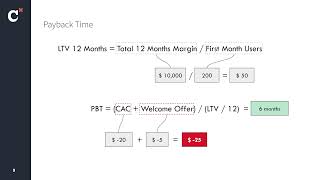
This session will explore a few key metrics that can be used to steer your business in the right direction. Retention rate, lifetime value and payback time are crucial for estimating growth, understanding user behavior and determining marketing spend. Those are needed in turn for companies to make informed decisions and drive the business forward so it is important to get them right. While some rules may be specific for each company, this talk will present the work undertaken at Rebtel to calculate these metrics using SQL, and how you could implement similar models quickly.
Speaker: Quentin Coviaux Data Engineer Rebtel
Read the blog to learn about the latest dbt Cloud features announced at Coalesce, designed to help organizations embrace analytics best practices at scale https://www.getdbt.com/blog/coalesce-2024-product-announcements
The Data Product Management In Action podcast, brought to you by Soda and executive producer Scott Hirleman, is a platform for data product management practitioners to share insights and experiences. In Season 01, Episode 20, Nick is back and this time he is chatting with Ganesh Prasad. They dive into Ganesh's background as a data product manager and his journey from data science to product management. The discussion leads into the differences between internal and external products, the importance of user interviews and discovery, and the challenges and advantages of working in big tech and financial industries. Follow along as Ganesh shares some valuable tips and explains the importance of having a product mindset. About our host Nick Zervoudis: Nick is Head of Product at CKDelta, an AI software business within the CK Hutchison Holdings group. Nick oversees a portfolio of data products and works with sister companies to uncover new opportunities to innovate using data, analytics, and machine learning. Nick's career has revolved around data and advanced analytics from day one, having worked as an analyst, consultant, product manager, and instructor for startups, SMEs, and enterprises including PepsiCo, Sainsbury's, Lloyds Banking Group, IKEA, Capgemini Invent, BrainStation, QuantSpark, and Hg Capital. Nick is also the co-host of London's Data Product Management meetup, and speaks and writes regularly about data and AI product management. Connect with Nick on LinkedIn. About our guest Ganesh Prasad: Ganesh is a Senior Product Lead in the Data Analytics division at Salesforce, bringing over 5 years of experience in data product management from both Salesforce and Mastercard. He has a proven track record of successfully launching and scaling products that meet customer needs. Ganesh has successfully managed and developed analytics, ML, and AI products across various domains, including marketing analytics, fraud detection, revenue forecasting, and platform optimization. Transitioning from a data scientist to a product manager, Ganesh is passionate about the intersection of data and product development. He leads the PM Community of Practice for the Data Analytics division at Salesforce and dedicates his spare time to mentoring others in the field. Connect with Ganesh on LinkedIn. All views and opinions expressed are those of the individuals and do not necessarily reflect their employers or anyone else. Join the conversation on LinkedIn. Apply to be a guest or nominate someone that you know. Do you love what you're listening to? Please rate and review the podcast, and share it with fellow practitioners you know. Your support helps us reach more listeners and continue providing valuable insights!
Businesses are collecting more data than ever before. But is bigger always better? Many companies are starting to question whether massive datasets and complex infrastructure are truly delivering results or just adding unnecessary costs and complications. How can you make sure your data strategy is aligned with your actual needs? What if focusing on smaller, more manageable datasets could improve your efficiency and save resources, all while delivering the same insights? Ryan Boyd is the Co-Founder & VP, Marketing + DevRel at MotherDuck. Ryan started his career as a software engineer, but since has led DevRel teams for 15+ years at Google, Databricks and Neo4j, where he developed and executed numerous marketing and DevRel programs. Prior to MotherDuck, Ryan worked at Databricks and focussed the team on building an online community during the pandemic, helping to organize the content and experience for an online Data + AI Summit, establishing a regular cadence of video and blog content, launching the Databricks Beacons ambassador program, improving the time to an “aha” moment in the online trial and launching a University Alliance program to help professors teach the latest in data science, machine learning and data engineering. In the episode, Richie and Ryan explore data growth and computation, the data 1%, the small data movement, data storage and usage, the shift to local and hybrid computing, modern data tools, the challenges of big data, transactional vs analytical databases, SQL language enhancements, simple and ergonomic data solutions and much more. Links Mentioned in the Show: MotherDuckThe Small Data ManifestoConnect with RyanSmall DataSF conferenceRelated Episode: Effective Data Engineering with Liya Aizenberg, Director of Data Engineering at AwayRewatch sessions from RADAR: AI Edition New to DataCamp? Learn on the go using the DataCamp mobile appEmpower your business with world-class data and AI skills with DataCamp for business
New EU guidelines on legitimate interest and what they mean. Our AI-hosts break down the legal jargon into plain English, explore real-world examples, and explain how these guidelines impact people's digital life! Listen now to learn the EDPB approach to data minimization, the balancing test, and the right to object. Plus, we cover how these rules apply to fraud prevention, direct marketing, and protecting children online.
You can download and read the new EDPB Guidelines yourself here
Brought to you by: • Paragon: Build native, customer-facing SaaS integrations 7x faster. • WorkOS: For B2B leaders building enterprise SaaS — On today’s episode of The Pragmatic Engineer, I’m joined by Quinn Slack, CEO and co-founder of Sourcegraph, a leading code search and intelligence platform. Quinn holds a degree in Computer Science from Stanford and is deeply passionate about coding: to the point that he still codes every day! He also serves on the board of Hack Club, a national nonprofit dedicated to bringing coding clubs to high schools nationwide. In this insightful conversation, we discuss: • How Sourcegraph's operations have evolved since 2021 • Why more software engineers should focus on delivering business value • Why Quinn continues to code every day, even as a CEO • Practical AI and LLM use cases and a phased approach to their adoption • The story behind Job Fairs at Sourcegraph and why it’s no longer in use • Quinn’s leadership style and his focus on customers and product excellence • The shift from location-independent pay to zone-based pay at Sourcegraph • And much more! — Where to find Quinn Slack: • X: https://x.com/sqs • LinkedIn: https://www.linkedin.com/in/quinnslack/ • Website: https://slack.org/ Where to find Gergely: • Newsletter: https://www.pragmaticengineer.com/ • YouTube: https://www.youtube.com/c/mrgergelyorosz • LinkedIn: https://www.linkedin.com/in/gergelyorosz/ • X: https://x.com/GergelyOrosz — In this episode, we cover: (01:35) How Sourcegraph started and how it has evolved over the past 11 years (04:14) How scale-ups have changed (08:27) Learnings from 2021 and how Sourcegraph’s operations have streamlined (15:22) Why Quinn is for gradual increases in automation and other thoughts on AI (18:10) The importance of changelogs (19:14) Keeping AI accountable and possible future use cases (22:29) Current limitations of AI (25:08) Why early adopters of AI coding tools have an advantage (27:38) Why AI is not yet capable of understanding existing codebases (31:53) Changes at Sourcegraph since the deep dive on The Pragmatic Engineer blog (40:14) The importance of transparency and understanding the different forms of compensation (40:22) Why Sourcegraph shifted to zone-based pay (47:15) The journey from engineer to CEO (53:28) A comparison of a typical week 11 years ago vs. now (59:20) Rapid fire round The Pragmatic Engineer deepdives relevant for this episode: • Inside Sourcegraph’s engineering culture: Part 1 https://newsletter.pragmaticengineer.com/p/inside-sourcegraphs-engineering-culture• Inside Sourcegraph’s engineering culture: Part 2 https://newsletter.pragmaticengineer.com/p/inside-sourcegraphs-engineering-culture-part-2 — References and Transcript: See the transcript and other references from the episode at https://newsletter.pragmaticengineer.com/podcast — Production and marketing by https://penname.co/. For inquiries about sponsoring the podcast, email [email protected].
Get full access to The Pragmatic Engineer at newsletter.pragmaticengineer.com/subscribe
Episode Summary: In this episode, we dive into the exciting world of AI and Large Language Models (LLMs) and how they're revolutionizing marketing. Gone are the days of generic campaigns and guesswork. With AI, marketing is becoming highly personalized, insight-driven, and responsive to individual customer needs—all in real-time. Key Points Covered: * The Shift from Data-Driven to Insight-Driven MarketingDiscover how marketing is evolving from simply collecting data to understanding the "why" behind customer behavior. AI allows marketers to predict customer preferences, making campaigns more targeted and effective. * AI-Powered Personalization at ScaleLearn how AI can dig into customer data to deliver hyper-personalized experiences, like suggesting a product based on your previous purchases, time of day, or even the weather in your location. * Customer Journey Mapping with AIAI is now capable of mapping every step of a customer’s interaction with a brand, from the first website visit to the final purchase, helping marketers identify friction points and optimize the entire journey. * The Power of Real-Time AI DashboardsForget the overwhelming spreadsheets! AI-powered dashboards are the new standard, delivering clear, actionable insights in real-time across all marketing channels. * Ethical Considerations in AI-Driven MarketingWith great power comes great responsibility. We explore how marketers can walk the fine line between personalization and privacy, and why transparency and trust are critical in this AI-powered era. * The Future of AI in Customer ExperienceFrom chatbots that truly understand your needs to online shopping experiences that adapt to you, AI is poised to make our everyday interactions with brands smoother and more enjoyable. Memorable Quote:"It’s like having a dedicated marketing team for every single customer." Ethical Discussion:We discuss the responsibility marketers have in ensuring AI respects data privacy and builds trust with consumers. Regulations like GDPR are setting important standards, but it’s up to each brand to find the balance between personalization and privacy. Final Thought:As AI continues to reshape the marketing landscape, it's crucial for brands and customers alike to stay informed, ask questions, and participate in the conversation about how these technologies are used. Have thoughts on how AI is transforming marketing? Share your insights with us, and stay curious for the next episode as we dive deeper into the world of AI, marketing, and beyond. Send me an email at [email protected] This is a public episode. If you would like to discuss this with other subscribers or get access to bonus episodes, visit mukundansankar.substack.com
Understanding the effectiveness of various marketing channels is crucial to maximise the return on investment (ROI). However, the limitation of third-party cookies and an ever-growing focus on privacy make it difficult to rely on basic analytics. This talk discusses a pioneering project where a Bayesian model was employed to assess the marketing media mix effectiveness of WeRoad, the fastest-growing Italian tour operator.
The Bayesian approach allows for the incorporation of prior knowledge, seamlessly updating it with new data to provide robust, actionable insights. This project leveraged a Bayesian model to unravel the complex interactions between marketing channels such as online ads, social media, and promotions. We'll dive deep into how the Bayesian model was designed, discussing how we provided the AI system with expert knowledge, and presenting how delays and saturation were modelled.
We will also tackle aspects of the technical implementation, discussing how Python, PyMC, and Streamlit provided us with the all the tools we needed to develop an effective, efficient, and user-friendly system.
Attendees will walk away with:
- A simple understanding of the Bayesian approach and why it matters.
- Concrete examples of the transformative impact on WeRoad's marketing strategy.
- A blueprint to harness predictive models in their business strategies.
The first episode of The Pragmatic Engineer Podcast is out. Expect similar episodes every other Wednesday. You can add the podcast in your favorite podcast player, and have future episodes downloaded automatically. Listen now on Apple, Spotify, and YouTube. Brought to you by: • Codeium: Join the 700K+ developers using the IT-approved AI-powered code assistant. • TLDR: Keep up with tech in 5 minutes — On the first episode of the Pragmatic Engineer Podcast, I am joined by Simon Willison. Simon is one of the best-known software engineers experimenting with LLMs to boost his own productivity: he’s been doing this for more than three years, blogging about it in the open. Simon is the creator of Datasette, an open-source tool for exploring and publishing data. He works full-time developing open-source tools for data journalism, centered on Datasette and SQLite. Previously, he was an engineering director at Eventbrite, joining through the acquisition of Lanyrd, a Y Combinator startup he co-founded in 2010. Simon is also a co-creator of the Django Web Framework. He has been blogging about web development since the early 2000s. In today’s conversation, we dive deep into the realm of Gen AI and talk about the following: • Simon’s initial experiments with LLMs and coding tools • Why fine-tuning is generally a waste of time—and when it’s not • RAG: an overview • Interacting with GPTs voice mode • Simon’s day-to-day LLM stack • Common misconceptions about LLMs and ethical gray areas • How Simon’s productivity has increased and his generally optimistic view on these tools • Tips, tricks, and hacks for interacting with GenAI tools • And more! I hope you enjoy this episode. — In this episode, we cover: (02:15) Welcome (05:28) Simon’s ‘scary’ experience with ChatGPT (10:58) Simon’s initial experiments with LLMs and coding tools (12:21) The languages that LLMs excel at (14:50) To start LLMs by understanding the theory, or by playing around? (16:35) Fine-tuning: what it is, and why it’s mostly a waste of time (18:03) Where fine-tuning works (18:31) RAG: an explanation (21:34) The expense of running testing on AI (23:15) Simon’s current AI stack (29:55) Common misconceptions about using LLM tools (30:09) Simon’s stack – continued (32:51) Learnings from running local models (33:56) The impact of Firebug and the introduction of open-source (39:42) How Simon’s productivity has increased using LLM tools (41:55) Why most people should limit themselves to 3-4 programming languages (45:18) Addressing ethical issues and resistance to using generative AI (49:11) Are LLMs are plateauing? Is AGI overhyped? (55:45) Coding vs. professional coding, looking ahead (57:27) The importance of systems thinking for software engineers (1:01:00) Simon’s advice for experienced engineers (1:06:29) Rapid-fire questions — Where to find Simon Willison: • X: https://x.com/simonw • LinkedIn: https://www.linkedin.com/in/simonwillison/ • Website: https://simonwillison.net/ • Mastodon: https://fedi.simonwillison.net/@simon — Referenced: • Simon’s LLM project: https://github.com/simonw/llm • Jeremy Howard’s Fast Ai: https://www.fast.ai/ • jq programming language: https://en.wikipedia.org/wiki/Jq_(programming_language) • Datasette: https://datasette.io/ • GPT Code Interpreter: https://platform.openai.com/docs/assistants/tools/code-interpreter • Open Ai Playground: https://platform.openai.com/playground/chat • Advent of Code: https://adventofcode.com/ • Rust programming language: https://www.rust-lang.org/ • Applied AI Software Engineering: RAG: https://newsletter.pragmaticengineer.com/p/rag • Claude: https://claude.ai/ • Claude 3.5 sonnet: https://www.anthropic.com/news/claude-3-5-sonnet • ChatGPT can now see, hear, and speak: https://openai.com/index/chatgpt-can-now-see-hear-and-speak/ • GitHub Copilot: https://github.com/features/copilot • What are Artifacts and how do I use them?: https://support.anthropic.com/en/articles/9487310-what-are-artifacts-and-how-do-i-use-them • Large Language Models on the command line: https://simonwillison.net/2024/Jun/17/cli-language-models/ • Llama: https://www.llama.com/ • MLC chat on the app store: https://apps.apple.com/us/app/mlc-chat/id6448482937 • Firebug: https://en.wikipedia.org/wiki/Firebug_(software)# • NPM: https://www.npmjs.com/ • Django: https://www.djangoproject.com/ • Sourceforge: https://sourceforge.net/ • CPAN: https://www.cpan.org/ • OOP: https://en.wikipedia.org/wiki/Object-oriented_programming • Prolog: https://en.wikipedia.org/wiki/Prolog • SML: https://en.wikipedia.org/wiki/Standard_ML • Stabile Diffusion: https://stability.ai/ • Chain of thought prompting: https://www.promptingguide.ai/techniques/cot • Cognition AI: https://www.cognition.ai/ • In the Race to Artificial General Intelligence, Where’s the Finish Line?: https://www.scientificamerican.com/article/what-does-artificial-general-intelligence-actually-mean/ • Black swan theory: https://en.wikipedia.org/wiki/Black_swan_theory • Copilot workspace: https://githubnext.com/projects/copilot-workspace • Designing Data-Intensive Applications: The Big Ideas Behind Reliable, Scalable, and Maintainable Systems: https://www.amazon.com/Designing-Data-Intensive-Applications-Reliable-Maintainable/dp/1449373321 • Bluesky Global: https://www.blueskyglobal.org/ • The Atrocity Archives (Laundry Files #1): https://www.amazon.com/Atrocity-Archives-Laundry-Files/dp/0441013651 • Rivers of London: https://www.amazon.com/Rivers-London-Ben-Aaronovitch/dp/1625676158/ • Vanilla JavaScript: http://vanilla-js.com/ • jQuery: https://jquery.com/ • Fly.io: https://fly.io/ — Production and marketing by https://penname.co/. For inquiries about sponsoring the podcast, email [email protected].
Get full access to The Pragmatic Engineer at newsletter.pragmaticengineer.com/subscribe
The Data Product Management In Action podcast, brought to you by Soda and executive producer Scott Hirleman, is a platform for data product management practitioners to share insights and experiences.
In Season 01, Episode 17, host Nick Zervoudis ( Head of Product at CKDelta) talks to Grace Halim (Product Manager with Power Digital Marketing). In this episode Grace shares her career journey and highlights the importance of diverse experiences in shaping a successful product manager. She discusses the value of empathy, strong relationships with engineering and data teams, and the role of curiosity in asking the right questions. Listen to Grace as she shares her plans for a career break to explore new projects!
About our host Nick Zervoudis: Nick is Head of Product at CKDelta, an AI software business within the CK Hutchison Holdings group. Nick oversees a portfolio of data products and works with sister companies to uncover new opportunities to innovate using data, analytics, and machine learning. Nick's career has revolved around data and advanced analytics from day one, having worked as an analyst, consultant, product manager, and instructor for startups, SMEs, and enterprises including PepsiCo, Sainsbury's, Lloyds Banking Group, IKEA, Capgemini Invent, BrainStation, QuantSpark, and Hg Capital. Nick is also the co-host of London's Data Product Management meetup, and speaks & writes regularly about data & AI product management. Connect with Nick on LinkedIn.
About our guest Grace Halim: Grace is a seasoned product leader with a passion for building innovative products. With over 12 years of product management experience, Grace has honed her skills in leading high-performing product teams and delivering exceptional customer experiences. From crafting engaging data products to optimizing complex enterprise systems, Grace has a proven track record of success in the product management field. Grace is currently on a career break traveling around Australia in a caravan with her young family. Having been a product leader in the last two roles she held, Grace excelled in building and scaling product teams, fostering a culture of innovation, and driving business growth. Her teams' focus on customer focus and strategic thinking have been instrumental in delivering successful products that resonate with customers and drive bottom-line results. Beyond her corporate experience, Grace is an entrepreneur at heart. As co-founder of a data platform, she demonstrated her ability to turn a vision into a paying customer. Stay up to date with Grace’s adventure on LinkedIn.
All views and opinions expressed are those of the individuals and do not necessarily reflect their employers or anyone else.
Join the conversation on LinkedIn.
Apply to be a guest or nominate someone that you know.
Do you love what you're listening to? Please rate and review the podcast, and share it with fellow practitioners you know. Your support helps us reach more listeners and continue providing valuable insights!
Are you grappling with increasing productivity and enhancing creativity within your business processes? As businesses evolve in this digital age, the demand for swift, efficient, and innovative solutions is more pressing than ever. Traditional methods often fall short in keeping pace with the rapid changes and challenges that professionals face daily. Enter this report by Thomas Nield. This curated guide outlines the transformative power of generative AI in various business functions and serves as a much-needed solution to overcoming modern business hurdles. Discover how AI can be your ally in not just meeting but exceeding your productivity and creativity goals. You'll learn how to: Quickly find and use relevant images for presentations, blogs, and articles Save valuable time and refine your communications with AI-assisted email rewriting Easily distill large volumes of information into essential summaries Leverage AI for efficient data-gathering from the web, perfectly suited for analysis Utilize AI-generated text and visuals to craft compelling basic marketing materials
In many scenarios where marketing campaigns are run across multiple channels and selective markets/audiences, established techniques for measuring incremental benefits such as randomised control trials are not feasible. So how can we inform decision makers on the performance of their marketing campaigns? I'll walk through how BBC Studios have used Synthetic Control groups across geographic holdout regions to measure the outcomes of our marketing campaigns across the world, how they work, how we have implemented them and best practices to apply in your businesses.
Accor, a world-leading hospitality group offering experiences across more than 110 countries in 5,500 properties, 10,000 food & beverage venues, wellness facilities or flexible workspaces, relies on its more than 45 hotel brands from luxury to economy and its most awarded traveler loyalty program to connect deeply with customers and increase their lifetime value. With a rich store of data centralized in Snowflake, the team set out to enable their marketing and business teams with a platform that would allow them to autonomously deliver hyper-personalized experiences and campaigns.
Join the session to learn about Accor’s CDP journey and how Hightouch, as their Composable CDP, helps them drive customer engagement, loyalty, and revenue.
In this episode, host Jason Foster sits down with Steven Pimblett, CDO at Rightmove, to discuss how data and AI can be leveraged as an asset to create value in a company. They explore the different approaches that CDOs take in implementing new data practices into an organisation, as well as the process of creating and demonstrating data value. Additionally, they examine the shifts in marketing efficiency and data monetisation that have resulted from increased digitisation.
Cynozure is a leading data, analytics and AI company that helps organisations to reach their data potential. It works with clients on data and AI strategy, data management, data architecture and engineering, analytics and AI, data culture and literacy, and data leadership. The company was named one of The Sunday Times' fastest-growing private companies in both 2022 and 2023, and recognised as The Best Place to Work in Data by DataIQ in 2023.
Exploring the practical applications of generative AI in driving data-driven decision-making within our organisations. From simplifying marketing optimisation decisions to decentralising insights, this talk showcases how businesses leverage generative AI to innovate and adapt in today's dynamic landscape. So, join us to discover how this cutting-edge technology is revolutionising decision-making, driving growth, and providing a competitive edge in our business.
"Are you ready to revolutionize how you handle data? Join us to discover how the Workspace
Group, a leading provider of flexible office spaces in London, transformed their data processes to create and enhance marketing materials more efficiently and cost effectively. As Workspace Group’s portfolio has expanded, they faced growing challenges in managing their property and unit information accurately and timely. To address these challenges, they have used FME to support data integration, automation, digitisation and standardisation. Recently, the combined power of FME and Generative AI have helped to transform the way digital assets are attributed and marketing materials are created. Learn how they have automated manual tasks to improve efficiency, freeing up time for their team to focus on more important projects. Join us to learn how FME can transform your data processes, connect diverse sources, and automate workflows. Don’t miss this chance to see how your organisation can achieve similar success and optimise your data workflows with AI and FME.
Leveraging customer data is essential for improving customer experiences and creating competitive advantage. However, many organizations struggle with fragmented data infrastructure, limited flexibility, and high costs associated with traditional customer data platforms (CDPs).
In this fireside chat, Steven Collings, Data Platform Engineering Lead at Zoopla, and Eric Omwega, Chief Operating Officer at RudderStack, will discuss how Zoopla tackled these challenges by adopting a warehouse-native approach to customer data with RudderStack.
Steven will share insights into Zoopla's journey, including:
- The challenges that prompted Zoopla's switch from Segment to RudderStack
- How RudderStack enabled Zoopla to regain control over their data while leveraging existing infrastructure investments
- The importance of flexibility and control in a customer data platform
- Zoopla's innovative use cases for customer data, including website personalization, email marketing, and advertising
- Future plans for advanced data applications, including building an identity graph, anonymous user personalization, and AI-driven recommendations
Join us as John Readman, Founder & Product owner of ASK BOSCO®, unveils how their cutting-edge AI Marketing Platform is revolutionising the industry with ThoughtSpot’s powerful TSE solution. From overcoming frustrating limitations with previous platforms to embracing AI for explosive growth, John will share their exciting journey and vision. Don’t miss this chance to see how ASK BOSCO® is setting new standards and why ThoughtSpot is their game-changer. Be part of this transformative session and witness the future of analytics in action! John will be joined by Cindi Howson Chief Data Strategy Officer at ThoughtSpot and Host of award winning The Data Chief podcast.