
talk-data.com talk-data.com

Topic

Marketing

advertising branding customer_acquisition

743

tagged

Activity Trend

49 peak/qtr
2020-Q1 2026-Q1

Activities

743 activities · Newest first

Machine Learning for Tabular Data

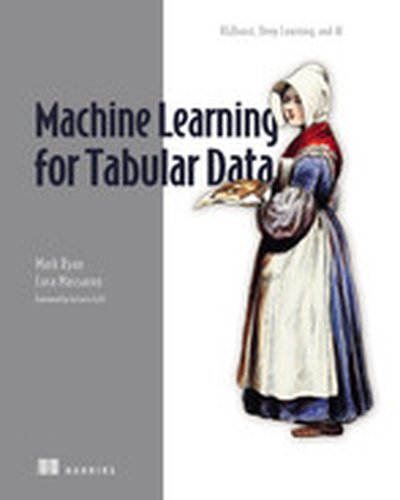
Business runs on tabular data in databases, spreadsheets, and logs. Crunch that data using deep learning, gradient boosting, and other machine learning techniques. Machine Learning for Tabular Data teaches you to train insightful machine learning models on common tabular business data sources such as spreadsheets, databases, and logs. You’ll discover how to use XGBoost and LightGBM on tabular data, optimize deep learning libraries like TensorFlow and PyTorch for tabular data, and use cloud tools like Vertex AI to create an automated MLOps pipeline. Machine Learning for Tabular Data will teach you how to: Pick the right machine learning approach for your data Apply deep learning to tabular data Deploy tabular machine learning locally and in the cloud Pipelines to automatically train and maintain a model Machine Learning for Tabular Data covers classic machine learning techniques like gradient boosting, and more contemporary deep learning approaches. By the time you’re finished, you’ll be equipped with the skills to apply machine learning to the kinds of data you work with every day. About the Technology Machine learning can accelerate everyday business chores like account reconciliation, demand forecasting, and customer service automation—not to mention more exotic challenges like fraud detection, predictive maintenance, and personalized marketing. This book shows you how to unlock the vital information stored in spreadsheets, ledgers, databases and other tabular data sources using gradient boosting, deep learning, and generative AI. About the Book Machine Learning for Tabular Data delivers practical ML techniques to upgrade every stage of the business data analysis pipeline. In it, you’ll explore examples like using XGBoost and Keras to predict short-term rental prices, deploying a local ML model with Python and Flask, and streamlining workflows using large language models (LLMs). Along the way, you’ll learn to make your models both more powerful and more explainable. What's Inside Master XGBoost Apply deep learning to tabular data Deploy models locally and in the cloud Build pipelines to train and maintain models About the Reader For readers experienced with Python and the basics of machine learning. About the Authors Mark Ryan is the AI Lead of the Developer Knowledge Platform at Google. A three-time Kaggle Grandmaster, Luca Massaron is a Google Developer Expert (GDE) in machine learning and AI. He has published 17 other books. Quotes
Supported by Our Partners • Swarmia — The engineering intelligence platform for modern software organizations. • Graphite — The AI developer productivity platform.  • Vanta — Automate compliance and simplify security with Vanta. — On today’s episode of The Pragmatic Engineer, I’m joined by Chip Huyen, a computer scientist, author of the freshly published O’Reilly book AI Engineering, and an expert in applied machine learning. Chip has worked as a researcher at Netflix, was a core developer at NVIDIA (building NeMo, NVIDIA’s GenAI framework), and co-founded Claypot AI. She also taught Machine Learning at Stanford University. In this conversation, we dive into the evolving field of AI Engineering and explore key insights from Chip’s book, including: • How AI Engineering differs from Machine Learning Engineering  • Why fine-tuning is usually not a tactic you’ll want (or need) to use • The spectrum of solutions to customer support problems – some not even involving AI! • The challenges of LLM evals (evaluations) • Why project-based learning is valuable—but even better when paired with structured learning • Exciting potential use cases for AI in education and entertainment • And more! — Timestamps (00:00) Intro  (01:31) A quick overview of AI Engineering (05:00) How Chip ensured her book stays current amidst the rapid advancements in AI (09:50) A definition of AI Engineering and how it differs from Machine Learning Engineering  (16:30) Simple first steps in building AI applications (22:53) An explanation of BM25 (retrieval system)  (23:43) The problems associated with fine-tuning  (27:55) Simple customer support solutions for rolling out AI thoughtfully  (33:44) Chip’s thoughts on staying focused on the problem  (35:19) The challenge in evaluating AI systems (38:18) Use cases in evaluating AI  (41:24) The importance of prioritizing users’ needs and experience  (46:24) Common mistakes made with Gen AI (52:12) A case for systematic problem solving  (53:13) Project-based learning vs. structured learning (58:32) Why AI is not the end of engineering (1:03:11) How AI is helping education and the future use cases we might see (1:07:13) Rapid fire round — The Pragmatic Engineer deepdives relevant for this episode: • Applied AI Software Engineering: RAG https://newsletter.pragmaticengineer.com/p/rag  • How do AI software engineering agents work? https://newsletter.pragmaticengineer.com/p/ai-coding-agents  • AI Tooling for Software Engineers in 2024: Reality Check https://newsletter.pragmaticengineer.com/p/ai-tooling-2024  • IDEs with GenAI features that Software Engineers love https://newsletter.pragmaticengineer.com/p/ide-that-software-engineers-love — See the transcript and other references from the episode at ⁠⁠https://newsletter.pragmaticengineer.com/podcast⁠⁠ — Production and marketing by ⁠⁠⁠⁠⁠⁠⁠⁠https://penname.co/⁠⁠⁠⁠⁠⁠⁠⁠. For inquiries about sponsoring the podcast, email [email protected].

Get full access to The Pragmatic Engineer at newsletter.pragmaticengineer.com/subscribe

We all know that data doesn't speak for itself, but what happens when multiple instruments of measurement contain flaws or gaps that impede our ability to measure what matters on their own? Turning to our intuition and triangulation of what's happening in the broader macro sense can often help explain our understanding of our customers' ever-changing choices, opinions, and actions. Thankfully we had Erika Olson, co-founder of fwd. — which in our opinion is essentially the Freakonomics of marketing consultancies — join Tim, Moe and Val for this discussion to dive into some real-world examples of things that are inherently hard to measure and ways to overcome those challenges. For complete show notes, including links to items mentioned in this episode and a transcript of the show, visit the show page.

How to judge the performance of marketing campaigns, who shall get the credit and how to allocate budgets? For many years Attribution was a hot topic and many questions and discussions were about how to best attribute conversions. Is this the best solution or are there others such as Marketing Mix Modelling to increase media efficiency?

talk
by Matt Gershoff (Conductrics, New York - USA)

After a period of relative quiet, the industry appears to be interested again in multi-armed bandits. To find the wheat from the chaff within the marketing hype, it is important to at least understand bandit basics: what they are; how they compare to AB Tests; when to use them; and how they work.

Tag Manager Italia collaborated with CNH to design and implement a global GA4-based data strategy, unifying analytics across their extensive operations. This session explores the whole project, with a focus on how advanced tools like BigQuery and Databricks enabled data centralization, while custom Power BI dashboards and privacy-compliant frameworks empowered informed decisions and enhanced marketing and business outcomes.

With the proliferation of SaaS ELT tools many organizations don't realize that Google BigQuery offers many ways to ingest data from different platforms for free. This presentation will walk through the most important native export and data transfer mechanisms and will show how data from these platforms can be integrated to enable a comprehensive view on digital marketing efforts for an organization. Various use cases will be presented as well to generate tangible insights from this integrated data that help increase the bottom line.

Personalization is more than a buzzword—it's a powerful tool for businesses to connect with customers on a deeper level. As data and AI technologies evolve, the ability to deliver personalized experiences becomes more accessible. But what does this mean for professionals tasked with implementing these strategies? How do you ensure that personalization efforts are both effective and respectful of customer privacy? David Edelman is a Digital and Marketing Transformation Executive Advisor, working with executives on digital and marketing transformation. He has been working in marketing and personalization since the '80s. In addition to his consultancy business, David is an Executive Teaching Fellow at Harvard Business School and a board member for several organizations. Previously, David was Chief Marketing Officer at Aetna, and a Partner at McKinsey. Forbes has repeatedly named him one of the Top 20 Most Influential Voices in Marketing, and Ad Age has named him a Top 20 Chief Marketing and Technology Officer. He is a co-author of "Personalized: Customer Strategy in the Age of AI". In this episode, Richie and David explore the power of personalization in customer experiences, the importance of understanding customer data, strategies for effective personalization, the role of AI in enhancing customer interactions, and much more. Links Mentioned in the Show: Personalized: Customer Strategy in the Age of AIConnect with DavidSkill Track: Artificial Intelligence (AI) LeadershipRelated Episode: Can You Use AI-Driven Pricing Ethically? with Jose Mendoza, Academic Director & Clinical Associate Professor at NYURewatch sessions from RADAR: Forward Edition New to DataCamp? Learn on the go using the DataCamp mobile appEmpower your business with world-class data and AI skills with DataCamp for business

Supported by Our Partners • Formation — Level up your career and compensation with Formation.  • WorkOS — The modern identity platform for B2B SaaS • Vanta — Automate compliance and simplify security with Vanta. — In today’s episode of The Pragmatic Engineer, I’m joined by Jonas Tyroller, one of the developers behind Thronefall, a minimalist indie strategy game that blends tower defense and kingdom-building, now available on Steam. Jonas takes us through the journey of creating Thronefall from start to finish, offering insights into the world of indie game development. We explore: • Why indie developers often skip traditional testing and how they find bugs • The developer workflow using Unity, C# and Blender • The two types of prototypes game developers build  • Why Jonas spent months building game prototypes in 1-2 days • How Jonas uses ChatGPT to build games • Jonas’s tips on making games that sell • And more! — Timestamps (00:00) Intro (02:07) Building in Unity (04:05) What the shader tool is used for  (08:44) How a Unity build is structured (11:01) How game developers write and debug code  (16:21) Jonas’s Unity workflow (18:13) Importing assets from Blender (21:06) The size of Thronefall and how it can be so small (24:04) Jonas’s thoughts on code review (26:42) Why practices like code review and source control might not be relevant for all contexts (30:40) How Jonas and Paul ensure the game is fun  (32:25) How Jonas and Paul used beta testing feedback to improve their game (35:14) The mini-games in Thronefall and why they are so difficult (38:14) The struggle to find the right level of difficulty for the game (41:43) Porting to Nintendo Switch (45:11) The prototypes Jonas and Paul made to get to Thronefall (46:59) The challenge of finding something you want to build that will sell (47:20) Jonas’s ideation process and how they figure out what to build  (49:35) How Thronefall evolved from a mini-game prototype (51:50) How long you spend on prototyping  (52:30) A lesson in failing fast (53:50) The gameplay prototype vs. the art prototype (55:53) How Jonas and Paul distribute work  (57:35) Next steps after having the play prototype and art prototype (59:36) How a launch on Steam works  (1:01:18) Why pathfinding was the most challenging part of building Thronefall (1:08:40) Gen AI tools for building indie games  (1:09:50) How Jonas uses ChatGPT for editing code and as a translator  (1:13:25) The pros and cons of being an indie developer  (1:15:32) Jonas’s advice for software engineers looking to get into indie game development (1:19:32) What to look for in a game design school (1:22:46) How luck figures into success and Jonas’s tips for building a game that sells (1:26:32) Rapid fire round — The Pragmatic Engineer deepdives relevant for this episode: • Game development basics https://newsletter.pragmaticengineer.com/p/game-development-basics  • Building a simple game using Unity https://newsletter.pragmaticengineer.com/p/building-a-simple-game — See the transcript and other references from the episode at ⁠⁠https://newsletter.pragmaticengineer.com/podcast⁠⁠ — Production and marketing by ⁠⁠⁠⁠⁠⁠⁠⁠https://penname.co/⁠⁠⁠⁠⁠⁠⁠⁠. For inquiries about sponsoring the podcast, email [email protected].

Get full access to The Pragmatic Engineer at newsletter.pragmaticengineer.com/subscribe

Send us a text Money Ball is back! Nancy Hensley, Chief Marketing Officer for Stats Perform, gives us the latest on data analytics in sports. If you like sports don't listen unless you have time to be entertained. Show Notes 04:09 What does Money Ball look like now?07:30 Mrs Chicago's personal update08:40 Fan website: The Analyst11:16 Stats Perform for the rest of us17:25 Sports tech competitors18:34 Monetizing data. $115M for NFL data! What?27:44 Broadcaster and PressboxLinkedin: https://www.linkedin.com/in/nancyhensley/ Website: https://statsperform.com/ Want to be featured as a guest on Making Data Simple? Reach out to us at [email protected] and tell us why you should be next. The Making Data Simple Podcast is hosted by Al Martin, WW VP Technical Sales, IBM, where we explore trending technologies, business innovation, and leadership ... while keeping it simple & fun. Want to be featured as a guest on Making Data Simple? Reach out to us at [email protected] and tell us why you should be next. The Making Data Simple Podcast is hosted by Al Martin, WW VP Technical Sales, IBM, where we explore trending technologies, business innovation, and leadership ... while keeping it simple & fun.

MakingDataSimple #MoneyBall #DataAnalytics #StatsPerform #SportsTech #MakingData Simple

Want to be featured as a guest on Making Data Simple? Reach out to us at [email protected] and tell us why you should be next. The Making Data Simple Podcast is hosted by Al Martin, WW VP Technical Sales, IBM, where we explore trending technologies, business innovation, and leadership ... while keeping it simple & fun.

Jason Touleyrou, Data Engineering Manager at Corewell Health joined Yuliia to discuss why most organizations struggle with data governance. He argues that data teams should focus on building trust through flexible systems rather than rigid controls. Challenging traditional data quality approaches, Jason suggests starting with basic freshness checks and evolving governance gradually. Drawing from his experience across healthcare and marketing analytics, he shares practical strategies for implementing governance during migrations and measuring data team value beyond conventional metrics. Jason's linkedin page - https://www.linkedin.com/in/jasontouleyrou/

Supported by Our Partners • Sonar —  Trust your developers – verify your AI-generated code. • Vanta —Automate compliance and simplify security with Vanta. — In today's episode of The Pragmatic Engineer, I'm joined by Charity Majors, a well-known observability expert – as well as someone with strong and grounded opinions. Charity is the co-author of "Observability Engineering" and brings extensive experience as an operations and database engineer and an engineering manager. She is the cofounder and CTO of observability scaleup Honeycomb. Our conversation explores the ever-changing world of observability, covering these topics: • What is observability? Charity’s take • What is “Observability 2.0?” • Why Charity is a fan of platform teams • Why DevOps is an overloaded term: and probably no longer relevant • What is cardinality? And why does it impact the cost of observability so much? • How OpenTelemetry solves for vendor lock-in  • Why Honeycomb wrote its own database • Why having good observability should be a prerequisite to adding AI code or using AI agents • And more! — Timestamps (00:00) Intro  (04:20) Charity’s inspiration for writing Observability Engineering (08:20) An overview of Scuba at Facebook (09:16) A software engineer’s definition of observability  (13:15) Observability basics (15:10) The three pillars model (17:09) Observability 2.0 and the shift to unified storage (22:50) Who owns observability and the advantage of platform teams  (25:05) Why DevOps is becoming unnecessary  (27:01) The difficulty of observability  (29:01) Why observability is so expensive  (30:49) An explanation of cardinality and its impact on cost (34:26) How to manage cost with tools that use structured data  (38:35) The common worry of vendor lock-in (40:01) An explanation of OpenTelemetry (43:45) What developers get wrong about observability  (45:40) A case for using SLOs and how they help you avoid micromanagement  (48:25) Why Honeycomb had to write their database  (51:56) Companies who have thrived despite ignoring conventional wisdom (53:35) Observability and AI  (59:20) Vendors vs. open source (1:00:45) What metrics are good for  (1:02:31) RUM (Real User Monitoring)  (1:03:40) The challenges of mobile observability  (1:05:51) When to implement observability at your startup  (1:07:49) Rapid fire round — The Pragmatic Engineer deepdives relevant for this episode: • How Uber Built its Observability Platform https://newsletter.pragmaticengineer.com/p/how-uber-built-its-observability-platform  • Building an Observability Startup https://newsletter.pragmaticengineer.com/p/chronosphere  • How to debug large distributed systems https://newsletter.pragmaticengineer.com/p/antithesis  • Shipping to production https://newsletter.pragmaticengineer.com/p/shipping-to-production  — See the transcript and other references from the episode at ⁠⁠https://newsletter.pragmaticengineer.com/podcast⁠⁠ — Production and marketing by ⁠⁠⁠⁠⁠⁠⁠⁠https://penname.co/⁠⁠⁠⁠⁠⁠⁠⁠. For inquiries about sponsoring the podcast, email [email protected].

Get full access to The Pragmatic Engineer at newsletter.pragmaticengineer.com/subscribe

Supported by Our Partners • Vanta — Automate compliance and simplify security with Vanta. • WorkOS — The modern identity platform for B2B SaaS. — In today’s episode of The Pragmatic Engineer, I’m joined by Michael Novati, Co-founder and CTO of Formation. Before launching Formation, Michael spent eight years at Meta, where he was recognized as the top code committer company-wide for several years. The “Coding Machine” archetype was modeled after Michael at the company. In our conversation, we talk about what it was like working at Meta and dive into its engineering culture. Michael shares his journey of quickly climbing the ranks from intern to principal-level and gives level-headed advice on leveling up your career. Plus, we discuss his work at Formation, where he helps engineers grow and land roles at top tech companies. In this episode, we cover: • An overview of software architect archetypes at Meta, including “the coding machine” • Meta’s org structure, levels of engineers, and career trajectories • The importance of maintaining a ‘brag list’ to showcase your achievements and impact • Meta’s engineering culture and focus on building internal tools • How beating Mark Zuckerberg in a game of Risk led to him accepting Michael’s friend request • An inside look at Meta’s hiring process • Tips for software engineers on the job market on how to do better in technical interviews • And more! — Timestamps (00:00) Intro (01:45) An explanation of archetypes at Meta, including “the coding machine” (09:14) The organizational structure and levels of software engineers at Meta (10:05) Michael’s first project re-writing the org chart as an intern at Meta (12:42) A brief overview of Michael’s work at Meta  (15:29) Meta’s engineering first culture and how Michael pushed for even more for ICs (20:03) How tenure at Meta correlated with impact  (23:47) How Michael rose through the ranks at Meta so quickly (29:30) The engineering culture at Meta, including how they value internal tools (34:00) Companies that began at Meta or founded by former employees (36:11) Facebook’s internal tool for scheduling meetings  (37:45) The product problems that came with scaling Facebook (39:25) How Michael became Facebook friends with Mark Zuckerberg  (42:05) The “Zuck review” process (44:30) How the French attacks crashed Michael’s photo inlay prototype (51:15) How the photo inlay bug was fixed  (52:58) Meta’s hiring process  (1:03:40) Insights from Michael’s work at Formation (1:09:08) Michael’s advice for experienced engineers currently searching for a job (1:11:15) Rapid fire round — The Pragmatic Engineer deepdives relevant for this episode: • Inside Meta’s engineering culture: https://newsletter.pragmaticengineer.com/p/facebook • Stacked diffs (and why you should know about them) https://newsletter.pragmaticengineer.com/p/stacked-diffs  • Engineering career paths at Big Tech and scaleups: https://newsletter.pragmaticengineer.com/p/engineering-career-paths  • Inside the story of how Meta built the Threads app: https://newsletter.pragmaticengineer.com/p/building-the-threads-app — See the transcript and other references from the episode at ⁠⁠https://newsletter.pragmaticengineer.com/podcast⁠⁠ — Production and marketing by ⁠⁠⁠⁠⁠⁠⁠⁠https://penname.co/⁠⁠⁠⁠⁠⁠⁠⁠. For inquiries about sponsoring the podcast, email [email protected].

Get full access to The Pragmatic Engineer at newsletter.pragmaticengineer.com/subscribe

podcast_episode
by Michael Toland (Pathfinder Product) , Amritha Arun Babu Mysore (Amazon; Wayfair; Klaviyo (experience across AI platforms, supply chain, and enterprise workflows))

The Data Product Management In Action podcast, brought to you by Soda and executive producer Scott Hirleman, is a platform for data product management practitioners to share insights and experiences. In this special minisode celebrating the podcast's 25th episode milestone, hosts Michael Toland and Amritha Arun Babu reflect on their journey so far. They share the key lessons they've learned, moments they've enjoyed, and their excitement for the future of data product management. From insights into AI and ML to the importance of building strong data communities and infrastructure, this episode highlights the most impactful themes and sets the stage for what’s to come in 2025. About our Host Michael Toland: Michael is a Product Management Coach and Consultant with Pathfinder Product, a Test Double Operation. He has worked in product officially since 2016, where he worked at Verizon on large scale system modernizations and migration initiatives for reference data and decision platforms. Outside of his professional career, Michael serves as the Treasurer for the New Leaders Council, mentors fellows with Venture for America, sings in the Columbus Symphony, writing satire posts for his blog Dignified Product or Test Double, depending on the topic, and is excited to be chatting with folks on Data Product Management. Connect with Michael on LinkedIn. About our Host Amritha Arun Babu Mysore: Amritha is an accomplished Product Leader with over a decade of experience building and scaling products across AI platforms, supply chain systems, and enterprise workflows in industries such as e-commerce, AI/ML, and marketing automation. At Amazon, she led machine learning platform products powering recommendation and personalization engines, building tools for model experimentation, deployment, and monitoring that improved efficiency for 1,500+ ML scientists. At Wayfair, she managed international supply chain systems, overseeing contracts, billing, product catalogs, and vendor operations, delivering cost savings and optimizing large-scale workflows. At Klaviyo, she drives both AI infrastructure and customer-facing AI tools, including recommendation engines, content generation assistants, and workflow automation agents, enabling scalable and personalized marketing workflows. Earlier, she worked on enterprise systems and revenue operations workflows, focusing on cost optimization and process improvements in complex technical environments. Amritha excels at bridging technical depth with strategic clarity, leading cross-functional teams, and delivering measurable business outcomes across diverse domains. Connect with Amritha on LinkedIn. All views and opinions expressed are those of the individuals and do not necessarily reflect their employers or anyone else.  Join the conversation on LinkedIn.  Apply to be a guest or nominate someone that you know.  Do you love what you're listening to? Please rate and review the podcast, and share it with fellow practitioners you know. Your support helps us reach more listeners and continue providing valuable insights!  .

podcast_episode
by Blake Stockman (Google; Meta; Uber; Y Combinator; founder of a tech recruitment agency) , Gergely Orosz

Supported by Our Partners • DX — DX is an engineering intelligence platform designed by leading researchers.  • Vanta — Automate compliance and simplify security with Vanta. — In today’s episode of The Pragmatic Engineer, I catch up with one of the best tech recruiters I’ve had the opportunity to work with: Blake Stockman, a former colleague of mine from Uber. Blake built a strong reputation in the recruiting world, working at tech giants like Google, Meta, and Uber. He also spent time with Y Combinator and founded his agency, where he helped both large tech companies and early-stage startups find and secure top talent. A few months ago, Blake did a career pivot: he is now studying to become a lawyer. I pounced on this perfect opportunity to have him share all that he’s seen behind-the-scenes in tech recruitment: sharing his observations unfiltered. In our conversation, Blake shares recruitment insights from his time at Facebook, Google, and Uber and his experience running his own tech recruitment agency. We discuss topics such as: • A step-by-step breakdown of hiring processes at Big Tech and startups• How to get the most out of your tech recruiter, as a candidate• Best practices for hiring managers to work with their recruiter• Why you shouldn’t disclose salary expectations upfront, plus tips for negotiating• Where to find the best startup opportunities and how to evaluate them—including understanding startup compensation• And much more! — Timestamps (00:00) Intro (01:40) Tips for working with recruiters (06:11) Why hiring managers should have more conversations with recruiters (09:48) A behind-the-scenes look at the hiring process at big tech companies  (13:38) How hiring worked at Uber when Gergely and Blake were there (16:46) An explanation of calibration in the recruitment process (18:11) A case for partnering with recruitment  (20:49) The different approaches to recruitment Blake experienced at different organizations (25:30) How hiring decisions are made  (31:34) The differences between hiring at startups vs. large, established companies (33:21) Reasons desperate decisions are made and problems that may arise (36:30) The problem of hiring solely to fill a seat (38:55) The process of the closing call (40:24) The importance of understanding equity  (43:27) Tips for negotiating  (48:38) How to find the best startup opportunities, and how to evaluate if it’s a good fit (53:58) What to include on your LinkedIn profile (55:48) A story from Uber and why you should remember to thank your recruiter (1:00:09) Rapid fire round — The Pragmatic Engineer deepdives relevant for this episode: • How GenAI is reshaping tech hiring https://newsletter.pragmaticengineer.com/p/how-genai-changes-tech-hiring • Hiring software engineers https://newsletter.pragmaticengineer.com/p/hiring-software-engineers  • Hiring an Engineering Manager https://newsletter.pragmaticengineer.com/p/hiring-engineering-managers • Hiring Junior Software Engineers https://newsletter.pragmaticengineer.com/p/hiring-junior-engineers — See the transcript and other references from the episode at ⁠⁠https://newsletter.pragmaticengineer.com/podcast⁠⁠ — Production and marketing by ⁠⁠⁠⁠⁠⁠⁠⁠https://penname.co/⁠⁠⁠⁠⁠⁠⁠⁠. For inquiries about sponsoring the podcast, email [email protected].

Get full access to The Pragmatic Engineer at newsletter.pragmaticengineer.com/subscribe

Today, we’re joined by Rich Kahn, Co-Founder and CEO of Anura, an ad fraud solution designed to improve campaign performance by accurately exposing bots, malware, and human fraud. We talk about:  Why digital marketing is a hot spot for fraudstersThe numerous benefits of reducing fraudHow to increase Return on Ad Spend (ROAS)Who is taking better advantage of AI: fraudsters or those battling fraud?

Artificial Intelligence-Enabled Businesses

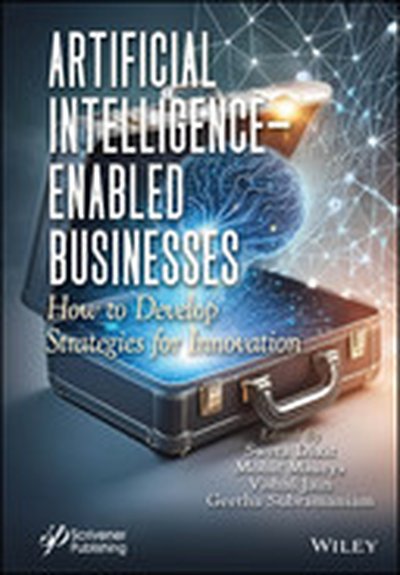
This book has a multidimensional perspective on AI solutions for business innovation and real-life case studies to achieve competitive advantage and drive growth in the evolving digital landscape. Artificial Intelligence-Enabled Businesses demonstrates how AI is a catalyst for change in business functional areas. Though still in the experimental phase, AI is instrumental in redefining the workforce, predicting consumer behavior, solving real-life marketing dynamics and modifications, recommending products and content, foreseeing demand, analyzing costs, strategizing, managing big data, enabling collaboration of cross-entities, and sparking new ethical, social and regulatory implications for business. Thus, AI can effectively guide the future of financial services, trading, mobile banking, last-mile delivery, logistics, and supply chain with a solution-oriented focus on discrete business problems. Furthermore, it is expected to educate leaders to act in an ever more accurate, complex, and sophisticated business environment with the combination of human and machine intelligence. The book offers effective, efficient, and strategically competent suggestions for handling new challenges and responsibilities and is aimed at leaders who wish to be more innovative. It covers the early stages of AI adoption by organizations across their functional areas and provides insightful guidance for practitioners in the suitable and timely adoption of AI. This book will greatly help to scale up AI by leveraging interdisciplinary collaboration with cross-functional, skill-diverse teams and result in a competitive advantage. Audience This book is for marketing professionals, organizational leaders, and researchers to leverage AI and new technologies across various business functions. It also fits the needs of academics, students, and trainers, providing insights, case studies, and practical strategies for driving growth in the rapidly evolving digital landscape.

As we look back at 2024, we're highlighting some of our favourite episodes of the year, and with 100 of them to choose from, it wasn't easy! The four guests we'll be recapping with are: Lea Pica - A celebrity in the data storytelling and visualisation space. Richie and Lea cover the full picture of data presentation, how to understand your audience, how to leverage hollywood storytelling and more. Out December 19.Alex Banks - Founder of Sunday Signal. Adel and Alex cover Alex’s journey into AI and what led him to create Sunday Signal, the potential of AI, prompt engineering at its most basic level, chain of thought prompting, the future of LLMs and more. Out December 23.Don Chamberlin - The renowned co-inventor of SQL. Richie and Don explore the early development of SQL, how it became standardized, the future of SQL through NoSQL and SQL++ and more. Out December 26.Tom Tunguz - general Partner at Theory Ventures, a $235m VC firm. Richie and Tom explore trends in generative AI, cloud+local hybrid workflows, data security, the future of business intelligence and data analytics, AI in the corporate sector and more. Out December 30. Your data project doesn't end once you have results. In order to have impact, you need to communicate those results to others. Presentations filled with endless tables and technical jargon can easily become tedious, leading your audience to lose interest or misunderstand your point. Data storytelling provides a solution to this: by creating a narrative around your results you can increase engagement and understanding from your audience. This is an art, and there are so many factors that contribute to visualizing data and creating a compelling story, it can be overwhelming. However, with the right approach, creating data stories can become second nature. In this special episode of DataFramed, we join forces with the Present Beyond Measure podcast to glean the best data presentation practices from one of the leading voices in the space. Lea Pica host of the Founder and Host of the Present Beyond Measure podcast and is a seasoned digital analytics practitioner, social media marketer and blogger with over 11 years of experience building search marketing and digital analytics practices for companies like Scholastic, Victoria’s Secret and Prudential. Present Beyond Measure’s mission is to bring their teachings to the digital marketing and web analytics communities, and empower anyone responsible for presenting data to an audience. In the full episode, Richie and Lea cover the full picture of data presentation, how to understand your audience, leverage hollywood storytelling, data storyboarding and visualization, the use of imagery in presentations, cognitive load management, the use of throughlines in presentations, how to improve your speaking and engagement skills, data visualization techniques in business setting and much more.  Links Mentioned in the Show: Present Beyond MeasureLea’s BookConnect with Lea on LinkedinHollywood Storytelling[Course] Data Storytelling Concepts New to DataCamp? Learn on the go using thea href="https://www.datacamp.com/mobile" rel="noopener...

Supported by Our Partner DX⁠ → DX is an engineering intelligence platform designed by leading researchers — In today’s episode of The Pragmatic Engineer, I’m joined by Sean Goedecke, Staff Software Engineer at GitHub. Sean is widely known for his viral blog post, “How I ship projects at big tech companies.” In our conversation, he shares how to successfully deliver projects in large tech companies.

Drawing from his experiences at GitHub and Zendesk, Sean reflects on key lessons learned, and we discuss the following topics:  • Why shipping cannot exclude keeping management happy • How to work on stuff the company actually values • Why you should take on extra responsibility to get projects done • Why technical skills are still more important than soft skills • Soft skills you should learn: including learning the “management lingo” • First-hand remote work learnings: advantages, disadvantages, and how to thrive in this setup • … and much more! — Timestamps (00:00) Intro (01:50) An explanation of shipping (05:35) Reasons management may choose to ship something customers don’t love (09:20) A humbling learning from Sean’s time at Zendesk (13:27) The importance of learning which rules need to be broken for good business outcomes (15:28) Common obstacles to shipping (18:13) DRI: Directly responsible individual (23:06) The value of strong technical skills and why moving fast is imperative (28:44) How to leverage your technical skills the right way (32:16) Advice on earning the trust of leadership (36:10) A time Gergely shipped a product for a political reason  (38:30) What GenAI helps software engineers do more easily  (41:08) Sean’s thoughts on GenAI making engineers more ambitious  (43:20) The difficulty of building AI tools (46:10) Advantages of working remotely and strategies for making it work (52:34) Who is best suited to remote work (54:48) How the pandemic provided a remote work trial for Sean (56:45) Rapid fire round — The Pragmatic Engineer deepdives relevant for this episode: • Software Engineers Leading Projects ⁠https://newsletter.pragmaticengineer.com/p/engineers-leading-projects⁠ • Shipping to production ⁠https://newsletter.pragmaticengineer.com/p/shipping-to-production⁠ • Paying down tech debt ⁠https://newsletter.pragmaticengineer.com/p/paying-down-tech-debt⁠ — See the transcript and other references from the episode at ⁠⁠https://newsletter.pragmaticengineer.com/podcast⁠⁠ — Production and marketing by ⁠⁠⁠⁠⁠⁠⁠⁠https://penname.co/⁠⁠⁠⁠⁠⁠⁠⁠. For inquiries about sponsoring the podcast, email [email protected].

Get full access to The Pragmatic Engineer at newsletter.pragmaticengineer.com/subscribe