In this episode, Kyle chats with Vince from iv.ai and Heather Shapiro who works on the Microsoft Bot Framework. We solicit their advice on building a good chatbot both creatively and technically. Our sponsor today is Warby Parker.
 talk-data.com
Topic
Microsoft
technology
software
cloud
1606
tagged
Activity Trend
556
peak/qtr
2020-Q1
2026-Q2
Top Events
Microsoft Ignite 2025
631
O'Reilly Data Engineering Books
407
O'Reilly Data Science Books
186
Microsoft Ignite 2023
82
O'Reilly SQL Books
43
O'Reilly Business Intelligence Books
24
DataFramed
22
Data Hackers
17
O'Reilly Data Visualization Books
13
DataTopics: All Things Data, AI & Tech
10
Databricks DATA + AI Summit 2023
9
Data Skeptic
9
Generate reports with style! The SAS Programmer's PROC REPORT Handbook: ODS Companion explains how to use style elements within a style template to customize reports generated by PROC REPORT, leading to more appealing and effective business reports. Many programmers are faced with generating reports that are easy to read and comprehend for a wide variety of audiences, which is where the ODS destinations and style changes come into play. This book teaches you how to use style elements in PROC REPORT, a versatile reporting procedure, to customize your output. Mastering style elements allows you to change visual aspects of reports, such as borders, column widths, fonts, backgrounds, and more. This companion to The SAS Programmer’s PROC REPORT Handbook: Basic to Advanced Reporting Techniques explores how the style elements within a style template affect the output generated by PROC REPORT. It provides examples of altering the style elements and the effect on the main ODS destinations, while also discussing common pitfalls that programmers can avoid while working with tables, Microsoft Excel, Microsoft Power Point, and PDF output.
The #1 Easy, Common-Sense Guide to SQL Queries—Updated with More Advanced Techniques and Solutions Foreword by Keith W. Hare, Vice Chair, USA SQL Standards Committee SQL Queries for Mere Mortals has earned worldwide praise as the clearest, simplest tutorial on writing effective queries with the latest SQL standards and database applications. Now, author John L. Viescas has updated this hands-on classic with even more advanced and valuable techniques. Step by step, Viescas guides you through creating reliable queries for virtually any current SQL-based database. He demystifies all aspects of SQL query writing, from simple data selection and filtering to joining multiple tables and modifying sets of data. Building on the basics, Viescas shows how to solve challenging real-world problems, including applying multiple complex conditions on one table, performing sophisticated logical evaluations, and using unlinked tables to think “outside the box.” In two brand-new chapters, you learn how to perform complex calculations on groups for sophisticated reporting, and how to partition data into windows for more flexible aggregation. Practice all you want with downloadable sample databases for today’s versions of Microsoft Office Access, Microsoft SQL Server, and the open source MySQL and PostgreSQL databases. Whether you’re a DBA, developer, user, or student, there’s no better way to master SQL. Coverage includes: Getting started: understanding what relational databases are, and ensuring that your database structures are sound SQL basics: using SELECT statements, creating expressions, sorting information with ORDER BY, and filtering data using WHERE Summarizing and grouping data with GROUP BY and HAVING clauses Drawing data from multiple tables: using INNER JOIN, OUTER JOIN, and UNION operators, and working with subqueries Modifying data sets with UPDATE, INSERT, and DELETE statements Advanced queries: complex NOT and AND, conditions, if-then-else using CASE, unlinked tables, driver tables, and more NEW! Using advanced GROUP BY keywords to create subtotals, roll-ups, and more NEW! Applying window functions to answer more sophisticated questions, and gain deeper insight into your data Software-Independent Approach! If you work with database software such as Access, MS SQL Server, Oracle, DB2, MySQL, Ingres, or any other SQL-based program, this book could save you hours of time and aggravation—before you write a single query! .
The data available to marketers -- literally at their fingertips by way of a few mouse clicks -- has exploded over the last decade. Yet, while there is more data -- and it is more accessible -- than it has ever been, the way we think about and use data has hardly evolved at all. With the recent advances in cloud computing and processing power, the industry is abuzz with talk of machine learning and artificial intelligence. How, then, will we get from the world of Microsoft Excel (or Tableau) to a world where "the machines" are automatically and dynamically optimizing all aspects of our marketing?
If you work with a media agency (or are one) the first question to ask them is how many data scientists do you have? Do you prefer Amazon Web Services, Microsoft Azure, or the Google Cloud Platform? Come see examples from one of Canada's largest retailers of advertising spending that is wasted from poor targeting, access issues, and lack of big data understanding. We will also dive into examples of broken implementations of Analytics that cause even more issues. If you are not in-sourcing the core components of your Media and Analytics you are almost certainly at risk or already suffering from many of these problems. In this session, Martin and Charles Farina will show you what you need to find the right partner, but more importantly what you also have to provide.
Written for students in undergraduate and graduate statistics courses, as well as for the practitioner who wants to make better decisions from data and models, this updated and expanded second edition of Fundamentals of Predictive Analytics with JMP(R) bridges the gap between courses on basic statistics, which focus on univariate and bivariate analysis, and courses on data mining and predictive analytics. Going beyond the theoretical foundation, this book gives you the technical knowledge and problem-solving skills that you need to perform real-world multivariate data analysis. First, this book teaches you to recognize when it is appropriate to use a tool, what variables and data are required, and what the results might be. Second, it teaches you how to interpret the results and then, step-by-step, how and where to perform and evaluate the analysis in JMP . Using JMP 13 and JMP 13 Pro, this book offers the following new and enhanced features in an example-driven format: an add-in for Microsoft Excel Graph Builder dirty data visualization regression ANOVA logistic regression principal component analysis LASSO elastic net cluster analysis decision trees k-nearest neighbors neural networks bootstrap forests boosted trees text mining association rules model comparison With today’s emphasis on business intelligence, business analytics, and predictive analytics, this second edition is invaluable to anyone who needs to expand his or her knowledge of statistics and to apply real-world, problem-solving analysis. This book is part of the SAS Press program.
Quickly find solutions to dozens of common problems encountered while using XML and JSON features that are built into SQL Server. Content is presented in the popular problem-solution format. Look up the problem that you want to solve. Read the solution. Apply the solution directly in your own code. Problem solved! This book shows how to take advantage of XML and JSON to share data and automate tasks. JSON is commonly used to move data back and forth between the database and front-end applications, often running in a browser. This book shows all you need to know about transforming query results into JSON format, and back again. Also covered are the processes and techniques for moving data into and out of XML format for business intelligence and other purposes, such as when transferring data from a reporting system into a data warehouse, or between different database brands such as between SQL Server and Oracle. Microsoft intensively implements XML in SQL Server, and in many related products. Execution plans are generated in XML format, and this book shows you how to parse those plans and automate the detection of performance problems. The relatively new Extended Events feature writes tracing data into XML files, and the recipes in this book help in parsing those files. XML is also used in SQL Server's BI tool set, including in SSIS, SSR, and SSAS. XML is used in many configuration files, and is even behind the construction of DDL triggers. In reading this book you’ll dive deeply into the features that allow you to build and parse XML, and also JSON, which is a specific format of XML used to transmit objects in a web-friendly format between a database and its front-end applications. What You Will Learn Build XML and JSON objects in support of automation and data transfer Import and parse XML and JSON from operating system files Build appropriate indexes on XML objects to improve query performance Move data from query result sets into JSON format, and back again Automate the detection of database performance problems by querying and parsing the database’s own execution plans Replace external and manual JSON processes with SQL Server's internal, JSON functionality Who This Book Is For Database administrators, .NET developers, business intelligence developers, and other professionals who want a deep and detailed skill set around working with XML and JSON in a SQL Server database environment. Web developers will particularly find the book useful for its coverage of transforming database result sets into JSON text that can be transmitted to front-end web applications.
Deliver eye-catching Business Intelligence with Microsoft Power BI Desktop. This new edition has been updated to cover all the latest features, including combo charts, Cartesian charts, trend lines, use of gauges, and more. Also covered are Top-N features, the ability to bin data into groupings and chart the groupings, and new techniques for detecting and handling outlier data points. You can take data from virtually any source and use it to produce stunning dashboards and compelling reports that will seize your audience’s attention. Slice and dice the data with remarkable ease and then add metrics and KPIs to project the insights that create your competitive advantage. Make raw data into clear, accurate, and interactive information with Microsoft’s free self-service business intelligence tool. Pro Power BI Desktop shows you how to choose from a wide range of built-in and third-party visualization types so that your message is always enhanced. You’ll be able to deliver those results on the PC, tablets, and smartphones, as well as share results via the cloud. This book helps you save time by preparing the underlying data correctly without needing an IT department to prepare it for you. What You'll Learn Deliver attention-grabbing information, turning data into insight Mash up data from multiple sources into a cleansed and coherent data model Create dashboards that help in monitoring key performance indicators of your business Build interdependent charts, maps, and tables to deliver visually stunning information Share business intelligence in the cloud without involving IT Deliver visually stunning and interactive charts, maps, and tables Find new insights as you chop and tweak your data as never before Adapt delivery to mobile devices such as phones and tablets Who This Book Is For Everyone from CEOs and Business Intelligence developers to power users and IT managers
Prepare for Microsoft Exam 70-765–and help demonstrate your real-world mastery of provisioning SQL Server databases both on premise and in SQL Azure. Designed for experienced IT professionals ready to advance their status, Exam Ref focuses on the critical thinking and decision-making acumen needed for success at the MCSA level. Focus on the expertise measured by these objectives: • Implement SQL in Azure • Manage databases and instances • Manage storage This Microsoft Exam Ref: • Organizes its coverage by exam objectives • Features strategic, what-if scenarios to challenge you • Assumes you have working knowledge of SQL Server administration and maintenance, as well as Azure skills Provisioning SQL Databases About the Exam Exam 70-765 focuses on skills and knowledge for provisioning, upgrading, and configuring SQL Server; managing databases and files; and provisioning, migrating, and managing databases in the Microsoft Azure cloud. About Microsoft Certification Passing this exam as well as Exam 70-764: Administering a SQL Database Infrastructure earns you MCSA: SQL 2016 Database Administration certification, qualifying you for a position as a database administrator or infrastructure specialist. See full details at: microsoft.com/learning
I sat down with Ali Ghodsi, CEO and found of Databricks, and John Chirapurath, GM for Data Platform Marketing at Microsoft related to the recent announcement of Azure Databricks. When I heard about the announcement, my first thoughts were two-fold. First, the possibility of optimized integrations with existing Azure services. This would be a big benefit to heavy Azure users who also want to use Spark. Second, the benefits of active directory to control Databricks access for large enterprise. Hear Ali and JG's thoughts and comments on what makes Azure Databricks a novel offering.
Master the basics of XML as well as the namespaces and objects you need to know in order to work efficiently with XML. You’ll learn extensive support for XML in everything from data access to configuration, from raw parsing to code documentation. You will see clear, practical examples that illustrate best practices in implementing XML APIs and services as part of your C#-based Windows 10 applications. Beginning XML with C# 7 is completely revised to cover the XML features of .NET Framework 4.7 using C# 7 programming language. In this update, you’ll discover the tight integration of XML with ADO.NET and LINQ as well as additional .NET support for today’s RESTful web services and Web API. Written by a Microsoft Most Valuable Professional and developer, this book demystifies everything to do with XML and C# 7. What You Will Learn: Discover how XML works with the .NET Framework Read, write, access, validate, and manipulate XML documents Transform XML with XSLT Use XML serialization and web services Combine XML in ADO.NET and SQL Server Create services using Windows Communication Foundation Work with LINQ Use XML with Web API and more Who This Book Is For : Those with experience in C# and .NET new to the nuances of using XML. Some XML experience is helpful.
Prepare for Microsoft Exam 70-767–and help demonstrate your real-world mastery of skills for managing data warehouses. This exam is intended for Extract, Transform, Load (ETL) data warehouse developers who create business intelligence (BI) solutions. Their responsibilities include data cleansing as well as ETL and data warehouse implementation. The reader should have experience installing and implementing a Master Data Services (MDS) model, using MDS tools, and creating a Master Data Manager database and web application. The reader should understand how to design and implement ETL control flow elements and work with a SQL Service Integration Services package. Focus on the expertise measured by these objectives: • Design, and implement, and maintain a data warehouse • Extract, transform, and load data • Build data quality solutionsThis Microsoft Exam Ref: • Organizes its coverage by exam objectives • Features strategic, what-if scenarios to challenge you • Assumes you have working knowledge of relational database technology and incremental database extraction, as well as experience with designing ETL control flows, using and debugging SSIS packages, accessing and importing or exporting data from multiple sources, and managing a SQL data warehouse. Implementing a SQL Data Warehouse About the Exam Exam 70-767 focuses on skills and knowledge required for working with relational database technology. About Microsoft Certification Passing this exam earns you credit toward a Microsoft Certified Professional (MCP) or Microsoft Certified Solutions Associate (MCSA) certification that demonstrates your mastery of data warehouse management Passing this exam as well as Exam 70-768 (Developing SQL Data Models) earns you credit toward a Microsoft Certified Solutions Associate (MCSA) SQL 2016 Business Intelligence (BI) Development certification. See full details at: microsoft.com/learning
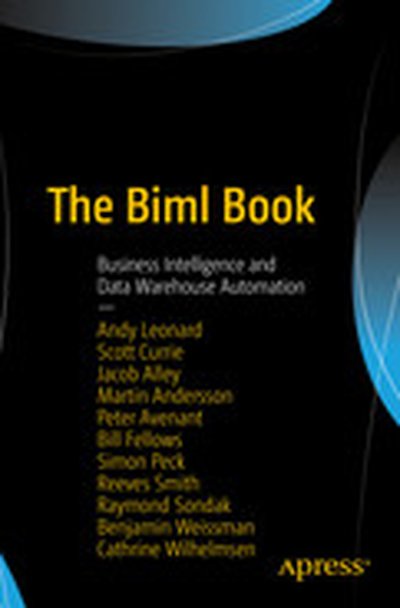
Learn Business Intelligence Markup Language (Biml) for automating much of the repetitive, manual labor involved in data integration. We teach you how to build frameworks and use advanced Biml features to get more out of SQL Server Integration Services (SSIS), Transact-SQL (T-SQL), and SQL Server Analysis Services (SSAS) than you ever thought possible. The first part of the book starts with the basics—getting your development environment configured, Biml syntax, and scripting essentials. Whether a beginner or a seasoned Biml expert, the next part of the book guides you through the process of using Biml to build a framework that captures both your design patterns and execution management. Design patterns are reusable code blocks that standardize the approach you use to perform certain types of data integration, logging, and other key data functions. Design patterns solve common problems encountered when developing data integration solutions. Because you do not have to build the code from scratch each time, design patterns improve your efficiency as a Biml developer. In addition to leveraging design patterns in your framework, you will learn how to build a robust metadata store and how to package your framework into Biml bundles for deployment within your enterprise. In the last part of the book, we teach you more advanced Biml features and capabilities, such as SSAS development, T-SQL recipes, documentation autogeneration, and Biml troubleshooting. The Biml Book: Provides practical and applicable examples Teaches you how to use Biml to reduce development time while improving quality Takes you through solutions to common data integration and BI challenges What You'll Learn Master the basics of Business Intelligence Markup Language (Biml) Study patterns for automating SSIS package generation Build a Biml Framework Import and transform database schemas Automate generation of scripts and projects Who This Book Is For BI developers wishing to quickly locate previously tested solutions, Microsoft BI specialists, those seeking more information about solution automation and code generation, and practitioners of Data Integration Lifecycle Management (DILM) in the DevOps enterprise
In this episode, Microsoft's Corporate Vice President for Cloud Artificial Intelligence, Joseph Sirosh, joins host Kyle Polich to share some of the Microsoft's latest and most exciting innovations in AI development platforms. Last month, Microsoft launched a set of three powerful new capabilities in Azure Machine Learning for advanced developers to exploit big data, GPUs, data wrangling and container-based model deployment. Extended show notes found here. Thanks to our sponsor Springboard. Check out Springboard's Data Science Career Track Bootcamp.

Prepare for Microsoft Exam 70-764—and help demonstrate your real-world mastery of skills for database administration. This exam is intended for database administrators charged with installation, maintenance, and configuration tasks. Their responsibilities also include setting up database systems, making sure those systems operate efficiently, and regularly storing, backing up, and securing data from unauthorized access. Focus on the expertise measured by these objectives: Configure data access and auditing Manage backup and restore of databases Manage and monitor SQL Server instances Manage high availability and disaster recovery This Microsoft Exam Ref: Organizes its coverage by exam objectives Features strategic, what-if scenarios to challenge you Assumes you have working knowledge of database installation, configuration, and maintenance tasks. You should also have experience with setting up database systems, ensuring those systems operate efficiently, regularly storing and backing up data, and securing data from unauthorized access. About the Exam Exam 70-764 focuses on skills and knowledge required for database administration. About Microsoft Certification Passing both Exam 70-764 and Exam 70-765 (Provisioning SQL Databases) earns you credit toward an MCSA: SQL 2016 Database Administration certification. See full details at: microsoft.com/learning
Explore the power of combining Node.js and MongoDB to build modern, scalable web applications in 'Web Development with MongoDB and Node.' You'll not only learn how to integrate these two technologies effectively, but you'll also gain practical insights into using modern frameworks like Express and Angular to build feature-rich web apps. What this Book will help me do Master core concepts of Node.js and MongoDB for efficient web development. Learn to build and configure a web server using the Express.js framework. Implement data persistence with MongoDB using the Mongoose ODM library. Automate testing using tools like Mocha and streamline workflows with Gulp. Deploy applications to cloud platforms like Heroku, AWS, and Microsoft Azure. Author(s) Jason Krol and None Joseph D'mello, along with None Satheesh, bring extensive experience in web development and technical writing to this book. The authors have collectively worked on cutting-edge web technologies for years and are passionate about sharing their expertise to help developers create efficient web applications. Who is it for? This book is perfect for JavaScript developers at any proficiency level who are looking to expand their skills into full-stack development with Node.js and MongoDB. Even if you have a basic understanding of JavaScript and HTML, this book will guide you through building complete web applications from scratch. If you're eager to learn and create performant, scalable web apps, this book is for you.
This comprehensive guide dives deep into the Power BI platform, teaching you how to create insightful data models, reports, and dashboards that drive business decisions. With hands-on recipes and real-world examples, this book is a practical resource for mastering the full range of Power BI's capabilities. What this Book will help me do Understand and apply data cleansing and transformation using Power BI tools. Create and utilize intuitive data models for business intelligence reporting. Leverage DAX and M languages for advanced data analysis and custom solutions. Build dynamic, user-specific dashboards and visualizations for impactful insights. Integrate Power BI with Microsoft Excel, SQL Server, and cloud services for extended functionality. Author(s) None Powell is an experienced data analyst and Microsoft BI solution architect with extensive expertise in Power BI. He has worked on numerous BI projects, providing practical solutions using Microsoft's data platform technologies. Through detailed, scenario-based writing, he shares his knowledge to help readers excel in their BI endeavors. Who is it for? This book is perfect for business intelligence professionals and analysts seeking to expand their skills in Power BI. Ideal readers may have foundational Power BI knowledge and look to master advanced techniques. If you aim to build impactful BI solutions and are motivated to handle complex data integrations, this book will be instrumental.
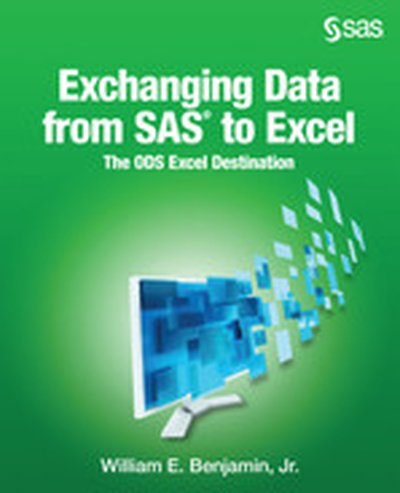
Microsoft Excel remains the leading spreadsheet application on the market; nearly every SAS user will need to move their data and reports into Excel workbooks at some point during their career. Exchanging Data From SAS(R) to Excel: The ODS Excel Destination shows SAS users how to create Excel workbooks that are presentation ready, eliminating manual changes to the workbooks after creation.
While the original book Exchanging Data between SAS and Microsoft Excel: Tips and Techniques to Transfer and Manage Data More Efficiently touched upon many topics involved in moving data between SAS and Excel, this companion book delves into the options that are available with the ODS Excel destination. This book also has numerous examples that include syntax and graphical output.
With this book, you can learn how to:
Create native Excel files

Insert graphs and images into Excel files

Place multiple tables on multiple tabs within the file

Customize spreadsheets with workbook-level options, print features, column features, row features, and cell-level features
Exchanging Data from SAS® to Excel: The ODS Excel Destination will make sending your output and graphics to Excel a breeze, enhancing any presentation!
Book + Content Update Program SQL Server 2016 High Availability Unleashed provides start-to-finish coverage of SQL Server’s powerful high availability (HA) solutions for your traditional on-premise databases, cloud-based databases (Azure or AWS), hybrid databases (on-premise coupled with the cloud), and your emerging Big Data solutions. This complete guide introduces an easy-to-follow, formal HA methodology that has been refined over the past several years and helps you identity the right HA solution for your needs. There is also additional coverage of both disaster recovery and business continuity architectures and considerations. You are provided with step-by-step guides, examples, and sample code to help you set up, manage, and administer these highly available solutions. All examples are based on existing production deployments at major Fortune 500 companies around the globe. This book is for all intermediate-to-advanced SQL Server and Big Data professionals, but is also organized so that the first few chapters are great foundation reading for CIOs, CTOs, and even some tech-savvy CFOs. Learn a formal, high availability methodology for understanding and selecting the right HA solution for your needs Deep dive into Microsoft Cluster Services Use selective data replication topologies Explore thorough details on AlwaysOn and availability groups Learn about HA options with log shipping and database mirroring/ snapshots Get details on Microsoft Azure for Big Data and Azure SQL Explore business continuity and disaster recovery Learn about on-premise, cloud, and hybrid deployments Provide all types of database needs, including online transaction processing, data warehouse and business intelligence, and Big Data Explore the future of HA and disaster recovery In addition, this book is part of InformIT’s exciting Content Update Program, which provides content updates for major technology improvements! As significant updates are made to SQL Server, sections of this book will be updated or new sections will be added to match the updates to the technologies. As updates become available, they will be delivered to you via a free Web Edition of this book, which can be accessed with any Internet connection. To learn more, visit informit.com/cup. How to access the Web Edition: Follow the instructions inside to learn how to register your book to access the FREE Web Edition. * The companion material is not available with the online edition on O'Reilly Learning
Until recently, Hadoop deployments existed on hardware owned and run by organizations. Now, of course, you can acquire the computing resources and network connectivity to run Hadoop clusters in the cloud. But there’s a lot more to deploying Hadoop to the public cloud than simply renting machines. This hands-on guide shows developers and systems administrators familiar with Hadoop how to install, use, and manage cloud-born clusters efficiently. You’ll learn how to architect clusters that work with cloud-provider features—not just to avoid pitfalls, but also to take full advantage of these services. You’ll also compare the Amazon, Google, and Microsoft clouds, and learn how to set up clusters in each of them. Learn how Hadoop clusters run in the cloud, the problems they can help you solve, and their potential drawbacks Examine the common concepts of cloud providers, including compute capabilities, networking and security, and storage Build a functional Hadoop cluster on cloud infrastructure, and learn what the major providers require Explore use cases for high availability, relational data with Hive, and complex analytics with Spark Get patterns and practices for running cloud clusters, from designing for price and security to dealing with maintenance