talk-data.com talk-data.com

Topic

PySpark

big_data distributed_computing python

21

tagged

Activity Trend

14 peak/qtr
2020-Q1 2026-Q1

Activities

21 activities · Newest first

High Performance Spark, 2nd Edition

Apache Spark is amazing when everything clicks. But if you haven't seen the performance improvements you expected or still don't feel confident enough to use Spark in production, this practical book is for you. Authors Holden Karau, Rachel Warren, and Anya Bida walk you through the secrets of the Spark code base, and demonstrate performance optimizations that will help your data pipelines run faster, scale to larger datasets, and avoid costly antipatterns. Ideal for data engineers, software engineers, data scientists, and system administrators, the second edition of High Performance Spark presents new use cases, code examples, and best practices for Spark 3.x and beyond. This book gives you a fresh perspective on this continually evolving framework and shows you how to work around bumps on your Spark and PySpark journey. With this book, you'll learn how to: Accelerate your ML workflows with integrations including PyTorch Handle key skew and take advantage of Spark's new dynamic partitioning Make your code reliable with scalable testing and validation techniques Make Spark high performance Deploy Spark on Kubernetes and similar environments Take advantage of GPU acceleration with RAPIDS and resource profiles Get your Spark jobs to run faster Use Spark to productionize exploratory data science projects Handle even larger datasets with Spark Gain faster insights by reducing pipeline running times
Applied Data Science Using PySpark: Learn the End-to-End Predictive Model-Building Cycle

This comprehensive guide, featuring hand-picked examples of daily use cases, will walk you through the end-to-end predictive model-building cycle using the latest techniques and industry tricks. In Chapters 1, 2, and 3, we will begin by setting up the environment and covering the basics of PySpark, focusing on data manipulation. Chapter 4 delves into the art of variable selection, demonstrating various techniques available in PySpark. In Chapters 5, 6, and 7, we explore machine learning algorithms, their implementations, and fine-tuning techniques. Chapters 8 and 9 will guide you through machine learning pipelines and various methods to operationalize and serve models using Docker/API. Chapter 10 will demonstrate how to unlock the power of predictive models to create a meaningful impact on your business. Chapter 11 introduces some of the most widely used and powerful modeling frameworks to unlock real value from data. In this new edition, you will learn predictive modeling frameworks that can quantify customer lifetime values and estimate the return on your predictive modeling investments. This edition also includes methods to measure engagement and identify actionable populations for effective churn treatments. Additionally, a dedicated chapter on experimentation design has been added, covering steps to efficiently design, conduct, test, and measure the results of your models. All code examples have been updated to reflect the latest stable version of Spark. You will: Gain an overview of end-to-end predictive model building Understand multiple variable selection techniques and their implementations Learn how to operationalize models Perform data science experiments and learn useful tips

Distributed Machine Learning with PySpark: Migrating Effortlessly from Pandas and Scikit-Learn

Migrate from pandas and scikit-learn to PySpark to handle vast amounts of data and achieve faster data processing time. This book will show you how to make this transition by adapting your skills and leveraging the similarities in syntax, functionality, and interoperability between these tools. Distributed Machine Learning with PySpark offers a roadmap to data scientists considering transitioning from small data libraries (pandas/scikit-learn) to big data processing and machine learning with PySpark. You will learn to translate Python code from pandas/scikit-learn to PySpark to preprocess large volumes of data and build, train, test, and evaluate popular machine learning algorithms such as linear and logistic regression, decision trees, random forests, support vector machines, Naïve Bayes, and neural networks. After completing this book, you will understand the foundational concepts of data preparation and machine learning and will have the skills necessary toapply these methods using PySpark, the industry standard for building scalable ML data pipelines. What You Will Learn Master the fundamentals of supervised learning, unsupervised learning, NLP, and recommender systems Understand the differences between PySpark, scikit-learn, and pandas Perform linear regression, logistic regression, and decision tree regression with pandas, scikit-learn, and PySpark Distinguish between the pipelines of PySpark and scikit-learn Who This Book Is For Data scientists, data engineers, and machine learning practitioners who have some familiarity with Python, but who are new to distributed machine learning and the PySpark framework.

The Azure Data Lakehouse Toolkit: Building and Scaling Data Lakehouses on Azure with Delta Lake, Apache Spark, Databricks, Synapse Analytics, and Snowflake

Design and implement a modern data lakehouse on the Azure Data Platform using Delta Lake, Apache Spark, Azure Databricks, Azure Synapse Analytics, and Snowflake. This book teaches you the intricate details of the Data Lakehouse Paradigm and how to efficiently design a cloud-based data lakehouse using highly performant and cutting-edge Apache Spark capabilities using Azure Databricks, Azure Synapse Analytics, and Snowflake. You will learn to write efficient PySpark code for batch and streaming ELT jobs on Azure. And you will follow along with practical, scenario-based examples showing how to apply the capabilities of Delta Lake and Apache Spark to optimize performance, and secure, share, and manage a high volume, high velocity, and high variety of data in your lakehouse with ease. The patterns of success that you acquire from reading this book will help you hone your skills to build high-performing and scalable ACID-compliant lakehouses using flexible and cost-efficient decoupled storage and compute capabilities. Extensive coverage of Delta Lake ensures that you are aware of and can benefit from all that this new, open source storage layer can offer. In addition to the deep examples on Databricks in the book, there is coverage of alternative platforms such as Synapse Analytics and Snowflake so that you can make the right platform choice for your needs. After reading this book, you will be able to implement Delta Lake capabilities, including Schema Evolution, Change Feed, Live Tables, Sharing, and Clones to enable better business intelligence and advanced analytics on your data within the Azure Data Platform. What You Will Learn Implement the Data Lakehouse Paradigm on Microsoft’s Azure cloud platform Benefit from the new Delta Lake open-source storage layer for data lakehouses Take advantage of schema evolution, change feeds, live tables, and more Writefunctional PySpark code for data lakehouse ELT jobs Optimize Apache Spark performance through partitioning, indexing, and other tuning options Choose between alternatives such as Databricks, Synapse Analytics, and Snowflake Who This Book Is For Data, analytics, and AI professionals at all levels, including data architect and data engineer practitioners. Also for data professionals seeking patterns of success by which to remain relevant as they learn to build scalable data lakehouses for their organizations and customers who are migrating into the modern Azure Data Platform.

Advanced Analytics with PySpark

The amount of data being generated today is staggering and growing. Apache Spark has emerged as the de facto tool to analyze big data and is now a critical part of the data science toolbox. Updated for Spark 3.0, this practical guide brings together Spark, statistical methods, and real-world datasets to teach you how to approach analytics problems using PySpark, Spark's Python API, and other best practices in Spark programming. Data scientists Akash Tandon, Sandy Ryza, Uri Laserson, Sean Owen, and Josh Wills offer an introduction to the Spark ecosystem, then dive into patterns that apply common techniques-including classification, clustering, collaborative filtering, and anomaly detection, to fields such as genomics, security, and finance. This updated edition also covers NLP and image processing. If you have a basic understanding of machine learning and statistics and you program in Python, this book will get you started with large-scale data analysis. Familiarize yourself with Spark's programming model and ecosystem Learn general approaches in data science Examine complete implementations that analyze large public datasets Discover which machine learning tools make sense for particular problems Explore code that can be adapted to many uses

Data Algorithms with Spark

Apache Spark's speed, ease of use, sophisticated analytics, and multilanguage support makes practical knowledge of this cluster-computing framework a required skill for data engineers and data scientists. With this hands-on guide, anyone looking for an introduction to Spark will learn practical algorithms and examples using PySpark. In each chapter, author Mahmoud Parsian shows you how to solve a data problem with a set of Spark transformations and algorithms. You'll learn how to tackle problems involving ETL, design patterns, machine learning algorithms, data partitioning, and genomics analysis. Each detailed recipe includes PySpark algorithms using the PySpark driver and shell script. With this book, you will: Learn how to select Spark transformations for optimized solutions Explore powerful transformations and reductions including reduceByKey(), combineByKey(), and mapPartitions() Understand data partitioning for optimized queries Build and apply a model using PySpark design patterns Apply motif-finding algorithms to graph data Analyze graph data by using the GraphFrames API Apply PySpark algorithms to clinical and genomics data Learn how to use and apply feature engineering in ML algorithms Understand and use practical and pragmatic data design patterns

Data Analysis with Python and PySpark

Think big about your data! PySpark brings the powerful Spark big data processing engine to the Python ecosystem, letting you seamlessly scale up your data tasks and create lightning-fast pipelines. In Data Analysis with Python and PySpark you will learn how to: Manage your data as it scales across multiple machines Scale up your data programs with full confidence Read and write data to and from a variety of sources and formats Deal with messy data with PySpark’s data manipulation functionality Discover new data sets and perform exploratory data analysis Build automated data pipelines that transform, summarize, and get insights from data Troubleshoot common PySpark errors Creating reliable long-running jobs Data Analysis with Python and PySpark is your guide to delivering successful Python-driven data projects. Packed with relevant examples and essential techniques, this practical book teaches you to build pipelines for reporting, machine learning, and other data-centric tasks. Quick exercises in every chapter help you practice what you’ve learned, and rapidly start implementing PySpark into your data systems. No previous knowledge of Spark is required. About the Technology The Spark data processing engine is an amazing analytics factory: raw data comes in, insight comes out. PySpark wraps Spark’s core engine with a Python-based API. It helps simplify Spark’s steep learning curve and makes this powerful tool available to anyone working in the Python data ecosystem. About the Book Data Analysis with Python and PySpark helps you solve the daily challenges of data science with PySpark. You’ll learn how to scale your processing capabilities across multiple machines while ingesting data from any source—whether that’s Hadoop clusters, cloud data storage, or local data files. Once you’ve covered the fundamentals, you’ll explore the full versatility of PySpark by building machine learning pipelines, and blending Python, pandas, and PySpark code. What's Inside Organizing your PySpark code Managing your data, no matter the size Scale up your data programs with full confidence Troubleshooting common data pipeline problems Creating reliable long-running jobs About the Reader Written for data scientists and data engineers comfortable with Python. About the Author As a ML director for a data-driven software company, Jonathan Rioux uses PySpark daily. He teaches the software to data scientists, engineers, and data-savvy business analysts. Quotes A clear and in-depth introduction for truly tackling big data with Python. - Gustavo Patino, Oakland University William Beaumont School of Medicine The perfect way to learn how to analyze and master huge datasets. - Gary Bake, Brambles Covers both basic and more advanced topics of PySpark, with a good balance between theory and hands-on. - Philippe Van Bergenl, P² Consulting For beginner to pro, a well-written book to help understand PySpark. - Raushan Kumar Jha, Microsoft

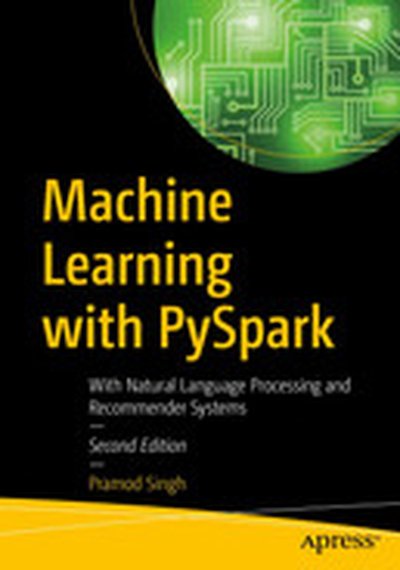
Machine Learning with PySpark: With Natural Language Processing and Recommender Systems

Master the new features in PySpark 3.1 to develop data-driven, intelligent applications. This updated edition covers topics ranging from building scalable machine learning models, to natural language processing, to recommender systems. Machine Learning with PySpark, Second Edition begins with the fundamentals of Apache Spark, including the latest updates to the framework. Next, you will learn the full spectrum of traditional machine learning algorithm implementations, along with natural language processing and recommender systems. You’ll gain familiarity with the critical process of selecting machine learning algorithms, data ingestion, and data processing to solve business problems. You’ll see a demonstration of how to build supervised machine learning models such as linear regression, logistic regression, decision trees, and random forests. You’ll also learn how to automate the steps using Spark pipelines, followed by unsupervised models such as K-means and hierarchical clustering. A section on Natural Language Processing (NLP) covers text processing, text mining, and embeddings for classification. This new edition also introduces Koalas in Spark and how to automate data workflow using Airflow and PySpark’s latest ML library. After completing this book, you will understand how to use PySpark’s machine learning library to build and train various machine learning models, along with related components such as data ingestion, processing and visualization to develop data-driven intelligent applications What you will learn: Build a spectrum of supervised and unsupervised machine learning algorithms Use PySpark's machine learning library to implement machine learning and recommender systems Leverage the new features in PySpark’s machine learning library Understand data processing using Koalas in Spark Handle issues around feature engineering, class balance, bias andvariance, and cross validation to build optimally fit models Who This Book Is For Data science and machine learning professionals.

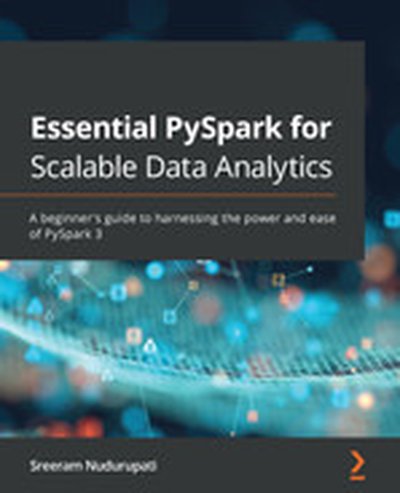
Essential PySpark for Scalable Data Analytics

Dive into the world of scalable data processing with 'Essential PySpark for Scalable Data Analytics'. This book is a comprehensive guide that helps beginners understand and utilize PySpark to process, analyze, and draw insights from large datasets effectively. With hands-on tutorials and clear explanations, you will gain the confidence to tackle big data analytics challenges. What this Book will help me do Understand and apply the distributed computing paradigm for big data. Learn to perform scalable data ingestion, cleansing, and preparation using PySpark. Create and utilize data lakes and the Lakehouse paradigm for efficient data storage and access. Develop and deploy machine learning models with scalability in mind. Master real-time analytics pipelines and create impactful data visualizations. Author(s) None Nudurupati is an experienced data engineer and educator, specializing in distributed systems and big data technologies. With years of practical experience in the field, None brings a clear and approachable teaching style to technical topics. Passionate about empowering readers, the author has designed this book to be both practical and inspirational for aspiring data practitioners. Who is it for? This book is ideal for data professionals including data scientists, engineers, and analysts looking to scale their data analytics processes. It assumes familiarity with basic data science concepts and Python, as well as some experience with SQL-like data analysis. This is particularly suitable for individuals aiming to expand their knowledge in distributed computing and PySpark to handle big data challenges. Achieving scalable and efficient data solutions is at the core of this guide.

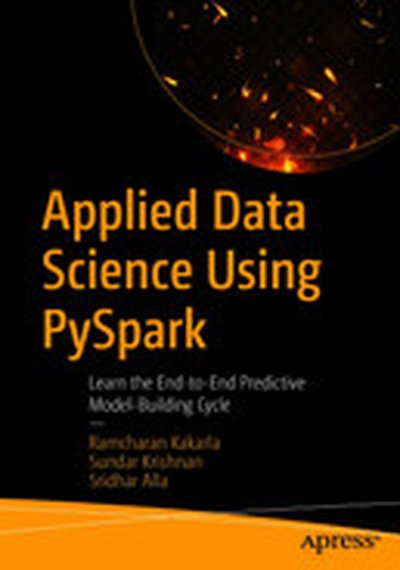
Applied Data Science Using PySpark: Learn the End-to-End Predictive Model-Building Cycle

Discover the capabilities of PySpark and its application in the realm of data science. This comprehensive guide with hand-picked examples of daily use cases will walk you through the end-to-end predictive model-building cycle with the latest techniques and tricks of the trade. Applied Data Science Using PySpark is divided unto six sections which walk you through the book. In section 1, you start with the basics of PySpark focusing on data manipulation. We make you comfortable with the language and then build upon it to introduce you to the mathematical functions available off the shelf. In section 2, you will dive into the art of variable selection where we demonstrate various selection techniques available in PySpark. In section 3, we take you on a journey through machine learning algorithms, implementations, and fine-tuning techniques. We will also talk about different validation metrics and how to use them for picking the best models. Sections 4 and 5 go through machine learning pipelines and various methods available to operationalize the model and serve it through Docker/an API. In the final section, you will cover reusable objects for easy experimentation and learn some tricks that can help you optimize your programs and machine learning pipelines. By the end of this book, you will have seen the flexibility and advantages of PySpark in data science applications. This book is recommended to those who want to unleash the power of parallel computing by simultaneously working with big datasets. What You Will Learn Build an end-to-end predictive model Implement multiple variable selection techniques Operationalize models Master multiple algorithms and implementations Who This Book is For Data scientists and machine learning and deep learning engineers who want to learn and use PySpark for real-time analysis of streamingdata.

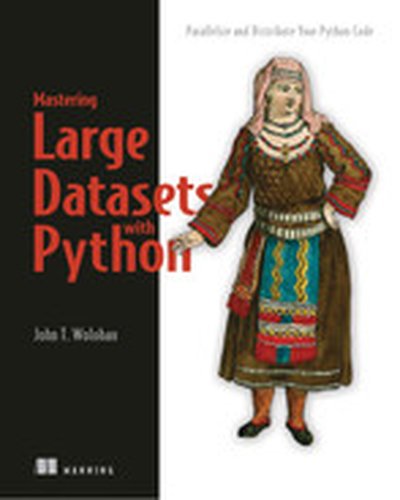
Mastering Large Datasets with Python

Modern data science solutions need to be clean, easy to read, and scalable. In Mastering Large Datasets with Python, author J.T. Wolohan teaches you how to take a small project and scale it up using a functionally influenced approach to Python coding. You’ll explore methods and built-in Python tools that lend themselves to clarity and scalability, like the high-performing parallelism method, as well as distributed technologies that allow for high data throughput. The abundant hands-on exercises in this practical tutorial will lock in these essential skills for any large-scale data science project. About the Technology Programming techniques that work well on laptop-sized data can slow to a crawl—or fail altogether—when applied to massive files or distributed datasets. By mastering the powerful map and reduce paradigm, along with the Python-based tools that support it, you can write data-centric applications that scale efficiently without requiring codebase rewrites as your requirements change. About the Book Mastering Large Datasets with Python teaches you to write code that can handle datasets of any size. You’ll start with laptop-sized datasets that teach you to parallelize data analysis by breaking large tasks into smaller ones that can run simultaneously. You’ll then scale those same programs to industrial-sized datasets on a cluster of cloud servers. With the map and reduce paradigm firmly in place, you’ll explore tools like Hadoop and PySpark to efficiently process massive distributed datasets, speed up decision-making with machine learning, and simplify your data storage with AWS S3. What's Inside An introduction to the map and reduce paradigm Parallelization with the multiprocessing module and pathos framework Hadoop and Spark for distributed computing Running AWS jobs to process large datasets About the Reader For Python programmers who need to work faster with more data. About the Author J. T. Wolohan is a lead data scientist at Booz Allen Hamilton, and a PhD researcher at Indiana University, Bloomington. Quotes A clear and efficient path to mastery of the map and reduce paradigm for developers of all levels. - Justin Fister, GrammarBot An amazing book for anybody looking to add parallel processing and the map/reduce pattern to their toolkit. - Gary Bake, Radius Payment Solutions Learn fundamentals of MapReduce and other core concepts and save money on expensive hardware! - Al Krinker, USPTO A comprehensive guide to the fundamentals of efficient Python data processing. - Craig Pfeifer, MITRE Corporation

Learn PySpark: Build Python-based Machine Learning and Deep Learning Models

Leverage machine and deep learning models to build applications on real-time data using PySpark. This book is perfect for those who want to learn to use this language to perform exploratory data analysis and solve an array of business challenges. You'll start by reviewing PySpark fundamentals, such as Spark’s core architecture, and see how to use PySpark for big data processing like data ingestion, cleaning, and transformations techniques. This is followed by building workflows for analyzing streaming data using PySpark and a comparison of various streaming platforms. You'll then see how to schedule different spark jobs using Airflow with PySpark and book examine tuning machine and deep learning models for real-time predictions. This book concludes with a discussion on graph frames and performing network analysis using graph algorithms in PySpark. All the code presented in the book will be available in Python scripts on Github. What You'll Learn Develop pipelines for streaming data processing using PySpark Build Machine Learning & Deep Learning models using PySpark latest offerings Use graph analytics using PySpark Create Sequence Embeddings from Text data Who This Book is For Data Scientists, machine learning and deep learning engineers who want to learn and use PySpark for real time analysis on streaming data.

Data Science with Python and Dask

Dask is a native parallel analytics tool designed to integrate seamlessly with the libraries you’re already using, including Pandas, NumPy, and Scikit-Learn. With Dask you can crunch and work with huge datasets, using the tools you already have. And Data Science with Python and Dask is your guide to using Dask for your data projects without changing the way you work! About the Technology An efficient data pipeline means everything for the success of a data science project. Dask is a flexible library for parallel computing in Python that makes it easy to build intuitive workflows for ingesting and analyzing large, distributed datasets. Dask provides dynamic task scheduling and parallel collections that extend the functionality of NumPy, Pandas, and Scikit-learn, enabling users to scale their code from a single laptop to a cluster of hundreds of machines with ease. About the Book Data Science with Python and Dask teaches you to build scalable projects that can handle massive datasets. After meeting the Dask framework, you’ll analyze data in the NYC Parking Ticket database and use DataFrames to streamline your process. Then, you’ll create machine learning models using Dask-ML, build interactive visualizations, and build clusters using AWS and Docker. What's Inside Working with large, structured and unstructured datasets Visualization with Seaborn and Datashader Implementing your own algorithms Building distributed apps with Dask Distributed Packaging and deploying Dask apps About the Reader For data scientists and developers with experience using Python and the PyData stack. About the Author Jesse Daniel is an experienced Python developer. He taught Python for Data Science at the University of Denver and leads a team of data scientists at a Denver-based media technology company. We interviewed Jesse as a part of our Six Questions series. Check it out here. Quotes The most comprehensive coverage of Dask to date, with real-world examples that made a difference in my daily work. - Al Krinker, United States Patent and Trademark Office An excellent alternative to PySpark for those who are not on a cloud platform. The author introduces Dask in a way that speaks directly to an analyst. - Jeremy Loscheider, Panera Bread A greatly paced introduction to Dask with real-world datasets. - George Thomas, R&D Architecture Manhattan Associates The ultimate resource to quickly get up and running with Dask and parallel processing in Python. - Gustavo Patino, Oakland University William Beaumont School of Medicine

Hands-On Big Data Analytics with PySpark

Dive into the exciting world of big data analytics with 'Hands-On Big Data Analytics with PySpark'. This practical guide offers you the tools and knowledge to tackle massive datasets using PySpark. By exploring real-world examples, you'll learn to unleash the power of distributed systems to analyze and manipulate data at scale. What this Book will help me do Master using PySpark to handle large and complex datasets efficiently and effectively. Develop skills to optimize Spark programs using best practices like reducing shuffle operations. Learn to set up a PySpark environment, process data from platforms like HDFS, Hive, and S3. Enhance your data analytics capabilities by implementing powerful SQL queries and data visualizations. Understand testing and debugging techniques to build reliable, production-quality data pipelines. Author(s) Authored by Rudy Lai and Bartłomiej Potaczek, both seasoned data engineers and authors in the big data field. Rudy and Bartłomiej bring their extensive experience working with distributed systems and scalable data architectures into this book. Their approach is hands-on, focusing on real-world applications and best practices. Who is it for? This book is tailored for data scientists, engineers, and developers eager to advance their big data analytics capabilities. Whether you're new to big data or experienced with other analytics frameworks, this book will equip you with practical knowledge to utilize PySpark for scalable data solutions.

PySpark SQL Recipes: With HiveQL, Dataframe and Graphframes

Carry out data analysis with PySpark SQL, graphframes, and graph data processing using a problem-solution approach. This book provides solutions to problems related to dataframes, data manipulation summarization, and exploratory analysis. You will improve your skills in graph data analysis using graphframes and see how to optimize your PySpark SQL code. PySpark SQL Recipes starts with recipes on creating dataframes from different types of data source, data aggregation and summarization, and exploratory data analysis using PySpark SQL. You’ll also discover how to solve problems in graph analysis using graphframes. On completing this book, you’ll have ready-made code for all your PySpark SQL tasks, including creating dataframes using data from different file formats as well as from SQL or NoSQL databases. What You Will Learn Understand PySpark SQL and its advanced features Use SQL and HiveQL with PySpark SQL Work with structured streaming Optimize PySpark SQL Master graphframes and graph processing Who This Book Is For Data scientists, Python programmers, and SQL programmers.

Machine Learning with PySpark: With Natural Language Processing and Recommender Systems

Build machine learning models, natural language processing applications, and recommender systems with PySpark to solve various business challenges. This book starts with the fundamentals of Spark and its evolution and then covers the entire spectrum of traditional machine learning algorithms along with natural language processing and recommender systems using PySpark. Machine Learning with PySpark shows you how to build supervised machine learning models such as linear regression, logistic regression, decision trees, and random forest. You’ll also see unsupervised machine learning models such as K-means and hierarchical clustering. A major portion of the book focuses on feature engineering to create useful features with PySpark to train the machine learning models. The natural language processing section covers text processing, text mining, and embedding for classification. After reading thisbook, you will understand how to use PySpark’s machine learning library to build and train various machine learning models. Additionally you’ll become comfortable with related PySpark components, such as data ingestion, data processing, and data analysis, that you can use to develop data-driven intelligent applications. What You Will Learn Build a spectrum of supervised and unsupervised machine learning algorithms Implement machine learning algorithms with Spark MLlib libraries Develop a recommender system with Spark MLlib libraries Handle issues related to feature engineering, class balance, bias and variance, and cross validation for building an optimal fit model Who This Book Is For Data science and machine learning professionals.

PySpark Cookbook

Dive into the world of big data processing and analytics with the "PySpark Cookbook". This book provides over 60 hands-on recipes for implementing efficient data-intensive solutions using Apache Spark and Python. By mastering these recipes, you'll be equipped to tackle challenges in large-scale data processing, machine learning, and stream analytics. What this Book will help me do Set up and configure PySpark environments effectively, including working with Jupyter for enhanced interactivity. Understand and utilize DataFrames for data manipulation, analysis, and transformation tasks. Develop end-to-end machine learning solutions using the ML and MLlib modules in PySpark. Implement structured streaming and graph-processing solutions to analyze and visualize data streams and relationships. Deploy PySpark applications to the cloud infrastructure efficiently using best practices. Author(s) This book is co-authored by None Lee and None Drabas, who are experienced professionals in data processing and analytics leveraging Python and Apache Spark. With their deep technical expertise and a passion for teaching through practical examples, they aim to make the complex concepts of PySpark accessible to developers of varied experience levels. Who is it for? This book is ideal for Python developers who are keen to delve into the Apache Spark ecosystem. Whether you're just starting with big data or have some experience with Spark, this book provides practical recipes to enhance your skills. Readers looking to solve real-world data-intensive challenges using PySpark will find this resource invaluable.

PySpark Recipes: A Problem-Solution Approach with PySpark2

Quickly find solutions to common programming problems encountered while processing big data. Content is presented in the popular problem-solution format. Look up the programming problem that you want to solve. Read the solution. Apply the solution directly in your own code. Problem solved! PySpark Recipes covers Hadoop and its shortcomings. The architecture of Spark, PySpark, and RDD are presented. You will learn to apply RDD to solve day-to-day big data problems. Python and NumPy are included and make it easy for new learners of PySpark to understand and adopt the model. What You Will Learn Understand the advanced features of PySpark2 and SparkSQL Optimize your code Program SparkSQL with Python Use Spark Streaming and Spark MLlib with Python Perform graph analysis with GraphFrames Who This Book Is For Data analysts, Python programmers, big data enthusiasts

Learning PySpark

"Learning PySpark" guides you through mastering the integration of Python with Apache Spark to build scalable and efficient data applications. You'll delve into Spark 2.0's architecture, efficiently process data, and explore PySpark's capabilities ranging from machine learning to structured streaming. By the end, you'll be equipped to craft and deploy robust data pipelines and applications. What this Book will help me do Master the Spark 2.0 architecture and its Python integration with PySpark. Leverage PySpark DataFrames and RDDs for effective data manipulation and analysis. Develop scalable machine learning models using PySpark's ML and MLlib libraries. Understand advanced PySpark features such as GraphFrames for graph processing and TensorFrames for deep learning models. Gain expertise in deploying PySpark applications locally and on the cloud for production-ready solutions. Author(s) Authors None Drabas and None Lee bring extensive experience in data engineering and Python programming. They combine a practical, example-driven approach with deep insights into Apache Spark's ecosystem. Their expertise and clarity in writing make this book accessible for individuals aiming to excel in big data technologies with Python. Who is it for? This book is best suited for Python developers who want to integrate Apache Spark 2.0 into their workflow to process large-scale data. Ideal readers will have foundational knowledge of Python and seek to build scalable data-intensive applications using Spark, regardless of prior experience with Spark itself.

Interactive Spark using PySpark

Apache Spark is an in-memory framework that allows data scientists to explore and interact with big data much more quickly than with Hadoop. Python users can work with Spark using an interactive shell called PySpark. Why is it important? PySpark makes the large-scale data processing capabilities of Apache Spark accessible to data scientists who are more familiar with Python than Scala or Java. This also allows for reuse of a wide variety of Python libraries for machine learning, data visualization, numerical analysis, etc. What you'll learn—and how you can apply it Compare the different components provided by Spark, and what use cases they fit. Learn how to use RDDs (resilient distributed datasets) with PySpark. Write Spark applications in Python and submit them to the cluster as Spark jobs. Get an introduction to the Spark computing framework. Apply this approach to a worked example to determine the most frequent airline delays in a specific month and year. This lesson is for you because… You're a data scientist, familiar with Python coding, who needs to get up and running with PySpark You're a Python developer who needs to leverage the distributed computing resources available on a Hadoop cluster, without learning Java or Scala first Prerequisites Familiarity with writing Python applications Some familiarity with bash command-line operations Basic understanding of how to use simple functional programming constructs in Python, such as closures, lambdas, maps, etc. Materials or downloads needed in advance Apache Spark This lesson is taken from by Jenny Kim and Benjamin Bengfort. Data Analytics with Hadoop