talk-data.com talk-data.com

Topic

Cyber Security

cybersecurity information_security data_security privacy

2078

tagged

Activity Trend

297 peak/qtr
2020-Q1 2026-Q1

Activities

2078 activities · Newest first

Getting Started with Elastic Stack 8.0

Discover how to harness the power of the Elastic Stack 8.0 to manage, analyze, and secure complex data environments. You will learn to combine components such as Elasticsearch, Kibana, Logstash, and more to build scalable and effective solutions for your organization. By focusing on hands-on implementations, this book ensures you can apply your knowledge to real-world use cases. What this Book will help me do Set up and manage Elasticsearch clusters tailored to various architecture scenarios. Utilize Logstash and Elastic Agent to ingest and process diverse data sources efficiently. Create interactive dashboards and data models in Kibana, enabling business intelligence insights. Implement secure and effective search infrastructures for enterprise applications. Deploy Elastic SIEM to fortify your organization's security against modern cybersecurity threats. Author(s) Asjad Athick is a seasoned technologist and author with expertise in developing scalable data solutions. With years of experience working with the Elastic Stack, Asjad brings a pragmatic approach to teaching complex architectures. His dedication to explaining technical concepts in an accessible manner makes this book a valuable resource for learners. Who is it for? This book is ideal for developers seeking practical knowledge in search, observability, and security solutions using Elastic Stack. Solutions architects who aim to design scalable data platforms will also benefit greatly. Even tech leads or managers keen to understand the Elastic Stack's impact on their operations will find the insights valuable. No prior experience with Elastic Stack is needed.

IBM TS4500 R8 Tape Library Guide

The IBM® TS4500 (TS4500) tape library is a next-generation tape solution that offers higher storage density and better integrated management than previous solutions. This IBM Redbooks® publication gives you a close-up view of the new IBM TS4500 tape library. In the TS4500, IBM delivers the density that today's and tomorrow's data growth requires. It has the cost-effectiveness and the manageability to grow with business data needs, while you preserve investments in IBM tape library products. Now, you can achieve a low per-terabyte cost and high density, with up to 13 PB of data (up to 39 PB compressed) in a single 10 square-foot library by using LTO Ultrium 9 cartridges or 11 PB with 3592 cartridges. The TS4500 offers the following benefits: Support of the IBM Linear Tape-Open (LTO) Ultrium 9 tape drive: Store up to 1.04 EB 2.5:1 compressed per library with IBM LTO 9 cartridges. High availability: Dual active accessors with integrated service bays reduce inactive service space by 40%. The Elastic Capacity option can be used to eliminate inactive service space. Flexibility to grow: The TS4500 library can grow from the right side and the left side of the first L frame because models can be placed in any active position. Increased capacity: The TS4500 can grow from a single L frame up to another 17 expansion frames with a capacity of over 23,000 cartridges. High-density (HD) generation 1 frames from the TS3500 library can be redeployed in a TS4500. Capacity on demand (CoD): CoD is supported through entry-level, intermediate, and base-capacity configurations. Advanced Library Management System (ALMS): ALMS supports dynamic storage management, which enables users to create and change logical libraries and configure any drive for any logical library. Support for IBM TS1160 while also supporting TS1155, TS1150, and TS1140 tape drive. The TS1160 gives organizations an easy way to deliver fast access to data, improve security, and provide long-term retention, all at a lower cost than disk solutions. The TS1160 offers high-performance, flexible data storage with support for data encryption. Also, this enhanced fifth-generation drive can help protect investments in tape automation by offering compatibility with existing automation. Store up to 1.05 EB 3:1 compressed per library with IBM 3592 cartridges Integrated TS7700 back-end Fibre Channel (FC) switches are available. Up to four library-managed encryption (LME) key paths per logical library are available. This book describes the TS4500 components, feature codes, specifications, supported tape drives, encryption, new integrated management console (IMC), command-line interface (CLI), and REST over SCSI (RoS) to obtain status information about library components. You learn how to accomplish the following tasks: Improve storage density with increased expansion frame capacity up to 2.4 times, and support 33% more tape drives per frame

Data Lakehouse in Action

"Data Lakehouse in Action" provides a comprehensive exploration of the Data Lakehouse architecture, a modern solution for scalable and effective large-scale analytics. This book guides you through understanding the principles and components of the architecture, and its implementation using cloud platforms like Azure. Learn the practical techniques for designing robust systems tailored to organizational needs and maturity. What this Book will help me do Understand the evolution and need for modern data architecture patterns like Data Lakehouse. Learn how to design systems for data ingestion, storage, processing, and serving in a Data Lakehouse. Develop best practices for data governance and security in the Data Lakehouse architecture. Discover various analytics workflows enabled by the Data Lakehouse, including real-time and batch approaches. Implement practical Data Lakehouse patterns on a cloud platform, and integrate them with macro-patterns such as Data Mesh. Author(s) Pradeep Menon is a seasoned data architect and engineer with extensive experience implementing data analytics solutions for leading companies. With a penchant for simplifying complex architectures, Pradeep has authored several technical publications and frequently shares his expertise at industry conferences. His hands-on approach and passion for teaching shine through in his practical guides. Who is it for? This book is ideal for data professionals including architects, engineers, and data strategists eager to enhance their knowledge in modern analytics platforms. If you have a basic understanding of data architecture and are curious about implementing systems governed by the Data Lakehouse paradigm, this book is for you. It bridges foundational concepts with advanced practices, making it suitable for learners aiming to contribute effectively to their organization's analytics efforts.

IBM Spectrum Virtualize, IBM FlashSystem, and IBM SAN Volume Controller Security Feature Checklist

IBM Spectrum® Virtualize based storage systems are secure storage platforms that implement various security-related features, in terms of system-level access controls and data-level security features. This document outlines the available security features and options of IBM Spectrum Virtualize based storage systems. It is not intended as a "how to" or best practice document. Instead, it is a checklist of features that can be reviewed by a user security team to aid in the definition of a policy to be followed when implementing IBM FlashSystem®, IBM SAN Volume Controller, and IBM Spectrum Virtualize for Public Cloud. The topics that are discussed in this paper can be broadly split into two categories: System security This type of security encompasses the first three lines of defense that prevent unauthorized access to the system, protect the logical configuration of the storage system, and restrict what actions users can perform. It also ensures visibility and reporting of system level events that can be used by a Security Information and Event Management (SIEM) solution, such as IBM QRadar®. Data security This type of security encompasses the fourth line of defense. It protects the data that is stored on the system against theft, loss, or attack. These data security features include, but are not limited to, encryption of data at rest (EDAR) or IBM Safeguarded Copy (SGC). This document is correct as of IBM Spectrum Virtualize version 8.5.0.

Multimedia Security, Volume 1

Today, more than 80% of the data transmitted over networks and archived on our computers, tablets, cell phones or clouds is multimedia data - images, videos, audio, 3D data. The applications of this data range from video games to healthcare, and include computer-aided design, video surveillance and biometrics. It is becoming increasingly urgent to secure this data, not only during transmission and archiving, but also during its retrieval and use. Indeed, in today’s "all-digital" world, it is becoming ever-easier to copy data, view it unrightfully, steal it or falsify it. Multimedia Security 1 analyzes the issues of the authentication of multimedia data, code and the embedding of hidden data, both from the point of view of defense and attack. Regarding the embedding of hidden data, it also covers invisibility, color, tracing and 3D data, as well as the detection of hidden messages in an image by steganalysis.

Getting Started with CockroachDB

"Getting Started with CockroachDB" provides an in-depth introduction to CockroachDB, a modern, distributed SQL database designed for cloud-native applications. Through this guide, you'll learn how to deploy, manage, and optimize CockroachDB to build highly reliable, scalable database solutions tailored for demanding and distributed workloads. What this Book will help me do Understand the architecture and design principles of CockroachDB and its fault-tolerant model. Learn how to set up and manage CockroachDB clusters for high availability and automatic scaling. Discover the concepts of data distribution and geo-partitioning to achieve low-latency global interactions. Explore indexing mechanisms in CockroachDB to optimize query performance for fast data retrieval. Master operational strategies, security configuration, and troubleshooting techniques for database management. Author(s) Kishen Das Kondabagilu Rajanna is an experienced software developer and database expert with a deep interest in distributed architectures. With hands-on experience working with CockroachDB and other database technologies, Kishen is passionate about sharing actionable insights with readers. His approach focuses on equipping developers with practical skills to excel in building and managing scalable, efficient database services. Who is it for? This book is ideal for software developers, database administrators, and database engineers seeking to learn CockroachDB for building robust, scalable database systems. If you're new to CockroachDB but possess basic database knowledge, this guide will equip you with the practical skills to leverage CockroachDB's capabilities effectively.

Cyber Resilient Infrastructure: Detect, Protect, and Mitigate Threats Against Brocade SAN FOS with IBM QRadar

Enterprise networks are large and rely on numerous connected endpoints to ensure smooth operational efficiency. However, they also present a challenge from a security perspective. The focus of this Blueprint is to demonstrate an early threat detection against the network fabric that is powered by Brocade that uses IBM® QRadar®. It also protects the same if a cyberattack or an internal threat by rouge user within the organization occurs. The publication also describes how to configure the syslog that is forwarding on Brocade SAN FOS. Finally, it explains how the forwarded audit events are used for detecting the threat and runs the custom action to mitigate the threat. The focus of this publication is to proactively start a cyber resilience workflow from IBM QRadar to block an IP address when multiple failed logins on Brocade switch are detected. As part of early threat detection, a sample rule that us used by IBM QRadar is shown. A Python script that also is used as a response to block the user's IP address in the switch is provided. Customers are encouraged to create control path or data path use cases, customized IBM QRadar rules, and custom response scripts that are best-suited to their environment. The use cases, QRadar rules, and Python script that are presented here are templates only and cannot be used as-is in an environment.

Snowflake Access Control: Mastering the Features for Data Privacy and Regulatory Compliance

Understand the different access control paradigms available in the Snowflake Data Cloud and learn how to implement access control in support of data privacy and compliance with regulations such as GDPR, APPI, CCPA, and SOX. The information in this book will help you and your organization adhere to privacy requirements that are important to consumers and becoming codified in the law. You will learn to protect your valuable data from those who should not see it while making it accessible to the analysts whom you trust to mine the data and create business value for your organization. Snowflake is increasingly the choice for companies looking to move to a data warehousing solution, and security is an increasing concern due to recent high-profile attacks. This book shows how to use Snowflake's wide range of features that support access control, making it easier to protect data access from the data origination point all the way to the presentation and visualization layer.Reading this book helps you embrace the benefits of securing data and provide valuable support for data analysis while also protecting the rights and privacy of the consumers and customers with whom you do business. What You Will Learn Identify data that is sensitive and should be restricted Implement access control in the Snowflake Data Cloud Choose the right access control paradigm for your organization Comply with CCPA, GDPR, SOX, APPI, and similar privacy regulations Take advantage of recognized best practices for role-based access control Prevent upstream and downstream services from subverting your access control Benefit from access control features unique to the Snowflake Data Cloud Who This Book Is For Data engineers, database administrators, and engineering managers who wantto improve their access control model; those whose access control model is not meeting privacy and regulatory requirements; those new to Snowflake who want to benefit from access control features that are unique to the platform; technology leaders in organizations that have just gone public and are now required to conform to SOX reporting requirements

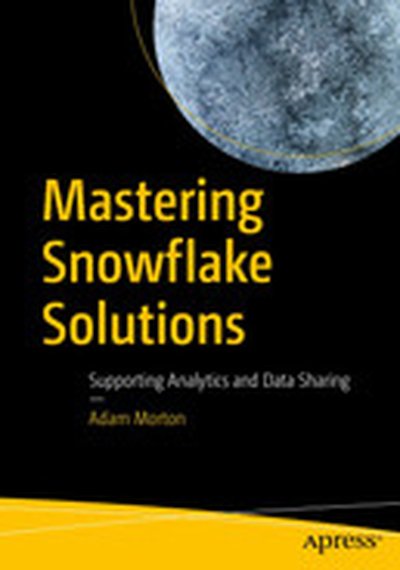
Mastering Snowflake Solutions: Supporting Analytics and Data Sharing

Design for large-scale, high-performance queries using Snowflake’s query processing engine to empower data consumers with timely, comprehensive, and secure access to data. This book also helps you protect your most valuable data assets using built-in security features such as end-to-end encryption for data at rest and in transit. It demonstrates key features in Snowflake and shows how to exploit those features to deliver a personalized experience to your customers. It also shows how to ingest the high volumes of both structured and unstructured data that are needed for game-changing business intelligence analysis. Mastering Snowflake Solutions starts with a refresher on Snowflake’s unique architecture before getting into the advanced concepts that make Snowflake the market-leading product it is today. Progressing through each chapter, you will learn how to leverage storage, query processing, cloning, data sharing, and continuous data protection features. This approach allows for greater operational agility in responding to the needs of modern enterprises, for example in supporting agile development techniques via database cloning. The practical examples and in-depth background on theory in this book help you unleash the power of Snowflake in building a high-performance system with little to no administrative overhead. Your result from reading will be a deep understanding of Snowflake that enables taking full advantage of Snowflake’s architecture to deliver value analytics insight to your business. What You Will Learn Optimize performance and costs associated with your use of the Snowflake data platform Enable data security to help in complying with consumer privacy regulations such as CCPA and GDPR Share data securely both inside your organization and with external partners Gain visibility to each interaction with your customersusing continuous data feeds from Snowpipe Break down data silos to gain complete visibility your business-critical processes Transform customer experience and product quality through real-time analytics Who This Book Is for Data engineers, scientists, and architects who have had some exposure to the Snowflake data platform or bring some experience from working with another relational database. This book is for those beginning to struggle with new challenges as their Snowflake environment begins to mature, becoming more complex with ever increasing amounts of data, users, and requirements. New problems require a new approach and this book aims to arm you with the practical knowledge required to take advantage of Snowflake’s unique architecture to get the results you need.

Welcome to the Qrvey Podcast. In today’s episode we’re talking to Nick Durkin, Field CTO and VP of Field Engineering at Harness. He has experience in all kinds of areas, from investing to understanding architecture, so he’s the perfect guest to kick off our podcast!   Nick shares some of his knowledge around how SaaS companies can grow and scale faster, the importance of time and speed in the SaaS niche, and the biggest challenges facing companies here.   We discuss the importance of SaaS companies understanding their core competencies and focusing on what they do best. We also dive into the pros and cons associated with using third-party tools instead of developing everything themselves. Nick talks about the trends of the cloud age, like serverless architecture, and how important they are. Is this the only way to go?   Finally, Nick explains the importance of people when building companies, and creating a positive environment and culture for collaboration between everyone involved.   This episode is brought to you by Qrvey The tools you need to take action with your data, on a platform built for maximum scalability, security, and cost efficiencies. If you’re ready to reduce complexity and dramatically lower costs, contact us today at qrvey.com. Qrvey, the modern no-code analytics solution for SaaS companies on AWS.

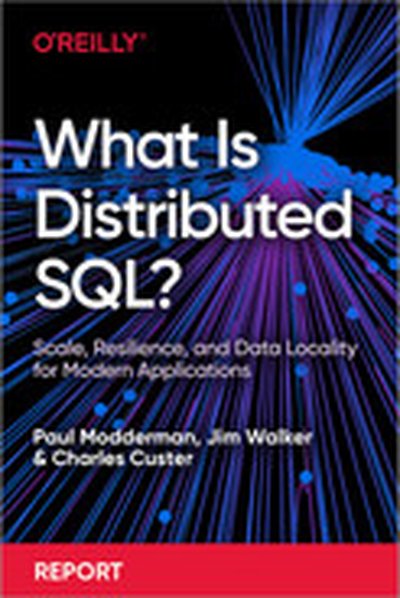
What Is Distributed SQL?

Globally available resources have become the status quo. They're accessible, distributed, and resilient. Our traditional SQL database options haven't kept up. Centralized SQL databases, even those with read replicas in the cloud, put all the transactional load on a central system. The further away that a transaction happens from the user, the more the user experience suffers. If the transactional data powering the application is greatly slowed down, fast-loading web pages mean nothing. In this report, Paul Modderman, Jim Walker, and Charles Custer explain how distributed SQL fits all applications and eliminates complex challenges like sharding from traditional RDBMS systems. You'll learn how distributed SQL databases can reach global scale without introducing the consistency trade-offs found in NoSQL solutions. These databases come to life through cloud computing, while legacy databases simply can't rise to meet the elastic and ubiquitous new paradigm. You'll learn: Key concepts driving this new technology, including the CAP theorem, the Raft consensus algorithm, multiversion concurrency control, and Google Spanner How distributed SQL databases meet enterprise requirements, including management, security, integration, and Everything as a Service (XaaS) The impact that distributed SQL has already made in the telecom, retail, and gaming industries Why serverless computing is an ideal fit for distributed SQL How distributed SQL can help you expand your company's strategic plan

Summary There are many dimensions to the work of protecting the privacy of users in our data. When you need to share a data set with other teams, departments, or businesses then it is of utmost importance that you eliminate or obfuscate personal information. In this episode Will Thompson explores the many ways that sensitive data can be leaked, re-identified, or otherwise be at risk, as well as the different strategies that can be employed to mitigate those attack vectors. He also explains how he and his team at Privacy Dynamics are working to make those strategies more accessible to organizations so that you can focus on all of the other tasks required of you.

Announcements

Hello and welcome to the Data Engineering Podcast, the show about modern data management When you’re ready to build your next pipeline, or want to test out the projects you hear about on the show, you’ll need somewhere to deploy it, so check out our friends at Linode. With their managed Kubernetes platform it’s now even easier to deploy and scale your workflows, or try out the latest Helm charts from tools like Pulsar and Pachyderm. With simple pricing, fast networking, object storage, and worldwide data centers, you’ve got everything you need to run a bulletproof data platform. Go to dataengineeringpodcast.com/linode today and get a $100 credit to try out a Kubernetes cluster of your own. And don’t forget to thank them for their continued support of this show! Today’s episode is Sponsored by Prophecy.io – the low-code data engineering platform for the cloud. Prophecy provides an easy-to-use visual interface to design & deploy data pipelines on Apache Spark & Apache Airflow. Now all the data users can use software engineering best practices – git, tests and continuous deployment with a simple to use visual designer. How does it work? – You visually design the pipelines, and Prophecy generates clean Spark code with tests on git; then you visually schedule these pipelines on Airflow. You can observe your pipelines with built in metadata search and column level lineage. Finally, if you have existing workflows in AbInitio, Informatica or other ETL formats that you want to move to the cloud, you can import them automatically into Prophecy making them run productively on Spark. Create your free account today at dataengineeringpodcast.com/prophecy. The only thing worse than having bad data is not knowing that you have it. With Bigeye’s data observability platform, if there is an issue with your data or data pipelines you’ll know right away and can get it fixed before the business is impacted. Bigeye let’s data teams measure, improve, and communicate the quality of your data to company stakeholders. With complete API access, a user-friendly interface, and automated yet flexible alerting, you’ve got everything you need to establish and maintain trust in your data. Go to dataengineeringpodcast.com/bigeye today to sign up and start trusting your analyses. Your host is Tobias Macey and today I’m interviewing Will Thompson about managing data privacy concerns for data sets used in analytics and machine learning

Interview

Introduction How did you get involved in the area of data management? Data privacy is a multi-faceted problem domain. Can you start by enumerating the different categories of privacy concern that are involved in analytical use cases? Can you describe what Privacy Dynamics is and the story behind it?

Which categor(y|ies) are you focused on addressing?

What are some of the best practices in the definition, protection, and enforcement of data privacy policies?

Is there a data security/privacy equivalent to the OWASP top 10?

What are some of the techniques that are available for anonymizing data while maintaining statistical utility/significance?

What are some of the engineering/systems capabilities that are required for data (platform) engineers to incorporate these practices in their platforms?

What are the tradeoffs of encryption vs. obfuscation when anonymizing data? What are some of the types of PII that are non-obvious? What are the risks associated with data re-identification, and what are some of the vectors that might be exploited to achieve that?

How can privacy risks mitigation be maintained as new data sources are introduced that might contribute to these re-identification vectors?

Can you describe how Privacy Dynamics is implemented?

What are the most challenging engineering problems that you are dealing with?

How do you approach validation of a data set’s privacy? What have you found to be useful heuristics for identifying private data?

What are the risks of false positives vs. false negatives?

Can you describe what is involved in integrating the Privacy Dynamics system into an existing data platform/warehouse?

What would be required to integrate with systems such as Presto, Clickhouse, Druid, etc.?

What are the most interesting, innovative, or unexpected ways that you have seen Privacy Dynamics used? What are the most interesting, unexpected, or challenging lessons that you have learned while working on Privacy Dynamics? When is Privacy Dynamics the wrong choice? What do you have planned for the future of Privacy Dynamics?

Contact Info

LinkedIn @willseth on Twitter

Parting Question

From your perspective, what is the biggest gap in the tooling or technology for data management today?

Closing Announcements

Thank you for listening! Don’t forget to check out our other show, Podcast.init to learn about the Python language, its community, and the innovative ways it is being used. Visit the site to subscribe to the show, sign up for the mailing list, and read the show notes. If you’ve learned something or tried out a project from the show then tell us about it! Email [email protected]) with your story. To help other people find the show please leave a review on iTunes and tell your friends and co-workers

Links

Privacy Dynamics Pandas

Podcast Episode – Pandas For Data Engineering

Homomorphic Encryption Differential Privacy Immuta

Podcast Episode

The intro and outro music is from The Hug by The Freak Fandango Orchestra / CC BY-SA

Support Data Engineering Podcast

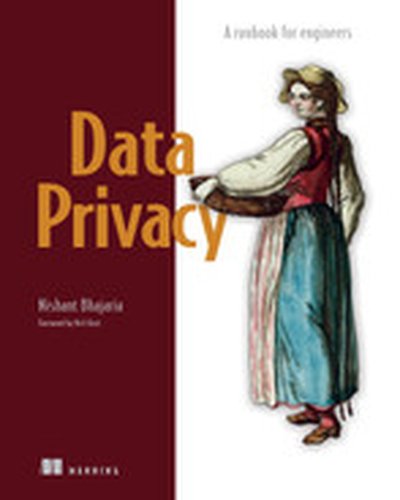
Data Privacy

Engineer privacy into your systems with these hands-on techniques for data governance, legal compliance, and surviving security audits. In Data Privacy you will learn how to: Classify data based on privacy risk Build technical tools to catalog and discover data in your systems Share data with technical privacy controls to measure reidentification risk Implement technical privacy architectures to delete data Set up technical capabilities for data export to meet legal requirements like Data Subject Asset Requests (DSAR) Establish a technical privacy review process to help accelerate the legal Privacy Impact Assessment (PIA) Design a Consent Management Platform (CMP) to capture user consent Implement security tooling to help optimize privacy Build a holistic program that will get support and funding from the C-Level and board Data Privacy teaches you to design, develop, and measure the effectiveness of privacy programs. You’ll learn from author Nishant Bhajaria, an industry-renowned expert who has overseen privacy at Google, Netflix, and Uber. The terminology and legal requirements of privacy are all explained in clear, jargon-free language. The book’s constant awareness of business requirements will help you balance trade-offs, and ensure your user’s privacy can be improved without spiraling time and resource costs. About the Technology Data privacy is essential for any business. Data breaches, vague policies, and poor communication all erode a user’s trust in your applications. You may also face substantial legal consequences for failing to protect user data. Fortunately, there are clear practices and guidelines to keep your data secure and your users happy. About the Book Data Privacy: A runbook for engineers teaches you how to navigate the trade-offs between strict data security and real world business needs. In this practical book, you’ll learn how to design and implement privacy programs that are easy to scale and automate. There’s no bureaucratic process—just workable solutions and smart repurposing of existing security tools to help set and achieve your privacy goals. What's Inside Classify data based on privacy risk Set up capabilities for data export that meet legal requirements Establish a review process to accelerate privacy impact assessment Design a consent management platform to capture user consent About the Reader For engineers and business leaders looking to deliver better privacy. About the Author Nishant Bhajaria leads the Technical Privacy and Strategy teams for Uber. His previous roles include head of privacy engineering at Netflix, and data security and privacy at Google. Quotes I wish I had had this text in 2015 or 2016 at Netflix, and it would have been very helpful in 2008–2012 in a time of significant architectural evolution of our technology. - From the Foreword by Neil Hunt, Former CPO, Netflix Your guide to building privacy into the fabric of your organization. - John Tyler, JPMorgan Chase The most comprehensive resource you can find about privacy. - Diego Casella, InvestSuite Offers some valuable insights and direction for enterprises looking to improve the privacy of their data. - Peter White, Charles Sturt University

IoT-enabled Smart Healthcare Systems, Services and Applications

IoT-Enabled Smart Healthcare Systems, Services and Applications Explore the latest healthcare applications of cutting-edge technologies In IoT-Enabled Smart Healthcare Systems, Services and Applications, an accomplished team of researchers delivers an insightful and comprehensive exploration of the roles played by cutting-edge technologies in modern healthcare delivery. The distinguished editors have included resources from a diverse array of learned experts in the field that combine to create a broad examination of a rapidly developing field. With a particular focus on Internet of Things (IoT) technologies, readers will discover how new technologies are impacting healthcare applications from remote monitoring systems to entire healthcare delivery methodologies. After an introduction to the role of emerging technologies in smart health care, this volume includes treatments of ICN-Fog computing, edge computing, security and privacy, IoT architecture, vehicular ad-hoc networks (VANETs), and patient surveillance systems, all in the context of healthcare delivery. Readers will also find: A thorough introduction to ICN-Fog computing for IoT based healthcare, including its architecture and challenges Comprehensive explorations of Internet of Things enabled software defined networking for edge computing in healthcare Practical discussions of a review of e-healthcare systems in India and Thailand, as well as the security and privacy issues that arise through the use of smart healthcare systems using Internet of Things devices In-depth examinations of the architecture and applications of an Internet of Things based healthcare system Perfect for healthcare practitioners and allied health professionals, hospital administrators, and technology professionals, IoT-Enabled Smart Healthcare Systems, Services and Applications is an indispensable addition to the libraries of healthcare regulators and policymakers seeking a one-stop resource that explains cutting-edge technologies in modern healthcare.

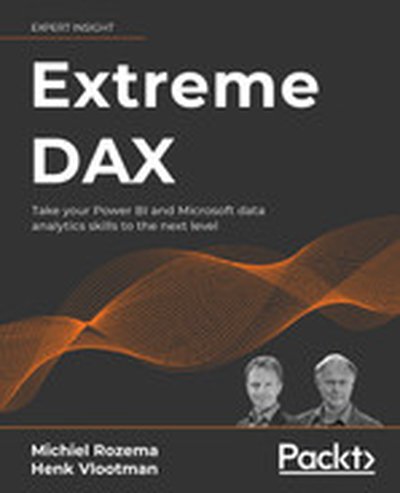
Extreme DAX

Delve into advanced Data Analysis Expressions (DAX) concepts and Power BI capabilities with Extreme DAX, designed to elevate your skills in Microsoft's Business Intelligence tools. This book guides you through solving intricate business problems, improving your reporting, and leveraging data modeling principles to their fullest potential. What this Book will help me do Master advanced DAX functions and leverage their full potential in data analysis. Develop a solid understanding of context and filtering within Power BI models. Employ strategies for dynamic visualizations and secure data access via row-level security. Apply financial DAX functions for precise investment evaluations and forecasts. Utilize alternative calendars and advanced time-intelligence for comprehensive temporal analyses. Author(s) Michiel Rozema and Henk Vlootman bring decades of deep experience in data analytics and business intelligence to your learning journey. Both authors are seasoned practitioners in using DAX and Microsoft BI tools, with numerous practical deployments of their expertise in business solutions. Their approachable writing reflects their teaching style, ensuring you can easily grasp even challenging concepts. This book combines their comprehensive technical knowledge with real-world, hands-on examples, offering an invaluable resource for refining your skills. Who is it for? This book is perfect for intermediate to advanced analysts who have a foundational knowledge of DAX and Power BI and wish to deepen their expertise. If you are striving to improve performance and accuracy in your reports or aiming to handle advanced modeling scenarios, this book is for you. Prior experience with DAX, Power BI, or equivalent analytical tools is recommended to maximize the benefit. Whether you're a business analyst, data professional, or enthusiast, this book will elevate your analytical capabilities to new heights.

Getting Started with IBM Hyper Protect Data Controller

IBM® Hyper Protect Data Controller is designed to provide privacy protection of your sensitive data and give ease of control and auditability. It can manage how data is shared securely through a central control. Hyper Protect Data Controller can protect data wherever it goes—security policies are kept and honored whenever the data is accessed and future data access can be revoked even after data leaves the system of record. This IBM Redbooks® publication can assist you with determining how to get started with IBM Hyper Protect Data Controller through a use case approach. It will help you plan for, install, tailor and configure the Hyper Protect Data Controller. It includes information about the following topics: Concepts and reference architecture Common use cases with implementation guidance and advice Implementation and policy examples Typical operational tasks for creating policies and preparing for audits Monitoring user activity and events This IBM Redbooks publication is written for IT Managers, IT Architects, Security Administrators, data owners, and data consumers.

Send us a text Want to be featured as a guest on Making Data Simple? Reach out to us at [[email protected]] and tell us why you should be next.

Abstract Making Data Simple Podcast is hosted by Al Martin, VP, IBM Expert Services Delivery, where we explore trending technologies, business innovation, and leadership ... while keeping it simple & fun. This week on Making Data Simple, we have Greg Edwards, CEO at Cryptostopper.  Greg has been a technology entrepreneur since 1998. Before Greg founded CryptoStopper, Greg started Axis Backup, a backup and disaster recovery company for the insurance industry. Greg  saw firsthand the rapid increase in the damage cyber criminals were doing with debilitating malware resulting in high financial loss to vulnerable companies. Between 2012 and 2015, one in five of Axis Backup’s clients was hit by cybercrime. Greg realized effective cyber security could save businesses from costly downtime and compromised systems. In 2015, Axis Backup was acquired by J2 Global, freeing Greg to create CryptoStopper and focus exclusively on cybersecurity. Show Notes 1:29 – Greg’s background 6:20 – Why the name CryptoStopper? 8:06 – How do you define ransomware?  12:18 – 1 in 5 backups were hit by cybercrime? 16:05 – How bad is it? 24:38 – What does your technology do? 29:36 – What makes your product different? 33:31 – Ransomware is the # 2 threat to businesses getcryptostopper.com Greg’s email: gedwards@ getcryptostopper.com Connect with the Team Producer Kate Brown - LinkedIn. Producer Steve Templeton - LinkedIn. Host Al Martin - LinkedIn and Twitter.  Want to be featured as a guest on Making Data Simple? Reach out to us at [email protected] and tell us why you should be next. The Making Data Simple Podcast is hosted by Al Martin, WW VP Technical Sales, IBM, where we explore trending technologies, business innovation, and leadership ... while keeping it simple & fun.

Securing IBM Spectrum Scale with QRadar and IBM Cloud Pak for Security

Cyberattacks are likely to remain a significant risk for the foreseeable future. Attacks on organizations can be external and internal. Investing in technology and processes to prevent these cyberattacks is the highest priority for these organizations. Organizations need well-designed procedures and processes to recover from attacks. The focus of this document is to demonstrate how the IBM® Unified Data Foundation (UDF) infrastructure plays an important role in delivering the persistence storage (PV) to containerized applications, such as IBM Cloud® Pak for Security (CP4S), with IBM Spectrum® Scale Container Native Storage Access (CNSA) that is deployed with IBM Spectrum scale CSI driver and IBM FlashSystem® storage with IBM Block storage driver with CSI driver. Also demonstrated is how this UDF infrastructure can be used as a preferred storage class to create back-end persistent storage for CP4S deployments. We also highlight how the file I/O events are captured in IBM QRadar® and offenses are generated based on predefined rules. After the offenses are generated, we show how the cases are automatically generated in IBM Cloud Pak® for Security by using the IBM QRadar SOAR Plugin, with a manually automated method to log a case in IBM Cloud Pak for Security. This document also describes the processes that are required for the configuration and integration of the components in this solution, such as: Integration of IBM Spectrum Scale with QRadar QRadar integration with IBM Cloud Pak for Security Integration of the IBM QRadar SOAR Plugin to generate automated cases in CP4S. Finally, this document shows the use of IBM Spectrum Scale CNSA and IBM FlashSystem storage that uses IBM block CSI driver to provision persistent volumes for CP4S deployment. All models of IBM FlashSystem family are supported by this document, including: FlashSystem 9100 and 9200 FlashSystem 7200 and FlashSystem 5000 models FlashSystem 5200 IBM SAN Volume Controller All storage that is running IBM Spectrum Virtualize software

Snowflake Essentials: Getting Started with Big Data in the Cloud

Understand the essentials of the Snowflake Database and the overall Snowflake Data Cloud. This book covers how Snowflake’s architecture is different from prior on-premises and cloud databases. The authors also discuss, from an insider perspective, how Snowflake grew so fast to become the largest software IPO of all time. Snowflake was the first database made specifically to be optimized with a cloud architecture. This book helps you get started using Snowflake by first understanding its architecture and what separates it from other database platforms you may have used. You will learn about setting up users and accounts, and then creating database objects. You will know how to load data into Snowflake and query and analyze that data, including unstructured data such as data in XML and JSON formats. You will also learn about Snowflake’s compute platform and the different data sharing options that are available. What YouWill Learn Run analytics in the Snowflake Data Cloud Create users and roles in Snowflake Set up security in Snowflake Set up resource monitors in Snowflake Set up and optimize Snowflake Compute Load, unload, and query structured and unstructured data (JSON, XML) within Snowflake Use Snowflake Data Sharing to share data Set up a Snowflake Data Exchange Use the Snowflake Data Marketplace Who This Book Is For Database professionals or information technology professionals who want to move beyond traditional database technologies by learning Snowflake, a new and massively scalable cloud-based database solution

Cloud-Native Microservices with Apache Pulsar: Build Distributed Messaging Microservices

Apply different enterprise integration and processing strategies available with Pulsar, Apache's multi-tenant, high-performance, cloud-native messaging and streaming platform. This book is a comprehensive guide that examines using Pulsar Java libraries to build distributed applications with message-driven architecture. You'll begin with an introduction to Apache Pulsar architecture. The first few chapters build a foundation of message-driven architecture. Next, you'll perform a setup of all the required Pulsar components. The book also covers work with Apache Pulsar client library to build producers and consumers for the discussed patterns. You'll then explore the transformation, filter, resiliency, and tracing capabilities available with Pulsar. Moving forward, the book will discuss best practices when building message schemas and demonstrate integration patterns using microservices. Security is an important aspect of any application;the book will cover authentication and authorization in Apache Pulsar such as Transport Layer Security (TLS), OAuth 2.0, and JSON Web Token (JWT). The final chapters will cover Apache Pulsar deployment in Kubernetes. You'll build microservices and serverless components such as AWS Lambda integrated with Apache Pulsar on Kubernetes. After completing the book, you'll be able to comfortably work with the large set of out-of-the-box integration options offered by Apache Pulsar. What You'll Learn Examine the important Apache Pulsar components Build applications using Apache Pulsar client libraries Use Apache Pulsar effectively with microservices Deploy Apache Pulsar to the cloud Who This Book Is For Cloud architects and software developers who build systems in the cloud-native technologies.