talk-data.com talk-data.com

Topic

Snowflake

data_warehouse cloud analytics olap

550

tagged

Activity Trend

193 peak/qtr
2020-Q1 2026-Q1

Activities

550 activities · Newest first

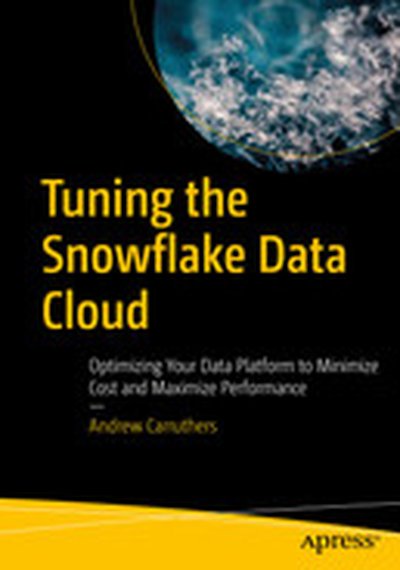
Tuning the Snowflake Data Cloud: Optimizing Your Data Platform to Minimize Cost and Maximize Performance

This project-oriented book presents a hands-on approach to identifying migration and performance issues with experience drawn from real-world examples. As you work through the book, you will develop skills, knowledge, and deep understanding of Snowflake tuning options and capabilities while preparing for later incorporation of additional Snowflake features as they become available. Your Snowflake platform will cost less to run and will improve your customer experience. Written by a seasoned Snowflake practitioner, this book is full of practical, hands-on guidance and advice specifically designed to further accelerate your Snowflake journey. Tuning the Snowflake Data Cloud provides you a pathway to success by equipping you with the skills, knowledge, and expertise needed to elevate your Snowflake experience. The book shows you how to leverage what you already know, adds what you don’t, and helps you apply it toward delivering for your Snowflake accounts. Read this book to embark on a voyage of advancement and equip your organization to deliver consistent Snowflake performance. What You Will Learn Recognize and understand the root cause of performance bottlenecks Know how to resolve performance issues Develop a deep understanding of Snowflake performance tuning options Reduce expensive mistakes, remediate poorly performing code Manage Snowflake costs

Summary

Building a data platform is a substrantial engineering endeavor. Once it is running, the next challenge is figuring out how to address release management for all of the different component parts. The services and systems need to be kept up to date, but so does the code that controls their behavior. In this episode your host Tobias Macey reflects on his current challenges in this area and some of the factors that contribute to the complexity of the problem.

Announcements

Hello and welcome to the Data Engineering Podcast, the show about modern data management This episode is supported by Code Comments, an original podcast from Red Hat. As someone who listens to the Data Engineering Podcast, you know that the road from tool selection to production readiness is anything but smooth or straight. In Code Comments, host Jamie Parker, Red Hatter and experienced engineer, shares the journey of technologists from across the industry and their hard-won lessons in implementing new technologies. I listened to the recent episode "Transforming Your Database" and appreciated the valuable advice on how to approach the selection and integration of new databases in applications and the impact on team dynamics. There are 3 seasons of great episodes and new ones landing everywhere you listen to podcasts. Search for "Code Commentst" in your podcast player or go to dataengineeringpodcast.com/codecomments today to subscribe. My thanks to the team at Code Comments for their support. Data lakes are notoriously complex. For data engineers who battle to build and scale high quality data workflows on the data lake, Starburst is an end-to-end data lakehouse platform built on Trino, the query engine Apache Iceberg was designed for, with complete support for all table formats including Apache Iceberg, Hive, and Delta Lake. Trusted by teams of all sizes, including Comcast and Doordash. Want to see Starburst in action? Go to dataengineeringpodcast.com/starburst and get $500 in credits to try Starburst Galaxy today, the easiest and fastest way to get started using Trino. Your host is Tobias Macey and today I want to talk about my experiences managing the QA and release management process of my data platform

Interview

Introduction As a team, our overall goal is to ensure that the production environment for our data platform is highly stable and reliable. This is the foundational element of establishing and maintaining trust with the consumers of our data. In order to support this effort, we need to ensure that only changes that have been tested and verified are promoted to production. Our current challenge is one that plagues all data teams. We want to have an environment that mirrors our production environment that is available for testing, but it’s not feasible to maintain a complete duplicate of all of the production data. Compounding that challenge is the fact that each of the components of our data platform interact with data in slightly different ways and need different processes for ensuring that changes are being promoted safely.

Contact Info

LinkedIn Website

Closing Announcements

Thank you for listening! Don't forget to check out our other shows. Podcast.init covers the Python language, its community, and the innovative ways it is being used. The Machine Learning Podcast helps you go from idea to production with machine learning. Visit the site to subscribe to the show, sign up for the mailing list, and read the show notes. If you've learned something or tried out a project from the show then tell us about it! Email [email protected] with your story.

Links

Data Platforms and Leaky Abstractions Episode Building A Data Platform From Scratch Airbyte

Podcast Episode

Trino dbt Starburst Galaxy Superset Dagster LakeFS

Podcast Episode

Nessie

Podcast Episode

Iceberg Snowflake LocalStack DSL == Domain Specific Language

The intro and outro music is from The Hug by The Freak Fandango Orchestra / CC BY-S

Eric Avidon is a journalist at TechTarget who's interviewed Tristan a few times, and now Tristan gets to flip the script and interview Eric. Eric is a journalist veteran, covering everything from finance to the Boston Red Sox, but now he spends a lot of time with vendors in the data space and has a broad view of what's going on. Eric and Tristan discuss AI and analytics and how mature these features really are today, data quality and its importance, the AI strategies of Snowflake and Databricks, and a lot more. Plus, part way through you can hear Tristan reacting to a mild earthquake that hit the East Coast. For full show notes and to read 6+ years of back issues of the podcast's companion newsletter, head to https://roundup.getdbt.com.

podcast_episode
by Kent Graziano (SnowflakeDB) , Joe Reis (DeepLearning.AI)

There's the interview you think you're going to have, then there's the interview you get. This is one of those, in the best way possible. I expected to chat about his time at Snowflake. We didn't even get past his early days building data warehouses because it was so fascinating. Did you know Kent is arguably one of the very first practitioners (probably an accidental inventor) of DataOps?

This is sort of a "prequel" episode. Kent Graziano and I chat about his early days as a data practitioner.

In this session, we'll "break the ice" on the debate between Google BigQuery vs Snowflake for cloud data warehousing. From performance to scalability, we'll explore the key considerations to help you make the right choice for your data needs. Whether you're a Google Cloud customer or partner, this session will arm you with actionable insights to navigate the cloud data landscape confidently. By attending this session, your contact information may be shared with the sponsor for relevant follow up for this event only.

Click the blue “Learn more” button above to tap into special offers designed to help you implement what you are learning at Google Cloud Next 25.

Matt Turck has been publishing his ecosystem map since 2012. It was first called the Big Data Landscape. Now it's the Machine Learning, AI & Data (MAD) Landscape.  The 2024 MAD Landscape includes 2,011(!) logos, which Matt attributes first a data infrastructure cycle and now an ML/AI cycle. As Matt writes, "Those two waves are intimately related. A core idea of the MAD Landscape every year has been to show the symbiotic relationship between data infrastructure, analytics/BI,  ML/AI, and applications." Matt and Tristan discuss themes in Matt's post: generative AI's impact on data analytics, the modern AI stack compared to the modern data stack, and Databricks vs. Snowflake (plus Microsoft Fabric). For full show notes and to read 7+ years of back issues of the podcast's companion newsletter, head to https://roundup.getdbt.com. The Analytics Engineering Podcast is sponsored by dbt Labs.

We’ve heard so much about the value and capabilities of generative AI over the past year, and we’ve all become accustomed to the chat interfaces of our preferred models. One of the main concerns many of us have had has been privacy. Is OpenAI keeping the data and information I give to ChatGPT secure? One of the touted solutions to this problem is running LLMs locally on your own machine, but with the hardware cost that comes with it, running LLMs locally has not been possible for many of us. That might now be starting to change. Nuri Canyaka is VP of AI Marketing at Intel. Prior to Intel, Nuri spent 16 years at Microsoft, starting out as a Technical Evangelist, and leaving the organization as the Senior Director of Product Marketing. He ran the GTM team that helped generate adoption of GPT in Microsoft Azure products. La Tiffaney Santucci is Intel’s AI Marketing Director, specializing in their Edge and Client products. La Tiffaney has spent over a decade at Intel, focussing on partnerships with Dell, Google Amazon and Microsoft.  In the episode, Richie, Nuri and La Tiffaney explore AI’s impact on marketing analytics, the adoptions of AI in the enterprise, how AI is being integrated into existing products, the workflow for implementing AI into business processes and the challenges that come with it, the importance of edge AI for instant decision-making in uses-cases like self-driving cars, the emergence of AI engineering as a distinct field of work, the democratization of AI, what the state of AGI might look like in the near future and much more.  About the AI and the Modern Data Stack DataFramed Series This week we’re releasing 4 episodes focused on how AI is changing the modern data stack and the analytics profession at large. The modern data stack is often an ambiguous and all-encompassing term, so we intentionally wanted to cover the impact of AI on the modern data stack from different angles. Here’s what you can expect: Why the Future of AI in Data will be Weird with Benn Stancil, CTO at Mode & Field CTO at ThoughtSpot — Covering how AI will change analytics workflows and tools How Databricks is Transforming Data Warehousing and AI with Ari Kaplan, Head Evangelist & Robin Sutara, Field CTO at Databricks — Covering Databricks, data intelligence and how AI tools are changing data democratizationAdding AI to the Data Warehouse with Sridhar Ramaswamy, CEO at Snowflake — Covering Snowflake and its uses, how generative AI is changing the attitudes of leaders towards data, and how to improve your data managementAccelerating AI Workflows with Nuri Cankaya, VP of AI Marketing & La Tiffaney Santucci, AI Marketing Director at Intel — Covering AI’s impact on marketing analytics, how AI is being integrated into existing products, and the democratization of AI Links Mentioned in the Show: Intel OpenVINO™ toolkitIntel Developer Clouds for Accelerated ComputingAWS Re:Invent[Course] Implementing AI Solutions in BusinessRelated Episode: Intel CTO Steve Orrin on How Governments Can Navigate the Data & AI RevolutionSign up to a href="https://www.datacamp.com/radar-analytics-edition"...

Snowflake has been foundational in the data space for years. In the mid-2010s, the platform was a major driver of moving data to the cloud. More recently, it's become apparent that combining data and AI in the cloud is key to accelerating innovation. Snowflake has been rapidly adding AI features to provide value to the modern data stack, but what’s really been going on under the hood? At the time of recording, Sridhar Ramaswamy was the SVP of AI at Snowflake, being appointed CEO at Snowflake in February 2024. Sridhar was formerly Co-Founder of Neeva, acquired in 2023 by Snowflake. Before founding Neeva, Ramaswamy oversaw Google's advertising products, including search, display, video advertising, analytics, shopping, payments, and travel. He joined Google in 2003 and was part of the growth of AdWords and Google's overall advertising business. He spent more than 15 years at Google, where he started as a software engineer and rose to SVP of Ads & Commerce.  In the episode, Richie and Sridhar explore Snowflake and its uses, how generative AI is changing the attitudes of leaders towards data, how NLP and AI have impacted enterprise business operations as well as new applications of AI in an enterprise environment, the challenges of enterprise search, the importance of data quality, management and the role of semantic layers in the effective use of AI, a look into Snowflakes products including Snowpilot and Cortex, the collaboration required for successful data and AI projects, advice for organizations looking to improve their data management and much more.     About the AI and the Modern Data Stack DataFramed Series This week we’re releasing 4 episodes focused on how AI is changing the modern data stack and the analytics profession at large. The modern data stack is often an ambiguous and all-encompassing term, so we intentionally wanted to cover the impact of AI on the modern data stack from different angles. Here’s what you can expect: Why the Future of AI in Data will be Weird with Benn Stancil, CTO at Mode & Field CTO at ThoughtSpot — Covering how AI will change analytics workflows and tools How Databricks is Transforming Data Warehousing and AI with Ari Kaplan, Head Evangelist & Robin Sutara, Field CTO at Databricks — Covering Databricks, data intelligence and how AI tools are changing data democratizationAdding AI to the Data Warehouse with Sridhar Ramaswamy, CEO at Snowflake — Covering Snowflake and its uses, how generative AI is changing the attitudes of leaders towards data, and how to improve your data managementAccelerating AI Workflows with Nuri Cankaya, VP of AI Marketing & La Tiffaney Santucci, AI Marketing Director at Intel — Covering AI’s impact on marketing analytics, how AI is being integrated into existing products, and the democratization of AI Links Mentioned in the Show: SnowflakeSnowflake acquires Neeva to accelerate search in the Data Cloud through generative AIUse AI in Seconds with Snowflake Cortex[Course] Introduction to SnowflakeRelated Episode: Why AI will Change Everything—with Former Snowflake CEO, Bob MugliaSign up to a...

Databricks started out as a platform for using Spark, a big data analytics engine, but it's grown a lot since then. Databricks now allows users to leverage their data and AI projects in the same place, ensuring ease of use and consistency across operations. The Databricks platform is converging on the idea of data intelligence, but what does this mean, how will it help data teams and organizations, and where does AI fit in the picture? Ari is Databricks’ Head of Evangelism and "The Real Moneyball Guy" - the popular movie was partly based on his analytical innovations in Major League Baseball. He is a leading influencer in analytics, artificial intelligence, data science, and high-growth business innovation. Ari was previously the Global AI Evangelist at DataRobot, Nielsen’s regional VP of Analytics, Caltech Alumni of the Decade, President Emeritus of the worldwide Independent Oracle Users Group, on Intel’s AI Board of Advisors, Sports Illustrated Top Ten GM Candidate, an IBM Watson Celebrity Data Scientist, and on the Crain’s Chicago 40 Under 40. He's also written 5 books on analytics, databases, and baseball. Robin is the Field CTO at Databricks. She has consulted with hundreds of organizations on data strategy, data culture, and building diverse data teams. Robin has had an eclectic career path in technical and business functions with more than two decades in tech companies, including Microsoft and Databricks. She also has achieved multiple academic accomplishments from her juris doctorate to a masters in law to engineering leadership. From her first technical role as an entry-level consumer support engineer to her current role in the C-Suite, Robin supports creating an inclusive workplace and is the current co-chair of Women in Data Safety Committee. She was also recognized in 2023 as a Top 20 Women in Data and Tech, as well as DataIQ 100 Most Influential People in Data. In the episode, Richie, Ari, and Robin explore Databricks, the application of generative AI in improving services operations and providing data insights, data intelligence, and lakehouse technology, the wide-ranging applications of generative AI, how AI tools are changing data democratization, the challenges of data governance and management and how tools like Databricks can help, how jobs in data and AI are changing and much more.  About the AI and the Modern Data Stack DataFramed Series This week we’re releasing 4 episodes focused on how AI is changing the modern data stack and the analytics profession at large. The modern data stack is often an ambiguous and all-encompassing term, so we intentionally wanted to cover the impact of AI on the modern data stack from different angles. Here’s what you can expect: Why the Future of AI in Data will be Weird with Benn Stancil, CTO at Mode & Field CTO at ThoughtSpot — Covering how AI will change analytics workflows and tools How Databricks is Transforming Data Warehousing and AI with Ari Kaplan, Head Evangelist & Robin Sutara, Field CTO at Databricks — Covering Databricks, data intelligence and how AI tools are changing data democratizationAdding AI to the Data Warehouse with Sridhar Ramaswamy, CEO at Snowflake — Covering Snowflake and its uses, how generative AI is changing the attitudes of leaders towards data, and how to improve your data managementAccelerating AI Workflows with Nuri Cankaya, VP of AI Marketing & La Tiffaney Santucci, AI Marketing Director at Intel — Covering AI’s impact on marketing analytics, how AI is being integrated into existing products, and the democratization of AI Links Mentioned in the Show: DatabricksDelta Lakea href="https://mlflow.org/" rel="noopener...

One of the biggest surprises of the generative AI revolution over the past 2 years lies in the counter-intuitiveness of its most successful use cases. Counter to most predictions made about AI years ago, AI-assisted coding, specifically AI-assisted data work, has been surprisingly one of the biggest killer apps of generative AI tools and copilots. However, what happens when we take this notion even further? How will analytics workflows look like when generative AI tools can also assist us in problem-solving? What type of analytics use cases can we expect to operationalize, and what tools can we expect to work with when AI systems can provide scalable qualitative data instead of relying on imperfect quantitative proxies? Today’s guest calls this future “weird”.  Benn Stancil is the Field CTO at ThoughtSpot. He joined ThoughtSpot in 2023 as part of its acquisition of Mode, where he was a Co-Founder and CTO. While at Mode, Benn held roles leading Mode’s data, product, marketing, and executive teams. He regularly writes about data and technology at benn.substack.com. Prior to founding Mode, Benn worked on analytics teams at Microsoft and Yammer. Throughout the episode, Benn and Adel talk about the nature of AI-assisted analytics workflows, the potential for generative AI in assisting problem-solving, how he imagines analytics workflows to look in the future, and a lot more.  About the AI and the Modern Data Stack DataFramed Series This week we’re releasing 4 episodes focused on how AI is changing the modern data stack and the analytics profession at large. The modern data stack is often an ambiguous and all-encompassing term, so we intentionally wanted to cover the impact of AI on the modern data stack from different angles. Here’s what you can expect: Why the Future of AI in Data will be Weird with Benn Stancil, CTO at Mode & Field CTO at ThoughtSpot — Covering how AI will change analytics workflows and tools How Databricks is Transforming Data Warehousing and AI with Ari Kaplan, Head Evangelist & Robin Sutara, Field CTO at Databricks — Covering Databricks, data intelligence and how AI tools are changing data democratizationAdding AI to the Data Warehouse with Sridhar Ramaswamy, CEO at Snowflake — Covering Snowflake and its uses, how generative AI is changing the attitudes of leaders towards data, and how to improve your data managementAccelerating AI Workflows with Nuri Cankaya, VP of AI Marketing & La Tiffaney Santucci, AI Marketing Director at Intel — Covering AI’s impact on marketing analytics, how AI is being integrated into existing products, and the democratization of AI Links Mentioned in the Show: Mode AnalyticsThoughtSpot acquires Mode: Empowering data teams to bring Generative AI to BIEverybody Lies: Big Data, New Data, and What the Internet Can Tell Us About Who We Really Are[Course] Generative AI for Business[Skill Track] SQL FundamentalsRelated Episode: The Future of Marketing Analytics with Cory Munchbach, CEO at...

In this episode, I’m chatting with former Gartner analyst Sanjeev Mohan who is the Co-Author of Data Products for Dummies. Throughout our conversation, Sanjeev shares his expertise on the evolution of data products, and what he’s seen as a result of implementing practices that prioritize solving for use cases and business value. Sanjeev also shares a new approach of structuring organizations to best implement ownership and accountability of data product outcomes. Sanjeev and I also explore the common challenges of product adoption and who is responsible for user experience. I purposefully had Sanjeev on the show because I think we have pretty different perspectives from which we see the data product space.

Highlights/ Skip to:

I introduce Sanjeev Mohan, co-author of Data Products for Dummies (00:39) Sanjeev expands more on the concept of writing a “for Dummies” book   (00:53) Sanjeev shares his definition of a data product, including both a technical and a business definition (01:59) Why Sanjeev believes organizational changes and accountability are the keys to preventing the acceleration of shipping data products with little to no tangible value (05:45) How Sanjeev recommends getting buy-in for data product ownership from other departments in an organization (11:05) Sanjeev and I explore adoption challenges and the topic of user experience (13:23) Sanjeev explains what role is responsible for user experience and design (19:03) Who should be responsible for defining the metrics that determine business value (28:58) Sanjeev shares some case studies of companies who have adopted this approach to data products and their outcomes (30:29) Where companies are finding data product managers currently (34:19) Sanjeev expands on his perspective regarding the importance of prioritizing business value and use cases (40:52) Where listeners can get Data Products for Dummies, and learn more about Sanjeev’s work (44:33)

Quotes from Today’s Episode “You may slap a label of data product on existing artifact; it does not make it a data product because there’s no sense of accountability. In a data product, because they are following product management best practices, there must be a data product owner or a data product manager. There’s a single person [responsible for the result]. — Sanjeev Mohan (09:31)

“I haven’t even mentioned the word data mesh because data mesh and data products, they don’t always have to go hand-in-hand. I can build data products, but I don’t need to go into the—do all of data mesh principles.” – Sanjeev Mohan (26:45)

“We need to have the right organization, we need to have a set of processes, and then we need a simplified technology which is standardized across different teams. So, this way, we have the benefit of reusing the same technology. Maybe it is Snowflake for storage, DBT for modeling, and so on. And the idea is that different teams should have the ability to bring their own analytical engine.” – Sanjeev Mohan (27:58)

“Generative AI, right now as we are recording, is still in a prototyping phase. Maybe in 2024, it’ll go heavy-duty production. We are not in prototyping phase for data products for a lot of companies. They’ve already been experimenting for a year or two, and now they’re actually using them in production. So, we’ve crossed that tipping point for data products.” – Sanjeev Mohan (33:15)

“Low adoption is a problem that’s not just limited to data products. How long have we had data catalogs, but they have low adoption. So, it’s a common problem.” – Sanjeev Mohan (39:10)

“That emphasis on technology first is a wrong approach. I tell people that I’m sorry to burst your bubble, but there are no technology projects, there are only business projects. Technology is an enabler. You don’t do technology for the sake of technology; you have to serve a business cause, so let’s start with that and keep that front and center.” – Sanjeev Mohan (43:03)

Links Data Products for Dummies: https://www.dataops.live/dataproductsfordummies “What Exactly is A Data Product” article: https://medium.com/data-mesh-learning/what-exactly-is-a-data-product-7f6935a17912 It Depends: https://www.youtube.com/@SanjeevMohan Chief Data Analytics and Product Officer of Equifax: https://www.youtube.com/watch?v=kFY7WGc-jFM SanjMo Consulting: https://www.sanjmo.com/ dataops.live: https://dataops.live dataops.live/dataproductsfordummies: https://dataops.live/dataproductsfordummies LinkedIn: https://www.linkedin.com/in/sanjmo/ Medium articles: https://sanjmo.medium.com

Effective data management has become a cornerstone of success in our digital era. It involves not just collecting and storing information but also organizing, securing, and leveraging data to drive progress and innovation. Many organizations turn to tools like Snowflake for advanced data warehousing capabilities. However, while Snowflake enhances data storage and access, it's not a complete solution for all data management challenges. To address this, tools like Capital One’s Slingshot can be used alongside Snowflake, helping to optimize costs and refine data management strategies. Salim Syed is a VP, Head of engineering for Capital One Slingshot product. He led Capital One’s data warehouse migration to AWS and is a specialist in deploying Snowflake to a large enterprise. Salim’s expertise lies in developing Big Data (Lake) and Data Warehouse strategy on the public cloud. He leads an organization of more than 100 data engineers, support engineers, DBAs and full stack developers in driving enterprise data lake, data warehouse, data management and visualization platform services. Salim has more than 25 years of experience in the data ecosystem. His career started in data engineering where he built data pipelines and then moved into maintenance and administration of large database servers using multi-tier replication architecture in various remote locations. He then worked at CodeRye as a database architect and at 3M Health Information Systems as an enterprise data architect. Salim has been at Capital One for the past six years. In this episode, Adel and Salim explore cloud data management and the evolution of Slingshot into a major multi-tenant SaaS platform, the shift from on-premise to cloud-based data governance, the role of centralized tooling, strategies for effective cloud data management, including data governance, cost optimization, and waste reduction as well as insights into navigating the complexities of data infrastructure, security, and scalability in the modern digital era. Links Mentioned in the Show: Capital One SlingshotSnowflakeCourse: Introduction to Data WarehousingCourse: Introduction to Snowflake

Abstract: RisingWave is an open-source streaming database designed from scratch for the cloud. It implemented a Snowflake-style storage-compute separation architecture to reduce performance cost, and provides users with a PostgreSQL-like experience for stream processing. Over the last three years, RisingWave has evolved from a one-person project to a rapidly-growing product deployed by nearly 100 enterprises and startups. But the journey of building RisingWave is full of challenges. In this talk, I'd like to share with you lessons we've gained from four dimensions: 1) the decoupled compute-storage architecture, 2) the balances between stream processing and OLAP, 3) the Rust ecosystem, and 4) the product positioning. I will dive deep into technical details and then share with you my views on the future of stream processing.

Your data warehouse is a success but your repository a mess: get your code on a diet - Coalesce 2023

Over the past four years, the data team at EQT has leveraged dbt and Snowflake to create a myriad of data products across the company. With a rapidly growing organization and increased demands for timely and accurate data, their immense monolithic dbt repository has become challenging to maintain. Learn about the best practices they are adopting to keep the platform in shape and scale with the business.

Speaker: Erik Lehto, Senior analytics engineer, EQT

Register for Coalesce at https://coalesce.getdbt.com

dbt for rapid deployment of a data product - Coalesce 2023

The team at nib Health has internal projects that contain standardized packages for running a dbt project, such as pipeline management, data testing, and data modeling macros. In this talk, they share how they utilized the yaml documentation files in dbt to create standardized tagging for both data security (PII), project tags, and product domain tags that get pushed into Snowflake, Immuta, and Select Star.

Speaker: Pip Sidaway, Data Product Manager, nib

Register for Coalesce at https://coalesce.getdbt.com

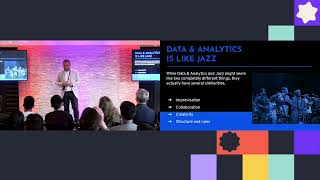
Embracing a modern data stack in the water industry - Coalesce 2023

Learn about Watercare's journey in implementing a modern data stack with a focus on self serving analytics in the water industry. The session covers the reasons behind Watercare's decision to implement a modern data stack, the problem of data conformity, and the tools they used to accelerate their data modeling process. Diego also discusses the benefits of using dbt, Snowflake, and Azure DevOps in data modeling. There is also a parallel drawn between analytics and Diego’s connection with jazz music.

Speaker: Diego Morales, Civil Industrial Engineer, Watercare

Register for Coalesce at https://coalesce.getdbt.com

Navigating from chaos to clarity with Domain's real estate data - Coalesce 2023

Domain is powered by data. Every team at Domain relies on insights from the data team to make quick, effective decisions for the business. Learn how Domain data innovated the way they use Snowflake as the central processing engine to power the product and tech team and save time for everyone, which leads to tangible business impact.

Speakers: Reuben Francis, Data Engineer, Domain; Alex Rong, Senior Data Engineer, Domain

Register for Coalesce at https://coalesce.getdbt.com

Siemens' data evolution: dbt Cloud and the data mesh - Coalesce 2023

Siemens has been revamping how it approaches data, looking to democratize data access to unlock faster innovation. It recently rolled out Siemens Data Cloud — a data mesh with Snowflake and dbt Cloud at its heart. The goal: ensure the people closest to the business problems were empowered to self-serve responsibly, without compromising on governance or creating silos.

This is the story of how Siemens has achieved success with dbt Cloud and a data mesh — and what the future holds in store.

Register for Coalesce at https://coalesce.getdbt.com

Warehouse-first data strategy at ClickUp - Coalesce 2023

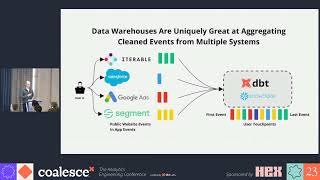
During the data team's short tenure (2.5 years) at ClickUp, they have built and scaled a fully modern data stack and implemented a warehouse-first data strategy. ClickUp's data is comprised of thousands of dbt models and upstream/downstream integrations with nearly every software at ClickUp. ClickUp uses dbt Cloud and Snowflake to power dozens of downstream systems with audience creation, marketing optimization, predictive customer lifecycle ML, a PLG/PLS motion, and much more. This session covers the foundational principles ClickUp follows and how warehouse-first thinking has unlocked tremendous value for ClickUp.

Speakers: Marc Stone, Head of Data, ClickUp

Register for Coalesce at https://coalesce.getdbt.com