talk-data.com talk-data.com

Topic

Flink

Apache Flink

stream_processing batch_processing big_data

74

tagged

Activity Trend

7 peak/qtr
2020-Q1 2026-Q1

Activities

74 activities · Newest first

Advanced SQL

SQL is no longer just a querying language for relational databases—it's a foundational tool for building scalable, modern data solutions across real-time analytics, machine learning workflows, and even generative AI applications. Advanced SQL shows data professionals how to move beyond conventional SELECT statements and tap into the full power of SQL as a programming interface for today's most advanced data platforms. Written by seasoned data experts Rui Pedro Machado, Hélder Russa, and Pedro Esmeriz, this practical guide explores the role of SQL in streaming architectures (like Apache Kafka and Flink), data lake ecosystems, cloud data warehouses, and ML pipelines. Geared toward data engineers, analysts, scientists, and analytics engineers, the book combines hands-on guidance with architectural best practices to help you extend your SQL skills into emerging workloads and real-world production systems. Use SQL to design and deploy modern, end-to-end data architectures Integrate SQL with data lakes, stream processing, and cloud platforms Apply SQL in feature engineering and ML model deployment Master pipe syntax and other advanced features for scalable, efficient queries Leverage SQL to build GenAI-ready data applications and pipelines

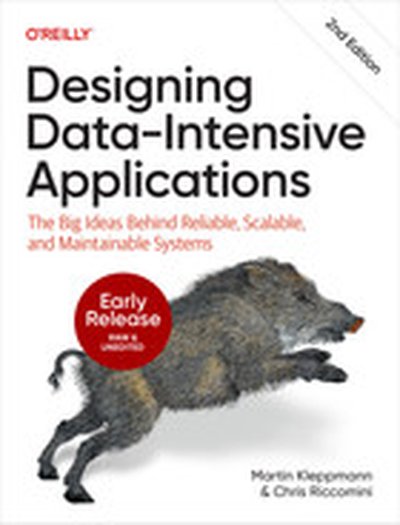
Designing Data-Intensive Applications, 2nd Edition

Data is at the center of many challenges in system design today. Difficult issues such as scalability, consistency, reliability, efficiency, and maintainability need to be resolved. In addition, there's an overwhelming variety of tools and analytical systems, including relational databases, NoSQL datastores, plus data warehouses and data lakes. What are the right choices for your application? How do you make sense of all these buzzwords? In this second edition, authors Martin Kleppmann and Chris Riccomini build on the foundation laid in the acclaimed first edition, integrating new technologies and emerging trends. You'll be guided through the maze of decisions and trade-offs involved in building a modern data system, from choosing the right tools like Spark and Flink to understanding the intricacies of data laws like the GDPR. Peer under the hood of the systems you already use, and learn to use them more effectively Make informed decisions by identifying the strengths and weaknesses of different tools Navigate the trade-offs around consistency, scalability, fault tolerance, and complexity Understand the distributed systems research upon which modern databases are built Peek behind the scenes of major online services, and learn from their architectures

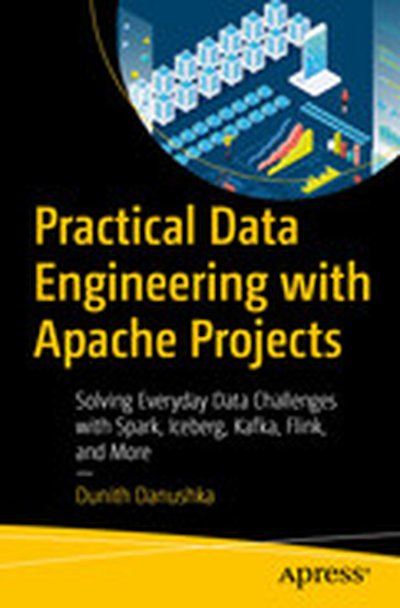
Practical Data Engineering with Apache Projects: Solving Everyday Data Challenges with Spark, Iceberg, Kafka, Flink, and More

This book is a comprehensive guide designed to equip you with the practical skills and knowledge necessary to tackle real-world data challenges using Open Source solutions. Focusing on 10 real-world data engineering projects, it caters specifically to data engineers at the early stages of their careers, providing a strong foundation in essential open source tools and techniques such as Apache Spark, Flink, Airflow, Kafka, and many more. Each chapter is dedicated to a single project, starting with a clear presentation of the problem it addresses. You will then be guided through a step-by-step process to solve the problem, leveraging widely-used open-source data tools. This hands-on approach ensures that you not only understand the theoretical aspects of data engineering but also gain valuable experience in applying these concepts to real-world scenarios. At the end of each chapter, the book delves into common challenges that may arise during the implementation of the solution, offering practical advice on troubleshooting these issues effectively. Additionally, the book highlights best practices that data engineers should follow to ensure the robustness and efficiency of their solutions. A major focus of the book is using open-source projects and tools to solve problems encountered in data engineering. In summary, this book is an indispensable resource for data engineers looking to build a strong foundation in the field. By offering practical, real-world projects and emphasizing problem-solving and best practices, it will prepare you to tackle the complex data challenges encountered throughout your career. Whether you are an aspiring data engineer or looking to enhance your existing skills, this book provides the knowledge and tools you need to succeed in the ever-evolving world of data engineering. You Will Learn: The foundational concepts of data engineering and practical experience in solving real-world data engineering problems How to proficiently use open-source data tools like Apache Kafka, Flink, Spark, Airflow, and Trino 10 hands-on data engineering projects Troubleshoot common challenges in data engineering projects Who is this book for: Early-career data engineers and aspiring data engineers who are looking to build a strong foundation in the field; mid-career professionals looking to transition into data engineering roles; and technology enthusiasts interested in gaining insights into data engineering practices and tools.

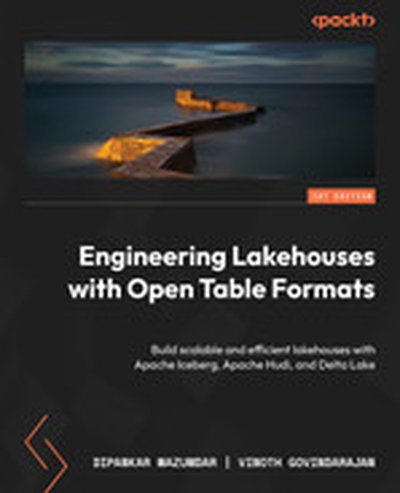
Engineering Lakehouses with Open Table Formats

Engineering Lakehouses with Open Table Formats introduces the architecture and capabilities of open table formats like Apache Iceberg, Apache Hudi, and Delta Lake. The book guides you through the design, implementation, and optimization of lakehouses that can handle modern data processing requirements effectively with real-world practical insights. What this Book will help me do Understand the fundamentals of open table formats and their benefits in lakehouse architecture. Learn how to implement performant data processing using tools like Apache Spark and Flink. Master advanced topics like indexing, partitioning, and interoperability between data formats. Explore data lifecycle management and integration with frameworks like Apache Airflow and dbt. Build secure lakehouses with regulatory compliance using best practices detailed in the book. Author(s) Dipankar Mazumdar and Vinoth Govindarajan are seasoned professionals with extensive experience in big data processing and software architecture. They bring their expertise from working with data lakehouses and are known for their ability to explain complex technical concepts clearly. Their collaborative approach brings valuable insights into the latest trends in data management. Who is it for? This book is ideal for data engineers, architects, and software professionals aiming to master modern lakehouse architectures. If you are familiar with data lakes or warehouses and wish to transition to an open data architectural design, this book is suited for you. Readers should have basic knowledge of databases, Python, and Apache Spark for the best experience.

AWS re:Invent 2025 - Autonomous agents powered by streaming data and Retrieval Augmented Generation

Unlock the potential of intelligent autonomous agents that combine real-time streaming data with Retrieval Augmented Generation (RAG) for dynamic decision-making. You will learn how to use streaming technologies like Amazon Kinesis, Amazon MSK, and Managed Service for Apache Flink create a robust pipeline to transform raw events into actionable insights. This session will show you how autonomous agents leverage these real-time insights with RAG architecture powered by OpenSearch, enabling immediate, context-aware responses to changing conditions. This practical architecture drives real-world value in critical scenarios like predictive maintenance, automated incident response, and intelligent customer service automation, with improved accuracy and reduced latency.

Learn more: More AWS events: https://go.aws/3kss9CP

Subscribe: More AWS videos: http://bit.ly/2O3zS75 More AWS events videos: http://bit.ly/316g9t4

ABOUT AWS: Amazon Web Services (AWS) hosts events, both online and in-person, bringing the cloud computing community together to connect, collaborate, and learn from AWS experts. AWS is the world's most comprehensive and broadly adopted cloud platform, offering over 200 fully featured services from data centers globally. Millions of customers—including the fastest-growing startups, largest enterprises, and leading government agencies—are using AWS to lower costs, become more agile, and innovate faster.

AWSreInvent #AWSreInvent2025 #AWS

AWS re:Invent 2025 - Powering your Agentic AI experience with AWS Streaming and Messaging (ANT310)

Organizations are accelerating innovation with generative AI and agentic AI use cases. This session explores how AWS streaming and messaging services such as Amazon Managed Streaming for Apache Kafka, Kinesis Data Streams, Amazon Managed Service for Apache Flink, and Amazon SQS build intelligent, responsive applications. Discover how streaming supports real-time data ingestion and processing, while messaging ensures reliable coordination between AI agents, orchestrates workflows, and delivers critical information at scale. Learn architectural patterns that highlight how a unified approach acts on data as fast as needed, providing the reliability and scale to grow for your next generation of AI.

Learn more: More AWS events: https://go.aws/3kss9CP

Subscribe: More AWS videos: http://bit.ly/2O3zS75 More AWS events videos: http://bit.ly/316g9t4

ABOUT AWS: Amazon Web Services (AWS) hosts events, both online and in-person, bringing the cloud computing community together to connect, collaborate, and learn from AWS experts. AWS is the world's most comprehensive and broadly adopted cloud platform, offering over 200 fully featured services from data centers globally. Millions of customers—including the fastest-growing startups, largest enterprises, and leading government agencies—are using AWS to lower costs, become more agile, and innovate faster.

AWSreInvent #AWSreInvent2025 #AWS

AWS re:Invent 2025 - Operating Apache Kafka and Apache Flink at scale (ANT307)

Enterprises use Apache Kafka and Apache Flink for an increasing number of mission-critical use-cases, real-time analytics, application messaging, and machine learning. As this usage grows in size and scale, so does the criticality, scale, and cost of managing the Kafka and Flink clusters. Learn how customers can achieve the same or higher availability and durability of their growing clusters, both at lower unit costs and with operational simplicity with Amazon MSK (Managed Streaming for Apache Kafka), and Amazon MSF (Managed Streaming for Apache Flink).

Learn more: More AWS events: https://go.aws/3kss9CP

Subscribe: More AWS videos: http://bit.ly/2O3zS75 More AWS events videos: http://bit.ly/316g9t4

ABOUT AWS: Amazon Web Services (AWS) hosts events, both online and in-person, bringing the cloud computing community together to connect, collaborate, and learn from AWS experts. AWS is the world's most comprehensive and broadly adopted cloud platform, offering over 200 fully featured services from data centers globally. Millions of customers—including the fastest-growing startups, largest enterprises, and leading government agencies—are using AWS to lower costs, become more agile, and innovate faster.

AWSreInvent #AWSreInvent2025 #AWS

We were told to scale compute. But what if the real problem was never about big data, but about bad data access? In this talk, we’ll unpack two powerful, often misunderstood techniques—projection pushdown and predicate pushdown—and why they matter more than ever in a world where we want lightweight, fast queries over large datasets. These optimizations aren’t just academic—they’re the difference between querying a terabyte in seconds vs. minutes. We’ll show how systems like Flink and DuckDB leverage these techniques, what limits them (hello, Protobuf), and how smart schema and storage design—especially in formats like Iceberg and Arrow can unlock dramatic speed gains. Along the way, we’ll highlight the importance of landing data in queryable formats, and why indexing and query engines matter just as much as compute. This talk is for anyone who wants to stop fully scanning their data lakes just to read one field.

Summary In this episode of the Data Engineering Podcast Hannes Mühleisen and Mark Raasveldt, the creators of DuckDB, share their work on Duck Lake, a new entrant in the open lakehouse ecosystem. They discuss how Duck Lake, is focused on simplicity, flexibility, and offers a unified catalog and table format compared to other lakehouse formats like Iceberg and Delta. Hannes and Mark share insights into how Duck Lake revolutionizes data architecture by enabling local-first data processing, simplifying deployment of lakehouse solutions, and offering benefits such as encryption features, data inlining, and integration with existing ecosystems.

Announcements Hello and welcome to the Data Engineering Podcast, the show about modern data managementData teams everywhere face the same problem: they're forcing ML models, streaming data, and real-time processing through orchestration tools built for simple ETL. The result? Inflexible infrastructure that can't adapt to different workloads. That's why Cash App and Cisco rely on Prefect. Cash App's fraud detection team got what they needed - flexible compute options, isolated environments for custom packages, and seamless data exchange between workflows. Each model runs on the right infrastructure, whether that's high-memory machines or distributed compute. Orchestration is the foundation that determines whether your data team ships or struggles. ETL, ML model training, AI Engineering, Streaming - Prefect runs it all from ingestion to activation in one platform. Whoop and 1Password also trust Prefect for their data operations. If these industry leaders use Prefect for critical workflows, see what it can do for you at dataengineeringpodcast.com/prefect.Data migrations are brutal. They drag on for months—sometimes years—burning through resources and crushing team morale. Datafold's AI-powered Migration Agent changes all that. Their unique combination of AI code translation and automated data validation has helped companies complete migrations up to 10 times faster than manual approaches. And they're so confident in their solution, they'll actually guarantee your timeline in writing. Ready to turn your year-long migration into weeks? Visit dataengineeringpodcast.com/datafold today for the details. Your host is Tobias Macey and today I'm interviewing Hannes Mühleisen and Mark Raasveldt about DuckLake, the latest entrant into the open lakehouse ecosystemInterview IntroductionHow did you get involved in the area of data management?Can you describe what DuckLake is and the story behind it?What are the particular problems that DuckLake is solving for?How does this compare to the capabilities of MotherDuck?Iceberg and Delta already have a well established ecosystem, but so does DuckDB. Who are the primary personas that you are trying to focus on in these early days of DuckLake?One of the major factors driving the adoption of formats like Iceberg is cost efficiency for large volumes of data. That brings with it challenges of large batch processing of data. How does DuckLake account for these axes of scale?There is also a substantial investment in the ecosystem of technologies that support Iceberg. The most notable ecosystem challenge for DuckDB and DuckLake is in the query layer. How are you thinking about the evolution and growth of that capability beyond DuckDB (e.g. support in Trino/Spark/Flink)?What are your opinions on the viability of a future where DuckLake and Iceberg become a unified standard and implementation? (why can't Iceberg REST catalog implementations just use DuckLake under the hood?)Digging into the specifics of the specification and implementation, what are some of the capabilities that it offers above and beyond Iceberg?Is it now possible to enforce PK/FK constraints, indexing on underlying data?Given that DuckDB has a vector type, how do you think about the support for vector storage/indexing?How do the capabilities of DuckLake and the integration with DuckDB change the ways that data teams design their data architecture and access patterns?What are your thoughts on the impact of "data gravity" in today's data ecosystem, with engines like DuckDB, KuzuDB, LanceDB, etc. available for embedded and edge use cases?What are the most interesting, innovative, or unexpected ways that you have seen DuckLake used?What are the most interesting, unexpected, or challenging lessons that you have learned while working on DuckLake?When is DuckLake the wrong choice?What do you have planned for the future of DuckLake?Contact Info HannesWebsiteMarkWebsiteParting Question From your perspective, what is the biggest gap in the tooling or technology for data management today?Closing Announcements Thank you for listening! Don't forget to check out our other shows. Podcast.init covers the Python language, its community, and the innovative ways it is being used. The AI Engineering Podcast is your guide to the fast-moving world of building AI systems.Visit the site to subscribe to the show, sign up for the mailing list, and read the show notes.If you've learned something or tried out a project from the show then tell us about it! Email [email protected] with your story.Links DuckDBPodcast EpisodeDuckLakeDuckDB LabsMySQLCWIMonetDBIcebergIceberg REST CatalogDeltaHudiLanceDuckDB Iceberg ConnectorACID == Atomicity, Consistency, Isolation, DurabilityMotherDuckMotherDuck Managed DuckLakeTrinoSparkPrestoSpark DuckLake DemoDelta KernelArrowdltS3 TablesAttribute Based Access Control (ABAC)ParquetArrow FlightHadoopHDFSDuckLake RoadmapThe intro and outro music is from The Hug by The Freak Fandango Orchestra / CC BY-SA

Abstract: Detecting problems as they happen is essential in today’s fast-moving, data-driven world. In this talk, you’ll learn how to build a flexible, real-time anomaly detection pipeline using Apache Kafka and Apache Flink, backed by statistical and machine learning models. We’ll start by demystifying what anomaly really means - exploring the different types (point, contextual, and collective anomalies) and the difference between unintentional issues and intentional outliers like fraud or abuse. Then, we’ll look at how anomaly detection is solved in practice: from classical statistical models like ARIMA to deep learning models like LSTM. You’ll learn how ARIMA breaks time series into AutoRegressive, Integrated, and Moving Average components, no math degree required (just a Python library). We’ll also uncover why forgetting is a feature, not a bug, when it comes to LSTMs, and how these models learn to detect complex patterns over time. Throughout, we’ll show how Kafka handles high-throughput streaming data and how Flink enables low-latency, stateful processing to catch issues as they emerge. You’ll leave knowing not just how these systems work, but when to use each type of model depending on your data and goals. Whether you're monitoring system health, tracking IoT devices, or looking for fraud in transactions, this talk will give you the foundations and tools to detect the unexpected - before it becomes a problem.

At Yahoo, we built a secure, scalable, and cost-efficient batch processing platform using Amazon MWAA to orchestrate Apache Flink jobs on EKS, managed by the Flink Kubernetes Operator. This setup enables dynamic job orchestration while meeting strict enterprise compliance standards. In this session, we’ll share how Airflow DAGs: Dynamically launch, monitor, and clean up isolated Flink clusters per batch job, improving resource efficiency. Securely fetch EKS kubeconfig, submit FlinkDeployment CRDs using FlinkKubernetesOperator, and poll job status using Airflow sensors. Integrate IAM for access control and meet Yahoo’s security requirements, including mutual TLS (mTLS) with Athenz. Optimize for cost and resilience through automated cleanup of jobs and the operator, and handle job failures and retries. Join us for practical strategies and lessons from Yahoo’s production-scale Flink workflows in a Kubernetes environment.

OpenLineage has simplified collecting lineage metadata across the data ecosystem by standardizing its representation in an extensible model. It enabled a whole ecosystem improving data pipeline reliability and ease of troubleshooting in production environments. In this talk, we’ll briefly introduce the OpenLineage model and explore how this metadata is collected from Airflow, Spark, dbt, and Flink. We’ll demonstrate how to extract valuable insights and outline practical benefits and common challenges when building ingestion, processing and storage for OpenLineage data. We will also briefly show how OpenLineage events can be used to observe data pipelines exhastively and the benefits that brings.

Sponsored by: Confluent | Turn SAP Data into AI-Powered Insights with Databricks

Learn how Confluent simplifies real-time streaming of your SAP data into AI-ready Delta tables on Databricks. In this session, you'll see how Confluent’s fully managed data streaming platform—with unified Apache Kafka® and Apache Flink®—connects data from SAP S/4HANA, ECC, and 120+ other sources to enable easy development of trusted, real-time data products that fuel highly contextualized AI and analytics. With Tableflow, you can represent Kafka topics as Delta tables in just a few clicks—eliminating brittle batch jobs and custom pipelines. You’ll see a product demo showcasing how Confluent unites your SAP and Databricks environments to unlock ERP-fueled AI, all while reducing the total cost of ownership (TCO) for data streaming by up to 60%.

Extending the Lakehouse: Power Interoperable Compute With Unity Catalog Open APIs

The lakehouse is built for storage flexibility, but what about compute? In this session, we’ll explore how Unity Catalog enables you to connect and govern multiple compute engines across your data ecosystem. With open APIs and support for the Iceberg REST Catalog, UC lets you extend access to engines like Trino, DuckDB, and Flink while maintaining centralized security, lineage, and interoperability. We will show how you can get started today working with engines like Apache Spark and Starburst to read and write to UC managed tables with some exciting demos. Learn how to bring flexibility to your compute layer—without compromising control.

Scaling Identity Graph Ingestion to 1M Events/Sec with Spark Streaming & Delta Lake

Adobe’s Real-Time Customer Data Platform relies on the identity graph to connect over 70 billion identities and deliver personalized experiences. This session will showcase how the platform leverages Databricks, Spark Streaming and Delta Lake, along with 25+ Databricks deployments across multiple regions and clouds — Azure & AWS — to process terabytes of data daily and handle over a million records per second. The talk will highlight the platform’s ability to scale, demonstrating a 10x increase in ingestion pipeline capacity to accommodate peak traffic during events like the Super Bowl. Attendees will learn about the technical strategies employed, including migrating from Flink to Spark Streaming, optimizing data deduplication, and implementing robust monitoring and anomaly detection. Discover how these optimizations enable Adobe to deliver real-time identity resolution at scale while ensuring compliance and privacy.

Apache Iceberg with Unity Catalog at HelloFresh

Table formats like Delta Lake and Iceberg have been game changers for pushing lakehouse architecture into modern Enterprises. The acquisition of Tabular added Iceberg to the Databricks ecosystem, an open format that was already well supported by processing engines across the industry. At HelloFresh we are building a lakehouse architecture that integrates many touchpoints and technologies all across the organization. As such we chose Iceberg as the table format to bridge the gaps in our decentralized managed tech landscape. We are leveraging Unity Catalog as the Iceberg REST catalog of choice for storing metadata and managing tables. In this talk we will outline our architectural setup between Databricks, Spark, Flink and Snowflake and will explain the native Unity Iceberg REST catalog, as well as catalog federation towards connected engines. We will highlight the impact on our business and discuss the advantages and lessons learned from our early adopter experience.

How an Open, Scalable and Secure Data Platform is Powering Quick Commerce Swiggy's AI

Swiggy, India's leading quick commerce platform, serves ~13 million users across 653 cities, with 196,000 restaurant partners and 17,000 SKUs. To handle this scale, Swiggy developed a secure, scalable AI platform processing millions of predictions per second. The tech stack includes Apache Kafka for real-time streaming, Apache Spark on Databricks for analytics and ML, and Apache Flink for stream processing. The Lakehouse architecture on Delta ensures data reliability, while Unity Catalog enables centralized access control and auditing. These technologies power critical AI applications like demand forecasting, route optimization, personalized recommendations, predictive delivery SLAs, and generative AI use cases.Key Takeaway:This session explores building a data platform at scale, focusing on cost efficiency, simplicity, and speed, empowering Swiggy to seamlessly support millions of users and AI use cases.