talk-data.com talk-data.com

Topic

API

Application Programming Interface (API)

integration software_development data_exchange

232

tagged

Activity Trend

65 peak/qtr
2020-Q1 2026-Q1

Activities

Showing filtered results

Filtering by: O'Reilly Data Engineering Books ×
IBM FlashSystem and VMware Implementation and Best Practices Guide

This IBM® Redbooks® publication details the configuration and best practices for using the IBM FlashSystem® family of storage products within a VMware environment. The first version of this book was published in 2021 and specifically addressed IBM Spectrum® Virtualize Version 8.4 with VMware vSphere 7.0. This second version of this book includes all the enhancements that are available with IBM Spectrum Virtualize 8.5. Topics illustrate planning, configuring, operations, and preferred practices that include integration of IBM FlashSystem storage systems with the VMware vCloud suite of applications: VMware vSphere Web Client (vWC) vSphere Storage APIs - Storage Awareness (VASA) vSphere Storage APIs – Array Integration (VAAI) VMware Site Recovery Manager (SRM) VMware vSphere Metro Storage Cluster (vMSC) Embedded VASA Provider for VMware vSphere Virtual Volumes (vVols) This book is intended for presales consulting engineers, sales engineers, and IBM clients who want to deploy IBM FlashSystem storage systems in virtualized data centers that are based on VMware vSphere. Note: There is a newer version of this book: "IBM Storage Virtualize and VMware: Integrations, Implementation and Best Practices, SG24-8549". This book addresses IBM Storage Virtualize Version 8.6 with VMware vSphere 8. The new IBM Storage plugin for vSphere is covered in this book.

Data Engineering with Scala and Spark

Data Engineering with Scala and Spark guides you through building robust data pipelines that process massive datasets efficiently. You will learn practical techniques leveraging Scala and Spark with a hands-on approach to mastering data engineering tasks including ingestion, transformation, and orchestration. What this Book will help me do Set up a data pipeline development environment using Scala Utilize Spark APIs like DataFrame and Dataset for effective data processing Implement CI/CD and testing strategies for pipeline maintainability Optimize pipeline performance through tuning techniques Apply data profiling and quality enforcement using tools like Deequ Author(s) Eric Tome, Rupam Bhattacharjee, and David Radford bring decades of combined experience in data engineering and distributed systems. Their work spans cutting-edge data processing solutions using Scala and Spark. They aim to help professionals excel in building reliable, scalable pipelines. Who is it for? This book is tailored for working data engineers familiar with data workflow processes who desire to enhance their expertise in Scala and Spark. If you aspire to build scalable, high-performance data solutions or transition raw data into strategic assets, this book is ideal.

Elasticsearch in Action, Second Edition

Build powerful, production-ready search applications using the incredible features of Elasticsearch. In Elasticsearch in Action, Second Edition you will discover: Architecture, concepts, and fundamentals of Elasticsearch Installing, configuring, and running Elasticsearch and Kibana Creating an index with custom settings Data types, mapping fundamentals, and templates Fundamentals of text analysis and working with text analyzers Indexing, deleting, and updating documents Indexing data in bulk, and reindexing and aliasing operations Learning search concepts, relevancy scores, and similarity algorithms Elasticsearch in Action, Second Edition teaches you to build scalable search applications using Elasticsearch. This completely new edition explores Elasticsearch fundamentals from the ground up. You’ll deep dive into design principles, search architectures, and Elasticsearch’s essential APIs. Every chapter is clearly illustrated with diagrams and hands-on examples. You’ll even explore real-world use cases for full text search, data visualizations, and machine learning. Plus, its comprehensive nature means you’ll keep coming back to the book as a handy reference! About the Technology Create fully professional-grade search engines with Elasticsearch and Kibana! Rewritten for the latest version of Elasticsearch, this practical book explores Elasticsearch’s high-level architecture, reveals infrastructure patterns, and walks through the search and analytics capabilities of numerous Elasticsearch APIs. About the Book Elasticsearch in Action, Second Edition teaches you how to add modern search features to websites and applications using Elasticsearch 8. In it, you’ll quickly progress from the basics of installation and configuring clusters, to indexing documents, advanced aggregations, and putting your servers into production. You’ll especially appreciate the mix of technical detail with techniques for designing great search experiences. What's Inside Understanding search architecture Full text and term-level search queries Analytics and aggregations High-level visualizations in Kibana Configure, scale, and tune clusters About the Reader For application developers comfortable with scripting and command-line applications. About the Author Madhusudhan Konda is a full-stack lead engineer, architect, mentor, and conference speaker. He delivers live online training on Elasticsearch and the Elastic Stack. Quotes Madhu’s passion comes across in the depth and breadth of this book, the enthusiastic tone, and the hands-on examples. I hope you will take what you have read and put it ‘in action’. - From the Foreword by Shay Banon, Founder of Elasticsearch Practical and well-written. A great starting point for beginners and a comprehensive guide for more experienced professionals. - Simona Russo, Serendipity The author’s excitement is evident from the first few paragraphs. Couple that with extensive experience and technical prowess, and you have an instant classic. - Herodotos Koukkides and Semi Koen, Global Japanese Financial Institution

Introduction to Integration Suite Capabilities: Learn SAP API Management, Open Connectors, Integration Advisor and Trading Partner Management

Discover the power of SAP Integration Suite's capabilities with this hands-on guide. Learn how this integration platform (iPaaS) can help you connect and automate your business processes with integrations, connectors, APIs, and best practices for a faster ROI. Over the course of this book, you will explore the powerful capabilities of SAP Integration Suite, including API Management, Open Connectors, Integration Advisor, Trading Partner Management, Migration Assessment, and Integration Assessment. With detailed explanations and real-world examples, this book is the perfect resource for anyone looking to unlock the full potential of SAP Integration Suite. With each chapter, you'll gain a greater understanding of why SAP Integration Suite can be the proverbial swiss army knife in your toolkit to design and develop enterprise integration scenarios, offering simplified integration, security, and governance for your applications. Author Jaspreet Bagga demonstrates howto create, publish, and monitor APIs with SAP API Management, and how to use its features to enhance your API lifecycle. He also provides a detailed walkthrough of how other capabilities of SAP Integration Suite can streamline your connectivity, design, development, and architecture methodology with a tool-based approach completely managed by SAP. Whether you are a developer, an architect, or a business user, this book will help you unlock the potential of SAP's Integration Suite platform, API Management, and accelerate your digital transformation. What You Will Learn Understand what APIs are, what they are used for, and why they are crucial for building effective and reliable applications Gain an understanding of SAP Integration Suite's features and benefits Study SAP Integration assessment process, patterns, and much more Explore tools and capabilities other than the Cloud Integration that address the full value chain of the enterprise integration components Who This Book Is For Web developers and application leads who want to learn SAP API Management.

A Practical Guide to SAP Integration Suite: SAP’s Cloud Middleware and Integration Solution

This book covers the basics of SAP’s Integration Suite, including a broad overview of its capabilities, installation, and real-life examples to illustrate how it can be used to integrate, develop, administer, and monitor applications in the cloud. As you progress through the book, you will see how SAP Integration Suite works as an open, enterprise-grade platform that is a fully vendor-managed, multi-cloud offering that will help you expedite your SAP and third-party integration scenarios. The entire value chain is explored in detail, including usage of APIs and runtime control. Author Jaspreet Bagga demonstrates how SAP’s prebuilt integration packages facilitate quicker, more comprehensive integrations, and how they support a variety of integration patterns. You’ll learn how to leverage the platform to enable seamless cloud and on-premises applications connectivity, develop custom scenarios, mix master data, blend business-to-business (B2B) and electronic data interchange (EDI) processes, including trading partner management. Also covered are business-to-government (B2G) scenarios, orchestrating data and pipelines, and mixing event-driven integration. Upon completing this book, you will have a thorough understanding of why SAP Integration Suite is the middleware of SAP’s integration strategy, and be able to effectively use it in your own integration scenarios. What You Will Learn Understand SAP Integration Suite and its core capabilities Know how integration technologies, such as architecture and supplementary intelligent technologies, work within the SAP Integration Suite Discover services for pre-packaged accelerators: SAP API Management, the Integration Advisor, and the SAP API Business Hub Utilize integration features to link your on-premises or cloud-based systems Understand the capabilities of the newly released Migration Assessment Who This Book Is forWeb developers and application leads who want to learn SAP Integration Suite.

IBM Software Systems Integration: With IBM MQ Series for JMS, IBM FileNet Case Manager, and IBM Business Automation Workflow

Examine the working details for real-world Java programs used for system integration with IBM Software, applying various API libraries (as used by Banking and Insurance companies). This book includes the step-by-step procedure to use the IBM FileNet Case Manager 5.3.3 Case Builder solution and the similar IBM System, IBM Business Automation Workflow to create an Audit System. You'll learn how to implement the workflow with a client Java Message Service (JMS) java method developed with Workflow Custom Operations System Step components. Using IBM Cognos Analytics Version 11.2, you'll be able to create new views for IBM Case Manager Analytics for custom time dimensions. The book also explains the SQL code and procedures required to create example Online Analytical Processing (OLAP) cubes with multi-level time dimensions for IBM Case Manager analytics. IBM Software Systems Integration features the most up to date systems software procedures using tested API calls. What You Will Learn Review techniques for generating custom IBM JMS code Create a new custom view for a multi-level time dimension See how a java program can provide the IBM FileNet document management API calls for content store folder and document replication Configure Java components for content engine events Who This Book Is ForIT consultants, Systems and Solution Architects.

Oracle Autonomous Database in Enterprise Architecture

Explore the capabilities of Oracle Autonomous Database (ADB) to improve enterprise-level data management. Through this book, you will dive deep into deploying, managing, and securing ADBs using Oracle Cloud Infrastructure (OCI). Gain hands-on experience with high-availability setups, data migration methods, and advanced security measures to elevate your enterprise architecture. What this Book will help me do Understand the key considerations for planning, migrating, and maintaining Oracle Autonomous Databases. Learn to implement high availability solutions using Autonomous Data Guard in ADB environments. Master the configuration of backup, restore, and disaster recovery strategies within OCI. Implement advanced security practices including encryption and IAM policy management. Gain proficiency in leveraging ADB features like APEX, SQL Developer Web, and REST APIs for rapid application development. Author(s) The authors None Sharma, Krishnakumar KM, and None Panda are experts in database systems, particularly in Oracle technologies. With years of hands-on experience implementing enterprise solutions and training professionals, they have pooled their knowledge to craft a resource-rich guide filled with practical advice. Who is it for? This book is ideal for cloud architects, database administrators, and implementation consultants seeking to leverage Oracle's Autonomous Database for enhanced automation, security, and scalability. It is well-suited for professionals with foundational knowledge of Linux, OCI, and databases. Aspiring cloud engineers and students aiming to understand modern database management will also benefit greatly.

In-Memory Analytics with Apache Arrow

Discover the power of in-memory data analytics with "In-Memory Analytics with Apache Arrow." This book delves into Apache Arrow's unique capabilities, enabling you to handle vast amounts of data efficiently and effectively. Learn how Arrow improves performance, offers seamless integration, and simplifies data analysis in diverse computing environments. What this Book will help me do Gain proficiency with the datastore facilities and data types defined by Apache Arrow. Master the Arrow Flight APIs to efficiently transfer data between systems. Learn to leverage in-memory processing advantages offered by Arrow for state-of-the-art analytics. Understand how Arrow interoperates with popular tools like Pandas, Parquet, and Spark. Develop and deploy high-performance data analysis pipelines with Apache Arrow. Author(s) Matthew Topol, the author of the book, is an experienced practitioner in data analytics and Apache Arrow technology. Having contributed to the development and implementation of Arrow-powered systems, he brings a wealth of knowledge to readers. His ability to delve deep into technical concepts while keeping explanations practical makes this book an excellent guide for learners of the subject. Who is it for? This book is ideal for professionals in the data domain including developers, data analysts, and data scientists aiming to enhance their data manipulation capabilities. Beginners with some familiarity with data analysis concepts will find it beneficial, as well as engineers designing analytics utilities. Programming examples accommodate users of C, Go, and Python, making it broadly accessible.

Advanced Analytics with PySpark

The amount of data being generated today is staggering and growing. Apache Spark has emerged as the de facto tool to analyze big data and is now a critical part of the data science toolbox. Updated for Spark 3.0, this practical guide brings together Spark, statistical methods, and real-world datasets to teach you how to approach analytics problems using PySpark, Spark's Python API, and other best practices in Spark programming. Data scientists Akash Tandon, Sandy Ryza, Uri Laserson, Sean Owen, and Josh Wills offer an introduction to the Spark ecosystem, then dive into patterns that apply common techniques-including classification, clustering, collaborative filtering, and anomaly detection, to fields such as genomics, security, and finance. This updated edition also covers NLP and image processing. If you have a basic understanding of machine learning and statistics and you program in Python, this book will get you started with large-scale data analysis. Familiarize yourself with Spark's programming model and ecosystem Learn general approaches in data science Examine complete implementations that analyze large public datasets Discover which machine learning tools make sense for particular problems Explore code that can be adapted to many uses

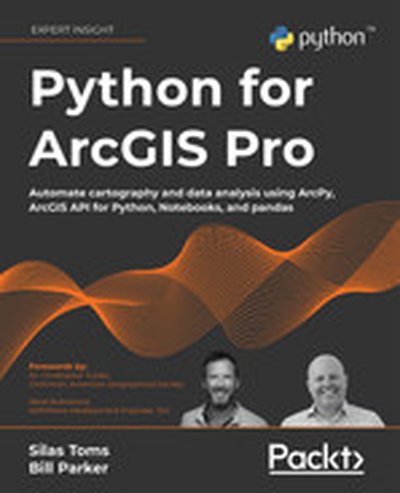
Python for ArcGIS Pro

Python for ArcGIS Pro is your guide to automating geospatial tasks and maximizing your productivity using Python. Inside, you'll learn how to integrate Python scripting into ArcGIS workflows to streamline map production, data analysis, and data management. What this Book will help me do Automate map production and streamline repetitive cartography tasks. Conduct geospatial data analysis using Python libraries like pandas and NumPy. Integrate ArcPy and ArcGIS API for Python to manage geospatial data more effectively. Create script tools to improve repeatability and manage datasets. Publish and manage geospatial data to ArcGIS Online seamlessly. Author(s) None Toms and None Parker are both experienced GIS professionals and Python developers. With years of hands-on experience using Esri technology in real-world scenarios, they bring practical insights into the application's nuances. Their collaborative approach allows them to demystify technical concepts, making their teachings accessible to audiences of all skill levels. Who is it for? This book is for ArcGIS users looking to integrate Python into workflows, whether you're a GIS specialist, technician, or analyst. It's also suitable for those transitioning to roles requiring programming skills. A basic understanding of ArcGIS helps, but the book starts from the fundamentals.

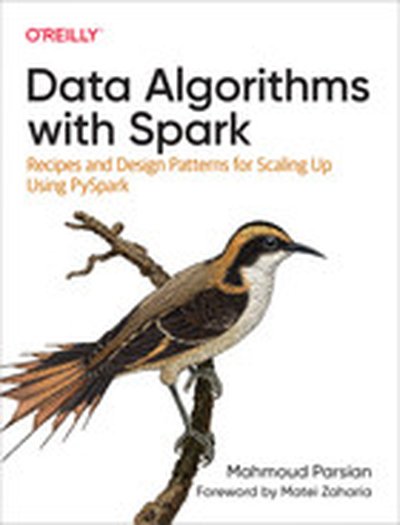
Data Algorithms with Spark

Apache Spark's speed, ease of use, sophisticated analytics, and multilanguage support makes practical knowledge of this cluster-computing framework a required skill for data engineers and data scientists. With this hands-on guide, anyone looking for an introduction to Spark will learn practical algorithms and examples using PySpark. In each chapter, author Mahmoud Parsian shows you how to solve a data problem with a set of Spark transformations and algorithms. You'll learn how to tackle problems involving ETL, design patterns, machine learning algorithms, data partitioning, and genomics analysis. Each detailed recipe includes PySpark algorithms using the PySpark driver and shell script. With this book, you will: Learn how to select Spark transformations for optimized solutions Explore powerful transformations and reductions including reduceByKey(), combineByKey(), and mapPartitions() Understand data partitioning for optimized queries Build and apply a model using PySpark design patterns Apply motif-finding algorithms to graph data Analyze graph data by using the GraphFrames API Apply PySpark algorithms to clinical and genomics data Learn how to use and apply feature engineering in ML algorithms Understand and use practical and pragmatic data design patterns

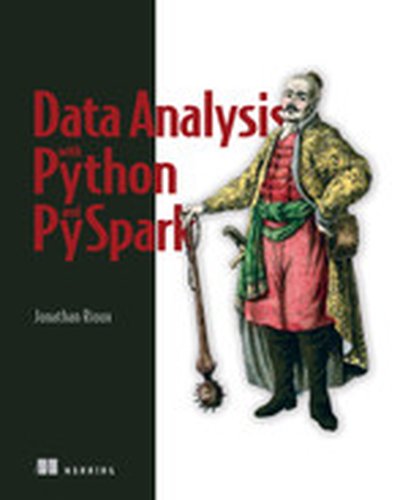
Data Analysis with Python and PySpark

Think big about your data! PySpark brings the powerful Spark big data processing engine to the Python ecosystem, letting you seamlessly scale up your data tasks and create lightning-fast pipelines. In Data Analysis with Python and PySpark you will learn how to: Manage your data as it scales across multiple machines Scale up your data programs with full confidence Read and write data to and from a variety of sources and formats Deal with messy data with PySpark’s data manipulation functionality Discover new data sets and perform exploratory data analysis Build automated data pipelines that transform, summarize, and get insights from data Troubleshoot common PySpark errors Creating reliable long-running jobs Data Analysis with Python and PySpark is your guide to delivering successful Python-driven data projects. Packed with relevant examples and essential techniques, this practical book teaches you to build pipelines for reporting, machine learning, and other data-centric tasks. Quick exercises in every chapter help you practice what you’ve learned, and rapidly start implementing PySpark into your data systems. No previous knowledge of Spark is required. About the Technology The Spark data processing engine is an amazing analytics factory: raw data comes in, insight comes out. PySpark wraps Spark’s core engine with a Python-based API. It helps simplify Spark’s steep learning curve and makes this powerful tool available to anyone working in the Python data ecosystem. About the Book Data Analysis with Python and PySpark helps you solve the daily challenges of data science with PySpark. You’ll learn how to scale your processing capabilities across multiple machines while ingesting data from any source—whether that’s Hadoop clusters, cloud data storage, or local data files. Once you’ve covered the fundamentals, you’ll explore the full versatility of PySpark by building machine learning pipelines, and blending Python, pandas, and PySpark code. What's Inside Organizing your PySpark code Managing your data, no matter the size Scale up your data programs with full confidence Troubleshooting common data pipeline problems Creating reliable long-running jobs About the Reader Written for data scientists and data engineers comfortable with Python. About the Author As a ML director for a data-driven software company, Jonathan Rioux uses PySpark daily. He teaches the software to data scientists, engineers, and data-savvy business analysts. Quotes A clear and in-depth introduction for truly tackling big data with Python. - Gustavo Patino, Oakland University William Beaumont School of Medicine The perfect way to learn how to analyze and master huge datasets. - Gary Bake, Brambles Covers both basic and more advanced topics of PySpark, with a good balance between theory and hands-on. - Philippe Van Bergenl, P² Consulting For beginner to pro, a well-written book to help understand PySpark. - Raushan Kumar Jha, Microsoft

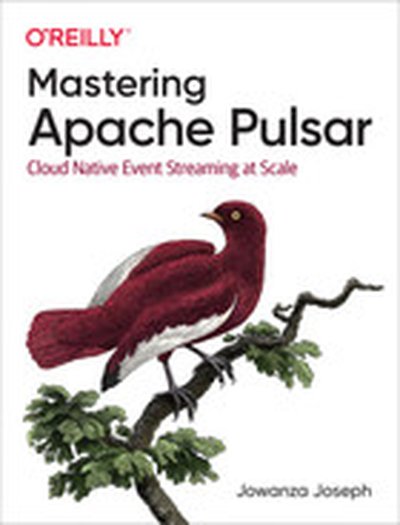
Mastering Apache Pulsar

Every enterprise application creates data, including log messages, metrics, user activity, and outgoing messages. Learning how to move these items is almost as important as the data itself. If you're an application architect, developer, or production engineer new to Apache Pulsar, this practical guide shows you how to use this open source event streaming platform to handle real-time data feeds. Jowanza Joseph, staff software engineer at Finicity, explains how to deploy production Pulsar clusters, write reliable event streaming applications, and build scalable real-time data pipelines with this platform. Through detailed examples, you'll learn Pulsar's design principles, reliability guarantees, key APIs, and architecture details, including the replication protocol, the load manager, and the storage layer. This book helps you: Understand how event streaming fits in the big data ecosystem Explore Pulsar producers, consumers, and readers for writing and reading events Build scalable data pipelines by connecting Pulsar with external systems Simplify event-streaming application building with Pulsar Functions Manage Pulsar to perform monitoring, tuning, and maintenance tasks Use Pulsar's operational measurements to secure a production cluster Process event streams using Flink and query event streams using Presto

Innovative SAP SuccessFactors Recruiting: A Guide to Creating Custom Integration and Automation

Get creative and optimize your SAP SuccessFactors Recruiting implementation with this guide, which examines a variety of integration and automation opportunities throughout the recruiting process outside of the standard integrations. Innovative SAP SuccessFactors Recruiting walks you through the end-to-end recruiting process and highlights opportunities to create interfaces and automation at each stage using a variety of methods and tools. After a brief overview of the market demands driving growth in this area and an introduction to OData, Anand Athanur, Mark Ingram and Michael A. Wellens detail each step in the recruiting process, starting with automating and integrating requisition creation using APIs and middleware. They then explore ways of enhancing candidate attraction and experience for the initial application process. After that, they jump into automation for overall candidate selection and processing, including automation using Robotic Process Automation, Integration center, the assessment integration framework, custom OData integrations, the background check integration framework, and Business Rules. Additionally, you’ll be shown onboarding optimization techniques using Intelligent Services, as well as hiring into third-party HRIS systems. After finishing this book, you will have a thorough understanding of how to utilize SAP SuccessFactors to recruit the right candidates for every position. What You Will Learn Integrate and automate the requisition creation process in innovative ways outside of SAP documentation Enhance candidate attraction and experience Leverage integration and automation opportunities within the application processing stage Automate hiring into third-party HRIS systems Who this Book For Customers, Consultants, and 3rd Party Vendors wishing to connect their solutions to SAP SuccessFactors Recruiting.

Kafka: The Definitive Guide, 2nd Edition

Every enterprise application creates data, whether it consists of log messages, metrics, user activity, or outgoing messages. Moving all this data is just as important as the data itself. With this updated edition, application architects, developers, and production engineers new to the Kafka streaming platform will learn how to handle data in motion. Additional chapters cover Kafka's AdminClient API, transactions, new security features, and tooling changes. Engineers from Confluent and LinkedIn responsible for developing Kafka explain how to deploy production Kafka clusters, write reliable event-driven microservices, and build scalable stream processing applications with this platform. Through detailed examples, you'll learn Kafka's design principles, reliability guarantees, key APIs, and architecture details, including the replication protocol, the controller, and the storage layer. You'll examine: Best practices for deploying and configuring Kafka Kafka producers and consumers for writing and reading messages Patterns and use-case requirements to ensure reliable data delivery Best practices for building data pipelines and applications with Kafka How to perform monitoring, tuning, and maintenance tasks with Kafka in production The most critical metrics among Kafka's operational measurements Kafka's delivery capabilities for stream processing systems

Foundations of Data Intensive Applications

PEEK “UNDER THE HOOD” OF BIG DATA ANALYTICS The world of big data analytics grows ever more complex. And while many people can work superficially with specific frameworks, far fewer understand the fundamental principles of large-scale, distributed data processing systems and how they operate. In Foundations of Data Intensive Applications: Large Scale Data Analytics under the Hood, renowned big-data experts and computer scientists Drs. Supun Kamburugamuve and Saliya Ekanayake deliver a practical guide to applying the principles of big data to software development for optimal performance. The authors discuss foundational components of large-scale data systems and walk readers through the major software design decisions that define performance, application type, and usability. You???ll learn how to recognize problems in your applications resulting in performance and distributed operation issues, diagnose them, and effectively eliminate them by relying on the bedrock big data principles explained within. Moving beyond individual frameworks and APIs for data processing, this book unlocks the theoretical ideas that operate under the hood of every big data processing system. Ideal for data scientists, data architects, dev-ops engineers, and developers, Foundations of Data Intensive Applications: Large Scale Data Analytics under the Hood shows readers how to: Identify the foundations of large-scale, distributed data processing systems Make major software design decisions that optimize performance Diagnose performance problems and distributed operation issues Understand state-of-the-art research in big data Explain and use the major big data frameworks and understand what underpins them Use big data analytics in the real world to solve practical problems

Cloud Native Integration with Apache Camel: Building Agile and Scalable Integrations for Kubernetes Platforms

Address the most common integration challenges, by understanding the ins and outs of the choices and exemplifying the solutions with practical examples on how to create cloud native applications using Apache Camel. Camel will be our main tool, but we will also see some complementary tools and plugins that can make our development and testing easier, such as Quarkus, and tools for more specific use cases, such as Apache Kafka and Keycloak. You will learn to connect with databases, create REST APIs, transform data, connect with message oriented software (MOMs), secure your services, and test using Camel. You will also learn software architecture patterns for integration and how to leverage container platforms, such as Kubernetes. This book is suitable for those who are eager to learn an integration tool that fits the Kubernetes world, and who want to explore the integration challenges that can be solved using containers. What You Will Learn Focus on how to solve integration challenges Understand the basics of the Quarkus as it’s the foundation for the application Acquire a comprehensive view on Apache Camel Deploy an application in Kubernetes Follow good practices Who This Book Is For Java developers looking to learn Apache Camel; Apache Camel developers looking to learn more about Kubernetes deployments; software architects looking to study integration patterns for Kubernetes based systems; system administrators (operations teams) looking to get a better understand of how technologies are integrated.

Developing Modern Applications with a Converged Database

Single-purpose databases were designed to address specific problems and use cases. Given this narrow focus, there are inherent tradeoffs required when trying to accommodate multiple datatypes or workloads in your enterprise environment. The result is data fragmentation that spills over into application development, IT operations, data security, system scalability, and availability. In this report, author Alice LaPlante explains why developing modern, data-driven applications may be easier and more synergistic when using a converged database. Senior developers, architects, and technical decision-makers will learn cloud-native application development techniques for working with both structured and unstructured data. You'll discover ways to run transactional and analytical workloads on a single, unified data platform. This report covers: Benefits and challenges of using a converged database to develop data-driven applications How to use one platform to work with both structured and unstructured data that includes JSON, XML, text and files, spatial and graph, Blockchain, IoT, time series, and relational data Modern development practices on a converged database, including API-driven development, containers, microservices, and event streaming Use case examples including online food delivery, real-time fraud detection, and marketing based on real-time analytics and geospatial targeting

Developing Modern Database Applications with PostgreSQL

In "Developing Modern Database Applications with PostgreSQL", you will master the art of building database applications with the highly available and scalable PostgreSQL. Walk through a series of real-world projects that fully explore both the developmental and administrative aspects of PostgreSQL, all tied together through the example of a banking application. What this Book will help me do Set up high-availability PostgreSQL clusters using modern best practices. Monitor and tune database performance to handle enterprise-level workloads seamlessly. Automate testing and implement test-driven development strategies for robust applications. Leverage PostgreSQL along with DevOps pipelines to deploy applications on cloud platforms. Develop APIs and geospatial databases using popular tools like PostgREST and PostGIS. Author(s) The authors of this book, None Le and None Diaz, are experienced professionals in database technologies and software development. With a passion for PostgreSQL and its applications in modern computing, they bring a wealth of expertise and a practical approach to this book. Their methods focus on real-world applicability, ensuring that readers gain hands-on skills and practical knowledge. Who is it for? This book is perfect for database developers, administrators, and architects who want to advance their expertise in PostgreSQL. It is also suitable for software engineers and IT professionals aiming to tackle end-to-end database development projects. A basic knowledge of PostgreSQL and Linux will help you dive into the hands-on projects easily. If you're looking to take your PostgreSQL skills to the next level, this book is for you.

SQL Server on Kubernetes: Designing and Building a Modern Data Platform

Build a modern data platform by deploying SQL Server in Kubernetes. Modern application deployment needs to be fast and consistent to keep up with business objectives and Kubernetes is quickly becoming the standard for deploying container-based applications, fast. This book introduces Kubernetes and its core concepts. Then it shows you how to build and interact with a Kubernetes cluster. Next, it goes deep into deploying and operationalizing SQL Server in Kubernetes, both on premises and in cloud environments such as the Azure Cloud. You will begin with container-based application fundamentals and then go into an architectural overview of a Kubernetes container and how it manages application state. Then you will learn the hands-on skill of building a production-ready cluster. With your cluster up and running, you will learn how to interact with your cluster and perform common administrative tasks. Once you can admin the cluster, you will learn how to deploy applications and SQL Server in Kubernetes. You will learn about high-availability options, and about using Azure Arc-enabled Data Services. By the end of this book, you will know how to set up a Kubernetes cluster, manage a cluster, deploy applications and databases, and keep everything up and running. What You Will Learn Understand Kubernetes architecture and cluster components Deploy your applications into Kubernetes clusters Manage your containers programmatically through API objects and controllers Deploy and operationalize SQL Server in Kubernetes Implement high-availability SQL Server scenarios on Kubernetes using Azure Arc-enabled Data Services Make use of Kubernetes deployments for Big Data Clusters Who This Book Is For DBAs and IT architects who are ready to begin planning their next-generation data platform and want to understand what it takes to run SQL Server in a container in Kubernetes. SQL Server on Kubernetes is an excellent choice for those who want to understand the big picture of why Kubernetes is the next-generation deployment method for SQL Server but also want to understand the internals, or the how, of deploying SQL Server in Kubernetes. When finished with this book, you will have the vision and skills to successfully architect, build and maintain a modern data platform deploying SQL Server on Kubernetes.