talk-data.com talk-data.com

Topic

Amazon EMR

big_data hadoop aws

34

tagged

Activity Trend

6 peak/qtr
2020-Q1 2026-Q1

Activities

34 activities · Newest first

Lessons Learned from Deidentifying 700 Million Patient Notes

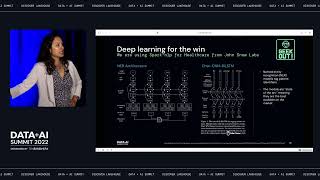
Providence embarked on an ambitious journey to de-identify all our clinical electronic medical record (EMR) data to support medical research and the development of novel treatments. This talk shares how this was done for patient notes and how you can achieve the same.

First, we built a deidentification pipeline using pre-trained deep learning models, fine-tuned to our own data. We then developed an innovative methodology to evaluate reidentification risk, as American healthcare laws (HIPAA) require that de-identified data have a “very low” risk of reidentification, but do not specify a standard. Our next challenge was to annotate a dataset large enough to produce meaningful statistics and improve the fine-tuning of our model. Finally, through experimentation and iteration, we achieved a level of level of performance that would safeguard patient privacy while minimizing information loss. Our technology partner provided the computing power to efficiently process hundreds of millions of records of historical data and incremental daily loads.

Through this endeavor, we have learned many lessons that we will share:

• Evaluating risk of reidentification to meet HIPAA requirements
• Annotating samples of data to create labeled datasets • Performing experiments and evaluating performance • Fine-tuning pre-trained models with your own data • Augmenting models with rules and other tricks • Optimizing clusters to process very large volumes of text data

We will also present speed and throughput metrics from running our pipeline, which you can use to benchmark similar projects.

Connect with us: Website: https://databricks.com Facebook: https://www.facebook.com/databricksinc Twitter: https://twitter.com/databricks LinkedIn: https://www.linkedin.com/company/data... Instagram: https://www.instagram.com/databricksinc/

Running a Low Cost, Versatile Data Management Ecosystem with Apache Spark at Core

Data is the key component of Analytics, AI or ML platform. Organizations may not be successful without having a Platform that can Source, Transform, Quality check and present data in a reportable format that can drive actionable insights.

This session will focus on how Capital One HR Team built a Low Cost Data movement Ecosystem that can source data, transform at scale and build the data storage (Redshift) at a level that can be easily consumed by AI/ML programs - by using AWS Services with combination of Open source software(Spark) and Enterprise Edition Hydrograph (UI Based ETL tool with Spark as backend) This presentation is mainly to demonstrate the flexibility that Apache Spark provides for various types ETL Data Pipelines when we code in Spark.

We have been running 3 types of pipelines over 6+ years , over 400+ nightly batch jobs for $1000/mo. (1) Spark on EC2 (2) UI Based ETL tool with Spark backend (on the same EC2) (3) Spark on EMR. We have a CI/CD pipeline that supports easy integration and code deployment in all non-prod and prod regions ( even supports automated unit testing). We will also demonstrate how this ecosystem can failover to a different region in less than 15 minutes , making our application highly resilient.

Connect with us: Website: https://databricks.com Facebook: https://www.facebook.com/databricksinc Twitter: https://twitter.com/databricks LinkedIn: https://www.linkedin.com/company/data... Instagram: https://www.instagram.com/databricksinc/

Comprehensive Patient Data Self-Serve Environment and Executive Dashboards Leveraging Databricks

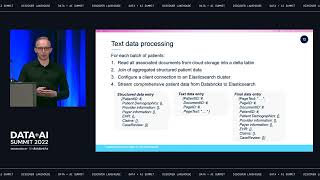
In this talk, we will outline our data pipelines and demo dashboards developed on top of the resulting elasticsearch index. This tool enables queries for terms or phrases in the raw documents to be executed together with any associated EMR patient data filters within 1-2 second for a data set containing millions of records/documents. Finally, the dashboards are simple to use and enable Real World Evidence data stakeholders to gain real-time statistical insight into the comprehensive patient information available.

Connect with us: Website: https://databricks.com Facebook: https://www.facebook.com/databricksinc Twitter: https://twitter.com/databricks LinkedIn: https://www.linkedin.com/company/data... Instagram: https://www.instagram.com/databricksinc/

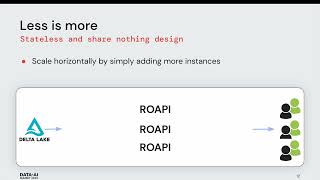
ROAPI: Serve Not So Big Data Pipeline Outputs Online with Modern APIs

Data is the key component of Analytics, AI or ML platform. Organizations may not be successful without having a Platform that can Source, Transform, Quality check and present data in a reportable format that can drive actionable insights.

This session will focus on how Capital One HR Team built a Low Cost Data movement Ecosystem that can source data, transform at scale and build the data storage (Redshift) at a level that can be easily consumed by AI/ML programs - by using AWS Services with combination of Open source software(Spark) and Enterprise Edition Hydrograph (UI Based ETL tool with Spark as backend) This presentation is mainly to demonstrate the flexibility that Apache Spark provides for various types ETL Data Pipelines when we code in Spark.

We have been running 3 types of pipelines over 6+ years , over 400+ nightly batch jobs for $1000/mo. (1) Spark on EC2 (2) UI Based ETL tool with Spark backend (on the same EC2) (3) Spark on EMR. We have a CI/CD pipeline that supports easy integration and code deployment in all non-prod and prod regions ( even supports automated unit testing). We will also demonstrate how this ecosystem can failover to a different region in less than 15 minutes , making our application highly resilient.

Connect with us: Website: https://databricks.com Facebook: https://www.facebook.com/databricksinc Twitter: https://twitter.com/databricks LinkedIn: https://www.linkedin.com/company/data... Instagram: https://www.instagram.com/databricksinc/

Simplify Big Data Analytics with Amazon EMR

Simplify Big Data Analytics with Amazon EMR is a thorough guide to harnessing Amazon's EMR service for big data processing and analytics. From distributed computation pipelines to real-time streaming analytics, this book provides hands-on knowledge and actionable steps for implementing data solutions efficiently. What this Book will help me do Understand the architecture and key components of Amazon EMR and how to deploy it effectively. Learn to configure and manage distributed data processing pipelines using Amazon EMR. Implement security and data governance best practices within the Amazon EMR ecosystem. Master batch ETL and real-time analytics techniques using technologies like Apache Spark. Apply optimization and cost-saving strategies to scalable data solutions. Author(s) Sakti Mishra is a seasoned data professional with extensive expertise in deploying scalable analytics solutions on cloud platforms like AWS. With a background in big data technologies and a passion for teaching, Sakti ensures practical insights accompany every concept. Readers will find his approach thorough, hands-on, and highly informative. Who is it for? This book is perfect for data engineers, data scientists, and other professionals looking to leverage Amazon EMR for scalable analytics. If you are familiar with Python, Scala, or Java and have some exposure to Hadoop or AWS ecosystems, this book will empower you to design and implement robust data pipelines efficiently.

At Nielsen Identity Engine, we use Spark to process 10’s of TBs of data. Our ETLs, orchestrated by Airflow, spin-up AWS EMR clusters with thousands of nodes per day. In this talk, we’ll guide you through migrating Spark workloads to Kubernetes with minimal changes to Airflow DAGs, using the open-sourced GCP Spark-on-K8s operator and the native integration we recently contributed to the Airflow project.

Summary One of the biggest challenges in building reliable platforms for processing event pipelines is managing the underlying infrastructure. At Snowplow Analytics the complexity is compounded by the need to manage multiple instances of their platform across customer environments. In this episode Josh Beemster, the technical operations lead at Snowplow, explains how they manage automation, deployment, monitoring, scaling, and maintenance of their streaming analytics pipeline for event data. He also shares the challenges they face in supporting multiple cloud environments and the need to integrate with existing customer systems. If you are daunted by the needs of your data infrastructure then it’s worth listening to how Josh and his team are approaching the problem.

Announcements

Hello and welcome to the Data Engineering Podcast, the show about modern data management When you’re ready to build your next pipeline, or want to test out the projects you hear about on the show, you’ll need somewhere to deploy it, so check out our friends at Linode. With 200Gbit private networking, scalable shared block storage, a 40Gbit public network, fast object storage, and a brand new managed Kubernetes platform, you’ve got everything you need to run a fast, reliable, and bullet-proof data platform. And for your machine learning workloads, they’ve got dedicated CPU and GPU instances. Go to dataengineeringpodcast.com/linode today to get a $20 credit and launch a new server in under a minute. And don’t forget to thank them for their continued support of this show! You listen to this show to learn and stay up to date with what’s happening in databases, streaming platforms, big data, and everything else you need to know about modern data management. For even more opportunities to meet, listen, and learn from your peers you don’t want to miss out on this year’s conference season. We have partnered with organizations such as O’Reilly Media, Corinium Global Intelligence, ODSC, and Data Council. Upcoming events include the Software Architecture Conference in NYC, Strata Data in San Jose, and PyCon US in Pittsburgh. Go to dataengineeringpodcast.com/conferences to learn more about these and other events, and take advantage of our partner discounts to save money when you register today. Your host is Tobias Macey and today I’m interviewing Josh Beemster about how Snowplow manages deployment and maintenance of their managed service in their customer’s cloud accounts.

Interview

Introduction How did you get involved in the area of data management? Can you start by giving an overview of the components in your system architecture and the nature of your managed service? What are some of the challenges that are inherent to private SaaS nature of your managed service? What elements of your system require the most attention and maintenance to keep them running properly? Which components in the pipeline are most subject to variability in traffic or resource pressure and what do you do to ensure proper capacity? How do you manage deployment of the full Snowplow pipeline for your customers?

How has your strategy for deployment evolved since you first began Soffering the managed service? How has the architecture of the pipeline evolved to simplify operations?

How much customization do you allow for in the event that the customer has their own system that they want to use in place of one of your supported components?

What are some of the common difficulties that you encounter when working with customers who need customized components, topologies, or event flows?

How does that reflect in the tooling that you use to manage their deployments?

What types of metrics do you track and what do you use for monitoring and alerting to ensure that your customers pipelines are running smoothly? What are some of the most interesting/unexpected/challenging lessons that you have learned in the process of working with and on Snowplow? What are some lessons that you can generalize for management of data infrastructure more broadly? If you could start over with all of Snowplow and the infrastructure automation for it today, what would you do differently? What do you have planned for the future of the Snowplow product and infrastructure management?

Contact Info

LinkedIn jbeemster on GitHub @jbeemster1 on Twitter

Parting Question

From your perspective, what is the biggest gap in the tooling or technology for data management today?

Closing Announcements

Thank you for listening! Don’t forget to check out our other show, Podcast.init to learn about the Python language, its community, and the innovative ways it is being used. Visit the site to subscribe to the show, sign up for the mailing list, and read the show notes. If you’ve learned something or tried out a project from the show then tell us about it! Email [email protected]) with your story. To help other people find the show please leave a review on iTunes and tell your friends and co-workers Join the community in the new Zulip chat workspace at dataengineeringpodcast.com/chat

Links

Snowplow Analytics

Podcast Episode

Terraform Consul Nomad Meltdown Vulnerability Spectre Vulnerability AWS Kinesis Elasticsearch SnowflakeDB Indicative S3 Segment AWS Cloudwatch Stackdriver Apache Kafka Apache Pulsar Google Cloud PubSub AWS SQS AWS SNS AWS Redshift Ansible AWS Cloudformation Kubernetes AWS EMR

The intro and outro music is from The Hug by The Freak Fandango Orchestra / CC BY-SA

Support Data Engineering Podcast

Summary

Every business with a website needs some way to keep track of how much traffic they are getting, where it is coming from, and which actions are being taken. The default in most cases is Google Analytics, but this can be limiting when you wish to perform detailed analysis of the captured data. To address this problem, Alex Dean co-founded Snowplow Analytics to build an open source platform that gives you total control of your website traffic data. In this episode he explains how the project and company got started, how the platform is architected, and how you can start using it today to get a clearer view of how your customers are interacting with your web and mobile applications.

Preamble

Hello and welcome to the Data Engineering Podcast, the show about modern data management When you’re ready to build your next pipeline you’ll need somewhere to deploy it, so check out Linode. With private networking, shared block storage, node balancers, and a 40Gbit network, all controlled by a brand new API you’ve got everything you need to run a bullet-proof data platform. Go to dataengineeringpodcast.com/linode to get a $20 credit and launch a new server in under a minute. You work hard to make sure that your data is reliable and accurate, but can you say the same about the deployment of your machine learning models? The Skafos platform from Metis Machine was built to give your data scientists the end-to-end support that they need throughout the machine learning lifecycle. Skafos maximizes interoperability with your existing tools and platforms, and offers real-time insights and the ability to be up and running with cloud-based production scale infrastructure instantaneously. Request a demo at dataengineeringpodcast.com/metis-machine to learn more about how Metis Machine is operationalizing data science. Go to dataengineeringpodcast.com to subscribe to the show, sign up for the mailing list, read the show notes, and get in touch. Join the community in the new Zulip chat workspace at dataengineeringpodcast.com/chat This is your host Tobias Macey and today I’m interviewing Alexander Dean about Snowplow Analytics

Interview

Introductions How did you get involved in the area of data engineering and data management? What is Snowplow Analytics and what problem were you trying to solve when you started the company? What is unique about customer event data from an ingestion and processing perspective? Challenges with properly matching up data between sources Data collection is one of the more difficult aspects of an analytics pipeline because of the potential for inconsistency or incorrect information. How is the collection portion of the Snowplow stack designed and how do you validate the correctness of the data?

Cleanliness/accuracy

What kinds of metrics should be tracked in an ingestion pipeline and how do you monitor them to ensure that everything is operating properly? Can you describe the overall architecture of the ingest pipeline that Snowplow provides?

How has that architecture evolved from when you first started? What would you do differently if you were to start over today?

Ensuring appropriate use of enrichment sources What have been some of the biggest challenges encountered while building and evolving Snowplow? What are some of the most interesting uses of your platform that you are aware of?

Keep In Touch

Alex

@alexcrdean on Twitter LinkedIn

Snowplow

@snowplowdata on Twitter

Parting Question

From your perspective, what is the biggest gap in the tooling or technology for data management today?

Links

Snowplow

GitHub

Deloitte Consulting OpenX Hadoop AWS EMR (Elastic Map-Reduce) Business Intelligence Data Warehousing Google Analytics CRM (Customer Relationship Management) S3 GDPR (General Data Protection Regulation) Kinesis Kafka Google Cloud Pub-Sub JSON-Schema Iglu IAB Bots And Spiders List Heap Analytics

Podcast Interview

Redshift SnowflakeDB Snowplow Insights Googl

Summary

Building an ETL pipeline is a common need across businesses and industries. It’s easy to get one started but difficult to manage as new requirements are added and greater scalability becomes necessary. Rather than duplicating the efforts of other engineers it might be best to use a hosted service to handle the plumbing so that you can focus on the parts that actually matter for your business. In this episode CTO and co-founder of Alooma, Yair Weinberger, explains how the platform addresses the common needs of data collection, manipulation, and storage while allowing for flexible processing. He describes the motivation for starting the company, how their infrastructure is architected, and the challenges of supporting multi-tenancy and a wide variety of integrations.

Preamble

Hello and welcome to the Data Engineering Podcast, the show about modern data management When you’re ready to build your next pipeline you’ll need somewhere to deploy it, so check out Linode. With private networking, shared block storage, node balancers, and a 40Gbit network, all controlled by a brand new API you’ve got everything you need to run a bullet-proof data platform. Go to dataengineeringpodcast.com/linode to get a $20 credit and launch a new server in under a minute. For complete visibility into the health of your pipeline, including deployment tracking, and powerful alerting driven by machine-learning, DataDog has got you covered. With their monitoring, metrics, and log collection agent, including extensive integrations and distributed tracing, you’ll have everything you need to find and fix performance bottlenecks in no time. Go to dataengineeringpodcast.com/datadog today to start your free 14 day trial and get a sweet new T-Shirt. Go to dataengineeringpodcast.com to subscribe to the show, sign up for the newsletter, read the show notes, and get in touch. Your host is Tobias Macey and today I’m interviewing Yair Weinberger about Alooma, a company providing data pipelines as a service

Interview

Introduction How did you get involved in the area of data management? What is Alooma and what is the origin story? How is the Alooma platform architected?

I want to go into stream VS batch here What are the most challenging components to scale?

How do you manage the underlying infrastructure to support your SLA of 5 nines? What are some of the complexities introduced by processing data from multiple customers with various compliance requirements?

How do you sandbox user’s processing code to avoid security exploits?

What are some of the potential pitfalls for automatic schema management in the target database? Given the large number of integrations, how do you maintain the

What are some challenges when creating integrations, isn’t it simply conforming with an external API?

For someone getting started with Alooma what does the workflow look like? What are some of the most challenging aspects of building and maintaining Alooma? What are your plans for the future of Alooma?

Contact Info

LinkedIn @yairwein on Twitter

Parting Question

From your perspective, what is the biggest gap in the tooling or technology for data management today?

Links

Alooma Convert Media Data Integration ESB (Enterprise Service Bus) Tibco Mulesoft ETL (Extract, Transform, Load) Informatica Microsoft SSIS OLAP Cube S3 Azure Cloud Storage Snowflake DB Redshift BigQuery Salesforce Hubspot Zendesk Spark The Log: What every software engineer should know about real-time data’s unifying abstraction by Jay Kreps RDBMS (Relational Database Management System) SaaS (Software as a Service) Change Data Capture Kafka Storm Google Cloud PubSub Amazon Kinesis Alooma Code Engine Zookeeper Idempotence Kafka Streams Kubernetes SOC2 Jython Docker Python Javascript Ruby Scala PII (Personally Identifiable Information) GDPR (General Data Protection Regulation) Amazon EMR (Elastic Map Reduce) Sequoia Capital Lightspeed Investors Redis Aerospike Cassandra MongoDB

The intro and outro music is from The Hug by The Freak Fandango Orchestra / CC BY-SA Support Data Engineering Podcast
Summary

The rate of change in the data engineering industry is alternately exciting and exhausting. Joe Crobak found his way into the work of data management by accident as so many of us do. After being engrossed with researching the details of distributed systems and big data management for his work he began sharing his findings with friends. This led to his creation of the Hadoop Weekly newsletter, which he recently rebranded as the Data Engineering Weekly newsletter. In this episode he discusses his experiences working as a data engineer in industry and at the USDS, his motivations and methods for creating a newsleteter, and the insights that he has gleaned from it.

Preamble

Hello and welcome to the Data Engineering Podcast, the show about modern data management When you’re ready to build your next pipeline you’ll need somewhere to deploy it, so check out Linode. With private networking, shared block storage, node balancers, and a 40Gbit network, all controlled by a brand new API you’ve got everything you need to run a bullet-proof data platform. Go to dataengineeringpodcast.com/linode to get a $20 credit and launch a new server in under a minute. Go to dataengineeringpodcast.com to subscribe to the show, sign up for the newsletter, read the show notes, and get in touch. Your host is Tobias Macey and today I’m interviewing Joe Crobak about his work maintaining the Data Engineering Weekly newsletter, and the challenges of keeping up with the data engineering industry.

Interview

Introduction How did you get involved in the area of data management? What are some of the projects that you have been involved in that were most personally fulfilling?

As an engineer at the USDS working on the healthcare.gov and medicare systems, what were some of the approaches that you used to manage sensitive data? Healthcare.gov has a storied history, how did the systems for processing and managing the data get architected to handle the amount of load that it was subjected to?

What was your motivation for starting a newsletter about the Hadoop space?

Can you speak to your reasoning for the recent rebranding of the newsletter?

How much of the content that you surface in your newsletter is found during your day-to-day work, versus explicitly searching for it? After over 5 years of following the trends in data analytics and data infrastructure what are some of the most interesting or surprising developments?

What have you found to be the fundamental skills or areas of experience that have maintained relevance as new technologies in data engineering have emerged?

What is your workflow for finding and curating the content that goes into your newsletter? What is your personal algorithm for filtering which articles, tools, or commentary gets added to the final newsletter? How has your experience managing the newsletter influenced your areas of focus in your work and vice-versa? What are your plans going forward?

Contact Info

Data Eng Weekly Email Twitter – @joecrobak Twitter – @dataengweekly

Parting Question

From your perspective, what is the biggest gap in the tooling or technology for data management today?

Links

USDS National Labs Cray Amazon EMR (Elastic Map-Reduce) Recommendation Engine Netflix Prize Hadoop Cloudera Puppet healthcare.gov Medicare Quality Payment Program HIPAA NIST National Institute of Standards and Technology PII (Personally Identifiable Information) Threat Modeling Apache JBoss Apache Web Server MarkLogic JMS (Java Message Service) Load Balancer COBOL Hadoop Weekly Data Engineering Weekly Foursquare NiFi Kubernetes Spark Flink Stream Processing DataStax RSS The Flavors of Data Science and Engineering CQRS Change Data Capture Jay Kreps

The intro and outro music is from The Hug by The Freak Fandango Orchestra / CC BY-SA Support Data Engineering Podcast
Summary

Buzzfeed needs to be able to understand how its users are interacting with the myriad articles, videos, etc. that they are posting. This lets them produce new content that will continue to be well-received. To surface the insights that they need to grow their business they need a robust data infrastructure to reliably capture all of those interactions. Walter Menendez is a data engineer on their infrastructure team and in this episode he describes how they manage data ingestion from a wide array of sources and create an interface for their data scientists to produce valuable conclusions.

Preamble

Hello and welcome to the Data Engineering Podcast, the show about modern data management When you’re ready to launch your next project you’ll need somewhere to deploy it. Check out Linode at dataengineeringpodcast.com/linode and get a $20 credit to try out their fast and reliable Linux virtual servers for running your data pipelines or trying out the tools you hear about on the show. Continuous delivery lets you get new features in front of your users as fast as possible without introducing bugs or breaking production and GoCD is the open source platform made by the people at Thoughtworks who wrote the book about it. Go to dataengineeringpodcast.com/gocd to download and launch it today. Enterprise add-ons and professional support are available for added peace of mind. Go to dataengineeringpodcast.com to subscribe to the show, sign up for the newsletter, read the show notes, and get in touch. You can help support the show by checking out the Patreon page which is linked from the site. To help other people find the show you can leave a review on iTunes, or Google Play Music, and tell your friends and co-workers Your host is Tobias Macey and today I’m interviewing Walter Menendez about the data engineering platform at Buzzfeed

Interview

Introduction How did you get involved in the area of data management? How is the data engineering team at Buzzfeed structured and what kinds of projects are you responsible for? What are some of the types of data inputs and outputs that you work with at Buzzfeed? Is the core of your system using a real-time streaming approach or is it primarily batch-oriented and what are the business needs that drive that decision? What does the architecture of your data platform look like and what are some of the most significant areas of technical debt? Which platforms and languages are most widely leveraged in your team and what are some of the outliers? What are some of the most significant challenges that you face, both technically and organizationally? What are some of the dead ends that you have run into or failed projects that you have tried? What has been the most successful project that you have completed and how do you measure that success?

Contact Info

@hackwalter on Twitter walterm on GitHub

Links

Data Literacy MIT Media Lab Tumblr Data Capital Data Infrastructure Google Analytics Datadog Python Numpy SciPy NLTK Go Language NSQ Tornado PySpark AWS EMR Redshift Tracking Pixel Google Cloud Don’t try to be google Stop Hiring DevOps Engineers and Start Growing Them

The intro and outro music is from The Hug by The Freak Fandango Orchestra / CC BY-SA Support Data Engineering Podcast
Frank Kane's Taming Big Data with Apache Spark and Python

This book introduces you to the world of Big Data processing using Apache Spark and Python. You will learn to set up and run Spark on different systems, process massive datasets, and create solutions to real-world Big Data challenges with over 15 hands-on examples included. What this Book will help me do Understand the basics of Apache Spark and its ecosystem. Learn how to process large datasets with Spark RDDs using Python. Implement machine learning models with Spark's MLlib library. Master real-time data processing with Spark Streaming modules. Deploy and run Spark jobs on cloud clusters using AWS EMR. Author(s) Frank Kane spent 9 years working at Amazon and IMDb, handling and solving real-world machine learning and Big Data problems. Today, as an instructional designer and educator, he brings his wealth of experience to learners around the globe by creating accessible, practical learning resources. His teaching is clear, engaging, and designed to prepare students for real-world applications. Who is it for? This book is ideal for data scientists or data analysts seeking to delve into Big Data processing with Apache Spark. Readers who have foundational knowledge of Python, as well as some understanding of data processing principles, will find this book useful to sharpen their skills further. It is designed for those eager to learn the practical applications of Big Data tools in today's industry environments. By the end of this book, you should feel confident tackling Big Data challenges using Spark and Python.

DynamoDB Cookbook

This comprehensive guide introduces you to Amazon's DynamoDB, a NoSQL database designed for high scalability and performance. Using this book, you will learn how to build robust web and mobile applications on DynamoDB and integrate it seamlessly with other AWS services for a complete cloud solution. What this Book will help me do Understand the key design concepts of DynamoDB and leverage its performance and scalability in your projects. Learn best practices for operating and managing DynamoDB tables, including optimizing throughput and designing efficient indexes. Master techniques for securing data in DynamoDB, including encryption and access management approaches. Explore integration strategies with other AWS services such as S3, EMR, and Lambda, to develop complex, real-world applications. Learn cost-effective solutions and tips for managing DynamoDB usage to avoid unnecessary expenses while maximizing resources. Author(s) None Deshpande, an expert in AWS and NoSQL databases, brings years of practical experience and engineering best practices to this book. With a strong focus on clear and actionable insights, Deshpande is dedicated to enabling developers to unlock the full potential of DynamoDB and related services for scalable application development. Who is it for? This book is most suited for developers and architects familiar with AWS who aim to deepen their understanding of DynamoDB. It is ideal for individuals looking to harness NoSQL databases for robust and scalable application solutions. The topics covered range from foundational knowledge to advanced integrations, making the book approachable yet comprehensive for both learners and seasoned practitioners.

Programming Elastic MapReduce

Although you don’t need a large computing infrastructure to process massive amounts of data with Apache Hadoop, it can still be difficult to get started. This practical guide shows you how to quickly launch data analysis projects in the cloud by using Amazon Elastic MapReduce (EMR), the hosted Hadoop framework in Amazon Web Services (AWS). Authors Kevin Schmidt and Christopher Phillips demonstrate best practices for using EMR and various AWS and Apache technologies by walking you through the construction of a sample MapReduce log analysis application. Using code samples and example configurations, you’ll learn how to assemble the building blocks necessary to solve your biggest data analysis problems. Get an overview of the AWS and Apache software tools used in large-scale data analysis Go through the process of executing a Job Flow with a simple log analyzer Discover useful MapReduce patterns for filtering and analyzing data sets Use Apache Hive and Pig instead of Java to build a MapReduce Job Flow Learn the basics for using Amazon EMR to run machine learning algorithms Develop a project cost model for using Amazon EMR and other AWS tools