talk-data.com talk-data.com

Topic

Cloud Computing

infrastructure saas iaas

96

tagged

Activity Trend

471 peak/qtr
2020-Q1 2026-Q1

Activities

Showing filtered results

Filtering by: O'Reilly Data Science Books ×
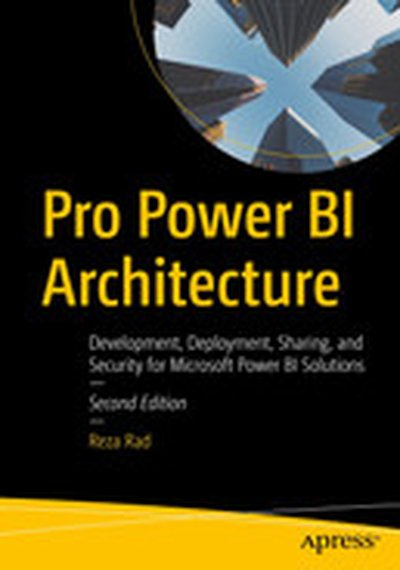
Pro Power BI Architecture: Development, Deployment, Sharing, and Security for Microsoft Power BI Solutions

This book provides detailed guidance around architecting and deploying Power BI reporting solutions, including help and best practices for sharing and security. You’ll find chapters on dataflows, shared datasets, composite model and DirectQuery connections to Power BI datasets, deployment pipelines, XMLA endpoints, and many other important features related to the overall Power BI architecture that are new since the first edition. You will gain an understanding of what functionality each of the Power BI components provide (such as Dataflow, Shared Dataset, Datamart, thin reports, and paginated reports), so that you can make an informed decision about what components to use in your solution. You will get to know the pros and cons of each component, and how they all work together within the larger Power BI architecture. Commonly encountered problems you will learn to handle include content unexpectedly changing while users are in the process of creating reports and building analyses, methods of sharing analyses that don’t cover all the requirements of your business or organization, and inconsistent security models. Detailed examples help you to understand and choose from among the different methods available for sharing and securing Power BI content so that only intended recipients can see it. The knowledge provided in this book will allow you to choose an architecture and deployment model that suits the needs of your organization. It will also help ensure that you do not spend your time maintaining your solution, but on using it for its intended purpose: gaining business value from mining and analyzing your organization’s data. What You Will Learn Architect Power BI solutions that are reliable and easy to maintain Create development templates and structures in support of reusability Set up and configure the Power BI gateway as a bridge between on-premises data sourcesand the Power BI cloud service Select a suitable connection type—Live Connection, DirectQuery, Scheduled Refresh, or Composite Model—for your use case Choose the right sharing method for how you are using Power BI in your organization Create and manage environments for development, testing, and production Secure your data using row-level and object-level security Save money by choosing the right licensing plan Who This Book Is For Data analysts and developers who are building reporting solutions around Power BI, as well as architects and managers who are responsible for the big picture of how Power BI meshes with an organization’s other systems, including database and data warehouse systems.
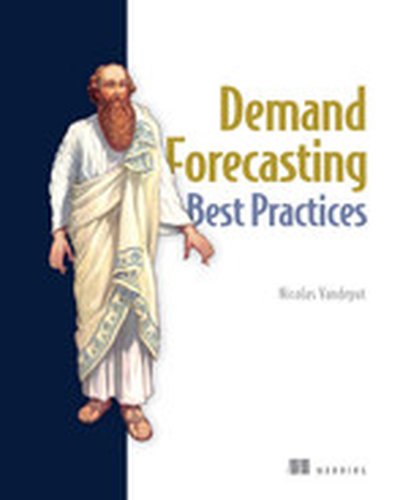
Demand Forecasting Best Practices

Lead your demand planning process to excellence and deliver real value to your supply chain. In Demand Forecasting Best Practices you’ll learn how to: Lead your team to improve quality while reducing workload Properly define the objectives and granularity of your demand planning Use intelligent KPIs to track accuracy and bias Identify areas for process improvement Help planners and stakeholders add value Determine relevant data to collect and how best to collect it Utilize different statistical and machine learning models An expert demand forecaster can help an organization avoid overproduction, reduce waste, and optimize inventory levels for a real competitive advantage. Demand Forecasting Best Practices teaches you how to become that virtuoso demand forecaster. This one-of-a-kind guide reveals forecasting tools, metrics, models, and stakeholder management techniques for delivering more effective supply chains. Everything you learn has been proven and tested in a live business environment. Discover author Nicolas Vandeput’s original five step framework for demand planning excellence and learn how to tailor it to your own company’s needs. Illustrations and real-world examples make each concept easy to understand and easy to follow. You’ll soon be delivering accurate predictions that are driving major business value. About the Technology An expert demand forecaster can help an organization avoid overproduction, reduce waste, and optimize inventory levels for a real competitive advantage. This book teaches you how to become that virtuoso demand forecaster. About the Book Demand Forecasting Best Practices reveals forecasting tools, metrics, models, and stakeholder management techniques for managing your demand planning process efficiently and effectively. Everything you learn has been proven and tested in a live business environment. Discover author Nicolas Vandeput’s original five step framework for demand planning excellence and learn how to tailor it to your own company’s needs. Illustrations and real-world examples make each concept easy to understand and easy to follow. You’ll soon be delivering accurate predictions that are driving major business value. What's Inside Enhance forecasting quality while reducing team workload Utilize intelligent KPIs to track accuracy and bias Identify process areas for improvement Assist stakeholders in sales, marketing, and finance Optimize statistical and machine learning models About the Reader For demand planners, sales and operations managers, supply chain leaders, and data scientists. About the Author Nicolas Vandeput is a supply chain data scientist, the founder of consultancy company SupChains in 2016, and a teacher at CentraleSupélec, France. Quotes This new book continues to push the FVA mindset, illustrating practices that drive the efficiency and effectiveness of the business forecasting process. - Michael Gilliland, Editor-in-Chief, Foresight: Journal of Applied Forecasting A must-read for any SCM professional, data scientist, or business owner. It's practical, accessible, and packed with valuable insights. - Edouard Thieuleux, Founder of AbcSupplyChain An exceptional resource that covers everything from basic forecasting principles to advanced forecasting techniques using artificial intelligence and machine learning. The writing style is engaging, making complex concepts accessible to both beginners and experts. - Daniel Stanton, Mr. Supply Chain® Nicolas did it again! Demand Forecasting Best Practices provides practical and actionable advice for improving the demand planning process. - Professor Spyros Makridakis, The Makridakis Open Forecasting Center, Institute For the Future (IFF), University of Nicosia This book is now my companion on all of our planning and forecasting projects. A perfect foundation for implementation and also to recommend process improvements. - Werner Nindl, Chief Architect – CPM Practice Director, Pivotal Drive This author understands the nuances of forecasting, and is able to explain them well. - Burhan Ul Haq, Director of Products, Enablers Both broader and deeper than I expected. - Maxim Volgin, Quantitative Marketing Manager, KLM Great book with actionable insights. - Simon Tschöke, Head of Research, German Edge Cloud

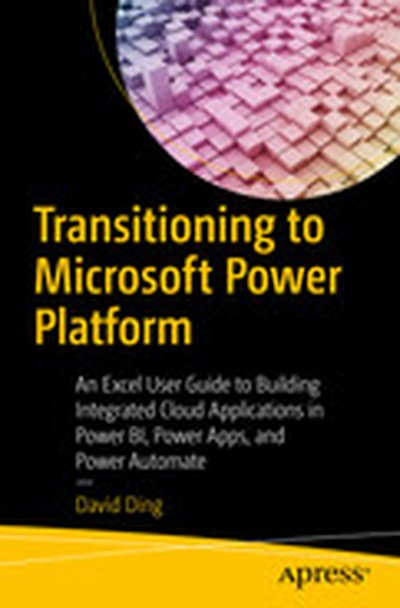
Transitioning to Microsoft Power Platform: An Excel User Guide to Building Integrated Cloud Applications in Power BI, Power Apps, and Power Automate

Welcome to this step-by-step guide for Excel users, data analysts, and finance specialists. It is designed to take you through practical report and development scenarios, including both the approach and the technical challenges. This book will equip you with an understanding of the overall Power Platform use case for addressing common business challenges. While Power BI continues to be an excellent tool of choice in the BI space, Power Platform is the real game changer. Using an integrated architecture, a small team of citizen developers can build solutions for all kinds of business problems. For small businesses, Power Platform can be used to build bespoke CRM, Finance, and Warehouse management tools. For large businesses, it can be used to build an integration point for existing systems to simplify reporting, operation, and approval processes. The author has drawn on his15 years of hands-on analytics experience to help you pivot from the traditional Excel-based reporting environment. By using different business scenarios, this book provides you with clear reasons why a skill is important before you start to dive into the scenarios. You will use a fast prototyping approach to continue to build exciting reporting, automation, and application solutions and improve them while you acquire new skill sets. The book helps you get started quickly with Power BI. It covers data visualization, collaboration, and governance practices. You will learn about the most practical SQL challenges. And you will learn how to build applications in PowerApps and Power Automate. The book ends with an integrated solution framework that can be adapted to solve a wide range of complex business problems. What You Will Learn Develop reporting solutions and business applications Understand the Power Platform licensing and development environment Apply Data ETL and modeling in Power BI Use Data Storytelling and dashboard design to better visualize data Carry out data operations with SQL and SharePoint lists Develop useful applications using Power Apps Develop automated workflows using Power Automate Integrate solutions with Power BI, Power Apps, and Power Automate to build enterprise solutions Who This Book Is For Next-generation data specialists, including Excel-based users who want to learn Power BI and build internal apps; finance specialists who want to take a different approach to traditional accounting reports; and anyone who wants to enhance their skill set for the future job market.

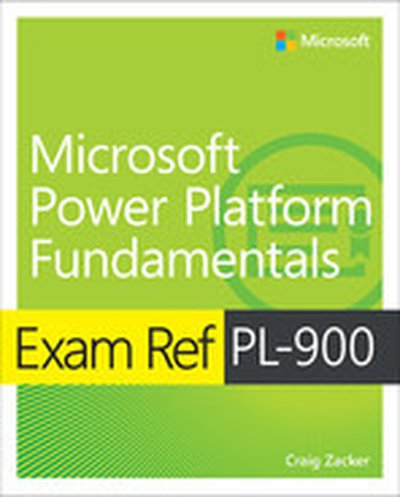
Exam Ref PL-900 Microsoft Power Platform Fundamentals, 2nd Edition

Prepare for Microsoft Exam PL-900. Demonstrate your real-world knowledge of the fundamentals of Microsoft Power Platform, including its business value, core components, and the capabilities and advantages of Power BI, Power Apps, Power Automate, and Power Virtual Agents. Designed for business users, functional consultants, and other professionals, this Exam Ref focuses on the critical thinking and decision-making acumen needed for success at the Microsoft Certified: Power Platform Fundamentals level. Focus on the expertise measured by these objectives: Describe the business value of Power Platform Identify the Core Components of Power Platform Demonstrate the capabilities of Power BI Demonstrate the capabilities of Power Apps Demonstrate the capabilities of Power Automate Demonstrate the capabilities of Power Virtual Agents This Microsoft Exam Ref: Organizes its coverage by exam objectives Features strategic, what-if scenarios to challenge you Assumes you are a business user, functional consultant, or other professional who wants to improve productivity by automating business processes, analyzing data, creating simple app experiences, or developing business enhancements to Microsoft cloud solutions. About the Exam Exam PL-900 focuses on knowledge needed to describe the value of Power Platform services and of extending solutions; describe Power Platform administration and security; describe Common Data Service, Connectors, and AI Builder; identify common Power BI components; connect to and consume data; build basic dashboards with Power BI; identify common Power Apps components; build basic canvas and model-driven apps; describe Power Apps portals; identify common Power Automate components; build basic flows; describe Power Virtual Agents capabilities; and build and publish basic chatbots. About Microsoft Certification Passing this exam fulfills your requirements for the Microsoft Certified: Power Platform Fundamentals certification, demonstrating your understanding of Power Platforms core capabilitiesfrom business value and core product capabilities to building simple apps, connecting data sources, automating basic business processes, creating dashboards, and creating chatbots. With this certification, you can move on to earn specialist certifications covering more advanced aspects of Power Apps and Power BI, including Microsoft Certified: Power Platform App Maker Associate and Power Platform Data Analyst Associate. See full details at: microsoft.com/learn

Microsoft Power BI Quick Start Guide - Third Edition

Discover the power of transforming raw data into actionable insights with "Microsoft Power BI Quick Start Guide." This comprehensive guide introduces you to the core functionalities of Power BI, emphasizing practical demonstration on building data models, visualizations, and streamlining business intelligence processes. By following this book, you'll elevate your data analysis and storytelling skills. What this Book will help me do Connect and import data from various sources into Power BI. Master the usage of Power Query Editor for efficient data cleansing. Create effective and visually appealing Power BI dashboards. Understand and implement data security features, such as row-level and column-level security. Administer a Power BI environment effectively, including tenant management and cloud deployments. Author(s) Devin Knight, Erin Ostrowsky, Mitchell Pearson, and Bradley Schacht are seasoned experts in the field of data analysis and business intelligence. With years of practical experience, they bring a wealth of knowledge in Power BI and data visualization. Their passion for educating others is evident in their clear, approachable, and structured writing style. Who is it for? This book is designed for professionals seeking to delve into Microsoft Power BI's functionalities. Ideal readers include business analysts, data professionals, or enthusiasts aiming to transition from Excel-based solutions to BI platforms. Both beginners wanting to learn BI concepts and intermediate users looking to solidify their Power BI skills will benefit greatly.

Learning Google Analytics

Why is Google Analytics 4 the most modern data model available for digital marketing analytics? Rather than simply reporting what has happened, GA4's new cloud integrations enable more data activation, linking online and offline data across all your streams to provide end-to-end marketing data. This practical book prepares you for the future of digital marketing by demonstrating how GA4 supports these additional cloud integrations. Author Mark Edmondson, Google developer expert for Google Analytics and Google Cloud, provides a concise yet comprehensive overview of GA4 and its cloud integrations. Data, business, and marketing analysts will learn major facets of GA4's powerful new analytics model, with topics including data architecture and strategy, and data ingestion, storage, and modeling. You'll explore common data activation use cases and get the guidance you need to implement them. You'll learn: How Google Cloud integrates with GA4 The potential use cases that GA4 integrations can enable Skills and resources needed to create GA4 integrations How much GA4 data capture is necessary to enable use cases The process of designing dataflows from strategy through data storage, modeling, and activation How to adapt the use cases to fit your business needs

Pro Data Mashup for Power BI: Powering Up with Power Query and the M Language to Find, Load, and Transform Data

This book provides all you need to find data from external sources and load and transform that data into Power BI where you can mine it for business insights and a competitive edge. This ranges from connecting to corporate databases such as Azure SQL and SQL Server to file-based data sources, and cloud- and web-based data sources. The book also explains the use of Direct Query and Live Connect to establish instant connections to databases and data warehouses and avoid loading data. The book provides detailed guidance on techniques for transforming inbound data into normalized data sets that are easy to query and analyze. This covers data cleansing, data modification, and standardization as well as merging source data into robust data structures that can feed into your data model. You will learn how to pivot and transpose data and extrapolate missing values as well as harness external programs such as R and Python into a Power Query data flow. You also will see how to handle errors in source data and extend basic data ingestion to create robust and parameterized data load and transformation processes. Everything in this book is aimed at helping you deliver compelling and interactive insight with remarkable ease using Power BI’s built-in data load and transformation tools. What You Will Learn Connect Power BI to a range of external data sources Prepare data from external sources for easy analysis in Power BI Cleanse data from duplicates, outliers, and other bad values Make live connections from which to refresh data quickly and easily Apply advanced techniques to interpolate missing data Who This Book Is For All Power BI users from beginners to super users. Any user of the world’s leading dashboarding toolcan leverage the techniques explained in this book to turbo-charge their data preparation skills and learn how a wide range of external data sources can be harnessed and loaded into Power BI to drive their analytics. No previous knowledge of working with data, databases, or external data sources is required—merely the need to find, transform, and load data into Power BI..

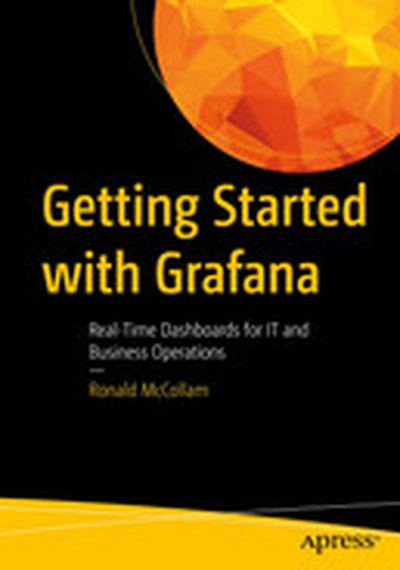
Getting Started with Grafana: Real-Time Dashboards for IT and Business Operations

Begin working with the Grafana data visualization platform. This book is a “how-to manual” for deploying and administering Grafana, creating real-time dashboards and alerts, exploring the data you have, and even synthesizing new data by combining and manipulating data from multiple different sources. You’ll be able to see and manage data on any scale, from your laptop or a Raspberry Pi to a production datacenter or even a multi-region cloud environment! Getting Started with Grafana takes a hands-on approach. You’ll learn by doing with easy-to-follow examples along with pointers to more resources to help you go deeper. The skills you’ll learn will help you provide business value by monitoring your operations in real time and reacting to changing circumstances as they occur. You’ll be able to derive new insights from your existing data through Grafana’s powerful and beautiful graphing capabilities, and you’ll be able to share your dashboards with colleagues soeveryone in your organization can benefit. What You Will Learn Connect to data "where it lives” and work with multiple sources of data Build beautiful and informative dashboards that show real-time status Deploy Grafana at any scale and manage it efficiently Integrate with other enterprise systems such as LDAP or Active Directory Automate creation and deployment of Grafana, dashboards, and alerts Understand what is available in the Enterprise version of Grafana Who This Book Is For Anyone who has data that they want to understand visually, IT professionals who work with multiple sources of data on a regular basis and need to make sense of the confusion that this data sprawl causes, and people who learn best by doing and want to get hands-on experience quickly with a project and then grow their knowledge

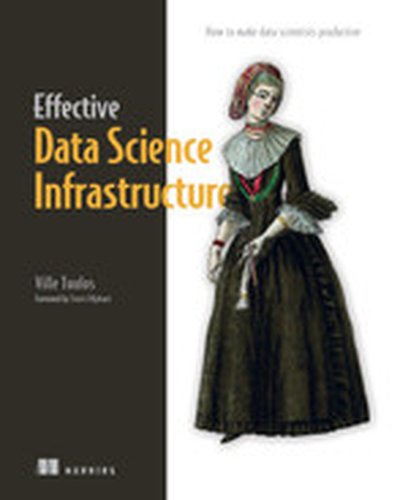
Effective Data Science Infrastructure

Simplify data science infrastructure to give data scientists an efficient path from prototype to production. In Effective Data Science Infrastructure you will learn how to: Design data science infrastructure that boosts productivity Handle compute and orchestration in the cloud Deploy machine learning to production Monitor and manage performance and results Combine cloud-based tools into a cohesive data science environment Develop reproducible data science projects using Metaflow, Conda, and Docker Architect complex applications for multiple teams and large datasets Customize and grow data science infrastructure Effective Data Science Infrastructure: How to make data scientists more productive is a hands-on guide to assembling infrastructure for data science and machine learning applications. It reveals the processes used at Netflix and other data-driven companies to manage their cutting edge data infrastructure. In it, you’ll master scalable techniques for data storage, computation, experiment tracking, and orchestration that are relevant to companies of all shapes and sizes. You’ll learn how you can make data scientists more productive with your existing cloud infrastructure, a stack of open source software, and idiomatic Python. The author is donating proceeds from this book to charities that support women and underrepresented groups in data science. About the Technology Growing data science projects from prototype to production requires reliable infrastructure. Using the powerful new techniques and tooling in this book, you can stand up an infrastructure stack that will scale with any organization, from startups to the largest enterprises. About the Book Effective Data Science Infrastructure teaches you to build data pipelines and project workflows that will supercharge data scientists and their projects. Based on state-of-the-art tools and concepts that power data operations of Netflix, this book introduces a customizable cloud-based approach to model development and MLOps that you can easily adapt to your company’s specific needs. As you roll out these practical processes, your teams will produce better and faster results when applying data science and machine learning to a wide array of business problems. What's Inside Handle compute and orchestration in the cloud Combine cloud-based tools into a cohesive data science environment Develop reproducible data science projects using Metaflow, AWS, and the Python data ecosystem Architect complex applications that require large datasets and models, and a team of data scientists About the Reader For infrastructure engineers and engineering-minded data scientists who are familiar with Python. About the Author At Netflix, Ville Tuulos designed and built Metaflow, a full-stack framework for data science. Currently, he is the CEO of a startup focusing on data science infrastructure. Quotes By reading and referring to this book, I’m confident you will learn how to make your machine learning operations much more efficient and productive. - From the Foreword by Travis Oliphant, Author of NumPy, Founder of Anaconda, PyData, and NumFOCUS Effective Data Science Infrastructure is a brilliant book. It’s a must-have for every data science team. - Ninoslav Cerkez, Logit More data science. Less headaches. - Dr. Abel Alejandro Coronado Iruegas, National Institute of Statistics and Geography of Mexico Indispensable. A copy should be on every data engineer’s bookshelf. - Matthew Copple, Grand River Analytics

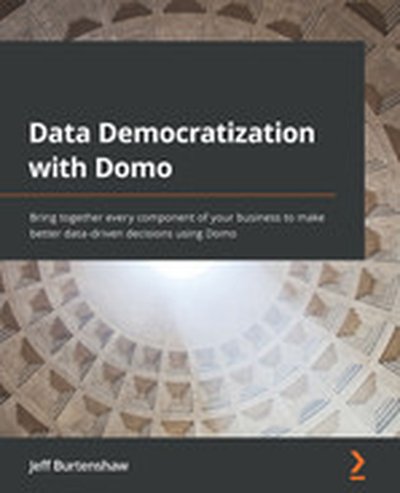
Data Democratization with Domo

Discover how to leverage the full potential of Domo, a robust cloud-based business intelligence platform, in your organization. This comprehensive guide walks you through data integration, transformation, visualization, and governance techniques, enabling you to deliver impactful, data-driven results quickly and effectively. What this Book will help me do Understand and utilize Domo's cloud data architecture for comprehensive data analysis. Seamlessly acquire and manage data using Domo connectors and tools. Create and customize dashboards that communicate data insights effectively. Build and deploy Python applications and machine learning models on Domo. Securely govern your organization's data with robust Domo features. Author(s) The author, None Burtenshaw, is an expert in business intelligence and data platforms. With years of experience working with data integration tools, their writing combines technical thoroughness with practical insights. They aim to empower professionals with the skills to excel in data-driven decision making, reflecting their passion for making technology accessible and actionable. Who is it for? This book is ideal for business intelligence professionals, including developers and analysts, looking to elevate their understanding of Domo. It is suited for those with a fundamental knowledge of data platforms seeking advanced skills in data management and visualization. BI managers will gain insights into governance and security, while analysts will find inspiration for data storytelling. If you're aiming to master the possibilities of Domo, this book is for you.

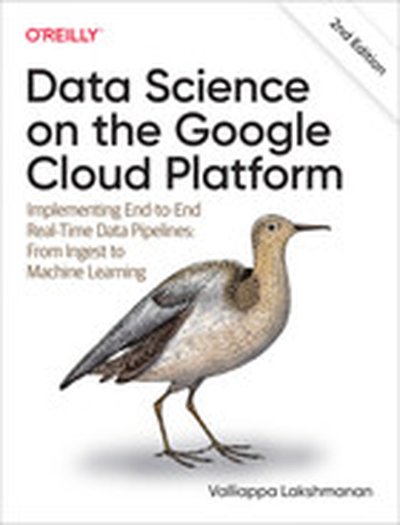
Data Science on the Google Cloud Platform, 2nd Edition

Learn how easy it is to apply sophisticated statistical and machine learning methods to real-world problems when you build using Google Cloud Platform (GCP). This hands-on guide shows data engineers and data scientists how to implement an end-to-end data pipeline with cloud native tools on GCP. Throughout this updated second edition, you'll work through a sample business decision by employing a variety of data science approaches. Follow along by building a data pipeline in your own project on GCP, and discover how to solve data science problems in a transformative and more collaborative way. You'll learn how to: Employ best practices in building highly scalable data and ML pipelines on Google Cloud Automate and schedule data ingest using Cloud Run Create and populate a dashboard in Data Studio Build a real-time analytics pipeline using Pub/Sub, Dataflow, and BigQuery Conduct interactive data exploration with BigQuery Create a Bayesian model with Spark on Cloud Dataproc Forecast time series and do anomaly detection with BigQuery ML Aggregate within time windows with Dataflow Train explainable machine learning models with Vertex AI Operationalize ML with Vertex AI Pipelines

Leading Data Science Teams

Compared to other functions of an organization, data science is highly speculative. Data science teams are often tasked with last-minute must-have deliverables that are well beyond their ability to produce. Data might be missing or have no signal, or the data models themselves might be impractical. This hands-on reference guides team leaders through the types of challenges you might face and the tools you need to work through them. Author Jacqueline Nolis, head of data science at Saturn Cloud, helps team leaders think through the various issues you'll encounter when running a data science team. You'll learn ways to set up your team, manage data scientists to promote their success, and collaborate with external stakeholders. Once you finish this report, you'll be ready to work through the challenges your current team faces or start a new data science team in an organization that needs one. Determine the scope of work before choosing your team of data scientists and support positions Successfully manage your relationship with stakeholders by providing your team with clear, achievable goals Create an environment to help data scientists and other team members succeed Choose a technical infrastructure for your team, including programming languages, databases, and deployment models

Reproducible Data Science with Pachyderm

Dive into the world of reproducible data science with Pachyderm, a specialized platform designed for version-controlled data pipelines. By following this book, 'Reproducible Data Science with Pachyderm,' you'll gain the skills to implement robust, scalable machine learning workflows with Pachyderm 2.0, covering setup, integration, and advanced use cases. What this Book will help me do Build scalable, version-controlled data pipelines with Pachyderm's unique features. Understand the principles behind reproducible data science and implement them effectively. Deploy Pachyderm on AWS, Google Cloud, and Azure while integrating with popular tools. Create and manage end-to-end machine learning workflows, including hyperparameter tuning. Leverage advanced integrations, such as Pachyderm Notebooks and language clients like Python and Go. Author(s) Svetlana Karslioglu is a seasoned data scientist with extensive experience in constructing scalable machine learning and data processing systems. With years in both practical implementation and educational endeavors, she has a talent for breaking down complex concepts into accessible learning paths. Her approach is hands-on and results-oriented, aimed at empowering professionals to excel in the field of data science. Who is it for? This book is intended for data scientists, machine learning engineers, and data engineers who are keen to ensure reproducibility in their workflows. Ideal readers may have familiarity with data science basics and some exposure to Kubernetes and programming languages like Python. By studying the book, learners will establish confidence in implementing Pachyderm for scalable and reliable data pipelines.

Serverless Analytics with Amazon Athena

Delve into the serverless world of Amazon Athena with the comprehensive book 'Serverless Analytics with Amazon Athena'. This guide introduces you to the power of Athena, showing you how to efficiently query data in Amazon S3 using SQL without the hassle of managing infrastructure. With clear instructions and practical examples, you'll master querying structured, unstructured, and semi-structured data seamlessly. What this Book will help me do Effectively query and analyze both structured and unstructured data stored in S3 using Amazon Athena. Integrate Athena with other AWS services to create powerful, secure, and cost-efficient data workflows. Develop ETL pipelines and machine learning workflows leveraging Athena's compatibility with AWS Glue. Monitor and troubleshoot Athena queries for consistent performance and build scalable serverless data solutions. Implement security best practices and optimize costs when managing your Athena-driven data solutions. Author(s) None Virtuoso, along with co-authors Mert Turkay Hocanin None and None Wishnick, brings a wealth of experience in cloud solutions, serverless technologies, and data engineering. They excel in demystifying complex technical topics and have a passion for empowering readers with practical skills and knowledge. Who is it for? This book is tailored for business intelligence analysts, application developers, and system administrators who want to harness Amazon Athena for seamless, cost-efficient data analytics. It suits individuals with basic SQL knowledge looking to expand their capabilities in querying and processing data. Whether you're managing growing datasets or building data-driven applications, this book provides the know-how to get it right.

Text as Data

Text As Data: Combining qualitative and quantitative algorithms within the SAS system for accurate, effective and understandable text analytics The need for powerful, accurate and increasingly automatic text analysis software in modern information technology has dramatically increased. Fields as diverse as financial management, fraud and cybercrime prevention, Pharmaceutical R&D, social media marketing, customer care, and health services are implementing more comprehensive text-inclusive, analytics strategies. Text as Data: Computational Methods of Understanding Written Expression Using SAS presents an overview of text analytics and the critical role SAS software plays in combining linguistic and quantitative algorithms in the evolution of this dynamic field. Drawing on over two decades of experience in text analytics, authors Barry deVille and Gurpreet Singh Bawa examine the evolution of text mining and cloud-based solutions, and the development of SAS Visual Text Analytics. By integrating quantitative data and textual analysis with advanced computer learning principles, the authors demonstrate the combined advantages of SAS compared to standard approaches, and show how approaching text as qualitative data within a quantitative analytics framework produces more detailed, accurate, and explanatory results. Understand the role of linguistics, machine learning, and multiple data sources in the text analytics workflow Understand how a range of quantitative algorithms and data representations reflect contextual effects to shape meaning and understanding Access online data and code repositories, videos, tutorials, and case studies Learn how SAS extends quantitative algorithms to produce expanded text analytics capabilities Redefine text in terms of data for more accurate analysis This book offers a thorough introduction to the framework and dynamics of text analytics—and the underlying principles at work—and provides an in-depth examination of the interplay between qualitative-linguistic and quantitative, data-driven aspects of data analysis. The treatment begins with a discussion on expression parsing and detection and provides insight into the core principles and practices of text parsing, theme, and topic detection. It includes advanced topics such as contextual effects in numeric and textual data manipulation, fine-tuning text meaning and disambiguation. As the first resource to leverage the power of SAS for text analytics, Text as Data is an essential resource for SAS users and data scientists in any industry or academic application.

A Gentle Introduction to Statistics Using SAS Studio in the Cloud

Point and click your way to performing statistics! Many people are intimidated by learning statistics, but A Gentle Introduction to Statistics Using SAS is here to help. Whether you need to perform statistical analysis for a project or, perhaps, for a course in education, psychology, sociology, economics, or any other field that requires basic statistical skills, this book teaches the fundamentals of statistics, from designing your experiment through calculating logistic regressions. Serving as an introduction to many common statistical tests and principles, it explains concepts in an intuitive way with little math and very few formulas. The book is full of examples demonstrating the use of SAS Studio’s easy point-and-click interface accessed with SAS OnDemand for Academics, an online delivery platform for teaching and learning statistical analysis that provides free access to SAS software via the cloud. Studio in the Cloud Topics included in this book are: How to access SAS OnDemand for Academics Descriptive statistics One-sample tests T tests (for independent or paired samples) One-way analysis of variance (ANOVA) N-way ANOVA Correlation analysis Simple and multiple linear regression Binary logistic regression Categorical data, including two-way tables and chi-square Power and sample size calculations Questions are provided to test your knowledge and practice your skills.

Data Science on AWS

With this practical book, AI and machine learning practitioners will learn how to successfully build and deploy data science projects on Amazon Web Services. The Amazon AI and machine learning stack unifies data science, data engineering, and application development to help level up your skills. This guide shows you how to build and run pipelines in the cloud, then integrate the results into applications in minutes instead of days. Throughout the book, authors Chris Fregly and Antje Barth demonstrate how to reduce cost and improve performance. Apply the Amazon AI and ML stack to real-world use cases for natural language processing, computer vision, fraud detection, conversational devices, and more Use automated machine learning to implement a specific subset of use cases with SageMaker Autopilot Dive deep into the complete model development lifecycle for a BERT-based NLP use case including data ingestion, analysis, model training, and deployment Tie everything together into a repeatable machine learning operations pipeline Explore real-time ML, anomaly detection, and streaming analytics on data streams with Amazon Kinesis and Managed Streaming for Apache Kafka Learn security best practices for data science projects and workflows including identity and access management, authentication, authorization, and more

Getting Started with SAS Programming

Get up and running with SAS using Ron Cody’s easy-to-follow, step-by-step guide. Aimed at beginners, Getting Started with SAS Programming: Using SAS Studio in the Cloud uses short examples to teach SAS programming from the basics to more advanced topics in the point-and-click interactive environment of SAS Studio. To begin, you will learn how to register for SAS OnDemand for Academics, an online delivery platform for teaching and learning statistical analysis that provides free access to SAS software via the cloud. The first part of the book shows you how to use SAS Studio built-in tasks to produce a report, summarize data, and create charts and graphs. It also describes how you can perform basic statistical tests using the interactive point-and-click environment. The second part of the book uses easy-to-follow examples to show you how to write your own SAS programs and how to use SAS procedures to perform a variety of tasks. This part of the book also explains how to read data from a variety of sources: text files, Excel workbooks, and CSV files. In order to get familiar with the SAS Studio environment, this book also shows you how to access dozens of interesting data sets that are included with the SAS OnDemand for Academics platform.

MATLAB Recipes: A Problem-Solution Approach

Learn from state-of-the-art examples in robotics, motors, detection filters, chemical processes, aircraft, and spacecraft. With this book you will review contemporary MATLAB coding including the latest MATLAB language features and use MATLAB as a software development environment including code organization, GUI development, and algorithm design and testing. Features now covered include the new graph and digraph classes for charts and networks; interactive documents that combine text, code, and output; a new development environment for building apps; locally defined functions in scripts; automatic expansion of dimensions; tall arrays for big data; the new string type; new functions to encode/decode JSON; handling non-English languages; the new class architecture; the Mocking framework; an engine API for Java; the cloud-based MATLAB desktop; the memoize function; and heatmap charts. MATLAB Recipes: A Problem-Solution Approach, Second Edition provides practical, hands-on code snippets and guidance for using MATLAB to build a body of code you can turn to time and again for solving technical problems in your work. Develop algorithms, test them, visualize the results, and pass the code along to others to create a functional code base for your firm. What You Will Learn Get up to date with the latest MATLAB up to and including MATLAB 2020b Code in MATLAB Write applications in MATLAB Build your own toolbox of MATLAB code to increase your efficiency and effectiveness Who This Book Is For Engineers, data scientists, and students wanting a book rich in examples using MATLAB.

Exam Ref PL-900 Microsoft Power Platform Fundamentals

Prepare for Microsoft Exam PL-900: Demonstrate your real-world knowledge of the fundamentals of Microsoft Power Platform, including its business value, core components, and the capabilities and advantages of Power BI, Power Apps, Power Automate, and Power Virtual Agents. Designed for business users, functional consultants, and other professionals, this Exam Ref focuses on the critical thinking and decision-making acumen needed for success at the Microsoft Certified: Power Platform Fundamentals level. Focus on the expertise measured by these objectives: Describe the business value of Power Platform Identify the Core Components of Power Platform Demonstrate the capabilities of Power BI Demonstrate the capabilities of Power Apps Demonstrate the capabilities of Power Automate Demonstrate the capabilities of Power Virtual Agents This Microsoft Exam Ref: Organizes its coverage by exam objectives Features strategic, what-if scenarios to challenge you Assumes you are a business user, functional consultant, or other professional who wants to improve productivity by automating business processes, analyzing data, creating simple app experiences, or developing business enhancements to Microsoft cloud solutions. About the Exam Exam PL-900 focuses on knowledge needed to describe the value of Power Platform services and of extending solutions; describe Power Platform administration and security; describe Common Data Service, Connectors, and AI Builder; identify common Power BI components; connect to and consume data; build basic dashboards with Power BI; identify common Power Apps components; build basic canvas and model-driven apps; describe Power Apps portals; identify common Power Automate components; build basic flows; describe Power Virtual Agents capabilities; and build and publish basic chatbots. About Microsoft Certification Passing this exam fulfills your requirements for the Microsoft Certified: Power Platform Fundamentals certification, demonstrating your understanding of Power Platforms core capabilitiesfrom business value and core product capabilities to building simple apps, connecting data sources, automating basic business processes, creating dashboards, and creating chatbots. With this certification, you can move on to earn specialist certifications covering more advanced aspects of Power Apps and Power BI, including Microsoft Certified: Power Platform App Maker Associate and Power Platform Data Analyst Associate. See full details at: microsoft.com/learn