talk-data.com talk-data.com

Topic

data

5765

tagged

Activity Trend

3 peak/qtr
2020-Q1 2026-Q1

Activities

5765 activities · Newest first

IBM Spectrum Connect and IBM Storage Enabler for Containers: Practical Example with IBM FlashSystem A9000

This IBM® Redpaper™ publication provides an overview of containers and their framework. Container technology enables prepackaged and pre-configured software with the elements that are needed to run in any environment. Because they are meant to be portable, containers normally restrict applications from storing data on external storage. To overcome this limitation, IBM has developed a solution to provide persistent storage for containers on IBM storage systems, known as the IBM Storage Enabler for Containers. The Enabler tightly integrates with IBM Spectrum™ Connect (formerly IBM Spectrum Control™ Base Edition). IBM Storage Enabler for Containers v1.0 extends IBM Spectrum Connect to Kubernetes orchestrated container environments. The paper focuses on containers implementation, management, and control by using IBM Spectrum Connect and IBM Storage Enabler for Containers plug-in, with IBM FlashSystem® A9000 or A9000R.

IBM z14 Model ZR1 Technical Introduction

Abstract This IBM® Redbooks® publication introduces the latest member of the IBM Z platform, the IBM z14 Model ZR1 (Machine Type 3907). It includes information about the Z environment and how it helps integrate data and transactions more securely, and provides insight for faster and more accurate business decisions. The z14 ZR1 is a state-of-the-art data and transaction system that delivers advanced capabilities, which are vital to any digital transformation. The z14 ZR1 is designed for enhanced modularity, which is in an industry standard footprint. This system excels at the following tasks: Securing data with pervasive encryption Transforming a transactional platform into a data powerhouse Getting more out of the platform with IT Operational Analytics Providing resilience towards zero downtime Accelerating digital transformation with agile service delivery Revolutionizing business processes Mixing open source and Z technologies This book explains how this system uses new innovations and traditional Z strengths to satisfy growing demand for cloud, analytics, and open source technologies. With the z14 ZR1 as the base, applications can run in a trusted, reliable, and secure environment that improves operations and lessens business risk.

IBM Z Connectivity Handbook

Abstract This IBM Redbooks publication describes the connectivity options that are available for use within and beyond the data center for the IBM Z family of mainframes, which includes these systems: IBM z14® IBM z14 Model ZR1 IBM z13® IBM z13s™ IBM zEnterprise® EC12 (zEC12) IBM zEnterprise BC12 (zBC12) This book highlights the hardware and software components, functions, typical uses, coexistence, and relative merits of these connectivity features. It helps readers understand the connectivity alternatives that are available when planning and designing their data center infrastructures. The changes to this edition are based on the IBM Z hardware announcement dated April 10, 2018. This book is intended for data center planners, IT professionals, systems engineers, and network planners who are involved in the planning of connectivity solutions for IBM mainframes.

PHP, MySQL, & JavaScript All-in-One For Dummies

Explore the engine that drives the internet It takes a powerful suite of technologies to drive the most-visited websites in the world. PHP, mySQL, JavaScript, and other web-building languages serve as the foundation for application development and programming projects at all levels of the web. Dig into this all-in-one book to get a grasp on these in-demand skills, and figure out how to apply them to become a professional web builder. You’ll get valuable information from seven handy books covering the pieces of web programming, HTML5 & CSS3, JavaScript, PHP, MySQL, creating object-oriented programs, and using PHP frameworks. This book is ideal for the inexperienced programmer interested in adding these skills to their toolbox. New coders who've made it through an online course or boot camp will also find great value in how this book builds on what you already know. Helps you grasp the technologies that power web applications Covers PHP version 7.2 Includes coverage of the latest updates in web development Perfect for developers to use to solve problems

Profit From Your Forecasting Software

Go beyond technique to master the difficult judgement calls of forecasting A variety of software can be used effectively to achieve accurate forecasting, but no software can replace the essential human component. You may be new to forecasting, or you may have mastered the statistical theory behind the software’s predictions, and even more advanced “power user” techniques for the software itself—but your forecasts will never reach peak accuracy unless you master the complex judgement calls that the software cannot make. Profit From Your Forecasting Software addresses the issues that arise regularly, and shows you how to make the correct decisions to get the most out of your software. Taking a non-mathematical approach to the various forecasting models, the discussion covers common everyday decisions such as model choice, forecast adjustment, product hierarchies, safety stock levels, model fit, testing, and much more. Clear explanations help you better understand seasonal indices, smoothing coefficients, mean absolute percentage error, and r-squared, and an exploration of psychological biases provides insight into the decision to override the software’s forecast. With a focus on choice, interpretation, and judgement, this book goes beyond the technical manuals to help you truly grasp the more intangible skills that lead to better accuracy. Explore the advantages and disadvantages of alternative forecasting methods in different situations Master the interpretation and evaluation of your software’s output Learn the subconscious biases that could affect your judgement toward intervention Find expert guidance on testing, planning, and configuration to help you get the most out of your software Relevant to sales forecasters, demand planners, and analysts across industries, Profit From Your Forecasting Software is the much sought-after “missing piece” in forecasting reference.

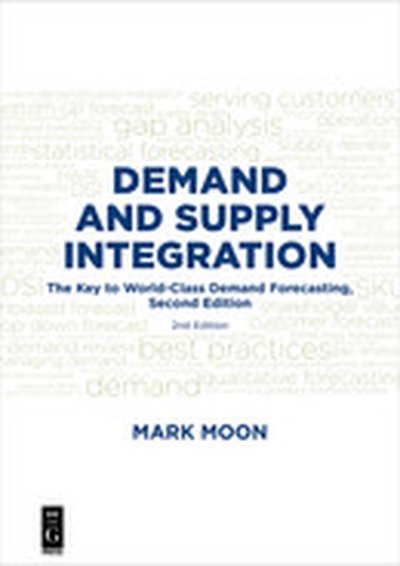
Demand and Supply Integration

Supply chain professionals: master pioneering techniques for integrating demand and supply, and create demand forecasts that are far more accurate and useful! In Demand and Supply Integration, Dr. Mark Moon presents the specific design characteristics of a world-class demand forecasting management process, showing how to effectively integrate demand forecasting within a comprehensive Demand and Supply Integration (DSI) process. Writing for supply chain professionals in any business, government agency, or military procurement organization, Moon explains what DSI is, how it differs from approaches such as S&OP, and how to recognize the symptoms of failures to sufficiently integrate demand and supply. He outlines the key characteristics of successful DSI implementations, shows how to approach Demand Forecasting as a management process, and guides you through understanding, selecting, and applying the best available qualitative and quantitative forecasting techniques. You'll learn how to thoroughly reflect market intelligence in your forecasts; measure your forecasting performance; implement state-of-the-art demand forecasting systems; manage Demand Reviews, and much more.

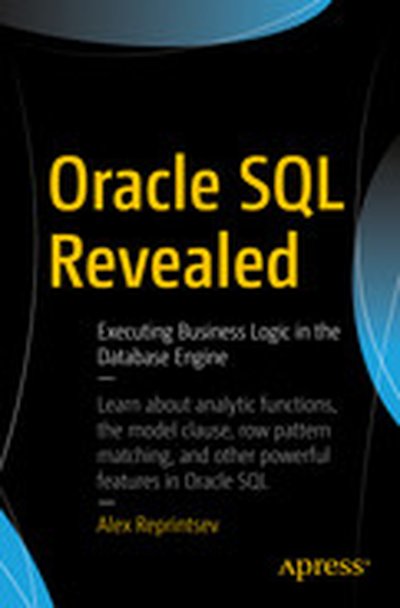
Oracle SQL Revealed: Executing Business Logic in the Database Engine

Write queries using little-known, but powerful, SQL features implemented in Oracle's database engine. You will be able to take advantage of Oracle’s power in implementing business logic, thereby maximizing return from your company’s investment in Oracle Database products. Important features and aspects of SQL covered in this book include the model clause, row pattern matching, analytic and aggregate functions, and recursive subquery factoring, just to name a few. The focus is on implementing business logic in pure SQL, with a comparison of different approaches that can be used to write SELECT statements to return results that drive good decision making and competitive action in the marketplace. This book covers features that are often not well known, and sometimes not implemented in competing products. Chapters on query transformation and logical execution order provide a grasp of the big picture in which the individual SQL features described in the other chapters are executed. Also included are a discussion on when to use the procedural capabilities from PL/SQL, and a series of examples showing different mixes of SQL features being applied in common types of queries that you are likely to encounter. What You Will Learn Gain competitive advantage from Oracle SQL Know when to step up to PL/SQL versus staying in SQL Become familiar with query transformations and join mechanics Apply the model clause and analytic functions to business intelligence queries Make use of features that are specific to Oracle Database, such as row pattern matching Understand the pros and cons of different SQL approaches to solving common query tasks Traverse hierarchies using CONNECT BY and recursive subquery factoring Who This Book Is For Database programmers withsome Oracle Database experience. The book is also for SQL developers who are moving to the Oracle Database platform or want to learn unique features of its query engine. Both audiences will learn to apply the full power of Oracle’s own SQL dialect to commonly encountered types of business questions and query challenges.

ABCs of IBM z/OS System Programming Volume 2

Abstract The ABCs of IBM® z/OS® System Programming is a 13-volume collection that provides an introduction to the z/OS operating system and the hardware architecture. Whether you are a beginner or an experienced system programmer, the ABCs collection provides the information that you need to start your research into z/OS and related subjects. If you want to become more familiar with z/OS in your current environment or if you are evaluating platforms to consolidate your e-business applications, the ABCs collection can serve as a powerful technical tool. This volume describes the basic system programming activities related to implementing and maintaining the z/OS installation and provides details about the modules that are used to manage jobs and data. It covers the following topics: Overview of the parmlib definitions and the IPL process. The parameters and system data sets necessary to IPL and run a z/OS operating system are described, along with the main daily tasks for maximizing performance of the z/OS system. Basic concepts related to subsystems and subsystem interface and how to use the subsystem services that are provided by IBM subsystems. Job management in the z/OS system using the JES2 and JES3 job entry subsystems. It provides a detailed discussion about how JES2 and JES3 are used to receive jobs into the operating system, schedule them for processing by z/OS, and control their output processing. The link pack area (LPA), LNKLST, authorized libraries, and the role of VLF and LLA components. An overview of SMP/E for z/OS. An overview of IBM Language Environment® architecture and descriptions of Language Environment’s full program model, callable services, storage management model, and debug information. Other volumes in this series include the following content: Volume 1: Introduction to z/OS and storage concepts, TSO/E, ISPF, JCL, SDSF, and z/OS delivery and installation Volume 3: Introduction to DFSMS, data set basics, storage management, hardware and software, catalogs, and DFSMStvs Volume 4: Communication Server, TCP/IP, and IBM VTAM® Volume 5: Base and IBM Parallel Sysplex®, System Logger, Resource Recovery Services (RRS), global resource serialization (GRS), z/OS system operations, automatic restart management (ARM), IBM Geographically Dispersed Parallel Sysplex™ (IBM GDPS®) Volume 6: Introduction to security, IBM RACF®, Digital certificates and PKI, Kerberos, cryptography and z990 integrated cryptography, zSeries firewall technologies, LDAP, and Enterprise Identity Mapping (EIM) Volume 7: Printing in a z/OS environment, Infoprint Server, and Infoprint Central Volume 8: An introduction to z/OS problem diagnosis Volume 9: z/OS UNIX System Services Volume 10: Introduction to IBM z/Architecture®, the IBM Z platform and IBM Z connectivity, LPAR concepts, HCD, and the DS Storage Solution Volume 11: Capacity planning, performance management, WLM, IBM RMF™, and SMF Volume 12: WLM Volume 13: JES3, JES3 SDSF

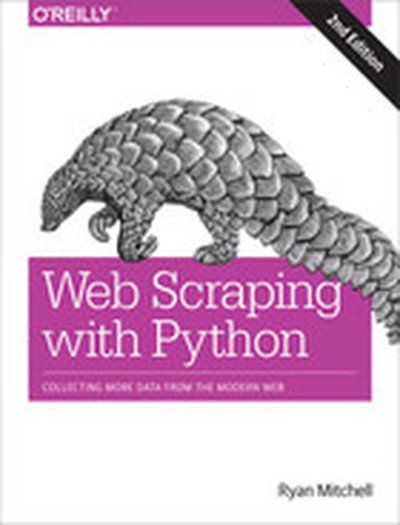
Web Scraping with Python, 2nd Edition

If programming is magic then web scraping is surely a form of wizardry. By writing a simple automated program, you can query web servers, request data, and parse it to extract the information you need. The expanded edition of this practical book not only introduces you web scraping, but also serves as a comprehensive guide to scraping almost every type of data from the modern web. Part I focuses on web scraping mechanics: using Python to request information from a web server, performing basic handling of the server's response, and interacting with sites in an automated fashion. Part II explores a variety of more specific tools and applications to fit any web scraping scenario you're likely to encounter. Parse complicated HTML pages Develop crawlers with the Scrapy framework Learn methods to store data you scrape Read and extract data from documents Clean and normalize badly formatted data Read and write natural languages Crawl through forms and logins Scrape JavaScript and crawl through APIs Use and write image-to-text software Avoid scraping traps and bot blockers Use scrapers to test your website

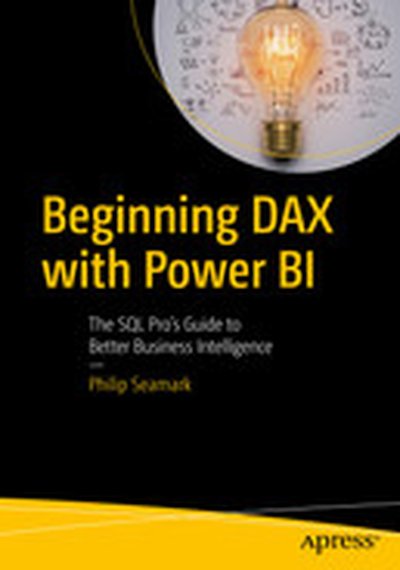
Beginning DAX with Power BI: The SQL Pro’s Guide to Better Business Intelligence

Attention all SQL Pros, DAX is not just for writing Excel-based formulas! Get hands-on learning and expert advice on how to use the vast capabilities of the DAX language to solve common data modeling challenges. Beginning DAX with Power BI teaches key concepts such as mapping techniques from SQL to DAX, filtering, grouping, joining, pivoting, and using temporary tables, all aimed at the SQL professional. Join author Philip Seamark as he guides you on a journey through typical business data transformation scenarios and challenges, and teaches you, step-by-step, how to resolve challenges using DAX. Tips, tricks, and shortcuts are included and explained, along with examples of the SQL equivalent, in order to accelerate learning. Examples in the book range from beginner to advanced, with plenty of detailed explanation when walking through each scenario. What You’ll Learn Turbocharge your Power BI model by adding advanced DAX programming techniques Know when to use calculated measures versus calculated columns Generate new tables on the fly from existing data Optimize, monitor, and tune Power BI to improve performance of your models Discover new ideas, tricks, and time-saving techniques for better models Who This Book Is For Business intelligence developers, business analysts, or any SQL user who wants to use Power BI as a reporting tool. A solid understanding of SQL is recommended, as examples throughout the book include the DAX equivalents to SQL problem/solution scenarios.

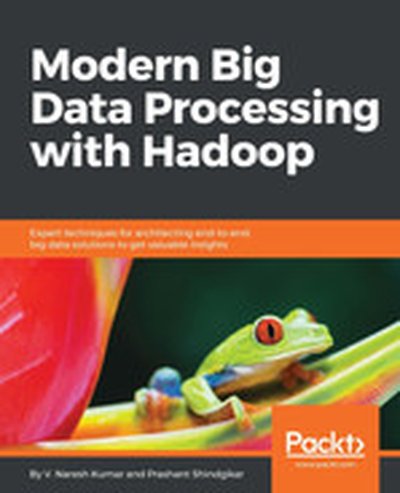
Modern Big Data Processing with Hadoop

Delve into the world of big data with 'Modern Big Data Processing with Hadoop.' This comprehensive guide introduces you to the powerful capabilities of Apache Hadoop and its ecosystem to solve data processing and analytics challenges. By the end, you will have mastered the techniques necessary to architect innovative, scalable, and efficient big data solutions. What this Book will help me do Master the principles of building an enterprise-level big data strategy with Apache Hadoop. Learn to integrate Hadoop with tools such as Apache Spark, Elasticsearch, and more for comprehensive solutions. Set up and manage your big data architecture, including deployment on cloud platforms with Apache Ambari. Develop real-time data pipelines and enterprise search solutions. Leverage advanced visualization tools like Apache Superset to make sense of data insights. Author(s) None R. Patil, None Kumar, and None Shindgikar are experienced big data professionals and accomplished authors. With years of hands-on experience in implementing and managing Apache Hadoop systems, they bring a depth of expertise to their writing. Their dedication lies in making complex technical concepts accessible while demonstrating real-world best practices. Who is it for? This book is designed for data professionals aiming to advance their expertise in big data solutions using Apache Hadoop. Ideal readers include engineers and project managers involved in data architecture and those aspiring to become big data architects. Some prior exposure to big data systems is beneficial to fully benefit from this book's insights and tutorials.

Mastering Microsoft Power BI

Dive right into the powerful world of Microsoft Power BI with this comprehensive guide. This book takes you through every step of mastering Power BI, from data modeling to creating actionable visualizations. You'll find clear explanations and practical steps to improve your data analytics and enhance business decision-making. What this Book will help me do Learn to connect and transform data using Power Query M Language to create clean, structured datasets. Understand how to design scalable and performance-optimized Power BI Data Models for effective analytics. Develop professional, visually appealing and interactive reports and dashboards to convey insights confidently. Implement best practices for managing Power BI solutions, including deployment, version control, and monitoring. Gain practical knowledge to administer Power BI across organizational structures, ensuring security and efficiency. Author(s) None Powell is a seasoned expert in business intelligence and a passionate educator in the field of data analytics. With extensive hands-on experience in Microsoft Power BI, None has supported many organizations in unlocking the potential of their data. The approachable writing style reflects a real-world yet proficient understanding of Power BI's capabilities. Who is it for? This book is ideal for business intelligence professionals looking to deepen their expertise in Microsoft Power BI. Readers already familiar with basic BI concepts and Power BI will gain significant technical depth. It suits professionals keen to enhance their data modeling, visualization, and analytics skills. If you're aiming to create impactful dashboards and benefit from advanced insights, this book is for you.

Seven NoSQL Databases in a Week

Learn the fundamentals of seven essential NoSQL databases in just one week with this book. Covering MongoDB, DynamoDB, Redis, Cassandra, Neo4j, InfluxDB, and HBase, you'll explore their functionalities and practical applications. Designed to give you a working understanding of NoSQL database types, this guide helps aspiring DBAs and developers comprehend and utilize modern data solutions. What this Book will help me do Master the fundamentals of MongoDB, including high-performance, high-availability, and scaling features. Gain hands-on experience with Neo4j to perform database queries and integrate with Python and Java applications. Learn efficient querying with Redis for storage and retrieval tasks. Understand Cassandra's powerful solution for scalable and fault-tolerant systems. Get well-versed with HBase for creating tables, and reading and writing data efficiently. Author(s) Sudarshan Kadambi and Xun (Brian) Wu bring a wealth of experience in database technologies. They have worked extensively in the software development and database management fields. With their practical and concise teaching approach, the authors make complex topics accessible for readers. Who is it for? This book is ideal for budding DBAs and developers looking to understand NoSQL databases. It is particularly useful for those transitioning from relational databases who want to learn about modern database technologies. Suitable for both beginners and those with some database knowledge, it aims to bridge skill gaps and expand the reader's technical expertise.

Advanced Audio Visualization Using ThMAD: Creating Amazing Graphics with Open Source Software

Learn advanced techniques and improve your audio visualization skills with Thinking Machine Audio Dreams (ThMAD). With this book, you can concentrate on advanced examples and usage patterns, including using shaders in a more profound way, and how to incorporate ThMAD into a tool chain using the professional sound server JACK. Advanced Audio Visualization Using ThMAD provides advanced techniques for generating graphics, improving performance, and providing readers with the skills needed to create more interesting visualizations. You will also learn professional setups with highly developed visual and aural art tool chains. What You'll Learn Use the ThMAD software for advanced setups in their personal and professional projects Gain a pragmatic introduction to using shaders Use JACK sound servers with ThMAD Control the timing ThMAD Work withadvanced configurations Who This Book Is For Artists and developers already familiar with ThMAD and looking to enhance their projects. In addition, readers primarily interested in using shaders or the Jack audio server for graphics generation can benefit from the book as well.

Data Analysis with R, Second Edition - Second Edition

"Data Analysis with R, Second Edition" is your ultimate guide to mastering data analysis in R, encompassing everything from foundational concepts to advanced techniques. You will learn to manipulate, analyze, and visualize data effectively, applying cutting-edge R packages like ggplot2 and dplyr. Through rich examples, this comprehensive book thoroughly prepares you to tackle real-world analytical challenges. What this Book will help me do Understand foundational statistical reasoning and sampling methods. Perform hypothesis testing and apply Bayesian methods to data analysis. Build and evaluate regression, classification, and time series models. Handle messy and missing data using advanced R techniques and methods. Optimize performance through parallel processing, Rcpp, and efficient data manipulation. Author(s) Chris Burnett is an experienced data analyst with over 15 years of expertise harnessing R for insights. A passionate advocate for accessible computing, Chris integrates practical exercises and rich examples to demystify complex analytical techniques. Their experience and dedication shine in this approachable yet detailed guide. Who is it for? This book is ideal for budding and professional data analysts or data scientists who wish to deepen their expertise in R. It suits learners with a basic understanding of R who aim to extend their proficiency in applied data analysis. The guide provides significant value for professionals aiming to implement effective analytical models. Readers seeking to grow within the analytics sector will find this resource indispensable.

IBM FlashSystem V9000 AE3 and AC3 Performance

This IBM® Redpaper™ publication provides information about the best practices and performance capabilities when implementing a storage solution using IBM FlashSystem® V9000 9846-AC3 with IBM FlashSystem V9000 9846-AE3 storage enclosures. The results that are achieved and demonstrated are specific to the used configuration. However, they can be used as reference points for other configurations. There was no intention to demonstrate the best or the worst results, or minimal latency, or maximum throughput. We tried to stay closer to the configurations and workloads used by IBM clients and provide reference points for them.

PostGIS Cookbook - Second Edition

PostGIS Cookbook provides a thorough introduction to working with spatial data in the PostgreSQL environment using PostGIS. The book covers topics such as importing and exporting geographic data, analyzing vector and raster data, database optimization, and building GIS web applications. By the end, you'll be equipped to fully leverage PostGIS for spatial data projects. What this Book will help me do Efficiently import and export geographic data between PostGIS and other platforms. Apply PostGIS functions for advanced vector data analysis and visualization. Manipulate and optimize spatial data for better performance and robustness. Integrate PostGIS with Python for spatial data scripting. Develop GIS web applications leveraging PostGIS and Open Geospatial standards. Author(s) The authors of PostGIS Cookbook are experienced professionals and active contributors to the spatial database community. Vincent Mather, Pedro Wightman, Thomas Kraft, and their co-authors bring extensive software engineering and geo-computing expertise to the text. Their hands-on approach ensures practicality and relevance to current technologies. Who is it for? This book is ideal for developers and GIS professionals who want to enhance their spatial data handling skills using PostGIS. Whether you're a beginner to spatial databases or looking to extend your PostgreSQL knowledge, this book offers practical solutions and advanced techniques for spatial data management and analysis.

IBM Tape Library Guide for Open Systems

Abstract This IBM® Redbooks® publication presents a general introduction to the latest IBM tape and tape library technologies. Featured tape technologies include the IBM LTO Ultrium and Enterprise 3592 tape drives, and their implementation in IBM tape libraries. This 15th edition includes information about the latest TS4300 Ultrium tape library, TS1155 Enterprise tape drive, and the IBM Linear Tape-Open (LTO) Ultrium 8 tape drive, along with technical information about each IBM tape product for open systems. It includes generalized sections about Small Computer System Interface (SCSI) and Fibre Channel connections, and multipath architecture configurations. This book also covers tools and techniques for library management. It is intended for anyone who wants to understand more about IBM tape products and their implementation. It is suitable for IBM clients, IBM Business Partners, IBM specialist sales representatives, and technical specialists. If you do not have a background in computer tape storage products, you might need to read other sources of information. In the interest of being concise, topics that are generally understood are not covered in detail.

IBM Open Platform for DBaaS on IBM Power Systems

Abstract This IBM Redbooks publication describes how to implement an Open Platform for Database as a Service (DBaaS) on IBM Power Systems environment for Linux, and demonstrate the open source tools, optimization and best practices guidelines for it. Open Platform for DBaaS on Power Systems is an on-demand, secure, and scalable self-service database platform that automates provisioning and administration of databases to support new business applications and information insights. This publication addresses topics to help sellers, architects, brand specialists, distributors, resellers and anyone offering secure and scalable Open Platform for DBaaS on Power Systems solution with APIs that are consistent across heterogeneous open database types. An Open Platform for DBaaS on Power Systems solution has the capability to accelerate business success by providing an infrastructure, and tools leveraging Open Source and OpenStack software engineered to optimize hardware and software between workloads and resources so you have a responsive, and an adaptive environment. Moreover, this publication provides documentation to transfer the how-to-skills for cloud oriented operational management of Open Platform for DBaaS on Power Systems service and underlying infrastructure to the technical teams. Open Platform for DBaaS on Power Systems mission is to provide scalable and reliable cloud database as a service provisioning functionality for both relational and non-relational database engines, and to continue to improve its fully-featured and extensible open source framework. For example, Trove is a database as a service for OpenStack. It is designed to run entirely on OpenStack, with the goal of allowing users to quickly and easily utilize the features of a relational or non-relational database without the burden of handling complex administrative tasks. Cloud users and database administrators can provision and manage multiple database instances as needed. Initially, the service focuses on providing resource isolation at high performance while automating complex administrative tasks including deployment, configuration, patching, backups, restores, and monitoring. In the context of this publication, the monitoring tool implemented is Nagios Core which is an open source monitoring tool. Hence, when you see a reference of Nagios in this book, Nagios Core is the open source monitoring solution implemented. Also note that the implementation of Open Platform for DBaaS on IBM Power Systems is based on open source solutions. This book is targeted toward sellers, architects, brand specialists, distributors, resellers and anyone developing and implementing Open Platform for DBaaS on Power Systems solutions.

IBM Power System AC922 Introduction and Technical Overview

This IBM® Redpaper™ publication is a comprehensive guide that covers the IBM Power System AC922 server (8335-GTG and 8335-GTW models). The Power AC922 server is the next generation of the IBM Power processor-based systems, which are designed for deep learning and artificial intelligence (AI), high-performance analytics, and high-performance computing (HPC). This paper introduces the major innovative Power AC922 server features and their relevant functions: Powerful IBM POWER9™ processors that offer 16 cores at 2.6 GHz with 3.09 GHz turbo performance or 20 cores at 2.0 GHz with 2.87 GHz turbo for the 8335-GTG Eighteen cores at 2.98 GHz with 3.26 GHz turbo performance or 22 at 2.78 GHz cores with 3.07 GHz turbo for the 8335-GTW IBM Coherent Accelerator Processor Interface (CAPI) 2.0, IBM OpenCAPI™, and second-generation NVIDIA NVLink technology for exceptional processor-to-accelerator intercommunication Up to six dedicated NVIDIA Tesla V100 GPUs This publication is for professionals who want to acquire a better understanding of IBM Power Systems™ products and is intended for the following audiences: Clients Sales and marketing professionals Technical support professionals IBM Business Partners Independent software vendors (ISVs) This paper expands the set of IBM Power Systems documentation by providing a desktop reference that offers a detailed technical description of the Power AC922 server. This paper does not replace the current marketing materials and configuration tools. It is intended as an extra source of information that, together with existing sources, can be used to enhance your knowledge of IBM server solutions.