talk-data.com talk-data.com

Topic

Data Analytics

data_analysis statistics insights

760

tagged

Activity Trend

38 peak/qtr
2020-Q1 2026-Q1

Activities

760 activities · Newest first

Mastering QlikView Data Visualization

"Mastering QlikView Data Visualization" is your essential guide to becoming proficient in advanced data visualization and analysis using QlikView. Through practical examples and real-world scenarios, this book enables you to create insightful and meaningful QlikView applications tailored to business needs. What this Book will help me do Design and implement advanced QlikView applications using realistic data and scenarios. Understand and fulfill business requirements across varied organizational departments. Create advanced charts and visualizations including frequency polygons and XmR charts. Integrate geographical, sentiment, and planning analysis into your QlikView models. Develop troubleshooting strategies for common QlikView data visualization challenges. Author(s) None Pover, an expert in data analytics and QlikView technologies, has extensive experience in implementing QlikView applications to address real-world business challenges. They are passionate about teaching practical solutions, ensuring readers gain actionable insights. With hands-on expertise, the author delivers clear, structured guidance in technical learning. Who is it for? If you're a QlikView developer wanting to go beyond the basics, this book is perfect for you. It is designed for individuals who have foundational knowledge of QlikView and are looking to enhance their ability to handle advanced projects. Whether you're focusing on analytics for sales, finance, or operations, you'll find this guide extremely useful.
Getting Analytics Right

Ask vital questions before you dive into data Are your big data and analytics capabilities up to par? Nearly half of the global company executives in a recent Forbes Insight/Teradata survey certainly don’t think theirs are. This new book from O’Reilly examines how things typically go wrong in the data analytics process, and introduces a question-first, data-second strategy that can help your company close the gap between being analytics-invested and truly data-driven. Authors from Tamr, Inc. share insights into why analytics projects often fail, and offer solutions based on their combined experience in engineering, architecture, product strategizing, and marketing. You’ll learn how projects often start from the wrong place, take too long, and don’t go far enough—missteps that lead to incomplete, late, or useless answers to critical business questions. Find out how their question-first, data-second approach—fueled by vastly improved data preparation platforms and cataloging software—can help you create human-machine analytics solutions designed specifically to produce better answers, faster. Getting Analytics Right was written and presented by people at Tamr, Inc., including Nidhi Aggarwal, Product and Strategy Lead; Byron Berk, Customer Success Lead; Gideon Goldin, Senior UX Architect; Matt Holzapfel, Product Marketing; and Eliot Knudsen, Field Engineer. Tamr, a Cambridge, Massachusetts-based startup, helps companies understand and unify their disparate databases.

Business Intelligence Strategy and Big Data Analytics

Business Intelligence Strategy and Big Data Analytics is written for business leaders, managers, and analysts - people who are involved with advancing the use of BI at their companies or who need to better understand what BI is and how it can be used to improve profitability. It is written from a general management perspective, and it draws on observations at 12 companies whose annual revenues range between $500 million and $20 billion. Over the past 15 years, my company has formulated vendor-neutral business-focused BI strategies and program execution plans in collaboration with manufacturers, distributors, retailers, logistics companies, insurers, investment companies, credit unions, and utilities, among others. It is through these experiences that we have validated business-driven BI strategy formulation methods and identified common enterprise BI program execution challenges. In recent years, terms like “big data” and “big data analytics” have been introduced into the business and technical lexicon. Upon close examination, the newer terminology is about the same thing that BI has always been about: analyzing the vast amounts of data that companies generate and/or purchase in the course of business as a means of improving profitability and competitiveness. Accordingly, we will use the terms BI and business intelligence throughout the book, and we will discuss the newer concepts like big data as appropriate. More broadly, the goal of this book is to share methods and observations that will help companies achieve BI success and thereby increase revenues, reduce costs, or both. Provides ideas for improving the business performance of one’s company or business functions Emphasizes proven, practical, step-by-step methods that readers can readily apply in their companies Includes exercises and case studies with road-tested advice about formulating BI strategies and program plans

Hadoop: What You Need to Know

Hadoop has revolutionized data processing and enterprise data warehousing, but its explosive growth has come with a large amount of uncertainty, hype, and confusion. With this report, enterprise decision makers will receive a concise crash course on what Hadoop is and why it’s important. Hadoop represents a major shift from traditional enterprise data warehousing and data analytics, and its technology can be daunting at first. Donald Miner, founder of the data science firm Miner & Kasch, covers just enough ground so you can make intelligent decisions about Hadoop in your enterprise. By the end of this report, you’ll know the basics of technologies such as HDFS, MapReduce, and YARN, without becoming mired in the details. Not only will you learn the basics of how Hadoop works and why it’s such an important technology, you’ll get examples of how you should probably be using it.

Real-Time Big Data Analytics

This book delves into the techniques and tools essential for designing, processing, and analyzing complex datasets in real-time using advanced frameworks like Apache Spark, Storm, and Amazon Kinesis. By engaging with this thorough guide, you'll build proficiency in creating robust, efficient, and scalable real-time data processing architectures tailored to real-world scenarios. What this Book will help me do Learn the fundamentals of real-time data processing and how it differs from batch processing. Gain hands-on experience with Apache Storm for creating robust data-driven solutions. Develop real-world applications using Amazon Kinesis for cloud-based analytics. Perform complex data queries and transformations with Spark SQL and understand Spark RDDs. Master the Lambda Architecture to combine batch and real-time analytics effectively. Author(s) Shilpi Saxena is a renowned expert in big data technologies, holding extensive experience in real-time data analytics. With a career spanning years in the industry, Shilpi has provided innovative solutions for big data challenges in top-tier organizations. Her teaching approach emphasizes practical applicability, making her writings accessible and impactful for developers and architects alike. Who is it for? This book is for software professionals such as Big Data architects, developers, or programmers looking to enhance their skills in real-time big data analytics. If you are familiar with basic programming principles and seek to build solutions for processing large data streams in real-time environments, this book caters to your needs. It is also suitable for those seeking to familiarize themselves with using state-of-the-art tools like Spark SQL, Apache Storm, and Amazon Kinesis. Whether you're extending current expertise or transitioning into this field, this resource helps you achieve your objectives.

Educating Data

While big data has already made significant advances in business and government, data analytics is also beginning to transform education. This O’Reilly report explores how the use of analytics has already helped several educational programs, such as personalized learning and massive open online courses (MOOCs), for students of all ages. Of course, that’s only part of the story. As author Taylor Martin explains, researchers, educators, and private practitioners in the field have also run into several challenges in bringing the education field up to speed. Issues such as building data infrastructures, integrating data sources, and assuring student privacy still need to be resolved—as does the problem of teaching a new generation of data scientists about the challenges and opportunities unique to education. Download this report and find out what educators and analysts have accomplished so far, and how they hope data analytics will help improve outcomes for students, parents, schools, and teachers in the near future. Taylor Martin is a professor of Instructional Technology and Learning Sciences at Utah State University. She researches how people learn from active participation, both physical and social. Currently on rotation at the National Science Foundation, Dr. Martin focuses on a variety of efforts to understand how big data is impacting research in education and across the STEM disciplines.

Elasticsearch Essentials

"Elasticsearch Essentials" provides a comprehensive introduction to Elasticsearch, the powerful search and analytics engine. This book delivers a fast-paced, practical guide to harnessing Elasticsearch for creating scalable search and analytics applications. What this Book will help me do Learn to effectively use Elasticsearch REST APIs for search and analytics. Understand and design schema and mappings with best practices. Master data modeling concepts for efficient data queries. Develop skills to create and manage Elasticsearch clusters in production. Learn techniques for ensuring high availability and handling large datasets. Author(s) Bharvi Dixit is a seasoned developer and expert in search technologies with hands-on experience in Elasticsearch and other search solutions. With extensive knowledge in data analytics and large-scale systems, Bharvi ensures readers gain practical skills and insights through well-structured examples and explanations. Who is it for? This book is perfect for developers looking to enhance their skills in building search and analytics solutions with Elasticsearch. It's particularly suited for those familiar with search technologies like Apache Lucene or Solr but new to Elasticsearch. Beginners to intermediate learners in big data and analytics will find the structured approach beneficial. It's ideal for professionals aspiring to develop advanced search implementations with modern tools.

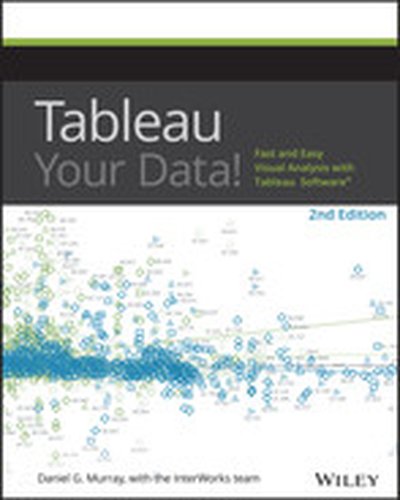
Tableau Your Data!, 2nd Edition

Transform your organization's data into actionable insights with Tableau Tableau is designed specifically to provide fast and easy visual analytics. The intuitive drag-and-drop interface helps you create interactive reports, dashboards, and visualizations, all without any special or advanced training. This all new edition of Tableau Your Data! is your Tableau companion, helping you get the most out of this invaluable business toolset. Tableau Your Data! shows you how to build dynamic, best of breed visualizations using the Tableau Software toolset. This comprehensive guide covers the core feature set for data analytics, and provides clear step-by-step guidance toward best practices and advanced techniques that go way beyond the user manual. You'll learn how Tableau is different from traditional business information analysis tools, and how to navigate your way around the Tableau 9.0 desktop before delving into functions and calculations, as well as sharing with the Tableau Server. Analyze data more effectively with Tableau Desktop Customize Tableau's settings for your organization's needs with detailed real-world examples on data security, scaling, syntax, and more Deploy visualizations to consumers throughout the enterprise - from sales to marketing, operations to finance, and beyond Understand Tableau functions and calculations and leverage Tableau across every link in the value chain Learn from actual working models of the book's visualizations and other web-based resources via a companion website Tableau helps you unlock the stories within the numbers, and Tableau Your Data! puts the software's full functionality right at your fingertips.

Big Data Analytics with Spark: A Practitioner’s Guide to Using Spark for Large-Scale Data Processing, Machine Learning, and Graph Analytics, and High-Velocity Data Stream Processing

This book is a step-by-step guide for learning how to use Spark for different types of big-data analytics projects, including batch, interactive, graph, and stream data analysis as well as machine learning. It covers Spark core and its add-on libraries, including Spark SQL, Spark Streaming, GraphX, MLlib, and Spark ML. Big Data Analytics with Spark shows you how to use Spark and leverage its easy-to-use features to increase your productivity. You learn to perform fast data analysis using its in-memory caching and advanced execution engine, employ in-memory computing capabilities for building high-performance machine learning and low-latency interactive analytics applications, and much more. Moreover, the book shows you how to use Spark as a single integrated platform for a variety of data processing tasks, including ETL pipelines, BI, live data stream processing, graph analytics, and machine learning. The book also includes a chapter on Scala, the hottest functional programming language, and the language that underlies Spark. You’ll learn the basics of functional programming in Scala, so that you can write Spark applications in it. What's more, Big Data Analytics with Spark provides an introduction to other big data technologies that are commonly used along with Spark, such as HDFS, Avro, Parquet, Kafka, Cassandra, HBase, Mesos, and so on. It also provides an introduction to machine learning and graph concepts. So the book is self-sufficient; all the technologies that you need to know to use Spark are covered. The only thing that you are expected to have is some programming knowledge in any language.

Getting Started with Data Science: Making Sense of Data with Analytics

Master Data Analytics Hands-On by Solving Fascinating Problems You’ll Actually Enjoy! Harvard Business Review recently called data science “The Sexiest Job of the 21st Century.” It’s not just sexy: For millions of managers, analysts, and students who need to solve real business problems, it’s indispensable. Unfortunately, there’s been nothing easy about learning data science–until now. Getting Started with Data Science takes its inspiration from worldwide best-sellers like Freakonomics and Malcolm Gladwell’s Outliers: It teaches through a powerful narrative packed with unforgettable stories. Murtaza Haider offers informative, jargon-free coverage of basic theory and technique, backed with plenty of vivid examples and hands-on practice opportunities. Everything’s software and platform agnostic, so you can learn data science whether you work with R, Stata, SPSS, or SAS. Best of all, Haider teaches a crucial skillset most data science books ignore: how to tell powerful stories using graphics and tables. Every chapter is built around real research challenges, so you’ll always know why you’re doing what you’re doing. You’ll master data science by answering fascinating questions, such as: • Are religious individuals more or less likely to have extramarital affairs? • Do attractive professors get better teaching evaluations? • Does the higher price of cigarettes deter smoking? • What determines housing prices more: lot size or the number of bedrooms? • How do teenagers and older people differ in the way they use social media? • Who is more likely to use online dating services? • Why do some purchase iPhones and others Blackberry devices? • Does the presence of children influence a family’s spending on alcohol? For each problem, you’ll walk through defining your question and the answers you’ll need; exploring how others have approached similar challenges; selecting your data and methods; generating your statistics; organizing your report; and telling your story. Throughout, the focus is squarely on what matters most: transforming data into insights that are clear, accurate, and can be acted upon.

Learning ELK Stack

Dive into the ELK stack-Elasticsearch, Logstash, and Kibana-with this comprehensive guide. Designed to help you set up, configure, and utilize the stack to its fullest, this book provides you with the skills to manage data with precision, enrich logs, and create meaningful analytics. Develop an entire data pipeline and cultivate powerful visual insights from your data. What this Book will help me do Install and configure Elasticsearch, Logstash, and Kibana to establish a robust ELK stack setup. Understand the role of each component in the stack and master the basics of log analysis. Create custom Logstash plugins to handle non-standard data processing requirements. Develop interactive and insightful data visualizations and dashboards using Kibana. Implement a complete data pipeline and gain expertise in data indexing, searching, and reporting. Author(s) None Chhajed brings depth of technical understanding and practical experience to the exploration of the ELK Stack. With a strong background in open-source technologies and data analytics, Chhajed has worked extensively with ELK stack implementations in real-world scenarios. Through this guide, the author offers clarity, detailed examples, and actionable insights for professionals seeking to improve their data systems. Who is it for? This book is targeted towards software developers, data analysts, and DevOps engineers seeking to harness the potential of the ELK stack for data analysis and logging. It is most suitable for intermediate-level professionals with basic knowledge of Unix or programming. If your aim is to gain insights and build metrics from diverse data formats utilizing open-source technologies, this book is crafted for you.

Streaming Analytics with IBM Streams: Analyze More, Act Faster, and Get Continuous Insights

Gain a competitive edge with IBM Streams Turn data-in-motion into solid business opportunities with IBM Streams and let Streaming Analytics with IBM Streams show you how. This comprehensive guide starts out with a brief overview of different technologies used for big data processing and explanations on how data-in-motion can be utilized for business advantages. You will learn how to apply big data analytics and how they benefit from data-in-motion. Discover all about Streams starting with the main components then dive further with Stream instillation, and upgrade and management capabilities including tools used for production. Through a solid understanding of big in motion, detailed illustrations, Endnotes that provide additional learning resources, and end of chapter summaries with helpful insight, data analysists and professionals looking to get more from their data will benefit from expert insight on: Data-in-motion processing and how it can be applied to generate new business opportunities The three approaches to processing data in motion and pros and cons of each The main components of Streams from runtime to installation and administration Multiple purposes of the Text Analytics toolkit The evolving Streams ecosystem A detailed roadmap for programmers to quickly become fluent with Streams Data-in-motion is rapidly becoming a business tool used to discover more about customers and opportunities, however it is only valuable if have the tools and knowledge to analyze and apply. This is an expert guide to IBM Streams and how you can harness this powerful tool to gain a competitive business edge.

Hadoop 2 Quick-Start Guide: Learn the Essentials of Big Data Computing in the Apache Hadoop 2 Ecosystem

Get Started Fast with Apache Hadoop ® 2, YARN, and Today’s Hadoop Ecosystem With Hadoop 2.x and YARN, Hadoop moves beyond MapReduce to become practical for virtually any type of data processing. Hadoop 2.x and the Data Lake concept represent a radical shift away from conventional approaches to data usage and storage. Hadoop 2.x installations offer unmatched scalability and breakthrough extensibility that supports new and existing Big Data analytics processing methods and models. Hadoop ® 2 Quick-Start Guide is the first easy, accessible guide to Apache Hadoop 2.x, YARN, and the modern Hadoop ecosystem. Building on his unsurpassed experience teaching Hadoop and Big Data, author Douglas Eadline covers all the basics you need to know to install and use Hadoop 2 on personal computers or servers, and to navigate the powerful technologies that complement it. Eadline concisely introduces and explains every key Hadoop 2 concept, tool, and service, illustrating each with a simple “beginning-to-end” example and identifying trustworthy, up-to-date resources for learning more. This guide is ideal if you want to learn about Hadoop 2 without getting mired in technical details. Douglas Eadline will bring you up to speed quickly, whether you’re a user, admin, devops specialist, programmer, architect, analyst, or data scientist. Coverage Includes Understanding what Hadoop 2 and YARN do, and how they improve on Hadoop 1 with MapReduce Understanding Hadoop-based Data Lakes versus RDBMS Data Warehouses Installing Hadoop 2 and core services on Linux machines, virtualized sandboxes, or clusters Exploring the Hadoop Distributed File System (HDFS) Understanding the essentials of MapReduce and YARN application programming Simplifying programming and data movement with Apache Pig, Hive, Sqoop, Flume, Oozie, and HBase Observing application progress, controlling jobs, and managing workflows Managing Hadoop efficiently with Apache Ambari–including recipes for HDFS to NFSv3 gateway, HDFS snapshots, and YARN configuration Learning basic Hadoop 2 troubleshooting, and installing Apache Hue and Apache Spark

Sams Teach Yourself: Big Data Analytics with Microsoft HDInsight in 24 Hours

Sams Teach Yourself Big Data Analytics with Microsoft HDInsight in 24 Hours In just 24 lessons of one hour or less, Sams Teach Yourself Big Data Analytics with Microsoft HDInsight in 24 Hours helps you leverage Hadoop’s power on a flexible, scalable cloud platform using Microsoft’s newest business intelligence, visualization, and productivity tools. This book’s straightforward, step-by-step approach shows you how to provision, configure, monitor, and troubleshoot HDInsight and use Hadoop cloud services to solve real analytics problems. You’ll gain more of Hadoop’s benefits, with less complexity–even if you’re completely new to Big Data analytics. Every lesson builds on what you’ve already learned, giving you a rock-solid foundation for real-world success. Practical, hands-on examples show you how to apply what you learn Quizzes and exercises help you test your knowledge and stretch your skills Notes and tips point out shortcuts and solutions Learn how to… Master core Big Data and NoSQL concepts, value propositions, and use cases Work with key Hadoop features, such as HDFS2 and YARN Quickly install, configure, and monitor Hadoop (HDInsight) clusters in the cloud Automate provisioning, customize clusters, install additional Hadoop projects, and administer clusters Integrate, analyze, and report with Microsoft BI and Power BI Automate workflows for data transformation, integration, and other tasks Use Apache HBase on HDInsight Use Sqoop or SSIS to move data to or from HDInsight Perform R-based statistical computing on HDInsight datasets Accelerate analytics with Apache Spark Run real-time analytics on high-velocity data streams Write MapReduce, Hive, and Pig programs Register your book at informit.com/register for convenient access to downloads, updates, and corrections as they become available.

Data Preparation in the Big Data Era

Preparing and cleaning data is notoriously expensive, prone to error, and time consuming: the process accounts for roughly 80% of the total time spent on analysis. As this O’Reilly report points out, enterprises have already invested billions of dollars in big data analytics, so there’s great incentive to modernize methods for cleaning, combining, and transforming data. Author Federico Castanedo, Chief Data Scientist at WiseAthena.com, details best practices for reducing the time it takes to convert raw data into actionable insights. With these tools and techniques in mind, your organization will be well positioned to translate big data into big decisions. Explore the problems organizations face today with traditional prep and integration Define the business questions you want to address before selecting, prepping, and analyzing data Learn new methods for preparing raw data, including date-time and string data Understand how some cleaning actions (like replacing missing values) affect your analysis Examine data curation products: modern approaches that scale Consider your business audience when choosing ways to deliver your analysis

Dashboards for Excel

The book takes a hands-on approach to developing dashboards, from instructing users on advanced Excel techniques to addressing dashboard pitfalls common in the real world. Dashboards for Excel is your key to creating informative, actionable, and interactive dashboards and decision support systems. Throughout the book, the reader is challenged to think about Excel and data analytics differently—that is, to think outside the cell. This book shows you how to create dashboards in Excel quickly and effectively. In this book, you learn how to: Apply data visualization principles for more effective dashboards Employ dynamic charts and tables to create dashboards that are constantly up-to-date and providing fresh information Use understated yet powerful formulas for Excel development Apply advanced Excel techniques mixing formulas and Visual Basic for Applications (VBA) to create interactive dashboards Create dynamic systems for decision support in your organization Avoid common problems in Excel development and dashboard creation Get started with the Excel data model, PowerPivot, and Power Query

Data Analysis in the Cloud

Data Analysis in the Cloud introduces and discusses models, methods, techniques, and systems to analyze the large number of digital data sources available on the Internet using the computing and storage facilities of the cloud. Coverage includes scalable data mining and knowledge discovery techniques together with cloud computing concepts, models, and systems. Specific sections focus on map-reduce and NoSQL models. The book also includes techniques for conducting high-performance distributed analysis of large data on clouds. Finally, the book examines research trends such as Big Data pervasive computing, data-intensive exascale computing, and massive social network analysis. Introduces data analysis techniques and cloud computing concepts Describes cloud-based models and systems for Big Data analytics Provides examples of the state-of-the-art in cloud data analysis Explains how to develop large-scale data mining applications on clouds Outlines the main research trends in the area of scalable Big Data analysis

Data Analytics in Sports

As any child with a baseball card intuitively knows, sports and statistics go hand-in-hand. Yet, the general media disdain the flood of sports statistics available today: sports are pure and analytic tools are not. Well, if the so-called purists find tools like baseball’s sabermetrics upsetting, then they’d better brace themselves for the new wave of data analytics. In this O’Reilly report, Janine Barlow examines how advanced predictive analytics are impacting the world of sports—from the rise of tools such as Major League Baseball’s Statcast, which collects data on the movement of balls and players, to SportVU, which the National Basketball Association uses to collect spatial analysis data. You’ll also learn: How "Dance Card" makes accurate predictions about NCAA’s "March Madness" tournament Why data is crumbling long-standing myths about performance in soccer How the National Football League is using wearable devices to collect vital health data about its players It’s a new world in sports, where data analytics and related information technologies are changing the experience for teams, players, fans, and investors.

Getting Data Right

Over the last 20 years, companies have invested roughly $3-4 trillion in enterprise software. These investments have been primarily focused on the development and deployment of single systems, applications, functions, and geographies targeted at the automation and optimization of key business processes. Companies are now investing heavily in big data analytics ($44 billion alone in 2014) in an effort to begin analyzing all of the data being generated from their process automation systems. But companies are quickly realizing that one of their key bottlenecks is Data Variety—the silo’d nature of the data that is a natural result of internal and external source proliferation. The problem of big data variety has crept up from the bottom—and the cost of variety is only appreciated when companies attempt to ask simple questions across many business silos (divisions, geographies, functions, etc.). Current top-down, deterministic data unification approaches (such as ETL, ELT, and MDM) were simply not designed to scale to the variety of hundreds or thousands or even tens of thousands of data silos. Download this free eBook to learn about the fundamental challenges that Data Variety poses to enterprises looking to maximize the value of their existing investments—and how new approaches promise to help organizations embrace and leverage the fundamental diversity of data. Readers will also find best practices for designing bottom-up and probabilistic methods for finding and managing data; principles for doing data science at scale in the big data era; preparing and unifying data in ways that complement existing systems; optimizing data warehousing; and how to use “data ops” to automate large-scale integration.

The Architecture of Privacy

Technology’s influence on privacy not only concerns consumers, political leaders, and advocacy groups, but also the software architects who design new products. In this practical guide, experts in data analytics, software engineering, security, and privacy policy describe how software teams can make privacy-protective features a core part of product functionality, rather than add them late in the development process. Ideal for software engineers new to privacy, this book helps you examine privacy-protective information management architectures and their foundational components—building blocks that you can combine in many ways. Policymakers, academics, students, and advocates unfamiliar with the technical terrain will learn how these tools can help drive policies to maximize privacy protection.