 talk-data.com
Topic
DuckDB
embedded_database
analytics
olap
98
tagged
Activity Trend
13
peak/qtr
2020-Q1
2026-Q2
Top Events
DuckCon #5 Seattle 2024
10
DuckCon #3 San Francisco 2023
9
DuckCon #4 Amsterdam 2024
8
Data Engineering Podcast
7
The Joe Reis Show
5
Databricks DATA + AI Summit 2023
4
Data Engineering Central Podcast
4
DataTopics: All Things Data, AI & Tech
4
DuckCon #2 Brussels 2023
3
O'Reilly Data Science Books
3
Small Data SF 2024
3
Data + AI Summit 2025
3
The lakehouse is built for storage flexibility, but what about compute? In this session, we’ll explore how Unity Catalog enables you to connect and govern multiple compute engines across your data ecosystem. With open APIs and support for the Iceberg REST Catalog, UC lets you extend access to engines like Trino, DuckDB, and Flink while maintaining centralized security, lineage, and interoperability. We will show how you can get started today working with engines like Apache Spark and Starburst to read and write to UC managed tables with some exciting demos. Learn how to bring flexibility to your compute layer—without compromising control.
Delta Kernel makes it easy for engines and connectors to read and write Delta tables. It supports many Delta features and robust connectors, including DuckDB, Clickhouse, Spice AI and delta-dotnet. In this session, we'll cover lessons learned about how to build a high-performance library that lets engines integrate the way they want, while not having to worry about the details of the Delta protocol. We'll talk through how we streamlined the API as well as its changes and underlying motivations. We'll discuss some new highlight features like write support, and the ability to do CDF scans. Finally we'll cover the future roadmap for the Kernel project and what you can expect from the project over the coming year.
Delta Lake has proven to be an excellent storage format. Coupled with the Databricks platform, the storage format has shined as a component of a distributed system on the lakehouse. The pairing of Delta and Spark provides an excellent platform, but users often struggle to perform comparable work outside of the Spark ecosystem. Tools such as delta-rs, Polars and DuckDb have brought access to users outside of Spark, but they are only building blocks of a larger system. In this 40-minute talk we will demonstrate how users can use data products on the Nextdata OS data mesh to interact with the Databricks platform to drive Delta Lake workflows. Additionally, we will show how users can build autonomous data products that interact with their Delta tables both inside and outside of the lakehouse platform. Attendees will learn how to integrate the Nextdata OS data mesh with the Databricks platform as both an external and integral component.
Suppose you want to write a data science tool to do feature engineering. Your experience may go like this: - Expectation: you can focus on state-of-the art techniques for feature engineering. - Reality: you keep having to make you codebase more complex because a new dataframe library has come out and users are demanding support for it.
Or rather, it might have gone like that in the pre-Narwhals era. Because now, you can focus on solving the problems which your tool set out to do, and let Narwhals handle the subtle differences between different kinds of dataframe inputs!
Hannes Mühleisen shows off DuckLake and answers live questions.DuckLake: https://duckdb.org/2025/05/27/ducklake.html
Imagine writing SQL and getting instant results as you type? Yes, this is reality now. It's amazing!DuckDB/MotherDuck's Instant SQL made a big splash at last month's Data Council. Hamilton Ulmer gives a demo of Instant SQL at the Practical Data Community.----------------------------Instant SQL: https://motherduck.com/blog/introducing-instant-sql/Practical Data Community Discord: https://discord.gg/gNfw5AKWSK
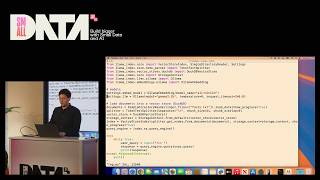
It's finally possible to bring the awesome power of Large Language Models (LLMs) to your laptop. This talk will explore how to run and leverage small, openly available LLMs to power common tasks involving data, including selecting the right models, practical use cases for running small models, and best practices for deploying small models effectively alongside databases.
Bio: Jeffrey Morgan is the founder of Ollama, an open-source tool to get up and run large language models. Prior to founding Ollama, Jeffrey founded Kitematic, which was acquired by Docker and evolved into Docker Desktop. He has previously worked at companies including Docker, Twitter, and Google.
➡️ Follow Us LinkedIn: https://www.linkedin.com/company/small-data-sf/ X/Twitter : https://twitter.com/smalldatasf Website: https://www.smalldatasf.com/
Discover how to run large language models (LLMs) locally using Ollama, the easiest way to get started with small AI models on your Mac, Windows, or Linux machine. Unlike massive cloud-based systems, small open source models are only a few gigabytes, allowing them to run incredibly fast on consumer hardware without network latency. This video explains why these local LLMs are not just scaled-down versions of larger models but powerful tools for developers, offering significant advantages in speed, data privacy, and cost-effectiveness by eliminating hidden cloud provider fees and risks.
Learn the most common use case for small models: combining them with your existing factual data to prevent hallucinations. We dive into retrieval augmented generation (RAG), a powerful technique where you augment a model's prompt with information from a local data source. See a practical demo of how to build a vector store from simple text files and connect it to a model like Gemma 2B, enabling you to query your own data using natural language for fast, accurate, and context-aware responses.
Explore the next frontier of local AI with small agents and tool calling, a new feature that empowers models to interact with external tools. This guide demonstrates how an LLM can autonomously decide to query a DuckDB database, write the correct SQL, and use the retrieved data to answer your questions. This advanced tutorial shows you how to connect small models directly to your data engineering workflows, moving beyond simple chat to create intelligent, data-driven applications.
Get started with practical applications for small models today, from building internal help desks to streamlining engineering tasks like code review. This video highlights how small and large models can work together effectively and shows that open source models are rapidly catching up to their cloud-scale counterparts. It's never been a better time for developers and data analysts to harness the power of local AI.
In this podcast episode, we talked with Adrian Brudaru about the past, present and future of data engineering.
About the speaker: Adrian Brudaru studied economics in Romania but soon got bored with how creative the industry was, and chose to go instead for the more factual side. He ended up in Berlin at the age of 25 and started a role as a business analyst. At the age of 30, he had enough of startups and decided to join a corporation, but quickly found out that it did not provide the challenge he wanted. As going back to startups was not a desirable option either, he decided to postpone his decision by taking freelance work and has never looked back since. Five years later, he co-founded a company in the data space to try new things. This company is also looking to release open source tools to help democratize data engineering.
0:00 Introduction to DataTalks.Club 1:05 Discussing trends in data engineering with Adrian 2:03 Adrian's background and journey into data engineering 5:04 Growth and updates on Adrian's company, DLT Hub 9:05 Challenges and specialization in data engineering today 13:00 Opportunities for data engineers entering the field 15:00 The "Modern Data Stack" and its evolution 17:25 Emerging trends: AI integration and Iceberg technology 27:40 DuckDB and the emergence of portable, cost-effective data stacks 32:14 The rise and impact of dbt in data engineering 34:08 Alternatives to dbt: SQLMesh and others 35:25 Workflow orchestration tools: Airflow, Dagster, Prefect, and GitHub Actions 37:20 Audience questions: Career focus in data roles and AI engineering overlaps 39:00 The role of semantics in data and AI workflows 41:11 Focusing on learning concepts over tools when entering the field 45:15 Transitioning from backend to data engineering: challenges and opportunities 47:48 Current state of the data engineering job market in Europe and beyond 49:05 Introduction to Apache Iceberg, Delta, and Hudi file formats 50:40 Suitability of these formats for batch and streaming workloads 52:29 Tools for streaming: Kafka, SQS, and related trends 58:07 Building AI agents and enabling intelligent data applications 59:09Closing discussion on the place of tools like DBT in the ecosystem
🔗 CONNECT WITH ADRIAN BRUDARU Linkedin - / data-team Website - https://adrian.brudaru.com/ 🔗 CONNECT WITH DataTalksClub Join the community - https://datatalks.club/slack.html Subscribe to our Google calendar to have all our events in your calendar - https://calendar.google.com/calendar/... Check other upcoming events - https://lu.ma/dtc-events LinkedIn - /datatalks-club Twitter - /datatalksclub Website - https://datatalks.club/
It’s time for another episode of the Data Engineering Central Podcast. In this episode, we cover … * AWS Lambda + DuckDB and Delta Lake (Polars, Daft, etc). * IAC - Long Live Terraform. * Databricks Data Quality with DQX. * Unity Catalog releases for DuckDB and Polars * Bespoke vs Managed Data Platforms * Delta Lake vs. Iceberg and UinFORM for a single table. Thanks for b…
This is a public episode. If you'd like to discuss this with other subscribers or get access to bonus episodes, visit dataengineeringcentral.substack.com/subscribe
Hannes Muhleisen is the creator of DuckDB and CEO of DuckDB Labs. We finally got a chance to meet in person at the Forward Data Conference in Paris. We hit it off immediately, and at times, I felt like I was talking with my long lost brother. Hannes is a very cool guy!
While at the conference, we recorded a chat about all things DuckDB, the challenges of data lakehouses and open table formats, local-first tech, and much more. 🦆 🐥
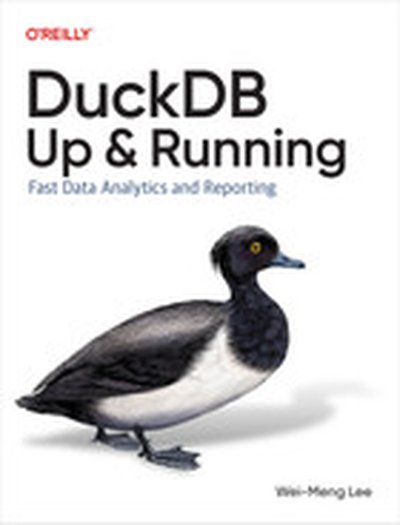
DuckDB, an open source in-process database created for OLAP workloads, provides key advantages over more mainstream OLAP solutions: It's embeddable and optimized for analytics. It also integrates well with Python and is compatible with SQL, giving you the performance and flexibility of SQL right within your Python environment. This handy guide shows you how to get started with this versatile and powerful tool. Author Wei-Meng Lee takes developers and data professionals through DuckDB's primary features and functions, best practices, and practical examples of how you can use DuckDB for a variety of data analytics tasks. You'll also dive into specific topics, including how to import data into DuckDB, work with tables, perform exploratory data analysis, visualize data, perform spatial analysis, and use DuckDB with JSON files, Polars, and JupySQL. Understand the purpose of DuckDB and its main functions Conduct data analytics tasks using DuckDB Integrate DuckDB with pandas, Polars, and JupySQL Use DuckDB to query your data Perform spatial analytics using DuckDB's spatial extension Work with a diverse range of data including Parquet, CSV, and JSON
🌟 Session Overview 🌟
Session Name: Data Engineers: Respect the Resiliency of SQL Speaker: Rui Machado Session Description: In the ever-evolving data landscape, SQL's resilience shines, powering critical systems across all industries. Despite new technologies, SQL's core definition and manipulation language remains indispensable, evolving to meet modern demands. This talk explores why SQL endures, spotlighting its integration in innovative tools like dbt and DuckDB, which leverage SQL interfaces for advanced data processing. It will reveal some of the secrets behind SQL's lasting popularity and its pivotal role in the future of data engineering.
🚀 About Big Data and RPA 2024 🚀
Unlock the future of innovation and automation at Big Data & RPA Conference Europe 2024! 🌟 This unique event brings together the brightest minds in big data, machine learning, AI, and robotic process automation to explore cutting-edge solutions and trends shaping the tech landscape. Perfect for data engineers, analysts, RPA developers, and business leaders, the conference offers dual insights into the power of data-driven strategies and intelligent automation. 🚀 Gain practical knowledge on topics like hyperautomation, AI integration, advanced analytics, and workflow optimization while networking with global experts. Don’t miss this exclusive opportunity to expand your expertise and revolutionize your processes—all from the comfort of your home! 📊🤖✨
📅 Yearly Conferences: Curious about the evolution of QA? Check out our archive of past Big Data & RPA sessions. Watch the strategies and technologies evolve in our videos! 🚀 🔗 Find Other Years' Videos: 2023 Big Data Conference Europe https://www.youtube.com/playlist?list=PLqYhGsQ9iSEpb_oyAsg67PhpbrkCC59_g 2022 Big Data Conference Europe Online https://www.youtube.com/playlist?list=PLqYhGsQ9iSEryAOjmvdiaXTfjCg5j3HhT 2021 Big Data Conference Europe Online https://www.youtube.com/playlist?list=PLqYhGsQ9iSEqHwbQoWEXEJALFLKVDRXiP
💡 Stay Connected & Updated 💡
Don’t miss out on any updates or upcoming event information from Big Data & RPA Conference Europe. Follow us on our social media channels and visit our website to stay in the loop!
🌐 Website: https://bigdataconference.eu/, https://rpaconference.eu/ 👤 Facebook: https://www.facebook.com/bigdataconf, https://www.facebook.com/rpaeurope/ 🐦 Twitter: @BigDataConfEU, @europe_rpa 🔗 LinkedIn: https://www.linkedin.com/company/73234449/admin/dashboard/, https://www.linkedin.com/company/75464753/admin/dashboard/ 🎥 YouTube: http://www.youtube.com/@DATAMINERLT
Summary In this episode of the Data Engineering Podcast Sam Kleinman talks about the pivotal role of databases in software engineering. Sam shares his journey into the world of data and discusses the complexities of database selection, highlighting the trade-offs between different database architectures and how these choices affect system design, query performance, and the need for ETL processes. He emphasizes the importance of understanding specific requirements to choose the right database engine and warns against over-engineering solutions that can lead to increased complexity. Sam also touches on the tendency of engineers to move logic to the application layer due to skepticism about database longevity and advises teams to leverage database capabilities instead. Finally, he identifies a significant gap in data management tooling: the lack of easy-to-use testing tools for database interactions, highlighting the need for better testing paradigms to ensure reliability and reduce bugs in data-driven applications.
Announcements Hello and welcome to the Data Engineering Podcast, the show about modern data managementIt’s 2024, why are we still doing data migrations by hand? Teams spend months—sometimes years—manually converting queries and validating data, burning resources and crushing morale. Datafold's AI-powered Migration Agent brings migrations into the modern era. Their unique combination of AI code translation and automated data validation has helped companies complete migrations up to 10 times faster than manual approaches. And they're so confident in their solution, they'll actually guarantee your timeline in writing. Ready to turn your year-long migration into weeks? Visit dataengineeringpodcast.com/datafold today to learn how Datafold can automate your migration and ensure source to target parity. Your host is Tobias Macey and today I'm interviewing Sam Kleinman about database tradeoffs across operating environments and axes of scaleInterview IntroductionHow did you get involved in the area of data management?The database engine you use has a substantial impact on how you architect your overall system. When starting a greenfield project, what do you see as the most important factor to consider when selecting a database?points of friction introduced by database capabilitiesembedded databases (e.g. SQLite, DuckDB, LanceDB), when to use and when do they become a bottlenecksingle-node database engines (e.g. Postgres, MySQL), when are they legitimately a problemdistributed databases (e.g. CockroachDB, PlanetScale, MongoDB)polyglot storage vs. general-purpose/multimodal databasesfederated queries, benefits and limitations ease of integration vs. variability of performance and access control Contact Info LinkedInGitHubParting Question From your perspective, what is the biggest gap in the tooling or technology for data management today?Closing Announcements Thank you for listening! Don't forget to check out our other shows. Podcast.init covers the Python language, its community, and the innovative ways it is being used. The AI Engineering Podcast is your guide to the fast-moving world of building AI systems.Visit the site to subscribe to the show, sign up for the mailing list, and read the show notes.If you've learned something or tried out a project from the show then tell us about it! Email [email protected] with your story.Links MongoDBNeonPodcast EpisodeGlareDBNoSQLS3 Conditional WriteEvent driven architectureCockroachDBCouchbaseCassandraThe intro and outro music is from The Hug by The Freak Fandango Orchestra / CC BY-SA
As a Head of Data or a one-person data team, keeping the lights on for the business while running all things data-related as efficiently as possible is no small feat. This talk will focus on tactics and strategies to manage within and around constraints, including monetary costs, time and resources, and data volumes.
📓 Resources Big Data is Dead: https://motherduck.com/blog/big-data-... Small Data Manifesto: https://motherduck.com/blog/small-dat... Why Small Data?: https://benn.substack.com/p/is-excel-... Small Data SF: https://www.smalldatasf.com/
➡️ Follow Us
LinkedIn: / motherduck
X/Twitter : / motherduck
Blog: https://motherduck.com/blog/
Learn how your data team can drive innovation and maximize ROI by embracing constraints, drawing inspiration from SpaceX's revolutionary cost-effective approach. This video challenges the "abundance mindset" prevalent in the modern data stack, where easily scalable cloud data warehouses and a surplus of tools often lead to unmanageable data models and underutilized dashboards. We explore a focused data strategy for extracting maximum value from small data, shifting the paradigm from "more data" to more impact.
To maximize value, data teams must move beyond being order-takers and practice strategic stakeholder management. Discover how to use frameworks like the stakeholder engagement matrix to prioritize high-impact business leaders and align your work with core business goals. This involves speaking the language of business growth models, not technical jargon about data pipelines or orchestration, ensuring your data engineering efforts resonate with key decision-makers and directly contribute to revenue-generating activities.
Embracing constraints is key to innovation and effective data project management. We introduce the Iron Triangle—a fundamental engineering concept balancing scope, cost, and time—as a powerful tool for planning data projects and having transparent conversations with the business. By treating constraints not as limitations but as opportunities, data engineers and analysts can deliver higher-quality data products without succumbing to scope creep or uncontrolled costs.
A critical component of this strategy is understanding the Total Cost of Ownership (TCO), which goes far beyond initial compute costs to include ongoing maintenance, downtime, and the risk of vendor pricing changes. Learn how modern, efficient tools like DuckDB and MotherDuck are designed for cost containment from the ground up, enabling teams to build scalable, cost-effective data platforms. By making the true cost of data requests visible, you can foster accountability and make smarter architectural choices. Ultimately, this guide provides a blueprint for resisting data stack bloat and turning cost and constraints into your greatest assets for innovation.
by
Daniel Beach
It’s time for another episode of the Data Engineering Central Podcast. In this episode we cover … * Apache Airflow vs Databricks Workflows * End-of-Year Engineering Planning for 2025 * 10 Billion Row Challenge with DuckDB vs Daft vs Polars * Raw Data Ingestion. As usual, the full episode is available to paid subscribers, and a shortened version to you free loaders out there, don’t worry, I still love you though.
This is a public episode. If you'd like to discuss this with other subscribers or get access to bonus episodes, visit dataengineeringcentral.substack.com/subscribe
Over the last decade, Big Data was everywhere. Let's set the record straight on what is and isn't Big Data. We have been consumed by a conversation about data volumes when we should focus more on the immediate task at hand: Simplifying our work.
Some of us may have Big Data, but our quest to derive insights from it is measured in small slices of work that fit on your laptop or in your hand. Easy data is here— let's make the most of it.
📓 Resources Big Data is Dead: https://motherduck.com/blog/big-data-is-dead/ Small Data Manifesto: https://motherduck.com/blog/small-data-manifesto/ Small Data SF: https://www.smalldatasf.com/
➡️ Follow Us LinkedIn: https://linkedin.com/company/motherduck X/Twitter : https://twitter.com/motherduck Blog: https://motherduck.com/blog/
Explore the "Small Data" movement, a counter-narrative to the prevailing big data conference hype. This talk challenges the assumption that data scale is the most important feature of every workload, defining big data as any dataset too large for a single machine. We'll unpack why this distinction is crucial for modern data engineering and analytics, setting the stage for a new perspective on data architecture.
Delve into the history of big data systems, starting with the non-linear hardware costs that plagued early data practitioners. Discover how Google's foundational papers on GFS, MapReduce, and Bigtable led to the creation of Hadoop, fundamentally changing how we scale data processing. We'll break down the "big data tax"—the inherent latency and system complexity overhead required for distributed systems to function, a critical concept for anyone evaluating data platforms.
Learn about the architectural cornerstone of the modern cloud data warehouse: the separation of storage and compute. This design, popularized by systems like Snowflake and Google BigQuery, allows storage to scale almost infinitely while compute resources are provisioned on-demand. Understand how this model paved the way for massive data lakes but also introduced new complexities and cost considerations that are often overlooked.
We examine the cracks appearing in the big data paradigm, especially for OLAP workloads. While systems like Snowflake are still dominant, the rise of powerful alternatives like DuckDB signals a shift. We reveal the hidden costs of big data analytics, exemplified by a petabyte-scale query costing nearly $6,000, and argue that for most use cases, it's too expensive to run computations over massive datasets.
The key to efficient data processing isn't your total data size, but the size of your "hot data" or working set. This talk argues that the revenge of the single node is here, as modern hardware can often handle the actual data queried without the overhead of the big data tax. This is a crucial optimization technique for reducing cost and improving performance in any data warehouse.
Discover the core principles for designing systems in a post-big data world. We'll show that since only 1 in 500 users run true big data queries, prioritizing simplicity over premature scaling is key. For low latency, process data close to the user with tools like DuckDB and SQLite. This local-first approach offers a compelling alternative to cloud-centric models, enabling faster, more cost-effective, and innovative data architectures.
Discover how to cut complexity of your dbt data pipelines with serverless DuckDB while improving performance and drastically reducing costs. This session covers practical strategies for cutting complexity and expenses in data flows while enjoying a more ergonomic and frictionless workflow. Learn how adopting a DuckDB-based architecture can streamline your operations, enhance developer experience, and boost efficiency.
Speaker: Alex Monahan Forward Deployed Software Engineer MotherDuck
Read the blog to learn about the latest dbt Cloud features announced at Coalesce, designed to help organizations embrace analytics best practices at scale https://www.getdbt.com/blog/coalesce-2024-product-announcements