talk-data.com talk-data.com

Topic

DWH

Data Warehouse

analytics business_intelligence data_storage

568

tagged

Activity Trend

35 peak/qtr
2020-Q1 2026-Q1

Activities

568 activities · Newest first

Summary

Encryption and security are critical elements in data analytics and machine learning applications. We have well developed protocols and practices around data that is at rest and in motion, but security around data in use is still severely lacking. Recognizing this shortcoming and the capabilities that could be unlocked by a robust solution Rishabh Poddar helped to create Opaque Systems as an outgrowth of his PhD studies. In this episode he shares the work that he and his team have done to simplify integration of secure enclaves and trusted computing environments into analytical workflows and how you can start using it without re-engineering your existing systems.

Announcements

Hello and welcome to the Data Engineering Podcast, the show about modern data management When you're ready to build your next pipeline, or want to test out the projects you hear about on the show, you'll need somewhere to deploy it, so check out our friends at Linode. With their new managed database service you can launch a production ready MySQL, Postgres, or MongoDB cluster in minutes, with automated backups, 40 Gbps connections from your application hosts, and high throughput SSDs. Go to dataengineeringpodcast.com/linode today and get a $100 credit to launch a database, create a Kubernetes cluster, or take advantage of all of their other services. And don't forget to thank them for their continued support of this show! Modern data teams are dealing with a lot of complexity in their data pipelines and analytical code. Monitoring data quality, tracing incidents, and testing changes can be daunting and often takes hours to days or even weeks. By the time errors have made their way into production, it’s often too late and damage is done. Datafold built automated regression testing to help data and analytics engineers deal with data quality in their pull requests. Datafold shows how a change in SQL code affects your data, both on a statistical level and down to individual rows and values before it gets merged to production. No more shipping and praying, you can now know exactly what will change in your database! Datafold integrates with all major data warehouses as well as frameworks such as Airflow & dbt and seamlessly plugs into CI workflows. Visit dataengineeringpodcast.com/datafold today to book a demo with Datafold. RudderStack helps you build a customer data platform on your warehouse or data lake. Instead of trapping data in a black box, they enable you to easily collect customer data from the entire stack and build an identity graph on your warehouse, giving you full visibility and control. Their SDKs make event streaming from any app or website easy, and their extensive library of integrations enable you to automatically send data to hundreds of downstream tools. Sign up free at dataengineeringpodcast.com/rudder Build Data Pipelines. Not DAGs. That’s the spirit behind Upsolver SQLake, a new self-service data pipeline platform that lets you build batch and streaming pipelines without falling into the black hole of DAG-based orchestration. All you do is write a query in SQL to declare your transformation, and SQLake will turn it into a continuous pipeline that scales to petabytes and delivers up to the minute fresh data. SQLake supports a broad set of transformations, including high-cardinality joins, aggregations, upserts and window operations. Output data can be streamed into a data lake for query engines like Presto, Trino or Spark SQL, a data warehouse like Snowflake or Redshift., or any other destination you choose. Pricing for SQLake is simple. You pay $99 per terabyte ingested into your data lake using SQLake, and run unlimited transformation pipelines for free. That way data engineers and data users can process to their heart’s content without worrying about their cloud bill. For data engineering podcast listeners, we’re offering a 30 day trial with unlimited data, so go to dataengineeringpodcast.com/upsolver today an

Snowflake SnowPro Core Certification Study Guide

Prepare smarter, faster, and better with the premier study guide for Snowflake SnowPro Core certification Snowflake, a cloud-based data warehousing platform, has steadily gained popularity since its 2014 launch. Snowflake offers several certification exams, of which the SnowPro Core certification is the foundational exam. The SnowPro Core Certification validates an individual's grasp of Snowflake as a cloud data warehouse, its architectural fundamentals, and the ability to design, implement, and maintain secure, scalable Snowflake systems. The Snowflake SnowPro Core Certification Study Guide delivers comprehensive coverage of every relevant exam topic on the Snowflake SnowPro Core Certification test. Prepare efficiently and effectively for the exam with online practice tests and flashcards, a digital glossary, and concise and easy-to-follow instruction from the subject-matter experts at Sybex. You'll gain the necessary knowledge to help you succeed in the exam and will be able to apply the acquired practical skills to real-world Snowflake solutions. This Study Guide includes: Comprehensive understanding of Snowflake's unique shared data, multi-cluster architecture Guidance on loading structured and semi-structured data into Snowflake Utilizing data sharing, cloning, and time travel features Managing performance through clustering keys, scaling compute up, down & across Steps to account management and security configuration including RBAC & MFA All the info you need to obtain a highly valued credential for a rapidly growing new database software solution Access to the Sybex online learning center, with chapter review questions, full-length practice exams, hundreds of electronic flashcards, and a glossary of key terms Perfect for anyone considering a new career in cloud-based data warehouse solutions and related fields, Snowflake SnowPro Core Certification Study Guide is also a must-read for veteran database professionals seeking an understanding of one of the newest and fastest-growing niches in data.

In programming, collaboration and experimentation can be very stressful, since sharing code and making it visible to others can be tedious, time-consuming, and nerve-wracking.Tools like Power BI are changing that entirely, by opening up new ways to collaborate between team members, add layers of customized and complex security to the data teams are working with, and making data much more accessible across organizations.

Ginger Grant joins the show to talk about how organizations can utilize Power BI, Dax, and M to their fullest potential and create new opportunities for experimentation, innovation, and collaboration.

Ginger is the Principal Consultant at the Desert Isle Group, working as an expert in advanced analytic solutions, including machine learning, data warehousing, ETL, reporting and cube development, Power BI, Excel Automation, Data Visualization and training. In addition to her consultant work, she is also a blogger at and global keynote speaker on developments and trends in data. Microsoft has also recognized her technical contributions by awarding her a MVP in Data Platform.

In this episode, we talk about what Power BI is, the common mistakes organizations make when implementing Power BI, advanced use cases, and much more.

Summary

The data ecosystem has seen a constant flurry of activity for the past several years, and it shows no signs of slowing down. With all of the products, techniques, and buzzwords being discussed it can be easy to be overcome by the hype. In this episode Juan Sequeda and Tim Gasper from data.world share their views on the core principles that you can use to ground your work and avoid getting caught in the hype cycles.

Announcements

Hello and welcome to the Data Engineering Podcast, the show about modern data management When you're ready to build your next pipeline, or want to test out the projects you hear about on the show, you'll need somewhere to deploy it, so check out our friends at Linode. With their new managed database service you can launch a production ready MySQL, Postgres, or MongoDB cluster in minutes, with automated backups, 40 Gbps connections from your application hosts, and high throughput SSDs. Go to dataengineeringpodcast.com/linode today and get a $100 credit to launch a database, create a Kubernetes cluster, or take advantage of all of their other services. And don't forget to thank them for their continued support of this show! Modern data teams are dealing with a lot of complexity in their data pipelines and analytical code. Monitoring data quality, tracing incidents, and testing changes can be daunting and often takes hours to days or even weeks. By the time errors have made their way into production, it’s often too late and damage is done. Datafold built automated regression testing to help data and analytics engineers deal with data quality in their pull requests. Datafold shows how a change in SQL code affects your data, both on a statistical level and down to individual rows and values before it gets merged to production. No more shipping and praying, you can now know exactly what will change in your database! Datafold integrates with all major data warehouses as well as frameworks such as Airflow & dbt and seamlessly plugs into CI workflows. Visit dataengineeringpodcast.com/datafold today to book a demo with Datafold. RudderStack helps you build a customer data platform on your warehouse or data lake. Instead of trapping data in a black box, they enable you to easily collect customer data from the entire stack and build an identity graph on your warehouse, giving you full visibility and control. Their SDKs make event streaming from any app or website easy, and their extensive library of integrations enable you to automatically send data to hundreds of downstream tools. Sign up free at dataengineeringpodcast.com/rudder Build Data Pipelines. Not DAGs. That’s the spirit behind Upsolver SQLake, a new self-service data pipeline platform that lets you build batch and streaming pipelines without falling into the black hole of DAG-based orchestration. All you do is write a query in SQL to declare your transformation, and SQLake will turn it into a continuous pipeline that scales to petabytes and delivers up to the minute fresh data. SQLake supports a broad set of transformations, including high-cardinality joins, aggregations, upserts and window operations. Output data can be streamed into a data lake for query engines like Presto, Trino or Spark SQL, a data warehouse like Snowflake or Redshift., or any other destination you choose. Pricing for SQLake is simple. You pay $99 per terabyte ingested into your data lake using SQLake, and run unlimited transformation pipelines for free. That way data engineers and data users can process to their heart’s content without worrying about their cloud bill. For data engineering podcast listeners, we’re offering a 30 day trial with unlimited data, so go to dataengineeringpodcast.com/upsolver today and see for yourself how to avoid DAG hell. Your host is Tobias Macey and today I'm interviewing Juan Sequeda and Tim Gasper about their views on the role of the data mesh paradigm for driving re-assessment of the foundational principles of data systems

Summary One of the most critical aspects of software projects is managing its data. Managing the operational concerns for your database can be complex and expensive, especially if you need to scale to large volumes of data, high traffic, or geographically distributed usage. Planetscale is a serverless option for your MySQL workloads that lets you focus on your applications without having to worry about managing the database or fight with differences between development and production. In this episode Nick van Wiggeren explains how the Planetscale platform is implemented, their strategies for balancing maintenance and improvements of the underlying Vitess project with their business goals, and how you can start using it today to free up the time you spend on database administration.

Announcements

Hello and welcome to the Data Engineering Podcast, the show about modern data management When you’re ready to build your next pipeline, or want to test out the projects you hear about on the show, you’ll need somewhere to deploy it, so check out our friends at Linode. With their new managed database service you can launch a production ready MySQL, Postgres, or MongoDB cluster in minutes, with automated backups, 40 Gbps connections from your application hosts, and high throughput SSDs. Go to dataengineeringpodcast.com/linode today and get a $100 credit to launch a database, create a Kubernetes cluster, or take advantage of all of their other services. And don’t forget to thank them for their continued support of this show! Modern data teams are dealing with a lot of complexity in their data pipelines and analytical code. Monitoring data quality, tracing incidents, and testing changes can be daunting and often takes hours to days or even weeks. By the time errors have made their way into production, it’s often too late and damage is done. Datafold built automated regression testing to help data and analytics engineers deal with data quality in their pull requests. Datafold shows how a change in SQL code affects your data, both on a statistical level and down to individual rows and values before it gets merged to production. No more shipping and praying, you can now know exactly what will change in your database! Datafold integrates with all major data warehouses as well as frameworks such as Airflow & dbt and seamlessly plugs into CI workflows. Visit dataengineeringpodcast.com/datafold today to book a demo with Datafold. RudderStack helps you build a customer data platform on your warehouse or data lake. Instead of trapping data in a black box, they enable you to easily collect customer data from the entire stack and build an identity graph on your warehouse, giving you full visibility and control. Their SDKs make event streaming from any app or website easy, and their extensive library of integrations enable you to automatically send data to hundreds of downstream tools. Sign up free at dataengineeringpodcast.com/rudder Build Data Pipelines. Not DAGs. That’s the spirit behind Upsolver SQLake, a new self-service data pipeline platform that lets you build batch and streaming pipelines without falling into the black hole of DAG-based orchestration. All you do is write a query in SQL to declare your transformation, and SQLake will turn it into a continuous pipeline that scales to petabytes and delivers up to the minute fresh data. SQLake supports a broad set of transformations, including high-cardinality joins, aggregations, upserts and window operations. Output data can be streamed into a data lake for query engines like Presto, Trino or Spark SQL, a data warehouse like Snowflake or Redshift., or any other destination you choose. Pricing for SQLake is simple. You pay $99 per terabyte ingested into your data lake using SQLake, and run unlimited transformation pipelines for free. That way data engineers and data users can process to their heart’s content without worrying about their cloud bill. For data engineering podcast l

Summary The term "real-time data" brings with it a combination of excitement, uncertainty, and skepticism. The promise of insights that are always accurate and up to date is appealing to organizations, but the technical realities to make it possible have been complex and expensive. In this episode Arjun Narayan explains how the technical barriers to adopting real-time data in your analytics and applications have become surmountable by organizations of all sizes.

Announcements

Hello and welcome to the Data Engineering Podcast, the show about modern data management When you’re ready to build your next pipeline, or want to test out the projects you hear about on the show, you’ll need somewhere to deploy it, so check out our friends at Linode. With their new managed database service you can launch a production ready MySQL, Postgres, or MongoDB cluster in minutes, with automated backups, 40 Gbps connections from your application hosts, and high throughput SSDs. Go to dataengineeringpodcast.com/linode today and get a $100 credit to launch a database, create a Kubernetes cluster, or take advantage of all of their other services. And don’t forget to thank them for their continued support of this show! Modern data teams are dealing with a lot of complexity in their data pipelines and analytical code. Monitoring data quality, tracing incidents, and testing changes can be daunting and often takes hours to days or even weeks. By the time errors have made their way into production, it’s often too late and damage is done. Datafold built automated regression testing to help data and analytics engineers deal with data quality in their pull requests. Datafold shows how a change in SQL code affects your data, both on a statistical level and down to individual rows and values before it gets merged to production. No more shipping and praying, you can now know exactly what will change in your database! Datafold integrates with all major data warehouses as well as frameworks such as Airflow & dbt and seamlessly plugs into CI workflows. Visit dataengineeringpodcast.com/datafold today to book a demo with Datafold. RudderStack helps you build a customer data platform on your warehouse or data lake. Instead of trapping data in a black box, they enable you to easily collect customer data from the entire stack and build an identity graph on your warehouse, giving you full visibility and control. Their SDKs make event streaming from any app or website easy, and their extensive library of integrations enable you to automatically send data to hundreds of downstream tools. Sign up free at dataengineeringpodcast.com/rudder Build Data Pipelines. Not DAGs. That’s the spirit behind Upsolver SQLake, a new self-service data pipeline platform that lets you build batch and streaming pipelines without falling into the black hole of DAG-based orchestration. All you do is write a query in SQL to declare your transformation, and SQLake will turn it into a continuous pipeline that scales to petabytes and delivers up to the minute fresh data. SQLake supports a broad set of transformations, including high-cardinality joins, aggregations, upserts and window operations. Output data can be streamed into a data lake for query engines like Presto, Trino or Spark SQL, a data warehouse like Snowflake or Redshift., or any other destination you choose. Pricing for SQLake is simple. You pay $99 per terabyte ingested into your data lake using SQLake, and run unlimited transformation pipelines for free. That way data engineers and data users can process to their heart’s content without worrying about their cloud bill. For data engineering podcast listeners, we’re offering a 30 day trial with unlimited data, so go to dataengineeringpodcast.com/upsolver today and see for yourself how to avoid DAG hell. Your host is Tobias Macey and today I’m interviewing Arjun Narayan about the benefits of real-time data for teams of all sizes

Interview

Introduction How did you ge

Summary The most expensive part of working with massive data sets is the work of retrieving and processing the files that contain the raw information. FeatureBase (formerly Pilosa) avoids that overhead by converting the data into bitmaps. In this episode Matt Jaffee explains how to model your data as bitmaps and the benefits that this representation provides for fast aggregate computation. He also discusses the improvements that have been incorporated into FeatureBase to simplify integration with the rest of your data stack, and the SQL interface that was added to make working with the product easier.

Announcements

Hello and welcome to the Data Engineering Podcast, the show about modern data management When you’re ready to build your next pipeline, or want to test out the projects you hear about on the show, you’ll need somewhere to deploy it, so check out our friends at Linode. With their new managed database service you can launch a production ready MySQL, Postgres, or MongoDB cluster in minutes, with automated backups, 40 Gbps connections from your application hosts, and high throughput SSDs. Go to dataengineeringpodcast.com/linode today and get a $100 credit to launch a database, create a Kubernetes cluster, or take advantage of all of their other services. And don’t forget to thank them for their continued support of this show! Modern data teams are dealing with a lot of complexity in their data pipelines and analytical code. Monitoring data quality, tracing incidents, and testing changes can be daunting and often takes hours to days or even weeks. By the time errors have made their way into production, it’s often too late and damage is done. Datafold built automated regression testing to help data and analytics engineers deal with data quality in their pull requests. Datafold shows how a change in SQL code affects your data, both on a statistical level and down to individual rows and values before it gets merged to production. No more shipping and praying, you can now know exactly what will change in your database! Datafold integrates with all major data warehouses as well as frameworks such as Airflow & dbt and seamlessly plugs into CI workflows. Visit dataengineeringpodcast.com/datafold today to book a demo with Datafold. RudderStack helps you build a customer data platform on your warehouse or data lake. Instead of trapping data in a black box, they enable you to easily collect customer data from the entire stack and build an identity graph on your warehouse, giving you full visibility and control. Their SDKs make event streaming from any app or website easy, and their extensive library of integrations enable you to automatically send data to hundreds of downstream tools. Sign up free at dataengineeringpodcast.com/rudder Build Data Pipelines. Not DAGs. That’s the spirit behind Upsolver SQLake, a new self-service data pipeline platform that lets you build batch and streaming pipelines without falling into the black hole of DAG-based orchestration. All you do is write a query in SQL to declare your transformation, and SQLake will turn it into a continuous pipeline that scales to petabytes and delivers up to the minute fresh data. SQLake supports a broad set of transformations, including high-cardinality joins, aggregations, upserts and window operations. Output data can be streamed into a data lake for query engines like Presto, Trino or Spark SQL, a data warehouse like Snowflake or Redshift., or any other destination you choose. Pricing for SQLake is simple. You pay $99 per terabyte ingested into your data lake using SQLake, and run unlimited transformation pipelines for free. That way data engineers and data users can process to their heart’s content without worrying about their cloud bill. For data engineering podcast listeners, we’re offering a 30 day trial with unlimited data, so go to dataengineeringpodcast.com/upsolver today and see for yourself how to avoid DAG hell. Your host is Tobias Macey

Salesforcelandia: A magical land of data and revOps harmony

Salesforce and other CRMs are the beating heart of sales and go-to-market operations. When CRMs are in conflict with the data warehouse as competing sources of truth or separate silos everyone loses.

Join Erika and Sean as they shares how Hex's Data and RevOps functions have partnered to integrate data into Salesforce to prevent data silos, empower their sales reps, and understand their performance—and how Hex's learning lessons can be applied to your own org.

Check the slides here: https://docs.google.com/presentation/d/1LKo_FdESDpVDYwYWXUirAKu5Jy3hs_nOHVY10lwUdj4/edit?usp=sharing

Coalesce 2023 is coming! Register for free at https://coalesce.getdbt.com/.

Summary The majority of blog posts and presentations about data engineering and analytics assume that the consumers of those efforts are internal business users accessing an environment controlled by the business. In this episode Ian Schweer shares his experiences at Riot Games supporting player-focused features such as machine learning models and recommeder systems that are deployed as part of the game binary. He explains the constraints that he and his team are faced with and the various challenges that they have overcome to build useful data products on top of a legacy platform where they don’t control the end-to-end systems.

Announcements

Hello and welcome to the Data Engineering Podcast, the show about modern data management When you’re ready to build your next pipeline, or want to test out the projects you hear about on the show, you’ll need somewhere to deploy it, so check out our friends at Linode. With their new managed database service you can launch a production ready MySQL, Postgres, or MongoDB cluster in minutes, with automated backups, 40 Gbps connections from your application hosts, and high throughput SSDs. Go to dataengineeringpodcast.com/linode today and get a $100 credit to launch a database, create a Kubernetes cluster, or take advantage of all of their other services. And don’t forget to thank them for their continued support of this show! Atlan is the metadata hub for your data ecosystem. Instead of locking your metadata into a new silo, unleash its transformative potential with Atlan’s active metadata capabilities. Push information about data freshness and quality to your business intelligence, automatically scale up and down your warehouse based on usage patterns, and let the bots answer those questions in Slack so that the humans can focus on delivering real value. Go to dataengineeringpodcast.com/atlan today to learn more about how Atlan’s active metadata platform is helping pioneering data teams like Postman, Plaid, WeWork & Unilever achieve extraordinary things with metadata and escape the chaos. The biggest challenge with modern data systems is understanding what data you have, where it is located, and who is using it. Select Star’s data discovery platform solves that out of the box, with an automated catalog that includes lineage from where the data originated, all the way to which dashboards rely on it and who is viewing them every day. Just connect it to your database/data warehouse/data lakehouse/whatever you’re using and let them do the rest. Go to dataengineeringpodcast.com/selectstar today to double the length of your free trial and get a swag package when you convert to a paid plan. Data engineers don’t enjoy writing, maintaining, and modifying ETL pipelines all day, every day. Especially once they realize 90% of all major data sources like Google Analytics, Salesforce, Adwords, Facebook, Spreadsheets, etc., are already available as plug-and-play connectors with reliable, intuitive SaaS solutions. Hevo Data is a highly reliable and intuitive data pipeline platform used by data engineers from 40+ countries to set up and run low-latency ELT pipelines with zero maintenance. Boasting more than 150 out-of-the-box connectors that can be set up in minutes, Hevo also allows you to monitor and control your pipelines. You get: real-time data flow visibility, fail-safe mechanisms, and alerts if anything breaks; preload transformations and auto-schema mapping precisely control how data lands in your destination; models and workflows to transform data for analytics; and reverse-ETL capability to move the transformed data back to your business software to inspire timely action. All of this, plus its transparent pricing and 24*7 live support, makes it consistently voted by users as the Leader in the Data Pipeline category on review platforms like G2. Go to dataengineeringpodcast.com/hevodata and sign up for a free 14-day trial that also comes with 24×7 support. Your host is Tobias Mac

Building Leverage with dbt Labs at Airbyte

Airbyte supports loading data into a wide array of databases and data warehouses. We must enforce the same structure and transformations in each of these tools, and writing different transformations for each would be prohibitive. Instead, we use dbt to write this code once and reuse it for every database and data warehouse that we support. In an effort to improve our support across all these tools, we are also introducing a dbt Cloud integration within Airbyte Cloud. This will allow Airbyte Cloud users to leverage the lessons we’ve learned and build their own custom transformations using dbt Cloud.

Check the slides here: https://docs.google.com/presentation/d/19asIBrCgs04dJ07zhb1cosYEQHQC0yqEVSMlLcUymZY/edit?usp=sharing

Coalesce 2023 is coming! Register for free at https://coalesce.getdbt.com/.

Data Apps in the Real World: How to Capture Value Locked in the Data Warehouse

Should you consider building a Data App?

How many times has your product team asked for data science models to be available in realtime to serve feature flags and product recommendations to customers? They don’t, but they should, and with data apps the data team can make this a reality.

Join TJ Murphy of Multi Media LLC, Kevin Chao from Ramp, and Tejas Manohar from Hightouch to hear examples of data apps in the real world. Their aim is to give data practitioners a framework for when and why to use the warehouse for production applications, and why the data team is the right team for this undertaking.

TJ will walk through the data apps he built at Minted, including a user personalization service and marketing automation tools. At Minted, the data team supported a GraphQL layer on top of the warehouse that supported both web and mobile app personalization on a per user basis.

Kevin Chao will share how Ramp, a fintech leader valued at $8B, is using dbt and Hightouch to power compliance via Snowflake as the source of truth.

Tejas will share how Supr Daily, the Instacart of India, runs product recommendations in their mobile app and automatically sends push notifications at opportune moments to convert users at a higher rate.

Lastly, TJ will give a practical overview of architecture, and a checklist of what to think through before building a Data App.

Check the slides here: https://docs.google.com/presentation/d/1LMuuuvVy3QD2ZAltp5c1Eh5Ik4LgM0q-AMlThsZVR40/edit#slide=id.g166573b6b47_0_0

Coalesce 2023 is coming! Register for free at https://coalesce.getdbt.com/.

Extend the runway: A deep dive into data warehouse costs

The days of unrestrained cloud spending are coming to an end. In the coming months, data teams will increasingly be asked to better understand, monitor and reduce their data warehouse spend. The problem? Practitioners aren't equipped with the tools to do this well. In this talk, Ian Whitestone (Shopify) and Jonathan Talmi (Snapcommerce) will share their own end-to-end process for cutting warehouse spend, diving into the actual strategies they've deployed to give practitioners immediately actionable processes and techniques to keep costs controlled.

Check the slides here: https://docs.google.com/presentation/d/1SDONuIrAHbdDF0YyZ5krmAnibUTJbL9qosEeoDjFRPM/edit#slide=id.p

Coalesce 2023 is coming! Register for free at https://coalesce.getdbt.com/.

Why you should not do lead scoring in your marketing automation tools

As your business and number of product lines grow, the out-of-the-box lead scoring in CRM tools starts becoming difficult to work with and lead scoring becomes that more important for sales teams. Join Ben Lewinsky as he shows how Culture Amp approaches multi-product lead scoring in their data warehouse using dbt.

Check the slides here: https://docs.google.com/presentation/d/1NOyZLs1QUf6HQqF6jusx32OjUb-Gi-PTnmiDQ8EFKM8/edit?usp=sharing

Coalesce 2023 is coming! Register for free at https://coalesce.getdbt.com/.

Workshop: Get more out of your DAG

In this workshop, you’ll learn how to create and document macros that leverage the powerful introspective features of dbt to perform dynamic modeling including: run result storage in your warehouse, dynamic value lookup in models, and leveraging model metadata in macros.

You’ll learn how to: - Create macros to store your dbt run results within your data warehouse - Leverage internal dbt graph data for dynamic modeling - Incorporate dbt best-practices when developing macros

Prerequisites: - Basic familiarity with ANSI SQL - Some familiarity using Jinja and writing macros - Experience with dbt required

Check Notion document here: https://www.notion.so/6382db82046f41599e9ec39afb035bdb

Coalesce 2023 is coming! Register for free at https://coalesce.getdbt.com/.

Summary The core of any data platform is the centralized storage and processing layer. For many that is a data warehouse, but in order to support a diverse and constantly changing set of uses and technologies the data lakehouse is a paradigm that offers a useful balance of scale and cost, with performance and ease of use. In order to make the data lakehouse available to a wider audience the team at Iomete built an all-in-one service that handles management and integration of the various technologies so that you can worry about answering important business questions. In this episode Vusal Dadalov explains how the platform is implemented, the motivation for a truly open architecture, and how they have invested in integrating with the broader ecosystem to make it easy for you to get started.

Announcements

Hello and welcome to the Data Engineering Podcast, the show about modern data management When you’re ready to build your next pipeline, or want to test out the projects you hear about on the show, you’ll need somewhere to deploy it, so check out our friends at Linode. With their new managed database service you can launch a production ready MySQL, Postgres, or MongoDB cluster in minutes, with automated backups, 40 Gbps connections from your application hosts, and high throughput SSDs. Go to dataengineeringpodcast.com/linode today and get a $100 credit to launch a database, create a Kubernetes cluster, or take advantage of all of their other services. And don’t forget to thank them for their continued support of this show! Atlan is the metadata hub for your data ecosystem. Instead of locking your metadata into a new silo, unleash its transformative potential with Atlan’s active metadata capabilities. Push information about data freshness and quality to your business intelligence, automatically scale up and down your warehouse based on usage patterns, and let the bots answer those questions in Slack so that the humans can focus on delivering real value. Go to dataengineeringpodcast.com/atlan today to learn more about how Atlan’s active metadata platform is helping pioneering data teams like Postman, Plaid, WeWork & Unilever achieve extraordinary things with metadata and escape the chaos. Prefect is the modern Dataflow Automation platform for the modern data stack, empowering data practitioners to build, run and monitor robust pipelines at scale. Guided by the principle that the orchestrator shouldn’t get in your way, Prefect is the only tool of its kind to offer the flexibility to write code as workflows. Prefect specializes in glueing together the disparate pieces of a pipeline, and integrating with modern distributed compute libraries to bring power where you need it, when you need it. Trusted by thousands of organizations and supported by over 20,000 community members, Prefect powers over 100MM business critical tasks a month. For more information on Prefect, visit dataengineeringpodcast.com/prefect. Data engineers don’t enjoy writing, maintaining, and modifying ETL pipelines all day, every day. Especially once they realize 90% of all major data sources like Google Analytics, Salesforce, Adwords, Facebook, Spreadsheets, etc., are already available as plug-and-play connectors with reliable, intuitive SaaS solutions. Hevo Data is a highly reliable and intuitive data pipeline platform used by data engineers from 40+ countries to set up and run low-latency ELT pipelines with zero maintenance. Boasting more than 150 out-of-the-box connectors that can be set up in minutes, Hevo also allows you to monitor and control your pipelines. You get: real-time data flow visibility, fail-safe mechanisms, and alerts if anything breaks; preload transformations and auto-schema mapping precisely control how data lands in your destination; models and workflows to transform data for analytics; and reverse-ETL capability to move the transformed data back to your business software to inspire timely action. All of this, plus its transpar

"Father of the Data Warehouse," is an extremely prestigious title to hold and one extremely fascinating and extensive career to follow that title! Join us on this episode of Data Unchained as we interview Bill Inmon and dive into the creation and life of the data warehouse, data lakes, and how they are evolving. Our host, Molly Presley, is joined by David Flynn and, "Father of the Data Warehouse," himself, Bill Inmon in this latest Podcast Episode of Data Unchained.

Data #datawarehouse #datalake #datastorage #datascience #interview #podcast

Cyberpunk by jiglr | https://soundcloud.com/jiglrmusic Music promoted by https://www.free-stock-music.com Creative Commons Attribution 3.0 Unported License https://creativecommons.org/licenses/by/3.0/deed.en_US Hosted on Acast. See acast.com/privacy for more information.

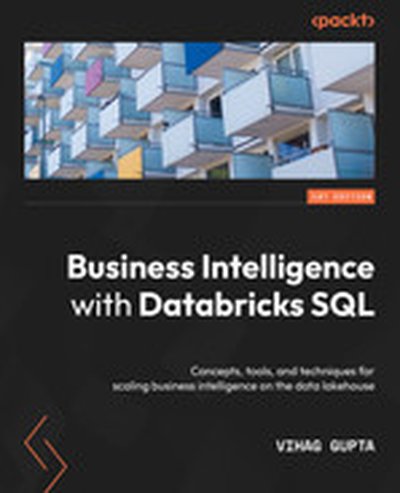
Business Intelligence with Databricks SQL

Discover the power of business intelligence through Databricks SQL. This comprehensive guide explores the features and tools of the Databricks Lakehouse Platform, emphasizing how it leverages data lakes and warehouses for scalable analytics. You'll gain hands-on experience with Databricks SQL, enabling you to manage data efficiently and implement cutting-edge analytical solutions. What this Book will help me do Comprehend the core features of Databricks SQL and its role in the Lakehouse architecture. Master the use of Databricks SQL for conducting scalable and efficient data queries. Implement data management techniques, including security and cataloging, with Databricks. Optimize data performance using Delta Lake and Photon technologies with Databricks SQL. Compose advanced SQL scripts for robust data ingestion and analytics workflows. Author(s) Vihag Gupta, acclaimed data engineer and BI expert, brings a wealth of experience in large-scale data analytics to this work. With a career deeply rooted in cutting-edge data warehousing technologies, Vihag combines expertise with an approachable teaching style. This book reflects his commitment to empowering data professionals with tools for next-gen analytics. Who is it for? Ideal for data engineers, business intelligence analysts, and warehouse administrators aiming to enhance their practice with Databricks SQL. This book suits those with fundamental knowledge of SQL and data platforms seeking to adopt Lakehouse methodologies. Whether a novice to Databricks or looking to master advanced features, this guide will support professional growth.

Summary Data engineering systems are complex and interconnected with myriad and often opaque chains of dependencies. As they scale, the problems of visibility and dependency management can increase at an exponential rate. In order to turn this into a tractable problem one approach is to define and enforce contracts between producers and consumers of data. Ananth Packildurai created Schemata as a way to make the creation of schema contracts a lightweight process, allowing the dependency chains to be constructed and evolved iteratively and integrating validation of changes into standard delivery systems. In this episode he shares the design of the project and how it fits into your development practices.

Announcements

Hello and welcome to the Data Engineering Podcast, the show about modern data management

When you’re ready to build your next pipeline, or want to test out the projects you hear about on the show, you’ll need somewhere to deploy it, so check out our friends at Linode. With their new managed database service you can launch a production ready MySQL, Postgres, or MongoDB cluster in minutes, with automated backups, 40 Gbps connections from your application hosts, and high throughput SSDs. Go to dataengineeringpodcast.com/linode today and get a $100 credit to launch a database, create a Kubernetes cluster, or take advantage of all of their other services. And don’t forget to thank them for their continued support of this show!

Atlan is the metadata hub for your data ecosystem. Instead of locking your metadata into a new silo, unleash its transformative potential with Atlan’s active metadata capabilities. Push information about data freshness and quality to your business intelligence, automatically scale up and down your warehouse based on usage patterns, and let the bots answer those questions in Slack so that the humans can focus on delivering real value. Go to dataengineeringpodcast.com/atlan today to learn more about how Atlan’s active metadata platform is helping pioneering data teams like Postman, Plaid, WeWork & Unilever achieve extraordinary things with metadata and escape the chaos.

Prefect is the modern Dataflow Automation platform for the modern data stack, empowering data practitioners to build, run and monitor robust pipelines at scale. Guided by the principle that the orchestrator shouldn’t get in your way, Prefect is the only tool of its kind to offer the flexibility to write code as workflows. Prefect specializes in glueing together the disparate pieces of a pipeline, and integrating with modern distributed compute libraries to bring power where you need it, when you need it. Trusted by thousands of organizations and supported by over 20,000 community members, Prefect powers over 100MM business critical tasks a month. For more information on Prefect, visit dataengineeringpodcast.com/prefect.

Your host is Tobias Macey and today I’m interviewing Ananth Packkildurai about Schemata, a modelling framework for decentralised domain-driven ownership of data.

Interview

Introduction How did you get involved in the area of data management? Can you describe what Schemata is and the story behind it?

How does the garbage in/garbage out problem manifest in data warehouse/data lake environments?

What are the different places in a data system that schema definitions need to be established?

What are the different ways that schema management gets complicated across those various points of interaction?

Can you walk me through the end-to-end flow of how Schemata integrates with engineering practices across an organization’s data lifecycle?

How does the use of Schemata help with capturing and propagating context that would otherwise be lost or siloed?

How is the Schemata utility implemented?

What are some of the design and scope questions that you had to work through while developing Schemata?

What is the broad vision that you have for Schemata and its impact on data practices? How

Summary The global climate impacts everyone, and the rate of change introduces many questions that businesses need to consider. Getting answers to those questions is challenging, because the climate is a multidimensional and constantly evolving system. Sust Global was created to provide curated data sets for organizations to be able to analyze climate information in the context of their business needs. In this episode Gopal Erinjippurath discusses the data engineering challenges of building and serving those data sets, and how they are distilling complex climate information into consumable facts so you don’t have to be an expert to understand it.

Announcements

Hello and welcome to the Data Engineering Podcast, the show about modern data management When you’re ready to build your next pipeline, or want to test out the projects you hear about on the show, you’ll need somewhere to deploy it, so check out our friends at Linode. With their new managed database service you can launch a production ready MySQL, Postgres, or MongoDB cluster in minutes, with automated backups, 40 Gbps connections from your application hosts, and high throughput SSDs. Go to dataengineeringpodcast.com/linode today and get a $100 credit to launch a database, create a Kubernetes cluster, or take advantage of all of their other services. And don’t forget to thank them for their continued support of this show! Data stacks are becoming more and more complex. This brings infinite possibilities for data pipelines to break and a host of other issues, severely deteriorating the quality of the data and causing teams to lose trust. Sifflet solves this problem by acting as an overseeing layer to the data stack – observing data and ensuring it’s reliable from ingestion all the way to consumption. Whether the data is in transit or at rest, Sifflet can detect data quality anomalies, assess business impact, identify the root cause, and alert data teams’ on their preferred channels. All thanks to 50+ quality checks, extensive column-level lineage, and 20+ connectors across the Data Stack. In addition, data discovery is made easy through Sifflet’s information-rich data catalog with a powerful search engine and real-time health statuses. Listeners of the podcast will get $2000 to use as platform credits when signing up to use Sifflet. Sifflet also offers a 2-week free trial. Find out more at dataengineeringpodcast.com/sifflet today! The biggest challenge with modern data systems is understanding what data you have, where it is located, and who is using it. Select Star’s data discovery platform solves that out of the box, with an automated catalog that includes lineage from where the data originated, all the way to which dashboards rely on it and who is viewing them every day. Just connect it to your database/data warehouse/data lakehouse/whatever you’re using and let them do the rest. Go to dataengineeringpodcast.com/selectstar today to double the length of your free trial and get a swag package when you convert to a paid plan. Data teams are increasingly under pressure to deliver. According to a recent survey by Ascend.io, 95% in fact reported being at or over capacity. With 72% of data experts reporting demands on their team going up faster than they can hire, it’s no surprise they are increasingly turning to automation. In fact, while only 3.5% report having current investments in automation, 85% of data teams plan on investing in automation in the next 12 months. 85%!!! That’s where our friends at Ascend.io come in. The Ascend Data Automation Cloud provides a unified platform for data ingestion, transformation, orchestration, and observability. Ascend users love its declarative pipelines, powerful SDK, elegant UI, and extensible plug-in architecture, as well as its support for Python, SQL, Scala, and Java. Ascend automates workloads on Snowflake, Databricks, BigQuery, and open source Spark, and can be deployed in AWS, Azure, or GCP. Go to datae

Summary AirBnB pioneered a number of the organizational practices that have become the goal of modern data teams. Out of that culture a number of successful businesses were created to provide the tools and methods to a broader audience. In this episode several almuni of AirBnB’s formative years who have gone on to found their own companies join the show to reflect on their shared successes, missed opportunities, and lessons learned.

Announcements

Hello and welcome to the Data Engineering Podcast, the show about modern data management When you’re ready to build your next pipeline, or want to test out the projects you hear about on the show, you’ll need somewhere to deploy it, so check out our friends at Linode. With their new managed database service you can launch a production ready MySQL, Postgres, or MongoDB cluster in minutes, with automated backups, 40 Gbps connections from your application hosts, and high throughput SSDs. Go to dataengineeringpodcast.com/linode today and get a $100 credit to launch a database, create a Kubernetes cluster, or take advantage of all of their other services. And don’t forget to thank them for their continued support of this show! Data stacks are becoming more and more complex. This brings infinite possibilities for data pipelines to break and a host of other issues, severely deteriorating the quality of the data and causing teams to lose trust. Sifflet solves this problem by acting as an overseeing layer to the data stack – observing data and ensuring it’s reliable from ingestion all the way to consumption. Whether the data is in transit or at rest, Sifflet can detect data quality anomalies, assess business impact, identify the root cause, and alert data teams’ on their preferred channels. All thanks to 50+ quality checks, extensive column-level lineage, and 20+ connectors across the Data Stack. In addition, data discovery is made easy through Sifflet’s information-rich data catalog with a powerful search engine and real-time health statuses. Listeners of the podcast will get $2000 to use as platform credits when signing up to use Sifflet. Sifflet also offers a 2-week free trial. Find out more at dataengineeringpodcast.com/sifflet today! The biggest challenge with modern data systems is understanding what data you have, where it is located, and who is using it. Select Star’s data discovery platform solves that out of the box, with an automated catalog that includes lineage from where the data originated, all the way to which dashboards rely on it and who is viewing them every day. Just connect it to your database/data warehouse/data lakehouse/whatever you’re using and let them do the rest. Go to dataengineeringpodcast.com/selectstar today to double the length of your free trial and get a swag package when you convert to a paid plan. Data teams are increasingly under pressure to deliver. According to a recent survey by Ascend.io, 95% in fact reported being at or over capacity. With 72% of data experts reporting demands on their team going up faster than they can hire, it’s no surprise they are increasingly turning to automation. In fact, while only 3.5% report having current investments in automation, 85% of data teams plan on investing in automation in the next 12 months. 85%!!! That’s where our friends at Ascend.io come in. The Ascend Data Automation Cloud provides a unified platform for data ingestion, transformation, orchestration, and observability. Ascend users love its declarative pipelines, powerful SDK, elegant UI, and extensible plug-in architecture, as well as its support for Python, SQL, Scala, and Java. Ascend automates workloads on Snowflake, Databricks, BigQuery, and open source Spark, and can be deployed in AWS, Azure, or GCP. Go to dataengineeringpodcast.com/ascend and sign up for a free trial. If you’re a data engineering podcast listener, you get credits worth $5,000 when you become a customer. Your host is Tobias Macey and today I’m interviewin