As data professionals, mastering the technical aspects of AI and data is only half the battle. The real challenge lies in effectively communicating insights to drive action and influence decisions. How do you ensure your data stories resonate with diverse audiences? It's not just about the numbers—it's about crafting a narrative that speaks to stakeholders. What strategies can you employ to make your insights not only heard but impactful? Abhijit Bhaduri advises organizations on talent and leadership development. As the former Partner and GM Global L&D of Microsoft, Abhijit led their onboarding and skilling strategy especially for people managers. Forbes described him as "the most interesting generalist from India." The San Francisco Examiner described him as the "world’s foremost expert on talent and development" and among the ten most sought-after brand evangelists. Abhijit also teaches in the Doctoral Program for Chief Learning Officers at the University of Pennsylvania. Prior to being at Microsoft, he led an advisory practice helping organizations build their leadership, talent and culture strategy. His latest book is called "Career 3.0 – Six Skills You Must Have To Succeed." In the episode, Richie and Abhijit explore the complexities of modern career paths, the importance of experimentation and adaptability, the evolution of career models from 1.0 to 3.0, the impact of longevity on career strategies, essential skills for career advancement, and much more. Links Mentioned in the Show: Abhijit’s newsletter on Linkedin - Dreamers and Unicorns Abhijit’s Book - Career 3.0 – Six Skills You Must Have To SucceedConnect with AbhijitSkill Track: AI FundamentalsRelated Episode: Career Skills for Data Professionals with Wes Kao, Co-Founder of MavenSign up to attend RADAR: Skills Edition New to DataCamp? Learn on the go using the DataCamp mobile appEmpower your business with world-class data and AI skills with DataCamp for business
 talk-data.com
Topic
Microsoft
1606
tagged
Activity Trend
Top Events
The rise of A-B testing has transformed decision-making in tech, yet its application isn't without challenges. As professionals, how do you navigate the balance between short-term gains and long-term sustainability? What strategies can you employ to ensure your testing methods enhance rather than hinder user experience? And how do you effectively communicate the insights gained from testing to drive meaningful change within your organization? Vanessa Larco is a former partner at NEA where she led Series A and Series B investment rounds and worked with major consumer companies like DTC jewelry giant Mejuri, menopause symptom relief treatment Evernow, and home-swapping platform Kindred as well as major enterprise SaaS companies like Assembled, Orby AI, Granica AI, EvidentID, Rocket.Chat, Forethought AI. She is also a board observer at Forethought, SafeBase, Orby AI, Granica, Modyfi, and HEAVY.AI. She was a board observer at Robinhood until its IPO in 2021. Before she became an investor, she built consumer and enterprise tech herself at Microsoft, Disney, Twilio, and Box as a product leader. In the episode, Richie and Vanessa explore the evolution of A-B testing in gaming, the balance between data-driven decisions and user experience, the challenges of scaling experimentation, the pitfalls of misaligned metrics, the importance of understanding user behavior, and much more. Links Mentioned in the Show: New Enterprise AssociatesConnect with VanessaCourse: Customer Analytics and A/B Testing in PythonRelated Episode: Make Your A/B Testing More Effective and EfficientSign up to attend RADAR: Skills Edition - Vanessa will be speaking! New to DataCamp? Learn on the go using the DataCamp mobile appEmpower your business with world-class data and AI skills with DataCamp for business
The rapid expansion of data centers is reshaping the industry, requiring new approaches to design, safety, and leadership.
We’re excited to have Doug Mouton, former Senior Eng Lead, Datacenter Design Engineering and Construction at Meta, as a guest on this latest episode of the “Data Center Revolution” podcast. Doug joins us with key insights into leadership, adaptability, and the evolution of hyperscale data-center construction. He also shares his journey from military service to leading large-scale infrastructure projects in the data center industry, highlighting key transferable skills along the way.
Key Takeaways:
(07:54) Military mindset builds strong leaders. (14:25) Veterans thrive in high-pressure environments. (25:32) Katrina exposed disaster preparedness gaps. (35:16) Microsoft shifted to cost-effective data center designs. (43:56) Data centers face growing energy challenges. (54:26) Safety-first culture boosts efficiency and morale. (01:21:43) Data centers must transition to hybrid cooling solutions. (01:42:09) AI needs ethical guardrails.
Resources Mentioned:
Fidelis New Energy | Website - https://www.fidelisinfra.com
Microsoft Azure - https://azure.microsoft.com/en-us/
Meta - https://about.meta.com/
Jacobs - https://www.jacobs.com/
National Guard - https://nationalguard.com/
Jones Lang LaSalle - https://www.us.jll.com/
Thank you for listening to “Data Center Revolution.” Don’t forget to leave us a review and subscribe so you don’t miss an episode. To learn more about Overwatch, visit us at https://linktr.ee/overwatchmissioncritical
DataCenterIndustry #NuclearEnergy #FutureOfDataCenters #AI
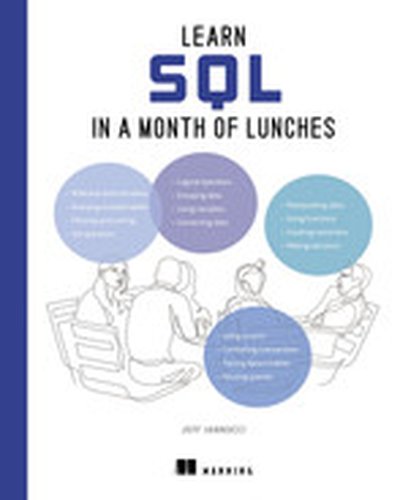
Use SQL to get the data you need in no time at all! Learn to read and write basic queries, troubleshoot common problems, and control your own business data in just 24 short lessons–no programming experience required! SQL has been designed to be as close to English as possible—anyone can learn it! Learn SQL in a Month of Lunches helps you add this lucrative and highly sought-after skill to your resume in just 24 fun and friendly lessons. The book emphasizes practical uses for the language in the real-world, so you’ll just learn the most useful skills for business data analysis. Inside Learn SQL in a Month of Lunches you’ll discover how to: Set up your first database with MySQL Write your own SQL queries See only the data you need from large datasets Connect different sets of data Analyze data with functions and aggregations Master basic data manipulation techniques Save queries in stored procedures and views Create tables to store data efficiently Read and improve SQL written by others If you use Excel, Tableau, or PowerBI to crunch business data, you’ve probably seen a lot of SQL already. And guess what? It’s easy to master the most useful parts of SQL! In just a few quick lessons, Learn SQL in a Month of Lunches will get you writing your own queries, modifying existing SQL statements, and working with data like a pro. 25-year SQL veteran Jeff Iannucci makes SQL a snap through hands-on lab exercises, relevant code examples, and easy-to-understand language. About the Technology SQL, Structured Query Language, is the standard way to query, create, and manage relational databases like SQL Server, PostgreSQL, and Oracle. It’s also a superpower for data analysts who need to go beyond spreadsheets and BI dashboarding tools. SQL is easy to read and understand, and with this book (and a little practice) you’ll be pulling data, tweaking tables, and cranking out amazing reports and presentations in no time at all! About the Book Learn SQL in a Month of Lunches introduces SQL to data analysts and other aspiring data pros with no prior experience using relational databases. In it, you’ll complete 24 short lessons, each of which teaches an essential SQL skill for retrieving, filtering, and analyzing data. You’ll practice each new technique with a friendly hands-on lab designed to take about 15 minutes, as you learn to write queries that deliver the exact data you need. Along the way, you’ll build a valuable intuition for how databases operate in real business scenarios. What's Inside Get the data you need from any relational database Filter, sort, and group data Combine data from multiple tables Create, update, and delete data About the Reader For students, aspiring data analysts, software developers, and anyone else who wants to work with relational databases. About the Author Jeff Iannucci is a Senior Consultant with Straight Path Solutions. For over 20 years, he has worked extensively with SQL in sectors such as healthcare, finance, retail sales, and government. Quotes An essential guide. Jeff has carefully developed each chapter to ensure clarity and comprehensiveness, making complex concepts accessible and practical. - Buck Woody, Microsoft The fastest and the most effective way to learn SQL, regardless of your background or technical knowledge level. - Kevin Kline, author of SQL in a Nutshell Explains concepts straightforwardly to help the reader grow their skills over a month of sessions. - Steve Jones, SQL Server Central Great selection of bite-sized, digestible courses to complement your lunch arrangement. It leaves you smarter every day. - Simon Tschöke, Databricks
Supported by Our Partners • WorkOS — The modern identity platform for B2B SaaS. • Graphite — The AI developer productivity platform. • Formation — Level up your career and compensation with Formation. — In today’s episode of The Pragmatic Engineer, I am joined by a senior software engineer and cartoonist, Manu Cornet. Manu spent over a decade at Google, doing both backend and frontend development. He also spent a year and a half at Twitter before Elon Musk purchased it and rebranded it to X. But what Manu is most known for are his hilarious internet comics about the tech world, including his famous org chart comic from 2011 about Facebook, Apple, Amazon, and Microsoft. In today’s conversation, we explore many of his comics, discuss the meaning behind them, and talk about the following topics: • The viral org chart comic that captured the structure of Big Tech companies • Why Google is notorious for confusing product names • The comic that ended up on every door at Google • How Google’s 20% time fostered innovation—and what projects came from it • How one of Manu’s comics predicted Google Stadia’s failure—and the reasons behind it • The value of connecting to users directly • Twitter’s climate before and after Elon Musk’s acquisition and the mass layoffs that followed • And more! — Timestamps (00:00) Intro (02:01) Manu’s org structure comic (07:10) Manu’s “Who Sues Who” comic (09:15) Google vs. Amazon comic (14:10) Confusing names at Google (20:00) Different approaches to sharing information within companies (22:20) The two ways of doing things at Google (25:15) Manu’s code reviews comic (27:45) The comic that was printed on every single door of Google (30:55) An explanation of 20% at Google (36:00) Gmail Labs and Google Stadia (41:36) Manu’s time at Twitter and the threat of Elon Musk buying (47:07) How Manu helped Gergely with a bug on Twitter (49:05) Musk’s acquirement of Twitter and the resulting layoffs (59:00) Manu’s comic about his disillusionment with Twitter and Google (1:02:37) Rapid fire round — The Pragmatic Engineer deepdives relevant for this episode: • How Manu creates comics • Consolidating technologies • Is Big Tech becoming more cutthroat? — See the transcript and other references from the episode at https://newsletter.pragmaticengineer.com/podcast — Production and marketing by https://penname.co/. For inquiries about sponsoring the podcast, email [email protected].
Get full access to The Pragmatic Engineer at newsletter.pragmaticengineer.com/subscribe
Master the art of designing and implementing analytics solutions using Microsoft Fabric with this comprehensive guide. Whether you're preparing for the DP-600 certification exam or want to advance your career, this book offers expert insights into data analytics in Microsoft environments. What this Book will help me do Confidently pass the DP-600 certification exam by mastering exam-tested skills. Acquire practical expertise in deploying data analytics solutions with Microsoft Fabric. Understand and optimize data integration, security, and performance in analytics systems. Learn advanced techniques including semantic model optimization and advanced SQL querying. Prepare for real-world challenges through mock exams and hands-on exercises. Author(s) Jagjeet Singh Makhija and Charles Odunukwe, authors of this guide, are seasoned Microsoft specialists with decades of experience in data analytics, certification training, and technology consulting. Their clear and methodical approach ensures learners at all levels can grow their expertise. Who is it for? If you're a data analyst or IT professional looking to enhance your skills in analytics and Microsoft's technologies, this book is for you. It's ideal for those pursuing the DP-600 certification or aiming to improve their data integration and analysis capabilities.
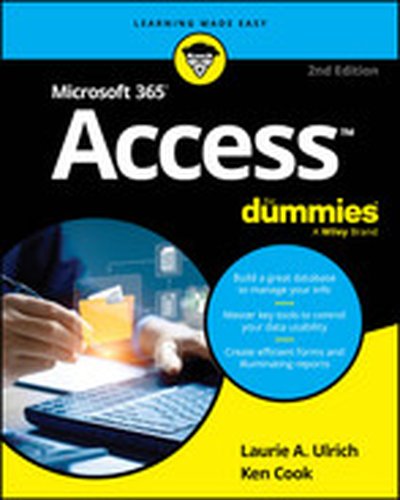
Join the millions of people already using Microsoft Access and become a database power-user in no time! In the newly revised edition of Microsoft Access For Dummies, professional database developer and Access extraordinaire Laurie Ulrich-Fuller walks you through the ins-and-outs of one of the world's most popular database platforms. This is the perfect beginner's guide to Microsoft Access, showing you how to create databases, extract data, create reports, and more. The author demonstrates a ton of tips, tricks, and best practices you can use immediately to create, maintain, and improve your databases. You'll also find: Updates outlining edge browser controls in forms Step-by-step guides explaining how to import, export, and edit data Easy-to-follow query-writing tutorials to help you find the exact data you're looking for when you need it Whether you're a database novice or a data science whiz, Microsoft Access For Dummies has the info you need to supercharge your database skills. It's the perfect, how-to guide to get you up-to-speed on everything you need to know to get started with Microsoft's world-famous database app.
As AI continues to dominate industry conversations, the notion of AI readiness becomes a focal point for organizations. It's a multifaceted challenge that goes beyond technology, encompassing business processes and cultural shifts. For professionals, this means grappling with questions like: How do you choose the right AI projects that align with business goals? What skills and team structures are necessary to support AI initiatives? And how do you manage the change that comes with integrating AI into your operations? Venky Veeraraghavan is the Chief Product Officer at DataRobot. As CPO, Venky drives the definition and delivery of the DataRobot Enterprise AI Suite. Venky has twenty-five years of experience focusing on big data and AI as a product leader and technical consultant at top technology companies (Microsoft) and early-stage startups (Trilogy). In the episode, Richie and Venky Veeraraghavan explore AI readiness in organizations, the importance of aligning AI with business processes, the roles and skills needed for AI integration, the balance between building and buying AI solutions, the challenges of implementing AI-driven changes, and much more. Links Mentioned in the Show: DatarobotConnect with VenkySkill Track: Artificial Intelligence (AI) LeadershipRelated Episode: Aligning AI with Enterprise Strategy with Leon Gordon, CEO at Onyx DataAttend RADAR Skills Edition New to DataCamp? Learn on the go using the DataCamp mobile appEmpower your business with world-class data and AI skills with DataCamp for business
Learn how machine learning algorithms work from the ground up so you can effectively troubleshoot your models and improve their performance. Fully understanding how machine learning algorithms function is essential for any serious ML engineer. In Machine Learning Algorithms in Depth you’ll explore practical implementations of dozens of ML algorithms including: Monte Carlo Stock Price Simulation Image Denoising using Mean-Field Variational Inference EM algorithm for Hidden Markov Models Imbalanced Learning, Active Learning and Ensemble Learning Bayesian Optimization for Hyperparameter Tuning Dirichlet Process K-Means for Clustering Applications Stock Clusters based on Inverse Covariance Estimation Energy Minimization using Simulated Annealing Image Search based on ResNet Convolutional Neural Network Anomaly Detection in Time-Series using Variational Autoencoders Machine Learning Algorithms in Depth dives into the design and underlying principles of some of the most exciting machine learning (ML) algorithms in the world today. With a particular emphasis on probabilistic algorithms, you’ll learn the fundamentals of Bayesian inference and deep learning. You’ll also explore the core data structures and algorithmic paradigms for machine learning. Each algorithm is fully explored with both math and practical implementations so you can see how they work and how they’re put into action. About the Technology Learn how machine learning algorithms work from the ground up so you can effectively troubleshoot your models and improve their performance. This book guides you from the core mathematical foundations of the most important ML algorithms to their Python implementations, with a particular focus on probability-based methods. About the Book Machine Learning Algorithms in Depth dissects and explains dozens of algorithms across a variety of applications, including finance, computer vision, and NLP. Each algorithm is mathematically derived, followed by its hands-on Python implementation along with insightful code annotations and informative graphics. You’ll especially appreciate author Vadim Smolyakov’s clear interpretations of Bayesian algorithms for Monte Carlo and Markov models. What's Inside Monte Carlo stock price simulation EM algorithm for hidden Markov models Imbalanced learning, active learning, and ensemble learning Bayesian optimization for hyperparameter tuning Anomaly detection in time-series About the Reader For machine learning practitioners familiar with linear algebra, probability, and basic calculus. About the Author Vadim Smolyakov is a data scientist in the Enterprise & Security DI R&D team at Microsoft. Quotes I love this book! It shows you how to implement common ML algorithms in plain Python with only the essential libraries, so you can see how the computation and math works in practice. - Junpeng Lao, Senior Data Scientist at Google I highly recommend this book. In the era of ChatGPT real knowledge of algorithms is invaluable. - Vatsal Desai, InfoDesk Explains algorithms so well that even a novice can digest it. - Harsh Raval, Zymr
Send us a text Welcome to the cozy corner of the tech world where ones and zeros mingle with casual chit-chat. Datatopics Unplugged is your go-to spot for relaxed discussions around tech, news, data, and society. In this episode, we delve into the big topics shaping our digital landscape: Car Expo - Brussels Motor Show: Highlights from Europe’s leading auto show, including Tesla’s Cybertruck debut and an innovative AI-powered car configurator that personalizes your vehicle experience.Biden Admin’s New AI Chip Export Rules: Exploring restrictions aimed at national security and their impact on global markets, with industry reactions from Nvidia.Meta and Microsoft’s AI Development Plans: From Meta’s goal to replace mid-level engineers with AI to Microsoft forming a dev-focused AI organization, we unpack their strategies and implications.Developer Productivity in 2025: How AI tools are changing workflows, boosting efficiency, and introducing new challenges.UV’s Killer Feature: Discover how ad-hoc environments are transforming development, courtesy of Lukas Valatka's insights.Doom in a PDF: Yes, you read that right—Doom running inside a PDF! Here’s the source code for all the geeks out there.Marimo: An exciting new project redefining collaborative development.AI and Everyday Life: A witty meme highlights AI’s direction—should it help with art and writing, or chores like laundry and dishes?
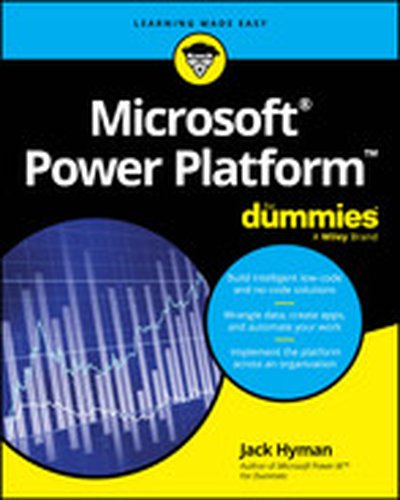
Build business intelligence with insight from a professional Microsoft Power Platform For Dummies covers the essentials you need to know to get started with Microsoft Power Platform, the suite of business intelligence applications designed to make your enterprise work smarter and more efficiently. You'll get a handle on managing and reporting data with Power BI, building no-code apps with Power Apps, creating simple web properties with Power Pages, and simplifying your day-to-day work with Power Automate. Written by a business consultant who's helped some of the world's largest organizations adopt, manage, and get work done with Power Platform, this book gets you through your work without working too hard to figure things out. Discover the tools that come with Power Platform and how they can help you build business intelligence Manage data, create apps, automate routine tasks, create web pages, and beyond Learn the current best practices for launching Power Platform in an organization Get step-by-step instructions for navigating the interface and setting up your tools This is a great quick-start guide for anyone who wants to leverage Power Platform's BI tools.
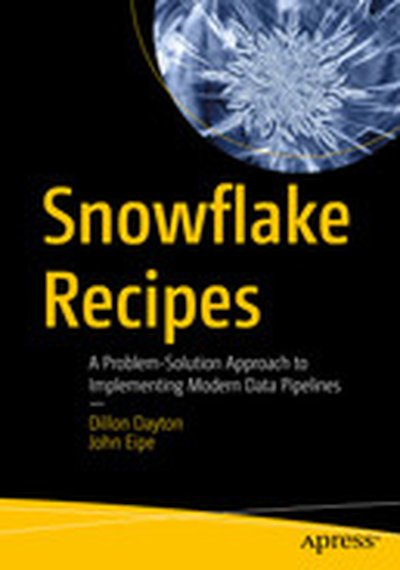
Explore Snowflake’s core concepts and unique features that differentiates it from industry competitors, such as, Azure Synapse and Google BigQuery. This book provides recipes for architecting and developing modern data pipelines on the Snowflake data platform by employing progressive techniques, agile practices, and repeatable strategies. You’ll walk through step-by-step instructions on ready-to-use recipes covering a wide range of the latest development topics. Then build scalable development pipelines and solve specific scenarios common to all modern data platforms, such as, data masking, object tagging, data monetization, and security best practices. Throughout the book you’ll work with code samples for Amazon Web Services, Microsoft Azure, and Google Cloud Platform. There’s also a chapter devoted to solving machine learning problems with Snowflake. Authors Dillon Dayton and John Eipe are both Snowflake SnowPro Core certified, specializing in data and digital services, and understand the challenges of finding the right solution to complex problems. The recipes in this book are based on real world use cases and examples designed to help you provide quality, performant, and secured data to solve business initiatives. What You’ll Learn Handle structured and un- structured data in Snowflake. Apply best practices and different options for data transformation. Understand data application development. Implement data sharing, data governance and security. Who This book Is For Data engineers, scientists and analysts moving into Snowflake, looking to build data apps. This book expects basic knowledge in Cloud (AWS or Azure or GCP), SQL and Python
🌟 Session Overview 🌟
Session Name: AI Chats: Challenges in Business Integration Speaker: Marcin Szymaniuk, Bartek Sadlej Session Description: ChatGPT's growth in popularity is unmatched. Yet, few companies successfully integrate it into their systems to create something more sophisticated than a single prompt. One of the reasons is that integration requires both specific knowledge and effort. However, it is not the only one. When you consider integrating your production system with a ChatGPT-like tool, you should seriously consider the privacy of your data and the costs it will generate. Careful analysis of what data you send, where it’s being processed, and how much and when you will have to pay for it are crucial questions to consider. These questions are essential for defining a business case that has the potential to bring the expected return on investment.
During the presentation, Marcin and Bartek will walk you through all the tricky bits related to LLMs. Starting with the ways of direct integration with the GPT API, they will then move into cost calculation and how it can be optimized. They will also discuss privately hosted models and how to pragmatically tune them for your needs—because you probably don’t have resources similar to those of Google or Microsoft.
🚀 About Big Data and RPA 2024 🚀
Unlock the future of innovation and automation at Big Data & RPA Conference Europe 2024! 🌟 This unique event brings together the brightest minds in big data, machine learning, AI, and robotic process automation to explore cutting-edge solutions and trends shaping the tech landscape. Perfect for data engineers, analysts, RPA developers, and business leaders, the conference offers dual insights into the power of data-driven strategies and intelligent automation. 🚀 Gain practical knowledge on topics like hyperautomation, AI integration, advanced analytics, and workflow optimization while networking with global experts. Don’t miss this exclusive opportunity to expand your expertise and revolutionize your processes—all from the comfort of your home! 📊🤖✨
📅 Yearly Conferences: Curious about the evolution of QA? Check out our archive of past Big Data & RPA sessions. Watch the strategies and technologies evolve in our videos! 🚀 🔗 Find Other Years' Videos: 2023 Big Data Conference Europe https://www.youtube.com/playlist?list=PLqYhGsQ9iSEpb_oyAsg67PhpbrkCC59_g 2022 Big Data Conference Europe Online https://www.youtube.com/playlist?list=PLqYhGsQ9iSEryAOjmvdiaXTfjCg5j3HhT 2021 Big Data Conference Europe Online https://www.youtube.com/playlist?list=PLqYhGsQ9iSEqHwbQoWEXEJALFLKVDRXiP
💡 Stay Connected & Updated 💡
Don’t miss out on any updates or upcoming event information from Big Data & RPA Conference Europe. Follow us on our social media channels and visit our website to stay in the loop!
🌐 Website: https://bigdataconference.eu/, https://rpaconference.eu/ 👤 Facebook: https://www.facebook.com/bigdataconf, https://www.facebook.com/rpaeurope/ 🐦 Twitter: @BigDataConfEU, @europe_rpa 🔗 LinkedIn: https://www.linkedin.com/company/73234449/admin/dashboard/, https://www.linkedin.com/company/75464753/admin/dashboard/ 🎥 YouTube: http://www.youtube.com/@DATAMINERLT
🌟 Session Overview 🌟
Session Name: An Evolution of Data Architectures - Lambda, Kappa, Delta, Mesh & Fabric Speaker: Paul Andrew Session Description: How have advancements in highly scalable cloud technology influenced the design principles we apply when building data platform solutions? Are we designing solely for speed and batch layers, or do we want more from our platforms? Who says these patterns must be delivered exclusively?
Let’s disrupt the theory and consider the practical application of everything Microsoft now has to offer, where concepts and patterns meet technology. Can we now utilize cloud technology to build architectures that cater to lambda, kappa, and Delta Lake concepts in a complete stack of services? Should we be considering a solution that offers all these principles in a nirvana of data insight perfection? How does the concept of Data Fabric align with Microsoft Fabric as a product?
In this session, we’ll explore the answers to these questions and more in a thought-provoking, argument-generating examination of the challenges every data platform engineer/architect faces.
🚀 About Big Data and RPA 2024 🚀
Unlock the future of innovation and automation at Big Data & RPA Conference Europe 2024! 🌟 This unique event brings together the brightest minds in big data, machine learning, AI, and robotic process automation to explore cutting-edge solutions and trends shaping the tech landscape. Perfect for data engineers, analysts, RPA developers, and business leaders, the conference offers dual insights into the power of data-driven strategies and intelligent automation. 🚀 Gain practical knowledge on topics like hyperautomation, AI integration, advanced analytics, and workflow optimization while networking with global experts. Don’t miss this exclusive opportunity to expand your expertise and revolutionize your processes—all from the comfort of your home! 📊🤖✨
📅 Yearly Conferences: Curious about the evolution of QA? Check out our archive of past Big Data & RPA sessions. Watch the strategies and technologies evolve in our videos! 🚀 🔗 Find Other Years' Videos: 2023 Big Data Conference Europe https://www.youtube.com/playlist?list=PLqYhGsQ9iSEpb_oyAsg67PhpbrkCC59_g 2022 Big Data Conference Europe Online https://www.youtube.com/playlist?list=PLqYhGsQ9iSEryAOjmvdiaXTfjCg5j3HhT 2021 Big Data Conference Europe Online https://www.youtube.com/playlist?list=PLqYhGsQ9iSEqHwbQoWEXEJALFLKVDRXiP
💡 Stay Connected & Updated 💡
Don’t miss out on any updates or upcoming event information from Big Data & RPA Conference Europe. Follow us on our social media channels and visit our website to stay in the loop!
🌐 Website: https://bigdataconference.eu/, https://rpaconference.eu/ 👤 Facebook: https://www.facebook.com/bigdataconf, https://www.facebook.com/rpaeurope/ 🐦 Twitter: @BigDataConfEU, @europe_rpa 🔗 LinkedIn: https://www.linkedin.com/company/73234449/admin/dashboard/, https://www.linkedin.com/company/75464753/admin/dashboard/ 🎥 YouTube: http://www.youtube.com/@DATAMINERLT
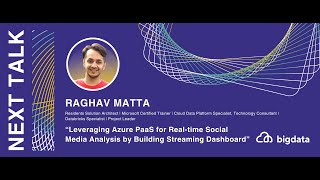
🌟 Session Overview 🌟
Session Name: Leveraging Azure PaaS for Real-time Social Media Analysis by Building Streaming Dashboard Speaker: Raghav Matta Session Description: In this session, Raghav and Sundar will delve into a practical business scenario focusing on real-time social media analysis using Azure PaaS offerings.
-
They will begin by addressing a prevalent business challenge concerning social media sentiment analysis.
-
Next, speakers explore a range of Azure services including Azure Functions, Logic Apps, Cognitive Services, Stream Analytics, PowerBI, and Azure Databricks.
-
Moving forward, they will demonstrate how to gather live data in real-time utilizing Azure Cognitive Services Bing Web Search API. Subsequently, they will analyze the data using Azure Stream Analytics and visualize insights using PowerBI.
This course combines hands-on labs with theoretical curriculum aligned with the 'Exam AI-102: Designing and Implementing a Microsoft Azure AI Solution'.
For further information and resources, please refer to: https://docs.microsoft.com/en-us/azure/stream-analytics/stream-analytics-twitter-sentiment-analysis-trends https://microsoftlearning.github.io/AI-102-AIEngineer/Instructions/05-analyze-text.html 🚀 About Big Data and RPA 2024 🚀
Unlock the future of innovation and automation at Big Data & RPA Conference Europe 2024! 🌟 This unique event brings together the brightest minds in big data, machine learning, AI, and robotic process automation to explore cutting-edge solutions and trends shaping the tech landscape. Perfect for data engineers, analysts, RPA developers, and business leaders, the conference offers dual insights into the power of data-driven strategies and intelligent automation. 🚀 Gain practical knowledge on topics like hyperautomation, AI integration, advanced analytics, and workflow optimization while networking with global experts. Don’t miss this exclusive opportunity to expand your expertise and revolutionize your processes—all from the comfort of your home! 📊🤖✨
📅 Yearly Conferences: Curious about the evolution of QA? Check out our archive of past Big Data & RPA sessions. Watch the strategies and technologies evolve in our videos! 🚀 🔗 Find Other Years' Videos: 2023 Big Data Conference Europe https://www.youtube.com/playlist?list=PLqYhGsQ9iSEpb_oyAsg67PhpbrkCC59_g 2022 Big Data Conference Europe Online https://www.youtube.com/playlist?list=PLqYhGsQ9iSEryAOjmvdiaXTfjCg5j3HhT 2021 Big Data Conference Europe Online https://www.youtube.com/playlist?list=PLqYhGsQ9iSEqHwbQoWEXEJALFLKVDRXiP
💡 Stay Connected & Updated 💡
Don’t miss out on any updates or upcoming event information from Big Data & RPA Conference Europe. Follow us on our social media channels and visit our website to stay in the loop!
🌐 Website: https://bigdataconference.eu/, https://rpaconference.eu/ 👤 Facebook: https://www.facebook.com/bigdataconf, https://www.facebook.com/rpaeurope/ 🐦 Twitter: @BigDataConfEU, @europe_rpa 🔗 LinkedIn: https://www.linkedin.com/company/73234449/admin/dashboard/, https://www.linkedin.com/company/75464753/admin/dashboard/ 🎥 YouTube: http://www.youtube.com/@DATAMINERLT
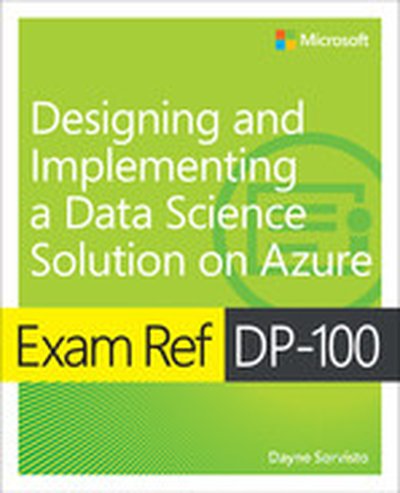
Prepare for Microsoft Exam DP-100 and demonstrate your real-world knowledge of managing data ingestion and preparation, model training and deployment, and machine learning solution monitoring with Python, Azure Machine Learning, and MLflow. Designed for professionals with data science experience, this Exam Ref focuses on the critical thinking and decision-making acumen needed for success at the Microsoft Certified: Azure Data Scientist Associate level. Focus on the expertise measured by these objectives: Design and prepare a machine learning solution Explore data and train models Prepare a model for deployment Deploy and retrain a model This Microsoft Exam Ref: Organizes its coverage by exam objectives Features strategic, what-if scenarios to challenge you Assumes you have experience in designing and creating a suitable working environment for data science workloads, training machine learning models, and managing, deploying, and monitoring scalable machine learning solutions About the Exam Exam DP-100 focuses on knowledge needed to design and prepare a machine learning solution, manage an Azure Machine Learning workspace, explore data and train models, create models by using the Azure Machine Learning designer, prepare a model for deployment, manage models in Azure Machine Learning, deploy and retrain a model, and apply machine learning operations (MLOps) practices. About Microsoft Certification Passing this exam fulfills your requirements for the Microsoft Certified: Azure Data Scientist Associate credential, demonstrating your expertise in applying data science and machine learning to implement and run machine learning workloads on Azure, including knowledge and experience using Azure Machine Learning and MLflow.
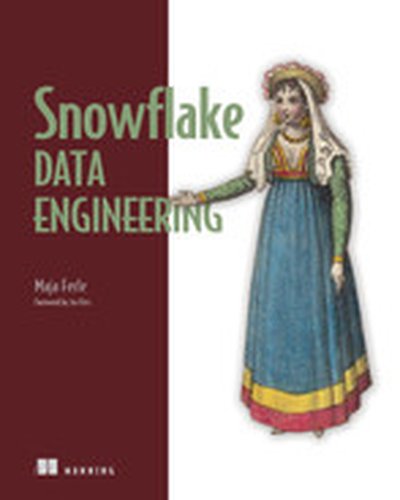
A practical introduction to data engineering on the powerful Snowflake cloud data platform. Data engineers create the pipelines that ingest raw data, transform it, and funnel it to the analysts and professionals who need it. The Snowflake cloud data platform provides a suite of productivity-focused tools and features that simplify building and maintaining data pipelines. In Snowflake Data Engineering, Snowflake Data Superhero Maja Ferle shows you how to get started. In Snowflake Data Engineering you will learn how to: Ingest data into Snowflake from both cloud and local file systems Transform data using functions, stored procedures, and SQL Orchestrate data pipelines with streams and tasks, and monitor their execution Use Snowpark to run Python code in your pipelines Deploy Snowflake objects and code using continuous integration principles Optimize performance and costs when ingesting data into Snowflake Snowflake Data Engineering reveals how Snowflake makes it easy to work with unstructured data, set up continuous ingestion with Snowpipe, and keep your data safe and secure with best-in-class data governance features. Along the way, you’ll practice the most important data engineering tasks as you work through relevant hands-on examples. Throughout, author Maja Ferle shares design tips drawn from her years of experience to ensure your pipeline follows the best practices of software engineering, security, and data governance. About the Technology Pipelines that ingest and transform raw data are the lifeblood of business analytics, and data engineers rely on Snowflake to help them deliver those pipelines efficiently. Snowflake is a full-service cloud-based platform that handles everything from near-infinite storage, fast elastic compute services, inbuilt AI/ML capabilities like vector search, text-to-SQL, code generation, and more. This book gives you what you need to create effective data pipelines on the Snowflake platform. About the Book Snowflake Data Engineering guides you skill-by-skill through accomplishing on-the-job data engineering tasks using Snowflake. You’ll start by building your first simple pipeline and then expand it by adding increasingly powerful features, including data governance and security, adding CI/CD into your pipelines, and even augmenting data with generative AI. You’ll be amazed how far you can go in just a few short chapters! What's Inside Ingest data from the cloud, APIs, or Snowflake Marketplace Orchestrate data pipelines with streams and tasks Optimize performance and cost About the Reader For software developers and data analysts. Readers should know the basics of SQL and the Cloud. About the Author Maja Ferle is a Snowflake Subject Matter Expert and a Snowflake Data Superhero who holds the SnowPro Advanced Data Engineer and the SnowPro Advanced Data Analyst certifications. Quotes An incredible guide for going from zero to production with Snowflake. - Doyle Turner, Microsoft A must-have if you’re looking to excel in the field of data engineering. - Isabella Renzetti, Data Analytics Consultant & Trainer Masterful! Unlocks the true potential of Snowflake for modern data engineers. - Shankar Narayanan, Microsoft Valuable insights will enhance your data engineering skills and lead to cost-effective solutions. A must read! - Frédéric L’Anglais, Maxa Comprehensive, up-to-date and packed with real-life code examples. - Albert Nogués, Danone
Brought to you by: • WorkOS — The modern identity platform for B2B SaaS. • Sevalla — Deploy anything from preview environments to Docker images. • Chronosphere — The observability platform built for control. — Welcome to The Pragmatic Engineer! Today, I’m thrilled to be joined by Grady Booch, a true legend in software development. Grady is the Chief Scientist for Software Engineering at IBM, where he leads groundbreaking research in embodied cognition. He’s the mind behind several object-oriented design concepts, a co-author of the Unified Modeling Language, and a founding member of the Agile Alliance and the Hillside Group. Grady has authored six books, hundreds of articles, and holds prestigious titles as an IBM, ACM, and IEEE Fellow, as well as a recipient of the Lovelace Medal (an award for those with outstanding contributions to the advancement of computing). In this episode, we discuss: • What it means to be an IBM Fellow • The evolution of the field of software development • How UML was created, what its goals were, and why Grady disagrees with the direction of later versions of UML • Pivotal moments in software development history • How the software architect role changed over the last 50 years • Why Grady declined to be the Chief Architect of Microsoft – saying no to Bill Gates! • Grady’s take on large language models (LLMs) • Advice to less experienced software engineers • … and much more! — Timestamps (00:00) Intro (01:56) What it means to be a Fellow at IBM (03:27) Grady’s work with legacy systems (09:25) Some examples of domains Grady has contributed to (11:27) The evolution of the field of software development (16:23) An overview of the Booch method (20:00) Software development prior to the Booch method (22:40) Forming Rational Machines with Paul and Mike (25:35) Grady’s work with Bjarne Stroustrup (26:41) ROSE and working with the commercial sector (30:19) How Grady built UML with Ibar Jacobson and James Rumbaugh (36:08) An explanation of UML and why it was a mistake to turn it into a programming language (40:25) The IBM acquisition and why Grady declined Bill Gates’s job offer (43:38) Why UML is no longer used in industry (52:04) Grady’s thoughts on formal methods (53:33) How the software architect role changed over time (1:01:46) Disruptive changes and major leaps in software development (1:07:26) Grady’s early work in AI (1:12:47) Grady’s work with Johnson Space Center (1:16:41) Grady’s thoughts on LLMs (1:19:47) Why Grady thinks we are a long way off from sentient AI (1:25:18) Grady’s advice to less experienced software engineers (1:27:20) What’s next for Grady (1:29:39) Rapid fire round — The Pragmatic Engineer deepdives relevant for this episode: • The Past and Future of Modern Backend Practices https://newsletter.pragmaticengineer.com/p/the-past-and-future-of-backend-practices • What Changed in 50 Years of Computing https://newsletter.pragmaticengineer.com/p/what-changed-in-50-years-of-computing • AI Tooling for Software Engineers: Reality Check https://newsletter.pragmaticengineer.com/p/ai-tooling-2024 — Where to find Grady Booch: • X: https://x.com/grady_booch • LinkedIn: https://www.linkedin.com/in/gradybooch • Website: https://computingthehumanexperience.com Where to find Gergely: • Newsletter: https://www.pragmaticengineer.com/ • YouTube: https://www.youtube.com/c/mrgergelyorosz • LinkedIn: https://www.linkedin.com/in/gergelyorosz/ • X: https://x.com/GergelyOrosz — References and Transcripts: See the transcript and other references from the episode at https://newsletter.pragmaticengineer.com/podcast — Production and marketing by https://penname.co/. For inquiries about sponsoring the podcast, email [email protected].
Get full access to The Pragmatic Engineer at newsletter.pragmaticengineer.com/subscribe
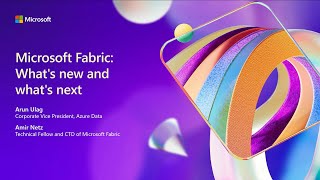
Microsoft Fabric is the unified, open, governed, and AI-powered analytics platform fueling your next wave of business innovation. We're excited to share a full slate of innovations with customers and partners, including the introduction of the first-in-category full SaaS databases in Fabric. Hear from the Fabric leadership team on the progress we’ve made, the new ground we’re breaking, and why we believe Fabric can accelerate your organization's transformation in the era of AI.
𝗦𝗽𝗲𝗮𝗸𝗲𝗿𝘀: * Amir Netz * Arun Ulagaratchagan
𝗦𝗲𝘀𝘀𝗶𝗼𝗻 𝗜𝗻𝗳𝗼𝗿𝗺𝗮𝘁𝗶𝗼𝗻: This is one of many sessions from the Microsoft Ignite 2024 event. View even more sessions on-demand and learn about Microsoft Ignite at https://ignite.microsoft.com
BRK204 | English (US) | Data
MSIgnite
Are you ready to adopt AI? This session will explore the Azure Essentials AI adoption guidance and provide actionable steps and best practices. You'll learn how to establish a solid foundation that aligns with your business goals, incorporate robust governance to design reliable and secure workloads, and optimize your AI deployments to maintain ongoing performance and efficiency.
𝗦𝗽𝗲𝗮𝗸𝗲𝗿𝘀: * Praveen Gururaja * Rajani Janaki Ram * Stephen Sumner
𝗦𝗲𝘀𝘀𝗶𝗼𝗻 𝗜𝗻𝗳𝗼𝗿𝗺𝗮𝘁𝗶𝗼𝗻: This is one of many sessions from the Microsoft Ignite 2024 event. View even more sessions on-demand and learn about Microsoft Ignite at https://ignite.microsoft.com
BRK131 | English (US) | AI