talk-data.com talk-data.com

Topic

Python

programming_language data_science web_development

151

tagged

Activity Trend

185 peak/qtr
2020-Q1 2026-Q1

Activities

Showing filtered results

Filtering by: O'Reilly Data Engineering Books ×
Learning Google BigQuery

If you're ready to untap the potential of data analytics in the cloud, 'Learning Google BigQuery' will take you from understanding foundational concepts to mastering advanced techniques of this powerful platform. Through hands-on examples, you'll learn how to query and analyze massive datasets efficiently, develop custom applications, and integrate your results seamlessly with other tools. What this Book will help me do Understand the fundamentals of Google Cloud Platform and how BigQuery operates within it. Migrate enterprise-scale data seamlessly into BigQuery for further analytics. Master SQL techniques for querying large-scale datasets in BigQuery. Enable real-time data analytics and visualization with tools like Tableau and Python. Learn to create dynamic datasets, manage partition tables and use BigQuery APIs effectively. Author(s) None Berlyant, None Haridass, and None Brown are specialists with years of experience in data science, big data platforms, and cloud technologies. They bring their expertise in data analytics and teaching to make advanced concepts accessible. Their hands-on approach and real-world examples ensure readers can directly apply the skills they acquire to practical scenarios. Who is it for? This book is tailored for developers, analysts, and data scientists eager to leverage cloud-based tools for handling and analyzing large-scale datasets. If you seek to gain hands-on proficiency in working with BigQuery or want to enhance your organization's data capabilities, this book is a fit. No prior BigQuery knowledge is needed, just a willingness to learn.

PySpark Recipes: A Problem-Solution Approach with PySpark2

Quickly find solutions to common programming problems encountered while processing big data. Content is presented in the popular problem-solution format. Look up the programming problem that you want to solve. Read the solution. Apply the solution directly in your own code. Problem solved! PySpark Recipes covers Hadoop and its shortcomings. The architecture of Spark, PySpark, and RDD are presented. You will learn to apply RDD to solve day-to-day big data problems. Python and NumPy are included and make it easy for new learners of PySpark to understand and adopt the model. What You Will Learn Understand the advanced features of PySpark2 and SparkSQL Optimize your code Program SparkSQL with Python Use Spark Streaming and Spark MLlib with Python Perform graph analysis with GraphFrames Who This Book Is For Data analysts, Python programmers, big data enthusiasts

Learning PostgreSQL 10 - Second Edition

Dive into the world of PostgreSQL 10, one of the most widely used open-source database systems. This comprehensive guide will teach you the essential features and functionalities of PostgreSQL, enabling you to develop, manage, and optimize database systems with confidence and efficiency. What this Book will help me do Gain a foundational understanding of relational databases and PostgreSQL. Learn how to install, set up, and configure a PostgreSQL database system. Master SQL query writing, data manipulation, and advanced queries with PostgreSQL. Understand server-side programming with PL/pgSQL and define advanced schema objects. Optimize database performance, leverage advanced data types, and connect PostgreSQL with Python applications. Author(s) None Juba and None Volkov are seasoned experts in database management and software development. Their extensive experience with PostgreSQL ensures that each concept is explained practically and effectively. They aim to simplify complex topics for beginners and provide tips that are valuable for practitioners at various levels. Who is it for? This book is ideal for students, developers, and IT professionals who are new to PostgreSQL or wish to deepen their understanding of database technology. It caters to beginners looking to acquire foundational skills and database enthusiasts aiming to master PostgreSQL functionalities. Whether you're exploring database management for the first time or refining your existing skills, this guide is tailored for your needs.

Mastering ArcGIS Enterprise Administration

Mastering ArcGIS Enterprise Administration teaches you how to install, configure, and manage ArcGIS Enterprise, guiding you through publishing, optimizing, and securing GIS services for your organizational needs. With this book, you will build a robust GIS infrastructure and gain solutions to common administration challenges. What this Book will help me do Install and configure ArcGIS Enterprise, including its enterprise geodatabase and web services components. Utilize administrative tools like user interfaces, REST API, and Python for system management. Securely publish and manage GIS services, optimizing performance for end users. Apply best practices for securing GIS resources and enabling efficient access. Troubleshoot issues and implement automation to maintain system reliability. Author(s) None Cooper is a seasoned GIS professional with extensive experience in deploying and managing ArcGIS systems for various organizational workflows. With a meticulous approach, they have assisted numerous teams in leveraging GIS technologies to accomplish their objectives. None's commitment to teaching is reflected in this comprehensive guide, which simplifies complex topics to foster effective learning. Who is it for? This book is perfect for GIS analysts, managers, and administrators who aim to learn ArcGIS Enterprise installation and administration. If you already work with ArcGIS or similar GIS platforms, this book can enhance your understanding. It's suitable for those with a basic understanding of geospatial concepts looking to specialize in Enterprise administration. Whether you work as a GIS engineer or database administrator, this guide helps you establish a secure and functional ArcGIS infrastructure.

Frank Kane's Taming Big Data with Apache Spark and Python

This book introduces you to the world of Big Data processing using Apache Spark and Python. You will learn to set up and run Spark on different systems, process massive datasets, and create solutions to real-world Big Data challenges with over 15 hands-on examples included. What this Book will help me do Understand the basics of Apache Spark and its ecosystem. Learn how to process large datasets with Spark RDDs using Python. Implement machine learning models with Spark's MLlib library. Master real-time data processing with Spark Streaming modules. Deploy and run Spark jobs on cloud clusters using AWS EMR. Author(s) Frank Kane spent 9 years working at Amazon and IMDb, handling and solving real-world machine learning and Big Data problems. Today, as an instructional designer and educator, he brings his wealth of experience to learners around the globe by creating accessible, practical learning resources. His teaching is clear, engaging, and designed to prepare students for real-world applications. Who is it for? This book is ideal for data scientists or data analysts seeking to delve into Big Data processing with Apache Spark. Readers who have foundational knowledge of Python, as well as some understanding of data processing principles, will find this book useful to sharpen their skills further. It is designed for those eager to learn the practical applications of Big Data tools in today's industry environments. By the end of this book, you should feel confident tackling Big Data challenges using Spark and Python.

Advanced Analytics with Spark, 2nd Edition

In the second edition of this practical book, four Cloudera data scientists present a set of self-contained patterns for performing large-scale data analysis with Spark. The authors bring Spark, statistical methods, and real-world data sets together to teach you how to approach analytics problems by example. Updated for Spark 2.1, this edition acts as an introduction to these techniques and other best practices in Spark programming. You’ll start with an introduction to Spark and its ecosystem, and then dive into patterns that apply common techniques—including classification, clustering, collaborative filtering, and anomaly detection—to fields such as genomics, security, and finance. If you have an entry-level understanding of machine learning and statistics, and you program in Java, Python, or Scala, you’ll find the book’s patterns useful for working on your own data applications. With this book, you will: Familiarize yourself with the Spark programming model Become comfortable within the Spark ecosystem Learn general approaches in data science Examine complete implementations that analyze large public data sets Discover which machine learning tools make sense for particular problems Acquire code that can be adapted to many uses

Machine Learning with Spark - Second Edition

Dive into the world of distributed machine learning with Apache Spark, a powerful framework for handling, processing, and analyzing big data. This book will take you through implementing popular machine learning algorithms using Spark ML, covering end-to-end workflows such as data preparation, model building, predictive analysis, and text processing. What this Book will help me do Learn to implement scalable machine learning solutions using Spark ML. Develop the skills to set up and configure Apache Spark environments. Master the application of machine learning techniques like clustering, classification, and regression with Spark. Efficiently handle and process large-scale datasets using Spark tools. Put Spark's capabilities to work in building real-world distributed data processing solutions. Author(s) None Dua and None Ghotra bring a wealth of experience in big data and machine learning to this book. They have been involved in building scalable data systems and implementing machine learning solutions in various industry scenarios. Their approach is hands-on and focused on teaching practical, actionable knowledge. Who is it for? This book is perfect for data enthusiasts, data engineers, and machine learning practitioners who are familiar with Python and Scala, eager to apply machine learning concepts in distributed environments. It's aimed at professionals looking to develop their skills in building scalable data systems and implementing advanced machine learning workflows in Spark.

MQTT Essentials - A Lightweight IoT Protocol

Dive into the world of MQTT, the preferred protocol for IoT and M2M communication. This book provides a comprehensive guide to understanding, implementing, and securing MQTT-based systems, enabling readers to create efficient and lightweight communication networks for their connected devices. What this Book will help me do Understand the underlying principles and protocol structure of MQTT. Securely configure and deploy an MQTT broker for communication. Develop Python, Java, and JavaScript-based MQTT client applications. Utilize MQTT for real-world IoT use cases such as sensor data interchange. Optimize MQTT usage for low-latency and lightweight communication scenarios. Author(s) Gastón C. Hillar is an experienced IoT developer and author with a deep understanding of IoT protocols and technologies. With years of practical experience in designing and deploying secure IoT systems, Gastón specializes in breaking down complex topics into digestible and actionable insights. Through his books, he aims to empower developers to effectively integrate IoT technologies into their work. Who is it for? The book is tailored for software developers and engineers who are looking to integrate MQTT into their IoT solutions. It's ideal for individuals with pre-existing knowledge in IoT concepts who want to deepen their understanding of MQTT. Readers seeking to secure, optimize, and utilize MQTT for communication and automation tasks will find it especially useful. It's a perfect fit for those working with Python, Java, and web technologies in IoT contexts.

QGIS: Becoming a GIS Power User

Master data management, visualization, and spatial analysis techniques in QGIS and become a GIS power user About This Book Learn how to work with various types of data and create beautiful maps using this easy-to-follow guide Give a touch of professionalism to your maps, both for functionality and look and feel, with the help of this practical guide This progressive, hands-on guide builds on a geo-spatial data and adds more reactive maps using geometry tools. Who This Book Is For If you are a user, developer, or consultant and want to know how to use QGIS to achieve the results you are used to from other types of GIS, then this learning path is for you. You are expected to be comfortable with core GIS concepts. This Learning Path will make you an expert with QGIS by showing you how to develop more complex, layered map applications. It will launch you to the next level of GIS users. What You Will Learn Create your first map by styling both vector and raster layers from different data sources Use parameters such as precipitation, relative humidity, and temperature to predict the vulnerability of fields and crops to mildew Re-project vector and raster data and see how to convert between different style formats Use a mix of web services to provide a collaborative data system Use raster analysis and a model automation tool to model the physical conditions for hydrological analysis Get the most out of the cartographic tools to in QGIS to reveal the advanced tips and tricks of cartography In Detail The first module Learning QGIS, Third edition covers the installation and configuration of QGIS. You'll become a master in data creation and editing, and creating great maps. By the end of this module, you'll be able to extend QGIS with Python, getting in-depth with developing custom tools for the Processing Toolbox. The second module QGIS Blueprints gives you an overview of the application types and the technical aspects along with few examples from the digital humanities. After estimating unknown values using interpolation methods and demonstrating visualization and analytical techniques, the module ends by creating an editable and data-rich map for the discovery of community information. The third module QGIS 2 Cookbook covers data input and output with special instructions for trickier formats. Later, we dive into exploring data, data management, and preprocessing steps to cut your data to just the important areas. At the end of this module, you will dive into the methods for analyzing routes and networks, and learn how to take QGIS beyond the out-of-the-box features with plug-ins, customization, and add-on tools. This Learning Path combines some of the best that Packt has to offer in one complete, curated package. It includes content from the following Packt products: Learning QGIS, Third Edition by Anita Graser QGIS Blueprints by Ben Mearns QGIS 2 Cookbook by Alex Mandel, Víctor Olaya Ferrero, Anita Graser, Alexander Bruy Style and approach This Learning Path will get you up and running with QGIS. We start off with an introduction to QGIS and create maps and plugins. Then, we will guide you through Blueprints for geographic web applications, each of which will teach you a different feature by boiling down a complex workflow into steps you can follow. Finally, you'll turn your attention to becoming a QGIS power user and master data management, visualization, and spatial analysis techniques of QGIS. Downloading the example code for this book. You can download the example code files for all Packt books you have purchased from your account at http://www.PacktPub.com. If you purchased this book elsewhere, you can visit http://www.PacktPub.com/support and register to have the code file.

Learning PySpark

"Learning PySpark" guides you through mastering the integration of Python with Apache Spark to build scalable and efficient data applications. You'll delve into Spark 2.0's architecture, efficiently process data, and explore PySpark's capabilities ranging from machine learning to structured streaming. By the end, you'll be equipped to craft and deploy robust data pipelines and applications. What this Book will help me do Master the Spark 2.0 architecture and its Python integration with PySpark. Leverage PySpark DataFrames and RDDs for effective data manipulation and analysis. Develop scalable machine learning models using PySpark's ML and MLlib libraries. Understand advanced PySpark features such as GraphFrames for graph processing and TensorFrames for deep learning models. Gain expertise in deploying PySpark applications locally and on the cloud for production-ready solutions. Author(s) Authors None Drabas and None Lee bring extensive experience in data engineering and Python programming. They combine a practical, example-driven approach with deep insights into Apache Spark's ecosystem. Their expertise and clarity in writing make this book accessible for individuals aiming to excel in big data technologies with Python. Who is it for? This book is best suited for Python developers who want to integrate Apache Spark 2.0 into their workflow to process large-scale data. Ideal readers will have foundational knowledge of Python and seek to build scalable data-intensive applications using Spark, regardless of prior experience with Spark itself.

Programming Pig, 2nd Edition

For many organizations, Hadoop is the first step for dealing with massive amounts of data. The next step? Processing and analyzing datasets with the Apache Pig scripting platform. With Pig, you can batch-process data without having to create a full-fledged application, making it easy to experiment with new datasets. Updated with use cases and programming examples, this second edition is the ideal learning tool for new and experienced users alike. You’ll find comprehensive coverage on key features such as the Pig Latin scripting language and the Grunt shell. When you need to analyze terabytes of data, this book shows you how to do it efficiently with Pig. Delve into Pig’s data model, including scalar and complex data types Write Pig Latin scripts to sort, group, join, project, and filter your data Use Grunt to work with the Hadoop Distributed File System (HDFS) Build complex data processing pipelines with Pig’s macros and modularity features Embed Pig Latin in Python for iterative processing and other advanced tasks Use Pig with Apache Tez to build high-performance batch and interactive data processing applications Create your own load and store functions to handle data formats and storage mechanisms

Spark in Action

Spark in Action teaches you the theory and skills you need to effectively handle batch and streaming data using Spark. Fully updated for Spark 2.0. About the Technology Big data systems distribute datasets across clusters of machines, making it a challenge to efficiently query, stream, and interpret them. Spark can help. It is a processing system designed specifically for distributed data. It provides easy-to-use interfaces, along with the performance you need for production-quality analytics and machine learning. Spark 2 also adds improved programming APIs, better performance, and countless other upgrades. About the Book Spark in Action teaches you the theory and skills you need to effectively handle batch and streaming data using Spark. You'll get comfortable with the Spark CLI as you work through a few introductory examples. Then, you'll start programming Spark using its core APIs. Along the way, you'll work with structured data using Spark SQL, process near-real-time streaming data, apply machine learning algorithms, and munge graph data using Spark GraphX. For a zero-effort startup, you can download the preconfigured virtual machine ready for you to try the book's code. What's Inside Updated for Spark 2.0 Real-life case studies Spark DevOps with Docker Examples in Scala, and online in Java and Python About the Reader Written for experienced programmers with some background in big data or machine learning. About the Authors Petar Zečević and Marko Bonaći are seasoned developers heavily involved in the Spark community. Quotes Dig in and get your hands dirty with one of the hottest data processing engines today. A great guide. - Jonathan Sharley, Pandora Media Must-have! Speed up your learning of Spark as a distributed computing framework. - Robert Ormandi, Yahoo! An easy-to-follow, step-by-step guide. - Gaurav Bhardwaj, 3Pillar Global An ambitiously comprehensive overview of Spark and its diverse ecosystem. - Jonathan Miller, Optensity

Mastering QGIS - Second Edition

Dive into advanced GIS techniques with 'Mastering QGIS,' a comprehensive guide that teaches you how to leverage the full capabilities of the open-source GIS software QGIS. Through practical examples, you'll advance your skills from the fundamentals to professional levels by developing plugins, automating workflows, and mastering data visualization. What this Book will help me do Create comprehensive spatial databases to organize and analyze GIS data effectively. Master advanced styling techniques for professional-quality map presentation. Process vector and raster data, including preparing and analyzing data for specific use cases. Integrate Python scripting to automate GIS data workflows and extend QGIS functionality. Develop custom QGIS plugins to tailor the software to your projects and needs. Author(s) Kurt Menke, GISP, along with co-authors recognized as experts in GIS, share their extensive experience with QGIS. They bring a practical approach aimed at GIS professionals seeking deeper software mastery. Who is it for? This book is ideal for GIS professionals, students, and analysts intending to elevate their QGIS competency. Whether you're looking to switch from proprietary GIS tools or enhance your open-source skillset, this resource provides the expertise required to excel in your field.

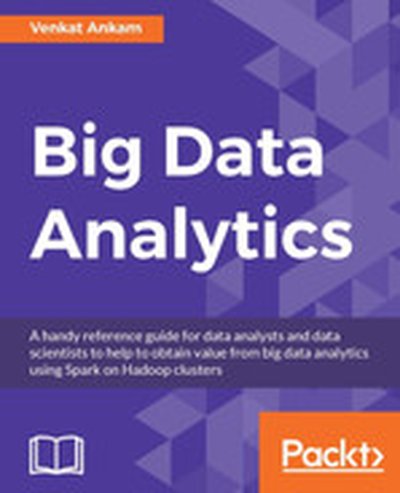
Big Data Analytics

Dive into the world of big data with "Big Data Analytics: Real Time Analytics Using Apache Spark and Hadoop." This comprehensive guide introduces readers to the fundamentals and practical applications of Apache Spark and Hadoop, covering essential topics like Spark SQL, DataFrames, structured streaming, and more. Learn how to harness the power of real-time analytics and big data tools effectively. What this Book will help me do Master the key components of Apache Spark and Hadoop ecosystems, including Spark SQL and MapReduce. Gain an understanding of DataFrames, DataSets, and structured streaming for seamless data handling. Develop skills in real-time analytics using Spark Streaming and technologies like Kafka and HBase. Learn to implement machine learning models using Spark's MLlib and ML Pipelines. Explore graph analytics with GraphX and leverage data visualization tools like Jupyter and Zeppelin. Author(s) Venkat Ankam, an expert in big data technologies, has years of experience working with Apache Hadoop and Spark. As an educator and technical consultant, Venkat has enabled numerous professionals to gain critical insights into big data ecosystems. With a pragmatic approach, his writings aim to guide readers through complex systems in a structured and easy-to-follow manner. Who is it for? This book is perfect for data analysts, data scientists, software architects, and programmers aiming to expand their knowledge of big data analytics. Readers should ideally have a basic programming background in languages like Python, Scala, R, or SQL. Prior hands-on experience with big data environments is not necessary but is an added advantage. This guide is created to cater to a range of skill levels, from beginners to intermediate learners.

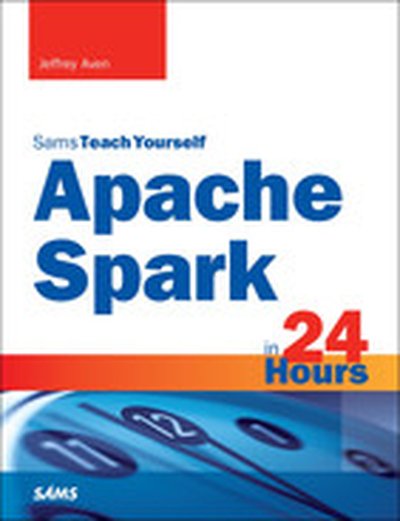
Sams Teach Yourself Apache Spark™ in 24 Hours

Apache Spark is a fast, scalable, and flexible open source distributed processing engine for big data systems and is one of the most active open source big data projects to date. In just 24 lessons of one hour or less, Sams Teach Yourself Apache Spark in 24 Hours helps you build practical Big Data solutions that leverage Spark’s amazing speed, scalability, simplicity, and versatility. This book’s straightforward, step-by-step approach shows you how to deploy, program, optimize, manage, integrate, and extend Spark–now, and for years to come. You’ll discover how to create powerful solutions encompassing cloud computing, real-time stream processing, machine learning, and more. Every lesson builds on what you’ve already learned, giving you a rock-solid foundation for real-world success. Whether you are a data analyst, data engineer, data scientist, or data steward, learning Spark will help you to advance your career or embark on a new career in the booming area of Big Data. Learn how to • Discover what Apache Spark does and how it fits into the Big Data landscape • Deploy and run Spark locally or in the cloud • Interact with Spark from the shell • Make the most of the Spark Cluster Architecture • Develop Spark applications with Scala and functional Python • Program with the Spark API, including transformations and actions • Apply practical data engineering/analysis approaches designed for Spark • Use Resilient Distributed Datasets (RDDs) for caching, persistence, and output • Optimize Spark solution performance • Use Spark with SQL (via Spark SQL) and with NoSQL (via Cassandra) • Leverage cutting-edge functional programming techniques • Extend Spark with streaming, R, and Sparkling Water • Start building Spark-based machine learning and graph-processing applications • Explore advanced messaging technologies, including Kafka • Preview and prepare for Spark’s next generation of innovations Instructions walk you through common questions, issues, and tasks; Q-and-As, Quizzes, and Exercises build and test your knowledge; "Did You Know?" tips offer insider advice and shortcuts; and "Watch Out!" alerts help you avoid pitfalls. By the time you're finished, you'll be comfortable using Apache Spark to solve a wide spectrum of Big Data problems.

Interactive Spark using PySpark

Apache Spark is an in-memory framework that allows data scientists to explore and interact with big data much more quickly than with Hadoop. Python users can work with Spark using an interactive shell called PySpark. Why is it important? PySpark makes the large-scale data processing capabilities of Apache Spark accessible to data scientists who are more familiar with Python than Scala or Java. This also allows for reuse of a wide variety of Python libraries for machine learning, data visualization, numerical analysis, etc. What you'll learn—and how you can apply it Compare the different components provided by Spark, and what use cases they fit. Learn how to use RDDs (resilient distributed datasets) with PySpark. Write Spark applications in Python and submit them to the cluster as Spark jobs. Get an introduction to the Spark computing framework. Apply this approach to a worked example to determine the most frequent airline delays in a specific month and year. This lesson is for you because… You're a data scientist, familiar with Python coding, who needs to get up and running with PySpark You're a Python developer who needs to leverage the distributed computing resources available on a Hadoop cluster, without learning Java or Scala first Prerequisites Familiarity with writing Python applications Some familiarity with bash command-line operations Basic understanding of how to use simple functional programming constructs in Python, such as closures, lambdas, maps, etc. Materials or downloads needed in advance Apache Spark This lesson is taken from by Jenny Kim and Benjamin Bengfort. Data Analytics with Hadoop

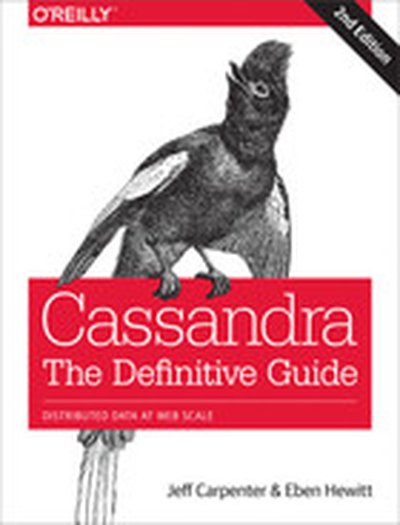
Cassandra: The Definitive Guide, 2nd Edition

Imagine what you could do if scalability wasn't a problem. With this hands-on guide, you’ll learn how the Cassandra database management system handles hundreds of terabytes of data while remaining highly available across multiple data centers. This expanded second edition—updated for Cassandra 3.0—provides the technical details and practical examples you need to put this database to work in a production environment. Authors Jeff Carpenter and Eben Hewitt demonstrate the advantages of Cassandra’s non-relational design, with special attention to data modeling. If you’re a developer, DBA, or application architect looking to solve a database scaling issue or future-proof your application, this guide helps you harness Cassandra’s speed and flexibility. Understand Cassandra’s distributed and decentralized structure Use the Cassandra Query Language (CQL) and cqlsh—the CQL shell Create a working data model and compare it with an equivalent relational model Develop sample applications using client drivers for languages including Java, Python, and Node.js Explore cluster topology and learn how nodes exchange data Maintain a high level of performance in your cluster Deploy Cassandra on site, in the Cloud, or with Docker Integrate Cassandra with Spark, Hadoop, Elasticsearch, Solr, and Lucene

Spark

Production-targeted Spark guidance with real-world use cases Spark: Big Data Cluster Computing in Production goes beyond general Spark overviews to provide targeted guidance toward using lightning-fast big-data clustering in production. Written by an expert team well-known in the big data community, this book walks you through the challenges in moving from proof-of-concept or demo Spark applications to live Spark in production. Real use cases provide deep insight into common problems, limitations, challenges, and opportunities, while expert tips and tricks help you get the most out of Spark performance. Coverage includes Spark SQL, Tachyon, Kerberos, ML Lib, YARN, and Mesos, with clear, actionable guidance on resource scheduling, db connectors, streaming, security, and much more. Spark has become the tool of choice for many Big Data problems, with more active contributors than any other Apache Software project. General introductory books abound, but this book is the first to provide deep insight and real-world advice on using Spark in production. Specific guidance, expert tips, and invaluable foresight make this guide an incredibly useful resource for real production settings. Review Spark hardware requirements and estimate cluster size Gain insight from real-world production use cases Tighten security, schedule resources, and fine-tune performance Overcome common problems encountered using Spark in production Spark works with other big data tools including MapReduce and Hadoop, and uses languages you already know like Java, Scala, Python, and R. Lightning speed makes Spark too good to pass up, but understanding limitations and challenges in advance goes a long way toward easing actual production implementation. Spark: Big Data Cluster Computing in Production tells you everything you need to know, with real-world production insight and expert guidance, tips, and tricks.

MongoDB Cookbook - Second Edition - Second Edition

Designed to help developers and administrators harness the full potential of MongoDB, this book provides clear instruction and practical guidance no matter your level. By exploring both fundamental aspects like installation and configuration, and advanced topics like using cloud services, this book serves as a comprehensive reference for anyone navigating the modern NoSQL database capabilities of MongoDB. What this Book will help me do Understand how to install and configure MongoDB for different environments, enabling efficient setup and operation. Master database administration skills, including monitoring and backup strategies, which are essential for stability and performance. Develop applications with MongoDB using Java and Python, allowing integration into modern tech stacks. Leverage advanced querying and indexing techniques, improving data retrieval and operational efficiency. Integrate MongoDB with cloud platforms and tools like Hadoop, enhancing scalability and expanded use cases. Author(s) None Dasadia and None Nayak are seasoned database professionals with extensive experience in MongoDB and NoSQL database systems. Their practical approach to technical writing focuses on real-world applications and providing solutions to complex challenges. With backgrounds in software development and data management, they ensure that readers have a hands-on learning experience. Their passion for spreading knowledge makes this book both instructional and engaging. Who is it for? This book is ideal for database administrators and software developers interested in adopting or expanding their knowledge of MongoDB. If you're a complete novice or someone with experience who seeks hands-on solutions and examples, this book offers value. It's particularly suited for professionals working with Java or Python, as examples focus on these programming languages. Whether you're enhancing your skills for personal projects or looking to implement MongoDB at work, this resource equips you with the know-how.

Learning Geospatial Analysis with Python-Second Edition

Dive into the world of geospatial analysis with Python in this comprehensive guide. This book will take you through the essentials of GIS, remote sensing, elevation data, and real-time data, all using Python. You will learn to analyze and visualize geospatial data effectively, building skills and understanding that are practical and relevant. What this Book will help me do Automate geospatial workflows using Python. Create thematic maps with Python tools for better spatial insights. Understand various forms of geospatial data and how to manage them. Develop GIS applications and elevation data models using minimal lines of Python code. Utilize Python for real-time data tracking and storm modeling. Author(s) Joel Lawhead is an experienced geospatial software developer and Python programmer with extensive expertise in GIS and geospatial data analysis. With a deep understanding of Python's applications in geography, Joel brings a practical focus to his writing. His engaging style ensures that technical concepts are accessible and thoroughly explained. Who is it for? This book is ideal for Python developers, researchers, and analysts who want to enhance their GIS and geospatial analysis capabilities. If you are familiar with Python or another scripting language and have a foundational understanding of digital mapping, this book will help you advance your knowledge and skills. Whether you're analyzing spatial data or building geospatial applications, this guide is made for you.