talk-data.com talk-data.com

Topic

RDBMS

Relational Database Management System (RDBMS)

databases sql data_storage

199

tagged

Activity Trend

5 peak/qtr
2020-Q1 2026-Q1

Activities

199 activities · Newest first

Pro SQL Server Relational Database Design and Implementation, Fifth Edition

Learn effective and scalable database design techniques in a SQL Server 2016 and higher environment. This book is revised to cover in-memory online transaction processing, temporal data storage, row-level security, durability enhancements, and other design-related features that are new or changed in SQL Server 2016. Designing an effective and scalable database using SQL Server is a task requiring skills that have been around for forty years coupled with technology that is constantly changing. and Implementation covers everything from design logic that business users will understand, all the way to the physical implementation of design in a SQL Server database. Grounded in best practices and a solid understanding of the underlying theory, Louis Davidson shows how to "get it right" in SQL Server database design and lay a solid groundwork for the future use of valuable business data. Pro SQL Server Relational Database Design The pace of change in relational database management systems has been tremendous these past few years. Whereas in the past it was enough to think about optimizing data residing on spinning hard drives, today one also must consider solid-state storage as well as data that are constantly held in memory and never written to disk at all except as a backup. Furthermore, there is a trend toward hybrid cloud and on-premise database configurations as well a move toward preconfigured appliances. guides in the understanding of these massive changes and in their application toward sound database design. Pro SQL Server Relational Database Design and Implementation Gives a solid foundation in best practices and relational theory Covers the latest implementation features in SQL Server 2016 Helps you master in-memory OLTP and use it effectively Takes you from conceptual design to an effective, physical implementation What You Will Learn Develop conceptual models of client data using interviews and client documentation Recognize and apply common database design patterns Normalize data models to enhance scalability and the long term use of valuable data Translate conceptual models into high–performing SQL Server databases Secure and protect data integrity as part of meeting regulatory requirements Create effective indexing to speed query performance Who This Book Is For Programmers and database administrators of all types who want to use SQL Server to store data. The book is especially useful to those wanting to learn the very latest design features in SQL Server 2016, features that include an improved approach to in-memory OLTP, durability enhancements, temporal data support, and more. Chapters on fundamental concepts, the language of database modeling, SQL implementation, and of course, the normalization process, lay a solid groundwork for readers who are just entering the field of database design. More advanced chapters serve the seasoned veteran by tackling the very latest in physical implementation features that SQL Server has to offer. The book has been carefully revised to cover all the design-related features that are new in SQL Server 2016.
Pro Tableau: A Step-by-Step Guide

Leverage the power of visualization in business intelligence and data science to make quicker and better decisions. Use statistics and data mining to make compelling and interactive dashboards. This book will help those familiar with Tableau software chart their journey to being a visualization expert. Pro Tableau demonstrates the power of visual analytics and teaches you how to: Connect to various data sources such as spreadsheets, text files, relational databases (Microsoft SQL Server, MySQL, etc.), non-relational databases (NoSQL such as MongoDB, Cassandra), R data files, etc. Write your own custom SQL, etc. Perform statistical analysis in Tableau using R Use a multitude of charts (pie, bar, stacked bar, line, scatter plots, dual axis, histograms, heat maps, tree maps, highlight tables, box and whisker, etc.) What you'll learn Connect to various data sources such as relational databases (Microsoft SQL Server, MySQL), non-relational databases (NoSQL such as MongoDB, Cassandra), write your own custom SQL, join and blend data sources, etc. Leverage table calculations (moving average, year over year growth, LOD (Level of Detail), etc. Integrate Tableau with R Tell a compelling story with data by creating highly interactive dashboards Who this book is for All levels of IT professionals, from executives responsible for determining IT strategies to systems administrators, to data analysts, to decision makers responsible for driving strategic initiatives, etc. The book will help those familiar with Tableau software chart their journey to a visualization expert.

Hadoop: Data Processing and Modelling

Unlock the power of your data with Hadoop 2.X ecosystem and its data warehousing techniques across large data sets About This Book Conquer the mountain of data using Hadoop 2.X tools The authors succeed in creating a context for Hadoop and its ecosystem Hands-on examples and recipes giving the bigger picture and helping you to master Hadoop 2.X data processing platforms Overcome the challenging data processing problems using this exhaustive course with Hadoop 2.X Who This Book Is For This course is for Java developers, who know scripting, wanting a career shift to Hadoop - Big Data segment of the IT industry. So if you are a novice in Hadoop or an expert, this book will make you reach the most advanced level in Hadoop 2.X. What You Will Learn Best practices for setup and configuration of Hadoop clusters, tailoring the system to the problem at hand Integration with relational databases, using Hive for SQL queries and Sqoop for data transfer Installing and maintaining Hadoop 2.X cluster and its ecosystem Advanced Data Analysis using the Hive, Pig, and Map Reduce programs Machine learning principles with libraries such as Mahout and Batch and Stream data processing using Apache Spark Understand the changes involved in the process in the move from Hadoop 1.0 to Hadoop 2.0 Dive into YARN and Storm and use YARN to integrate Storm with Hadoop Deploy Hadoop on Amazon Elastic MapReduce and Discover HDFS replacements and learn about HDFS Federation In Detail As Marc Andreessen has said "Data is eating the world," which can be witnessed today being the age of Big Data, businesses are producing data in huge volumes every day and this rise in tide of data need to be organized and analyzed in a more secured way. With proper and effective use of Hadoop, you can build new-improved models, and based on that you will be able to make the right decisions. The first module, Hadoop beginners Guide will walk you through on understanding Hadoop with very detailed instructions and how to go about using it. Commands are explained using sections called "What just happened" for more clarity and understanding. The second module, Hadoop Real World Solutions Cookbook, 2nd edition, is an essential tutorial to effectively implement a big data warehouse in your business, where you get detailed practices on the latest technologies such as YARN and Spark. Big data has become a key basis of competition and the new waves of productivity growth. Hence, once you get familiar with the basics and implement the end-to-end big data use cases, you will start exploring the third module, Mastering Hadoop. So, now the question is if you need to broaden your Hadoop skill set to the next level after you nail the basics and the advance concepts, then this course is indispensable. When you finish this course, you will be able to tackle the real-world scenarios and become a big data expert using the tools and the knowledge based on the various step-by-step tutorials and recipes. Style and approach This course has covered everything right from the basic concepts of Hadoop till you master the advance mechanisms to become a big data expert. The goal here is to help you learn the basic essentials using the step-by-step tutorials and from there moving toward the recipes with various real-world solutions for you. It covers all the important aspects of Hadoop from system designing and configuring Hadoop, machine learning principles with various libraries with chapters illustrated with code fragments and schematic diagrams. This is a compendious course to explore Hadoop from the basics to the most advanced techniques available in Hadoop 2.X.

Architecting for Access

Fragmented, disparate backend data systems have become the norm in today’s enterprise, where you’ll find a mix of relational databases, Hadoop stores, and NoSQL engines, with access and analytics tools bolted on every which way. This mishmash of options presents a real challenge when it comes to choosing frontend analytics and visualization tools. How did we get here? In this O’Reilly report, IT veteran Rich Morrow takes you through the rapid changes to both backend storage and frontend analytics over the past decade, and provides a pragmatic list of requirements for an analytics stack that will centralize access to all of these data systems. You’ll examine current analytics platforms, including Looker—a new breed of analytics and visualization tools built specifically to handle our fragmented data space. Understand why and how data became so fractured so quickly Explore the tangled web of data and backend tools in today’s enterprises Learn the tool requirements for accessing and analyzing the full spectrum of data Examine the relative strengths of popular analytics and visualization tools, including Looker, Tableau, and MicroStrategy Inspect Looker’s unique focus on both the frontend and backend

In Search of Database Nirvana

The database pendulum is in full swing. Ten years ago, web-scale companies began moving away from proprietary relational databases to handle big data use cases with NoSQL and Hadoop. Now, for a variety of reasons, the pendulum is swinging back toward SQL-based solutions. What many companies really want is a system that can handle all of their operational, OLTP, BI, and analytic workloads. Could such an all-in-one database exist? This O’Reilly report examines this quest for database nirvana, or what Gartner recently dubbed Hybrid Transaction/Analytical Processing (HTAP). Author Rohit Jain takes an in-depth look at the possibilities and the challenges for companies that long for a single query engine to rule them all. With this report, you’ll explore: The challenges of having one query engine support operational, BI, and analytical workloads Efforts to produce a query engine that supports multiple storage engines Attempts to support multiple data models with the same query engine Why an HTAP database engine needs to provide enterprise-caliber capabilities, including high availability, security, and manageability How to assess various options for meeting workload requirements with one database engine, or a combination of query and storage engines

Practical Hadoop Migration: How to Integrate Your RDBMS with the Hadoop Ecosystem and Re-Architect Relational Applications to NoSQL

Re-architect relational applications to NoSQL, integrate relational database management systems with the Hadoop ecosystem, and transform and migrate relational data to and from Hadoop components. This book covers the best-practice design approaches to re-architecting your relational applications and transforming your relational data to optimize concurrency, security, denormalization, and performance. Winner of IBM's 2012 Gerstner Award for his implementation of big data and data warehouse initiatives and author of Practical Hadoop Security, author Bhushan Lakhe walks you through the entire transition process. First, he lays out the criteria for deciding what blend of re-architecting, migration, and integration between RDBMS and HDFS best meets your transition objectives. Then he demonstrates how to design your transition model. Lakhe proceeds to cover the selection criteria for ETL tools, the implementation steps for migration with SQOOP- and Flume-based data transfers, and transition optimization techniques for tuning partitions, scheduling aggregations, and redesigning ETL. Finally, he assesses the pros and cons of data lakes and Lambda architecture as integrative solutions and illustrates their implementation with real-world case studies. Hadoop/NoSQL solutions do not offer by default certain relational technology features such as role-based access control, locking for concurrent updates, and various tools for measuring and enhancing performance. Practical Hadoop Migration shows how to use open-source tools to emulate such relational functionalities in Hadoop ecosystem components. What You'll Learn Decide whether you should migrate your relational applications to big data technologies or integrate them Transition your relational applications to Hadoop/NoSQL platforms in terms of logical design and physical implementation Discover RDBMS-to-HDFS integration, data transformation, and optimization techniques Consider when to use Lambda architecture and data lake solutions Select and implement Hadoop-based components and applications to speed transition, optimize integrated performance, and emulate relational functionalities Who This Book Is For Database developers, database administrators, enterprise architects, Hadoop/NoSQL developers, and IT leaders. Its secondary readership is project and program managers and advanced students of database and management information systems.

The Language of SQL, Second Edition

The Language of SQL, Second Edition Many SQL texts attempt to serve as an encyclopedic reference on SQL syntax -- an approach that is often counterproductive, because that information is readily available in online references published by the major database vendors. For SQL beginners, it’s more important for a book to focus on general concepts and to offer clear explanations and examples of what various SQL statements can accomplish. This is that book. A number of features make The Language of SQL unique among introductory SQL books. First, you will not be required to download software or sit with a computer as you read the text. The intent of this book is to provide examples of SQL usage that can be understood simply by reading. Second, topics are organized in an intuitive and logical sequence. SQL keywords are introduced one at a time, allowing you to grow your understanding as you encounter new terms and concepts. Finally, this book covers the syntax of three widely used databases: Microsoft SQL Server, MySQL, and Oracle. Special “Database Differences” sidebars clearly show you any differences in syntax among these three databases, and instructions are included on how to obtain and install free versions of the databases. This is the only book you need to gain a quick working knowledge of SQL and relational databases. Learn How To... Use SQL to retrieve data from relational databases Apply functions and calculations to data Group and summarize data in a variety of useful ways Use complex logic to retrieve only the data you need Update data and create new tables Design relational databases so that data retrieval is easy and intuitive Use spreadsheets to transform your data into meaningful displays Retrieve data from multiple tables via joins, subqueries, views, and set logic Create, modify, and execute stored procedures Install Microsoft SQL Server, MySQL, or Oracle Contents at a Glance 1 Relational Databases and SQL 2 Basic Data Retrieval 3 Calculated Fields and Aliases 4 Using Functions 5 Sorting Data 6 Selection Criteria 7 Boolean Logic 8 Conditional Logic 9 Summarizing Data 10 Subtotals and Crosstabs 11 Inner Joins 12 Outer Joins 13 Self Joins and Views 14 Subqueries 15 Set Logic 16 Stored Procedures and Parameters 17 Modifying Data 18 Maintaining Tables 19 Principles of Database Design 20 Strategies for Displaying Data A Getting Started with Microsoft SQL Server B Getting Started with MySQL C Getting Started with Oracle

Beginning SQL Queries: From Novice to Professional, Second Edition

Get started on mastering the one language binding the entire database industry. That language is SQL, and how it works is must-have knowledge for anyone involved with relational databases, and surprisingly also for anyone involved with NoSQL databases. SQL is universally used in querying and reporting on large data sets in order to generate knowledge to drive business decisions. Good knowledge of SQL is crucial to anyone working with databases, because it is with SQL that you retrieve data, manipulate data, and generate business results. Every relational database supports SQL for its expressiveness in writing queries underlying reports and business intelligence dashboards. Knowing how to write good queries is the foundation for all work done in SQL, and it is a foundation that Clare Churcher's book, , 2nd Edition, lays well. Beginning SQL Queries What You Will Learn Write simple queries to extract data from a single table Combine data from many tables into one business result using set operations Translate natural language questions into database queries providing meaningful information to the business Avoid errors associated with duplicated and null values Summarize data with amazing ease using the newly-added feature of window functions Tackle tricky queries with confidence that you are generating correct results Investigate and understand the effects of indexes on the efficiency of queries Who This Book Is For Beginning SQL Queries, 2nd Edition is aimed at intelligent laypeople who need to extract information from a database, and at developers and other IT professionals who are new to SQL. The book is especially useful for business intelligence analysts who must ask more complex questions of their database than their GUI—based reporting software supports. Such people might be business owners wanting to target specific customers, scientists and students needing to extract subsets of their research data, or end users wanting to make the best use of databases for their clubs and societies.

Relational Database Programming: A Set-Oriented Approach

Learn the best way of writing code to run inside a relational database. This book shows how a holistic and set-oriented approach to database programming can far exceed the performance of the row-by-row model that is too often used by developers who haven't been shown a better way. Two styles of programming are encountered in the database world. Classical programming as taught in many universities leads to an atomic, row-oriented, and procedural style inspired by the structured models of programming. In short, many application developers write in the relational database exactly like in the user interface. The other style of programming is holistic, data set oriented, and coded mainly in SQL. This is the style of the database developer. The set based and holistic style of development is not promoted enough in universities, and many application developers are not fully aware of it. There are many performance issues all over the world in relational databases due to the use of the atomic and inappropriate style of programming. This book compares the two styles, and promotes the holistic style of development as the most suitable one. Examples are given to demonstrate the superiority of a set-based and holistic approach. Compares the two styles of development Shows the performance advantages of set-based development Solves example problems using both approaches Who This Book Is For is aimed at application developers willing to adapt their programming styles in return for better-performing applications. It's for students and new developers wanting to position themselves as having database expertise and build a reputation for developing highly-performant database applications. Two Styles of Database Development

Mastering Hibernate

Mastering Hibernate is your comprehensive guide to understanding and mastering Hibernate, a powerful Object-Relational Mapping tool for Java and .Net applications. Through this book, you will dive deep into the mechanics of Hibernate, exploring its core concepts and architecture. Whether you're working with SQL or NoSQL data stores, this book ensures you can unlock Hibernate's full potential. What this Book will help me do Grasp the internal workings of Hibernate, including its session management and entity lifecycle. Optimize mapping between Java classes and relational database structures for better performance. Effectively manage relationships and collections within your data models using Hibernate features. Utilize Hibernate's caching systems to improve application performance and scalability. Handle multi-tenant database configurations with confidence using Hibernate's architectural capabilities. Author(s) None Rad is an experienced software developer and educator specializing in Java-based applications and enterprise architecture. With years of hands-on practice using Hibernate in real-world scenarios, None Rad has curated this book to serve as a clear and practical guide. Their writing reflects deep technical expertise combined with an approachable and illustrative teaching style, ensuring learning is both effective and engaging. Who is it for? This book is ideal for software developers and engineers who are familiar with Java or other similar object-oriented programming languages. Whether you're a professional looking to deepen your understanding of Hibernate's internals or a developer aiming to create more efficient ORM solutions, this book has something for you. Readers should have a basic understanding of Java and relational databases, but no prior Hibernate expertise is required. By the end, you'll be equipped to confidently apply Hibernate to sophisticated data challenges.

SQL Procedures, Triggers, and Functions on IBM DB2 for i

Structured Query Language (SQL) procedures, triggers, and functions, which are also known as user-defined functions (UDFs), are the key database features for developing robust and distributed applications. IBM® DB2® for i supported these features for many years, and they are enhanced in IBM i versions 6.1, 7.1, and 7.2. DB2 for i refers to the IBM DB2 family member and relational database management system that is integrated within the IBM Power operating system that is known as IBM i. This IBM Redbooks® publication includes several of the announced features for SQL procedures, triggers, and functions in IBM i versions 6.1, 7.1, and 7.2. This book includes suggestions, guidelines, and practical examples to develop DB2 for i SQL procedures, triggers, and functions effectively. This book covers the following topics: Introduction to the SQL/Persistent Stored Modules (PSM) language, which is used in SQL procedures, triggers, and functions SQL procedures SQL triggers SQL functions This book is for IBM i database engineers and data-centric developers who strive to provide flexible, extensible, agile, and scalable database solutions that meet business requirements in a timely manner. Before you read this book, you need to know about relational database technology and the application development environment on the IBM Power Systems™ with the IBM i operating system.

Relational Database Design and Implementation, 4th Edition

Relational Database Design and Implementation: Clearly Explained, Fourth Edition, provides the conceptual and practical information necessary to develop a database design and management scheme that ensures data accuracy and user satisfaction while optimizing performance. Database systems underlie the large majority of business information systems. Most of those in use today are based on the relational data model, a way of representing data and data relationships using only two-dimensional tables. This book covers relational database theory as well as providing a solid introduction to SQL, the international standard for the relational database data manipulation language. The book begins by reviewing basic concepts of databases and database design, then turns to creating, populating, and retrieving data using SQL. Topics such as the relational data model, normalization, data entities, and Codd's Rules (and why they are important) are covered clearly and concisely. In addition, the book looks at the impact of big data on relational databases and the option of using NoSQL databases for that purpose. Features updated and expanded coverage of SQL and new material on big data, cloud computing, and object-relational databases Presents design approaches that ensure data accuracy and consistency and help boost performance Includes three case studies, each illustrating a different database design challenge Reviews the basic concepts of databases and database design, then turns to creating, populating, and retrieving data using SQL

Excel Power Pivot and Power Query For Dummies

A guide to PowerPivot and Power Query no data cruncher should be without! Want to familiarize yourself with the rich set of Microsoft Excel tools and reporting capabilities available from PowerPivot and Power Query? Look no further! Excel PowerPivot & Power Query For Dummies shows you how this powerful new set of tools can be leveraged to more effectively source and incorporate 'big data' Business Intelligence and Dashboard reports. You'll discover how PowerPivot and Power Query not only allow you to save time and simplify your processes, but also enable you to substantially enhance your data analysis and reporting capabilities. Gone are the days of relatively small amounts of data—today's data environment demands more from business analysts than ever before. Now, with the help of this friendly, hands-on guide, you'll learn to use PowerPivot and Power Query to expand your skill-set from the one-dimensional spreadsheet to new territories, like relational databases, data integration, and multi-dimensional reporting. Demonstrates how Power Query is used to discover, connect to, and import your data Shows you how to use PowerPivot to model data once it's been imported Offers guidance on using these tools to make analyzing data easier Written by a Microsoft MVP in the lighthearted, fun style you've come to expect from the For Dummies brand If you spend your days analyzing data, Excel PowerPivot & Power Query For Dummies will get you up and running with the rich set of Excel tools and reporting capabilities that will make your life—and work—easier.

Getting Started with SQL

Businesses are gathering data today at exponential rates and yet few people know how to access it meaningfully. If you’re a business or IT professional, this short hands-on guide teaches you how to pull and transform data with SQL in significant ways. You will quickly master the fundamentals of SQL and learn how to create your own databases. Author Thomas Nield provides exercises throughout the book to help you practice your newfound SQL skills at home, without having to use a database server environment. Not only will you learn how to use key SQL statements to find and manipulate your data, but you’ll also discover how to efficiently design and manage databases to meet your needs. You’ll also learn how to: Explore relational databases, including lightweight and centralized models Use SQLite and SQLiteStudio to create lightweight databases in minutes Query and transform data in meaningful ways by using SELECT, WHERE, GROUP BY, and ORDER BY Join tables to get a more complete view of your business data Build your own tables and centralized databases by using normalized design principles Manage data by learning how to INSERT, DELETE, and UPDATE records

Next Generation Databases: NoSQL, NewSQL, and Big Data

This is a book for enterprise architects, database administrators, and developers who need to understand the latest developments in database technologies. It is the book to help you choose the correct database technology at a time when concepts such as Big Data, NoSQL and NewSQL are making what used to be an easy choice into a complex decision with significant implications. The relational database (RDBMS) model completely dominated database technology for over 20 years. Today this "one size fits all" stability has been disrupted by a relatively recent explosion of new database technologies. These paradigm-busting technologies are powering the "Big Data" and "NoSQL" revolutions, as well as forcing fundamental changes in databases across the board. Deciding to use a relational database was once truly a no-brainer, and the various commercial relational databases competed on price, performance, reliability, and ease of use rather than on fundamental architectures. Today we are faced with choices between radically different database technologies. Choosing the right database today is a complex undertaking, with serious economic and technological consequences. Next Generation Databases demystifies today’s new database technologies. The book describes what each technology was designed to solve. It shows how each technology can be used to solve real word application and business problems. Most importantly, this book highlights the architectural differences between technologies that are the critical factors to consider when choosing a database platform for new and upcoming projects. Introduces the new technologies that have revolutionized the database landscape Describes how each technology can be used to solve specific application or business challenges Reviews the most popular new wave databases and how they use these new database technologies

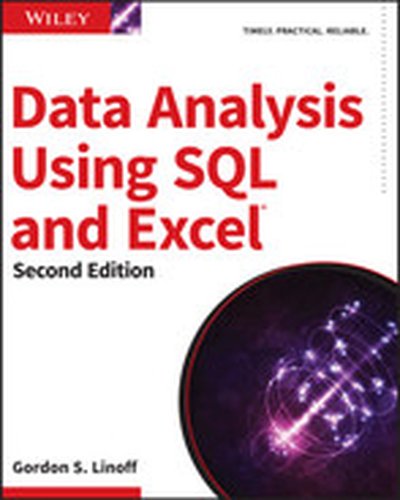
Data Analysis Using SQL and Excel, 2nd Edition

A practical guide to data mining using SQL and Excel Data Analysis Using SQL and Excel, 2nd Edition shows you how to leverage the two most popular tools for data query and analysis—SQL and Excel—to perform sophisticated data analysis without the need for complex and expensive data mining tools. Written by a leading expert on business data mining, this book shows you how to extract useful business information from relational databases. You'll learn the fundamental techniques before moving into the "where" and "why" of each analysis, and then learn how to design and perform these analyses using SQL and Excel. Examples include SQL and Excel code, and the appendix shows how non-standard constructs are implemented in other major databases, including Oracle and IBM DB2/UDB. The companion website includes datasets and Excel spreadsheets, and the book provides hints, warnings, and technical asides to help you every step of the way. Data Analysis Using SQL and Excel, 2nd Edition shows you how to perform a wide range of sophisticated analyses using these simple tools, sparing you the significant expense of proprietary data mining tools like SAS. Understand core analytic techniques that work with SQL and Excel Ensure your analytic approach gets you the results you need Design and perform your analysis using SQL and Excel Data Analysis Using SQL and Excel, 2nd Edition shows you how to best use the tools you already know to achieve expert results.

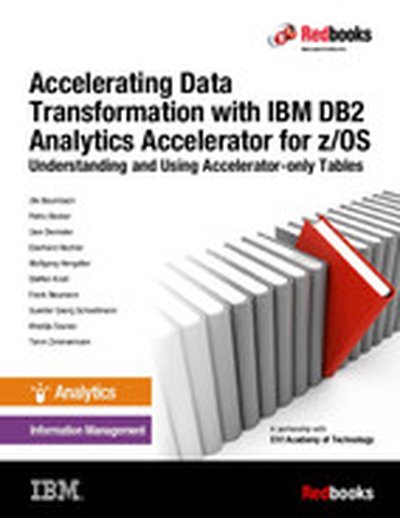
Accelerating Data Transformation with IBM DB2 Analytics Accelerator for z/OS Understanding and Using Accelerator-only Tables

Transforming data from operational data models to purpose-oriented data structures has been commonplace for the last decades. Data transformations are heavily used in all types of industries to provide information to various users at different levels. Depending on individual needs, the transformed data is stored in various different systems. Sending operational data to other systems for further processing is then required, and introduces much complexity to an existing information technology (IT) infrastructure. Although maintenance of additional hardware and software is one component, potential inconsistencies and individually managed refresh cycles are others. For decades, there was no simple and efficient way to perform data transformations on the source system of operational data. With IBM® DB2® Analytics Accelerator, DB2 for z/OS is now in a unique position to complete these transformations in an efficient and well-performing way. DB2 for z/OS completes these while connecting to the same platform as for operational transactions, helping you to minimize your efforts to manage existing IT infrastructure. Real-time analytics on incoming operational transactions is another demand. Creating a comprehensive scoring model to detect specific patterns inside your data can easily require multiple iterations and multiple hours to complete. By enabling a first set of analytical functionality in DB2 Analytics Accelerator, those dedicated mining algorithms can now be run on an accelerator to efficiently perform these modeling tasks. Given the speed of query processing on an accelerator, these modeling tasks can now be performed much quicker compared to traditional relational database management systems. This speed enables you to keep your scoring algorithms more up-to-date, and ultimately adapt more quickly to constantly changing customer behaviors. This IBM Redbooks® publication describes the new table type that is introduced with DB2 Analytics Accelerator V4.1 PTF5 that enables more efficient data transformations. These tables are called accelerator-only tables, and can exist on an accelerator only. The tables benefit from the accelerator performance characteristics, while maintaining access through existing DB2 for z/OS application programming interfaces (APIs). Additionally, we describe the newly introduced analytical capabilities with DB2 Analytics Accelerator V5.1, putting you in the position to efficiently perform data modeling for online analytical requirements in your DB2 for z/OS environment. This book is intended for technical decision-makers who want to get a broad understanding about the analytical capabilities and accelerator-only tables of DB2 Analytics Accelerator. In addition, you learn about how these capabilities can be used to accelerate in-database transformations and in-database analytics in various environments and scenarios, including the following scenarios: Multi-step processing and reporting in IBM DB2 Query Management Facility™, IBM Campaign, or Microstrategy environments In-database transformations using IBM InfoSphere® DataStage® Ad hoc data analysis for data scientists In-database analytics using IBM SPSS® Modeler

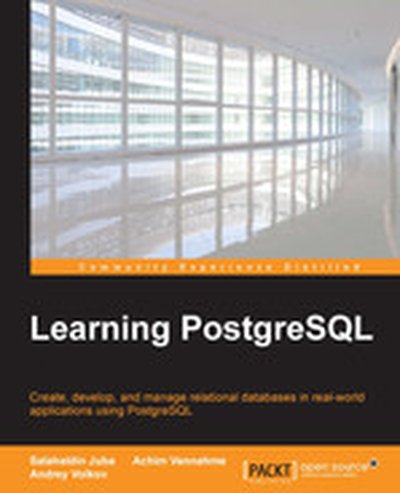
Learning PostgreSQL

Unlock the potential of PostgreSQL, a powerful open-source relational database system, with 'Learning PostgreSQL.' This book takes you through essential concepts of relational databases, SQL syntax, and the advanced features of PostgreSQL, equipping you to build and manage efficient database solutions. What this Book will help me do Learn the foundational concepts behind relational databases and relational algebra. Set up and configure a PostgreSQL server and client for development use. Develop SQL queries for robust data manipulation and retrieval. Implement advanced features of PostgreSQL, including procedural programming with PL/pgSQL. Integrate PostgreSQL with Java applications using JDBC and Hibernate frameworks. Author(s) The authors of 'Learning PostgreSQL,' None Juba, Achim Vannahme, and None Volkov, bring extensive experience and expertise in software development and database management. They have a deep understanding of PostgreSQL as well as its integration with applications. Their collective approach emphasizes practical techniques, real-world scenarios, and enriched learning, making this book a valuable resource for learners of all levels. Who is it for? This book is perfect for students, database developers, and administrators seeking to learn PostgreSQL. It suits beginners with no prior knowledge and helps intermediates deepen their expertise. Readers will learn how to develop, maintain, and optimize PostgreSQL databases, making it ideal for those aiming to advance their database development skills.

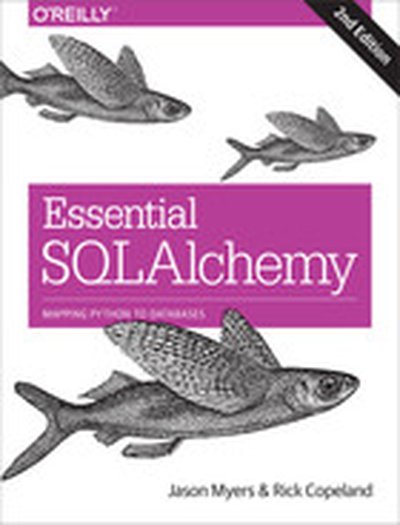
Essential SQLAlchemy, 2nd Edition

Dive into SQLAlchemy, the popular, open-source code library that helps Python programmers work with relational databases such as Oracle, MySQL, PostgresSQL, and SQLite. Using real-world examples, this practical guide shows you how to build a simple database application with SQLAlchemy, and how to connect to multiple databases simultaneously with the same metadata. SQL is a powerful language for querying and manipulating data, but it’s tough to integrate it with your application. SQLAlchemy helps you map Python objects to database tables without substantially changing your existing Python code. If you’re an intermediate Python developer with knowledge of basic SQL syntax and relational theory, this book serves as both a learning tool and a handy reference. Essential SQLAlchemy includes several sections: SQLAlchemy Core: Provide database services to your applications in a Pythonic way with the SQL Expression Language SQLAlchemy ORM: Use the object relational mapper to bind database schema and operations to data objects in your application Alembic: Use this lightweight database migration tool to handle changes to the database as your application evolves Cookbook: Learn how to use SQLAlchemy with web frameworks like Flask and libraries like SQLAcodegen

SQL: A Beginner's Guide, Fourth Edition, 4th Edition

This fully revised, self-paced learning tool lays out all the necessary steps to quickly and easily start writing SQL programs Thoroughly updated to reflect the most recent ANSI/ISO standard, SQL: A Beginner's Guide, Fourth Edition will get you up-and-running with SQL programming right away. Clear tutorials, annotated code, and proven instructional tools guide you to easily performing queries and modifications, building databases, creating and reviewing embedded statements, troubleshooting system- and data-related problems, and much more. You will learn how to retrieve, insert, update, and delete database data, and perform management and administrative functions. The book also covers new features, including SQL/XML and the long-awaited temporal support. Code examples are provided throughout along with notes on using them with the latest RDBMS software versions such as MySQL 5.7, SQL Server 2014, and Oracle Database 12 c. Platform-neutral coverage; all skills can be applied to any database product, and any SQL version Features hands-on exercises and self-tests that reinforce basic knowledge ”Ask the Expert” sections throughout are filled with bonus information and useful tips