talk-data.com talk-data.com

Topic

RDBMS

Relational Database Management System (RDBMS)

databases sql data_storage

199

tagged

Activity Trend

5 peak/qtr
2020-Q1 2026-Q1

Activities

199 activities · Newest first

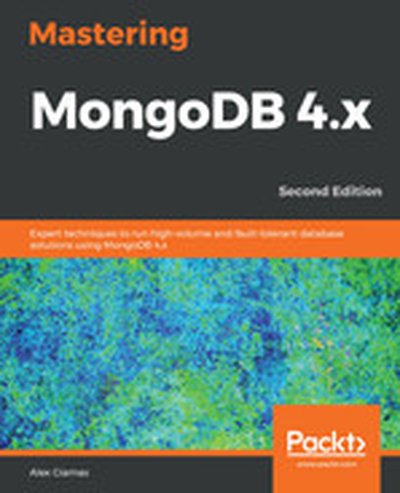
Mastering MongoDB 4.x - Second Edition

This book, Mastering MongoDB 4.x, provides an in-depth exploration of MongoDB's features and capabilities, empowering readers to create high-performance and fault-tolerant database solutions. Through practical examples and clear explanations, you will learn how to implement complex queries, optimize database performance, manage large-scale clusters, and ensure robust failover and backup strategies. What this Book will help me do Understand advanced querying techniques and best practices in data indexing and management. Effectively configure and monitor MongoDB instances for scalability and optimized performance. Master techniques for replication and sharding to support high-availability systems. Deploy MongoDB-based applications seamlessly across on-premise and cloud environments. Learn to integrate MongoDB with modern technologies like big data platforms, containers, and IoT applications. Author(s) Alex Giamas is a seasoned database administrator and developer with significant experience in working with both relational and non-relational databases. Having authored numerous articles and given lectures on MongoDB and other data management technologies, Alex brings practical insights to his writing. He emphasizes real-world applications with examples drawn from his extensive career. Who is it for? This book is designed for developers and database administrators already familiar with MongoDB and basic database concepts, who are looking to enhance their expertise for implementing advanced MongoDB solutions. It is also suitable for professionals aspiring to earn MongoDB certifications and expand their skills to manage large, high-performance database systems efficiently.

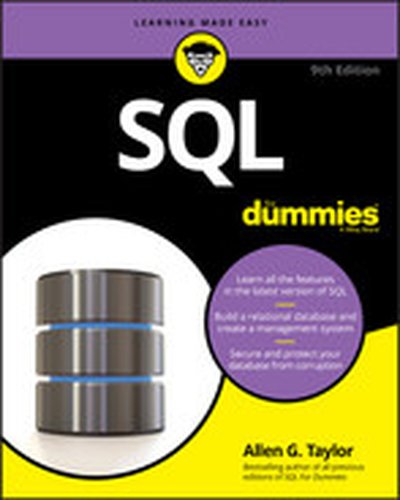
SQL For Dummies, 9th Edition

Get ready to make SQL easy! Updated for the latest version of SQL, the new edition of this perennial bestseller shows programmers and web developers how to use SQL to build relational databases and get valuable information from them. Covering everything you need to know to make working with SQL easier than ever, topics include how to use SQL to structure a DBMS and implement a database design; secure a database; and retrieve information from a database; and much more. SQL is the international standard database language used to create, access, manipulate, maintain, and store information in relational database management systems (DBMS) such as Access, Oracle, SQL Server, and MySQL. SQL adds powerful data manipulation and retrieval capabilities to conventional languages—and this book shows you how to harness the core element of relational databases with ease. Server platform that gives you choices of development languages, data types, on-premises or cloud, and operating systems Find great examples on the use of temporal data Jump right in—without previous knowledge of database programming or SQL As database-driven websites continue to grow in popularity—and complexity— SQL For Dummies is the easy-to-understand, go-to resource you need to use it seamlessly.

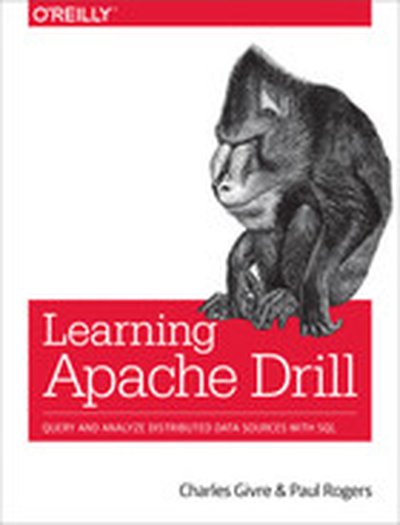
Learning Apache Drill

Get up to speed with Apache Drill, an extensible distributed SQL query engine that reads massive datasets in many popular file formats such as Parquet, JSON, and CSV. Drill reads data in HDFS or in cloud-native storage such as S3 and works with Hive metastores along with distributed databases such as HBase, MongoDB, and relational databases. Drill works everywhere: on your laptop or in your largest cluster. In this practical book, Drill committers Charles Givre and Paul Rogers show analysts and data scientists how to query and analyze raw data using this powerful tool. Data scientists today spend about 80% of their time just gathering and cleaning data. With this book, you’ll learn how Drill helps you analyze data more effectively to drive down time to insight. Use Drill to clean, prepare, and summarize delimited data for further analysis Query file types including logfiles, Parquet, JSON, and other complex formats Query Hadoop, relational databases, MongoDB, and Kafka with standard SQL Connect to Drill programmatically using a variety of languages Use Drill even with challenging or ambiguous file formats Perform sophisticated analysis by extending Drill’s functionality with user-defined functions Facilitate data analysis for network security, image metadata, and machine learning

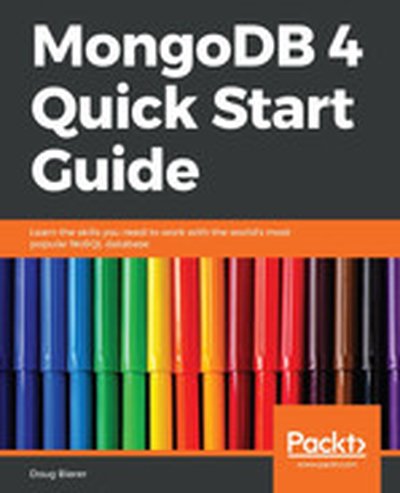
MongoDB 4 Quick Start Guide

"MongoDB 4 Quick Start Guide" is your gateway into understanding and utilizing MongoDB, the world's leading NoSQL database alternative. Through this approachable guide, you will quickly learn how to install, secure, and effectively perform database operations using MongoDB Version 4. What this Book will help me do Master the installation and configuration of MongoDB to prepare for secure database setups. Execute CRUD operations seamlessly to manage your data through the MongoDB shell. Construct queries using the aggregation pipeline for robust data analysis. Implement replication and sharding to ensure data safety and scaleability. Use the PHP MongoDB driver to integrate MongoDB effectively with web applications. Author(s) None Bierer is an expert in database technologies with extensive experience in NoSQL solutions, particularly MongoDB. Their passion for teaching developers new and efficient ways to work with databases shines through in this practical and hands-on guide. Who is it for? This book is perfect for web developers looking to enhance their understanding of modern databases, IT professionals interested in NoSQL solutions, and DBAs transitioning from relational databases to document-oriented databases. Prior experience with databases can be helpful, but this guide is accessible even for enthusiastic beginners seeking to learn MongoDB.

Summary

With the increased ease of gaining access to servers in data centers across the world has come the need for supporting globally distributed data storage. With the first wave of cloud era databases the ability to replicate information geographically came at the expense of transactions and familiar query languages. To address these shortcomings the engineers at Cockroach Labs have built a globally distributed SQL database with full ACID semantics in Cockroach DB. In this episode Peter Mattis, the co-founder and VP of Engineering at Cockroach Labs, describes the architecture that underlies the database, the challenges they have faced along the way, and the ways that you can use it in your own environments today.

Preamble

Hello and welcome to the Data Engineering Podcast, the show about modern data management When you’re ready to build your next pipeline you’ll need somewhere to deploy it, so check out Linode. With private networking, shared block storage, node balancers, and a 40Gbit network, all controlled by a brand new API you’ve got everything you need to run a bullet-proof data platform. Go to dataengineeringpodcast.com/linode to get a $20 credit and launch a new server in under a minute. For complete visibility into the health of your pipeline, including deployment tracking, and powerful alerting driven by machine-learning, DataDog has got you covered. With their monitoring, metrics, and log collection agent, including extensive integrations and distributed tracing, you’ll have everything you need to find and fix performance bottlenecks in no time. Go to dataengineeringpodcast.com/datadog today to start your free 14 day trial and get a sweet new T-Shirt. Go to dataengineeringpodcast.com to subscribe to the show, sign up for the mailing list, read the show notes, and get in touch. Your host is Tobias Macey and today I’m interviewing Peter Mattis about CockroachDB, the SQL database for global cloud services

Interview

Introduction How did you get involved in the area of data management? What was the motivation for creating CockroachDB and building a business around it? Can you describe the architecture of CockroachDB and how it supports distributed ACID transactions?

What are some of the tradeoffs that are necessary to allow for georeplicated data with distributed transactions? What are some of the problems that you have had to work around in the RAFT protocol to provide reliable operation of the clustering mechanism?

Go is an unconventional language for building a database. What are the pros and cons of that choice? What are some of the common points of confusion that users of CockroachDB have when operating or interacting with it?

What are the edge cases and failure modes that users should be aware of?

I know that your SQL syntax is PostGreSQL compatible, so is it possible to use existing ORMs unmodified with CockroachDB?

What are some examples of extensions that are specific to CockroachDB?

What are some of the most interesting uses of CockroachDB that you have seen? When is CockroachDB the wrong choice? What do you have planned for the future of CockroachDB?

Contact Info

Peter

LinkedIn petermattis on GitHub @petermattis on Twitter

Cockroach Labs

@CockroackDB on Twitter Website cockroachdb on GitHub

Parting Question

From your perspective, what is the biggest gap in the tooling or technology for data management today?

Links

CockroachDB Cockroach Labs SQL Google Bigtable Spanner NoSQL RDBMS (Relational Database Management System) “Big Iron” (colloquial term for mainframe computers) RAFT Consensus Algorithm Consensus MVCC (Multiversion Concurrency Control) Isolation Etcd GDPR Golang C++ Garbage Collection Metaprogramming Rust Static Linking Docker Kubernetes CAP Theorem PostGreSQL ORM (Object Relational Mapping) Information Schema PG Catalog Interleaved Tables Vertica Spark Change Data Capture

The intro and outro music is from The Hug by The Freak Fandan

Summary

Building an ETL pipeline is a common need across businesses and industries. It’s easy to get one started but difficult to manage as new requirements are added and greater scalability becomes necessary. Rather than duplicating the efforts of other engineers it might be best to use a hosted service to handle the plumbing so that you can focus on the parts that actually matter for your business. In this episode CTO and co-founder of Alooma, Yair Weinberger, explains how the platform addresses the common needs of data collection, manipulation, and storage while allowing for flexible processing. He describes the motivation for starting the company, how their infrastructure is architected, and the challenges of supporting multi-tenancy and a wide variety of integrations.

Preamble

Hello and welcome to the Data Engineering Podcast, the show about modern data management When you’re ready to build your next pipeline you’ll need somewhere to deploy it, so check out Linode. With private networking, shared block storage, node balancers, and a 40Gbit network, all controlled by a brand new API you’ve got everything you need to run a bullet-proof data platform. Go to dataengineeringpodcast.com/linode to get a $20 credit and launch a new server in under a minute. For complete visibility into the health of your pipeline, including deployment tracking, and powerful alerting driven by machine-learning, DataDog has got you covered. With their monitoring, metrics, and log collection agent, including extensive integrations and distributed tracing, you’ll have everything you need to find and fix performance bottlenecks in no time. Go to dataengineeringpodcast.com/datadog today to start your free 14 day trial and get a sweet new T-Shirt. Go to dataengineeringpodcast.com to subscribe to the show, sign up for the newsletter, read the show notes, and get in touch. Your host is Tobias Macey and today I’m interviewing Yair Weinberger about Alooma, a company providing data pipelines as a service

Interview

Introduction How did you get involved in the area of data management? What is Alooma and what is the origin story? How is the Alooma platform architected?

I want to go into stream VS batch here What are the most challenging components to scale?

How do you manage the underlying infrastructure to support your SLA of 5 nines? What are some of the complexities introduced by processing data from multiple customers with various compliance requirements?

How do you sandbox user’s processing code to avoid security exploits?

What are some of the potential pitfalls for automatic schema management in the target database? Given the large number of integrations, how do you maintain the

What are some challenges when creating integrations, isn’t it simply conforming with an external API?

For someone getting started with Alooma what does the workflow look like? What are some of the most challenging aspects of building and maintaining Alooma? What are your plans for the future of Alooma?

Contact Info

LinkedIn @yairwein on Twitter

Parting Question

From your perspective, what is the biggest gap in the tooling or technology for data management today?

Links

Alooma Convert Media Data Integration ESB (Enterprise Service Bus) Tibco Mulesoft ETL (Extract, Transform, Load) Informatica Microsoft SSIS OLAP Cube S3 Azure Cloud Storage Snowflake DB Redshift BigQuery Salesforce Hubspot Zendesk Spark The Log: What every software engineer should know about real-time data’s unifying abstraction by Jay Kreps RDBMS (Relational Database Management System) SaaS (Software as a Service) Change Data Capture Kafka Storm Google Cloud PubSub Amazon Kinesis Alooma Code Engine Zookeeper Idempotence Kafka Streams Kubernetes SOC2 Jython Docker Python Javascript Ruby Scala PII (Personally Identifiable Information) GDPR (General Data Protection Regulation) Amazon EMR (Elastic Map Reduce) Sequoia Capital Lightspeed Investors Redis Aerospike Cassandra MongoDB

The intro and outro music is from The Hug by The Freak Fandango Orchestra / CC BY-SA Support Data Engineering Podcast

Practical SQL

"Practical SQL is an approachable and fast-paced guide to SQL (Structured Query Language), the standard programming language for defining, organizing, and exploring data in relational databases. The book focuses on using SQL to find the story your data tells, with the popular open-source database PostgreSQL and the pgAdmin interface as its primary tools. You’ll first cover the fundamentals of databases and the SQL language, then build skills by analyzing data from the U.S. Census and other federal and state government agencies. With exercises and real-world examples in each chapter, this book will teach even those who have never programmed before all the tools necessary to build powerful databases and access information quickly and efficiently. You’ll learn how to: • Create databases and related tables using your own data• Define the right data types for your information• Aggregate, sort, and filter data to find patterns• Use basic math and advanced statistical functions• Identify errors in data and clean them up• Import and export data using delimited text files• Write queries for geographic information systems (GIS)• Create advanced queries and automate tasks Learning SQL doesn’t have to be dry and complicated. Practical SQL delivers clear examples with an easy-to-follow approach to teach you the tools you need to build and manage your own databases. This book uses PostgreSQL, but the SQL syntax is applicable to many database applications, including Microsoft SQL Server and MySQL."

In this podcast, Wayne Eckerson and Joe Caserta discuss data migration, compare cloud offerings from Amazon, Google, and Microsoft, and define and explain artificial intelligence.

You can contact Caserta by visiting caserta.com or by sending him an email to [email protected]. Follow him on Twitter @joe_caserta.

Caserta is President of a New York City-based consulting firm he founded in 2001 and a longtime data guy. In 2004, Joe teamed up with data warehousing legend, Ralph Kimball to write to write the book The Data Warehouse ETL Toolkit. Today he’s now one of the leading authorities on big data implementations. This makes Joe one of the few individuals with in-the-trenches experience on both sides of the data divide, traditional data warehousing on relational databases and big data implementations on Hadoop and the cloud.

In this podcast, Wayne Eckerson and James Serra discuss myths of modern data management. Some of the myths discussed include 'all you need is a data lake', 'the data warehouse is dead', 'we don’t need OLAP cubes anymore', 'cloud is too expensive and latency is too slow', 'you should always use a NoSQL product over a RDBMS.'

Serra is big data and data warehousing solutions architect at Microsoft with over thirty years of IT experience. He is a popular blogger and speaker and has presented at dozens of Microsoft PASS and other events. Prior to Microsoft, Serra was an independent data warehousing and business intelligence architect and developer.

Seven NoSQL Databases in a Week

Learn the fundamentals of seven essential NoSQL databases in just one week with this book. Covering MongoDB, DynamoDB, Redis, Cassandra, Neo4j, InfluxDB, and HBase, you'll explore their functionalities and practical applications. Designed to give you a working understanding of NoSQL database types, this guide helps aspiring DBAs and developers comprehend and utilize modern data solutions. What this Book will help me do Master the fundamentals of MongoDB, including high-performance, high-availability, and scaling features. Gain hands-on experience with Neo4j to perform database queries and integrate with Python and Java applications. Learn efficient querying with Redis for storage and retrieval tasks. Understand Cassandra's powerful solution for scalable and fault-tolerant systems. Get well-versed with HBase for creating tables, and reading and writing data efficiently. Author(s) Sudarshan Kadambi and Xun (Brian) Wu bring a wealth of experience in database technologies. They have worked extensively in the software development and database management fields. With their practical and concise teaching approach, the authors make complex topics accessible for readers. Who is it for? This book is ideal for budding DBAs and developers looking to understand NoSQL databases. It is particularly useful for those transitioning from relational databases who want to learn about modern database technologies. Suitable for both beginners and those with some database knowledge, it aims to bridge skill gaps and expand the reader's technical expertise.

Teradata Cookbook

Are you ready to master Teradata, one of the leading relational database management systems for data warehousing? In the "Teradata Cookbook," you will find over 85 recipes covering vital tasks like querying, performance tuning, and administrative operations. With clear and practical instructions, this book will equip you with the skills necessary to optimize data storage and analytics in your organization. What this Book will help me do Master Teradata's advanced features for efficient data warehousing applications. Understand and employ Teradata SQL for effective data manipulation and analytics. Explore practical solutions for Teradata administration tasks, including user and security management. Learn performance tuning techniques to enhance the efficiency of your queries and processes. Acquire detailed knowledge about Teradata's architecture and its unique capabilities. Author(s) The authors of "Teradata Cookbook" are experienced professionals in database management and data warehousing. With a deep understanding of Teradata's architecture and use in real-world applications, they bring a wealth of knowledge to each of the book's recipes. Their focus is to provide practical, actionable insights to help you tackle challenges you may face. Who is it for? This book is ideal for database administrators, data analysts, and professionals working with data warehousing who want to leverage the power of Teradata. Whether you are new to this database management system or looking to enhance your expertise, this cookbook provides practical solutions and in-depth insights, making it an essential resource.

SQL Queries for Mere Mortals: A Hands-On Guide to Data Manipulation in SQL, 4th Edition

The #1 Easy, Common-Sense Guide to SQL Queries—Updated with More Advanced Techniques and Solutions Foreword by Keith W. Hare, Vice Chair, USA SQL Standards Committee SQL Queries for Mere Mortals has earned worldwide praise as the clearest, simplest tutorial on writing effective queries with the latest SQL standards and database applications. Now, author John L. Viescas has updated this hands-on classic with even more advanced and valuable techniques. Step by step, Viescas guides you through creating reliable queries for virtually any current SQL-based database. He demystifies all aspects of SQL query writing, from simple data selection and filtering to joining multiple tables and modifying sets of data. Building on the basics, Viescas shows how to solve challenging real-world problems, including applying multiple complex conditions on one table, performing sophisticated logical evaluations, and using unlinked tables to think “outside the box.” In two brand-new chapters, you learn how to perform complex calculations on groups for sophisticated reporting, and how to partition data into windows for more flexible aggregation. Practice all you want with downloadable sample databases for today’s versions of Microsoft Office Access, Microsoft SQL Server, and the open source MySQL and PostgreSQL databases. Whether you’re a DBA, developer, user, or student, there’s no better way to master SQL. Coverage includes: Getting started: understanding what relational databases are, and ensuring that your database structures are sound SQL basics: using SELECT statements, creating expressions, sorting information with ORDER BY, and filtering data using WHERE Summarizing and grouping data with GROUP BY and HAVING clauses Drawing data from multiple tables: using INNER JOIN, OUTER JOIN, and UNION operators, and working with subqueries Modifying data sets with UPDATE, INSERT, and DELETE statements Advanced queries: complex NOT and AND, conditions, if-then-else using CASE, unlinked tables, driver tables, and more NEW! Using advanced GROUP BY keywords to create subtotals, roll-ups, and more NEW! Applying window functions to answer more sophisticated questions, and gain deeper insight into your data Software-Independent Approach! If you work with database software such as Access, MS SQL Server, Oracle, DB2, MySQL, Ingres, or any other SQL-based program, this book could save you hours of time and aggravation—before you write a single query! .

In this podcast, Wayne Eckerson and Joe Caserta discuss what constitutes a modern data platform. Caserta is President of a New York City-based consulting firm he founded in 2001 and a longtime data guy. In 2004, Joe teamed up with data warehousing legend, Ralph Kimball to write to write the book The Data Warehouse ETL Toolkit. Today he’s now one of the leading authorities on big data implementations. This makes Joe one of the few individuals with in-the-trenches experience on both sides of the data divide, traditional data warehousing on relational databases and big data implementations on Hadoop and the cloud. His perspectives are always insightful.

Learning Pentaho Data Integration 8 CE - Third Edition

"Learning Pentaho Data Integration 8 CE" is your comprehensive guide to mastering data manipulation and integration using Pentaho Data Integration (PDI) 8 Community Edition. Through step-by-step instructions and practical examples, you'll learn to explore, transform, validate, and integrate data from multiple sources, equipping you to handle real-world data challenges efficiently. What this Book will help me do Effectively install and understand the foundational concepts of Pentaho Data Integration 8 Community Edition. Efficiently organize, clean, and transform raw data from various sources into useful formats. Perform advanced data operations like metadata injection, managing relational databases, and implementing ETL solutions. Design, create, and deploy comprehensive data warehouse solutions using modern best practices. Streamline daily data processing tasks with flexibility and accuracy while handling errors gracefully. Author(s) The author, Carina Roldán, is an experienced professional in the field of data science and ETL (Extract, Transform, Load) development. Her expertise in leveraging tools like Pentaho Data Integration has allowed her to contribute significantly to BI and data management projects. Her approach in writing this book reflects her commitment to simplifying complex topics for aspiring professionals. Who is it for? This book is ideal for software developers, data analysts, business intelligence professionals, and IT students aiming to enhance their skills in ETL processes using Pentaho Data Integration. Beginners who wish to learn PDI comprehensively and professionals looking to deepen their expertise will both find value in this resource. It's also suitable for individuals involved in data warehouse design and implementation. This book will equip you with the skills to handle diverse data transformation tasks effectively.

Learning PostgreSQL 10 - Second Edition

Dive into the world of PostgreSQL 10, one of the most widely used open-source database systems. This comprehensive guide will teach you the essential features and functionalities of PostgreSQL, enabling you to develop, manage, and optimize database systems with confidence and efficiency. What this Book will help me do Gain a foundational understanding of relational databases and PostgreSQL. Learn how to install, set up, and configure a PostgreSQL database system. Master SQL query writing, data manipulation, and advanced queries with PostgreSQL. Understand server-side programming with PL/pgSQL and define advanced schema objects. Optimize database performance, leverage advanced data types, and connect PostgreSQL with Python applications. Author(s) None Juba and None Volkov are seasoned experts in database management and software development. Their extensive experience with PostgreSQL ensures that each concept is explained practically and effectively. They aim to simplify complex topics for beginners and provide tips that are valuable for practitioners at various levels. Who is it for? This book is ideal for students, developers, and IT professionals who are new to PostgreSQL or wish to deepen their understanding of database technology. It caters to beginners looking to acquire foundational skills and database enthusiasts aiming to master PostgreSQL functionalities. Whether you're exploring database management for the first time or refining your existing skills, this guide is tailored for your needs.

Data Warehousing with Greenplum

Relational databases haven’t gone away, but they are evolving to integrate messy, disjointed unstructured data into a cleansed repository for analytics. With the execution of massively parallel processing (MPP), the latest generation of analytic data warehouses is helping organizations move beyond business intelligence to processing a variety of advanced analytic workloads. These MPP databases expose their power with the familiarity of SQL. This report introduces the Greenplum Database, recently released as an open source project by Pivotal Software. Lead author Marshall Presser of Pivotal Data Engineering takes you through the Greenplum approach to data analytics and data-driven decisions, beginning with Greenplum’s shared-nothing architecture. You’ll explore data organization and storage, data loading, running queries, as well as performing analytics in the database. You’ll learn: How each networked node in Greenplum’s architecture features an independent operating system, memory, and storage Four deployment options to help you balance security, cost, and time to usability Ways to organize data, including distribution, storage, partitioning, and loading How to use Apache MADlib for in-database analytics, and GPText to process and analyze free-form text Tools for monitoring, managing, securing, and optimizing query responses available in the Pivotal Greenplum commercial database

Business Intelligence Tools for Small Companies: A Guide to Free and Low-Cost Solutions

Learn how to transition from Excel-based business intelligence (BI) analysis to enterprise stacks of open-source BI tools. Select and implement the best free and freemium open-source BI tools for your company's needs and design, implement, and integrate BI automation across the full stack using agile methodologies. Business Intelligence Tools for Small Companies provides hands-on demonstrations of open-source tools suitable for the BI requirements of small businesses. The authors draw on their deep experience as BI consultants, developers, and administrators to guide you through the extract-transform-load/data warehousing (ETL/DWH) sequence of extracting data from an enterprise resource planning (ERP) database freely available on the Internet, transforming the data, manipulating them, and loading them into a relational database. The authors demonstrate how to extract, report, and dashboard key performance indicators (KPIs) in a visually appealing format from the relational database management system (RDBMS). They model the selection and implementation of free and freemium tools such as Pentaho Data Integrator and Talend for ELT, Oracle XE and MySQL/MariaDB for RDBMS, and Qliksense, Power BI, and MicroStrategy Desktop for reporting. This richly illustrated guide models the deployment of a small company BI stack on an inexpensive cloud platform such as AWS. What You'll Learn You will learn how to manage, integrate, and automate the processes of BI by selecting and implementing tools to: Implement and manage the business intelligence/data warehousing (BI/DWH) infrastructure Extract data from any enterprise resource planning (ERP) tool Process and integrate BI data using open-source extract-transform-load (ETL) tools Query, report, and analyze BI data using open-source visualization and dashboard tools Use a MOLAP tool to define next year's budget, integrating real data with target scenarios Deploy BI solutions and big data experiments inexpensively on cloud platforms Who This Book Is For Engineers, DBAs, analysts, consultants, and managers at small companies with limited resources but whose BI requirements have outgrown the limitations of Excel spreadsheets; personnel in mid-sized companies with established BI systems who are exploring technological updates and more cost-efficient solutions

Learning Apache Cassandra - Second Edition

Learning Apache Cassandra is an engaging and in-depth guide to understanding the concepts and practical applications of Apache Cassandra, one of the most robust distributed NoSQL databases available. By the end of this book, you will have the necessary skills to design and manage scalable, high-performance database solutions tailored for modern applications. What this Book will help me do Set up Apache Cassandra and its multi-node clusters confidently and efficiently. Master schema design principles, including the use of composite keys, collections, and user-defined types. Implement efficient query strategies with secondary indexes and materialized views. Understand data distribution strategies and tune consistency levels for different application requirements. Dive into advanced topics like user-defined functions, batch operations, and Java client optimizations for scalable database architecture. Author(s) None Yarabarla brings practical expertise and deep knowledge to the subject of Apache Cassandra. With hands-on industry experience designing scalable database solutions, the author ensures complex topics are presented through clear and actionable insights. This is coupled with real-world scenarios to help you apply your learning effectively. Who is it for? This book is ideal for developers and IT professionals interested in learning Apache Cassandra from scratch or enhancing their NoSQL database expertise. It is particularly suited for those transitioning from relational databases to NoSQL systems. Even without prior coding experience, readers can expect to follow along and achieve practical results.

Designing Data-Intensive Applications

Data is at the center of many challenges in system design today. Difficult issues need to be figured out, such as scalability, consistency, reliability, efficiency, and maintainability. In addition, we have an overwhelming variety of tools, including relational databases, NoSQL datastores, stream or batch processors, and message brokers. What are the right choices for your application? How do you make sense of all these buzzwords? In this practical and comprehensive guide, author Martin Kleppmann helps you navigate this diverse landscape by examining the pros and cons of various technologies for processing and storing data. Software keeps changing, but the fundamental principles remain the same. With this book, software engineers and architects will learn how to apply those ideas in practice, and how to make full use of data in modern applications. Peer under the hood of the systems you already use, and learn how to use and operate them more effectively Make informed decisions by identifying the strengths and weaknesses of different tools Navigate the trade-offs around consistency, scalability, fault tolerance, and complexity Understand the distributed systems research upon which modern databases are built Peek behind the scenes of major online services, and learn from their architectures

Exam Ref 70-762 Developing SQL Databases

Prepare for Microsoft Exam 70-762, Developing SQL Databases –and help demonstrate your real-world mastery of skills for building and implementing databases across organizations. Designed for database professionals who build and implement databases across organizations and who ensure high levels of data availability, Exam Ref focuses on the critical-thinking and decision-making acumen needed for success at the MCSA level. Focus on the expertise measured by these objectives: Design and implement database objects Implement programmability objects Manage database concurrency Optimize database objects and SQL infrastructure This Microsoft Exam Ref: Organizes its coverage by exam objectives Features strategic, what-if scenarios to challenge you Assumes you have working knowledge of Microsoft Windows, Transact-SQL, and relational databases About the Exam Exam 70-762 focuses on skills and knowledge for building and implementing databases across organizations and ensuring high levels of data availability. About Microsoft Certification Passing this exam earns you credit toward a Microsoft Certified Solutions Associate (MCSA) certification that demonstrates your mastery of modern database development. Exam 70-761 (Querying Data with Transact-SQL) is also required for MCSA: SQL 2016 Database Development. See full details at: microsoft.com/learning