talk-data.com talk-data.com

Topic

SQL

Structured Query Language (SQL)

database_language data_manipulation data_definition programming_language

1751

tagged

Activity Trend

107 peak/qtr
2020-Q1 2026-Q1

Activities

1751 activities · Newest first

Fast Data Front Ends for Hadoop

Organizations striving to build applications for streaming data have a new possibility to ponder: the use of ingestion engines at the front end of their Hadoop systems. With this O’Reilly report, you’ll learn how these fast data front ends process data before it reaches the Hadoop Data File System (HDFS), and provide intelligence and context in real time. This helps you reduce response times from hours to minutes, or even minutes to seconds. Author and independent consultant Akmal Chaudhri looks at several popular ingestion engines, including Apache Spark, Apache Storm, and the VoltDB in-memory database. Among them, VoltDB stands out by providing full Atomicity, Consistency, Isolation, and Durability (ACID) support. VoltDB also lets you build a fast data front-end that uses the familiar SQL language and standards. Learn the advantages of ingestion engines as well as the theoretical and practical problems that can come up in an implementation. You’ll discover how this option can handle streaming data, provide state, ensure durability, and support transactions and real-time decisions. Akmal B. Chaudhri is an Independent Consultant, specializing in big data, NoSQL, and NewSQL database technologies. He has previously held roles as a developer, consultant, product strategist, and technical trainer with several blue-chip companies and big data startups. Akmal regularly presents at international conferences and serves on program committees for several major conferences and workshops.
Oracle SQL Developer

Delve into the world of database management with 'Oracle SQL Developer,' an essential guide for mastering the feature-rich SQL Developer 4.1 interface. This book provides a step-by-step approach to using SQL Developer's capabilities for database design, development, and administration, ensuring you can leverage powerful features like data modeling, reports, and REST services to streamline and enhance your workflow. What this Book will help me do Understand the advanced features of SQL Developer 4.1 and how to install and navigate them effectively. Master essential database management tasks, including creating, editing, and deleting database objects. Learn to utilize the SQL worksheet for running SQL scripts, debugging PL/SQL code, and manipulating data. Develop skills in database performance tuning, exporting/importing data, and creating custom reports. Gain proficiency in data modeling and harnessing SQL Developer's extensibility for advanced tasks. Author(s) Ajith Narayanan and Susan Harper bring a wealth of experience to this book. Ajith Narayanan, an Oracle APPS DBA with over 10 years of experience, combines technical expertise with a passion for teaching nuanced database management practices. Co-author Susan Harper adds to this knowledge base, providing a comprehensive and insightful approach to leveraging SQL Developer. Together, they focus on practicality and clarity, enabling readers to understand and apply complex concepts. Who is it for? This book is tailored for Oracle developers, database administrators, and data architects seeking to enhance their efficiency and capabilities using SQL Developer. It suits professionals with a working knowledge of SQL and PL/SQL who aim to optimize their workflows. Beginners with foundational knowledge of Oracle database concepts will also find this an accessible and rewarding resource for learning advanced database management.

Scalable Big Data Architecture: A Practitioner’s Guide to Choosing Relevant Big Data Architecture

This book highlights the different types of data architecture and illustrates the many possibilities hidden behind the term "Big Data", from the usage of No-SQL databases to the deployment of stream analytics architecture, machine learning, and governance. Scalable Big Data Architecture covers real-world, concrete industry use cases that leverage complex distributed applications , which involve web applications, RESTful API, and high throughput of large amount of data stored in highly scalable No-SQL data stores such as Couchbase and Elasticsearch. This book demonstrates how data processing can be done at scale from the usage of NoSQL datastores to the combination of Big Data distribution. When the data processing is too complex and involves different processing topology like long running jobs, stream processing, multiple data sources correlation, and machine learning, it’s often necessary to delegate the load to Hadoop or Spark and use the No-SQL to serve processed data in real time. This book shows you how to choose a relevant combination of big data technologies available within the Hadoop ecosystem. It focuses on processing long jobs, architecture, stream data patterns, log analysis, and real time analytics. Every pattern is illustrated with practical examples, which use the different open sourceprojects such as Logstash, Spark, Kafka, and so on. Traditional data infrastructures are built for digesting and rendering data synthesis and analytics from large amount of data. This book helps you to understand why you should consider using machine learning algorithms early on in the project, before being overwhelmed by constraints imposed by dealing with the high throughput of Big data. Scalable Big Data Architecture is for developers, data architects, and data scientists looking for a better understanding of how to choose the most relevant pattern for a Big Data project and which tools to integrate into that pattern.

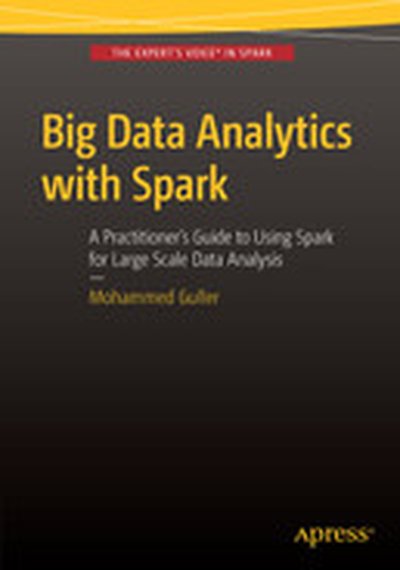
Big Data Analytics with Spark: A Practitioner’s Guide to Using Spark for Large-Scale Data Processing, Machine Learning, and Graph Analytics, and High-Velocity Data Stream Processing

This book is a step-by-step guide for learning how to use Spark for different types of big-data analytics projects, including batch, interactive, graph, and stream data analysis as well as machine learning. It covers Spark core and its add-on libraries, including Spark SQL, Spark Streaming, GraphX, MLlib, and Spark ML. Big Data Analytics with Spark shows you how to use Spark and leverage its easy-to-use features to increase your productivity. You learn to perform fast data analysis using its in-memory caching and advanced execution engine, employ in-memory computing capabilities for building high-performance machine learning and low-latency interactive analytics applications, and much more. Moreover, the book shows you how to use Spark as a single integrated platform for a variety of data processing tasks, including ETL pipelines, BI, live data stream processing, graph analytics, and machine learning. The book also includes a chapter on Scala, the hottest functional programming language, and the language that underlies Spark. You’ll learn the basics of functional programming in Scala, so that you can write Spark applications in it. What's more, Big Data Analytics with Spark provides an introduction to other big data technologies that are commonly used along with Spark, such as HDFS, Avro, Parquet, Kafka, Cassandra, HBase, Mesos, and so on. It also provides an introduction to machine learning and graph concepts. So the book is self-sufficient; all the technologies that you need to know to use Spark are covered. The only thing that you are expected to have is some programming knowledge in any language.

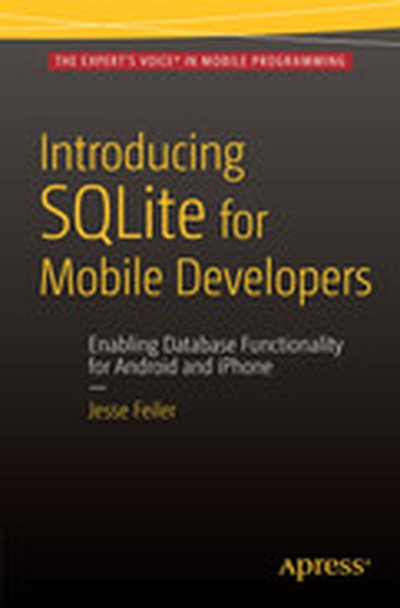
Introducing SQLite for Mobile Developers

This brief book is a basic introduction to SQLite for iOS and Android developers. The book includes a simple introduction to SQL, a discussion of when to use SQLite, and chapters devoted to using SQLite with the most likely programming languages: Java, PHP, Swift and Objective-C. It then goes through adding simple database functionality to an Android or iOS app and finally a chapter on managing the app’s life cycle.

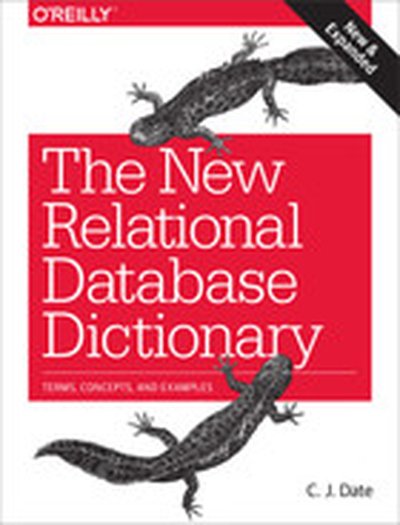
The New Relational Database Dictionary

No matter what DBMS you are using—Oracle, DB2, SQL Server, MySQL, PostgreSQL—misunderstandings can always arise over the precise meanings of terms, misunderstandings that can have a serious effect on the success of your database projects. For example, here are some common database terms: attribute, BCNF, consistency, denormalization, predicate, repeating group, join dependency. Do you know what they all mean? Are you sure? The New Relational Database Dictionary defines all of these terms and many, many more. Carefully reviewed for clarity, accuracy, and completeness, this book is an authoritative and comprehensive resource for database professionals, with over 1700 entries (many with examples) dealing with issues and concepts arising from the relational model of data. DBAs, database designers, DBMS implementers, application developers, and database professors and students can find the information they need on a daily basis, information that isn’t readily available anywhere else.

SAS 9.4 SQL Procedure User's Guide, Third Edition, 3rd Edition

Describes the basics of using the SQL procedure and provides comprehensive reference information. The usage information includes retrieving data from single and multiple tables; selecting specific data from tables; subsetting, ordering, and summarizing data; updating tables; combining tables to create new tables and useful reports; performing queries on database management system (DBMS) tables; using PROC SQL with the SAS macro facility; and debugging and optimizing PROC SQL code. The reference information includes statements, dictionary components, and system options.

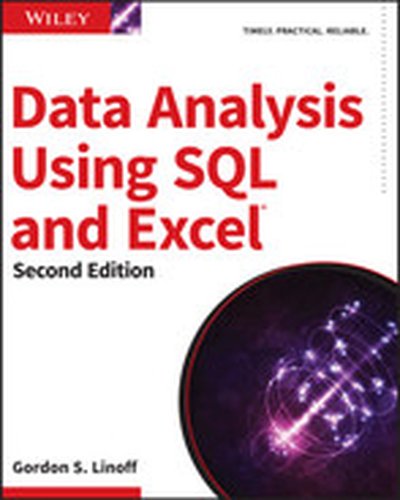
Data Analysis Using SQL and Excel, 2nd Edition

A practical guide to data mining using SQL and Excel Data Analysis Using SQL and Excel, 2nd Edition shows you how to leverage the two most popular tools for data query and analysis—SQL and Excel—to perform sophisticated data analysis without the need for complex and expensive data mining tools. Written by a leading expert on business data mining, this book shows you how to extract useful business information from relational databases. You'll learn the fundamental techniques before moving into the "where" and "why" of each analysis, and then learn how to design and perform these analyses using SQL and Excel. Examples include SQL and Excel code, and the appendix shows how non-standard constructs are implemented in other major databases, including Oracle and IBM DB2/UDB. The companion website includes datasets and Excel spreadsheets, and the book provides hints, warnings, and technical asides to help you every step of the way. Data Analysis Using SQL and Excel, 2nd Edition shows you how to perform a wide range of sophisticated analyses using these simple tools, sparing you the significant expense of proprietary data mining tools like SAS. Understand core analytic techniques that work with SQL and Excel Ensure your analytic approach gets you the results you need Design and perform your analysis using SQL and Excel Data Analysis Using SQL and Excel, 2nd Edition shows you how to best use the tools you already know to achieve expert results.

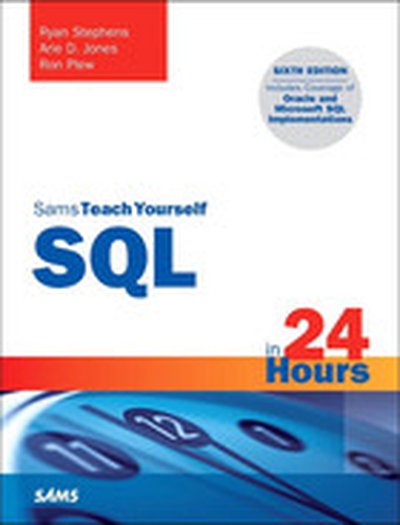
SQL in 24 Hours, Sams Teach Yourself, Sixth Edition

Includes Coverage of Oracle and Microsoft SQL Implementations In just 24 lessons of one hour or less, Sams Teach Yourself SQL in 24 Hours, Sixth Edition, helps you use SQL to build effective databases, efficiently retrieve data, and manage everything from performance to security. This book’s straightforward, step-by-step approach shows you how to work with database structures, objects, queries, tables, and more. In just hours, you will be applying advanced techniques, including views, transactions, web connections, and powerful Oracle and SQL Server extensions. Every lesson builds on what you’ve already learned, giving you a rock-solid foundation for real-world success. Step-by-step instructions carefully walk you through the most common SQL tasks. Practical, hands-on examples show you how to apply what you learn. Quizzes and exercises help you test your knowledge and stretch your skills. Notes and tips point out shortcuts and solutions. Learn how to… • Define efficient database structures and objects • “Normalize” raw databases into logically organized tables • Edit relational data and tables with DML • Manage transactions • Write effective, well-performing queries • Categorize, summarize, sort, group, and restructure data • Work with dates and times • Join tables in queries, use subqueries, and combine multiple queries • Master powerful query optimization techniques • Administer databases and manage users • Secure databases and protect data • Use views, synonyms, and the system catalog • Extend SQL to the enterprise and Internet • Master important Oracle and Microsoft extensions to ANSI SQL Register your product at informit.com/register for convenient access to downloads, updates, and corrections as they become available.

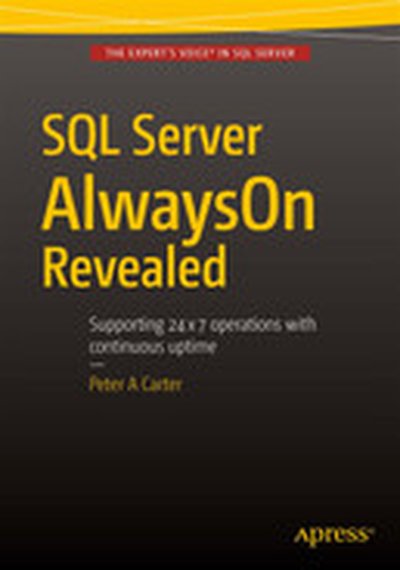
SQL Server AlwaysOn Revealed

Get a fast start to using AlwaysOn, the SQL Server solution to high-availability and disaster recovery. Read this short, 150-page book that is adapted from Peter Carter’s Pro SQL Server Administration to gain a solid and accurate understanding of how to implement systems requiring consistent and continuous uptime. Begin with an introduction to high-availability and disaster recovery concepts such as Recovery Point Objectives (RPOs), Recovery Time Objectives (RTO), availability levels, and the cost of downtime. Then move into detailed coverage of implementing and configuring the AlwaysOn feature set in order to meet the business objectives set by your organization. offers real-world advice on how to build and configure the most appropriate topology to meet the high-availability and disaster recovery requirements you are faced with. Content includes strong coverage on implementing clusters, on building AlwaysOn failover clustered instances, and on configuring AlwaysOn Availability Groups. This is a practical and hand-on book to get you started quickly in using one of the most talked-about SQL Server feature sets. SQL Server AlwaysOn Revealed Teaches you to build HA and DR solutions using the AlwaysOn feature set Provides real-world advice on configuration and performance considerations Demonstrates administrative techniques for the AlwaysOn feature set

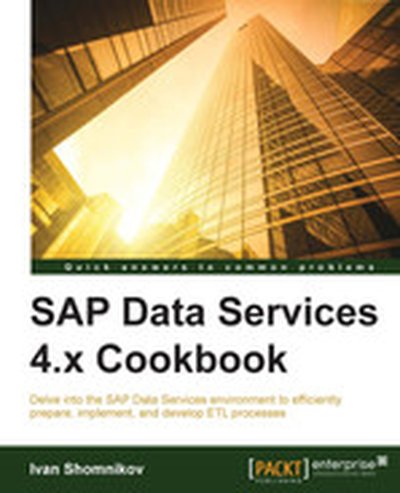
SAP Data Services 4.x Cookbook

Dive into "SAP Data Services 4.x Cookbook" to master the SAP Data Services platform and learn how to efficiently prepare, implement, and optimize ETL processes. This comprehensive guide makes it easy for you to understand both fundamental and advanced techniques of this powerful tool. What this Book will help me do Develop a thorough understanding of SAP Data Services concepts and architecture. Effectively set up and configure an ETL environment using SAP Data Services. Master advanced ETL design techniques to process and manipulate data effectively. Gain expertise in data cleansing, validation, and applying data quality methods. Build real-time ETL workflows and integrate various data systems seamlessly. Author(s) None Shomnikov is an experienced IT professional specializing in SAP Data Services and ETL processes. With years of practical experience, they bring a wealth of knowledge to help readers grasp concepts quickly and apply them effectively. None enjoys sharing practical solutions to complex problems in a clear and approachable manner. Who is it for? This book is ideal for IT professionals and engineers who are seeking to deepen their understanding of SAP Data Services. Readers should have a basic background in programming concepts and SQL to fully benefit from this book. It is particularly suited for professionals involved in ETL development and data quality management. By the end of the book, you will have a strong grasp of building reliable ETL workflows and managing data services efficiently.

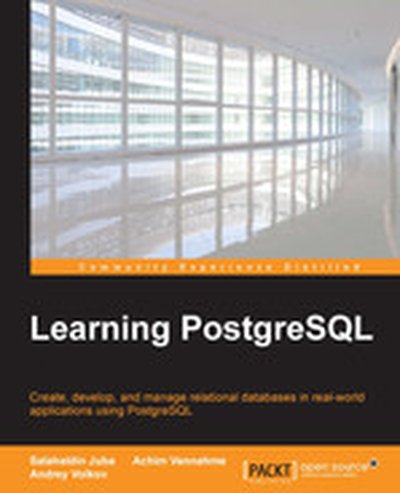
Learning PostgreSQL

Unlock the potential of PostgreSQL, a powerful open-source relational database system, with 'Learning PostgreSQL.' This book takes you through essential concepts of relational databases, SQL syntax, and the advanced features of PostgreSQL, equipping you to build and manage efficient database solutions. What this Book will help me do Learn the foundational concepts behind relational databases and relational algebra. Set up and configure a PostgreSQL server and client for development use. Develop SQL queries for robust data manipulation and retrieval. Implement advanced features of PostgreSQL, including procedural programming with PL/pgSQL. Integrate PostgreSQL with Java applications using JDBC and Hibernate frameworks. Author(s) The authors of 'Learning PostgreSQL,' None Juba, Achim Vannahme, and None Volkov, bring extensive experience and expertise in software development and database management. They have a deep understanding of PostgreSQL as well as its integration with applications. Their collective approach emphasizes practical techniques, real-world scenarios, and enriched learning, making this book a valuable resource for learners of all levels. Who is it for? This book is perfect for students, database developers, and administrators seeking to learn PostgreSQL. It suits beginners with no prior knowledge and helps intermediates deepen their expertise. Readers will learn how to develop, maintain, and optimize PostgreSQL databases, making it ideal for those aiming to advance their database development skills.

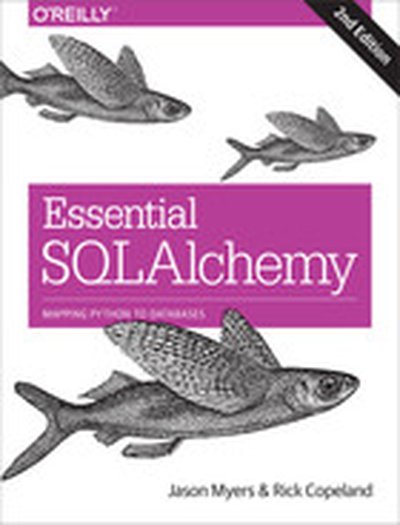
Essential SQLAlchemy, 2nd Edition

Dive into SQLAlchemy, the popular, open-source code library that helps Python programmers work with relational databases such as Oracle, MySQL, PostgresSQL, and SQLite. Using real-world examples, this practical guide shows you how to build a simple database application with SQLAlchemy, and how to connect to multiple databases simultaneously with the same metadata. SQL is a powerful language for querying and manipulating data, but it’s tough to integrate it with your application. SQLAlchemy helps you map Python objects to database tables without substantially changing your existing Python code. If you’re an intermediate Python developer with knowledge of basic SQL syntax and relational theory, this book serves as both a learning tool and a handy reference. Essential SQLAlchemy includes several sections: SQLAlchemy Core: Provide database services to your applications in a Pythonic way with the SQL Expression Language SQLAlchemy ORM: Use the object relational mapper to bind database schema and operations to data objects in your application Alembic: Use this lightweight database migration tool to handle changes to the database as your application evolves Cookbook: Learn how to use SQLAlchemy with web frameworks like Flask and libraries like SQLAcodegen

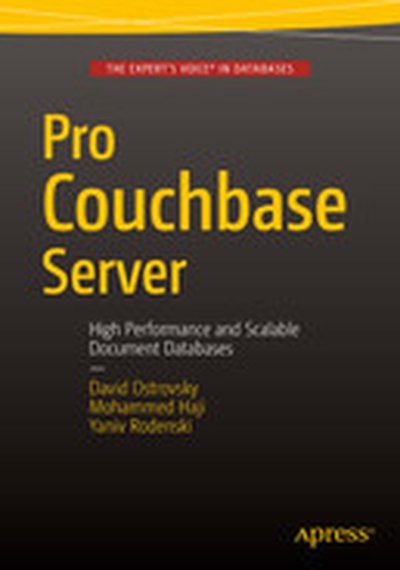
Pro Couchbase Server, Second Edition

This new edition is a hands-on guide for developers and administrators who want to use the power and flexibility of Couchbase Server 4.0 in their applications. The second edition extends coverage of N1QL, the SQL-like query language for Couchbase. It also brings coverage of multiple new features, including the new generation of client SDKs, security and LDAP integration, secondary indexes, and multi-dimensional scaling. Pro Couchbase Server covers everything you need to develop Couchbase solutions and deploy them in production. The NoSQL movement has fundamentally changed the database world in recent years. Influenced by the growing needs of web-scale applications, NoSQL databases such as Couchbase Server provide new approaches to scalability, reliability, and performance. Never have document databases been so powerful and performant. With the power and flexibility of Couchbase Server, you can model your data however you want, and easily change the data model any time you want. Pro Couchbase Server shows what is possible and helps you take full advantage of Couchbase Server and all the performance and scalability that it offers. • Helps you design and develop a document database using Couchbase Server. • Covers the latest features such as the N1QL query language. • Gives you the tools to scale out your application as needed.

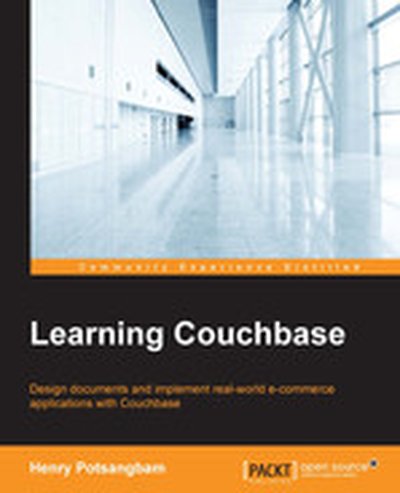
Learning Couchbase

Embark on your journey to mastering Couchbase with this comprehensive guide designed for learners of all levels. By exploring the fundamentals of NoSQL databases and diving into Couchbase's functionality, you'll gain the skills to design, manage, and scale modern applications effectively. Learn practical solutions and techniques to leverage Couchbase as a powerful backend system. What this Book will help me do Understand the core concepts of NoSQL databases and configure a Couchbase database system from scratch. Design efficient document data schemas and use Couchbase SDKs for high-performance application development. Explore the integration of Couchbase with Elasticsearch to implement robust full-text search capabilities. Master advanced Couchbase features like XDCR for disaster recovery and N1QL for SQL-like application queries. Develop and scale a real-world e-commerce application using Couchbase as the backend database system. Author(s) Henry Potsangbam is an experienced software developer and database specialist with a focus on scalable NoSQL solutions. He has worked extensively with Couchbase in developing real-world applications and is passionate about teaching others the intricacies of database systems. Henry's writing style makes advanced concepts accessible and practical for readers of all levels. Who is it for? This book is crafted for developers, database administrators, and IT professionals who want to learn NoSQL database basics and Couchbase's capabilities. Beginners with no prior experience in NoSQL will find step-by-step guidance, and experienced developers can expand their skill set to include Couchbase. A familiarity with Java programming will be helpful but is not mandatory.

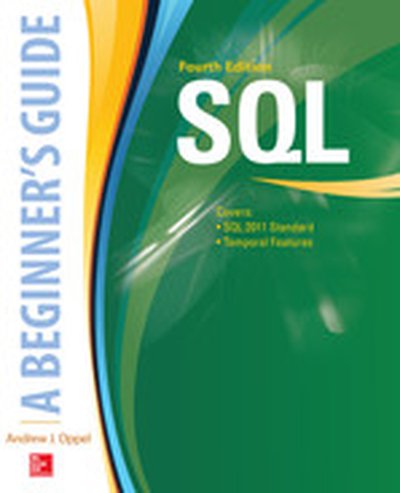
SQL: A Beginner's Guide, Fourth Edition, 4th Edition

This fully revised, self-paced learning tool lays out all the necessary steps to quickly and easily start writing SQL programs Thoroughly updated to reflect the most recent ANSI/ISO standard, SQL: A Beginner's Guide, Fourth Edition will get you up-and-running with SQL programming right away. Clear tutorials, annotated code, and proven instructional tools guide you to easily performing queries and modifications, building databases, creating and reviewing embedded statements, troubleshooting system- and data-related problems, and much more. You will learn how to retrieve, insert, update, and delete database data, and perform management and administrative functions. The book also covers new features, including SQL/XML and the long-awaited temporal support. Code examples are provided throughout along with notes on using them with the latest RDBMS software versions such as MySQL 5.7, SQL Server 2014, and Oracle Database 12 c. Platform-neutral coverage; all skills can be applied to any database product, and any SQL version Features hands-on exercises and self-tests that reinforce basic knowledge ”Ask the Expert” sections throughout are filled with bonus information and useful tips

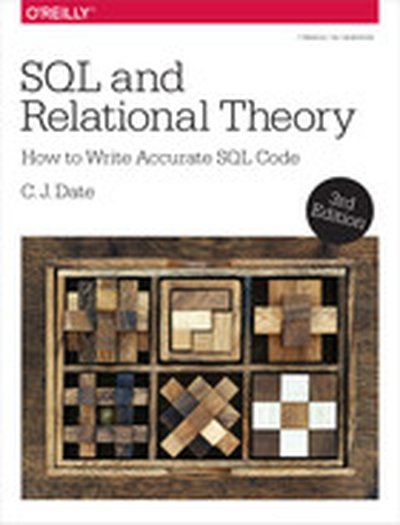
SQL and Relational Theory, 3rd Edition

SQL is full of difficulties and traps for the unwary. You can avoid them if you understand relational theory, but only if you know how to put that theory into practice. In this book, Chris Date explains relational theory in depth, and demonstrates through numerous examples and exercises how you can apply it to your use of SQL. This third edition has been revised, extended, and improved throughout. Topics whose treatment has been expanded include data types and domains, table comparisons, image relations, aggregate operators and summarization, view updating, and subqueries. A special feature of this edition is a new appendix on NoSQL and relational theory.

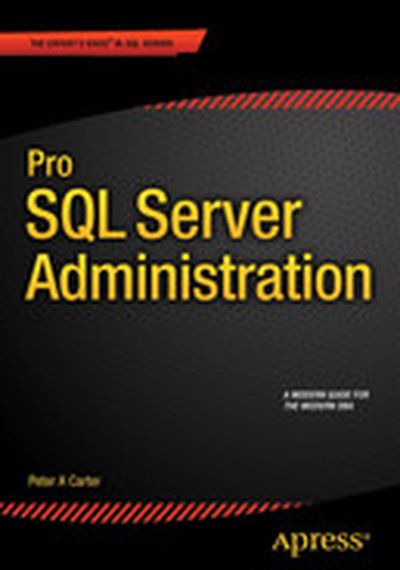
Pro SQL Server Administration

This book brings SQL Server administration into the modern era with strong coverage of hybrid cloud environments, In-Memory OLTP, and installation on Server Core. This comprehensive guide to SQL Server Administration for today’s DBA helps you to administer the new and key areas of SQL Server, including Columnstore indexes and the In-Memory OLTP feature set introduced in 2014. You will also be guided through the administration of traditional areas of SQL Server, including how to secure your instance, monitor and maintain your instance, and to use features such as AlwaysOn to make your instance highly available. Also covered is the use of SQL Server features to scale out read-only workloads. Pro SQL Server Administration is an all-new book taking up-to-date and modern approach that you'll want and need to further your career as a SQL Server database administrator. In this book, you'll find: • Extensive coverage of hybrid cloud environments involving Azure SQL Database • Detailed discussions on all new, key features, including AlwaysOn and in-memory support • Comprehensive coverage of key skills, such as monitoring, maintenance and indexing

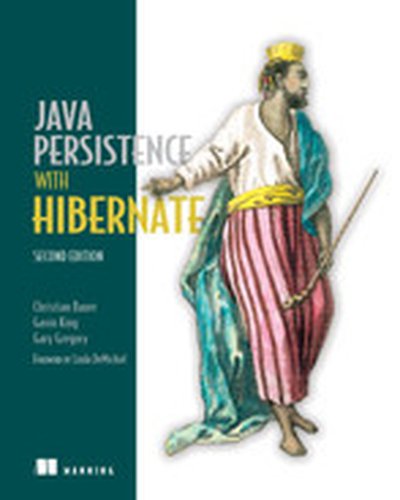
Java Persistence with Hibernate, Second Edition

Java Persistence with Hibernate, Second Edition explores Hibernate by developing an application that ties together hundreds of individual examples. In this revised edition, authors Christian Bauer, Gavin King, and Gary Gregory cover Hibernate 5 in detail with the Java Persistence 2.1 standard (JSR 338). All examples have been updated for the latest Hibernate and Java EE specification versions. About the Technology Persistence--the ability of data to outlive an instance of a program--is central to modern applications. Hibernate, the most popular Java persistence tool, offers automatic and transparent object/relational mapping, making it a snap to work with SQL databases in Java applications. About the Book Java Persistence with Hibernate, Second Edition explores Hibernate by developing an application that ties together hundreds of individual examples. You'll immediately dig into the rich programming model of Hibernate, working through mappings, queries, fetching strategies, transactions, conversations, caching, and more. Along the way you'll find a well-illustrated discussion of best practices in database design and optimization techniques. In this revised edition, authors Christian Bauer, Gavin King, and Gary Gregory cover Hibernate 5 in detail with the Java Persistence 2.1 standard (JSR 338). All examples have been updated for the latest Hibernate and Java EE specification versions. What's Inside Object/relational mapping concepts Efficient database application design Comprehensive Hibernate and Java Persistence reference Integration of Java Persistence with EJB, CDI, JSF, and JAX-RS Unmatched breadth and depth About the Reader The book assumes a working knowledge of Java. About the Authors Christian Bauer is a member of the Hibernate developer team and a trainer and consultant. Gavin King is the founder of the Hibernate project and a member of the Java Persistence expert group (JSR 220). Gary Gregory is a principal software engineer working on application servers and legacy integration. Quotes The most comprehensive book about Hibernate Persistence ... works well both as a tutorial and as a reference. - Sergio Fernandez Gonzalez, Accenture Software The essential guidebook for navigating the intricacies of Hibernate. - José Diaz, OptumHealth An excellent update to a classic and essential book. - Jerry Goodnough, Cognitive Medical Systems The must-have reference for every Hibernate user. - Stephan Heffner, SPIEGEL-Verlag Rudolf Augstein GmbH & Co. KG

MariaDb Essentials

MariaDB Essentials is an approachable yet comprehensive guide to mastering SQL with MariaDB, an advanced open-source database server compatible with MySQL. Through this book, you'll gain a solid foundation in both the basics of database management and the unique features that make MariaDB stand out, all while using practical examples to enhance your learning experience. What this Book will help me do Understand how to install, configure, and start using MariaDB efficiently. Learn how to structure and manage your data using databases, tables, indexes, and SQL queries. Master key advanced features of MariaDB such as virtual columns, dynamic columns, and full-text search. Explore practical operations including importing, exporting, and manipulating data using MariaDB. Gain the skills to work with MariaDB's community tools and innovative storage engines like CONNECT. Author(s) None Kenler is a dedicated technology author and instructor who specializes in database systems and services. With a passion for making complex technical concepts approachable, None has crafted a variety of learning materials that empower readers to fully utilize their tools. None's experience with real-world database management enriches this book, providing readers with both theoretical and practical expertise. Who is it for? This book is perfect for database enthusiasts ranging from beginners unfamiliar with SQL to seasoned users looking to deepen their understanding of MariaDB. It's ideal for working professionals transitioning from MySQL to fully appreciate the unique capabilities of MariaDB. Whether you're a student, developer, or database administrator, this book will guide you in achieving your goals.