talk-data.com talk-data.com

Topic

Data Streaming

realtime event_processing data_flow

114

tagged

Activity Trend

70 peak/qtr
2020-Q1 2026-Q1

Activities

Showing filtered results

Filtering by: O'Reilly Data Engineering Books ×
Mastering Spark for Data Science

Master the techniques and sophisticated analytics used to construct Spark-based solutions that scale to deliver production-grade data science products About This Book Develop and apply advanced analytical techniques with Spark Learn how to tell a compelling story with data science using Spark’s ecosystem Explore data at scale and work with cutting edge data science methods Who This Book Is For This book is for those who have beginner-level familiarity with the Spark architecture and data science applications, especially those who are looking for a challenge and want to learn cutting edge techniques. This book assumes working knowledge of data science, common machine learning methods, and popular data science tools, and assumes you have previously run proof of concept studies and built prototypes. What You Will Learn Learn the design patterns that integrate Spark into industrialized data science pipelines See how commercial data scientists design scalable code and reusable code for data science services Explore cutting edge data science methods so that you can study trends and causality Discover advanced programming techniques using RDD and the DataFrame and Dataset APIs Find out how Spark can be used as a universal ingestion engine tool and as a web scraper Practice the implementation of advanced topics in graph processing, such as community detection and contact chaining Get to know the best practices when performing Extended Exploratory Data Analysis, commonly used in commercial data science teams Study advanced Spark concepts, solution design patterns, and integration architectures Demonstrate powerful data science pipelines In Detail Data science seeks to transform the world using data, and this is typically achieved through disrupting and changing real processes in real industries. In order to operate at this level you need to build data science solutions of substance –solutions that solve real problems. Spark has emerged as the big data platform of choice for data scientists due to its speed, scalability, and easy-to-use APIs. This book deep dives into using Spark to deliver production-grade data science solutions. This process is demonstrated by exploring the construction of a sophisticated global news analysis service that uses Spark to generate continuous geopolitical and current affairs insights.You will learn all about the core Spark APIs and take a comprehensive tour of advanced libraries, including Spark SQL, Spark Streaming, MLlib, and more. You will be introduced to advanced techniques and methods that will help you to construct commercial-grade data products. Focusing on a sequence of tutorials that deliver a working news intelligence service, you will learn about advanced Spark architectures, how to work with geographic data in Spark, and how to tune Spark algorithms so they scale linearly. Style and approach This is an advanced guide for those with beginner-level familiarity with the Spark architecture and working with Data Science applications. Mastering Spark for Data Science is a practical tutorial that uses core Spark APIs and takes a deep dive into advanced libraries including: Spark SQL, visual streaming, and MLlib. This book expands on titles like: Machine Learning with Spark and Learning Spark. It is the next learning curve for those comfortable with Spark and looking to improve their skills.
Learning Apache Spark 2

Dive into the world of Big Data with "Learning Apache Spark 2". This book introduces you to the powerful Apache Spark framework, tailored for real-time data analytics and machine learning. Through practical examples and real-world use-cases, you'll gain hands-on experience in leveraging Spark's capabilities for your data processing needs. What this Book will help me do Master the fundamentals of Apache Spark 2 and its new features. Effectively use Spark SQL, MLlib, RDDs, GraphX, and Spark Streaming to tackle real-world challenges. Gain skills in data processing, transformation, and analysis with Spark. Deploy and operate your Spark applications in clustered environments. Develop your own recommendation engines and predictive analytics models with Spark. Author(s) None Abbasi brings a wealth of expertise in Big Data technologies with a keen focus on simplifying complex concepts for learners. With substantial experience working in data processing frameworks, their approach to teaching creates an engaging and practical learning experience. With "Learning Apache Spark 2", None empowers readers to confidently tackle challenges in Big Data processing and analytics. Who is it for? This book is ideal for aspiring Big Data professionals seeking an accessible introduction to Apache Spark. Beginners in Spark will find step-by-step guidance, while those familiar with earlier versions will appreciate the insights into Spark 2's new features. Familiarity with Big Data concepts and Scala programming is recommended for optimal understanding.

Learning PySpark

"Learning PySpark" guides you through mastering the integration of Python with Apache Spark to build scalable and efficient data applications. You'll delve into Spark 2.0's architecture, efficiently process data, and explore PySpark's capabilities ranging from machine learning to structured streaming. By the end, you'll be equipped to craft and deploy robust data pipelines and applications. What this Book will help me do Master the Spark 2.0 architecture and its Python integration with PySpark. Leverage PySpark DataFrames and RDDs for effective data manipulation and analysis. Develop scalable machine learning models using PySpark's ML and MLlib libraries. Understand advanced PySpark features such as GraphFrames for graph processing and TensorFrames for deep learning models. Gain expertise in deploying PySpark applications locally and on the cloud for production-ready solutions. Author(s) Authors None Drabas and None Lee bring extensive experience in data engineering and Python programming. They combine a practical, example-driven approach with deep insights into Apache Spark's ecosystem. Their expertise and clarity in writing make this book accessible for individuals aiming to excel in big data technologies with Python. Who is it for? This book is best suited for Python developers who want to integrate Apache Spark 2.0 into their workflow to process large-scale data. Ideal readers will have foundational knowledge of Python and seek to build scalable data-intensive applications using Spark, regardless of prior experience with Spark itself.

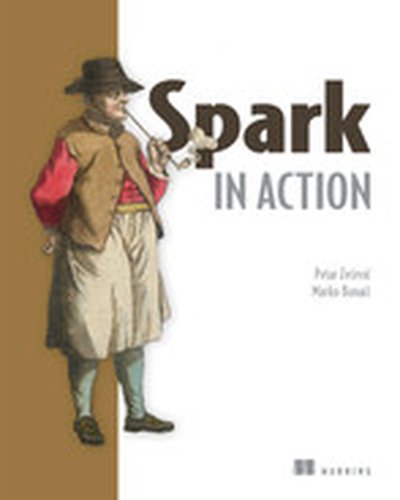
Spark in Action

Spark in Action teaches you the theory and skills you need to effectively handle batch and streaming data using Spark. Fully updated for Spark 2.0. About the Technology Big data systems distribute datasets across clusters of machines, making it a challenge to efficiently query, stream, and interpret them. Spark can help. It is a processing system designed specifically for distributed data. It provides easy-to-use interfaces, along with the performance you need for production-quality analytics and machine learning. Spark 2 also adds improved programming APIs, better performance, and countless other upgrades. About the Book Spark in Action teaches you the theory and skills you need to effectively handle batch and streaming data using Spark. You'll get comfortable with the Spark CLI as you work through a few introductory examples. Then, you'll start programming Spark using its core APIs. Along the way, you'll work with structured data using Spark SQL, process near-real-time streaming data, apply machine learning algorithms, and munge graph data using Spark GraphX. For a zero-effort startup, you can download the preconfigured virtual machine ready for you to try the book's code. What's Inside Updated for Spark 2.0 Real-life case studies Spark DevOps with Docker Examples in Scala, and online in Java and Python About the Reader Written for experienced programmers with some background in big data or machine learning. About the Authors Petar Zečević and Marko Bonaći are seasoned developers heavily involved in the Spark community. Quotes Dig in and get your hands dirty with one of the hottest data processing engines today. A great guide. - Jonathan Sharley, Pandora Media Must-have! Speed up your learning of Spark as a distributed computing framework. - Robert Ormandi, Yahoo! An easy-to-follow, step-by-step guide. - Gaurav Bhardwaj, 3Pillar Global An ambitiously comprehensive overview of Spark and its diverse ecosystem. - Jonathan Miller, Optensity

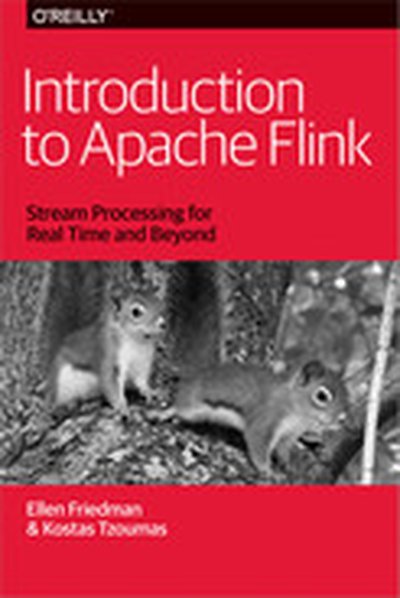
Introduction to Apache Flink

There’s growing interest in learning how to analyze streaming data in large-scale systems such as web traffic, financial transactions, machine logs, industrial sensors, and many others. But analyzing data streams at scale has been difficult to do well—until now. This practical book delivers a deep introduction to Apache Flink, a highly innovative open source stream processor with a surprising range of capabilities.

Fast Data Architectures for Streaming Applications

Why have stream-oriented data systems become so popular, when batch-oriented systems have served big data needs for many years? In this report, author Dean Wampler examines the rise of streaming systems for handling time-sensitive problems—such as detecting fraudulent financial activity as it happens. You’ll explore the characteristics of fast data architectures, along with several open source tools for implementing them. Batch-mode processing isn’t going away, but exclusive use of these systems is now a competitive disadvantage. You’ll learn that, while fast data architectures are much harder to build, they represent the state of the art for dealing with mountains of data that require immediate attention. Learn step-by-step how a basic fast data architecture works Understand why event logs are the core abstraction for streaming architectures, while message queues are the core integration tool Use methods for analyzing infinite data sets, where you don’t have all the data and never will Take a tour of open source streaming engines, and discover which ones work best for different use cases Get recommendations for making real-world streaming systems responsive, resilient, elastic, and message driven Explore an example streaming application for the IoT: telemetry ingestion and anomaly detection for home automation systems

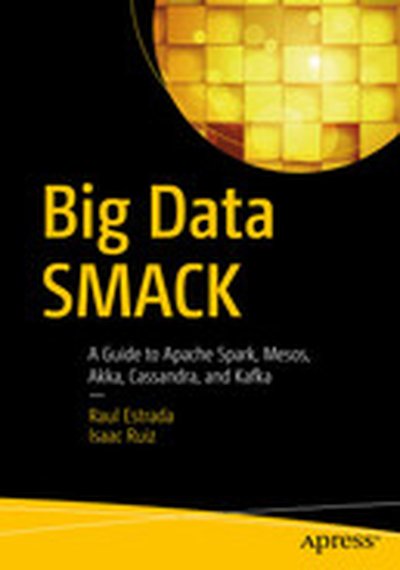
Big Data SMACK: A Guide to Apache Spark, Mesos, Akka, Cassandra, and Kafka

Learn how to integrate full-stack open source big data architecture and to choose the correct technology—Scala/Spark, Mesos, Akka, Cassandra, and Kafka—in every layer. Big data architecture is becoming a requirement for many different enterprises. So far, however, the focus has largely been on collecting, aggregating, and crunching large data sets in a timely manner. In many cases now, organizations need more than one paradigm to perform efficient analyses. Big Data SMACK explains each of the full-stack technologies and, more importantly, how to best integrate them. It provides detailed coverage of the practical benefits of these technologies and incorporates real-world examples in every situation. This book focuses on the problems and scenarios solved by the architecture, as well as the solutions provided by every technology. It covers the six main concepts of big data architecture and how integrate, replace, and reinforce every layer: What You'll Learn The language: Scala The engine: Spark (SQL, MLib, Streaming, GraphX) The container: Mesos, Docker The view: Akka The storage: Cassandra The message broker: Kafka What You Will Learn: Make big data architecture without using complex Greek letter architectures Build a cheap but effective cluster infrastructure Make queries, reports, and graphs that business demands Manage and exploit unstructured and No-SQL data sources Use tools to monitor the performance of your architecture Integrate all technologies and decide which ones replace and which ones reinforce Who This Book Is For Developers, data architects, and data scientists looking to integrate the most successful big data open stack architecture and to choose the correct technology in every layer

Big Data Analytics

Dive into the world of big data with "Big Data Analytics: Real Time Analytics Using Apache Spark and Hadoop." This comprehensive guide introduces readers to the fundamentals and practical applications of Apache Spark and Hadoop, covering essential topics like Spark SQL, DataFrames, structured streaming, and more. Learn how to harness the power of real-time analytics and big data tools effectively. What this Book will help me do Master the key components of Apache Spark and Hadoop ecosystems, including Spark SQL and MapReduce. Gain an understanding of DataFrames, DataSets, and structured streaming for seamless data handling. Develop skills in real-time analytics using Spark Streaming and technologies like Kafka and HBase. Learn to implement machine learning models using Spark's MLlib and ML Pipelines. Explore graph analytics with GraphX and leverage data visualization tools like Jupyter and Zeppelin. Author(s) Venkat Ankam, an expert in big data technologies, has years of experience working with Apache Hadoop and Spark. As an educator and technical consultant, Venkat has enabled numerous professionals to gain critical insights into big data ecosystems. With a pragmatic approach, his writings aim to guide readers through complex systems in a structured and easy-to-follow manner. Who is it for? This book is perfect for data analysts, data scientists, software architects, and programmers aiming to expand their knowledge of big data analytics. Readers should ideally have a basic programming background in languages like Python, Scala, R, or SQL. Prior hands-on experience with big data environments is not necessary but is an added advantage. This guide is created to cater to a range of skill levels, from beginners to intermediate learners.

Sams Teach Yourself Apache Spark™ in 24 Hours

Apache Spark is a fast, scalable, and flexible open source distributed processing engine for big data systems and is one of the most active open source big data projects to date. In just 24 lessons of one hour or less, Sams Teach Yourself Apache Spark in 24 Hours helps you build practical Big Data solutions that leverage Spark’s amazing speed, scalability, simplicity, and versatility. This book’s straightforward, step-by-step approach shows you how to deploy, program, optimize, manage, integrate, and extend Spark–now, and for years to come. You’ll discover how to create powerful solutions encompassing cloud computing, real-time stream processing, machine learning, and more. Every lesson builds on what you’ve already learned, giving you a rock-solid foundation for real-world success. Whether you are a data analyst, data engineer, data scientist, or data steward, learning Spark will help you to advance your career or embark on a new career in the booming area of Big Data. Learn how to • Discover what Apache Spark does and how it fits into the Big Data landscape • Deploy and run Spark locally or in the cloud • Interact with Spark from the shell • Make the most of the Spark Cluster Architecture • Develop Spark applications with Scala and functional Python • Program with the Spark API, including transformations and actions • Apply practical data engineering/analysis approaches designed for Spark • Use Resilient Distributed Datasets (RDDs) for caching, persistence, and output • Optimize Spark solution performance • Use Spark with SQL (via Spark SQL) and with NoSQL (via Cassandra) • Leverage cutting-edge functional programming techniques • Extend Spark with streaming, R, and Sparkling Water • Start building Spark-based machine learning and graph-processing applications • Explore advanced messaging technologies, including Kafka • Preview and prepare for Spark’s next generation of innovations Instructions walk you through common questions, issues, and tasks; Q-and-As, Quizzes, and Exercises build and test your knowledge; "Did You Know?" tips offer insider advice and shortcuts; and "Watch Out!" alerts help you avoid pitfalls. By the time you're finished, you'll be comfortable using Apache Spark to solve a wide spectrum of Big Data problems.

Pro Spark Streaming: The Zen of Real-Time Analytics Using Apache Spark

Learn the right cutting-edge skills and knowledge to leverage Spark Streaming to implement a wide array of real-time, streaming applications. This book walks you through end-to-end real-time application development using real-world applications, data, and code. Taking an application-first approach, each chapter introduces use cases from a specific industry and uses publicly available datasets from that domain to unravel the intricacies of production-grade design and implementation. The domains covered in Pro Spark Streaming include social media, the sharing economy, finance, online advertising, telecommunication, and IoT. In the last few years, Spark has become synonymous with big data processing. DStreams enhance the underlying Spark processing engine to support streaming analysis with a novel micro-batch processing model. Pro Spark Streaming by Zubair Nabi will enable you to become a specialist of latency sensitive applications by leveraging the key features of DStreams, micro-batch processing, and functional programming. To this end, the book includes ready-to-deploy examples and actual code. Pro Spark Streaming will act as the bible of Spark Streaming. What You'll Learn Discover Spark Streaming application development and best practices Work with the low-level details of discretized streams Optimize production-grade deployments of Spark Streaming via configuration recipes and instrumentation using Graphite, collectd, and Nagios Ingest data from disparate sources including MQTT, Flume, Kafka, Twitter, and a custom HTTP receiver Integrate and couple with HBase, Cassandra, and Redis Take advantage of design patterns for side-effects and maintaining state across the Spark Streaming micro-batch model Implement real-time and scalable ETL using data frames, SparkSQL, Hive, and SparkR Use streaming machine learning, predictive analytics, and recommendations Mesh batch processing with stream processing via the Lambda architecture Who This Book Is For Data scientists, big data experts, BI analysts, and data architects.

Streaming Architecture

More and more data-driven companies are looking to adopt stream processing and streaming analytics. With this concise ebook, you’ll learn best practices for designing a reliable architecture that supports this emerging big-data paradigm. Authors Ted Dunning and Ellen Friedman (Real World Hadoop) help you explore some of the best technologies to handle stream processing and analytics, with a focus on the upstream queuing or message-passing layer. To illustrate the effectiveness of these technologies, this book also includes specific use cases. Ideal for developers and non-technical people alike, this book describes: Key elements in good design for streaming analytics, focusing on the essential characteristics of the messaging layer New messaging technologies, including Apache Kafka and MapR Streams, with links to sample code Technology choices for streaming analytics: Apache Spark Streaming, Apache Flink, Apache Storm, and Apache Apex How stream-based architectures are helpful to support microservices Specific use cases such as fraud detection and geo-distributed data streams Ted Dunning is Chief Applications Architect at MapR Technologies, and active in the open source community. He currently serves as VP for Incubator at the Apache Foundation, as a champion and mentor for a large number of projects, and as committer and PMC member of the Apache ZooKeeper and Drill projects. Ted is on Twitter as @ted_dunning. Ellen Friedman, a committer for the Apache Drill and Apache Mahout projects, is a solutions consultant and well-known speaker and author, currently writing mainly about big data topics. With a PhD in Biochemistry, she has years of experience as a research scientist and has written about a variety of technical topics. Ellen is on Twitter as @Ellen_Friedman.

Architecting Data Lakes

Many organizations use Hadoop-driven data lakes as an adjunct staging area for their enterprise data warehouses (EDW). But for those companies ready to take the plunge, a data lake is far more useful as a one-stop-shop for extracting insights from their vast collection of data. With this eBook, you’ll learn best practices for building, maintaining, and deriving value from a Hadoop data lake in production environments. Authors Alice LaPlante and Ben Sharma explain how a data lake will enable your organization to manage an increasing volume of datasets—from blog postings and product reviews to streaming data—and to discover important relationships between them. Whether you want to control administrative costs in healthcare or reduce risk in financial services, this ebook addresses the architectural considerations and required capabilities you need to build your own data lake. With this report, you’ll learn: The key attributes of a data lake, including its ability to store information in native formats for later processing Why implementing data management and governance in your data lake is crucial How to address various challenges for building and managing a data lake Self-service options that enable different users to access the data lake without help from IT Emerging trends that will shape the future of data lakes

Spark

Production-targeted Spark guidance with real-world use cases Spark: Big Data Cluster Computing in Production goes beyond general Spark overviews to provide targeted guidance toward using lightning-fast big-data clustering in production. Written by an expert team well-known in the big data community, this book walks you through the challenges in moving from proof-of-concept or demo Spark applications to live Spark in production. Real use cases provide deep insight into common problems, limitations, challenges, and opportunities, while expert tips and tricks help you get the most out of Spark performance. Coverage includes Spark SQL, Tachyon, Kerberos, ML Lib, YARN, and Mesos, with clear, actionable guidance on resource scheduling, db connectors, streaming, security, and much more. Spark has become the tool of choice for many Big Data problems, with more active contributors than any other Apache Software project. General introductory books abound, but this book is the first to provide deep insight and real-world advice on using Spark in production. Specific guidance, expert tips, and invaluable foresight make this guide an incredibly useful resource for real production settings. Review Spark hardware requirements and estimate cluster size Gain insight from real-world production use cases Tighten security, schedule resources, and fine-tune performance Overcome common problems encountered using Spark in production Spark works with other big data tools including MapReduce and Hadoop, and uses languages you already know like Java, Scala, Python, and R. Lightning speed makes Spark too good to pass up, but understanding limitations and challenges in advance goes a long way toward easing actual production implementation. Spark: Big Data Cluster Computing in Production tells you everything you need to know, with real-world production insight and expert guidance, tips, and tricks.

Fast Data Front Ends for Hadoop

Organizations striving to build applications for streaming data have a new possibility to ponder: the use of ingestion engines at the front end of their Hadoop systems. With this O’Reilly report, you’ll learn how these fast data front ends process data before it reaches the Hadoop Data File System (HDFS), and provide intelligence and context in real time. This helps you reduce response times from hours to minutes, or even minutes to seconds. Author and independent consultant Akmal Chaudhri looks at several popular ingestion engines, including Apache Spark, Apache Storm, and the VoltDB in-memory database. Among them, VoltDB stands out by providing full Atomicity, Consistency, Isolation, and Durability (ACID) support. VoltDB also lets you build a fast data front-end that uses the familiar SQL language and standards. Learn the advantages of ingestion engines as well as the theoretical and practical problems that can come up in an implementation. You’ll discover how this option can handle streaming data, provide state, ensure durability, and support transactions and real-time decisions. Akmal B. Chaudhri is an Independent Consultant, specializing in big data, NoSQL, and NewSQL database technologies. He has previously held roles as a developer, consultant, product strategist, and technical trainer with several blue-chip companies and big data startups. Akmal regularly presents at international conferences and serves on program committees for several major conferences and workshops.

Big Data Analytics with Spark: A Practitioner’s Guide to Using Spark for Large-Scale Data Processing, Machine Learning, and Graph Analytics, and High-Velocity Data Stream Processing

This book is a step-by-step guide for learning how to use Spark for different types of big-data analytics projects, including batch, interactive, graph, and stream data analysis as well as machine learning. It covers Spark core and its add-on libraries, including Spark SQL, Spark Streaming, GraphX, MLlib, and Spark ML. Big Data Analytics with Spark shows you how to use Spark and leverage its easy-to-use features to increase your productivity. You learn to perform fast data analysis using its in-memory caching and advanced execution engine, employ in-memory computing capabilities for building high-performance machine learning and low-latency interactive analytics applications, and much more. Moreover, the book shows you how to use Spark as a single integrated platform for a variety of data processing tasks, including ETL pipelines, BI, live data stream processing, graph analytics, and machine learning. The book also includes a chapter on Scala, the hottest functional programming language, and the language that underlies Spark. You’ll learn the basics of functional programming in Scala, so that you can write Spark applications in it. What's more, Big Data Analytics with Spark provides an introduction to other big data technologies that are commonly used along with Spark, such as HDFS, Avro, Parquet, Kafka, Cassandra, HBase, Mesos, and so on. It also provides an introduction to machine learning and graph concepts. So the book is self-sufficient; all the technologies that you need to know to use Spark are covered. The only thing that you are expected to have is some programming knowledge in any language.

Streaming Analytics with IBM Streams: Analyze More, Act Faster, and Get Continuous Insights

Gain a competitive edge with IBM Streams Turn data-in-motion into solid business opportunities with IBM Streams and let Streaming Analytics with IBM Streams show you how. This comprehensive guide starts out with a brief overview of different technologies used for big data processing and explanations on how data-in-motion can be utilized for business advantages. You will learn how to apply big data analytics and how they benefit from data-in-motion. Discover all about Streams starting with the main components then dive further with Stream instillation, and upgrade and management capabilities including tools used for production. Through a solid understanding of big in motion, detailed illustrations, Endnotes that provide additional learning resources, and end of chapter summaries with helpful insight, data analysists and professionals looking to get more from their data will benefit from expert insight on: Data-in-motion processing and how it can be applied to generate new business opportunities The three approaches to processing data in motion and pros and cons of each The main components of Streams from runtime to installation and administration Multiple purposes of the Text Analytics toolkit The evolving Streams ecosystem A detailed roadmap for programmers to quickly become fluent with Streams Data-in-motion is rapidly becoming a business tool used to discover more about customers and opportunities, however it is only valuable if have the tools and knowledge to analyze and apply. This is an expert guide to IBM Streams and how you can harness this powerful tool to gain a competitive business edge.

Building Real-Time Data Pipelines

Traditional data processing infrastructures—especially those that support applications—weren’t designed for our mobile, streaming, and online world. This O’Reilly report examines how today’s distributed, in-memory database management systems (IMDBMS) enable you to make quick decisions based on real-time data. In this report, executives from MemSQL Inc. provide options for using in-memory architectures to build real-time data pipelines. If you want to instantly track user behavior on websites or mobile apps, generate reports on a changing dataset, or detect anomalous activity in your system as it occurs, you’ll learn valuable lessons from some of the largest and most successful tech companies focused on in-memory databases. Explore the architectural principles of modern in-memory databases Understand what’s involved in moving from data silos to real-time data pipelines Run transactions and analytics in a single database, without ETL Minimize complexity by architecting a multipurpose data infrastructure Learn guiding principles for developing an optimally architected operational system Provide persistence and high availability mechanisms for real-time data Choose an in-memory architecture flexible enough to scale across a variety of deployment options Conor Doherty, Data Engineer at MemSQL, is responsible for creating content around database innovation, analytics, and distributed systems. Gary Orenstein, Chief Marketing Officer at MemSQL, leads marketing strategy, product management, communications, and customer engagement. Kevin White is the Director of of Operations and a content contributor at MemSQL. Steven Camiña is a Principal Product Manager at MemSQL. His experience spans B2B enterprise solutions, including databases and middleware platforms.

Fast Data: Smart and at Scale

The need for fast data applications is growing rapidly, driven by the IoT, the surge in machine-to-machine (M2M) data, global mobile device proliferation, and the monetization of SaaS platforms. So how do you combine real-time, streaming analytics with real-time decisions in an architecture that’s reliable, scalable, and simple? In this O’Reilly report, Ryan Betts and John Hugg from VoltDB examine ways to develop apps for fast data, using pre-defined patterns. These patterns are general enough to suit both the do-it-yourself, hybrid batch/streaming approach, as well as the simpler, proven in-memory approach available with certain fast database offerings. Their goal is to create a collection of fast data app development recipes. We welcome your contributions, which will be tested and included in future editions of this report.

PostgreSQL Replication, Second Edition

The second edition of 'PostgreSQL Replication' by Hans-Jürgen Schönig is a comprehensive guide that empowers PostgreSQL database professionals to establish robust replication solutions. Through detailed explanations and expert techniques, you will learn how to enhance the security, scalability, and reliability of your PostgreSQL databases using modern replication methods. What this Book will help me do Master Point-in-Time Recovery to safeguard data and perform database recoveries effectively. Implement both synchronous and asynchronous streaming replication to suit different operational needs. Optimize database performance and scalability using tools like pgpool and PgBouncer. Ensure database high availability and data security through Linux High Availability configurations. Solve replication-related challenges by leveraging advanced knowledge of the PostgreSQL transaction log. Author(s) Hans-Jürgen Schönig, a seasoned PostgreSQL specialist, has years of experience architecting and optimizing PostgreSQL database systems for businesses of all sizes. With a strong focus on practical implementation and a passion for teaching, his writing bridges the gap between theoretical concepts and hands-on solutions, making PostgreSQL topics accessible and actionable. Who is it for? This book is tailored for PostgreSQL administrators and professionals seeking to implement robust database replication. Whether you're familiar with basic database administration or looking to deepen your expertise, this book provides valuable insights into replication strategies. It's ideal for those aiming to boost database performance and enhance operational reliability through advanced PostgreSQL features.

Spark Cookbook

Spark Cookbook is your practical guide to mastering Apache Spark, encompassing a comprehensive set of patterns and examples. Through its over 60 recipes, you will gain actionable insights into using Spark Core, Spark SQL, Spark Streaming, MLlib, and GraphX effectively for your big data needs. What this Book will help me do Understand how to install and configure Apache Spark in various environments. Build data pipelines and perform real-time analytics with Spark Streaming. Utilize Spark SQL for interactive data querying and reporting. Apply machine learning workflows using MLlib, including supervised and unsupervised models. Develop optimized big data solutions and integrate them into enterprise platforms. Author(s) None Yadav, the author of Spark Cookbook, is an experienced data engineer and technical expert with deep insights into big data processing frameworks. Yadav has spent years working with Spark and its ecosystem, providing practical guidance to developers and data scientists alike. This book reflects their commitment to sharing actionable knowledge. Who is it for? This book is designed for data engineers, developers, and data scientists who work with big data systems and wish to utilize Apache Spark effectively. Whether you're looking to optimize existing Spark applications or explore its libraries for new use cases, this book will provide the guidance you need. A basic familiarity with big data concepts and programming in languages like Java or Python is recommended to make the most out of this book.