talk-data.com talk-data.com

Topic

Data Streaming

realtime event_processing data_flow

18

tagged

Activity Trend

70 peak/qtr
2020-Q1 2026-Q1

Activities

Showing filtered results

Filtering by: O'Reilly Data Science Books ×
Mastering Microsoft Fabric: SAASification of Analytics

Learn and explore the capabilities of Microsoft Fabric, the latest evolution in cloud analytics suites. This book will help you understand how users can leverage Microsoft Office equivalent experience for performing data management and advanced analytics activity. The book starts with an overview of the analytics evolution from on premises to cloud infrastructure as a service (IaaS), platform as a service (PaaS), and now software as a service (SaaS version) and provides an introduction to Microsoft Fabric. You will learn how to provision Microsoft Fabric in your tenant along with the key capabilities of SaaS analytics products and the advantage of using Fabric in the enterprise analytics platform. OneLake and Lakehouse for data engineering is discussed as well as OneLake for data science. Author Ghosh teaches you about data warehouse offerings inside Microsoft Fabric and the new data integration experience which brings Azure Data Factory and Power Query Editor of Power BI together in a single platform. Also demonstrated is Real-Time Analytics in Fabric, including capabilities such as Kusto query and database. You will understand how the new event stream feature integrates with OneLake and other computations. You also will know how to configure the real-time alert capability in a zero code manner and go through the Power BI experience in the Fabric workspace. Fabric pricing and its licensing is also covered. After reading this book, you will understand the capabilities of Microsoft Fabric and its Integration with current and upcoming Azure OpenAI capabilities. What You Will Learn Build OneLake for all data like OneDrive for Microsoft Office Leverage shortcuts for cross-cloud data virtualization in Azure and AWS Understand upcoming OpenAI integration Discover new event streaming and Kusto query inside Fabric real-time analytics Utilize seamless tooling for machine learning and data science Who This Book Is For Citizen users and experts in the data engineering and data science fields, along with chief AI officers
Google Cloud Platform for Data Science: A Crash Course on Big Data, Machine Learning, and Data Analytics Services

This book is your practical and comprehensive guide to learning Google Cloud Platform (GCP) for data science, using only the free tier services offered by the platform. Data science and machine learning are increasingly becoming critical to businesses of all sizes, and the cloud provides a powerful platform for these applications. GCP offers a range of data science services that can be used to store, process, and analyze large datasets, and train and deploy machine learning models. The book is organized into seven chapters covering various topics such as GCP account setup, Google Colaboratory, Big Data and Machine Learning, Data Visualization and Business Intelligence, Data Processing and Transformation, Data Analytics and Storage, and Advanced Topics. Each chapter provides step-by-step instructions and examples illustrating how to use GCP services for data science and big data projects. Readers will learn how to set up a Google Colaboratory account and run Jupyternotebooks, access GCP services and data from Colaboratory, use BigQuery for data analytics, and deploy machine learning models using Vertex AI. The book also covers how to visualize data using Looker Data Studio, run data processing pipelines using Google Cloud Dataflow and Dataprep, and store data using Google Cloud Storage and SQL. What You Will Learn Set up a GCP account and project Explore BigQuery and its use cases, including machine learning Understand Google Cloud AI Platform and its capabilities Use Vertex AI for training and deploying machine learning models Explore Google Cloud Dataproc and its use cases for big data processing Create and share data visualizations and reports with Looker Data Studio Explore Google Cloud Dataflow and its use cases for batch and stream data processing Run data processing pipelines on Cloud Dataflow Explore Google Cloud Storageand its use cases for data storage Get an introduction to Google Cloud SQL and its use cases for relational databases Get an introduction to Google Cloud Pub/Sub and its use cases for real-time data streaming Who This Book Is For Data scientists, machine learning engineers, and analysts who want to learn how to use Google Cloud Platform (GCP) for their data science and big data projects

Microsoft Power BI Data Analyst Certification Companion: Preparation for Exam PL-300

Use this book to study for the PL-300 Microsoft Power BI Data Analyst exam. The book follows the “Skills Measured” outline provided by Microsoft to help focus your study. Each topic area from the outline corresponds to an area covered by the exam, and the book helps you build a good base of knowledge in each area. Each topic is presented with a blend of practical explanations, theory, and best practices. Power BI is more than just the Power BI Desktop or the Power BI Service. It is two distinct applications and an online service that, together, enable business users to gather, shape, and analyze data to generate and present insights. This book clearly delineates the purpose of each component and explains the key concepts necessary to use each component effectively. Each chapter provides best practices and tips to help an inexperienced Power BI practitioner develop good habits that will support larger or more complex analyses. Manybusiness analysts come to Power BI with a wealth of experience in Excel and particularly with pivot tables. Some of this experience translates readily into Power BI concepts. This book leverages that overlap in skill sets to help seasoned Excel users overcome the initial learning curve in Power BI, but no prior knowledge of any kind is assumed, terminology is defined in non-technical language, and key concepts are explained using analogies and ideas from experiences common to any reader. After reading this book, you will have the background and capability to learn the skills and concepts necessary both to pass the PL-300 exam and become a confident Power BI practitioner. What You Will Learn Create user-friendly, responsive reports with drill-throughs, bookmarks, and tool tips Construct a star schema with relationships, ensuring that your analysis will be both accurate and responsive Publish reports and datasets to the Power BI Service, enabling the report (and the dataset) to be viewed and used by your colleagues Extract data from a variety of sources, enabling you to leverage the data that your organization has collected and stored in a variety of sources Schedule data refreshes for published datasets so your reports and dashboards stay up to date Develop dashboards with visuals from different reports and streaming content Who This Book Is For Power BI users who are planning to take the PL-300 exam, Power BI users who want help studying the topic areas listed in Microsoft’s outline for the PL-300 exam, and those who are not planning to take the exam but want to close any knowledge gaps they might have

Data Science on AWS

With this practical book, AI and machine learning practitioners will learn how to successfully build and deploy data science projects on Amazon Web Services. The Amazon AI and machine learning stack unifies data science, data engineering, and application development to help level up your skills. This guide shows you how to build and run pipelines in the cloud, then integrate the results into applications in minutes instead of days. Throughout the book, authors Chris Fregly and Antje Barth demonstrate how to reduce cost and improve performance. Apply the Amazon AI and ML stack to real-world use cases for natural language processing, computer vision, fraud detection, conversational devices, and more Use automated machine learning to implement a specific subset of use cases with SageMaker Autopilot Dive deep into the complete model development lifecycle for a BERT-based NLP use case including data ingestion, analysis, model training, and deployment Tie everything together into a repeatable machine learning operations pipeline Explore real-time ML, anomaly detection, and streaming analytics on data streams with Amazon Kinesis and Managed Streaming for Apache Kafka Learn security best practices for data science projects and workflows including identity and access management, authentication, authorization, and more

Python for Algorithmic Trading

Algorithmic trading, once the exclusive domain of institutional players, is now open to small organizations and individual traders using online platforms. The tool of choice for many traders today is Python and its ecosystem of powerful packages. In this practical book, author Yves Hilpisch shows students, academics, and practitioners how to use Python in the fascinating field of algorithmic trading. You'll learn several ways to apply Python to different aspects of algorithmic trading, such as backtesting trading strategies and interacting with online trading platforms. Some of the biggest buy- and sell-side institutions make heavy use of Python. By exploring options for systematically building and deploying automated algorithmic trading strategies, this book will help you level the playing field. Set up a proper Python environment for algorithmic trading Learn how to retrieve financial data from public and proprietary data sources Explore vectorization for financial analytics with NumPy and pandas Master vectorized backtesting of different algorithmic trading strategies Generate market predictions by using machine learning and deep learning Tackle real-time processing of streaming data with socket programming tools Implement automated algorithmic trading strategies with the OANDA and FXCM trading platforms

IoT-Based Data Analytics for the Healthcare Industry

IoT Based Data Analytics for the Healthcare Industry: Techniques and Applications explores recent advances in the analysis of healthcare industry data through IoT data analytics. The book covers the analysis of ubiquitous data generated by the healthcare industry, from a wide range of sources, including patients, doctors, hospitals, and health insurance companies. The book provides AI solutions and support for healthcare industry end-users who need to analyze and manipulate this vast amount of data. These solutions feature deep learning and a wide range of intelligent methods, including simulated annealing, tabu search, genetic algorithm, ant colony optimization, and particle swarm optimization. The book also explores challenges, opportunities, and future research directions, and discusses the data collection and pre-processing stages, challenges and issues in data collection, data handling, and data collection set-up. Healthcare industry data or streaming data generated by ubiquitous sensors cocooned into the IoT requires advanced analytics to transform data into information. With advances in computing power, communications, and techniques for data acquisition, the need for advanced data analytics is in high demand. Provides state-of-art methods and current trends in data analytics for the healthcare industry Addresses the top concerns in the healthcare industry using IoT and data analytics, and machine learning and deep learning techniques Discusses several potential AI techniques developed using IoT for the healthcare industry Explores challenges, opportunities, and future research directions, and discusses the data collection and pre-processing stages

Intelligence at the Edge

Explore powerful SAS analytics and the Internet of Things! The world that we live in is more connected than ever before. The Internet of Things (IoT) consists of mechanical and electronic devices connected to one another and to software through the internet. Businesses can use the IoT to quickly make intelligent decisions based on massive amounts of data gathered in real time from these connected devices. IoT increases productivity, lowers operating costs, and provides insights into how businesses can serve existing markets and expand into new ones. Intelligence at the Edge: Using SAS with the Internet of Things is for anyone who wants to learn more about the rapidly changing field of IoT. Current practitioners explain how to apply SAS software and analytics to derive business value from the Internet of Things. The cornerstone of this endeavor is SAS Event Stream Processing, which enables you to process and analyze continuously flowing events in real time. With step-by-step guidance and real-world scenarios, you will learn how to apply analytics to streaming data. Each chapter explores a different aspect of IoT, including the analytics life cycle, monitoring, deployment, geofencing, machine learning, artificial intelligence, condition-based maintenance, computer vision, and edge devices.

Reporting, Predictive Analytics, and Everything in Between

Business decisions today are tactical and strategic at the same time. How do you respond to a competitor’s price change? Or to specific technology changes? What new products, markets, or businesses should you pursue? Decisions like these are based on information from only one source: data. With this practical report, technical and non-technical leaders alike will explore the fundamental elements necessary to embark on a data analytics initiative. Is your company planning or contemplating a data analytics initiative? Authors Brett Stupakevich, David Sweenor, and Shane Swiderek from TIBCO guide you through several analytics options. IT leaders, product developers, analytics leaders, data analysts, data scientists, and business professionals will learn how to deploy analytic components in streaming and embedded systems using one of five platforms. You’ll examine: Analytics platforms including embedded BI, reporting, data exploration & discovery, streaming BI, and data science & machine learning The business problems each option solves and the capabilities and requirements of each How to identify the right analytics type for your particular use case Key considerations and the level of investment for each analytics platform

Creating a Data-Driven Enterprise in Media

The data-driven revolution is finally hitting the media and entertainment industry. For decades, broadcast television and print media relied on traditional delivery channels for solvency and growth, but those channels fragmented as cable, streaming, and digital devices stole the show. In this ebook, you’ll learn about the trends, challenges, and opportunities facing players in this industry as they tackle big data, advanced analytics, and DataOps. You’ll explore best practices and lessons learned from three real-world media companies—Sling TV, Turner Broadcasting, and Comcast—as they proceed on their data-driven journeys. Along the way, authors Ashish Thusoo and Joydeep Sen Sarma explain how DataOps breaks down silos and connects everyone who handles data, including engineers, data scientists, analysts, and business users. Big-data-as-a-service provider Qubole provides a five-step maturity model that outlines the phases that a company typically goes through when it first encounters big data. Case studies include: Sling TV: this live streaming content platform delivers live TV and on-demand entertainment instantly to a variety of smart televisions, tablets, game consoles, computers, smartphones, and streaming devices Turner Broadcasting System: this Time Warner division recently created the Turner Data Cloud to support direct-to-consumer services, including FilmStruck, Boom (for kids), and NBA League Pass Comcast: the largest broadcasting and cable TV company is building a single integrated big data platform to deliver internet, TV, and voice to more than 28 million customers

The State of Data Analytics and Visualization Adoption

Businesses regardless of industry or company size increasingly rely on data analytics and visualization to gain competitive advantage. That’s why organizations today are racing to gather, store, and analyze data from many sources in a wide range of formats. In the spring of 2017, Zoomdata commissioned an O’Reilly survey to assess the state of data analytics and visualization technology adoption across several industries, including manufacturing, financial services, and healthcare. Roughly 875 respondents answered questions online about their industry, job role, company size, and reasons for using analytics, as well as technologies they use in analytics programs, the perceived value of analytics programs, and many other topics. This report reveals: The industries furthest along in adopting big data analytics and visualization technologies The most commonly analyzed sources of big data The most commonly used technologies for analyzing streaming data Which analytics skills are in most demand The most valued characteristic of big data across all industries The types of users big data analytics and visualization projects typically target If you’re a technology decision maker, a product manager looking to embed analytics, a business user relying on analytics, or a developer pursuing the most marketable skills, this report provides valuable details on today’s data analytics trends.

Elegant SciPy

Welcome to Scientific Python and its community. If you’re a scientist who programs with Python, this practical guide not only teaches you the fundamental parts of SciPy and libraries related to it, but also gives you a taste for beautiful, easy-to-read code that you can use in practice. You’ll learn how to write elegant code that’s clear, concise, and efficient at executing the task at hand. Throughout the book, you’ll work with examples from the wider scientific Python ecosystem, using code that illustrates principles outlined in the book. Using actual scientific data, you’ll work on real-world problems with SciPy, NumPy, Pandas, scikit-image, and other Python libraries. Explore the NumPy array, the data structure that underlies numerical scientific computation Use quantile normalization to ensure that measurements fit a specific distribution Represent separate regions in an image with a Region Adjacency Graph Convert temporal or spatial data into frequency domain data with the Fast Fourier Transform Solve sparse matrix problems, including image segmentations, with SciPy’s sparse module Perform linear algebra by using SciPy packages Explore image alignment (registration) with SciPy’s optimize module Process large datasets with Python data streaming primitives and the Toolz library

Business in Real-Time Using Azure IoT and Cortana Intelligence Suite: Driving Your Digital Transformation

Learn how today’s businesses can transform themselves by leveraging real-time data and advanced machine learning analytics. This book provides prescriptive guidance for architects and developers on the design and development of modern Internet of Things (IoT) and Advanced Analytics solutions. In addition, Business in Real-Time Using Azure IoT and Cortana Intelligence Suite offers patterns and practices for those looking to engage their customers and partners through Software-as-a-Service solutions that work on any device. Whether you're working in Health & Life Sciences, Manufacturing, Retail, Smart Cities and Buildings or Process Control, there exists a common platform from which you can create your targeted vertical solutions. Business in Real-Time Using Azure IoT and Cortana Intelligence Suite uses a reference architecture as a road map. Building on Azure’s PaaS services, you'll see how a solution architecture unfolds that demonstrates a complete end-to-end IoT and Advanced Analytics scenario. What You'll Learn: Automate your software product life cycle using PowerShell, Azure Resource Manager Templates, and Visual Studio Team Services Implement smart devices using Node.JS and C# Use Azure Streaming Analytics to ingest millions of events Provide both "Hot" and "Cold" path outputs for real-time alerts, data transformations, and aggregation analytics Implement batch processing using Azure Data Factory Create a new form of Actionable Intelligence (AI) to drive mission critical business processes Provide rich Data Visualizations across a wide variety of mobile and web devices Who This Book is For: Solution Architects, Software Developers, Data Architects, Data Scientists, and CIO/CTA Technical Leadership Professionals

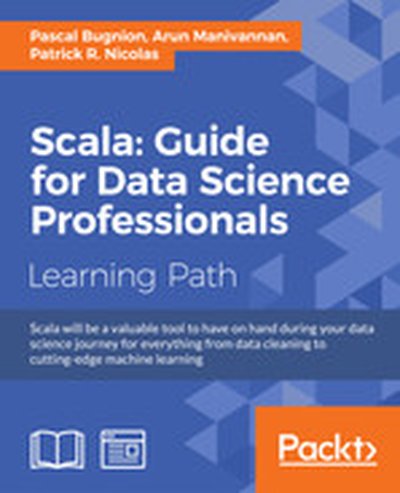
Scala: Guide for Data Science Professionals

Scala will be a valuable tool to have on hand during your data science journey for everything from data cleaning to cutting-edge machine learning About This Book Build data science and data engineering solutions with ease An in-depth look at each stage of the data analysis process — from reading and collecting data to distributed analytics Explore a broad variety of data processing, machine learning, and genetic algorithms through diagrams, mathematical formulations, and source code Who This Book Is For This learning path is perfect for those who are comfortable with Scala programming and now want to enter the field of data science. Some knowledge of statistics is expected. What You Will Learn Transfer and filter tabular data to extract features for machine learning Read, clean, transform, and write data to both SQL and NoSQL databases Create Scala web applications that couple with JavaScript libraries such as D3 to create compelling interactive visualizations Load data from HDFS and HIVE with ease Run streaming and graph analytics in Spark for exploratory analysis Bundle and scale up Spark jobs by deploying them into a variety of cluster managers Build dynamic workflows for scientific computing Leverage open source libraries to extract patterns from time series Master probabilistic models for sequential data In Detail Scala is especially good for analyzing large sets of data as the scale of the task doesn’t have any significant impact on performance. Scala’s powerful functional libraries can interact with databases and build scalable frameworks — resulting in the creation of robust data pipelines. The first module introduces you to Scala libraries to ingest, store, manipulate, process, and visualize data. Using real world examples, you will learn how to design scalable architecture to process and model data — starting from simple concurrency constructs and progressing to actor systems and Apache Spark. After this, you will also learn how to build interactive visualizations with web frameworks. Once you have become familiar with all the tasks involved in data science, you will explore data analytics with Scala in the second module. You’ll see how Scala can be used to make sense of data through easy to follow recipes. You will learn about Bokeh bindings for exploratory data analysis and quintessential machine learning with algorithms with Spark ML library. You’ll get a sufficient understanding of Spark streaming, machine learning for streaming data, and Spark graphX. Armed with a firm understanding of data analysis, you will be ready to explore the most cutting-edge aspect of data science — machine learning. The final module teaches you the A to Z of machine learning with Scala. You’ll explore Scala for dependency injections and implicits, which are used to write machine learning algorithms. You’ll also explore machine learning topics such as clustering, dimentionality reduction, Naïve Bayes, Regression models, SVMs, neural networks, and more. This learning path combines some of the best that Packt has to offer into one complete, curated package. It includes content from the following Packt products: Scala for Data Science, Pascal Bugnion Scala Data Analysis Cookbook, Arun Manivannan Scala for Machine Learning, Patrick R. Nicolas Style and approach A complete package with all the information necessary to start building useful data engineering and data science solutions straight away. It contains a diverse set of recipes that cover the full spectrum of interesting data analysis tasks and will help you revolutionize your data analysis skills using Scala. Downloading the example code for this book. You can download the example code files for all Packt books you have purchased from your account at http://www.PacktPub.com. If you purchased this book elsewhere, you can visit http://www.PacktPub.com/support and register to have the code file.

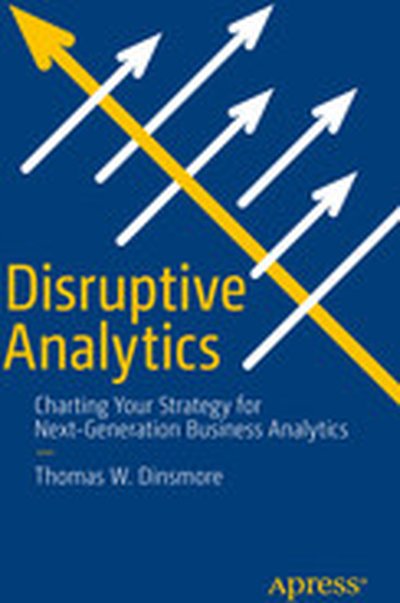
Disruptive Analytics: Charting Your Strategy for Next-Generation Business Analytics

Learn all you need to know about seven key innovations disrupting business analytics today. These innovations—the open source business model, cloud analytics, the Hadoop ecosystem, Spark and in-memory analytics, streaming analytics, Deep Learning, and self-service analytics—are radically changing how businesses use data for competitive advantage. Taken together, they are disrupting the business analytics value chain, creating new opportunities. Enterprises who seize the opportunity will thrive and prosper, while others struggle and decline: disrupt or be disrupted. Disruptive Business Analytics provides strategies to profit from disruption. It shows you how to organize for insight, build and provision an open source stack, how to practice lean data warehousing, and how to assimilate disruptive innovations into an organization. Through a short history of business analytics and a detailed survey of products and services, analytics authority Thomas W. Dinsmore provides a practical explanation of the most compelling innovations available today. What You'll Learn Discover how the open source business model works and how to make it work for you See how cloud computing completely changes the economics of analytics Harness the power of Hadoop and its ecosystem Find out why Apache Spark is everywhere Discover the potential of streaming and real-time analytics Learn what Deep Learning can do and why it matters See how self-service analytics can change the way organizations do business Who This Book Is For Corporate actors at all levels of responsibility for analytics: analysts, CIOs, CTOs, strategic decision makers, managers, systems architects, technical marketers, product developers, IT personnel, and consultants.

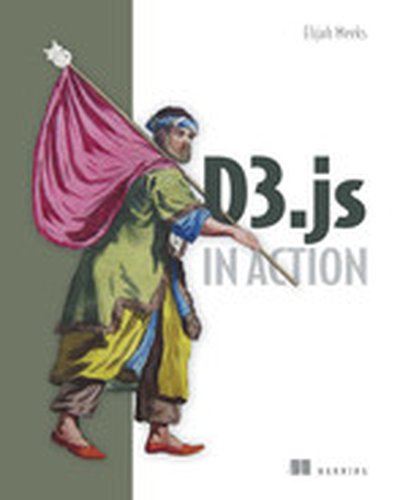
D3.js in Action

D3.js in Action is a practical tutorial for creating interactive graphics and data-driven applications using D3.js. You'll start with in-depth explanations of D3's out-of-the-box layouts, along with dozens of practical use cases that align with different types of visualizations. Then, you'll explore practical techniques for content creation, animation, and representing dynamic data—including interactive graphics and data streamed live over the web. The final chapters show you how to use D3's rich interaction model as the foundation for a complete web application. In the end, you'll be ready to integrate D3.js into your web development process and transform any site into a more engaging and sophisticated user experience. About the Technology D3.js is a JavaScript library that allows data to be represented graphically on a web page. Because it uses the broadly supported SVG standard, D3 allows you to create scalable graphs for any modern browser. You start with a structure, dataset, or algorithm and programmatically generate static, interactive, or animated images that responsively scale to any screen. About the Book D3.js in Action introduces you to the most powerful web data visualization library available and shows you how to use it to build interactive graphics and data-driven applications. You'll start with dozens of practical use cases that align with different types of charts, networks, and maps using D3's out-of-the-box layouts. Then, you'll explore practical techniques for content design, animation, and representation of dynamic data—including interactive graphics and live streaming data. What's Inside Interacting with vector graphics Expressive data visualization Creating rich mapping applications Prepping your data Complete data-driven web apps in D3 About the Reader Readers need basic HTML, CSS, and JavaScript skills. No experience with D3 or SVG is required. About the Author Elijah Meeks is a senior data visualization engineer at Netflix. His D3.js portfolio includes work at Stanford University and with well-known companies worldwide. Quotes A mandatory introduction to a very complex and powerful library. - Stephen Wakely, Thomson Reuters Quickly gets you coding amazing visualizations. - Ntino Krampis, PhD, City University of New York A remarkable exploration of the world of dataviz possibilities with D3. - Arun Noronha, Directworks Inc. A must-have book. - Arif Shaikh, Sony Pictures Entertainment One of the most comprehensive books about data visualization I have ever read. - Andrea Mostosi, The Fool s.r.l.

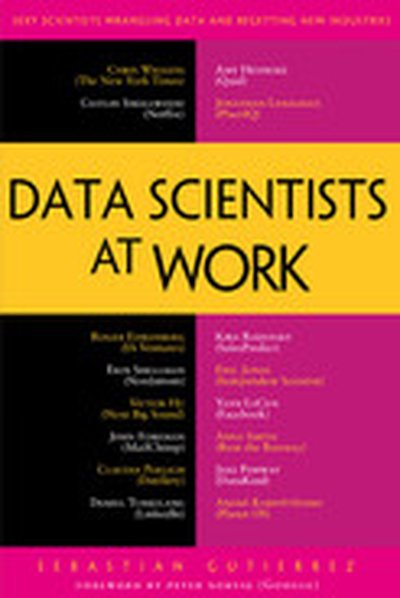
Data Scientists at Work

Data Scientists at Work is a collection of interviews with sixteen of the world's most influential and innovative data scientists from across the spectrum of this hot new profession. "Data scientist is the sexiest job in the 21st century," according to the Harvard Business Review. By 2018, the United States will experience a shortage of 190,000 skilled data scientists, according to a McKinsey report. Through incisive in-depth interviews, this book mines the what, how, and why of the practice of data science from the stories, ideas, shop talk, and forecasts of its preeminent practitioners across diverse industries: social network (Yann LeCun, Facebook); professional network (Daniel Tunkelang, LinkedIn); venture capital (Roger Ehrenberg, IA Ventures); enterprise cloud computing and neuroscience (Eric Jonas, formerly Salesforce.com); newspaper and media (Chris Wiggins, The New York Times); streaming television (Caitlin Smallwood, Netflix); music forecast (Victor Hu, Next Big Sound); strategic intelligence (Amy Heineike, Quid); environmental big data (Andre´ Karpis?ts?enkoEach of these data scientists shares how he or she tailors the torrent-taming techniques of big data, data visualization, search, and statistics to specific jobs by dint of ingenuity, imagination, patience, and passion. , Planet OS); geospatial marketing intelligence (Jonathan Lenaghan, PlaceIQ); advertising (Claudia Perlich, Dstillery); fashion e-commerce (Anna Smith, Rent the Runway); specialty retail (Erin Shellman, Nordstrom); email marketing (John Foreman, MailChimp); predictive sales intelligence (Kira Radinsky, SalesPredict); and humanitarian nonprofit (Jake Porway, DataKind). The book features a stimulating foreword by Google's Director of Research, Peter Norvig. Data Scientists at Work parts the curtain on the interviewees’ earliest data projects, how they became data scientists, their discoveries and surprises in working with data, their thoughts on the past, present, and future of the profession, their experiences of team collaboration within their organizations, and the insights they have gained as they get their hands dirty refining mountains of raw data into objects of commercial, scientific, and educational value for their organizations and clients.

21 Recipes for Mining Twitter

Millions of public Twitter streams harbor a wealth of data, and once you mine them, you can gain some valuable insights. This short and concise book offers a collection of recipes to help you extract nuggets of Twitter information using easy-to-learn Python tools. Each recipe offers a discussion of how and why the solution works, so you can quickly adapt it to fit your particular needs. The recipes include techniques to: Use OAuth to access Twitter data Create and analyze graphs of retweet relationships Use the streaming API to harvest tweets in realtime Harvest and analyze friends and followers Discover friendship cliques Summarize webpages from short URLs This book is a perfect companion to O’Reilly's Mining the Social Web.

Knowledge Discovery from Data Streams

Exploring how to extract knowledge structures from evolving and time-changing data, this book presents a coherent overview of state-of-the-art research in learning from data streams. It covers the fundamentals that are imperative to understanding data streams and describes important applications, such as TCP/IP traffic, GPS data, sensor networks, and customer click streams. It also explores advanced areas, such as ubiquitous data stream mining; addresses several challenges of data mining in the future, when stream mining will be at the core of many applications; and includes pseudo-code of more than 30 streaming-like algorithms.