talk-data.com talk-data.com

Topic

Analytics

data_analysis insights metrics

4552

tagged

Activity Trend

398 peak/qtr
2020-Q1 2026-Q1

Activities

4552 activities · Newest first

The Patient Revolution

In The Patient Revolution, author Krisa Tailor—a noted expert in health care innovation and management—explores, through the lens of design thinking, how information technology will take health care into the experience economy. In the experience economy, patients will shift to being empowered consumers who are active participants in their own care. Tailor explores this shift by creating a vision for a newly designed health care system that's focused on both sickness and wellness, and is driven by data and analytics. The new system seamlessly integrates health into our daily lives, and delivers care so uniquely personalized that no two people are provided identical treatments. Connected through data, everyone across the health care ecosystem, including clinicians, insurers, and researchers, will be able to meet individuals wherever they are in their health journey to reach the ultimate goal of keeping people healthy. The patient revolution has just begun and an exciting journey awaits us. Praise for the patient revolution "A full 50% of the US population has at least one chronic disease that requires ongoing monitoring and treatment. Our current health care system is woefully inadequate in providing these individuals with the treatment and support they need. This disparity can only be addressed through empowering patients to better care for themselves and giving providers better tools to care for their patients. Both of those solutions will require the development and application of novel technologies. In Krisa Tailor's book The Patient Revolution, a blueprint is articulated for how this could be achieved, culminating in a vision for a learning health system within 10 years." —Ricky Bloomfield, MD, Director, Mobile Technology Strategy; Assistant Professor, Duke Medicine "In The Patient Revolution, Krisa Tailor astutely points out that 80% of health is impacted by factors outside of the health care system. Amazon unfortunately knows more about our patients than we do. The prescriptive analytics she describes will allow health care providers to use big data to optimize interventions at the level of the individual patient. The use of analytics will allow providers to improve quality, shape care coordination, and contain costs. Advanced analytics will lead to personalized care and ultimately empowered patients!" —Linda Butler, MD, Vice President of Medical Affairs/Chief Medical Officer/Chief Medical Information Officer, Rex Healthcare " The Patient Revolution provides a practical roadmap on how the industry can capture value by making health and care more personalized, anticipatory, and intuitive to patient needs." —Ash Damle, CEO, Lumiata "Excellent read. For me, health care represents a unique economy—one focused on technology, but requiring a deep understanding of humanity. Ms. Tailor begins the exploration of how we provide care via the concepts of design thinking, asking how we might redesign care with an eye toward changing the experience. She does an excellent job deconstructing this from the patient experience. I look forward to a hopeful follow-up directed at changing the provider culture." —Alan Pitt, MD, Chief Medical Officer, Avizia "Whether you're a health care provider looking to gain an understanding of the health care landscape, a health data scientist, or a seasoned business pro, you'll come away with a deeper, nuanced understanding of today's evolving health care system with this book. Krisa Tailor ties together—in a comprehensive, unique way—the worlds of health care administration, clinical practice, design thinking, and business strategy and innovation." —Steven Chan, MD, MBA, University of California, Davis
Learning Qlik Sense®: The Official Guide - Second Edition

This comprehensive guide to Qlik Sense provides you with everything you need to harness its data visualization capabilities effectively in your business or organization. Covering essential techniques and insights, this book focuses on understanding, implementing, and optimizing Qlik Sense for various data discovery applications. What this Book will help me do Understand the purpose and vision behind Qlik Sense and how it revolutionizes data discovery. Gain practical knowledge to manage, load, and visualize your data effectively using Qlik Sense. Learn how to administer Qlik Sense systems, ensuring secure and efficient usage. Explore extending Qlik Sense capabilities through its Dev Hub and other advanced features. Apply Qlik Sense in practical contexts, such as sales analytics, HR insights, and demographic studies. Author(s) Henric Cronström and co-authors, with vast experience directly from QlikTech International AB, bring authoritative insights into this book. Their expertise in business analytics and direct involvement with the development of Qlik Sense make this book a reliable and insightful resource for learners. Who is it for? This book is ideal for business intelligence professionals, data analysts, and decision-makers looking to maximize the potential of Qlik Sense. Whether you're new to Qlik Sense or have a general understanding of BI concepts, this guide will help you elevate your data discovery skills and apply actionable insights to real-world scenarios.

Getting Started with Data Science: Making Sense of Data with Analytics

Master Data Analytics Hands-On by Solving Fascinating Problems You’ll Actually Enjoy! Harvard Business Review recently called data science “The Sexiest Job of the 21st Century.” It’s not just sexy: For millions of managers, analysts, and students who need to solve real business problems, it’s indispensable. Unfortunately, there’s been nothing easy about learning data science–until now. Getting Started with Data Science takes its inspiration from worldwide best-sellers like Freakonomics and Malcolm Gladwell’s Outliers: It teaches through a powerful narrative packed with unforgettable stories. Murtaza Haider offers informative, jargon-free coverage of basic theory and technique, backed with plenty of vivid examples and hands-on practice opportunities. Everything’s software and platform agnostic, so you can learn data science whether you work with R, Stata, SPSS, or SAS. Best of all, Haider teaches a crucial skillset most data science books ignore: how to tell powerful stories using graphics and tables. Every chapter is built around real research challenges, so you’ll always know why you’re doing what you’re doing. You’ll master data science by answering fascinating questions, such as: • Are religious individuals more or less likely to have extramarital affairs? • Do attractive professors get better teaching evaluations? • Does the higher price of cigarettes deter smoking? • What determines housing prices more: lot size or the number of bedrooms? • How do teenagers and older people differ in the way they use social media? • Who is more likely to use online dating services? • Why do some purchase iPhones and others Blackberry devices? • Does the presence of children influence a family’s spending on alcohol? For each problem, you’ll walk through defining your question and the answers you’ll need; exploring how others have approached similar challenges; selecting your data and methods; generating your statistics; organizing your report; and telling your story. Throughout, the focus is squarely on what matters most: transforming data into insights that are clear, accurate, and can be acted upon.

Big Data MBA

Integrate big data into business to drive competitive advantage and sustainable success Big Data MBA brings insight and expertise to leveraging big data in business so you can harness the power of analytics and gain a true business advantage. Based on a practical framework with supporting methodology and hands-on exercises, this book helps identify where and how big data can help you transform your business. You'll learn how to exploit new sources of customer, product, and operational data, coupled with advanced analytics and data science, to optimize key processes, uncover monetization opportunities, and create new sources of competitive differentiation. The discussion includes guidelines for operationalizing analytics, optimal organizational structure, and using analytic insights throughout your organization's user experience to customers and front-end employees alike. You'll learn to “think like a data scientist” as you build upon the decisions your business is trying to make, the hypotheses you need to test, and the predictions you need to produce. Business stakeholders no longer need to relinquish control of data and analytics to IT. In fact, they must champion the organization's data collection and analysis efforts. This book is a primer on the business approach to analytics, providing the practical understanding you need to convert data into opportunity. Understand where and how to leverage big data Integrate analytics into everyday operations Structure your organization to drive analytic insights Optimize processes, uncover opportunities, and stand out from the rest Help business stakeholders to “think like a data scientist” Understand appropriate business application of different analytic techniques If you want data to transform your business, you need to know how to put it to use. Big Data MBA shows you how to implement big data and analytics to make better decisions.

Accelerating Data Transformation with IBM DB2 Analytics Accelerator for z/OS Understanding and Using Accelerator-only Tables

Transforming data from operational data models to purpose-oriented data structures has been commonplace for the last decades. Data transformations are heavily used in all types of industries to provide information to various users at different levels. Depending on individual needs, the transformed data is stored in various different systems. Sending operational data to other systems for further processing is then required, and introduces much complexity to an existing information technology (IT) infrastructure. Although maintenance of additional hardware and software is one component, potential inconsistencies and individually managed refresh cycles are others. For decades, there was no simple and efficient way to perform data transformations on the source system of operational data. With IBM® DB2® Analytics Accelerator, DB2 for z/OS is now in a unique position to complete these transformations in an efficient and well-performing way. DB2 for z/OS completes these while connecting to the same platform as for operational transactions, helping you to minimize your efforts to manage existing IT infrastructure. Real-time analytics on incoming operational transactions is another demand. Creating a comprehensive scoring model to detect specific patterns inside your data can easily require multiple iterations and multiple hours to complete. By enabling a first set of analytical functionality in DB2 Analytics Accelerator, those dedicated mining algorithms can now be run on an accelerator to efficiently perform these modeling tasks. Given the speed of query processing on an accelerator, these modeling tasks can now be performed much quicker compared to traditional relational database management systems. This speed enables you to keep your scoring algorithms more up-to-date, and ultimately adapt more quickly to constantly changing customer behaviors. This IBM Redbooks® publication describes the new table type that is introduced with DB2 Analytics Accelerator V4.1 PTF5 that enables more efficient data transformations. These tables are called accelerator-only tables, and can exist on an accelerator only. The tables benefit from the accelerator performance characteristics, while maintaining access through existing DB2 for z/OS application programming interfaces (APIs). Additionally, we describe the newly introduced analytical capabilities with DB2 Analytics Accelerator V5.1, putting you in the position to efficiently perform data modeling for online analytical requirements in your DB2 for z/OS environment. This book is intended for technical decision-makers who want to get a broad understanding about the analytical capabilities and accelerator-only tables of DB2 Analytics Accelerator. In addition, you learn about how these capabilities can be used to accelerate in-database transformations and in-database analytics in various environments and scenarios, including the following scenarios: Multi-step processing and reporting in IBM DB2 Query Management Facility™, IBM Campaign, or Microstrategy environments In-database transformations using IBM InfoSphere® DataStage® Ad hoc data analysis for data scientists In-database analytics using IBM SPSS® Modeler

Measuring the Digital World: Using Digital Analytics to Drive Better Digital Experiences

THE DEFINITIVE GUIDE TO NEXTGENERATION DIGITAL MEASUREMENT: INDISPENSABLE INSIGHT FOR BUILDING HIGH-VALUE DIGITAL EXPERIENCES! Helps you capture the knowledge you need to deliver deep personalization at scale Reflects today’s latest insights into digital behavior and consumer psychology For every digital marketer, analyst, and executive who wants to improve performance To win at digital, you must capture the right data, quickly transform it into the right knowledge,and use them both to deliver deep personalization at scale. Conventional digital metrics simply aren’t up to the task. Now, Gary Angel shows how to reinvent digital measurement so it delivers all you need to create richer, more compelling digital experiences. For more than a decade, Angel has helped leading global enterprises succeed at digital. This book reflects all he’s learned. You’ll find valuable guidance on understanding visitor intent… creating customer taxonomies… digital segmentation… integrating VoC research… and using behavioral analysis and controlled experiments to investigate what drives customer choice. Angel will help you measure the value of every digital interaction more accurately, identify specific digital behaviors that predict success, and create a comprehensive measurement paradigm that integrates all your digital spaces. With flawed tools and siloed analytics, you’re blind to what’s really happening online. But you don’t have to be. Gary Angel will help you make the invisible visible… actionable… profitable. Most common digital metrics are virtually useless. They measure the wrong things in the wrong ways. They don’t link digital activity to customer attitudes and behaviors. They don’t work well with today’s powerful analytics tools. Above all, they don’t help you improve your performance. Angel shows how to transform “raw facts” about digital behavior into meaningful knowledge about your visitors… what they were trying to accomplish…how well you helped them… how you can personalize and optimize their digital experiences from now on… how you can use measurement to provide deep personalization at scale. More rigorous, integrated, and usable than any competitive book, Measuring the Digital World will help you create, deliver, and consume digital information with unprecedented sophistication. Whether you’re a digital analyst, marketer, user experience designer, or executive, you’ll find it indispensable. Why conventional digital metrics are arbitrary and misguided Refocus on what you need to know, not what you don’t Capture the “why” Integrate VoC research and behavioral data to build better, richer, more accurate segments Go beyond snapshots: understand your customer’s entire digital experience Understand how your customers’ views and behaviors evolve over time Segment in three dimensions for a multichannel world Treat each channel as part of a larger, integrated, sequential journey

podcast_episode
by Val Kroll , Julie Hoyer , Tim Wilson (Analytics Power Hour - Columbus (OH) , Moe Kiss (Canva) , Michael Helbling (Search Discovery) , Kelly Wortham (TLC)

We had a hypothesis that our listeners might be interested in hearing an expert on digital optimization. In this episode we test that hypothesis. Listen and learn as Kelly Wortham from EY runs circles around the lads, and brings them to an understanding of what digital testing means in 2015. In an hour so optimized it only takes 45 minutes, it's 2015's penultimate episode of the Digital Analytics Power hour.

People, places, and things mentioned in this episode include:

Taguchi vs. Full Factorial test design kelly dot wortham at ey dot com (to get added to Kelly's twice-monthly testing teleconference)

Systems of Insight for Digital Transformation: Using IBM Operational Decision Manager Advanced and Predictive Analytics

Systems of record (SORs) are engines that generates value for your business. Systems of engagement (SOE) are always evolving and generating new customer-centric experiences and new opportunities to capitalize on the value in the systems of record. The highest value is gained when systems of record and systems of engagement are brought together to deliver insight. Systems of insight (SOI) monitor and analyze what is going on with various behaviors in the systems of engagement and information being stored or transacted in the systems of record. SOIs seek new opportunities, risks, and operational behavior that needs to be reported or have action taken to optimize business outcomes. Systems of insight are at the core of the Digital Experience, which tries to derive insights from the enormous amount of data generated by automated processes and customer interactions. Systems of Insight can also provide the ability to apply analytics and rules to real-time data as it flows within, throughout, and beyond the enterprise (applications, databases, mobile, social, Internet of Things) to gain the wanted insight. Deriving this insight is a key step toward being able to make the best decisions and take the most appropriate actions. Examples of such actions are to improve the number of satisfied clients, identify clients at risk of leaving and incentivize them to stay loyal, identify patterns of risk or fraudulent behavior and take action to minimize it as early as possible, and detect patterns of behavior in operational systems and transportation that lead to failures, delays, and maintenance and take early action to minimize risks and costs. IBM® Operational Decision Manager is a decision management platform that provides capabilities that support both event-driven insight patterns, and business-rule-driven scenarios. It also can easily be used in combination with other IBM Analytics solutions, as the detailed examples will show. IBM Operational Decision Manager Advanced, along with complementary IBM software offerings that also provide capability for systems of insight, provides a way to deliver the greatest value to your customers and your business. IBM Operational Decision Manager Advanced brings together data from different sources to recognize meaningful trends and patterns. It empowers business users to define, manage, and automate repeatable operational decisions. As a result, organizations can create and shape customer-centric business moments. This IBM Redbooks® publication explains the key concepts of systems of insight and how to implement a system of insight solution with examples. It is intended for IT architects and professionals who are responsible for implementing a systems of insights solution requiring event-based context pattern detection and deterministic decision services to enhance other analytics solution components with IBM Operational Decision Manager Advanced.

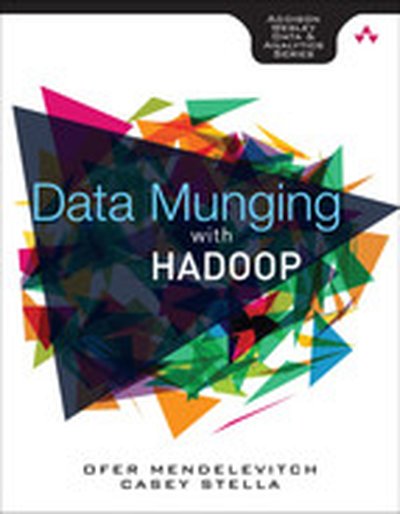
Data Munging with Hadoop

The Example-Rich, Hands-On Guide to Data Munging with Apache Hadoop TM Data scientists spend much of their time “munging” data: handling day-to-day tasks such as data cleansing, normalization, aggregation, sampling, and transformation. These tasks are both critical and surprisingly interesting. Most important, they deepen your understanding of your data’s structure and limitations: crucial insight for improving accuracy and mitigating risk in any analytical project. Now, two leading Hortonworks data scientists, Ofer Mendelevitch and Casey Stella, bring together powerful, practical insights for effective Hadoop-based data munging of large datasets. Drawing on extensive experience with advanced analytics, the authors offer realistic examples that address the common issues you’re most likely to face. They describe each task in detail, presenting example code based on widely used tools such as Pig, Hive, and Spark. This concise, hands-on eBook is valuable for every data scientist, data engineer, and architect who wants to master data munging: not just in theory, but in practice with the field’s #1 platform–Hadoop. Coverage includes A framework for understanding the various types of data quality checks, including cell-based rules, distribution validation, and outlier analysis Assessing tradeoffs in common approaches to imputing missing values Implementing quality checks with Pig or Hive UDFs Transforming raw data into “feature matrix” format for machine learning algorithms Choosing features and instances Implementing text features via “bag-of-words” and NLP techniques Handling time-series data via frequency- or time-domain methods Manipulating feature values to prepare for modeling Data Munging with Hadoop is part of a larger, forthcoming work entitled Data Science Using Hadoop. To be notified when the larger work is available, register your purchase of Data Munging with Hadoop at informit.com/register and check the box “I would like to hear from InformIT and its family of brands about products and special offers.”

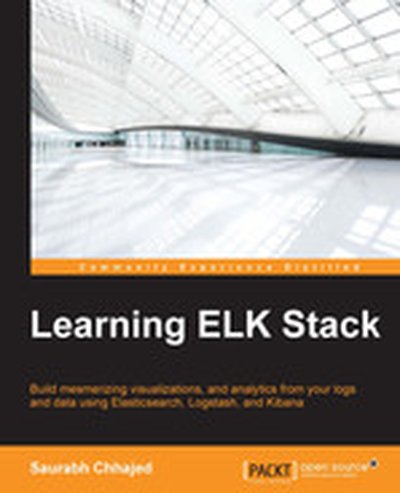
Learning ELK Stack

Dive into the ELK stack-Elasticsearch, Logstash, and Kibana-with this comprehensive guide. Designed to help you set up, configure, and utilize the stack to its fullest, this book provides you with the skills to manage data with precision, enrich logs, and create meaningful analytics. Develop an entire data pipeline and cultivate powerful visual insights from your data. What this Book will help me do Install and configure Elasticsearch, Logstash, and Kibana to establish a robust ELK stack setup. Understand the role of each component in the stack and master the basics of log analysis. Create custom Logstash plugins to handle non-standard data processing requirements. Develop interactive and insightful data visualizations and dashboards using Kibana. Implement a complete data pipeline and gain expertise in data indexing, searching, and reporting. Author(s) None Chhajed brings depth of technical understanding and practical experience to the exploration of the ELK Stack. With a strong background in open-source technologies and data analytics, Chhajed has worked extensively with ELK stack implementations in real-world scenarios. Through this guide, the author offers clarity, detailed examples, and actionable insights for professionals seeking to improve their data systems. Who is it for? This book is targeted towards software developers, data analysts, and DevOps engineers seeking to harness the potential of the ELK stack for data analysis and logging. It is most suitable for intermediate-level professionals with basic knowledge of Unix or programming. If your aim is to gain insights and build metrics from diverse data formats utilizing open-source technologies, this book is crafted for you.

podcast_episode
by Val Kroll , Julie Hoyer , Tim Wilson (Analytics Power Hour - Columbus (OH) , Krista Seiden (/ Google Analytics) , Moe Kiss (Canva) , Michael Helbling (Search Discovery)

Have you noticed that neither Michael, Jim, nor Tim are women? They did! But that didn't stop them from taking on the subject of women in digital analytics (with diversions into the subjects of women and scotch, and women in professional poker). Joining them for this episode (because they may be a little misguided at times, but they're not absolute morons) was Krista Seiden from Google. Krista is a notable woman in analytics...but that is the LAST way she ever wants to be described. Luckily, she made an exception for us just this one time.

People, places, and things mentioned in this episode include:

I'm a Woman in Tech: How It Helps Me and Hurts My Gender (blog post by Krista on her blog, bloggerchica.com) @kristaseiden Whisk(e)y Distilled: A Populist Guide to the Water of Life by Heather Greene @jimsterne Lagavulin (scotch) eMetrics An Ace up the Poker Star's Sleeve: The Surprising Upside of Stereotypes (podcast episode)

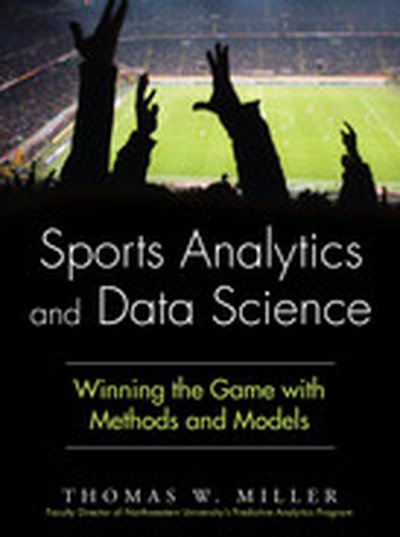
Sports Analytics and Data Science: Winning the Game with Methods and Models

TO BUILD WINNING TEAMS AND SUCCESSFUL SPORTS BUSINESSES, GUIDE YOUR DECISIONS WITH DATA This up-to-the-minute reference will help you master all three facets of sports analytics – and use it to win! Sports Analytics and Data Science is the most accessible and practical guide to sports analytics for everyone who cares about winning and everyone who is interested in data science. You’ll discover how successful sports analytics blends business and sports savvy, modern information technology, and sophisticated modeling techniques. You’ll master the discipline through realistic sports vignettes and intuitive data visualizations—not complex math. Thomas W. Miller, leader of Northwestern University’s pioneering program in predictive analytics, guides you through defining problems, identifying data, crafting and optimizing models, writing effective R and Python code, interpreting your results, and more. Every chapter focuses on one key sports analytics application. Miller guides you through assessing players and teams, predicting scores and making game-day decisions, crafting brands and marketing messages, increasing revenue and profitability, and much more. Step by step, you’ll learn how analysts transform raw data and analytical models into wins: both on the field and in any sports business. Whether you’re a team executive, coach, fan, fantasy player, or data scientist, this guide will be a powerful source of competitive advantage… in any sport, by any measure. All data sets, extensive R and Python code, and additional examples available for download at http://www.ftpress.com/miller/ This exceptionally complete and practical guide to sports data science and modeling teaches through realistic examples from sports industry economics, marketing, management, performance measurement, and competitive analysis. Thomas W. Miller, faculty director of Northwestern University’s pioneering Predictive Analytics program, shows how to use advanced measures of individual and team performance to judge the competitive position of both individual athletes and teams, and to make more accurate predictions about their future performance. Miller’s modeling techniques draw on methods from economics, accounting, finance, classical and Bayesian statistics, machine learning, simulation, and mathematical programming. Miller illustrates them through realistic case studies, with fully worked examples in both R and Python. Sports Analytics and Data Science will be an invaluable resource for everyone who wants to seriously investigate and more accurately predict player, team, and sports business performance, including students, teachers, sports analysts, sports fans, trainers, coaches, and team and sports business managers. It will also be valuable to all students of analytics and data science who want to build their skills through familiar and accessible sports applications Gain powerful, actionable insights for: Understanding sports markets Assessing players Ranking teams Predicting scores Making game day decisions Crafting marketing messages Promoting brands and products Growing revenues Managing finances Playing what-if games And much more

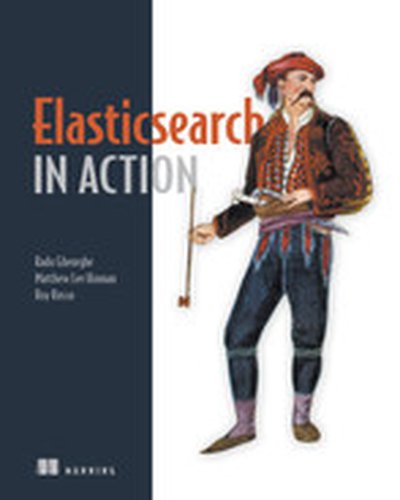
Elasticsearch in Action

Elasticsearch in Action teaches you how to build scalable search applications using Elasticsearch. You'll ramp up fast, with an informative overview and an engaging introductory example. Within the first few chapters, you'll pick up the core concepts you need to implement basic searches and efficient indexing. With the fundamentals well in hand, you'll go on to gain an organized view of how to optimize your design. Perfect for developers and administrators building and managing search-oriented applications. About the Technology Modern search seems like magic'you type a few words and the search engine appears to know what you want. With the Elasticsearch real-time search and analytics engine, you can give your users this magical experience without having to do complex low-level programming or understand advanced data science algorithms. You just install it, tweak it, and get on with your work. About the Book Elasticsearch in Action teaches you how to write applications that deliver professional quality search. As you read, you'll learn to add basic search features to any application, enhance search results with predictive analysis and relevancy ranking, and use saved data from prior searches to give users a custom experience. This practical book focuses on Elasticsearch's REST API via HTTP. Code snippets are written mostly in bash using cURL, so they're easily translatable to other languages. What's Inside What is a great search application? Building scalable search solutions Using Elasticsearch with any language Configuration and tuning About the Reader This book is for developers and administrators building and managing search-oriented applications. About the Authors Radu Gheorghe is a search consultant and software engineer. Matthew Lee Hinman develops highly available, cloud-based systems. Roy Russo is a specialist in predictive analytics. Quotes To understand how a modern search infrastructure works is a daunting task. Radu, Matt, and Roy make it an engaging, hands-on experience. - Sen Xu, Twitter Inc. An indispensable guide to the challenges of search of semi-structured data. - Artur Nowak, Evidence Prime The best resource for a complex topic. Highly recommended. - Daniel Beck, juris GmbH Took me from confused to confident in a week. - Alan McCann, Givsum.com

Streaming Analytics with IBM Streams: Analyze More, Act Faster, and Get Continuous Insights

Gain a competitive edge with IBM Streams Turn data-in-motion into solid business opportunities with IBM Streams and let Streaming Analytics with IBM Streams show you how. This comprehensive guide starts out with a brief overview of different technologies used for big data processing and explanations on how data-in-motion can be utilized for business advantages. You will learn how to apply big data analytics and how they benefit from data-in-motion. Discover all about Streams starting with the main components then dive further with Stream instillation, and upgrade and management capabilities including tools used for production. Through a solid understanding of big in motion, detailed illustrations, Endnotes that provide additional learning resources, and end of chapter summaries with helpful insight, data analysists and professionals looking to get more from their data will benefit from expert insight on: Data-in-motion processing and how it can be applied to generate new business opportunities The three approaches to processing data in motion and pros and cons of each The main components of Streams from runtime to installation and administration Multiple purposes of the Text Analytics toolkit The evolving Streams ecosystem A detailed roadmap for programmers to quickly become fluent with Streams Data-in-motion is rapidly becoming a business tool used to discover more about customers and opportunities, however it is only valuable if have the tools and knowledge to analyze and apply. This is an expert guide to IBM Streams and how you can harness this powerful tool to gain a competitive business edge.

Building Real-Time Data Pipelines

Traditional data processing infrastructures—especially those that support applications—weren’t designed for our mobile, streaming, and online world. This O’Reilly report examines how today’s distributed, in-memory database management systems (IMDBMS) enable you to make quick decisions based on real-time data. In this report, executives from MemSQL Inc. provide options for using in-memory architectures to build real-time data pipelines. If you want to instantly track user behavior on websites or mobile apps, generate reports on a changing dataset, or detect anomalous activity in your system as it occurs, you’ll learn valuable lessons from some of the largest and most successful tech companies focused on in-memory databases. Explore the architectural principles of modern in-memory databases Understand what’s involved in moving from data silos to real-time data pipelines Run transactions and analytics in a single database, without ETL Minimize complexity by architecting a multipurpose data infrastructure Learn guiding principles for developing an optimally architected operational system Provide persistence and high availability mechanisms for real-time data Choose an in-memory architecture flexible enough to scale across a variety of deployment options Conor Doherty, Data Engineer at MemSQL, is responsible for creating content around database innovation, analytics, and distributed systems. Gary Orenstein, Chief Marketing Officer at MemSQL, leads marketing strategy, product management, communications, and customer engagement. Kevin White is the Director of of Operations and a content contributor at MemSQL. Steven Camiña is a Principal Product Manager at MemSQL. His experience spans B2B enterprise solutions, including databases and middleware platforms.

podcast_episode
by Val Kroll , Julie Hoyer , Tim Wilson (Analytics Power Hour - Columbus (OH) , Moe Kiss (Canva) , Michael Helbling (Search Discovery) , Matthias Bettag

From a sophisticated analysis of the names and timestamps of many of our commenters, we discovered something that surprised us: digital analytics is a profession that is practiced outside of North America! This fact blew our minds, but ,curious analytics types that we are, we set to work finding someone with whom we could chat about digital analytics in Europe...and found Matthias Bettag. Join us for 47 minutes (that's 47 minutes in metric) discussing the subject.

People, places, and things reference in this episode include:

Digital Analytics Hub (conference) iWebtrack AT Internet Yandex Piwik Safe Harbor decision Angela Merkel Europe (band)

Cassandra Design Patterns - Second Edition

Cassandra Design Patterns is your guide to harnessing the full potential of Apache Cassandra's distributed database capabilities through advanced design practices. Whether you're migrating from an RDBMS or implementing scalable storage for big data, this book provides clear strategies, practical examples, and real-world use cases demonstrating effective design patterns. What this Book will help me do Learn to integrate Cassandra with existing RDBMS solutions, enabling hybrid data architecture. Understand and implement key design patterns for distributed, scalable databases. Master the transition from RDBMS or cache systems to Cassandra with minimal disruption. Dive into time-series and temporal data patterns unique to Cassandra's strengths. Apply learned design patterns directly to real-world big data scenarios for analytics. Author(s) Rajanarayanan Thottuvaikkatumana, the author of Cassandra Design Patterns, is an expert in distributed systems and holds extensive experience in designing and implementing big data solutions. His hands-on approach to Cassandra is evident throughout the book as he bridges theoretical knowledge with practical applications. Rajanarayanan's approachable writing style aims to make complex concepts accessible. Who is it for? This book is ideal for big data developers and system architects who are familiar with the basics of Cassandra and are looking to deepen their understanding of design patterns for robust applications. Readers should have experience with relational databases and desire to migrate or integrate these concepts with NoSQL systems. Whether you're building solutions for data scalability, high availability, or analytics, Cassandra Design Patterns positions itself as an essential resource.

Practical Google Analytics and Google Tag Manager for Developers

Whether you’re a marketer with development skills or a full-on web developer/analyst, Practical Google Analytics and Google Tag Manager for Developers shows you how to implement Google Analytics using Google Tag Manager to jumpstart your web analytics measurement. There’s a reason that so many organizations use Google Analytics. Effective collection of data with Google Analytics can reduce customer acquisition costs, provide priceless feedback on new product initiatives, and offer insights that will grow a customer or client base. So where does Google Tag Manager fit in? Google Tag Manager allows for unprecedented collaboration between marketing and technical teams, lightning fast updates to your site, and standardization of the most common tags for on-site tracking and marketing efforts. To achieve the rich data you're really after to better serve your users’ needs, you'll need the tools Google Tag Manager provides for a best-in-class implementation of Google Analytics measurement on your site. Written by data evangelist and Google Analytics expert Jonathan Weber and the team at LunaMetrics, this book offers foundational knowledge, a collection of practical Google Tag Manager recipes, well-tested best practices, and troubleshooting tips to get your implementation in tip-top condition. It covers topics including: • Google Analytics implementation via Google Tag Manager • How to customize Google Analytics for your unique situation • Using Google Tag Manager to track and analyze interactions across multiple devices and touch points • How to extract data from Google Analytics and use Google BigQuery to analyze Big Data questions

Strategic Analytics

More than ever, data drives decisions in organizations—and we have more data, and more ways to analyze it, than ever. Yet strategic initiatives continue to fail as often as they did when computers ran on punch cards. Economist and research scientist Alec Levenson says we need a new approach. The problem, Levenson says, is that the business people who devise the strategies and the human resources people who get employees to implement them use completely different analytics. Business analytics can determine if operational priorities aren't being achieved but can't explain why. HR analytics reveal potentially helpful policy and process improvements but can't identify which would have the greatest strategic impact. This book shows how to use an integrated approach to bring these two pieces together. Levenson presents a thorough and realistic treatment of the reasons for and challenges of taking an integrated approach. He provides details on the different parts of both enterprise and human capital analytics that have to be conducted for integration to be successful and includes specific questions to ask, along with examples of applying integrated analytics to address particular organizational challenges. Effective analytics is a team sport. Levenson's approach allows you to get the deepest insights by bringing people together from both the business and HR perspectives to assess what's going on and determine the right solution.

Business Statistics Made Easy in SAS

Learn or refresh core statistical methods for business with SAS® and approach real business analytics issues and techniques using a practical approach that avoids complex mathematics and instead employs easy-to-follow explanations.

Business Statistics Made Easy in SAS® is designed as a user-friendly, practice-oriented, introductory text to teach businesspeople, students, and others core statistical concepts and applications. It begins with absolute core principles and takes you through an overview of statistics, data and data collection, an introduction to SAS®, and basic statistics (descriptive statistics and basic associational statistics). The book also provides an overview of statistical modeling, effect size, statistical significance and power testing, basics of linear regression, introduction to comparison of means, basics of chi-square tests for categories, extrapolating statistics to business outcomes, and some topical issues in statistics, such as big data, simulation, machine learning, and data warehousing.

The book steers away from complex mathematical-based explanations, and it also avoids basing explanations on the traditional build-up of distributions, probability theory and the like, which tend to lose the practice-oriented reader. Instead, it teaches the core ideas of statistics through methods such as careful, intuitive written explanations, easy-to-follow diagrams, step-by-step technique implementation, and interesting metaphors.

With no previous SAS experience necessary, Business Statistics Made Easy in SAS® is an ideal introduction for beginners. It is suitable for introductory undergraduate classes, postgraduate courses such as MBA refresher classes, and for the business practitioner. It is compatible with SAS® University Edition.