Eric Avidon is a journalist at TechTarget who's interviewed Tristan a few times, and now Tristan gets to flip the script and interview Eric. Eric is a journalist veteran, covering everything from finance to the Boston Red Sox, but now he spends a lot of time with vendors in the data space and has a broad view of what's going on. Eric and Tristan discuss AI and analytics and how mature these features really are today, data quality and its importance, the AI strategies of Snowflake and Databricks, and a lot more. Plus, part way through you can hear Tristan reacting to a mild earthquake that hit the East Coast. For full show notes and to read 6+ years of back issues of the podcast's companion newsletter, head to https://roundup.getdbt.com.
 talk-data.com
Topic
Analytics
data_analysis
insights
metrics
4552
tagged
Activity Trend
398
peak/qtr
2020-Q1
2026-Q2
Top Events
O'Reilly Data Science Books
528
O'Reilly Data Engineering Books
395
Moody's Talks - Inside Economics
283
Data Engineering Podcast
227
Data Career Podcast: Helping You Land a Data Analyst Job FAST
187
Data + AI Summit 2025
178
Databricks DATA + AI Summit 2023
170
The Analytics Power Hour
130
DataFramed
103
DATA MINER Big Data Europe Conference 2020
98
Secrets of Data Analytics Leaders
89
Dbt Coalesce 2024
87
by
Cris deRitis
,
Mark Zandi
(Moody's Analytics)
,
Trevor Houser
(Rhodium Group)
,
Chris Lafakis
,
Marisa DiNatale
(Moody's Analytics)
The Inside Economics team is joined by Moody’s Analytics colleague Chris Lafakis along with Trevor Houser from the Energy & Climate practice at Rhodium Group for a discussion on how the Inflation Reduction Act promotes the U.S.'s transition to green energy. Podcast host Mark Zandi kicks things off with a quick overview of recent economic developments. The conversation then shifts to a discussion of the IRA’s incentives and tax provisions. Following a brief statistics game, the group explores the potential impact of the upcoming election on the green energy transition. Follow Mark Zandi @MarkZandi, Cris deRitis @MiddleWayEcon, and Marisa DiNatale on LinkedIn for additional insight.
Questions or Comments, please email us at [email protected]. We would love to hear from you. To stay informed and follow the insights of Moody's Analytics economists, visit Economic View.
Curious about how Expedia leverages data to fuel its vast network of partnerships in the travel industry? Join us as we dive into the world of global travel partnerships with Raegan Armstrong, Senior Director of Global Airline Partnerships at Expedia Group. In this discussion, Raegan sheds light on the critical role of data in driving strategic decisions and operational agility. Tune in now and discover how Expedia utilises data-driven insights to identify growth opportunities, tackle global challenges, and ensure seamless experiences for partners and travellers.
Cynozure is a leading data, analytics and AI company that helps organisations to reach their data potential. They work with clients on data and AI strategy, data management, data architecture and engineering, analytics and AI, data culture and literacy, and change management and leadership. The company was named one of The Sunday Times' fastest-growing private companies in 2022 and 2023 and named the Best Place to Work in Data by DataIQ in 2023. For more information, visit www.cynozure.com.
This episode features Alli Torban, a leading data information designer, sharing her career journey from a data analyst to teaching data visualization to companies like Google and Moderna.
Alli advises on becoming a data viz designer, emphasizing the significance of data literacy, tool mastery, and building a portfolio with personal projects.
Connect with Alli Torban :
🤝 Follow on Linkedin
📔 Learn About Chart Spark
🧙♂️ Ace the Interview with Confidence
📩 Get my weekly email with helpful data career tips
📊 Come to my next free “How to Land Your First Data Job” training
🏫 Check out my 10-week data analytics bootcamp
Timestamps:
(08:16) Alli's Transition to Freelance and Starting Her Own Company (17:40) Advice for Aspiring Data Visualization Designers (21:42) Unlocking Creativity with Practical Inspiration and Prompts
Connect with Avery:
📺 Subscribe on YouTube
🎙Listen to My Podcast
👔 Connect with me on LinkedIn
🎵 TikTok
Mentioned in this episode: Join the last cohort of 2025! The LAST cohort of The Data Analytics Accelerator for 2025 kicks off on Monday, December 8th and enrollment is officially open!
To celebrate the end of the year, we’re running a special End-of-Year Sale, where you’ll get: ✅ A discount on your enrollment 🎁 6 bonus gifts, including job listings, interview prep, AI tools + more
If your goal is to land a data job in 2026, this is your chance to get ahead of the competition and start strong.
👉 Join the December Cohort & Claim Your Bonuses: https://DataCareerJumpstart.com/daa https://www.datacareerjumpstart.com/daa
Rapid change seems to be the new norm within the data and AI space, and due to the ecosystem constantly changing, it can be tricky to keep up. Fortunately, any self-respecting venture capitalist looking into data and AI will stay on top of what’s changing and where the next big breakthroughs are likely to come from. We all want to know which important trends are emerging and how we can take advantage of them, so why not learn from a leading VC. Tomasz Tunguz is a General Partner at Theory Ventures, a $235m early-stage venture capital firm. He blogs sat tomtunguz.com & co-authored Winning with Data. He has worked or works with Looker, Kustomer, Monte Carlo, Dremio, Omni, Hex, Spot, Arbitrum, Sui & many others. He was previously the product manager for Google's social media monetization team, including the Google-MySpace partnership, and managed the launches of AdSense into six new markets in Europe and Asia. Before Google, Tunguz developed systems for the Department of Homeland Security at Appian Corporation. In the episode, Richie and Tom explore trends in generative AI, the impact of AI on professional fields, cloud+local hybrid workflows, data security, and changes in data warehousing through the use of integrated AI tools, the future of business intelligence and data analytics, the challenges and opportunities surrounding AI in the corporate sector. You'll also get to discover Tom's picks for the hottest new data startups. Links Mentioned in the Show: Tom’s BlogTheory VenturesArticle: What Air Canada Lost In ‘Remarkable’ Lying AI Chatbot Case[Course] Implementing AI Solutions in BusinessRelated Episode: Making Better Decisions using Data & AI with Cassie Kozyrkov, Google's First Chief Decision ScientistSign up to RADAR: AI Edition New to DataCamp? Learn on the go using the DataCamp mobile appEmpower your business with world-class data and AI skills with DataCamp for business
Summary Artificial intelligence has dominated the headlines for several months due to the successes of large language models. This has prompted numerous debates about the possibility of, and timeline for, artificial general intelligence (AGI). Peter Voss has dedicated decades of his life to the pursuit of truly intelligent software through the approach of cognitive AI. In this episode he explains his approach to building AI in a more human-like fashion and the emphasis on learning rather than statistical prediction. Announcements Hello and welcome to the Data Engineering Podcast, the show about modern data managementDagster offers a new approach to building and running data platforms and data pipelines. It is an open-source, cloud-native orchestrator for the whole development lifecycle, with integrated lineage and observability, a declarative programming model, and best-in-class testability. Your team can get up and running in minutes thanks to Dagster Cloud, an enterprise-class hosted solution that offers serverless and hybrid deployments, enhanced security, and on-demand ephemeral test deployments. Go to dataengineeringpodcast.com/dagster today to get started. Your first 30 days are free!Data lakes are notoriously complex. For data engineers who battle to build and scale high quality data workflows on the data lake, Starburst powers petabyte-scale SQL analytics fast, at a fraction of the cost of traditional methods, so that you can meet all your data needs ranging from AI to data applications to complete analytics. Trusted by teams of all sizes, including Comcast and Doordash, Starburst is a data lake analytics platform that delivers the adaptability and flexibility a lakehouse ecosystem promises. And Starburst does all of this on an open architecture with first-class support for Apache Iceberg, Delta Lake and Hudi, so you always maintain ownership of your data. Want to see Starburst in action? Go to dataengineeringpodcast.com/starburst and get $500 in credits to try Starburst Galaxy today, the easiest and fastest way to get started using Trino.Your host is Tobias Macey and today I'm interviewing Peter Voss about what is involved in making your AI applications more "human"Interview IntroductionHow did you get involved in machine learning?Can you start by unpacking the idea of "human-like" AI? How does that contrast with the conception of "AGI"?The applications and limitations of GPT/LLM models have been dominating the popular conversation around AI. How do you see that impacting the overrall ecosystem of ML/AI applications and investment?The fundamental/foundational challenge of every AI use case is sourcing appropriate data. What are the strategies that you have found useful to acquire, evaluate, and prepare data at an appropriate scale to build high quality models? What are the opportunities and limitations of causal modeling techniques for generalized AI models?As AI systems gain more sophistication there is a challenge with establishing and maintaining trust. What are the risks involved in deploying more human-level AI systems and monitoring their reliability?What are the practical/architectural methods necessary to build more cognitive AI systems? How would you characterize the ecosystem of tools/frameworks available for creating, evolving, and maintaining these applications?What are the most interesting, innovative, or unexpected ways that you have seen cognitive AI applied?What are the most interesting, unexpected, or challenging lessons that you have learned while working on desiging/developing cognitive AI systems?When is cognitive AI the wrong choice?What do you have planned for the future of cognitive AI applications at Aigo?Contact Info LinkedInWebsiteParting Question From your perspective, what is the biggest barrier to adoption of machine learning today?Closing Announcements Thank you for listening! Don't forget to check out our other shows. Podcast.init covers the Python language, its community, and the innovative ways it is being used. The Machine Learning Podcast helps you go from idea to production with machine learning.Visit the site to subscribe to the show, sign up for the mailing list, and read the show notes.If you've learned something or tried out a project from the show then tell us about it! Email [email protected]) with your story.Links Aigo.aiArtificial General IntelligenceCognitive AIKnowledge GraphCausal ModelingBayesian StatisticsThinking Fast & Slow by Daniel Kahneman (affiliate link)Agent-Based ModelingReinforcement LearningDARPA 3 Waves of AI presentationWhy Don't We Have AGI Yet? whitepaperConcepts Is All You Need WhitepaperHellen KellerStephen HawkingThe intro and outro music is from Hitman's Lovesong feat. Paola Graziano by The Freak Fandango Orchestra/CC BY-SA 3.0
by
Dante DeAntonio
(Moody's Analytics)
,
Cris deRitis
,
Mark Zandi
(Moody's Analytics)
,
Marisa DiNatale
(Moody's Analytics)
Inside Economics regular Dante DeAntonio joins the podcast to discuss the April jobs report. It was something of a surprise, but a happy one, at least for Dante and Mark. The job market remains strong, but is cooling, opening the window just a bit for the Fed to begin cutting rates. But Cris and Marisa weren’t so sure, worried that the report may signal the start of a more serious slowdown. Follow Mark Zandi @MarkZandi, Cris deRitis @MiddleWayEcon, and Marisa DiNatale on LinkedIn for additional insight.
Questions or Comments, please email us at [email protected]. We would love to hear from you. To stay informed and follow the insights of Moody's Analytics economists, visit Economic View.
With seemingly every organization wanting to enhance their AI capabilities, questions arise about who should be in charge of these initiatives. At the moment, it’s likely a CTO, CIO, or CDO, or a mixture of the three. The gold standard is to have someone in the C-suite whose sole focus is their AI projects: the Chief AI Officer. This role is so new that it's not yet widely understood. In this episode, we explore what the CAIO job entails. Philipp Herzig is the Chief AI Officer at SAP. He’s held a variety of roles within SAP, most recently SVP Head of Cross Product Engineering & Experience, however his experience covers intelligent enterprise & cross-architecture, head of engineering for cloud-native apps, a software development manager, and product owner. In the full episode, Richie and Philipp explore what his day-to-day responsibilities are as a CAIO, the holistic approach to cross-team collaboration, non-technical interdepartmental work, AI strategy and implementation, challenges and success metrics, how to approach high-value AI use cases, insights into current AI developments and the importance of continuous learning, the exciting future of AI and much more.
Links Mentioned in the Show: SAP’s AI CoPilot JouleSAP[Course] Implementing AI Solutions in BusinessRelated Episode: How Walmart Leverages Data & AI with Swati Kirti, Sr Director of Data Science at WalmartRewatch sessions from RADAR: The Analytics Edition
New to DataCamp? Learn on the go using the DataCamp mobile appEmpower your business with world-class data and AI skills with DataCamp for business
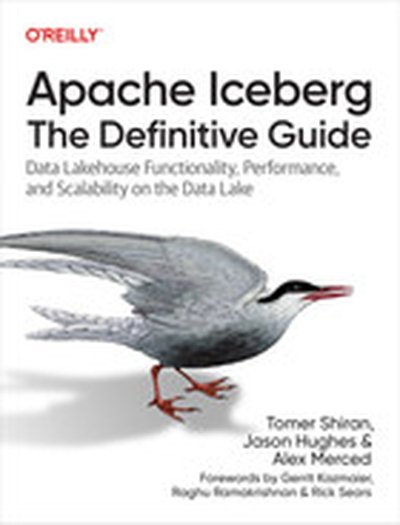
Traditional data architecture patterns are severely limited. To use these patterns, you have to ETL data into each tool—a cost-prohibitive process for making warehouse features available to all of your data. The lack of flexibility with these patterns requires you to lock into a set of priority tools and formats, which creates data silos and data drift. This practical book shows you a better way. Apache Iceberg provides the capabilities, performance, scalability, and savings that fulfill the promise of an open data lakehouse. By following the lessons in this book, you'll be able to achieve interactive, batch, machine learning, and streaming analytics with this high-performance open source format. Authors Tomer Shiran, Jason Hughes, and Alex Merced from Dremio show you how to get started with Iceberg. With this book, you'll learn: The architecture of Apache Iceberg tables What happens under the hood when you perform operations on Iceberg tables How to further optimize Iceberg tables for maximum performance How to use Iceberg with popular data engines such as Apache Spark, Apache Flink, and Dremio Discover why Apache Iceberg is a foundational technology for implementing an open data lakehouse.
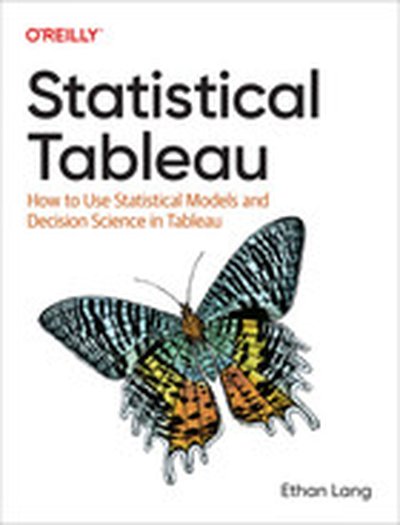
In today's data-driven world, understanding statistical models is crucial for effective analysis and decision making. Whether you're a beginner or an experienced user, this book equips you with the foundational knowledge to grasp and implement statistical models within Tableau. Gain the confidence to speak fluently about the models you employ, driving adoption of your insights and analysis across your organization. As AI continues to revolutionize industries, possessing the skills to leverage statistical models is no longer optional—it's a necessity. Stay ahead of the curve and harness the full potential of your data by mastering the ability to interpret and utilize the insights generated by these models. Whether you're a data enthusiast, analyst, or business professional, this book empowers you to navigate the ever-evolving landscape of data analytics with confidence and proficiency. Start your journey toward data mastery today. In this book, you will learn: The basics of foundational statistical modeling with Tableau How to prove your analysis is statistically significant How to calculate and interpret confidence intervals Best practices for incorporating statistics into data visualizations How to connect external analytics resources from Tableau using R and Python
In this episode, Avery conducts mock data analyst interview sessions with two participants, Richard and Joey, employing a newly developed tool called Interview Simulator.
The interview scenarios are designed to replicate real-life interviews. They aim to prepare aspiring data professionals for upcoming job interviews by showcasing examples of good practices and areas for improvement.
🧙♂️ Ace the Interview with Confidence
📩 Get my weekly email with helpful data career tips
📊 Come to my next free “How to Land Your First Data Job” training
🏫 Check out my 10-week data analytics bootcamp
Timestamps:
(01:40) - Tell Me About Yourself (05:31) - Explain SQL Window Function (09:55) - How Many Meeting Rooms
Connect with Avery:
📺 Subscribe on YouTube
🎙Listen to My Podcast
👔 Connect with me on LinkedIn
🎵 TikTok
Mentioned in this episode: Join the last cohort of 2025! The LAST cohort of The Data Analytics Accelerator for 2025 kicks off on Monday, December 8th and enrollment is officially open!
To celebrate the end of the year, we’re running a special End-of-Year Sale, where you’ll get: ✅ A discount on your enrollment 🎁 6 bonus gifts, including job listings, interview prep, AI tools + more
If your goal is to land a data job in 2026, this is your chance to get ahead of the competition and start strong.
👉 Join the December Cohort & Claim Your Bonuses: https://DataCareerJumpstart.com/daa https://www.datacareerjumpstart.com/daa
Join the analytics event of the year—watch the Tableau Conference Keynote.
The convergence of AI technology and the demand for trusted insights is fueling a new wave of data and innovation. Join Tableau on the journey as we build a future together.
Data24
Welcome to a special edition of Experiencing Data. This episode is the audio capture from a live Crowdcast video webinar I gave on April 26th, 2024 where I conducted a mini UI/UX design audit of a new podcast analytics service that Chris Hill, CEO of Humblepod, is working on to help podcast hosts grow their show. Humblepod is also the team-behind-the-scenes of Experiencing Data, and Chris had asked me to take a look at his new “Listener Lifecycle” tool to see if we could find ways to improve the UX and visualizations in the tool, how we might productize this MVP in the future, and how improving the tool’s design might help Chris help his prospective podcast clients learn how their listener data could help them grow their listenership and “true fans.”
On a personal note, it was fun to talk to Chris on the show given we speak every week: Humblepod has been my trusted resource for audio mixing, transcription, and show note summarizing for probably over 100 of the most recent episodes of Experiencing Data. It was also fun to do a “live recording” with an audience—and we did answer questions in the full video version. (If you missed the invite, join my Insights mailing list to get notified of future free webinars).
To watch the full audio and video recording on Crowdcast, free, head over to: https://www.crowdcast.io/c/podcast-analytics-ui-ux-design
Highlights/ Skip to: Chris talks about using data to improve podcasts and his approach to podcast numbers (03:06) Chris introduces the Listener Lifecycle model which informed the dashboard design (08:17) Chris and I discuss the importance of labeling and terminology in analytics UIs (11:00) We discuss designing for practical use of analytics dashboards to provide actionable insights (17:05) We discuss the challenges podcast hosts face in understanding and utilizing data effectively and how design might help (21:44) I discuss how my CED UX framework for advanced analytics applications helps to facilitate actionable insights (24:37) I highlight the importance of presenting data effectively and in a way that centers to user needs (28:50) I express challenges users may have with podcast rankings and the reliability of data sources (34:24) Chris and I discuss tailoring data reports to meet the specific needs of clients (37:14)
Quotes from Today’s Episode “The irony for me as someone who has a podcast about machine learning and analytics and design is that I basically never look at my analytics.” - Brian O’Neill (01:14) “The problem that I have found in podcasting is that the number that everybody uses to gauge whether a podcast is good or not is the download number…But there’s a lot of other factors in a podcast that can tell you how successful it’s going to be…where you can pull levers to…grow your show, or engage more with an audience.” - Chris Hill (03:20) “I have a framework for user experience design for analytics called CED, which stands for Conclusions, Evidence, Data… The basic idea is really simple: lead your analytic service with conclusions.”- Brian O’Neill (24:37) “Where the eyes glaze over is when tools are mostly about evidence generators, and we just give everybody the evidence, but there’s no actual analysis about how [this is] helping me improve my life or my business. It’s just evidence. I need someone to put that together.” - Brian O’Neill (25:23) “Sometimes the data doesn’t provide enough of a conclusion about what to do…This is where your opinion starts to matter” - Brian O’Neill (26:07) “It sounds like a benefit, but drilling down for most people into analytics stuff is usually a tax unless you’re an analyst.” - Brian O’Neill (27:39) “Where’s the source of this data, and who decided what these numbers are? Because so much of this stuff…is not shared. As someone who’s in this space, it’s not even that it’s confusing. It’s more like, you got to distill this down for me.” - Brian O’Neill (34:57) “Your clients are probably going to glaze over at this level of data because it’s not helping them make any decision about what to change.”- Brian O’Neill (37:53)
Links Watch the original Crowdcast video recording of this episode Brian’s CED UX Framework for Advanced Analytics Solutions Join Brian’s Insights mailing list
Hear how the BBC's stream team have built a pipeline to generate realtime insights from large scale analytics data.
Countless companies invest in their data quality, but often, the effort from their investment is not fully realized in the output. It seems like, despite the critical importance of data quality, data governance might be suffering from a branding issue. Data governance is sometimes looked at as the data police, but this is far from the truth. So, how can we change perspectives and introduce fun into data governance? Tiankai Feng is a Principal Data Consultant and Data Strategy & Data Governance Lead at Thoughtworks, He also works part-time as the Head of Marketing at DAMA Germany. Tiankai has had many data hats in his career—marketing data analyst, data product owner, analytics capability lead, and data governance leader for the last few years. He has found a passion for the human side of data—how to collaborate, coordinate, and communicate around data. TIankai often uses his music and humor to make data more approachable and fun. In the episode, Adel and Tiankai explore the importance of data governance in data-driven organizations, the challenges of data governance, how to define success criteria and measure the ROI of governance initiatives, non-invasive and creative approaches to data governance, the implications of generative AI on data governance, regulatory considerations, organizational culture and much more. Links Mentioned in the Show: Tiankai’s YouTube ChannelData Governance Fundamentals Cheat Sheet[Webinar] Unpacking the Fun in Data Governance: The Key to Scaling Data Quality[Course] Data Governance ConceptsRewatch sessions from RADAR: The Analytics Edition New to DataCamp? Learn on the go using the DataCamp mobile app Empower your business with world-class data and AI skills with DataCamp for business
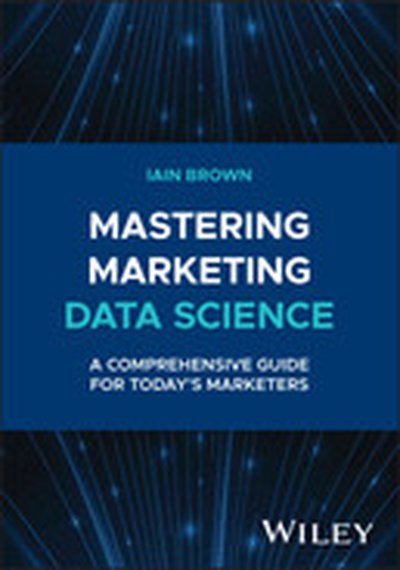
Unlock the Power of Data: Transform Your Marketing Strategies with Data Science In the digital age, understanding the symbiosis between marketing and data science is not just an advantage; it's a necessity. In Mastering Marketing Data Science: A Comprehensive Guide for Today's Marketers, Dr. Iain Brown, a leading expert in data science and marketing analytics, offers a comprehensive journey through the cutting-edge methodologies and applications that are defining the future of marketing. This book bridges the gap between theoretical data science concepts and their practical applications in marketing, providing readers with the tools and insights needed to elevate their strategies in a data-driven world. Whether you're a master's student, a marketing professional, or a data scientist keen on applying your skills in a marketing context, this guide will empower you with a deep understanding of marketing data science principles and the competence to apply these principles effectively. Comprehensive Coverage: From data collection to predictive analytics, NLP, and beyond, explore every facet of marketing data science. Practical Applications: Engage with real-world examples, hands-on exercises in both Python & SAS, and actionable insights to apply in your marketing campaigns. Expert Guidance: Benefit from Dr. Iain Brown's decade of experience as he shares cutting-edge techniques and ethical considerations in marketing data science. Future-Ready Skills: Learn about the latest advancements, including generative AI, to stay ahead in the rapidly evolving marketing landscape. Accessible Learning: Tailored for both beginners and seasoned professionals, this book ensures a smooth learning curve with a clear, engaging narrative. Mastering Marketing Data Science is designed as a comprehensive how-to guide, weaving together theory and practice to offer a dynamic, workbook-style learning experience. Dr. Brown's voice and expertise guide you through the complexities of marketing data science, making sophisticated concepts accessible and actionable.
Summary Generative AI promises to accelerate the productivity of human collaborators. Currently the primary way of working with these tools is through a conversational prompt, which is often cumbersome and unwieldy. In order to simplify the integration of AI capabilities into developer workflows Tsavo Knott helped create Pieces, a powerful collection of tools that complements the tools that developers already use. In this episode he explains the data collection and preparation process, the collection of model types and sizes that work together to power the experience, and how to incorporate it into your workflow to act as a second brain.
Announcements Hello and welcome to the Data Engineering Podcast, the show about modern data managementDagster offers a new approach to building and running data platforms and data pipelines. It is an open-source, cloud-native orchestrator for the whole development lifecycle, with integrated lineage and observability, a declarative programming model, and best-in-class testability. Your team can get up and running in minutes thanks to Dagster Cloud, an enterprise-class hosted solution that offers serverless and hybrid deployments, enhanced security, and on-demand ephemeral test deployments. Go to dataengineeringpodcast.com/dagster today to get started. Your first 30 days are free!Data lakes are notoriously complex. For data engineers who battle to build and scale high quality data workflows on the data lake, Starburst powers petabyte-scale SQL analytics fast, at a fraction of the cost of traditional methods, so that you can meet all your data needs ranging from AI to data applications to complete analytics. Trusted by teams of all sizes, including Comcast and Doordash, Starburst is a data lake analytics platform that delivers the adaptability and flexibility a lakehouse ecosystem promises. And Starburst does all of this on an open architecture with first-class support for Apache Iceberg, Delta Lake and Hudi, so you always maintain ownership of your data. Want to see Starburst in action? Go to dataengineeringpodcast.com/starburst and get $500 in credits to try Starburst Galaxy today, the easiest and fastest way to get started using Trino.Your host is Tobias Macey and today I'm interviewing Tsavo Knott about Pieces, a personal AI toolkit to improve the efficiency of developersInterview IntroductionHow did you get involved in machine learning?Can you describe what Pieces is and the story behind it?The past few months have seen an endless series of personalized AI tools launched. What are the features and focus of Pieces that might encourage someone to use it over the alternatives?model selectionsarchitecture of Pieces applicationlocal vs. hybrid vs. online modelsmodel update/delivery processdata preparation/serving for models in context of Pieces appapplication of AI to developer workflowstypes of workflows that people are building with piecesWhat are the most interesting, innovative, or unexpected ways that you have seen Pieces used?What are the most interesting, unexpected, or challenging lessons that you have learned while working on Pieces?When is Pieces the wrong choice?What do you have planned for the future of Pieces?Contact Info LinkedInParting Question From your perspective, what is the biggest barrier to adoption of machine learning today?Closing Announcements Thank you for listening! Don't forget to check out our other shows. Podcast.init covers the Python language, its community, and the innovative ways it is being used. The Machine Learning Podcast helps you go from idea to production with machine learning.Visit the site to subscribe to the show, sign up for the mailing list, and read the show notes.If you've learned something or tried out a project from the show then tell us about it! Email [email protected]) with your story.Links PiecesNPU == Neural Processing UnitTensor ChipLoRA == Low Rank AdaptationGenerative Adversarial NetworksMistralEmacsVimNeoVimDartFlutte
by
Cris deRitis
,
Mark Zandi
(Moody's Analytics)
,
Adam Kamins
(Moody's Analytics)
,
Marisa DiNatale
(Moody's Analytics)
,
Laura Ratz
(Moody's Analytics)
The Inside Economics team is down a regular with Cris on the road, but two Moody’s Analytics colleagues, Adam Kamins and Laura Ratz, try to fill the void. Mark and Marisa recap a busy week by talking about GDP, inflation, and even Fed independence. The discussion of domestic migration features a healthy dose of Philadelphia homer-ism, and the team talks about the implications of the recent surge in immigration, along with plans for new population estimates from the Congressional Budget Office. Follow Mark Zandi @MarkZandi, Cris deRitis @MiddleWayEcon, and Marisa DiNatale on LinkedIn for additional insight.
Questions or Comments, please email us at [email protected]. We would love to hear from you. To stay informed and follow the insights of Moody's Analytics economists, visit Economic View.
Databases are ubiquitous, and you don’t need to be a data practitioner to know that all data everywhere is stored in a database—or is it? While the majority of data around the world lives in a database, the data that helps run the heart of our operating systems—the core functions of our computers— is not stored in the same place as everywhere else. This is due to database storage sitting ‘above’ the operating system, requiring the OS to run before the databases can be used. But what if the OS was built ‘on top’ of a database? What difference could this fundamental change make to how we use computers? Mike Stonebraker is a distinguished computer scientist known for his foundational work in database systems, he is also currently CTO & Co-Founder At DBOS. His extensive career includes significant contributions through academic prototypes and commercial startups, leading to the creation of several pivotal relational database companies such as Ingres Corporation, Illustra, Paradigm4, StreamBase Systems, Tamr, Vertica, and VoltDB. Stonebraker's role as chief technical officer at Informix and his influential research earned him the prestigious 2014 Turing Award. Stonebraker's professional journey spans two major phases: initially at the University of California, Berkeley, focusing on relational database management systems like Ingres and Postgres, and later, from 2001 at the Massachusetts Institute of Technology (MIT), where he pioneered advanced data management techniques including C-Store, H-Store, SciDB, and DBOS. He remains a professor emeritus at UC Berkeley and continues to influence as an adjunct professor at MIT’s Computer Science and Artificial Intelligence Laboratory. Stonebraker is also recognized for his editorial work on the book "Readings in Database Systems." In the episode, Richie and Mike explore the the success of PostgreSQL, the evolution of SQL databases, the shift towards cloud computing and what that means in practice when migrating to the cloud, the impact of disaggregated storage, software and serverless trends, the role of databases in facilitating new data and AI trends, DBOS and it’s advantages for security, and much more. Links Mentioned in the Show: DBOSPaper: What Goes Around Comes Around[Course] Understanding Cloud ComputingRelated Episode: Scaling Enterprise Analytics with Libby Duane Adams, Chief Advocacy Officer and Co-Founder of AlteryxRewatch sessions from RADAR: The Analytics Edition New to DataCamp? Learn on the go using the DataCamp mobile appEmpower your business with world-class data and AI skills with DataCamp for business
When you look at operational analytics and business data analysis activities—such as log analytics, real-time application monitoring, website search, observability, and more—effective search functionality is key to identifying issues, improving customers experience, and increasing operational effectiveness. How can you support your business needs by leveraging ML-driven advancements in search relevance? In this report, authors Jon Handler, Milind Shyani, Karen Kilroy help executives and data scientists explore how ML can enable ecommerce firms to generate more pertinent search results to drive better sales. You'll learn how personalized search helps you quickly find relevant data within applications, websites, and data lake catalogs. You'll also discover how to locate the content available in CRM systems and document stores. This report helps you: Address the challenges of traditional document search, including data preparation and ingestion Leverage ML techniques to improve search outcomes and the relevance of documents you retrieve Discover what makes a good search solution that's reliable, scalable, and can drive your business forward Learn how to choose a search solution to improve your decision-making process With advancements in ML-driven search, businesses can realize even more benefits and improvements in their data and document search capabilities to better support their own business needs and the needs of their customers. About the authors: Jon Handler is a senior principal solutions architect at Amazon Web Services. Milind Shyani is an applied scientist at Amazon Web Services working on large language models, information retrieval and machine learning algorithms. Karen Kilroy, CEO of Kilroy Blockchain, is a lifelong technologist, full stack software engineer, speaker, and author living in Northwest Arkansas.