talk-data.com talk-data.com

Topic

API

Application Programming Interface (API)

integration software_development data_exchange

856

tagged

Activity Trend

65 peak/qtr
2020-Q1 2026-Q1

Activities

856 activities · Newest first

AWS re:Invent 2024 - Tool use & agents at the frontier: Advanced techniques for LLM actions (AIM306)

Base LLMs can read and write but aren't capable of acting on their own. Tool use and agents allow models to connect to your APIs and other real-world systems to turn their knowledge into action. Discover how to use advanced prompt engineering and clever system design to craft powerful automations using Anthropic’s Claude models in Amazon Bedrock, learning specialized tool syntax and optimizing solutions through strategic planning. Also, learn how frameworks like Amazon Bedrock Agents are pushing the boundaries of AI capabilities. Join us to explore the forefront of AI-driven automation and elevate your LLM skills.

Learn more: AWS re:Invent: https://go.aws/reinvent. More AWS events: https://go.aws/3kss9CP

Subscribe: More AWS videos: http://bit.ly/2O3zS75 More AWS events videos: http://bit.ly/316g9t4

About AWS: Amazon Web Services (AWS) hosts events, both online and in-person, bringing the cloud computing community together to connect, collaborate, and learn from AWS experts. AWS is the world's most comprehensive and broadly adopted cloud platform, offering over 200 fully featured services from data centers globally. Millions of customers—including the fastest-growing startups, largest enterprises, and leading government agencies—are using AWS to lower costs, become more agile, and innovate faster.

AWSreInvent #AWSreInvent2024

Moustafa Eshra: The Hidden Jewels to Solve Confabulation Challenges in Generative AI’s RAG Promise

🌟 Session Overview 🌟

Session Name: Vector Database: The Hidden Jewels to Solve Confabulation Challenges in Generative AI’s RAG Promise Speaker: Moustafa Eshra Session Description: The realm of GenAI dazzles with its magic, yet its implementation poses challenges. Dependencies on APIs, data pipelines, and technologies introduce complexity and potential breakdowns. To expedite organizations' journey in harnessing the boundless opportunities of GenAI, DataStax has introduced the AI Platform ecosystem. The DataStax AI Platform is a curated framework featuring the best of GenAI, with vetted, security-tested, and compatible versions of LangChain, LLamaIndex, OpenAI, and more. In this session, we will explore the pain points and solutions for production-level GenAI and how AI has become 100 times easier with Langflow, the open-source, visual framework for GenAI RAG apps.

🚀 About Big Data and RPA 2024 🚀

Unlock the future of innovation and automation at Big Data & RPA Conference Europe 2024! 🌟 This unique event brings together the brightest minds in big data, machine learning, AI, and robotic process automation to explore cutting-edge solutions and trends shaping the tech landscape. Perfect for data engineers, analysts, RPA developers, and business leaders, the conference offers dual insights into the power of data-driven strategies and intelligent automation. 🚀 Gain practical knowledge on topics like hyperautomation, AI integration, advanced analytics, and workflow optimization while networking with global experts. Don’t miss this exclusive opportunity to expand your expertise and revolutionize your processes—all from the comfort of your home! 📊🤖✨

📅 Yearly Conferences: Curious about the evolution of QA? Check out our archive of past Big Data & RPA sessions. Watch the strategies and technologies evolve in our videos! 🚀 🔗 Find Other Years' Videos: 2023 Big Data Conference Europe https://www.youtube.com/playlist?list=PLqYhGsQ9iSEpb_oyAsg67PhpbrkCC59_g 2022 Big Data Conference Europe Online https://www.youtube.com/playlist?list=PLqYhGsQ9iSEryAOjmvdiaXTfjCg5j3HhT 2021 Big Data Conference Europe Online https://www.youtube.com/playlist?list=PLqYhGsQ9iSEqHwbQoWEXEJALFLKVDRXiP

💡 Stay Connected & Updated 💡

Don’t miss out on any updates or upcoming event information from Big Data & RPA Conference Europe. Follow us on our social media channels and visit our website to stay in the loop!

🌐 Website: https://bigdataconference.eu/, https://rpaconference.eu/ 👤 Facebook: https://www.facebook.com/bigdataconf, https://www.facebook.com/rpaeurope/ 🐦 Twitter: @BigDataConfEU, @europe_rpa 🔗 LinkedIn: https://www.linkedin.com/company/73234449/admin/dashboard/, https://www.linkedin.com/company/75464753/admin/dashboard/ 🎥 YouTube: http://www.youtube.com/@DATAMINERLT

Swanand Rao: Anatomy of Inter-Agentic APIs

🌟 Session Overview 🌟

Session Name: Anatomy of Inter-Agentic APIs Speaker: Swanand Rao Session Description: With the viral adoption of AI driven by commercially available LLMs, new venues of business have opened up. These new business models are driven by the likes of co-pilots and virtual agents that bring tremendous productivity gains across business workflows. Concepts like Generative AI and Conversational AI have already gained mainstream popularity. A new branch of AI that is gaining momentum is Agentic AI. This talk is geared towards identifying mechanisms that make inter-agent communication possible and the ontology of such interactions, solving for the needed concepts of roles, tasks, memory, tools, context, and prompts for a scalable and reliable inter-agent business workflow.

🚀 About Big Data and RPA 2024 🚀

Unlock the future of innovation and automation at Big Data & RPA Conference Europe 2024! 🌟 This unique event brings together the brightest minds in big data, machine learning, AI, and robotic process automation to explore cutting-edge solutions and trends shaping the tech landscape. Perfect for data engineers, analysts, RPA developers, and business leaders, the conference offers dual insights into the power of data-driven strategies and intelligent automation. 🚀 Gain practical knowledge on topics like hyperautomation, AI integration, advanced analytics, and workflow optimization while networking with global experts. Don’t miss this exclusive opportunity to expand your expertise and revolutionize your processes—all from the comfort of your home! 📊🤖✨

📅 Yearly Conferences: Curious about the evolution of QA? Check out our archive of past Big Data & RPA sessions. Watch the strategies and technologies evolve in our videos! 🚀 🔗 Find Other Years' Videos: 2023 Big Data Conference Europe https://www.youtube.com/playlist?list=PLqYhGsQ9iSEpb_oyAsg67PhpbrkCC59_g 2022 Big Data Conference Europe Online https://www.youtube.com/playlist?list=PLqYhGsQ9iSEryAOjmvdiaXTfjCg5j3HhT 2021 Big Data Conference Europe Online https://www.youtube.com/playlist?list=PLqYhGsQ9iSEqHwbQoWEXEJALFLKVDRXiP

💡 Stay Connected & Updated 💡

Don’t miss out on any updates or upcoming event information from Big Data & RPA Conference Europe. Follow us on our social media channels and visit our website to stay in the loop!

🌐 Website: https://bigdataconference.eu/, https://rpaconference.eu/ 👤 Facebook: https://www.facebook.com/bigdataconf, https://www.facebook.com/rpaeurope/ 🐦 Twitter: @BigDataConfEU, @europe_rpa 🔗 LinkedIn: https://www.linkedin.com/company/73234449/admin/dashboard/, https://www.linkedin.com/company/75464753/admin/dashboard/ 🎥 YouTube: http://www.youtube.com/@DATAMINERLT

Christian Tzolov: Spring AI: Integrating Generative AI in Java Enterprise

🌟 Session Overview 🌟

Session Name: Spring AI: Integrating Generative AI in Java Enterprise Speaker: Christian Tzolov Session Description: This session explores Spring AI, a new framework enabling Java developers to integrate AI seamlessly into enterprise applications. Spring AI was born from the realization that using Generative AI is primarily an integration problem that boils down to integrating your enterprise data and APIs with the AI models.

In this talk, the Spring AI project lead will introduce you to the essential GenAI concepts and provide a hands-on guide to kick-start your AI application development journey. Spring AI offers a comprehensive suite of components required for building an AI software stack, upholding Spring's renowned design principles, such as portability and modular design.

This session will introduce many Spring AI features, starting with a portable client API to interact with AI models. You will learn how to create effective AI prompts, convert AI responses into POJOs, and use function calling to integrate your existing APIs with the AI model.

Use cases like “query over your docs” are demonstrated by showcasing Spring AI features such as creating embeddings and storing them in a vector database. The popular RAG pattern and ways you can effectively evaluate how your AI application is performing are discussed.

🚀 About Big Data and RPA 2024 🚀

Unlock the future of innovation and automation at Big Data & RPA Conference Europe 2024! 🌟 This unique event brings together the brightest minds in big data, machine learning, AI, and robotic process automation to explore cutting-edge solutions and trends shaping the tech landscape. Perfect for data engineers, analysts, RPA developers, and business leaders, the conference offers dual insights into the power of data-driven strategies and intelligent automation. 🚀 Gain practical knowledge on topics like hyperautomation, AI integration, advanced analytics, and workflow optimization while networking with global experts. Don’t miss this exclusive opportunity to expand your expertise and revolutionize your processes—all from the comfort of your home! 📊🤖✨

📅 Yearly Conferences: Curious about the evolution of QA? Check out our archive of past Big Data & RPA sessions. Watch the strategies and technologies evolve in our videos! 🚀 🔗 Find Other Years' Videos: 2023 Big Data Conference Europe https://www.youtube.com/playlist?list=PLqYhGsQ9iSEpb_oyAsg67PhpbrkCC59_g 2022 Big Data Conference Europe Online https://www.youtube.com/playlist?list=PLqYhGsQ9iSEryAOjmvdiaXTfjCg5j3HhT 2021 Big Data Conference Europe Online https://www.youtube.com/playlist?list=PLqYhGsQ9iSEqHwbQoWEXEJALFLKVDRXiP

💡 Stay Connected & Updated 💡

Don’t miss out on any updates or upcoming event information from Big Data & RPA Conference Europe. Follow us on our social media channels and visit our website to stay in the loop!

🌐 Website: https://bigdataconference.eu/, https://rpaconference.eu/ 👤 Facebook: https://www.facebook.com/bigdataconf, https://www.facebook.com/rpaeurope/ 🐦 Twitter: @BigDataConfEU, @europe_rpa 🔗 LinkedIn: https://www.linkedin.com/company/73234449/admin/dashboard/, https://www.linkedin.com/company/75464753/admin/dashboard/ 🎥 YouTube: http://www.youtube.com/@DATAMINERLT

Raghav Matta: Leveraging Azure PaaS for Real-time Social Media Analysis

🌟 Session Overview 🌟

Session Name: Leveraging Azure PaaS for Real-time Social Media Analysis by Building Streaming Dashboard Speaker: Raghav Matta Session Description: In this session, Raghav and Sundar will delve into a practical business scenario focusing on real-time social media analysis using Azure PaaS offerings.

  1. They will begin by addressing a prevalent business challenge concerning social media sentiment analysis.

  2. Next, speakers explore a range of Azure services including Azure Functions, Logic Apps, Cognitive Services, Stream Analytics, PowerBI, and Azure Databricks.

  3. Moving forward, they will demonstrate how to gather live data in real-time utilizing Azure Cognitive Services Bing Web Search API. Subsequently, they will analyze the data using Azure Stream Analytics and visualize insights using PowerBI.

This course combines hands-on labs with theoretical curriculum aligned with the 'Exam AI-102: Designing and Implementing a Microsoft Azure AI Solution'.

For further information and resources, please refer to: https://docs.microsoft.com/en-us/azure/stream-analytics/stream-analytics-twitter-sentiment-analysis-trends https://microsoftlearning.github.io/AI-102-AIEngineer/Instructions/05-analyze-text.html 🚀 About Big Data and RPA 2024 🚀

Unlock the future of innovation and automation at Big Data & RPA Conference Europe 2024! 🌟 This unique event brings together the brightest minds in big data, machine learning, AI, and robotic process automation to explore cutting-edge solutions and trends shaping the tech landscape. Perfect for data engineers, analysts, RPA developers, and business leaders, the conference offers dual insights into the power of data-driven strategies and intelligent automation. 🚀 Gain practical knowledge on topics like hyperautomation, AI integration, advanced analytics, and workflow optimization while networking with global experts. Don’t miss this exclusive opportunity to expand your expertise and revolutionize your processes—all from the comfort of your home! 📊🤖✨

📅 Yearly Conferences: Curious about the evolution of QA? Check out our archive of past Big Data & RPA sessions. Watch the strategies and technologies evolve in our videos! 🚀 🔗 Find Other Years' Videos: 2023 Big Data Conference Europe https://www.youtube.com/playlist?list=PLqYhGsQ9iSEpb_oyAsg67PhpbrkCC59_g 2022 Big Data Conference Europe Online https://www.youtube.com/playlist?list=PLqYhGsQ9iSEryAOjmvdiaXTfjCg5j3HhT 2021 Big Data Conference Europe Online https://www.youtube.com/playlist?list=PLqYhGsQ9iSEqHwbQoWEXEJALFLKVDRXiP

💡 Stay Connected & Updated 💡

Don’t miss out on any updates or upcoming event information from Big Data & RPA Conference Europe. Follow us on our social media channels and visit our website to stay in the loop!

🌐 Website: https://bigdataconference.eu/, https://rpaconference.eu/ 👤 Facebook: https://www.facebook.com/bigdataconf, https://www.facebook.com/rpaeurope/ 🐦 Twitter: @BigDataConfEU, @europe_rpa 🔗 LinkedIn: https://www.linkedin.com/company/73234449/admin/dashboard/, https://www.linkedin.com/company/75464753/admin/dashboard/ 🎥 YouTube: http://www.youtube.com/@DATAMINERLT

AWS re:Invent 2024 - Accelerate innovation with generative AI and no-code machine learning (AIM227)

Learn how to empower anyone in your organization to unlock valuable insights from your data with Amazon SageMaker Canvas. With SageMaker Canvas, you can create highly accurate machine learning models for regression, classification, and time-series forecasting and fine-tune select foundation models—all without writing code or needing machine learning experience. In this session, explore how to scale ML operations through API-driven automation. Also discover how Gosoft used SageMaker Canvas AutoML time-series capabilities to automate demand forecasting for thousands of products across 15,000 7-Eleven stores in Thailand.

Learn more: AWS re:Invent: https://go.aws/reinvent. More AWS events: https://go.aws/3kss9CP

Subscribe: More AWS videos: http://bit.ly/2O3zS75 More AWS events videos: http://bit.ly/316g9t4

About AWS: Amazon Web Services (AWS) hosts events, both online and in-person, bringing the cloud computing community together to connect, collaborate, and learn from AWS experts. AWS is the world's most comprehensive and broadly adopted cloud platform, offering over 200 fully featured services from data centers globally. Millions of customers—including the fastest-growing startups, largest enterprises, and leading government agencies—are using AWS to lower costs, become more agile, and innovate faster.

AWSreInvent #AWSreInvent2024

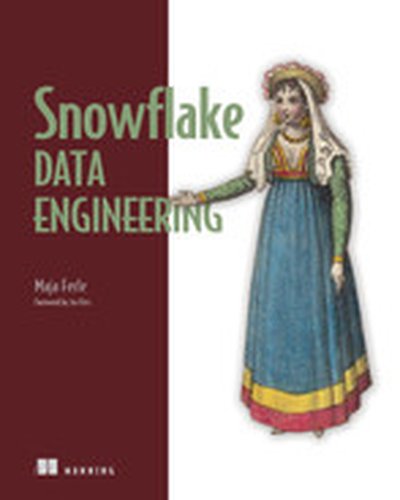
Snowflake Data Engineering

A practical introduction to data engineering on the powerful Snowflake cloud data platform. Data engineers create the pipelines that ingest raw data, transform it, and funnel it to the analysts and professionals who need it. The Snowflake cloud data platform provides a suite of productivity-focused tools and features that simplify building and maintaining data pipelines. In Snowflake Data Engineering, Snowflake Data Superhero Maja Ferle shows you how to get started. In Snowflake Data Engineering you will learn how to: Ingest data into Snowflake from both cloud and local file systems Transform data using functions, stored procedures, and SQL Orchestrate data pipelines with streams and tasks, and monitor their execution Use Snowpark to run Python code in your pipelines Deploy Snowflake objects and code using continuous integration principles Optimize performance and costs when ingesting data into Snowflake Snowflake Data Engineering reveals how Snowflake makes it easy to work with unstructured data, set up continuous ingestion with Snowpipe, and keep your data safe and secure with best-in-class data governance features. Along the way, you’ll practice the most important data engineering tasks as you work through relevant hands-on examples. Throughout, author Maja Ferle shares design tips drawn from her years of experience to ensure your pipeline follows the best practices of software engineering, security, and data governance. About the Technology Pipelines that ingest and transform raw data are the lifeblood of business analytics, and data engineers rely on Snowflake to help them deliver those pipelines efficiently. Snowflake is a full-service cloud-based platform that handles everything from near-infinite storage, fast elastic compute services, inbuilt AI/ML capabilities like vector search, text-to-SQL, code generation, and more. This book gives you what you need to create effective data pipelines on the Snowflake platform. About the Book Snowflake Data Engineering guides you skill-by-skill through accomplishing on-the-job data engineering tasks using Snowflake. You’ll start by building your first simple pipeline and then expand it by adding increasingly powerful features, including data governance and security, adding CI/CD into your pipelines, and even augmenting data with generative AI. You’ll be amazed how far you can go in just a few short chapters! What's Inside Ingest data from the cloud, APIs, or Snowflake Marketplace Orchestrate data pipelines with streams and tasks Optimize performance and cost About the Reader For software developers and data analysts. Readers should know the basics of SQL and the Cloud. About the Author Maja Ferle is a Snowflake Subject Matter Expert and a Snowflake Data Superhero who holds the SnowPro Advanced Data Engineer and the SnowPro Advanced Data Analyst certifications. Quotes An incredible guide for going from zero to production with Snowflake. - Doyle Turner, Microsoft A must-have if you’re looking to excel in the field of data engineering. - Isabella Renzetti, Data Analytics Consultant & Trainer Masterful! Unlocks the true potential of Snowflake for modern data engineers. - Shankar Narayanan, Microsoft Valuable insights will enhance your data engineering skills and lead to cost-effective solutions. A must read! - Frédéric L’Anglais, Maxa Comprehensive, up-to-date and packed with real-life code examples. - Albert Nogués, Danone

AWS re:Invent 2024 - Deep dive into Amazon DocumentDB and its innovations (DAT324)

Amazon DocumentDB (with MongoDB compatibility) is a fully managed native JSON document database that makes it easy and cost-effective to operate critical document workloads at virtually any scale without managing infrastructure. In this session, take a deep dive into the most exciting new features Amazon DocumentDB offers including global cluster failover, global cluster switchover, compression, and the latest query APIs. Learn how the implementation of these features in your organization can improve resilience, performance, and the effectiveness of your applications.

Learn more: AWS re:Invent: https://go.aws/reinvent. More AWS events: https://go.aws/3kss9CP

Subscribe: More AWS videos: http://bit.ly/2O3zS75 More AWS events videos: http://bit.ly/316g9t4

About AWS: Amazon Web Services (AWS) hosts events, both online and in-person, bringing the cloud computing community together to connect, collaborate, and learn from AWS experts. AWS is the world's most comprehensive and broadly adopted cloud platform, offering over 200 fully featured services from data centers globally. Millions of customers—including the fastest-growing startups, largest enterprises, and leading government agencies—are using AWS to lower costs, become more agile, and innovate faster.

AWSreInvent #AWSreInvent2024

AWS re:Invent 2024 - Amazon Bedrock Agents for blockchain analysis and interaction (BLC404)

In this lightning talk, you will learn how to utilize Amazon Bedrock Agents to gain insights from blockchain data and interact with smart contracts using natural language. You will gain knowledge regarding how to build a natural language interface to query blockchain data from the AWS Public Blockchain datasets for Ethereum and Bitcoin data. You will also gain an understanding of how to create agents that are capable of calling Amazon Managed Blockchain Query APIs and writing to the blockchain.

Learn more: AWS re:Invent: https://go.aws/reinvent. More AWS events: https://go.aws/3kss9CP

Subscribe: More AWS videos: http://bit.ly/2O3zS75 More AWS events videos: http://bit.ly/316g9t4

About AWS: Amazon Web Services (AWS) hosts events, both online and in-person, bringing the cloud computing community together to connect, collaborate, and learn from AWS experts. AWS is the world's most comprehensive and broadly adopted cloud platform, offering over 200 fully featured services from data centers globally. Millions of customers—including the fastest-growing startups, largest enterprises, and leading government agencies—are using AWS to lower costs, become more agile, and innovate faster.

AWSreInvent #AWSreInvent2024

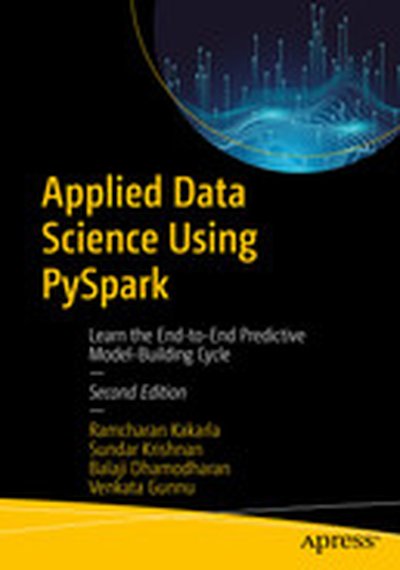
Applied Data Science Using PySpark: Learn the End-to-End Predictive Model-Building Cycle

This comprehensive guide, featuring hand-picked examples of daily use cases, will walk you through the end-to-end predictive model-building cycle using the latest techniques and industry tricks. In Chapters 1, 2, and 3, we will begin by setting up the environment and covering the basics of PySpark, focusing on data manipulation. Chapter 4 delves into the art of variable selection, demonstrating various techniques available in PySpark. In Chapters 5, 6, and 7, we explore machine learning algorithms, their implementations, and fine-tuning techniques. Chapters 8 and 9 will guide you through machine learning pipelines and various methods to operationalize and serve models using Docker/API. Chapter 10 will demonstrate how to unlock the power of predictive models to create a meaningful impact on your business. Chapter 11 introduces some of the most widely used and powerful modeling frameworks to unlock real value from data. In this new edition, you will learn predictive modeling frameworks that can quantify customer lifetime values and estimate the return on your predictive modeling investments. This edition also includes methods to measure engagement and identify actionable populations for effective churn treatments. Additionally, a dedicated chapter on experimentation design has been added, covering steps to efficiently design, conduct, test, and measure the results of your models. All code examples have been updated to reflect the latest stable version of Spark. You will: Gain an overview of end-to-end predictive model building Understand multiple variable selection techniques and their implementations Learn how to operationalize models Perform data science experiments and learn useful tips

Summary In this episode of the Data Engineering Podcast, Anna Geller talks about the integration of code and UI-driven interfaces for data orchestration. Anna defines data orchestration as automating the coordination of workflow nodes that interact with data across various business functions, discussing how it goes beyond ETL and analytics to enable real-time data processing across different internal systems. She explores the challenges of using existing scheduling tools for data-specific workflows, highlighting limitations and anti-patterns, and discusses Kestra's solution, a low-code orchestration platform that combines code-driven flexibility with UI-driven simplicity. Anna delves into Kestra's architectural design, API-first approach, and pluggable infrastructure, and shares insights on balancing UI and code-driven workflows, the challenges of open-core business models, and innovative user applications of Kestra's platform.

Announcements Hello and welcome to the Data Engineering Podcast, the show about modern data managementData migrations are brutal. They drag on for months—sometimes years—burning through resources and crushing team morale. Datafold's AI-powered Migration Agent changes all that. Their unique combination of AI code translation and automated data validation has helped companies complete migrations up to 10 times faster than manual approaches. And they're so confident in their solution, they'll actually guarantee your timeline in writing. Ready to turn your year-long migration into weeks? Visit dataengineeringpodcast.com/datafold today for the details.As a listener of the Data Engineering Podcast you clearly care about data and how it affects your organization and the world. For even more perspective on the ways that data impacts everything around us you should listen to Data Citizens® Dialogues, the forward-thinking podcast from the folks at Collibra. You'll get further insights from industry leaders, innovators, and executives in the world's largest companies on the topics that are top of mind for everyone. They address questions around AI governance, data sharing, and working at global scale. In particular I appreciate the ability to hear about the challenges that enterprise scale businesses are tackling in this fast-moving field. While data is shaping our world, Data Citizens Dialogues is shaping the conversation. Subscribe to Data Citizens Dialogues on Apple, Spotify, Youtube, or wherever you get your podcasts.Your host is Tobias Macey and today I'm interviewing Anna Geller about incorporating both code and UI driven interfaces for data orchestrationInterview IntroductionHow did you get involved in the area of data management?Can you start by sharing a definition of what constitutes "data orchestration"?There are many orchestration and scheduling systems that exist in other contexts (e.g. CI/CD systems, Kubernetes, etc.). Those are often adapted to data workflows because they already exist in the organizational context. What are the anti-patterns and limitations that approach introduces in data workflows?What are the problems that exist in the opposite direction of using data orchestrators for CI/CD, etc.?Data orchestrators have been around for decades, with many different generations and opinions about how and by whom they are used. What do you see as the main motivation for UI vs. code-driven workflows?What are the benefits of combining code-driven and UI-driven capabilities in a single orchestrator?What constraints does it necessitate to allow for interoperability between those modalities?Data Orchestrators need to integrate with many external systems. How does Kestra approach building integrations and ensure governance for all their underlying configurations?Managing workflows at scale across teams can be challenging in terms of providing structure and visibility of dependencies across workflows and teams. What features does Kestra offer so that all pipelines and teams stay organised?What are

Build integrate and monetize AI-ready apps with Microsoft Fabric | BRK200

Microsoft Fabric has continued to grow as a platform of choice for building applications for enterprises and ISVs. Learn how large enterprises like LSEG are building data distribution platforms, and how industry leading ISVs are harnessing the power of Fabric’s unified data management and workload dev APIs to accelerate app development. The session includes a high-level demo of Fabric’s Workload Development Kit and monetization guidance via Azure Marketplace.

𝗦𝗽𝗲𝗮𝗸𝗲𝗿𝘀: * Dipti Borkar * Phil Cheetham

𝗦𝗲𝘀𝘀𝗶𝗼𝗻 𝗜𝗻𝗳𝗼𝗿𝗺𝗮𝘁𝗶𝗼𝗻: This is one of many sessions from the Microsoft Ignite 2024 event. View even more sessions on-demand and learn about Microsoft Ignite at https://ignite.microsoft.com

BRK200 | English (US) | Data

MSIgnite

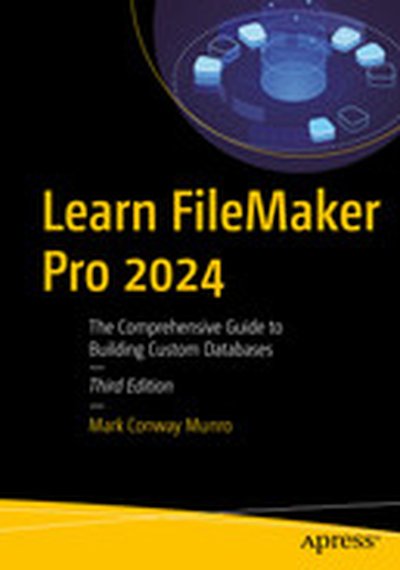
Learn FileMaker Pro 2024: The Comprehensive Guide to Building Custom Databases

FileMaker Pro is a development platform from Claris International Inc., a subsidiary of Apple Inc. The software makes it easy for everyone to create powerful, multi-user, cross-platform, relational database applications. This book navigates the reader through the software in a clear and logical manner, with each chapter building on the previous one. After an initial review of the user environment and application basics, the book delves into a deep exploration of the integrated development environment, which seamlessly combines the full stack of schema, business logic, and interface layers into a unified visual programming experience. Everything beginners need to get started is covered, along with advanced material that seasoned professionals will appreciate. Written by a professional developer with decades of real-world experience, "Learn FileMaker Pro 2024" is a comprehensive learning and reference guide. Join millions of users and developers worldwide in achieving a new level of workflow efficiency with FileMaker. For This New Edition This third edition includes clearer lessons and more examples, making it easier than ever to start planning, building, and deploying a custom database solution. It covers dozens of new and modified features introduced in versions 19.1 to 19.6, as well as the more recent 2023 (v20) and 2024 (v21) releases. Whatever your level of experience, this book has something new for you! What You’ll Learn · Plan and create custom tables, fields, and relationships · Write calculations using built-in and custom functions · Build layouts with dynamic objects, themes, and custom menus · Automate tasks with scripts and link them to objects and interface events · Keep database files secure and healthy · Integrate with external systems using ODBC, cURL, and the FM API · Deploy solutions to share with desktop, iOS, and web clients · Learn about summary reports, dynamic object references, and transactions · Delve into artificial intelligence with CoreML, OpenAI, and Semantic Finds Who This Book Is For Hobbyist developers, professional consultants, IT staff

Azure AI Foundry: Effortless model selection - explore swap & scale faster | BRK118

Join us for an in-depth session where we explore the cutting-edge advancements in Azure AI Foundry model catalog featuring new model launches like Tsuzumi from NTT Data, Bria, and more. We'll also delve into new provisioning offers and discuss enterprise-ready promises, including VNet , AAD authentication, model inference API, and more. We'll invite NTT Data to present a demo on Tsuzumi and how customers can customize this domain-specific SLM in Azure AI Foundry.

𝗦𝗽𝗲𝗮𝗸𝗲𝗿𝘀: * Kenji Motohashi * Facundo Santiago * Saumil Shrivastava

𝗦𝗲𝘀𝘀𝗶𝗼𝗻 𝗜𝗻𝗳𝗼𝗿𝗺𝗮𝘁𝗶𝗼𝗻: This is one of many sessions from the Microsoft Ignite 2024 event. View even more sessions on-demand and learn about Microsoft Ignite at https://ignite.microsoft.com

BRK118 | English (US) | AI

MSIgnite

The relationship between AI and ethics is both developing and delicate. On one hand, the GenAI advancements to date are impressive. On the other, extreme care needs to be taken as this tech continues to quickly become more commonplace in our lives. In today’s episode, Ovetta Sampson and I examine the crossroads ahead for designing AI and GenAI user experiences.

While professionals and the general public are eager to embrace new products, recent breakthroughs, etc.; we still need to have some guard rails in place. If we don’t, data can easily get mishandled, and people could get hurt. Ovetta possesses firsthand experience working on these issues as they sprout up. We look at who should be on a team designing an AI UX, exploring the risks associated with GenAI, ethics, and need to be thinking about going forward.

Highlights/ Skip to: (1:48) Ovetta's background and what she brings to Google’s Core ML group (6:03) How Ovetta and her team work with data scientists and engineers deep in the stack (9:09)  How AI is changing the front-end of applications (12:46) The type of people you should seek out to design your AI and LLM UXs (16:15) Explaining why we’re only at the very start of major GenAI breakthroughs (22:34) How GenAI tools will alter the roles and responsibilities of designers, developers, and product teams (31:11) The potential harms of carelessly deploying GenAI technology (42:09) Defining acceptable levels of risk when using GenAI in real-world applications (53:16) Closing thoughts from Ovetta and where you can find her

Quotes from Today’s Episode “If artificial intelligence is just another technology, why would we build entire policies and frameworks around it? The reason why we do that is because we realize there are some real thorny ethical issues [surrounding AI]. Who owns that data? Where does it come from? Data is created by people, and all people create data. That’s why companies have strong legal, compliance, and regulatory policies around [AI], how it’s built, and how it engages with people. Think about having a toddler and then training the toddler on everything in the Library of Congress and on the internet. Do you release that toddler into the world without guardrails? Probably not.” - Ovetta Sampson (10:03) “[When building a team] you should look for a diverse thinker who focuses on the limitations of this technology- not its capability. You need someone who understands that the end destination of that technology is an engagement with a human being.  You need somebody who understands how they engage with machines and digital products. You need that person to be passionate about testing various ways that relationships can evolve. When we go from execution on code to machine learning, we make a shift from [human] agency to a shared-agency relationship. The user and machine both have decision-making power. That’s the paradigm shift that [designers] need to understand. You want somebody who can keep that duality in their head as they’re testing product design.” - Ovetta Sampson (13:45) “We’re in for a huge taxonomy change. There are words that mean very specific definitions today. Software engineer. Designer. Technically skilled. Digital. Art. Craft. AI is changing all that. It’s changing what it means to be a software engineer. Machine learning used to be the purview of data scientists only, but with GenAI, all of that is baked in to Gemini. So, now you start at a checkpoint, and you’re like, all right, let’s go make an API, right? So, the skills, the understanding, the knowledge, the taxonomy even, how we talk about these things, how do we talk about the machine who speaks to us talks to us, who could create a podcast out of just voice memos?” - Ovetta Sampson (24:16) “We have to be very intentional [when building AI tools], and that’s the kind of folks you want on teams. [Designers] have to go and play scary scenarios. We have to do that. No designer wants to be “Negative Nancy,” but this technology has huge potential to harm. It has harmed. If we don’t have the skill sets to recognize, document, and minimize harm, that needs to be part of our skill set.  If we’re not looking out for the humans, then who actually is?” - Ovetta Sampson (32:10) “[Research shows] things happen to our brain when we’re exposed to artificial intelligence… there are real human engagement risks that are an opportunity for design.  When you’re designing a self-driving car, you can’t just let the person go to sleep unless the car is fully [automated] and every other car on the road is self-driving. If there are humans behind the wheel, you need to have a feedback loop system—something that’s going to happen [in case] the algorithm is wrong. If you don’t have that designed, there’s going to be a large human engagement risk that a car is going to run over somebody who’s [for example] pushing a bike up a hill[...] Why? The car could not calculate the right speed and pace of a person pushing their bike. It had the speed and pace of a person walking, the speed and pace of a person on a bike, but not the two together. Algorithms will be wrong, right?” - Ovetta Sampson (39:42) “Model goodness used to be the purview of companies and the data scientists. Think about the first search engines. Their model goodness was [about] 77%. That’s good, right? And then people started seeing photos of apes when [they] typed in ‘black people.’ Companies have to get used to going to their customers in a wide spectrum and asking them when they’re [models or apps are] right and wrong.  They can’t take on that burden themselves anymore. Having ethically sourced data input and variables is hard work. If you’re going to use this technology, you need to put into place the governance that needs to be there.” - Ovetta Sampson (44:08)

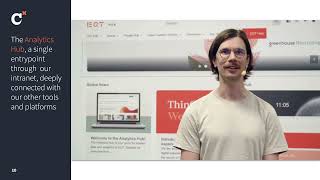
Coalesce 2024: The end of data hide-and-seek

Jonny will showcase how the team at EQT, one of the world's largest private equity firms, is leveraging the dbt Discovery API, data contracts, tagging, and other dbt features to power discovery through their intranet — and by extension, how this also enables the team to support LLMs for live querying of their data.

Speaker: Jonny Reichwald Analytics Lead EQT

Read the blog to learn about the latest dbt Cloud features announced at Coalesce, designed to help organizations embrace analytics best practices at scale https://www.getdbt.com/blog/coalesce-2024-product-announcements

Summary In this episode of the Data Engineering Podcast, Adrian Broderieux and Marcin Rudolph, co-founders of DLT Hub, delve into the principles guiding DLT's development, emphasizing its role as a library rather than a platform, and its integration with lakehouse architectures and AI application frameworks. The episode explores the impact of the Python ecosystem's growth on DLT, highlighting integrations with high-performance libraries and the benefits of Arrow and DuckDB. The episode concludes with a discussion on the future of DLT, including plans for a portable data lake and the importance of interoperability in data management tools. Announcements Hello and welcome to the Data Engineering Podcast, the show about modern data managementImagine catching data issues before they snowball into bigger problems. That’s what Datafold’s new Monitors do. With automatic monitoring for cross-database data diffs, schema changes, key metrics, and custom data tests, you can catch discrepancies and anomalies in real time, right at the source. Whether it’s maintaining data integrity or preventing costly mistakes, Datafold Monitors give you the visibility and control you need to keep your entire data stack running smoothly. Want to stop issues before they hit production? Learn more at dataengineeringpodcast.com/datafold today!Your host is Tobias Macey and today I'm interviewing Adrian Brudaru and Marcin Rudolf, cofounders at dltHub, about the growth of dlt and the numerous ways that you can use it to address the complexities of data integrationInterview IntroductionHow did you get involved in the area of data management?Can you describe what dlt is and how it has evolved since we last spoke (September 2023)?What are the core principles that guide your work on dlt and dlthub?You have taken a very opinionated stance against managed extract/load services. What are the shortcomings of those platforms, and when would you argue in their favor?The landscape of data movement has undergone some interesting changes over the past year. Most notably, the growth of PyAirbyte and the rapid shifts around the needs of generative AI stacks (vector stores, unstructured data processing, etc.). How has that informed your product development and positioning?The Python ecosystem, and in particular data-oriented Python, has also undergone substantial evolution. What are the developments in the libraries and frameworks that you have been able to benefit from?What are some of the notable investments that you have made in the developer experience for building dlt pipelines?How have the interfaces for source/destination development improved?You recently published a post about the idea of a portable data lake. What are the missing pieces that would make that possible, and what are the developments/technologies that put that idea within reach?What is your strategy for building a sustainable product on top of dlt?How does that strategy help to form a "virtuous cycle" of improving the open source foundation?What are the most interesting, innovative, or unexpected ways that you have seen dlt used?What are the most interesting, unexpected, or challenging lessons that you have learned while working on dlt?When is dlt the wrong choice?What do you have planned for the future of dlt/dlthub?Contact Info AdrianLinkedInMarcinLinkedInParting Question From your perspective, what is the biggest gap in the tooling or technology for data management today?Closing Announcements Thank you for listening! Don't forget to check out our other shows. Podcast.init covers the Python language, its community, and the innovative ways it is being used. The AI Engineering Podcast is your guide to the fast-moving world of building AI systems.Visit the site to subscribe to the show, sign up for the mailing list, and read the show notes.If you've learned something or tried out a project from the show then tell us about it! Email [email protected] with your story.Links dltPodcast EpisodePyArrowPolarsIbisDuckDBPodcast Episodedlt Data ContractsRAG == Retrieval Augmented GenerationAI Engineering Podcast EpisodePyAirbyteOpenAI o1 ModelLanceDBQDrant EmbeddedAirflowGitHub ActionsArrow DataFusionApache ArrowPyIcebergDelta-RSSCD2 == Slowly Changing DimensionsSQLAlchemySQLGlotFSSpecPydanticSpacyEntity RecognitionParquet File FormatPython DecoratorREST API ToolkitOpenAPI Connector GeneratorConnectorXPython no-GILDelta LakePodcast EpisodeSQLMeshPodcast EpisodeHamiltonTabularPostHogPodcast.init EpisodeAsyncIOCursor.AIData MeshPodcast EpisodeFastAPILangChainGraphRAGAI Engineering Podcast EpisodeProperty GraphPython uvThe intro and outro music is from The Hug by The Freak Fandango Orchestra / CC BY-SA

Financial Data Engineering

Today, investment in financial technology and digital transformation is reshaping the financial landscape and generating many opportunities. Too often, however, engineers and professionals in financial institutions lack a practical and comprehensive understanding of the concepts, problems, techniques, and technologies necessary to build a modern, reliable, and scalable financial data infrastructure. This is where financial data engineering is needed. A data engineer developing a data infrastructure for a financial product possesses not only technical data engineering skills but also a solid understanding of financial domain-specific challenges, methodologies, data ecosystems, providers, formats, technological constraints, identifiers, entities, standards, regulatory requirements, and governance. This book offers a comprehensive, practical, domain-driven approach to financial data engineering, featuring real-world use cases, industry practices, and hands-on projects. You'll learn: The data engineering landscape in the financial sector Specific problems encountered in financial data engineering The structure, players, and particularities of the financial data domain Approaches to designing financial data identification and entity systems Financial data governance frameworks, concepts, and best practices The financial data engineering lifecycle from ingestion to production The varieties and main characteristics of financial data workflows How to build financial data pipelines using open source tools and APIs Tamer Khraisha, PhD, is a senior data engineer and scientific author with more than a decade of experience in the financial sector.