talk-data.com talk-data.com

Topic

BI

Business Intelligence (BI)

data_visualization reporting analytics

1211

tagged

Activity Trend

111 peak/qtr
2020-Q1 2026-Q1

Activities

1211 activities · Newest first

To stay competitive in the current economy, businesses need to use data democratisation to gain insights through BI and analytics.

Breaking data silos, deriving 360° insights, blending data across business functions, and empowering everyone with insights can truly transform business outcomes.

Artificial intelligence is now augmenting every layer of business intelligence to be more powerful, democratising access to insights. By adopting a modern BI and analytics platform, businesses can unlock transformative potential and uncover growth opportunities.

Join us to start your BI journey and learn how AI is evolving in the data and analytics domain to meet emerging business needs.

Here's what you can expect from this session:

• The state of data and analytics adoption

• Data and analytics challenges faced by businesses

• How generative AI is reshaping analytical insights

• Guide to transforming outcomes by adopting a modern AI-driven BI platform

In this session, we will demo and discuss the four central pillars of an enterprise strategy to realize true ""Gen-BI"" - the infusion of Gen-AI and LLMs into your business and decision intelligence capabilities.

        • Direct operations on any data source, accessible to any user 

        • Sophisticated request handling through the simplicity of conversational speech 

        • The 'Multi-LLM' strategy - to bring the right model for the right data set

        • Security so you can tap into Gen-AI without concern

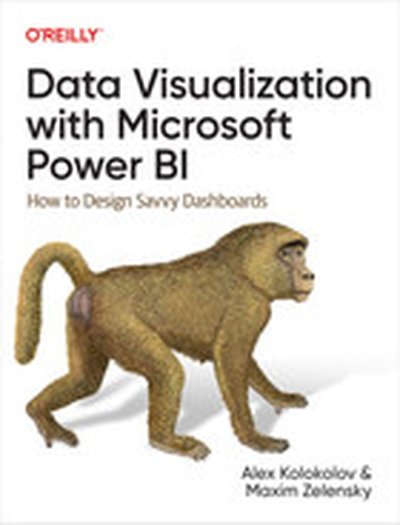
Data Visualization with Microsoft Power BI

The sheer volume of business data has reached an all-time high. Using visualizations to transform this data into useful and understandable information can facilitate better decision-making. This practical book shows data analysts as well as professionals in finance, sales, and marketing how to quickly create visualizations and build savvy dashboards. Alex Kolokolov from Data2Speak and Maxim Zelensky from Intelligent Business explain in simple and clear language how to create brilliant charts with Microsoft Power BI and follow best practices for corporate reporting. No technical background is required. Step-by-step guides help you set up any chart in a few clicks and avoid common mistakes. Also, experienced data analysts will find tips and tricks on how to enrich their reports with advanced visuals. This book helps you understand: The basic rules for classic charts that are used in 90% of business reports Exceptions to general rules based on real business cases Best practices for dashboard design How to properly set up interactions How to prepare data for advanced visuals How to avoid pitfalls with eye-catching charts

In this episode, Rachael Finch shares her incredible journey of transitioning from a night shift quality assurance analyst at an alcohol manufacturing company to a fully remote business intelligence analyst at Optum Healthcare within just 95 days. Rachael, a biology major, leveraged the SPN Method from The Data Analytics Accelerator to break into the data industry. Tune in to hear her inspiring story and practical advice for those looking to make a similar career shift. 06:25 Networking and the SPN Method 13:40 Interview Process and Challenges 19:34 Landing the Job and Celebrating Success 23:32 Reflections and Future Plans 29:12 Final Thoughts and Advice Mentioned in this episode: Join the last cohort of 2025! The LAST cohort of The Data Analytics Accelerator for 2025 kicks off on Monday, December 8th and enrollment is officially open!

To celebrate the end of the year, we’re running a special End-of-Year Sale, where you’ll get: ✅ A discount on your enrollment 🎁 6 bonus gifts, including job listings, interview prep, AI tools + more

If your goal is to land a data job in 2026, this is your chance to get ahead of the competition and start strong.

👉 Join the December Cohort & Claim Your Bonuses: https://DataCareerJumpstart.com/daa https://www.datacareerjumpstart.com/daa

Due to a technical glitch that ended up unpublishing this episode right after it originally was released, Episode 151 is a replay of my conversation with Zalak Trivdei from this past March . Please enjoy our chat if you missed it the first time around!

Thanks,

Brian

Links Original Episode: https://designingforanalytics.com/resources/episodes/139-monetizing-saas-analytics-and-the-challenges-of-designing-a-successful-embedded-bi-product-promoted-episode/ 

Sigma Computing: https://sigmacomputing.com

Email: [email protected] 

LinkedIn: https://www.linkedin.com/in/trivedizalak/

Sigma Computing Embedded: https://sigmacomputing.com/embedded

About Promoted Episodes on Experiencing Data: https://designingforanalytics.com/promoted

“Last week was a great year in GenAI,” jokes Mark Ramsey—and it’s a great philosophy to have as LLM tools especially continue to evolve at such a rapid rate. This week, you’ll get to hear my fun and insightful chat with Mark from Ramsey International about the world of large language models (LLMs) and how we make useful UXs out of them in the enterprise. 

Mark shared some fascinating insights about using a company’s website information (data) as a place to pilot a LLM project, avoiding privacy landmines, and how re-ranking of models leads to better LLM response accuracy. We also talked about the importance of real human testing to ensure LLM chatbots and AI tools truly delight users. From amusing anecdotes about the spinning beach ball on macOS to envisioning a future where AI-driven chat interfaces outshine traditional BI tools, this episode is packed with forward-looking ideas and a touch of humor.

Highlights/ Skip to:

(0:50) Why is the world of GenAI evolving so fast? (4:20) How Mark thinks about UX in an LLM application (8:11) How Mark defines “Specialized GenAI?” (12:42) Mark’s consulting work with GenAI / LLMs these days (17:29) How GenAI can help the healthcare industry (30:23) Uncovering users’ true feelings about LLM applications (35:02) Are UIs moving backwards as models progress forward? (40:53) How will GenAI impact data and analytics teams? (44:51) Will LLMs be able to consistently leverage RAG and produce proper SQL? (51:04) Where can find more from Mark and Ramsey International

Quotes from Today’s Episode “With [GenAI], we have a solution that we’ve built to try to help organizations, and build workflows. We have a workflow that we can run and ask the same question [to a variety of GenAI models] and see how similar the answers are. Depending on the complexity of the question, you can see a lot of variability between the models… [and] we can also run the same question against the different versions of the model and see how it’s improved. Folks want a human-like experience interacting with these models.. [and] if the model can start responding in just a few seconds, that gives you much more of a conversational type of experience.” - Mark Ramsey (2:38) “[People] don’t understand when you interact [with GenAI tools] and it brings tokens back in that streaming fashion, you’re actually seeing inside the brain of the model. Every token it produces is then displayed on the screen, and it gives you that typewriter experience back in the day. If someone has to wait, and all you’re seeing is a logo spinning, from a UX experience standpoint… people feel like the model is much faster if it just starts to produce those results in that streaming fashion. I think in a design, it’s extremely important to take advantage of that [...] as opposed to waiting to the end and delivering the results some models support that, and other models don’t.”- Mark Ramsey (4:35) "All of the data that’s on the website is public information. We’ve done work with several organizations on quickly taking the data that’s on their website, packaging it up into a vector database, and making that be the source for questions that their customers can ask. [Organizations] publish a lot of information on their websites, but people really struggle to get to it. We’ve seen a lot of interest in vectorizing website data, making it available, and having a chat interface for the customer. The customer can ask questions, and it will take them directly to the answer, and then they can use the website as the source information.” - Mark Ramsey (14:04) “I’m not skeptical at all. I’ve changed much of my [AI chatbot searches] to Perplexity, and I think it’s doing a pretty fantastic job overall in terms of quality. It’s returning an answer with citations, so you have a sense of where it’s sourcing the information from. I think it’s important from a user experience perspective. This is a replacement for broken search, as I really don’t want to read all the web pages and PDFs you have that might be about my chiropractic care query to answer my actual [healthcare] question.” - Brian O’Neill (19:22)

“We’ve all had great experience with customer service, and we’ve all had situations where the customer service was quite poor, and we’re going to have that same thing as we begin to [release more] chatbots. We need to make sure we try to alleviate having those bad experiences, and have an exit. If someone is running into a situation where they’d rather talk to a live person, have that ability to route them to someone else. That’s why the robustness of the model is extremely important in the implementation… and right now, organizations like OpenAI and Anthropic are significantly better at that [human-like] experience.” - Mark Ramsey (23:46) "There’s two aspects of these models: the training aspect and then using the model to answer questions. I recommend to organizations to always augment their content and don’t just use the training data. You’ll still get that human-like experience that’s built into the model, but you’ll eliminate the hallucinations. If you have a model that has been set up correctly, you shouldn’t have to ask questions in a funky way to get answers.” - Mark Ramsey (39:11) “People need to understand GenAI is not a predictive algorithm. It is not able to run predictions, it struggles with some math, so that is not the focus for these models. What’s interesting is that you can use the model as a step to get you [the answers]. A lot of the models now support functions… when you ask a question about something that is in a database, it actually uses its knowledge about the schema of the database. It can build the query, run the query to get the data back, and then once it has the data, it can reformat the data into something that is a good response back." - Mark Ramsey (42:02)

Links Mark on LinkedIn Ramsey International Email: mark [at] ramsey.international Ramsey International's YouTube Channel

Income Statement Semantic Models: Building Enterprise-Grade Income Statement Models with Power BI

This comprehensive guide will teach you how to build an income statement semantic model, also known as the profit and loss (P&L) statement. Author Chris Barber— a business intelligence (BI) consultant, Microsoft MVP, and chartered accountant (ACMA, CGMA)—helps you master everything from designing conceptual models to building semantic models based on these designs. You will learn how to build a re-usable solution based on the trial balance and how to expand upon this to build enterprise-grade solutions. If you want to leverage the Microsoft BI platform to understand profit within your organization, this is the resource you need. What You Will Learn Modeling and the income statement: Learn what modelling the income statement entails, why it is important, and how income statements are constructed Calculating account balances: Learn how to optimally calculate account balances using a Star Schema Producing external income statement semantic models: Learn how to produce external income statement semantic models as they enable income statements to be analyzed from a range of perspectives and can be explored to reveal the underlying accounts and journal entries Producing internal income statement semantic models: Learn how to create multiple income statement layouts and further contextualize financial information by including percentages and non-financial information, and learn about the various security and self-service considerations Who This Book Is For Technical users (solution architects, Microsoft Fabric developers, Power BI developers) who require a comprehensive methodology for income statement semantic models because of the modeling complexities and knowledge needed of the accounting process; and finance (management accountants) who have hit the limits of Excel and have started using Power BI, but are unsure how income statement semantic models are built

Microsoft Power BI Performance Best Practices - Second Edition

Microsoft Power BI Performance Best Practices is your comprehensive guide to designing, optimizing, and scaling Power BI solutions. By understanding data modeling, DAX formulation, and report design, you will be able to enhance the efficiency and performance of your Power BI systems, ensuring that they meet the demands of modern data-driven decision-making. What this Book will help me do Understand and apply techniques for high-efficient data modeling to enhance Power BI performance and manage large datasets. Identify and resolve performance bottlenecks in Power BI reports and dashboards using tools like DAX Studio and VertiPaq Analyzer. Implement governance and monitoring strategies for Power BI performance to ensure robust and scalable systems. Gain expertise in leveraging Power BI Premium and Azure for handling larger scale data and integrations. Adopt best practices for designing, implementing row-level security, and optimizing queries for efficient operations. Author(s) Thomas LeBlanc and Bhavik Merchant are experienced professionals in the field of Business Intelligence and Power BI. Thomas brings over 30 years of IT expertise as a Business Intelligence Architect, ensuring practical and effective solutions for BI challenges. Bhavik is a recognized expert in enterprise-grade Power BI implementation. Together, they share actionable insights and strategies to make Power BI solutions advanced and highly performant. Who is it for? This book is ideal for data analysts, BI developers, and data professionals seeking to elevate their Power BI implementations. If you are proficient with the essentials of Power BI and aim to excel in optimizing its performance and scalability, this book will guide you to achieve those goals efficiently and effectively.

John Grubb is the Sr. Director of FinOps and Cost Modeling at Platform.sh. With experience as a former Data Platform Director, Director of BI & Analytics, and Director of Customer Care, John brings a sharp perspective on why cloud costs matter. He knows how to align financial and engineering teams and believes that FinOps is about maximizing the value of every cloud dollar rather than just cutting costs.Follow John on Linkedin- https://www.linkedin.com/in/johnnygrubb/John's blog - https://www.thefinoperator.com/

Microsoft Power BI Cookbook - Third Edition

Discover how to harness the full potential of Microsoft Power BI in "Microsoft Power BI Cookbook". Through its recipe-based structure, this book offers step-by-step guidance on mastering data integration, crafting impactful visualizations, and utilizing Power BI's latest features like Hybrid tables and enhanced scorecards. This edition equips you with the skills to transform raw data into actionable insights for your organization. What this Book will help me do Turn business data into actionable insights by utilizing Microsoft Data Fabric effectively. Create engaging and clear visualizations through Hybrid tables and advanced reporting techniques. Gain competence in managing real-time data accuracy and implementing dynamic analytics in Power BI. Ensure robust data compliance and governance integrated seamlessly into business reporting workflows. Leverage cutting-edge Power BI features to prepare for emerging trends in data intelligence. Author(s) Greg Deckler and None Powell, both esteemed professionals in the Power BI and data analytics domain, co-author this comprehensive guide. With decades of experience, they bring vast knowledge and practical skills to this work, presenting it in a structured and approachable manner. Both are dedicated to empowering learners of all levels to excel with Power BI. Who is it for? This book is ideal for professionals like data analysts, business intelligence developers, and IT specialists focused on reporting. It suits readers with a basic familiarity with Power BI, looking to deepen their understanding. If you aim to stay current with Power BI's most modern practices and features, this book will help you achieve that. Additionally, it supports those aiming to enhance business decision-making through better visualizations and advanced analysis.

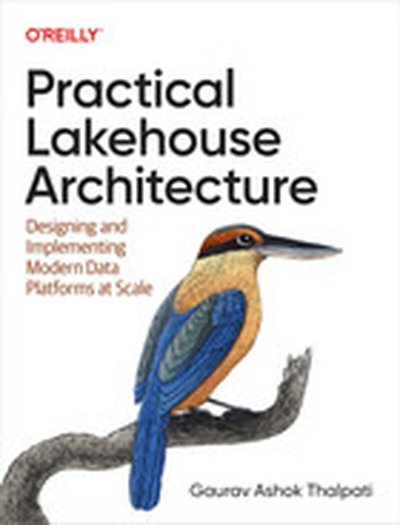
Practical Lakehouse Architecture

This concise yet comprehensive guide explains how to adopt a data lakehouse architecture to implement modern data platforms. It reviews the design considerations, challenges, and best practices for implementing a lakehouse and provides key insights into the ways that using a lakehouse can impact your data platform, from managing structured and unstructured data and supporting BI and AI/ML use cases to enabling more rigorous data governance and security measures. Practical Lakehouse Architecture shows you how to: Understand key lakehouse concepts and features like transaction support, time travel, and schema evolution Understand the differences between traditional and lakehouse data architectures Differentiate between various file formats and table formats Design lakehouse architecture layers for storage, compute, metadata management, and data consumption Implement data governance and data security within the platform Evaluate technologies and decide on the best technology stack to implement the lakehouse for your use case Make critical design decisions and address practical challenges to build a future-ready data platform Start your lakehouse implementation journey and migrate data from existing systems to the lakehouse

podcast_episode
by Jordan Goldmeier (Booz Allen Hamilton; The Perduco Group; EY; Excel TV; Wake Forest University; Anarchy Data) , Adel (DataFramed)

Excel often gets unfair criticism from data practitioners, many of us will remember a time when Excel was looked down upon—why would anyone use Excel when we have powerful tools like Python, R, SQL, or BI tools? However,  like it or not, Excel is here to stay, and there’s a meme, bordering on reality, that Excel is carrying a large chunk of the world’s GDP. But when it really comes down to it, can you do data science in Excel? Jordan Goldmeier is an entrepreneur, a consultant, a best-selling author of four books on data, and a digital nomad. He started his career as a data scientist in the defense industry for Booz Allen Hamilton and The Perduco Group, before moving into consultancy with EY, and then teaching people how to use data at Excel TV, Wake Forest University, and now Anarchy Data. He also has a newsletter called The Money Making Machine, and he's on a mission to create 100 entrepreneurs.  In the episode, Adel and Jordan explore excel in data science, excel’s popularity, use cases for Excel in data science, the impact of GenAI on Excel, Power Query and data transformation, advanced Excel features, Excel for prototyping and generating buy-in, the limitations of Excel and what other tools might emerge in its place, and much more.  Links Mentioned in the Show: Data Smart: Using Data Science to Transform Information Into Insight by Jordan Goldmeier[Webinar] Developing a Data Mindset: How to Think, Speak, and Understand Data[Course] Data Analysis in ExcelRelated Episode: Do Spreadsheets Need a Rethink? With Hjalmar Gislason, CEO of GRIDRewatch sessions from RADAR: AI Edition New to DataCamp? Learn on the go using the DataCamp mobile appEmpower your business with world-class data and AI skills with DataCamp for business

Being able to present your analysis and convince your teammates to take action is a huge part of the job for any Data Analyst or Data Scientist. But for many of us, delivering effective presentations isn't something that comes naturally. Fortunately, everyone (including you) can improve their communication skills if they know what to focus on. In this session, we'll be sharing some of the best strategies and actionable advice to help you capture your audience, tell a story with your data, and most importantly, drive impact for your organization. You'll leave with specific tips that you'll be able to use immediately to take your presentation game to the next level.   What You'll Learn Why most presentations flop and how you can succeed How to stop sharing data and start telling stories instead The scientific approach to getting your audience to listen   Register for free to be part of the next live session: https://bit.ly/3XB3A8b   About our guest: Christopher Chin is a techie-turned leadership communication coach. He previously worked for Fortune 500 tech companies like Thermo Fisher Scientific, Humana, and Fannie Mae in the specialties of data journalism, data science, data visualization, and business intelligence. Each time, he saw extremely talented colleagues struggle to get the opportunities they deserved because they couldn't present, tell a story, and speak with confidence. Now he works as Founder & CEO of The Hidden Speaker, a training consultancy that puts tech professionals on the path to confident communication. He has returned to Fortune 500 companies to train their technical teams with highly specialized communication workshops, as well as taught for companies and universities around the world. As a speaker, coach, and trainer, Christopher's work has helped thousands demonstrate leadership through communication and he is passionate about convincing every introverted, techie out there that they, too, can bring out their hidden speaker. Check out Christopher's free e-book + Newsletter: The Ultimate Data Storytelling and Presentation Guide   Follow us on Socials: LinkedIn YouTube Instagram (Mavens of Data) Instagram (Maven Analytics) TikTok Facebook Medium X/Twitter  

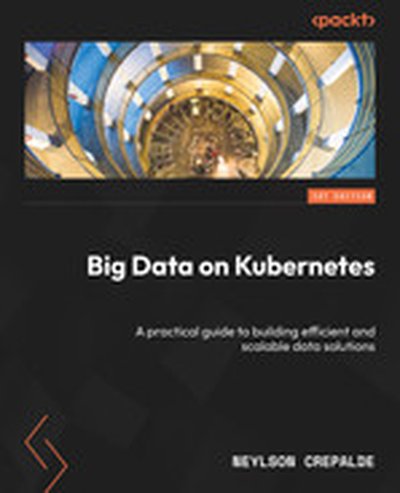
Big Data on Kubernetes

Big Data on Kubernetes is your comprehensive guide to leveraging Kubernetes for scalable and efficient big data solutions. You will learn key concepts of Kubernetes architecture and explore tools like Apache Spark, Airflow, and Kafka. Gain hands-on experience building complete data pipelines to tackle real-world data challenges. What this Book will help me do Understand Kubernetes architecture and learn to deploy and manage clusters. Build and orchestrate big data pipelines using Spark, Airflow, and Kafka. Develop scalable and resilient data solutions with Docker and Kubernetes. Integrate and optimize data tools for real-time ingestion and processing. Apply concepts to hands-on projects addressing actual big data scenarios. Author(s) Neylson Crepalde is an experienced data specialist with extensive knowledge of Kubernetes and big data solutions. With deep practical experience, Neylson brings real-world insights to his writing. His approach emphasizes actionable guidance and relatable problem-solving with a strong foundation in scalable architecture. Who is it for? This book is ideal for data engineers, BI analysts, data team leaders, and tech managers familiar with Python, SQL, and YAML. Targeted at professionals seeking to develop or expand their expertise in scalable big data solutions, it provides practical insights into Docker, Kubernetes, and prominent big data tools.

This special episode of DataFramed was made in collaboration with Analytics on Fire! Nowadays, the hype around generative AI is only the tip of the iceberg. There are so many ideas being touted as the next big thing that it’s difficult to keep up. More importantly, it’s challenging to discern which ideas will become the next ChatGPT and which will end up like the next NFT. How do we cut through the noise? Mico Yuk is the Community Manager at Acryl Data and Co-Founder at Data Storytelling Academy. Mico is also an SAP Mentor Alumni, and the Founder of the popular weblog, Everything Xcelsius and the 'Xcelsius Gurus’ Network. She was named one of the Top 50 Analytics Bloggers to follow, as-well-as a high-regarded BI influencer and sought after global keynote speaker in the Analytics ecosystem.  In the episode, Richie and Mico explore AI and productivity at work, the future of work and AI, GenAI and data roles, AI for training and learning, training at scale, decision intelligence, soft skills for data professionals, genAI hype and much more.  Links Mentioned in the Show: Analytics on Fire PodcastData Visualization for Dummies by Mico Yuk and Stephanie DiamondConnect with Miko[Skill Track] AI FundamentalsRelated Episode: What to Expect from AI in 2024 with Craig S. Smith, Host of the Eye on A.I PodcastRewatch sessions from RADAR: AI Edition New to DataCamp? Learn on the go using the DataCamp mobile appEmpower your business with world-class data and AI skills with DataCamp for business

A data career is an amazing path. Once you're inside, you have good job prospects, fun and challenging work, constant opportunities to learn, solid comp, and can often work from anywhere.    But it can be hard to break in. Today, in 2024, there seems to be more competition than ever for entry level roles. So how can you get started?    In this episode, we'll be sharing some of the best strategies, actionable advice, and personal anecdotes from two recent career transitioners, Annie Nelson and Ian Klosowicz, who have each inspired and helped countless others.   You'll leave with a concrete path to landing your first role, and succeeding on the job once you're there. What You'll Learn: The skills you should be focusing on and showcasing Practical advice for networking, finding jobs, applying, and nailing the interview Tips for using your first 90 days in role to set up your career trajectory   Register for free to be part of the next live session: https://bit.ly/3XB3A8b   About our guests: Annie Nelson (Annie's Analytics) is a leading data analytics and business intelligence expert. She excels in transforming raw data into actionable insights, making complex data concepts accessible. Annie shares her expertise through speaking engagements, online content, and consulting, helping organizations leverage data to achieve their goals. Check out Annie's book: How to Become a Data Analyst Follow Annie on LinkedIn  

Ian Klosowicz is a seasoned data analyst dedicated to shaping the next generation of data analysts, with a proven track record of teaching people a roadmap that works for them. He specializes in guiding aspiring data analysts on their journey to securing their first roles in the dynamic world of data analytics. Subscribe to Ian's newsletter Follow Ian on LinkedIn   Follow us on Socials: LinkedIn YouTube Instagram (Mavens of Data) Instagram (Maven Analytics) TikTok Facebook Medium X/Twitter