talk-data.com talk-data.com

Topic

Cloud Computing

infrastructure saas iaas

4055

tagged

Activity Trend

471 peak/qtr
2020-Q1 2026-Q1

Activities

4055 activities · Newest first

In this episode of DataFramed, we speak with Vishnu V Ram, VP of Data Science and Engineering at Credit Karma about how data science is being leveraged to increase financial inclusion.

Throughout the episode, Vishnu discusses his background, Credit Karma’s mission, how data science is being used at Credit Karma to lower the barrier to entry for financial products, how he managed a data team through rapid growth, transitioning to Google Cloud, exciting trends in data science, and more. 

Relevant links from the interview:

You can now learn data science with your team for free—try out DataCamp Professional with our 14-day free trial. Data roles at Credit KarmaCredit Karma’s mission

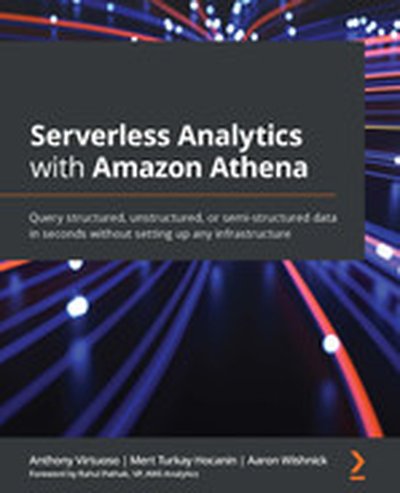
Serverless Analytics with Amazon Athena

Delve into the serverless world of Amazon Athena with the comprehensive book 'Serverless Analytics with Amazon Athena'. This guide introduces you to the power of Athena, showing you how to efficiently query data in Amazon S3 using SQL without the hassle of managing infrastructure. With clear instructions and practical examples, you'll master querying structured, unstructured, and semi-structured data seamlessly. What this Book will help me do Effectively query and analyze both structured and unstructured data stored in S3 using Amazon Athena. Integrate Athena with other AWS services to create powerful, secure, and cost-efficient data workflows. Develop ETL pipelines and machine learning workflows leveraging Athena's compatibility with AWS Glue. Monitor and troubleshoot Athena queries for consistent performance and build scalable serverless data solutions. Implement security best practices and optimize costs when managing your Athena-driven data solutions. Author(s) None Virtuoso, along with co-authors Mert Turkay Hocanin None and None Wishnick, brings a wealth of experience in cloud solutions, serverless technologies, and data engineering. They excel in demystifying complex technical topics and have a passion for empowering readers with practical skills and knowledge. Who is it for? This book is tailored for business intelligence analysts, application developers, and system administrators who want to harness Amazon Athena for seamless, cost-efficient data analytics. It suits individuals with basic SQL knowledge looking to expand their capabilities in querying and processing data. Whether you're managing growing datasets or building data-driven applications, this book provides the know-how to get it right.

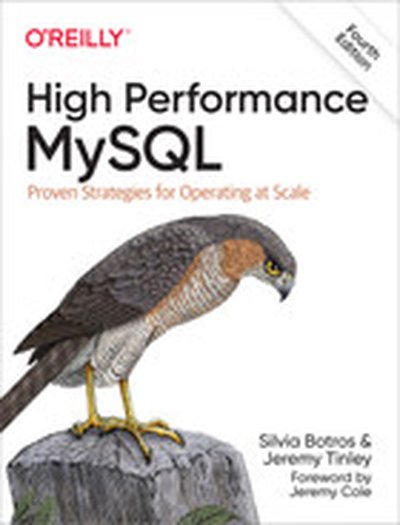
High Performance MySQL, 4th Edition

How can you realize MySQL's full power? With High Performance MySQL, you'll learn advanced techniques for everything from setting service-level objectives to designing schemas, indexes, and queries to tuning your server, operating system, and hardware to achieve your platform's full potential. This guide also teaches database administrators safe and practical ways to scale applications through replication, load balancing, high availability, and failover. Updated to reflect recent advances in cloud- and self-hosted MySQL, InnoDB performance, and new features and tools, this revised edition helps you design a relational data platform that will scale with your business. You'll learn best practices for database security along with hard-earned lessons in both performance and database stability. Dive into MySQL's architecture, including key facts about its storage engines Learn how server configuration works with your hardware and deployment choices Make query performance part of your software delivery process Examine enhancements to MySQL's replication and high availability Compare different MySQL offerings in managed cloud environments Explore MySQL's full stack optimization from application-side configuration to server tuning Turn traditional database management tasks into automated processes

Storage as a Service Offering Guide

IBM® Storage as a Service (STaaS) extends your hybrid cloud experience with a new flexible consumption model enabled for both your on-premises and hybrid cloud infrastructure needs, giving you the agility, cash flow efficiency, and services of cloud storage with the flexibility to dynamically scale up or down and only pay for what you use beyond the minimal capacity. This IBM Redpaper provides a detailed introduction to the IBM STaaS service. The paper is targeted for data center managers and storage administrators.

Summary The precursor to widespread adoption of cloud data warehouses was the creation of customer data platforms. Acting as a centralized repository of information about how your customers interact with your organization they drove a wave of analytics about how to improve products based on actual usage data. A natural outgrowth of that capability is the more recent growth of reverse ETL systems that use those analytics to feed back into the operational systems used to engage with the customer. In this episode Tejas Manohar and Rachel Bradley-Haas share the story of their own careers and experiences coinciding with these trends. They also discuss the current state of the market for these technological patterns and how to take advantage of them in your own work.

Announcements

Hello and welcome to the Data Engineering Podcast, the show about modern data management When you’re ready to build your next pipeline, or want to test out the projects you hear about on the show, you’ll need somewhere to deploy it, so check out our friends at Linode. With their managed Kubernetes platform it’s now even easier to deploy and scale your workflows, or try out the latest Helm charts from tools like Pulsar and Pachyderm. With simple pricing, fast networking, object storage, and worldwide data centers, you’ve got everything you need to run a bulletproof data platform. Go to dataengineeringpodcast.com/linode today and get a $100 credit to try out a Kubernetes cluster of your own. And don’t forget to thank them for their continued support of this show! Struggling with broken pipelines? Stale dashboards? Missing data? If this resonates with you, you’re not alone. Data engineers struggling with unreliable data need look no further than Monte Carlo, the world’s first end-to-end, fully automated Data Observability Platform! In the same way that application performance monitoring ensures reliable software and keeps application downtime at bay, Monte Carlo solves the costly problem of broken data pipelines. Monte Carlo monitors and alerts for data issues across your data warehouses, data lakes, ETL, and business intelligence, reducing time to detection and resolution from weeks or days to just minutes. Go to dataengineeringpodcast.com/montecarlo and start trusting your data with Monte Carlo today! Are you bored with writing scripts to move data into SaaS tools like Salesforce, Marketo, or Facebook Ads? Hightouch is the easiest way to sync data into the platforms that your business teams rely on. The data you’re looking for is already in your data warehouse and BI tools. Connect your warehouse to Hightouch, paste a SQL query, and use their visual mapper to specify how data should appear in your SaaS systems. No more scripts, just SQL. Supercharge your business teams with customer data using Hightouch for Reverse ETL today. Get started for free at dataengineeringpodcast.com/hightouch. Your host is Tobias Macey and today I’m interviewing Rachel Bradley-Haas and Tejas Manohar about the combination of operational analytics and the customer data platform

Interview

Introduction How did you get involved in the area of data management? Can we start by discussing what it means to have a "customer data platform"? What are the challenges that organizations face in establishing a unified view of their customer interactions?

How do the presence of multiple product lines impact the ability to understand the relationship with the customer?

We have been building data warehouses and business intelligence systems for decades. How does the idea of a CDP differ from the approaches of those previous generations? A recent outgrowth of the focus on creating a CDP is the introduction of "operational analytics", which was initially termed "reverse ETL". What are your opinions on the semantics and importance of these names?

What is the relationship between a CDP and operational analytics? (can you have one without the other?)

How have the capabilities

Send us a text Want to be featured as a guest on Making Data Simple? Reach out to us at [[email protected]] and tell us why you should be next.

Abstract Hosted by Al Martin, VP, IBM Expert Services Delivery, Making Data Simple provides the latest thinking on big data, A.I., and the implications for the enterprise from a range of experts.

This week on Making Data Simple, we have Paul Zikopoulos. Paul is the VP of IBM Technology Sales – Skills Vitality & Enablement Global Markets. Paul is an award winning speaker and author and has been at IBM for 28 years.

Show Notes 3:40 – Is Skills Vitality not the prefect job? 5:08 – What’s been your journey at IBM? 8:29 – Hybrid Cloud Operation and Artificial Intelligence is this the right strategy? 21:13 – What is the new maturity curve? 23:53 – Define Data Fabric 26:53 – Why is the Challenger Seller book so important? 29:14 – What makes a great leader? Books Energy Bus Grit Challenger Sale Challenger Customer Effortless Experience  Connect with the Team Producer Kate Brown - LinkedIn. Producer Steve Templeton - LinkedIn. Host Al Martin - LinkedIn and Twitter.  Want to be featured as a guest on Making Data Simple? Reach out to us at [email protected] and tell us why you should be next. The Making Data Simple Podcast is hosted by Al Martin, WW VP Technical Sales, IBM, where we explore trending technologies, business innovation, and leadership ... while keeping it simple & fun.

Summary The focus of the past few years has been to consolidate all of the organization’s data into a cloud data warehouse. As a result there have been a number of trends in data that take advantage of the warehouse as a single focal point. Among those trends is the advent of operational analytics, which completes the cycle of data from collection, through analysis, to driving further action. In this episode Boris Jabes, CEO of Census, explains how the work of synchronizing cleaned and consolidated data about your customers back into the systems that you use to interact with those customers allows for a powerful feedback loop that has been missing in data systems until now. He also discusses how Census makes that synchronization easy to manage, how it fits with the growth of data quality tooling, and how you can start using it today.

Announcements

Hello and welcome to the Data Engineering Podcast, the show about modern data management When you’re ready to build your next pipeline, or want to test out the projects you hear about on the show, you’ll need somewhere to deploy it, so check out our friends at Linode. With their managed Kubernetes platform it’s now even easier to deploy and scale your workflows, or try out the latest Helm charts from tools like Pulsar and Pachyderm. With simple pricing, fast networking, object storage, and worldwide data centers, you’ve got everything you need to run a bulletproof data platform. Go to dataengineeringpodcast.com/linode today and get a $100 credit to try out a Kubernetes cluster of your own. And don’t forget to thank them for their continued support of this show! Struggling with broken pipelines? Stale dashboards? Missing data? If this resonates with you, you’re not alone. Data engineers struggling with unreliable data need look no further than Monte Carlo, the world’s first end-to-end, fully automated Data Observability Platform! In the same way that application performance monitoring ensures reliable software and keeps application downtime at bay, Monte Carlo solves the costly problem of broken data pipelines. Monte Carlo monitors and alerts for data issues across your data warehouses, data lakes, ETL, and business intelligence, reducing time to detection and resolution from weeks or days to just minutes. Start trusting your data with Monte Carlo today! Visit dataengineeringpodcast.com/impact today to save your spot at IMPACT: The Data Observability Summit a half-day virtual event featuring the first U.S. Chief Data Scientist, founder of the Data Mesh, Creator of Apache Airflow, and more data pioneers spearheading some of the biggest movements in data. The first 50 to RSVP with this link will be entered to win an Oculus Quest 2 — Advanced All-In-One Virtual Reality Headset. RSVP today – you don’t want to miss it! Atlan is a collaborative workspace for data-driven teams, like Github for engineering or Figma for design teams. By acting as a virtual hub for data assets ranging from tables and dashboards to SQL snippets & code, Atlan enables teams to create a single source of truth for all their data assets, and collaborate across the modern data stack through deep integrations with tools like Snowflake, Slack, Looker and more. Go to dataengineeringpodcast.com/atlan today and sign up for a free trial. If you’re a data engineering podcast listener, you get credits worth $3000 on an annual subscription Your host is Tobias Macey and today I’m interviewing Boris Jabes about Census and the growing category of operational analytics

Interview

Introduction How did you get involved in the area of data management? Can you describe what Census is and the story behind it? The terms "reverse ETL" and "operational analytics" have started being used for similar, and often interchangeable, purposes. What are your thoughts on the semantic and concrete differences between these phrases? What are the motivating factors for adding operational analytics or "data activation" to a

Send us a text Want to be featured as a guest on Making Data Simple? Reach out to us at [[email protected]] and tell us why you should be next.

Abstract Hosted by Al Martin, VP, IBM Expert Services Delivery, Making Data Simple provides the latest thinking on big data, A.I., and the implications for the enterprise from a range of experts. This week on Making Data Simple, we have Jean-Claude Mamou. Jean-Claude is the Chief Architect of Information Integration and Governance portfolio, this includes such products as Watson Knowledge Catalog and Datastage.   Show Notes 1:45 – Jean-Claude’s experience 5:15 – What are the industry challenges? 6:52 – Is there integration without governance? 9:49 – What is the new solution? 13:12 – Understanding your critical data 16:06 – Explain what IBM Satellite means 19:53 – Where does Cloud Pak for Data come into play? 24:57 – What technology can we use to avoid repetitive mistakes? 30:36 – Understanding critical data 33:52 – What is the number 1 data quality issue? 37:08 - How are you inspired and how do you figure your next innovation?  38:52 – Do you have a process you follow? Jean-Claude Mamou – LinkedIn Connect with the Team Producer Kate Brown - LinkedIn. Producer Steve Templeton - LinkedIn. Host Al Martin - LinkedIn and Twitter.  Want to be featured as a guest on Making Data Simple? Reach out to us at [email protected] and tell us why you should be next. The Making Data Simple Podcast is hosted by Al Martin, WW VP Technical Sales, IBM, where we explore trending technologies, business innovation, and leadership ... while keeping it simple & fun.

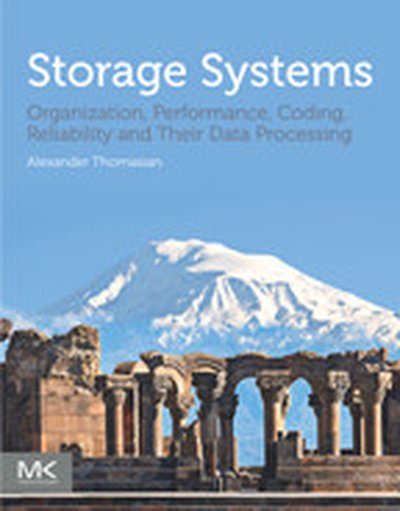
Storage Systems

Storage Systems: Organization, Performance, Coding, Reliability and Their Data Processing was motivated by the 1988 Redundant Array of Inexpensive/Independent Disks proposal to replace large form factor mainframe disks with an array of commodity disks. Disk loads are balanced by striping data into strips—with one strip per disk— and storage reliability is enhanced via replication or erasure coding, which at best dedicates k strips per stripe to tolerate k disk failures. Flash memories have resulted in a paradigm shift with Solid State Drives (SSDs) replacing Hard Disk Drives (HDDs) for high performance applications. RAID and Flash have resulted in the emergence of new storage companies, namely EMC, NetApp, SanDisk, and Purestorage, and a multibillion-dollar storage market. Key new conferences and publications are reviewed in this book.The goal of the book is to expose students, researchers, and IT professionals to the more important developments in storage systems, while covering the evolution of storage technologies, traditional and novel databases, and novel sources of data. We describe several prototypes: FAWN at CMU, RAMCloud at Stanford, and Lightstore at MIT; Oracle's Exadata, AWS' Aurora, Alibaba's PolarDB, Fungible Data Center; and author's paper designs for cloud storage, namely heterogeneous disk arrays and hierarchical RAID. Surveys storage technologies and lists sources of data: measurements, text, audio, images, and video Familiarizes with paradigms to improve performance: caching, prefetching, log-structured file systems, and merge-trees (LSMs) Describes RAID organizations and analyzes their performance and reliability Conserves storage via data compression, deduplication, compaction, and secures data via encryption Specifies implications of storage technologies on performance and power consumption Exemplifies database parallelism for big data, analytics, deep learning via multicore CPUs, GPUs, FPGAs, and ASICs, e.g., Google's Tensor Processing Units

Snowflake Security: Securing Your Snowflake Data Cloud

This book is your complete guide to Snowflake security, covering account security, authentication, data access control, logging and monitoring, and more. It will help you make sure that you are using the security controls in a right way, are on top of access control, and making the most of the security features in Snowflake. Snowflake is the fastest growing cloud data warehouse in the world, and having the right methodology to protect the data is important both to data engineers and security teams. It allows for faster data enablement for organizations, as well as reducing security risks, meeting compliance requirements, and solving data privacy challenges. There are currently tens of thousands of people who are either data engineers/data ops in Snowflake-using organizations, or security people in such organizations. This book provides guidance when you want to apply certain capabilities, such as data masking, row-level security, column-level security, tackling rolehierarchy, building monitoring dashboards, etc., to your organizations. What You Will Learn Implement security best practices for Snowflake Set up user provisioning, MFA, OAuth, and SSO Set up a Snowflake security model Design roles architecture Use advanced access control such as row-based security and dynamic masking Audit and monitor your Snowflake Data Cloud Who This Book Is For Data engineers, data privacy professionals, and security teams either with security knowledge (preferably some data security knowledge) or with data engineering knowledge; in other words, either “Snowflake people” or “data people” who want to get security right, or “security people” who want to make sure that Snowflake gets handled right in terms of security

Text as Data

Text As Data: Combining qualitative and quantitative algorithms within the SAS system for accurate, effective and understandable text analytics The need for powerful, accurate and increasingly automatic text analysis software in modern information technology has dramatically increased. Fields as diverse as financial management, fraud and cybercrime prevention, Pharmaceutical R&D, social media marketing, customer care, and health services are implementing more comprehensive text-inclusive, analytics strategies. Text as Data: Computational Methods of Understanding Written Expression Using SAS presents an overview of text analytics and the critical role SAS software plays in combining linguistic and quantitative algorithms in the evolution of this dynamic field. Drawing on over two decades of experience in text analytics, authors Barry deVille and Gurpreet Singh Bawa examine the evolution of text mining and cloud-based solutions, and the development of SAS Visual Text Analytics. By integrating quantitative data and textual analysis with advanced computer learning principles, the authors demonstrate the combined advantages of SAS compared to standard approaches, and show how approaching text as qualitative data within a quantitative analytics framework produces more detailed, accurate, and explanatory results. Understand the role of linguistics, machine learning, and multiple data sources in the text analytics workflow Understand how a range of quantitative algorithms and data representations reflect contextual effects to shape meaning and understanding Access online data and code repositories, videos, tutorials, and case studies Learn how SAS extends quantitative algorithms to produce expanded text analytics capabilities Redefine text in terms of data for more accurate analysis This book offers a thorough introduction to the framework and dynamics of text analytics—and the underlying principles at work—and provides an in-depth examination of the interplay between qualitative-linguistic and quantitative, data-driven aspects of data analysis. The treatment begins with a discussion on expression parsing and detection and provides insight into the core principles and practices of text parsing, theme, and topic detection. It includes advanced topics such as contextual effects in numeric and textual data manipulation, fine-tuning text meaning and disambiguation. As the first resource to leverage the power of SAS for text analytics, Text as Data is an essential resource for SAS users and data scientists in any industry or academic application.

Summary The promise of online services is that they will make your life easier in exchange for collecting data about you. The reality is that they use more information than you realize for purposes that are not what you intended. There have been many attempts to harness all of the data that you generate for gaining useful insights about yourself, but they are generally difficult to set up and manage or require software development experience. The team at Prifina have built a platform that allows users to create their own personal data cloud and install applications built by developers that power useful experiences while keeping you in full control. In this episode Markus Lampinen shares the goals and vision of the company, the technical aspects of making it a reality, and the future vision for how services can be designed to respect user’s privacy while still providing compelling experiences.

Announcements

Hello and welcome to the Data Engineering Podcast, the show about modern data management When you’re ready to build your next pipeline, or want to test out the projects you hear about on the show, you’ll need somewhere to deploy it, so check out our friends at Linode. With their managed Kubernetes platform it’s now even easier to deploy and scale your workflows, or try out the latest Helm charts from tools like Pulsar and Pachyderm. With simple pricing, fast networking, object storage, and worldwide data centers, you’ve got everything you need to run a bulletproof data platform. Go to dataengineeringpodcast.com/linode today and get a $100 credit to try out a Kubernetes cluster of your own. And don’t forget to thank them for their continued support of this show! Atlan is a collaborative workspace for data-driven teams, like Github for engineering or Figma for design teams. By acting as a virtual hub for data assets ranging from tables and dashboards to SQL snippets & code, Atlan enables teams to create a single source of truth for all their data assets, and collaborate across the modern data stack through deep integrations with tools like Snowflake, Slack, Looker and more. Go to dataengineeringpodcast.com/atlan today and sign up for a free trial. If you’re a data engineering podcast listener, you get credits worth $3000 on an annual subscription Struggling with broken pipelines? Stale dashboards? Missing data? If this resonates with you, you’re not alone. Data engineers struggling with unreliable data need look no further than Monte Carlo, the world’s first end-to-end, fully automated Data Observability Platform! In the same way that application performance monitoring ensures reliable software and keeps application downtime at bay, Monte Carlo solves the costly problem of broken data pipelines. Monte Carlo monitors and alerts for data issues across your data warehouses, data lakes, ETL, and business intelligence, reducing time to detection and resolution from weeks or days to just minutes. Start trusting your data with Monte Carlo today! Visit dataengineeringpodcast.com/impact today to save your spot at IMPACT: The Data Observability Summit a half-day virtual event featuring the first U.S. Chief Data Scientist, founder of the Data Mesh, Creator of Apache Airflow, and more data pioneers spearheading some of the biggest movements in data. The first 50 to RSVP with this link will be entered to win an Oculus Quest 2 — Advanced All-In-One Virtual Reality Headset. RSVP today – you don’t want to miss it! Your host is Tobias Macey and today I’m interviewing Markus Lampinen about Prifina, a platform for building applications powered by personal data that is under the user’s control

Interview

Introduction How did you get involved in the area of data management? Can you describe what Prifina is and the story behind it?

What are the primary goals of Prifina?

There has been a lof of interest in the "quantified self" and different projects (many that are open source) which aim to aggregate all of a user

podcast_episode
by Mico Yuk (Data Storytelling Academy) , David Dadoun (BRP)

This week we are joined by AoF alumni, David Dadoun to talk about data lakes, data oceans, data puddles, and data platforms, and why so many are confused about the topic. David is a leader, professor, global speaker, and recently transitioned to an exciting new role as Head of Enterprise Data and BI at BRP in Canada.  If you feel unsure about the definition of a data lake vs a data platform, you're not alone. The concept continues to evolve, to where we are today which is a data platform. As the owner and creators of multiple data platforms, David shared breaks down the key steps to transform your data lake into a data platform. Whether you're migrating to a more sophisticated data cloud or building a platform from scratch, the rapid pace of change means there's always something new to be learned. Tune in today for this fascinating conversation on how to master your data platform!   In this episode, you'll learn: [0:07:35] What the 'data lake' was and how it has evolved over time. [0:08:35] What is a data fake and how data lakes have evolved into data platforms. [0:12:51] Who needs to own the data platforms and who it's for. [0:14:41] How to run a data platform depending on the size and structure of your organization. [0:16:05] The different ways that companies can structure their data platform(s). [0:18:02] Why data literacy is crucial for any company with a data culture and how data lakes form part of the core strategy. [0:21:03] How to balance analytics and data goals within your company and teams. [0:24:20] The important steps a company can take towards creating a data lake. [0:28:13] Why it's necessary to be mindful of the rapid rate of change within data and how it will affect your data platforms. For full show notes, and the links mentioned visit: https://bibrainz.com/podcast/83   Enjoyed the Show?  Please leave us a review on iTunes.

Digitally connected humans like you and me are surrounded by a plethora of AI solutions that make our lives easier and more efficient. Just think about the algorithms driving Netflix and Youtube’s video recommendations or the facial recognition feature on your phone that saves you a few seconds every time you unlock it. But for every useful AI solution, there are probably hundreds of solutions that don’t meet the functional, economic or ethical standards of their end users. So, what’s the trick to building useful and impactful AI solutions that are also financially viable for those who create them? Someone who can answer this question is Corey Quinn, who is the Chief Cloud Economist at The Duckbill Group and the founder of two podcasts called “Screaming in the Cloud” and “AWS Morning Brief”. Corey combines an excellent sense of humour with a deep understanding of the cloud and everything that surrounds it, so he is definitely the right person to go to for an unfiltered view of the hype that surrounds a lot of AI solutions. In this episode of Leaders of Analytics, we talk about: Whether AI is all it’s made up to be or just a complex solution to our problemsWho’s benefiting from the AI hypeThe role of cloud computing in AI and machine learning deliveryHow to use cloud computing effectively when deploying AI solutionsHow to create an impactful career by solving real business problemsCorey’s top 3 recommendations for AI success in the cloud

Summary The Cassandra database is one of the first open source options for globally scalable storage systems. Since its introduction in 2008 it has been powering systems at every scale. The community recently released a new major version that marks a milestone in its maturity and stability as a project and database. In this episode Ben Bromhead, CTO of Instaclustr, shares the challenges that the community has worked through, the work that went into the release, and how the stability and testing improvements are setting the stage for the future of the project.

Announcements

Hello and welcome to the Data Engineering Podcast, the show about modern data management When you’re ready to build your next pipeline, or want to test out the projects you hear about on the show, you’ll need somewhere to deploy it, so check out our friends at Linode. With their managed Kubernetes platform it’s now even easier to deploy and scale your workflows, or try out the latest Helm charts from tools like Pulsar and Pachyderm. With simple pricing, fast networking, object storage, and worldwide data centers, you’ve got everything you need to run a bulletproof data platform. Go to dataengineeringpodcast.com/linode today and get a $100 credit to try out a Kubernetes cluster of your own. And don’t forget to thank them for their continued support of this show! Schema changes, missing data, and volume anomalies caused by your data sources can happen without any advanced notice if you lack visibility into your data-in-motion. That leaves DataOps reactive to data quality issues and can make your consumers lose confidence in your data. By connecting to your pipeline orchestrator like Apache Airflow and centralizing your end-to-end metadata, Databand.ai lets you identify data quality issues and their root causes from a single dashboard. With Databand.ai, you’ll know whether the data moving from your sources to your warehouse will be available, accurate, and usable when it arrives. Go to dataengineeringpodcast.com/databand to sign up for a free 30-day trial of Databand.ai and take control of your data quality today. Atlan is a collaborative workspace for data-driven teams, like Github for engineering or Figma for design teams. By acting as a virtual hub for data assets ranging from tables and dashboards to SQL snippets & code, Atlan enables teams to create a single source of truth for all their data assets, and collaborate across the modern data stack through deep integrations with tools like Snowflake, Slack, Looker and more. Go to dataengineeringpodcast.com/atlan today and sign up for a free trial. If you’re a data engineering podcast listener, you get credits worth $3000 on an annual subscription Your host is Tobias Macey and today I’m interviewing Ben Bromhead about the recent release of Cassandra version 4 and how it fits in the current landscape of data tools

Interview

Introduction How did you get involved in the area of data management? For anyone who isn’t familiar with Cassandra, can you briefly describe what it is and some of the story behind it?

How did you get involved in the Cassandra project and how would you characterize your role?

What are the main use cases and industries where someone is likely to use Cassandra? What is notable about the version 4 release?

What were some of the factors that contributed to the long delay between versions 3 and 4? (2015 – 2021) What are your thoughts on the ongoing utility/benefits of projects such as ScyllaDB, particularly in light of the most recent release?

Cassandra is primarily used as a system of record. What are some of the tools and system architectures that users turn to when building analytical workloads for data stored in Cassandra? The architecture of Cassandra has lent itself well to the cloud native ecosystem that has been growing in recent years. What do you see as the opportunities for Cassandra over the near to medium term as the cloud continues to grow in prominence?

Learning MySQL, 2nd Edition

Get a comprehensive overview on how to set up and design an effective database with MySQL. This thoroughly updated edition covers MySQL's latest version, including its most important aspects. Whether you're deploying an environment, troubleshooting an issue, or engaging in disaster recovery, this practical guide provides the insights and tools necessary to take full advantage of this powerful RDBMS. Authors Vinicius Grippa and Sergey Kuzmichev from Percona show developers and DBAs methods for minimizing costs and maximizing availability and performance. You'll learn how to perform basic and advanced querying, monitoring and troubleshooting, database management and security, backup and recovery, and tuning for improved efficiency. This edition includes new chapters on high availability, load balancing, and using MySQL in the cloud. Get started with MySQL and learn how to use it in production Deploy MySQL databases on bare metal, on virtual machines, and in the cloud Design database infrastructures Code highly efficient queries Monitor and troubleshoot MySQL databases Execute efficient backup and restore operations Optimize database costs in the cloud Understand database concepts, especially those pertaining to MySQL

SQL for Data Analysis

With the explosion of data, computing power, and cloud data warehouses, SQL has become an even more indispensable tool for the savvy analyst or data scientist. This practical book reveals new and hidden ways to improve your SQL skills, solve problems, and make the most of SQL as part of your workflow. You'll learn how to use both common and exotic SQL functions such as joins, window functions, subqueries, and regular expressions in new, innovative ways--as well as how to combine SQL techniques to accomplish your goals faster, with understandable code. If you work with SQL databases, this is a must-have reference. Learn the key steps for preparing your data for analysis Perform time series analysis using SQL's date and time manipulations Use cohort analysis to investigate how groups change over time Use SQL's powerful functions and operators for text analysis Detect outliers in your data and replace them with alternate values Establish causality using experiment analysis, also known as A/B testing

Send us a text Want to be featured as a guest on Making Data Simple? Reach out to us at [[email protected]] and tell us why you should be next.

Abstract Hosted by Al Martin, VP, IBM Expert Services Delivery, Making Data Simple provides the latest thinking on big data, A.I., and the implications for the enterprise from a range of experts.

This week on Making Data Simple, we have Elo Umeh, from Terragon Africa’s fastest-growing enterprise marketing technology company. Terragon uses its on-demand marketing cloud platform, attribution software, and deep analytics capability to enable thoughtful, targeted omni-channel access to 100m+ mobile-first African consumers. Elo is the Founder and CEO at Terragon Group. Elo career has spanned over 15 years where he has worked in the mobile and digital media across East and West Africa. He was part of the founding team at Mtech Communications. Elo holds a global executive MBA from IESE business of school where he graduated at the top of his class. Elo also has a Bachelor’s degree in Business Administration from Lagos State University. Show Notes 4:02 – What keeps you going? 6:15 – Lets dive into Terragon 8:40 – Who are your customers? 11:06 – Define pre-paid 14:40 – What kind of incites and security are you providing? 20:37- What kind of technology is Terragon using? 23:16 – What was it about the smart phone that made you want to go out on your own? 26:10 – Who’s your biggest competitor?  28:20 – What’s next for Terragon? 31:01 – What are the biggest mistakes entrepreneurs make? Terragon  Elo Umeh - LinkedIn

Connect with the Team Producer Kate Brown - LinkedIn. Producer Steve Templeton - LinkedIn. Host Al Martin - LinkedIn and Twitter.  Want to be featured as a guest on Making Data Simple? Reach out to us at [email protected] and tell us why you should be next. The Making Data Simple Podcast is hosted by Al Martin, WW VP Technical Sales, IBM, where we explore trending technologies, business innovation, and leadership ... while keeping it simple & fun.

Summary The Presto project has become the de facto option for building scalable open source analytics in SQL for the data lake. In recent months the community has focused their efforts on making it the fastest possible option for running your analytics in the cloud. In this episode Dipti Borkar discusses the work that she and her team are doing at Ahana to simplify the work of running your own PrestoDB environment in the cloud. She explains how they are optimizin the runtime to reduce latency and increase query throughput, the ways that they are contributing back to the open source community, and the exciting improvements that are in the works to make Presto an even more powerful option for all of your analytics.

Announcements

Hello and welcome to the Data Engineering Podcast, the show about modern data management When you’re ready to build your next pipeline, or want to test out the projects you hear about on the show, you’ll need somewhere to deploy it, so check out our friends at Linode. With their managed Kubernetes platform it’s now even easier to deploy and scale your workflows, or try out the latest Helm charts from tools like Pulsar and Pachyderm. With simple pricing, fast networking, object storage, and worldwide data centers, you’ve got everything you need to run a bulletproof data platform. Go to dataengineeringpodcast.com/linode today and get a $100 credit to try out a Kubernetes cluster of your own. And don’t forget to thank them for their continued support of this show! Schema changes, missing data, and volume anomalies caused by your data sources can happen without any advanced notice if you lack visibility into your data-in-motion. That leaves DataOps reactive to data quality issues and can make your consumers lose confidence in your data. By connecting to your pipeline orchestrator like Apache Airflow and centralizing your end-to-end metadata, Databand.ai lets you identify data quality issues and their root causes from a single dashboard. With Databand.ai, you’ll know whether the data moving from your sources to your warehouse will be available, accurate, and usable when it arrives. Go to dataengineeringpodcast.com/databand to sign up for a free 30-day trial of Databand.ai and take control of your data quality today. Atlan is a collaborative workspace for data-driven teams, like Github for engineering or Figma for design teams. By acting as a virtual hub for data assets ranging from tables and dashboards to SQL snippets & code, Atlan enables teams to create a single source of truth for all their data assets, and collaborate across the modern data stack through deep integrations with tools like Snowflake, Slack, Looker and more. Go to dataengineeringpodcast.com/atlan today and sign up for a free trial. If you’re a data engineering podcast listener, you get credits worth $3000 on an annual subscription Your host is Tobias Macey and today I’m interviewing Dipti Borkar, cofounder Ahana about Presto and Ahana, SaaS managed service for Presto

Interview

Introduction How did you get involved in the area of data management? Can you describe what Ahana is and the story behind it? There has been a lot of recent activity in the Presto community. Can you give an overview of the options that are available for someone wanting to use its SQL engine for querying their data?

What is Ahana’s role in the community/ecosystem? (happy to skip this question if it’s too contentious) What are some of the notable differences that have emerged over the past couple of years between the Trino (formerly PrestoSQL) and PrestoDB projects?

Another area that has been seeing a lot of activity is data lakes and projects to make them more manageable and feature complete (e.g. Hudi, Delta Lake, Iceberg, Nessie, LakeFS, etc.). How has that influenced your product focus and capabilities?

How does this activity change the calculus for organizations who are deciding on a lake or warehouse for their data architecture?

Can y