talk-data.com talk-data.com

Topic

Cloud Computing

infrastructure saas iaas

4055

tagged

Activity Trend

471 peak/qtr
2020-Q1 2026-Q1

Activities

4055 activities · Newest first

Cloudera Data Platform Private Cloud Base with IBM Spectrum Scale

This IBM® Redpaper publication provides guidance on building an enterprise-grade data lake by using IBM Spectrum® Scale and Cloudera Data Platform (CDP) Private Cloud Base for performing in-place Cloudera Hadoop or Cloudera Spark-based analytics. It also covers the benefits of the integrated solution and gives guidance about the types of deployment models and considerations during the implementation of these models. August 2021 update added CES protocol support in Hadoop environment

Summary The technological and social ecosystem of data engineering and data management has been reaching a stage of maturity recently. As part of this stage in our collective journey the focus has been shifting toward operation and automation of the infrastructure and workflows that power our analytical workloads. It is an encouraging sign for the industry, but it is still a complex and challenging undertaking. In order to make this world of DataOps more accessible and manageable the team at Nexla has built a platform that decouples the logical unit of data from the underlying mechanisms so that you can focus on the problems that really matter to your business. In this episode Saket Saurabh (CEO) and Avinash Shahdadpuri (CTO) share the story behind the Nexla platform, discuss the technical underpinnings, and describe how their concept of a Nexset simplifies the work of building data products for sharing within and between organizations.

Announcements

Hello and welcome to the Data Engineering Podcast, the show about modern data management When you’re ready to build your next pipeline, or want to test out the projects you hear about on the show, you’ll need somewhere to deploy it, so check out our friends at Linode. With their managed Kubernetes platform it’s now even easier to deploy and scale your workflows, or try out the latest Helm charts from tools like Pulsar and Pachyderm. With simple pricing, fast networking, object storage, and worldwide data centers, you’ve got everything you need to run a bulletproof data platform. Go to dataengineeringpodcast.com/linode today and get a $100 credit to try out a Kubernetes cluster of your own. And don’t forget to thank them for their continued support of this show! Schema changes, missing data, and volume anomalies caused by your data sources can happen without any advanced notice if you lack visibility into your data-in-motion. That leaves DataOps reactive to data quality issues and can make your consumers lose confidence in your data. By connecting to your pipeline orchestrator like Apache Airflow and centralizing your end-to-end metadata, Databand.ai lets you identify data quality issues and their root causes from a single dashboard. With Databand.ai, you’ll know whether the data moving from your sources to your warehouse will be available, accurate, and usable when it arrives. Go to dataengineeringpodcast.com/databand to sign up for a free 30-day trial of Databand.ai and take control of your data quality today. We’ve all been asked to help with an ad-hoc request for data by the sales and marketing team. Then it becomes a critical report that they need updated every week or every day. Then what do you do? Send a CSV via email? Write some Python scripts to automate it? But what about incremental sync, API quotas, error handling, and all of the other details that eat up your time? Today, there is a better way. With Census, just write SQL or plug in your dbt models and start syncing your cloud warehouse to SaaS applications like Salesforce, Marketo, Hubspot, and many more. Go to dataengineeringpodcast.com/census today to get a free 14-day trial. Your host is Tobias Macey and today I’m interviewing Saket Saurabh and Avinash Shahdadpuri about Nexla, a platform for powering data operations and sharing within and across businesses

Interview

Introduction How did you get involved in the area of data management? Can you describe what Nexla is and the story behind it? What are the major problems that Nexla is aiming to solve?

What are the components of a data platform that Nexla might replace?

What are the use cases and benefits of being able to publish data sets for use outside and across organizations? What are the different elements involved in implementing DataOps? How is the Nexla platform implemented?

What have been the most comple engineering challenges? How has the architecture changed or evolved since you first began working on it? What are some of the assumpt

Send us a text Want to be featured as a guest on Making Data Simple? Reach out to us at [[email protected]] and tell us why you should be next.

Abstract Hosted by Al Martin, VP, IBM Expert Services Delivery, Making Data Simple provides the latest thinking on big data, A.I., and the implications for the enterprise from a range of experts.

This week on Making Data Simple, we have Trent Gray-Donald Distinguished Engineer, IBM Data and AI, Dakshi Agrawal IBM Fellow and CTO, IBM AI.  Trent Gray-Donald spend his first 16 years on manage language runtime, then moved over to Data and AI, and then Cloud Pak for Data.  Dakshi Agrawal joined IBM right after his Phd in IBM Research, then Dakshi moved into software development, and in the 6 years in AI.  Show Notes .15 - 5:23 - Repeat of introductions from Part 1 5:50 – What is AI Anywhere? 9:09 – Does it make our development more difficult? 11:22 – Does data virtualization work? 15:31 - How do we get started with AI? 17:41 – Customer success stories Connect with the Team Producer Kate Brown - LinkedIn. Producer Steve Templeton - LinkedIn. Host Al Martin - LinkedIn and Twitter.  Want to be featured as a guest on Making Data Simple? Reach out to us at [email protected] and tell us why you should be next. The Making Data Simple Podcast is hosted by Al Martin, WW VP Technical Sales, IBM, where we explore trending technologies, business innovation, and leadership ... while keeping it simple & fun.

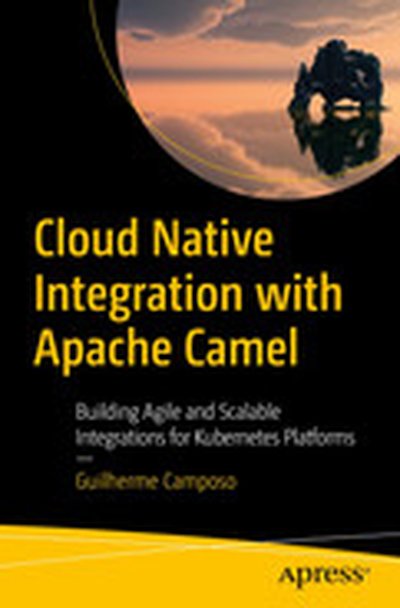
Cloud Native Integration with Apache Camel: Building Agile and Scalable Integrations for Kubernetes Platforms

Address the most common integration challenges, by understanding the ins and outs of the choices and exemplifying the solutions with practical examples on how to create cloud native applications using Apache Camel. Camel will be our main tool, but we will also see some complementary tools and plugins that can make our development and testing easier, such as Quarkus, and tools for more specific use cases, such as Apache Kafka and Keycloak. You will learn to connect with databases, create REST APIs, transform data, connect with message oriented software (MOMs), secure your services, and test using Camel. You will also learn software architecture patterns for integration and how to leverage container platforms, such as Kubernetes. This book is suitable for those who are eager to learn an integration tool that fits the Kubernetes world, and who want to explore the integration challenges that can be solved using containers. What You Will Learn Focus on how to solve integration challenges Understand the basics of the Quarkus as it’s the foundation for the application Acquire a comprehensive view on Apache Camel Deploy an application in Kubernetes Follow good practices Who This Book Is For Java developers looking to learn Apache Camel; Apache Camel developers looking to learn more about Kubernetes deployments; software architects looking to study integration patterns for Kubernetes based systems; system administrators (operations teams) looking to get a better understand of how technologies are integrated.

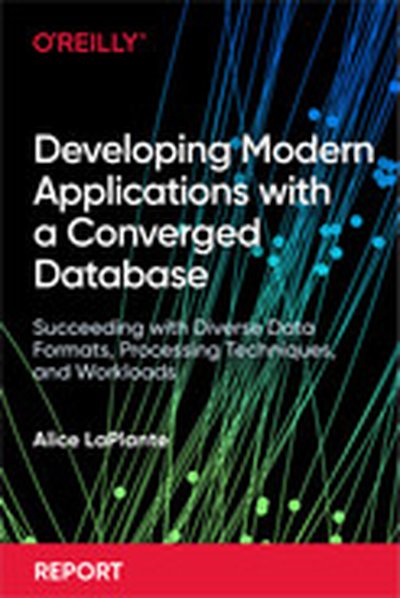
Developing Modern Applications with a Converged Database

Single-purpose databases were designed to address specific problems and use cases. Given this narrow focus, there are inherent tradeoffs required when trying to accommodate multiple datatypes or workloads in your enterprise environment. The result is data fragmentation that spills over into application development, IT operations, data security, system scalability, and availability. In this report, author Alice LaPlante explains why developing modern, data-driven applications may be easier and more synergistic when using a converged database. Senior developers, architects, and technical decision-makers will learn cloud-native application development techniques for working with both structured and unstructured data. You'll discover ways to run transactional and analytical workloads on a single, unified data platform. This report covers: Benefits and challenges of using a converged database to develop data-driven applications How to use one platform to work with both structured and unstructured data that includes JSON, XML, text and files, spatial and graph, Blockchain, IoT, time series, and relational data Modern development practices on a converged database, including API-driven development, containers, microservices, and event streaming Use case examples including online food delivery, real-time fraud detection, and marketing based on real-time analytics and geospatial targeting

Summary Data lakes have been gaining popularity alongside an increase in their sophistication and usability. Despite improvements in performance and data architecture they still require significant knowledge and experience to deploy and manage. In this episode Vikrant Dubey discusses his work on the Cuelake project which allows data analysts to build a lakehouse with SQL queries. By building on top of Zeppelin, Spark, and Iceberg he and his team at Cuebook have built an autoscaled cloud native system that abstracts the underlying complexity.

Announcements

Hello and welcome to the Data Engineering Podcast, the show about modern data management When you’re ready to build your next pipeline, or want to test out the projects you hear about on the show, you’ll need somewhere to deploy it, so check out our friends at Linode. With their managed Kubernetes platform it’s now even easier to deploy and scale your workflows, or try out the latest Helm charts from tools like Pulsar and Pachyderm. With simple pricing, fast networking, object storage, and worldwide data centers, you’ve got everything you need to run a bulletproof data platform. Go to dataengineeringpodcast.com/linode today and get a $100 credit to try out a Kubernetes cluster of your own. And don’t forget to thank them for their continued support of this show! Are you bored with writing scripts to move data into SaaS tools like Salesforce, Marketo, or Facebook Ads? Hightouch is the easiest way to sync data into the platforms that your business teams rely on. The data you’re looking for is already in your data warehouse and BI tools. Connect your warehouse to Hightouch, paste a SQL query, and use their visual mapper to specify how data should appear in your SaaS systems. No more scripts, just SQL. Supercharge your business teams with customer data using Hightouch for Reverse ETL today. Get started for free at dataengineeringpodcast.com/hightouch. Have you ever had to develop ad-hoc solutions for security, privacy, and compliance requirements? Are you spending too much of your engineering resources on creating database views, configuring database permissions, and manually granting and revoking access to sensitive data? Satori has built the first DataSecOps Platform that streamlines data access and security. Satori’s DataSecOps automates data access controls, permissions, and masking for all major data platforms such as Snowflake, Redshift and SQL Server and even delegates data access management to business users, helping you move your organization from default data access to need-to-know access. Go to dataengineeringpodcast.com/satori today and get a $5K credit for your next Satori subscription. Your host is Tobias Macey and today I’m interviewing Vikrant Dubey about Cuebook and their Cuelake project for building ELT pipelines for your data lakehouse entirely in SQL

Interview

Introduction How did you get involved in the area of data management? Can you describe what Cuelake is and the story behind it? There are a number of platforms and projects for running SQL workloads and transformations on a data lake. What was lacking in those systems that you are addressing with Cuelake? Who are the target users of Cuelake and how has that influenced the features and design of the system? Can you describe how Cuelake is implemented?

What was your selection process for the various components?

What are some of the sharp edges that you have had to work around when integrating these components? What involved in getting Cuelake deployed? How are you using Cuelake in your work at Cuebook? Given your focus on machine learning for anomaly detection of business metrics, what are the challenges that you faced in using a data warehouse for those workloads?

What are the advantages that a data lake/lakehouse architecture maintains over a warehouse? What are the shortcomings of the lake/lakehouse approach that are solved by using a warehouse?

What are the most interesting, in

Summary A major concern that comes up when selecting a vendor or technology for storing and managing your data is vendor lock-in. What happens if the vendor fails? What if the technology can’t do what I need it to? Compilerworks set out to reduce the pain and complexity of migrating between platforms, and in the process added an advanced lineage tracking capability. In this episode Shevek, CTO of Compilerworks, takes us on an interesting journey through the many technical and social complexities that are involved in evolving your data platform and the system that they have built to make it a manageable task.

Announcements

Hello and welcome to the Data Engineering Podcast, the show about modern data management When you’re ready to build your next pipeline, or want to test out the projects you hear about on the show, you’ll need somewhere to deploy it, so check out our friends at Linode. With their managed Kubernetes platform it’s now even easier to deploy and scale your workflows, or try out the latest Helm charts from tools like Pulsar and Pachyderm. With simple pricing, fast networking, object storage, and worldwide data centers, you’ve got everything you need to run a bulletproof data platform. Go to dataengineeringpodcast.com/linode today and get a $100 credit to try out a Kubernetes cluster of your own. And don’t forget to thank them for their continued support of this show! Schema changes, missing data, and volume anomalies caused by your data sources can happen without any advanced notice if you lack visibility into your data-in-motion. That leaves DataOps reactive to data quality issues and can make your consumers lose confidence in your data. By connecting to your pipeline orchestrator like Apache Airflow and centralizing your end-to-end metadata, Databand.ai lets you identify data quality issues and their root causes from a single dashboard. With Databand.ai, you’ll know whether the data moving from your sources to your warehouse will be available, accurate, and usable when it arrives. Go to dataengineeringpodcast.com/databand to sign up for a free 30-day trial of Databand.ai and take control of your data quality today. We’ve all been asked to help with an ad-hoc request for data by the sales and marketing team. Then it becomes a critical report that they need updated every week or every day. Then what do you do? Send a CSV via email? Write some Python scripts to automate it? But what about incremental sync, API quotas, error handling, and all of the other details that eat up your time? Today, there is a better way. With Census, just write SQL or plug in your dbt models and start syncing your cloud warehouse to SaaS applications like Salesforce, Marketo, Hubspot, and many more. Go to dataengineeringpodcast.com/census today to get a free 14-day trial. Your host is Tobias Macey and today I’m interviewing Shevek about Compilerworks and his work on writing compilers to automate data lineage tracking from your SQL code

Interview

Introduction How did you get involved in the area of data management? Can you describe what Compilerworks is and the story behind it? What is a compiler?

How are you applying compilers to the challenges of data processing systems?

What are some use cases that Compilerworks is uniquely well suited to? There are a number of other methods and systems available for tracking and/or computing data lineage. What are the benefits of the approach that you are taking with Compilerworks? Can you describe the design and implementation of the Compilerworks platform?

How has the system changed or evolved since you first began working on it?

What programming languages and SQL dialects do you currently support?

Which have been the most challenging to work with? How do you handle verification/validation of the algebraic representation of SQL code given the variability of implementations and the flexibility of the specification?

Can you talk through the process of getting Compilerworks

Send us a text Want to be featured as a guest on Making Data Simple? Reach out to us at [[email protected]] and tell us why you should be next.

Abstract Hosted by Al Martin, VP, IBM Expert Services Delivery, Making Data Simple provides the latest thinking on big data, A.I., and the implications for the enterprise from a range of experts.

This week on Making Data Simple, we have Trent Gray-Donald Distinguished Engineer, IBM Data and AI, Dakshi Agrawal IBM Fellow and CTO, IBM AI.  Trent Gray-Donald spend his first 16 years on manage language runtime, then moved over to Data and AI, and then Cloud Pak for Data.  Dakshi Agrawal joined IBM right after his Phd in IBM Research, then Dakshi moved into software development, and in the 6 years in AI.  Show Notes 5:24 – Why is IBM Watson important? 10:28 – How does data fabric fit in? 15:25 – How would you describe the customer journey around data fabric? 17:10 – Is the ultimate destination AI? Connect with the Team Producer Kate Brown - LinkedIn. Producer Steve Templeton - LinkedIn. Host Al Martin - LinkedIn and Twitter.  Want to be featured as a guest on Making Data Simple? Reach out to us at [email protected] and tell us why you should be next. The Making Data Simple Podcast is hosted by Al Martin, WW VP Technical Sales, IBM, where we explore trending technologies, business innovation, and leadership ... while keeping it simple & fun.

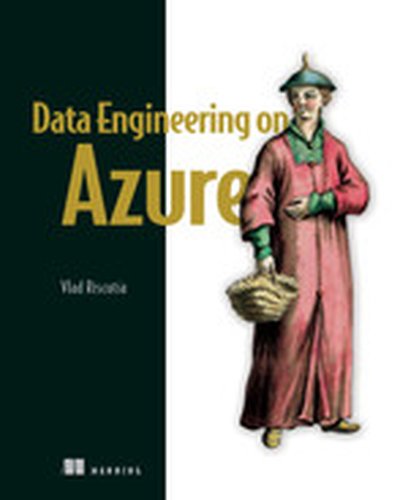
Data Engineering on Azure

Build a data platform to the industry-leading standards set by Microsoft’s own infrastructure. In Data Engineering on Azure you will learn how to: Pick the right Azure services for different data scenarios Manage data inventory Implement production quality data modeling, analytics, and machine learning workloads Handle data governance Using DevOps to increase reliability Ingesting, storing, and distributing data Apply best practices for compliance and access control Data Engineering on Azure reveals the data management patterns and techniques that support Microsoft’s own massive data infrastructure. Author Vlad Riscutia, a data engineer at Microsoft, teaches you to bring an engineering rigor to your data platform and ensure that your data prototypes function just as well under the pressures of production. You'll implement common data modeling patterns, stand up cloud-native data platforms on Azure, and get to grips with DevOps for both analytics and machine learning. About the Technology Build secure, stable data platforms that can scale to loads of any size. When a project moves from the lab into production, you need confidence that it can stand up to real-world challenges. This book teaches you to design and implement cloud-based data infrastructure that you can easily monitor, scale, and modify. About the Book In Data Engineering on Azure you’ll learn the skills you need to build and maintain big data platforms in massive enterprises. This invaluable guide includes clear, practical guidance for setting up infrastructure, orchestration, workloads, and governance. As you go, you’ll set up efficient machine learning pipelines, and then master time-saving automation and DevOps solutions. The Azure-based examples are easy to reproduce on other cloud platforms. What's Inside Data inventory and data governance Assure data quality, compliance, and distribution Build automated pipelines to increase reliability Ingest, store, and distribute data Production-quality data modeling, analytics, and machine learning About the Reader For data engineers familiar with cloud computing and DevOps. About the Author Vlad Riscutia is a software architect at Microsoft. Quotes A definitive and complete guide on data engineering, with clear and easy-to-reproduce examples. - Kelum Prabath Senanayake, Echoworx An all-in-one Azure book, covering all a solutions architect or engineer needs to think about. - Albert Nogués, Danone A meaningful journey through the Azure ecosystem. You’ll be building pipelines and joining components quickly! - Todd Cook, Appen A gateway into the world of Azure for machine learning and DevOps engineers. - Krzysztof Kamyczek, Luxoft

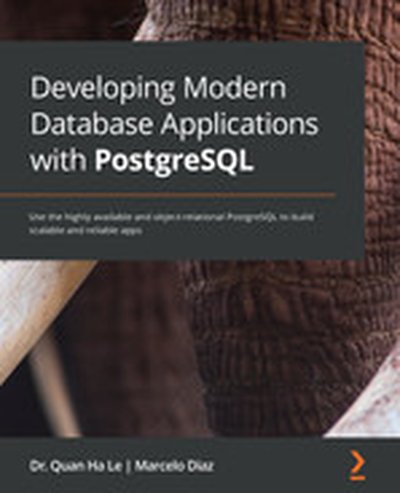
Developing Modern Database Applications with PostgreSQL

In "Developing Modern Database Applications with PostgreSQL", you will master the art of building database applications with the highly available and scalable PostgreSQL. Walk through a series of real-world projects that fully explore both the developmental and administrative aspects of PostgreSQL, all tied together through the example of a banking application. What this Book will help me do Set up high-availability PostgreSQL clusters using modern best practices. Monitor and tune database performance to handle enterprise-level workloads seamlessly. Automate testing and implement test-driven development strategies for robust applications. Leverage PostgreSQL along with DevOps pipelines to deploy applications on cloud platforms. Develop APIs and geospatial databases using popular tools like PostgREST and PostGIS. Author(s) The authors of this book, None Le and None Diaz, are experienced professionals in database technologies and software development. With a passion for PostgreSQL and its applications in modern computing, they bring a wealth of expertise and a practical approach to this book. Their methods focus on real-world applicability, ensuring that readers gain hands-on skills and practical knowledge. Who is it for? This book is perfect for database developers, administrators, and architects who want to advance their expertise in PostgreSQL. It is also suitable for software engineers and IT professionals aiming to tackle end-to-end database development projects. A basic knowledge of PostgreSQL and Linux will help you dive into the hands-on projects easily. If you're looking to take your PostgreSQL skills to the next level, this book is for you.

Summary All of the fancy data platform tools and shiny dashboards that you use are pointless if the consumers of your analysis don’t have trust in the answers. Stemma helps you establish and maintain that trust by giving visibility into who is using what data, annotating the reports with useful context, and understanding who is responsible for keeping it up to date. In this episode Mark Grover explains what he is building at Stemma, how it expands on the success of the Amundsen project, and why trust is the most important asset for data teams.

Announcements

Hello and welcome to the Data Engineering Podcast, the show about modern data management When you’re ready to build your next pipeline, or want to test out the projects you hear about on the show, you’ll need somewhere to deploy it, so check out our friends at Linode. With their managed Kubernetes platform it’s now even easier to deploy and scale your workflows, or try out the latest Helm charts from tools like Pulsar and Pachyderm. With simple pricing, fast networking, object storage, and worldwide data centers, you’ve got everything you need to run a bulletproof data platform. Go to dataengineeringpodcast.com/linode today and get a $100 credit to try out a Kubernetes cluster of your own. And don’t forget to thank them for their continued support of this show! RudderStack’s smart customer data pipeline is warehouse-first. It builds your customer data warehouse and your identity graph on your data warehouse, with support for Snowflake, Google BigQuery, Amazon Redshift, and more. Their SDKs and plugins make event streaming easy, and their integrations with cloud applications like Salesforce and ZenDesk help you go beyond event streaming. With RudderStack you can use all of your customer data to answer more difficult questions and then send those insights to your whole customer data stack. Sign up free at dataengineeringpodcast.com/rudder today. We’ve all been asked to help with an ad-hoc request for data by the sales and marketing team. Then it becomes a critical report that they need updated every week or every day. Then what do you do? Send a CSV via email? Write some Python scripts to automate it? But what about incremental sync, API quotas, error handling, and all of the other details that eat up your time? Today, there is a better way. With Census, just write SQL or plug in your dbt models and start syncing your cloud warehouse to SaaS applications like Salesforce, Marketo, Hubspot, and many more. Go to dataengineeringpodcast.com/census today to get a free 14-day trial. Your host is Tobias Macey and today I’m interviewing Mark Grover about his work at Stemma to bring the Amundsen project to a wider audience and increase trust in their data.

Interview

Introduction Can you describe what Stemma is and the story behind it? Can you give me more context into how and why Stemma fits into the current data engineering world? Among the popular tools of today for data warehousing and other products that stitch data together – what is Stemma’s place? Where does it fit into the workflow? How has the explosion in options for data cataloging and discovery influenced your thinking on the necessary feature set for that class of tools? How do you compare to your competitors With how long we have been using data and building systems to analyze it, why do you think that trust in the results is still such a momentous problem? Tell me more about Stemma and how it compares to Amundsen? Can you tell me more about the impact of Stemma/Amundsen to companies that use it? What are the opportunities for innovating on top of Stemma to help organizations streamline communication between data producers and consumers? Beyond the technological capabilities of a data platform, the bigger question is usually the social/organizational patterns around data. How have the "best practices" around the people side of data changed in the recent past?

What are the points of friction that

The Definitive Guide to Azure Data Engineering: Modern ELT, DevOps, and Analytics on the Azure Cloud Platform

Build efficient and scalable batch and real-time data ingestion pipelines, DevOps continuous integration and deployment pipelines, and advanced analytics solutions on the Azure Data Platform. This book teaches you to design and implement robust data engineering solutions using Data Factory, Databricks, Synapse Analytics, Snowflake, Azure SQL database, Stream Analytics, Cosmos database, and Data Lake Storage Gen2. You will learn how to engineer your use of these Azure Data Platform components for optimal performance and scalability. You will also learn to design self-service capabilities to maintain and drive the pipelines and your workloads. The approach in this book is to guide you through a hands-on, scenario-based learning process that will empower you to promote digital innovation best practices while you work through your organization’s projects, challenges, and needs. The clear examples enable you to use this book as a reference and guide for building data engineering solutions in Azure. After reading this book, you will have a far stronger skill set and confidence level in getting hands on with the Azure Data Platform. What You Will Learn Build dynamic, parameterized ELT data ingestion orchestration pipelines in Azure Data Factory Create data ingestion pipelines that integrate control tables for self-service ELT Implement a reusable logging framework that can be applied to multiple pipelines Integrate Azure Data Factory pipelines with a variety of Azure data sources and tools Transform data with Mapping Data Flows in Azure Data Factory Apply Azure DevOps continuous integration and deployment practices to your Azure Data Factory pipelines and development SQL databases Design and implement real-time streaming and advanced analytics solutions using Databricks, Stream Analytics, and Synapse Analytics Get started with a variety of Azure data services through hands-on examples Who This Book Is For Data engineers and data architects who are interested in learning architectural and engineering best practices around ELT and ETL on the Azure Data Platform, those who are creating complex Azure data engineering projects and are searching for patterns of success, and aspiring cloud and data professionals involved in data engineering, data governance, continuous integration and deployment of DevOps practices, and advanced analytics who want a full understanding of the many different tools and technologies that Azure Data Platform provides

Summary Data lake architectures have largely been biased toward batch processing workflows due to the volume of data that they are designed for. With more real-time requirements and the increasing use of streaming data there has been a struggle to merge fast, incremental updates with large, historical analysis. Vinoth Chandar helped to create the Hudi project while at Uber to address this challenge. By adding support for small, incremental inserts into large table structures, and building support for arbitrary update and delete operations the Hudi project brings the best of both worlds together. In this episode Vinoth shares the history of the project, how its architecture allows for building more frequently updated analytical queries, and the work being done to add a more polished experience to the data lake paradigm.

Announcements

Hello and welcome to the Data Engineering Podcast, the show about modern data management You listen to this show to learn about all of the latest tools, patterns, and practices that power data engineering projects across every domain. Now there’s a book that captures the foundational lessons and principles that underly everything that you hear about here. I’m happy to announce I collected wisdom from the community to help you in your journey as a data engineer and worked with O’Reilly to publish it as 97 Things Every Data Engineer Should Know. Go to dataengineeringpodcast.com/97things today to get your copy! When you’re ready to build your next pipeline, or want to test out the projects you hear about on the show, you’ll need somewhere to deploy it, so check out our friends at Linode. With their managed Kubernetes platform it’s now even easier to deploy and scale your workflows, or try out the latest Helm charts from tools like Pulsar and Pachyderm. With simple pricing, fast networking, object storage, and worldwide data centers, you’ve got everything you need to run a bulletproof data platform. Go to dataengineeringpodcast.com/linode today and get a $100 credit to try out a Kubernetes cluster of your own. And don’t forget to thank them for their continued support of this show! RudderStack’s smart customer data pipeline is warehouse-first. It builds your customer data warehouse and your identity graph on your data warehouse, with support for Snowflake, Google BigQuery, Amazon Redshift, and more. Their SDKs and plugins make event streaming easy, and their integrations with cloud applications like Salesforce and ZenDesk help you go beyond event streaming. With RudderStack you can use all of your customer data to answer more difficult questions and then send those insights to your whole customer data stack. Sign up free at dataengineeringpodcast.com/rudder today. We’ve all been asked to help with an ad-hoc request for data by the sales and marketing team. Then it becomes a critical report that they need updated every week or every day. Then what do you do? Send a CSV via email? Write some Python scripts to automate it? But what about incremental sync, API quotas, error handling, and all of the other details that eat up your time? Today, there is a better way. With Census, just write SQL or plug in your dbt models and start syncing your cloud warehouse to SaaS applications like Salesforce, Marketo, Hubspot, and many more. Go to dataengineeringpodcast.com/census today to get a free 14-day trial. Your host is Tobias Macey and today I’m interviewing Vinoth Chandar about Apache Hudi, a data lake management layer for supporting fast and incremental updates to your tables.

Interview

Introduction How did you get involved in the area of data management? Can you describe what Hudi is and the story behind it? What are the use cases that it is focused on supporting? There have been a number of alternative table formats introduced for data lakes recently. How does Hudi compare to projects like Iceberg, Delta Lake, Hive, etc.? Can you describe how Hudi is architected?

How have the goals and design of Hudi changed or evolved since you first began working on it? If you were to start the whole project over today, what would you do differently?

Can you talk through the lifecycle of a data record as it is ingested, compacted, and queried in a Hudi deployment? One of the capabilities that is interesting to explore is support for arbitrary record deletion. Can you talk through why this is a challenging operation in data lake architectures?

How does Hudi make that a tractable problem?

What are the data platform components that are needed to support an installation of Hudi? What is involved in migrating an existing data lake to use Hudi?

How would someone approach supporting heterogeneous table formats in their lake?

As someone who has invested a lot of time in technologies for supporting data lakes, what are your thoughts on the tradeoffs of data lake vs data warehouse and the current trajectory of the ecosystem? What are the most interesting, innovative, or unexpected ways that you have seen Hudi used? What are the most interesting, unexpected, or challenging lessons that you have learned while working on Hudi? When is Hudi the wrong choice? What do you have planned for the future of Hudi?

Contact Info

Linkedin Twitter

Parting Question

From your perspective, what is the biggest gap in the tooling or technology for data management today?

Closing Announcements

Thank you for listening! Don’t forget to check out our other show, Podcast.init to learn about the Python language, its community, and the innovative ways it is being used. Visit the site to subscribe to the show, sign up for the mailing list, and read the show notes. If you’ve learned something or tried out a project from the show then tell us about it! Email [email protected]) with your story. To help other people find the show please leave a review on iTunes and tell your friends and co-workers Join the community in the new Zulip chat workspace at dataengineeringpodcast.com/chat

Links

Hudi Docs Hudi Design & Architecture Incremental Processing CDC == Change Data Capture

Podcast Episodes

Oracle GoldenGate Voldemort Kafka Hadoop Spark HBase Parquet Iceberg Table Format

Data Engineering Episode

Hive ACID Apache Kudu

Podcast Episode

Vertica Delta Lake

Podcast Episode

Optimistic Concurrency Control MVCC == Multi-Version Concurrency Control Presto Flink

Podcast Episode

Trino

Podcast Episode

Gobblin LakeFS

Podcast Episode

Nessie

The intro and outro music is from The Hug by The Freak Fandango Orchestra / CC BY-SA

Support Data Engineering Podcast

Data Modeling for Azure Data Services

Data Modeling for Azure Data Services is an essential guide that delves into the intricacies of designing, provisioning, and implementing robust data solutions within the Azure ecosystem. Through practical examples and hands-on exercises, this book equips you with the knowledge to create scalable, performant, and adaptable database designs tailored to your business needs. What this Book will help me do Understand and apply normalization, dimensional modeling, and data vault modeling for relational databases. Learn to provision and implement scalable solutions like Azure SQL DB and Azure Synapse SQL Pool. Master how to design and model a Data Lake using Azure Storage efficiently. Gain expertise in NoSQL database modeling and implementing solutions using Azure Cosmos DB. Develop ETL/ELT processes effectively using Azure Data Factory to support data integration workflows. Author(s) None Braake brings a wealth of expertise as a data architect and cloud solutions builder specializing in Azure's data services. With hands-on experience in projects requiring sophisticated data modeling and optimization, None crafts detailed learning material to help professionals level up their database design and Azure deployment skills. Dedicated to explaining complex topics with clarity and approachable language, None ensures that the learners gain not just knowledge but applied competence. Who is it for? This book is a valuable resource for business intelligence developers, data architects, and consultants aiming to refine their skills in data modeling within modern cloud ecosystems, particularly Microsoft Azure. Whether you're a beginner with some foundational cloud data management knowledge or an experienced professional seeking to deepen your Azure data services proficiency, this book caters to your learning needs.

SQL Server on Kubernetes: Designing and Building a Modern Data Platform

Build a modern data platform by deploying SQL Server in Kubernetes. Modern application deployment needs to be fast and consistent to keep up with business objectives and Kubernetes is quickly becoming the standard for deploying container-based applications, fast. This book introduces Kubernetes and its core concepts. Then it shows you how to build and interact with a Kubernetes cluster. Next, it goes deep into deploying and operationalizing SQL Server in Kubernetes, both on premises and in cloud environments such as the Azure Cloud. You will begin with container-based application fundamentals and then go into an architectural overview of a Kubernetes container and how it manages application state. Then you will learn the hands-on skill of building a production-ready cluster. With your cluster up and running, you will learn how to interact with your cluster and perform common administrative tasks. Once you can admin the cluster, you will learn how to deploy applications and SQL Server in Kubernetes. You will learn about high-availability options, and about using Azure Arc-enabled Data Services. By the end of this book, you will know how to set up a Kubernetes cluster, manage a cluster, deploy applications and databases, and keep everything up and running. What You Will Learn Understand Kubernetes architecture and cluster components Deploy your applications into Kubernetes clusters Manage your containers programmatically through API objects and controllers Deploy and operationalize SQL Server in Kubernetes Implement high-availability SQL Server scenarios on Kubernetes using Azure Arc-enabled Data Services Make use of Kubernetes deployments for Big Data Clusters Who This Book Is For DBAs and IT architects who are ready to begin planning their next-generation data platform and want to understand what it takes to run SQL Server in a container in Kubernetes. SQL Server on Kubernetes is an excellent choice for those who want to understand the big picture of why Kubernetes is the next-generation deployment method for SQL Server but also want to understand the internals, or the how, of deploying SQL Server in Kubernetes. When finished with this book, you will have the vision and skills to successfully architect, build and maintain a modern data platform deploying SQL Server on Kubernetes.

Summary Everyone expects data to be transmitted, processed, and updated instantly as more and more products integrate streaming data. The technology to make that possible has been around for a number of years, but the barriers to adoption have still been high due to the level of technical understanding and operational capacity that have been required to run at scale. Datastax has recently introduced a new managed offering for Pulsar workloads in the form of Astra Streaming that lowers those barriers and make stremaing workloads accessible to a wider audience. In this episode Prabhat Jha and Jonathan Ellis share the work that they have been doing to integrate streaming data into their managed Cassandra service. They explain how Pulsar is being used by their customers, the work that they have done to scale the administrative workload for multi-tenant environments, and the challenges of operating such a data intensive service at large scale. This is a fascinating conversation with a lot of useful lessons for anyone who wants to understand the operational aspects of Pulsar and the benefits that it can provide to data workloads.

Announcements

Hello and welcome to the Data Engineering Podcast, the show about modern data management You listen to this show to learn about all of the latest tools, patterns, and practices that power data engineering projects across every domain. Now there’s a book that captures the foundational lessons and principles that underly everything that you hear about here. I’m happy to announce I collected wisdom from the community to help you in your journey as a data engineer and worked with O’Reilly to publish it as 97 Things Every Data Engineer Should Know. Go to dataengineeringpodcast.com/97things today to get your copy! When you’re ready to build your next pipeline, or want to test out the projects you hear about on the show, you’ll need somewhere to deploy it, so check out our friends at Linode. With their managed Kubernetes platform it’s now even easier to deploy and scale your workflows, or try out the latest Helm charts from tools like Pulsar and Pachyderm. With simple pricing, fast networking, object storage, and worldwide data centers, you’ve got everything you need to run a bulletproof data platform. Go to dataengineeringpodcast.com/linode today and get a $100 credit to try out a Kubernetes cluster of your own. And don’t forget to thank them for their continued support of this show! RudderStack’s smart customer data pipeline is warehouse-first. It builds your customer data warehouse and your identity graph on your data warehouse, with support for Snowflake, Google BigQuery, Amazon Redshift, and more. Their SDKs and plugins make event streaming easy, and their integrations with cloud applications like Salesforce and ZenDesk help you go beyond event streaming. With RudderStack you can use all of your customer data to answer more difficult questions and then send those insights to your whole customer data stack. Sign up free at dataengineeringpodcast.com/rudder today. We’ve all been asked to help with an ad-hoc request for data by the sales and marketing team. Then it becomes a critical report that they need updated every week or every day. Then what do you do? Send a CSV via email? Write some Python scripts to automate it? But what about incremental sync, API quotas, error handling, and all of the other details that eat up your time? Today, there is a better way. With Census, just write SQL or plug in your dbt models and start syncing your cloud warehouse to SaaS applications like Salesforce, Marketo, Hubspot, and many more. Go to dataengineeringpodcast.com/census today to get a free 14-day trial. Your host is Tobias Macey and today I’m interviewing Prabhat Jha and Jonathan Ellis about Astra Streaming, a cloud-native streaming platform built on Apache Pulsar

Interview

Introduction

How did you get involved in the area of data management?

Can you describe what the Astra platform is and the story behind it?

How does streaming fit into your overall product vision and the needs of your customers?

What was your selection process/criteria for adopting a streaming engine to complement your existing technology investment?

What are the core use cases that you are aiming to support with Astra Streaming?

Can you describe the architecture and automation of your hosted platform for Pulsar?

What are the integration points that you have built to make it work well with Cassandra?

What are some of the additional tools that you have added to your distribution of Pulsar to simplify operation and use?

What are some of the sharp edges that you have had to sand down as you have scaled up your usage of Pulsar?

What is the process for someone to adopt and integrate with your Astra Streaming service?

How do you handle migrating existing projects, particularly if they are using Kafka currently?

One of the capabilities that you highlight on the product page for Astra Streaming is the ability to execute machine learning workflows on data in flight. What are some of the supporting systems that are necessary to power that workflow?

What are the capabilities that are built into Pulsar that simplify the operational aspects of streaming ML?

What are the ways that you are engaging with and supporting the Pulsar community?

What are the near to medium term elements of the Pulsar roadmap that you are working toward and excited to incorporate into Astra?

What are the most interesting, innovative, or unexpected ways that you have seen Astra used?

What are the most interesting, unexpected, or challenging lessons that you have learned while working on Astra?

When is Astra the wrong choice?

What do you have planned for the future of Astra?

Contact Info

Prabhat

LinkedIn @prabhatja on Twitter prabhatja on GitHub

Jonathan

LinkedIn @spyced on Twitter

Parting Question

From your perspective, what is the biggest gap in the tooling or technology for data management today?

Links

Pulsar

Podcast Episode Streamnative Episode

Datastax Astra Streaming Datastax Astra DB Luna Streaming Distribution Datastax Cassandra Kesque (formerly Kafkaesque) Kafka RabbitMQ Prometheus Grafana Pulsar Heartbeat Pulsar Summit Pulsar Summit Presentation on Kafka Connectors Replicated Chaos Engineering Fallout chaos engineering tools Jepsen

Podcast Episode

Jack VanLightly

BookKeeper TLA+ Model

Change Data Capture

The intro and outro music is from The Hug by The Freak Fandango Orchestra / CC BY-SA

Support Data Engineering Podcast
Amazon Redshift Cookbook

Dive into the world of Amazon Redshift with this comprehensive cookbook, packed with practical recipes to build, optimize, and manage modern data warehousing solutions. From understanding Redshift's architecture to implementing advanced data warehousing techniques, this book provides actionable guidance to harness the power of Amazon Redshift effectively. What this Book will help me do Master the architecture and core concepts of Amazon Redshift to architect scalable data warehouses. Optimize data pipelines and automate ETL processes for seamless data ingestion and management. Leverage advanced features like concurrency scaling and Redshift Spectrum for enhanced analytics. Apply best practices for security and cost optimization in Redshift projects. Gain expertise in scaling data warehouse solutions to accommodate large-scale analytics needs. Author(s) Shruti Worlikar, None Arumugam, and None Patel are seasoned experts in data warehousing and analytics with extensive experience using Amazon Redshift. Their backgrounds in implementing scalable data solutions make their insights practical and grounded. Through their collaborative writing, they aim to make complex topics approachable to learners of various skill levels. Who is it for? This book is tailored for professionals such as data warehouse developers, data engineers, and data analysts looking to master Amazon Redshift. It suits intermediate to advanced practitioners with a basic understanding of data warehousing and cloud technologies. Readers seeking to optimize Redshift for cost, performance, and security will find this guide invaluable.

Summary Data quality is a concern that has been gaining attention alongside the rising importance of analytics for business success. Many solutions rely on hand-coded rules for catching known bugs, or statistical analysis of records to detect anomalies retroactively. While those are useful tools, it is far better to prevent data errors before they become an outsized issue. In this episode Gleb Mezhanskiy shares some strategies for adding quality checks at every stage of your development and deployment workflow to identify and fix problematic changes to your data before they get to production.

Announcements

Hello and welcome to the Data Engineering Podcast, the show about modern data management You listen to this show to learn about all of the latest tools, patterns, and practices that power data engineering projects across every domain. Now there’s a book that captures the foundational lessons and principles that underly everything that you hear about here. I’m happy to announce I collected wisdom from the community to help you in your journey as a data engineer and worked with O’Reilly to publish it as 97 Things Every Data Engineer Should Know. Go to dataengineeringpodcast.com/97things today to get your copy! When you’re ready to build your next pipeline, or want to test out the projects you hear about on the show, you’ll need somewhere to deploy it, so check out our friends at Linode. With their managed Kubernetes platform it’s now even easier to deploy and scale your workflows, or try out the latest Helm charts from tools like Pulsar and Pachyderm. With simple pricing, fast networking, object storage, and worldwide data centers, you’ve got everything you need to run a bulletproof data platform. Go to dataengineeringpodcast.com/linode today and get a $100 credit to try out a Kubernetes cluster of your own. And don’t forget to thank them for their continued support of this show! RudderStack’s smart customer data pipeline is warehouse-first. It builds your customer data warehouse and your identity graph on your data warehouse, with support for Snowflake, Google BigQuery, Amazon Redshift, and more. Their SDKs and plugins make event streaming easy, and their integrations with cloud applications like Salesforce and ZenDesk help you go beyond event streaming. With RudderStack you can use all of your customer data to answer more difficult questions and then send those insights to your whole customer data stack. Sign up free at dataengineeringpodcast.com/rudder today. We’ve all been asked to help with an ad-hoc request for data by the sales and marketing team. Then it becomes a critical report that they need updated every week or every day. Then what do you do? Send a CSV via email? Write some Python scripts to automate it? But what about incremental sync, API quotas, error handling, and all of the other details that eat up your time? Today, there is a better way. With Census, just write SQL or plug in your dbt models and start syncing your cloud warehouse to SaaS applications like Salesforce, Marketo, Hubspot, and many more. Go to dataengineeringpodcast.com/census today to get a free 14-day trial. Your host is Tobias Macey and today I’m interviewing Gleb Mezhanskiy about strategies for proactive data quality management and his work at Datafold to help provide tools for implementing them

Interview

Introduction How did you get involved in the area of data management? Can you describe what you are building at Datafold and the story behind it? What are the biggest factors that you see contributing to data quality issues?

How are teams identifying and addressing those failures?

How does the data platform architecture impact the potential for introducing quality problems? What are some of the potential risks or consequences of introducing errors in data processing? How can organizations shift to being proactive in their data quality management?

How much of a role does tooling play in addressing the introduct

IBM TS4500 R7 Tape Library Guide

The IBM® TS4500 (TS4500) tape library is a next-generation tape solution that offers higher storage density and better integrated management than previous solutions. This IBM Redbooks® publication gives you a close-up view of the new IBM TS4500 tape library. In the TS4500, IBM delivers the density that today's and tomorrow's data growth requires. It has the cost-effectiveness and the manageability to grow with business data needs, while you preserve investments in IBM tape library products. Now, you can achieve a low cost per terabyte (TB) and a high TB density per square foot because the TS4500 can store up to 11 petabytes (PB) of uncompressed data in a single frame library or scale up to 2 PB per square foot to over 350 PB. The TS4500 offers the following benefits: High availability: Dual active accessors with integrated service bays reduce inactive service space by 40%. The Elastic Capacity option can be used to eliminate inactive service space. Flexibility to grow: The TS4500 library can grow from the right side and the left side of the first L frame because models can be placed in any active position. Increased capacity: The TS4500 can grow from a single L frame up to another 17 expansion frames with a capacity of over 23,000 cartridges. High-density (HD) generation 1 frames from the TS3500 library can be redeployed in a TS4500. Capacity on demand (CoD): CoD is supported through entry-level, intermediate, and base-capacity configurations. Advanced Library Management System (ALMS): ALMS supports dynamic storage management, which enables users to create and change logical libraries and configure any drive for any logical library. Support for IBM TS1160 while also supporting TS1155, TS1150, and TS1140 tape drive: The TS1160 gives organizations an easy way to deliver fast access to data, improve security, and provide long-term retention, all at a lower cost than disk solutions. The TS1160 offers high-performance, flexible data storage with support for data encryption. Also, this enhanced fifth-generation drive can help protect investments in tape automation by offering compatibility with existing automation. The TS1160 Tape Drive Model 60E delivers a dual 10 Gb or 25 Gb Ethernet host attachment interface that is optimized for cloud-based and hyperscale environments. The TS1160 Tape Drive Model 60F delivers a native data rate of 400 MBps, the same load/ready, locate speeds, and access times as the TS1155, and includes dual-port 16 Gb Fibre Channel support. Support of the IBM Linear Tape-Open (LTO) Ultrium 8 tape drive: The LTO Ultrium 8 offering represents significant improvements in capacity, performance, and reliability over the previous generation, LTO Ultrium 7, while still protecting your investment in the previous technology. Support of LTO 8 Type M cartridge (m8): The LTO Program introduced a new capability with LTO-8 drives. The ability of the LTO-8 drive to write 9 TB on a brand new LTO-7 cartridge instead of 6 TB as specified by the LTO-7 format. Such a cartridge is called an LTO-7 initialized LTO-8 Type M cartridge. Integrated TS7700 back-end Fibre Channel (FC) switches are available. Up to four library-managed encryption (LME) key paths per logical library are available. This book describes the TS4500 components, feature codes, specifications, supported tape drives, encryption, new integrated management console (IMC), command-line interface (CLI), and REST over SCSI (RoS) to obtain status information about library components. October 2020 - Added support for the 3592 model 60S tape drive that provides a dual-port 12 Gb SAS (Serial Attached SCSI) interface for host attachment.

Send us a text Want to be featured as a guest on Making Data Simple? Reach out to us at [[email protected]] and tell us why you should be next.

Abstract Hosted by Al Martin, VP, IBM Expert Services Delivery, Making Data Simple provides the latest thinking on big data, A.I., and the implications for the enterprise from a range of experts. This week on Making Data Simple, we have Davor Bonaci co-founder and CEO of a Seattle-based startup Kaskada. Previously, Davor served as the chair of the Apache Beam PMC and software engineer in Google Cloud since its early days and the inception of Cloud Dataflow. Show Notes 2:39 – Are you focused on the platform or the models around event based data? 6:52 – Does your company provide knowhow or is it tooling? 9:58 – What’s your secret sauce? 11:19 – How did you end up here? 15:40 – Who’s your biggest competitor?  17:13 – Can you talk to some of the common use cases? 20:30 – Are you and IDE, how does it work? 21:18 – Are you a subscription service? 22:18 – What’s your 5 year plan? 26:44 – How feature store save time and money 29:19 – Describe the company in three bullets 31:35 – What are the top skills?  Davor Bonaci  - LinkedIn Kaskada

Connect with the Team Producer Kate Brown - LinkedIn. Producer Steve Templeton - LinkedIn. Host Al Martin - LinkedIn and Twitter.  Want to be featured as a guest on Making Data Simple? Reach out to us at [email protected] and tell us why you should be next. The Making Data Simple Podcast is hosted by Al Martin, WW VP Technical Sales, IBM, where we explore trending technologies, business innovation, and leadership ... while keeping it simple & fun.