talk-data.com talk-data.com

Topic

data-science

2252

tagged

Activity Trend

1 peak/qtr
2020-Q1 2026-Q1

Activities

2252 activities · Newest first

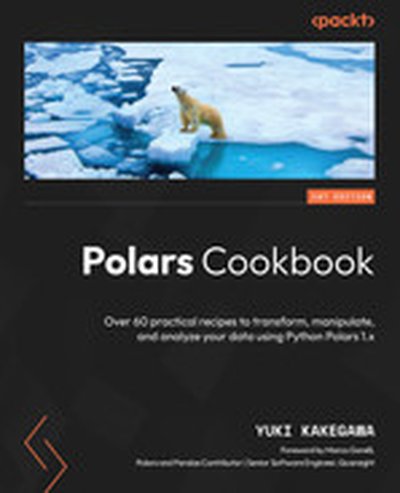
Polars Cookbook

Dive into the world of data analysis with the Polars Cookbook. This book, ideal for data professionals, covers practical recipes to manipulate, transform, and analyze data using the Python Polars library. You'll learn both the fundamentals and advanced techniques to build efficient and scalable data workflows. What this Book will help me do Master the basics of Python Polars including installation and setup. Perform complex data manipulation like pivoting, grouping, and joining. Handle large-scale time series data for accurate analysis. Understand data integration with libraries like pandas and numpy. Optimize workflows for both on-premise and cloud environments. Author(s) Yuki Kakegawa is an experienced data analytics consultant who has collaborated with companies such as Microsoft and Stanford Health Care. His passion for data led him to create this detailed guide on Polars. His expertise ensures you gain real-world, actionable insights from every chapter. Who is it for? This book is perfect for data analysts, engineers, and scientists eager to enhance their efficiency with Python Polars. If you are familiar with Python and tools like pandas but are new to Polars, this book will upskill you. Whether handling big data or optimizing code for performance, the Polars Cookbook has the guidance you need to succeed.

DuckDB in Action

Dive into DuckDB and start processing gigabytes of data with ease—all with no data warehouse. DuckDB is a cutting-edge SQL database that makes it incredibly easy to analyze big data sets right from your laptop. In DuckDB in Action you’ll learn everything you need to know to get the most out of this awesome tool, keep your data secure on prem, and save you hundreds on your cloud bill. From data ingestion to advanced data pipelines, you’ll learn everything you need to get the most out of DuckDB—all through hands-on examples. Open up DuckDB in Action and learn how to: Read and process data from CSV, JSON and Parquet sources both locally and remote Write analytical SQL queries, including aggregations, common table expressions, window functions, special types of joins, and pivot tables Use DuckDB from Python, both with SQL and its "Relational"-API, interacting with databases but also data frames Prepare, ingest and query large datasets Build cloud data pipelines Extend DuckDB with custom functionality Pragmatic and comprehensive, DuckDB in Action introduces the DuckDB database and shows you how to use it to solve common data workflow problems. You won’t need to read through pages of documentation—you’ll learn as you work. Get to grips with DuckDB's unique SQL dialect, learning to seamlessly load, prepare, and analyze data using SQL queries. Extend DuckDB with both Python and built-in tools such as MotherDuck, and gain practical insights into building robust and automated data pipelines. About the Technology DuckDB makes data analytics fast and fun! You don’t need to set up a Spark or run a cloud data warehouse just to process a few hundred gigabytes of data. DuckDB is easily embeddable in any data analytics application, runs on a laptop, and processes data from almost any source, including JSON, CSV, Parquet, SQLite and Postgres. About the Book DuckDB in Action guides you example-by-example from setup, through your first SQL query, to advanced topics like building data pipelines and embedding DuckDB as a local data store for a Streamlit web app. You’ll explore DuckDB’s handy SQL extensions, get to grips with aggregation, analysis, and data without persistence, and use Python to customize DuckDB. A hands-on project accompanies each new topic, so you can see DuckDB in action. What's Inside Prepare, ingest and query large datasets Build cloud data pipelines Extend DuckDB with custom functionality Fast-paced SQL recap: From simple queries to advanced analytics About the Reader For data pros comfortable with Python and CLI tools. About the Authors Mark Needham is a blogger and video creator at @‌LearnDataWithMark. Michael Hunger leads product innovation for the Neo4j graph database. Michael Simons is a Java Champion, author, and Engineer at Neo4j. Quotes I use DuckDB every day, and I still learned a lot about how DuckDB makes things that are hard in most databases easy! - Jordan Tigani, Founder, MotherDuck An excellent resource! Unlocks possibilities for storing, processing, analyzing, and summarizing data at the edge using DuckDB. - Pramod Sadalage, Director, Thoughtworks Clear and accessible. A comprehensive resource for harnessing the power of DuckDB for both novices and experienced professionals. - Qiusheng Wu, Associate Professor, University of Tennessee Excellent! The book all we ducklings have been waiting for! - Gunnar Morling, Decodable

Graph Based Multimedia Analysis

Graph Based Multimedia Analysis applies concepts from graph theory to the problems of analyzing overabundant video data. Video data can be quite diverse: exocentric (captured by a standard camera) or egocentric (captured by a wearable device like Google Glass); of various durations (ranging from a few seconds to several hours); and could be from a single source or multiple sources. Efficient extraction of important information from such a large class of diverse video data can be overwhelming. The book, with its rich repertoire of theoretically elegant solutions, from graph theory in conjunction with deep learning, constrained optimization, and game theory, empowers the audience to achieve tasks like obtaining concise yet useful summaries and precisely recognizing single as well as multiple actions in a computationally efficient manner. The book provides a unique treatise on topics like egocentric video analysis and scalable video processing. Addresses a number of challenging state-of-the-art problems in multimedia analysis like summarization, co-summarization, and action recognition Handles a wide class of video with different genres, durations, and numbers Applies a class of theoretically rich algorithms from the discipline of graph theory, in conjunction with deep learning, constrained optimization and game theory Includes thorough complexity analyses of the proposed solutions, and an appendix containing implementable source codes

Microsoft Power BI Cookbook - Third Edition

Discover how to harness the full potential of Microsoft Power BI in "Microsoft Power BI Cookbook". Through its recipe-based structure, this book offers step-by-step guidance on mastering data integration, crafting impactful visualizations, and utilizing Power BI's latest features like Hybrid tables and enhanced scorecards. This edition equips you with the skills to transform raw data into actionable insights for your organization. What this Book will help me do Turn business data into actionable insights by utilizing Microsoft Data Fabric effectively. Create engaging and clear visualizations through Hybrid tables and advanced reporting techniques. Gain competence in managing real-time data accuracy and implementing dynamic analytics in Power BI. Ensure robust data compliance and governance integrated seamlessly into business reporting workflows. Leverage cutting-edge Power BI features to prepare for emerging trends in data intelligence. Author(s) Greg Deckler and None Powell, both esteemed professionals in the Power BI and data analytics domain, co-author this comprehensive guide. With decades of experience, they bring vast knowledge and practical skills to this work, presenting it in a structured and approachable manner. Both are dedicated to empowering learners of all levels to excel with Power BI. Who is it for? This book is ideal for professionals like data analysts, business intelligence developers, and IT specialists focused on reporting. It suits readers with a basic familiarity with Power BI, looking to deepen their understanding. If you aim to stay current with Power BI's most modern practices and features, this book will help you achieve that. Additionally, it supports those aiming to enhance business decision-making through better visualizations and advanced analysis.

Bio-Inspired Optimization for Medical Data Mining

This book is a comprehensive exploration of bio-inspired optimization techniques and their potential applications in healthcare. Bio-Inspired Optimization for Medical Data Mining is a groundbreaking book that delves into the convergence of nature’s ingenious algorithms and cutting-edge healthcare technology. Through a comprehensive exploration of state-of-the-art algorithms and practical case studies, readers gain unparalleled insights into optimizing medical data processing, enabling more precise diagnosis, optimizing treatment plans, and ultimately advancing the field of healthcare. Organized into 15 chapters, readers learn about the theoretical foundation of pragmatic implementation strategies and actionable advice. In addition, it addresses current developments in molecular subtyping and how they can enhance clinical care. By bridging the gap between cutting-edge technology and critical healthcare challenges, this book is a pivotal contribution, providing a roadmap for leveraging nature-inspired algorithms. In this book, the reader will discover Cutting-edge bio-inspired algorithms designed to optimize medical data processing, providing efficient and accurate solutions for complex healthcare challenges; How bio-inspired optimization can fine-tune diagnostic accuracy, leading to better patient outcomes and improved medical decision-making; How bio-inspired optimization propels healthcare into a new era, unlocking transformative solutions for medical data analysis; Practical insights and actionable advice on implementing bio-inspired optimization techniques and equipping effective real-world medical data scenarios; Compelling case studies illustrating how bio-inspired optimization has made a significant impact in the medical field, inspiring similar success stories. Audience This book is designed for a wide-ranging audience, including medical professionals, healthcare researchers, data scientists, and technology enthusiasts.

Data Science for Decision Makers

Discover how to seamlessly integrate data science into your leadership toolkit with 'Data Science for Decision Makers.' This practical guide emphasizes bridging business challenges with technical data insights, enabling you to make informed decisions leveraging modern data-driven methodologies. What this Book will help me do Gain foundational knowledge of statistics and machine learning to interpret data and drive insights. Learn to plan, execute, and evaluate data science projects effectively from start to finish. Understand the differences between machine learning, statistical methods, and traditional analysis and when to employ each. Acquire tools to manage and maximize the capabilities of high-performing data teams. Develop the skills to translate business challenges into data science problems for actionable solutions. Author(s) The author, None Howells, comes with an extensive background in data science leadership and AI technologies. With years of experience in guiding organizations through implementing data science solutions, they bring clarity and practicality to tackling complex problems. Their writing aims to be an accessible resource for both technical professionals taking on managerial roles and executives looking to understand the potential of data science. Who is it for? This book is tailored for executives, such as CDOs, data managers, or business leaders, who wish to understand data science concepts and their applications. It's also valuable for managers of technical teams aiming to bridge communication gaps and improve project outcomes. If you are at the intersection of leadership and data challenges, this book provides essential context and tools to thrive.

R-ticulate

An accessible learning resource that develops data analysis skills for natural science students in an efficient style using the R programming language R-ticulate: A Beginner’s Guide to Data Analysis for Natural Scientists is a compact, example-based, and user-friendly statistics textbook without unnecessary frills, but instead filled with engaging, relatable examples, practical tips, online exercises, resources, and references to extensions, all on a level that follows contemporary curricula taught in large parts of the world. The content structure is unique in the sense that statistical skills are introduced at the same time as software (programming) skills in R. This is by far the best way of teaching from the authors’ experience. Readers of this introductory text will find: Explanations of statistical concepts in simple, easy-to-understand language A variety of approaches to problem solving using both base R and tidyverse Boxes dedicated to specific topics and margin text that summarizes key points A clearly outlined schedule organized into 12 chapters corresponding to the 12 semester weeks of most universities While at its core a traditional printed book, R-ticulate: A Beginner’s Guide to Data Analysis for Natural Scientists comes with a wealth of online teaching material, making it an ideal and efficient reference for students who wish to gain a thorough understanding of the subject, as well as for instructors teaching related courses.

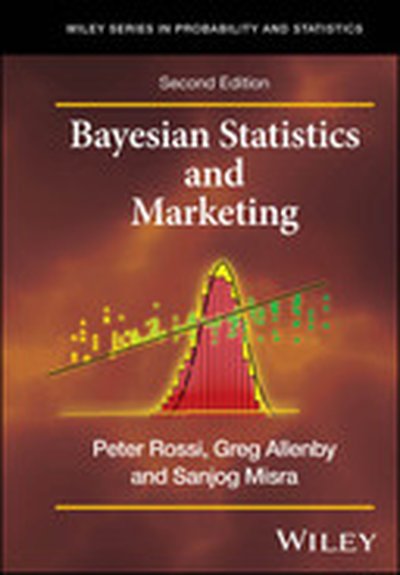
Bayesian Statistics and Marketing, 2nd Edition

Fine-tune your marketing research with this cutting-edge statistical toolkit Bayesian Statistics and Marketing illustrates the potential for applying a Bayesian approach to some of the most challenging and important problems in marketing. Analyzing household and consumer data, predicting product performance, and custom-targeting campaigns are only a few of the areas in which Bayesian approaches promise revolutionary results. This book provides a comprehensive, accessible overview of this subject essential for any statistically informed marketing researcher or practitioner. Economists and other social scientists will find a comprehensive treatment of many Bayesian methods that are central to the problems in social science more generally. This includes a practical approach to computationally challenging problems in random coefficient models, non-parametrics, and the problems of endogeneity. Readers of the second edition of Bayesian Statistics and Marketing will also find: Discussion of Bayesian methods in text analysis and Machine Learning Updates throughout reflecting the latest research and applications Discussion of modern statistical software, including an introduction to the R package bayesm, which implements all models incorporated here Extensive case studies throughout to link theory and practice Bayesian Statistics and Marketing is ideal for advanced students and researchers in marketing, business, and economics departments, as well as for any statistically savvy marketing practitioner.

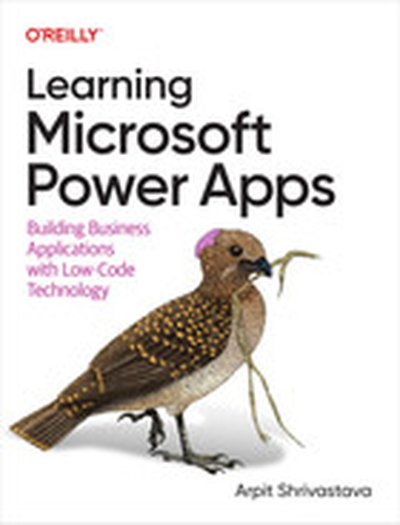
Learning Microsoft Power Apps

In today's fast-paced world, more and more organizations require rapid application development with reduced development costs and increased productivity. This practical guide shows application developers how to use PowerApps, Microsoft's no-code/low-code application framework that helps developers speed up development, modernize business processes, and solve tough challenges. Author Arpit Shrivastava provides a comprehensive overview of designing and building cost-effective applications with Microsoft Power Apps. You'll learn fundamental concepts behind low-code and no-code development, how to build applications using pre-built and blank templates, how to design an app using Copilot AI and drag and drop PowerPoint-like controls, use Excel-like expressions to write business logic for an app, and integrate apps with external data sources. With this book, you'll: Learn the importance of no-code/low-code application development Design mobile/tablet (canvas apps) applications using pre-built and blank templates Design web applications (model-driven apps) using low-code, no-code, and pro-code components Integrate PowerApps with external applications Learn basic coding concepts like JavaScript, Power Fx, and C# Apply best practices to customize Dynamics 365 CE applications Dive into Azure DevOps and ALM concepts to automate application deployment

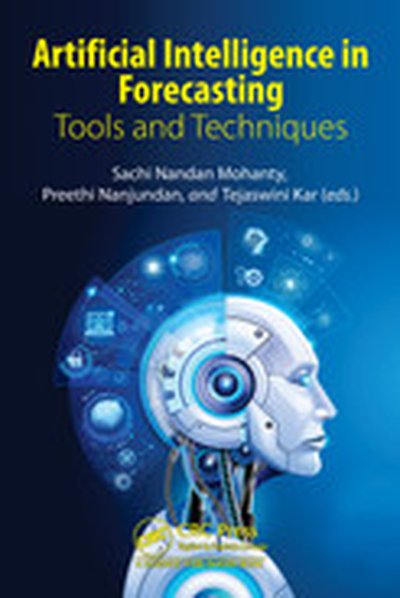
Artificial Intelligence in Forecasting

Can you forecast the future value by considering historical data? Accurate forecasting requires more than just plugging in historical data into models. Readers will find the latest techniques used by managers in business today, discover the importance of forecasting and learn how it is accomplished.

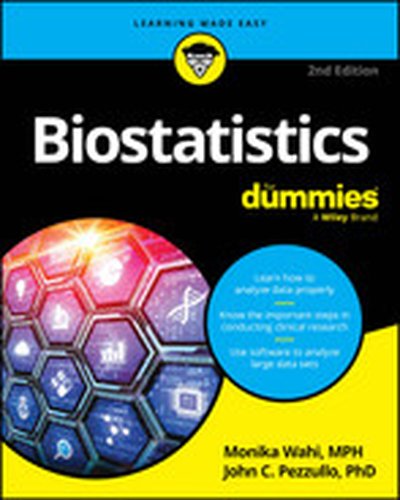
Biostatistics For Dummies, 2nd Edition

Break down biostatistics, make sense of complex concepts, and pass your class If you're taking biostatistics, you may need or want a little extra assistance as you make your way through. Biostatistics For Dummies follows a typical biostatistics course at the college level, helping you understand even the most difficult concepts, so you can get the grade you need. Start at the beginning by learning how to read and understand mathematical equations and conduct clinical research. Then, use your knowledge to analyze and graph your data. This new edition includes more example problems with step-by-step walkthroughs on how to use statistical software to analyze large datasets. Biostatistics For Dummies is your go-to guide for making sense of it all. Review basic statistics and decode mathematical equations Learn how to analyze and graph data from clinical research studies Look for relationships with correlation and regression Use software to properly analyze large datasets Anyone studying in clinical science, public health, pharmaceutical sciences, chemistry, and epidemiology-related fields will want this book to get through that biostatistics course.

Beginning Mathematica and Wolfram for Data Science: Applications in Data Analysis, Machine Learning, and Neural Networks

Enhance your data science programming and analysis with the Wolfram programming language and Mathematica, an applied mathematical tools suite. This second edition introduces the latest LLM Wolfram capabilities, delves into the exploration of data types in Mathematica, covers key programming concepts, and includes code performance and debugging techniques for code optimization. You’ll gain a deeper understanding of data science from a theoretical and practical perspective using Mathematica and the Wolfram Language. Learning this language makes your data science code better because it is very intuitive and comes with pre-existing functions that can provide a welcoming experience for those who use other programming languages. Existing topics have been reorganized for better context and to accommodate the introduction of Notebook styles. The book also incorporates new functionalities in code versions 13 and 14 for imported and exported data. You’ll see how to use Mathematica, where data management and mathematical computations are needed. Along the way, you’ll appreciate how Mathematica provides an entirely integrated platform: its symbolic and numerical calculation result in a mized syntax, allowing it to carry out various processes without superfluous lines of code. You’ll learn to use its notebooks as a standard format, which also serves to create detailed reports of the processes carried out. What You Will Learn Create datasets, work with data frames, and create tables Import, export, analyze, and visualize data Work with the Wolfram data repository Build reports on the analysis Use Mathematica for machine learning, with different algorithms, including linear, multiple, and logistic regression; decision trees; and data clustering Who This Book Is For Data scientists who are new to using Wolfram and Mathematica as a programming language or tool. Programmers should have some prior programming experience, but can be new to the Wolfram language.

D3.js in Action, Third Edition

Create stunning web-based data visualizations with D3.js. This totally-revised new edition of D3.js in Action guides you from simple charts to powerful interactive graphics. Chapter-by-chapter you’ll assemble an impressive portfolio of visualizations—including intricate networks, maps, and even a complete customized visualization layout. Plus, you'll learn best practices for building interactive graphics, animations, and integrating your work into frontend development frameworks like React and Svelte. In D3.js in Action, Third Edition you will learn how to: Set up a local development environment for D3 Include D3 in web development projects, including Node-based web apps Select and append DOM elements Size and position elements on screen Assemble components and layouts into creative data visualizations D3.js in Action, Third Edition has been extensively revised for D3.js version 7, and modern best practices for web visualizations. Its brand new chapters dive into interactive visualizations, cover responsiveness for dataviz, and show you how you can improve accessibility. About the Technology With D3.js, you can create sophisticated infographics, charts, and interactive data visualizations using standard frontend tools like JavaScript, HTML, and CSS. Granting D3 its VIS Test of Time award, the IEEE credited this powerful library for bringing data visualization to the mainstream. You’ll be blown away by how beautiful your results can be! About the Book D3.js in Action, Third Edition is a roadmap for creating brilliant and beautiful visualizations with D3.js. Like a gentle mentor, it guides you from basic charts all the way to advanced interactive visualizations like networks and maps. You’ll learn to build graphics, create animations, and set up mobile-friendly responsiveness. Each chapter contains a complete data visualization project to put your new skills into action. What's Inside Fully revised for D3.js v7 Includes 12 complete projects Create data visualizations with SVG and canvas Combine D3 with React, Svelte, and Angular About the Reader For web developers with HTML, CSS, and JavaScript skills. About the Authors Elijah Meeks was a data visualization pioneer at Stanford and the first Senior Data Visualization Engineer at Netflix. Anne-Marie Dufour is a Data Visualization Engineer. The technical editor on this book was Jon Borgman. Quotes Guides readers through the intricate world of D3 with clarity and practical insight. Whether you’re a seasoned expert or just starting, this book will be invaluable. - Connor Rothschild, Data Visualization Engineer, Moksha Data Studio Amazing job of explaining the core concepts of D3 while providing all you need to learn other fundamental concepts. - Lindsey Poulter, Visualization Engineer, New York Mets A navigation tool to explore all possible paths in the world of D3. Clear schematics and nicely selected examples guide the readers through D3’s possibilities. - Matthias Stahl, Head Data & Visualizations, Der SPIEGEL

The Decision Maker's Handbook to Data Science: AI and Data Science for Non-Technical Executives, Managers, and Founders

Data science is expanding across industries at a rapid pace, and the companies first to adopt best practices will gain a significant advantage. To reap the benefits, decision makers need to have a confident understanding of data science and its application in their organization. This third edition delves into the latest advancements in AI, particularly focusing on large language models (LLMs), with clear distinctions made between AI and traditional data science, including AI's ability to emulate human decision-making. Author Stylianos Kampakis introduces you to the critical aspect of ethics in AI, an area of growing importance and scrutiny. The narrative examines the ethical considerations intrinsic to the development and deployment of AI technologies, including bias, fairness, transparency, and accountability. You’ll be provided with the expertise and tools required to develop a solid data strategy that is continuously effective. Ethics and legal issues surrounding data collection and algorithmic bias are some common pitfalls that Kampakis helps you avoid, while guiding you on the path to build a thriving data science culture at your organization. This updated edition also includes plenty of case studies, tools for project assessment, and expanded content for hiring and managing data scientists. Data science is a language that everyone at a modern company should understand across departments. Friction in communication arises most often when management does not connect with what a data scientist is doing or how impactful data collection and storage can be for their organization. The Decision Maker’s Handbook to Data Science bridges this gap and readies you for both the present and future of your workplace in this engaging, comprehensive guide. What You Will Learn Integrate AI with other innovative technologies Explore anticipated ethical, regulatory, and technical landscapes that will shape the future of AI and data science Discover how to hire and manage data scientists Build the right environment in order to make your organization data-driven Who This Book Is For Startup founders, product managers, higher level managers, and any other non-technical decision makers who are thinking to implement data science in their organization and hire data scientists. A secondary audience includes people looking for a soft introduction into the subject of data science.

R for the Rest of Us

The R programming language is a remarkably powerful tool for data analysis and visualization, but its steep learning curve can be intimidating for some. If you just want to automate repetitive tasks or visualize your data, without the need for complex math, R for the Rest of Us is for you. Inside you’ll find a crash course in R, a quick tour of the RStudio programming environment, and a collection of real-word applications that you can put to use right away. You’ll learn how to create informative visualizations, streamline report generation, and develop interactive websites—whether you’re a seasoned R user or have never written a line of R code. You’ll also learn how to: Manipulate, clean, and parse your data with tidyverse packages like dplyr and tidyr to make data science operations more user-friendly Create stunning and customized plots, graphs, and charts with ggplot2 to effectively communicate your data insights Import geospatial data and write code to produce visually appealing maps automatically Generate dynamic reports, presentations, and interactive websites with R Markdown and Quarto that seamlessly integrate code, text, and graphics Develop custom functions and packages tailored to your specific needs, allowing you to extend R’s functionality and automate complex tasks Unlock a treasure trove of techniques to transform the way you work. With R for the Rest of Us, you’ll discover the power of R to get stuff done. No advanced statistics degree required.

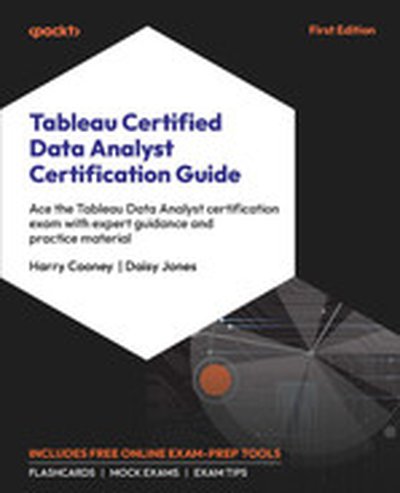
Tableau Certified Data Analyst Certification Guide

The 'Tableau Certified Data Analyst Certification Guide' is your essential roadmap to mastering Tableau and excelling in the Tableau Data Analyst certification exam. From fundamentals to advanced techniques, you'll solidify your Tableau skills with clear explanations, practical exercises, and realistic mock exams. After reading, you'll be ready to take the next step in your data analytics career. What this Book will help me do Gain the ability to connect, clean, and transform data effectively using Tableau. Master Tableau's diverse calculation types for data analysis, ranging from basic to advanced. Develop skills to create visually impactful dashboards and data stories. Learn to publish and manage insights on Tableau Cloud for broader collaboration. Acquire the necessary competencies to confidently pass the Tableau Data Analyst certification exam. Author(s) Authors Harry Cooney and Daisy Jones bring a wealth of Tableau and data analytics experience. Harry is a certified Tableau expert with years of teaching and consulting, while Daisy applies her data analysis expertise across industries. Together, they combine practical insights and a supportive approach to guide you through Tableau mastery and certification. Who is it for? This book is ideal for aspiring and practicing data analysts eager to master Tableau. Beginners will appreciate the accessible approach to foundational concepts, while experienced users can deepen their expertise. If you're preparing for the Tableau Certified Data Analyst exam or looking to enhance your visual analytics capabilities, this book is for you.

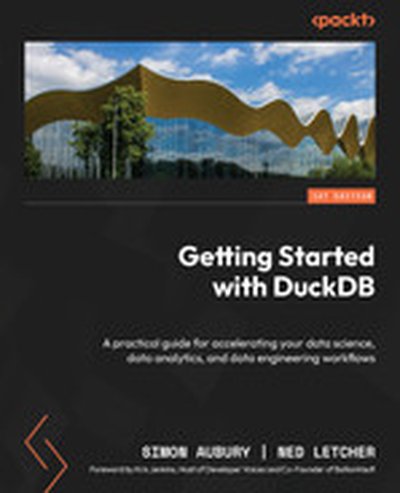
Getting Started with DuckDB

Unlock the full potential of DuckDB with 'Getting Started with DuckDB,' your guide to mastering data analysis efficiently. By reading this book, you'll discover how to load, transform, and query data using DuckDB, leveraging its unique capabilities for processing large datasets. Gain hands-on experience with SQL, Python, and R to enhance your data science and engineering workflows. What this Book will help me do Effectively load and manage various types of data in DuckDB for seamless processing. Gain hands-on experience writing and optimizing SQL queries tailored for analytical tasks. Integrate DuckDB capabilities into Python and R workflows for streamlined data analysis. Understand DuckDB's optimizations and extensions for specialized data applications. Explore the broader ecosystem of data tools that complement DuckDB's capabilities. Author(s) Simon Aubury and Ned Letcher are seasoned experts in the field of data analytics and engineering. With extensive experience in using both SQL and programming languages like Python and R, they bring practical insights into the innovative uses of DuckDB. They have designed this book to provide a hands-on and approachable way to learn DuckDB, making complex concepts accessible. Who is it for? This book is well-suited for data analysts aiming to accelerate their data analysis workflows, data engineers looking for effective tools for data processing, and data scientists searching for a versatile library for scalable data manipulation. Prior exposure to SQL and programming in Python or R will be beneficial for readers to maximize their learning.

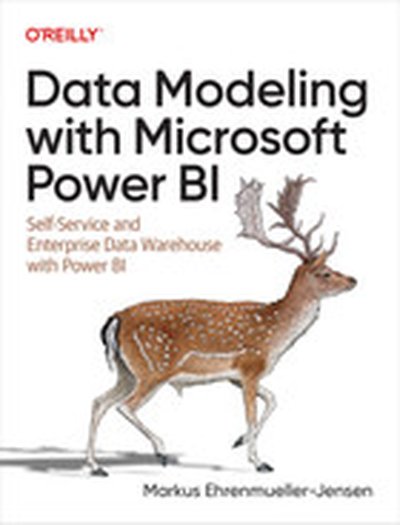
Data Modeling with Microsoft Power BI

Data modeling is the single most overlooked feature in Power BI Desktop, yet it's what sets Power BI apart from other tools on the market. This practical book serves as your fast-forward button for data modeling with Power BI, Analysis Services tabular, and SQL databases. It serves as a starting point for data modeling, as well as a handy refresher. Author Markus Ehrenmueller-Jensen, founder of Savory Data, shows you the basic concepts of Power BI's semantic model with hands-on examples in DAX, Power Query, and T-SQL. If you're looking to build a data warehouse layer, chapters with T-SQL examples will get you started. You'll begin with simple steps and gradually solve more complex problems. This book shows you how to: Normalize and denormalize with DAX, Power Query, and T-SQL Apply best practices for calculations, flags and indicators, time and date, role-playing dimensions and slowly changing dimensions Solve challenges such as binning, budget, localized models, composite models, and key value with DAX, Power Query, and T-SQL Discover and tackle performance issues by applying solutions in DAX, Power Query, and T-SQL Work with tables, relations, set operations, normal forms, dimensional modeling, and ETL