talk-data.com talk-data.com

Topic

DWH

Data Warehouse

analytics business_intelligence data_storage

568

tagged

Activity Trend

35 peak/qtr
2020-Q1 2026-Q1

Activities

568 activities · Newest first

BigQuery for Data Warehousing: Managed Data Analysis in the Google Cloud

Create a data warehouse, complete with reporting and dashboards using Google’s BigQuery technology. This book takes you from the basic concepts of data warehousing through the design, build, load, and maintenance phases. You will build capabilities to capture data from the operational environment, and then mine and analyze that data for insight into making your business more successful. You will gain practical knowledge about how to use BigQuery to solve data challenges in your organization. BigQuery is a managed cloud platform from Google that provides enterprise data warehousing and reporting capabilities. Part I of this book shows you how to design and provision a data warehouse in the BigQuery platform. Part II teaches you how to load and stream your operational data into the warehouse to make it ready for analysis and reporting. Parts III and IV cover querying and maintaining, helping you keep your information relevant with other Google Cloud Platform services and advanced BigQuery. Part V takes reporting to the next level by showing you how to create dashboards to provide at-a-glance visual representations of your business situation. Part VI provides an introduction to data science with BigQuery, covering machine learning and Jupyter notebooks. What You Will Learn Design a data warehouse for your project or organization Load data from a variety of external and internal sources Integrate other Google Cloud Platform services for more complex workflows Maintain and scale your data warehouse as your organization grows Analyze, report, and create dashboards on the information in the warehouse Become familiar with machine learning techniques using BigQuery ML Who This Book Is For Developers who want to provide business users with fast, reliable, and insightful analysis from operational data, and data analysts interested in a cloud-based solution that avoids the pain of provisioning their own servers.

Summary Data warehouse technology has been around for decades and has gone through several generational shifts in that time. The current trends in data warehousing are oriented around cloud native architectures that take advantage of dynamic scaling and the separation of compute and storage. Firebolt is taking that a step further with a core focus on speed and interactivity. In this episode CEO and founder Eldad Farkash explains how the Firebolt platform is architected for high throughput, their simple and transparent pricing model to encourage widespread use, and the use cases that it unlocks through interactive query speeds.

Announcements

Hello and welcome to the Data Engineering Podcast, the show about modern data management What are the pieces of advice that you wish you had received early in your career of data engineering? If you hand a book to a new data engineer, what wisdom would you add to it? I’m working with O’Reilly on a project to collect the 97 things that every data engineer should know, and I need your help. Go to dataengineeringpodcast.com/97things to add your voice and share your hard-earned expertise. When you’re ready to build your next pipeline, or want to test out the projects you hear about on the show, you’ll need somewhere to deploy it, so check out our friends at Linode. With their managed Kubernetes platform it’s now even easier to deploy and scale your workflows, or try out the latest Helm charts from tools like Pulsar and Pachyderm. With simple pricing, fast networking, object storage, and worldwide data centers, you’ve got everything you need to run a bulletproof data platform. Go to dataengineeringpodcast.com/linode today and get a $60 credit to try out a Kubernetes cluster of your own. And don’t forget to thank them for their continued support of this show! Today’s episode of the Data Engineering Podcast is sponsored by Datadog, a SaaS-based monitoring and analytics platform for cloud-scale infrastructure, applications, logs, and more. Datadog uses machine-learning based algorithms to detect errors and anomalies across your entire stack—which reduces the time it takes to detect and address outages and helps promote collaboration between Data Engineering, Operations, and the rest of the company. Go to dataengineeringpodcast.com/datadog today to start your free 14 day trial. If you start a trial and install Datadog’s agent, Datadog will send you a free T-shirt. You listen to this show to learn and stay up to date with what’s happening in databases, streaming platforms, big data, and everything else you need to know about modern data platforms. For more opportunities to stay up to date, gain new skills, and learn from your peers there are a growing number of virtual events that you can attend from the comfort and safety of your home. Go to dataengineeringpodcast.com/conferences to check out the upcoming events being offered by our partners and get registered today! Your host is Tobias Macey and today I’m interviewing Eldad Farkash about Firebolt, a cloud data warehouse optimized for speed and elasticity on structured and semi-structured data

Interview

Introduction How did you get involved in the area of data management? Can you start by describing what Firebolt is and your motivation for building it? How does Firebolt compare to other data warehouse technologies what unique features does it provide? The lines between a data warehouse and a data lake have been blurring in recent years. Where on that continuum does Firebolt lie? What are the unique use cases that Firebolt allows for? How do the performance characteristics of Firebolt change the ways that an engineer should think about data modeling? What technologies might someone replace with Firebolt? How is Firebolt architected and how has the design evolved since you first began working on it? What are some of the most challenging aspects of building a data warehouse platform that is optimized for speed? How do you ha

In Ep 50 with Jurgen Faiist, I discussed why we need a new data visualization language. In today's episode, we return to debate that topic with my good Suisse buddy Raphael Branger who is a Principal Data & Analytics Consultant at IT-Logix in Switzerland. Raphael is an IBCS Certified Consultant (he introduced me to it) as well as a Certified Disciplined Agile Practitioner with more than 18 years of experience in business intelligence and data warehousing. I met Raphael almost a decade when he invited to keynote their epic BI event in Zurich. As one of the most passionate people I've met around requirements gathering 'engineering' is he calls it, his feedback was instrumental to the ongoing enhancement of our BI Dashboard Formula methodology!

In today's episode, Raphael gives examples of why a new data viz language is needed and explains the International Business Communication Standards (IBCS) SUCCESS poster and how those standards can help. So much knowledge bombs in this one! Be sure to tune in!

 [03:01] The pros and cons of whether a new data visualization language is needed [03:15]  - User Expectations: Real-world experiences using the IBCS standards [24:45]  - How to ease communication between consumer and creator For full show notes, and the links mentioned visit: https://bibrainz.com/podcast/63

Enjoyed the Show?  Please leave us a review on iTunes. Free Data Storytelling Training Register before it sells out again! Our BI Data Storytelling Mastery Accelerator 3-Day Live Workshop new dates are finally available. Many BI teams are still struggling to deliver consistent, high-engaging analytics their users love. At the end of the workshop, you'll leave with a clear BI delivery action plan. Register today!

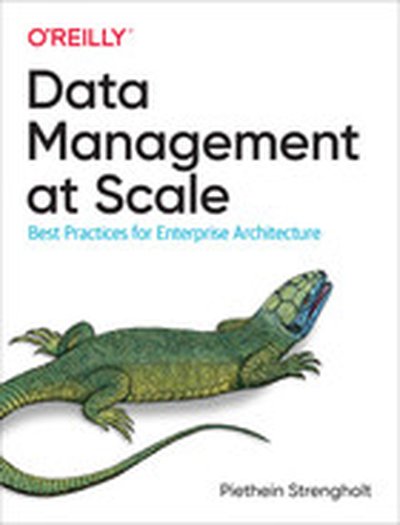
Data Management at Scale

As data management and integration continue to evolve rapidly, storing all your data in one place, such as a data warehouse, is no longer scalable. In the very near future, data will need to be distributed and available for several technological solutions. With this practical book, you’ll learnhow to migrate your enterprise from a complex and tightly coupled data landscape to a more flexible architecture ready for the modern world of data consumption. Executives, data architects, analytics teams, and compliance and governance staff will learn how to build a modern scalable data landscape using the Scaled Architecture, which you can introduce incrementally without a large upfront investment. Author Piethein Strengholt provides blueprints, principles, observations, best practices, and patterns to get you up to speed. Examine data management trends, including technological developments, regulatory requirements, and privacy concerns Go deep into the Scaled Architecture and learn how the pieces fit together Explore data governance and data security, master data management, self-service data marketplaces, and the importance of metadata

Intelligent Data Analysis
  This book focuses on methods and tools for intelligent data analysis, aimed at narrowing the increasing gap between data gathering and data comprehension, and emphasis will also be given to solving of problems which result from automated data collection, such as analysis of computer-based patient records, data warehousing tools, intelligent alarming, effective and efficient monitoring, and so on. This book aims to describe the different approaches of Intelligent Data Analysis from a practical point of view: solving common life problems with data analysis tools.

Send us a text Want to be featured as a guest on Making Data Simple? Reach out to us at [[email protected]] and tell us why you should be next.

Abstract Hosted by Al Martin, VP, Data and AI Expert Services and Learning at IBM, Making Data Simple provides the latest thinking on big data, A.I., and the implications for the enterprise from a range of experts. This week on Making Data Simple, we have Jim Ruston Managing Director of Armeta Analytics. Al and Jim discuss monetizing data, prescriptive and descriptive approaches, and sealing the deal. Show Notes 4:45 - How do you monetize data 6:20 - Common actions 8:50 - Prescriptive approach 11:15 – Gap in data warehouse 13:05 – Cleanup  17:40 – Overhead costs 19:22 - Prescriptive and descriptive approach 20:56 – Preferred technology 23:07 - Who are the decision makers   24:56 – Sealing the deal 27:10 – Why do I need Armeta Armeta  Armeta Linkedin Guaranteed Analytics  The Challenger Sale Connect with the Team Producer Kate Brown - LinkedIn. Producer Meighann Helene - LinkedIn. Producer Michael Sestak - LinkedIn. Producer Steve Templeton - LinkedIn. Host Al Martin - LinkedIn and Twitter.  Want to be featured as a guest on Making Data Simple? Reach out to us at [email protected] and tell us why you should be next. The Making Data Simple Podcast is hosted by Al Martin, WW VP Technical Sales, IBM, where we explore trending technologies, business innovation, and leadership ... while keeping it simple & fun.

BigQuery is GCP’s serverless, highly scalable and cost-effective cloud data warehouse that can analyze petabytes of data at super fast speeds. Amazon S3 is one of the oldest and most popular cloud storage offerings. Folks with data in S3 often want to use BigQuery to gain insights into their data. Using Apache Airflow, they can build pipelines to seamlessly orchestrate that connection. In this talk, Leah walks through how they created an easily configurable pipeline to extract data. When a team at work mentioned wanting to set up a repeatable process for migrating data stored in S3 to BigQuery, Leah knew using Cloud Composer (GCP-hosted Airflow) was the right tool for the job, but she didn’t have much experience with the proprietary file types the data used. Luckily, one of her colleagues did have experience with that proprietary file type, though they hadn’t worked with Airflow. Leah and her colleague teamed up to build a reusable, easily configurable solution for the team. She will walk you through their problem, the solution, and the process they took for coming to that solution, highlighting resources that were especially useful to a first-time Airflow user.

This audio blog is about the data lakehouse and how it is the latest incantation from a handful of data lake providers to usurp the rapidly changing cloud data warehousing market. It is one of three blogs featured in the data lakehouse series.

Originally published at: https://www.eckerson.com/articles/all-hail-the-data-lakehouse-if-built-on-a-modern-data-warehouse

Summary Data lakes offer a great deal of flexibility and the potential for reduced cost for your analytics, but they also introduce a great deal of complexity. What used to be entirely managed by the database engine is now a composition of multiple systems that need to be properly configured to work in concert. In order to bring the DBA into the new era of data management the team at Upsolver added a SQL interface to their data lake platform. In this episode Upsolver CEO Ori Rafael and CTO Yoni Iny describe how they have grown their platform deliberately to allow for layering SQL on top of a robust foundation for creating and operating a data lake, how to bring more people on board to work with the data being collected, and the unique benefits that a data lake provides. This was an interesting look at the impact that the interface to your data can have on who is empowered to work with it.

Announcements

Hello and welcome to the Data Engineering Podcast, the show about modern data management What are the pieces of advice that you wish you had received early in your career of data engineering? If you hand a book to a new data engineer, what wisdom would you add to it? I’m working with O’Reilly on a project to collect the 97 things that every data engineer should know, and I need your help. Go to dataengineeringpodcast.com/97things to add your voice and share your hard-earned expertise. When you’re ready to build your next pipeline, or want to test out the projects you hear about on the show, you’ll need somewhere to deploy it, so check out our friends at Linode. With their managed Kubernetes platform it’s now even easier to deploy and scale your workflows, or try out the latest Helm charts from tools like Pulsar and Pachyderm. With simple pricing, fast networking, object storage, and worldwide data centers, you’ve got everything you need to run a bulletproof data platform. Go to dataengineeringpodcast.com/linode today and get a $60 credit to try out a Kubernetes cluster of your own. And don’t forget to thank them for their continued support of this show! You listen to this show because you love working with data and want to keep your skills up to date. Machine learning is finding its way into every aspect of the data landscape. Springboard has partnered with us to help you take the next step in your career by offering a scholarship to their Machine Learning Engineering career track program. In this online, project-based course every student is paired with a Machine Learning expert who provides unlimited 1:1 mentorship support throughout the program via video conferences. You’ll build up your portfolio of machine learning projects and gain hands-on experience in writing machine learning algorithms, deploying models into production, and managing the lifecycle of a deep learning prototype. Springboard offers a job guarantee, meaning that you don’t have to pay for the program until you get a job in the space. The Data Engineering Podcast is exclusively offering listeners 20 scholarships of $500 to eligible applicants. It only takes 10 minutes and there’s no obligation. Go to dataengineeringpodcast.com/springboard and apply today! Make sure to use the code AISPRINGBOARD when you enroll. Your host is Tobias Macey and today I’m interviewing Ori Rafael and Yoni Iny about building a data lake for the DBA at Upsolver

Interview

Introduction How did you get involved in the area of data management? Can you start by sharing your definition of what a data lake is and what it is comprised of? We talked last in November of 2018. How has the landscape of data lake technologies and adoption changed in that time?

How has Upsolver changed or evolved since we last spoke?

How has the evolution of the underlying technologies impacted your implementation and overall product strategy?

What are some of the common challenges that accompany a data lake implementation? How do those challenges influence the adoption or viability of a data lake? How does the introduction of a universal SQL layer change the staffing requirements for building and maintaining a data lake?

What are the advantages of a data lake over a data warehouse if everything is being managed via SQL anyway?

What are some of the underlying realities of the data systems that power the lake which will eventually need to be understood by the operators of the platform? How is the SQL layer in Upsolver implemented?

What are the most challenging or complex aspects of managing the underlying technologies to provide automated partitioning, indexing, etc.?

What are the main concepts that you need to educate your customers on? What are some of the pitfalls that users should be aware of? What features of your platform are often overlooked or underutilized which you think should be more widely adopted? What have you found to be the most interesting, unexpected, or challenging lessons learned while building the technical and business elements of Upsolver? What do you have planned for the future?

Contact Info

Ori

LinkedIn

Yoni

yoniiny on GitHub LinkedIn

Parting Question

From your perspective, what is the biggest gap in the tooling or technology for data management today?

Links

Upsolver

Podcast Episode

DBA == Database Administrator IDF == Israel Defense Forces Data Lake Eventual Consistency Apache Spark Redshift Spectrum Azure Synapse Analytics SnowflakeDB

Podcast Episode

BigQuery Presto

Podcast Episode

Apache Kafka Cartesian Product kSQLDB

Podcast Episode

Eventador

Podcast Episode

Materialize

Podcast Episode

Common Table Expressions Lambda Architecture Kappa Architecture Apache Flink

Podcast Episode

Reinforcement Learning Cloudformation GDPR

The intro and outro music is from The Hug by The Freak Fandango Orchestra / CC BY-SA

Support Data Engineering Podcast

Summary The PostgreSQL database is massively popular due to its flexibility and extensive ecosystem of extensions, but it is still not the first choice for high performance analytics. Swarm64 aims to change that by adding support for advanced hardware capabilities like FPGAs and optimized usage of modern SSDs. In this episode CEO and co-founder Thomas Richter discusses his motivation for creating an extension to optimize Postgres hardware usage, the benefits of running your analytics on the same platform as your application, and how it works under the hood. If you are trying to get more performance out of your database then this episode is for you!

Announcements

Hello and welcome to the Data Engineering Podcast, the show about modern data management When you’re ready to build your next pipeline, or want to test out the projects you hear about on the show, you’ll need somewhere to deploy it, so check out our friends at Linode. With 200Gbit private networking, scalable shared block storage, a 40Gbit public network, fast object storage, and a brand new managed Kubernetes platform, you’ve got everything you need to run a fast, reliable, and bullet-proof data platform. And for your machine learning workloads, they’ve got dedicated CPU and GPU instances. Go to dataengineeringpodcast.com/linode today to get a $20 credit and launch a new server in under a minute. And don’t forget to thank them for their continued support of this show! You monitor your website to make sure that you’re the first to know when something goes wrong, but what about your data? Tidy Data is the DataOps monitoring platform that you’ve been missing. With real time alerts for problems in your databases, ETL pipelines, or data warehouse, and integrations with Slack, Pagerduty, and custom webhooks you can fix the errors before they become a problem. Go to dataengineeringpodcast.com/tidydata today and get started for free with no credit card required. Your host is Tobias Macey and today I’m interviewing Thomas Richter about Swarm64, a PostgreSQL extension to improve parallelism and add support for FPGAs

Interview

Introduction How did you get involved in the area of data management? Can you start by explaining what Swarm64 is?

How did the business get started and what keeps you motivated?

What are some of the common bottlenecks that users of postgres run into? What are the use cases and workloads that gain the most benefit from increased parallelism in the database engine? By increasing the processing throughput of the database, how does that impact disk I/O and what are some options for avoiding bottlenecks in the persistence layer? Can you describe how Swarm64 is implemented?

How has the product evolved since you first began working on it?

How has the evolution of postgres impacted your product direction?

What are some of the notable challenges that you have dealt with as a result of upstream changes in postgres?

How has the hardware landscape evolved and how does that affect your prioritization of features and improvements? What are some of the other extensions in the postgres ecosystem that are most commonly used alongside Swarm64?

Which extensions conflict with yours and how does that impact potential adoption?

In addition to your work to optimize performance of the postres engine, you also provide support for using an FPGA as a co-processor. What are the benefits that an FPGA provides over and above a CPU or GPU architecture?

What are the available options for provisioning hardware in a datacenter or the cloud that has access to an FPGA? Most people are familiar with the relevant attributes for selecting a CPU or GPU, what are the specifications that they should be looking at when selecting an FPGA?

For users who are adopting Swarm64, how does it impact the way they should be thinking of their data models? What is involved in migrating an existing database to use Swarm64? What are some of the most interesting, unexpected, or

Summary There have been several generations of platforms for managing streaming data, each with their own strengths and weaknesses, and different areas of focus. Pulsar is one of the recent entrants which has quickly gained adoption and an impressive set of capabilities. In this episode Sijie Guo discusses his motivations for spending so much of his time and energy on contributing to the project and growing the community. His most recent endeavor at StreamNative is focused on combining the capabilities of Pulsar with the cloud native movement to make it easier to build and scale real time messaging systems with built in event processing capabilities. This was a great conversation about the strengths of the Pulsar project, how it has evolved in recent years, and some of the innovative ways that it is being used. Pulsar is a well engineered and robust platform for building the core of any system that relies on durable access to easily scalable streams of data.

Announcements

Hello and welcome to the Data Engineering Podcast, the show about modern data management When you’re ready to build your next pipeline, or want to test out the projects you hear about on the show, you’ll need somewhere to deploy it, so check out our friends at Linode. With 200Gbit private networking, scalable shared block storage, a 40Gbit public network, fast object storage, and a brand new managed Kubernetes platform, you’ve got everything you need to run a fast, reliable, and bullet-proof data platform. And for your machine learning workloads, they’ve got dedicated CPU and GPU instances. Go to dataengineeringpodcast.com/linode today to get a $20 credit and launch a new server in under a minute. And don’t forget to thank them for their continued support of this show! You monitor your website to make sure that you’re the first to know when something goes wrong, but what about your data? Tidy Data is the DataOps monitoring platform that you’ve been missing. With real time alerts for problems in your databases, ETL pipelines, or data warehouse, and integrations with Slack, Pagerduty, and custom webhooks you can fix the errors before they become a problem. Go to dataengineeringpodcast.com/tidydata today and get started for free with no credit card required. Your host is Tobias Macey and today I’m interviewing Sijie Guo about the current state of the Pulsar framework for stream processing and his experiences building a managed offering for it at StreamNative

Interview

Introduction How did you get involved in the area of data management? Can you start by giving an overview of what Pulsar is?

How did you get involved with the project?

What is Pulsar’s role in the lifecycle of data and where does it fit in the overall ecosystem of data tools? How has the Pulsar project evolved or changed over the past 2 years?

How has the overall state of the ecosystem influenced the direction that Pulsar has taken?

One of the critical elements in the success of a piece of technology is the ecosystem that grows around it. How has the community responded to Pulsar, and what are some of the barriers to adoption?

How are you and other project leaders addressing those barriers?

You were a co-founder at Streamlio, which was built on top of Pulsar, and now you have founded StreamNative to offer Pulsar as a service. What did you learned from your time at Streamlio that has been most helpful in your current endeavor?

How would you characterize your relationship with the project and community in each role?

What motivates you to dedicate so much of your time and enery to Pulsar in particular, and the streaming data ecosystem in general?

Why is streaming data such an important capability? How have projects such as Kafka and Pulsar impacted the broader software and data landscape?

What are some of the most interesting, innovative, or unexpected ways that you have seen Pulsar used? When is Pulsar the wrong choice? What do you have planned for the future of S

Summary CouchDB is a distributed document database built for scale and ease of operation. With a built-in synchronization protocol and a HTTP interface it has become popular as a backend for web and mobile applications. Created 15 years ago, it has accrued some technical debt which is being addressed with a refactored architecture based on FoundationDB. In this episode Adam Kocoloski shares the history of the project, how it works under the hood, and how the new design will improve the project for our new era of computation. This was an interesting conversation about the challenges of maintaining a large and mission critical project and the work being done to evolve it.

Announcements

Hello and welcome to the Data Engineering Podcast, the show about modern data management When you’re ready to build your next pipeline, or want to test out the projects you hear about on the show, you’ll need somewhere to deploy it, so check out our friends at Linode. With 200Gbit private networking, scalable shared block storage, a 40Gbit public network, fast object storage, and a brand new managed Kubernetes platform, you’ve got everything you need to run a fast, reliable, and bullet-proof data platform. And for your machine learning workloads, they’ve got dedicated CPU and GPU instances. Go to dataengineeringpodcast.com/linode today to get a $20 credit and launch a new server in under a minute. And don’t forget to thank them for their continued support of this show! Are you spending too much time maintaining your data pipeline? Snowplow empowers your business with a real-time event data pipeline running in your own cloud account without the hassle of maintenance. Snowplow takes care of everything from installing your pipeline in a couple of hours to upgrading and autoscaling so you can focus on your exciting data projects. Your team will get the most complete, accurate and ready-to-use behavioral web and mobile data, delivered into your data warehouse, data lake and real-time streams. Go to dataengineeringpodcast.com/snowplow today to find out why more than 600,000 websites run Snowplow. Set up a demo and mention you’re a listener for a special offer! Setting up and managing a data warehouse for your business analytics is a huge task. Integrating real-time data makes it even more challenging, but the insights you obtain can make or break your business growth. You deserve a data warehouse engine that outperforms the demands of your customers and simplifies your operations at a fraction of the time and cost that you might expect. You deserve ClickHouse, the open-source analytical database that deploys and scales wherever and whenever you want it to and turns data into actionable insights. And Altinity, the leading software and service provider for ClickHouse, is on a mission to help data engineers and DevOps managers tame their operational analytics. Go to dataengineeringpodcast.com/altinity for a free consultation to find out how they can help you today. You listen to this show to learn and stay up to date with what’s happening in databases, streaming platforms, big data, and everything else you need to know about modern data management. For even more opportunities to meet, listen, and learn from your peers you don’t want to miss out on this year’s conference season. We have partnered with organizations such as O’Reilly Media, Corinium Global Intelligence, ODSC, and Data Council. Upcoming events include the Software Architecture Conference in NYC, Strata Data in San Jose, and PyCon US in Pittsburgh. Go to dataengineeringpodcast.com/conferences to learn more about these and other events, and take advantage of our partner discounts to save money when you register today. Your host is Tobias Macey and today I’m interviewing Adam Kocoloski about CouchDB and the work being done to migrate the storage layer to FoundationDB

Interview

Introduction How did you get involved in the area of data management? Can you starty by describing what CouchDB is?

How did you get involved in the CouchDB project and what is your current role in the community?

What are the use cases that it is well suited for? Can you share some of the history of CouchDB and its role in the NoSQL movement? How is CouchDB currently architected and how has it evolved since it was first introduced? What have been the benefits and challenges of Erlang as the runtime for CouchDB? How is the current storage engine implemented and what are its shortcomings? What problems are you trying to solve by replatforming on a new storage layer?

What were the selection criteria for the new storage engine and how did you structure the decision making process? What was the motivation for choosing FoundationDB as opposed to other options such as rocksDB, levelDB, etc.?

How is the adoption of FoundationDB going to impact the overall architecture and implementation of CouchDB? How will the use of FoundationDB impact the way that the current capabilities are implemented, such as data replication? What will the migration path be for people running an existing installation? What are some of the biggest challenges that you are facing in rearchitecting the codebase? What new capabilities will the FoundationDB storage layer enable? What are some of the most interesting/unexpected/innovative ways that you have seen CouchDB used?

What new capabilities or use cases do you anticipate once this migration is complete?

What are some of the most interesting/unexpected/challenging lessons that you have learned while working with the CouchDB project and community? What is in store for the future of CouchDB?

Contact Info

LinkedIn @kocolosk on Twitter kocolosk on GitHub

Parting Question

From your perspective, what is the biggest gap in the tooling or technology for data management today?

Links

Apache CouchDB FoundationDB

Podcast Episode

IBM Cloudant Experimental Particle Physics FPGA == Field Programmable Gate Array Apache Software Foundation CRDT == Conflict-free Replicated Data Type

Podcast Episode

Erlang Riak RabbitMQ Heisenbug Kubernetes Property Based Testing

The intro and outro music is from The Hug by The Freak Fandango Orchestra / CC BY-SA

Support Data Engineering Podcast

Summary Building applications on top of unbounded event streams is a complex endeavor, requiring careful integration of multiple disparate systems that were engineered in isolation. The ksqlDB project was created to address this state of affairs by building a unified layer on top of the Kafka ecosystem for stream processing. Developers can work with the SQL constructs that they are familiar with while automatically getting the durability and reliability that Kafka offers. In this episode Michael Drogalis, product manager for ksqlDB at Confluent, explains how the system is implemented, how you can use it for building your own stream processing applications, and how it fits into the lifecycle of your data infrastructure. If you have been struggling with building services on low level streaming interfaces then give this episode a listen and try it out for yourself.

Announcements

Hello and welcome to the Data Engineering Podcast, the show about modern data management When you’re ready to build your next pipeline, or want to test out the projects you hear about on the show, you’ll need somewhere to deploy it, so check out our friends at Linode. With 200Gbit private networking, scalable shared block storage, a 40Gbit public network, fast object storage, and a brand new managed Kubernetes platform, you’ve got everything you need to run a fast, reliable, and bullet-proof data platform. And for your machine learning workloads, they’ve got dedicated CPU and GPU instances. Go to dataengineeringpodcast.com/linode today to get a $20 credit and launch a new server in under a minute. And don’t forget to thank them for their continued support of this show! Are you spending too much time maintaining your data pipeline? Snowplow empowers your business with a real-time event data pipeline running in your own cloud account without the hassle of maintenance. Snowplow takes care of everything from installing your pipeline in a couple of hours to upgrading and autoscaling so you can focus on your exciting data projects. Your team will get the most complete, accurate and ready-to-use behavioral web and mobile data, delivered into your data warehouse, data lake and real-time streams. Go to dataengineeringpodcast.com/snowplow today to find out why more than 600,000 websites run Snowplow. Set up a demo and mention you’re a listener for a special offer! You listen to this show to learn and stay up to date with what’s happening in databases, streaming platforms, big data, and everything else you need to know about modern data management. For even more opportunities to meet, listen, and learn from your peers you don’t want to miss out on this year’s conference season. We have partnered with organizations such as O’Reilly Media, Corinium Global Intelligence, ODSC, and Data Council. Upcoming events include the Software Architecture Conference in NYC, Strata Data in San Jose, and PyCon US in Pittsburgh. Go to dataengineeringpodcast.com/conferences to learn more about these and other events, and take advantage of our partner discounts to save money when you register today. Your host is Tobias Macey and today I’m interviewing Michael Drogalis about ksqlDB, the open source streaming database layer for Kafka

Interview

Introduction How did you get involved in the area of data management? Can you start by describing what ksqlDB is? What are some of the use cases that it is designed for? How do the capabilities and design of ksqlDB compare to other solutions for querying streaming data with SQL such as Pulsar SQL, PipelineDB, or Materialize? What was the motivation for building a unified project for providing a database interface on the data stored in Kafka? How is ksqlDB architected?

If you were to rebuild the entire platform and its components from scratch today, what would you do differently?

What is the workflow for an analyst or engineer to design and build an application on top of ksqlDB?

What dialect of SQL is supported?

What ki

Summary Misaligned priorities across business units can lead to tensions that drive members of the organization to build data and analytics projects without the guidance or support of engineering or IT staff. The availability of cloud platforms and managed services makes this a viable option, but can lead to downstream challenges. In this episode Sean Knapp and Charlie Crocker share their experiences of working in and with companies that have dealt with shadow IT projects and the importance of enabling and empowering the use and exploration of data and analytics. If you have ever been frustrated by seemingly draconian policies or struggled to align everyone on your supported platform, then this episode will help you gain some perspective and set you on a path to productive collaboration.

Announcements

Hello and welcome to the Data Engineering Podcast, the show about modern data management When you’re ready to build your next pipeline, or want to test out the projects you hear about on the show, you’ll need somewhere to deploy it, so check out our friends at Linode. With 200Gbit private networking, scalable shared block storage, a 40Gbit public network, fast object storage, and a brand new managed Kubernetes platform, you’ve got everything you need to run a fast, reliable, and bullet-proof data platform. And for your machine learning workloads, they’ve got dedicated CPU and GPU instances. Go to dataengineeringpodcast.com/linode today to get a $20 credit and launch a new server in under a minute. And don’t forget to thank them for their continued support of this show! Are you spending too much time maintaining your data pipeline? Snowplow empowers your business with a real-time event data pipeline running in your own cloud account without the hassle of maintenance. Snowplow takes care of everything from installing your pipeline in a couple of hours to upgrading and autoscaling so you can focus on your exciting data projects. Your team will get the most complete, accurate and ready-to-use behavioral web and mobile data, delivered into your data warehouse, data lake and real-time streams. Go to dataengineeringpodcast.com/snowplow today to find out why more than 600,000 websites run Snowplow. Set up a demo and mention you’re a listener for a special offer! You listen to this show to learn and stay up to date with what’s happening in databases, streaming platforms, big data, and everything else you need to know about modern data management. For even more opportunities to meet, listen, and learn from your peers you don’t want to miss out on this year’s conference season. We have partnered with organizations such as O’Reilly Media, Corinium Global Intelligence, ODSC, and Data Council. Upcoming events include the Software Architecture Conference in NYC, Strata Data in San Jose, and PyCon US in Pittsburgh. Go to dataengineeringpodcast.com/conferences to learn more about these and other events, and take advantage of our partner discounts to save money when you register today. Your host is Tobias Macey and today I’m interviewing Sean Knapp, Charlie Crocker about shadow IT in data and analytics

Interview

Introduction How did you get involved in the area of data management? Can you start by sharing your definition of shadow IT? What are some of the reasons that members of an organization might start building their own solutions outside of what is supported by the engineering teams?

What are some of the roles in an organization that you have seen involved in these shadow IT projects?

What kinds of tools or platforms are well suited for being provisioned and managed without involvement from the platform team?

What are some of the pitfalls that these solutions present as a result of their initial ease of use?

What are the benefits to the organization of individuals or teams building and managing their own solutions? What are some of the risks associated with these implementations of data collection, storage, man

Summary Designing the structure for your data warehouse is a complex and challenging process. As businesses deal with a growing number of sources and types of information that they need to integrate, they need a data modeling strategy that provides them with flexibility and speed. Data Vault is an approach that allows for evolving a data model in place without requiring destructive transformations and massive up front design to answer valuable questions. In this episode Kent Graziano shares his journey with data vault, explains how it allows for an agile approach to data warehousing, and explains the core principles of how to use it. If you’re struggling with unwieldy dimensional models, slow moving projects, or challenges integrating new data sources then listen in on this conversation and then give data vault a try for yourself.

Announcements

Hello and welcome to the Data Engineering Podcast, the show about modern data management When you’re ready to build your next pipeline, or want to test out the projects you hear about on the show, you’ll need somewhere to deploy it, so check out our friends at Linode. With 200Gbit private networking, scalable shared block storage, a 40Gbit public network, fast object storage, and a brand new managed Kubernetes platform, you’ve got everything you need to run a fast, reliable, and bullet-proof data platform. And for your machine learning workloads, they’ve got dedicated CPU and GPU instances. Go to dataengineeringpodcast.com/linode today to get a $20 credit and launch a new server in under a minute. And don’t forget to thank them for their continued support of this show! Setting up and managing a data warehouse for your business analytics is a huge task. Integrating real-time data makes it even more challenging, but the insights you obtain can make or break your business growth. You deserve a data warehouse engine that outperforms the demands of your customers and simplifies your operations at a fraction of the time and cost that you might expect. You deserve Clickhouse, the open source analytical database that deploys and scales wherever and whenever you want it to and turns data into actionable insights. And Altinity, the leading software and service provider for Clickhouse, is on a mission to help data engineers and DevOps managers tame their operational analytics. Go to dataengineeringpodcast.com/altinity for a free consultation to find out how they can help you today. You listen to this show to learn and stay up to date with what’s happening in databases, streaming platforms, big data, and everything else you need to know about modern data management. For even more opportunities to meet, listen, and learn from your peers you don’t want to miss out on this year’s conference season. We have partnered with organizations such as O’Reilly Media, Corinium Global Intelligence, ODSC, and Data Council. Upcoming events include the Software Architecture Conference in NYC, Strata Data in San Jose, and PyCon US in Pittsburgh. Go to dataengineeringpodcast.com/conferences to learn more about these and other events, and take advantage of our partner discounts to save money when you register today. Your host is Tobias Macey and today I’m interviewing Kent Graziano about data vault modeling and the role that it plays in the current data landscape

Interview

Introduction How did you get involved in the area of data management? Can you start by giving an overview of what data vault modeling is and how it differs from other approaches such as third normal form or the star/snowflake schema?

What is the history of this approach and what limitations of alternate styles of modeling is it attempting to overcome? How did you first encounter this approach to data modeling and what is your motivation for dedicating so much time and energy to promoting it?

What are some of the primary challenges associated with data modeling that contribute to the long lead times for data requests or o

Summary Databases are useful for inspecting the current state of your application, but inspecting the history of that data can get messy without a way to track changes as they happen. Debezium is an open source platform for reliable change data capture that you can use to build supplemental systems for everything from maintaining audit trails to real-time updates of your data warehouse. In this episode Gunnar Morling and Randall Hauch explain why it got started, how it works, and some of the myriad ways that you can use it. If you have ever struggled with implementing your own change data capture pipeline, or understanding when it would be useful then this episode is for you.

Announcements

Hello and welcome to the Data Engineering Podcast, the show about modern data management When you’re ready to build your next pipeline, or want to test out the projects you hear about on the show, you’ll need somewhere to deploy it, so check out our friends at Linode. With 200Gbit private networking, scalable shared block storage, and a 40Gbit public network, you’ve got everything you need to run a fast, reliable, and bullet-proof data platform. If you need global distribution, they’ve got that covered too with world-wide datacenters including new ones in Toronto and Mumbai. And for your machine learning workloads, they just announced dedicated CPU instances. Go to dataengineeringpodcast.com/linode today to get a $20 credit and launch a new server in under a minute. And don’t forget to thank them for their continued support of this show! You listen to this show to learn and stay up to date with what’s happening in databases, streaming platforms, big data, and everything else you need to know about modern data management. For even more opportunities to meet, listen, and learn from your peers you don’t want to miss out on this year’s conference season. We have partnered with organizations such as O’Reilly Media, Corinium Global Intelligence, ODSC, and Data Council. Upcoming events include the Software Architecture Conference in NYC, Strata Data in San Jose, and PyCon US in Pittsburgh. Go to dataengineeringpodcast.com/conferences to learn more about these and other events, and take advantage of our partner discounts to save money when you register today. Your host is Tobias Macey and today I’m interviewing Randall Hauch and Gunnar Morling about Debezium, an open source distributed platform for change data capture

Interview

Introduction How did you get involved in the area of data management? Can you start by describing what Change Data Capture is and some of the ways that it can be used? What is Debezium and what problems does it solve?

What was your motivation for creating it? What are some of the use cases that it enables? What are some of the other options on the market for handling change data capture?

Can you describe the systems architecture of Debezium and how it has evolved since it was first created?

How has the tight coupling with Kafka impacted the direction and capabilities of Debezium? What, if any, other substrates does Debezium support (e.g. Pulsar, Bookkeeper, Pravega)?

What are the data sources that are supported by Debezium?

Given that you have branched into non-relational stores, how have you approached organization of the code to allow for handling the specifics of those engines while retaining a common core set of functionality?

What is involved in deploying, integrating, and maintaining an installation of Debezium?

What are the scaling factors? What are some of the edge cases that users and operators should be aware of?

Debezium handles the ingestion and distribution of database changesets. What are the downstream challenges or complications that application designers or systems architects have to deal with to make use of that information?

What are some of the design tensions that exist in the Debezium community between acting as a simple pipe vs. adding functionality for interpreting/a

What Is Data Engineering?

The demand for data scientists is well-known, but when it comes time to build solutions based on data, your company also needs data engineers—people with strong data warehousing and programming backgrounds. In fact, whether you’re powering self-driving cars or creating music playlists, this field has emerged as one of the most important in modern business. In this report, Lewis Gavin explores key aspects of data engineering and presents a case study from Spotify that demonstrates the tremendous value of this role.

Jumpstart Snowflake: A Step-by-Step Guide to Modern Cloud Analytics

Explore the modern market of data analytics platforms and the benefits of using Snowflake computing, the data warehouse built for the cloud. With the rise of cloud technologies, organizations prefer to deploy their analytics using cloud providers such as Amazon Web Services (AWS), Microsoft Azure, or Google Cloud Platform. Cloud vendors are offering modern data platforms for building cloud analytics solutions to collect data and consolidate into single storage solutions that provide insights for business users. The core of any analytics framework is the data warehouse, and previously customers did not have many choices of platform to use. Snowflake was built specifically for the cloud and it is a true game changer for the analytics market. This book will help onboard you to Snowflake, present best practices to deploy, and use the Snowflake data warehouse. In addition, it covers modern analytics architecture and use cases. It provides use cases of integration with leading analytics software such as Matillion ETL, Tableau, and Databricks. Finally, it covers migration scenarios for on-premise legacy data warehouses. What You Will Learn Know the key functionalities of Snowflake Set up security and access with cluster Bulk load data into Snowflake using the COPY command Migrate from a legacy data warehouse to Snowflake integrate the Snowflake data platform with modern business intelligence (BI) and data integration tools Who This Book Is For Those working with data warehouse and business intelligence (BI) technologies, and existing and potential Snowflake users

Summary Building clean datasets with reliable and reproducible ingestion pipelines is completely useless if it’s not possible to find them and understand their provenance. The solution to discoverability and tracking of data lineage is to incorporate a metadata repository into your data platform. The metadata repository serves as a data catalog and a means of reporting on the health and status of your datasets when it is properly integrated into the rest of your tools. At WeWork they needed a system that would provide visibility into their Airflow pipelines and the outputs produced. In this episode Julien Le Dem and Willy Lulciuc explain how they built Marquez to serve that need, how it is architected, and how it compares to other options that you might be considering. Even if you already have a metadata repository this is worth a listen to learn more about the value that visibility of your data can bring to your organization.

Announcements

Hello and welcome to the Data Engineering Podcast, the show about modern data management When you’re ready to build your next pipeline, or want to test out the projects you hear about on the show, you’ll need somewhere to deploy it, so check out our friends at Linode. With 200Gbit private networking, scalable shared block storage, and a 40Gbit public network, you’ve got everything you need to run a fast, reliable, and bullet-proof data platform. If you need global distribution, they’ve got that covered too with world-wide datacenters including new ones in Toronto and Mumbai. And for your machine learning workloads, they just announced dedicated CPU instances. Go to dataengineeringpodcast.com/linode today to get a $20 credit and launch a new server in under a minute. And don’t forget to thank them for their continued support of this show! You work hard to make sure that your data is clean, reliable, and reproducible throughout the ingestion pipeline, but what happens when it gets to the data warehouse? Dataform picks up where your ETL jobs leave off, turning raw data into reliable analytics. Their web based transformation tool with built in collaboration features lets your analysts own the full lifecycle of data in your warehouse. Featuring built in version control integration, real-time error checking for their SQL code, data quality tests, scheduling, and a data catalog with annotation capabilities it’s everything you need to keep your data warehouse in order. Sign up for a free trial today at dataengineeringpodcast.com/dataform and email [email protected] with the subject "Data Engineering Podcast" to get a hands-on demo from one of their data experts. You listen to this show to learn and stay up to date with what’s happening in databases, streaming platforms, big data, and everything else you need to know about modern data management. For even more opportunities to meet, listen, and learn from your peers you don’t want to miss out on this year’s conference season. We have partnered with organizations such as O’Reilly Media, Corinium Global Intelligence, ODSC, and Data Council. Upcoming events include the Software Architecture Conference, the Strata Data conference, and PyCon US. Go to dataengineeringpodcast.com/conferences to learn more about these and other events, and take advantage of our partner discounts to save money when you register today. Your host is Tobias Macey and today I’m interviewing Willy Lulciuc and Julien Le Dem about Marquez, an open source platform to collect, aggregate, and visualize a data ecosystem’s metadata

Interview

Introduction How did you get involved in the area of data management? Can you start by describing what Marquez is?

What was missing in existing metadata management platforms that necessitated the creation of Marquez?

How do the capabilities of Marquez compare with tools and services that bill themselves as data catalogs?

How does it compare to the Amundsen platform that Lyft recently released?

What are some of the tools or platforms that are currently integrated with Marquez and what additional integrations would you like to see? What are some of the capabilities that are unique to Marquez and how are you using them at WeWork? What are the primary resource types that you support in Marquez?

What are some of the lowest common denominator attributes that are necessary and useful to track in a metadata repository?

Can you explain how Marquez is architected and how the design has evolved since you first began working on it?

Many metadata management systems are simply a service layer on top of a separate data storage engine. What are the benefits of using PostgreSQL as the system of record for Marquez?

What are some of the complexities that arise from relying on a relational engine as opposed to a document store or graph database?

How is the metadata itself stored and managed in Marquez?

How much up-front data modeling is necessary and what types of schema representations are supported?

Can you talk through the overall workflow of someone using Marquez in their environment?

What is involved in registering and updating datasets? How do you define and track the health of a given dataset? What are some of the interesting questions that can be answered from the information stored in Marquez?

What were your assumptions going into this project and how have they been challenged or updated as you began using it for production use cases? For someone who is interested in using Marquez what is involved in deploying and maintaining an installation of it? What have you found to be the most challenging or unanticipated aspects of building and maintaining a metadata repository and data discovery platform? When is Marquez the wrong choice for a metadata repository? What do you have planned for the future of Marquez?

Contact Info

Julien Le Dem

@J_ on Twitter Email julienledem on GitHub

Willy

LinkedIn @wslulciuc on Twitter wslulciuc on GitHub

Parting Question

From your perspective, what is the biggest gap in the tooling or technology for data management today?

Closing Announcements

Thank you for listening! Don’t forget to check out our other show, Podcast.init to learn about the Python language, its community, and the innovative ways it is being used. Visit the site to subscribe to the show, sign up for the mailing list, and read the show notes. If you’ve learned something or tried out a project from the show then tell us about it! Email [email protected]) with your story. To help other people find the show please leave a review on iTunes and tell your friends and co-workers Join the community in the new Zulip chat workspace at dataengineeringpodcast.com/chat

Links

Marquez

DataEngConf Presentation

WeWork Canary Yahoo Dremio Hadoop Pig Parquet

Podcast Episode

Airflow Apache Atlas Amundsen

Podcast Episode

Uber DataBook LinkedIn DataHub Iceberg Table Format

Podcast Episode

Delta Lake

Podcast Episode

Great Expectations data pipeline unit testing framework

Podcast.init Episode

Redshift SnowflakeDB

Podcast Episode

Apache Kafka Schema Registry

Podcast Episode

Open Tracing Jaeger Zipkin DropWizard Java framework Marquez UI Cayley Graph Database Kubernetes Marquez Helm Chart Marquez Docker Container Dagster

Podcast Episode

Luigi DBT

Podcast Episode

Thrift Protocol Buffers

The intro and outro music is from a href="http://freemusicarchive.org/music/The_Freak_Fandango_Orchestra/Love_death_and_a_drunken_monkey/04_-_The_Hug?utm_source=rss&utm_medium=rss"…

Summary Data warehouses have gone through many transformations, from standard relational databases on powerful hardware, to column oriented storage engines, to the current generation of cloud-native analytical engines. SnowflakeDB has been leading the charge to take advantage of cloud services that simplify the separation of compute and storage. In this episode Kent Graziano, chief technical evangelist for SnowflakeDB, explains how it is differentiated from other managed platforms and traditional data warehouse engines, the features that allow you to scale your usage dynamically, and how it allows for a shift in your workflow from ETL to ELT. If you are evaluating your options for building or migrating a data platform, then this is definitely worth a listen.

Announcements

Hello and welcome to the Data Engineering Podcast, the show about modern data management When you’re ready to build your next pipeline, or want to test out the projects you hear about on the show, you’ll need somewhere to deploy it, so check out our friends at Linode. With 200Gbit private networking, scalable shared block storage, and a 40Gbit public network, you’ve got everything you need to run a fast, reliable, and bullet-proof data platform. If you need global distribution, they’ve got that covered too with world-wide datacenters including new ones in Toronto and Mumbai. And for your machine learning workloads, they just announced dedicated CPU instances. Go to dataengineeringpodcast.com/linode today to get a $20 credit and launch a new server in under a minute. And don’t forget to thank them for their continued support of this show! You listen to this show to learn and stay up to date with what’s happening in databases, streaming platforms, big data, and everything else you need to know about modern data management. For even more opportunities to meet, listen, and learn from your peers you don’t want to miss out on this year’s conference season. We have partnered with organizations such as O’Reilly Media and the Python Software Foundation. Upcoming events include the Software Architecture Conference in NYC and PyCOn US in Pittsburgh. Go to dataengineeringpodcast.com/conferences to learn more about these and other events, and take advantage of our partner discounts to save money when you register today. Your host is Tobias Macey and today I’m interviewing Kent Graziano about SnowflakeDB, the cloud-native data warehouse

Interview

Introduction How did you get involved in the area of data management? Can you start by explaining what SnowflakeDB is for anyone who isn’t familiar with it?

How does it compare to the other available platforms for data warehousing? How does it differ from traditional data warehouses?

How does the performance and flexibility affect the data modeling requirements?

Snowflake is one of the data stores that is enabling the shift from an ETL to an ELT workflow. What are the features that allow for that approach and what are some of the challenges that it introduces? Can you describe how the platform is architected and some of the ways that it has evolved as it has grown in popularity?

What are some of the current limitations that you are struggling with?

For someone getting started with Snowflake what is involved with loading data into the platform?

What is their workflow for allocating and scaling compute capacity and running anlyses?

One of the interesting features enabled by your architecture is data sharing. What are some of the most interesting or unexpected uses of that capability that you have seen? What are some other features or use cases for Snowflake that are not as well known or publicized which you think users should know about? When is SnowflakeDB the wrong choice? What are some of the plans for the future of SnowflakeDB?

Contact Info

LinkedIn Website @KentGraziano on Twitter

Parting Question

From your perspective, what is the biggest gap in the tooling or technology for data management today?

Links

SnowflakeDB

Free Trial Stack Overflow

Data Warehouse Oracle DB MPP == Massively Parallel Processing Shared Nothing Architecture Multi-Cluster Shared Data Architecture Google BigQuery AWS Redshift AWS Redshift Spectrum Presto

Podcast Episode

SnowflakeDB Semi-Structured Data Types Hive ACID == Atomicity, Consistency, Isolation, Durability 3rd Normal Form Data Vault Modeling Dimensional Modeling JSON AVRO Parquet SnowflakeDB Virtual Warehouses CRM == Customer Relationship Management Master Data Management

Podcast Episode

FoundationDB

Podcast Episode

Apache Spark

Podcast Episode

SSIS == SQL Server Integration Services Talend Informatica Fivetran

Podcast Episode

Matillion Apache Kafka Snowpipe Snowflake Data Exchange OLTP == Online Transaction Processing GeoJSON Snowflake Documentation SnowAlert Splunk Data Catalog

The intro and outro music is from The Hug by The Freak Fandango Orchestra / CC BY-SA

Support Data Engineering Podcast