talk-data.com talk-data.com

Topic

GitHub

version_control collaboration code_hosting

661

tagged

Activity Trend

79 peak/qtr
2020-Q1 2026-Q1

Activities

661 activities · Newest first

We talked about:

Christine’s Background Private sector vs Public sector Public policy The challenges of being a community organizer How public policy relates to political science Programs that teach data science for public policy Data science for public policy vs regular data science The importance of ethical data science in public policy How data science in social impact project differs from other projects Other resources to learn about data science for public policy Challenges with getting data in data science for public policy The problems with accessing public datasets about recycling Christine’s potential projects after Master’s degree Gender inequality in STEM fields Corporate responsibility and why organizations need social impact data scientists What you need to start making a social impact with data science 80,000 hours Other use cases for public policy data science Coffee, Ethics & AI Finding Christine online

Links:

Explore some Data Science for Social Good projects: http://www.dssgfellowship.org/projects/ Bi-weekly Ethics in AI Coffee Chat: https://www.meetup.com/coffee-ethics-ai/ Make a Social Impact with your Job: https://tinyurl.com/80khours Course in Data Ethics: https://ethics.fast.ai/ Data Science for Social Good Berlin: https://dssg-berlin.org/ CorrelAid: https://correlaid.org/ DataKind: https://www.datakind.org/ Christine's LinkedIn: https://www.linkedin.com/in/christinecepelak/ Christine's Twitter: https://twitter.com/CLcep 

MLOps Zoomcamp: https://github.com/DataTalksClub/mlops-zoomcamp

Join DataTalks.Club: https://datatalks.club/slack.html

Our events: https://datatalks.club/events.html

We talked about:

Olga’s career journey Hiring data scientists now vs 7 years ago The two qualities of an excellent data scientist What makes Alexey do this podcast How Alexey get the latest information on data science How Olga checks a candidate’s technical skills How to make an answer stand out (showing your depth of knowledge) A strong mathematical background vs a strong engineering background When Auto ML will replace the need to have data scientists Should data scientists transition into management? (the importance of communication in an organization) Switching from a data analyst role to a data scientist Attracting female talent in data science Changing a job description to find talent Long gaps in the CV Eierlegende Wollmilchsau

Links:

Olga's LinkedIn: https://www.linkedin.com/in/olgaivina/  Olga's Twitter: https://twitter.com/olgaivina

MLOps Zoomcamp: https://github.com/DataTalksClub/mlops-zoomcamp

Join DataTalks.Club: https://datatalks.club/slack.html

Our events: https://datatalks.club/events.html

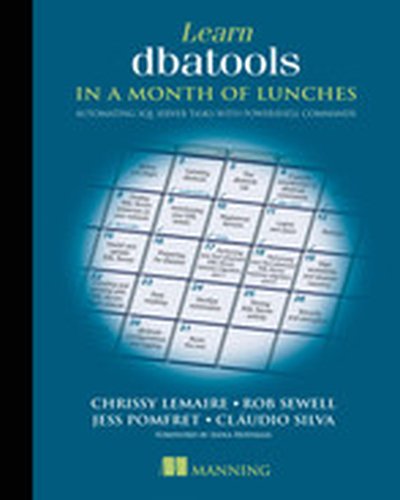
Learn dbatools in a Month of Lunches

If you work with SQL Server, dbatools is a lifesaver. This book will show you how to use this free and open source PowerShell module to automate just about every SQL server task you can imagine—all in just one month! In Learn dbatools in a Month of Lunches you will learn how to: Perform instance-to-instance and customized migrations Automate security audits, tempdb configuration, alerting, and reporting Schedule and monitor PowerShell tasks in SQL Server Agent Bulk-import any type of data into SQL Server Install dbatools in secure environments Written by a group of expert authors including dbatools creator Chrissy LeMaire, Learn dbatools in a Month of Lunches teaches you techniques that will make you more effective—and efficient—than you ever thought possible. In twenty-eight lunchbreak lessons, you’ll learn the most important use cases of dbatools and the favorite functions of its core developers. Stabilize and standardize your SQL server environment, and simplify your tasks by building automation, alerting, and reporting with this powerful tool. About the Technology For SQL Server DBAs, automation is the key to efficiency. Using the open-source dbatools PowerShell module, you can easily execute tasks on thousands of database servers at once—all from the command line. dbatools gives you over 500 pre-built commands, with countless new options for managing SQL Server at scale. There’s nothing else like it. About the Book Learn dbatools in a Month of Lunches teaches you how to automate SQL Server using the dbatools PowerShell module. Each 30-minute lesson introduces a new automation that will make your daily duties easier. Following the expert advice of dbatools creator Chrissy LeMaire and other top community contributors, you’ll learn to script everything from backups to disaster recovery. What's Inside Performing instance-to-instance and customized migrations Automating security audits, best practices, and standardized configurations Administering SQL Server Agent including running PowerShell scripts effectively Bulk-importing many types of data into SQL Server Executing advanced tasks and increasing efficiency for everyday administration About the Reader For DBAs, accidental DBAs, and systems engineers who manage SQL Server. About the Authors Chrissy LeMaire is a GitHub Star and the creator of dbatools. Rob Sewell is a data engineer and a passionate automator. Jess Pomfret and Cláudio Silva are data platform architects. All are Microsoft MVPs. Quotes All SQL Server professionals should learn dbatools. With its combination of knowledge transfer, anecdotes, and hands-on labs, this book is the perfect way. - From the Foreword by Anna Hoffman, Databases Product Management, Microsoft Excellent guide for dbatools with lots of practical tips! Required reading for anyone interested in dbatools. - Ruben Vandeginste, PeopleWare A must-have for any SQL server developer. - Raushan Kumar Jha, Microsoft If you want to automate all vital aspects of SQL Server, wait no more! Learn dbatools in a month, with guidance from the best minds in the business. - Ranjit Sahai, RAM Consulting

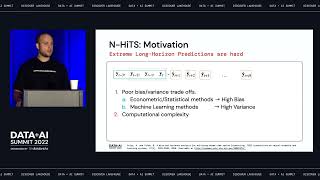
Nixtla: Deep Learning for Time Series Forecasting

Time series forecasting has a wide range of applications: finance, retail, healthcare, IoT, etc. Recently deep learning models such as ESRNN or N-BEATS have proven to have state-of-the-art performance in these tasks. Nixtlats is a python library that we have developed to facilitate the use of these state-of-the-art models to data scientists and developers, so that they can use them in productive environments. Written in pytorch, its design is focused on usability and reproducibility of experiments. For this purpose, nixtlats has several modules:

Data: contains datasets of various time series competencies. Models: includes state-of-the-art models. Evaluation: has various loss functions and evaluation metrics.

Objective:

  • To introduce attendees to the challenges of time series forecasting with deep learning.
  • Commercial applications of time series forecasting.
  • Describe nixtlats, their components and best practices for training and deploying state-of-the-art models in production.
  • Reproduction of state-of-the-art results using nixtlats from the winning model of the M4 time series competition (ESRNN).

Project repository: https://github.com/Nixtla/nixtlats.

Connect with us: Website: https://databricks.com Facebook: https://www.facebook.com/databricksinc Twitter: https://twitter.com/databricks LinkedIn: https://www.linkedin.com/company/data... Instagram: https://www.instagram.com/databricksinc/

Search and Aggregations Made Easy with OpenSearch and NodeJS

In this session the audience will get both theoretical and practical knowledge on what OpenSearch is and how they can work with it by using its NodeJS client. This is a hands-on session where the audience is invited to follow along.

There will be an accompanying GitHub repository to allow the audience to follow me during or after the lecture.

During the session we will: - Overview on OpenSearch architecture. - Set up the cluster and prepare NodeJS project. - Load sample data (we'll use a dataset with 20k recipes). - Explore different types of search queries: term-level, full-text and boolean. - Explore different types of aggregations: metric, bucket, pipeline. - Visualisations with the help of OpenSearch Dashboards.

Connect with us: Website: https://databricks.com Facebook: https://www.facebook.com/databricksinc Twitter: https://twitter.com/databricks LinkedIn: https://www.linkedin.com/company/data... Instagram: https://www.instagram.com/databricksinc/

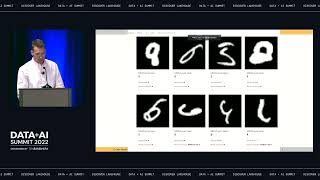
Cleanlab: AI to Find and Fix Errors in ML Datasets

Real-world datasets have a large fraction of errors, which negatively impacts model quality and benchmarking. This talk presents Cleanlab, an open-source tool that addresses these issues using the latest research in data-centric AI. Cleanlab has been used to improve datasets at a number of Fortune 500 companies.

Ontological issues, invalid data points, and label errors are pervasive in datasets. Even gold-standard ML datasets have on average 3.3% label errors (labelerrors.com). Data errors degrade model quality, and errors lead to incorrect conclusions about model performance and suboptimal models being deployed.

We present the cleanlab open-source package (github.com/cleanlab/cleanlab) for finding and fixing data errors. We will walk through using Cleanlab to fix errors in a real-world dataset, with an end-to-end demo of how Cleanlab improves data and model performance.

Finally, we will show Cleanlab Studio, which provides a web interface for human-in-the-loop data quality control.

Connect with us: Website: https://databricks.com Facebook: https://www.facebook.com/databricksinc Twitter: https://twitter.com/databricks LinkedIn: https://www.linkedin.com/company/data... Instagram: https://www.instagram.com/databricksinc/

The Semantics of Biology—Vaccine and Drug Research with Knowledge Graphs and Logical Inferencing

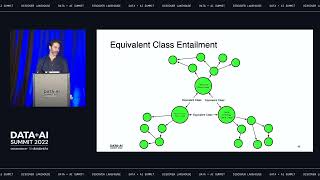
From the organization of the tree of life, to the tissues and structures of living organisms: trees and graphs are a recurring data structure in biology. Given the tree-like relationships between biological entities, Knowledge Graphs are emerging as the ideal way to store and retrieve biological data.

In our first Data + AI talk (https://www.youtube.com/watch?v=Kj5bZ2afWSU), we presented the Bellman open source library (https://github.com/gsk-aiops/bellman). Bellman was developed to translate SPARQL queries into Apache Spark Dataset operations so that scientists can submit graph queries in familiar environments like Jupyter and Databricks notebooks.

In this talk, we present the new logical inferencing capabilities we've built into the Bellman OSS library. We will demonstrate how connections between biological entities that are not explicitly connected in the data are deduced from ontologies. These inferred connections are returned to the scientist to aid in the discovery of new connections with the intent on accelerating gene to disease research. To demonstrate these capabilities, we will take a deep dive into the "subclassOf" logical entailment to retrieve all subclasses of a biological entity. The performance characteristics of inference algorithms like forward and backward chaining will also be compared.

Connect with us: Website: https://databricks.com Facebook: https://www.facebook.com/databricksinc Twitter: https://twitter.com/databricks LinkedIn: https://www.linkedin.com/company/data... Instagram: https://www.instagram.com/databricksinc/

Polars: Blazingly Fast DataFrames in Rust and Python

This talk will introduce Polars a blazingly fast DataFrame library written in Rust on top of Apache Arrow. Its a DataFrame library that brings exploratory data analysis closer to the lessons learned in database research.

CPU's today's come with many cores and with their superscalar designs and SIMD registers allow for even more parallelism. Polars is written from the ground up to fully utilize the CPU's of this generation.

Besides blazingly fast algorithms, cache efficient memory layout and multi-threading, it consist of a lazy query engine, allowing Polars to do several optimizations that may improve query time and memory usage.

Read more:

https://github.com/pola-rs/polars https://www.ritchievink.com/blog/2021/02/28/i-wrote-one-of-the-fastest-dataframe-libraries/

Join the talk to learn more.

Connect with us: Website: https://databricks.com Facebook: https://www.facebook.com/databricksinc Twitter: https://twitter.com/databricks LinkedIn: https://www.linkedin.com/company/data... Instagram: https://www.instagram.com/databricksinc/

We talked about: 

Will’s background Will’s open source projects S3Fs and PyFile systems Inspiration for open source projects Will as a freelancer Starting a company from a tweet (Rich and Textual) Building in public (Will’s approach to social media) The workforce and roadmap of Textualize.io The importance of working on open source for Textualize employees The workflow of and contributions to Textualize Getting your first thousand GitHub Stars (going viral) Suggestions for those who wish to start in the open-source space Finding Will online

Links: 

Twitter: https://twitter.com/willmcgugan Textualize website: https://www.textualize.io/ Textualize GitHub: https://github.com/textualize

MLOps Zoomcamp: https://github.com/DataTalksClub/mlops-zoomcamp

Join DataTalks.Club: https://datatalks.club/slack.html

Our events: https://datatalks.club/events.html

We talked about:

Lisa’s background Centralized org vs decentralized org Hybrid org (centralized/decentralized) Reporting your results in a data organization Planning in a data organization Having all the moving parts work towards the same goals Which approach Twitter follows (centralized vs decentralized) Pros and cons of a decentralized approach Pros and cons of a centralized approach Finding a common language with all the functions of an org Finding the right approach for companies that want to implement data science How many data scientists does a company need? Who do data scientists report huge findings to? The importance of partnering closely with other functions of the org The role of Product Managers in the org and across functions Who does analytics at Twitter (analysts vs data scientists) The importance of goals, objectives and key results Conflicting objectives The importance of research Finding Lisa online

Links:

LinkedIn: https://www.linkedin.com/in/cohenlisa/ Twitter: https://twitter.com/lisafeig Medium: https://medium.com/@lisa_cohen Lisa Cohen's YouTube videos: https://www.youtube.com/playlist?list=PLRhmnnfr2bX7-GAPHzvfUeIEt2iYCbI3w

MLOps Zoomcamp: https://github.com/DataTalksClub/mlops-zoomcamp

Join DataTalks.Club: https://datatalks.club/slack.html

Our events: https://datatalks.club/events.html

We talked about:

Merve’s background Merve’s first contributions to open source What Merve currently does at Hugging Face (Hub, Spaces) What is means to be a developer advocacy engineer at Hugging Face The best way to get open source experience (Google Summer of Code, Hacktoberfest, and sprints) The peculiarities of hiring as it relates to code contributions Best resources to learn about NLP besides Hugging Face Good first projects for NLP The most important topics in NLP right now NLP ML Engineer vs NLP Data Scientist Project recommendations and other advice to catch the eye of recruiters Merve on Twitch and her podcast Finding Merve online Merve and Mario Kart

Links:

Hugging Face Course: https://hf.co/course Natural Language Processing in TensorFlow: https://www.coursera.org/learn/natural-language-processing-tensorflow Github ML Poetry: https://github.com/merveenoyan/ML-poetry Tackling multiple tasks with a single visual language model: https://www.deepmind.com/blog/tackling-multiple-tasks-with-a-single-visual-language-model Hugging Face big science/TOpp: https://huggingface.co/bigscience/T0pp Pathways Language Model (PaLM) blog: https://ai.googleblog.com/2022/04/pathways-language-model-palm-scaling-to.html

MLOps Zoomcamp: https://github.com/DataTalksClub/mlops-zoomcamp

Join DataTalks.Club: https://datatalks.club/slack.html

Our events: https://datatalks.club/events.html

The use of version control and continuous deployment in a data pipeline is one of the biggest features unlocked by the modern data stack. In this talk, I’ll demonstrate how to use Airbyte to pull data into your data warehouse, dbt to generate insights from your data, and Airflow to orchestrate every step of the pipeline. The complete project will be managed by version control and continuously deployed by Github. This talk will share how to achieve a more secure, scalable, and manageable workflow for your data projects.

We talked about:

Misra’s background What data scientists do Consultant data scientists vs in-house data scientists (and freelancers) Expectations for data scientists The importance of keeping up to date with AI developments (FOMA) How does DALL·E 2 work and should you care? Going to conferences to stay up to date The most pressing issue for data scientists Fighting FOMA and imposter syndrome Knowing when you have enough knowledge of a framework The “best” type of data scientist Being a generalist vs a specialist Advice for entry-level data entering an oversaturated market Catching the eye of big AI companies Choosing a project for your portfolio The importance of having a Ph.D. or Master’s degree in data science Finding Misra online

Links:

Mısra's YouTube channel: https://www.youtube.com/channel/UCpNUYWW0kiqyh0j5Qy3aU7w Twitter: https://twitter.com/misraturp Hands-on Data Science: Complete Your First Portfolio Project: https://www.soyouwanttobeadatascientist.com/hods 

MLOps Zoomcamp: https://github.com/DataTalksClub/mlops-zoomcamp

Join DataTalks.Club: https://datatalks.club/slack.html

Our events: https://datatalks.club/events.htm

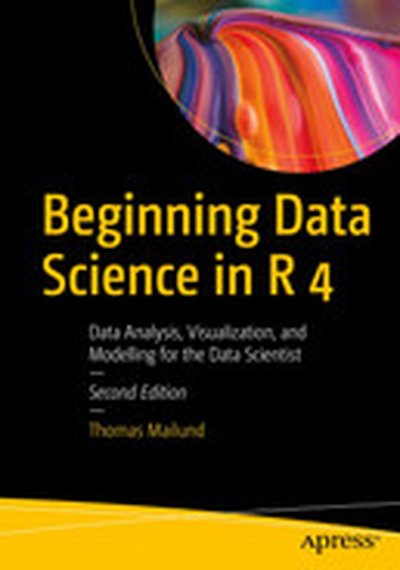
Beginning Data Science in R 4: Data Analysis, Visualization, and Modelling for the Data Scientist

Discover best practices for data analysis and software development in R and start on the path to becoming a fully-fledged data scientist. Updated for the R 4.0 release, this book teaches you techniques for both data manipulation and visualization and shows you the best way for developing new software packages for R. Beginning Data Science in R 4, Second Edition details how data science is a combination of statistics, computational science, and machine learning. You’ll see how to efficiently structure and mine data to extract useful patterns and build mathematical models. This requires computational methods and programming, and R is an ideal programming language for this. Modern data analysis requires computational skills and usually a minimum of programming. After reading and using this book, you'll have what you need to get started with R programming with data science applications. Source code will be available to support your next projects as well. Source code is available at github.com/Apress/beg-data-science-r4. What You Will Learn Perform data science and analytics using statistics and the R programming language Visualize and explore data, including working with large data sets found in big data Build an R package Test and check your code Practice version control Profile and optimize your code Who This Book Is For Those with some data science or analytics background, but not necessarily experience with the R programming language.

We talked about:

Adrian’s background Freelancing vs Employment Risk and occupancy rate in freelancing The scariest part of freelancing Adrian’s first projects Freelancing 5 years later Pay rates in freelancing Acquiring skills while freelancing Working with recruitment agencies and networking Looking for projects and getting clients Freelancing vs consulting Clarity in clients’ expectations (scope of work) Building your network Freelancing platforms Adrian’s data loading prototype Going from freelancing to making your own product (and other investments) The usefulness of a portfolio Introverts in freelancing Is it possible to work for 3 months a year in freelancing? Choosing projects and skill-building strategy (focusing on interests) Freelancing in Berlin Clients’ expectations for freelancers vs employees Working with more than one client at the same time Adrian’s freelance cooperative on Slack Other advice for novice freelancers (networking) Finding Adrian online

Links:

Github: https://github.com/scale-vector Slack Community: https://join.slack.com/t/berlindatacol-szn7050/shared_invite/zt-19dp8msp0-pP4Av3_fVFBbsdrzPROEAg

MLOps Zoomcamp: https://github.com/DataTalksClub/mlops-zoomcamp

Join DataTalks.Club: https://datatalks.club/slack.html

Our events: https://datatalks.club/events.html

We talked about:

Summary of “Getting a Data Engineering Job” webinar Python and engineering skills  Interview process Behavioral interviews Technical interviews Learning Python and SQL from scratch Is having non-coding experience a disadvantage? Analyst or engineer? Do you need certificates? Do I need a master’s degree? Fully remote data engineering jobs Should I include teaching on my resume? Object-oriented programming for data engineering Python vs Java/Scala SQL and Python technical interview questions GCP certificates Is commercial experience really necessary? From sales to engineering Solution engineers Wrapping up

Links:

Getting a Data Engineering Job (webinar): https://www.youtube.com/watch?v=yvEWG-S1F_M The Flask Mega-Tutorial Part I - Hello, World! blog: https://blog.miguelgrinberg.com/post/the-flask-mega-tutorial-part-i-hello-world Mode SQL Tutorial: https://mode.com/sql-tutorial/

MLOps Zoomcamp: https://github.com/DataTalksClub/mlops-zoomcamp

Join DataTalks.Club: https://datatalks.club/slack.html

Our events: https://datatalks.club/events.html

We talked about:

Daynan’s background Astronomy vs cosmology Applications of data science and machine learning in astronomy Determining signal vs noise What the data looks like in astronomy Determining the features of an object in space Ground truth for space objects Why water is an important resource in the space economy Other useful resources that can be found in asteroids Sources of asteroids The data team at an asteroid mining company Open datasets for hobbyists Mission and hardware design for asteroid mining Partnerships and hires

Links: 

LinkedIn: https://www.linkedin.com/in/daynan/ We're looking for a Sr Data Engineer: https://boards.eu.greenhouse.io/karmanplus/jobs/4027128101?gh_jid=4027128101 Minor Planet Center: https://minorplanetcenter.net/- JPL Horizons has a nice set of APIs for accessing data related to small bodies (including asteroids): https://ssd.jpl.nasa.gov/api.html ESA has NEODyS: https://newton.spacedys.com/neodys   IRSA catalog that contains image and catalog data related to the WISE/NEOWISE data (and other infrared platforms): https://irsa.ipac.caltech.edu/frontpage/ NASA also has an archive of data collected from their various missions, including a node related to small bodies: https://pds-smallbodies.astro.umd.edu/ Sub-node directly related to asteroids: https://sbn.psi.edu/pds/ Size, Mass, and Density of Asteroids (SiMDA) is a nice catalog of observed asteroid attributes (and an indication of how small our sample size is!): https://astro.kretlow.de/?SiMDA The source survey data, several are useful for asteroids: Pan-STARRS (https://outerspace.stsci.edu/display/PANSTARRS)

MLOps Zoomcamp: https://github.com/DataTalksClub/mlops-zoomcamp

Join DataTalks.Club: https://datatalks.club/slack.html

Our events: https://datatalks.club/events.html

Summary A large fraction of data engineering work involves moving data from one storage location to another in order to support different access and query patterns. Singlestore aims to cut down on the number of database engines that you need to run so that you can reduce the amount of copying that is required. By supporting fast, in-memory row-based queries and columnar on-disk representation, it lets your transactional and analytical workloads run in the same database. In this episode SVP of engineering Shireesh Thota describes the impact on your overall system architecture that Singlestore can have and the benefits of using a cloud-native database engine for your next application.

Announcements

Hello and welcome to the Data Engineering Podcast, the show about modern data management When you’re ready to build your next pipeline, or want to test out the projects you hear about on the show, you’ll need somewhere to deploy it, so check out our friends at Linode. With their managed Kubernetes platform it’s now even easier to deploy and scale your workflows, or try out the latest Helm charts from tools like Pulsar and Pachyderm. With simple pricing, fast networking, object storage, and worldwide data centers, you’ve got everything you need to run a bulletproof data platform. Go to dataengineeringpodcast.com/linode today and get a $100 credit to try out a Kubernetes cluster of your own. And don’t forget to thank them for their continued support of this show! Atlan is a collaborative workspace for data-driven teams, like Github for engineering or Figma for design teams. By acting as a virtual hub for data assets ranging from tables and dashboards to SQL snippets & code, Atlan enables teams to create a single source of truth for all their data assets, and collaborate across the modern data stack through deep integrations with tools like Snowflake, Slack, Looker and more. Go to dataengineeringpodcast.com/atlan today and sign up for a free trial. If you’re a data engineering podcast listener, you get credits worth $3000 on an annual subscription So now your modern data stack is set up. How is everyone going to find the data they need, and understand it? Select Star is a data discovery platform that automatically analyzes & documents your data. For every table in Select Star, you can find out where the data originated, which dashboards are built on top of it, who’s using it in the company, and how they’re using it, all the way down to the SQL queries. Best of all, it’s simple to set up, and easy for both engineering and operations teams to use. With Select Star’s data catalog, a single source of truth for your data is built in minutes, even across thousands of datasets. Try it out for free and double the length of your free trial today at dataengineeringpodcast.com/selectstar. You’ll also get a swag package when you continue on a paid plan. Data teams are increasingly under pressure to deliver. According to a recent survey by Ascend.io, 95% in fact reported being at or over capacity. With 72% of data experts reporting demands on their team going up faster than they can hire, it’s no surprise they are increasingly turning to automation. In fact, while only 3.5% report having current investments in automation, 85% of data teams plan on investing in automation in the next 12 months. 85%!!! That’s where our friends at Ascend.io come in. The Ascend Data Automation Cloud provides a unified platform for data ingestion, transformation, orchestration, and observability. Ascend users love its declarative pipelines, powerful SDK, elegant UI, and extensible plug-in architecture, as well as its support for Python, SQL, Scala, and Java. Ascend automates workloads on Snowflake, Databricks, BigQuery, and open source Spark, and can be deployed in AWS, Azure, or GCP. Go to dataengineeringpodcast.com/ascend and sign up for a free trial. If you’re a data engineering podcast listener, you get credits worth $5,000 when you becom

We talked about:

Juan’s background Typical problems in marketing that are solved with ML Attribution model Media Mix Model – detecting uplift and channel saturation Changes to privacy regulations and its effect on user tracking User retention and churn prevention A/B testing to detect uplift Statistical approach vs machine learning (setting a benchmark) Does retraining MMM models often improve efficiency? Attribution model baselines Choosing a decay rate for channels (Bayesian linear regression) Learning resource suggestions Bayesian approach vs Frequentist approach Suggestions for creating a marketing department Most challenging problems in marketing The importance of knowing marketing domain knowledge for data scientists Juan’s blog and other learning resources Finding Juan online

Links: 

Juan's PyData talk on uplift modeling: https://youtube.com/watch?v=VWjsi-5yc3w Juan's website: https://juanitorduz.github.io Introduction to Algorithmic Marketing book: https://algorithmic-marketing.online Preventing churn like a bandit: https://www.youtube.com/watch?v=n1uqeBNUlRM

MLOps Zoomcamp: https://github.com/DataTalksClub/mlops-zoomcamp

Join DataTalks.Club: https://datatalks.club/slack.html

Our events: https://datatalks.club/events.html