talk-data.com talk-data.com

Topic

Pandas

data_manipulation data_analysis python

187

tagged

Activity Trend

17 peak/qtr
2020-Q1 2026-Q1

Activities

187 activities · Newest first

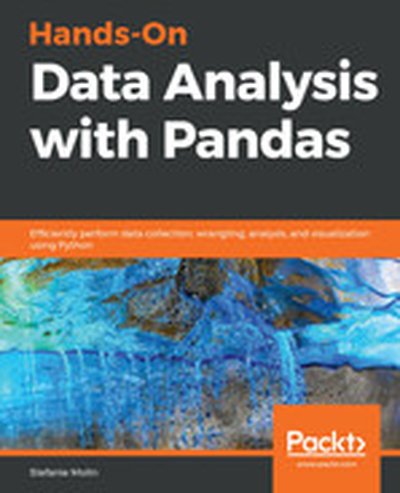
Hands-On Data Analysis with Pandas

Hands-On Data Analysis with Pandas provides an intensive dive into mastering the pandas library for data science and analysis using Python. Through a combination of conceptual explanations and practical demonstrations, readers will learn how to manipulate, visualize, and analyze data efficiently. What this Book will help me do Understand and apply the pandas library for efficient data manipulation. Learn to perform data wrangling tasks such as cleaning and reshaping datasets. Create effective visualizations using pandas and libraries like matplotlib and seaborn. Grasp the basics of machine learning and implement solutions with scikit-learn. Develop reusable data analysis scripts and modules in Python. Author(s) Stefanie Molin is a seasoned data scientist and software engineer with extensive experience in Python and data analytics. She specializes in leveraging the latest data science techniques to solve real-world problems. Her engaging and detailed writing draws from her practical expertise, aiming to make complex concepts accessible to all. Who is it for? This book is ideal for data analysts and aspiring data scientists who are at the beginning stages of their careers or looking to enhance their toolset with pandas and Python. It caters to Python developers eager to delve into data analysis workflows. Readers should have some programming knowledge to fully benefit from the examples and exercises.

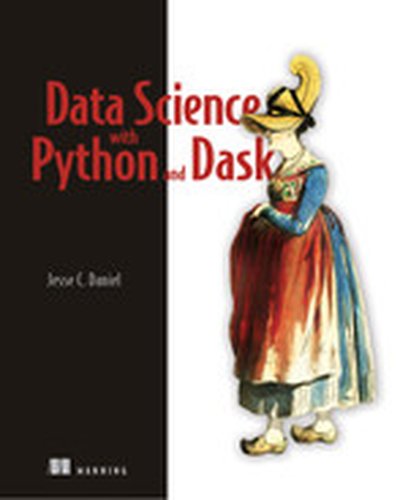
Data Science with Python and Dask

Dask is a native parallel analytics tool designed to integrate seamlessly with the libraries you’re already using, including Pandas, NumPy, and Scikit-Learn. With Dask you can crunch and work with huge datasets, using the tools you already have. And Data Science with Python and Dask is your guide to using Dask for your data projects without changing the way you work! About the Technology An efficient data pipeline means everything for the success of a data science project. Dask is a flexible library for parallel computing in Python that makes it easy to build intuitive workflows for ingesting and analyzing large, distributed datasets. Dask provides dynamic task scheduling and parallel collections that extend the functionality of NumPy, Pandas, and Scikit-learn, enabling users to scale their code from a single laptop to a cluster of hundreds of machines with ease. About the Book Data Science with Python and Dask teaches you to build scalable projects that can handle massive datasets. After meeting the Dask framework, you’ll analyze data in the NYC Parking Ticket database and use DataFrames to streamline your process. Then, you’ll create machine learning models using Dask-ML, build interactive visualizations, and build clusters using AWS and Docker. What's Inside Working with large, structured and unstructured datasets Visualization with Seaborn and Datashader Implementing your own algorithms Building distributed apps with Dask Distributed Packaging and deploying Dask apps About the Reader For data scientists and developers with experience using Python and the PyData stack. About the Author Jesse Daniel is an experienced Python developer. He taught Python for Data Science at the University of Denver and leads a team of data scientists at a Denver-based media technology company. We interviewed Jesse as a part of our Six Questions series. Check it out here. Quotes The most comprehensive coverage of Dask to date, with real-world examples that made a difference in my daily work. - Al Krinker, United States Patent and Trademark Office An excellent alternative to PySpark for those who are not on a cloud platform. The author introduces Dask in a way that speaks directly to an analyst. - Jeremy Loscheider, Panera Bread A greatly paced introduction to Dask with real-world datasets. - George Thomas, R&D Architecture Manhattan Associates The ultimate resource to quickly get up and running with Dask and parallel processing in Python. - Gustavo Patino, Oakland University William Beaumont School of Medicine

Data Science Projects with Python

Data Science Projects with Python introduces you to data science and machine learning using Python through practical examples. In this book, you'll learn to analyze, visualize, and model data, applying techniques like logistic regression and random forests. With a case-study method, you'll build confidence implementing insights in real-world scenarios. What this Book will help me do Set up a data science environment with necessary Python libraries such as pandas and scikit-learn. Effectively visualize data insights through Matplotlib and summary statistics. Apply machine learning models including logistic regression and random forests to solve data problems. Identify optimal models through evaluation metrics like k-fold cross-validation. Develop confidence in data preparation and modeling techniques for real-world data challenges. Author(s) Stephen Klosterman is a seasoned data scientist with a keen interest in practical applications of machine learning. He combines a strong academic foundation with real-world experience to craft relatable content. Stephen excels in breaking down complex topics into approachable lessons, helping learners grow their data science expertise step by step. Who is it for? This book is ideal for data analysts, scientists, and business professionals looking to enhance their skills in Python and data science. If you have some experience in Python and a foundational understanding of algebra and statistics, you'll find this book approachable. It offers an excellent gateway to mastering advanced data analysis techniques. Whether you're seeking to explore machine learning or apply data insights, this book supports your growth.

Data Science for Marketing Analytics

Data Science for Marketing Analytics introduces you to leveraging state-of-the-art data science techniques to optimize marketing outcomes. You'll learn how to manipulate and analyze data using Python, create customer segments, and apply machine learning algorithms to predict customer behavior. This book provides a comprehensive, hands-on approach to marketing analytics. What this Book will help me do Learn to use Python libraries like pandas & Matplotlib for data analysis. Understand clustering techniques to create meaningful customer segments. Implement linear regression for predicting customer lifetime value. Explore classification algorithms to model customer preferences. Develop skills to build interactive dashboards for marketing reports. Author(s) None Blanchard, Nona Behera, and Pranshu Bhatnagar are experienced professionals in data science and marketing analytics, with extensive backgrounds in applying machine learning to real-world business applications. They bring a wealth of knowledge and an approachable teaching style to this book, focusing on practical, industry-relevant applications for learners. Who is it for? This book is for developers and marketing professionals looking to advance their analytics skills. It is ideal for individuals with a basic understanding of Python and mathematics who want to explore predictive modeling and segmentation strategies. Readers should have a curiosity for data-driven problem-solving in marketing contexts to benefit most from the content.

Summary Machine learning is a class of technologies that promise to revolutionize business. Unfortunately, it can be difficult to identify and execute on ways that it can be used in large companies. Kevin Dewalt founded Prolego to help Fortune 500 companies build, launch, and maintain their first machine learning projects so that they can remain competitive in our landscape of constant change. In this episode he discusses why machine learning projects require a new set of capabilities, how to build a team from internal and external candidates, and how an example project progressed through each phase of maturity. This was a great conversation for anyone who wants to understand the benefits and tradeoffs of machine learning for their own projects and how to put it into practice.

Introduction

Hello and welcome to the Data Engineering Podcast, the show about modern data management When you’re ready to build your next pipeline, or want to test out the projects you hear about on the show, you’ll need somewhere to deploy it, so check out Linode. With 200Gbit private networking, scalable shared block storage, and a 40Gbit public network, you’ve got everything you need to run a fast, reliable, and bullet-proof data platform. If you need global distribution, they’ve got that covered too with world-wide datacenters including new ones in Toronto and Mumbai. Go to dataengineeringpodcast.com/linode today to get a $20 credit and launch a new server in under a minute. Go to dataengineeringpodcast.com to subscribe to the show, sign up for the mailing list, read the show notes, and get in touch. To help other people find the show please leave a review on iTunes, or Google Play Music, tell your friends and co-workers, and share it on social media. Join the community in the new Zulip chat workspace at dataengineeringpodcast.com/chat Your host is Tobias Macey and today I’m interviewing Kevin Dewalt about his experiences at Prolego, building machine learning projects for Fortune 500 companies

Interview

Introduction How did you get involved in the area of data management? For the benefit of software engineers and team leaders who are new to machine learning, can you briefly describe what machine learning is and why is it relevant to them? What is your primary mission at Prolego and how did you identify, execute on, and establish a presence in your particular market?

How much of your sales process is spent on educating your clients about what AI or ML are and the benefits that these technologies can provide?

What have you found to be the technical skills and capacity necessary for being successful in building and deploying a machine learning project?

When engaging with a client, what have you found to be the most common areas of technical capacity or knowledge that are needed?

Everyone talks about a talent shortage in machine learning. Can you suggest a recruiting or skills development process for companies which need to build out their data engineering practice? What challenges will teams typically encounter when creating an efficient working relationship between data scientists and data engineers? Can you briefly describe a successful project of developing a first ML model and putting it into production?

What is the breakdown of how much time was spent on different activities such as data wrangling, model development, and data engineering pipeline development? When releasing to production, can you share the types of metrics that you track to ensure the health and proper functioning of the models? What does a deployable artifact for a machine learning/deep learning application look like?

What basic technology stack is necessary for putting the first ML models into production?

How does the build vs. buy debate break down in this space and what products do you typically recommend to your clients?

What are the major risks associated with deploying ML models and how can a team mitigate them? Suppose a software engineer wants to break into ML. What data engineering skills would you suggest they learn? How should they position themselves for the right opportunity?

Contact Info

Email: Kevin Dewalt [email protected] and Russ Rands [email protected] Connect on LinkedIn: Kevin Dewalt and Russ Rands Twitter: @kevindewalt

Parting Question

From your perspective, what is the biggest gap in the tooling or technology for data management today?

Links

Prolego Download our book: Become an AI Company in 90 Days Google Rules Of ML AI Winter Machine Learning Supervised Learning O’Reilly Strata Conference GE Rebranding Commercials Jez Humble: Stop Hiring Devops Experts (And Start Growing Them) SQL ORM Django RoR Tensorflow PyTorch Keras Data Engineering Podcast Episode About Data Teams DevOps For Data Teams – DevOps Days Boston Presentation by Tobias Jupyter Notebook Data Engineering Podcast: Notebooks at Netflix Pandas

Podcast Interview

Joel Grus

JupyterCon Presentation Data Science From Scratch

Expensify Airflow

James Meickle Interview

Git Jenkins Continuous Integration Practical Deep Learning For Coders Course by Jeremy Howard Data Carpentry

The intro and outro music is from The Hug by The Freak Fandango Orchestra / CC BY-SA

Support Data Engineering Podcast

Numerical Python: Scientific Computing and Data Science Applications with Numpy, SciPy and Matplotlib

Leverage the numerical and mathematical modules in Python and its standard library as well as popular open source numerical Python packages like NumPy, SciPy, FiPy, matplotlib and more. This fully revised edition, updated with the latest details of each package and changes to Jupyter projects, demonstrates how to numerically compute solutions and mathematically model applications in big data, cloud computing, financial engineering, business management and more. Numerical Python, Second Edition, presents many brand-new case study examples of applications in data science and statistics using Python, along with extensions to many previous examples. Each of these demonstrates the power of Python for rapid development and exploratory computing due to its simple and high-level syntax and multiple options for data analysis. After reading this book, readers will be familiar with many computing techniques including array-based and symbolic computing, visualization and numerical file I/O, equation solving, optimization, interpolation and integration, and domain-specific computational problems, such as differential equation solving, data analysis, statistical modeling and machine learning. What You'll Learn Work with vectors and matrices using NumPy Plot and visualize data with Matplotlib Perform data analysis tasks with Pandas and SciPy Review statistical modeling and machine learning with statsmodels and scikit-learn Optimize Python code using Numba and Cython Who This Book Is For Developers who want to understand how to use Python and its related ecosystem for numerical computing.

Summary

A data lake can be a highly valuable resource, as long as it is well built and well managed. Unfortunately, that can be a complex and time-consuming effort, requiring specialized knowledge and diverting resources from your primary business. In this episode Yoni Iny, CTO of Upsolver, discusses the various components that are necessary for a successful data lake project, how the Upsolver platform is architected, and how modern data lakes can benefit your organization.

Preamble

Hello and welcome to the Data Engineering Podcast, the show about modern data management When you’re ready to build your next pipeline you’ll need somewhere to deploy it, so check out Linode. With private networking, shared block storage, node balancers, and a 40Gbit network, all controlled by a brand new API you’ve got everything you need to run a bullet-proof data platform. Go to dataengineeringpodcast.com/linode to get a $20 credit and launch a new server in under a minute. Go to dataengineeringpodcast.com to subscribe to the show, sign up for the mailing list, read the show notes, and get in touch. Join the community in the new Zulip chat workspace at dataengineeringpodcast.com/chat Your host is Tobias Macey and today I’m interviewing Yoni Iny about Upsolver, a data lake platform that lets developers integrate and analyze streaming data with ease

Interview

Introduction How did you get involved in the area of data management? Can you start by describing what Upsolver is and how it got started?

What are your goals for the platform?

There are a lot of opinions on both sides of the data lake argument. When is it the right choice for a data platform?

What are the shortcomings of a data lake architecture?

How is Upsolver architected?

How has that architecture changed over time? How do you manage schema validation for incoming data? What would you do differently if you were to start over today?

What are the biggest challenges at each of the major stages of the data lake? What is the workflow for a user of Upsolver and how does it compare to a self-managed data lake? When is Upsolver the wrong choice for an organization considering implementation of a data platform? Is there a particular scale or level of data maturity for an organization at which they would be better served by moving management of their data lake in house? What features or improvements do you have planned for the future of Upsolver?

Contact Info

Yoni

yoniiny on GitHub LinkedIn

Upsolver

Website @upsolver on Twitter LinkedIn Facebook

Parting Question

From your perspective, what is the biggest gap in the tooling or technology for data management today?

Links

Upsolver Data Lake Israeli Army Data Warehouse Data Engineering Podcast Episode About Data Curation Three Vs Kafka Spark Presto Drill Spot Instances Object Storage Cassandra Redis Latency Avro Parquet ORC Data Engineering Podcast Episode About Data Serialization Formats SSTables Run Length Encoding CSV (Comma Separated Values) Protocol Buffers Kinesis ETL DevOps Prometheus Cloudwatch DataDog InfluxDB SQL Pandas Confluent KSQL

The intro and outro music is from The Hug by The Freak Fandango Orchestra / CC BY-SA Support Data Engineering Podcast
Summary

As data science becomes more widespread and has a bigger impact on the lives of people, it is important that those projects and products are built with a conscious consideration of ethics. Keeping ethical principles in mind throughout the lifecycle of a data project helps to reduce the overall effort of preventing negative outcomes from the use of the final product. Emily Miller and Peter Bull of Driven Data have created Deon to improve the communication and conversation around ethics among and between data teams. It is a Python project that generates a checklist of common concerns for data oriented projects at the various stages of the lifecycle where they should be considered. In this episode they discuss their motivation for creating the project, the challenges and benefits of maintaining such a checklist, and how you can start using it today.

Preamble

Hello and welcome to the Data Engineering Podcast, the show about modern data management When you’re ready to build your next pipeline you’ll need somewhere to deploy it, so check out Linode. With private networking, shared block storage, node balancers, and a 40Gbit network, all controlled by a brand new API you’ve got everything you need to run a bullet-proof data platform. Go to dataengineeringpodcast.com/linode to get a $20 credit and launch a new server in under a minute. Go to dataengineeringpodcast.com to subscribe to the show, sign up for the mailing list, read the show notes, and get in touch. Join the community in the new Zulip chat workspace at dataengineeringpodcast.com/chat This is your host Tobias Macey and this week I am sharing an episode from my other show, Podcast.init, about a project from Driven Data called Deon. It is a simple tool that generates a checklist of ethical considerations for the various stages of the lifecycle for data oriented projects. This is an important topic for all of the teams involved in the management and creation of projects that leverage data. So give it a listen and if you like what you hear, be sure to check out the other episodes at pythonpodcast.com

Interview

Introductions How did you get introduced to Python? Can you start by describing what Deon is and your motivation for creating it? Why a checklist, specifically? What’s the advantage of this over an oath, for example? What is unique to data science in terms of the ethical concerns, as compared to traditional software engineering? What is the typical workflow for a team that is using Deon in their projects? Deon ships with a default checklist but allows for customization. What are some common addendums that you have seen?

Have you received pushback on any of the default items?

How does Deon simplify communication around ethics across team boundaries? What are some of the most often overlooked items? What are some of the most difficult ethical concerns to comply with for a typical data science project? How has Deon helped you at Driven Data? What are the customer facing impacts of embedding a discussion of ethics in the product development process? Some of the items on the default checklist coincide with regulatory requirements. Are there any cases where regulation is in conflict with an ethical concern that you would like to see practiced? What are your hopes for the future of the Deon project?

Keep In Touch

Emily

LinkedIn ejm714 on GitHub

Peter

LinkedIn @pjbull on Twitter pjbull on GitHub

Driven Data

@drivendataorg on Twitter drivendataorg on GitHub Website

Picks

Tobias

Richard Bond Glass Art

Emily

Tandem Coffee in Portland, Maine

Peter

The Model Bakery in Saint Helena and Napa, California

Links

Deon Driven Data International Development Brookings Institution Stata Econometrics Metis Bootcamp Pandas

Podcast Episode

C# .NET Podcast.init Episode On Software Ethics Jupyter Notebook

Podcast Episode

Word2Vec cookiecutter data science Logistic Regression

The intro and outro music is

Python Data Science Essentials - Third Edition

Learn the essentials of data science with Python through this comprehensive guide. By the end of this book, you'll have an in-depth understanding of core data science workflows, tools, and techniques. What this Book will help me do Understand and apply data manipulation techniques with pandas and NumPy. Build and optimize machine learning models with scikit-learn. Analyze and visualize complex datasets for derived insights. Implement exploratory data analysis to uncover trends in data. Leverage advanced techniques like graph analysis and deep learning for sophisticated projects. Author(s) Alberto Boschetti and Luca Massaron combine their extensive expertise in data science and Python programming to guide readers effectively. With hands-on knowledge and a passion for teaching, they provide practical insights across the data science lifecycle. Who is it for? This book is ideal for aspiring data scientists, data analysts, and software developers aiming to enhance their data analysis skills. Suited for beginners familiar with Python and basic statistics, this guide bridges the gap to real-world applications. Advance your career by unlocking crucial data science expertise.

Python Data Analytics: With Pandas, NumPy, and Matplotlib

Explore the latest Python tools and techniques to help you tackle the world of data acquisition and analysis. You'll review scientific computing with NumPy, visualization with matplotlib, and machine learning with scikit-learn. This revision is fully updated with new content on social media data analysis, image analysis with OpenCV, and deep learning libraries. Each chapter includes multiple examples demonstrating how to work with each library. At its heart lies the coverage of pandas, for high-performance, easy-to-use data structures and tools for data manipulation Author Fabio Nelli expertly demonstrates using Python for data processing, management, and information retrieval. Later chapters apply what you've learned to handwriting recognition and extending graphical capabilities with the JavaScript D3 library. Whether you are dealing with sales data, investment data, medical data, web page usage, or other data sets, Python Data Analytics, Second Edition is an invaluable reference with its examples of storing, accessing, and analyzing data. What You'll Learn Understand the core concepts of data analysis and the Python ecosystem Go in depth with pandas for reading, writing, and processing data Use tools and techniques for data visualization and image analysis Examine popular deep learning libraries Keras, Theano,TensorFlow, and PyTorch Who This Book Is For Experienced Python developers who need to learn about Pythonic tools for data analysis

Hands-On Data Analysis with NumPy and pandas

Dive into 'Hands-On Data Analysis with NumPy and pandas' to explore the world of Python for data analysis. This book guides you through using these powerful Python libraries to handle and manipulate data efficiently. You will learn hands-on techniques to read, sort, group, and visualize data for impactful analysis. What this Book will help me do Learn to set up a Python environment for data analysis with tools like Jupyter notebooks. Master data handling using NumPy, focusing on array creation, slicing, and operations. Understand the functionalities of pandas for managing datasets, including DataFrame operations. Discover techniques for data preparation, such as handling missing data and hierarchical indexing. Explore data visualization using pandas and create impactful plots for data insights. Author(s) The book is authored by None Miller, a seasoned Python developer and data analyst. With a strong background in leveraging Python for data processing, None focuses on creating content that is practical and accessible. The author's teaching approach emphasizes hands-on practice and understanding, making technical topics approachable and engaging. Who is it for? This book is ideal for Python developers at a beginner to intermediate level looking to venture into data analysis. If you are transitioning from general programming to data-focused work or need to enhance your skills in data manipulation and processing, this book will be a strong foundation. It requires no prior experience with data analysis, so it is accessible to many learners.

Summary

Collaboration, distribution, and installation of software projects is largely a solved problem, but the same cannot be said of data. Every data team has a bespoke means of sharing data sets, versioning them, tracking related metadata and changes, and publishing them for use in the software systems that rely on them. The CEO and founder of Quilt Data, Kevin Moore, was sufficiently frustrated by this problem to create a platform that attempts to be the means by which data can be as collaborative and easy to work with as GitHub and your favorite programming language. In this episode he explains how the project came to be, how it works, and the many ways that you can start using it today.

Preamble

Hello and welcome to the Data Engineering Podcast, the show about modern data management When you’re ready to build your next pipeline you’ll need somewhere to deploy it, so check out Linode. With private networking, shared block storage, node balancers, and a 40Gbit network, all controlled by a brand new API you’ve got everything you need to run a bullet-proof data platform. Go to dataengineeringpodcast.com/linode to get a $20 credit and launch a new server in under a minute. Are you struggling to keep up with customer request and letting errors slip into production? Want to try some of the innovative ideas in this podcast but don’t have time? DataKitchen’s DataOps software allows your team to quickly iterate and deploy pipelines of code, models, and data sets while improving quality. Unlike a patchwork of manual operations, DataKitchen makes your team shine by providing an end to end DataOps solution with minimal programming that uses the tools you love. Join the DataOps movement and sign up for the newsletter at datakitchen.io/de today. After that learn more about why you should be doing DataOps by listening to the Head Chef in the Data Kitchen at dataengineeringpodcast.com/datakitchen Go to dataengineeringpodcast.com to subscribe to the show, sign up for the mailing list, read the show notes, and get in touch. Your host is Tobias Macey and today I’m interviewing Kevin Moore about Quilt Data, a platform and tooling for packaging, distributing, and versioning data

Interview

Introduction How did you get involved in the area of data management? What is the intended use case for Quilt and how did the project get started? Can you step through a typical workflow of someone using Quilt?

How does that change as you go from a single user to a team of data engineers and data scientists?

Can you describe the elements of what a data package consists of?

What was your criteria for the file formats that you chose?

How is Quilt architected and what have been the most significant changes or evolutions since you first started? How is the data registry implemented?

What are the limitations or edge cases that you have run into? What optimizations have you made to accelerate synchronization of the data to and from the repository?

What are the limitations in terms of data volume, format, or usage? What is your goal with the business that you have built around the project? What are your plans for the future of Quilt?

Contact Info

Email LinkedIn

Parting Question

From your perspective, what is the biggest gap in the tooling or technology for data management today?

Links

Quilt Data GitHub Jobs Reproducible Data Dependencies in Jupyter Reproducible Machine Learning with Jupyter and Quilt Allen Institute: Programmatic Data Access with Quilt Quilt Example: MissingNo Oracle Pandas Jupyter Ycombinator Data.World

Podcast Episode with CTO Bryon Jacob

Kaggle Parquet HDF5 Arrow PySpark Excel Scala Binder Merkle Tree Allen Institute for Cell Science Flask PostGreSQL Docker Airflow Quilt Teams Hive Hive Metastore PrestoDB

Podcast Episode

Netflix Iceberg Kubernetes Helm

The intro and outro music is from The Hug by The Freak Fandango Orchestra / CC BY-SA Support Data Engineering Podcast
Hands-On Data Visualization with Bokeh

Dive into the world of interactive data visualization with the Python library Bokeh. In this book, you will learn to create dynamic, engaging visualizations that communicate your data insights effectively. Starting with the basics of installation and setup, you will be guided through progressively advanced techniques to build visually appealing and interactive plots, concluding with hosting your Bokeh applications. What this Book will help me do Install and configure the Bokeh Python library for interactive data visualization projects. Create visually appealing and informative plots using Bokeh's glyph model. Leverage data structures like Pandas and NumPy to efficiently visualize data. Enhance the interactivity and functionality of plots using widgets and layouts in Bokeh. Build and deploy professional-grade data visualization applications using the Bokeh Server. Author(s) None Jolly is an experienced data visualization expert and Python programmer specializing in creating interactive and insightful visualizations. With a passion for teaching and a knack for simplifying complex concepts, they bring a practical and hands-on approach to technical education. Their work empowers professionals to effectively communicate complex data through visually intuitive designs. Who is it for? This book is intended for data professionals like analysts and scientists who seek to add interactivity to their visualizations using Python. Ideal readers will have basic Python knowledge but are new to Bokeh. It's also for anyone curious about building data visualization web applications, moving beyond static charts to impactful interactive tools, and extending their data storytelling skills.

Complex Network Analysis in Python

Construct, analyze, and visualize networks with networkx, a Python language module. Network analysis is a powerful tool you can apply to a multitude of datasets and situations. Discover how to work with all kinds of networks, including social, product, temporal, spatial, and semantic networks. Convert almost any real-world data into a complex network--such as recommendations on co-using cosmetic products, muddy hedge fund connections, and online friendships. Analyze and visualize the network, and make business decisions based on your analysis. If you're a curious Python programmer, a data scientist, or a CNA specialist interested in mechanizing mundane tasks, you'll increase your productivity exponentially. Complex network analysis used to be done by hand or with non-programmable network analysis tools, but not anymore! You can now automate and program these tasks in Python. Complex networks are collections of connected items, words, concepts, or people. By exploring their structure and individual elements, we can learn about their meaning, evolution, and resilience. Starting with simple networks, convert real-life and synthetic network graphs into networkx data structures. Look at more sophisticated networks and learn more powerful machinery to handle centrality calculation, blockmodeling, and clique and community detection. Get familiar with presentation-quality network visualization tools, both programmable and interactive--such as Gephi, a CNA explorer. Adapt the patterns from the case studies to your problems. Explore big networks with NetworKit, a high-performance networkx substitute. Each part in the book gives you an overview of a class of networks, includes a practical study of networkx functions and techniques, and concludes with case studies from various fields, including social networking, anthropology, marketing, and sports analytics. Combine your CNA and Python programming skills to become a better network analyst, a more accomplished data scientist, and a more versatile programmer. What You Need: You will need a Python 3.x installation with the following additional modules: Pandas (>=0.18), NumPy (>=1.10), matplotlib (>=1.5), networkx (>=1.11), python-louvain (>=0.5), NetworKit (>=3.6), and generalizesimilarity. We recommend using the Anaconda distribution that comes with all these modules, except for python-louvain, NetworKit, and generalizedsimilarity, and works on all major modern operating systems.

SciPy Recipes

Dive into the world of scientific computing with 'SciPy Recipes', a practical guide tailored for anyone seeking hands-on experience with the SciPy stack. With over 110 detailed recipes, you'll gain expertise in handling real-world data challenges, from statistical computations to crafting intricate visualizations and beyond. What this Book will help me do Learn to use the SciPy Stack libraries like NumPy, pandas, and matplotlib effectively for scientific computing tasks. Master data wrangling techniques using pandas for efficient data manipulation. Understand the process of creating informative visualizations using matplotlib. Perform advanced statistical and numerical computations with simplicity. Solve real-world problems like numerical analysis and linear algebra using SciPy components. Author(s) None Martins, Ruben Oliva Ramos, and V Kishore Ayyadevara bring years of experience in scientific computing and Python programming to this book. Individually, they have contributed extensively to the implementation of computational tools and systems. Together, they've crafted this book to be both accessible to learners and insightful for practitioners, blending instruction with real-world practical applications. Who is it for? This book is designed for Python developers, data scientists, and analysts eager to venture into scientific computing. If you have a basic understanding of Python and aspire to effectively manipulate and visualize data using the SciPy stack, this book is perfect for you. It's equally beneficial for those who seek practical solutions to complex computational challenges. Begin your journey into scientific computing with this essential guide.

Pandas for Everyone: Python Data Analysis, First Edition

The Hands-On, Example-Rich Introduction to Pandas Data Analysis in Python Today, analysts must manage data characterized by extraordinary variety, velocity, and volume. Using the open source Pandas library, you can use Python to rapidly automate and perform virtually any data analysis task, no matter how large or complex. Pandas can help you ensure the veracity of your data, visualize it for effective decision-making, and reliably reproduce analyses across multiple datasets. brings together practical knowledge and insight for solving real problems with Pandas, even if you’re new to Python data analysis. Daniel Y. Chen introduces key concepts through simple but practical examples, incrementally building on them to solve more difficult, real-world problems. Pandas for Everyone Chen gives you a jumpstart on using Pandas with a realistic dataset and covers combining datasets, handling missing data, and structuring datasets for easier analysis and visualization. He demonstrates powerful data cleaning techniques, from basic string manipulation to applying functions simultaneously across dataframes. Once your data is ready, Chen guides you through fitting models for prediction, clustering, inference, and exploration. He provides tips on performance and scalability, and introduces you to the wider Python data analysis ecosystem. Work with DataFrames and Series, and import or export data Create plots with matplotlib, seaborn, and pandas Combine datasets and handle missing data Reshape, tidy, and clean datasets so they’re easier to work with Convert data types and manipulate text strings Apply functions to scale data manipulations Aggregate, transform, and filter large datasets with groupby Leverage Pandas’ advanced date and time capabilities Fit linear models using statsmodels and scikit-learn libraries Use generalized linear modeling to fit models with different response variables Compare multiple models to select the “best” Regularize to overcome overfitting and improve performance Use clustering in unsupervised machine learning Register your product at informit.com/register for convenient access to downloads, updates, and/or corrections as they become available.

Practical Data Wrangling

"Practical Data Wrangling" provides a comprehensive guide to cleaning and preparing data for analysis, focusing on techniques in Python and R. As you progress through the book, you'll learn how to handle various datasets, reshape their formats, and prepare them for insights, empowering you to derive more value from your data. What this Book will help me do Understand the data wrangling process and its importance in the data analysis pipeline. Learn how to retrieve, parse, and shape raw data into structured formats. Master packages and tools in Python and R to efficiently clean and manipulate data. Gain proficiency in using regular expressions for text data preparation. Acquire skills to analyze, merge, and transform datasets to meet analytics needs. Author(s) None Visochek has years of experience working with data and analytics, with expertise in using Python and R for solving real-world data challenges. Their teaching approach emphasizes practical examples and accessible explanations, ensuring complex concepts are easy to understand. Who is it for? This book is for data scientists, analysts, or statisticians who work with real-world data and want to optimize their data preparation process. It is ideal for professionals with basic knowledge of Python and R looking to enhance their skills in data wrangling and data preparation techniques. If you're seeking to streamline your data analysis workflow through better wrangling techniques, this book is for you.

Pandas Cookbook

The Pandas Cookbook offers a collection of practical recipes for mastering data manipulation, analysis, and visualization tasks using pandas. Through a methodological and hands-on approach, you will learn to utilize pandas for handling real-world datasets efficiently. By the end of this book, you will be able to solve complex data science problems and create insightful visual representations in Python. What this Book will help me do Understand the core functionalities of pandas 0.20 for exploring datasets effectively. Master filtering, selecting, and transforming data for targeted analysis. Leverage pandas' features for aggregating and transforming grouped data. Restructure data for analysis and create professional visualizations using integration with Seaborn and Matplotlib. Gain expertise in handling time series data and SQL-like merging operations. Author(s) Theodore Petrou, the author of the Pandas Cookbook, is a data scientist and Python expert with extensive experience teaching and using pandas in professional settings. Known for his practical approach, he meticulously explains each recipe and includes comprehensive examples and datasets in Jupyter notebooks to enhance your learning experience. Who is it for? This book is aimed at data scientists, Python developers, and analysts seeking an in-depth, practical guide to mastering data analysis with pandas. Whether you're a beginner with some knowledge of Python or an experienced analyst looking to refine your skills, this cookbook provides valuable insights and techniques for your data-driven tasks.

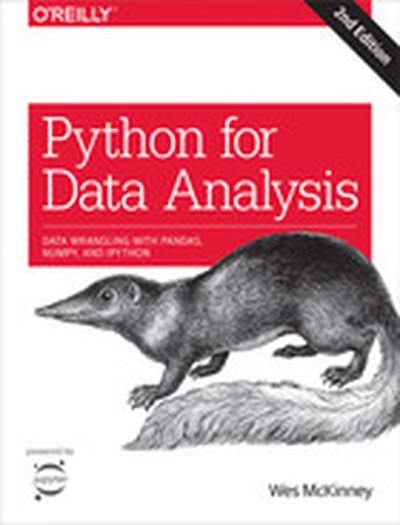
Python for Data Analysis, 2nd Edition

Get complete instructions for manipulating, processing, cleaning, and crunching datasets in Python. Updated for Python 3.6, the second edition of this hands-on guide is packed with practical case studies that show you how to solve a broad set of data analysis problems effectively. You’ll learn the latest versions of pandas, NumPy, IPython, and Jupyter in the process. Written by Wes McKinney, the creator of the Python pandas project, this book is a practical, modern introduction to data science tools in Python. It’s ideal for analysts new to Python and for Python programmers new to data science and scientific computing. Data files and related material are available on GitHub. Use the IPython shell and Jupyter notebook for exploratory computing Learn basic and advanced features in NumPy (Numerical Python) Get started with data analysis tools in the pandas library Use flexible tools to load, clean, transform, merge, and reshape data Create informative visualizations with matplotlib Apply the pandas groupby facility to slice, dice, and summarize datasets Analyze and manipulate regular and irregular time series data Learn how to solve real-world data analysis problems with thorough, detailed examples

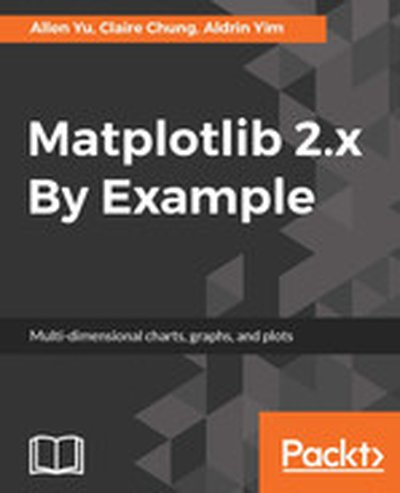
Matplotlib 2.x By Example

"Matplotlib 2.x By Example" is your comprehensive guide to mastering data visualization in Python using the Matplotlib library. Through detailed explanations and hands-on examples, this book will teach you how to create stunning, insightful, and professional-looking visual representations of your data. You'll learn valuable skills tailored towards practical applications in science, marketing, and data analysis. What this Book will help me do Understand the core features of Matplotlib and how to use them effectively. Create professional 2D and 3D visualizations, such as scatter plots, line graphs, and more. Develop skills to transform raw data into meaningful insights through visualization. Enhance your data visualizations with interactive elements and animations. Leverage additional libraries such as Seaborn and Pandas to expand functionality. Author(s) Allen Yu, Claire Chung, and Aldrin Yim are seasoned data scientists and technical authors with extensive experience in Python and data visualization. Allen and his coauthors are dedicated to helping readers bridge the gap between their raw data and meaningful insights through visualization. With practical applications and real-world examples, their approachable writing makes complex libraries like Matplotlib accessible and production-ready. Who is it for? This book is perfect for data enthusiasts, analysts, and Python programmers looking to enhance their data visualization skills. Whether you're a professional aiming to create high-quality visual reports or a student eager to understand and present data effectively, this book provides practical and actionable insights. Basic Python knowledge is expected, while all Matplotlib-related aspects are thoroughly explained.