talk-data.com talk-data.com

Topic

Parquet

Apache Parquet

columnar_storage big_data compression file_format storage

56

tagged

Activity Trend

5 peak/qtr
2020-Q1 2026-Q1

Activities

56 activities · Newest first

Jay Alexander Clifford: A 101 in Time Series Analytics with Apache Arrow, Pandas and Parquet

Join Jay Alexander Clifford in a deep dive into Time Series Analytics with Apache Arrow, Pandas, and Parquet. 📈🐍 Explore the power of columnar databases, and learn how to build efficient and scalable analytics applications for time series data using open-source tools. 🚀 #TimeSeries #analytics

✨ H I G H L I G H T S ✨

🙌 A huge shoutout to all the incredible participants who made Big Data Conference Europe 2023 in Vilnius, Lithuania, from November 21-24, an absolute triumph! 🎉 Your attendance and active participation were instrumental in making this event so special. 🌍

Don't forget to check out the session recordings from the conference to relive the valuable insights and knowledge shared! 📽️

Once again, THANK YOU for playing a pivotal role in the success of Big Data Conference Europe 2023. 🚀 See you next year for another unforgettable conference! 📅 #BigDataConference #SeeYouNextYear

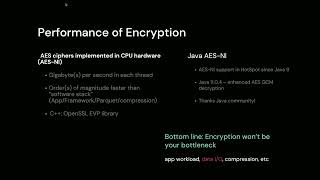
Managing Data Encryption in Apache Spark™

Sensitive data sets can be encrypted directly by new Apache Spark™ versions (3.2 and higher). Setting several configuration parameters and DataFrame options will trigger the Apache Parquet modular encryption mechanism that protects select columns with column-specific keys. The upcoming Spark 3.4 version will also support uniform encryption, where all DataFrame columns are encrypted with the same key.

Spark data encryption is already leveraged by a number of companies to protect personal or business confidential data in their production environments. The main integration effort is focused on key access control and on building a Spark/Parquet plug-in code that can interact with company’s key management service (KMS).

In this session, we will briefly cover the basics of Spark/Parquet encryption usage, and dive into the details of encryption key management that will help in integrating this Spark data protection mechanism in your deployment. You will learn how to run a HelloWorld encryption sample, and how to extend it into a real world production code integrated with your organization’s KMS and access control policies. We will talk about the standard envelope encryption approach to big data protection, the performance-vs-security trade-offs between single and double envelope wrapping, internal and external key metadata storage. We will see a demo, and discuss the new features such as uniform encryption and two-tier management of encryption keys.

Talk by: Gidon Gershinsky

Here’s more to explore: Data, Analytics, and AI Governance: https://dbricks.co/44gu3YU

Connect with us: Website: https://databricks.com Twitter: https://twitter.com/databricks LinkedIn: https://www.linkedin.com/company/databricks Instagram: https://www.instagram.com/databricksinc Facebook: https://www.facebook.com/databricksinc

Data Extraction and Sharing Via The Delta Sharing Protocol

The Delta Sharing open protocol for secure sharing and distribution of Lakehouse data is designed to reduce friction in getting data to users. Delivering custom data solutions from this protocol further leverages the technical investment committed to your Delta Lake infrastructure. There are key design and computational concepts unique to Delta Sharing to know when undertaking development. And there are pitfalls and hazards to avoid when delivering modern cloud data to traditional data platforms and users.

In this session, we introduce Delta Sharing Protocol development and examine our journey and the lessons learned while creating the Delta Sharing Excel Add-in. We will demonstrate scenarios of overfetching, underfetching, and interpretation of types. We will suggest methods to overcome these development challenges. The session will combine live demonstrations that exercise the Delta Sharing REST protocol with detailed analysis of the responses. The demonstrations will elaborate on optional capabilities of the protocol’s query mechanism, and how they are used and interpreted in real-life scenarios. As a reference baseline for data professionals, the Delta Sharing exercises will be framed relative to SQL counterparts. Specific attention will be paid to how they differ, and how Delta Sharing’s Change Data Feed (CDF) can power next-generation data architectures. The session will conclude with a survey of available integration solutions for getting the most out of your Delta Sharing environment, including frameworks, connectors, and managed services.

Attendees are encouraged to be familiar with REST, JSON, and modern programming concepts. A working knowledge of Delta Lake, the Parquet file format, and the Delta Sharing Protocol are advised.

Talk by: Roger Dunn

Here’s more to explore: A New Approach to Data Sharing: https://dbricks.co/44eUnT1

Connect with us: Website: https://databricks.com Twitter: https://twitter.com/databricks LinkedIn: https://www.linkedin.com/company/databricks Instagram: https://www.instagram.com/databricksinc Facebook: https://www.facebook.com/databricksinc

US Army Corp of Engineers Enhanced Commerce & National Sec Through Data-Driven Geospatial Insight

The US Army Corps of Engineers (USACE) is responsible for maintaining and improving nearly 12,000 miles of shallow-draft (9'-14') inland and intracoastal waterways, 13,000 miles of deep-draft (14' and greater) coastal channels, and 400 ports, harbors, and turning basins throughout the United States. Because these components of the national waterway network are considered assets to both US commerce and national security, they must be carefully managed to keep marine traffic operating safely and efficiently.

The National DQM Program is tasked with providing USACE a nationally standardized remote monitoring and documentation system across multiple vessel types with timely data access, reporting, dredge certifications, data quality control, and data management. Government systems have often lagged commercial systems in modernization efforts, and the emergence of the cloud and Data Lakehouse Architectures have empowered USACE to successfully move into the modern data era.

This session incorporates aspects of these topics: Data Lakehouse Architecture: Delta Lake, platform security and privacy, serverless, administration, data warehouse, Data Lake, Apache Iceberg, Data Mesh GIS: H3, MOSAIC, spatial analysis data engineering: data pipelines, orchestration, CDC, medallion architecture, Databricks Workflows, data munging, ETL/ELT, lakehouses, data lakes, Parquet, Data Mesh, Apache Spark™ internals. Data Streaming: Apache Spark Structured Streaming, real-time ingestion, real-time ETL, real-time ML, real-time analytics, and real-time applications, Delta Live Tables. ML: PyTorch, TensorFlow, Keras, scikit-learn, Python and R ecosystems data governance: security, compliance, RMF, NIST data sharing: sharing and collaboration, delta sharing, data cleanliness, APIs.

Talk by: Jeff Mroz

Connect with us: Website: https://databricks.com Twitter: https://twitter.com/databricks LinkedIn: https://www.linkedin.com/company/databricks Instagram: https://www.instagram.com/databricksinc Facebook: https://www.facebook.com/databricksinc

Vector Data Lakes

Vector databases such as ElasticSearch and Pinecone offer fast ingestion and querying on vector embeddings with ANNs. However, they typically do not decouple compute and storage, making them hard to integrate in production data stacks. Because data storage in these databases is expensive and not easily accessible, data teams typically maintain ETL pipelines to offload historical embedding data to blob stores. When that data needs to be queried, they get loaded back into the vector database in another ETL process. This is reminiscent of loading data from OLTP database to cloud storage, then loading said data into an OLAP warehouse for offline analytics.

Recently, “lakehouse” offerings allow direct OLAP querying on cloud storage, removing the need for the second ETL step. The same could be done for embedding data. While embedding storage in blob stores cannot satisfy the high TPS requirements in online settings, we argue it’s sufficient for offline analytics use cases like slicing and dicing data based on embedding clusters. Instead of loading the embedding data back into the vector database for offline analytics, we propose direct processing on embeddings stored in Parquet files in Delta Lake. You will see that offline embedding workloads typically touch a large portion of the stored embeddings without the need for random access.

As a result, the workload is entirely bound by network throughput instead of latency, making it quite suitable for blob storage backends. On a test one billion vector dataset, ETL into cloud storage takes around one hour on a dedicated GPU instance, while batched nearest neighbor search can be done in under one minute with four CPU instances. We believe future “lakehouses” will ship with native support for these embedding workloads.

Talk by: Tony Wang and Chang She

Here’s more to explore: State of Data + AI Report: https://dbricks.co/44i2HBp Databricks named a Leader in 2022 Gartner® Magic QuadrantTM CDBMS: https://dbricks.co/3phw20d

Connect with us: Website: https://databricks.com Twitter: https://twitter.com/databricks LinkedIn: https://www.linkedin.com/company/databricks Instagram: https://www.instagram.com/databricksinc Facebook: https://www.facebook.com/databricksinc

Ten years of building open source standards: From Parquet to Arrow to OpenLineage | Astronomer

ABOUT THE TALK: Over the last decade I have been lucky enough to contribute a few successful open source projects to the data ecosystem. In this talk

Julien Le Dem shares the story of his contribution to successful open source projects to the data ecosystem and what made their success possible. From the ideation process and early growth of the Apache Parquet columnar format and how this led to the creation of its in-memory alter-ego Apache Arrow. Julian will end with showing how this experience enabled the success of OpenLineage, an LFAI & Data project that brings observability to the data ecosystem.

ABOUT THE SPEAKER: Julien Le Dem is the Chief Architect of Astronomer and Co-Founder of Datakin. He co-created Apache Parquet and is involved in several open source projects including OpenLineage, Marquez (LFAI&Data), Apache Arrow, Apache Iceberg and a few others. Previously, he was a senior principal at Wework; principal architect at Dremio; and tech lead for Twitter’s data processing tools and principal engineer working on content platforms at Yahoo, where he received his Hadoop initiation.

ABOUT DATA COUNCIL: Data Council (https://www.datacouncil.ai/) is a community and conference series that provides data professionals with the learning and networking opportunities they need to grow their careers.

Make sure to subscribe to our channel for the most up-to-date talks from technical professionals on data related topics including data infrastructure, data engineering, ML systems, analytics and AI from top startups and tech companies.

FOLLOW DATA COUNCIL: Twitter: https://twitter.com/DataCouncilAI LinkedIn: https://www.linkedin.com/company/datacouncil-ai/

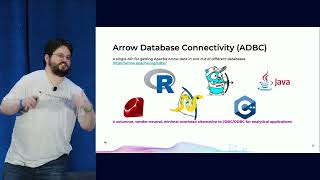
Making Moves with Arrow Data: Introducing Arrow Database Connectivity (ADBC) | Voltron Data

ABOUT THE TALK: In this talk, we'll dive into one of the newest Apache Arrow subprojects, Arrow Database Connectivity (ADBC), an API specification for Arrow-based database access.

Over the course of this session, you’ll get a crash course in ADBC and learn how it communicates with different data APIs (like Arrow Flight SQL and Postgres) using Arrow-native in-memory data. By the end, you’ll understand the use cases it can conquer and know where to access the resources you need to get started.

This talk will cover goals, use-cases, and examples of using ADBC to communicate with different Data APIs (such as Flight SQL or postgres) with Arrow Native in-memory data.

ABOUT THE SPEAKER: Matthew Topol is a committer for the Apache Arrow project, frequently enhancing the Golang Arrow and Parquet libraries among other enhancements and helping to grow the Arrow Community. Recently, Matt has joined Voltron Data in order to work on the Apache Arrow libraries full time and grow the Arrow Golang community. In June 2022, Matt's first book was published, which is the first (and currently only) book on Apache Arrow titled "In-Memory Analytics with Apache Arrow".

ABOUT DATA COUNCIL: Data Council (https://www.datacouncil.ai/) is a community and conference series that provides data professionals with the learning and networking opportunities they need to grow their careers.

Make sure to subscribe to our channel for the most up-to-date talks from technical professionals on data related topics including data infrastructure, data engineering, ML systems, analytics and AI from top startups and tech companies.

FOLLOW DATA COUNCIL: Twitter: https://twitter.com/DataCouncilAI LinkedIn: https://www.linkedin.com/company/datacouncil-ai/

Summary

Data is a team sport, but it's often difficult for everyone on the team to participate. For a long time the mantra of data tools has been "by developers, for developers", which automatically excludes a large portion of the business members who play a crucial role in the success of any data project. Quilt Data was created as an answer to make it easier for everyone to contribute to the data being used by an organization and collaborate on its application. In this episode Aneesh Karve shares the journey that Quilt has taken to provide an approachable interface for working with versioned data in S3 that empowers everyone to collaborate.

Announcements

Hello and welcome to the Data Engineering Podcast, the show about modern data management Truly leveraging and benefiting from streaming data is hard - the data stack is costly, difficult to use and still has limitations. Materialize breaks down those barriers with a true cloud-native streaming database - not simply a database that connects to streaming systems. With a PostgreSQL-compatible interface, you can now work with real-time data using ANSI SQL including the ability to perform multi-way complex joins, which support stream-to-stream, stream-to-table, table-to-table, and more, all in standard SQL. Go to dataengineeringpodcast.com/materialize today and sign up for early access to get started. If you like what you see and want to help make it better, they're hiring across all functions! Your host is Tobias Macey and today I'm interviewing Aneesh Karve about how Quilt Data helps you bring order to your chaotic data in S3 with transactional versioning and data discovery built in

Interview

Introduction How did you get involved in the area of data management? Can you describe what Quilt is and the story behind it?

How have the goals and features of the Quilt platform changed since I spoke with Kevin in June of 2018?

What are the main problems that users are trying to solve when they find Quilt?

What are some of the alternative approaches/products that they are coming from?

How does Quilt compare with options such as LakeFS, Unstruk, Pachyderm, etc.? Can you describe how Quilt is implemented? What are the types of tools and systems that Quilt gets integrated with?

How do you manage the tension between supporting the lowest common denominator, while providing options for more advanced capabilities?

What is a typical workflow for a team that is using Quilt to manage their data? What are the most interesting, innovative, or unexpected ways that you have seen Quilt used? What are the most interesting, unexpected, or challenging lessons that you have learned while working on Quilt? When is Quilt the wrong choice? What do you have planned for the future of Quilt?

Contact Info

LinkedIn @akarve on Twitter

Parting Question

From your perspective, what is the biggest gap in the tooling or technology for data management today?

Closing Announcements

Thank you for listening! Don't forget to check out our other shows. Podcast.init covers the Python language, its community, and the innovative ways it is being used. The Machine Learning Podcast helps you go from idea to production with machine learning. Visit the site to subscribe to the show, sign up for the mailing list, and read the show notes. If you've learned something or tried out a project from the show then tell us about it! Email [email protected]) with your story. To help other people find the show please leave a review on Apple Podcasts and tell your friends and co-workers

Links

Quilt Data

Podcast Episode

UW Madison Docker Swarm Kaggle open.quiltdata.com FinOS Perspective LakeFS

Podcast Episode

Pachyderm

Podcast Episode

Unstruk

Podcast Episode

Parquet Avro ORC Cloudformation Troposphere CDK == Cloud Development Kit Shadow IT

Podcast Episode

Delta Lake

Podcast Episode

Apache Iceberg

Podcast Episode

Datasette Frictionless DVC

Podcast.init Episode

The in

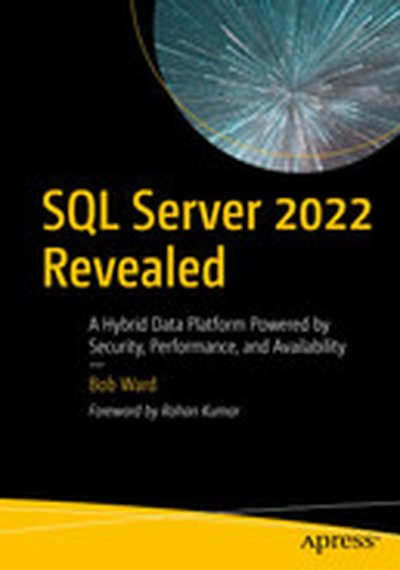
SQL Server 2022 Revealed: A Hybrid Data Platform Powered by Security, Performance, and Availability

Know how to use the new capabilities and cloud integrations in SQL Server 2022. This book covers the many innovative integrations with the Azure Cloud that make SQL Server 2022 the most cloud-connected edition ever. The book covers cutting-edge features such as the blockchain-based Ledger for creating a tamper-evident record of changes to data over time that you can rely on to be correct and reliable. You'll learn about built-in Query Intelligence capabilities to help you to upgrade with confidence that your applications will perform at least as fast after the upgrade than before. In fact, you'll probably see an increase in performance from the upgrade, with no code changes needed. Also covered are innovations such as contained availability groups and data virtualization with S3 object storage. New cloud integrations covered in this book include Microsoft Azure Purview and the use of Azure SQL for high availability and disaster recovery. The bookcovers Azure Synapse Link with its built-in capabilities to take changes and put them into Synapse automatically. Anyone building their career around SQL Server will want this book for the valuable information it provides on building SQL skills from edge to the cloud. ​ What You Will Learn Know how to use all of the new capabilities and cloud integrations in SQL Server 2022 Connect to Azure for disaster recovery, near real-time analytics, and security Leverage the Ledger to create a tamper-evident record of data changes over time Upgrade from prior releases and achieve faster and more consistent performance with no code changes Access data and storage in different and new formats, such as Parquet and S3, without moving the data and using your existing T-SQL skills Explore new application scenarios using innovations with T-SQL in areassuch as JSON and time series Who This Book Is For SQL Server professionals who want to upgrade their skills to the latest edition of SQL Server; those wishing to take advantage of new integrations with Microsoft Azure Purview (governance), Azure Synapse (analytics), and Azure SQL (HA and DR); and those in need of the increased performance and security offered by Query Intelligence and the new Ledger

Sound Data Engineering in Rust—From Bits to DataFrames

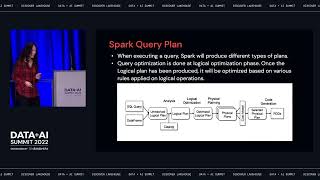
Spark applications often need to query external data sources such as file-based data sources or relational data sources. In order to do this, Spark provides Data Source APIs to access structured data through Spark SQL.

Data Source APIs have optimization rules such as filter push down and column pruning to reduce the amount of data that needs to be processed to improve query performance. As part of our ongoing project to provide generic Data Source V2 push down APIs, we have introduced partial aggregate push down, which significantly speeds up spark jobs by dramatically reducing the amount of data transferred between data sources and Spark. We have implemented aggregate push down in both JDBC and parquet.

Connect with us: Website: https://databricks.com Facebook: https://www.facebook.com/databricksinc Twitter: https://twitter.com/databricks LinkedIn: https://www.linkedin.com/company/data... Instagram: https://www.instagram.com/databricksinc/

Spark Data Source V2 Performance Improvement: Aggregate Push Down

Spark applications often need to query external data sources such as file-based data sources or relational data sources. In order to do this, Spark provides Data Source APIs to access structured data through Spark SQL.

Data Source APIs have optimization rules such as filter push down and column pruning to reduce the amount of data that needs to be processed to improve query performance. As part of our ongoing project to provide generic Data Source V2 push down APIs, we have introduced partial aggregate push down, which significantly speeds up spark jobs by dramatically reducing the amount of data transferred between data sources and Spark. We have implemented aggregate push down in both JDBC and parquet.

Connect with us: Website: https://databricks.com Facebook: https://www.facebook.com/databricksinc Twitter: https://twitter.com/databricks LinkedIn: https://www.linkedin.com/company/data... Instagram: https://www.instagram.com/databricksinc/

Delta Lake, the Foundation of Your Lakehouse

Delta Lake is the open source storage layer that makes the Databricks Lakehouse Platform possible by adding reliability, performance, and scalability to your data, wherever it is located. Join this session for an inside look at what is under the hood of Databricks - see how Delta Lake, by adding ACID transactions and versioning to Parquet files together with the Photon engine, provides customers with huge performance gains and the ability to address new challenges. This session will include a demo and overview of customer use cases unlocked by Delta Lake, and the benefits of running Delta Lake workloads on Databricks.

Connect with us: Website: https://databricks.com Facebook: https://www.facebook.com/databricksinc Twitter: https://twitter.com/databricks LinkedIn: https://www.linkedin.com/company/data... Instagram: https://www.instagram.com/databricksinc/

Recent Parquet Improvements in Apache Spark

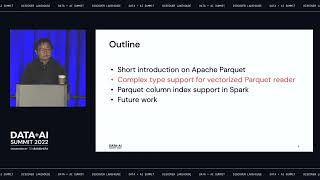
Apache Parquet is a very popular columnar file format supported by Apache Spark. In a typical Spark job, scanning Parquet files is sometimes one of the most time consuming steps, as it incurs high CPU and IO overhead. Therefore, optimizing Parquet scan performance is crucial to job latency and cost efficiency.

Spark currently have two Parquet reader implementations: a vectorized one and a non-vectorized one. The former was implemented from scratch and offers much better performance than the latter. However, it currently doesn’t support complex types (e.g., array, list, map) at the moment and will fallback to the latter when encountering them. In addition to the reader implementation, predicate pushdown is also crucial to Parquet scan performance as it enables Spark to skip those data that do not satisfy the predicates, before the scan. Currently, Spark constructs predicates itself and rely on Parquet-MR to do the heavy lifting, which does the filtering based on various information such as statistics, dictionary, bloom filter or column index.

This talk will go through two recent improvements for Parquet scan performance: 1) vectorized read support for complex types, which allows Spark to achieve 10x+ improvement when reading Parquet data of complex types, and 2) Parquet column index support, which enables Spark to leverage Parquet column index feature during predicate pushdown. Last but not least, Chao go over some future work items that can further enhance Parquet read performance.

Connect with us: Website: https://databricks.com Facebook: https://www.facebook.com/databricksinc Twitter: https://twitter.com/databricks LinkedIn: https://www.linkedin.com/company/data... Instagram: https://www.instagram.com/databricksinc/

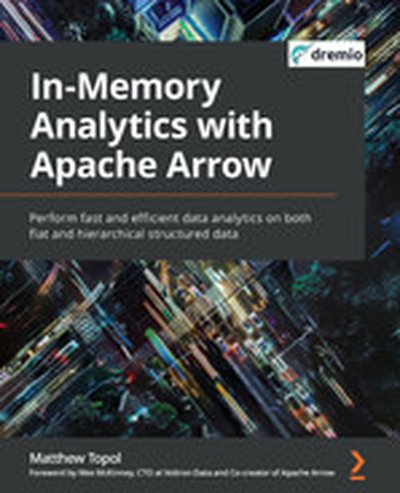
In-Memory Analytics with Apache Arrow

Discover the power of in-memory data analytics with "In-Memory Analytics with Apache Arrow." This book delves into Apache Arrow's unique capabilities, enabling you to handle vast amounts of data efficiently and effectively. Learn how Arrow improves performance, offers seamless integration, and simplifies data analysis in diverse computing environments. What this Book will help me do Gain proficiency with the datastore facilities and data types defined by Apache Arrow. Master the Arrow Flight APIs to efficiently transfer data between systems. Learn to leverage in-memory processing advantages offered by Arrow for state-of-the-art analytics. Understand how Arrow interoperates with popular tools like Pandas, Parquet, and Spark. Develop and deploy high-performance data analysis pipelines with Apache Arrow. Author(s) Matthew Topol, the author of the book, is an experienced practitioner in data analytics and Apache Arrow technology. Having contributed to the development and implementation of Arrow-powered systems, he brings a wealth of knowledge to readers. His ability to delve deep into technical concepts while keeping explanations practical makes this book an excellent guide for learners of the subject. Who is it for? This book is ideal for professionals in the data domain including developers, data analysts, and data scientists aiming to enhance their data manipulation capabilities. Beginners with some familiarity with data analysis concepts will find it beneficial, as well as engineers designing analytics utilities. Programming examples accommodate users of C, Go, and Python, making it broadly accessible.

Summary Machine learning has become a meaningful target for data applications, bringing with it an increase in the complexity of orchestrating the entire data flow. Flyte is a project that was started at Lyft to address their internal needs for machine learning and integrated closely with Kubernetes as the execution manager. In this episode Ketan Umare and Haytham Abuelfutuh share the story of the Flyte project and how their work at Union is focused on supporting and scaling the code and community that has made Flyte successful.

Announcements

Hello and welcome to the Data Engineering Podcast, the show about modern data management When you’re ready to build your next pipeline, or want to test out the projects you hear about on the show, you’ll need somewhere to deploy it, so check out our friends at Linode. With their managed Kubernetes platform it’s now even easier to deploy and scale your workflows, or try out the latest Helm charts from tools like Pulsar and Pachyderm. With simple pricing, fast networking, object storage, and worldwide data centers, you’ve got everything you need to run a bulletproof data platform. Go to dataengineeringpodcast.com/linode today and get a $100 credit to try out a Kubernetes cluster of your own. And don’t forget to thank them for their continued support of this show! This episode is brought to you by Acryl Data, the company behind DataHub, the leading developer-friendly data catalog for the modern data stack. Open Source DataHub is running in production at several companies like Peloton, Optum, Udemy, Zynga and others. Acryl Data provides DataHub as an easy to consume SaaS product which has been adopted by several companies. Signup for the SaaS product at dataengineeringpodcast.com/acryl RudderStack helps you build a customer data platform on your warehouse or data lake. Instead of trapping data in a black box, they enable you to easily collect customer data from the entire stack and build an identity graph on your warehouse, giving you full visibility and control. Their SDKs make event streaming from any app or website easy, and their state-of-the-art reverse ETL pipelines enable you to send enriched data to any cloud tool. Sign up free… or just get the free t-shirt for being a listener of the Data Engineering Podcast at dataengineeringpodcast.com/rudder. Data lake architectures provide the best combination of massive scalability and cost reduction, but they aren’t always the most performant option. That’s why Kyligence has built on top of the leading open source OLAP engine for data lakes, Apache Kylin. With their AI augmented engine they detect patterns from your critical queries, automatically build data marts with optimized table structures, and provide a unified SQL interface across your lake, cubes, and indexes. Their cost-based query router will give you interactive speeds across petabyte scale data sets for BI dashboards and ad-hoc data exploration. Stop struggling to speed up your data lake. Get started with Kyligence today at dataengineeringpodcast.com/kyligence Your host is Tobias Macey and today I’m interviewing Ketan Umare and Haytham Abuelfutuh about Flyte, the open source and kubernetes-native orchestration engine for your data systems

Interview

Introduction How did you get involved in the area of data management? Can you describe what Flyte is and the story behind it? What was missing in the ecosystem of available tools that made it necessary/worthwhile to create Flyte? Workflow orchestrators have been around for several years and have gone through a number of generational shifts. How would you characterize Flyte’s position in the ecosystem?

What do you see as the closest alternatives? What are the core differentiators that might lead someone to choose Flyte over e.g. Airflow/Prefect/Dagster?

What are the core primitives that Flyte exposes for building up complex workflows?

Machine learning use cases have been a core focus since the project’s inception. What are some of the ways that that manifests in the design and feature set?

Can you describe the architecture of Flyte?

How have the design and goals of the platform changed/evolved since you first started working on it?

What are the changes in the data ecosystem that have had the most substantial impact on the Flyte project? (e.g. roadmap, integrations, pushing people toward adoption, etc.) What is the process for setting up a Flyte deployment? What are the user personas that you prioritize in the design and feature development for Flyte? What is the workflow for someone building a new pipeline in Flyte?

What are the patterns that you and the community have established to encourage discovery and reuse of granular task definitions? Beyond code reuse, how can teams scale usage of Flyte at the company/organization level?

What are the affordances that you have created to facilitate local development and testing of workflows while ensuring a smooth transition to production?

What are the patterns that are available for CI/CD of workflows using Flyte?

How have you approached the design of data contracts/type definitions to provide a consistent/portable API for defining inter-task dependencies across languages? What are the available interfaces for extending Flyte and building integrations with other components across the data ecosystem? Data orchestration engines are a natural point for generating and taking advantage of rich metadata. How do you manage creation and propagation of metadata within and across the framework boundaries? Last year you founded Union to offer a managed version of Flyte. What are the features that you are offering beyond what is available in the open source?

What are the opportunities that you see for the Flyte ecosystem with a corporate entity to invest in expanding adoption?

What are the most interesting, innovative, or unexpected ways that you have seen Flyte used? What are the most interesting, unexpected, or challenging lessons that you have learned while working on Flyte? When is Flyte the wrong choice? What do you have planned for the future of Flyte?

Contact Info

Ketan Umare Haytham Abuelfutuh

Parting Question

From your perspective, what is the biggest gap in the tooling or technology for data management today?

Closing Announcements

Thank you for listening! Don’t forget to check out our other show, Podcast.init to learn about the Python language, its community, and the innovative ways it is being used. Visit the site to subscribe to the show, sign up for the mailing list, and read the show notes. If you’ve learned something or tried out a project from the show then tell us about it! Email [email protected]) with your story. To help other people find the show please leave a review on iTunes and tell your friends and co-workers

Links

Flyte

Slack Channel

Union.ai Kubeflow Airflow AWS Step Functions Protocol Buffers XGBoost MLFlow Dagster

Podcast Episode

Prefect

Podcast Episode

Arrow Parquet Metaflow Pytorch

Podcast.init Episode

dbt FastAPI

Podcast.init Interview

Python Type Annotations Modin

Podcast.init Interview

Monad Datahub

Podcast Episode

OpenMetadata

Podcast Episode

Hudi

Podcast Episode

Iceberg

Podcast Episode

Great Expectations

Podcast Episode

Pandera Union ML Weights and Biases Whylogs

Podcast Episode

The intro and outro music is from The Hug by The Freak Fandango Orchestra / CC BY-SA

Sponsored By: a…

Julien has a unique history of building open frameworks that make data platforms interoperable. He's contributed in various ways to Apache Arrow, Apache Iceberg, Apache Parquet, and Marquez, and is currently leading OpenLineage, an open framework for data lineage collection and analysis. In this episode, Tristan & Julia dive into how open source projects grow to become standards, and why data lineage in particular is in need of an open standard. They also cover into some of the compelling use cases for this data lineage metadata, and where you might be able to deploy it in your work. For full show notes and to read 6+ years of back issues of the podcast's companion newsletter, head to https://roundup.getdbt.com.  The Analytics Engineering Podcast is sponsored by dbt Labs.

Summary Data lake architectures have largely been biased toward batch processing workflows due to the volume of data that they are designed for. With more real-time requirements and the increasing use of streaming data there has been a struggle to merge fast, incremental updates with large, historical analysis. Vinoth Chandar helped to create the Hudi project while at Uber to address this challenge. By adding support for small, incremental inserts into large table structures, and building support for arbitrary update and delete operations the Hudi project brings the best of both worlds together. In this episode Vinoth shares the history of the project, how its architecture allows for building more frequently updated analytical queries, and the work being done to add a more polished experience to the data lake paradigm.

Announcements

Hello and welcome to the Data Engineering Podcast, the show about modern data management You listen to this show to learn about all of the latest tools, patterns, and practices that power data engineering projects across every domain. Now there’s a book that captures the foundational lessons and principles that underly everything that you hear about here. I’m happy to announce I collected wisdom from the community to help you in your journey as a data engineer and worked with O’Reilly to publish it as 97 Things Every Data Engineer Should Know. Go to dataengineeringpodcast.com/97things today to get your copy! When you’re ready to build your next pipeline, or want to test out the projects you hear about on the show, you’ll need somewhere to deploy it, so check out our friends at Linode. With their managed Kubernetes platform it’s now even easier to deploy and scale your workflows, or try out the latest Helm charts from tools like Pulsar and Pachyderm. With simple pricing, fast networking, object storage, and worldwide data centers, you’ve got everything you need to run a bulletproof data platform. Go to dataengineeringpodcast.com/linode today and get a $100 credit to try out a Kubernetes cluster of your own. And don’t forget to thank them for their continued support of this show! RudderStack’s smart customer data pipeline is warehouse-first. It builds your customer data warehouse and your identity graph on your data warehouse, with support for Snowflake, Google BigQuery, Amazon Redshift, and more. Their SDKs and plugins make event streaming easy, and their integrations with cloud applications like Salesforce and ZenDesk help you go beyond event streaming. With RudderStack you can use all of your customer data to answer more difficult questions and then send those insights to your whole customer data stack. Sign up free at dataengineeringpodcast.com/rudder today. We’ve all been asked to help with an ad-hoc request for data by the sales and marketing team. Then it becomes a critical report that they need updated every week or every day. Then what do you do? Send a CSV via email? Write some Python scripts to automate it? But what about incremental sync, API quotas, error handling, and all of the other details that eat up your time? Today, there is a better way. With Census, just write SQL or plug in your dbt models and start syncing your cloud warehouse to SaaS applications like Salesforce, Marketo, Hubspot, and many more. Go to dataengineeringpodcast.com/census today to get a free 14-day trial. Your host is Tobias Macey and today I’m interviewing Vinoth Chandar about Apache Hudi, a data lake management layer for supporting fast and incremental updates to your tables.

Interview

Introduction How did you get involved in the area of data management? Can you describe what Hudi is and the story behind it? What are the use cases that it is focused on supporting? There have been a number of alternative table formats introduced for data lakes recently. How does Hudi compare to projects like Iceberg, Delta Lake, Hive, etc.? Can you describe how Hudi is architected?

How have the goals and design of Hudi changed or evolved since you first began working on it? If you were to start the whole project over today, what would you do differently?

Can you talk through the lifecycle of a data record as it is ingested, compacted, and queried in a Hudi deployment? One of the capabilities that is interesting to explore is support for arbitrary record deletion. Can you talk through why this is a challenging operation in data lake architectures?

How does Hudi make that a tractable problem?

What are the data platform components that are needed to support an installation of Hudi? What is involved in migrating an existing data lake to use Hudi?

How would someone approach supporting heterogeneous table formats in their lake?

As someone who has invested a lot of time in technologies for supporting data lakes, what are your thoughts on the tradeoffs of data lake vs data warehouse and the current trajectory of the ecosystem? What are the most interesting, innovative, or unexpected ways that you have seen Hudi used? What are the most interesting, unexpected, or challenging lessons that you have learned while working on Hudi? When is Hudi the wrong choice? What do you have planned for the future of Hudi?

Contact Info

Linkedin Twitter

Parting Question

From your perspective, what is the biggest gap in the tooling or technology for data management today?

Closing Announcements

Thank you for listening! Don’t forget to check out our other show, Podcast.init to learn about the Python language, its community, and the innovative ways it is being used. Visit the site to subscribe to the show, sign up for the mailing list, and read the show notes. If you’ve learned something or tried out a project from the show then tell us about it! Email [email protected]) with your story. To help other people find the show please leave a review on iTunes and tell your friends and co-workers Join the community in the new Zulip chat workspace at dataengineeringpodcast.com/chat

Links

Hudi Docs Hudi Design & Architecture Incremental Processing CDC == Change Data Capture

Podcast Episodes

Oracle GoldenGate Voldemort Kafka Hadoop Spark HBase Parquet Iceberg Table Format

Data Engineering Episode

Hive ACID Apache Kudu

Podcast Episode

Vertica Delta Lake

Podcast Episode

Optimistic Concurrency Control MVCC == Multi-Version Concurrency Control Presto Flink

Podcast Episode

Trino

Podcast Episode

Gobblin LakeFS

Podcast Episode

Nessie

The intro and outro music is from The Hug by The Freak Fandango Orchestra / CC BY-SA

Support Data Engineering Podcast

Summary Data integration is a critical piece of every data pipeline, yet it is still far from being a solved problem. There are a number of managed platforms available, but the list of options for an open source system that supports a large variety of sources and destinations is still embarrasingly short. The team at Airbyte is adding a new entry to that list with the goal of making robust and easy to use data integration more accessible to teams who want or need to maintain full control of their data. In this episode co-founders John Lafleur and Michel Tricot share the story of how and why they created Airbyte, discuss the project’s design and architecture, and explain their vision of what an open soure data integration platform should offer. If you are struggling to maintain your extract and load pipelines or spending time on integrating with a new system when you would prefer to be working on other projects then this is definitely a conversation worth listening to.

Announcements

Hello and welcome to the Data Engineering Podcast, the show about modern data management When you’re ready to build your next pipeline, or want to test out the projects you hear about on the show, you’ll need somewhere to deploy it, so check out our friends at Linode. With their managed Kubernetes platform it’s now even easier to deploy and scale your workflows, or try out the latest Helm charts from tools like Pulsar and Pachyderm. With simple pricing, fast networking, object storage, and worldwide data centers, you’ve got everything you need to run a bulletproof data platform. Go to dataengineeringpodcast.com/linode today and get a $100 credit to try out a Kubernetes cluster of your own. And don’t forget to thank them for their continued support of this show! Modern Data teams are dealing with a lot of complexity in their data pipelines and analytical code. Monitoring data quality, tracing incidents, and testing changes can be daunting and often takes hours to days. Datafold helps Data teams gain visibility and confidence in the quality of their analytical data through data profiling, column-level lineage and intelligent anomaly detection. Datafold also helps automate regression testing of ETL code with its Data Diff feature that instantly shows how a change in ETL or BI code affects the produced data, both on a statistical level and down to individual rows and values. Datafold integrates with all major data warehouses as well as frameworks such as Airflow & dbt and seamlessly plugs into CI workflows. Go to dataengineeringpodcast.com/datafold today to start a 30-day trial of Datafold. Once you sign up and create an alert in Datafold for your company data, they will send you a cool water flask. RudderStack’s smart customer data pipeline is warehouse-first. It builds your customer data warehouse and your identity graph on your data warehouse, with support for Snowflake, Google BigQuery, Amazon Redshift, and more. Their SDKs and plugins make event streaming easy, and their integrations with cloud applications like Salesforce and ZenDesk help you go beyond event streaming. With RudderStack you can use all of your customer data to answer more difficult questions and then send those insights to your whole customer data stack. Sign up free at dataengineeringpodcast.com/rudder today. Your host is Tobias Macey and today I’m interviewing Michel Tricot and John Lafleur about Airbyte, an open source framework for building data integration pipelines.

Interview

Introduction How did you get involved in the area of data management? Can you start by explaining what Airbyte is and the story behind it? Businesses and data engineers have a variety of options for how to manage their data integration. How would you characterize the overall landscape and how does Airbyte distinguish itself in that space? How would you characterize your target users?

How have those personas instructed the priorities and design of Airbyte? What do you see as the benefits and tradeoffs of a UI oriented data integration platform as compared to a code first approach?

what are the complex/challenging elements of data integration that makes it such a slippery problem? motivation for creating open source ELT as a business Can you describe how the Airbyte platform is implemented?

What was your motivation for choosing Java as the primary language?

incidental complexity of forcing all connectors to be packaged as containers shortcomings of the Singer specification/motivation for creating a backwards incompatible interface perceived potential for community adoption of Airbyte specification tradeoffs of using JSON as interchange format vs. e.g. protobuf/gRPC/Avro/etc.

information lost when converting records to JSON types/how to preserve that information (e.g. field constraints, valid enums, etc.)

interfaces/extension points for integrating with other tools, e.g. Dagster abstraction layers for simplifying implementation of new connectors tradeoffs of storing all connectors in a monorepo with the Airbyte core

impact of community adoption/contributions

What is involved in setting up an Airbyte installation? What are the available axes for scaling an Airbyte deployment? challenges of setting up and maintaining CI environment for Airbyte How are you managing governance and long term sustainability of the project? What are some of the most interesting, unexpected, or innovative ways that you have seen Airbyte used? What are the most interesting, unexpected, or challenging lessons that you have learned while building Airbyte? When is Airbyte the wrong choice? What do you have planned for the future of the project?

Contact Info

Michel

LinkedIn @MichelTricot on Twitter michel-tricot on GitHub

John

LinkedIn @JeanLafleur on Twitter johnlafleur on GitHub

Parting Question

From your perspective, what is the biggest gap in the tooling or technology for data management today?

Links

Airbyte Liveramp Fivetran

Podcast Episode

Stitch Data Matillion DataCoral

Podcast Episode

Singer Meltano

Podcast Episode

Airflow

Podcast.init Episode

Kotlin Docker Monorepo Airbyte Specification Great Expectations

Podcast Episode

Dagster

Data Engineering Podcast Episode Podcast.init Episode

Prefect

Podcast Episode

DBT

Podcast Episode

Kubernetes Snowflake

Podcast Episode

Redshift Presto Spark Parquet

Podcast Episode

The intro and outro music is from The Hug by The Freak Fandango Orchestra / CC BY-SA

Support Data Engineering Podcast

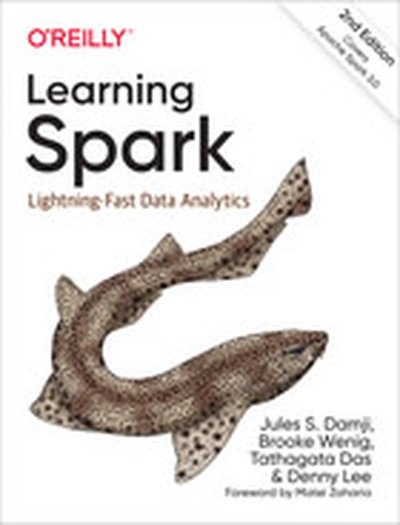
Learning Spark, 2nd Edition

Data is bigger, arrives faster, and comes in a variety of formatsâ??and it all needs to be processed at scale for analytics or machine learning. But how can you process such varied workloads efficiently? Enter Apache Spark. Updated to include Spark 3.0, this second edition shows data engineers and data scientists why structure and unification in Spark matters. Specifically, this book explains how to perform simple and complex data analytics and employ machine learning algorithms. Through step-by-step walk-throughs, code snippets, and notebooks, youâ??ll be able to: Learn Python, SQL, Scala, or Java high-level Structured APIs Understand Spark operations and SQL Engine Inspect, tune, and debug Spark operations with Spark configurations and Spark UI Connect to data sources: JSON, Parquet, CSV, Avro, ORC, Hive, S3, or Kafka Perform analytics on batch and streaming data using Structured Streaming Build reliable data pipelines with open source Delta Lake and Spark Develop machine learning pipelines with MLlib and productionize models using MLflow

Summary DataDog is one of the most successful companies in the space of metrics and monitoring for servers and cloud infrastructure. In order to support their customers, they need to capture, process, and analyze massive amounts of timeseries data with a high degree of uptime and reliability. Vadim Semenov works on their data engineering team and joins the podcast in this episode to discuss the challenges that he works through, the systems that DataDog has built to power their business, and how their teams are organized to allow for rapid growth and massive scale. Getting an inside look at the companies behind the services we use is always useful, and this conversation was no exception.

Announcements

Hello and welcome to the Data Engineering Podcast, the show about modern data management When you’re ready to build your next pipeline, or want to test out the projects you hear about on the show, you’ll need somewhere to deploy it, so check out our friends at Linode. With 200Gbit private networking, scalable shared block storage, and a 40Gbit public network, you’ve got everything you need to run a fast, reliable, and bullet-proof data platform. If you need global distribution, they’ve got that covered too with world-wide datacenters including new ones in Toronto and Mumbai. And for your machine learning workloads, they just announced dedicated CPU instances. Go to dataengineeringpodcast.com/linode today to get a $20 credit and launch a new server in under a minute. And don’t forget to thank them for their continued support of this show! You listen to this show to learn and stay up to date with what’s happening in databases, streaming platforms, big data, and everything else you need to know about modern data management. For even more opportunities to meet, listen, and learn from your peers you don’t want to miss out on this year’s conference season. We have partnered with organizations such as O’Reilly Media, Corinium Global Intelligence, ODSC, and Data Council. Upcoming events include the Software Architecture Conference in NYC, Strata Data in San Jose, and PyCon US in Pittsburgh. Go to dataengineeringpodcast.com/conferences to learn more about these and other events, and take advantage of our partner discounts to save money when you register today. Your host is Tobias Macey and today I’m interviewing Vadim Semenov about how data engineers work at DataDog

Interview

Introduction How did you get involved in the area of data management? For anyone who isn’t familiar with DataDog, can you start by describing the types and volumes of data that you’re dealing with? What are the main components of your platform for managing that information? How are the data teams at DataDog organized and what are your primary responsibilities in the organization? What are some of the complexities and challenges that you face in your work as a result of the volume of data that you are processing?

What are some of the strategies which have proven to be most useful in overcoming those challenges?

Who are the main consumers of your work and how do you build in feedback cycles to ensure that their needs are being met? Given that the majority of the data being ingested by DataDog is timeseries, what are your lifecycle and retention policies for that information? Most of the data that you are working with is customer generated from your deployed agents and API integrations. How do you manage cleanliness and schema enforcement for the events as they are being delivered? What are some of the upcoming projects that you have planned for the upcoming months and years? What are some of the technologies, patterns, or practices that you are hoping to adopt?

Contact Info

LinkedIn @databuryat on Twitter

Parting Question

From your perspective, what is the biggest gap in the tooling or technology for data management today?

Closing Announcements

Thank you for listening! Don’t forget to check out our other show, Podcast.init to learn about the Python language, its community, and the innovative ways it is being used. Visit the site to subscribe to the show, sign up for the mailing list, and read the show notes. If you’ve learned something or tried out a project from the show then tell us about it! Email [email protected]) with your story. To help other people find the show please leave a review on iTunes and tell your friends and co-workers Join the community in the new Zulip chat workspace at dataengineeringpodcast.com/chat

Links

DataDog Hadoop Hive Yarn Chef SRE == Site Reliability Engineer Application Performance Management (APM) Apache Kafka RocksDB Cassandra Apache Parquet data serialization format SLA == Service Level Agreement WatchDog Apache Spark

Podcast Episode

Apache Pig Databricks JVM == Java Virtual Machine Kubernetes SSIS (SQL Server Integration Services) Pentaho JasperSoft Apache Airflow

Podcast.init Episode

Apache NiFi

Podcast Episode

Luigi Dagster

Podcast Episode

Prefect

The intro and outro music is from The Hug by The Freak Fandango Orchestra / CC BY-SA

Support Data Engineering Podcast