talk-data.com talk-data.com

Topic

Parquet

Apache Parquet

columnar_storage big_data compression file_format storage

56

tagged

Activity Trend

5 peak/qtr
2020-Q1 2026-Q1

Activities

56 activities · Newest first

Summary Building clean datasets with reliable and reproducible ingestion pipelines is completely useless if it’s not possible to find them and understand their provenance. The solution to discoverability and tracking of data lineage is to incorporate a metadata repository into your data platform. The metadata repository serves as a data catalog and a means of reporting on the health and status of your datasets when it is properly integrated into the rest of your tools. At WeWork they needed a system that would provide visibility into their Airflow pipelines and the outputs produced. In this episode Julien Le Dem and Willy Lulciuc explain how they built Marquez to serve that need, how it is architected, and how it compares to other options that you might be considering. Even if you already have a metadata repository this is worth a listen to learn more about the value that visibility of your data can bring to your organization.

Announcements

Hello and welcome to the Data Engineering Podcast, the show about modern data management When you’re ready to build your next pipeline, or want to test out the projects you hear about on the show, you’ll need somewhere to deploy it, so check out our friends at Linode. With 200Gbit private networking, scalable shared block storage, and a 40Gbit public network, you’ve got everything you need to run a fast, reliable, and bullet-proof data platform. If you need global distribution, they’ve got that covered too with world-wide datacenters including new ones in Toronto and Mumbai. And for your machine learning workloads, they just announced dedicated CPU instances. Go to dataengineeringpodcast.com/linode today to get a $20 credit and launch a new server in under a minute. And don’t forget to thank them for their continued support of this show! You work hard to make sure that your data is clean, reliable, and reproducible throughout the ingestion pipeline, but what happens when it gets to the data warehouse? Dataform picks up where your ETL jobs leave off, turning raw data into reliable analytics. Their web based transformation tool with built in collaboration features lets your analysts own the full lifecycle of data in your warehouse. Featuring built in version control integration, real-time error checking for their SQL code, data quality tests, scheduling, and a data catalog with annotation capabilities it’s everything you need to keep your data warehouse in order. Sign up for a free trial today at dataengineeringpodcast.com/dataform and email [email protected] with the subject "Data Engineering Podcast" to get a hands-on demo from one of their data experts. You listen to this show to learn and stay up to date with what’s happening in databases, streaming platforms, big data, and everything else you need to know about modern data management. For even more opportunities to meet, listen, and learn from your peers you don’t want to miss out on this year’s conference season. We have partnered with organizations such as O’Reilly Media, Corinium Global Intelligence, ODSC, and Data Council. Upcoming events include the Software Architecture Conference, the Strata Data conference, and PyCon US. Go to dataengineeringpodcast.com/conferences to learn more about these and other events, and take advantage of our partner discounts to save money when you register today. Your host is Tobias Macey and today I’m interviewing Willy Lulciuc and Julien Le Dem about Marquez, an open source platform to collect, aggregate, and visualize a data ecosystem’s metadata

Interview

Introduction How did you get involved in the area of data management? Can you start by describing what Marquez is?

What was missing in existing metadata management platforms that necessitated the creation of Marquez?

How do the capabilities of Marquez compare with tools and services that bill themselves as data catalogs?

How does it compare to the Amundsen platform that Lyft recently released?

What are some of the tools or platforms that are currently integrated with Marquez and what additional integrations would you like to see? What are some of the capabilities that are unique to Marquez and how are you using them at WeWork? What are the primary resource types that you support in Marquez?

What are some of the lowest common denominator attributes that are necessary and useful to track in a metadata repository?

Can you explain how Marquez is architected and how the design has evolved since you first began working on it?

Many metadata management systems are simply a service layer on top of a separate data storage engine. What are the benefits of using PostgreSQL as the system of record for Marquez?

What are some of the complexities that arise from relying on a relational engine as opposed to a document store or graph database?

How is the metadata itself stored and managed in Marquez?

How much up-front data modeling is necessary and what types of schema representations are supported?

Can you talk through the overall workflow of someone using Marquez in their environment?

What is involved in registering and updating datasets? How do you define and track the health of a given dataset? What are some of the interesting questions that can be answered from the information stored in Marquez?

What were your assumptions going into this project and how have they been challenged or updated as you began using it for production use cases? For someone who is interested in using Marquez what is involved in deploying and maintaining an installation of it? What have you found to be the most challenging or unanticipated aspects of building and maintaining a metadata repository and data discovery platform? When is Marquez the wrong choice for a metadata repository? What do you have planned for the future of Marquez?

Contact Info

Julien Le Dem

@J_ on Twitter Email julienledem on GitHub

Willy

LinkedIn @wslulciuc on Twitter wslulciuc on GitHub

Parting Question

From your perspective, what is the biggest gap in the tooling or technology for data management today?

Closing Announcements

Thank you for listening! Don’t forget to check out our other show, Podcast.init to learn about the Python language, its community, and the innovative ways it is being used. Visit the site to subscribe to the show, sign up for the mailing list, and read the show notes. If you’ve learned something or tried out a project from the show then tell us about it! Email [email protected]) with your story. To help other people find the show please leave a review on iTunes and tell your friends and co-workers Join the community in the new Zulip chat workspace at dataengineeringpodcast.com/chat

Links

Marquez

DataEngConf Presentation

WeWork Canary Yahoo Dremio Hadoop Pig Parquet

Podcast Episode

Airflow Apache Atlas Amundsen

Podcast Episode

Uber DataBook LinkedIn DataHub Iceberg Table Format

Podcast Episode

Delta Lake

Podcast Episode

Great Expectations data pipeline unit testing framework

Podcast.init Episode

Redshift SnowflakeDB

Podcast Episode

Apache Kafka Schema Registry

Podcast Episode

Open Tracing Jaeger Zipkin DropWizard Java framework Marquez UI Cayley Graph Database Kubernetes Marquez Helm Chart Marquez Docker Container Dagster

Podcast Episode

Luigi DBT

Podcast Episode

Thrift Protocol Buffers

The intro and outro music is from a href="http://freemusicarchive.org/music/The_Freak_Fandango_Orchestra/Love_death_and_a_drunken_monkey/04_-_The_Hug?utm_source=rss&utm_medium=rss"…
Summary Data warehouses have gone through many transformations, from standard relational databases on powerful hardware, to column oriented storage engines, to the current generation of cloud-native analytical engines. SnowflakeDB has been leading the charge to take advantage of cloud services that simplify the separation of compute and storage. In this episode Kent Graziano, chief technical evangelist for SnowflakeDB, explains how it is differentiated from other managed platforms and traditional data warehouse engines, the features that allow you to scale your usage dynamically, and how it allows for a shift in your workflow from ETL to ELT. If you are evaluating your options for building or migrating a data platform, then this is definitely worth a listen.

Announcements

Hello and welcome to the Data Engineering Podcast, the show about modern data management When you’re ready to build your next pipeline, or want to test out the projects you hear about on the show, you’ll need somewhere to deploy it, so check out our friends at Linode. With 200Gbit private networking, scalable shared block storage, and a 40Gbit public network, you’ve got everything you need to run a fast, reliable, and bullet-proof data platform. If you need global distribution, they’ve got that covered too with world-wide datacenters including new ones in Toronto and Mumbai. And for your machine learning workloads, they just announced dedicated CPU instances. Go to dataengineeringpodcast.com/linode today to get a $20 credit and launch a new server in under a minute. And don’t forget to thank them for their continued support of this show! You listen to this show to learn and stay up to date with what’s happening in databases, streaming platforms, big data, and everything else you need to know about modern data management. For even more opportunities to meet, listen, and learn from your peers you don’t want to miss out on this year’s conference season. We have partnered with organizations such as O’Reilly Media and the Python Software Foundation. Upcoming events include the Software Architecture Conference in NYC and PyCOn US in Pittsburgh. Go to dataengineeringpodcast.com/conferences to learn more about these and other events, and take advantage of our partner discounts to save money when you register today. Your host is Tobias Macey and today I’m interviewing Kent Graziano about SnowflakeDB, the cloud-native data warehouse

Interview

Introduction How did you get involved in the area of data management? Can you start by explaining what SnowflakeDB is for anyone who isn’t familiar with it?

How does it compare to the other available platforms for data warehousing? How does it differ from traditional data warehouses?

How does the performance and flexibility affect the data modeling requirements?

Snowflake is one of the data stores that is enabling the shift from an ETL to an ELT workflow. What are the features that allow for that approach and what are some of the challenges that it introduces? Can you describe how the platform is architected and some of the ways that it has evolved as it has grown in popularity?

What are some of the current limitations that you are struggling with?

For someone getting started with Snowflake what is involved with loading data into the platform?

What is their workflow for allocating and scaling compute capacity and running anlyses?

One of the interesting features enabled by your architecture is data sharing. What are some of the most interesting or unexpected uses of that capability that you have seen? What are some other features or use cases for Snowflake that are not as well known or publicized which you think users should know about? When is SnowflakeDB the wrong choice? What are some of the plans for the future of SnowflakeDB?

Contact Info

LinkedIn Website @KentGraziano on Twitter

Parting Question

From your perspective, what is the biggest gap in the tooling or technology for data management today?

Links

SnowflakeDB

Free Trial Stack Overflow

Data Warehouse Oracle DB MPP == Massively Parallel Processing Shared Nothing Architecture Multi-Cluster Shared Data Architecture Google BigQuery AWS Redshift AWS Redshift Spectrum Presto

Podcast Episode

SnowflakeDB Semi-Structured Data Types Hive ACID == Atomicity, Consistency, Isolation, Durability 3rd Normal Form Data Vault Modeling Dimensional Modeling JSON AVRO Parquet SnowflakeDB Virtual Warehouses CRM == Customer Relationship Management Master Data Management

Podcast Episode

FoundationDB

Podcast Episode

Apache Spark

Podcast Episode

SSIS == SQL Server Integration Services Talend Informatica Fivetran

Podcast Episode

Matillion Apache Kafka Snowpipe Snowflake Data Exchange OLTP == Online Transaction Processing GeoJSON Snowflake Documentation SnowAlert Splunk Data Catalog

The intro and outro music is from The Hug by The Freak Fandango Orchestra / CC BY-SA

Support Data Engineering Podcast

Summary The scale and complexity of the systems that we build to satisfy business requirements is increasing as the available tools become more sophisticated. In order to bridge the gap between legacy infrastructure and evolving use cases it is necessary to create a unifying set of components. In this episode Dipti Borkar explains how the emerging category of data orchestration tools fills this need, some of the existing projects that fit in this space, and some of the ways that they can work together to simplify projects such as cloud migration and hybrid cloud environments. It is always useful to get a broad view of new trends in the industry and this was a helpful perspective on the need to provide mechanisms to decouple physical storage from computing capacity.

Announcements

Hello and welcome to the Data Engineering Podcast, the show about modern data management When you’re ready to build your next pipeline, or want to test out the projects you hear about on the show, you’ll need somewhere to deploy it, so check out our friends at Linode. With 200Gbit private networking, scalable shared block storage, and a 40Gbit public network, you’ve got everything you need to run a fast, reliable, and bullet-proof data platform. If you need global distribution, they’ve got that covered too with world-wide datacenters including new ones in Toronto and Mumbai. And for your machine learning workloads, they just announced dedicated CPU instances. Go to dataengineeringpodcast.com/linode today to get a $20 credit and launch a new server in under a minute. And don’t forget to thank them for their continued support of this show! This week’s episode is also sponsored by Datacoral, an AWS-native, serverless, data infrastructure that installs in your VPC. Datacoral helps data engineers build and manage the flow of data pipelines without having to manage any infrastructure, meaning you can spend your time invested in data transformations and business needs, rather than pipeline maintenance. Raghu Murthy, founder and CEO of Datacoral built data infrastructures at Yahoo! and Facebook, scaling from terabytes to petabytes of analytic data. He started Datacoral with the goal to make SQL the universal data programming language. Visit dataengineeringpodcast.com/datacoral today to find out more. You listen to this show to learn and stay up to date with what’s happening in databases, streaming platforms, big data, and everything else you need to know about modern data management. For even more opportunities to meet, listen, and learn from your peers you don’t want to miss out on this year’s conference season. We have partnered with organizations such as O’Reilly Media, Dataversity, Corinium Global Intelligence, Alluxio, and Data Council. Upcoming events include the combined events of the Data Architecture Summit and Graphorum, the Data Orchestration Summit, and Data Council in NYC. Go to dataengineeringpodcast.com/conferences to learn more about these and other events, and take advantage of our partner discounts to save money when you register today. Your host is Tobias Macey and today I’m interviewing Dipti Borkark about data orchestration and how it helps in migrating data workloads to the cloud

Interview

Introduction How did you get involved in the area of data management? Can you start by describing what you mean by the term "Data Orchestration"?

How does it compare to the concept of "Data Virtualization"? What are some of the tools and platforms that fit under that umbrella?

What are some of the motivations for organizations to use the cloud for their data oriented workloads?

What are they giving up by using cloud resources in place of on-premises compute?

For businesses that have invested heavily in their own datacenters, what are some ways that they can begin to replicate some of the benefits of cloud environments? What are some of the common patterns for cloud migration projects and what challenges do they present?

Do you have advice on useful metrics to track for determining project completion or success criteria?

How do businesses approach employee education for designing and implementing effective systems for achieving their migration goals? Can you talk through some of the ways that different data orchestration tools can be composed together for a cloud migration effort?

What are some of the common pain points that organizations encounter when working on hybrid implementations?

What are some of the missing pieces in the data orchestration landscape?

Are there any efforts that you are aware of that are aiming to fill those gaps?

Where is the data orchestration market heading, and what are some industry trends that are driving it?

What projects are you most interested in or excited by?

For someone who wants to learn more about data orchestration and the benefits the technologies can provide, what are some resources that you would recommend?

Contact Info

LinkedIn @dborkar on Twitter

Parting Question

From your perspective, what is the biggest gap in the tooling or technology for data management today?

Closing Announcements

Thank you for listening! Don’t forget to check out our other show, Podcast.init to learn about the Python language, its community, and the innovative ways it is being used. Visit the site to subscribe to the show, sign up for the mailing list, and read the show notes. If you’ve learned something or tried out a project from the show then tell us about it! Email [email protected]) with your story. To help other people find the show please leave a review on iTunes and tell your friends and co-workers Join the community in the new Zulip chat workspace at dataengineeringpodcast.com/chat

Links

Alluxio

Podcast Episode

UC San Diego Couchbase Presto

Podcast Episode

Spark SQL Data Orchestration Data Virtualization PyTorch

Podcast.init Episode

Rook storage orchestration PySpark MinIO

Podcast Episode

Kubernetes Openstack Hadoop HDFS Parquet Files

Podcast Episode

ORC Files Hive Metastore Iceberg Table Format

Podcast Episode

Data Orchestration Summit Star Schema Snowflake Schema Data Warehouse Data Lake Teradata

The intro and outro music is from The Hug by The Freak Fandango Orchestra / CC BY-SA

Support Data Engineering Podcast

Summary

The Hadoop platform is purpose built for processing large, slow moving data in long-running batch jobs. As the ecosystem around it has grown, so has the need for fast data analytics on fast moving data. To fill this need the Kudu project was created with a column oriented table format that was tuned for high volumes of writes and rapid query execution across those tables. For a perfect pairing, they made it easy to connect to the Impala SQL engine. In this episode Brock Noland and Jordan Birdsell from PhData explain how Kudu is architected, how it compares to other storage systems in the Hadoop orbit, and how to start integrating it into you analytics pipeline.

Preamble

Hello and welcome to the Data Engineering Podcast, the show about modern data management When you’re ready to build your next pipeline, or want to test out the projects you hear about on the show, you’ll need somewhere to deploy it, so check out Linode. With 200Gbit private networking, scalable shared block storage, and a 40Gbit public network, you’ve got everything you need to run a fast, reliable, and bullet-proof data platform. If you need global distribution, they’ve got that covered too with world-wide datacenters including new ones in Toronto and Mumbai. Go to dataengineeringpodcast.com/linode today to get a $20 credit and launch a new server in under a minute. Go to dataengineeringpodcast.com to subscribe to the show, sign up for the mailing list, read the show notes, and get in touch. To help other people find the show please leave a review on iTunes, or Google Play Music, tell your friends and co-workers, and share it on social media. Join the community in the new Zulip chat workspace at dataengineeringpodcast.com/chat Your host is Tobias Macey and today I’m interviewing Brock Noland and Jordan Birdsell about Apache Kudu and how it is able to provide fast analytics on fast data in the Hadoop ecosystem

Interview

Introduction How did you get involved in the area of data management? Can you start by explaining what Kudu is and the motivation for building it?

How does it fit into the Hadoop ecosystem? How does it compare to the work being done on the Iceberg table format?

What are some of the common application and system design patterns that Kudu supports? How is Kudu architected and how has it evolved over the life of the project? There are many projects in and around the Hadoop ecosystem that rely on Zookeeper as a building block for consensus. What was the reasoning for using Raft in Kudu? How does the storage layer in Kudu differ from what would be found in systems like Hive or HBase?

What are the implementation details in the Kudu storage interface that have had the greatest impact on its overall speed and performance?

A number of the projects built for large scale data processing were not initially built with a focus on operational simplicity. What are the features of Kudu that simplify deployment and management of production infrastructure? What was the motivation for using C++ as the language target for Kudu?

If you were to start the project over today what would you do differently?

What are some situations where you would advise against using Kudu? What have you found to be the most interesting/unexpected/challenging lessons learned in the process of building and maintaining Kudu? What are you most excited about for the future of Kudu?

Contact Info

Brock

LinkedIn @brocknoland on Twitter

Jordan

LinkedIn @jordanbirdsell jbirdsell on GitHub

PhData

Website phdata on GitHub @phdatainc on Twitter

Parting Question

From your perspective, what is the biggest gap in the tooling or technology for data management today?

Links

Kudu PhData Getting Started with Apache Kudu Thomson Reuters Hadoop Oracle Exadata Slowly Changing Dimensions HDFS S3 Azure Blob Storage State Farm Stanly Black & Decker ETL (Extract, Transform, Load) Parquet

Podcast Episode

ORC HBase Spark

Podcast Episode

Summary

When your data lives in multiple locations, belonging to at least as many applications, it is exceedingly difficult to ask complex questions of it. The default way to manage this situation is by crafting pipelines that will extract the data from source systems and load it into a data lake or data warehouse. In order to make this situation more manageable and allow everyone in the business to gain value from the data the folks at Dremio built a self service data platform. In this episode Tomer Shiran, CEO and co-founder of Dremio, explains how it fits into the modern data landscape, how it works under the hood, and how you can start using it today to make your life easier.

Preamble

Hello and welcome to the Data Engineering Podcast, the show about modern data management When you’re ready to build your next pipeline, or want to test out the projects you hear about on the show, you’ll need somewhere to deploy it, so check out Linode. With 200Gbit private networking, scalable shared block storage, and a 40Gbit public network, you’ve got everything you need to run a fast, reliable, and bullet-proof data platform. If you need global distribution, they’ve got that covered too with world-wide datacenters including new ones in Toronto and Mumbai. Go to dataengineeringpodcast.com/linode today to get a $20 credit and launch a new server in under a minute. Go to dataengineeringpodcast.com to subscribe to the show, sign up for the mailing list, read the show notes, and get in touch. Join the community in the new Zulip chat workspace at dataengineeringpodcast.com/chat Your host is Tobias Macey and today I’m interviewing Tomer Shiran about Dremio, the open source data as a service platform

Interview

Introduction How did you get involved in the area of data management? Can you start by explaining what Dremio is and how the project and business got started?

What was the motivation for keeping your primary product open source? What is the governance model for the project?

How does Dremio fit in the current landscape of data tools?

What are some use cases that Dremio is uniquely equipped to support? Do you think that Dremio obviates the need for a data warehouse or large scale data lake?

How is Dremio architected internally?

How has that architecture evolved from when it was first built?

There are a large array of components (e.g. governance, lineage, catalog) built into Dremio that are often found in dedicated products. What are some of the strategies that you have as a business and development team to manage and integrate the complexity of the product?

What are the benefits of integrating all of those capabilities into a single system? What are the drawbacks?

One of the useful features of Dremio is the granular access controls. Can you discuss how those are implemented and controlled? For someone who is interested in deploying Dremio to their environment what is involved in getting it installed?

What are the scaling factors?

What are some of the most exciting features that have been added in recent releases? When is Dremio the wrong choice? What have been some of the most challenging aspects of building, maintaining, and growing the technical and business platform of Dremio? What do you have planned for the future of Dremio?

Contact Info

Tomer

@tshiran on Twitter LinkedIn

Dremio

Website @dremio on Twitter dremio on GitHub

Parting Question

From your perspective, what is the biggest gap in the tooling or technology for data management today?

Links

Dremio MapR Presto Business Intelligence Arrow Tableau Power BI Jupyter OLAP Cube Apache Foundation Hadoop Nikon DSLR Spark ETL (Extract, Transform, Load) Parquet Avro K8s Helm Yarn Gandiva Initiative for Apache Arrow LLVM TLS

The intro and outro music is from The Hug by The Freak Fandango Orchestra / CC BY-SA Support Data Engineering Podcast

Summary

A data lake can be a highly valuable resource, as long as it is well built and well managed. Unfortunately, that can be a complex and time-consuming effort, requiring specialized knowledge and diverting resources from your primary business. In this episode Yoni Iny, CTO of Upsolver, discusses the various components that are necessary for a successful data lake project, how the Upsolver platform is architected, and how modern data lakes can benefit your organization.

Preamble

Hello and welcome to the Data Engineering Podcast, the show about modern data management When you’re ready to build your next pipeline you’ll need somewhere to deploy it, so check out Linode. With private networking, shared block storage, node balancers, and a 40Gbit network, all controlled by a brand new API you’ve got everything you need to run a bullet-proof data platform. Go to dataengineeringpodcast.com/linode to get a $20 credit and launch a new server in under a minute. Go to dataengineeringpodcast.com to subscribe to the show, sign up for the mailing list, read the show notes, and get in touch. Join the community in the new Zulip chat workspace at dataengineeringpodcast.com/chat Your host is Tobias Macey and today I’m interviewing Yoni Iny about Upsolver, a data lake platform that lets developers integrate and analyze streaming data with ease

Interview

Introduction How did you get involved in the area of data management? Can you start by describing what Upsolver is and how it got started?

What are your goals for the platform?

There are a lot of opinions on both sides of the data lake argument. When is it the right choice for a data platform?

What are the shortcomings of a data lake architecture?

How is Upsolver architected?

How has that architecture changed over time? How do you manage schema validation for incoming data? What would you do differently if you were to start over today?

What are the biggest challenges at each of the major stages of the data lake? What is the workflow for a user of Upsolver and how does it compare to a self-managed data lake? When is Upsolver the wrong choice for an organization considering implementation of a data platform? Is there a particular scale or level of data maturity for an organization at which they would be better served by moving management of their data lake in house? What features or improvements do you have planned for the future of Upsolver?

Contact Info

Yoni

yoniiny on GitHub LinkedIn

Upsolver

Website @upsolver on Twitter LinkedIn Facebook

Parting Question

From your perspective, what is the biggest gap in the tooling or technology for data management today?

Links

Upsolver Data Lake Israeli Army Data Warehouse Data Engineering Podcast Episode About Data Curation Three Vs Kafka Spark Presto Drill Spot Instances Object Storage Cassandra Redis Latency Avro Parquet ORC Data Engineering Podcast Episode About Data Serialization Formats SSTables Run Length Encoding CSV (Comma Separated Values) Protocol Buffers Kinesis ETL DevOps Prometheus Cloudwatch DataDog InfluxDB SQL Pandas Confluent KSQL

The intro and outro music is from The Hug by The Freak Fandango Orchestra / CC BY-SA Support Data Engineering Podcast

Learning Apache Drill

Get up to speed with Apache Drill, an extensible distributed SQL query engine that reads massive datasets in many popular file formats such as Parquet, JSON, and CSV. Drill reads data in HDFS or in cloud-native storage such as S3 and works with Hive metastores along with distributed databases such as HBase, MongoDB, and relational databases. Drill works everywhere: on your laptop or in your largest cluster. In this practical book, Drill committers Charles Givre and Paul Rogers show analysts and data scientists how to query and analyze raw data using this powerful tool. Data scientists today spend about 80% of their time just gathering and cleaning data. With this book, you’ll learn how Drill helps you analyze data more effectively to drive down time to insight. Use Drill to clean, prepare, and summarize delimited data for further analysis Query file types including logfiles, Parquet, JSON, and other complex formats Query Hadoop, relational databases, MongoDB, and Kafka with standard SQL Connect to Drill programmatically using a variety of languages Use Drill even with challenging or ambiguous file formats Perform sophisticated analysis by extending Drill’s functionality with user-defined functions Facilitate data analysis for network security, image metadata, and machine learning

Summary

With the growth of the Hadoop ecosystem came a proliferation of implementations for the Hive table format. Unfortunately, with no formal specification, each project works slightly different which increases the difficulty of integration across systems. The Hive format is also built with the assumptions of a local filesystem which results in painful edge cases when leveraging cloud object storage for a data lake. In this episode Ryan Blue explains how his work on the Iceberg table format specification and reference implementation has allowed Netflix to improve the performance and simplify operations for their S3 data lake. This is a highly detailed and technical exploration of how a well-engineered metadata layer can improve the speed, accuracy, and utility of large scale, multi-tenant, cloud-native data platforms.

Preamble

Hello and welcome to the Data Engineering Podcast, the show about modern data management When you’re ready to build your next pipeline you’ll need somewhere to deploy it, so check out Linode. With private networking, shared block storage, node balancers, and a 40Gbit network, all controlled by a brand new API you’ve got everything you need to run a bullet-proof data platform. Go to dataengineeringpodcast.com/linode to get a $20 credit and launch a new server in under a minute. Go to dataengineeringpodcast.com to subscribe to the show, sign up for the mailing list, read the show notes, and get in touch. Join the community in the new Zulip chat workspace at dataengineeringpodcast.com/chat Your host is Tobias Macey and today I’m interviewing Ryan Blue about Iceberg, a Netflix project to implement a high performance table format for batch workloads

Interview

Introduction How did you get involved in the area of data management? Can you start by explaining what Iceberg is and the motivation for creating it?

Was the project built with open-source in mind or was it necessary to refactor it from an internal project for public use?

How has the use of Iceberg simplified your work at Netflix? How is the reference implementation architected and how has it evolved since you first began work on it?

What is involved in deploying it to a user’s environment?

For someone who is interested in using Iceberg within their own environments, what is involved in integrating it with their existing query engine?

Is there a migration path for pre-existing tables into the Iceberg format?

How is schema evolution managed at the file level?

How do you handle files on disk that don’t contain all of the fields specified in a table definition?

One of the complicated problems in data modeling is managing table partitions. How does Iceberg help in that regard? What are the unique challenges posed by using S3 as the basis for a data lake?

What are the benefits that outweigh the difficulties?

What have been some of the most challenging or contentious details of the specification to define?

What are some things that you have explicitly left out of the specification?

What are your long-term goals for the Iceberg specification?

Do you anticipate the reference implementation continuing to be used and maintained?

Contact Info

rdblue on GitHub LinkedIn

Parting Question

From your perspective, what is the biggest gap in the tooling or technology for data management today?

Links

Iceberg Reference Implementation Iceberg Table Specification Netflix Hadoop Cloudera Avro Parquet Spark S3 HDFS Hive ORC S3mper Git Metacat Presto Pig DDL (Data Definition Language) Cost-Based Optimization

The intro and outro music is from The Hug by The Freak Fandango Orchestra / CC BY-SA Support Data Engineering Podcast

Summary

Collaboration, distribution, and installation of software projects is largely a solved problem, but the same cannot be said of data. Every data team has a bespoke means of sharing data sets, versioning them, tracking related metadata and changes, and publishing them for use in the software systems that rely on them. The CEO and founder of Quilt Data, Kevin Moore, was sufficiently frustrated by this problem to create a platform that attempts to be the means by which data can be as collaborative and easy to work with as GitHub and your favorite programming language. In this episode he explains how the project came to be, how it works, and the many ways that you can start using it today.

Preamble

Hello and welcome to the Data Engineering Podcast, the show about modern data management When you’re ready to build your next pipeline you’ll need somewhere to deploy it, so check out Linode. With private networking, shared block storage, node balancers, and a 40Gbit network, all controlled by a brand new API you’ve got everything you need to run a bullet-proof data platform. Go to dataengineeringpodcast.com/linode to get a $20 credit and launch a new server in under a minute. Are you struggling to keep up with customer request and letting errors slip into production? Want to try some of the innovative ideas in this podcast but don’t have time? DataKitchen’s DataOps software allows your team to quickly iterate and deploy pipelines of code, models, and data sets while improving quality. Unlike a patchwork of manual operations, DataKitchen makes your team shine by providing an end to end DataOps solution with minimal programming that uses the tools you love. Join the DataOps movement and sign up for the newsletter at datakitchen.io/de today. After that learn more about why you should be doing DataOps by listening to the Head Chef in the Data Kitchen at dataengineeringpodcast.com/datakitchen Go to dataengineeringpodcast.com to subscribe to the show, sign up for the mailing list, read the show notes, and get in touch. Your host is Tobias Macey and today I’m interviewing Kevin Moore about Quilt Data, a platform and tooling for packaging, distributing, and versioning data

Interview

Introduction How did you get involved in the area of data management? What is the intended use case for Quilt and how did the project get started? Can you step through a typical workflow of someone using Quilt?

How does that change as you go from a single user to a team of data engineers and data scientists?

Can you describe the elements of what a data package consists of?

What was your criteria for the file formats that you chose?

How is Quilt architected and what have been the most significant changes or evolutions since you first started? How is the data registry implemented?

What are the limitations or edge cases that you have run into? What optimizations have you made to accelerate synchronization of the data to and from the repository?

What are the limitations in terms of data volume, format, or usage? What is your goal with the business that you have built around the project? What are your plans for the future of Quilt?

Contact Info

Email LinkedIn

Parting Question

From your perspective, what is the biggest gap in the tooling or technology for data management today?

Links

Quilt Data GitHub Jobs Reproducible Data Dependencies in Jupyter Reproducible Machine Learning with Jupyter and Quilt Allen Institute: Programmatic Data Access with Quilt Quilt Example: MissingNo Oracle Pandas Jupyter Ycombinator Data.World

Podcast Episode with CTO Bryon Jacob

Kaggle Parquet HDF5 Arrow PySpark Excel Scala Binder Merkle Tree Allen Institute for Cell Science Flask PostGreSQL Docker Airflow Quilt Teams Hive Hive Metastore PrestoDB

Podcast Episode

Netflix Iceberg Kubernetes Helm

The intro and outro music is from The Hug by The Freak Fandango Orchestra / CC BY-SA Support Data Engineering Podcast

Summary

To process your data you need to know what shape it has, which is why schemas are important. When you are processing that data in multiple systems it can be difficult to ensure that they all have an accurate representation of that schema, which is why Confluent has built a schema registry that plugs into Kafka. In this episode Ewen Cheslack-Postava explains what the schema registry is, how it can be used, and how they built it. He also discusses how it can be extended for other deployment targets and use cases, and additional features that are planned for future releases.

Preamble

Hello and welcome to the Data Engineering Podcast, the show about modern data infrastructure When you’re ready to launch your next project you’ll need somewhere to deploy it. Check out Linode at dataengineeringpodcast.com/linode and get a $20 credit to try out their fast and reliable Linux virtual servers for running your data pipelines or trying out the tools you hear about on the show. Continuous delivery lets you get new features in front of your users as fast as possible without introducing bugs or breaking production and GoCD is the open source platform made by the people at Thoughtworks who wrote the book about it. Go to dataengineeringpodcast.com/gocd to download and launch it today. Enterprise add-ons and professional support are available for added peace of mind. Go to dataengineeringpodcast.com to subscribe to the show, sign up for the newsletter, read the show notes, and get in touch. You can help support the show by checking out the Patreon page which is linked from the site. To help other people find the show you can leave a review on iTunes, or Google Play Music, and tell your friends and co-workers Your host is Tobias Macey and today I’m interviewing Ewen Cheslack-Postava about the Confluent Schema Registry

Interview

Introduction How did you get involved in the area of data engineering? What is the schema registry and what was the motivating factor for building it? If you are using Avro, what benefits does the schema registry provide over and above the capabilities of Avro’s built in schemas? How did you settle on Avro as the format to support and what would be involved in expanding that support to other serialization options? Conversely, what would be involved in using a storage backend other than Kafka? What are some of the alternative technologies available for people who aren’t using Kafka in their infrastructure? What are some of the biggest challenges that you faced while designing and building the schema registry? What is the tipping point in terms of system scale or complexity when it makes sense to invest in a shared schema registry and what are the alternatives for smaller organizations? What are some of the features or enhancements that you have in mind for future work?

Contact Info

ewencp on GitHub Website @ewencp on Twitter

Parting Question

From your perspective, what is the biggest gap in the tooling or technology for data management today?

Links

Kafka Confluent Schema Registry Second Life Eve Online Yes, Virginia, You Really Do Need a Schema Registry JSON-Schema Parquet Avro Thrift Protocol Buffers Zookeeper Kafka Connect

The intro and outro music is from The Hug by The Freak Fandango Orchestra / CC BY-SA Support Data Engineering Podcast

Summary With the wealth of formats for sending and storing data it can be difficult to determine which one to use. In this episode Doug Cutting, creator of Avro, and Julien Le Dem, creator of Parquet, dig into the different classes of serialization formats, what their strengths are, and how to choose one for your workload. They also discuss the role of Arrow as a mechanism for in-memory data sharing and how hardware evolution will influence the state of the art for data formats.

Preamble

Hello and welcome to the Data Engineering Podcast, the show about modern data infrastructure When you’re ready to launch your next project you’ll need somewhere to deploy it. Check out Linode at dataengineeringpodcast.com/linode and get a $20 credit to try out their fast and reliable Linux virtual servers for running your data pipelines or trying out the tools you hear about on the show. Continuous delivery lets you get new features in front of your users as fast as possible without introducing bugs or breaking production and GoCD is the open source platform made by the people at Thoughtworks who wrote the book about it. Go to dataengineeringpodcast.com/gocd to download and launch it today. Enterprise add-ons and professional support are available for added peace of mind. Go to dataengineeringpodcast.com to subscribe to the show, sign up for the newsletter, read the show notes, and get in touch. You can help support the show by checking out the Patreon page which is linked from the site. To help other people find the show you can leave a review on iTunes, or Google Play Music, and tell your friends and co-workers This is your host Tobias Macey and today I’m interviewing Julien Le Dem and Doug Cutting about data serialization formats and how to pick the right one for your systems.

Interview

Introduction How did you first get involved in the area of data management? What are the main serialization formats used for data storage and analysis? What are the tradeoffs that are offered by the different formats? How have the different storage and analysis tools influenced the types of storage formats that are available? You’ve each developed a new on-disk data format, Avro and Parquet respectively. What were your motivations for investing that time and effort? Why is it important for data engineers to carefully consider the format in which they transfer their data between systems?

What are the switching costs involved in moving from one format to another after you have started using it in a production system?

What are some of the new or upcoming formats that you are each excited about? How do you anticipate the evolving hardware, patterns, and tools for processing data to influence the types of storage formats that maintain or grow their popularity?

Contact Information

Doug:

cutting on GitHub Blog @cutting on Twitter

Julien

Email @J_ on Twitter Blog julienledem on GitHub

Links

Apache Avro Apache Parquet Apache Arrow Hadoop Apache Pig Xerox Parc Excite Nutch Vertica Dremel White Paper

Twitter Blog on Release of Parquet

CSV XML Hive Impala Presto Spark SQL Brotli ZStandard Apache Drill Trevni Apache Calcite

The intro and outro music is from The Hug by The Freak Fandango Orchestra / CC BY-SA

Support Data Engineering Podcast

Hadoop Real-World Solutions Cookbook - Second Edition

Master the full potential of big data processing using Hadoop with this comprehensive guide. Featuring over 90 practical recipes, this book helps you streamline data workflows and implement machine learning models with tools like Spark, Hive, and Pig. By the end, you'll confidently handle complex data problems and optimize big data solutions effectively. What this Book will help me do Install and manage a Hadoop 2.x cluster efficiently to suit your data processing needs. Explore and utilize advanced tools like Hive, Pig, and Flume for seamless big data analysis. Master data import/export processes with Sqoop and workflows automation using Oozie. Implement machine learning and analytics tasks using Mahout and Apache Spark. Store and process data flexibly across formats like Parquet, ORC, RC, and more. Author(s) None Deshpande is an expert in big data processing and analytics with years of hands-on experience in implementing Hadoop-based solutions for real-world problems. Known for a clear and pragmatic writing style, None brings actionable wisdom and best practices to the forefront, helping readers excel in managing and utilizing big data systems. Who is it for? Designed for technical enthusiasts and professionals, this book is ideal for those familiar with basic big data concepts. If you are looking to expand your expertise in Hadoop's ecosystem and implement data-driven solutions, this book will guide you through essential skills and advanced techniques to efficiently manage complex big data projects.

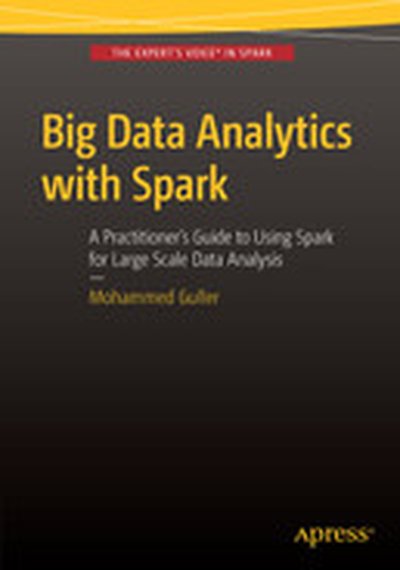
Big Data Analytics with Spark: A Practitioner’s Guide to Using Spark for Large-Scale Data Processing, Machine Learning, and Graph Analytics, and High-Velocity Data Stream Processing

This book is a step-by-step guide for learning how to use Spark for different types of big-data analytics projects, including batch, interactive, graph, and stream data analysis as well as machine learning. It covers Spark core and its add-on libraries, including Spark SQL, Spark Streaming, GraphX, MLlib, and Spark ML. Big Data Analytics with Spark shows you how to use Spark and leverage its easy-to-use features to increase your productivity. You learn to perform fast data analysis using its in-memory caching and advanced execution engine, employ in-memory computing capabilities for building high-performance machine learning and low-latency interactive analytics applications, and much more. Moreover, the book shows you how to use Spark as a single integrated platform for a variety of data processing tasks, including ETL pipelines, BI, live data stream processing, graph analytics, and machine learning. The book also includes a chapter on Scala, the hottest functional programming language, and the language that underlies Spark. You’ll learn the basics of functional programming in Scala, so that you can write Spark applications in it. What's more, Big Data Analytics with Spark provides an introduction to other big data technologies that are commonly used along with Spark, such as HDFS, Avro, Parquet, Kafka, Cassandra, HBase, Mesos, and so on. It also provides an introduction to machine learning and graph concepts. So the book is self-sufficient; all the technologies that you need to know to use Spark are covered. The only thing that you are expected to have is some programming knowledge in any language.

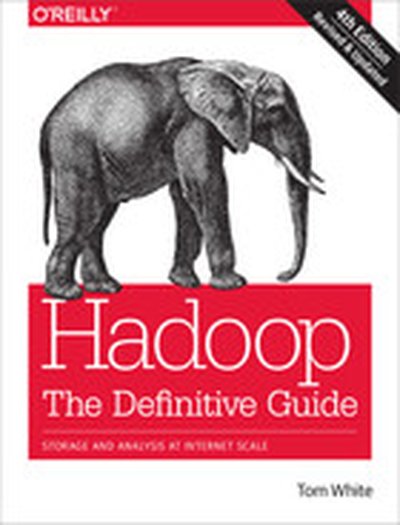
Hadoop: The Definitive Guide, 4th Edition

Get ready to unlock the power of your data. With the fourth edition of this comprehensive guide, youâ??ll learn how to build and maintain reliable, scalable, distributed systems with Apache Hadoop. This book is ideal for programmers looking to analyze datasets of any size, and for administrators who want to set up and run Hadoop clusters. Using Hadoop 2 exclusively, author Tom White presents new chapters on YARN and several Hadoop-related projects such as Parquet, Flume, Crunch, and Spark. Youâ??ll learn about recent changes to Hadoop, and explore new case studies on Hadoopâ??s role in healthcare systems and genomics data processing. Learn fundamental components such as MapReduce, HDFS, and YARN Explore MapReduce in depth, including steps for developing applications with it Set up and maintain a Hadoop cluster running HDFS and MapReduce on YARN Learn two data formats: Avro for data serialization and Parquet for nested data Use data ingestion tools such as Flume (for streaming data) and Sqoop (for bulk data transfer) Understand how high-level data processing tools like Pig, Hive, Crunch, and Spark work with Hadoop Learn the HBase distributed database and the ZooKeeper distributed configuration service

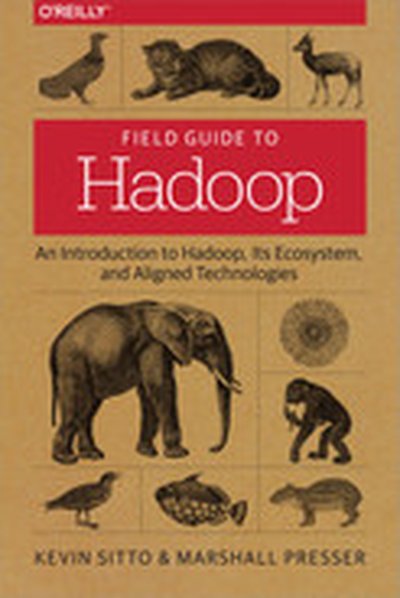
Field Guide to Hadoop

If your organization is about to enter the world of big data, you not only need to decide whether Apache Hadoop is the right platform to use, but also which of its many components are best suited to your task. This field guide makes the exercise manageable by breaking down the Hadoop ecosystem into short, digestible sections. You’ll quickly understand how Hadoop’s projects, subprojects, and related technologies work together. Each chapter introduces a different topic—such as core technologies or data transfer—and explains why certain components may or may not be useful for particular needs. When it comes to data, Hadoop is a whole new ballgame, but with this handy reference, you’ll have a good grasp of the playing field. Topics include: Core technologies—Hadoop Distributed File System (HDFS), MapReduce, YARN, and Spark Database and data management—Cassandra, HBase, MongoDB, and Hive Serialization—Avro, JSON, and Parquet Management and monitoring—Puppet, Chef, Zookeeper, and Oozie Analytic helpers—Pig, Mahout, and MLLib Data transfer—Scoop, Flume, distcp, and Storm Security, access control, auditing—Sentry, Kerberos, and Knox Cloud computing and virtualization—Serengeti, Docker, and Whirr