talk-data.com talk-data.com

Topic

Python

programming_language data_science web_development

1446

tagged

Activity Trend

185 peak/qtr
2020-Q1 2026-Q1

Activities

1446 activities · Newest first

Pandas Cookbook

The Pandas Cookbook offers a collection of practical recipes for mastering data manipulation, analysis, and visualization tasks using pandas. Through a methodological and hands-on approach, you will learn to utilize pandas for handling real-world datasets efficiently. By the end of this book, you will be able to solve complex data science problems and create insightful visual representations in Python. What this Book will help me do Understand the core functionalities of pandas 0.20 for exploring datasets effectively. Master filtering, selecting, and transforming data for targeted analysis. Leverage pandas' features for aggregating and transforming grouped data. Restructure data for analysis and create professional visualizations using integration with Seaborn and Matplotlib. Gain expertise in handling time series data and SQL-like merging operations. Author(s) Theodore Petrou, the author of the Pandas Cookbook, is a data scientist and Python expert with extensive experience teaching and using pandas in professional settings. Known for his practical approach, he meticulously explains each recipe and includes comprehensive examples and datasets in Jupyter notebooks to enhance your learning experience. Who is it for? This book is aimed at data scientists, Python developers, and analysts seeking an in-depth, practical guide to mastering data analysis with pandas. Whether you're a beginner with some knowledge of Python or an experienced analyst looking to refine your skills, this cookbook provides valuable insights and techniques for your data-driven tasks.

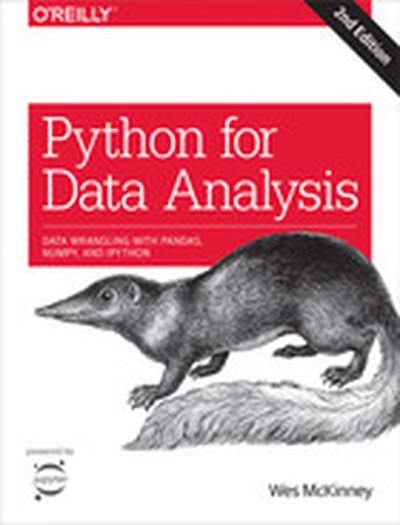
Python for Data Analysis, 2nd Edition

Get complete instructions for manipulating, processing, cleaning, and crunching datasets in Python. Updated for Python 3.6, the second edition of this hands-on guide is packed with practical case studies that show you how to solve a broad set of data analysis problems effectively. You’ll learn the latest versions of pandas, NumPy, IPython, and Jupyter in the process. Written by Wes McKinney, the creator of the Python pandas project, this book is a practical, modern introduction to data science tools in Python. It’s ideal for analysts new to Python and for Python programmers new to data science and scientific computing. Data files and related material are available on GitHub. Use the IPython shell and Jupyter notebook for exploratory computing Learn basic and advanced features in NumPy (Numerical Python) Get started with data analysis tools in the pandas library Use flexible tools to load, clean, transform, merge, and reshape data Create informative visualizations with matplotlib Apply the pandas groupby facility to slice, dice, and summarize datasets Analyze and manipulate regular and irregular time series data Learn how to solve real-world data analysis problems with thorough, detailed examples

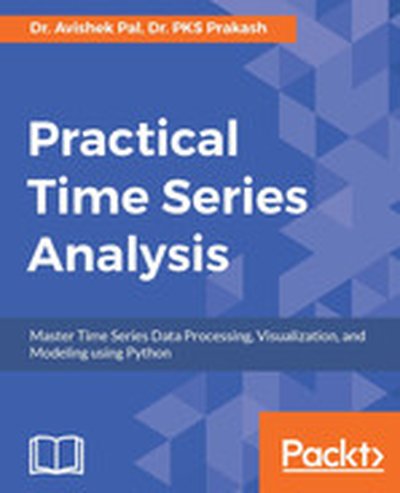
Practical Time Series Analysis

Discover how to unlock the secrets of time-series data with "Practical Time Series Analysis". With a focus on hands-on learning, this book takes you on a journey through time series data processing, visualization, and modeling. Gain the technical expertise and confidence to tackle real-world datasets using Python. What this Book will help me do Understand the fundamental principles of time series analysis and their application to real-world datasets. Learn to utilize Python for data preparation, visualization, and processing in the context of time series. Master the techniques of evaluating and addressing common challenges such as non-stationarity and autocorrelation. Apply statistical methods and machine learning models, including ARIMA and deep learning approaches, to forecasting tasks. Develop practical skills to implement and deploy end-to-end predictive models for time series data analysis. Author(s) PKS Prakash and Avishek Pal bring decades of combined experience in data science and analytics. Their meticulous approach toward simplifying complex concepts makes learning time series approachable and engaging. Drawing from their professional expertise, they incorporate extensive examples to merge theory with practice. Who is it for? This book is ideal for data scientists and engineers keen on enhancing their abilities to analyze temporal data. Prior knowledge in Python and basic statistics will help you gain the most from this book. Whether advancing your career or solving practical problems, you'll find invaluable insights here.

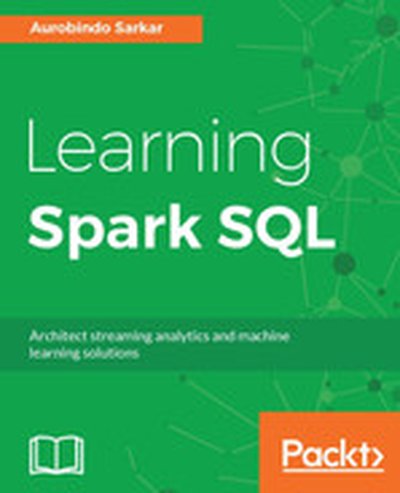
Learning Spark SQL

"Learning Spark SQL" takes you from data exploration to designing scalable applications with Apache Spark SQL. Through hands-on examples, you will comprehend real-world use cases and gain practical skills crucial for working with Spark SQL APIs, data frames, streaming data, and optimizing Spark applications. What this Book will help me do Understand the principles of Spark SQL and its APIs for building scalable distributed applications. Gain hands-on experience performing data wrangling and visualization using Spark SQL and real-world datasets. Learn how to design and optimize applications for performance and scalability with Spark SQL. Develop the skills to integrate Spark SQL with other frameworks like Apache Kafka for streaming analytics. Master the techniques required to architect machine learning and deep learning solutions using Spark SQL. Author(s) None Sarkar is an experienced technologist and trainer specializing in big data, streaming analytics, and scalable architectures using Apache Spark. With years of practical experience in implementing Spark solutions, Sarkar draws from real-world projects to provide readers with valuable insights. Sarkar's approachable and detailed writing style ensures readers grasp both the theory and the practice of Spark SQL. Who is it for? This book is ideal for software developers, data engineers, and architects aspiring to harness Apache Spark for robust, scalable applications. It suits readers with some SQL querying experience and a basic knowledge of programming in languages like Scala, Java, or Python. Whether you're a Spark newcomer or advancing your capabilities in scalable data processing, this resource will accelerate your learning journey.

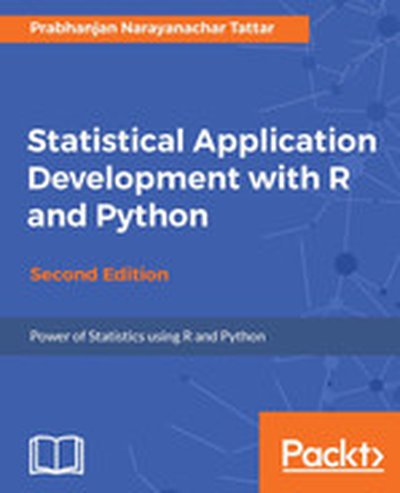
Statistical Application Development with R and Python - Second Edition

This book, 'Statistical Application Development with R and Python', is your gateway to mastering statistical analysis and applying it effectively in real-world contexts. Through integrated R and Python code, you'll learn how to utilize data processing, explore advanced statistical models like regression and CART, and develop applications that solve complex analytical challenges. What this Book will help me do Fully understand data visualization and exploratory analysis methods to uncover insights from datasets. Master techniques such as regression models, clustering, and classification to enhance your analytical toolkit. Gain proficiency in R and Python for data processing and statistical modeling tasks. Apply CART and other machine learning tools to tackle nonlinear data challenges effectively. Equip yourself with a comprehensive approach to data exploration and decision-making for impactful results. Author(s) The author(s) of this book bring extensive experience in statistical analysis, computational modeling, and the use of R and Python for data science. They are professionals and educators passionate about making statistics accessible and practical. Their engaging writing style ensures readers not only understand but also enjoy the journey of learning statistics. Who is it for? This book is perfect for aspiring data scientists or professionals wanting to deepen their understanding of statistical analysis. Whether you're new to R or Python or looking to integrate both into your workflow, this guide provides comprehensive knowledge and practical techniques. It's suitable for beginners with no prior experience as well as seasoned users seeking to enhance their data processing and modeling skills.

Matplotlib 2.x By Example

"Matplotlib 2.x By Example" is your comprehensive guide to mastering data visualization in Python using the Matplotlib library. Through detailed explanations and hands-on examples, this book will teach you how to create stunning, insightful, and professional-looking visual representations of your data. You'll learn valuable skills tailored towards practical applications in science, marketing, and data analysis. What this Book will help me do Understand the core features of Matplotlib and how to use them effectively. Create professional 2D and 3D visualizations, such as scatter plots, line graphs, and more. Develop skills to transform raw data into meaningful insights through visualization. Enhance your data visualizations with interactive elements and animations. Leverage additional libraries such as Seaborn and Pandas to expand functionality. Author(s) Allen Yu, Claire Chung, and Aldrin Yim are seasoned data scientists and technical authors with extensive experience in Python and data visualization. Allen and his coauthors are dedicated to helping readers bridge the gap between their raw data and meaningful insights through visualization. With practical applications and real-world examples, their approachable writing makes complex libraries like Matplotlib accessible and production-ready. Who is it for? This book is perfect for data enthusiasts, analysts, and Python programmers looking to enhance their data visualization skills. Whether you're a professional aiming to create high-quality visual reports or a student eager to understand and present data effectively, this book provides practical and actionable insights. Basic Python knowledge is expected, while all Matplotlib-related aspects are thoroughly explained.

Elegant SciPy

Welcome to Scientific Python and its community. If you’re a scientist who programs with Python, this practical guide not only teaches you the fundamental parts of SciPy and libraries related to it, but also gives you a taste for beautiful, easy-to-read code that you can use in practice. You’ll learn how to write elegant code that’s clear, concise, and efficient at executing the task at hand. Throughout the book, you’ll work with examples from the wider scientific Python ecosystem, using code that illustrates principles outlined in the book. Using actual scientific data, you’ll work on real-world problems with SciPy, NumPy, Pandas, scikit-image, and other Python libraries. Explore the NumPy array, the data structure that underlies numerical scientific computation Use quantile normalization to ensure that measurements fit a specific distribution Represent separate regions in an image with a Region Adjacency Graph Convert temporal or spatial data into frequency domain data with the Fast Fourier Transform Solve sparse matrix problems, including image segmentations, with SciPy’s sparse module Perform linear algebra by using SciPy packages Explore image alignment (registration) with SciPy’s optimize module Process large datasets with Python data streaming primitives and the Toolz library

podcast_episode
by Val Kroll , Ryan Praskievicz (EY) , Julie Hoyer , Tim Wilson (Analytics Power Hour - Columbus (OH) , Moe Kiss (Canva) , Michael Helbling (Search Discovery)

WHY does Tim simply not give Python its due? Isn't Python a perfectly acceptable -- possibly even better -- option when it comes to diving into programming with data? It's open source, too. Some say it's easier to learn than R. And, frankly, isn't a programming language named after a snake just inherently cooler than one named after a letter of the alphabet? The fellas tackled the topic with Ryan Praskieviecz from EY on this episode...and possibly wound up tackling it in a way that will leave Python lovers that much more ready to strangle them (as pythons are wont to do). For complete show notes, including links to items mentioned in this episode and a transcript of the show, visit the show page.

Frank Kane's Taming Big Data with Apache Spark and Python

This book introduces you to the world of Big Data processing using Apache Spark and Python. You will learn to set up and run Spark on different systems, process massive datasets, and create solutions to real-world Big Data challenges with over 15 hands-on examples included. What this Book will help me do Understand the basics of Apache Spark and its ecosystem. Learn how to process large datasets with Spark RDDs using Python. Implement machine learning models with Spark's MLlib library. Master real-time data processing with Spark Streaming modules. Deploy and run Spark jobs on cloud clusters using AWS EMR. Author(s) Frank Kane spent 9 years working at Amazon and IMDb, handling and solving real-world machine learning and Big Data problems. Today, as an instructional designer and educator, he brings his wealth of experience to learners around the globe by creating accessible, practical learning resources. His teaching is clear, engaging, and designed to prepare students for real-world applications. Who is it for? This book is ideal for data scientists or data analysts seeking to delve into Big Data processing with Apache Spark. Readers who have foundational knowledge of Python, as well as some understanding of data processing principles, will find this book useful to sharpen their skills further. It is designed for those eager to learn the practical applications of Big Data tools in today's industry environments. By the end of this book, you should feel confident tackling Big Data challenges using Spark and Python.

Learning pandas - Second Edition

Take your Python skills to the next level with 'Learning pandas,' your go-to guide for mastering data manipulation and analysis. This book walks you through the powerful tools offered by the pandas library, helping you unlock key insights from data efficiently. Whether you're handling time-series data or visualizing patterns, you'll gain the proficiency needed to make sense of complex datasets. What this Book will help me do Understand and effectively use pandas Series and DataFrame objects for data representation and manipulation. Master indexing, slicing, and combining data to perform detailed exploration and analysis. Learn to access and work with external data sources, including APIs, databases, and files, using pandas. Develop the skills to handle and analyze time-series data, managing its unique challenges. Create informative and professional data visualizations directly using pandas capabilities. Author(s) Michael Heydt is a respected author and educator in the field of Python and data analysis. With years of experience utilizing pandas in practical and professional environments, Michael offers a unique perspective that combines deep technical insight with approachable examples. His teaching philosophy emphasizes clarity, applicability, and engaging instruction, ensuring learners easily acquire valuable skills. Who is it for? This book is ideal for Python programmers looking to enhance their data analysis capabilities, as well as data analysts and scientists wanting to leverage pandas to improve their workflows. Readers are recommended to have some familiarity with Python, though prior experience with pandas is not required. If you have a keen interest in data exploration and quantitative techniques, this book is for you.

Practical Data Science Cookbook, Second Edition - Second Edition

The Practical Data Science Cookbook, Second Edition provides hands-on, practical recipes that guide you through all aspects of the data science process using R and Python. Starting with setting up your programming environment, you'll work through a series of real-world projects to acquire, clean, analyze, and visualize data efficiently. What this Book will help me do Set up R and Python environments effectively for data science tasks. Acquire, clean, and preprocess data tailored to analysis with practical steps. Develop robust predictive and exploratory models for actionable insights. Generate analytic reports and share findings with impactful visualizations. Construct tree-based models and master random forests for advanced analytics. Author(s) Authored by a team of experienced professionals in the field of data science and analytics, this book reflects their collective expertise in tackling complex data challenges using programming. With backgrounds spanning industry and academia, the authors bring a practical, application-focused approach to teaching data science. Who is it for? This book is ideal for aspiring data scientists who want hands-on experience with real-world projects, regardless of prior experience. Beginners will gain step-by-step understanding of data science concepts, while seasoned professionals will appreciate the structured projects and use of R and Python for advanced analytics and modeling.

Agile Data Science 2.0

Data science teams looking to turn research into useful analytics applications require not only the right tools, but also the right approach if they’re to succeed. With the revised second edition of this hands-on guide, up-and-coming data scientists will learn how to use the Agile Data Science development methodology to build data applications with Python, Apache Spark, Kafka, and other tools. Author Russell Jurney demonstrates how to compose a data platform for building, deploying, and refining analytics applications with Apache Kafka, MongoDB, ElasticSearch, d3.js, scikit-learn, and Apache Airflow. You’ll learn an iterative approach that lets you quickly change the kind of analysis you’re doing, depending on what the data is telling you. Publish data science work as a web application, and affect meaningful change in your organization. Build value from your data in a series of agile sprints, using the data-value pyramid Extract features for statistical models from a single dataset Visualize data with charts, and expose different aspects through interactive reports Use historical data to predict the future via classification and regression Translate predictions into actions Get feedback from users after each sprint to keep your project on track

Advanced Analytics with Spark, 2nd Edition

In the second edition of this practical book, four Cloudera data scientists present a set of self-contained patterns for performing large-scale data analysis with Spark. The authors bring Spark, statistical methods, and real-world data sets together to teach you how to approach analytics problems by example. Updated for Spark 2.1, this edition acts as an introduction to these techniques and other best practices in Spark programming. You’ll start with an introduction to Spark and its ecosystem, and then dive into patterns that apply common techniques—including classification, clustering, collaborative filtering, and anomaly detection—to fields such as genomics, security, and finance. If you have an entry-level understanding of machine learning and statistics, and you program in Java, Python, or Scala, you’ll find the book’s patterns useful for working on your own data applications. With this book, you will: Familiarize yourself with the Spark programming model Become comfortable within the Spark ecosystem Learn general approaches in data science Examine complete implementations that analyze large public data sets Discover which machine learning tools make sense for particular problems Acquire code that can be adapted to many uses

Data Science with Java

Data Science is booming thanks to R and Python, but Java brings the robustness, convenience, and ability to scale critical to today’s data science applications. With this practical book, Java software engineers looking to add data science skills will take a logical journey through the data science pipeline. Author Michael Brzustowicz explains the basic math theory behind each step of the data science process, as well as how to apply these concepts with Java. You’ll learn the critical roles that data IO, linear algebra, statistics, data operations, learning and prediction, and Hadoop MapReduce play in the process. Throughout this book, you’ll find code examples you can use in your applications. Examine methods for obtaining, cleaning, and arranging data into its purest form Understand the matrix structure that your data should take Learn basic concepts for testing the origin and validity of data Transform your data into stable and usable numerical values Understand supervised and unsupervised learning algorithms, and methods for evaluating their success Get up and running with MapReduce, using customized components suitable for data science algorithms

Python Web Scraping - Second Edition

"Python Web Scraping" is a practical guide to extracting and processing online data using the Python programming language. With this book, you'll learn step-by-step how to build web scrapers and crawlers that can handle a range of data sources and structures. After reading this, you will be equipped to tackle real-world web scraping challenges effectively. What this Book will help me do Learn how to extract structured data from standard webpages using Python. Gain proficiency with libraries such as Selenium and PyQt for handling dynamic and JavaScript-dependent content. Build concurrent scrapers to efficiently process large volumes of web pages in parallel. Understand and implement form interaction automation for data extraction from complex websites. Develop advanced scrapers using Scrapy to handle sophisticated web crawling tasks. Author(s) None Jarmul is an experienced data scientist and programmer with extensive knowledge in Python. They bring practical expertise from working on real-world web scraping projects. In their work, they focus on creating content that empowers readers by demystifying complex technical topics. Who is it for? This book is perfect for software developers eager to dive into web scraping using Python, even if they're new to the subject. If you have basic to intermediate Python skills and want to automate data collection and processing, this is the book for you. The techniques here are valuable for tackling diverse data extraction scenarios.

SPSS Statistics for Data Analysis and Visualization

Dive deeper into SPSS Statistics for more efficient, accurate, and sophisticated data analysis and visualization SPSS Statistics for Data Analysis and Visualization goes beyond the basics of SPSS Statistics to show you advanced techniques that exploit the full capabilities of SPSS. The authors explain when and why to use each technique, and then walk you through the execution with a pragmatic, nuts and bolts example. Coverage includes extensive, in-depth discussion of advanced statistical techniques, data visualization, predictive analytics, and SPSS programming, including automation and integration with other languages like R and Python. You'll learn the best methods to power through an analysis, with more efficient, elegant, and accurate code. IBM SPSS Statistics is complex: true mastery requires a deep understanding of statistical theory, the user interface, and programming. Most users don't encounter all of the methods SPSS offers, leaving many little-known modules undiscovered. This book walks you through tools you may have never noticed, and shows you how they can be used to streamline your workflow and enable you to produce more accurate results. Conduct a more efficient and accurate analysis Display complex relationships and create better visualizations Model complex interactions and master predictive analytics Integrate R and Python with SPSS Statistics for more efficient, more powerful code These "hidden tools" can help you produce charts that simply wouldn't be possible any other way, and the support for other programming languages gives you better options for solving complex problems. If you're ready to take advantage of everything this powerful software package has to offer, SPSS Statistics for Data Analysis and Visualization is the expert-led training you need.

Machine Learning with Spark - Second Edition

Dive into the world of distributed machine learning with Apache Spark, a powerful framework for handling, processing, and analyzing big data. This book will take you through implementing popular machine learning algorithms using Spark ML, covering end-to-end workflows such as data preparation, model building, predictive analysis, and text processing. What this Book will help me do Learn to implement scalable machine learning solutions using Spark ML. Develop the skills to set up and configure Apache Spark environments. Master the application of machine learning techniques like clustering, classification, and regression with Spark. Efficiently handle and process large-scale datasets using Spark tools. Put Spark's capabilities to work in building real-world distributed data processing solutions. Author(s) None Dua and None Ghotra bring a wealth of experience in big data and machine learning to this book. They have been involved in building scalable data systems and implementing machine learning solutions in various industry scenarios. Their approach is hands-on and focused on teaching practical, actionable knowledge. Who is it for? This book is perfect for data enthusiasts, data engineers, and machine learning practitioners who are familiar with Python and Scala, eager to apply machine learning concepts in distributed environments. It's aimed at professionals looking to develop their skills in building scalable data systems and implementing advanced machine learning workflows in Spark.

MQTT Essentials - A Lightweight IoT Protocol

Dive into the world of MQTT, the preferred protocol for IoT and M2M communication. This book provides a comprehensive guide to understanding, implementing, and securing MQTT-based systems, enabling readers to create efficient and lightweight communication networks for their connected devices. What this Book will help me do Understand the underlying principles and protocol structure of MQTT. Securely configure and deploy an MQTT broker for communication. Develop Python, Java, and JavaScript-based MQTT client applications. Utilize MQTT for real-world IoT use cases such as sensor data interchange. Optimize MQTT usage for low-latency and lightweight communication scenarios. Author(s) Gastón C. Hillar is an experienced IoT developer and author with a deep understanding of IoT protocols and technologies. With years of practical experience in designing and deploying secure IoT systems, Gastón specializes in breaking down complex topics into digestible and actionable insights. Through his books, he aims to empower developers to effectively integrate IoT technologies into their work. Who is it for? The book is tailored for software developers and engineers who are looking to integrate MQTT into their IoT solutions. It's ideal for individuals with pre-existing knowledge in IoT concepts who want to deepen their understanding of MQTT. Readers seeking to secure, optimize, and utilize MQTT for communication and automation tasks will find it especially useful. It's a perfect fit for those working with Python, Java, and web technologies in IoT contexts.

Python: Data Analytics and Visualization

Understand, evaluate, and visualize data About This Book Learn basic steps of data analysis and how to use Python and its packages A step-by-step guide to predictive modeling including tips, tricks, and best practices Effectively visualize a broad set of analyzed data and generate effective results Who This Book Is For This book is for Python Developers who are keen to get into data analysis and wish to visualize their analyzed data in a more efficient and insightful manner. What You Will Learn Get acquainted with NumPy and use arrays and array-oriented computing in data analysis Process and analyze data using the time-series capabilities of Pandas Understand the statistical and mathematical concepts behind predictive analytics algorithms Data visualization with Matplotlib Interactive plotting with NumPy, Scipy, and MKL functions Build financial models using Monte-Carlo simulations Create directed graphs and multi-graphs Advanced visualization with D3 In Detail You will start the course with an introduction to the principles of data analysis and supported libraries, along with NumPy basics for statistics and data processing. Next, you will overview the Pandas package and use its powerful features to solve data-processing problems. Moving on, you will get a brief overview of the Matplotlib API .Next, you will learn to manipulate time and data structures, and load and store data in a file or database using Python packages. You will learn how to apply powerful packages in Python to process raw data into pure and helpful data using examples. You will also get a brief overview of machine learning algorithms, that is, applying data analysis results to make decisions or building helpful products such as recommendations and predictions using Scikit-learn. After this, you will move on to a data analytics specialization - predictive analytics. Social media and IOT have resulted in an avalanche of data. You will get started with predictive analytics using Python. You will see how to create predictive models from data. You will get balanced information on statistical and mathematical concepts, and implement them in Python using libraries such as Pandas, scikit-learn, and NumPy. You'll learn more about the best predictive modeling algorithms such as Linear Regression, Decision Tree, and Logistic Regression. Finally, you will master best practices in predictive modeling. After this, you will get all the practical guidance you need to help you on the journey to effective data visualization. Starting with a chapter on data frameworks, which explains the transformation of data into information and eventually knowledge, this path subsequently cover the complete visualization process using the most popular Python libraries with working examples This Learning Path combines some of the best that Packt has to offer in one complete, curated package. It includes content from the following Packt products: Getting Started with Python Data Analysis, Phuong Vo.T.H &Martin Czygan Learning Predictive Analytics with Python, Ashish Kumar Mastering Python Data Visualization, Kirthi Raman Style and approach The course acts as a step-by-step guide to get you familiar with data analysis and the libraries supported by Python with the help of real-world examples and datasets. It also helps you gain practical insights into predictive modeling by implementing predictive-analytics algorithms on public datasets with Python. The course offers a wealth of practical guidance to help you on this journey to data visualization

Big Data Visualization

Dive into 'Big Data Visualization' and uncover how to tackle the challenges of visualizing vast quantities of complex data. With a focus on scalable and dynamic techniques, this guide explores the nuances of effective data analysis. You'll master tools and approaches to display, interpret, and communicate data in impactful ways. What this Book will help me do Understand the fundamentals of big data visualization, including unique challenges and solutions. Explore practical techniques for using D3 and Python to visualize and detect anomalies in big data. Learn to leverage dashboards like Tableau to present data insights effectively. Address and improve data quality issues to enhance analysis accuracy. Gain hands-on experience with real-world use cases for tools such as Hadoop and Splunk. Author(s) James D. Miller is an IBM-certified expert specializing in data analytics and visualization. With years of experience handling massive datasets and extracting actionable insights, he is dedicated to sharing his expertise. His practical approach is evident in how he combines tool mastery with a clear understanding of data complexities. Who is it for? This book is designed for data analysts, data scientists, and others involved in interpreting and presenting big datasets. Whether you are a beginner looking to understand big data visualization or an experienced professional seeking advanced tools and techniques, this guide suits your needs perfectly. A foundational knowledge in programming languages like R and big data platforms such as Hadoop is recommended to maximize your learning.