talk-data.com talk-data.com

Topic

Cyber Security

cybersecurity information_security data_security privacy

2078

tagged

Activity Trend

297 peak/qtr
2020-Q1 2026-Q1

Activities

2078 activities · Newest first

Ambient Computing

Consider this scenario: You walk into a building and a sensor identifies you through your mobile phone. You then receive a welcoming text telling you when lunch will be served, or perhaps a health warning based on allergy information you’ve stored in your profile. Maybe you’ll be flagged as a security threat. How is that possible? This O’Reilly report explores ambient computing—hands-free, 24/7 wireless connectivity to hardware, data, and IT systems. Enabling that scenario requires a lot of work behind the scenes to determine network connectivity, device security, and personal privacy. With an ambient-computing technology stack already in the works, resolving those issues is only a matter of time. Through interviews with front-line tech pioneers—including Ari Gesher (Kairos Aerospace) and Matthew Gast (Aerohive Networks)—author Mike Barlow explores how real-time analytics can enable real-time decision making. How will simple beacons broadcast information to your phone as you pass businesses on your morning walk? How can emotional speech analysis monitor the emotional state of employees, students, or people in crowds? Pick up this report and find out.
IBM z13s Technical Guide

Digital business has been driving the transformation of underlying information technology (IT) infrastructure to be more efficient, secure, adaptive, and integrated. IT must be able to handle the explosive growth of mobile clients and employees. It also must be able to process enormous amounts of data to provide deep and real-time insights to help achieve the greatest business impact. This IBM® Redbooks® publication addresses the new IBM z Systems™ single frame, the IBM z13s server. IBM z Systems servers are the trusted enterprise platform for integrating data, transactions, and insight. A data-centric infrastructure must always be available with a 99.999% or better availability, have flawless data integrity, and be secured from misuse. It needs to be an integrated infrastructure that can support new applications. It also needs to have integrated capabilities that can provide new mobile capabilities with real-time analytics delivered by a secure cloud infrastructure. IBM z13s servers are designed with improved scalability, performance, security, resiliency, availability, and virtualization. The superscalar design allows z13s servers to deliver a record level of capacity over the prior single frame z Systems server. In its maximum configuration, the z13s server is powered by up to 20 client characterizable microprocessors (cores) running at 4.3 GHz. This configuration can run more than 18,000 millions of instructions per second (MIPS) and up to 4 TB of client memory. The IBM z13s Model N20 is estimated to provide up to 100% more total system capacity than the IBM zEnterprise® BC12 Model H13. This book provides information about the IBM z13s server and its functions, features, and associated software support. Greater detail is offered in areas relevant to technical planning. It is intended for systems engineers, consultants, planners, and anyone who wants to understand the IBM z Systems™ functions and plan for their usage. It is not intended as an introduction to mainframes. Readers are expected to be generally familiar with existing IBM z Systems technology and terminology.

Oracle Database 12c Security Cookbook

Oracle Database 12c Security Cookbook is your essential guide to mastering the security features in Oracle Database 12c. Through a clear and practical approach, this book provides step-by-step recipes to secure your database against contemporary vulnerabilities, ensuring that your data remains safe and protected. What this Book will help me do Identify and apply the right security strategies for various Oracle Database use cases. Understand and implement Oracle Data Redaction and Virtual Private Database to protect sensitive data. Utilize privilege analysis to strengthen database security and reduce attack surfaces. Set up and enforce unified auditing to monitor user activities effectively. Learn the best practices for multi-layer database security strategies in real-world scenarios. Author(s) Maja Veselica and Zoran Pavlovic are experienced database administrators and architects with years of expertise in Oracle Database environments. They bring a meticulous and holistic approach to troubleshooting and solution development. Through their books, they aim to empower professionals with the tools and knowledge needed to excel in database management. Who is it for? This book is perfect for database administrators, developers, and architects who want a practical guide on securing Oracle Database 12c. Beginners can grasp fundamental security concepts, whereas intermediate practitioners will gain insights into advanced topics. It's ideal for those striving to implement robust security measures in their Oracle environments.

Implementing an Optimized Analytics Solution on IBM Power Systems

This IBM® Redbooks® publication addresses topics to use the virtualization strengths of the IBM POWER8® platform to solve clients' system resource utilization challenges and maximize systems' throughput and capacity. This book addresses performance tuning topics that will help answer clients' complex analytic workload requirements, help maximize systems' resources, and provide expert-level documentation to transfer the how-to-skills to the worldwide teams. This book strengthens the position of IBM Analytics and Big Data solutions with a well-defined and documented deployment model within a POWER8 virtualized environment, offering clients a planned foundation for security, scaling, capacity, resilience, and optimization for analytics workloads. This book is targeted toward technical professionals (analytics consultants, technical support staff, IT Architects, and IT Specialists) who are responsible for providing analytics solutions and support on IBM Power Systems™.

IBM z13 Technical Guide

Digital business has been driving the transformation of underlying IT infrastructure to be more efficient, secure, adaptive, and integrated. Information Technology (IT) must be able to handle the explosive growth of mobile clients and employees. IT also must be able to use enormous amounts of data to provide deep and real-time insights to help achieve the greatest business impact. This IBM® Redbooks® publication addresses the IBM Mainframe, the IBM z13™. The IBM z13 is the trusted enterprise platform for integrating data, transactions, and insight. A data-centric infrastructure must always be available with a 99.999% or better availability, have flawless data integrity, and be secured from misuse. It needs to be an integrated infrastructure that can support new applications. It needs to have integrated capabilities that can provide new mobile capabilities with real-time analytics delivered by a secure cloud infrastructure. IBM z13 is designed with improved scalability, performance, security, resiliency, availability, and virtualization. The superscalar design allows the z13 to deliver a record level of capacity over the prior IBM z Systems™. In its maximum configuration, z13 is powered by up to 141 client characterizable microprocessors (cores) running at 5 GHz. This configuration can run more than 110,000 millions of instructions per second (MIPS) and up to 10 TB of client memory. The IBM z13 Model NE1 is estimated to provide up to 40% more total system capacity than the IBM zEnterprise® EC12 (zEC1) Model HA1. This book provides information about the IBM z13 and its functions, features, and associated software support. Greater detail is offered in areas relevant to technical planning. It is intended for systems engineers, consultants, planners, and anyone who wants to understand the IBM z Systems functions and plan for their usage. It is not intended as an introduction to mainframes. Readers are expected to be generally familiar with existing IBM z Systems technology and terminology.

Cyber-Risk Informatics

This book provides a scientific modeling approach for conducting metrics-based quantitative risk assessments of cybersecurity vulnerabilities and threats. This book provides a scientific modeling approach for conducting metrics-based quantitative risk assessments of cybersecurity threats. The author builds from a common understanding based on previous class-tested works to introduce the reader to the current and newly innovative approaches to address the maliciously-by-human-created (rather than by-chance-occurring) vulnerability and threat, and related cost-effective management to mitigate such risk. This book is purely statistical data-oriented (not deterministic) and employs computationally intensive techniques, such as Monte Carlo and Discrete Event Simulation. The enriched JAVA ready-to-go applications and solutions to exercises provided by the author at the book’s specifically preserved website will enable readers to utilize the course related problems. • Enables the reader to use the book's website's applications to implement and see results, and use them making ‘budgetary’ sense • Utilizes a data analytical approach and provides clear entry points for readers of varying skill sets and backgrounds • Developed out of necessity from real in-class experience while teaching advanced undergraduate and graduate courses by the author Cyber-Risk Informatics is a resource for undergraduate students, graduate students, and practitioners in the field of Risk Assessment and Management regarding Security and Reliability Modeling. Mehmet Sahinoglu, a Professor (1990) Emeritus (2000), is the founder of the Informatics Institute (2009) and its SACS-accredited (2010) and NSA-certified (2013) flagship Cybersystems and Information Security (CSIS) graduate program (the first such full degree in-class program in Southeastern USA) at AUM, Auburn University’s metropolitan campus in Montgomery, Alabama. He is a fellow member of the SDPS Society, a senior member of the IEEE, and an elected member of ISI. Sahinoglu is the recipient of Microsoft's Trustworthy Computing Curriculum (TCC) award and the author of Trustworthy Computing (Wiley, 2007).

Professional Hadoop

The professional's one-stop guide to this open-source, Java-based big data framework Professional Hadoop is the complete reference and resource for experienced developers looking to employ Apache Hadoop in real-world settings. Written by an expert team of certified Hadoop developers, committers, and Summit speakers, this book details every key aspect of Hadoop technology to enable optimal processing of large data sets. Designed expressly for the professional developer, this book skips over the basics of database development to get you acquainted with the framework's processes and capabilities right away. The discussion covers each key Hadoop component individually, culminating in a sample application that brings all of the pieces together to illustrate the cooperation and interplay that make Hadoop a major big data solution. Coverage includes everything from storage and security to computing and user experience, with expert guidance on integrating other software and more. Hadoop is quickly reaching significant market usage, and more and more developers are being called upon to develop big data solutions using the Hadoop framework. This book covers the process from beginning to end, providing a crash course for professionals needing to learn and apply Hadoop quickly. Configure storage, UE, and in-memory computing Integrate Hadoop with other programs including Kafka and Storm Master the fundamentals of Apache Big Top and Ignite Build robust data security with expert tips and advice Hadoop's popularity is largely due to its accessibility. Open-source and written in Java, the framework offers almost no barrier to entry for experienced database developers already familiar with the skills and requirements real-world programming entails. Professional Hadoop gives you the practical information and framework-specific skills you need quickly.

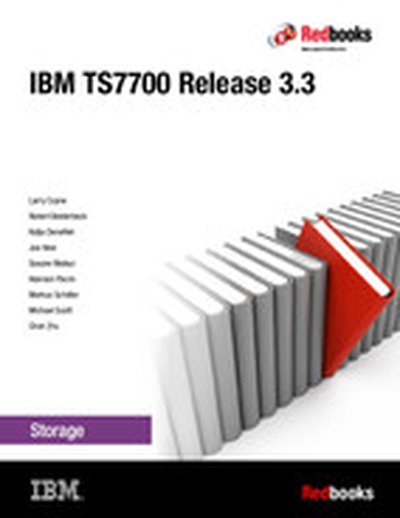
IBM TS7700 Release 3.3

IBM® TS7700 is a family of mainframe virtual tape solutions that optimize data protection and business continuance for IBM z Systems™ data. Through the use of virtualization and disk cache, the TS7700 family operates at disk speeds while maintaining compatibility with existing tape operations. Its fully integrated tiered storage hierarchy takes advantage of both disk and tape technologies to deliver performance for active data and best economics for inactive and archive data. This IBM Redbooks® publication describes the TS7700 R3.3 architecture, planning, migration, implementation, and operations. The latest TS7700 family of z Systems tape virtualization is offered as two models: IBM TS7720 features encryption-capable high-capacity cache that uses 3 TB SAS disk drives with RAID 6, which can scale to large capacities with the highest level of data protection. IBM TS7740 features encryption-capable 600 GB SAS drives with RAID 6 protection. Both models write data by policy to physical tape through attachment to high-capacity, high-performance IBM TS1150 and earlier IBM 3592 model tape drives that are installed in IBM TS3500 tape libraries. Physical tape support is optional on TS7720. TS7700 R3.3 also supports external key management for disk-based encryption by using IBM Security Key Lifecycle Manager. This book intended for system architects who want to integrate their storage systems for smoother operation.

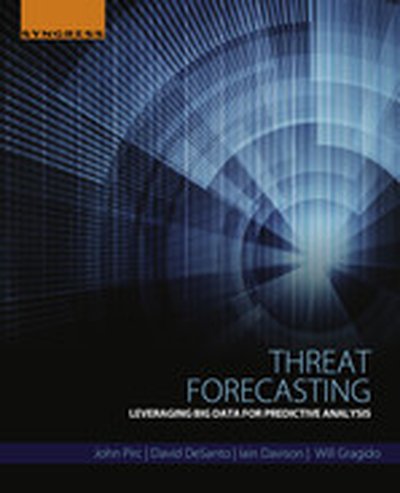
Threat Forecasting

Drawing upon years of practical experience and using numerous examples and illustrative case studies, Threat Forecasting: Leveraging Big Data for Predictive Analysis discusses important topics, including the danger of using historic data as the basis for predicting future breaches, how to use security intelligence as a tool to develop threat forecasting techniques, and how to use threat data visualization techniques and threat simulation tools. Readers will gain valuable security insights into unstructured big data, along with tactics on how to use the data to their advantage to reduce risk. Presents case studies and actual data to demonstrate threat data visualization techniques and threat simulation tools Explores the usage of kill chain modelling to inform actionable security intelligence Demonstrates a methodology that can be used to create a full threat forecast analysis for enterprise networks of any size

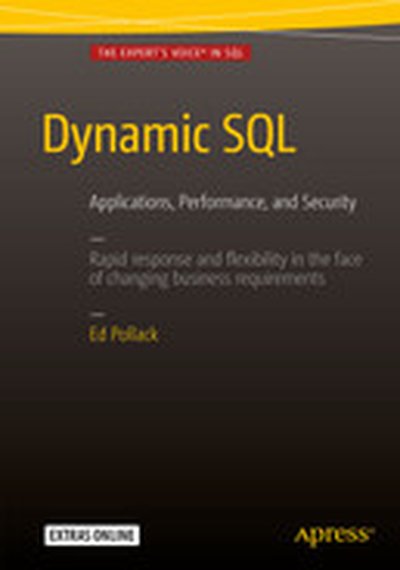
Dynamic SQL: Applications, Performance, and Security

This book is an introduction and deep-dive into the many uses of dynamic SQL in Microsoft SQL Server. Dynamic SQL is key to large-scale searching based upon user-entered criteria. It's also useful in generating value-lists, in dynamic pivoting of data for business intelligence reporting, and for customizing database objects and querying their structure. Executing dynamic SQL is at the heart of applications such as business intelligence dashboards that need to be fluid and respond instantly to changing user needs as those users explore their data and view the results. Yet dynamic SQL is feared by many due to concerns over SQL injection attacks. Reading Dynamic SQL: Applications, Performance, and Security is your opportunity to learn and master an often misunderstood feature, including security and SQL injection. All aspects of security relevant to dynamic SQL are discussed in this book. You will learn many ways to save time and develop code more efficiently, and you will practice directly with security scenarios that threaten companies around the world every day. Dynamic SQL: Applications, Performance, and Security helps you bring the productivity and user-satisfaction of flexible and responsive applications to your organization safely and securely. Your organization's increased ability to respond to rapidly changing business scenarios will build competitive advantage in an increasingly crowded and competitive global marketplace. Discusses many applications of dynamic SQL, both simple and complex. Explains each example with demos that can be run at home and on your laptop. Helps you to identify when dynamic SQL can offer superior performance. Pays attention to security and best practices to ensure safety of your data. What You Will Learn Build flexible applications that respond fast to changing business needs. Take advantage of unconventional but productive uses of dynamic SQL. Protect your data from attack through best-practices in your implementations. Know about SQL Injection and be confident in your defenses against it Run at high performance by optimizing dynamic SQL in your applications. Troubleshoot and debug dynamic SQL to ensure correct results. Who This Book is For Dynamic SQL: Applications, Performance, and Security is for developers and database administrators looking to hone and build their T-SQL coding skills. The book is ideal for advanced users wanting to plumb the depths of application flexibility and troubleshoot performance issues involving dynamic SQL. The book is also ideal for beginners wanting to learn what dynamic SQL is about and how it can help them deliver competitive advantage to their organizations.

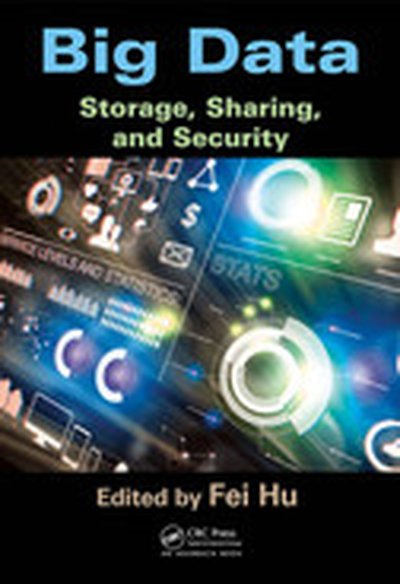
Big Data

Big Data: Storage, Sharing, and Security examines Big Data management from an R&D perspective. It covers the 3S designs-storage, sharing, and security-through detailed descriptions of Big Data concepts and implementations. Presenting the contributions of recognized Big Data experts from around the world, the book contains more than 450 pages of technical details on the most important implementation aspects regarding Big Data.

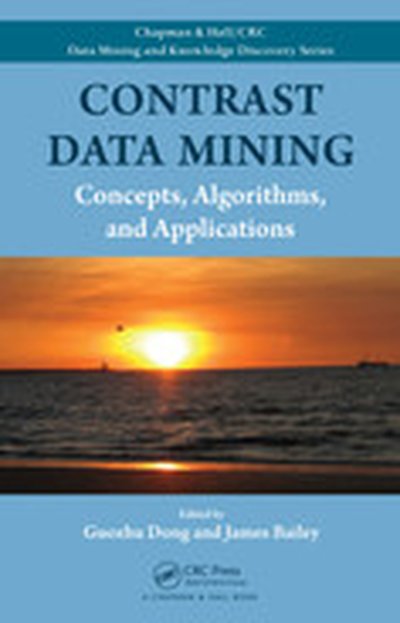
Contrast Data Mining

This work collects recent results from this specialized area of data mining that have previously been scattered in the literature, making them more accessible to researchers and developers in data mining and other fields. The book not only presents concepts and techniques for contrast data mining, but also explores the use of contrast mining to solve challenging problems in various scientific, medical, and business domains. It examines how contrast mining is used in discriminative gene transfer and microarray analysis, computational toxicology, spatial and image data classification, network security, and many more applications.

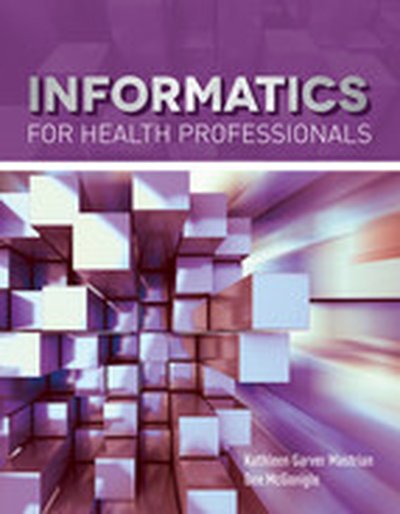
Informatics for Health Professionals

Provides healthcare students and professionals with the foundational knowledge to integrate informatics principles into clinical practice. Key content focuses on current informatics research and practice including but not limited to: technology trends, information security advances, health information exchanges, care coordination, transition technologies, ethical and legislative aspects, social media use, mobile health, bioinformatics, knowledge management, data mining, and more. Helpful learning tools include case studies, provoking questions to prompt discussion and application of the material learned, research briefs to encourage the reader to access current research, and call-outs which focus on cutting-edge innovations, meaningful use, and patient safety.

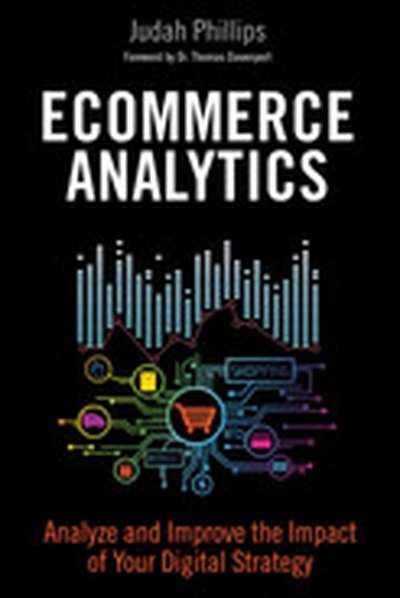
Ecommerce Analytics: Analyze and Improve the Impact of Your Digital Strategy

Today's Complete, Focused, Up-to-Date Guide to Analytics for Ecommerce Profit from analytics throughout the entire customer experience and lifecycle Make the most of all the fast-changing data sources now available to you For all ecommerce executives, strategists, entrepreneurs, marketers, analysts, and data scientists Ecommerce Analytics is the only complete single-source guide to analytics for your ecommerce business. It brings together all the knowledge and skills you need to solve your unique problems, and transform your data into better decisions and customer experiences. Judah Phillips shows how to use analysis to improve ecommerce marketing and advertising, understand customer behavior, increase conversion rates, strengthen loyalty, optimize merchandising and product mix, streamline transactions, optimize product mix, and accurately attribute sales. Drawing on extensive experience leading large-scale analytics programs, he also offers expert guidance on building successful analytical teams; surfacing high-value insights via dashboards and visualization; and managing data governance, security, and privacy. Here are the answers you need to make the most of analytics in ecommerce: throughout your organization, across your entire customer lifecycle.

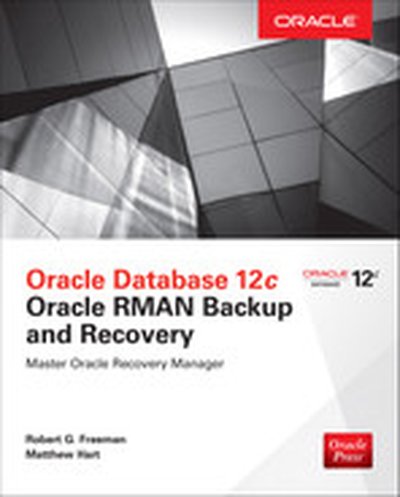
Oracle Database 12c Oracle RMAN Backup & Recovery

This authoritative Oracle Press resource on RMAN has been thoroughly revised to cover every new feature, offering the most up-to-date information This fully updated volume lays out the easiest, fastest, and most effective methods of deploying RMAN in Oracle Database environments of any size. Keeping with previous editions, this book teaches computing professionals at all skill levels how to fully leverage every powerful RMAN tool and protect mission-critical data. Oracle Database 12c RMAN Backup and Recovery explains how to generate reliable archives and carry out successful system restores. You will learn to work from the command line or GUI, automate the database backup process, perform Oracle Flashback recoveries, and deploy third-party administration utilities. The book features full details on cloud computing, report generation, performance tuning, and security. Offers up-to-date coverage of Oracle Database 12 c new features Examples and workshops throughout walk you through important RMAN operations

Spark

Production-targeted Spark guidance with real-world use cases Spark: Big Data Cluster Computing in Production goes beyond general Spark overviews to provide targeted guidance toward using lightning-fast big-data clustering in production. Written by an expert team well-known in the big data community, this book walks you through the challenges in moving from proof-of-concept or demo Spark applications to live Spark in production. Real use cases provide deep insight into common problems, limitations, challenges, and opportunities, while expert tips and tricks help you get the most out of Spark performance. Coverage includes Spark SQL, Tachyon, Kerberos, ML Lib, YARN, and Mesos, with clear, actionable guidance on resource scheduling, db connectors, streaming, security, and much more. Spark has become the tool of choice for many Big Data problems, with more active contributors than any other Apache Software project. General introductory books abound, but this book is the first to provide deep insight and real-world advice on using Spark in production. Specific guidance, expert tips, and invaluable foresight make this guide an incredibly useful resource for real production settings. Review Spark hardware requirements and estimate cluster size Gain insight from real-world production use cases Tighten security, schedule resources, and fine-tune performance Overcome common problems encountered using Spark in production Spark works with other big data tools including MapReduce and Hadoop, and uses languages you already know like Java, Scala, Python, and R. Lightning speed makes Spark too good to pass up, but understanding limitations and challenges in advance goes a long way toward easing actual production implementation. Spark: Big Data Cluster Computing in Production tells you everything you need to know, with real-world production insight and expert guidance, tips, and tricks.

Self-Service Analytics

Organizations today are swimming in data, but most of them manage to analyze only a fraction of what they collect. To help build a stronger data-driven culture, many organizations are adopting a new approach called self-service analytics. This O’Reilly report examines how this approach provides data access to more people across a company, allowing business users to work with data themselves and create their own customized analyses. The result? More eyes looking at more data in more ways. Along with the perceived benefits, author Sandra Swanson also delves into the potential pitfalls of self-service analytics: balancing greater data access with concerns about security, data governance, and siloed data stores. Read this report and gain insights from enterprise tech (Yahoo), government (the City of Chicago), and disruptive retail (Warby Parker and Talend). Learn how these organizations are handling self-service analytics in practice. Sandra Swanson is a Chicago-based writer who’s covered technology, science, and business for dozens of publications, including ScientificAmerican.com. Connect with her on Twitter (@saswanson) or at www.saswanson.com.

IBM z13 and IBM z13s Technical Introduction

This IBM® Redbooks® publication introduces the latest IBM z Systems™ platforms, the IBM z13™ and IBM z13s. It includes information about the z Systems environment and how it can help integrate data, transactions, and insight for faster and more accurate business decisions. The z13 and z13s are state-of-the-art data and transaction systems that deliver advanced capabilities that are vital to modern IT infrastructures. These capabilities include: Accelerated data and transaction serving Integrated analytics Access to the API economy Agile development and operations Efficient, scalable, and secure cloud services End-to-end security for data and transactions This book explains how these systems use both new innovations and traditional z Systems strengths to satisfy growing demand for cloud, analytics, and mobile applications. With one of these z Systems platforms as the base, applications can run in a trusted, reliable, and secure environment that both improves operations and lessens business risk.

IBM PowerKVM: Configuration and Use

This IBM® Redpaper Redbooks® publication presents the IBM PowerKVM virtualization for scale-out Linux systems, including the new LC IBM Power Systems™. PowerKVM is open source server virtualization that is based on the IBM POWER8® processor technology. It includes the Linux open source technology of KVM virtualization, and it complements the performance, scalability, and security qualities of Linux. This book describes the concepts of PowerKVM and how you can deploy your virtual machines with the software stack included in the product. It helps you install and configure PowerKVM on your Power Systems server and provides guidance for managing the supported virtualization features by using the web interface and command-line interface (CLI). This information is for professionals who want to acquire a better understanding of PowerKVM virtualization technology to optimize Linux workload consolidation and use the POWER8 processor features. The intended audience also includes people in these roles: Clients Sales and marketing professionals Technical support professionals IBM Business Partners Independent software vendors Open source community IBM OpenPower partners It does not replace the latest marketing materials and configuration tools. It is intended as an additional source of information that, along with existing sources, can be used to increase your knowledge of IBM virtualization solutions. Before you start reading, you must be familiar with the general concepts of kernel-based virtual machine (KVM), Linux, and IBM Power architecture.

Advanced Oracle PL/SQL Developer's Guide (Second Edition) - Second Edition

In "Advanced Oracle PL/SQL Developer's Guide (Second Edition)", you'll delve into the advanced capabilities of Oracle PL/SQL, honing skills needed for professional-level certification while mastering the innovations introduced in Oracle Database 12c. This book serves as a comprehensive resource for enhancing your database development expertise. What this Book will help me do Master advanced Oracle PL/SQL development skills aligned with Oracle Database 12c innovations. Understand and implement Virtual Private Database (VPD) for advanced database security. Gain expertise in tuning, profiling, and debugging PL/SQL code for robust application performance. Integrate and utilize Oracle Database 12c features such as Multitenant feature and Database In-Memory. Prepare for the 1Z0-146 Oracle certification to become recognized as an Advanced PL/SQL Developer. Author(s) Saurabh K. Gupta is an experienced Oracle developer and author known for his clarity and depth in explaining advanced technical concepts. With a strong background in Oracle Database and PL/SQL development, he imparts knowledge that bridges the gap between learning and practical application. Gupta's writing emphasizes clarity and hands-on understanding, making complex topics accessible to developers. Who is it for? This book is tailored for advanced Oracle developers looking to deepen their understanding of PL/SQL and integrate Oracle Database 12c's features into their workflow. It is particularly beneficial for professionals preparing for the 1Z0-146 Oracle exam. Readers should have foundational knowledge in PL/SQL and a determination to elevate their technical proficiency.