talk-data.com talk-data.com

Topic

SQL

Structured Query Language (SQL)

database_language data_manipulation data_definition programming_language

1751

tagged

Activity Trend

107 peak/qtr
2020-Q1 2026-Q2

Activities

1751 activities · Newest first

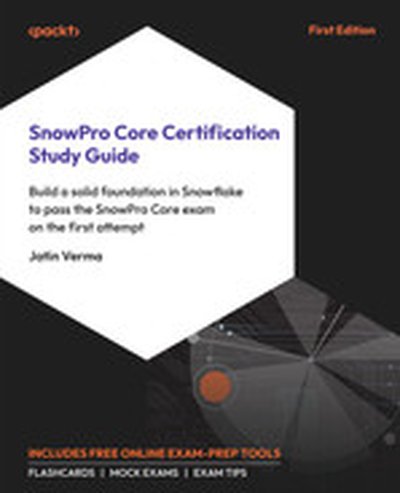
SnowPro Core Certification Study Guide

The "SnowPro Core Certification Study Guide" provides a comprehensive resource for mastering Snowflake data cloud concepts and passing the SnowPro Core exam. Through detailed explanations and practical exercises, you will gain the knowledge and skills necessary to successfully implement and manage Snowflake's powerful features and integrate data solutions effectively. What this Book will help me do Efficiently load and manage data in Snowflake for modern data processing. Optimize queries and configure Snowflake's performance features for data analytics. Securely implement access control and user roles to ensure data privacy. Apply Snowflake's sharing features to collaborate within and between organizations. Prepare effectively for the SnowPro Core exam with mock tests and review tools. Author(s) Jatin Verma is a renowned expert in Snowflake technologies and a certified SnowPro Core professional. With years of hands-on experience working with data solutions, Jatin excels at breaking down complex concepts into digestible lessons. His approachable writing style and dedication to education make this book a trusted resource for both aspiring and current professionals. Who is it for? This book is perfect for data engineers, analysts, database administrators, and business intelligence professionals who are looking to gain expertise in Snowflake and achieve SnowPro Core certification. It is particularly suited for those with foundational knowledge of databases, data warehouses, and SQL, seeking to advance their skills in Snowflake and become certified professionals. By leveraging this guide, readers can solidify their Snowflake knowledge and confidently approach the SnowPro Core certification exam.
Summary In this episode of the Data Engineering Podcast Gleb Mezhanskiy, CEO and co-founder of DataFold, talks about the intersection of AI and data engineering. He discusses the challenges and opportunities of integrating AI into data engineering, particularly using large language models (LLMs) to enhance productivity and reduce manual toil. The conversation covers the potential of AI to transform data engineering tasks, such as text-to-SQL interfaces and creating semantic graphs to improve data accessibility, and explores practical applications of LLMs in automating code reviews, testing, and understanding data lineage.

Announcements Hello and welcome to the Data Engineering Podcast, the show about modern data managementData migrations are brutal. They drag on for months—sometimes years—burning through resources and crushing team morale. Datafold's AI-powered Migration Agent changes all that. Their unique combination of AI code translation and automated data validation has helped companies complete migrations up to 10 times faster than manual approaches. And they're so confident in their solution, they'll actually guarantee your timeline in writing. Ready to turn your year-long migration into weeks? Visit dataengineeringpodcast.com/datafold today for the details. Your host is Tobias Macey and today I'm interviewing Gleb Mezhanskiy about Interview IntroductionHow did you get involved in the area of data management?modern data stack is deadwhere is AI in the data stack?"buy our tool to ship AI"opportunities for LLM in DE workflowContact Info LinkedInParting Question From your perspective, what is the biggest gap in the tooling or technology for data management today?Closing Announcements Thank you for listening! Don't forget to check out our other shows. Podcast.init covers the Python language, its community, and the innovative ways it is being used. The AI Engineering Podcast is your guide to the fast-moving world of building AI systems.Visit the site to subscribe to the show, sign up for the mailing list, and read the show notes.If you've learned something or tried out a project from the show then tell us about it! Email [email protected] with your story.Links DatafoldCopilotCursor IDEAI AgentsDataChatAI Engineering Podcast EpisodeMetrics LayerEmacsLangChainLangGraphCrewAIThe intro and outro music is from The Hug by The Freak Fandango Orchestra / CC BY-SA

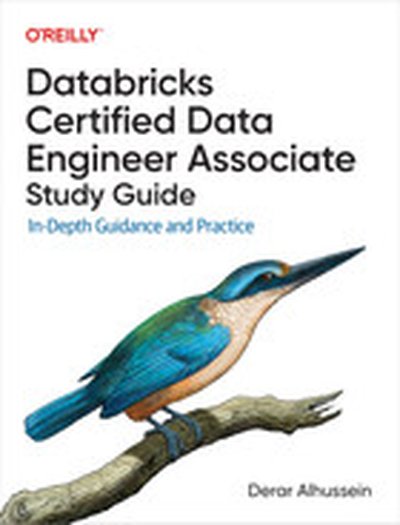
Databricks Certified Data Engineer Associate Study Guide

Data engineers proficient in Databricks are currently in high demand. As organizations gather more data than ever before, skilled data engineers on platforms like Databricks become critical to business success. The Databricks Data Engineer Associate certification is proof that you have a complete understanding of the Databricks platform and its capabilities, as well as the essential skills to effectively execute various data engineering tasks on the platform. In this comprehensive study guide, you will build a strong foundation in all topics covered on the certification exam, including the Databricks Lakehouse and its tools and benefits. You'll also learn to develop ETL pipelines in both batch and streaming modes. Moreover, you'll discover how to orchestrate data workflows and design dashboards while maintaining data governance. Finally, you'll dive into the finer points of exactly what's on the exam and learn to prepare for it with mock tests. Author Derar Alhussein teaches you not only the fundamental concepts but also provides hands-on exercises to reinforce your understanding. From setting up your Databricks workspace to deploying production pipelines, each chapter is carefully crafted to equip you with the skills needed to master the Databricks Platform. By the end of this book, you'll know everything you need to ace the Databricks Data Engineer Associate certification exam with flying colors, and start your career as a certified data engineer from Databricks! You'll learn how to: Use the Databricks Platform and Delta Lake effectively Perform advanced ETL tasks using Apache Spark SQL Design multi-hop architecture to process data incrementally Build production pipelines using Delta Live Tables and Databricks Jobs Implement data governance using Databricks SQL and Unity Catalog Derar Alhussein is a senior data engineer with a master's degree in data mining. He has over a decade of hands-on experience in software and data projects, including large-scale projects on Databricks. He currently holds eight certifications from Databricks, showcasing his proficiency in the field. Derar is also an experienced instructor, with a proven track record of success in training thousands of data engineers, helping them to develop their skills and obtain professional certifications.

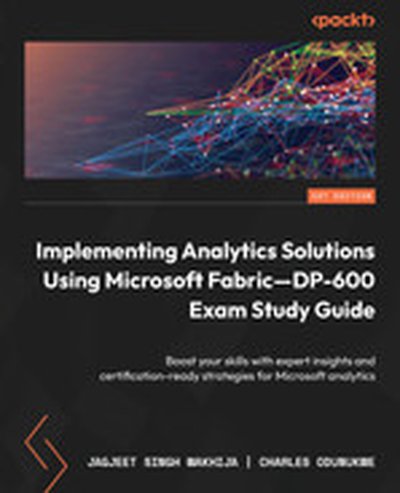
Implementing Analytics Solutions Using Microsoft Fabric—DP-600 Exam Study Guide

Master the art of designing and implementing analytics solutions using Microsoft Fabric with this comprehensive guide. Whether you're preparing for the DP-600 certification exam or want to advance your career, this book offers expert insights into data analytics in Microsoft environments. What this Book will help me do Confidently pass the DP-600 certification exam by mastering exam-tested skills. Acquire practical expertise in deploying data analytics solutions with Microsoft Fabric. Understand and optimize data integration, security, and performance in analytics systems. Learn advanced techniques including semantic model optimization and advanced SQL querying. Prepare for real-world challenges through mock exams and hands-on exercises. Author(s) Jagjeet Singh Makhija and Charles Odunukwe, authors of this guide, are seasoned Microsoft specialists with decades of experience in data analytics, certification training, and technology consulting. Their clear and methodical approach ensures learners at all levels can grow their expertise. Who is it for? If you're a data analyst or IT professional looking to enhance your skills in analytics and Microsoft's technologies, this book is for you. It's ideal for those pursuing the DP-600 certification or aiming to improve their data integration and analysis capabilities.

Neste episódio especial, celebramos 100 edições do Podcast Data Hackers que já alcançou 1,1 milhões de plays. E nada melhor que, explora tudo que moldou o universo de dados, olhando para o futuro.

Agora, chegou aquele momento do ano em que vamos tentar prever o que será tendência em Dados e AI para o ano de 2025! Será que AI generativas ainda estarão em alta? Será mesmo, que será o fim do SQL, hein? Vem com a gente pra esse papo com nossos Community Managers Mario Filho e Pietro Oliveira, e o nosso mestre dos magos e também Co-fundador Allan Senne.

Lembrando que você pode encontrar todos os podcasts da família Data Hackers no Spotify, iTunes, Google Podcast, Castbox e muitas outras plataformas. Caso queira, você também pode ouvir o episódio aqui no post mesmo!

Falamos no episódio

Nossos convidados:

Mario Filho

Pietro Oliveira

Allan Senne.

Nossa Bancada Data Hackers:

Paulo Vasconcellos — Co-founder da Data Hackers e Principal Data Scientist na Hotmart.

Monique Femme — Head of Community Management na Data Hackers

Gabriel Lages — Co-founder da Data Hackers e Data & Analytics Sr. Director na Hotmart.

Summary In this episode of the Data Engineering Podcast Andrew Luo, CEO of OneSchema, talks about handling CSV data in business operations. Andrew shares his background in data engineering and CRM migration, which led to the creation of OneSchema, a platform designed to automate CSV imports and improve data validation processes. He discusses the challenges of working with CSVs, including inconsistent type representation, lack of schema information, and technical complexities, and explains how OneSchema addresses these issues using multiple CSV parsers and AI for data type inference and validation. Andrew highlights the business case for OneSchema, emphasizing efficiency gains for companies dealing with large volumes of CSV data, and shares plans to expand support for other data formats and integrate AI-driven transformation packs for specific industries.

Announcements Hello and welcome to the Data Engineering Podcast, the show about modern data managementData migrations are brutal. They drag on for months—sometimes years—burning through resources and crushing team morale. Datafold's AI-powered Migration Agent changes all that. Their unique combination of AI code translation and automated data validation has helped companies complete migrations up to 10 times faster than manual approaches. And they're so confident in their solution, they'll actually guarantee your timeline in writing. Ready to turn your year-long migration into weeks? Visit dataengineeringpodcast.com/datafold today for the details. Your host is Tobias Macey and today I'm interviewing Andrew Luo about how OneSchema addresses the headaches of dealing with CSV data for your businessInterview IntroductionHow did you get involved in the area of data management?Despite the years of evolution and improvement in data storage and interchange formats, CSVs are just as prevalent as ever. What are your opinions/theories on why they are so ubiquitous?What are some of the major sources of CSV data for teams that rely on them for business and analytical processes?The most obvious challenge with CSVs is their lack of type information, but they are notorious for having numerous other problems. What are some of the other major challenges involved with using CSVs for data interchange/ingestion?Can you describe what you are building at OneSchema and the story behind it?What are the core problems that you are solving, and for whom?Can you describe how you have architected your platform to be able to manage the variety, volume, and multi-tenancy of data that you process?How have the design and goals of the product changed since you first started working on it?What are some of the major performance issues that you have encountered while dealing with CSV data at scale?What are some of the most surprising things that you have learned about CSVs in the process of building OneSchema?What are the most interesting, innovative, or unexpected ways that you have seen OneSchema used?What are the most interesting, unexpected, or challenging lessons that you have learned while working on OneSchema?When is OneSchema the wrong choice?What do you have planned for the future of OneSchema?Contact Info LinkedInParting Question From your perspective, what is the biggest gap in the tooling or technology for data management today?Closing Announcements Thank you for listening! Don't forget to check out our other shows. Podcast.init covers the Python language, its community, and the innovative ways it is being used. The AI Engineering Podcast is your guide to the fast-moving world of building AI systems.Visit the site to subscribe to the show, sign up for the mailing list, and read the show notes.If you've learned something or tried out a project from the show then tell us about it! Email [email protected] with your story.Links OneSchemaEDI == Electronic Data InterchangeUTF-8 BOM (Byte Order Mark) CharactersSOAPCSV RFCIcebergSSIS == SQL Server Integration ServicesMS AccessDatafusionJSON SchemaSFTP == Secure File Transfer ProtocolThe intro and outro music is from The Hug by The Freak Fandango Orchestra / CC BY-SA

As we look back at 2024, we're highlighting some of our favourite episodes of the year, and with 100 of them to choose from, it wasn't easy! The four guests we'll be recapping with are: Lea Pica - A celebrity in the data storytelling and visualisation space. Richie and Lea cover the full picture of data presentation, how to understand your audience, how to leverage hollywood storytelling and more. Out December 19.Alex Banks - Founder of Sunday Signal. Adel and Alex cover Alex’s journey into AI and what led him to create Sunday Signal, the potential of AI, prompt engineering at its most basic level, chain of thought prompting, the future of LLMs and more. Out December 23.Don Chamberlin - The renowned co-inventor of SQL. Richie and Don explore the early development of SQL, how it became standardized, the future of SQL through NoSQL and SQL++ and more. Out December 26.Tom Tunguz - general Partner at Theory Ventures, a $235m VC firm. Richie and Tom explore trends in generative AI, cloud+local hybrid workflows, data security, the future of business intelligence and data analytics, AI in the corporate sector and more. Out December 30. Rapid change seems to be the new norm within the data and AI space, and due to the ecosystem constantly changing, it can be tricky to keep up. Fortunately, any self-respecting venture capitalist looking into data and AI will stay on top of what’s changing and where the next big breakthroughs are likely to come from. We all want to know which important trends are emerging and how we can take advantage of them, so why not learn from a leading VC.  Tomasz Tunguz is a General Partner at Theory Ventures, a $235m early-stage venture capital firm. He blogs sat tomtunguz.com & co-authored Winning with Data. He has worked or works with Looker, Kustomer, Monte Carlo, Dremio, Omni, Hex, Spot, Arbitrum, Sui & many others. He was previously the product manager for Google's social media monetization team, including the Google-MySpace partnership, and managed the launches of AdSense into six new markets in Europe and Asia. Before Google, Tunguz developed systems for the Department of Homeland Security at Appian Corporation.  In the episode, Richie and Tom explore trends in generative AI, the impact of AI on professional fields, cloud+local hybrid workflows, data security, and changes in data warehousing through the use of integrated AI tools, the future of business intelligence and data analytics, the challenges and opportunities surrounding AI in the corporate sector. You'll also get to discover Tom's picks for the hottest new data startups. Links Mentioned in the Show: Tom’s BlogTheory VenturesArticle: What Air Canada Lost In ‘Remarkable’ Lying AI Chatbot Case[Course] Implementing AI Solutions in BusinessRelated Episode: Making Better Decisions using Data & AI with Cassie Kozyrkov, Google's First Chief Decision ScientistSign up to RADAR: AI...

Mastering PostgreSQL 17 - Sixth Edition

Mastering PostgreSQL 17 is your guide to becoming a skilled PostgreSQL database administrator. Learn the latest in PostgreSQL 17, including deployment strategies, optimization approaches, and techniques for secure and high-performing database environments. This book equips you with best practices and actionable steps to elevate your PostgreSQL expertise to a professional level. What this Book will help me do Deploy and manage PostgreSQL 17 databases effectively in production environments. Utilize advanced optimization techniques to ensure queries run efficiently. Implement robust security measures, including encryption and access control. Learn and master database recovery strategies, backups, and replication. Troubleshoot real-world PostgreSQL database issues and performance bottlenecks. Author(s) Hans-Jürgen Schönig is a PostgreSQL expert with over 25 years of hands-on experience as a user and consultant. As the CEO of CYBERTEC PostgreSQL International GmbH, he has contributed extensively to the PostgreSQL community, helping clients worldwide. Hans brings a practical, solutions-focused approach to database administration drawn from supporting countless mission-critical environments. Who is it for? System and database administrators aiming to enhance their PostgreSQL expertise will find this book invaluable. It's also targeted at developers familiar with basic database concepts, seeking to deepen their understanding of PostgreSQL optimization and advanced features. Prior experience with SQL and database management is recommended. Ideal for IT professionals managing production database systems.

As we look back at 2024, we're highlighting some of our favourite episodes of the year, and with 100 of them to choose from, it wasn't easy! The four guests we'll be recapping with are: Lea Pica - A celebrity in the data storytelling and visualisation space. Richie and Lea cover the full picture of data presentation, how to understand your audience, how to leverage hollywood storytelling and more. Out December 19.Alex Banks - Founder of Sunday Signal. Adel and Alex cover Alex’s journey into AI and what led him to create Sunday Signal, the potential of AI, prompt engineering at its most basic level, chain of thought prompting, the future of LLMs and more. Out December 23.Don Chamberlin - The renowned co-inventor of SQL. Richie and Don explore the early development of SQL, how it became standardized, the future of SQL through NoSQL and SQL++ and more. Out December 26.Tom Tunguz - general Partner at Theory Ventures, a $235m VC firm. Richie and Tom explore trends in generative AI, cloud+local hybrid workflows, data security, the future of business intelligence and data analytics, AI in the corporate sector and more. Out December 30. For our 200th episode, we bring you a special guest and taking a walk down memory lane—to the creation and development of one of the most popular programming languages in the world. Don Chamberlin is renowned as the co-inventor of SQL (Structured Query Language), the predominant database language globally, which he developed with Raymond Boyce in the mid-1970s. Chamberlin's professional career began at IBM Research in Yorktown Heights, New York, following a summer internship there during his academic years. His work on IBM's System R project led to the first SQL implementation and significantly advanced IBM’s relational database technology. His contributions were recognized when he was made an IBM Fellow in 2003 and later a Fellow of the Computer History Museum in 2009 for his pioneering work on SQL and database architectures. Chamberlin also contributed to the development of XQuery, an XML query language, as part of the W3C, which became a W3C Recommendation in January 2007. Additionally, he holds fellowships with ACM and IEEE and is a member of the National Academy of Engineering. In the episode, Richie and Don explore his early career at IBM and the development of his interest in databases alongside Ray Boyce, the database task group (DBTG), the transition to relational databases and the early development of SQL, the commercialization and adoption of SQL, how it became standardized, how it evolved and spread via open source, the future of SQL through NoSQL and SQL++ and much more.  Links Mentioned in the Show: The first-ever journal paper on SQL. SEQUEL: A Structured English Query LanguageDon’s Book: SQL++ for SQL Users: A TutorialSystem R: Relational approach to database managementSQL CoursesSQL Articles, Tutorials and Code-AlongsRelated Episode: Scaling Enterprise Analytics with...

SQL Essentials For Dummies

A right-to-the-point guide on all the key topics of SQL programming SQL Essentials For Dummies is your quick reference to all the core concepts of SQL—a valuable common standard language used in relational databases. This useful guide is straightforward—with no excess review, wordy explanations, or fluff—so you get what you need, fast. Great for a brush-up on the basics or as an everyday desk reference, this book is one you can rely on. Strengthen your understanding of the basics of SQL Review what you've already learned or pick up key skills Use SQL to create, manipulate, and control relational databases Jog your memory on the essentials as you work and get clear answers to your questions Perfect for supplementing classroom learning, reviewing for a certification, and staying knowledgeable on the job, SQL Essentials For Dummies is the convenient, direct, and digestible reference you've been looking for.

As we look back at 2024, we're highlighting some of our favourite episodes of the year, and with 100 of them to choose from, it wasn't easy! The four guests we'll be recapping with are: Lea Pica - A celebrity in the data storytelling and visualisation space. Richie and Lea cover the full picture of data presentation, how to understand your audience, how to leverage hollywood storytelling and more. Out December 19.Alex Banks - Founder of Sunday Signal. Adel and Alex cover Alex’s journey into AI and what led him to create Sunday Signal, the potential of AI, prompt engineering at its most basic level, chain of thought prompting, the future of LLMs and more. Out December 23.Don Chamberlin - The renowned co-inventor of SQL. Richie and Don explore the early development of SQL, how it became standardized, the future of SQL through NoSQL and SQL++ and more. Out December 26.Tom Tunguz - general Partner at Theory Ventures, a $235m VC firm. Richie and Tom explore trends in generative AI, cloud+local hybrid workflows, data security, the future of business intelligence and data analytics, AI in the corporate sector and more. Out December 30. Since the launch of ChatGPT, one of the trending terms outside of ChatGPT itself has been prompt engineering. This act of carefully crafting your instructions is treated as alchemy by some and science by others. So what makes an effective prompt? Alex Banks has been building and scaling AI products since 2021. He writes Sunday Signal, a newsletter offering a blend of AI advancements and broader thought-provoking insights. His expertise extends to social media platforms on X/Twitter and LinkedIn, where he educates a diverse audience on leveraging AI to enhance productivity and transform daily life. In the episode, Alex and Adel cover Alex’s journey into AI and what led him to create Sunday Signal, the potential of AI, prompt engineering at its most basic level, strategies for better prompting, chain of thought prompting, prompt engineering as a skill and career path, building your own AI tools rather than using consumer AI products, AI literacy, the future of LLMs and much more.  Links Mentioned in the Show: [Alex’s Free Course on DataCamp] Understanding Prompt EngineeringSunday SignalPrinciples by Ray Dalio: Life and WorkRelated Episode: [DataFramed AI Series #1] ChatGPT and the OpenAI Developer EcosystemRewatch sessions from RADAR: The Analytics Edition New to DataCamp? Learn on the go using the DataCamp mobile appEmpower your business with world-class data and AI skills with DataCamp for business

Hamilton Ulmer is working at the intersection of UI, Exploratory Data Analysis, and SQL at MotherDuck, and he's built a long career in EDA. Hamilton and Tristan dive deep into the history of exploratory data analysis. Even if you spend most of your time below the frontend layer of the stack, it is important to understand the trends in both the practice of data visualization  and the technologies that underlie that practice. For full show notes and to read 6+ years of back issues of the podcast's companion newsletter, head to https://roundup.getdbt.com. The Analytics Engineering Podcast is sponsored by dbt Labs.

As we look back at 2024, we're highlighting some of our favourite episodes of the year, and with 100 of them to choose from, it wasn't easy! The four guests we'll be recapping with are: Lea Pica - A celebrity in the data storytelling and visualisation space. Richie and Lea cover the full picture of data presentation, how to understand your audience, how to leverage hollywood storytelling and more. Out December 19.Alex Banks - Founder of Sunday Signal. Adel and Alex cover Alex’s journey into AI and what led him to create Sunday Signal, the potential of AI, prompt engineering at its most basic level, chain of thought prompting, the future of LLMs and more. Out December 23.Don Chamberlin - The renowned co-inventor of SQL. Richie and Don explore the early development of SQL, how it became standardized, the future of SQL through NoSQL and SQL++ and more. Out December 26.Tom Tunguz - general Partner at Theory Ventures, a $235m VC firm. Richie and Tom explore trends in generative AI, cloud+local hybrid workflows, data security, the future of business intelligence and data analytics, AI in the corporate sector and more. Out December 30. Your data project doesn't end once you have results. In order to have impact, you need to communicate those results to others. Presentations filled with endless tables and technical jargon can easily become tedious, leading your audience to lose interest or misunderstand your point. Data storytelling provides a solution to this: by creating a narrative around your results you can increase engagement and understanding from your audience. This is an art, and there are so many factors that contribute to visualizing data and creating a compelling story, it can be overwhelming. However, with the right approach, creating data stories can become second nature. In this special episode of DataFramed, we join forces with the Present Beyond Measure podcast to glean the best data presentation practices from one of the leading voices in the space. Lea Pica host of the Founder and Host of the Present Beyond Measure podcast and is a seasoned digital analytics practitioner, social media marketer and blogger with over 11 years of experience building search marketing and digital analytics practices for companies like Scholastic, Victoria’s Secret and Prudential. Present Beyond Measure’s mission is to bring their teachings to the digital marketing and web analytics communities, and empower anyone responsible for presenting data to an audience. In the full episode, Richie and Lea cover the full picture of data presentation, how to understand your audience, leverage hollywood storytelling, data storyboarding and visualization, the use of imagery in presentations, cognitive load management, the use of throughlines in presentations, how to improve your speaking and engagement skills, data visualization techniques in business setting and much more.  Links Mentioned in the Show: Present Beyond MeasureLea’s BookConnect with Lea on LinkedinHollywood Storytelling[Course] Data Storytelling Concepts New to DataCamp? Learn on the go using thea href="https://www.datacamp.com/mobile" rel="noopener...

Snowflake Recipes: A Problem-Solution Approach to Implementing Modern Data Pipelines

Explore Snowflake’s core concepts and unique features that differentiates it from industry competitors, such as, Azure Synapse and Google BigQuery. This book provides recipes for architecting and developing modern data pipelines on the Snowflake data platform by employing progressive techniques, agile practices, and repeatable strategies. You’ll walk through step-by-step instructions on ready-to-use recipes covering a wide range of the latest development topics. Then build scalable development pipelines and solve specific scenarios common to all modern data platforms, such as, data masking, object tagging, data monetization, and security best practices. Throughout the book you’ll work with code samples for Amazon Web Services, Microsoft Azure, and Google Cloud Platform. There’s also a chapter devoted to solving machine learning problems with Snowflake. Authors Dillon Dayton and John Eipe are both Snowflake SnowPro Core certified, specializing in data and digital services, and understand the challenges of finding the right solution to complex problems. The recipes in this book are based on real world use cases and examples designed to help you provide quality, performant, and secured data to solve business initiatives. What You’ll Learn Handle structured and un- structured data in Snowflake. Apply best practices and different options for data transformation. Understand data application development. Implement data sharing, data governance and security. Who This book Is For Data engineers, scientists and analysts moving into Snowflake, looking to build data apps. This book expects basic knowledge in Cloud (AWS or Azure or GCP), SQL and Python

Summary The core task of data engineering is managing the flows of data through an organization. In order to ensure those flows are executing on schedule and without error is the role of the data orchestrator. Which orchestration engine you choose impacts the ways that you architect the rest of your data platform. In this episode Hugo Lu shares his thoughts as the founder of an orchestration company on how to think about data orchestration and data platform design as we navigate the current era of data engineering.

Announcements Hello and welcome to the Data Engineering Podcast, the show about modern data managementIt’s 2024, why are we still doing data migrations by hand? Teams spend months—sometimes years—manually converting queries and validating data, burning resources and crushing morale. Datafold's AI-powered Migration Agent brings migrations into the modern era. Their unique combination of AI code translation and automated data validation has helped companies complete migrations up to 10 times faster than manual approaches. And they're so confident in their solution, they'll actually guarantee your timeline in writing. Ready to turn your year-long migration into weeks? Visit dataengineeringpodcast.com/datafold today to learn how Datafold can automate your migration and ensure source to target parity. As a listener of the Data Engineering Podcast you clearly care about data and how it affects your organization and the world. For even more perspective on the ways that data impacts everything around us don't miss Data Citizens® Dialogues, the forward-thinking podcast brought to you by Collibra. You'll get further insights from industry leaders, innovators, and executives in the world's largest companies on the topics that are top of mind for everyone. In every episode of Data Citizens® Dialogues, industry leaders unpack data’s impact on the world, from big picture questions like AI governance and data sharing to more nuanced questions like, how do we balance offense and defense in data management? In particular I appreciate the ability to hear about the challenges that enterprise scale businesses are tackling in this fast-moving field. The Data Citizens Dialogues podcast is bringing the data conversation to you, so start listening now! Follow Data Citizens Dialogues on Apple, Spotify, YouTube, or wherever you get your podcasts.Your host is Tobias Macey and today I'm interviewing Hugo Lu about the data platform and orchestration ecosystem and how to navigate the available optionsInterview IntroductionHow did you get involved in building data platforms?Can you describe what an orchestrator is in the context of data platforms?There are many other contexts in which orchestration is necessary. What are some examples of how orchestrators have adapted (or failed to adapt) to the times?What are the core features that are necessary for an orchestrator to have when dealing with data-oriented workflows?Beyond the bare necessities, what are some of the other features and design considerations that go into building a first-class dat platform or orchestration system?There have been several generations of orchestration engines over the past several years. How would you characterize the different coarse groupings of orchestration engines across those generational boundaries?How do the characteristics of a data orchestrator influence the overarching architecture of an organization's data platform/data operations?What about the reverse?How have the cycles of ML and AI workflow requirements impacted the design requirements for data orchestrators?What are the most interesting, innovative, or unexpected ways that you have seen data orchestrators used?What are the most interesting, unexpected, or challenging lessons that you have learned while working on data orchestration?When is an orchestrator the wrong choice?What are your predictions and/or hopes for the future of data orchestration?Contact Info MediumLinkedInParting Question From your perspective, what is the biggest thing data teams are missing in the technology today?Closing Announcements Thank you for listening! Don't forget to check out our other shows. Podcast.init covers the Python language, its community, and the innovative ways it is being used. The AI Engineering Podcast is your guide to the fast-moving world of building AI systems.Visit the site to subscribe to the show, sign up for the mailing list, and read the show notes.If you've learned something or tried out a project from the show then tell us about it! Email [email protected] with your story.Links OrchestraPrevious Episode: Overview Of The State Of Data OrchestrationCronArgoCDDAGKubernetesData MeshAirflowSSIS == SQL Server Integration ServicesPentahoKettleDataVoloNiFiPodcast EpisodeDagstergRPCCoalescePodcast EpisodedbtDataHubPalantirThe intro and outro music is from The Hug by The Freak Fandango Orchestra / CC BY-SA

DuckDB: Up and Running

DuckDB, an open source in-process database created for OLAP workloads, provides key advantages over more mainstream OLAP solutions: It's embeddable and optimized for analytics. It also integrates well with Python and is compatible with SQL, giving you the performance and flexibility of SQL right within your Python environment. This handy guide shows you how to get started with this versatile and powerful tool. Author Wei-Meng Lee takes developers and data professionals through DuckDB's primary features and functions, best practices, and practical examples of how you can use DuckDB for a variety of data analytics tasks. You'll also dive into specific topics, including how to import data into DuckDB, work with tables, perform exploratory data analysis, visualize data, perform spatial analysis, and use DuckDB with JSON files, Polars, and JupySQL. Understand the purpose of DuckDB and its main functions Conduct data analytics tasks using DuckDB Integrate DuckDB with pandas, Polars, and JupySQL Use DuckDB to query your data Perform spatial analytics using DuckDB's spatial extension Work with a diverse range of data including Parquet, CSV, and JSON

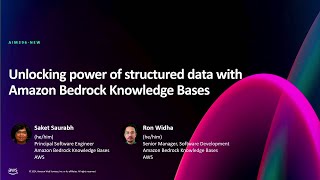
AWS re:Invent 2024-Unlocking power of structured data with Amazon Bedrock Knowledge Bases-AIM396-NEW

In this chalk talk, learn how the new structured data retrieval capability in Amazon Bedrock Knowledge Bases is empowering organizations to unlock the value of their structured data. The fully managed solution with a natural language to SQL (NL2SQL) module removes the complexity, empowering developers to send natural language queries about their data and receive SQL queries, result sets, or narrative responses—all through a simple API call. Discover how your organization can harness the power of structured data to build the next generation of intelligent applications.

Learn more: AWS re:Invent: https://go.aws/reinvent. More AWS events: https://go.aws/3kss9CP

Subscribe: More AWS videos: http://bit.ly/2O3zS75 More AWS events videos: http://bit.ly/316g9t4

About AWS: Amazon Web Services (AWS) hosts events, both online and in-person, bringing the cloud computing community together to connect, collaborate, and learn from AWS experts. AWS is the world's most comprehensive and broadly adopted cloud platform, offering over 200 fully featured services from data centers globally. Millions of customers—including the fastest-growing startups, largest enterprises, and leading government agencies—are using AWS to lower costs, become more agile, and innovate faster.

AWSreInvent #AWSreInvent2024

AWS re:Invent 2024 - Deep dive into Amazon Aurora DSQL and its architecture (DAT427-NEW)

Amazon Aurora DSQL is a new serverless, distributed SQL database that uses decades of Amazon innovation and operational excellence. Join Marc Brooker, AWS VP and Distinguished Engineer, as he dives into the design and key innovative technologies that make Aurora DSQL the ideal choice for new applications and applications which require the highest level of resiliency. Learn how active-active architecture in Aurora DSQL delivers single- and multi-Region resiliency and virtually unlimited scale.

Learn more: AWS re:Invent: https://go.aws/reinvent. More AWS events: https://go.aws/3kss9CP

Subscribe: More AWS videos: http://bit.ly/2O3zS75 More AWS events videos: http://bit.ly/316g9t4

About AWS: Amazon Web Services (AWS) hosts events, both online and in-person, bringing the cloud computing community together to connect, collaborate, and learn from AWS experts. AWS is the world's most comprehensive and broadly adopted cloud platform, offering over 200 fully featured services from data centers globally. Millions of customers—including the fastest-growing startups, largest enterprises, and leading government agencies—are using AWS to lower costs, become more agile, and innovate faster.

AWSreInvent #AWSreInvent2024

Summary In this episode of the Data Engineering Podcast the inimitable Max Beauchemin talks about reusability in data pipelines. The conversation explores the "write everything twice" problem, where similar pipelines are built without code reuse, and discusses the challenges of managing different SQL dialects and relational databases. Max also touches on the evolving role of data engineers, drawing parallels with front-end engineering, and suggests that generative AI could facilitate knowledge capture and distribution in data engineering. He encourages the community to share reference implementations and templates to foster collaboration and innovation, and expresses hopes for a future where code reuse becomes more prevalent.

Announcements Hello and welcome to the Data Engineering Podcast, the show about modern data managementData migrations are brutal. They drag on for months—sometimes years—burning through resources and crushing team morale. Datafold's AI-powered Migration Agent changes all that. Their unique combination of AI code translation and automated data validation has helped companies complete migrations up to 10 times faster than manual approaches. And they're so confident in their solution, they'll actually guarantee your timeline in writing. Ready to turn your year-long migration into weeks? Visit dataengineeringpodcast.com/datafold today for the details.Your host is Tobias Macey and today I'm joined again by Max Beauchemin to talk about the challenges of reusability in data pipelinesInterview IntroductionHow did you get involved in the area of data management?Can you start by sharing your current thesis on the opportunities and shortcomings of code and component reusability in the data context?What are some ways that you think about what constitutes a "component" in this context?The data ecosystem has arguably grown more varied and nuanced in recent years. At the same time, the number and maturity of tools has grown. What is your view on the current trend in productivity for data teams and practitioners?What do you see as the core impediments to building more reusable and general-purpose solutions in data engineering?How can we balance the actual needs of data consumers against their requests (whether well- or un-informed) to help increase our ability to better design our workflows for reuse?In data engineering there are two broad approaches; code-focused or SQL-focused pipelines. In principle one would think that code-focused environments would have better composability. What are you seeing as the realities in your personal experience and what you hear from other teams?When it comes to SQL dialects, dbt offers the option of Jinja macros, whereas SDF and SQLMesh offer automatic translation. There are also tools like PRQL and Malloy that aim to abstract away the underlying SQL. What are the tradeoffs across those options that help or hinder the portability of transformation logic?Which layers of the data stack/steps in the data journey do you see the greatest opportunity for improving the creation of more broadly usable abstractions/reusable elements?low/no code systems for code reuseimpact of LLMs on reusability/compositionimpact of background on industry practices (e.g. DBAs, sysadmins, analysts vs. SWE, etc.)polymorphic data models (e.g. activity schema)What are the most interesting, innovative, or unexpected ways that you have seen teams address composability and reusability of data components?What are the most interesting, unexpected, or challenging lessons that you have learned while working on data-oriented tools and utilities?What are your hopes and predictions for sharing of code and logic in the future of data engineering?Contact Info LinkedInParting Question From your perspective, what is the biggest gap in the tooling or technology for data management today?Closing Announcements Thank you for listening! Don't forget to check out our other shows. Podcast.init covers the Python language, its community, and the innovative ways it is being used. The AI Engineering Podcast is your guide to the fast-moving world of building AI systems.Visit the site to subscribe to the show, sign up for the mailing list, and read the show notes.If you've learned something or tried out a project from the show then tell us about it! Email [email protected] with your story.Links Max's Blog PostAirflowSupersetTableauLookerPowerBICohort AnalysisNextJSAirbytePodcast EpisodeFivetranPodcast EpisodeSegmentdbtSQLMeshPodcast EpisodeSparkLAMP StackPHPRelational AlgebraKnowledge GraphPython MarshmallowData Warehouse Lifecycle Toolkit (affiliate link)Entity Centric Data Modeling Blog PostAmplitudeOSACon presentationol-data-platform Tobias' team's data platform codeThe intro and outro music is from The Hug by The Freak Fandango Orchestra / CC BY-SA