This talk presents a novel approach to MLOps that combines the benefits of open-source technologies with the power and cost-effectiveness of cloud computing platforms. By using tools such as Terraform, MLflow, and Feast, we demonstrate how to build a scalable and maintainable ML system on the cloud that is accessible to ML Engineers and Data Scientists. Our approach leverages cloud managed services for the entire ML lifecycle, reducing the complexity and overhead of maintenance and eliminating the vendor lock-in and additional costs associated with managed MLOps SaaS services. This innovative approach to MLOps allows organizations to take full advantage of the potential of machine learning while minimizing cost and complexity.
 talk-data.com
Topic
Terraform
infrastructure_as_code
cloud
devops
79
tagged
Activity Trend
13
peak/qtr
2020-Q1
2026-Q2
Top Events
Databricks DATA + AI Summit 2023
11
Google Cloud Next '24
6
Data Engineering Podcast
6
O'Reilly Data Engineering Books
4
Accelerating Infrastructure Automation with Microsoft Fabric and Terraform
4
DataTopics: All Things Data, AI & Tech
3
Google Cloud Next '25
3
Accelerating Infrastructure Automation with Microsoft Fabric and Terraform
3
Microsoft Ignite 2025
2
Meetup "Maturité et usages Cloud Public" @ Société Générale
2
Airflow Summit 2020
2
Accelerating Infrastructure Automation with Microsoft Fabric and Terraform
2
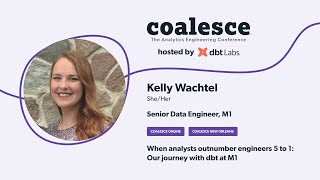
How do you train and enable 20 data analysts to use dbt Core in a short amount of time?
At M1, engineering and analytics are far apart on the org chart, but work hand-in-hand every day. M1 engineering has a culture that celebrates open source, where every data engineer is trained and empowered to work all the way down the infrastructure stack, using tools like Terraform and Kubernetes. The analytics team is comprised of strong SQL writers who use Tableau to create visualizations used company wide. When M1 knew they needed a tool like dbt for change management and data documentation generation, they had to figure out how to bridge the gap between engineering and analytics to enable analysts to contribute with minimal engineering intervention. Join Kelly Wachtel, a senior data engineer at M1, explain how they trained about 20 analysts to use git and dbt Core over the past year, and strengthened their collaboration between their data engineering and analytics teams.
Check the slides here: https://docs.google.com/presentation/d/1CWI97EMyLIz6tptLPKt4VuMjJzV_X3oO/edit?usp=sharing&ouid=110293204340061069659&rtpof=true&sd=true
Coalesce 2023 is coming! Register for free at https://coalesce.getdbt.com/.
We all live in the exciting times and the hype of Distributed Data Mesh (or just mess). This talk will cover a couple architectural and organizational approaches on achieving Distributed Data Mesh, which is essentially a combination of mindset, fully automated infrastructure, continuous integration for data pipelines, dedicated team collaborative environments, and security enforcement. As a Data Leader, you’ll learn what kinds of things you’d need to pay attention to, when starting (or reviving) a modern Data Engineering and Data Science strategy and how Databricks Unity Catalog may help you automating that. As DevOps, you’ll learn about the best practices and pitfalls of Continuous Deployment on Databricks With Terraform and Continuous Integration with Databricks Repos. You’ll be excited how you can automate Data Security with Unity Catalog and Terraform. As a Data Scientist, you’ll learn how you can get relevant infrastructure into “production” relatively faster.
Connect with us: Website: https://databricks.com Facebook: https://www.facebook.com/databricksinc Twitter: https://twitter.com/databricks LinkedIn: https://www.linkedin.com/company/data... Instagram: https://www.instagram.com/databricksinc/
Minimizing data transfers over the public internet is among the top priorities for organizations of any size, both for security and cost reasons. Modern cloud-native data analytics platforms need to support deployment architectures that meet this objective. For Databricks on AWS such an architecture is realized thanks to AWS PrivateLink, which allows computing resources deployed on different virtual private networks and different AWS accounts to communicate securely without ever crossing the public internet.
In this session, we want to provide a brief introduction to AWS Private Link and its main use cases in the context of a Databricks deployment: securing communications between control and data plane and securely connecting to the Databricks Web UI. We will then provide step-by-step walkthrough of the steps required in setting up PrivateLink connections with a Databricks deployment and demonstrate how to automate that process using AWS Cloud Formation or Terraform templates.
In this presentation we will cover the following topics: - Brief Introduction to AWS Private Link - How you can use PrivateLink to secure your AWS Databricks deployment - Step-by-step walkthrough of how to set up Private Link - How to automate and scale the setup using AWS CloudFormation or Terraform
Connect with us: Website: https://databricks.com Facebook: https://www.facebook.com/databricksinc Twitter: https://twitter.com/databricks LinkedIn: https://www.linkedin.com/company/data... Instagram: https://www.instagram.com/databricksinc/
Scribd's data architecture was originally batch-oriented, but in the last couple years, we introduced streaming data ingestion to provide near-real-time ad hoc query capability, mitigate the need for more batch processing tasks, and set the foundation for building real-time data applications.
Kafka and Delta Lake are the two key components of our streaming ingestion pipeline. Various applications and services write messages to Kafka as events are happening. We were tasked with getting these messages into Delta Lake quickly and efficiently.
Our first solution was to deploy Spark Structured Streaming jobs. This got us off the ground quickly, but had some downsides.
Since Delta Lake and the Delta transaction protocol are open source, we kicked off a project to implement our own Rust ingestion daemon. We were confident we could deliver a Rust implementation since our ingestion jobs are append only. Rust offers high performance with a focus on code safety and modern syntax.
In this talk I will describe Scribd's unique approach to ingesting messages from Kafka topics into Delta Lake tables. I will describe the architecture, deployment model, and performance of our solution, which leverages the kafka-delta-ingest Rust daemon and the delta-rs crate hosted in auto-scaling ECS services. I will discuss foundational design aspects for achieving data integrity such as distributed locking with DynamoDb to overcome S3's lack of "PutIfAbsent" semantics, and avoiding duplicates or data loss when multiple concurrent tasks are handling the same stream. I'll highlight the reliability and performance characteristics we've observed so far. I'll also describe the Terraform deployment model we use to deliver our 70-and-growing production ingestion streams into AWS.
Connect with us: Website: https://databricks.com Facebook: https://www.facebook.com/databricksinc Twitter: https://twitter.com/databricks LinkedIn: https://www.linkedin.com/company/data... Instagram: https://www.instagram.com/databricksinc/
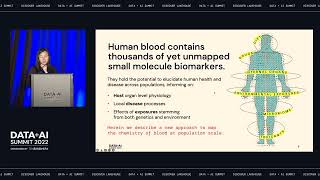
Profiling small molecules in human blood across global populations gives rise to a greater understanding of the varied biological pathways and processes that contribute to human health and diseases. Herein, we describe the development of a comprehensive Human Biology Database, derived from nontargeted molecular profiling of over 300,000 human blood samples from individuals across diverse backgrounds, demographics, geographical locations, lifestyles, diseases, and medication regimens, and its applications to inform drug development.
Approximately 11,000 circulating molecules have been captured and measured per sample using Sapient’s high-throughput, high-specificity rapid liquid chromatography-mass spectrometry (rLC-MS) platform. The samples come from cohorts with adjudicated clinical outcomes from prospective studies lasting 10-25 years, as well as data on individuals’ diet, nutrition, physical exercise, and mental health. Genetic information for a subset of subjects is also included and we have added microbiome sequencing data from over 150,000 human samples in diverse diseases.
An efficient data science environment is established to enable effective health insight mining across this vast database. Built on a customized AWS and Databricks “infrastructure-as-code” Terraform configuration, we employ streamlined data ETL and machine learning-based approaches for rapid rLC-MS data extraction. In mining the database, we have been able to identify circulating molecules potentially causal to disease; illuminate the impact of human exposures like diet and environment on disease development, aging, and mortality over decades of time; and support drug development efforts through identification of biomarkers of target engagement, pharmacodynamics, safety, efficacy, and more.
Connect with us: Website: https://databricks.com Facebook: https://www.facebook.com/databricksinc Twitter: https://twitter.com/databricks LinkedIn: https://www.linkedin.com/company/data... Instagram: https://www.instagram.com/databricksinc/
IBM® Power Virtualization Center (IBM® PowerVC™) is an advanced enterprise virtualization management offering for IBM Power Systems. This IBM Redbooks® publication introduces IBM PowerVC and helps you understand its functions, planning, installation, and setup. It also shows how IBM PowerVC can integrate with systems management tools such as Ansible or Terraform and that it also integrates well into a OpenShift container environment. IBM PowerVC Version 2.0.0 supports both large and small deployments, either by managing IBM PowerVM® that is controlled by the Hardware Management Console (HMC), or by IBM PowerVM NovaLink. With this capability, IBM PowerVC can manage IBM AIX®, IBM i, and Linux workloads that run on IBM POWER® hardware. IBM PowerVC is available as a Standard Edition, or as a Private Cloud Edition. IBM PowerVC includes the following features and benefits: Virtual image capture, import, export, deployment, and management Policy-based virtual machine (VM) placement to improve server usage Snapshots and cloning of VMs or volumes for backup or testing purposes Support of advanced storage capabilities such as IBM SVC vdisk mirroring of IBM Global Mirror Management of real-time optimization and VM resilience to increase productivity VM Mobility with placement policies to reduce the burden on IT staff in a simple-to-install and easy-to-use graphical user interface (GUI) Automated Simplified Remote Restart for improved availability of VMs ifor when a host is down Role-based security policies to ensure a secure environment for common tasks The ability to enable an administrator to enable Dynamic Resource Optimization on a schedule IBM PowerVC Private Cloud Edition includes all of the IBM PowerVC Standard Edition features and enhancements: A self-service portal that allows the provisioning of new VMs without direct system administrator intervention. There is an option for policy approvals for the requests that are received from the self-service portal. Pre-built deploy templates that are set up by the cloud administrator that simplify the deployment of VMs by the cloud user. Cloud management policies that simplify management of cloud deployments. Metering data that can be used for chargeback. This publication is for experienced users of IBM PowerVM and other virtualization solutions who want to understand and implement the next generation of enterprise virtualization management for Power Systems. Unless stated otherwise, the content of this publication refers to IBM PowerVC Version 2.0.0.
Summary Spark is one of the most well-known frameworks for data processing, whether for batch or streaming, ETL or ML, and at any scale. Because of its popularity it has been deployed on every kind of platform you can think of. In this episode Jean-Yves Stephan shares the work that he is doing at Data Mechanics to make it sing on Kubernetes. He explains how operating in a cloud-native context simplifies some aspects of running the system while complicating others, how it simplifies the development and experimentation cycle, and how you can get a head start using their pre-built Spark container. This is a great conversation for understanding how new ways of operating systems can have broader impacts on how they are being used.
Announcements
Hello and welcome to the Data Engineering Podcast, the show about modern data management When you’re ready to build your next pipeline, or want to test out the projects you hear about on the show, you’ll need somewhere to deploy it, so check out our friends at Linode. With their managed Kubernetes platform it’s now even easier to deploy and scale your workflows, or try out the latest Helm charts from tools like Pulsar and Pachyderm. With simple pricing, fast networking, object storage, and worldwide data centers, you’ve got everything you need to run a bulletproof data platform. Go to dataengineeringpodcast.com/linode today and get a $100 credit to try out a Kubernetes cluster of your own. And don’t forget to thank them for their continued support of this show! Firebolt is the fastest cloud data warehouse. Visit dataengineeringpodcast.com/firebolt to get started. The first 25 visitors will receive a Firebolt t-shirt. Atlan is a collaborative workspace for data-driven teams, like Github for engineering or Figma for design teams. By acting as a virtual hub for data assets ranging from tables and dashboards to SQL snippets & code, Atlan enables teams to create a single source of truth for all their data assets, and collaborate across the modern data stack through deep integrations with tools like Snowflake, Slack, Looker and more. Go to dataengineeringpodcast.com/atlan today and sign up for a free trial. If you’re a data engineering podcast listener, you get credits worth $3000 on an annual subscription Your host is Tobias Macey and today I’m interviewing Jean-Yves Stephan about Data Mechanics, a cloud-native Spark platform for data engineers
Interview
Introduction How did you get involved in the area of data management? Can you start by giving an overview of what you are building at Data Mechanics and the story behind it? What are the operational characteristics of Spark that make it difficult to run in a cloud-optimized environment? How do you handle retries, state redistribution, etc. when instances get pre-empted during the middle of a job execution?
What are some of the tactics that you have found useful when designing jobs to make them more resilient to interruptions?
What are the customizations that you have had to make to Spark itself? What are some of the supporting tools that you have built to allow for running Spark in a Kubernetes environment? How is the Data Mechanics platform implemented?
How have the goals and design of the platform changed or evolved since you first began working on it?
How does running Spark in a container/Kubernetes environment change the ways that you and your customers think about how and where to use it?
How does it impact the development workflow for data engineers and data scientists?
What are some of the most interesting, unexpected, or challenging lessons that you have learned while building the Data Mechanics product? When is Spark/Data Mechanics the wrong choice? What do you have planned for the future of the platform?
Contact Info
Parting Question
From your perspective, what is the biggest gap in the tooling or technology for data management today?
Links
Data Mechanics Databricks Stanford Andrew Ng Mining Massive Datasets Spark Kubernetes Spot Instances Infiniband Data Mechanics Spark Container Image Delight – Spark monitoring utility Terraform Blue/Green Deployment Spark Operator for Kubernetes JupyterHub Jupyter Enterprise Gateway
The intro and outro music is from The Hug by The Freak Fandango Orchestra / CC BY-SA
Support Data Engineering Podcast
At Nielsen Digital we have been moving our ETLs to containerized environments managed by Kubernetes. We have successfully transferred some of our ETLs to this environment in production. In order to do this we used the following technologies: Helm to easily deploy Airflow on to Kubernetes; Airflow’s Kubernetes Executor to take full advantage Kubernetes features; and Airflow’s Kubernetes Pod Operator in order to execute our containerized Tasks within our DAGs. To automate a lot of the deployment process we also used Terraform. Lastly, Kubernetes features were used to gain much more fine grained control of Airflows infrastructure. Join me in this talk to take an in depth look at how we used these technologies, why we used these technologies, and the results of using them so far. I will also briefly go over some features coming in Airflow 2.0 that we are considering to use in our workflows.
by
QP Hou
Scribd is migrating its data pipeline from an in house system to Airflow. It’s a one big giant data pipeline consisting of more than 1,500 tasks. In this talk, I would like to share couple best practices on setting up a cloud native Airflow deployment in AWS. For those who are interested in migrating a non-trivial data pipeline to Airflow, I will also share how Scribd plans and executes the migration. Here are some of the topics that will be covered: How to setup a highly available Airflow cluster in AWS using both ECS and EKS with Terraform. How to manage Airflow DAGs across multiple git repositories. How we manage Airflow variables using a custom Airflow Terraform provider. Best practices on monitoring multiple Airflow clusters with Datadog and Pagerduty. How to Airflow to make it feature parity with Scribd’s in house orchestration system. How to plan and execute non-trivial data pipeline migrations. We transcompiled internal DSL to Airflow DAG to simulate what a real run will look like to surface performance issues early in the process. How we fixed an Airflow performance bottleneck so our giant DAG can be properly rendered in Web UI. For detailed deep dives on some of topics mentioned above, please check out our blog post series at https://tech.scribd.com/tag/airflow-series/ [Slides] ( https://docs.google.com/presentation/d/e/2PACX-1vRb-iH5NX2d7m-rQ7WGc6XlRvRCADwXq2hdjRjRuJ5h7e9ybfoUA13ytxpHgx7JG815fIKEE-QKuRUV/pub?start=false&loop=false&delayms=3000 )
This IBM® Redbooks publication is a comprehensive guide that covers the IBM AIX® operating system (OS) layout capabilities, distinct features, system installation, and maintenance, which includes AIX security, trusted environment, and compliance integration, with the benefits of IBM Power Virtualization Management (PowerVM®) and IBM Power Virtualization Center (IBM PowerVC), which includes cloud capabilities and automation types. The objective of this book is to introduce IBM AIX modernization features and integration with different environments: General AIX enhancements AIX Live Kernel Update individually or using Network Installation Manager (NIM) AIX security features and integration AIX networking enhancements PowerVC integration and features for cloud environments AIX deployment using IBM Terraform and IBM Cloud Automation Manager AIX automation that uses configuration management tools PowerVM enhancements and features Latest disaster recovery (DR) solutions AIX Logical Volume Manager (LVM) and Enhanced Journaled File System (JFS2) AIX installation and maintenance techniques
Summary One of the biggest challenges in building reliable platforms for processing event pipelines is managing the underlying infrastructure. At Snowplow Analytics the complexity is compounded by the need to manage multiple instances of their platform across customer environments. In this episode Josh Beemster, the technical operations lead at Snowplow, explains how they manage automation, deployment, monitoring, scaling, and maintenance of their streaming analytics pipeline for event data. He also shares the challenges they face in supporting multiple cloud environments and the need to integrate with existing customer systems. If you are daunted by the needs of your data infrastructure then it’s worth listening to how Josh and his team are approaching the problem.
Announcements
Hello and welcome to the Data Engineering Podcast, the show about modern data management When you’re ready to build your next pipeline, or want to test out the projects you hear about on the show, you’ll need somewhere to deploy it, so check out our friends at Linode. With 200Gbit private networking, scalable shared block storage, a 40Gbit public network, fast object storage, and a brand new managed Kubernetes platform, you’ve got everything you need to run a fast, reliable, and bullet-proof data platform. And for your machine learning workloads, they’ve got dedicated CPU and GPU instances. Go to dataengineeringpodcast.com/linode today to get a $20 credit and launch a new server in under a minute. And don’t forget to thank them for their continued support of this show! You listen to this show to learn and stay up to date with what’s happening in databases, streaming platforms, big data, and everything else you need to know about modern data management. For even more opportunities to meet, listen, and learn from your peers you don’t want to miss out on this year’s conference season. We have partnered with organizations such as O’Reilly Media, Corinium Global Intelligence, ODSC, and Data Council. Upcoming events include the Software Architecture Conference in NYC, Strata Data in San Jose, and PyCon US in Pittsburgh. Go to dataengineeringpodcast.com/conferences to learn more about these and other events, and take advantage of our partner discounts to save money when you register today. Your host is Tobias Macey and today I’m interviewing Josh Beemster about how Snowplow manages deployment and maintenance of their managed service in their customer’s cloud accounts.
Interview
Introduction How did you get involved in the area of data management? Can you start by giving an overview of the components in your system architecture and the nature of your managed service? What are some of the challenges that are inherent to private SaaS nature of your managed service? What elements of your system require the most attention and maintenance to keep them running properly? Which components in the pipeline are most subject to variability in traffic or resource pressure and what do you do to ensure proper capacity? How do you manage deployment of the full Snowplow pipeline for your customers?
How has your strategy for deployment evolved since you first began Soffering the managed service? How has the architecture of the pipeline evolved to simplify operations?
How much customization do you allow for in the event that the customer has their own system that they want to use in place of one of your supported components?
What are some of the common difficulties that you encounter when working with customers who need customized components, topologies, or event flows?
How does that reflect in the tooling that you use to manage their deployments?
What types of metrics do you track and what do you use for monitoring and alerting to ensure that your customers pipelines are running smoothly? What are some of the most interesting/unexpected/challenging lessons that you have learned in the process of working with and on Snowplow? What are some lessons that you can generalize for management of data infrastructure more broadly? If you could start over with all of Snowplow and the infrastructure automation for it today, what would you do differently? What do you have planned for the future of the Snowplow product and infrastructure management?
Contact Info
LinkedIn jbeemster on GitHub @jbeemster1 on Twitter
Parting Question
From your perspective, what is the biggest gap in the tooling or technology for data management today?
Closing Announcements
Thank you for listening! Don’t forget to check out our other show, Podcast.init to learn about the Python language, its community, and the innovative ways it is being used. Visit the site to subscribe to the show, sign up for the mailing list, and read the show notes. If you’ve learned something or tried out a project from the show then tell us about it! Email [email protected]) with your story. To help other people find the show please leave a review on iTunes and tell your friends and co-workers Join the community in the new Zulip chat workspace at dataengineeringpodcast.com/chat
Links
Snowplow Analytics
Podcast Episode
Terraform Consul Nomad Meltdown Vulnerability Spectre Vulnerability AWS Kinesis Elasticsearch SnowflakeDB Indicative S3 Segment AWS Cloudwatch Stackdriver Apache Kafka Apache Pulsar Google Cloud PubSub AWS SQS AWS SNS AWS Redshift Ansible AWS Cloudformation Kubernetes AWS EMR
The intro and outro music is from The Hug by The Freak Fandango Orchestra / CC BY-SA
Support Data Engineering Podcast
Summary Every business collects data in some fashion, but sometimes the true value of the collected information only comes when it is combined with other data sources. Data trusts are a legal framework for allowing businesses to collaboratively pool their data. This allows the members of the trust to increase the value of their individual repositories and gain new insights which would otherwise require substantial effort in duplicating the data owned by their peers. In this episode Tom Plagge and Greg Mundy explain how the BrightHive platform serves to establish and maintain data trusts, the technical and organizational challenges they face, and the outcomes that they have witnessed. If you are curious about data sharing strategies or data collaboratives, then listen now to learn more!
Announcements
Hello and welcome to the Data Engineering Podcast, the show about modern data management When you’re ready to build your next pipeline, or want to test out the projects you hear about on the show, you’ll need somewhere to deploy it, so check out our friends at Linode. With 200Gbit private networking, scalable shared block storage, and a 40Gbit public network, you’ve got everything you need to run a fast, reliable, and bullet-proof data platform. If you need global distribution, they’ve got that covered too with world-wide datacenters including new ones in Toronto and Mumbai. And for your machine learning workloads, they just announced dedicated CPU instances. Go to dataengineeringpodcast.com/linode today to get a $20 credit and launch a new server in under a minute. And don’t forget to thank them for their continued support of this show! You listen to this show to learn and stay up to date with what’s happening in databases, streaming platforms, big data, and everything else you need to know about modern data management. For even more opportunities to meet, listen, and learn from your peers you don’t want to miss out on this year’s conference season. We have partnered with organizations such as O’Reilly Media, Corinium Global Intelligence, ODSC, and Data Council. Upcoming events include the Software Architecture Conference in NYC, Strata Data in San Jose, and PyCon US in Pittsburgh. Go to dataengineeringpodcast.com/conferences to learn more about these and other events, and take advantage of our partner discounts to save money when you register today. Your host is Tobias Macey and today I’m interviewing Tom Plagge and Gregory Mundy about BrightHive, a platform for building data trusts
Interview
Introduction How did you get involved in the area of data management? Can you start by describing what a data trust is?
Why might an organization want to build one?
What is BrightHive and what is its origin story? Beyond having a storage location with access controls, what are the components of a data trust that are necessary for them to be viable? What are some of the challenges that are common in establishing an agreement among organizations who are participating in a data trust?
What are the responsibilities of each of the participants in a data trust? For an individual or organization who wants to participate in an existing trust, what is involved in gaining access?
How does BrightHive support the process of building a data trust? How is ownership of derivative data sets/data products and associated intellectual property handled in the context of a trust? How is the technical architecture of BrightHive implemented and how has it evolved since it first started? What are some of the ways that you approach the challenge of data privacy in these sharing agreements? What are some legal and technical guards that you implement to encourage ethical uses of the data contained in a trust? What is the motivation for releasing the technical elements of BrightHive as open source? What are some of the most interesting, innovative, or inspirational ways that you have seen BrightHive used? Being a shared platform for empowering other organizations to collaborate I imagine there is a strong focus on long-term sustainability. How are you approaching that problem and what is the business model for BrightHive? What have you found to be the most interesting/unexpected/challenging aspects of building and growing the technical and business infrastructure of BrightHive? What do you have planned for the future of BrightHive?
Contact Info
Tom
LinkedIn tplagge on GitHub
Gregory
LinkedIn gregmundy on GitHub @graygoree on Twitter
Parting Question
From your perspective, what is the biggest gap in the tooling or technology for data management today?
Closing Announcements
Thank you for listening! Don’t forget to check out our other show, Podcast.init to learn about the Python language, its community, and the innovative ways it is being used. Visit the site to subscribe to the show, sign up for the mailing list, and read the show notes. If you’ve learned something or tried out a project from the show then tell us about it! Email [email protected]) with your story. To help other people find the show please leave a review on iTunes and tell your friends and co-workers Join the community in the new Zulip chat workspace at dataengineeringpodcast.com/chat
Links
BrightHive Data Science For Social Good Workforce Data Initiative NASA NOAA Data Trust Data Collaborative Public Benefit Corporation Terraform Airflow
Podcast.init Episode
Dagster
Podcast Episode
Secure Multi-Party Computation Public Key Encryption AWS Macie Blockchain Smart Contracts
The intro and outro music is from The Hug by The Freak Fandango Orchestra / CC BY-SA
Support Data Engineering Podcast
Summary
With the attention being paid to the systems that power large volumes of high velocity data it is easy to forget about the value of data collection at human scales. Ona is a company that is building technologies to support mobile data collection, analysis of the aggregated information, and user-friendly presentations. In this episode CTO Peter Lubell-Doughtie describes the architecture of the platform, the types of environments and use cases where it is being employed, and the value of small data.
Preamble
Hello and welcome to the Data Engineering Podcast, the show about modern data management When you’re ready to build your next pipeline you’ll need somewhere to deploy it, so check out Linode. With private networking, shared block storage, node balancers, and a 40Gbit network, all controlled by a brand new API you’ve got everything you need to run a bullet-proof data platform. Go to dataengineeringpodcast.com/linode to get a $20 credit and launch a new server in under a minute. Are you struggling to keep up with customer request and letting errors slip into production? Want to try some of the innovative ideas in this podcast but don’t have time? DataKitchen’s DataOps software allows your team to quickly iterate and deploy pipelines of code, models, and data sets while improving quality. Unlike a patchwork of manual operations, DataKitchen makes your team shine by providing an end to end DataOps solution with minimal programming that uses the tools you love. Join the DataOps movement and sign up for the newsletter at datakitchen.io/de today. After that learn more about why you should be doing DataOps by listening to the Head Chef in the Data Kitchen at dataengineeringpodcast.com/datakitchen Go to dataengineeringpodcast.com to subscribe to the show, sign up for the mailing list, read the show notes, and get in touch. Join the community in the new Zulip chat workspace at dataengineeringpodcast.com/chat Your host is Tobias Macey and today I’m interviewing Peter Lubell-Doughtie about using Ona for collecting data and processing it with Canopy
Interview
Introduction How did you get involved in the area of data management? What is Ona and how did the company get started?
What are some examples of the types of customers that you work with?
What types of data do you support in your collection platform? What are some of the mechanisms that you use to ensure the accuracy of the data that is being collected by users? Does your mobile collection platform allow for anyone to submit data without having to be associated with a given account or organization? What are some of the integration challenges that are unique to the types of data that get collected by mobile field workers? Can you describe the flow of the data from collection through to analysis? To help improve the utility of the data being collected you have started building Canopy. What was the tipping point where it became worth the time and effort to start that project?
What are the architectural considerations that you factored in when designing it? What have you found to be the most challenging or unexpected aspects of building an enterprise data warehouse for general users?
What are your plans for the future of Ona and Canopy?
Contact Info
Email pld on Github Website
Parting Question
From your perspective, what is the biggest gap in the tooling or technology for data management today?
Links
OpenSRP Ona Canopy Open Data Kit Earth Institute at Columbia University Sustainable Engineering Lab WHO Bill and Melinda Gates Foundation XLSForms PostGIS Kafka Druid Superset Postgres Ansible Docker Terraform
The intro and outro music is from The Hug by The Freak Fandango Orchestra / CC BY-SA Support Data Engineering Podcast
Summary
Building a data pipeline that is reliable and flexible is a difficult task, especially when you have a small team. Astronomer is a platform that lets you skip straight to processing your valuable business data. Ry Walker, the CEO of Astronomer, explains how the company got started, how the platform works, and their commitment to open source.
Preamble
Hello and welcome to the Data Engineering Podcast, the show about modern data infrastructure When you’re ready to launch your next project you’ll need somewhere to deploy it. Check out Linode at www.dataengineeringpodcast.com/linode?utm_source=rss&utm_medium=rss and get a $20 credit to try out their fast and reliable Linux virtual servers for running your data pipelines or trying out the tools you hear about on the show. Go to dataengineeringpodcast.com to subscribe to the show, sign up for the newsletter, read the show notes, and get in touch. You can help support the show by checking out the Patreon page which is linked from the site. To help other people find the show you can leave a review on iTunes, or Google Play Music, and tell your friends and co-workers This is your host Tobias Macey and today I’m interviewing Ry Walker, CEO of Astronomer, the platform for data engineering.
Interview
Introduction How did you first get involved in the area of data management? What is Astronomer and how did it get started? Regulatory challenges of processing other people’s data What does your data pipelining architecture look like? What are the most challenging aspects of building a general purpose data management environment? What are some of the most significant sources of technical debt in your platform? Can you share some of the failures that you have encountered while architecting or building your platform and company and how you overcame them? There are certain areas of the overall data engineering workflow that are well defined and have numerous tools to choose from. What are some of the unsolved problems in data management? What are some of the most interesting or unexpected uses of your platform that you are aware of?
Contact Information
Email @rywalker on Twitter
Links
Astronomer Kiss Metrics Segment Marketing tools chart Clickstream HIPAA FERPA PCI Mesos Mesos DC/OS Airflow SSIS Marathon Prometheus Grafana Terraform Kafka Spark ELK Stack React GraphQL PostGreSQL MongoDB Ceph Druid Aries Vault Adapter Pattern Docker Kinesis API Gateway Kong AWS Lambda Flink Redshift NOAA Informatica SnapLogic Meteor
The intro and outro music is from The Hug by The Freak Fandango Orchestra / CC BY-SA Support Data Engineering Podcast
This workshop demonstrates how transitioning to a general-purpose programming language can transform your infrastructure management, making common tasks more intuitive and maintainable. Join us to learn: The advantages of using general-purpose languages like TypeScript vs DSL, like HCL; How to introduce Pulumi IaC and either coexist with or convert your existing Terraform code; Advanced features for infrastructure automation and robust, secure, scalable IaC
In this talk, we'll explore how Terraform can be used to automate and manage Elastic Cloud and self-managed Elastic Stack deployments with infrastructure-as-code (IaC). Whether you're running Elasticsearch clusters in the cloud or on-premises, Terraform provides a consistent, version-controlled, and repeatable way to deploy, scale, and manage your Elastic infrastructure. We'll cover: ✅ Key Terraform providers for Elastic (Elastic Cloud & Elastic Stack) ✅ Automating multi-cloud Elastic deployments (AWS, Azure) ✅ Cross-Cluster Search (CCS) & Cross-Cluster Replication (CCR) via Terraform ✅ Managing Elasticsearch configurations, index templates, and pipelines ✅ Best practices for CI/CD integration & team collaboration ✅ Real-world use cases & lessons learned.
Workshop: Learn how to build on top of your existing Terraform code with Pulumi or replace Terraform entirely. Topics: - Leverage existing Terraform by consuming TF outputs in Pulumi programs. - Convert existing HCL automatically to a general-purpose language. - Import resources from Terraform state files into your Pulumi state files.