talk-data.com talk-data.com

Topic

BI

Business Intelligence (BI)

data_visualization reporting analytics

1211

tagged

Activity Trend

111 peak/qtr
2020-Q1 2026-Q1

Activities

1211 activities · Newest first

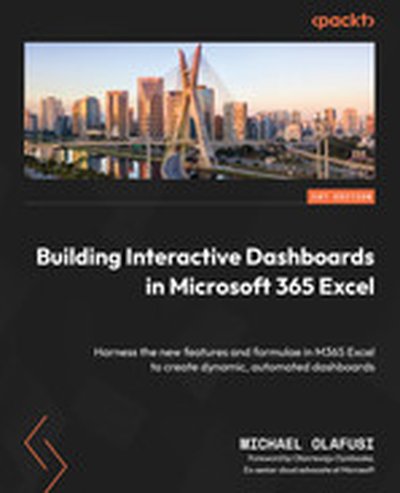
Building Interactive Dashboards in Microsoft 365 Excel

Microsoft 365 Excel introduces enhanced features that transform how business dashboards are built and maintained. This book guides you through creating dynamic, interactive dashboards that leverage these modern capabilities. From understanding the essential principles of effective dashboard design to mastering the latest tools like Power Query and dynamic array functions, you'll make the most of Excel's full potential. What this Book will help me do Understand the purpose and advantages of effective dashboards in business analytics. Use advanced Excel functions and tools such as Power Query and dynamic arrays to handle complex data workflows. Design visually engaging dashboards using charts and data visualizations that communicate key insights. Optimize dashboards for automation and real-time data updates, saving time and effort. Apply best practices and techniques for creating professional-grade Excel dashboards. Author(s) Michael Olafusi is a skilled data analyst and expert in Microsoft Excel, with years of experience leveraging Excel for business intelligence and analytics solutions. He enjoys teaching Excel users how to elevate their skills to create functional and visually impactful tools. Michael's approach combines clarity and practical advice, helping readers build proficiency and confidence. Who is it for? This book is perfect for Excel users who want to create professional dashboards for business decision support. It's especially useful for data analysts, financial analysts, business analysts, and those in similar roles. It requires a basic familiarity with Excel's interface and is ideal for those seeking to enhance their data presentation skills and automate repetitive reporting tasks.

Data Cleaning with Power BI

Delve into the powerful world of data cleaning with Microsoft Power BI in this detailed guide. You'll learn how to connect, transform, and optimize data from various sources, setting a strong foundation for insightful data-driven decisions. Equip yourself with the skills to master data quality, leverage DAX and Power Query, and produce actionable insights with improved efficiency. What this Book will help me do Master connecting to various data sources and importing data effectively into Power BI. Learn to use the Query Editor to clean and transform data efficiently. Understand how to use the M language to perform advanced data transformations. Gain expertise in creating optimized data models and handling relationships within Power BI. Explore insights-driven exploratory data analysis using Power BI's powerful tools. Author(s) None Frazer is an experienced data professional with a deep knowledge of business intelligence tools and analytics processes. With a strong background in data science and years of hands-on experience using Power BI, Frazer brings practical advice to help users improve their data preparation and analysis skills. Known for creating resources that are both comprehensive and approachable, Frazer is dedicated to empowering readers in their data journey. Who is it for? This book is ideal for data analysts, business intelligence professionals, and business analysts who work regularly with data. If you are someone with a basic understanding of BI tools and concepts looking to deepen their skills, especially in Power BI, this book will guide you effectively. It will also help data scientists and other professionals interested in data cleaning to build a robust basis for data quality and analysis. Whether you're addressing common data challenges or seeking to enhance your BI capabilities, this guide is tailored to accommodate your needs.

Mastering Microsoft Fabric: SAASification of Analytics

Learn and explore the capabilities of Microsoft Fabric, the latest evolution in cloud analytics suites. This book will help you understand how users can leverage Microsoft Office equivalent experience for performing data management and advanced analytics activity. The book starts with an overview of the analytics evolution from on premises to cloud infrastructure as a service (IaaS), platform as a service (PaaS), and now software as a service (SaaS version) and provides an introduction to Microsoft Fabric. You will learn how to provision Microsoft Fabric in your tenant along with the key capabilities of SaaS analytics products and the advantage of using Fabric in the enterprise analytics platform. OneLake and Lakehouse for data engineering is discussed as well as OneLake for data science. Author Ghosh teaches you about data warehouse offerings inside Microsoft Fabric and the new data integration experience which brings Azure Data Factory and Power Query Editor of Power BI together in a single platform. Also demonstrated is Real-Time Analytics in Fabric, including capabilities such as Kusto query and database. You will understand how the new event stream feature integrates with OneLake and other computations. You also will know how to configure the real-time alert capability in a zero code manner and go through the Power BI experience in the Fabric workspace. Fabric pricing and its licensing is also covered. After reading this book, you will understand the capabilities of Microsoft Fabric and its Integration with current and upcoming Azure OpenAI capabilities. What You Will Learn Build OneLake for all data like OneDrive for Microsoft Office Leverage shortcuts for cross-cloud data virtualization in Azure and AWS Understand upcoming OpenAI integration Discover new event streaming and Kusto query inside Fabric real-time analytics Utilize seamless tooling for machine learning and data science Who This Book Is For Citizen users and experts in the data engineering and data science fields, along with chief AI officers

It's not easy being the head of data & analytics at a large organization. You must align a large team across multiple disciplines; you must deal with oodles of legacy systems and tools that hamper innovation; and you must deliver business value fast to keep executives at bay and your job intact. You also need to recruit dynamic managers who can push the envelope while meeting operational objectives. And when you falter--which you inevitably will-you have to rebound fast.

No one knows these lessons better than Tiffany Perkins-Munn. She currently runs a 275-person data & analytics team at JP Morgan Chase that consists of data engineers, data scientists, behavioral economists, and business intelligence experts. She thrives on versatility, having earned a Ph.D. in Social-Personality Psychology with an interdisciplinary focus on Advanced Quantitative Methods. Building on this foundation, she has accumulated vast experience in the art of managing data & analytics teams during her 23 years in technical and managerial roles in the financial services industry.

In this interview, you’ll learn:

  1. Tiffany’s secret for aligning a large data & analytics team and keep them from splitting into silos of specialization
  2. Her favorite techniques for recruiting the right people to her team.
  3. How to wade through the thicket of legacy systems and deliver innovative solutions quickly.
  4. The impact of GenAI on her operations and the financial services industry.
  5. How to advance your careers in data & analytics.

With GA4 putting web and behavioural data in a data warehouse into the hands of more analysts than ever before, you may be wondering how to get the best from your data in BigQuery (or any data warehouse), keep costs manageable, and how to give your users the best performance possible. This talk will cover different approaches to data modelling, the trade-offs associated with each approach, and how the dashboard/BI tool you’re using (whether it be Looker or Looker Studio, Tableau, Power BI etc) impacts your data modelling.

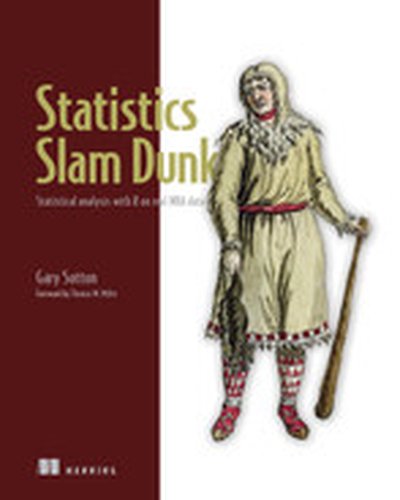
Statistics Slam Dunk

Learn statistics by analyzing professional basketball data! In this action-packed book, you’ll build your skills in exploratory data analysis by digging into the fascinating world of NBA games and player stats using the R language. Statistics Slam Dunk is an engaging how-to guide for statistical analysis with R. Each chapter contains an end-to-end data science or statistics project delving into NBA data and revealing real-world sporting insights. Written by a former basketball player turned business intelligence and analytics leader, you’ll get practical experience tidying, wrangling, exploring, testing, modeling, and otherwise analyzing data with the best and latest R packages and functions. In Statistics Slam Dunk you’ll develop a toolbox of R programming skills including: Reading and writing data Installing and loading packages Transforming, tidying, and wrangling data Applying best-in-class exploratory data analysis techniques Creating compelling visualizations Developing supervised and unsupervised machine learning algorithms Executing hypothesis tests, including t-tests and chi-square tests for independence Computing expected values, Gini coefficients, z-scores, and other measures If you’re looking to switch to R from another language, or trade base R for tidyverse functions, this book is the perfect training coach. Much more than a beginner’s guide, it teaches statistics and data science methods that have tons of use cases. And just like in the real world, you’ll get no clean pre-packaged data sets in Statistics Slam Dunk. You’ll take on the challenge of wrangling messy data to drill on the skills that will make you the star player on any data team. About the Technology Statistics Slam Dunk is a data science manual with a difference. Each chapter is a complete, self-contained statistics or data science project for you to work through—from importing data, to wrangling it, testing it, visualizing it, and modeling it. Throughout the book, you’ll work exclusively with NBA data sets and the R language, applying best-in-class statistics techniques to reveal fun and fascinating truths about the NBA. About the Book Is losing basketball games on purpose a rational strategy? Which hustle statistics have an impact on wins and losses? Does spending more on player salaries translate into a winning record? You’ll answer all these questions and more. Plus, R’s visualization capabilities shine through in the book’s 300 plots and charts, including Pareto charts, Sankey diagrams, Cleveland dot plots, and dendrograms. What's Inside Transforming, tidying, and wrangling data Applying best-in-class exploratory data analysis techniques Developing supervised and unsupervised machine learning algorithms Executing hypothesis tests and effect size tests About the Reader For readers who know basic statistics. No advanced knowledge of R—or basketball—required. About the Author Gary Sutton is a former basketball player who has built and led high-performing business intelligence and analytics organizations across multiple verticals. Quotes In this journey of exploration, every computer scientist will find a valuable ally in understanding the language of data. - Kim Lokøy, areo Transcends other R titles by revealing the hidden narratives that lie within the numbers. - Christian Sutton, Shell International Exploration and Production Seamlessly blending theory and practical insights, this book serves as an indispensable guide for those venturing into the field of data analytics. - Juan Delgado, Sodexo BRS

Extending Dynamics 365 Finance and Operations Apps with Power Platform

This book, "Extending Dynamics 365 Finance and Operations Apps with Power Platform", is your comprehensive guide to mastering the integration of Power Platform tools with Dynamics 365 Finance and Operations (F&O). Dive into practical scenarios and learn how to leverage tools like Power Automate, Power Apps, and Power BI to maximize efficiency and streamline operations. What this Book will help me do Learn to extend Dynamics 365 F&O functionalities using Dataverse and other Power Platform tools. Understand practical integration techniques including dual-write and virtual tables. Explore automation of workflows and tasks with Power Automate in an F&O context. Utilize Power BI for creating insightful reports with Azure Data Lake Storage. Gain insights into governance and lifecycle management for the Power Platform in your F&O projects. Author(s) Adrià Ariste Santacreu, a seasoned expert in Power Platform and Microsoft Dynamics, shares his rich industry experience through this book. He has implemented numerous real-world solutions integrating Power Platform with Dynamics 365, and his expertise is evident in the clear and actionable guidance provided herein. Adrià's approach helps both novices and experts discover the true potential of these technologies. Who is it for? This book is ideal for Dynamics 365 Finance & Operations consultants and Power Platform professionals seeking to extend their knowledge and capabilities. It is particularly suitable for technical and solutions architects who aim to implement innovative solutions for business requirements using the Power Platform. If you aim to leverage low-code/no-code tools for dynamics projects, this book has you covered.

In this episode of the Data Career Podcast, we include a variety of listener questions, shedding light on topics like the future of data engineering, requirements for becoming a data analyst, showcasing data cleaning proficiency in Excel, and securing data analyst internships.

Also discusses the significance of storytelling and views on Power BI versus Tableau & the impact of AI on data analysis roles.

Tune in now!

👍 Leave your review and download the bonus!

🤝 Ace your data analyst interview with the interview simulator

📩 Get my weekly email with helpful data career tips

📊 Come to my next free “How to Land Your First Data Job” training

🏫 Check out my 10-week data analytics bootcamp

Timestamps:

(02:10) - What’s the future of data engineering in 2024? (03:06) - Do you need a degree to become a data analyst? (04:57) - How to showcase Excel skills? (07:22) - How to land data analyst internships? (10:10) - What are the main technical skills required to land your first data job? (14:40) - Have you worked with many teachers looking to make a career transition? (16:24) - How to get a data analyst job for people with no work experience? (25:13) - Can you suggest SQL and Excel videos for data analysis? (28:46) - Do you think the data analysis industry is saturated? (28:21) - Do you find data analysts transferring to becoming a data scientist or a data engineer?

Connect with Avery:

📺 Subscribe on YouTube

🎙Listen to My Podcast

👔 Connect with me on LinkedIn

📸 Instagram

🎵 TikTok

Mentioned in this episode: Join the last cohort of 2025! The LAST cohort of The Data Analytics Accelerator for 2025 kicks off on Monday, December 8th and enrollment is officially open!

To celebrate the end of the year, we’re running a special End-of-Year Sale, where you’ll get: ✅ A discount on your enrollment 🎁 6 bonus gifts, including job listings, interview prep, AI tools + more

If your goal is to land a data job in 2026, this is your chance to get ahead of the competition and start strong.

👉 Join the December Cohort & Claim Your Bonuses: https://DataCareerJumpstart.com/daa https://www.datacareerjumpstart.com/daa

Send us a text 🎙️ Episode Special: Insights from RootsConf – The Data Dialogue Series, Part 2

Welcome to part two of our special RootsConf series, presented by Dataroots. This episode delves into more insightful conversations from the fifth annual RootsConf. Join us as we explore two engaging interviews, each shedding light on key aspects of AI, tech, and data evolution. 🤖 Rage Against the Machine with Chiel Mues: Delve into a socio-historical analysis of the AI industry. Chiel Mues takes us on a journey, linking the dots between the industrial revolution and today's tech era. Inspired by the book “Blood in the Machine”, this session will focus on intellectual property and worker’s rights within the AI realm. 📈 Modern BI Explored with Mathieu Sencie & Julien Dosogne: Join us as we unravel the intricacies of Modern BI. Mathieu and Julien dissect how these solutions outpace traditional BI by empowering users through self-service capabilities and data democratization. A futuristic look at the expectations and lessons learned from the past in Business Intelligence. This episode promises to be a treasure trove of insights for anyone passionate about understanding the depths of technology and its societal impact. Whether you're a seasoned data professional or just dipping your toes into the digital waters, these discussions are sure to spark your curiosity and broaden your horizons.

Don't miss out on this compelling continuation of our RootsConf special!

Intro music courtesy of fesliyanstudios.com 🎵

Architecting a Modern Data Warehouse for Large Enterprises: Build Multi-cloud Modern Distributed Data Warehouses with Azure and AWS

Design and architect new generation cloud-based data warehouses using Azure and AWS. This book provides an in-depth understanding of how to build modern cloud-native data warehouses, as well as their history and evolution. The book starts by covering foundational data warehouse concepts, and introduces modern features such as distributed processing, big data storage, data streaming, and processing data on the cloud. You will gain an understanding of the synergy, relevance, and usage data warehousing standard practices in the modern world of distributed data processing. The authors walk you through the essential concepts of Data Mesh, Data Lake, Lakehouse, and Delta Lake. And they demonstrate the services and offerings available on Azure and AWS that deal with data orchestration, data democratization, data governance, data security, and business intelligence. After completing this book, you will be ready to design and architect enterprise-grade, cloud-based modern data warehouses using industry best practices and guidelines. What You Will Learn Understand the core concepts underlying modern data warehouses Design and build cloud-native data warehousesGain a practical approach to architecting and building data warehouses on Azure and AWS Implement modern data warehousing components such as Data Mesh, Data Lake, Delta Lake, and Lakehouse Process data through pandas and evaluate your model’s performance using metrics such as F1-score, precision, and recall Apply deep learning to supervised, semi-supervised, and unsupervised anomaly detection tasks for tabular datasets and time series applications Who This Book Is For Experienced developers, cloud architects, and technology enthusiasts looking to build cloud-based modern data warehouses using Azure and AWS

Analytics Engineering with SQL and dbt

With the shift from data warehouses to data lakes, data now lands in repositories before it's been transformed, enabling engineers to model raw data into clean, well-defined datasets. dbt (data build tool) helps you take data further. This practical book shows data analysts, data engineers, BI developers, and data scientists how to create a true self-service transformation platform through the use of dynamic SQL. Authors Rui Machado from Monstarlab and Hélder Russa from Jumia show you how to quickly deliver new data products by focusing more on value delivery and less on architectural and engineering aspects. If you know your business well and have the technical skills to model raw data into clean, well-defined datasets, you'll learn how to design and deliver data models without any technical influence. With this book, you'll learn: What dbt is and how a dbt project is structured How dbt fits into the data engineering and analytics worlds How to collaborate on building data models The main tools and architectures for building useful, functional data models How to fit dbt into data warehousing and laking architecture How to build tests for data transformations

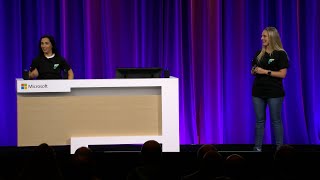
Make your data AI ready with Microsoft Fabric and Azure Databricks | BRK221H

Bring your data into the era of AI with Microsoft Fabric, a powerful all in one AI powered analytics solution for enterprises that covers everything from data movement to data science, real time analytics and business intelligence. Learn how Azure Databricks and Microsoft Fabric seamlessly work together to offer customers a modern, price performant analytics solution that helps teams turn data into a competitive advantage.

To learn more, please check out these resources: * https://aka.ms/Ignite23CollectionsBRK221H * https://info.microsoft.com/ww-landing-contact-me-for-events-m365-in-person-events.html?LCID=en-us&ls=407628-contactme-formfill * https://aka.ms/azure-ignite2023-dataaiblog

𝗦𝗽𝗲𝗮𝗸𝗲𝗿𝘀: * Justyna Lucznik * Kristen Christensen * Patrick Baumgartner * Eric McChesney * Hannah Chen * Wangui wmckelvey * Arthi Ramasubramanian Iyer * Chris Finlan * Christian Wade * Ed Donahue * Kasper de Jonge * Mohammad Ali * Ravs Kaur * Steve Howard * Jessica Hawk * Amir Netz * Arun Ulagaratchagan

𝗦𝗲𝘀𝘀𝗶𝗼𝗻 𝗜𝗻𝗳𝗼𝗿𝗺𝗮𝘁𝗶𝗼𝗻: This video is one of many sessions delivered for the Microsoft Ignite 2023 event. View sessions on-demand and learn more about Microsoft Ignite at https://ignite.microsoft.com

BRK221H | English (US) | Data

MSIgnite

Summary

Building a data platform that is enjoyable and accessible for all of its end users is a substantial challenge. One of the core complexities that needs to be addressed is the fractal set of integrations that need to be managed across the individual components. In this episode Tobias Macey shares his thoughts on the challenges that he is facing as he prepares to build the next set of architectural layers for his data platform to enable a larger audience to start accessing the data being managed by his team.

Announcements

Hello and welcome to the Data Engineering Podcast, the show about modern data management Introducing RudderStack Profiles. RudderStack Profiles takes the SaaS guesswork and SQL grunt work out of building complete customer profiles so you can quickly ship actionable, enriched data to every downstream team. You specify the customer traits, then Profiles runs the joins and computations for you to create complete customer profiles. Get all of the details and try the new product today at dataengineeringpodcast.com/rudderstack You shouldn't have to throw away the database to build with fast-changing data. You should be able to keep the familiarity of SQL and the proven architecture of cloud warehouses, but swap the decades-old batch computation model for an efficient incremental engine to get complex queries that are always up-to-date. With Materialize, you can! It’s the only true SQL streaming database built from the ground up to meet the needs of modern data products. Whether it’s real-time dashboarding and analytics, personalization and segmentation or automation and alerting, Materialize gives you the ability to work with fresh, correct, and scalable results — all in a familiar SQL interface. Go to dataengineeringpodcast.com/materialize today to get 2 weeks free! Developing event-driven pipelines is going to be a lot easier - Meet Functions! Memphis functions enable developers and data engineers to build an organizational toolbox of functions to process, transform, and enrich ingested events “on the fly” in a serverless manner using AWS Lambda syntax, without boilerplate, orchestration, error handling, and infrastructure in almost any language, including Go, Python, JS, .NET, Java, SQL, and more. Go to dataengineeringpodcast.com/memphis today to get started! Data lakes are notoriously complex. For data engineers who battle to build and scale high quality data workflows on the data lake, Starburst powers petabyte-scale SQL analytics fast, at a fraction of the cost of traditional methods, so that you can meet all your data needs ranging from AI to data applications to complete analytics. Trusted by teams of all sizes, including Comcast and Doordash, Starburst is a data lake analytics platform that delivers the adaptability and flexibility a lakehouse ecosystem promises. And Starburst does all of this on an open architecture with first-class support for Apache Iceberg, Delta Lake and Hudi, so you always maintain ownership of your data. Want to see Starburst in action? Go to dataengineeringpodcast.com/starburst and get $500 in credits to try Starburst Galaxy today, the easiest and fastest way to get started using Trino. Your host is Tobias Macey and today I'll be sharing an update on my own journey of building a data platform, with a particular focus on the challenges of tool integration and maintaining a single source of truth

Interview

Introduction How did you get involved in the area of data management? data sharing weight of history

existing integrations with dbt switching cost for e.g. SQLMesh de facto standard of Airflow

Single source of truth

permissions management across application layers Database engine Storage layer in a lakehouse Presentation/access layer (BI) Data flows dbt -> table level lineage orchestration engine -> pipeline flows

task based vs. asset based

Metadata platform as the logical place for horizontal view

Contact Info

LinkedIn Website

Parting Questio

Build powerful AI apps with Copilot in Microsoft Fabric | BRK225

Build new analytics and AI models and supercharge your intelligent app strategy across your organization. Increase developer velocity with Copilot in Fabric and empower your data scientists and data analysts with Semantic Link, bridging the world of business intelligence and AI. Train custom ML models with Azure ML and Fabric Data Science, democratizing AI across lines-of-business and increasing collaboration between data professionals and ML professionals.

To learn more, please check out these resources: * https://aka.ms/Ignite23CollectionsBRK225H * https://info.microsoft.com/ww-landing-contact-me-for-events-m365-in-person-events.html?LCID=en-us&ls=407628-contactme-formfill * https://aka.ms/azure-ignite2023-dataaiblog

𝗦𝗽𝗲𝗮𝗸𝗲𝗿𝘀: * Justyna Lucznik * Nellie Gustafsson * Misha Desai * Thasmika Gokal * Abhishek Narain * Alex Powers * Alex van Grootel * Ed Donahue * Lukasz Pawlowski * Raj RIkhy * Wilson Lee

𝗦𝗲𝘀𝘀𝗶𝗼𝗻 𝗜𝗻𝗳𝗼𝗿𝗺𝗮𝘁𝗶𝗼𝗻: This video is one of many sessions delivered for the Microsoft Ignite 2023 event. View sessions on-demand and learn more about Microsoft Ignite at https://ignite.microsoft.com

BRK225 | English (US) | Data

MSIgnite

Google Cloud Platform for Data Science: A Crash Course on Big Data, Machine Learning, and Data Analytics Services

This book is your practical and comprehensive guide to learning Google Cloud Platform (GCP) for data science, using only the free tier services offered by the platform. Data science and machine learning are increasingly becoming critical to businesses of all sizes, and the cloud provides a powerful platform for these applications. GCP offers a range of data science services that can be used to store, process, and analyze large datasets, and train and deploy machine learning models. The book is organized into seven chapters covering various topics such as GCP account setup, Google Colaboratory, Big Data and Machine Learning, Data Visualization and Business Intelligence, Data Processing and Transformation, Data Analytics and Storage, and Advanced Topics. Each chapter provides step-by-step instructions and examples illustrating how to use GCP services for data science and big data projects. Readers will learn how to set up a Google Colaboratory account and run Jupyternotebooks, access GCP services and data from Colaboratory, use BigQuery for data analytics, and deploy machine learning models using Vertex AI. The book also covers how to visualize data using Looker Data Studio, run data processing pipelines using Google Cloud Dataflow and Dataprep, and store data using Google Cloud Storage and SQL. What You Will Learn Set up a GCP account and project Explore BigQuery and its use cases, including machine learning Understand Google Cloud AI Platform and its capabilities Use Vertex AI for training and deploying machine learning models Explore Google Cloud Dataproc and its use cases for big data processing Create and share data visualizations and reports with Looker Data Studio Explore Google Cloud Dataflow and its use cases for batch and stream data processing Run data processing pipelines on Cloud Dataflow Explore Google Cloud Storageand its use cases for data storage Get an introduction to Google Cloud SQL and its use cases for relational databases Get an introduction to Google Cloud Pub/Sub and its use cases for real-time data streaming Who This Book Is For Data scientists, machine learning engineers, and analysts who want to learn how to use Google Cloud Platform (GCP) for their data science and big data projects

Summary

Software development involves an interesting balance of creativity and repetition of patterns. Generative AI has accelerated the ability of developer tools to provide useful suggestions that speed up the work of engineers. Tabnine is one of the main platforms offering an AI powered assistant for software engineers. In this episode Eran Yahav shares the journey that he has taken in building this product and the ways that it enhances the ability of humans to get their work done, and when the humans have to adapt to the tool.

Announcements

Hello and welcome to the Data Engineering Podcast, the show about modern data management Introducing RudderStack Profiles. RudderStack Profiles takes the SaaS guesswork and SQL grunt work out of building complete customer profiles so you can quickly ship actionable, enriched data to every downstream team. You specify the customer traits, then Profiles runs the joins and computations for you to create complete customer profiles. Get all of the details and try the new product today at dataengineeringpodcast.com/rudderstack This episode is brought to you by Datafold – a testing automation platform for data engineers that finds data quality issues before the code and data are deployed to production. Datafold leverages data-diffing to compare production and development environments and column-level lineage to show you the exact impact of every code change on data, metrics, and BI tools, keeping your team productive and stakeholders happy. Datafold integrates with dbt, the modern data stack, and seamlessly plugs in your data CI for team-wide and automated testing. If you are migrating to a modern data stack, Datafold can also help you automate data and code validation to speed up the migration. Learn more about Datafold by visiting dataengineeringpodcast.com/datafold Data lakes are notoriously complex. For data engineers who battle to build and scale high quality data workflows on the data lake, Starburst powers petabyte-scale SQL analytics fast, at a fraction of the cost of traditional methods, so that you can meet all your data needs ranging from AI to data applications to complete analytics. Trusted by teams of all sizes, including Comcast and Doordash, Starburst is a data lake analytics platform that delivers the adaptability and flexibility a lakehouse ecosystem promises. And Starburst does all of this on an open architecture with first-class support for Apache Iceberg, Delta Lake and Hudi, so you always maintain ownership of your data. Want to see Starburst in action? Go to dataengineeringpodcast.com/starburst and get $500 in credits to try Starburst Galaxy today, the easiest and fastest way to get started using Trino. You shouldn't have to throw away the database to build with fast-changing data. You should be able to keep the familiarity of SQL and the proven architecture of cloud warehouses, but swap the decades-old batch computation model for an efficient incremental engine to get complex queries that are always up-to-date. With Materialize, you can! It’s the only true SQL streaming database built from the ground up to meet the needs of modern data products. Whether it’s real-time dashboarding and analytics, personalization and segmentation or automation and alerting, Materialize gives you the ability to work with fresh, correct, and scalable results — all in a familiar SQL interface. Go to dataengineeringpodcast.com/materialize today to get 2 weeks free! Your host is Tobias Macey and today I'm interviewing Eran Yahav about building an AI powered developer assistant at Tabnine

Interview

Introduction How did you get involved in machine learning? Can you describe what Tabnine is and the story behind it? What are the individual and organizational motivations for using AI to generate code?

What are the real-world limitations of generative AI for creating software? (e.g. size/complexity of the outputs, naming conventions, etc.) What are the elements of skepticism/overs

A Power BI Compendium: Answers to 65 Commonly Asked Questions on Power BI

Are you a reasonably competent Power BI user but still struggling to generate reports that truly tell the story of your data? Or do you simply want to extend your knowledge of Power BI by exploring more complex areas of visualizations, data modelling, DAX, and Power Query? If so, this book is for you. This book serves as a comprehensive resource for users to implement more challenging visuals, build better data models, use DAX with more confidence, and execute more complex queries so they can find and share important insights into their data. The contents of the chapters are in a question-and-answer format that explore everyday data analysis scenarios in Power BI. These questions have been generated from the author’s own client base and from commonly sought-for information from the Power BI community. They cover a wide and diverse range of topics that many Power BI users often struggle to get to grips with or don’t fully understand. Examples of suchquestions are: How can I generate dynamic titles for visuals? How can I control subtotals in a Matrix visual? Why do I need a date dimension? How can I show the previous N month’s sales in a column chart?Why do I need a Star Schema? Why aren't my totals correct? How can I bin measures into numeric ranges? Can I import a Word document? Can I dynamically append data from different source files? Solutions to these questions and many more are presented in non-technical and easy-to-follow explanations negating the requirement to perform tiresome and fruitless “google” searches. There are also companion Power BI Desktop files that set out the answers to each question so you can follow along with the examples given in the book.. After working through this book, you will have extended your knowledge of Power BI to an expert level, alleviating your existing frustrations and so enabling you to design Power BI reports where you are no longer limited by your lack of knowledge or experience. Who is This Book For: Power BI users who can build reports and now want to extend their knowledge of Power BI.

Summary

Databases are the core of most applications, but they are often treated as inscrutable black boxes. When an application is slow, there is a good probability that the database needs some attention. In this episode Lukas Fittl shares some hard-won wisdom about the causes and solution of many performance bottlenecks and the work that he is doing to shine some light on PostgreSQL to make it easier to understand how to keep it running smoothly.

Announcements

Hello and welcome to the Data Engineering Podcast, the show about modern data management Introducing RudderStack Profiles. RudderStack Profiles takes the SaaS guesswork and SQL grunt work out of building complete customer profiles so you can quickly ship actionable, enriched data to every downstream team. You specify the customer traits, then Profiles runs the joins and computations for you to create complete customer profiles. Get all of the details and try the new product today at dataengineeringpodcast.com/rudderstack You shouldn't have to throw away the database to build with fast-changing data. You should be able to keep the familiarity of SQL and the proven architecture of cloud warehouses, but swap the decades-old batch computation model for an efficient incremental engine to get complex queries that are always up-to-date. With Materialize, you can! It’s the only true SQL streaming database built from the ground up to meet the needs of modern data products. Whether it’s real-time dashboarding and analytics, personalization and segmentation or automation and alerting, Materialize gives you the ability to work with fresh, correct, and scalable results — all in a familiar SQL interface. Go to dataengineeringpodcast.com/materialize today to get 2 weeks free! Data lakes are notoriously complex. For data engineers who battle to build and scale high quality data workflows on the data lake, Starburst powers petabyte-scale SQL analytics fast, at a fraction of the cost of traditional methods, so that you can meet all your data needs ranging from AI to data applications to complete analytics. Trusted by teams of all sizes, including Comcast and Doordash, Starburst is a data lake analytics platform that delivers the adaptability and flexibility a lakehouse ecosystem promises. And Starburst does all of this on an open architecture with first-class support for Apache Iceberg, Delta Lake and Hudi, so you always maintain ownership of your data. Want to see Starburst in action? Go to dataengineeringpodcast.com/starburst and get $500 in credits to try Starburst Galaxy today, the easiest and fastest way to get started using Trino. This episode is brought to you by Datafold – a testing automation platform for data engineers that finds data quality issues before the code and data are deployed to production. Datafold leverages data-diffing to compare production and development environments and column-level lineage to show you the exact impact of every code change on data, metrics, and BI tools, keeping your team productive and stakeholders happy. Datafold integrates with dbt, the modern data stack, and seamlessly plugs in your data CI for team-wide and automated testing. If you are migrating to a modern data stack, Datafold can also help you automate data and code validation to speed up the migration. Learn more about Datafold by visiting dataengineeringpodcast.com/datafold Your host is Tobias Macey and today I'm interviewing Lukas Fittl about optimizing your database performance and tips for tuning Postgres

Interview

Introduction How did you get involved in the area of data management? What are the different ways that database performance problems impact the business? What are the most common contributors to performance issues? What are the useful signals that indicate performance challenges in the database?

For a given symptom, what are the steps that you recommend for determining the proximate cause?

What are the potential negative impacts to be aware of when tu

Alteryx Designer Cookbook

This book, Alteryx Designer Cookbook, provides over 60 practical and detailed recipes that guide you in conquering data accessibility, preparation, and insights generation through Alteryx Designer. You will learn how to manipulate, blend, and analyze data sources effectively, improving your analytical productivity. What this Book will help me do Master efficient methods for cleaning, preparing, and shaping data accurately. Combine multiple data sources seamlessly using Alteryx Designer's blending tools. Implement essential data transformations such as pivoting and restructuring for analyses. Create reusable, automated solutions for repeated tasks using Alteryx macros. Generate rich, data-driven reports to enhance business intelligence efficiently. Author(s) None Guisande is an experienced data analytics professional with years of hands-on expertise in implementing data workflows using Alteryx Designer. Passionate about simplifying complex operations, None brings a practical approach to teaching, ensuring that readers can apply their skills immediately. Who is it for? This book is ideal for data analysts, professionals in business intelligence, and anyone proficient in Alteryx Designer's basics looking to deepen their understanding. If you aim to enhance your productivity and manual data tasks into efficient automated workflows, this book is a perfect fit.

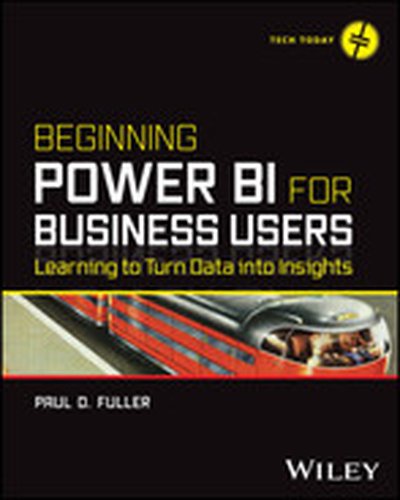
Beginning Power BI for Business Users

Discover the utility of your organization’s data with Microsoft Power BI In Beginning Power BI for Business Users: Learning to Turn Data into Insights, accomplished data professional and business intelligence expert Paul Fuller delivers an intuitive and accessible handbook for professionals seeking to use Microsoft’s Power BI to access, analyze, understand, report, and act on the data available to their organizations. In the book, you’ll discover Power BI’s robust feature set, learn to ingest and model data, visualize and report on that data, and even use the DAX scripting language to unlock still more utility from Microsoft’s popular program. Beginning with general principles geared to readers with no or little experience with reporting or data analytics tools, the author walks you through how to manipulate common, publicly available data sources—including Excel files and relational databases. You’ll also learn to: Use the included and tested sample code to work through the helpful examples included by the author Conduct data orchestration and visualization to better understand and gain insights from your data An essential resource for business analysts and Excel power users reaching the limits of that program’s capabilities, Beginning Power BI for Business Users will also benefit data analysts who seek to prepare reports for their organizations using Microsoft’s flexible and intuitive software.