talk-data.com talk-data.com

Topic

data

5765

tagged

Activity Trend

3 peak/qtr
2020-Q1 2026-Q1

Activities

5765 activities · Newest first

Integrating the IBM MQ Appliance into your IBM MQ Infrastructure

This IBM® Redbooks® publication describes the IBM MQ Appliance M2000, an application connectivity option that combines secure, reliable IBM MQ messaging with the simplicity and low overall costs of a hardware appliance. This book presents underlying concepts and practical advice for integrating the IBM MQ Appliance M2000 into an IBM MQ infrastructure. Therefore, it is aimed at enterprises that are considering a possible first use of IBM MQ and the IBM MQ Appliance M2000 and those that already identified the appliance as a logical addition to their messaging environment. Details about new functionality and changes in approaches to application messaging are also described. The authors' goal is to help readers make informed design and implementation decisions so that the users can successfully integrate the IBM MQ Appliance M2000 into their environments. A broad understanding of enterprise messaging is required to fully comprehend the details that are provided in this book. Readers are assumed to have at least some familiarity and experience with complimentary IBM messaging products.
Introducing and Implementing IBM FlashSystem V9000

Storage capacity and performance requirements are growing faster than ever before, and the costs of managing this growth are depleting more of the information technology (IT) budget. The IBM® FlashSystem™ V9000 is the premier, fully integrated, Tier 1, all-flash offering from IBM. It has changed the economics of today's data center by eliminating storage bottlenecks. Its software-defined storage features simplify data management, improve data security, and preserve your investments in storage. IBM FlashSystem® V9000 includes IBM FlashCore™ technology and advanced software-defined storage available in one solution in a compact 6U form factor. FlashSystem V9000 improves business application availability. It delivers greater resource utilization so you can get the most from your storage resources, and achieve a simpler, more scalable, and cost-efficient IT Infrastructure. This IBM Redbooks® publication provides information about IBM FlashSystem V9000 Software V7.5 and its new functionality. It describes the product architecture, software, hardware, and implementation, and provides hints and tips. It illustrates use cases and independent software vendor (ISV) scenarios that demonstrate real-world solutions, and also provides examples of the benefits gained by integrating the FlashSystem storage into business environments. Using IBM FlashSystem V9000 software version 7.5 functions, management tools, and interoperability combines the performance of FlashSystem architecture with the advanced functions of software-defined storage to deliver performance, efficiency, and functions that meet the needs of enterprise workloads that demand IBM MicroLatency® response time. This book offers FlashSystem V9000 scalability concepts and guidelines for planning, installing, and configuring, which can help environments scale up and out to add more flash capacity and expand virtualized systems. Port utilization methodologies are provided to help you maximize the full potential of IBM FlashSystem V9000 performance and low latency in your scalable environment. In addition, all of the functions that FlashSystem V9000 software version 7.5 brings are explained, including IBM HyperSwap® capability, increased IBM FlashCopy® bitmap space, Microsoft Windows offloaded data transfer (ODX), and direct 16 gigabits per second (Gbps) Fibre Channel host attach support. This book also describes support for VMware 6, which enhances and improves scalability in a VMware environment. This book is intended for pre-sales and post-sales technical support professionals, storage administrators, and anyone who wants to understand how to implement this exciting technology.

Practical Google Analytics and Google Tag Manager for Developers

Whether you’re a marketer with development skills or a full-on web developer/analyst, Practical Google Analytics and Google Tag Manager for Developers shows you how to implement Google Analytics using Google Tag Manager to jumpstart your web analytics measurement. There’s a reason that so many organizations use Google Analytics. Effective collection of data with Google Analytics can reduce customer acquisition costs, provide priceless feedback on new product initiatives, and offer insights that will grow a customer or client base. So where does Google Tag Manager fit in? Google Tag Manager allows for unprecedented collaboration between marketing and technical teams, lightning fast updates to your site, and standardization of the most common tags for on-site tracking and marketing efforts. To achieve the rich data you're really after to better serve your users’ needs, you'll need the tools Google Tag Manager provides for a best-in-class implementation of Google Analytics measurement on your site. Written by data evangelist and Google Analytics expert Jonathan Weber and the team at LunaMetrics, this book offers foundational knowledge, a collection of practical Google Tag Manager recipes, well-tested best practices, and troubleshooting tips to get your implementation in tip-top condition. It covers topics including: • Google Analytics implementation via Google Tag Manager • How to customize Google Analytics for your unique situation • Using Google Tag Manager to track and analyze interactions across multiple devices and touch points • How to extract data from Google Analytics and use Google BigQuery to analyze Big Data questions

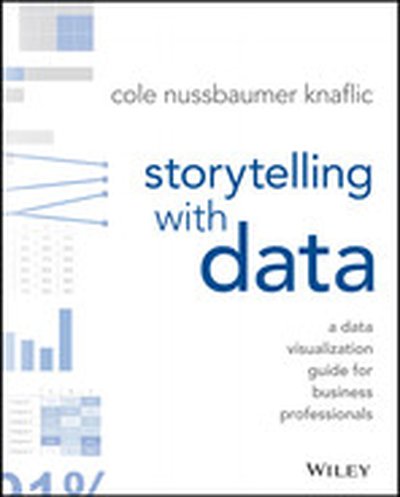
Storytelling with Data: A Data Visualization Guide for Business Professionals

Don't simply show your data—tell a story with it! Storytelling with Data teaches you the fundamentals of data visualization and how to communicate effectively with data. You'll discover the power of storytelling and the way to make data a pivotal point in your story. The lessons in this illuminative text are grounded in theory, but made accessible through numerous real-world examples—ready for immediate application to your next graph or presentation. Storytelling is not an inherent skill, especially when it comes to data visualization, and the tools at our disposal don't make it any easier. This book demonstrates how to go beyond conventional tools to reach the root of your data, and how to use your data to create an engaging, informative, compelling story. Specifically, you'll learn how to: Understand the importance of context and audience Determine the appropriate type of graph for your situation Recognize and eliminate the clutter clouding your information Direct your audience's attention to the most important parts of your data Think like a designer and utilize concepts of design in data visualization Leverage the power of storytelling to help your message resonate with your audience Together, the lessons in this book will help you turn your data into high impact visual stories that stick with your audience. Rid your world of ineffective graphs, one exploding 3D pie chart at a time. There is a story in your data— Storytelling with Data will give you the skills and power to tell it!

Strategic Analytics

More than ever, data drives decisions in organizations—and we have more data, and more ways to analyze it, than ever. Yet strategic initiatives continue to fail as often as they did when computers ran on punch cards. Economist and research scientist Alec Levenson says we need a new approach. The problem, Levenson says, is that the business people who devise the strategies and the human resources people who get employees to implement them use completely different analytics. Business analytics can determine if operational priorities aren't being achieved but can't explain why. HR analytics reveal potentially helpful policy and process improvements but can't identify which would have the greatest strategic impact. This book shows how to use an integrated approach to bring these two pieces together. Levenson presents a thorough and realistic treatment of the reasons for and challenges of taking an integrated approach. He provides details on the different parts of both enterprise and human capital analytics that have to be conducted for integration to be successful and includes specific questions to ask, along with examples of applying integrated analytics to address particular organizational challenges. Effective analytics is a team sport. Levenson's approach allows you to get the deepest insights by bringing people together from both the business and HR perspectives to assess what's going on and determine the right solution.

WHOIS Running the Internet: Protocol, Policy, and Privacy

Discusses the evolution of WHOIS and how policy changes will affect WHOIS' place in IT today and in the future This book provides a comprehensive overview of WHOIS. The text begins with an introduction to WHOIS and an in-depth coverage of its forty-year history. Afterwards it examines how to use WHOIS and how WHOIS fits in the overall structure of the Domain Name System (DNS). Other technical topics covered include WHOIS query code and WHOIS server details. The book also discusses current policy developments and implementations, reviews critical policy documents, and explains how they will affect the future of the Internet and WHOIS. Additional resources and content updates will be provided through a supplementary website. Includes an appendix with information on current and authoritative WHOIS services around the world Provides illustrations of actual WHOIS records and screenshots of web-based WHOIS query interfaces with instructions for navigating them Explains network dependencies and processes related to WHOIS utilizing flowcharts Contains advanced coding for programmers WHOIS Running the Internet: Protocol, Policy, and Privacy is written primarily for internet developers, policy developers, industry professionals in law enforcement, digital forensic investigators, and intellectual property attorneys. Garth O. Bruen is an Internet policy and security researcher whose work has been published in the Wall Street Journal and the Washington Post. Since 2012 Garth Bruen has served as the North American At-Large Chair to the Internet Corporation of Assigned Names and Numbers (ICANN). In 2003 Bruen created KnujOn.com with his late father, Dr. Robert Bruen, to process and investigate Internet abuse complaints (SPAM) from consumers. Bruen has trained and advised law enforcement at the federal and local levels on malicious use of the Domain Name System in the way it relates to the WHOIS record system. He has presented multiple times to the High Technology Crime Investigation Association (HTCIA) as well as other cybercrime venues including the Anti-Phishing Working Group (APWG) and the National Center for Justice and the Rule of Law at The University of Mississippi School of Law. Bruen also teaches the Fisher College Criminal Justice School in Boston where he develops new approaches to digital crime.

Business Statistics Made Easy in SAS

Learn or refresh core statistical methods for business with SAS® and approach real business analytics issues and techniques using a practical approach that avoids complex mathematics and instead employs easy-to-follow explanations.

Business Statistics Made Easy in SAS® is designed as a user-friendly, practice-oriented, introductory text to teach businesspeople, students, and others core statistical concepts and applications. It begins with absolute core principles and takes you through an overview of statistics, data and data collection, an introduction to SAS®, and basic statistics (descriptive statistics and basic associational statistics). The book also provides an overview of statistical modeling, effect size, statistical significance and power testing, basics of linear regression, introduction to comparison of means, basics of chi-square tests for categories, extrapolating statistics to business outcomes, and some topical issues in statistics, such as big data, simulation, machine learning, and data warehousing.

The book steers away from complex mathematical-based explanations, and it also avoids basing explanations on the traditional build-up of distributions, probability theory and the like, which tend to lose the practice-oriented reader. Instead, it teaches the core ideas of statistics through methods such as careful, intuitive written explanations, easy-to-follow diagrams, step-by-step technique implementation, and interesting metaphors.

With no previous SAS experience necessary, Business Statistics Made Easy in SAS® is an ideal introduction for beginners. It is suitable for introductory undergraduate classes, postgraduate courses such as MBA refresher classes, and for the business practitioner. It is compatible with SAS® University Edition.

Real Time Analytics with SAP Hana

"Real Time Analytics with SAP HANA" offers a comprehensive, step-by-step guide to mastering analytics and data modeling in the powerful SAP HANA environment. This book covers everything from basic data modeling concepts to more advanced techniques like creating calculation views and leveraging SAP HANA artifacts. What this Book will help me do Understand and build analytics/data models in the SAP HANA environment. Create schemas, packages, and delivery units in SAP HANA Studio. Master real-time data replication using SLT and SAP HANA Studio. Learn about full-text search, fuzzy search, and other analytical capabilities in SAP HANA. Develop comprehensive use cases combining SAP HANA concepts and tools. Author(s) Vinay Singh, the author of this book, is a seasoned SAP HANA expert with extensive experience in analytics and data modeling. He has worked on multiple SAP HANA implementation and migration projects and brings this expertise into his writing. His practical examples and hands-on approach make SAP HANA concepts accessible to learners at all levels. Who is it for? This book is ideal for SAP HANA data modelers, developers, implementation or migration consultants, project managers, and architects. It is designed for individuals aiming to enhance their skill set in SAP HANA and master real-time analytics. Whether you are actively working with SAP HANA or just starting, this book will serve as a valuable guide.

Web Development with MongoDB and NodeJS - Second Edition

Discover how to build a full-featured, interactive web application from scratch using Node.js and MongoDB in this comprehensive guide. You will learn to set up your development environment, create a web server with Express.js, and integrate MongoDB for data persistence. By the end of this book, you will have the knowledge and skills to develop and deploy robust web applications ready for the cloud. What this Book will help me do Set up a Node.js development environment and connect it to MongoDB. Develop a web server using Express.js and write integrated APIs. Implement dynamic HTML pages leveraging the Handlebars template engine. Build efficient and scalable data-driven features using Mongoose ODM. Deploy web applications seamlessly to cloud platforms like Heroku, AWS, or Azure. Author(s) This book was co-authored by experts None Satheesh, None Joseph D'mello, and Jason Krol, who bring years of experience in software development and expertise in modern web technologies. With a focus on practical application and best practices, the authors aim to empower readers to succeed in real-world development projects using the innovative Node.js and MongoDB stack. Who is it for? This book is tailored for developers who have a basic understanding of JavaScript and HTML and wish to advance their web development skills. If you are motivated to learn how to leverage Node.js and MongoDB for full-stack development or are curious about building and deploying complete web applications, this book is ideal for you. It addresses learners from early career to experienced developers looking to strengthen their skills in modern development stacks.

Advanced Data Management

Advanced data management has always been at the core of efficient database and information systems. Recent trends like big data and cloud computing have aggravated the need for sophisticated and flexible data storage and processing solutions. This book provides a comprehensive coverage of the principles of data management developed in the last decades with a focus on data structures and query languages. It treats a wealth of different data models and surveys the foundations of structuring, processing, storing and querying data according these models. Starting off with the topic of database design, it further discusses weaknesses of the relational data model, and then proceeds to convey the basics of graph data, tree-structured XML data, key-value pairs and nested, semi-structured JSON data, columnar and record-oriented data as well as object-oriented data. The final chapters round the book off with an analysis of fragmentation, replication and consistency strategies for data management in distributed databases as well as recommendations for handling polyglot persistence in multi-model databases and multi-database architectures. While primarily geared towards students of Master-level courses in Computer Science and related areas, this book may also be of benefit to practitioners looking for a reference book on data modeling and query processing. It provides both theoretical depth and a concise treatment of open source technologies currently on the market.

Graphing Data with R

It’s much easier to grasp complex data relationships with a graph than by scanning numbers in a spreadsheet. This introductory guide shows you how to use the R language to create a variety of useful graphs for visualizing and analyzing complex data for science, business, media, and many other fields. You’ll learn methods for highlighting important relationships and trends, reducing data to simpler forms, and emphasizing key numbers at a glance. Anyone who wants to analyze data will find something useful here—even if you don’t have a background in mathematics, statistics, or computer programming. If you want to examine data related to your work, this book is the ideal way to start.

Learning Bayesian Models with R

Dive into the world of Bayesian Machine Learning with "Learning Bayesian Models with R." This comprehensive guide introduces the foundations of probability theory and Bayesian inference, teaches you how to implement these concepts with the R programming language, and progresses to practical techniques for supervised and unsupervised problems in data science. What this Book will help me do Understand and set up an R environment for Bayesian modeling Build Bayesian models including linear regression and classification for predictive analysis Learn to apply Bayesian inference to real-world machine learning problems Work with big data and high-performance computation frameworks like Hadoop and Spark Master advanced Bayesian techniques and apply them to deep learning and AI challenges Author(s) Hari Manassery Koduvely is a proficient data scientist with extensive experience in leveraging Bayesian frameworks for real-world applications. His passion for Bayesian Machine Learning is evident in his approachable and detailed teaching methodology, aimed at making these complex topics accessible for practitioners. Who is it for? This book is best suited for data scientists, analysts, and statisticians familiar with R and basic probability theory who aim to enhance their expertise in Bayesian approaches. It's ideal for professionals tackling machine learning challenges in applied data contexts. If you're looking to incorporate advanced probabilistic methods into your projects, this guide will show you how.

Practical Graph Analytics with Apache Giraph

Practical Graph Analytics with Apache Giraph helps you build data mining and machine learning applications using the Apache Foundation’s Giraph framework for graph processing. This is the same framework as used by Facebook, Google, and other social media analytics operations to derive business value from vast amounts of interconnected data points. Graphs arise in a wealth of data scenarios and describe the connections that are naturally formed in both digital and real worlds. Examples of such connections abound in online social networks such as Facebook and Twitter, among users who rate movies from services like Netflix and Amazon Prime, and are useful even in the context of biological networks for scientific research. Whether in the context of business or science, viewing data as connected adds value by increasing the amount of information available to be drawn from that data and put to use in generating new revenue or scientific opportunities. Apache Giraph offers a simple yet flexible programming model targeted to graph algorithms and designed to scale easily to accommodate massive amounts of data. Originally developed at Yahoo!, Giraph is now a top top-level project at the Apache Foundation, and it enlists contributors from companies such as Facebook, LinkedIn, and Twitter. Practical Graph Analytics with Apache Giraph brings the power of Apache Giraph to you, showing how to harness the power of graph processing for your own data by building sophisticated graph analytics applications using the very same framework that is relied upon by some of the largest players in the industry today.

Python Web Scraping

Explore the possibilities of web scraping using Python with this practical guide. The book provides a comprehensive introduction to extracting information from web pages, managing complex scraping scenarios, and utilizing specialized tools such as Scrapy. Whether you're dealing with static pages or interactive web content, this book equips you with the skills to gather and process web data efficiently. What this Book will help me do Gain proficiency in writing Python scripts to extract data from web pages. Learn to build and manage multithreaded crawlers to handle large-scale scraping tasks. Master techniques for interacting with dynamic web content and JavaScript-rendered pages. Understand how to work with web forms, sessions, and tackle challenges like CAPTCHA. Implement practical examples of web scraping using Scrapy for real-world data projects. Author(s) Richard Penman is an experienced software engineer and an expert in Python programming and web development. With years of practical expertise in web crawling and data extraction, Richard shares his extensive knowledge in this field to make complex tasks accessible to developers of all levels. His thoughtful approach aims to empower readers to confidently tackle data challenges on the web. Who is it for? This book is ideal for developers and technical professionals who want to learn effective techniques for web scraping with Python. A basic understanding of programming concepts and experience with Python will help readers get the most out of the practical examples. It's also suitable for advanced learners looking to apply Python skills for automating web data extraction tasks. If you're enthusiastic about turning web data into actionable insights, this guide is for you.

Enterprise Search, 2nd Edition

Is your organization rapidly accumulating more information than you know how to manage? This updated edition helps you create an enterprise search solution based on more than just technology. Author Martin White shows you how to plan and implement a managed search environment that meets the needs of your business and your employees. Learn why it’s vital to have a dedicated staff manage your search technology and support your users.

IBM Spectrum Virtualize and SAN Volume Controller Enhanced Stretched Cluster with VMware

This IBM® Redbooks® publication describes the IBM storage area network (SAN) and IBM Spectrum™ Virtualize, and SAN Volume Controller Enhanced Stretched Cluster configuration when combined with VMware. It describe guidelines, settings, and implementation steps necessary to achieve a satisfactory implementation. Business continuity and continuous availability of applications are among the top requirements for many organizations today. Advances in virtualization, storage, and networking make enhanced business continuity possible. Information technology solutions can now be designed to manage both planned and unplanned outages, and to take advantage of the flexibility, efficient use of resources, and cost savings that cloud computing offers. The IBM Enhanced Stretched Cluster design offers significant functions for maintaining business continuity in a VMware environment. You can dynamically move applications across data centers without interruption to those applications. The live application mobility across data centers relies on these products and technologies: IBM Spectrum Virtualize and SAN Volume Controller Enhanced Stretched Cluster Solution VMware Metro vMotion for live migration of virtual machines A Layer 2 IP Network and storage networking infrastructure for high-performance traffic management Data center interconnection

Java Persistence with Hibernate, Second Edition

Java Persistence with Hibernate, Second Edition explores Hibernate by developing an application that ties together hundreds of individual examples. In this revised edition, authors Christian Bauer, Gavin King, and Gary Gregory cover Hibernate 5 in detail with the Java Persistence 2.1 standard (JSR 338). All examples have been updated for the latest Hibernate and Java EE specification versions. About the Technology Persistence--the ability of data to outlive an instance of a program--is central to modern applications. Hibernate, the most popular Java persistence tool, offers automatic and transparent object/relational mapping, making it a snap to work with SQL databases in Java applications. About the Book Java Persistence with Hibernate, Second Edition explores Hibernate by developing an application that ties together hundreds of individual examples. You'll immediately dig into the rich programming model of Hibernate, working through mappings, queries, fetching strategies, transactions, conversations, caching, and more. Along the way you'll find a well-illustrated discussion of best practices in database design and optimization techniques. In this revised edition, authors Christian Bauer, Gavin King, and Gary Gregory cover Hibernate 5 in detail with the Java Persistence 2.1 standard (JSR 338). All examples have been updated for the latest Hibernate and Java EE specification versions. What's Inside Object/relational mapping concepts Efficient database application design Comprehensive Hibernate and Java Persistence reference Integration of Java Persistence with EJB, CDI, JSF, and JAX-RS Unmatched breadth and depth About the Reader The book assumes a working knowledge of Java. About the Authors Christian Bauer is a member of the Hibernate developer team and a trainer and consultant. Gavin King is the founder of the Hibernate project and a member of the Java Persistence expert group (JSR 220). Gary Gregory is a principal software engineer working on application servers and legacy integration. Quotes The most comprehensive book about Hibernate Persistence ... works well both as a tutorial and as a reference. - Sergio Fernandez Gonzalez, Accenture Software The essential guidebook for navigating the intricacies of Hibernate. - José Diaz, OptumHealth An excellent update to a classic and essential book. - Jerry Goodnough, Cognitive Medical Systems The must-have reference for every Hibernate user. - Stephan Heffner, SPIEGEL-Verlag Rudolf Augstein GmbH & Co. KG

Learning to Love Data Science

Until recently, many people thought big data was a passing fad. "Data science" was an enigmatic term. Today, big data is taken seriously, and data science is considered downright sexy. With this anthology of reports from award-winning journalist Mike Barlow, you’ll appreciate how data science is fundamentally altering our world, for better and for worse. Barlow paints a picture of the emerging data space in broad strokes. From new techniques and tools to the use of data for social good, you’ll find out how far data science reaches. With this anthology, you’ll learn how: Analysts can now get results from their data queries in near real time Indie manufacturers are blurring the lines between hardware and software Companies try to balance their desire for rapid innovation with the need to tighten data security Advanced analytics and low-cost sensors are transforming equipment maintenance from a cost center to a profit center CIOs have gradually evolved from order takers to business innovators New analytics tools let businesses go beyond data analysis and straight to decision-making Mike Barlow is an award-winning journalist, author, and communications strategy consultant. Since launching his own firm, Cumulus Partners, he has represented major organizations in a number of industries.

MariaDb Essentials

MariaDB Essentials is an approachable yet comprehensive guide to mastering SQL with MariaDB, an advanced open-source database server compatible with MySQL. Through this book, you'll gain a solid foundation in both the basics of database management and the unique features that make MariaDB stand out, all while using practical examples to enhance your learning experience. What this Book will help me do Understand how to install, configure, and start using MariaDB efficiently. Learn how to structure and manage your data using databases, tables, indexes, and SQL queries. Master key advanced features of MariaDB such as virtual columns, dynamic columns, and full-text search. Explore practical operations including importing, exporting, and manipulating data using MariaDB. Gain the skills to work with MariaDB's community tools and innovative storage engines like CONNECT. Author(s) None Kenler is a dedicated technology author and instructor who specializes in database systems and services. With a passion for making complex technical concepts approachable, None has crafted a variety of learning materials that empower readers to fully utilize their tools. None's experience with real-world database management enriches this book, providing readers with both theoretical and practical expertise. Who is it for? This book is perfect for database enthusiasts ranging from beginners unfamiliar with SQL to seasoned users looking to deepen their understanding of MariaDB. It's ideal for working professionals transitioning from MySQL to fully appreciate the unique capabilities of MariaDB. Whether you're a student, developer, or database administrator, this book will guide you in achieving your goals.