talk-data.com talk-data.com

Topic

Python

programming_language data_science web_development

1446

tagged

Activity Trend

185 peak/qtr
2020-Q1 2026-Q1

Activities

1446 activities · Newest first

Think Bayes, 2nd Edition

If you know how to program, you're ready to tackle Bayesian statistics. With this book, you'll learn how to solve statistical problems with Python code instead of mathematical formulas, using discrete probability distributions rather than continuous mathematics. Once you get the math out of the way, the Bayesian fundamentals will become clearer and you'll begin to apply these techniques to real-world problems. Bayesian statistical methods are becoming more common and more important, but there aren't many resources available to help beginners. Based on undergraduate classes taught by author Allen B. Downey, this book's computational approach helps you get a solid start. Use your programming skills to learn and understand Bayesian statistics Work with problems involving estimation, prediction, decision analysis, evidence, and Bayesian hypothesis testing Get started with simple examples, using coins, dice, and a bowl of cookies Learn computational methods for solving real-world problems

We talked about:

Tatiana’s background 12 career hacks and changing career Hack #1: Change your social circle Hack #2: Forget your fears and stereotypes Hack #3: Forget distractions Hack #4: Don’t overestimate others and don’t underestimate yourself Hack #5: Attention genius Hack #6: Make a team Hack #7: Less is more. Forget about perfectionism Hack #8: Initial creation Hack #9: Find mentors Hack #10: Say “no” Hack #11: Look for failures Hack #12: Take care of yourself Kaggle vs internships and pet projects Resources for learning machine learning Starting with Kaggle Improving focus Astroinformatics How background in Physics is helpful for transitioning Leaving academia Preparing for interviews

Links:

Mock interviews: https://www.pramp.com/ Learning ML: https://www.coursera.org/learn/machine-learning and https://www.coursera.org/specializations/deep-learning Python: https://www.coursera.org/learn/machine-learning-with-python  SQL: https://www.sqlhabit.com/  Practice: https://www.kaggle.com/ MIT 6.006: https://courses.csail.mit.edu/6.006/fall11/notes.shtml Coding: https://leetcode.com/ System design: https://www.educative.io/courses/grokking-the-system-design-interview Ukrainian telegram groups for interview preparation: https://t.me/FaangInterviewChannel,  https://t.me/FaangTechInterview, https://t.me/FloodInterview

Join DataTalks.Club: https://datatalks.club/slack.html

In this episode, Conor and Bryce talk about maximum consecutive ones and a missing reduction algorithm. Date Recorded: 2021-05-12 Date Released: 2021-05-14 Godbolt SolutionThrust and the C++ Standard Algorithms - Conor Hoekstra - GTC 2021ADSP Episode 20: GTC 2021 Preview & Thrust AlgorithmsMax Consecutive Ones Leetcode Problemthrust::reducethrust::count_ifthrust::transform_reducestd::reducestd::count_ifstd::transform_reduceC++Now 2019: Conor Hoekstra “Algorithm Intuition”Python NumPyranges::fold ISO C++ PaperHaskell’s foldlHaskell’s foldl1Intro Song Info Miss You by Sarah Jansen https://soundcloud.com/sarahjansenmusic Creative Commons — Attribution 3.0 Unported — CC BY 3.0 Free Download / Stream: http://bit.ly/l-miss-you Music promoted by Audio Library https://youtu.be/iYYxnasvfx8

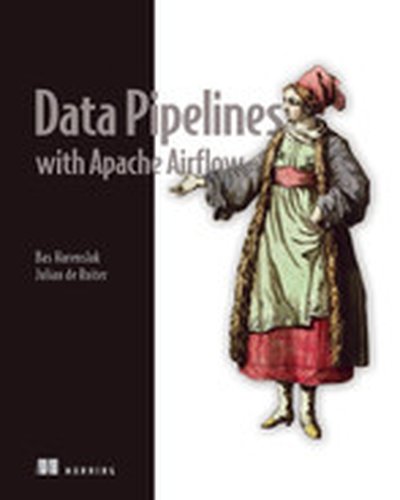
Data Pipelines with Apache Airflow

A successful pipeline moves data efficiently, minimizing pauses and blockages between tasks, keeping every process along the way operational. Apache Airflow provides a single customizable environment for building and managing data pipelines, eliminating the need for a hodgepodge collection of tools, snowflake code, and homegrown processes. Using real-world scenarios and examples, Data Pipelines with Apache Airflow teaches you how to simplify and automate data pipelines, reduce operational overhead, and smoothly integrate all the technologies in your stack. About the Technology Data pipelines manage the flow of data from initial collection through consolidation, cleaning, analysis, visualization, and more. Apache Airflow provides a single platform you can use to design, implement, monitor, and maintain your pipelines. Its easy-to-use UI, plug-and-play options, and flexible Python scripting make Airflow perfect for any data management task. About the Book Data Pipelines with Apache Airflow teaches you how to build and maintain effective data pipelines. You’ll explore the most common usage patterns, including aggregating multiple data sources, connecting to and from data lakes, and cloud deployment. Part reference and part tutorial, this practical guide covers every aspect of the directed acyclic graphs (DAGs) that power Airflow, and how to customize them for your pipeline’s needs. What's Inside Build, test, and deploy Airflow pipelines as DAGs Automate moving and transforming data Analyze historical datasets using backfilling Develop custom components Set up Airflow in production environments About the Reader For DevOps, data engineers, machine learning engineers, and sysadmins with intermediate Python skills. About the Authors Bas Harenslak and Julian de Ruiter are data engineers with extensive experience using Airflow to develop pipelines for major companies. Bas is also an Airflow committer. Quotes An Airflow bible. Useful for all kinds of users, from novice to expert. - Rambabu Posa, Sai Aashika Consultancy An easy-to-follow exploration of the benefits of orchestrating your data pipeline jobs with Airflow. - Daniel Lamblin, Coupang The one reference you need to create, author, schedule, and monitor workflows with Apache Airflow. Clear recommendation. - Thorsten Weber, bbv Software Services AG By far the best resource for Airflow. - Jonathan Wood, LexisNexis

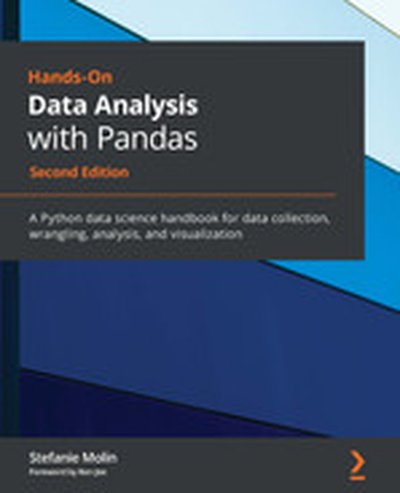
Hands-On Data Analysis with Pandas - Second Edition

'Hands-On Data Analysis with Pandas' guides you to gain expertise in the Python pandas library for data analysis and manipulation. With practical, real-world examples, you'll learn to analyze datasets, visualize data trends, and implement machine learning models for actionable insights. What this Book will help me do Understand and implement data analysis techniques with Python. Develop expertise in data manipulation using pandas and NumPy. Visualize data effectively with pandas visualization tools and seaborn. Apply machine learning techniques with Python libraries. Combine datasets and handle complex data workflows efficiently. Author(s) Stefanie Molin is a software engineer and data scientist with extensive experience in analytics and Python. She has worked with large data-driven systems and has a strong focus on teaching data analysis effectively. Stefanie's books are known for their practical, hands-on approach to solving real data problems. Who is it for? This book is perfect for aspiring data scientists, data analysts, and Python developers. Readers with beginner to intermediate skill levels in Python will find it accessible and informative. It is designed for those seeking to build practical data analysis skills. If you're looking to add data science and pandas to your toolkit, this book is ideal.

Real-Time Streaming with Python ML Inference by Marko Topolnik

Big Data Europe Onsite and online on 22-25 November in 2022 Learn more about the conference: https://bit.ly/3BlUk9q

Join our next Big Data Europe conference on 22-25 November in 2022 where you will be able to learn from global experts giving technical talks and hand-on workshops in the fields of Big Data, High Load, Data Science, Machine Learning and AI. This time, the conference will be held in a hybrid setting allowing you to attend workshops and listen to expert talks on-site or online.

Бессерверные мультиоблачные пайплайны для машинного обучения на основе Python - Каштанов Дмитрий

Big Data Days Онсайт и онлайн 22-25 ноября, 2022 Узнать больше о конференции: https://bit.ly/30YNt99 Присоединяйтесь к нашей следующей конференции Big Data Days 22-25 ноября в 2022 г. Здесь вы сможете получить знания от мировых экспертов, выступающих с техническими докладами и практическими мастер-классами в области Big Data, High Load, Data Science, Machine Learning и AI. В этом году конференция будет проходить в гибридной форме, это позволит вам послушать доклады и посетить мастер-классы онсайт и онлайн.

Работа с большими числовыми массивами в Python - Головин Дмитрий

Big Data Days Онсайт и онлайн 22-25 ноября, 2022 Узнать больше о конференции: https://bit.ly/30YNt99 Присоединяйтесь к нашей следующей конференции Big Data Days 22-25 ноября в 2022 г. Здесь вы сможете получить знания от мировых экспертов, выступающих с техническими докладами и практическими мастер-классами в области Big Data, High Load, Data Science, Machine Learning и AI. В этом году конференция будет проходить в гибридной форме, это позволит вам послушать доклады и посетить мастер-классы онсайт и онлайн.

Summary Most of the time when you think about a data pipeline or ETL job what comes to mind is a purely mechanistic progression of functions that move data from point A to point B. Sometimes, however, one of those transformations is actually a full-fledged machine learning project in its own right. In this episode Tal Galfsky explains how he and the team at Cherre tackled the problem of messy data for Addresses by building a natural language processing and entity resolution system that is served as an API to the rest of their pipelines. He discusses the myriad ways that addresses are incomplete, poorly formed, and just plain wrong, why it was a big enough pain point to invest in building an industrial strength solution for it, and how it actually works under the hood. After listening to this you’ll look at your data pipelines in a new light and start to wonder how you can bring more advanced strategies into the cleaning and transformation process.

Announcements

Hello and welcome to the Data Engineering Podcast, the show about modern data management When you’re ready to build your next pipeline, or want to test out the projects you hear about on the show, you’ll need somewhere to deploy it, so check out our friends at Linode. With their managed Kubernetes platform it’s now even easier to deploy and scale your workflows, or try out the latest Helm charts from tools like Pulsar and Pachyderm. With simple pricing, fast networking, object storage, and worldwide data centers, you’ve got everything you need to run a bulletproof data platform. Go to dataengineeringpodcast.com/linode today and get a $100 credit to try out a Kubernetes cluster of your own. And don’t forget to thank them for their continued support of this show! Modern Data teams are dealing with a lot of complexity in their data pipelines and analytical code. Monitoring data quality, tracing incidents, and testing changes can be daunting and often takes hours to days. Datafold helps Data teams gain visibility and confidence in the quality of their analytical data through data profiling, column-level lineage and intelligent anomaly detection. Datafold also helps automate regression testing of ETL code with its Data Diff feature that instantly shows how a change in ETL or BI code affects the produced data, both on a statistical level and down to individual rows and values. Datafold integrates with all major data warehouses as well as frameworks such as Airflow & dbt and seamlessly plugs into CI workflows. Go to dataengineeringpodcast.com/datafold today to start a 30-day trial of Datafold. Once you sign up and create an alert in Datafold for your company data, they will send you a cool water flask. RudderStack’s smart customer data pipeline is warehouse-first. It builds your customer data warehouse and your identity graph on your data warehouse, with support for Snowflake, Google BigQuery, Amazon Redshift, and more. Their SDKs and plugins make event streaming easy, and their integrations with cloud applications like Salesforce and ZenDesk help you go beyond event streaming. With RudderStack you can use all of your customer data to answer more difficult questions and then send those insights to your whole customer data stack. Sign up free at dataengineeringpodcast.com/rudder today. Your host is Tobias Macey and today I’m interviewing Tal Galfsky about how Cherre is bringing order to the messy problem of physical addresses and entity resolution in their data pipelines.

Interview

Introduction How did you get involved in the area of data management? Started as physicist and evolved into Data Science Can you start by giving a brief recap of what Cherre is and the types of data that you deal with? Cherre is a company that connects data We’re not a data vendor, in that we don’t sell data, primarily We help companies connect and make sense of their data The real estate market is historically closed, gut let, behind on tech What are the biggest challenges that you deal with in your role when working with real estate data? Lack of a standard domain model in real estate. Ontology. What is a property? Each data source, thinks about properties in a very different way. Therefore, yielding similar, but completely different data. QUALITY (Even if the dataset are talking about the same thing, there are different levels of accuracy, freshness). HIREARCHY. When is one source better than another What are the teams and systems that rely on address information? Any company that needs to clean or organize (make sense) their data, need to identify, people, companies, and properties. Our clients use Address resolution in multiple ways. Via the UI or via an API. Our service is both external and internal so what I build has to be good enough for the demanding needs of our data science team, robust enough for our engineers, and simple enough that non-expert clients can use it. Can you give an example for the problems involved in entity resolution Known entity example. Empire state buidling. To resolve addresses in a way that makes sense for the client you need to capture the real world entities. Lots, buildings, units.

Identify the type of the object (lot, building, unit) Tag the object with all the relevant addresses Relations to other objects (lot, building, unit)

What are some examples of the kinds of edge cases or messiness that you encounter in addresses? First class is string problems. Second class component problems. third class is geocoding. I understand that you have developed a service for normalizing addresses and performing entity resolution to provide canonical references for downstream analyses. Can you give an overview of what is involved? What is the need for the service. The main requirement here is connecting an address to lot, building, unit with latitude and longitude coordinates

How were you satisfying this requirement previously? Before we built our model and dedicated service we had a basic prototype for pipeline only to handle NYC addresses. What were the motivations for designing and implementing this as a service? Need to expand nationwide and to deal with client queries in real time. What are some of the other data sources that you rely on to be able to perform this normalization and resolution? Lot data, building data, unit data, Footprints and address points datasets. What challenges do you face in managing these other sources of information? Accuracy, hirearchy, standardization, unified solution, persistant ids and primary keys

Digging into the specifics of your solution, can you talk through the full lifecycle of a request to resolve an address and the various manipulations that are performed on it? String cleaning, Parse and tokenize, standardize, Match What are some of the other pieces of information in your system that you would like to see addressed in a similar fashion? Our named entity solution with connection to knowledge graph and owner unmasking. What are some of the most interesting, unexpected, or challenging lessons that you learned while building this address resolution system? Scaling nyc geocode example. The NYC model was exploding a subset of the options for messing up an address. Flexibility. Dependencies. Client exposure. Now that you have this system running in production, if you were to start over today what would you do differently? a lot but at this point the module boundaries and client interface are defined in such way that we are able to make changes or completely replace any given part of it without breaking anything client facing What are some of the other projects that you are excited to work on going forward? Named entity resolution and Knowledge Graph

Contact Info

LinkedIn

Parting Question

From your perspective, what is the biggest gap in the tooling or technology for data management today? BigQuery is huge asset and in particular UDFs but they don’t support API calls or python script

Closing Announcements

Thank you for listening! Don’t forget to check out our other show, Podcast.init to learn about the Python language, its community, and the innovative ways it is being used. Visit the site to subscribe to the show, sign up for the mailing list, and read the show notes. If you’ve learned something or tried out a project from the show then tell us about it! Email [email protected]) with your story. To help other people find the show please leave a review on iTunes and tell your friends and co-workers Join the community in the new Zulip chat workspace at dataengineeringpodcast.com/chat

Links

Cherre

Podcast Episode

Photonics Knowledge Graph Entity Resolution BigQuery NLP == Natural Language Processing dbt

Podcast Episode

Airflow

Podcast.init Episode

Datadog

Podcast Episode

The intro and outro music is from The Hug by The Freak Fandango Orchestra / CC BY-SA

Support Data Engineering Podcast

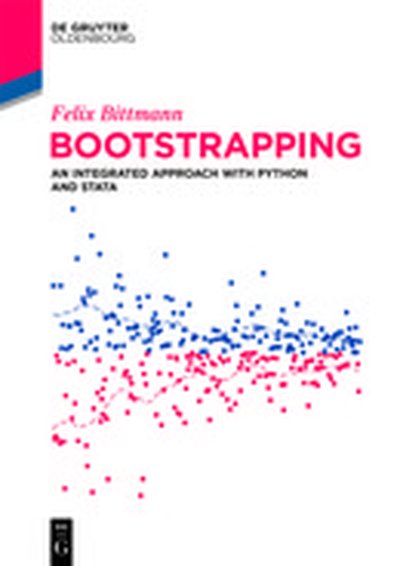
Bootstrapping

Bootstrapping is a conceptually simple statistical technique to increase the quality of estimates, conduct robustness checks and compute standard errors for virtually any statistic. This book provides an intelligible and compact introduction for students, scientists and practitioners. It not only gives a clear explanation of the underlying concepts but also demonstrates the application of bootstrapping using Python and Stata.

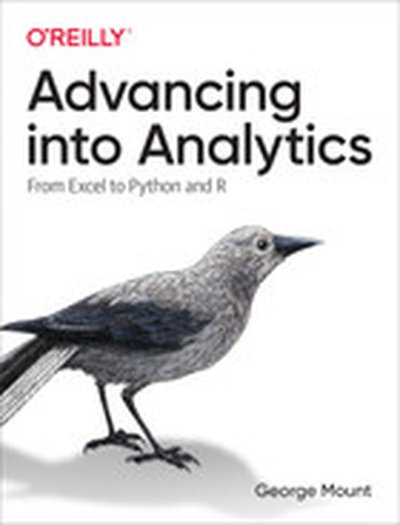
Advancing into Analytics

Data analytics may seem daunting, but if you're an experienced Excel user, you have a unique head start. With this hands-on guide, intermediate Excel users will gain a solid understanding of analytics and the data stack. By the time you complete this book, you'll be able to conduct exploratory data analysis and hypothesis testing using a programming language. Exploring and testing relationships are core to analytics. By using the tools and frameworks in this book, you'll be well positioned to continue learning more advanced data analysis techniques. Author George Mount, founder and CEO of Stringfest Analytics, demonstrates key statistical concepts with spreadsheets, then pivots your existing knowledge about data manipulation into R and Python programming. This practical book guides you through: Foundations of analytics in Excel: Use Excel to test relationships between variables and build compelling demonstrations of important concepts in statistics and analytics From Excel to R: Cleanly transfer what you've learned about working with data from Excel to R From Excel to Python: Learn how to pivot your Excel data chops into Python and conduct a complete data analysis

Today’s episode is a conversation I had with Dustin Schimek who is the director of analytics at the master lock company. He had me on his LinkedIn live to talk about what Python is, why it is important, how to get started, and other random stuff.

We chatted for about 50 minutes. Hope you enjoy.

Connect with Dustin on LinkedIn: https://www.linkedin.com/in/dustinschimek/

Mentioned in this episode: Join the last cohort of 2025! The LAST cohort of The Data Analytics Accelerator for 2025 kicks off on Monday, December 8th and enrollment is officially open!

To celebrate the end of the year, we’re running a special End-of-Year Sale, where you’ll get: ✅ A discount on your enrollment 🎁 6 bonus gifts, including job listings, interview prep, AI tools + more

If your goal is to land a data job in 2026, this is your chance to get ahead of the competition and start strong.

👉 Join the December Cohort & Claim Your Bonuses: https://DataCareerJumpstart.com/daa https://www.datacareerjumpstart.com/daa

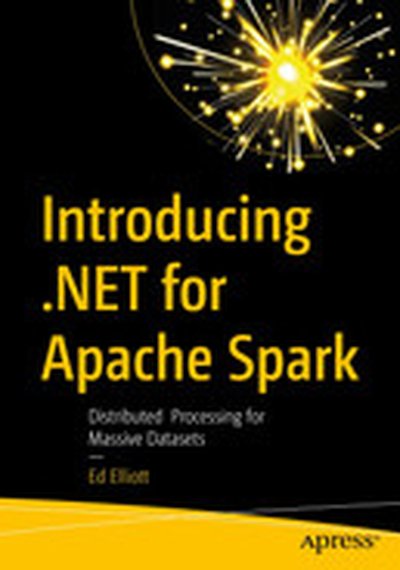
Introducing .NET for Apache Spark: Distributed Processing for Massive Datasets

Get started using Apache Spark via C# or F# and the .NET for Apache Spark bindings. This book is an introduction to both Apache Spark and the .NET bindings. Readers new to Apache Spark will get up to speed quickly using Spark for data processing tasks performed against large and very large datasets. You will learn how to combine your knowledge of .NET with Apache Spark to bring massive computing power to bear by distributed processing of extremely large datasets across multiple servers. This book covers how to get a local instance of Apache Spark running on your developer machine and shows you how to create your first .NET program that uses the Microsoft .NET bindings for Apache Spark. Techniques shown in the book allow you to use Apache Spark to distribute your data processing tasks over multiple compute nodes. You will learn to process data using both batch mode and streaming mode so you can make the right choice depending on whether you are processing an existing dataset or are working against new records in micro-batches as they arrive. The goal of the book is leave you comfortable in bringing the power of Apache Spark to your favorite .NET language. What You Will Learn Install and configure Spark .NET on Windows, Linux, and macOS Write Apache Spark programs in C# and F# using the .NET bindings Access and invoke the Apache Spark APIs from .NET with the same high performance as Python, Scala, and R Encapsulate functionality in user-defined functions Transform and aggregate large datasets Execute SQL queries against files through Apache Hive Distribute processing of large datasets across multiple servers Create your own batch, streaming, and machine learning programs Who This Book Is For .NETdevelopers who want to perform big data processing without having to migrate to Python, Scala, or R; and Apache Spark developers who want to run natively on .NET and take advantage of the C# and F# ecosystems

We talked about:

Knesia’s background Data analytics vs data science Skills needed for data analytics and data science Benefits of getting a masters degree Useful online courses How project management background can be helpful for the career transition Which skills do PMs need to become data analysts? Going from working with spreadsheets to working with python Kaggle Productionizing machine learning models Getting experience while studying Looking for a job Gap between theory and practice Learning plan for transitioning Last tips and getting involved in projects

Links:

Notes prepared by Ksenia with all the info: https://www.notion.so/ksenialeg/DataTalks-Club-7597e55f476040a5921db58d48cf718f

Join DataTalks.Club: https://datatalks.club/slack.html

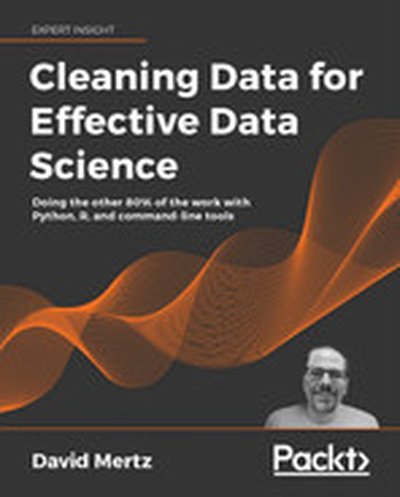
Cleaning Data for Effective Data Science

Dive into the intricacies of data cleaning, a crucial aspect of any data science and machine learning pipeline, with 'Cleaning Data for Effective Data Science.' This comprehensive guide walks you through tools and methodologies like Python, R, and command-line utilities to prepare raw data for analysis. Learn practical strategies to manage, clean, and refine data encountered in the real world. What this Book will help me do Understand and utilize various data formats such as JSON, SQL, and PDF for data ingestion and processing. Master key tools like pandas, SciPy, and Tidyverse to manipulate and analyze datasets efficiently. Develop heuristics and methodologies for assessing data quality, detecting bias, and identifying irregularities. Apply advanced techniques like feature engineering and statistical adjustments to enhance data usability. Gain confidence in handling time series data by employing methods for de-trending and interpolating missing values. Author(s) David Mertz has years of experience as a Python programmer and data scientist. Known for his engaging and accessible teaching style, David has authored numerous technical articles and books. He emphasizes not only the technicalities of data science tools but also the critical thinking that approaches solutions creatively and effectively. Who is it for? 'Cleaning Data for Effective Data Science' is designed for data scientists, software developers, and educators dealing with data preparation. Whether you're an aspiring data enthusiast or an experienced professional looking to refine your skills, this book provides essential tools and frameworks. Prior programming knowledge, particularly in Python or R, coupled with an understanding of statistical fundamentals, will help you make the most of this resource.

Data Science for Supply Chain Forecasting

Using data science in order to solve a problem requires a scientific mindset more than coding skills. Data Science for Supply Chain Forecasting, Second Edition contends that a true scientific method which includes experimentation, observation, and constant questioning must be applied to supply chains to achieve excellence in demand forecasting. This second edition adds more than 45 percent extra content with four new chapters including an introduction to neural networks and the forecast value added framework. Part I focuses on statistical "traditional" models, Part II, on machine learning, and the all-new Part III discusses demand forecasting process management. The various chapters focus on both forecast models and new concepts such as metrics, underfitting, overfitting, outliers, feature optimization, and external demand drivers. The book is replete with do-it-yourself sections with implementations provided in Python (and Excel for the statistical models) to show the readers how to apply these models themselves. This hands-on book, covering the entire range of forecasting—from the basics all the way to leading-edge models—will benefit supply chain practitioners, forecasters, and analysts looking to go the extra mile with demand forecasting. Events around the book Link to a De Gruyter Online Event in which the author Nicolas Vandeput together with Stefan de Kok, supply chain innovator and CEO of Wahupa; Spyros Makridakis, professor at the University of Nicosia and director of the Institute For the Future (IFF); and Edouard Thieuleux, founder of AbcSupplyChain, discuss the general issues and challenges of demand forecasting and provide insights into best practices (process, models) and discussing how data science and machine learning impact those forecasts. The event will be moderated by Michael Gilliland, marketing manager for SAS forecasting software: https://youtu.be/1rXjXcabW2s

Forecasting Time Series Data with Facebook Prophet

Delve into the art of time series forecasting with the comprehensive power of Facebook Prophet. This tool enables users to develop precise forecasting models with simplicity and effectiveness. Through this book, you'll explore Prophet's core functionality and advanced configurations, equipping yourself with the knowledge to proficiently model and predict data trends. What this Book will help me do Build intuitive and effective forecasting models using Facebook Prophet. Understand the role and implementation of seasonality and holiday effects in time series data. Identify and address outliers and special data events effectively. Optimize forecasts using advanced techniques like hyperparameter tuning and additional regressors. Evaluate and deploy forecasting models in production settings for practical applications. Author(s) Greg Rafferty is a seasoned data science professional with extensive experience in time series forecasting. Having worked on diverse forecasting projects, Greg brings a unique perspective that integrates practicality and depth. His approachable writing style makes complex topics accessible and actionable. Who is it for? This book is tailored for data scientists, analysts, and developers seeking to enhance their forecasting capabilities using Python. If you have a grounding in Python and a basic understanding of forecasting principles, you will find this book a valuable resource to sharpen your expertise and achieve new forecasting precision.

Summary A majority of the time spent in data engineering is copying data between systems to make the information available for different purposes. This introduces challenges such as keeping information synchronized, managing schema evolution, building transformations to match the expectations of the destination systems. H.O. Maycotte was faced with these same challenges but at a massive scale, leading him to question if there is a better way. After tasking some of his top engineers to consider the problem in a new light they created the Pilosa engine. In this episode H.O. explains how using Pilosa as the core he built the Molecula platform to eliminate the need to copy data between systems in able to make it accessible for analytical and machine learning purposes. He also discusses the challenges that he faces in helping potential users and customers understand the shift in thinking that this creates, and how the system is architected to make it possible. This is a fascinating conversation about what the future looks like when you revisit your assumptions about how systems are designed.

Announcements

Hello and welcome to the Data Engineering Podcast, the show about modern data management When you’re ready to build your next pipeline, or want to test out the projects you hear about on the show, you’ll need somewhere to deploy it, so check out our friends at Linode. With their managed Kubernetes platform it’s now even easier to deploy and scale your workflows, or try out the latest Helm charts from tools like Pulsar and Pachyderm. With simple pricing, fast networking, object storage, and worldwide data centers, you’ve got everything you need to run a bulletproof data platform. Go to dataengineeringpodcast.com/linode today and get a $100 credit to try out a Kubernetes cluster of your own. And don’t forget to thank them for their continued support of this show! Modern Data teams are dealing with a lot of complexity in their data pipelines and analytical code. Monitoring data quality, tracing incidents, and testing changes can be daunting and often takes hours to days. Datafold helps Data teams gain visibility and confidence in the quality of their analytical data through data profiling, column-level lineage and intelligent anomaly detection. Datafold also helps automate regression testing of ETL code with its Data Diff feature that instantly shows how a change in ETL or BI code affects the produced data, both on a statistical level and down to individual rows and values. Datafold integrates with all major data warehouses as well as frameworks such as Airflow & dbt and seamlessly plugs into CI workflows. Go to dataengineeringpodcast.com/datafold today to start a 30-day trial of Datafold. Once you sign up and create an alert in Datafold for your company data, they will send you a cool water flask. RudderStack’s smart customer data pipeline is warehouse-first. It builds your customer data warehouse and your identity graph on your data warehouse, with support for Snowflake, Google BigQuery, Amazon Redshift, and more. Their SDKs and plugins make event streaming easy, and their integrations with cloud applications like Salesforce and ZenDesk help you go beyond event streaming. With RudderStack you can use all of your customer data to answer more difficult questions and then send those insights to your whole customer data stack. Sign up free at dataengineeringpodcast.com/rudder today. Your host is Tobias Macey and today I’m interviewing H.O. Maycotte about Molecula, a cloud based feature store based on the open source Pilosa project

Interview

Introduction How did you get involved in the area of data management? Can you start by giving an overview of what you are building at Molecula and the story behind it?

What are the additional capabilities that Molecula offers on top of the open source Pilosa project?

What are the problems/use cases that Molecula solves for? What are some of the technologies or architectural patterns that Molecula might replace in a companies data platform? One of the use cases that is mentioned on the Molecula site is as a feature store for ML and AI. This is a category that has been seeing a lot of growth recently. Can you provide some context how Molecula fits in that market and how it compares to options such as Tecton, Iguazio, Feast, etc.?

What are the benefits of using a bitmap index for identifying and computing features?

Can you describe how the Molecula platform is architected?

How has the design and goal of Molecula changed or evolved since you first began working on it?

For someone who is using Molecula, can you describe the process of integrating it with their existing data sources? Can you describe the internal data model of Pilosa/Molecula?

How should users think about data modeling and architecture as they are loading information into the platform?

Once a user has data in Pilosa, what are the available mechanisms for performing analyses or feature engineering? What are some of the most underutilized or misunderstood capabilities of Molecula? What are some of the most interesting, unexpected, or innovative ways that you have seen the Molecula platform used? What are the most interesting, unexpected, or challenging lessons that you have learned from building and scaling Molecula? When is Molecula the wrong choice? What do you have planned for the future of the platform and business?

Contact Info

LinkedIn @maycotte on Twitter

Parting Question

From your perspective, what is the biggest gap in the tooling or technology for data management today?

Closing Announcements

Thank you for listening! Don’t forget to check out our other show, Podcast.init to learn about the Python language, its community, and the innovative ways it is being used. Visit the site to subscribe to the show, sign up for the mailing list, and read the show notes. If you’ve learned something or tried out a project from the show then tell us about it! Email [email protected]) with your story. To help other people find the show please leave a review on iTunes and tell your friends and co-workers Join the community in the new Zulip chat workspace at dataengineeringpodcast.com/chat

Links

Molecula Pilosa

Podcast Episode

The Social Dilemma Feature Store Cassandra Elasticsearch

Podcast Episode

Druid MongoDB SwimOS

Podcast Episode

Kafka Kafka Schema Registry

Podcast Episode

Homomorphic Encryption Lucene Solr

The intro and outro music is from The Hug by The Freak Fandango Orchestra / CC BY-SA

Support Data Engineering Podcast
Did you know that there are 3 types different types of data scientists? A for analyst, B for builder, and C for consultant - we discuss the key differences between each one and some learning strategies you can use to become A, B, or C.

We talked about:

Inspirations for memes  Danny's background and career journey The ABCs of data science - the story behind the idea Data scientist type A - Analyst  Skills, responsibilities, and background for type A Transitioning from data analytics to type A data scientist (that's the path Danny took) How can we become more curious? Data scientist B - Builder  Responsibilities and background for type B Transitioning from type A to type B Most important skills for type B Why you have to learn more about cloud  Data scientist type C - consultant Skills, responsibilities, and background for type C Growing into the C type Ideal data science team Important business metrics Getting a job - easier as type A or type B? Looking for a job without experience Two approaches for job search: "apply everywhere" and "apply nowhere" Are bootcamps useful? Learning path to becoming a data scientist Danny's data apprenticeship program and "Serious SQL" course  Why SQL is the most important skill R vs Python Importance of Masters and PhD

Links:

Danny's profile on LinkedIn: https://linkedin.com/in/datawithdanny Danny's course: https://datawithdanny.com/ Trailer: https://www.linkedin.com/posts/datawithdanny_datascientist-data-activity-6767988552811847680-GzUK/ Technical debt paper: https://proceedings.neurips.cc/paper/2015/hash/86df7dcfd896fcaf2674f757a2463eba-Abstract.html

Join DataTalks.Club: https://datatalks.club/slack.html

Summary Businesses often need to be able to ingest data from their customers in order to power the services that they provide. For each new source that they need to integrate with it is another custom set of ETL tasks that they need to maintain. In order to reduce the friction involved in supporting new data transformations David Molot and Hassan Syyid built the Hotlue platform. In this episode they describe the data integration challenges facing many B2B companies, how their work on the Hotglue platform simplifies their efforts, and how they have designed the platform to make these ETL workloads embeddable and self service for end users.

Announcements

Hello and welcome to the Data Engineering Podcast, the show about modern data management When you’re ready to build your next pipeline, or want to test out the projects you hear about on the show, you’ll need somewhere to deploy it, so check out our friends at Linode. With their managed Kubernetes platform it’s now even easier to deploy and scale your workflows, or try out the latest Helm charts from tools like Pulsar and Pachyderm. With simple pricing, fast networking, object storage, and worldwide data centers, you’ve got everything you need to run a bulletproof data platform. Go to dataengineeringpodcast.com/linode today and get a $60 credit to try out a Kubernetes cluster of your own. And don’t forget to thank them for their continued support of this show! Modern Data teams are dealing with a lot of complexity in their data pipelines and analytical code. Monitoring data quality, tracing incidents, and testing changes can be daunting and often takes hours to days. Datafold helps Data teams gain visibility and confidence in the quality of their analytical data through data profiling, column-level lineage and intelligent anomaly detection. Datafold also helps automate regression testing of ETL code with its Data Diff feature that instantly shows how a change in ETL or BI code affects the produced data, both on a statistical level and down to individual rows and values. Datafold integrates with all major data warehouses as well as frameworks such as Airflow & dbt and seamlessly plugs into CI workflows. Go to dataengineeringpodcast.com/datafold today to start a 30-day trial of Datafold. Once you sign up and create an alert in Datafold for your company data, they will send you a cool water flask. This episode of Data Engineering Podcast is sponsored by Datadog, a unified monitoring and analytics platform built for developers, IT operations teams, and businesses in the cloud age. Datadog provides customizable dashboards, log management, and machine-learning-based alerts in one fully-integrated platform so you can seamlessly navigate, pinpoint, and resolve performance issues in context. Monitor all your databases, cloud services, containers, and serverless functions in one place with Datadog’s 400+ vendor-backed integrations. If an outage occurs, Datadog provides seamless navigation between your logs, infrastructure metrics, and application traces in just a few clicks to minimize downtime. Try it yourself today by starting a free 14-day trial and receive a Datadog t-shirt after installing the agent. Go to dataengineeringpodcast.com/datadog today to see how you can enhance visibility into your stack with Datadog. Your host is Tobias Macey and today I’m interviewing David Molot and Hassan Syyid about Hotglue, an embeddable data integration tool for B2B developers built on the Python ecosystem.

Interview

Introduction How did you get involved in the area of data management? Can you start by describing what you are building at Hotglue?

What was your motivation for starting a business to address this particular problem?

Who is the target user of Hotglue and what are their biggest data problems?

What are the types and sources of data that they are likely to be working with? How are they currently handling solutions for those problems? How does the introduction of Hotglue simplify or improve their work?

What is involved in getting Hotglue integrated into a given customer’s environment? How is Hotglue itself implemented?

How has the design or goals of the platform evolved since you first began building it? What were some of the initial assumptions that you had at the outset and how well have they held up as you progressed?

Once a customer has set up Hotglue what is their workflow for building and executing an ETL workflow?

What are their options for working with sources that aren’t supported out of the box?

What are the biggest design and implementation challenges that you are facing given the need for your product to be embedded in customer platforms and exposed to their end users? What are some of the most interesting, innovative, or unexpected ways that you have seen Hotglue used? What are the most interesting, unexpected, or challenging lessons that you have learned while building Hotglue? When is Hotglue the wrong choice? What do you have planned for the future of the product?

Contact Info

David

@davidmolot on Twitter LinkedIn

Hassan

hsyyid on GitHub LinkedIn

Parting Question

From your perspective, what is the biggest gap in the tooling or technology for data management today?

Closing Announcements

Thank you for listening! Don’t forget to check out our other show, Podcast.init to learn about the Python language, its community, and the innovative ways it is being used. Visit the site to subscribe to the show, sign up for the mailing list, and read the show notes. If you’ve learned something or tried out a project from the show then tell us about it! Email [email protected]) with your story. To help other people find the show please leave a review on iTunes and tell your friends and co-workers Join the community in the new Zulip chat workspace at dataengineeringpodcast.com/chat

Links

Hotglue Python

The Python Podcast.init

B2B == Business to Business Meltano

Podcast Episode

Airbyte Singer

The intro and outro music is from The Hug by The Freak Fandango Orchestra / CC BY-SA

Support Data Engineering Podcast