talk-data.com talk-data.com

Topic

Python

programming_language data_science web_development

1446

tagged

Activity Trend

185 peak/qtr
2020-Q1 2026-Q1

Activities

1446 activities · Newest first

Summary We have been building platforms and workflows to store, process, and analyze data since the earliest days of computing. Over that time there have been countless architectures, patterns, and "best practices" to make that task manageable. With the growing popularity of cloud services a new pattern has emerged and been dubbed the "Modern Data Stack". In this episode members of the GoDataDriven team, Guillermo Sanchez, Bram Ochsendorf, and Juan Perafan, explain the combinations of services that comprise this architecture, share their experiences working with clients to employ the stack, and the benefits of bringing engineers and business users together with data.

Announcements

Hello and welcome to the Data Engineering Podcast, the show about modern data management You listen to this show to learn about all of the latest tools, patterns, and practices that power data engineering projects across every domain. Now there’s a book that captures the foundational lessons and principles that underly everything that you hear about here. I’m happy to announce I collected wisdom from the community to help you in your journey as a data engineer and worked with O’Reilly to publish it as 97 Things Every Data Engineer Should Know. Go to dataengineeringpodcast.com/97things today to get your copy! When you’re ready to build your next pipeline, or want to test out the projects you hear about on the show, you’ll need somewhere to deploy it, so check out our friends at Linode. With their managed Kubernetes platform it’s now even easier to deploy and scale your workflows, or try out the latest Helm charts from tools like Pulsar and Pachyderm. With simple pricing, fast networking, object storage, and worldwide data centers, you’ve got everything you need to run a bulletproof data platform. Go to dataengineeringpodcast.com/linode today and get a $100 credit to try out a Kubernetes cluster of your own. And don’t forget to thank them for their continued support of this show! RudderStack’s smart customer data pipeline is warehouse-first. It builds your customer data warehouse and your identity graph on your data warehouse, with support for Snowflake, Google BigQuery, Amazon Redshift, and more. Their SDKs and plugins make event streaming easy, and their integrations with cloud applications like Salesforce and ZenDesk help you go beyond event streaming. With RudderStack you can use all of your customer data to answer more difficult questions and then send those insights to your whole customer data stack. Sign up free at dataengineeringpodcast.com/rudder today. We’ve all been asked to help with an ad-hoc request for data by the sales and marketing team. Then it becomes a critical report that they need updated every week or every day. Then what do you do? Send a CSV via email? Write some Python scripts to automate it? But what about incremental sync, API quotas, error handling, and all of the other details that eat up your time? Today, there is a better way. With Census, just write SQL or plug in your dbt models and start syncing your cloud warehouse to SaaS applications like Salesforce, Marketo, Hubspot, and many more. Go to dataengineeringpodcast.com/census today to get a free 14-day trial. Your host is Tobias Macey and today I’m interviewing Guillermo Sanchez, Bram Ochsendorf, and Juan Perafan about their experiences with managed services in the modern data stack in their work as consultants at GoDataDriven

Interview

Introduction How did you get involved in the area of data management? Can you start by giving your definition of the modern data stack?

What are the key characteristics of a tool or platform that make it a candidate for the "modern" stack?

How does the modern data stack shift the responsibilities and capabilities of data professionals and consumers? What are some difficulties that you face when working with customers to migrate to these new architectures? What are some of the limitations of the components or
Summary Every data project, whether it’s analytics, machine learning, or AI, starts with the work of data cleaning. This is a critical step and benefits from being accessible to the domain experts. Trifacta is a platform for managing your data engineering workflow to make curating, cleaning, and preparing your information more approachable for everyone in the business. In this episode CEO Adam Wilson shares the story behind the business, discusses the myriad ways that data wrangling is performed across the business, and how the platform is architected to adapt to the ever-changing landscape of data management tools. This is a great conversation about how deliberate user experience and platform design can make a drastic difference in the amount of value that a business can provide to their customers.

Announcements

Hello and welcome to the Data Engineering Podcast, the show about modern data management You listen to this show to learn about all of the latest tools, patterns, and practices that power data engineering projects across every domain. Now there’s a book that captures the foundational lessons and principles that underly everything that you hear about here. I’m happy to announce I collected wisdom from the community to help you in your journey as a data engineer and worked with O’Reilly to publish it as 97 Things Every Data Engineer Should Know. Go to dataengineeringpodcast.com/97things today to get your copy! When you’re ready to build your next pipeline, or want to test out the projects you hear about on the show, you’ll need somewhere to deploy it, so check out our friends at Linode. With their managed Kubernetes platform it’s now even easier to deploy and scale your workflows, or try out the latest Helm charts from tools like Pulsar and Pachyderm. With simple pricing, fast networking, object storage, and worldwide data centers, you’ve got everything you need to run a bulletproof data platform. Go to dataengineeringpodcast.com/linode today and get a $100 credit to try out a Kubernetes cluster of your own. And don’t forget to thank them for their continued support of this show! Are you bored with writing scripts to move data into SaaS tools like Salesforce, Marketo, or Facebook Ads? Hightouch is the easiest way to sync data into the platforms that your business teams rely on. The data you’re looking for is already in your data warehouse and BI tools. Connect your warehouse to Hightouch, paste a SQL query, and use their visual mapper to specify how data should appear in your SaaS systems. No more scripts, just SQL. Supercharge your business teams with customer data using Hightouch for Reverse ETL today. Get started for free at dataengineeringpodcast.com/hightouch. Atlan is a collaborative workspace for data-driven teams, like Github for engineering or Figma for design teams. By acting as a virtual hub for data assets ranging from tables and dashboards to SQL snippets & code, Atlan enables teams to create a single source of truth for all their data assets, and collaborate across the modern data stack through deep integrations with tools like Snowflake, Slack, Looker and more. Go to dataengineeringpodcast.com/atlan today and sign up for a free trial. If you’re a data engineering podcast listener, you get credits worth $3000 on an annual subscription Your host is Tobias Macey and today I’m interviewing Adam Wilson about Trifacta, a platform for modern data workers to assess quality, transform, and automate data pipelines

Interview

Introduction How did you get involved in the area of data management? Can you describe what Trifacta is and the story behind it? Across your site and material you focus on using the term "data wrangling". What is your personal definition of that term, and in what ways do you differentiate from ETL/ELT?

How does the deliberate use of that terminology influence the way that you think about the design and features of the Trifacta platform?

What is Trifacta’s role in the overall data platform/data lifecycle for an organization?

What are some examples of tools that Trifacta might replace? What tools or systems does Trifacta integrate with?

Who are the target end-users of the Trifacta platform and how do those personas direct the design and functionality? Can you describe how Trifacta is architected?

How have the goals and design of the system changed or evolved since you first began working on it?

Can you talk through the workflow and lifecycle of data as it traverses your platform, and the user interactions that drive it? How can data engineers share and encourage proper patterns for working with data assets with end-users across the organization? What are the limits of scale for volume and complexity of data assets that users are able to manage through Trifacta’s visual tools?

What are some strategies that you and your customers have found useful for pre-processing the information that enters your platform to increase the accessibility for end-users to self-serve?

What are the most interesting, innovative, or unexpected ways that you have seen Trifacta used? What are the most interesting, unexpected, or challenging lessons that you have learned while working on Trifacata? When is Trifacta the wrong choice? What do you have planned for the future of Trifacta?

Contact Info

LinkedIn @a_adam_wilson on Twitter

Parting Question

From your perspective, what is the biggest gap in the tooling or technology for data management today?

Closing Announcements

Thank you for listening! Don’t forget to check out our other show, Podcast.init to learn about the Python language, its community, and the innovative ways it is being used. Visit the site to subscribe to the show, sign up for the mailing list, and read the show notes. If you’ve learned something or tried out a project from the show then tell us about it! Email [email protected]) with your story. To help other people find the show please leave a review on iTunes and tell your friends and co-workers Join the community in the new Zulip chat workspace at dataengineeringpodcast.com/chat

Links

Trifacta Informatica UC Berkeley Stanford University Citadel

Podcast Episode

Stanford Data Wrangler DBT

Podcast Episode

Pig Databricks Sqoop Flume SPSS Tableau SDLC == Software Delivery Life-Cycle

The intro and outro music is from The Hug by The Freak Fandango Orchestra / CC BY-SA

Support Data Engineering Podcast

Summary At the core of every data pipeline is an workflow manager (or several). Deploying, managing, and scaling that orchestration can consume a large fraction of a data team’s energy so it is important to pick something that provides the power and flexibility that you need. SaaSGlue is a managed service that lets you connect all of your systems, across clouds and physical infrastructure, and spanning all of your programming languages. In this episode Bart and Rich Wood explain how SaaSGlue is architected to allow for a high degree of flexibility in usage and deployment, their experience building a business with family, and how you can get started using it today. This is a fascinating platform with an endless set of use cases and a great team of people behind it.

Announcements

Hello and welcome to the Data Engineering Podcast, the show about modern data management When you’re ready to build your next pipeline, or want to test out the projects you hear about on the show, you’ll need somewhere to deploy it, so check out our friends at Linode. With their managed Kubernetes platform it’s now even easier to deploy and scale your workflows, or try out the latest Helm charts from tools like Pulsar and Pachyderm. With simple pricing, fast networking, object storage, and worldwide data centers, you’ve got everything you need to run a bulletproof data platform. Go to dataengineeringpodcast.com/linode today and get a $100 credit to try out a Kubernetes cluster of your own. And don’t forget to thank them for their continued support of this show! RudderStack’s smart customer data pipeline is warehouse-first. It builds your customer data warehouse and your identity graph on your data warehouse, with support for Snowflake, Google BigQuery, Amazon Redshift, and more. Their SDKs and plugins make event streaming easy, and their integrations with cloud applications like Salesforce and ZenDesk help you go beyond event streaming. With RudderStack you can use all of your customer data to answer more difficult questions and then send those insights to your whole customer data stack. Sign up free at dataengineeringpodcast.com/rudder today. We’ve all been asked to help with an ad-hoc request for data by the sales and marketing team. Then it becomes a critical report that they need updated every week or every day. Then what do you do? Send a CSV via email? Write some Python scripts to automate it? But what about incremental sync, API quotas, error handling, and all of the other details that eat up your time? Today, there is a better way. With Census, just write SQL or plug in your dbt models and start syncing your cloud warehouse to SaaS applications like Salesforce, Marketo, Hubspot, and many more. Go to dataengineeringpodcast.com/census today to get a free 14-day trial. Your host is Tobias Macey and today I’m interviewing Rich and Bart Wood about SaasGlue, a SaaS-based integration, orchestration and automation platform that lets you fill the gaps in your existing automation infrastructure

Interview

Introduction How did you get involved in the area of data management? Can you describe what SaasGlue is and the story behind it?

I understand that you are building this company with your 3 brothers. What have been the pros and cons of working with your family on this project?

What are the main use cases that you are focused on enabling?

Who are your target users and how has that influenced the features and design of the platform?

Orchestration, automation, and workflow management are all areas that have a range of active products and projects. How do you characterize SaaSGlue’s position in the overall ecosystem?

What are some of the ways that you see it integrated into a data platform?

What are the core elements and concepts of the SaaSGlue platform? How is the SaaSGlue platform architected?

How have the goals and design of the platform changed or evolved since you first began working on it? What are some of the assumptio

Advanced Forecasting with Python: With State-of-the-Art-Models Including LSTMs, Facebook’s Prophet, and Amazon’s DeepAR

Cover all the machine learning techniques relevant for forecasting problems, ranging from univariate and multivariate time series to supervised learning, to state-of-the-art deep forecasting models such as LSTMs, recurrent neural networks, Facebook’s open-source Prophet model, and Amazon’s DeepAR model. Rather than focus on a specific set of models, this book presents an exhaustive overview of all the techniques relevant to practitioners of forecasting. It begins by explaining the different categories of models that are relevant for forecasting in a high-level language. Next, it covers univariate and multivariate time series models followed by advanced machine learning and deep learning models. It concludes with reflections on model selection such as benchmark scores vs. understandability of models vs. compute time, and automated retraining and updating of models. Each of the models presented in this book is covered in depth, with an intuitive simple explanation ofthe model, a mathematical transcription of the idea, and Python code that applies the model to an example data set. Reading this book will add a competitive edge to your current forecasting skillset. The book is also adapted to those who have recently started working on forecasting tasks and are looking for an exhaustive book that allows them to start with traditional models and gradually move into more and more advanced models. What You Will Learn Carry out forecasting with Python Mathematically and intuitively understand traditional forecasting models and state-of-the-art machine learning techniques Gain the basics of forecasting and machine learning, including evaluation of models, cross-validation, and back testing Select the right model for the right use case Who This Book Is For The advanced nature of the later chapters makes the book relevant for appliedexperts working in the domain of forecasting, as the models covered have been published only recently. Experts working in the domain will want to update their skills as traditional models are regularly being outperformed by newer models.

From not knowing Python (let alone Airflow), and from submitting the first PR that fixes typo to becoming Airflow Committer, PMC Member, Release Manager, and #1 Committer this year, this talk walks through Kaxil’s journey in the Airflow World. The second part of this talk explains: how you can also start your OSS journey by contributing to Airflow Expanding familiarity with a different part of the Airflow codebase Continue committing regularly & steadily to become Airflow Committer. (including talking about current Guidelines of becoming a Committer) Different mediums of communication (Dev list, users list, Slack channel, Github Discussions etc)

This presentation will detail how Elyra creates Jupyter Notebook, Python and R script- based pipelines without having to leave your web browser. The goal of using Elyra is to help construct data pipelines by surfacing concepts and patterns common in pipeline construction into a familiar, easy to navigate interface for Data Scientists and Engineers so they can create pipelines on their own. In Elyra’s Pipeline Editor UI, portions of Apache Airflow’s domain language are surfaced to the user and either made transparent or understandable through the use of tooltips or helpful notes in the proper context during pipeline construction. With these features, Elyra can rapidly prototype data workflows without the need to know or write any pipeline code. Lastly, we will look at what features we have planned on our roadmap for Airflow, including more robust Kubernetes integration and support for runtime specific components/operators. Project Home: https://github.com/elyra-ai/elyra

We will describe how we were able to build a system in Airflow for MySQL to Redshift ETL pipelines defined in pure Python using dataclasses. These dataclasses are then used to dynamically generate DAGs depending on pipeline type. This setup allows us to implement robust testing, validation, alerts, and documentation for our pipelines. We will also describe the performance improvements we achieved by upgrading to Airflow 2.0.

In this talk, we present Viewflow, an open-source Airflow-based framework that allows data scientists to create materialized views in SQL, R, and Python without writing Airflow code. We will start by explaining what problem does Viewflow solve: writing and maintaining complex Airflow code instead of focusing on data science. Then we will see how Viewflow solves that problem. We will continue by showing how to use VIewflow with several real-world examples. Finally, we will see what the upcoming features of Viewflow are! Resources: Announcement blog post: https://medium.com/datacamp-engineering/viewflow-fe07353fa068 GitHub repo: https://github.com/datacamp/viewflow

Machine Learning models can add value and insight to many projects, but they can be challenging to put into production due to problems like lack of reproducibility, difficulty maintaining integrations, and sneaky data quality issues. Kedro, a framework for creating reproducible, maintainable, and modular data science code, and Great Expectations, a framework for data validations, are two great open-source Python tools that can address some of these problems. Both integrate seamlessly with Airflow for flexible and powerful ML pipeline orchestration. In this talk we’ll discuss how you can leverage existing Airflow provider packages to integrate these tools to create sustainable, production-ready ML models.

Participation in this workshop requires previous registration and has limited capacity. Get your ticket at https://ti.to/airflowsummit/2021-contributor By attending this workshop, you will learn how you can become a contributor to the Apache Airflow project. You will learn how to setup a development environment, how to pick your first issue, how to communicate effectively within the community and how to make your first PR - experienced committers of Apache Airflow project will give you step-by-step instructions and will guide you in the process. When you finish the workshop you will be equipped with everything that is needed to make further contributions to the Apache Airflow project. Prerequisites: You need to have Python experience . Previous experience in Airflow is nice-to-have. The session is geared towards Mac and Linux users. If you are a Windows user, it is best if you install Windows Subsystem for Linux (WSL). In preparation for the class, please make sure you have set up the following prerequisites: make a fork of the https://github.com/apache/airflow clone the forked repository locally follow the Breeze prerequisites: https://github.com/apache/airflow/blob/master/BREEZE.rst#prerequisites run ./breeze --python 3.6 create a virtualenv as described in https://github.com/apache/airflow/blob/master/LOCAL_VIRTUALENV.rst part of preparing the virtualenv is initializing it with ./breeze initialize-local-virtualenv

Summary While the overall concept of timeseries data is uniform, its usage and applications are far from it. One of the most demanding applications of timeseries data is for application and server monitoring due to the problem of high cardinality. In his quest to build a generalized platform for managing timeseries Paul Dix keeps getting pulled back into the monitoring arena. In this episode he shares the history of the InfluxDB project, the business that he has helped to build around it, and the architectural aspects of the engine that allow for its flexibility in managing various forms of timeseries data. This is a fascinating exploration of the technical and organizational evolution of the Influx Data platform, with some promising glimpses of where they are headed in the near future.

Announcements

Hello and welcome to the Data Engineering Podcast, the show about modern data management When you’re ready to build your next pipeline, or want to test out the projects you hear about on the show, you’ll need somewhere to deploy it, so check out our friends at Linode. With their managed Kubernetes platform it’s now even easier to deploy and scale your workflows, or try out the latest Helm charts from tools like Pulsar and Pachyderm. With simple pricing, fast networking, object storage, and worldwide data centers, you’ve got everything you need to run a bulletproof data platform. Go to dataengineeringpodcast.com/linode today and get a $100 credit to try out a Kubernetes cluster of your own. And don’t forget to thank them for their continued support of this show! RudderStack’s smart customer data pipeline is warehouse-first. It builds your customer data warehouse and your identity graph on your data warehouse, with support for Snowflake, Google BigQuery, Amazon Redshift, and more. Their SDKs and plugins make event streaming easy, and their integrations with cloud applications like Salesforce and ZenDesk help you go beyond event streaming. With RudderStack you can use all of your customer data to answer more difficult questions and then send those insights to your whole customer data stack. Sign up free at dataengineeringpodcast.com/rudder today. We’ve all been asked to help with an ad-hoc request for data by the sales and marketing team. Then it becomes a critical report that they need updated every week or every day. Then what do you do? Send a CSV via email? Write some Python scripts to automate it? But what about incremental sync, API quotas, error handling, and all of the other details that eat up your time? Today, there is a better way. With Census, just write SQL or plug in your dbt models and start syncing your cloud warehouse to SaaS applications like Salesforce, Marketo, Hubspot, and many more. Go to dataengineeringpodcast.com/census today to get a free 14-day trial. Your host is Tobias Macey and today I’m interviewing Paul Dix about Influx Data and the different facets of the market for timeseries databases

Interview

Introduction How did you get involved in the area of data management? Can you describe what you are building at Influx Data and the story behind it? Timeseries data is a fairly broad category with many variations in terms of storage volume, frequency, processing requirements, etc. This has led to an explosion of database engines and related tools to address these different needs. How do you think about your position and role in the ecosystem?

Who are your target customers and how does that focus inform your product and feature priorities? What are the use cases that Influx is best suited for?

Can you give an overview of the different projects, tools, and services that comprise your platform? How is InfluxDB architected?

How have the design and implementation of the DB engine changed or evolved since you first began working on it? What are you optimizing for on the consistency vs. availability spectrum of CAP? What is your approach to clustering/data distribution beyond a single node?

Summary The database is the core of any system because it holds the data that drives your entire experience. We spend countless hours designing the data model, updating engine versions, and tuning performance. But how confident are you that you have configured it to be as performant as possible, given the dozens of parameters and how they interact with each other? Andy Pavlo researches autonomous database systems, and out of that research he created OtterTune to find the optimal set of parameters to use for your specific workload. In this episode he explains how the system works, the challenge of scaling it to work across different database engines, and his hopes for the future of database systems.

Announcements

Hello and welcome to the Data Engineering Podcast, the show about modern data management When you’re ready to build your next pipeline, or want to test out the projects you hear about on the show, you’ll need somewhere to deploy it, so check out our friends at Linode. With their managed Kubernetes platform it’s now even easier to deploy and scale your workflows, or try out the latest Helm charts from tools like Pulsar and Pachyderm. With simple pricing, fast networking, object storage, and worldwide data centers, you’ve got everything you need to run a bulletproof data platform. Go to dataengineeringpodcast.com/linode today and get a $100 credit to try out a Kubernetes cluster of your own. And don’t forget to thank them for their continued support of this show! RudderStack’s smart customer data pipeline is warehouse-first. It builds your customer data warehouse and your identity graph on your data warehouse, with support for Snowflake, Google BigQuery, Amazon Redshift, and more. Their SDKs and plugins make event streaming easy, and their integrations with cloud applications like Salesforce and ZenDesk help you go beyond event streaming. With RudderStack you can use all of your customer data to answer more difficult questions and then send those insights to your whole customer data stack. Sign up free at dataengineeringpodcast.com/rudder today. We’ve all been asked to help with an ad-hoc request for data by the sales and marketing team. Then it becomes a critical report that they need updated every week or every day. Then what do you do? Send a CSV via email? Write some Python scripts to automate it? But what about incremental sync, API quotas, error handling, and all of the other details that eat up your time? Today, there is a better way. With Census, just write SQL or plug in your dbt models and start syncing your cloud warehouse to SaaS applications like Salesforce, Marketo, Hubspot, and many more. Go to dataengineeringpodcast.com/census today to get a free 14-day trial. Your host is Tobias Macey and today I’m interviewing Andy Pavlo about OtterTune, a system to continuously monitor and improve database performance via machine learning

Interview

Introduction How did you get involved in the area of data management? Can you describe what OtterTune is and the story behind it?

How does it relate to your work with NoisePage?

What are the challenges that database administrators, operators, and users run into when working with, configuring, and tuning transactional systems?

What are some of the contributing factors to the sprawling complexity of the configurable parameters for these databases?

Can you describe how OtterTune is implemented?

What are some of the aggregate benefits that OtterTune can gain by running as a centralized service and learning from all of the systems that it connects to? What are some of the assumptions that you made when starting the commercialization of this technology that have been challenged or invalidated as you began working with initial customers? How have the design and goals of the system changed or evolved since you first began working on it?

What is involved in adding support for a new database engine?

How applicable are the OtterTune capabilities to analyti

Deep Learning

Ever since computers began beating us at chess, they've been getting better at a wide range of human activities, from writing songs and generating news articles to helping doctors provide healthcare. Deep learning is the source of many of these breakthroughs, and its remarkable ability to find patterns hiding in data has made it the fastest growing field in artificial intelligence (AI). Digital assistants on our phones use deep learning to understand and respond intelligently to voice commands; automotive systems use it to safely navigate road hazards; online platforms use it to deliver personalized suggestions for movies and books – the possibilities are endless. Deep Learning: A Visual Approach is for anyone who wants to understand this fascinating field in depth, but without any of the advanced math and programming usually required to grasp its internals. If you want to know how these tools work, and use them yourself, the answers are all within these pages. And, if you’re ready to write your own programs, there are also plenty of supplemental Python notebooks in the accompanying Github repository to get you going. The book’s conversational style, extensive color illustrations, illuminating analogies, and real-world examples expertly explain the key concepts in deep learning, including: •How text generators create novel stories and articles •How deep learning systems learn to play and win at human games •How image classification systems identify objects or people in a photo •How to think about probabilities in a way that’s useful to everyday life •How to use the machine learning techniques that form the core of modern AI Intellectual adventurers of all kinds can use the powerful ideas covered in Deep Learning: A Visual Approach to build intelligent systems that help us better understand the world and everyone who lives in it. It’s the future of AI, and this book allows you to fully envision it.

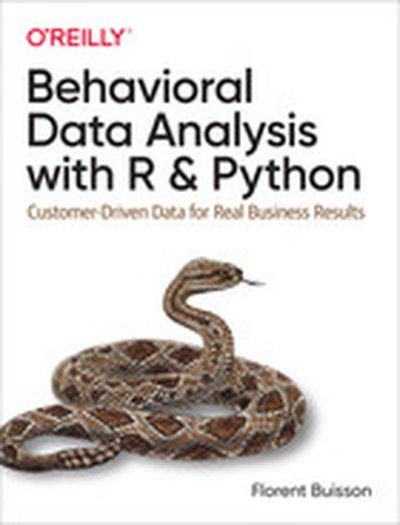
Behavioral Data Analysis with R and Python

Harness the full power of the behavioral data in your company by learning tools specifically designed for behavioral data analysis. Common data science algorithms and predictive analytics tools treat customer behavioral data, such as clicks on a website or purchases in a supermarket, the same as any other data. Instead, this practical guide introduces powerful methods specifically tailored for behavioral data analysis. Advanced experimental design helps you get the most out of your A/B tests, while causal diagrams allow you to tease out the causes of behaviors even when you can't run experiments. Written in an accessible style for data scientists, business analysts, and behavioral scientists, thispractical book provides complete examples and exercises in R and Python to help you gain more insight from your data--immediately. Understand the specifics of behavioral data Explore the differences between measurement and prediction Learn how to clean and prepare behavioral data Design and analyze experiments to drive optimal business decisions Use behavioral data to understand and measure cause and effect Segment customers in a transparent and insightful way

Summary When you build a machine learning model, the first step is always to load your data. Typically this means downloading files from object storage, or querying a database. To speed up the process, why not build the model inside the database so that you don’t have to move the information? In this episode Paige Roberts explains the benefits of pushing the machine learning processing into the database layer and the approach that Vertica has taken for their implementation. If you are looking for a way to speed up your experimentation, or an easy way to apply AutoML then this conversation is for you.

Announcements

Hello and welcome to the Data Engineering Podcast, the show about modern data management When you’re ready to build your next pipeline, or want to test out the projects you hear about on the show, you’ll need somewhere to deploy it, so check out our friends at Linode. With their managed Kubernetes platform it’s now even easier to deploy and scale your workflows, or try out the latest Helm charts from tools like Pulsar and Pachyderm. With simple pricing, fast networking, object storage, and worldwide data centers, you’ve got everything you need to run a bulletproof data platform. Go to dataengineeringpodcast.com/linode today and get a $100 credit to try out a Kubernetes cluster of your own. And don’t forget to thank them for their continued support of this show! RudderStack’s smart customer data pipeline is warehouse-first. It builds your customer data warehouse and your identity graph on your data warehouse, with support for Snowflake, Google BigQuery, Amazon Redshift, and more. Their SDKs and plugins make event streaming easy, and their integrations with cloud applications like Salesforce and ZenDesk help you go beyond event streaming. With RudderStack you can use all of your customer data to answer more difficult questions and then send those insights to your whole customer data stack. Sign up free at dataengineeringpodcast.com/rudder today. We’ve all been asked to help with an ad-hoc request for data by the sales and marketing team. Then it becomes a critical report that they need updated every week or every day. Then what do you do? Send a CSV via email? Write some Python scripts to automate it? But what about incremental sync, API quotas, error handling, and all of the other details that eat up your time? Today, there is a better way. With Census, just write SQL or plug in your dbt models and start syncing your cloud warehouse to SaaS applications like Salesforce, Marketo, Hubspot, and many more. Go to dataengineeringpodcast.com/census today to get a free 14-day trial. Your host is Tobias Macey and today I’m interviewing Paige Roberts about machine learning workflows inside the database

Interview

Introduction How did you get involved in the area of data management? Can you start by giving an overview of the current state of the market for databases that support in-process machine learning?

What are the motivating factors for running a machine learning workflow inside the database?

What styles of ML are feasible to do inside the database? (e.g. bayesian inference, deep learning, etc.) What are the performance implications of running a model training pipeline within the database runtime? (both in terms of training performance boosts, and database performance impacts) Can you describe the architecture of how the machine learning process is managed by the database engine? How do you manage interacting with Python/R/Jupyter/etc. when working within the database? What is the impact on data pipeline and MLOps architectures when using the database to manage the machine learning workflow? What are the most interesting, innovative, or unexpected ways that you have seen in-database ML used? What are the most interesting, unexpected, or challenging lessons that you have learned while working on machine learning inside the database? When is in-database ML the wrong choice? What are the recent trends/

Summary The way to build maintainable software and systems is through composition of individual pieces. By making those pieces high quality and flexible they can be used in surprising ways that the original creators couldn’t have imagined. One such component that has gone above and beyond its originally envisioned use case is BookKeeper, a distributed storage system that is optimized for durability and speed. In this episode Matteo Merli shares the story behind the creation of BookKeeper, the various ways that it is being used today, and the architectural aspects that make it such a strong building block for projects such as Pulsar. He also shares some of the other interesting systems that have been built on top of it and an amusing war story of running it at scale in its early years.

Announcements

Hello and welcome to the Data Engineering Podcast, the show about modern data management When you’re ready to build your next pipeline, or want to test out the projects you hear about on the show, you’ll need somewhere to deploy it, so check out our friends at Linode. With their managed Kubernetes platform it’s now even easier to deploy and scale your workflows, or try out the latest Helm charts from tools like Pulsar and Pachyderm. With simple pricing, fast networking, object storage, and worldwide data centers, you’ve got everything you need to run a bulletproof data platform. Go to dataengineeringpodcast.com/linode today and get a $100 credit to try out a Kubernetes cluster of your own. And don’t forget to thank them for their continued support of this show! RudderStack’s smart customer data pipeline is warehouse-first. It builds your customer data warehouse and your identity graph on your data warehouse, with support for Snowflake, Google BigQuery, Amazon Redshift, and more. Their SDKs and plugins make event streaming easy, and their integrations with cloud applications like Salesforce and ZenDesk help you go beyond event streaming. With RudderStack you can use all of your customer data to answer more difficult questions and then send those insights to your whole customer data stack. Sign up free at dataengineeringpodcast.com/rudder today. We’ve all been asked to help with an ad-hoc request for data by the sales and marketing team. Then it becomes a critical report that they need updated every week or every day. Then what do you do? Send a CSV via email? Write some Python scripts to automate it? But what about incremental sync, API quotas, error handling, and all of the other details that eat up your time? Today, there is a better way. With Census, just write SQL or plug in your dbt models and start syncing your cloud warehouse to SaaS applications like Salesforce, Marketo, Hubspot, and many more. Go to dataengineeringpodcast.com/census today to get a free 14-day trial. Your host is Tobias Macey and today I’m interviewing Matteo Merli about Apache BookKeeper, a scalable, fault-tolerant, and low-latency storage service optimized for real-time workloads

Interview

Introduction How did you get involved in the area of data management? Can you describe what BookKeeper is and the story behind it? What are the most notable features/capabilities of BookKeeper? What are some of the ways that BookKeeper is being used? How has your work on Pulsar influenced the features and product direction of BookKeeper? Can you describe the architecture of a BookKeeper cluster?

How have the design and goals of BookKeeper changed or evolved over time?

What is the impact of record-oriented storage on data distribution/allocation within the cluster when working with variable record sizes? What are some of the operational considerations that users should be aware of? What are some of the most interesting/compelling features from your perspective? What are some of the most often overlooked or misunderstood capabilities of BookKeeper? What are the most interesting, innovative, or unexpected ways that you have seen BookKeeper used? What

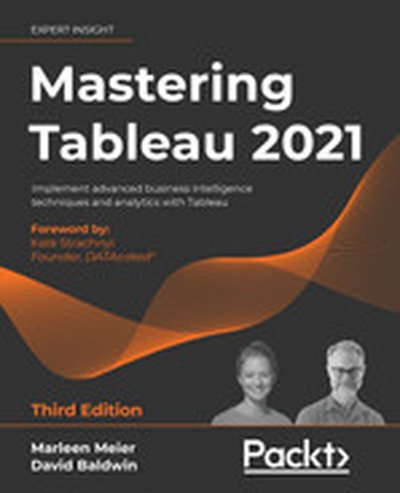
Mastering Tableau 2021 - Third Edition

Tableau 2021 brings a wide range of tools and techniques for mastering data visualization and business intelligence. In this book, you will delve into the advanced methodologies to fully utilize Tableau's capabilities. Whether you're dealing with geo-spatial, time-series analytics, or complex dashboards, this resource provides expertise through real-world data challenges. What this Book will help me do Draw connections between multiple databases and create insightful Tableau dashboards. Master advanced data visualization techniques that lead to impactful storytelling. Understand Tableau's integration with programming languages such as Python and R. Analyze datasets with time-series and geo-spatial methods to gain predictive insights. Leverage Tableau Prep Builder for efficient data cleaning and transformation processes. Author(s) Marleen Meier and David Baldwin are seasoned professionals in business intelligence and data analytics. They bring years of practical experience and have helped numerous organizations worldwide transform their data visualization strategies using Tableau. Their collaborative approach ensures a comprehensive, beginner to advanced learning experience. Who is it for? This book is perfect for business intelligence analysts, data analysts, and industry professionals who are already familiar with Tableau's basics and wish to expand their knowledge. It provides advanced techniques and implementations of Tableau for improving data storytelling and dashboard performance. Readers seeking to connect Tableau with external programming tools will also greatly benefit from this guide.

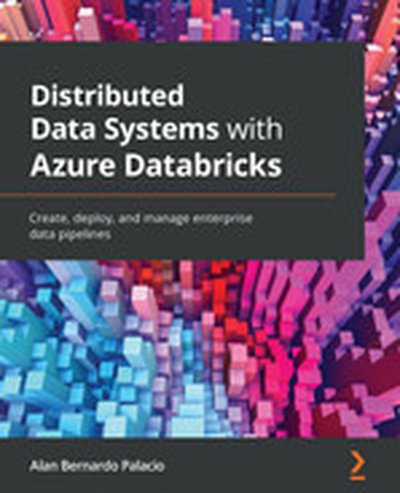
Distributed Data Systems with Azure Databricks

In 'Distributed Data Systems with Azure Databricks', you will explore the capabilities of Microsoft Azure Databricks as a platform for building and managing big data pipelines. Learn how to process, transform, and analyze data at scale while developing expertise in training distributed machine learning models and integrating them into enterprise workflows. What this Book will help me do Design and implement Extract, Transform, Load (ETL) pipelines using Azure Databricks. Conduct distributed training of machine learning models using TensorFlow and Horovod. Integrate Azure Databricks with Azure Data Factory for optimized data pipeline orchestration. Utilize Delta Engine for efficient querying and analysis of data within Delta Lake. Employ Databricks Structured Streaming to manage real-time production-grade data flows. Author(s) None Palacio is an experienced data engineer and cloud computing specialist, with extensive knowledge of the Microsoft Azure platform. With years of practical application of Databricks in enterprise settings, Palacio provides clear, actionable insights through relatable examples. They bring a passion for innovative solutions to the field of big data automation. Who is it for? This book is ideal for data engineers, machine learning engineers, and software developers looking to master Azure Databricks for large-scale data processing and analysis. Readers should have basic familiarity with cloud platforms, understanding of data pipelines, and a foundational grasp of Python and machine learning concepts. It is perfect for those wanting to create scalable and manageable data workflows.

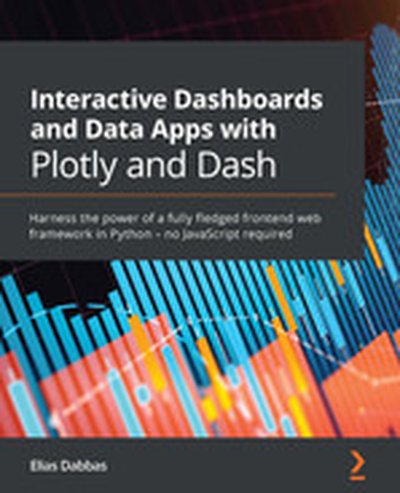
Interactive Dashboards and Data Apps with Plotly and Dash

This book, "Interactive Dashboards and Data Apps with Plotly and Dash", is a practical guide to building dynamic dashboards and applications using the Dash Python framework. It covers creating visualizations, integrating interactive controls, and deploying the apps, all without requiring JavaScript expertise. What this Book will help me do Master creating interactive data dashboards using Dash and Plotly. Understand how to integrate controls such as sliders and dropdowns into apps. Learn to use Plotly Express for visually representing data with ease. Develop capabilities to deploy a fully functional web app for data interaction. Understand how to use multi-page configurations and URLs for advanced apps. Author(s) None Dabbas is a seasoned Python developer with extensive expertise in data visualization and full-stack development. Drawing from real-world experience, None brings a practical approach to teaching, ensuring that learners understand not only how to build applications but why the approach works. Who is it for? This book is ideal for data analysts, engineers, and developers looking to enhance their visualization capabilities. If you are familiar with Python and have basic HTML skills, you will find this book accessible and rewarding. Beginners looking to explore advanced dashboard creation without JavaScript will also appreciate the clear approach.