talk-data.com talk-data.com

Topic

Data Streaming

realtime event_processing data_flow

739

tagged

Activity Trend

70 peak/qtr
2020-Q1 2026-Q1

Activities

739 activities · Newest first

Change Data Streaming Patterns With Debezium & Apache Flink | Decodable

ABOUT THE TALK: Microservices are one of the big trends in software engineering of the last few years.

In this session we'll discuss and showcase how open-source change data capture (CDC) with Debezium can help developers with typical challenges they often face when working on microservices.

Learn how to:

  • Employ the outbox pattern for reliable, eventually consistent data exchange between microservices, without incurring unsafe dual writes or tight coupling
  • Gradually extract microservices from existing monolithic applications, using CDC, the strangler fig pattern and Apache Flink
  • Coordinate long-running business transactions across multiple services using CDC-based saga orchestration, ensuring such activity gets consistently applied or aborted by all participating services.

ABOUT THE SPEAKER: Gunnar Morling is a software engineer and open-source enthusiast by heart, currently working at Decodable on stream processing based on Apache Flink. In his prior role as a software engineer at Red Hat, he led the Debezium project, a distributed platform for change data capture. He is a Java Champion and has founded multiple open source projects such as JfrUnit, kcctl, and MapStruct. Gunnar is an avid blogger (morling.dev) and has spoken at a wide range of conferences like QCon, Java One, and Devoxx. He lives in Hamburg, Germany.

ABOUT DATA COUNCIL: Data Council (https://www.datacouncil.ai/) is a community and conference series that provides data professionals with the learning and networking opportunities they need to grow their careers.

Make sure to subscribe to our channel for the most up-to-date talks from technical professionals on data related topics including data infrastructure, data engineering, ML systems, analytics and AI from top startups and tech companies.

FOLLOW DATA COUNCIL: Twitter: https://twitter.com/DataCouncilAI LinkedIn: https://www.linkedin.com/company/datacouncil-ai/

When to Move from Batch to Streaming and how to do it without hiring an entirely new team | Bytewax

ABOUT THE TALK: With more and more demand for data pipelines and applications to go real-time it can get overwhelming. This talk demystifies the when, why, and how of moving from batch processing to real-time/stream processing. We will look at arguments for and against stream processing, common architectures, common pitfalls, and open source tools used.

ABOUT THE SPEAKER: Zander Matheson is the founder and CEO of Bytewax, an open source software company focused on enabling more developers to work with streaming data. Before starting Bytewax he worked on data infrastructure and data science at GitHub and Heroku.

ABOUT DATA COUNCIL: Data Council (https://www.datacouncil.ai/) is a community and conference series that provides data professionals with the learning and networking opportunities they need to grow their careers.

Make sure to subscribe to our channel for the most up-to-date talks from technical professionals on data related topics including data infrastructure, data engineering, ML systems, analytics and AI from top startups and tech companies.

FOLLOW DATA COUNCIL: Twitter: https://twitter.com/DataCouncilAI LinkedIn: https://www.linkedin.com/company/datacouncil-ai/

Building a Control Plane for Data | Acryl

ABOUT THE TALK: This talk explains what the control plane of data looks like and how it fits into the reference architecture for the deconstructed data stack: a data stack that includes operational data stores, streaming systems, transformation engines, BI tools, warehouses, ML tools and orchestrators.

It dives into the fundamental characteristics for a control plane:

Breadth (completeness) Latency (freshness) Scale Source of Truth Auditability

ABOUT THE SPEAKER: Shirshanka Das is the Co-founder and CEO of Acryl Data, the company which is commercializing the open source DataHub project, a real-time metadata platform used by LinkedIn, Stripe, Pinterest, Optum, Expedia and many others. Prior to founding Acryl, he was the overall architect for Big Data at LinkedIn from 2010 to 2020, and responsible for creating the metadata and data management strategy at the company.

ABOUT DATA COUNCIL: Data Council (https://www.datacouncil.ai/) is a community and conference series that provides data professionals with the learning and networking opportunities they need to grow their careers.

Make sure to subscribe to our channel for the most up-to-date talks from technical professionals on data related topics including data infrastructure, data engineering, ML systems, analytics and AI from top startups and tech companies.

FOLLOW DATA COUNCIL: Twitter: https://twitter.com/DataCouncilAI LinkedIn: https://www.linkedin.com/company/datacouncil-ai

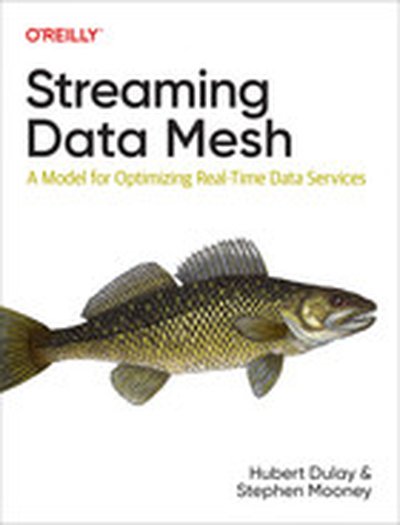
Streaming Data Mesh

Data lakes and warehouses have become increasingly fragile, costly, and difficult to maintain as data gets bigger and moves faster. Data meshes can help your organization decentralize data, giving ownership back to the engineers who produced it. This book provides a concise yet comprehensive overview of data mesh patterns for streaming and real-time data services. Authors Hubert Dulay and Stephen Mooney examine the vast differences between streaming and batch data meshes. Data engineers, architects, data product owners, and those in DevOps and MLOps roles will learn steps for implementing a streaming data mesh, from defining a data domain to building a good data product. Through the course of the book, you'll create a complete self-service data platform and devise a data governance system that enables your mesh to work seamlessly. With this book, you will: Design a streaming data mesh using Kafka Learn how to identify a domain Build your first data product using self-service tools Apply data governance to the data products you create Learn the differences between synchronous and asynchronous data services Implement self-services that support decentralized data

Summary

Every business has customers, and a critical element of success is understanding who they are and how they are using the companies products or services. The challenge is that most companies have a multitude of systems that contain fragments of the customer's interactions and stitching that together is complex and time consuming. Segment created the Unify product to reduce the burden of building a comprehensive view of customers and synchronizing it to all of the systems that need it. In this episode Kevin Niparko and Hanhan Wang share the details of how it is implemented and how you can use it to build and maintain rich customer profiles.

Announcements

Hello and welcome to the Data Engineering Podcast, the show about modern data management RudderStack helps you build a customer data platform on your warehouse or data lake. Instead of trapping data in a black box, they enable you to easily collect customer data from the entire stack and build an identity graph on your warehouse, giving you full visibility and control. Their SDKs make event streaming from any app or website easy, and their extensive library of integrations enable you to automatically send data to hundreds of downstream tools. Sign up free at dataengineeringpodcast.com/rudderstack Your host is Tobias Macey and today I'm interviewing Kevin Niparko and Hanhan Wang about Segment's new Unify product for building and syncing comprehensive customer profiles across your data systems

Interview

Introduction How did you get involved in the area of data management? Can you describe what Segment Unify is and the story behind it? What are the net-new capabilities that it brings to the Segment product suite? What are some of the categories of attributes that need to be managed in a prototypical customer profile? What are the different use cases that are enabled/simplified by the availability of a comprehensive customer profile?

What is the potential impact of more detailed customer profiles on LTV?

How do you manage permissions/auditability of updating or amending profile data? Can you describe how the Unify product is implemented?

What are the technical challenges that you had to address while developing/launching this product?

What is the workflow for a team who is adopting the Unify product?

What are the other Segment products that need to be in use to take advantage of Unify?

What are some of the most complex edge cases to address in identity resolution? How does reverse ETL factor into the enrichment process for profile data? What are some of the issues that you have to account for in synchronizing profiles across platforms/products?

How do you mititgate the impact of "regression to the mean" for systems that don't support all of the attributes that you want to maintain in a profile record?

What are some of the data modeling considerations that you have had to account for to support e.g. historical changes (e.g. slowly changing dimensions)? What are the most interesting, innovative, or unexpected ways that you have seen Segment Unify used? What are the most interesting, unexpected, or challenging lessons that you have learned while working on Segment Unify? When is Segment Unify the wrong choice? What do you have planned for the future of Segment Unify?

Contact Info

Kevin

LinkedIn Blog

Hanhan

LinkedIn

Parting Question

From your perspective, what is the biggest gap in the tooling or technology for data management today?

Closing Announcements

Thank you for listening! Don't forget to check out our other shows. Podcast.init covers the Python language, its community, and the innovative ways it is being used. The Machine Learning Podcast helps you go from idea to production with machine learning. Visit the site to subscribe to the show, sign up for the mailing list, and read the show notes. If you've learned something or tried out a project from the show then tell us about it! Email [email protected]) with your

Summary

Real-time capabilities have quickly become an expectation for consumers. The complexity of providing those capabilities is still high, however, making it more difficult for small teams to compete. Meroxa was created to enable teams of all sizes to deliver real-time data applications. In this episode DeVaris Brown discusses the types of applications that are possible when teams don't have to manage the complex infrastructure necessary to support continuous data flows.

Announcements

Hello and welcome to the Data Engineering Podcast, the show about modern data management RudderStack helps you build a customer data platform on your warehouse or data lake. Instead of trapping data in a black box, they enable you to easily collect customer data from the entire stack and build an identity graph on your warehouse, giving you full visibility and control. Their SDKs make event streaming from any app or website easy, and their extensive library of integrations enable you to automatically send data to hundreds of downstream tools. Sign up free at dataengineeringpodcast.com/rudderstack Your host is Tobias Macey and today I'm interviewing DeVaris Brown about the impact of real-time data on business opportunities and risk profiles

Interview

Introduction How did you get involved in the area of data management? Can you describe what Meroxa is and the story behind it?

How have the focus and goals of the platform and company evolved over the past 2 years?

Who are the target customers for Meroxa?

What problems are they trying to solve when they come to your platform?

Applications powered by real-time data were the exclusive domain of large and/or sophisticated tech companies for several years due to the inherent complexities involved. What are the shifts that have made them more accessible to a wider variety of teams?

What are some of the remaining blockers for teams who want to start using real-time data?

With the democratization of real-time data, what are the new categories of products and applications that are being unlocked?

How are organizations thinking about the potential value that those types of apps/services can provide?

With data flowing constantly, there are new challenges around oversight and accuracy. How does real-time data change the risk profile for applications that are consuming it?

What are some of the technical controls that are available for organizations that are risk-averse?

What skills do developers need to be able to effectively design, develop, and deploy real-time data applications?

How does this differ when talking about internal vs. consumer/end-user facing applications?

What are the most interesting, innovative, or unexpected ways that you have seen Meroxa used? What are the most interesting, unexpected, or challenging lessons that you have learned while working on Meroxa? When is Meroxa the wrong choice? What do you have planned for the future of Meroxa?

Contact Info

LinkedIn @devarispbrown on Twitter

Parting Question

From your perspective, what is the biggest gap in the tooling or technology for data management today?

Closing Announcements

Thank you for listening! Don't forget to check out our other shows. Podcast.init covers the Python language, its community, and the innovative ways it is being used. The Machine Learning Podcast helps you go from idea to production with machine learning. Visit the site to subscribe to the show, sign up for the mailing list, and read the show notes. If you've learned something or tried out a project from the show then tell us about it! Email [email protected]) with your story. To help other people find the show please leave a review on Apple Podcasts and tell your friends and co-workers

Links

Meroxa

Podcast Episode

Kafka Kafka Connect Conduit - golang Kafka connect replacement Pulsar Redpanda Flink Beam Clickhouse Druid Pinot

The intro and outro music is from The Hug by The Freak Fandango Orchestra / CC

The Python data ecosystem has matured during the last decade and there are less and less reasons to rely only large batch process executed in a Spark cluster, but with every large ecosystem, putting together the key pieces of technology takes some effort. There are now better storage technologies, streaming execution engines, query planners, and low level compute libraries. And modern hardware is way more powerful than what you'd probably expect. In this workshop we will explore some global-warming-reducing techniques to build more efficient data transformation pipelines in Python, and a little bit of Rust.

Summary

Business intellingence has been chasing the promise of self-serve data for decades. As the capabilities of these systems has improved and become more accessible, the target of what self-serve means changes. With the availability of AI powered by large language models combined with the evolution of semantic layers, the team at Zenlytic have taken aim at this problem again. In this episode Paul Blankley and Ryan Janssen explore the power of natural language driven data exploration combined with semantic modeling that enables an intuitive way for everyone in the business to access the data that they need to succeed in their work.

Announcements

Hello and welcome to the Data Engineering Podcast, the show about modern data management RudderStack helps you build a customer data platform on your warehouse or data lake. Instead of trapping data in a black box, they enable you to easily collect customer data from the entire stack and build an identity graph on your warehouse, giving you full visibility and control. Their SDKs make event streaming from any app or website easy, and their extensive library of integrations enable you to automatically send data to hundreds of downstream tools. Sign up free at dataengineeringpodcast.com/rudderstack Your host is Tobias Macey and today I'm interviewing Paul Blankley and Ryan Janssen about Zenlytic, a no-code business intelligence tool focused on emerging commerce brands

Interview

Introduction How did you get involved in the area of data management? Can you describe what Zenlytic is and the story behind it? Business intelligence is a crowded market. What was your process for defining the problem you are focused on solving and the method to achieve that outcome? Self-serve data exploration has been attempted in myriad ways over successive generations of BI and data platforms. What are the barriers that have been the most challenging to overcome in that effort?

What are the elements that are coming together now that give you confidence in being able to deliver on that?

Can you describe how Zenlytic is implemented?

What are the evolutions in the understanding and implementation of semantic layers that provide a sufficient substrate for operating on? How have the recent breakthroughs in large language models (LLMs) improved your ability to build features in Zenlytic? What is your process for adding domain semantics to the operational aspect of your LLM?

For someone using Zenlytic, what is the process for getting it set up and integrated with their data? Once it is operational, can you describe some typical workflows for using Zenlytic in a business context?

Who are the target users? What are the collaboration options available?

What are the most complex engineering/data challenges that you have had to address in building Zenlytic? What are the most interesting, innovative, or unexpected ways that you have seen Zenlytic used? What are the most interesting, unexpected, or challenging lessons that you have learned while working on Zenlytic? When is Zenlytic the wrong choice? What do you have planned for the future of Zenlytic?

Contact Info

Paul Blankley (LinkedIn)

Parting Question

From your perspective, what is the biggest gap in the tooling or technology for data management today?

Closing Announcements

Thank you for listening! Don't forget to check out our other shows. Podcast.init covers the Python language, its community, and the innovative ways it is being used. The Machine Learning Podcast helps you go from idea to production with machine learning. Visit the site to subscribe to the show, sign up for the mailing list, and read the show notes. If you've learned something or tried out a project from the show then tell us about it! Email [email protected]) with your story. To help other people find the show please leave a review on Apple Podcasts and tell your friends and co-workers

Links

Zenlytic OLAP Cube Large Language Model Starburst Pr

Summary

The customer data platform is a category of services that was developed early in the evolution of the current era of cloud services for data processing. When it was difficult to wire together the event collection, data modeling, reporting, and activation it made sense to buy monolithic products that handled every stage of the customer data lifecycle. Now that the data warehouse has taken center stage a new approach of composable customer data platforms is emerging. In this episode Darren Haken is joined by Tejas Manohar to discuss how Autotrader UK is addressing their customer data needs by building on top of their existing data stack.

Announcements

Hello and welcome to the Data Engineering Podcast, the show about modern data management RudderStack helps you build a customer data platform on your warehouse or data lake. Instead of trapping data in a black box, they enable you to easily collect customer data from the entire stack and build an identity graph on your warehouse, giving you full visibility and control. Their SDKs make event streaming from any app or website easy, and their extensive library of integrations enable you to automatically send data to hundreds of downstream tools. Sign up free at dataengineeringpodcast.com/rudderstack Your host is Tobias Macey and today I'm interviewing Darren Haken and Tejas Manohar about building a composable CDP and how you can start adopting it incrementally

Interview

Introduction How did you get involved in the area of data management? Can you describe what you mean by a "composable CDP"?

What are some of the key ways that it differs from the ways that we think of a CDP today?

What are the problems that you were focused on addressing at Autotrader that are solved by a CDP? One of the promises of the first generation CDP was an opinionated way to model your data so that non-technical teams could own this responsibility. What do you see as the risks/tradeoffs of moving CDP functionality into the same data stack as the rest of the organization?

What about companies that don't have the capacity to run a full data infrastructure?

Beyond the core technology of the data warehouse, what are the other evolutions/innovations that allow for a CDP experience to be built on top of the core data stack? added burden on core data teams to generate event-driven data models When iterating toward a CDP on top of the core investment of the infrastructure to feed and manage a data warehouse, what are the typical first steps?

What are some of the components in the ecosystem that help to speed up the time to adoption? (e.g. pre-built dbt packages for common transformations, etc.)

What are the most interesting, innovative, or unexpected ways that you have seen CDPs implemented? What are the most interesting, unexpected, or challenging lessons that you have learned while working on CDP related functionality? When is a CDP (composable or monolithic) the wrong choice? What do you have planned for the future of the CDP stack?

Contact Info

Darren

LinkedIn @DarrenHaken on Twitter

Tejas

LinkedIn @tejasmanohar on Twitter

Parting Question

From your perspective, what is the biggest gap in the tooling or technology for data management today?

Closing Announcements

Thank you for listening! Don't forget to check out our other shows. Podcast.init covers the Python language, its community, and the innovative ways it is being used. The Machine Learning Podcast helps you go from idea to production with machine learning. Visit the site to subscribe to the show, sign up for the mailing list, and read the show notes. If you've learned something or tried out a project from the show then tell us about it! Email [email protected]) with your story. To help other people find the show please leave a review on Apple Podcasts and tell your friends and co-workers

Links

Autotrader Hightouch

Customer Studio

CDP == Customer Data Platform Segment

Podcast Episode

mPar

Is data modeling on life support? I posed this question to LinkedIn earlier this week. It got a fair number of replies, some supportive and others saying I'm full of sh*t. In this 5 minute Friday nerdy rant, I unpack what I mean by data modeling being on life support, and where I think data modeling needs to go given newer practices like streaming and machine learning, which aren't currently discussed in data modeling circles.

LinkedIn post about data modeling on life support: https://www.linkedin.com/posts/josephreis_dataengineering-datamodeling-data-activity-7048722463010013185-OyIy

dataengineering #datamodel #data


If you like this show, give it a 5-star rating on your favorite podcast platform.

Purchase Fundamentals of Data Engineering at your favorite bookseller.

Check out my substack: https://joereis.substack.com/

Julia just got back from Data Council in Austin, a conference organized by Pete Sonderling, where lots of startups share what they're building, data practitioners go to learn in hands-on workshops, and of course investors go to spot the next big trend. In this episode, Taylor Murphy (Head of Product & Data at Meltano) + Pedram Navid (Founder, West Marin Data) join Julia to recap the conference and have a bit of fun. They talked streaming, how the MDS is growing up, new SQL variants, and, of course, AI. For full show notes and to read 6+ years of back issues of the podcast's companion newsletter, head to https://roundup.getdbt.com.

The modern data stack is a loose collection of technologies, often cloud-based, that collaboratively process and store data to support modern analytics. It must be automated, low code/no code, AI-assisted, graph-enabled, multimodal, streaming, distributed, meshy, converged, polyglot, open, and governed. Published at: https://www.eckerson.com/articles/twelve-must-have-characteristics-of-a-modern-data-stack

Summary

The promise of streaming data is that it allows you to react to new information as it happens, rather than introducing latency by batching records together. The peril is that building a robust and scalable streaming architecture is always more complicated and error-prone than you think it's going to be. After experiencing this unfortunate reality for themselves, Abhishek Chauhan and Ashish Kumar founded Grainite so that you don't have to suffer the same pain. In this episode they explain why streaming architectures are so challenging, how they have designed Grainite to be robust and scalable, and how you can start using it today to build your streaming data applications without all of the operational headache.

Announcements

Hello and welcome to the Data Engineering Podcast, the show about modern data management Businesses that adapt well to change grow 3 times faster than the industry average. As your business adapts, so should your data. RudderStack Transformations lets you customize your event data in real-time with your own JavaScript or Python code. Join The RudderStack Transformation Challenge today for a chance to win a $1,000 cash prize just by submitting a Transformation to the open-source RudderStack Transformation library. Visit dataengineeringpodcast.com/rudderstack today to learn more Hey there podcast listener, are you tired of dealing with the headache that is the 'Modern Data Stack'? We feel your pain. It's supposed to make building smarter, faster, and more flexible data infrastructures a breeze. It ends up being anything but that. Setting it up, integrating it, maintaining it—it’s all kind of a nightmare. And let's not even get started on all the extra tools you have to buy to get it to do its thing. But don't worry, there is a better way. TimeXtender takes a holistic approach to data integration that focuses on agility rather than fragmentation. By bringing all the layers of the data stack together, TimeXtender helps you build data solutions up to 10 times faster and saves you 70-80% on costs. If you're fed up with the 'Modern Data Stack', give TimeXtender a try. Head over to dataengineeringpodcast.com/timextender where you can do two things: watch us build a data estate in 15 minutes and start for free today. Join in with the event for the global data community, Data Council Austin. From March 28-30th 2023, they'll play host to hundreds of attendees, 100 top speakers, and dozens of startups that are advancing data science, engineering and AI. Data Council attendees are amazing founders, data scientists, lead engineers, CTOs, heads of data, investors and community organizers who are all working together to build the future of data. As a listener to the Data Engineering Podcast you can get a special discount of 20% off your ticket by using the promo code dataengpod20. Don't miss out on their only event this year! Visit: dataengineeringpodcast.com/data-council today Your host is Tobias Macey and today I'm interviewing Ashish Kumar and Abhishek Chauhan about Grainite, a platform designed to give you a single place to build streaming data applications

Interview

Introduction How did you get involved in the area of data management? Can you describe what Grainite is and the story behind it? What are the personas that you are focused on addressing with Grainite? What are some of the most complex aspects of building streaming data applications in the absence of something like Grainite?

How does Grainite work to reduce that complexity?

What are some of the commonalities that you see in the teams/organizations that find their way to Grainite?

What are some of the higher-order projects that teams are able to build when they are using Grainite as a starting point vs. where they would be spending effort on a fully managed streaming architecture?

Can you describe how Grainite is architected?

How have the design and goals of the platform changed/evolved since you first started working on it?

Wh

Summary

With the rise of the web and digital business came the need to understand how customers are interacting with the products and services that are being sold. Product analytics has grown into its own category and brought with it several services with generational differences in how they approach the problem. NetSpring is a warehouse-native product analytics service that allows you to gain powerful insights into your customers and their needs by combining your event streams with the rest of your business data. In this episode Priyendra Deshwal explains how NetSpring is designed to empower your product and data teams to build and explore insights around your products in a streamlined and maintainable workflow.

Announcements

Hello and welcome to the Data Engineering Podcast, the show about modern data management Join in with the event for the global data community, Data Council Austin. From March 28-30th 2023, they'll play host to hundreds of attendees, 100 top speakers, and dozens of startups that are advancing data science, engineering and AI. Data Council attendees are amazing founders, data scientists, lead engineers, CTOs, heads of data, investors and community organizers who are all working together to build the future of data. As a listener to the Data Engineering Podcast you can get a special discount of 20% off your ticket by using the promo code dataengpod20. Don't miss out on their only event this year! Visit: dataengineeringpodcast.com/data-council today! RudderStack helps you build a customer data platform on your warehouse or data lake. Instead of trapping data in a black box, they enable you to easily collect customer data from the entire stack and build an identity graph on your warehouse, giving you full visibility and control. Their SDKs make event streaming from any app or website easy, and their extensive library of integrations enable you to automatically send data to hundreds of downstream tools. Sign up free at dataengineeringpodcast.com/rudder Your host is Tobias Macey and today I'm interviewing Priyendra Deshwal about how NetSpring is using the data warehouse to deliver a more flexible and detailed view of your product analytics

Interview

Introduction How did you get involved in the area of data management? Can you describe what NetSpring is and the story behind it?

What are the activities that constitute "product analytics" and what are the roles/teams involved in those activities?

When teams first come to you, what are the common challenges that they are facing and what are the solutions that they have attempted to employ? Can you describe some of the challenges involved in bringing product analytics into enterprise or highly regulated environments/industries?

How does a warehouse-native approach simplify that effort?

There are many different players (both commercial and open source) in the product analytics space. Can you share your view on the role that NetSpring plays in that ecosystem? How is the NetSpring platform implemented to be able to best take advantage of modern warehouse technologies and the associated data stacks?

What are the pre-requisites for an organization's infrastructure/data maturity for being able to benefit from NetSpring? How have the goals and implementation of the NetSpring platform evolved from when you first started working on it?

Can you describe the steps involved in integrating NetSpring with an organization's existing warehouse?

What are the signals that NetSpring uses to understand the customer journeys of different organizations? How do you manage the variance of the data models in the warehouse while providing a consistent experience for your users?

Given that you are a product organization, how are you using NetSpring to power NetSpring? What are the most interesting, innovative, or unexpected ways that you have seen NetSpring used? What are the most interesting, unexpected, or challenging lessons that you have learned while working on NetSpring? When is NetSpring the wrong choice? What do you have planned for the future of NetSpring?

Contact Info

LinkedIn

Parting Question

From your perspective, what is the biggest gap in the tooling or technology for data management today?

Closing Announcements

Thank you for listening! Don't forget to check out our other shows. Podcast.init covers the Python language, its community, and the innovative ways it is being used. The Machine Learning Podcast helps you go from idea to production with machine learning. Visit the site to subscribe to the show, sign up for the mailing list, and read the show notes. If you've learned something or tried out a project from the show then tell us about it! Email [email protected]) with your story. To help other people find the show please leave a review on Apple Podcasts and tell your friends and co-workers

Links

NetSpring ThoughtSpot Product Analytics Amplitude Mixpanel Customer Data Platform GDPR CCPA Segment

Podcast Episode

Rudderstack

Podcast Episode

The intro and outro music is from The Hug by The Freak Fandango Orchestra / CC BY-SA Sponsored By: TimeXtender: TimeXtender Logo TimeXtender is a holistic, metadata-driven solution for data integration, optimized for agility. TimeXtender provides all the features you need to build a future-proof infrastructure for ingesting, transforming, modelling, and delivering clean, reliable data in the fastest, most efficient way possible.
You can't optimize for everything all at once. That's why we take a holistic approach to data integration that optimises for agility instead of fragmentation. By unifying each layer of the data stack, TimeXtender empowers you to build data solutions 10x faster while reducing costs by 70%-80%. We do this for one simple reason: because time matters.

Go to dataengineeringpodcast.com/timextender today to get started for free!Rudderstack: Rudderstack

RudderStack provides all your customer data pipelines in one platform. You can collect, transform, and route data across your entire stack with its event streaming, ETL, and reverse ETL pipelines.

RudderStack’s warehouse-first approach means it does not store sensitive information, and it allows you to leverage your existing data warehouse/data lake infrastructure to build a single source of truth for every team.

RudderStack also supports real-time use cases. You can Implement RudderStack SDKs once, then automatically send events to your warehouse and 150+ business tools, and you’ll never have to worry about API changes again.

Visit dataengineeringpodcast.com/rudderstack to sign up for free today, and snag a free T-Shirt just for being a Data Engineering Podcast listener.Data Council: Data Council Logo Join us at the event for the global data community, Data Council Austin. From March 28-30th 2023, we'll play host to hundreds of attendees, 100 top speakers, and dozens of startups that are advancing data science, engineering and AI. Data Council attendees are amazing founders, data scientists, lead engineers, CTOs, heads of data, investors and community organizers who are all working together to build the future of data. As a listener to the Data Engineering Podcast you can get a special discount off tickets by using the promo code dataengpod20. Don't miss out on our only event this year! Visit: dataengineeringpodcast.com/data-council Promo Code: dataengpod20Support Data Engineering Podcast

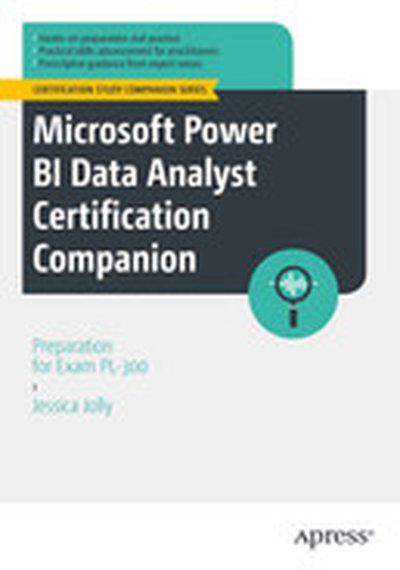
Microsoft Power BI Data Analyst Certification Companion: Preparation for Exam PL-300

Use this book to study for the PL-300 Microsoft Power BI Data Analyst exam. The book follows the “Skills Measured” outline provided by Microsoft to help focus your study. Each topic area from the outline corresponds to an area covered by the exam, and the book helps you build a good base of knowledge in each area. Each topic is presented with a blend of practical explanations, theory, and best practices. Power BI is more than just the Power BI Desktop or the Power BI Service. It is two distinct applications and an online service that, together, enable business users to gather, shape, and analyze data to generate and present insights. This book clearly delineates the purpose of each component and explains the key concepts necessary to use each component effectively. Each chapter provides best practices and tips to help an inexperienced Power BI practitioner develop good habits that will support larger or more complex analyses. Manybusiness analysts come to Power BI with a wealth of experience in Excel and particularly with pivot tables. Some of this experience translates readily into Power BI concepts. This book leverages that overlap in skill sets to help seasoned Excel users overcome the initial learning curve in Power BI, but no prior knowledge of any kind is assumed, terminology is defined in non-technical language, and key concepts are explained using analogies and ideas from experiences common to any reader. After reading this book, you will have the background and capability to learn the skills and concepts necessary both to pass the PL-300 exam and become a confident Power BI practitioner. What You Will Learn Create user-friendly, responsive reports with drill-throughs, bookmarks, and tool tips Construct a star schema with relationships, ensuring that your analysis will be both accurate and responsive Publish reports and datasets to the Power BI Service, enabling the report (and the dataset) to be viewed and used by your colleagues Extract data from a variety of sources, enabling you to leverage the data that your organization has collected and stored in a variety of sources Schedule data refreshes for published datasets so your reports and dashboards stay up to date Develop dashboards with visuals from different reports and streaming content Who This Book Is For Power BI users who are planning to take the PL-300 exam, Power BI users who want help studying the topic areas listed in Microsoft’s outline for the PL-300 exam, and those who are not planning to take the exam but want to close any knowledge gaps they might have

Summary

Data is a team sport, but it's often difficult for everyone on the team to participate. For a long time the mantra of data tools has been "by developers, for developers", which automatically excludes a large portion of the business members who play a crucial role in the success of any data project. Quilt Data was created as an answer to make it easier for everyone to contribute to the data being used by an organization and collaborate on its application. In this episode Aneesh Karve shares the journey that Quilt has taken to provide an approachable interface for working with versioned data in S3 that empowers everyone to collaborate.

Announcements

Hello and welcome to the Data Engineering Podcast, the show about modern data management Truly leveraging and benefiting from streaming data is hard - the data stack is costly, difficult to use and still has limitations. Materialize breaks down those barriers with a true cloud-native streaming database - not simply a database that connects to streaming systems. With a PostgreSQL-compatible interface, you can now work with real-time data using ANSI SQL including the ability to perform multi-way complex joins, which support stream-to-stream, stream-to-table, table-to-table, and more, all in standard SQL. Go to dataengineeringpodcast.com/materialize today and sign up for early access to get started. If you like what you see and want to help make it better, they're hiring across all functions! Your host is Tobias Macey and today I'm interviewing Aneesh Karve about how Quilt Data helps you bring order to your chaotic data in S3 with transactional versioning and data discovery built in

Interview

Introduction How did you get involved in the area of data management? Can you describe what Quilt is and the story behind it?

How have the goals and features of the Quilt platform changed since I spoke with Kevin in June of 2018?

What are the main problems that users are trying to solve when they find Quilt?

What are some of the alternative approaches/products that they are coming from?

How does Quilt compare with options such as LakeFS, Unstruk, Pachyderm, etc.? Can you describe how Quilt is implemented? What are the types of tools and systems that Quilt gets integrated with?

How do you manage the tension between supporting the lowest common denominator, while providing options for more advanced capabilities?

What is a typical workflow for a team that is using Quilt to manage their data? What are the most interesting, innovative, or unexpected ways that you have seen Quilt used? What are the most interesting, unexpected, or challenging lessons that you have learned while working on Quilt? When is Quilt the wrong choice? What do you have planned for the future of Quilt?

Contact Info

LinkedIn @akarve on Twitter

Parting Question

From your perspective, what is the biggest gap in the tooling or technology for data management today?

Closing Announcements

Thank you for listening! Don't forget to check out our other shows. Podcast.init covers the Python language, its community, and the innovative ways it is being used. The Machine Learning Podcast helps you go from idea to production with machine learning. Visit the site to subscribe to the show, sign up for the mailing list, and read the show notes. If you've learned something or tried out a project from the show then tell us about it! Email [email protected]) with your story. To help other people find the show please leave a review on Apple Podcasts and tell your friends and co-workers

Links

Quilt Data

Podcast Episode

UW Madison Docker Swarm Kaggle open.quiltdata.com FinOS Perspective LakeFS

Podcast Episode

Pachyderm

Podcast Episode

Unstruk

Podcast Episode

Parquet Avro ORC Cloudformation Troposphere CDK == Cloud Development Kit Shadow IT

Podcast Episode

Delta Lake

Podcast Episode

Apache Iceberg

Podcast Episode

Datasette Frictionless DVC

Podcast.init Episode

The in

Summary

This podcast started almost exactly six years ago, and the technology landscape was much different than it is now. In that time there have been a number of generational shifts in how data engineering is done. In this episode I reflect on some of the major themes and take a brief look forward at some of the upcoming changes.

Announcements

Hello and welcome to the Data Engineering Podcast, the show about modern data management Your host is Tobias Macey and today I'm reflecting on the major trends in data engineering over the past 6 years

Interview

Introduction 6 years of running the Data Engineering Podcast Around the first time that data engineering was discussed as a role

Followed on from hype about "data science"

Hadoop era Streaming Lambda and Kappa architectures

Not really referenced anymore

"Big Data" era of capture everything has shifted to focusing on data that presents value

Regulatory environment increases risk, better tools introduce more capability to understand what data is useful

Data catalogs

Amundsen and Alation

Orchestration engine

Oozie, etc. -> Airflow and Luigi -> Dagster, Prefect, Lyft, etc. Orchestration is now a part of most vertical tools

Cloud data warehouses Data lakes DataOps and MLOps Data quality to data observability Metadata for everything

Data catalog -> data discovery -> active metadata

Business intelligence

Read only reports to metric/semantic layers Embedded analytics and data APIs

Rise of ELT

dbt Corresponding introduction of reverse ETL

What are the most interesting, unexpected, or challenging lessons that you have learned while working on running the podcast? What do you have planned for the future of the podcast?

Parting Question

From your perspective, what is the biggest gap in the tooling or technology for data management today?

Closing Announcements

Thank you for listening! Don't forget to check out our other shows. Podcast.init covers the Python language, its community, and the innovative ways it is being used. The Machine Learning Podcast helps you go from idea to production with machine learning. Visit the site to subscribe to the show, sign up for the mailing list, and read the show notes. If you've learned something or tried out a project from the show then tell us about it! Email [email protected]) with your story. To help other people find the show please leave a review on Apple Podcasts and tell your friends and co-workers

The intro and outro music is from The Hug by The Freak Fandango Orchestra / CC BY-SA Sponsored By: Materialize: Materialize

Looking for the simplest way to get the freshest data possible to your teams? Because let's face it: if real-time were easy, everyone would be using it. Look no further than Materialize, the streaming database you already know how to use.

Materialize’s PostgreSQL-compatible interface lets users leverage the tools they already use, with unsurpassed simplicity enabled by full ANSI SQL support. Delivered as a single platform with the separation of storage and compute, strict-serializability, active replication, horizontal scalability and workload isolation — Materialize is now the fastest way to build products with streaming data, drastically reducing the time, expertise, cost and maintenance traditionally associated with implementation of real-time features.

Sign up now for early access to Materialize and get started with the power of streaming data with the same simplicity and low implementation cost as batch cloud data warehouses.

Go to materialize.comSupport Data Engineering Podcast

This session will cover a modern data stack approach that drives analytics, feature engineering, and dashboards across the enterprise. It will showcase real time streaming capabilities, data lakes, decentralized vs. centralized warehousing, and feature store architecture. The solution provides sub second latency to data and scales to billions of transactions a day.

Summary

Business intelligence has gone through many generational shifts, but each generation has largely maintained the same workflow. Data analysts create reports that are used by the business to understand and direct the business, but the process is very labor and time intensive. The team at Omni have taken a new approach by automatically building models based on the queries that are executed. In this episode Chris Merrick shares how they manage integration and automation around the modeling layer and how it improves the organizational experience of business intelligence.

Announcements

Hello and welcome to the Data Engineering Podcast, the show about modern data management Truly leveraging and benefiting from streaming data is hard - the data stack is costly, difficult to use and still has limitations. Materialize breaks down those barriers with a true cloud-native streaming database - not simply a database that connects to streaming systems. With a PostgreSQL-compatible interface, you can now work with real-time data using ANSI SQL including the ability to perform multi-way complex joins, which support stream-to-stream, stream-to-table, table-to-table, and more, all in standard SQL. Go to dataengineeringpodcast.com/materialize today and sign up for early access to get started. If you like what you see and want to help make it better, they're hiring across all functions! Your host is Tobias Macey and today I'm interviewing Chris Merrick about the Omni Analytics platform and how they are adding automatic data modeling to your business intelligence

Interview

Introduction How did you get involved in the area of data management? Can you describe what Omni Analytics is and the story behind it?

What are the core goals that you are trying to achieve with building Omni?

Business intelligence has gone through many evolutions. What are the unique capabilities that Omni Analytics offers over other players in the market?

What are the technical and organizational anti-patterns that typically grow up around BI systems?

What are the elements that contribute to BI being such a difficult product to use effectively in an organization?

Can you describe how you have implemented the Omni platform?

How have the design/scope/goals of the product changed since you first started working on it?

What does the workflow for a team using Omni look like?

What are some of the developments in the broader ecosystem that have made your work possible?

What are some of the positive and negative inspirations that you have drawn from the experience that you and your team-mates have gained in previous businesses?

What are the most interesting, innovative, or unexpected ways that you have seen Omni used?

What are the most interesting, unexpected, or challenging lessons that you have learned while working on Omni?

When is Omni the wrong choice?

What do you have planned for the future of Omni?

Contact Info

LinkedIn @cmerrick on Twitter

Parting Question

From your perspective, what is the biggest gap in the tooling or technology for data management today?

Closing Announcements

Thank you for listening! Don't forget to check out our other shows. Podcast.init covers the Python language, its community, and the innovative ways it is being used. The Machine Learning Podcast helps you go from idea to production with machine learning. Visit the site to subscribe to the show, sign up for the mailing list, and read the show notes. If you've learned something or tried out a project from the show then tell us about it! Email [email protected]) with your story. To help other people find the show please leave a review on Apple Podcasts and tell your friends and co-workers

Links

Omni Analytics Stitch RJ Metrics Looker

Podcast Episode

Singer dbt

Podcast Episode

Teradata Fivetran Apache Arrow

Podcast Episode

DuckDB

Podcast Episode

BigQuery Snowflake

Podcast Episode

The intro and outro music is from The Hug by The Freak Fandango Orchestra / CC BY-SA Sponsored By: Materialize: Materialize

Looking for the simplest way to get the freshest data possible to your teams? Because let's face it: if real-time were easy, everyone would be using it. Look no further than Materialize, the streaming database you already know how to use.

Materialize’s PostgreSQL-compatible interface lets users leverage the tools they already use, with unsurpassed simplicity enabled by full ANSI SQL support. Delivered as a single platform with the separation of storage and compute, strict-serializability, active replication, horizontal scalability and workload isolation — Materialize is now the fastest way to build products with streaming data, drastically reducing the time, expertise, cost and maintenance traditionally associated with implementation of real-time features.

Sign up now for early access to Materialize and get started with the power of streaming data with the same simplicity and low implementation cost as batch cloud data warehouses.

Go to materialize.comSupport Data Engineering Podcast

Summary

The most interesting and challenging bugs always happen in production, but recreating them is a constant challenge due to differences in the data that you are working with. Building your own scripts to replicate data from production is time consuming and error-prone. Tonic is a platform designed to solve the problem of having reliable, production-like data available for developing and testing your software, analytics, and machine learning projects. In this episode Adam Kamor explores the factors that make this such a complex problem to solve, the approach that he and his team have taken to turn it into a reliable product, and how you can start using it to replace your own collection of scripts.

Announcements

Hello and welcome to the Data Engineering Podcast, the show about modern data management Truly leveraging and benefiting from streaming data is hard - the data stack is costly, difficult to use and still has limitations. Materialize breaks down those barriers with a true cloud-native streaming database - not simply a database that connects to streaming systems. With a PostgreSQL-compatible interface, you can now work with real-time data using ANSI SQL including the ability to perform multi-way complex joins, which support stream-to-stream, stream-to-table, table-to-table, and more, all in standard SQL. Go to dataengineeringpodcast.com/materialize today and sign up for early access to get started. If you like what you see and want to help make it better, they're hiring across all functions! Data and analytics leaders, 2023 is your year to sharpen your leadership skills, refine your strategies and lead with purpose. Join your peers at Gartner Data & Analytics Summit, March 20 – 22 in Orlando, FL for 3 days of expert guidance, peer networking and collaboration. Listeners can save $375 off standard rates with code GARTNERDA. Go to dataengineeringpodcast.com/gartnerda today to find out more. Your host is Tobias Macey and today I'm interviewing Adam Kamor about Tonic, a service for generating data sets that are safe for development, analytics, and machine learning

Interview

Introduction How did you get involved in the area of data management? Can you describe what Tonic is and the story behind it? What are the core problems that you are trying to solve? What are some of the ways that fake or obfuscated data is used in development and analytics workflows? challenges of reliably subsetting data

impact of ORMs and bad habits developers get into with database modeling

Can you describe how Tonic is implemented?

What are the units of composition that you are building to allow for evolution and expansion of your product? How have the design and goals of the platform evolved since you started working on it?

Can you describe some of the different workflows that customers build on top of your various tools What are the most interesting, innovative, or unexpected ways that you have seen Tonic used? What are the most interesting, unexpected, or challenging lessons that you have learned while working on Tonic? When is Tonic the wrong choice? What do you have planned for the future of Tonic?

Contact Info

LinkedIn @AdamKamor on Twitter

Parting Question

From your perspective, what is the biggest gap in the tooling or technology for data management today?

Closing Announcements

Thank you for listening! Don't forget to check out our other shows. Podcast.init covers the Python language, its community, and the innovative ways it is being used. The Machine Learning Podcast helps you go from idea to production with machine learning. Visit the site to subscribe to the show, sign up for the mailing list, and read the show notes. If you've learned something or tried out a project from the show then tell us about it! Email [email protected]) with your story. To help other people find the show please leave a review on Apple Podcasts and tell your friends and co-workers

Links

Tonic

Djinn

Django