talk-data.com talk-data.com

Topic

Data Streaming

realtime event_processing data_flow

739

tagged

Activity Trend

70 peak/qtr
2020-Q1 2026-Q1

Activities

739 activities · Newest first

Apache Hadoop 3 Quick Start Guide

Dive into the world of distributed data processing with the 'Apache Hadoop 3 Quick Start Guide.' This comprehensive resource equips you with the knowledge needed to handle large datasets effectively using Apache Hadoop. Learn how to set up and configure Hadoop, work with its core components, and explore its powerful ecosystem tools. What this Book will help me do Understand the fundamental concepts of Apache Hadoop, including HDFS, MapReduce, and YARN, and use them to store and process large datasets. Set up and configure Hadoop 3 in both developer and production environments to suit various deployment needs. Gain hands-on experience with Hadoop ecosystem tools like Hive, Kafka, and Spark to enhance your big data processing capabilities. Learn to manage, monitor, and troubleshoot Hadoop clusters efficiently to ensure smooth operations. Analyze real-time streaming data with tools like Apache Storm and perform advanced data analytics using Apache Spark. Author(s) The author of this guide, Vijay Karambelkar, brings years of experience working with big data technologies and Apache Hadoop in real-world applications. With a passion for teaching and simplifying complex topics, Vijay has compiled his expertise to help learners confidently approach Hadoop 3. His detailed, example-driven approach makes this book a practical resource for aspiring data professionals. Who is it for? This book is ideal for software developers, data engineers, and IT professionals who aspire to dive into the field of big data. If you're new to Apache Hadoop or looking to upgrade your skills to include version 3, this guide is for you. A basic understanding of Java programming is recommended to make the most of the topics covered. Embark on this journey to enhance your career in data-intensive industries.

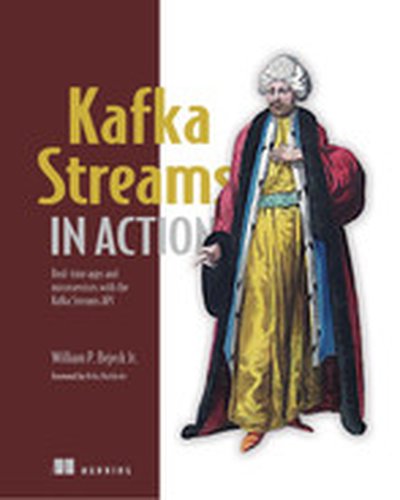
Kafka Streams in Action

Kafka Streams in Action teaches you everything you need to know to implement stream processing on data flowing into your Kafka platform, allowing you to focus on getting more from your data without sacrificing time or effort. About the Technology Not all stream-based applications require a dedicated processing cluster. The lightweight Kafka Streams library provides exactly the power and simplicity you need for message handling in microservices and real-time event processing. With the Kafka Streams API, you filter and transform data streams with just Kafka and your application. About the Book Kafka Streams in Action teaches you to implement stream processing within the Kafka platform. In this easy-to-follow book, you’ll explore real-world examples to collect, transform, and aggregate data, work with multiple processors, and handle real-time events. You’ll even dive into streaming SQL with KSQL! Practical to the very end, it finishes with testing and operational aspects, such as monitoring and debugging. What's Inside Using the KStreams API Filtering, transforming, and splitting data Working with the Processor API Integrating with external systems About the Reader Assumes some experience with distributed systems. No knowledge of Kafka or streaming applications required. About the Author Bill Bejeck is a Kafka Streams contributor and Confluent engineer with over 15 years of software development experience. Quotes A great way to learn about Kafka Streams and how it is a key enabler of event-driven applications. - From the Foreword by Neha Narkhede, Cocreator of Apache Kafka A comprehensive guide to Kafka Streams—from introduction to production! - Bojan Djurkovic, Cvent Bridges the gap between message brokering and real-time streaming analytics. - Jim Mantheiy Jr., Next Century Valuable both as an introduction to streams as well as an ongoing reference. - Robin Coe, TD Bank

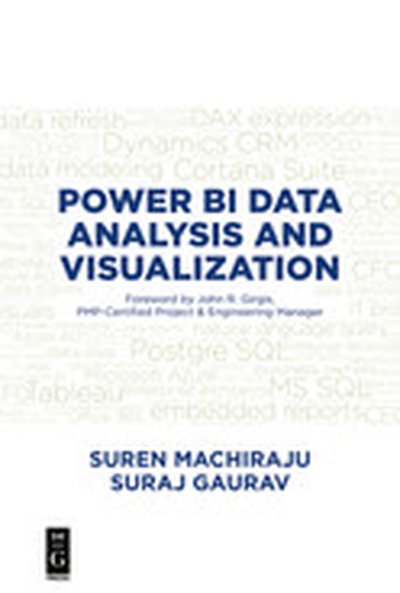
Power BI Data Analysis and Visualization

Power BI Data Analysis and Visualization provides a roadmap to vendor choices and highlights why Microsoft’s Power BI is a very viable, cost effective option for data visualization. The book covers the fundamentals and most commonly used features of Power BI, but also includes an in-depth discussion of advanced Power BI features such as natural language queries; embedding Power BI dashboards; and live streaming data. It discusses real solutions to extract data from the ERP application, Microsoft Dynamics CRM, and also offers ways to host the Power BI Dashboard as an Azure application, extracting data from popular data sources like Microsoft SQL Server and open-source PostgreSQL. Authored by Microsoft experts, this book uses real-world coding samples and screenshots to spotlight how to create reports, embed them in a webpage, view them across multiple platforms, and more. Business owners, IT professionals, data scientists, and analysts will benefit from this thorough presentation of Power BI and its functions.

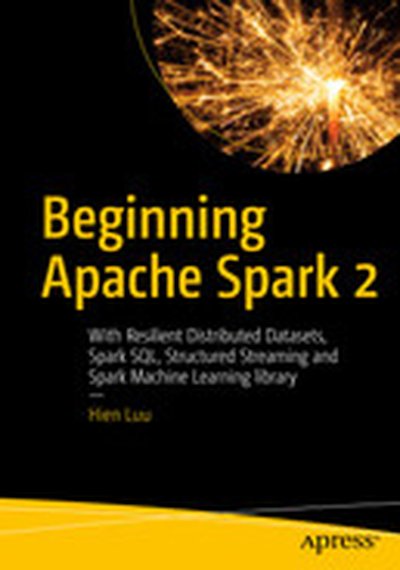
Beginning Apache Spark 2: With Resilient Distributed Datasets, Spark SQL, Structured Streaming and Spark Machine Learning library

Develop applications for the big data landscape with Spark and Hadoop. This book also explains the role of Spark in developing scalable machine learning and analytics applications with Cloud technologies. Beginning Apache Spark 2 gives you an introduction to Apache Spark and shows you how to work with it. Along the way, you’ll discover resilient distributed datasets (RDDs); use Spark SQL for structured data; and learn stream processing and build real-time applications with Spark Structured Streaming. Furthermore, you’ll learn the fundamentals of Spark ML for machine learning and much more. After you read this book, you will have the fundamentals to become proficient in using Apache Spark and know when and how to apply it to your big data applications. What You Will Learn Understand Spark unified data processing platform Howto run Spark in Spark Shell or Databricks Use and manipulate RDDs Deal with structured data using Spark SQL through its operations and advanced functions Build real-time applications using Spark Structured Streaming Develop intelligent applications with the Spark Machine Learning library Who This Book Is For Programmers and developers active in big data, Hadoop, and Java but who are new to the Apache Spark platform.

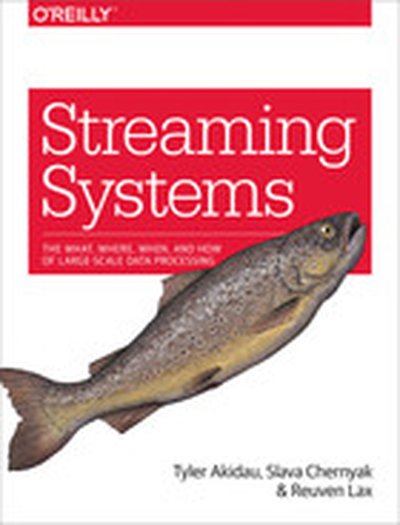
Streaming Systems

Streaming data is a big deal in big data these days. As more and more businesses seek to tame the massive unbounded data sets that pervade our world, streaming systems have finally reached a level of maturity sufficient for mainstream adoption. With this practical guide, data engineers, data scientists, and developers will learn how to work with streaming data in a conceptual and platform-agnostic way. Expanded from Tyler Akidau’s popular blog posts "Streaming 101" and "Streaming 102", this book takes you from an introductory level to a nuanced understanding of the what, where, when, and how of processing real-time data streams. You’ll also dive deep into watermarks and exactly-once processing with co-authors Slava Chernyak and Reuven Lax. You’ll explore: How streaming and batch data processing patterns compare The core principles and concepts behind robust out-of-order data processing How watermarks track progress and completeness in infinite datasets How exactly-once data processing techniques ensure correctness How the concepts of streams and tables form the foundations of both batch and streaming data processing The practical motivations behind a powerful persistent state mechanism, driven by a real-world example How time-varying relations provide a link between stream processing and the world of SQL and relational algebra

PySpark Cookbook

Dive into the world of big data processing and analytics with the "PySpark Cookbook". This book provides over 60 hands-on recipes for implementing efficient data-intensive solutions using Apache Spark and Python. By mastering these recipes, you'll be equipped to tackle challenges in large-scale data processing, machine learning, and stream analytics. What this Book will help me do Set up and configure PySpark environments effectively, including working with Jupyter for enhanced interactivity. Understand and utilize DataFrames for data manipulation, analysis, and transformation tasks. Develop end-to-end machine learning solutions using the ML and MLlib modules in PySpark. Implement structured streaming and graph-processing solutions to analyze and visualize data streams and relationships. Deploy PySpark applications to the cloud infrastructure efficiently using best practices. Author(s) This book is co-authored by None Lee and None Drabas, who are experienced professionals in data processing and analytics leveraging Python and Apache Spark. With their deep technical expertise and a passion for teaching through practical examples, they aim to make the complex concepts of PySpark accessible to developers of varied experience levels. Who is it for? This book is ideal for Python developers who are keen to delve into the Apache Spark ecosystem. Whether you're just starting with big data or have some experience with Spark, this book provides practical recipes to enhance your skills. Readers looking to solve real-world data-intensive challenges using PySpark will find this resource invaluable.

Streaming Change Data Capture

There are many benefits to becoming a data-driven organization, including the ability to accelerate and improve business decision accuracy through the real-time processing of transactions, social media streams, and IoT data. But those benefits require significant changes to your infrastructure. You need flexible architectures that can copy data to analytics platforms at near-zero latency while maintaining 100% production uptime. Fortunately, a solution already exists. This ebook demonstrates how change data capture (CDC) can meet the scalability, efficiency, real-time, and zero-impact requirements of modern data architectures. Kevin Petrie, Itamar Ankorion, and Dan Potter—technology marketing leaders at Attunity—explain how CDC enables faster and more accurate decisions based on current data and reduces or eliminates full reloads that disrupt production and efficiency. The book examines: How CDC evolved from a niche feature of database replication software to a critical data architecture building block Architectures where data workflow and analysis take place, and their integration points with CDC How CDC identifies and captures source data updates to assist high-speed replication to one or more targets Case studies on cloud-based streaming and streaming to a data lake and related architectures Guiding principles for effectively implementing CDC in cloud, data lake, and streaming environments The Attunity Replicate platform for efficiently loading data across all major database, data warehouse, cloud, streaming, and Hadoop platforms

Practical Enterprise Data Lake Insights: Handle Data-Driven Challenges in an Enterprise Big Data Lake

Use this practical guide to successfully handle the challenges encountered when designing an enterprise data lake and learn industry best practices to resolve issues. When designing an enterprise data lake you often hit a roadblock when you must leave the comfort of the relational world and learn the nuances of handling non-relational data. Starting from sourcing data into the Hadoop ecosystem, you will go through stages that can bring up tough questions such as data processing, data querying, and security. Concepts such as change data capture and data streaming are covered. The book takes an end-to-end solution approach in a data lake environment that includes data security, high availability, data processing, data streaming, and more. Each chapter includes application of a concept, code snippets, and use case demonstrations to provide you with a practical approach. You will learn the concept, scope, application, and starting point. What You'll Learn Get to know data lake architecture and design principles Implement data capture and streaming strategies Implement data processing strategies in Hadoop Understand the data lake security framework and availability model Who This Book Is For Big data architects and solution architects

Designing Fast Data Application Architectures

Today’s digital companies demand real-time insights and immediate action for everything from purchase to fulfillment, recommendation, and more. As a result, many organizations are adopting fast data applications to accelerate the value they extract from data as it flows into the system. With this practical ebook, you’ll learn the common architectural patterns that form the foundation of successful fast data deployments. Engineers from Lightbend identify the key characteristics of fast data architectures, separate them into functional blocks, and show you how to implement those functions using components like those in the SMACK stack—Spark, Mesos, Akka, Cassandra, and Kafka, as well as others. Architects will learn how to choose, combine, and run SMACK stack technologies to build resilient, scalable, and responsive systems that your company requires. This ebook examines: The anatomy of fast data applications: the application model, streaming data sources, processing engines, and data sinks Functional composition of the SMACK stack and extensions The event backbone that connects all the major components of a fast data platform together Compute engines for transforming data into valuable insights Storage systems that form the transition between the fast data domain and client applications Patterns you can use in the data serving layer, including data-driven microservices Container orchestrators in the substrate layer that provide resources to services, frameworks, and applications

Data Analytics with Spark Using Python, First edition

Spark for Data Professionals introduces and solidifies the concepts behind Spark 2.x, teaching working developers, architects, and data professionals exactly how to build practical Spark solutions. Jeffrey Aven covers all aspects of Spark development, including basic programming to SparkSQL, SparkR, Spark Streaming, Messaging, NoSQL and Hadoop integration. Each chapter presents practical exercises deploying Spark to your local or cloud environment, plus programming exercises for building real applications. Unlike other Spark guides, Spark for Data Professionals explains crucial concepts step-by-step, assuming no extensive background as an open source developer. It provides a complete foundation for quickly progressing to more advanced data science and machine learning topics. This guide will help you: Understand Spark basics that will make you a better programmer and cluster “citizen” Master Spark programming techniques that maximize your productivity Choose the right approach for each problem Make the most of built-in platform constructs, including broadcast variables, accumulators, effective partitioning, caching, and checkpointing Leverage powerful tools for managing streaming, structured, semi-structured, and unstructured data

Visualizing Streaming Data

While tools for analyzing streaming and real-time data are gaining adoption, the ability to visualize these data types has yet to catch up. Dashboards are good at conveying daily or weekly data trends at a glance, though capturing snapshots when data is transforming from moment to moment is more difficult—but not impossible. With this practical guide, application designers, data scientists, and system administrators will explore ways to create visualizations that bring context and a sense of time to streaming text data. Author Anthony Aragues guides you through the concepts and tools you need to build visualizations for analyzing data as it arrives. Determine your company’s goals for visualizing streaming data Identify key data sources and learn how to stream them Learn practical methods for processing streaming data Build a client application for interacting with events, logs, and records Explore common components for visualizing streaming data Consider analysis concepts for developing your visualization Define the dashboard’s layout, flow direction, and component movement Improve visualization quality and productivity through collaboration Explore use cases including security, IoT devices, and application data

Designing Event-Driven Systems

Many forces affect software today: larger datasets, geographical disparities, complex company structures, and the growing need to be fast and nimble in the face of change. Proven approaches such as service-oriented and event-driven architectures are joined by newer techniques such as microservices, reactive architectures, DevOps, and stream processing. Many of these patterns are successful by themselves, but as this practical ebook demonstrates, they provide a more holistic and compelling approach when applied together. Author Ben Stopford explains how service-based architectures and stream processing tools such as Apache Kafka can help you build business-critical systems. You’ll learn how to apply patterns including Event Sourcing and CQRS, and how to build multi-team systems with microservices and SOA using patterns such as "inside out databases" and "event streams as a source of truth." These approaches provide a unique foundation for how these large, autonomous service ecosystems can communicate and share data. Learn why streaming beats request-response based architectures in complex, contemporary use cases Understand why replayable logs such as Kafka provide a backbone for both service communication and shared datasets Explore how event collaboration and event sourcing patterns increase safety and recoverability with functional, event-driven approaches Build service ecosystems that blend event-driven and request-driven interfaces using a replayable log and Kafka’s Streams API Scale beyond individual teams into larger, department- and company-sized architectures, using event streams as a source of truth

Creating a Data-Driven Enterprise in Media

The data-driven revolution is finally hitting the media and entertainment industry. For decades, broadcast television and print media relied on traditional delivery channels for solvency and growth, but those channels fragmented as cable, streaming, and digital devices stole the show. In this ebook, you’ll learn about the trends, challenges, and opportunities facing players in this industry as they tackle big data, advanced analytics, and DataOps. You’ll explore best practices and lessons learned from three real-world media companies—Sling TV, Turner Broadcasting, and Comcast—as they proceed on their data-driven journeys. Along the way, authors Ashish Thusoo and Joydeep Sen Sarma explain how DataOps breaks down silos and connects everyone who handles data, including engineers, data scientists, analysts, and business users. Big-data-as-a-service provider Qubole provides a five-step maturity model that outlines the phases that a company typically goes through when it first encounters big data. Case studies include: Sling TV: this live streaming content platform delivers live TV and on-demand entertainment instantly to a variety of smart televisions, tablets, game consoles, computers, smartphones, and streaming devices Turner Broadcasting System: this Time Warner division recently created the Turner Data Cloud to support direct-to-consumer services, including FilmStruck, Boom (for kids), and NBA League Pass Comcast: the largest broadcasting and cable TV company is building a single integrated big data platform to deliver internet, TV, and voice to more than 28 million customers

Spark: The Definitive Guide

Learn how to use, deploy, and maintain Apache Spark with this comprehensive guide, written by the creators of the open-source cluster-computing framework. With an emphasis on improvements and new features in Spark 2.0, authors Bill Chambers and Matei Zaharia break down Spark topics into distinct sections, each with unique goals. Youâ??ll explore the basic operations and common functions of Sparkâ??s structured APIs, as well as Structured Streaming, a new high-level API for building end-to-end streaming applications. Developers and system administrators will learn the fundamentals of monitoring, tuning, and debugging Spark, and explore machine learning techniques and scenarios for employing MLlib, Sparkâ??s scalable machine-learning library. Get a gentle overview of big data and Spark Learn about DataFrames, SQL, and Datasetsâ??Sparkâ??s core APIsâ??through worked examples Dive into Sparkâ??s low-level APIs, RDDs, and execution of SQL and DataFrames Understand how Spark runs on a cluster Debug, monitor, and tune Spark clusters and applications Learn the power of Structured Streaming, Sparkâ??s stream-processing engine Learn how you can apply MLlib to a variety of problems, including classification or recommendation

Summary

As communications between machines become more commonplace the need to store the generated data in a time-oriented manner increases. The market for timeseries data stores has many contenders, but they are not all built to solve the same problems or to scale in the same manner. In this episode the founders of TimescaleDB, Ajay Kulkarni and Mike Freedman, discuss how Timescale was started, the problems that it solves, and how it works under the covers. They also explain how you can start using it in your infrastructure and their plans for the future.

Preamble

Hello and welcome to the Data Engineering Podcast, the show about modern data infrastructure When you’re ready to launch your next project you’ll need somewhere to deploy it. Check out Linode at dataengineeringpodcast.com/linode and get a $20 credit to try out their fast and reliable Linux virtual servers for running your data pipelines or trying out the tools you hear about on the show. Go to dataengineeringpodcast.com to subscribe to the show, sign up for the newsletter, read the show notes, and get in touch. You can help support the show by checking out the Patreon page which is linked from the site. To help other people find the show you can leave a review on iTunes, or Google Play Music, and tell your friends and co-workers Your host is Tobias Macey and today I’m interviewing Ajay Kulkarni and Mike Freedman about Timescale DB, a scalable timeseries database built on top of PostGreSQL

Interview

Introduction How did you get involved in the area of data management? Can you start by explaining what Timescale is and how the project got started? The landscape of time series databases is extensive and oftentimes difficult to navigate. How do you view your position in that market and what makes Timescale stand out from the other options? In your blog post that explains the design decisions for how Timescale is implemented you call out the fact that the inserted data is largely append only which simplifies the index management. How does Timescale handle out of order timestamps, such as from infrequently connected sensors or mobile devices? How is Timescale implemented and how has the internal architecture evolved since you first started working on it?

What impact has the 10.0 release of PostGreSQL had on the design of the project? Is timescale compatible with systems such as Amazon RDS or Google Cloud SQL?

For someone who wants to start using Timescale what is involved in deploying and maintaining it? What are the axes for scaling Timescale and what are the points where that scalability breaks down?

Are you aware of anyone who has deployed it on top of Citus for scaling horizontally across instances?

What has been the most challenging aspect of building and marketing Timescale? When is Timescale the wrong tool to use for time series data? One of the use cases that you call out on your website is for systems metrics and monitoring. How does Timescale fit into that ecosystem and can it be used along with tools such as Graphite or Prometheus? What are some of the most interesting uses of Timescale that you have seen? Which came first, Timescale the business or Timescale the database, and what is your strategy for ensuring that the open source project and the company around it both maintain their health? What features or improvements do you have planned for future releases of Timescale?

Contact Info

Ajay

LinkedIn @acoustik on Twitter Timescale Blog

Mike

Website LinkedIn @michaelfreedman on Twitter Timescale Blog

Timescale

Website @timescaledb on Twitter GitHub

Parting Question

From your perspective, what is the biggest gap in the tooling or technology for data management today?

Links

Timescale PostGreSQL Citus Timescale Design Blog Post MIT NYU Stanford SDN Princeton Machine Data Timeseries Data List of Timeseries Databases NoSQL Online Transaction Processing (OLTP) Object Relational Mapper (ORM) Grafana Tableau Kafka When Boring Is Awesome PostGreSQL RDS Google Cloud SQL Azure DB Docker Continuous Aggregates Streaming Replication PGPool II Kubernetes Docker Swarm Citus Data

Website Data Engineering Podcast Interview

Database Indexing B-Tree Index GIN Index GIST Index STE Energy Redis Graphite Prometheus pg_prometheus OpenMetrics Standard Proposal Timescale Parallel Copy Hadoop PostGIS KDB+ DevOps Internet of Things MongoDB Elastic DataBricks Apache Spark Confluent New Enterprise Associates MapD Benchmark Ventures Hortonworks 2σ Ventures CockroachDB Cloudflare EMC Timescale Blog: Why SQL is beating NoSQL, and what this means for the future of data

The intro and outro music is from a href="http://freemusicarchive.org/music/The_Freak_Fandango_Orchestra/Love_death_and_a_drunken_monkey/04_-_The_Hug?utm_source=rss&utm_medium=rss" target="_blank"…

Summary

PostGreSQL has become one of the most popular and widely used databases, and for good reason. The level of extensibility that it supports has allowed it to be used in virtually every environment. At Citus Data they have built an extension to support running it in a distributed fashion across large volumes of data with parallelized queries for improved performance. In this episode Ozgun Erdogan, the CTO of Citus, and Craig Kerstiens, Citus Product Manager, discuss how the company got started, the work that they are doing to scale out PostGreSQL, and how you can start using it in your environment.

Preamble

Hello and welcome to the Data Engineering Podcast, the show about modern data infrastructure When you’re ready to launch your next project you’ll need somewhere to deploy it. Check out Linode at dataengineeringpodcast.com/linode and get a $20 credit to try out their fast and reliable Linux virtual servers for running your data pipelines or trying out the tools you hear about on the show. Continuous delivery lets you get new features in front of your users as fast as possible without introducing bugs or breaking production and GoCD is the open source platform made by the people at Thoughtworks who wrote the book about it. Go to dataengineeringpodcast.com/gocd to download and launch it today. Enterprise add-ons and professional support are available for added peace of mind. Go to dataengineeringpodcast.com to subscribe to the show, sign up for the newsletter, read the show notes, and get in touch. You can help support the show by checking out the Patreon page which is linked from the site. To help other people find the show you can leave a review on iTunes, or Google Play Music, and tell your friends and co-workers Your host is Tobias Macey and today I’m interviewing Ozgun Erdogan and Craig Kerstiens about Citus, worry free PostGreSQL

Interview

Introduction How did you get involved in the area of data management? Can you describe what Citus is and how the project got started? Why did you start with Postgres vs. building something from the ground up? What was the reasoning behind converting Citus from a fork of PostGres to being an extension and releasing an open source version? How well does Citus work with other Postgres extensions, such as PostGIS, PipelineDB, or Timescale? How does Citus compare to options such as PostGres-XL or the Postgres compatible Aurora service from Amazon? How does Citus operate under the covers to enable clustering and replication across multiple hosts? What are the failure modes of Citus and how does it handle loss of nodes in the cluster? For someone who is interested in migrating to Citus, what is involved in getting it deployed and moving the data out of an existing system? How do the different options for leveraging Citus compare to each other and how do you determine which features to release or withhold in the open source version? Are there any use cases that Citus enables which would be impractical to attempt in native Postgres? What have been some of the most challenging aspects of building the Citus extension? What are the situations where you would advise against using Citus? What are some of the most interesting or impressive uses of Citus that you have seen? What are some of the features that you have planned for future releases of Citus?

Contact Info

Citus Data

citusdata.com @citusdata on Twitter citusdata on GitHub

Craig

Email Website @craigkerstiens on Twitter

Ozgun

Email ozgune on GitHub

Parting Question

From your perspective, what is the biggest gap in the tooling or technology for data management today?

Links

Citus Data PostGreSQL NoSQL Timescale SQL blog post PostGIS PostGreSQL Graph Database JSONB Data Type PipelineDB Timescale PostGres-XL Aurora PostGres Amazon RDS Streaming Replication CitusMX CTE (Common Table Expression) HipMunk Citus Sharding Blog Post Wal-e Wal-g Heap Analytics HyperLogLog C-Store

The intro and outro musi

Apache Kafka 1.0 Cookbook

Dive into the essential resource for mastering Apache Kafka with this cookbook of practical recipes. You'll explore the dynamic features of Kafka 1.0, integrate it with enterprise data solutions, and confidently manage messaging and streaming data in real-time. What this Book will help me do Effectively install and configure Apache Kafka in a professional environment. Implement Kafka producers and consumers to manage real-time data streams. Utilize Confluent platforms and Kafka streams for advanced data processing. Monitor Kafka clusters with tools like Graphite and Ganglia for optimal performance. Integrate Kafka seamlessly with tools such as Hadoop, Spark, and Elasticsearch. Author(s) None Estrada and None Zinoviev have extensive experience in enterprise data systems and have been dedicated contributors to the Apache Kafka ecosystem. Their combined expertise encompasses developing robust, real-time distributed systems and delivering insightful technical guidance. Through this book, they share their vast knowledge and practical solutions, tailored for both developers and administrators. Who is it for? This book is tailored for developers and administrators looking to enhance their expertise in Apache Kafka. Developers should be comfortable with Java or Scala to fully utilize examples, while administrators benefit from prior knowledge of Kafka operations. Ideal readers are those seeking actionable techniques to efficiently manage and integrate Kafka into their enterprise systems.

PySpark Recipes: A Problem-Solution Approach with PySpark2

Quickly find solutions to common programming problems encountered while processing big data. Content is presented in the popular problem-solution format. Look up the programming problem that you want to solve. Read the solution. Apply the solution directly in your own code. Problem solved! PySpark Recipes covers Hadoop and its shortcomings. The architecture of Spark, PySpark, and RDD are presented. You will learn to apply RDD to solve day-to-day big data problems. Python and NumPy are included and make it easy for new learners of PySpark to understand and adopt the model. What You Will Learn Understand the advanced features of PySpark2 and SparkSQL Optimize your code Program SparkSQL with Python Use Spark Streaming and Spark MLlib with Python Perform graph analysis with GraphFrames Who This Book Is For Data analysts, Python programmers, big data enthusiasts

The State of Data Analytics and Visualization Adoption

Businesses regardless of industry or company size increasingly rely on data analytics and visualization to gain competitive advantage. That’s why organizations today are racing to gather, store, and analyze data from many sources in a wide range of formats. In the spring of 2017, Zoomdata commissioned an O’Reilly survey to assess the state of data analytics and visualization technology adoption across several industries, including manufacturing, financial services, and healthcare. Roughly 875 respondents answered questions online about their industry, job role, company size, and reasons for using analytics, as well as technologies they use in analytics programs, the perceived value of analytics programs, and many other topics. This report reveals: The industries furthest along in adopting big data analytics and visualization technologies The most commonly analyzed sources of big data The most commonly used technologies for analyzing streaming data Which analytics skills are in most demand The most valued characteristic of big data across all industries The types of users big data analytics and visualization projects typically target If you’re a technology decision maker, a product manager looking to embed analytics, a business user relying on analytics, or a developer pursuing the most marketable skills, this report provides valuable details on today’s data analytics trends.

Summary

Buzzfeed needs to be able to understand how its users are interacting with the myriad articles, videos, etc. that they are posting. This lets them produce new content that will continue to be well-received. To surface the insights that they need to grow their business they need a robust data infrastructure to reliably capture all of those interactions. Walter Menendez is a data engineer on their infrastructure team and in this episode he describes how they manage data ingestion from a wide array of sources and create an interface for their data scientists to produce valuable conclusions.

Preamble

Hello and welcome to the Data Engineering Podcast, the show about modern data management When you’re ready to launch your next project you’ll need somewhere to deploy it. Check out Linode at dataengineeringpodcast.com/linode and get a $20 credit to try out their fast and reliable Linux virtual servers for running your data pipelines or trying out the tools you hear about on the show. Continuous delivery lets you get new features in front of your users as fast as possible without introducing bugs or breaking production and GoCD is the open source platform made by the people at Thoughtworks who wrote the book about it. Go to dataengineeringpodcast.com/gocd to download and launch it today. Enterprise add-ons and professional support are available for added peace of mind. Go to dataengineeringpodcast.com to subscribe to the show, sign up for the newsletter, read the show notes, and get in touch. You can help support the show by checking out the Patreon page which is linked from the site. To help other people find the show you can leave a review on iTunes, or Google Play Music, and tell your friends and co-workers Your host is Tobias Macey and today I’m interviewing Walter Menendez about the data engineering platform at Buzzfeed

Interview

Introduction How did you get involved in the area of data management? How is the data engineering team at Buzzfeed structured and what kinds of projects are you responsible for? What are some of the types of data inputs and outputs that you work with at Buzzfeed? Is the core of your system using a real-time streaming approach or is it primarily batch-oriented and what are the business needs that drive that decision? What does the architecture of your data platform look like and what are some of the most significant areas of technical debt? Which platforms and languages are most widely leveraged in your team and what are some of the outliers? What are some of the most significant challenges that you face, both technically and organizationally? What are some of the dead ends that you have run into or failed projects that you have tried? What has been the most successful project that you have completed and how do you measure that success?

Contact Info

@hackwalter on Twitter walterm on GitHub

Links

Data Literacy MIT Media Lab Tumblr Data Capital Data Infrastructure Google Analytics Datadog Python Numpy SciPy NLTK Go Language NSQ Tornado PySpark AWS EMR Redshift Tracking Pixel Google Cloud Don’t try to be google Stop Hiring DevOps Engineers and Start Growing Them

The intro and outro music is from The Hug by The Freak Fandango Orchestra / CC BY-SA Support Data Engineering Podcast