talk-data.com talk-data.com

Topic

BI

Business Intelligence (BI)

data_visualization reporting analytics

1211

tagged

Activity Trend

111 peak/qtr
2020-Q1 2026-Q1

Activities

1211 activities · Newest first

Summary Aerospike is a database engine that is designed to provide millisecond response times for queries across terabytes or petabytes. In this episode Chief Strategy Officer, Lenley Hensarling, explains how the ability to process these large volumes of information in real-time allows businesses to unlock entirely new capabilities. He also discusses the technical implementation that allows for such extreme performance and how the data model contributes to the scalability of the system. If you need to deal with massive data, at high velocities, in milliseconds, then Aerospike is definitely worth learning about.

Announcements

Hello and welcome to the Data Engineering Podcast, the show about modern data management When you’re ready to build your next pipeline, or want to test out the projects you hear about on the show, you’ll need somewhere to deploy it, so check out our friends at Linode. With their managed Kubernetes platform it’s now even easier to deploy and scale your workflows, or try out the latest Helm charts from tools like Pulsar and Pachyderm. With simple pricing, fast networking, object storage, and worldwide data centers, you’ve got everything you need to run a bulletproof data platform. Go to dataengineeringpodcast.com/linode today and get a $100 credit to try out a Kubernetes cluster of your own. And don’t forget to thank them for their continued support of this show! Atlan is a collaborative workspace for data-driven teams, like Github for engineering or Figma for design teams. By acting as a virtual hub for data assets ranging from tables and dashboards to SQL snippets & code, Atlan enables teams to create a single source of truth for all their data assets, and collaborate across the modern data stack through deep integrations with tools like Snowflake, Slack, Looker and more. Go to dataengineeringpodcast.com/atlan today and sign up for a free trial. If you’re a data engineering podcast listener, you get credits worth $3000 on an annual subscription Modern data teams are dealing with a lot of complexity in their data pipelines and analytical code. Monitoring data quality, tracing incidents, and testing changes can be daunting and often takes hours to days or even weeks. By the time errors have made their way into production, it’s often too late and damage is done. Datafold’s proactive approach to data quality helps data teams gain visibility and confidence in the quality of their analytical data through data profiling, column-level lineage and intelligent anomaly detection. Datafold also helps automate regression testing of ETL code with its Data Diff feature that instantly shows how a change in ETL or BI code affects the produced data, both on a statistical level and down to individual rows and values. Datafold integrates with all major data warehouses as well as frameworks such as Airflow & dbt and seamlessly plugs into CI workflows. Visit dataengineeringpodcast.com/datafold today to book a demo with Datafold. Your host is Tobias Macey and today I’m interviewing Lenley Hensarling about Aerospike and building real-time data platforms

Interview

Introduction How did you get involved in the area of data management? Can you describe what Aerospike is and the story behind it?

What are the use cases that it is uniquely well suited for? What are the use cases that you and the Aerospike team are focusing on and how does that influence your focus on priorities of feature development and user experience?

What are the driving factors for building a real-time data platform? How is Aerospike being incorporated in application and data architectures? Can you describe how the Aerospike engine is architected?

How have the design and architecture changed or evolved since it was first created? How have market forces influenced the product priorities and focus?

What are the challenges that end users face when determining how to model their data given a key/value storage interface?

What are the abstrac
Summary The promise of online services is that they will make your life easier in exchange for collecting data about you. The reality is that they use more information than you realize for purposes that are not what you intended. There have been many attempts to harness all of the data that you generate for gaining useful insights about yourself, but they are generally difficult to set up and manage or require software development experience. The team at Prifina have built a platform that allows users to create their own personal data cloud and install applications built by developers that power useful experiences while keeping you in full control. In this episode Markus Lampinen shares the goals and vision of the company, the technical aspects of making it a reality, and the future vision for how services can be designed to respect user’s privacy while still providing compelling experiences.

Announcements

Hello and welcome to the Data Engineering Podcast, the show about modern data management When you’re ready to build your next pipeline, or want to test out the projects you hear about on the show, you’ll need somewhere to deploy it, so check out our friends at Linode. With their managed Kubernetes platform it’s now even easier to deploy and scale your workflows, or try out the latest Helm charts from tools like Pulsar and Pachyderm. With simple pricing, fast networking, object storage, and worldwide data centers, you’ve got everything you need to run a bulletproof data platform. Go to dataengineeringpodcast.com/linode today and get a $100 credit to try out a Kubernetes cluster of your own. And don’t forget to thank them for their continued support of this show! Atlan is a collaborative workspace for data-driven teams, like Github for engineering or Figma for design teams. By acting as a virtual hub for data assets ranging from tables and dashboards to SQL snippets & code, Atlan enables teams to create a single source of truth for all their data assets, and collaborate across the modern data stack through deep integrations with tools like Snowflake, Slack, Looker and more. Go to dataengineeringpodcast.com/atlan today and sign up for a free trial. If you’re a data engineering podcast listener, you get credits worth $3000 on an annual subscription Struggling with broken pipelines? Stale dashboards? Missing data? If this resonates with you, you’re not alone. Data engineers struggling with unreliable data need look no further than Monte Carlo, the world’s first end-to-end, fully automated Data Observability Platform! In the same way that application performance monitoring ensures reliable software and keeps application downtime at bay, Monte Carlo solves the costly problem of broken data pipelines. Monte Carlo monitors and alerts for data issues across your data warehouses, data lakes, ETL, and business intelligence, reducing time to detection and resolution from weeks or days to just minutes. Start trusting your data with Monte Carlo today! Visit dataengineeringpodcast.com/impact today to save your spot at IMPACT: The Data Observability Summit a half-day virtual event featuring the first U.S. Chief Data Scientist, founder of the Data Mesh, Creator of Apache Airflow, and more data pioneers spearheading some of the biggest movements in data. The first 50 to RSVP with this link will be entered to win an Oculus Quest 2 — Advanced All-In-One Virtual Reality Headset. RSVP today – you don’t want to miss it! Your host is Tobias Macey and today I’m interviewing Markus Lampinen about Prifina, a platform for building applications powered by personal data that is under the user’s control

Interview

Introduction How did you get involved in the area of data management? Can you describe what Prifina is and the story behind it?

What are the primary goals of Prifina?

There has been a lof of interest in the "quantified self" and different projects (many that are open source) which aim to aggregate all of a user

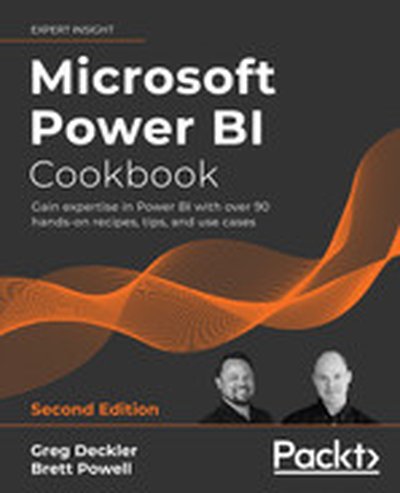
Microsoft Power BI Cookbook - Second Edition

"Microsoft Power BI Cookbook" is an advanced reference for professionals working with Power BI. Featuring over 90 practical, hands-on recipes, this book allows you to master Power BI for data modeling, creating dashboards, and optimizing queries. You will learn practical tips and techniques, enabling you to create effective and customized Power BI solutions for various business needs. What this Book will help me do Master advanced data cleansing and integration techniques in Power BI's Power Query Editor. Develop intuitive, efficient dashboards and reports using best practices for data visualization. Optimize performance for large datasets using aggregation tables and efficient query techniques. Implement sophisticated analysis and business logic using the power of DAX programming language. Deploy and manage Power BI solutions leveraging integration with Microsoft ecosystem tools. Author(s) Greg Deckler and None Powell are seasoned Power BI experts with extensive backgrounds in business intelligence and data solutions. Greg is a recognized Power BI consultant and author with a focus on delivering impactful BI solutions. None brings their experience in utilizing Power BI for diverse organizational needs. Together, they emphasize hands-on learning and actionable insights in their collaborative writing. Who is it for? This book is aimed at business intelligence professionals who already have a basic understanding of Power BI. Ideal readers are those seeking to deepen their knowledge of advanced features and apply best practices in their projects. Whether you're enhancing your existing Power BI skills or managing complex datasets, this book will provide the techniques and insights to excel in your role.

This week we are joined by AoF alumni, David Dadoun to talk about data lakes, data oceans, data puddles, and data platforms, and why so many are confused about the topic. David is a leader, professor, global speaker, and recently transitioned to an exciting new role as Head of Enterprise Data and BI at BRP in Canada.  If you feel unsure about the definition of a data lake vs a data platform, you're not alone. The concept continues to evolve, to where we are today which is a data platform. As the owner and creators of multiple data platforms, David shared breaks down the key steps to transform your data lake into a data platform. Whether you're migrating to a more sophisticated data cloud or building a platform from scratch, the rapid pace of change means there's always something new to be learned. Tune in today for this fascinating conversation on how to master your data platform!   In this episode, you'll learn: [0:07:35] What the 'data lake' was and how it has evolved over time. [0:08:35] What is a data fake and how data lakes have evolved into data platforms. [0:12:51] Who needs to own the data platforms and who it's for. [0:14:41] How to run a data platform depending on the size and structure of your organization. [0:16:05] The different ways that companies can structure their data platform(s). [0:18:02] Why data literacy is crucial for any company with a data culture and how data lakes form part of the core strategy. [0:21:03] How to balance analytics and data goals within your company and teams. [0:24:20] The important steps a company can take towards creating a data lake. [0:28:13] Why it's necessary to be mindful of the rapid rate of change within data and how it will affect your data platforms. For full show notes, and the links mentioned visit: https://bibrainz.com/podcast/83   Enjoyed the Show?  Please leave us a review on iTunes.

Summary Python has beome the de facto language for working with data. That has brought with it a number of challenges having to do with the speed and scalability of working with large volumes of information.There have been many projects and strategies for overcoming these challenges, each with their own set of tradeoffs. In this episode Ehsan Totoni explains how he built the Bodo project to bring the speed and processing power of HPC techniques to the Python data ecosystem without requiring any re-work.

Announcements

Hello and welcome to the Data Engineering Podcast, the show about modern data management When you’re ready to build your next pipeline, or want to test out the projects you hear about on the show, you’ll need somewhere to deploy it, so check out our friends at Linode. With their managed Kubernetes platform it’s now even easier to deploy and scale your workflows, or try out the latest Helm charts from tools like Pulsar and Pachyderm. With simple pricing, fast networking, object storage, and worldwide data centers, you’ve got everything you need to run a bulletproof data platform. Go to dataengineeringpodcast.com/linode today and get a $100 credit to try out a Kubernetes cluster of your own. And don’t forget to thank them for their continued support of this show! Atlan is a collaborative workspace for data-driven teams, like Github for engineering or Figma for design teams. By acting as a virtual hub for data assets ranging from tables and dashboards to SQL snippets & code, Atlan enables teams to create a single source of truth for all their data assets, and collaborate across the modern data stack through deep integrations with tools like Snowflake, Slack, Looker and more. Go to dataengineeringpodcast.com/atlan today and sign up for a free trial. If you’re a data engineering podcast listener, you get credits worth $3000 on an annual subscription Struggling with broken pipelines? Stale dashboards? Missing data? If this resonates with you, you’re not alone. Data engineers struggling with unreliable data need look no further than Monte Carlo, the world’s first end-to-end, fully automated Data Observability Platform! In the same way that application performance monitoring ensures reliable software and keeps application downtime at bay, Monte Carlo solves the costly problem of broken data pipelines. Monte Carlo monitors and alerts for data issues across your data warehouses, data lakes, ETL, and business intelligence, reducing time to detection and resolution from weeks or days to just minutes. Start trusting your data with Monte Carlo today! Visit dataengineeringpodcast.com/impact today to save your spot at IMPACT: The Data Observability Summit a half-day virtual event featuring the first U.S. Chief Data Scientist, founder of the Data Mesh, Creator of Apache Airflow, and more data pioneers spearheading some of the biggest movements in data. The first 50 to RSVP with this link will be entered to win an Oculus Quest 2 — Advanced All-In-One Virtual Reality Headset. RSVP today – you don’t want to miss it! Your host is Tobias Macey and today I’m interviewing Ehsan Totoni about Bodo, a system for automatically optimizing and parallelizing python code for massively parallel data processing and analytics

Interview

Introduction How did you get involved in the area of data management? Can you describe what Bodo is and the story behind it? What are the techniques/technologies that teams might use to optimize or scale out their data processing workflows? Why have you focused your efforts on the Python language and toolchain?

Do you see any potential for expanding into other language communities? What are the shortcomings of projects such as Dask and Ray for scaling out Python data projects?

Many people are familiar with the principle of HPC architectures, but can you share an overview of the current state of the art for HPC?

What are the tradeoffs of HPC vs scale-out distributed systems?

Can you d

Summary Biology has been gaining a lot of attention in recent years, even before the pandemic. As an outgrowth of that popularity, a new field has grown up that pairs statistics and compuational analysis with scientific research, namely bioinformatics. This brings with it a unique set of challenges for data collection, data management, and analytical capabilities. In this episode Jillian Rowe shares her experience of working in the field and supporting teams of scientists and analysts with the data infrastructure that they need to get their work done. This is a fascinating exploration of the collaboration between data professionals and scientists.

Announcements

Hello and welcome to the Data Engineering Podcast, the show about modern data management When you’re ready to build your next pipeline, or want to test out the projects you hear about on the show, you’ll need somewhere to deploy it, so check out our friends at Linode. With their managed Kubernetes platform it’s now even easier to deploy and scale your workflows, or try out the latest Helm charts from tools like Pulsar and Pachyderm. With simple pricing, fast networking, object storage, and worldwide data centers, you’ve got everything you need to run a bulletproof data platform. Go to dataengineeringpodcast.com/linode today and get a $100 credit to try out a Kubernetes cluster of your own. And don’t forget to thank them for their continued support of this show! Atlan is a collaborative workspace for data-driven teams, like Github for engineering or Figma for design teams. By acting as a virtual hub for data assets ranging from tables and dashboards to SQL snippets & code, Atlan enables teams to create a single source of truth for all their data assets, and collaborate across the modern data stack through deep integrations with tools like Snowflake, Slack, Looker and more. Go to dataengineeringpodcast.com/atlan today and sign up for a free trial. If you’re a data engineering podcast listener, you get credits worth $3000 on an annual subscription Struggling with broken pipelines? Stale dashboards? Missing data? If this resonates with you, you’re not alone. Data engineers struggling with unreliable data need look no further than Monte Carlo, the world’s first end-to-end, fully automated Data Observability Platform! In the same way that application performance monitoring ensures reliable software and keeps application downtime at bay, Monte Carlo solves the costly problem of broken data pipelines. Monte Carlo monitors and alerts for data issues across your data warehouses, data lakes, ETL, and business intelligence, reducing time to detection and resolution from weeks or days to just minutes. Start trusting your data with Monte Carlo today! Visit dataengineeringpodcast.com/impact today to save your spot at IMPACT: The Data Observability Summit a half-day virtual event featuring the first U.S. Chief Data Scientist, founder of the Data Mesh, Creator of Apache Airflow, and more data pioneers spearheading some of the biggest movements in data. The first 50 to RSVP with this link will be entered to win an Oculus Quest 2 — Advanced All-In-One Virtual Reality Headset. RSVP today – you don’t want to miss it! Your host is Tobias Macey and today I’m interviewing Jillian Rowe about data engineering practices for bioinformatics projects

Interview

Introduction How did you get involved in the area of data management? How did you get into the field of bioinformatics? Can you describe what is unique about data needs in bioinformatics? What are some of the problems that you have found yourself regularly solving for your clients? When building data engineering stacks for bioinformatics, what are the attributes that you are optimizing for? (e.g. speed, UX, scale, correctness, etc.) Can you describe a typical set of technologies that you implement when working on a new project?

What kinds of systems do you need to integrate with?

What are the data formats that ar

Ryan Wade joins us on AOF today to talk about how to use advanced analytics in your organization! Ryan has been in the analytics game for the last 20 years and is now a Senior Solution Consultant at Blue Granite, based in Indianapolis, Indiana. He recently authored the amazing must-read book, Advanced Analytics in Power BI with R and Python, and in today's chat, we get to hear all about why he wrote the book, who it is for and how you can use it to accelerate your data journey! I met Ryan while speaking at a few conferences and was always impressed with his knowledge and great sense of humor! A professional football player turned data scientist, Ryan has a passion for breaking down advanced analytics in a way anyone can understand. Whether you're already using advanced analytics or researching how to get started Ryan's knowledge on the topic will help you. Tune in with a pencil and paper in hand!   In this episode, you'll learn: [0:09:22] The rise of the R and Python programming languages in the data world. [0:16:44] The necessary, well-thought-out preparatory steps for a project utilizing advanced analytics. [0:19:39] Why attention-grabbing visuals are not the most important part of data storytelling! [0:23:13] Creating a sufficient team for data analytics and the vital roles of the database administrator, active directory administrator, and more! [0:39:07] Client conversations around shortcomings and hurdles in advanced analytics.  For full show notes, and the links mentioned visit: https://bibrainz.com/podcast/82   Enjoyed the Show?  Please leave us a review on iTunes.

Summary The term "data platform" gets thrown around a lot, but have you stopped to think about what it actually means for you and your organization? In this episode Lior Gavish, Lior Solomon, and Atul Gupte share their view of what it means to have a data platform, discuss their experiences building them at various companies, and provide advice on how to treat them like a software product. This is a valuable conversation about how to approach the work of selecting the tools that you use to power your data systems and considerations for how they can be woven together for a unified experience across your various stakeholders.

Announcements

Hello and welcome to the Data Engineering Podcast, the show about modern data management When you’re ready to build your next pipeline, or want to test out the projects you hear about on the show, you’ll need somewhere to deploy it, so check out our friends at Linode. With their managed Kubernetes platform it’s now even easier to deploy and scale your workflows, or try out the latest Helm charts from tools like Pulsar and Pachyderm. With simple pricing, fast networking, object storage, and worldwide data centers, you’ve got everything you need to run a bulletproof data platform. Go to dataengineeringpodcast.com/linode today and get a $100 credit to try out a Kubernetes cluster of your own. And don’t forget to thank them for their continued support of this show! Are you bored with writing scripts to move data into SaaS tools like Salesforce, Marketo, or Facebook Ads? Hightouch is the easiest way to sync data into the platforms that your business teams rely on. The data you’re looking for is already in your data warehouse and BI tools. Connect your warehouse to Hightouch, paste a SQL query, and use their visual mapper to specify how data should appear in your SaaS systems. No more scripts, just SQL. Supercharge your business teams with customer data using Hightouch for Reverse ETL today. Get started for free at dataengineeringpodcast.com/hightouch. Atlan is a collaborative workspace for data-driven teams, like Github for engineering or Figma for design teams. By acting as a virtual hub for data assets ranging from tables and dashboards to SQL snippets & code, Atlan enables teams to create a single source of truth for all their data assets, and collaborate across the modern data stack through deep integrations with tools like Snowflake, Slack, Looker and more. Go to dataengineeringpodcast.com/atlan today and sign up for a free trial. If you’re a data engineering podcast listener, you get credits worth $3000 on an annual subscription Your host is Tobias Macey and today I’m interviewing Lior Gavish, Lior Solomon, and Atul Gupte about the technical, social, and architectural aspects of building your data platform as a product for your internal customers

Interview

Introduction How did you get involved in the area of data management? – all Can we start by establishing a definition of "data platform" for the purpose of this conversation? Who are the stakeholders in a data platform?

Where does the responsibility lie for creating and maintaining ("owning") the platform?

What are some of the technical and organizational constraints that are likely to factor into the design and execution of the platform? What are the minimum set of requirements necessary to qualify as a platform? (as opposed to a collection of discrete components)

What are the additional capabilities that should be in place to simplify the use and maintenance of the platform?

How are data platforms managed? Are they managed by technical teams, product managers, etc.? What is the profile for a data product manager? – Atul G. How do you set SLIs / SLOs with your data platform team when you don’t have clear metrics you’re tracking? – Lior S. There has been a lot of conversation recently about different interpretations of the "modern data stack". For a team who is just starting to build out their platform, h

Data Analytics Made Easy

By reading "Data Analytics Made Easy," you'll gain a solid understanding of data analysis and visualization without requiring coding skills. This book emphasizes practical knowledge and use cases, covering storytelling, automation, machine learning, and business dashboards with tools like KNIME and Power BI. What this Book will help me do Understand the fundamentals of data analytics and how to leverage data for business insights. Create and automate data workflows using the no-code KNIME Analytics Platform. Develop interactive dashboards and data visualizations with Microsoft Power BI. Learn the basics of machine learning and how to apply models for business use. Enhance presentations and influence decisions through effective data storytelling. Author(s) None De Mauro is an experienced author and professional in the field of data analytics. Passionate about making complex topics approachable, None specializes in explaining technical concepts in simpler terms, ensuring readers can easily grasp and apply them in their work. Who is it for? This book is perfect for professionals or beginners who want to work with and interpret data effectively. Ideal for individuals in business roles or management positions looking to enhance their skills in data analytics and build a foundational understanding of machine learning and visualization.

IBM DS8900F Product Guide Release 9.2

This IBM® Redbooks Product Guide provides an overview of the features and functions that are available with the IBM DS8900F models that run microcode Release 9.2 (Bundle 89.20 / Licensed Machine Code 7.9.20). As of August 2021, the DS8900F with DS8000 Release 9.2 is the latest addition. The DS8900F is an all-flash system exclusively, and it offers three classes: IBM DS8980F: Analytic Class: The DS8980F Analytic Class offers best performance for organizations that want to expand their workload possibilities to artificial intelligence (AI), Business Intelligence, and Machine Learning. IBM DS8950F: Agility Class: The agility class is efficiently designed to consolidate all your mission-critical workloads for IBM Z, IBM LinuxONE, IBM Power Systems, and distributed environments under a single all-flash storage solution.. IBM DS8910F: Flexibility Class: The flexibility class delivers significant performance for midrange organizations that are looking to meet storage challenges with advanced functionality delivered as a single rack solution.

Summary The reason that so much time and energy is spent on data integration is because of how our applications are designed. By making the software be the owner of the data that it generates, we have to go through the trouble of extracting the information to then be used elsewhere. The team at Cinchy are working to bring about a new paradigm of software architecture that puts the data as the central element. In this episode Dan DeMers, Cinchy’s CEO, explains how their concept of a "Dataware" platform eliminates the need for costly and error prone integration processes and the benefits that it can provide for transactional and analytical application design. This is a fascinating and unconventional approach to working with data, so definitely give this a listen to expand your thinking about how to build your systems.

Announcements

Hello and welcome to the Data Engineering Podcast, the show about modern data management When you’re ready to build your next pipeline, or want to test out the projects you hear about on the show, you’ll need somewhere to deploy it, so check out our friends at Linode. With their managed Kubernetes platform it’s now even easier to deploy and scale your workflows, or try out the latest Helm charts from tools like Pulsar and Pachyderm. With simple pricing, fast networking, object storage, and worldwide data centers, you’ve got everything you need to run a bulletproof data platform. Go to dataengineeringpodcast.com/linode today and get a $100 credit to try out a Kubernetes cluster of your own. And don’t forget to thank them for their continued support of this show! Are you bored with writing scripts to move data into SaaS tools like Salesforce, Marketo, or Facebook Ads? Hightouch is the easiest way to sync data into the platforms that your business teams rely on. The data you’re looking for is already in your data warehouse and BI tools. Connect your warehouse to Hightouch, paste a SQL query, and use their visual mapper to specify how data should appear in your SaaS systems. No more scripts, just SQL. Supercharge your business teams with customer data using Hightouch for Reverse ETL today. Get started for free at dataengineeringpodcast.com/hightouch. Have you ever had to develop ad-hoc solutions for security, privacy, and compliance requirements? Are you spending too much of your engineering resources on creating database views, configuring database permissions, and manually granting and revoking access to sensitive data? Satori has built the first DataSecOps Platform that streamlines data access and security. Satori’s DataSecOps automates data access controls, permissions, and masking for all major data platforms such as Snowflake, Redshift and SQL Server and even delegates data access management to business users, helping you move your organization from default data access to need-to-know access. Go to dataengineeringpodcast.com/satori today and get a $5K credit for your next Satori subscription. Your host is Tobias Macey and today I’m interviewing Dan DeMers about Cinchy, a dataware platform aiming to simplify the work of data integration by eliminating ETL/ELT

Interview

Introduction How did you get involved in the area of data management? Can you describe what Cinchy is and the story behind it? In your experience working in data and building complex enterprise-grade systems, what are the shortcomings and negative externalities of an ETL/ELT approach to data integration? How is a Dataware platform from a data lake or data warehouses? What is it used for? What is Zero-Copy Integration? How does that work? Can you describe how customers start their Cinchy journey? What are the main use case patterns that you’re seeing with Dataware? Your platform offers unlimited users, including business users. What are some of the challenges that you face in building a user experience that doesn’t become overwhelming as an organization scales the number of data sources and processing flows? Wh

Summary Data lakes have been gaining popularity alongside an increase in their sophistication and usability. Despite improvements in performance and data architecture they still require significant knowledge and experience to deploy and manage. In this episode Vikrant Dubey discusses his work on the Cuelake project which allows data analysts to build a lakehouse with SQL queries. By building on top of Zeppelin, Spark, and Iceberg he and his team at Cuebook have built an autoscaled cloud native system that abstracts the underlying complexity.

Announcements

Hello and welcome to the Data Engineering Podcast, the show about modern data management When you’re ready to build your next pipeline, or want to test out the projects you hear about on the show, you’ll need somewhere to deploy it, so check out our friends at Linode. With their managed Kubernetes platform it’s now even easier to deploy and scale your workflows, or try out the latest Helm charts from tools like Pulsar and Pachyderm. With simple pricing, fast networking, object storage, and worldwide data centers, you’ve got everything you need to run a bulletproof data platform. Go to dataengineeringpodcast.com/linode today and get a $100 credit to try out a Kubernetes cluster of your own. And don’t forget to thank them for their continued support of this show! Are you bored with writing scripts to move data into SaaS tools like Salesforce, Marketo, or Facebook Ads? Hightouch is the easiest way to sync data into the platforms that your business teams rely on. The data you’re looking for is already in your data warehouse and BI tools. Connect your warehouse to Hightouch, paste a SQL query, and use their visual mapper to specify how data should appear in your SaaS systems. No more scripts, just SQL. Supercharge your business teams with customer data using Hightouch for Reverse ETL today. Get started for free at dataengineeringpodcast.com/hightouch. Have you ever had to develop ad-hoc solutions for security, privacy, and compliance requirements? Are you spending too much of your engineering resources on creating database views, configuring database permissions, and manually granting and revoking access to sensitive data? Satori has built the first DataSecOps Platform that streamlines data access and security. Satori’s DataSecOps automates data access controls, permissions, and masking for all major data platforms such as Snowflake, Redshift and SQL Server and even delegates data access management to business users, helping you move your organization from default data access to need-to-know access. Go to dataengineeringpodcast.com/satori today and get a $5K credit for your next Satori subscription. Your host is Tobias Macey and today I’m interviewing Vikrant Dubey about Cuebook and their Cuelake project for building ELT pipelines for your data lakehouse entirely in SQL

Interview

Introduction How did you get involved in the area of data management? Can you describe what Cuelake is and the story behind it? There are a number of platforms and projects for running SQL workloads and transformations on a data lake. What was lacking in those systems that you are addressing with Cuelake? Who are the target users of Cuelake and how has that influenced the features and design of the system? Can you describe how Cuelake is implemented?

What was your selection process for the various components?

What are some of the sharp edges that you have had to work around when integrating these components? What involved in getting Cuelake deployed? How are you using Cuelake in your work at Cuebook? Given your focus on machine learning for anomaly detection of business metrics, what are the challenges that you faced in using a data warehouse for those workloads?

What are the advantages that a data lake/lakehouse architecture maintains over a warehouse? What are the shortcomings of the lake/lakehouse approach that are solved by using a warehouse?

What are the most interesting, in

Data Modeling with SAP BW/4HANA 2.0: Implementing Agile Data Models Using Modern Modeling Concepts

Gain practical guidance for implementing data models on the SAP BW/4HANA platform using modern modeling concepts. You will walk through the various modeling scenarios such as exposing HANA tables and views through BW/4HANA, creating virtual and hybrid data models, and integrating SAP and non-SAP data into a single data model. Data Modeling with SAP BW/4HANA 2.0 gives you the skills you need to use the new SAP BW/HANA features and objects, covers modern modelling concepts, and equips you with the practical knowledge of how to use the best of the HANA and BW/4HANA worlds. What You Will Learn Discover the new modeling features in SAP BW/4HANA Combine SAP HANA and SAP BW/4HANA artifacts Leverage virtualization when designing and building data models Build hybrid data models combining InfoObject, OpenODS, and a field-based approach Integrate SAP and non-SAP data into single model Who This Book Is For BI consultants, architects, developers, and analysts working in the SAP BW/4HANA environment.

Summary The vast majority of data tools and platforms that you hear about are designed for working with structured, text-based data. What do you do when you need to manage unstructured information, or build a computer vision model? Activeloop was created for exactly that purpose. In this episode Davit Buniatyan, founder and CEO of Activeloop, explains why he is spending his time and energy on building a platform to simplify the work of getting your unstructured data ready for machine learning. He discusses the inefficiencies that teams run into from having to reprocess data multiple times, his work on the open source Hub library to solve this problem for everyone, and his thoughts on the vast potential that exists for using computer vision to solve hard and meaningful problems.

Announcements

Hello and welcome to the Data Engineering Podcast, the show about modern data management When you’re ready to build your next pipeline, or want to test out the projects you hear about on the show, you’ll need somewhere to deploy it, so check out our friends at Linode. With their managed Kubernetes platform it’s now even easier to deploy and scale your workflows, or try out the latest Helm charts from tools like Pulsar and Pachyderm. With simple pricing, fast networking, object storage, and worldwide data centers, you’ve got everything you need to run a bulletproof data platform. Go to dataengineeringpodcast.com/linode today and get a $100 credit to try out a Kubernetes cluster of your own. And don’t forget to thank them for their continued support of this show! Are you bored with writing scripts to move data into SaaS tools like Salesforce, Marketo, or Facebook Ads? Hightouch is the easiest way to sync data into the platforms that your business teams rely on. The data you’re looking for is already in your data warehouse and BI tools. Connect your warehouse to Hightouch, paste a SQL query, and use their visual mapper to specify how data should appear in your SaaS systems. No more scripts, just SQL. Supercharge your business teams with customer data using Hightouch for Reverse ETL today. Get started for free at dataengineeringpodcast.com/hightouch. Have you ever had to develop ad-hoc solutions for security, privacy, and compliance requirements? Are you spending too much of your engineering resources on creating database views, configuring database permissions, and manually granting and revoking access to sensitive data? Satori has built the first DataSecOps Platform that streamlines data access and security. Satori’s DataSecOps automates data access controls, permissions, and masking for all major data platforms such as Snowflake, Redshift and SQL Server and even delegates data access management to business users, helping you move your organization from default data access to need-to-know access. Go to dataengineeringpodcast.com/satori today and get a $5K credit for your next Satori subscription. Your host is Tobias Macey and today I’m interviewing Davit Buniatyan about Activeloop, a platform for hosting and delivering datasets optimized for machine learning

Interview

Introduction How did you get involved in the area of data management? Can you describe what Activeloop is and the story behind it? How does the form and function of data storage introduce friction in the development and deployment of machine learning projects? How does the work that you are doing at Activeloop compare to vector databases such as Pinecone? You have a focus on image oriented data and computer vision projects. How does the specific applications of ML/DL influence the format and interactions with the data? Can you describe how the Activeloop platform is architected?

How have the design and goals of the system changed or evolved since you began working on it?

What are the feature and performance tradeoffs between self-managed storage locations (e.g. S3, GCS) and the Activeloop platform? What is the process for sourcing, processing, and storing

Conheça as vagas do Grupo Boticário: https://bit.ly/GrupoBoticarioVagas

Como que o maior grupo de beleza do mundo utiliza dados no dia dia? Já imaginou o desafio de democratizar dados para milhares de pessoas de um grupo que existe a décadas? E como que AI e Machine Learning é aplicado na indústria da beleza? Isso e muito mais a gente conversa nesse papo sensacional com o pessoal do Grupo Boticário. Mariana Oliveira (Data Product Owner), Erika Cipriano (Analista de BI e Analytics) e Antonio Junior (Data Scientist) compartilham com a gente um pouco do dia a dia deles nesse papo bem descontraído.

Acesse nosso post do Medium pra ter acesso as referências do episódio: https://medium.com/data-hackers/trabalhando-com-dados-no-grupo-botic%C3%A1rio-data-hackers-podcast-43-9279a6e73815

Summary Every organization needs to be able to use data to answer questions about their business. The trouble is that the data is usually spread across a wide and shifting array of systems, from databases to dashboards. The other challenge is that even if you do find the information you are seeking, there might not be enough context available to determine how to use it or what it means. Castor is building a data discovery platform aimed at solving this problem, allowing you to search for and document details about everything from a database column to a business intelligence dashboard. In this episode CTO Amaury Dumoulin shares his perspective on the complexity of letting everyone in the company find answers to their questions and how Castor is designed to help.

Announcements

Hello and welcome to the Data Engineering Podcast, the show about modern data management You listen to this show to learn about all of the latest tools, patterns, and practices that power data engineering projects across every domain. Now there’s a book that captures the foundational lessons and principles that underly everything that you hear about here. I’m happy to announce I collected wisdom from the community to help you in your journey as a data engineer and worked with O’Reilly to publish it as 97 Things Every Data Engineer Should Know. Go to dataengineeringpodcast.com/97things today to get your copy! When you’re ready to build your next pipeline, or want to test out the projects you hear about on the show, you’ll need somewhere to deploy it, so check out our friends at Linode. With their managed Kubernetes platform it’s now even easier to deploy and scale your workflows, or try out the latest Helm charts from tools like Pulsar and Pachyderm. With simple pricing, fast networking, object storage, and worldwide data centers, you’ve got everything you need to run a bulletproof data platform. Go to dataengineeringpodcast.com/linode today and get a $100 credit to try out a Kubernetes cluster of your own. And don’t forget to thank them for their continued support of this show! Are you bored with writing scripts to move data into SaaS tools like Salesforce, Marketo, or Facebook Ads? Hightouch is the easiest way to sync data into the platforms that your business teams rely on. The data you’re looking for is already in your data warehouse and BI tools. Connect your warehouse to Hightouch, paste a SQL query, and use their visual mapper to specify how data should appear in your SaaS systems. No more scripts, just SQL. Supercharge your business teams with customer data using Hightouch for Reverse ETL today. Get started for free at dataengineeringpodcast.com/hightouch. Have you ever had to develop ad-hoc solutions for security, privacy, and compliance requirements? Are you spending too much of your engineering resources on creating database views, configuring database permissions, and manually granting and revoking access to sensitive data? Satori has built the first DataSecOps Platform that streamlines data access and security. Satori’s DataSecOps automates data access controls, permissions, and masking for all major data platforms such as Snowflake, Redshift and SQL Server and even delegates data access management to business users, helping you move your organization from default data access to need-to-know access. Go to dataengineeringpodcast.com/satori today and get a $5K credit for your next Satori subscription. Your host is Tobias Macey and today I’m interviewing Amaury Dumoulin about Castor, a managed platform for easy data cataloging and discovery

Interview

Introduction How did you get involved in the area of data management? Can you describe what Castor is and the story behind it? The market for data catalogues is nascent but growing fast. What are the broad categories for the different products and projects in the space? What do you see as the core features that are required to be competitive?

In what ways has that changed in

Summary Companies of all sizes and industries are trying to use the data that they and their customers generate to survive and thrive in the modern economy. As a result, they are relying on a constantly growing number of data sources being accessed by an increasingly varied set of users. In order to help data consumers find and understand the data is available, and help the data producers understand how to prioritize their work, SelectStar has built a data discovery platform that brings everyone together. In this episode Shinji Kim shares her experience as a data professional struggling to collaborate with her colleagues and how that led her to founding a company to address that problem. She also discusses the combination of technical and social challenges that need to be solved for everyone to gain context and comprehension around their most valuable asset.

Announcements

Hello and welcome to the Data Engineering Podcast, the show about modern data management You listen to this show to learn about all of the latest tools, patterns, and practices that power data engineering projects across every domain. Now there’s a book that captures the foundational lessons and principles that underly everything that you hear about here. I’m happy to announce I collected wisdom from the community to help you in your journey as a data engineer and worked with O’Reilly to publish it as 97 Things Every Data Engineer Should Know. Go to dataengineeringpodcast.com/97things today to get your copy! When you’re ready to build your next pipeline, or want to test out the projects you hear about on the show, you’ll need somewhere to deploy it, so check out our friends at Linode. With their managed Kubernetes platform it’s now even easier to deploy and scale your workflows, or try out the latest Helm charts from tools like Pulsar and Pachyderm. With simple pricing, fast networking, object storage, and worldwide data centers, you’ve got everything you need to run a bulletproof data platform. Go to dataengineeringpodcast.com/linode today and get a $100 credit to try out a Kubernetes cluster of your own. And don’t forget to thank them for their continued support of this show! Are you bored with writing scripts to move data into SaaS tools like Salesforce, Marketo, or Facebook Ads? Hightouch is the easiest way to sync data into the platforms that your business teams rely on. The data you’re looking for is already in your data warehouse and BI tools. Connect your warehouse to Hightouch, paste a SQL query, and use their visual mapper to specify how data should appear in your SaaS systems. No more scripts, just SQL. Supercharge your business teams with customer data using Hightouch for Reverse ETL today. Get started for free at dataengineeringpodcast.com/hightouch. Atlan is a collaborative workspace for data-driven teams, like Github for engineering or Figma for design teams. By acting as a virtual hub for data assets ranging from tables and dashboards to SQL snippets & code, Atlan enables teams to create a single source of truth for all their data assets, and collaborate across the modern data stack through deep integrations with tools like Snowflake, Slack, Looker and more. Go to dataengineeringpodcast.com/atlan today and sign up for a free trial. If you’re a data engineering podcast listener, you get credits worth $3000 on an annual subscription Your host is Tobias Macey and today I’m interviewing Shinji Kim about SelectStar, an intelligent data discovery platform that helps you understand your data

Interview

Introduction How did you get involved in the area of data management? Can you describe what SelectStar is and the story behind it? What are the core challenges that organizations are facing around data cataloging and discovery? There has been a surge in tools and services for metadata collection, data catalogs, and data collaboration. How would you characterize the current state of the ecosystem?

What is SelectStar’s role in

Data Modeling for Azure Data Services

Data Modeling for Azure Data Services is an essential guide that delves into the intricacies of designing, provisioning, and implementing robust data solutions within the Azure ecosystem. Through practical examples and hands-on exercises, this book equips you with the knowledge to create scalable, performant, and adaptable database designs tailored to your business needs. What this Book will help me do Understand and apply normalization, dimensional modeling, and data vault modeling for relational databases. Learn to provision and implement scalable solutions like Azure SQL DB and Azure Synapse SQL Pool. Master how to design and model a Data Lake using Azure Storage efficiently. Gain expertise in NoSQL database modeling and implementing solutions using Azure Cosmos DB. Develop ETL/ELT processes effectively using Azure Data Factory to support data integration workflows. Author(s) None Braake brings a wealth of expertise as a data architect and cloud solutions builder specializing in Azure's data services. With hands-on experience in projects requiring sophisticated data modeling and optimization, None crafts detailed learning material to help professionals level up their database design and Azure deployment skills. Dedicated to explaining complex topics with clarity and approachable language, None ensures that the learners gain not just knowledge but applied competence. Who is it for? This book is a valuable resource for business intelligence developers, data architects, and consultants aiming to refine their skills in data modeling within modern cloud ecosystems, particularly Microsoft Azure. Whether you're a beginner with some foundational cloud data management knowledge or an experienced professional seeking to deepen your Azure data services proficiency, this book caters to your learning needs.

Summary Collecting and cleaning data is only useful if someone can make sense of it afterward. The latest evolution in the data ecosystem is the introduction of a dedicated metrics layer to help address the challenge of adding context and semantics to raw information. In this episode Nick Handel shares the story behind Transform, a new platform that provides a managed metrics layer for your data platform. He explains the challenges that occur when metrics are maintained across a variety of systems, the benefits of unifying them in a common access layer, and the potential that it unlocks for everyone in the business to confidently answer questions with data.

Announcements

Hello and welcome to the Data Engineering Podcast, the show about modern data management You listen to this show to learn about all of the latest tools, patterns, and practices that power data engineering projects across every domain. Now there’s a book that captures the foundational lessons and principles that underly everything that you hear about here. I’m happy to announce I collected wisdom from the community to help you in your journey as a data engineer and worked with O’Reilly to publish it as 97 Things Every Data Engineer Should Know. Go to dataengineeringpodcast.com/97things today to get your copy! When you’re ready to build your next pipeline, or want to test out the projects you hear about on the show, you’ll need somewhere to deploy it, so check out our friends at Linode. With their managed Kubernetes platform it’s now even easier to deploy and scale your workflows, or try out the latest Helm charts from tools like Pulsar and Pachyderm. With simple pricing, fast networking, object storage, and worldwide data centers, you’ve got everything you need to run a bulletproof data platform. Go to dataengineeringpodcast.com/linode today and get a $100 credit to try out a Kubernetes cluster of your own. And don’t forget to thank them for their continued support of this show! Are you bored with writing scripts to move data into SaaS tools like Salesforce, Marketo, or Facebook Ads? Hightouch is the easiest way to sync data into the platforms that your business teams rely on. The data you’re looking for is already in your data warehouse and BI tools. Connect your warehouse to Hightouch, paste a SQL query, and use their visual mapper to specify how data should appear in your SaaS systems. No more scripts, just SQL. Supercharge your business teams with customer data using Hightouch for Reverse ETL today. Get started for free at dataengineeringpodcast.com/hightouch. Atlan is a collaborative workspace for data-driven teams, like Github for engineering or Figma for design teams. By acting as a virtual hub for data assets ranging from tables and dashboards to SQL snippets & code, Atlan enables teams to create a single source of truth for all their data assets, and collaborate across the modern data stack through deep integrations with tools like Snowflake, Slack, Looker and more. Go to dataengineeringpodcast.com/atlan today and sign up for a free trial. If you’re a data engineering podcast listener, you get credits worth $3000 on an annual subscription Your host is Tobias Macey and today I’m interviewing Nick Handel about Transform, a platform providing a dedicated metrics layer for your data stack

Interview

Introduction How did you get involved in the area of data management? Can you describe what Transform is and the story behind it? How do you define the concept of a "metric" in the context of the data platform? What are the general strategies in the industry for creating, managing, and consuming metrics?

How has that been changing in the past couple of years?

What is driving that shift?

What are the main goals that you have for the Transform platform?

Who are the target users? How does that focus influence your approach to the design of the platform?

How is the Transform platform architected?

What are the core capabilities tha