talk-data.com talk-data.com

Topic

BI

Business Intelligence (BI)

data_visualization reporting analytics

1211

tagged

Activity Trend

111 peak/qtr
2020-Q1 2026-Q1

Activities

1211 activities · Newest first

Summary There is a wealth of tools and systems available for processing data, but the user experience of integrating them and building workflows is still lacking. This is particularly important in large and complex organizations where domain knowledge and context is paramount and there may not be access to engineers for codifying that expertise. Raj Bains founded Prophecy to address this need by creating a UI first platform for building and executing data engineering workflows that orchestrates Airflow and Spark. Rather than locking your business logic into a proprietary storage layer and only exposing it through a drag-and-drop editor Prophecy synchronizes all of your jobs with source control, allowing an easy bi-directional interaction between code first and no-code experiences. In this episode he shares his motivations for creating Prophecy, how he is leveraging the magic of compilers to translate between UI and code oriented representations of logic, and the organizational benefits of having a cohesive experience designed to bring business users and domain experts into the same platform as data engineers and analysts.

Announcements

Hello and welcome to the Data Engineering Podcast, the show about modern data management You listen to this show to learn about all of the latest tools, patterns, and practices that power data engineering projects across every domain. Now there’s a book that captures the foundational lessons and principles that underly everything that you hear about here. I’m happy to announce I collected wisdom from the community to help you in your journey as a data engineer and worked with O’Reilly to publish it as 97 Things Every Data Engineer Should Know. Go to dataengineeringpodcast.com/97things today to get your copy! When you’re ready to build your next pipeline, or want to test out the projects you hear about on the show, you’ll need somewhere to deploy it, so check out our friends at Linode. With their managed Kubernetes platform it’s now even easier to deploy and scale your workflows, or try out the latest Helm charts from tools like Pulsar and Pachyderm. With simple pricing, fast networking, object storage, and worldwide data centers, you’ve got everything you need to run a bulletproof data platform. Go to dataengineeringpodcast.com/linode today and get a $100 credit to try out a Kubernetes cluster of your own. And don’t forget to thank them for their continued support of this show! Are you bored with writing scripts to move data into SaaS tools like Salesforce, Marketo, or Facebook Ads? Hightouch is the easiest way to sync data into the platforms that your business teams rely on. The data you’re looking for is already in your data warehouse and BI tools. Connect your warehouse to Hightouch, paste a SQL query, and use their visual mapper to specify how data should appear in your SaaS systems. No more scripts, just SQL. Supercharge your business teams with customer data using Hightouch for Reverse ETL today. Get started for free at dataengineeringpodcast.com/hightouch. Atlan is a collaborative workspace for data-driven teams, like Github for engineering or Figma for design teams. By acting as a virtual hub for data assets ranging from tables and dashboards to SQL snippets & code, Atlan enables teams to create a single source of truth for all their data assets, and collaborate across the modern data stack through deep integrations with tools like Snowflake, Slack, Looker and more. Go to dataengineeringpodcast.com/atlan today and sign up for a free trial. If you’re a data engineering podcast listener, you get credits worth $3000 on an annual subscription Your host is Tobias Macey and today I’m interviewing Raj Bains about Prophecy, a low-code data engineering platform built on Spark and Airflow

Interview

Introduction How did you get involved in the area of data management? Can you describe what you are building at Prophecy and the story behind it? There are a huge number of too

Advanced Analytics with Transact-SQL: Exploring Hidden Patterns and Rules in Your Data

Learn about business intelligence (BI) features in T-SQL and how they can help you with data science and analytics efforts without the need to bring in other languages such as R and Python. This book shows you how to compute statistical measures using your existing skills in T-SQL. You will learn how to calculate descriptive statistics, including centers, spreads, skewness, and kurtosis of distributions. You will also learn to find associations between pairs of variables, including calculating linear regression formulas and confidence levels with definite integration. No analysis is good without data quality. Advanced Analytics with Transact-SQL introduces data quality issues and shows you how to check for completeness and accuracy, and measure improvements in data quality over time. The book also explains how to optimize queries involving temporal data, such as when you search for overlapping intervals. More advanced time-oriented information in the book includes hazard and survival analysis. Forecasting with exponential moving averages and autoregression is covered as well. Every web/retail shop wants to know the products customers tend to buy together. Trying to predict the target discrete or continuous variable with few input variables is important for practically every type of business. This book helps you understand data science and the advanced algorithms use to analyze data, and terms such as data mining, machine learning, and text mining. Key to many of the solutions in this book are T-SQL window functions. Author Dejan Sarka demonstrates efficient statistical queries that are based on window functions and optimized through algorithms built using mathematical knowledge and creativity. The formulas and usage of those statistical procedures are explained so you can understand and modify the techniques presented. T-SQL is supported in SQL Server,Azure SQL Database, and in Azure Synapse Analytics. There are so many BI features in T-SQL that it might become your primary analytic database language. If you want to learn how to get information from your data with the T-SQL language that you already are familiar with, then this is the book for you. What You Will Learn Describe distribution of variables with statistical measures Find associations between pairs of variables Evaluate the quality of the data you are analyzing Perform time-series analysis on your data Forecast values of a continuous variable Perform market-basket analysis to predict customer purchasing patterns Predict target variable outcomes from one or more input variables Categorize passages of text by extracting and analyzing keywords Who This Book Is For Database developers and database administrators who want to translate their T-SQL skills into the world of business intelligence (BI) and data science. For readers who want to analyze large amounts of data efficiently by using their existing knowledge of T-SQL and Microsoft’s various database platforms such as SQL Server and Azure SQL Database. Also for readers who want to improve their querying by learning new and original optimization techniques.

Data Lakes For Dummies

Take a dive into data lakes “Data lakes” is the latest buzz word in the world of data storage, management, and analysis. Data Lakes For Dummies decodes and demystifies the concept and helps you get a straightforward answer the question: “What exactly is a data lake and do I need one for my business?” Written for an audience of technology decision makers tasked with keeping up with the latest and greatest data options, this book provides the perfect introductory survey of these novel and growing features of the information landscape. It explains how they can help your business, what they can (and can’t) achieve, and what you need to do to create the lake that best suits your particular needs. With a minimum of jargon, prolific tech author and business intelligence consultant Alan Simon explains how data lakes differ from other data storage paradigms. Once you’ve got the background picture, he maps out ways you can add a data lake to your business systems; migrate existing information and switch on the fresh data supply; clean up the product; and open channels to the best intelligence software for to interpreting what you’ve stored. Understand and build data lake architecture Store, clean, and synchronize new and existing data Compare the best data lake vendors Structure raw data and produce usable analytics Whatever your business, data lakes are going to form ever more prominent parts of the information universe every business should have access to. Dive into this book to start exploring the deep competitive advantage they make possible—and make sure your business isn’t left standing on the shore.

Summary Every data project, whether it’s analytics, machine learning, or AI, starts with the work of data cleaning. This is a critical step and benefits from being accessible to the domain experts. Trifacta is a platform for managing your data engineering workflow to make curating, cleaning, and preparing your information more approachable for everyone in the business. In this episode CEO Adam Wilson shares the story behind the business, discusses the myriad ways that data wrangling is performed across the business, and how the platform is architected to adapt to the ever-changing landscape of data management tools. This is a great conversation about how deliberate user experience and platform design can make a drastic difference in the amount of value that a business can provide to their customers.

Announcements

Hello and welcome to the Data Engineering Podcast, the show about modern data management You listen to this show to learn about all of the latest tools, patterns, and practices that power data engineering projects across every domain. Now there’s a book that captures the foundational lessons and principles that underly everything that you hear about here. I’m happy to announce I collected wisdom from the community to help you in your journey as a data engineer and worked with O’Reilly to publish it as 97 Things Every Data Engineer Should Know. Go to dataengineeringpodcast.com/97things today to get your copy! When you’re ready to build your next pipeline, or want to test out the projects you hear about on the show, you’ll need somewhere to deploy it, so check out our friends at Linode. With their managed Kubernetes platform it’s now even easier to deploy and scale your workflows, or try out the latest Helm charts from tools like Pulsar and Pachyderm. With simple pricing, fast networking, object storage, and worldwide data centers, you’ve got everything you need to run a bulletproof data platform. Go to dataengineeringpodcast.com/linode today and get a $100 credit to try out a Kubernetes cluster of your own. And don’t forget to thank them for their continued support of this show! Are you bored with writing scripts to move data into SaaS tools like Salesforce, Marketo, or Facebook Ads? Hightouch is the easiest way to sync data into the platforms that your business teams rely on. The data you’re looking for is already in your data warehouse and BI tools. Connect your warehouse to Hightouch, paste a SQL query, and use their visual mapper to specify how data should appear in your SaaS systems. No more scripts, just SQL. Supercharge your business teams with customer data using Hightouch for Reverse ETL today. Get started for free at dataengineeringpodcast.com/hightouch. Atlan is a collaborative workspace for data-driven teams, like Github for engineering or Figma for design teams. By acting as a virtual hub for data assets ranging from tables and dashboards to SQL snippets & code, Atlan enables teams to create a single source of truth for all their data assets, and collaborate across the modern data stack through deep integrations with tools like Snowflake, Slack, Looker and more. Go to dataengineeringpodcast.com/atlan today and sign up for a free trial. If you’re a data engineering podcast listener, you get credits worth $3000 on an annual subscription Your host is Tobias Macey and today I’m interviewing Adam Wilson about Trifacta, a platform for modern data workers to assess quality, transform, and automate data pipelines

Interview

Introduction How did you get involved in the area of data management? Can you describe what Trifacta is and the story behind it? Across your site and material you focus on using the term "data wrangling". What is your personal definition of that term, and in what ways do you differentiate from ETL/ELT?

How does the deliberate use of that terminology influence the way that you think about the design and features of the Trifacta platform?

What is Trifacta’s role in the overall data platform/data lifecycle for an organization?

What are some examples of tools that Trifacta might replace? What tools or systems does Trifacta integrate with?

Who are the target end-users of the Trifacta platform and how do those personas direct the design and functionality? Can you describe how Trifacta is architected?

How have the goals and design of the system changed or evolved since you first began working on it?

Can you talk through the workflow and lifecycle of data as it traverses your platform, and the user interactions that drive it? How can data engineers share and encourage proper patterns for working with data assets with end-users across the organization? What are the limits of scale for volume and complexity of data assets that users are able to manage through Trifacta’s visual tools?

What are some strategies that you and your customers have found useful for pre-processing the information that enters your platform to increase the accessibility for end-users to self-serve?

What are the most interesting, innovative, or unexpected ways that you have seen Trifacta used? What are the most interesting, unexpected, or challenging lessons that you have learned while working on Trifacata? When is Trifacta the wrong choice? What do you have planned for the future of Trifacta?

Contact Info

LinkedIn @a_adam_wilson on Twitter

Parting Question

From your perspective, what is the biggest gap in the tooling or technology for data management today?

Closing Announcements

Thank you for listening! Don’t forget to check out our other show, Podcast.init to learn about the Python language, its community, and the innovative ways it is being used. Visit the site to subscribe to the show, sign up for the mailing list, and read the show notes. If you’ve learned something or tried out a project from the show then tell us about it! Email [email protected]) with your story. To help other people find the show please leave a review on iTunes and tell your friends and co-workers Join the community in the new Zulip chat workspace at dataengineeringpodcast.com/chat

Links

Trifacta Informatica UC Berkeley Stanford University Citadel

Podcast Episode

Stanford Data Wrangler DBT

Podcast Episode

Pig Databricks Sqoop Flume SPSS Tableau SDLC == Software Delivery Life-Cycle

The intro and outro music is from The Hug by The Freak Fandango Orchestra / CC BY-SA

Support Data Engineering Podcast

Summary Data integration in the form of extract and load is the critical first step of every data project. There are a large number of commercial and open source projects that offer that capability but it is still far from being a solved problem. One of the most promising community efforts is that of the Singer ecosystem, but it has been plagued by inconsistent quality and design of plugins. In this episode the members of the Meltano project share the work they are doing to improve the discovery, quality, and capabilities of Singer taps and targets. They explain their work on the Meltano Hub and the Singer SDK and their long term goals for the Singer community.

Announcements

Hello and welcome to the Data Engineering Podcast, the show about modern data management When you’re ready to build your next pipeline, or want to test out the projects you hear about on the show, you’ll need somewhere to deploy it, so check out our friends at Linode. With their managed Kubernetes platform it’s now even easier to deploy and scale your workflows, or try out the latest Helm charts from tools like Pulsar and Pachyderm. With simple pricing, fast networking, object storage, and worldwide data centers, you’ve got everything you need to run a bulletproof data platform. Go to dataengineeringpodcast.com/linode today and get a $100 credit to try out a Kubernetes cluster of your own. And don’t forget to thank them for their continued support of this show! Are you bored with writing scripts to move data into SaaS tools like Salesforce, Marketo, or Facebook Ads? Hightouch is the easiest way to sync data into the platforms that your business teams rely on. The data you’re looking for is already in your data warehouse and BI tools. Connect your warehouse to Hightouch, paste a SQL query, and use their visual mapper to specify how data should appear in your SaaS systems. No more scripts, just SQL. Supercharge your business teams with customer data using Hightouch for Reverse ETL today. Get started for free at dataengineeringpodcast.com/hightouch. Atlan is a collaborative workspace for data-driven teams, like Github for engineering or Figma for design teams. By acting as a virtual hub for data assets ranging from tables and dashboards to SQL snippets & code, Atlan enables teams to create a single source of truth for all their data assets, and collaborate across the modern data stack through deep integrations with tools like Snowflake, Slack, Looker and more. Go to dataengineeringpodcast.com/atlan today and sign up for a free trial. If you’re a data engineering podcast listener, you get credits worth $3000 on an annual subscription Your host is Tobias Macey and today I’m interviewing Douwe Maan, Taylor Murphy, and AJ Steers about their work to level up the Singer ecosystem through projects like Meltano Hub and the Singer SDK

Interview

Introduction How did you get involved in the area of data management? Can you start by describing what the Singer ecosystem is? What are the current weak points/challenges in the ecosystem? What is the current role of the Meltano project/community within the ecosystem?

What are the projects and activities related to Singer that you are focused on?

What are the main goals of the Meltano Hub?

What criteria are you using to determine which projects to include in the hub? Why is the number of targets so small? What additional functionality do you have planned for the hub?

What functionality does the SDK provide?

How does the presence of the SDK make it easier to write taps/targets? What do you believe the long-term impacts of the SDK on the overall availability and quality of plugins will be?

Now that you have spun out your own business and raised funding, how does that influence the priorities and focus of your work?

How do you hope to productize what you have built at Meltano?

What are the most interesting, innovative, or unexpected ways that you have seen Meltano and Singer plugins used? What are

Summary Data Engineering is a broad and constantly evolving topic, which makes it difficult to teach in a concise and effective manner. Despite that, Daniel Molnar and Peter Fabian started the Pipeline Academy to do exactly that. In this episode they reflect on the lessons that they learned while teaching the first cohort of their bootcamp how to be effective data engineers. By focusing on the fundamentals, and making everyone write code, they were able to build confidence and impart the importance of context for their students.

Announcements

Hello and welcome to the Data Engineering Podcast, the show about modern data management When you’re ready to build your next pipeline, or want to test out the projects you hear about on the show, you’ll need somewhere to deploy it, so check out our friends at Linode. With their managed Kubernetes platform it’s now even easier to deploy and scale your workflows, or try out the latest Helm charts from tools like Pulsar and Pachyderm. With simple pricing, fast networking, object storage, and worldwide data centers, you’ve got everything you need to run a bulletproof data platform. Go to dataengineeringpodcast.com/linode today and get a $100 credit to try out a Kubernetes cluster of your own. And don’t forget to thank them for their continued support of this show! Are you bored with writing scripts to move data into SaaS tools like Salesforce, Marketo, or Facebook Ads? Hightouch is the easiest way to sync data into the platforms that your business teams rely on. The data you’re looking for is already in your data warehouse and BI tools. Connect your warehouse to Hightouch, paste a SQL query, and use their visual mapper to specify how data should appear in your SaaS systems. No more scripts, just SQL. Supercharge your business teams with customer data using Hightouch for Reverse ETL today. Get started for free at dataengineeringpodcast.com/hightouch. Atlan is a collaborative workspace for data-driven teams, like Github for engineering or Figma for design teams. By acting as a virtual hub for data assets ranging from tables and dashboards to SQL snippets & code, Atlan enables teams to create a single source of truth for all their data assets, and collaborate across the modern data stack through deep integrations with tools like Snowflake, Slack, Looker and more. Go to dataengineeringpodcast.com/atlan today and sign up for a free trial. If you’re a data engineering podcast listener, you get credits worth $3000 on an annual subscription Your host is Tobias Macey and today I’m interviewing Daniel Molnar and Peter Fabian about the lessons that they learned from their first cohort at the Pipeline data engineering academy

Interview

Introduction How did you get involved in the area of data management? Can you start by sharing the curriculum and learning goals for the students? How did you set a common baseline for all of the students to build from throughout the program?

What was your process for determining the structure of the tasks and the tooling used?

What were some of the topics/tools that the students had the most difficulty with?

What topics/tools were the easiest to grasp?

What are some difficulties that you encountered while trying to teach different concepts? How did you deal with the tension of teaching the fundamentals while tying them to toolchains that hiring managers are looking for? What are the successes that you had with this cohort and what changes are you making to your approach/curriculum to build on them? What are some of the failures that you encountered and what lessons have you taken from them? How did the pandemic impact your overall plan and execution of the initial cohort? What were the skills that you focused on for interview preparation? What level of ongoing support/engagement do you have with students once they complete the curriculum? What are the most interesting, innovative, or unexpected solutions that you saw from your students? What are the most interesting, unexpected, or challenging lessons that you have learned while working with your first cohort? When is a bootcamp the wrong approach for skill development? What do you have planned for the future of the Pipeline Academy?

Contact Info

Daniel

LinkedIn Website @soobrosa on Twitter

Peter

LinkedIn

Parting Question

From your perspective, what is the biggest gap in the tooling or technology for data management today?

Links

Pipeline Academy

Blog

Scikit Pandas Urchin Kafka Three "C"s – Context, Confidence, and Code Prefect

Podcast Episode

Great Expectations

Podcast Episode Podcast.init Episode

Docker Kubernetes Become a Data Engineer On A Shoestring James Mickens

The intro and outro music is from The Hug by The Freak Fandango Orchestra / CC BY-SA

Support Data Engineering Podcast
Summary Working with unstructured data has typically been a motivation for a data lake. The challenge is imposing enough order on the platform to make it useful. Kirk Marple has spent years working with data systems and the media industry, which inspired him to build a platform for automatically organizing your unstructured assets to make them more valuable. In this episode he shares the goals of the Unstruk Data Warehouse, how it is architected to extract asset metadata and build a searchable knowledge graph from the information, and the myriad ways that the system can be used. If you are wondering how to deal with all of the information that doesn’t fit in your databases or data warehouses, then this episode is for you.

Announcements

Hello and welcome to the Data Engineering Podcast, the show about modern data management When you’re ready to build your next pipeline, or want to test out the projects you hear about on the show, you’ll need somewhere to deploy it, so check out our friends at Linode. With their managed Kubernetes platform it’s now even easier to deploy and scale your workflows, or try out the latest Helm charts from tools like Pulsar and Pachyderm. With simple pricing, fast networking, object storage, and worldwide data centers, you’ve got everything you need to run a bulletproof data platform. Go to dataengineeringpodcast.com/linode today and get a $100 credit to try out a Kubernetes cluster of your own. And don’t forget to thank them for their continued support of this show! Are you bored with writing scripts to move data into SaaS tools like Salesforce, Marketo, or Facebook Ads? Hightouch is the easiest way to sync data into the platforms that your business teams rely on. The data you’re looking for is already in your data warehouse and BI tools. Connect your warehouse to Hightouch, paste a SQL query, and use their visual mapper to specify how data should appear in your SaaS systems. No more scripts, just SQL. Supercharge your business teams with customer data using Hightouch for Reverse ETL today. Get started for free at dataengineeringpodcast.com/hightouch. Atlan is a collaborative workspace for data-driven teams, like Github for engineering or Figma for design teams. By acting as a virtual hub for data assets ranging from tables and dashboards to SQL snippets & code, Atlan enables teams to create a single source of truth for all their data assets, and collaborate across the modern data stack through deep integrations with tools like Snowflake, Slack, Looker and more. Go to dataengineeringpodcast.com/atlan today and sign up for a free trial. If you’re a data engineering podcast listener, you get credits worth $3000 on an annual subscription Your host is Tobias Macey and today I’m interviewing Kirk Marple about Unstruk Data, a company that is building a data warehouse for unstructured data that ofers automated data preparation via metadata enrichment, integrated compute, and graph-based search

Interview

Introduction How did you get involved in the area of data management? Can you describe what Unstruk Data is and the story behind it? What would you classify as "unstructured data"?

What are some examples of industries that rely on large or varied sets of unstructured data? What are the challenges for analytics that are posed by the different categories of unstructured data?

What is the current state of the industry for working with unstructured data?

What are the unique capabilities that Unstruk provides and how does it integrate with the rest of the ecosystem? Where does it sit in the overall landscape of data tools?

Can you describe how the Unstruk data warehouse is implemented?

What are the assumptions that you had at the start of this project that have been challenged as you started working through the technical implementation and customer trials? How has the design and architecture evolved or changed since you began working on it?

How do you handle versioning of data, give

Summary Google pioneered an impressive number of the architectural underpinnings of the broader big data ecosystem. Now they offer the technologies that they run internally to external users of their cloud platform. In this episode Lak Lakshmanan enumerates the variety of services that are available for building your various data processing and analytical systems. He shares some of the common patterns for building pipelines to power business intelligence dashboards, machine learning applications, and data warehouses. If you’ve ever been overwhelmed or confused by the array of services available in the Google Cloud Platform then this episode is for you.

Announcements

Hello and welcome to the Data Engineering Podcast, the show about modern data management When you’re ready to build your next pipeline, or want to test out the projects you hear about on the show, you’ll need somewhere to deploy it, so check out our friends at Linode. With their managed Kubernetes platform it’s now even easier to deploy and scale your workflows, or try out the latest Helm charts from tools like Pulsar and Pachyderm. With simple pricing, fast networking, object storage, and worldwide data centers, you’ve got everything you need to run a bulletproof data platform. Go to dataengineeringpodcast.com/linode today and get a $100 credit to try out a Kubernetes cluster of your own. And don’t forget to thank them for their continued support of this show! Are you bored with writing scripts to move data into SaaS tools like Salesforce, Marketo, or Facebook Ads? Hightouch is the easiest way to sync data into the platforms that your business teams rely on. The data you’re looking for is already in your data warehouse and BI tools. Connect your warehouse to Hightouch, paste a SQL query, and use their visual mapper to specify how data should appear in your SaaS systems. No more scripts, just SQL. Supercharge your business teams with customer data using Hightouch for Reverse ETL today. Get started for free at dataengineeringpodcast.com/hightouch. Atlan is a collaborative workspace for data-driven teams, like Github for engineering or Figma for design teams. By acting as a virtual hub for data assets ranging from tables and dashboards to SQL snippets & code, Atlan enables teams to create a single source of truth for all their data assets, and collaborate across the modern data stack through deep integrations with tools like Snowflake, Slack, Looker and more. Go to dataengineeringpodcast.com/atlan today and sign up for a free trial. If you’re a data engineering podcast listener, you get credits worth $3000 on an annual subscription Your host is Tobias Macey and today I’m interviewing Lak Lakshmanan about the suite of services for data and analytics in Google Cloud Platform.

Interview

Introduction How did you get involved in the area of data management? Can you start by giving an overview of the tools and products that are offered as part of Google Cloud for data and analytics?

How do the various systems relate to each other for building a full workflow? How do you balance the need for clean integration between services with the need to make them useful in isolation when used as a single component of a data platform?

What have you found to be the primary motivators for customers who are adopting GCP for some or all of their data workloads? What are some of the challenges that new users of GCP encounter when working with the data and analytics products that it offers? What are the systems that you have found to be easiest to work with?

Which are the most challenging to work with, whether due to the kinds of problems that they are solving for, or due to their user experience design?

How has your work with customers fed back into the products that you are building on top of? What are some examples of architectural or software patterns that are unique to the GCP product suite? What are the most interesting, innovative, or unexpected ways that y

Expert Data Modeling with Power BI

Expert Data Modeling with Power BI provides a comprehensive guide to creating effective and optimized data models using Microsoft Power BI. This book will teach you everything you need to know, from connecting to data sources to setting up complex models that enable insightful reporting and business analytics. What this Book will help me do Gain expertise in implementing virtual tables and time intelligence functionalities in Power BI's DAX language. Identify and correctly set up Dimension and Fact tables using the Power Query Editor interface. Master advanced data preparation techniques to build efficient Star Schemas for modeling. Apply best practices for preparing and modeling data for real-world business cases. Become proficient in advanced features like aggregations, incremental refresh, and row-level security. Author(s) Soheil Bakhshi is a seasoned Power BI expert and author with years of experience in business intelligence and analytics. His practical knowledge of data modeling and approachable writing style make complex concepts understandable. Soheil's passion for empowering users to harness the full potential of Power BI is evident through his clear guidance and real-world examples. Who is it for? This book is perfect for business intelligence developers, data analysts, and advanced users of Power BI who aim to deepen their understanding of data modeling. It assumes a familiarity with Power BI's basic functions and core concepts like Star Schema. If you're looking to refine your modeling practices and create versatile, dynamic solutions, this resource is for you.

Summary SQL is the most widely used language for working with data, and yet the tools available for writing and collaborating on it are still clunky and inefficient. Frustrated with the lack of a modern IDE and collaborative workflow for managing the SQL queries and analysis of their big data environments, the team at Pinterest created Querybook. In this episode Justin Mejorada-Pier and Charlie Gu share the story of how the initial prototype for a data catalog ended up as one of their most widely used interfaces to their analytical data. They also discuss the unique combination of features that it offers, how it is implemented, and the path to releasing it as open source. Querybook is an impressive and unique piece of technology that is well worth exploring, so listen and try it out today.

Announcements

Hello and welcome to the Data Engineering Podcast, the show about modern data management When you’re ready to build your next pipeline, or want to test out the projects you hear about on the show, you’ll need somewhere to deploy it, so check out our friends at Linode. With their managed Kubernetes platform it’s now even easier to deploy and scale your workflows, or try out the latest Helm charts from tools like Pulsar and Pachyderm. With simple pricing, fast networking, object storage, and worldwide data centers, you’ve got everything you need to run a bulletproof data platform. Go to dataengineeringpodcast.com/linode today and get a $100 credit to try out a Kubernetes cluster of your own. And don’t forget to thank them for their continued support of this show! Firebolt is the fastest cloud data warehouse. Visit dataengineeringpodcast.com/firebolt to get started. The first 25 visitors will receive a Firebolt t-shirt. Atlan is a collaborative workspace for data-driven teams, like Github for engineering or Figma for design teams. By acting as a virtual hub for data assets ranging from tables and dashboards to SQL snippets & code, Atlan enables teams to create a single source of truth for all their data assets, and collaborate across the modern data stack through deep integrations with tools like Snowflake, Slack, Looker and more. Go to dataengineeringpodcast.com/atlan today and sign up for a free trial. If you’re a data engineering podcast listener, you get credits worth $3000 on an annual subscription Your host is Tobias Macey and today I’m interviewing Justin Mejorada-Pier and Charlie Gu about Querybook, an open source IDE for your big data projects

Interview

Introduction How did you get involved in the area of data management? Can you describe what Querybook is and the story behind it? What are the main use cases or workflows that Querybook is designed for?

What are the shortcomings of dashboarding/BI tools that make something like Querybook necessary?

The tag line calls out the fact that Querybook is an IDE for "big data". What are the manifestations of that focus in the feature set and user experience? Who are the target users of Querybook and how does that inform the feature priorities and user experience? Can you describe how Querybook is architected?

How have the goals and design changed or evolved since you first began working on it? What were some of the assumptions or design choices that you had to unwind in the process of open sourcing it?

What is the workflow for someone building a DataDoc with Querybook?

What is the experience of working as a collaborator on an analysis?

How do you handle lifecycle management of query results? What are your thoughts on the potential for extending Querybook beyond SQL-oriented analysis and integrating something like Jupyter kernels? What are the most interesting, innovative, or unexpected ways that you have seen Querybook used? What are the most interesting, unexpected, or challenging lessons that you have learned while working on Querybook? When is Querybook the wrong choice? What do you have planned for the future of Querybook?

Contact Info

Justin

Link

Mastering Tableau 2021 - Third Edition

Tableau 2021 brings a wide range of tools and techniques for mastering data visualization and business intelligence. In this book, you will delve into the advanced methodologies to fully utilize Tableau's capabilities. Whether you're dealing with geo-spatial, time-series analytics, or complex dashboards, this resource provides expertise through real-world data challenges. What this Book will help me do Draw connections between multiple databases and create insightful Tableau dashboards. Master advanced data visualization techniques that lead to impactful storytelling. Understand Tableau's integration with programming languages such as Python and R. Analyze datasets with time-series and geo-spatial methods to gain predictive insights. Leverage Tableau Prep Builder for efficient data cleaning and transformation processes. Author(s) Marleen Meier and David Baldwin are seasoned professionals in business intelligence and data analytics. They bring years of practical experience and have helped numerous organizations worldwide transform their data visualization strategies using Tableau. Their collaborative approach ensures a comprehensive, beginner to advanced learning experience. Who is it for? This book is perfect for business intelligence analysts, data analysts, and industry professionals who are already familiar with Tableau's basics and wish to expand their knowledge. It provides advanced techniques and implementations of Tableau for improving data storytelling and dashboard performance. Readers seeking to connect Tableau with external programming tools will also greatly benefit from this guide.

Pro Power BI Theme Creation: JSON Stylesheets for Automated Dashboard Formatting

Use JSON theme files to standardize the look of Power BI dashboards and reports. This book shows how you can create theme files using the Power BI Desktop application to define high-level formatting attributes for dashboards as well as how to tailor detailed formatting specifications for individual dashboard elements in JSON files. Standardize the look of your dashboards and apply formatting consistently over all your reports. The techniques in this book provide you with tight control over the presentation of all aspects of the Power BI dashboards and reports that you create. Power BI theme files use JSON (JavaScript Object Notation) as their structure, so the book includes a brief introduction to JSON as well as how it applies to Power BI themes. The book further includes a complete reference to all the current formatting definitions and JSON structures that are at your disposal for creating JSON theme files. Finally, the book includes dozens of theme files, from the simple to the most complex, that you can adopt and adapt to suit your own requirements. What You Will Learn Produce designer output without manually formatting every individual visual in a Power BI dashboard Standardize presentation for families of dashboard types Switch presentation styles in a couple of clicks Save dozens, or hundreds, of hours laboriously formatting dashboards Define enterprise-wide presentation standards Retroactively apply standard styles to existing dashboards Who This Book Is For Power BI users who want to save time by defining standardized formatting for their dashboards and reports, IT professionals who want to create corporate standards of dashboard presentation, and marketing and communication specialists who want to set organizational standards for dashboard delivery

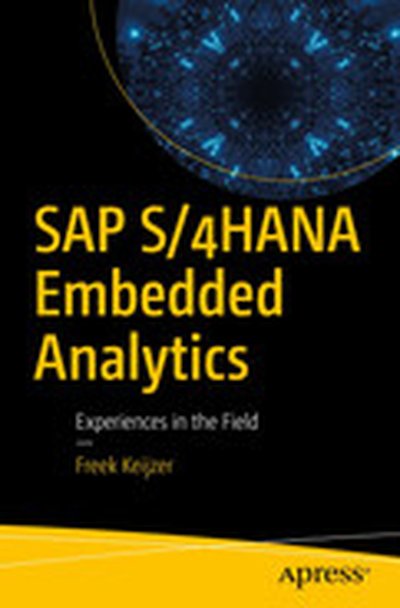
SAP S/4HANA Embedded Analytics: Experiences in the Field

Imagine you are a business user, consultant, or developer about to enter an SAP S/4HANA implementation project. You are well-versed with SAP’s product portfolio and you know that the preferred reporting option in S/4HANA is embedded analytics. But what exactly is embedded analytics? And how can it be implemented? And who can do it: a business user, a functional consultant specialized in financial or logistics processes? Or does a business intelligence expert or a programmer need to be involved? Good questions! This book will answer these questions, one by one. It will also take you on the same journey that the implementation team needs to follow for every reporting requirement that pops up: start with assessing a more standard option and only move on to a less standard option if the requirement cannot be fulfilled. In consecutive chapters, analytical apps delivered by SAP, apps created using Smart Business Services, and Analytical Queries developed either using tiles or in adevelopment environment are explained in detail with practical examples. The book also explains which option is preferred in which situation. The book covers topics such as in-memory computing, cloud, UX, OData, agile development, and more.Author Freek Keijzer writes from the perspective of an implementation consultant, focusing on functionality that has proven itself useful in the field. Practical examples are abundant, ranging from “codeless” to “hardcore coding.” What You Will Learn Know the difference between static reporting and interactive querying on real-time data Understand which options are available for analytics in SAP S/4HANA Understand which option to choose in which situation Know how to implement these options Who This Book is For SAP power users, functional consultants, developers

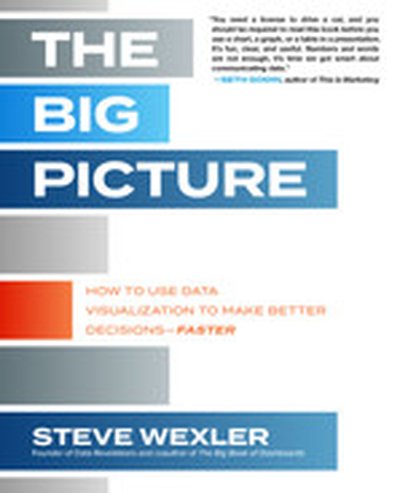
The Big Picture: How to Use Data Visualization to Make Better Decisions—Faster

Not a data expert? Here’s an engaging and entertaining guide to interpreting and drawing insights from any chart, graph, or other data visualization you’ll encounter. You’re a business professional, not a data scientist. How do you make heads or tails of the data visualizations that come across your desk—let alone make critical business decisions based on the information they’re designed to convey? In The Big Picture, top data visualization consultant Steve Wexler provides the tools for developing the graphical literacy you need to understand the data visualizations that are flooding your inbox—and put that data to use. Packed with the best four-color examples created in Excel, Tableau, Power BI, and Qlik, among others, this one-stop resource empowers you to extract the most important information from data visualizations quickly and accurately, act on key insights, solve problems, and make the right decisions for your organization every time.

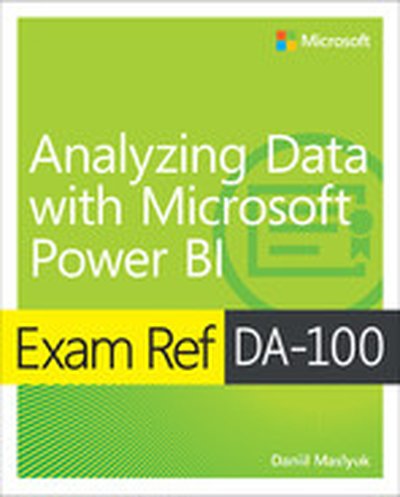
Exam Ref DA-100 Analyzing Data with Microsoft Power BI

Prepare for Microsoft Exam DA-100 and help demonstrate your real-world mastery of Power BI data analysis and visualization. Designed for experienced data analytics professionals ready to advance their status, Exam Ref focuses on the critical thinking and decision-making acumen needed for success at the Microsoft Certified Associate level. Focus on the expertise measured by these objectives: Prepare the data Model the data Visualize the data Analyze the data Deploy and maintain deliverables This Microsoft Exam Ref: Organizes its coverage by exam objectives Features strategic, what-if scenarios to challenge you Assumes you are an experienced business intelligence professional or data analyst, or have a similar role Analyzing Data with Microsoft Power BI About the Exam Exam DA-100 focuses on skills and knowledge needed to acquire, profile, clean, transform, and load data; design and develop data models; create measures with DAX; optimize model performance; create reports and dashboards; enrich reports for usability; enhance reports to expose insights; perform advanced analysis; manage datasets, and create and manage workspaces. About Microsoft Certification Passing this exam earns your Microsoft Certified: Data Analyst Associate certification, demonstrating your ability to help businesses maximize the value of data assets by using Microsoft Power BI. As subject matter experts, Data Analysts design and build scalable data models, clean and transform data, and enable advanced analytic capabilities that provide meaningful business value through easy-to-comprehend data visualizations. See full details at: microsoft.com/learn

Summary The Data industry is changing rapidly, and one of the most active areas of growth is automation of data workflows. Taking cues from the DevOps movement of the past decade data professionals are orienting around the concept of DataOps. More than just a collection of tools, there are a number of organizational and conceptual changes that a proper DataOps approach depends on. In this episode Kevin Stumpf, CTO of Tecton, Maxime Beauchemin, CEO of Preset, and Lior Gavish, CTO of Monte Carlo, discuss the grand vision and present realities of DataOps. They explain how to think about your data systems in a holistic and maintainable fashion, the security challenges that threaten to derail your efforts, and the power of using metadata as the foundation of everything that you do. If you are wondering how to get control of your data platforms and bring all of your stakeholders onto the same page then this conversation is for you.

Announcements

Hello and welcome to the Data Engineering Podcast, the show about modern data management When you’re ready to build your next pipeline, or want to test out the projects you hear about on the show, you’ll need somewhere to deploy it, so check out our friends at Linode. With their managed Kubernetes platform it’s now even easier to deploy and scale your workflows, or try out the latest Helm charts from tools like Pulsar and Pachyderm. With simple pricing, fast networking, object storage, and worldwide data centers, you’ve got everything you need to run a bulletproof data platform. Go to dataengineeringpodcast.com/linode today and get a $100 credit to try out a Kubernetes cluster of your own. And don’t forget to thank them for their continued support of this show! Modern Data teams are dealing with a lot of complexity in their data pipelines and analytical code. Monitoring data quality, tracing incidents, and testing changes can be daunting and often takes hours to days. Datafold helps Data teams gain visibility and confidence in the quality of their analytical data through data profiling, column-level lineage and intelligent anomaly detection. Datafold also helps automate regression testing of ETL code with its Data Diff feature that instantly shows how a change in ETL or BI code affects the produced data, both on a statistical level and down to individual rows and values. Datafold integrates with all major data warehouses as well as frameworks such as Airflow & dbt and seamlessly plugs into CI workflows. Go to dataengineeringpodcast.com/datafold today to start a 30-day trial of Datafold. Once you sign up and create an alert in Datafold for your company data, they will send you a cool water flask. RudderStack’s smart customer data pipeline is warehouse-first. It builds your customer data warehouse and your identity graph on your data warehouse, with support for Snowflake, Google BigQuery, Amazon Redshift, and more. Their SDKs and plugins make event streaming easy, and their integrations with cloud applications like Salesforce and ZenDesk help you go beyond event streaming. With RudderStack you can use all of your customer data to answer more difficult questions and then send those insights to your whole customer data stack. Sign up free at dataengineeringpodcast.com/rudder today. Your host is Tobias Macey and today I’m interviewing Max Beauchemin, Lior Gavish, and Kevin Stumpf about the real world challenges of embracing DataOps practices and systems, and how to keep things secure as you scale

Interview

Introduction How did you get involved in the area of data management? Before we get started, can you each give your definition of what "DataOps" means to you?

How does this differ from "business as usual" in the data industry? What are some of the things that DataOps isn’t (despite what marketers might say)?

What are the biggest difficulties that you have faced in going from concept to production with a workflow or system intended to power self-serve access to other membe

Summary The reason for collecting, cleaning, and organizing data is to make it usable by the organization. One of the most common and widely used methods of access is through a business intelligence dashboard. Superset is an open source option that has been gaining popularity due to its flexibility and extensible feature set. In this episode Maxime Beauchemin discusses how data engineers can use Superset to provide self service access to data and deliver analytics. He digs into how it integrates with your data stack, how you can extend it to fit your use case, and why open source systems are a good choice for your business intelligence. If you haven’t already tried out Superset then this conversation is well worth your time. Give it a listen and then take it for a test drive today.

Announcements

Hello and welcome to the Data Engineering Podcast, the show about modern data management When you’re ready to build your next pipeline, or want to test out the projects you hear about on the show, you’ll need somewhere to deploy it, so check out our friends at Linode. With their managed Kubernetes platform it’s now even easier to deploy and scale your workflows, or try out the latest Helm charts from tools like Pulsar and Pachyderm. With simple pricing, fast networking, object storage, and worldwide data centers, you’ve got everything you need to run a bulletproof data platform. Go to dataengineeringpodcast.com/linode today and get a $100 credit to try out a Kubernetes cluster of your own. And don’t forget to thank them for their continued support of this show! Modern Data teams are dealing with a lot of complexity in their data pipelines and analytical code. Monitoring data quality, tracing incidents, and testing changes can be daunting and often takes hours to days. Datafold helps Data teams gain visibility and confidence in the quality of their analytical data through data profiling, column-level lineage and intelligent anomaly detection. Datafold also helps automate regression testing of ETL code with its Data Diff feature that instantly shows how a change in ETL or BI code affects the produced data, both on a statistical level and down to individual rows and values. Datafold integrates with all major data warehouses as well as frameworks such as Airflow & dbt and seamlessly plugs into CI workflows. Go to dataengineeringpodcast.com/datafold today to start a 30-day trial of Datafold. Once you sign up and create an alert in Datafold for your company data, they will send you a cool water flask. RudderStack’s smart customer data pipeline is warehouse-first. It builds your customer data warehouse and your identity graph on your data warehouse, with support for Snowflake, Google BigQuery, Amazon Redshift, and more. Their SDKs and plugins make event streaming easy, and their integrations with cloud applications like Salesforce and ZenDesk help you go beyond event streaming. With RudderStack you can use all of your customer data to answer more difficult questions and then send those insights to your whole customer data stack. Sign up free at dataengineeringpodcast.com/rudder today. Your host is Tobias Macey and today I’m interviewing Max Beauchemin about Superset, an open source platform for data exploration, dashboards, and business intelligence

Interview

Introduction How did you get involved in the area of data management? Can you start by describing what Superset is? Superset is becoming part of the reference architecture for a modern data stack. What are the factors that have contributed to its popularity over other tools such as Redash, Metabase, Looker, etc.? Where do dashboarding and exploration tools like Superset fit in the responsibilities and workflow of a data engineer? What are some of the challenges that Superset faces in being performant when working with large data sources?

Which data sources have you found to be the most challenging to work with?

What are some anti-patterns that users of Superset mig

Interactive BI Analytics with Presto by Łukasz Osipiuka and Karol Sobczak

Big Data Europe Onsite and online on 22-25 November in 2022 Learn more about the conference: https://bit.ly/3BlUk9q

Join our next Big Data Europe conference on 22-25 November in 2022 where you will be able to learn from global experts giving technical talks and hand-on workshops in the fields of Big Data, High Load, Data Science, Machine Learning and AI. This time, the conference will be held in a hybrid setting allowing you to attend workshops and listen to expert talks on-site or online.

Hey AOF! Today I am joined by one of my first mentors in the BI industry, Rick Montgomery, to unpack why and how you can add the human element to digital transformation. Tune in as Rick shares how to identify, understand and map out the different personalities and parts of your digital transformation. In this episode, you'll learn: [0:09:12] What Rick learned from dropping out of MIT / Harvard. [0:19:39] How automation and analysis can lead to conversations with leadership. [0:21:38] Knowledge Bomb: How to get started with adding the human element and Rick's recommendations for useful books on consultative selling. [0:39:02] Knowledge Bomb: First sell your ignorance, then sell your expertise later! For full show notes, and the links mentioned visit: https://bibrainz.com/podcast/80    Enjoyed the Show?  Please leave us a review on iTunes.

Summary Most of the time when you think about a data pipeline or ETL job what comes to mind is a purely mechanistic progression of functions that move data from point A to point B. Sometimes, however, one of those transformations is actually a full-fledged machine learning project in its own right. In this episode Tal Galfsky explains how he and the team at Cherre tackled the problem of messy data for Addresses by building a natural language processing and entity resolution system that is served as an API to the rest of their pipelines. He discusses the myriad ways that addresses are incomplete, poorly formed, and just plain wrong, why it was a big enough pain point to invest in building an industrial strength solution for it, and how it actually works under the hood. After listening to this you’ll look at your data pipelines in a new light and start to wonder how you can bring more advanced strategies into the cleaning and transformation process.

Announcements

Hello and welcome to the Data Engineering Podcast, the show about modern data management When you’re ready to build your next pipeline, or want to test out the projects you hear about on the show, you’ll need somewhere to deploy it, so check out our friends at Linode. With their managed Kubernetes platform it’s now even easier to deploy and scale your workflows, or try out the latest Helm charts from tools like Pulsar and Pachyderm. With simple pricing, fast networking, object storage, and worldwide data centers, you’ve got everything you need to run a bulletproof data platform. Go to dataengineeringpodcast.com/linode today and get a $100 credit to try out a Kubernetes cluster of your own. And don’t forget to thank them for their continued support of this show! Modern Data teams are dealing with a lot of complexity in their data pipelines and analytical code. Monitoring data quality, tracing incidents, and testing changes can be daunting and often takes hours to days. Datafold helps Data teams gain visibility and confidence in the quality of their analytical data through data profiling, column-level lineage and intelligent anomaly detection. Datafold also helps automate regression testing of ETL code with its Data Diff feature that instantly shows how a change in ETL or BI code affects the produced data, both on a statistical level and down to individual rows and values. Datafold integrates with all major data warehouses as well as frameworks such as Airflow & dbt and seamlessly plugs into CI workflows. Go to dataengineeringpodcast.com/datafold today to start a 30-day trial of Datafold. Once you sign up and create an alert in Datafold for your company data, they will send you a cool water flask. RudderStack’s smart customer data pipeline is warehouse-first. It builds your customer data warehouse and your identity graph on your data warehouse, with support for Snowflake, Google BigQuery, Amazon Redshift, and more. Their SDKs and plugins make event streaming easy, and their integrations with cloud applications like Salesforce and ZenDesk help you go beyond event streaming. With RudderStack you can use all of your customer data to answer more difficult questions and then send those insights to your whole customer data stack. Sign up free at dataengineeringpodcast.com/rudder today. Your host is Tobias Macey and today I’m interviewing Tal Galfsky about how Cherre is bringing order to the messy problem of physical addresses and entity resolution in their data pipelines.

Interview

Introduction How did you get involved in the area of data management? Started as physicist and evolved into Data Science Can you start by giving a brief recap of what Cherre is and the types of data that you deal with? Cherre is a company that connects data We’re not a data vendor, in that we don’t sell data, primarily We help companies connect and make sense of their data The real estate market is historically closed, gut let, behind on tech What are the biggest challenges that you deal with in your role when working with real estate data? Lack of a standard domain model in real estate. Ontology. What is a property? Each data source, thinks about properties in a very different way. Therefore, yielding similar, but completely different data. QUALITY (Even if the dataset are talking about the same thing, there are different levels of accuracy, freshness). HIREARCHY. When is one source better than another What are the teams and systems that rely on address information? Any company that needs to clean or organize (make sense) their data, need to identify, people, companies, and properties. Our clients use Address resolution in multiple ways. Via the UI or via an API. Our service is both external and internal so what I build has to be good enough for the demanding needs of our data science team, robust enough for our engineers, and simple enough that non-expert clients can use it. Can you give an example for the problems involved in entity resolution Known entity example. Empire state buidling. To resolve addresses in a way that makes sense for the client you need to capture the real world entities. Lots, buildings, units.

Identify the type of the object (lot, building, unit) Tag the object with all the relevant addresses Relations to other objects (lot, building, unit)

What are some examples of the kinds of edge cases or messiness that you encounter in addresses? First class is string problems. Second class component problems. third class is geocoding. I understand that you have developed a service for normalizing addresses and performing entity resolution to provide canonical references for downstream analyses. Can you give an overview of what is involved? What is the need for the service. The main requirement here is connecting an address to lot, building, unit with latitude and longitude coordinates

How were you satisfying this requirement previously? Before we built our model and dedicated service we had a basic prototype for pipeline only to handle NYC addresses. What were the motivations for designing and implementing this as a service? Need to expand nationwide and to deal with client queries in real time. What are some of the other data sources that you rely on to be able to perform this normalization and resolution? Lot data, building data, unit data, Footprints and address points datasets. What challenges do you face in managing these other sources of information? Accuracy, hirearchy, standardization, unified solution, persistant ids and primary keys

Digging into the specifics of your solution, can you talk through the full lifecycle of a request to resolve an address and the various manipulations that are performed on it? String cleaning, Parse and tokenize, standardize, Match What are some of the other pieces of information in your system that you would like to see addressed in a similar fashion? Our named entity solution with connection to knowledge graph and owner unmasking. What are some of the most interesting, unexpected, or challenging lessons that you learned while building this address resolution system? Scaling nyc geocode example. The NYC model was exploding a subset of the options for messing up an address. Flexibility. Dependencies. Client exposure. Now that you have this system running in production, if you were to start over today what would you do differently? a lot but at this point the module boundaries and client interface are defined in such way that we are able to make changes or completely replace any given part of it without breaking anything client facing What are some of the other projects that you are excited to work on going forward? Named entity resolution and Knowledge Graph

Contact Info

LinkedIn

Parting Question

From your perspective, what is the biggest gap in the tooling or technology for data management today? BigQuery is huge asset and in particular UDFs but they don’t support API calls or python script

Closing Announcements

Thank you for listening! Don’t forget to check out our other show, Podcast.init to learn about the Python language, its community, and the innovative ways it is being used. Visit the site to subscribe to the show, sign up for the mailing list, and read the show notes. If you’ve learned something or tried out a project from the show then tell us about it! Email [email protected]) with your story. To help other people find the show please leave a review on iTunes and tell your friends and co-workers Join the community in the new Zulip chat workspace at dataengineeringpodcast.com/chat

Links

Cherre

Podcast Episode

Photonics Knowledge Graph Entity Resolution BigQuery NLP == Natural Language Processing dbt

Podcast Episode

Airflow

Podcast.init Episode

Datadog

Podcast Episode

The intro and outro music is from The Hug by The Freak Fandango Orchestra / CC BY-SA

Support Data Engineering Podcast