talk-data.com talk-data.com

Topic

data

5765

tagged

Activity Trend

3 peak/qtr
2020-Q1 2026-Q1

Activities

5765 activities · Newest first

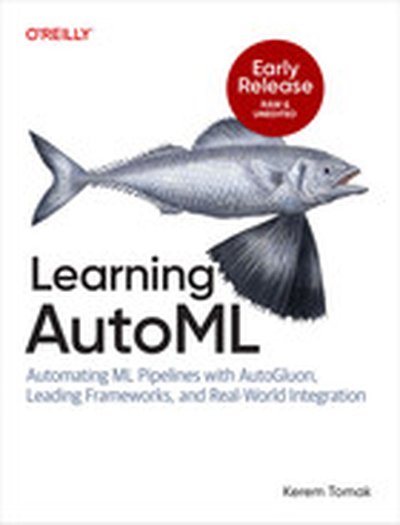
Learning AutoML

Learning AutoML is your practical guide to applying automated machine learning in real-world environments. Whether you're a data scientist, ML engineer, or AI researcher, this book helps you move beyond experimentation to build and deploy high-performing models with less manual tuning and more automation. Using AutoGluon as a primary toolkit, you'll learn how to build, evaluate, and deploy AutoML models that reduce complexity and accelerate innovation. Author Kerem Tomak shares insights on how to integrate models into end-to-end deployment workflows using popular tools like Kubeflow, MLflow, and Airflow, while exploring cross-platform approaches with Vertex AI, SageMaker Autopilot, Azure AutoML, Auto-sklearn, and H2O.ai. Real-world case studies highlight applications across finance, healthcare, and retail, while chapters on ethics, governance, and agentic AI help future-proof your knowledge. Build AutoML pipelines for tabular, text, image, and time series data Deploy models with fast, scalable workflows using MLOps best practices Compare and navigate today's leading AutoML platforms Interpret model results and make informed decisions with explainability tools Explore how AutoML leads into next-gen agentic AI systems

Microsoft Power BI Quick Start Guide - Fourth Edition

Bring your data to life with the ultimate beginner's guide to Power BI, now featuring Microsoft Fabric, Copilot, and full-color visuals to make learning data modeling, storytelling, and dashboards easier and faster than ever Key Features Build data literacy and gain confidence using Power BI through real-world, beginner-friendly examples Learn to shape, clean, and model data using Power BI Desktop and Power Query, with zero experience required Build vibrant, accurate reports and dashboards with real-world modeling examples Book Description Updated with the latest innovations in Power BI, including integration with Microsoft Fabric for seamless data unification and Copilot for AI-powered guidance. This comprehensive guide empowers you to build compelling reports and dashboards from the ground up. Whether you're new to Power BI or stepping into a data role, this book provides a friendly, approachable introduction to business intelligence and data storytelling You'll start with the Power BI Desktop interface and its core functionality, then move into shaping and cleaning your data using the Power Query Editor. From designing intuitive data models to writing your first DAX formulas, you’ll develop practical skills that apply directly to real-world scenarios. he book emphasizes how to use visualizations and narrative techniques to turn numbers into meaningful insights The chapters focus on hands-on, real-world examples—like analyzing sales trends, tracking KPIs, and cleaning messy data. You'll learn to build and refresh reports, scale your Power BI setup, and enhance your solutions using Microsoft Fabric and Copilot. Fabric unifies analytics across your organization, while Copilot speeds up your workflow with AI-driven insights and report suggestions By the end of the book, you’ll have the confidence and experience to turn raw data into insightful, impactful dashboards What you will learn Understand why data literacy matters in decision-making and careers Connect to data using import, DirectQuery, and live connection modes Clean and transform data using Power Query Editor and dataflows Design reports with visuals that support clear data storytelling Apply row-level security to enforce access and data protection Manage and monitor Power BI cloud for scalability and teamwork Use AI tools like Copilot to speed up prep and generate insights Learn Microsoft Fabric basics to enable unified data experiences Who this book is for This book is ideal for anyone looking to build a solid foundation in Power BI, regardless of prior experience. Whether you're just starting out or stepping into a new role that involves data, you'll find clear, approachable guidance throughout. The step-by-step tutorials and real-world examples make it easy to follow along—even if it’s your first time working with business intelligence tools

PostgreSQL 18 for Developers

Developing intelligent applications that integrate AI, analytics, and transactional capabilities using the latest release of the world's most popular open-source database Key Features Practical examples demonstrating how to use Postgres to develop intelligent applications Best practices for developers of intelligent data management applications Includes the latest PostgreSQL 18 features for AI, analytics, and transactions ures for AI, analytics, and transactions Book Description In today’s data-first world, businesses need applications that blend transactions, analytics, and AI to power real-time insights at scale. Mastering PostgreSQL 18 for AI-Powered Enterprise Apps is your essential guide to building intelligent, high-performance systems with the latest features of PostgreSQL 18. Through hands-on examples and expert guidance, you’ll learn to design architectures that unite OLTP and OLAP, embed AI directly into apps, and optimize for speed, scalability, and reliability. Discover how to apply cutting-edge PostgreSQL tools for real-time decisions, predictive analytics, and automation. Go beyond basics with advanced strategies trusted by industry leaders. Whether you’re building data-rich applications, internal analytics platforms, or AI-driven services, this book equips you with the patterns and insights to deliver enterprise-grade innovation. Ideal for developers, architects, and tech leads driving digital transformation, this book empowers you to lead the future of intelligent applications. Harness the power of PostgreSQL 18—and unlock the full potential of your data. What you will learn How to leverage PostgreSQL 18 for building intelligent data-driven applications for the modern enterprise Data management principles and best practices for managing transactions, analytics, and AI use cases How to utilize Postgres capabilities to address architectural challenges and attain optimal performance for each use case Methods for utilizing the latest Postgres innovation to create integrated data management applications Guidelines on when to use Postgres and when to opt for specialized data management solutions Who this book is for This book is intended for developers creating intelligent, data-driven applications for the modern enterprise. It features hands-on examples that demonstrate how to use PostgreSQL as the database for business applications that integrate transactions, analytics, and AI. We explore the fundamental architectural principles of data management and detail how developers utilize PostgreSQL 18's latest capabilities to build AI-enabled applications. The book assumes a working knowledge of SQL and does not address the needs of data analysts or those looking to master SQL.

Data Engineering with Azure Databricks

Master end-to-end data engineering on Azure Databricks. From data ingestion and Delta Lake to CI/CD and real-time streaming, build secure, scalable, and performant data solutions with Spark, Unity Catalog, and ML tools. Key Features Build scalable data pipelines using Apache Spark and Delta Lake Automate workflows and manage data governance with Unity Catalog Learn real-time processing and structured streaming with practical use cases Implement CI/CD, DevOps, and security for production-ready data solutions Explore Databricks-native ML, AutoML, and Generative AI integration Book Description "Data Engineering with Azure Databricks" is your essential guide to building scalable, secure, and high-performing data pipelines using the powerful Databricks platform on Azure. Designed for data engineers, architects, and developers, this book demystifies the complexities of Spark-based workloads, Delta Lake, Unity Catalog, and real-time data processing. Beginning with the foundational role of Azure Databricks in modern data engineering, you’ll explore how to set up robust environments, manage data ingestion with Auto Loader, optimize Spark performance, and orchestrate complex workflows using tools like Azure Data Factory and Airflow. The book offers deep dives into structured streaming, Delta Live Tables, and Delta Lake’s ACID features for data reliability and schema evolution. You’ll also learn how to manage security, compliance, and access controls using Unity Catalog, and gain insights into managing CI/CD pipelines with Azure DevOps and Terraform. With a special focus on machine learning and generative AI, the final chapters guide you in automating model workflows, leveraging MLflow, and fine-tuning large language models on Databricks. Whether you're building a modern data lakehouse or operationalizing analytics at scale, this book provides the tools and insights you need. What you will learn Set up a full-featured Azure Databricks environment Implement batch and streaming ingestion using Auto Loader Optimize Spark jobs with partitioning and caching Build real-time pipelines with structured streaming and DLT Manage data governance using Unity Catalog Orchestrate production workflows with jobs and ADF Apply CI/CD best practices with Azure DevOps and Git Secure data with RBAC, encryption, and compliance standards Use MLflow and Feature Store for ML pipelines Build generative AI applications in Databricks Who this book is for This book is for data engineers, solution architects, cloud professionals, and software engineers seeking to build robust and scalable data pipelines using Azure Databricks. Whether you're migrating legacy systems, implementing a modern lakehouse architecture, or optimizing data workflows for performance, this guide will help you leverage the full power of Databricks on Azure. A basic understanding of Python, Spark, and cloud infrastructure is recommended.

Financial Modeling and Reporting with Microsoft Power BI

Design powerful financial reports in Power BI by building models, measures, and dashboards tailored for real-world accounting and analytics Key Features Build a complete financial data model from ledgers, journals, and budgets Master DAX for income statements, KPIs, and performance analysis Learn Power BI Paginated and AI tools for printable and predictive reporting Purchase of the print or Kindle book includes a free PDF eBook Book Description Power BI for Financial Reporting is the definitive guide to designing high-performance, flexible, and insightful financial reports using Power BI. This book empowers finance and BI professionals to create everything from trial balances to enterprise-wide performance dashboards with ease and precision. The book starts by helping you define your reporting goals and data sources, mapping these needs to Power BI’s capabilities. You’ll then build a core financial data model—covering ledger transactions, charts of accounts, and multi-company support. As you proceed, you’ll integrate complex DAX measures, handle foreign exchange and journal entries, and extend your model with budgeting and inventory data. Each chapter builds toward a comprehensive suite of reports, complete with visual best practices and tested metrics. You’ll learn to streamline datasets using Power Query, test for data integrity, and generate printable reports via Power BI Paginated. The final chapters dive into using AI, predictive analytics, and Microsoft Fabric to future-proof your reporting. Whether you're consolidating data across systems or evolving your reports for changing business needs, this hands-on guide ensures you’re prepared to meet the demands of modern finance. What you will learn Build core financial models from ledgers and accounts Create Trial Balance and Income Statements using DAX Optimize Power BI with Power Query and data transformation Add budgets, targets, and KPIs to performance dashboards Integrate inventory data for nuanced stock reporting Produce printable reports using Power BI Paginated Apply AI for report generation and predictive analytics Test, tune, and evolve reports for secure, scalable use Who this book is for This book is for finance professionals, accountants, financial analysts, and BI developers who want to leverage Power BI to improve, automate, and future-proof their financial reporting. Whether consolidating data from ERPs, building reports across entities, or exploring advanced Power BI features, this book equips readers with practical skills and strategic insight.

Generative AI on Kubernetes

Generative AI is revolutionizing industries, and Kubernetes has fast become the backbone for deploying and managing these resource-intensive workloads. This book serves as a practical, hands-on guide for MLOps engineers, software developers, Kubernetes administrators, and AI professionals ready to unlock AI innovation with the power of cloud native infrastructure. Authors Roland Huß and Daniele Zonca provide a clear road map for training, fine-tuning, deploying, and scaling GenAI models on Kubernetes, addressing challenges like resource optimization, automation, and security along the way. With actionable insights with real-world examples, readers will learn to tackle the opportunities and complexities of managing GenAI applications in production environments. Whether you're experimenting with large-scale language models or facing the nuances of AI deployment at scale, you'll uncover expertise you need to operationalize this exciting technology effectively. Learn to run GenAI models on Kubernetes for efficient scalability Get techniques to train and fine-tune LLMs within Kubernetes environments See how to deploy production-ready AI systems with automation and resource optimization Discover how to monitor and scale GenAI applications to handle real-world demand Uncover the best tools to operationalize your GenAI workloads Learn how to run agent-based and AI-driven applications

Microsoft Power BI Data Analyst Associate Study Guide

Passing the PL-300 exam with 2025 revisions isn't just about memorization—you need to thoroughly know the basic features of Power BI. However, data professionals must also apply best practices that make Power BI solutions scalable and future-proof. The first half of this go-to companion by Paul Turley provides complete coverage of the PL-300 exam objectives for desktop and self-service users, while the second half equips you with necessary best practices and practical skills for real-world success after the exam. Immerse yourself in exam prep, practice questions, and hands-on references for applying time-tested design patterns in Power BI. You'll learn how to transform raw data into actionable insights using Power Query, DAX, and dimensional modeling. Perfect for data analysts and business intelligence developers, this guide shows how Power BI fits into modern data platforms like Azure and Microsoft Fabric, preparing you for the exam and for the evolving world of data engineering. Understand PL-300 exam topics and key prep strategies Discover scalable, enterprise-grade Power BI solutions using best practices Learn how to correctly apply Power Query, DAX, and visualizations in real-world scenarios, with real business data Uncover how to build for scale See how Power BI fits into modern architectures like Azure and Microsoft Fabric

Real-Time Intelligence with Microsoft Fabric

In today's hyper-connected world, many organizations are overwhelmed by the volume of data generated every second. Making timely decisions using this information remains a challenge for many. Real-time intelligence has transformed from a luxury to a necessity for businesses striving to stay ahead in a rapidly evolving marketplace. Enter Microsoft Fabric's Real-Time Intelligence: a new tool that not only analyzes data but also acts upon the results. If you're ready to unlock the power of immediate insights, this comprehensive primer offers an exploration into the capabilities of Real-Time Intelligence with Microsoft Fabric. Authors Johan Ludvig Brattås and Frank Geisler explain AI-driven insights and how to use them to drive business success. Whether you're a seasoned professional or an enthusiast, this guide is the key to understanding an exciting new platform. You'll discover: The core concepts of Real-Time Intelligence within Microsoft Fabric Challenges that can be solved with Real-Time Intelligence, enhancing efficiency Techniques for using KQL queries, including SQL knowledge to optimize these queries Practical applications including data analytic solutions, event streams, and more How to automatically trigger actions based on data conditions

Designing Data-Intensive Applications, 2nd Edition

Data is at the center of many challenges in system design today. Difficult issues such as scalability, consistency, reliability, efficiency, and maintainability need to be resolved. In addition, there's an overwhelming variety of tools and analytical systems, including relational databases, NoSQL datastores, plus data warehouses and data lakes. What are the right choices for your application? How do you make sense of all these buzzwords? In this second edition, authors Martin Kleppmann and Chris Riccomini build on the foundation laid in the acclaimed first edition, integrating new technologies and emerging trends. You'll be guided through the maze of decisions and trade-offs involved in building a modern data system, from choosing the right tools like Spark and Flink to understanding the intricacies of data laws like the GDPR. Peer under the hood of the systems you already use, and learn to use them more effectively Make informed decisions by identifying the strengths and weaknesses of different tools Navigate the trade-offs around consistency, scalability, fault tolerance, and complexity Understand the distributed systems research upon which modern databases are built Peek behind the scenes of major online services, and learn from their architectures

Microsoft Fabric Analytics Engineer Associate Study Guide

Data is the heartbeat of business. Microsoft's Fabric Analytics Engineer Associate (DP-600) certification proves you understand the tools and technologies to make use of it. This comprehensive guide covers everything you need to know to design and implement enterprise-grade analytics solutions—and ace your certification exam. Drawing on their extensive experience working with Microsoft Fabric and Power BI, Brian Bønk and Valerie Junk take you through preparing and transforming data, securing and managing analytics assets, and building and optimizing semantic models. You'll learn to work with data warehouses and lakehouses, ensuring data is structured and ready for analysis. You will also discover how to query and analyze data using SQL, KQL, and DAX, which are essential skills for anyone working with Fabric. Whether you're preparing for the exam or just looking to expand your Fabric expertise, this book gives you the foundation to succeed. Prepare and enrich data for analysis Work with, secure, and maintain analytics assets Implement and manage semantic models Utilize data warehouses and lakehouses Handle workspace access control and item-level access control Optimize enterprise-scale semantic models

Modern Time Series with R

Gain expertise in modern time series forecasting and causal inference in R to solve real-world business problems with reproducible, high-quality code Key Features Explore forecasting and causal inference with practical R examples Build reproducible, high-quality time series workflows using tidyverse and modern R packages Apply models to real-world business scenarios with step-by-step guidance Purchase of the print or Kindle book includes a free PDF eBook Book Description Modern Time Series Analysis with R is a comprehensive, hands-on guide to mastering the art of time series analysis using the R programming language. Written by leading experts in applied statistics and econometrics, this book helps data scientists, analysts, and developers bridge the gap between traditional statistical theory and practical business applications. Starting with the foundations of R and tidyverse, you’ll explore the core components of time series data, data wrangling, and visualization techniques. The chapters then guide you through key modeling approaches, ranging from classical methods like ARIMA and exponential smoothing to advanced computational techniques, such as machine learning, deep learning, and ensemble forecasting. Beyond forecasting, you’ll discover how time series can be applied to causal inference, anomaly detection, change point analysis, and multiple time series modeling. Practical examples and reproducible code will empower you to assess business problems, choose optimal solutions, and communicate results effectively through dynamic R-based reporting. By the end of this book, you’ll be confident in applying modern time series methods to real-world data, delivering actionable insights for strategic decision-making in business, finance, technology, and beyond. What you will learn Understand core concepts and components of time series data Wrangle and visualize time series with tidyverse and R packages Apply ARIMA, exponential smoothing, and machine learning methods Explore deep learning and ensemble forecasting approaches Conduct causal inference with interrupted time series analysis Detect anomalies, structural changes, and perform change point analysis Analyze multiple time series using hierarchical and grouped models Automate reproducible reporting with RStudio and dynamic documents Who this book is for This book is for data scientists, analysts, and developers who want to master time series analysis using R. It is ideal for professionals in finance, retail, technology, and research, as well as students seeking practical, business-oriented approaches to forecasting and causal inference. Basic knowledge of R is assumed, but no advanced mathematics is required.

Data Contracts in Practice

In 'Data Contracts in Practice', Ryan Collingwood provides a detailed guide to managing and formalizing data responsibilities within organizations. Through practical examples and real-world use cases, you'll learn how to systematically address data quality, governance, and integration challenges using data contracts. What this Book will help me do Learn to identify and formalize expectations in data interactions, improving clarity among teams. Master implementation techniques to ensure data consistency and quality across critical business processes. Understand how to effectively document and deploy data contracts to bolster data governance. Explore solutions for proactively addressing and managing data changes and requirements. Gain real-world skills through practical examples using technologies like Python, SQL, JSON, and YAML. Author(s) Ryan Collingwood is a seasoned expert with over 20 years of experience in product management, data analysis, and software development. His holistic techno-social approach, designed to address both technical and organizational challenges, brings a unique perspective to improving data processes. Ryan's writing is informed by his extensive hands-on experience and commitment to enabling robust data ecosystems. Who is it for? This book is ideal for data engineers, software developers, and business analysts working to enhance organizational data integration. Professionals with a familiarity of system design, JSON, and YAML will find it particularly beneficial. Enterprise architects and leadership roles looking to understand data contract implementation and their business impacts will also greatly benefit. Basic understanding of Python and SQL is recommended to maximize learning.

ML and Generative AI in the Data Lakehouse

In today's race to harness generative AI, many teams struggle to integrate these advanced tools into their business systems. While platforms like GPT-4 and Google's Gemini are powerful, they aren't always tailored to specific business needs. This book offers a practical guide to building scalable, customized AI solutions using the full potential of data lakehouse architecture. Author Bennie Haelen covers everything from deploying ML and GenAI models in Databricks to optimizing performance with best practices. In this must-read for data professionals, you'll gain the tools to unlock the power of large language models (LLMs) by seamlessly combining data engineering and data science to create impactful solutions. Learn to build, deploy, and monitor ML and GenAI models on a data lakehouse architecture using Databricks Leverage LLMs to extract deeper, actionable insights from your business data residing in lakehouses Discover how to integrate traditional ML and GenAI models for customized, scalable solutions Utilize open source models to control costs while maintaining model performance and efficiency Implement best practices for optimizing ML and GenAI models within the Databricks platform

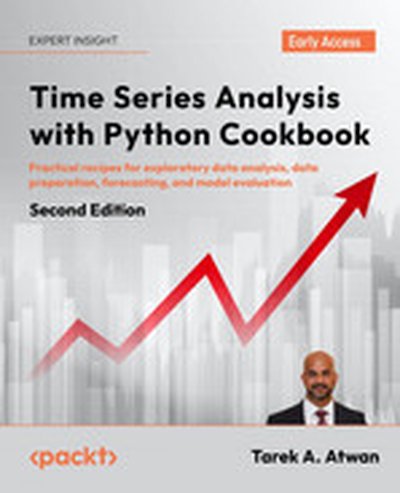
Time Series Analysis with Python Cookbook - Second Edition

Perform time series analysis and forecasting confidently with this Python code bank and reference manual Purchase of the print or Kindle book includes a free PDF eBook Key Features Explore up-to-date forecasting and anomaly detection techniques using statistical, machine learning, and deep learning algorithms Learn different techniques for evaluating, diagnosing, and optimizing your models Work with a variety of complex data with trends, multiple seasonal patterns, and irregularities Book Description To use time series data to your advantage, you need to be well-versed in data preparation, analysis, and forecasting. This fully updated second edition includes chapters on probabilistic models and signal processing techniques, as well as new content on transformers. Additionally, you will leverage popular libraries and their latest releases covering Pandas, Polars, Sktime, stats models, stats forecast, Darts, and Prophet for time series with new and relevant examples. You'll start by ingesting time series data from various sources and formats, and learn strategies for handling missing data, dealing with time zones and custom business days, and detecting anomalies using intuitive statistical methods. Further, you'll explore forecasting using classical statistical models (Holt-Winters, SARIMA, and VAR). Learn practical techniques for handling non-stationary data, using power transforms, ACF and PACF plots, and decomposing time series data with multiple seasonal patterns. Then we will move into more advanced topics such as building ML and DL models using TensorFlow and PyTorch, and explore probabilistic modeling techniques. In this part, you’ll also learn how to evaluate, compare, and optimize models, making sure that you finish this book well-versed in wrangling data with Python. What you will learn Understand what makes time series data different from other data Apply imputation and interpolation strategies to handle missing data Implement an array of models for univariate and multivariate time series Plot interactive time series visualizations using hvPlot Explore state-space models and the unobserved components model (UCM) Detect anomalies using statistical and machine learning methods Forecast complex time series with multiple seasonal patterns Use conformal prediction for constructing prediction intervals for time series Who this book is for This book is for data analysts, business analysts, data scientists, data engineers, and Python developers who want practical Python recipes for time series analysis and forecasting techniques. Fundamental knowledge of Python programming is a prerequisite. Prior experience working with time series data to solve business problems will also help you to better utilize and apply the different recipes in this book.

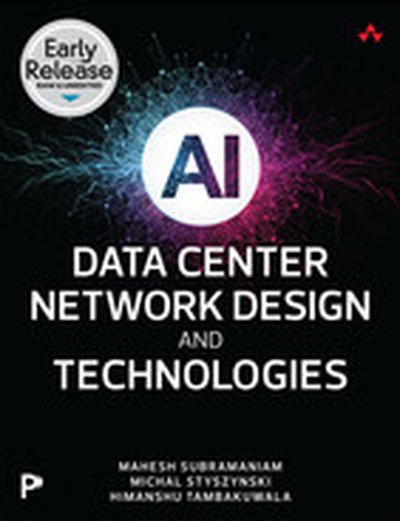
AI Data Center Network Design and Technologies

AI Data Center Network Design and Technologies Designing the Networks that Power the AI Revolution Artificial intelligence is transforming the modern data center. Training large-scale machine learning models requires infrastructure that can move massive datasets at lightning speed-far beyond the capabilities of traditional architectures. AI Data Center Network Design and Technologies is the first comprehensive, vendor-neutral guide to building and optimizing networks purpose-built for AI workloads. Written by leading experts in AI data center design, this book bridges the gap between network engineering and AI infrastructure-helping you understand how to design, scale, and future-proof high-performance environments for training and inference. What You'll Learn Architect for scale: Build high-radix network fabrics to support GPU, TPU, and xPU-based AI clusters Optimize data movement: Integrate lossless Ethernet/IP fabrics for high-throughput, low-latency communication Design with purpose: Align network design to AI/ML workload patterns and server architectures Plan for the physical layer: Address cooling, power, and interconnect challenges at AI scale Stay ahead of innovation: Explore emerging standards from the Ultra Ethernet Consortium (UEC) Validate performance: Apply proven deployment, testing, and measurement best practices Why Read This Book AI is redefining what data centers can-and must-do. Whether you're a network engineer, architect, or technology leader, this book provides the technical foundation and forward-looking insights you need to design next-generation networks optimized for AI-scale computing. .

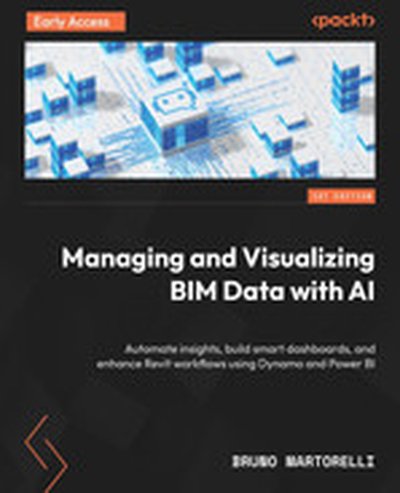
Managing and Visualizing BIM Data with AI

Unlock the potential of your BIM workflows with artificial intelligence and data visualization tools. This book provides guided instruction on using software like Revit, Dynamo, Python, and Power BI to automate processes, derive insights, and craft tailored dashboards that empower data-driven decisions in AEC projects. What this Book will help me do Effectively preprocess and manage BIM data for analysis and visualization. Design interactive and insightful dashboards in Power BI for project stakeholders. Integrate real-time IoT data and advanced analytics into BIM projects. Automate repetitive tasks in Revit using Dynamo and Python scripting. Understand the ethical considerations and emerging trends in AI for BIM. Author(s) Bruno Martorelli, a seasoned BIM manager, specializes in integrating technology and data analytics into construction workflows. With a background in architecture and programming, he bridges the gap between traditional methods and modern innovations. Bruno is dedicated to sharing practical strategies for data automation and visualization. Who is it for? This book is tailored for architects, engineers, and construction managers interested in elevating their BIM practices. If you're familiar with Revit and possess a basic understanding of data management, you'll find this resource invaluable. Beginners in Python or Power BI will also find accessible guidance to start applying advanced techniques in their workflows.

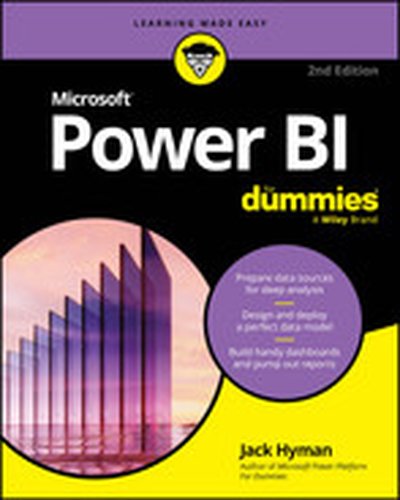
Microsoft Power BI For Dummies, 2nd Edition

Make smarter business decisions with Microsoft PowerBI Microsoft PowerBI For Dummies gives you the foundation you need to use this powerful software platform to manage your data and gather insight for making better decisions. With PowerBI, you can visualize, model, and interpret large datasets, quickly revealing insights that once took weeks to dig out. This book takes you through the basics of getting your data ready, preparing your analysis, and creating reports. Then, you'll dig into more advanced features using DAX—the PowerBI programming language—even if you have no prior programming experience. This edition covers the latest updates to the software, including AI integration, enhanced customization, and improved real-time collaboration tools. Transform raw data into meaningful information and make data-driven decisions Import datasets and create dashboards, visualizations, and reports Use the Copilot AI assistant to speed up workflows and simplify tasks Integrate PowerBI with other Microsoft services like Excel and Azure Businesses of all sizes can use PowerBI to manage their data. With Microsoft PowerBI For Dummies, you can quickly and easily set up PowerBI, learn the fundamentals, and handle complex reporting.

Security and Privacy in 6G Communication Technology

Future-proof your knowledge and expertise in telecommunications with this essential guide, which provides a comprehensive analysis of the critical security and privacy challenges in the transition to 6G communication. The advancement from 5G to 6G communication represents a quantum leap in wireless technology, promising unprecedented speeds, ultra-low latency, and ubiquitous connectivity. As the industry embarks on this journey, it encounters a host of technical challenges, particularly in ensuring the security and privacy of data transmitted across these networks. The interconnected nature of 6G systems, combined with the proliferation of Internet of Things devices and the sheer volume of data exchanged, creates a fertile ground for cyber threats and privacy breaches. This book delves into these intricate technical challenges, offering a comprehensive analysis of the security and privacy implications of 6G communication. We explore the vulnerabilities inherent in 6G networks, ranging from potential weaknesses in network protocols to the risk of unauthorized access to sensitive data. Through detailed examination and real-world examples, we provide insights into cutting-edge security measures and privacy-preserving techniques tailored specifically to the unique characteristics of 6G systems. By addressing these challenges head-on, we aim to empower engineers, researchers, and policymakers with the knowledge and tools necessary to build resilient and secure 6G networks that safeguard user privacy and data integrity in an increasingly interconnected world. By dissecting the complexities of 6G architecture and protocols, the book equips readers with a nuanced understanding of the unique security and privacy considerations that must be addressed in the design and implementation of these transformative systems.

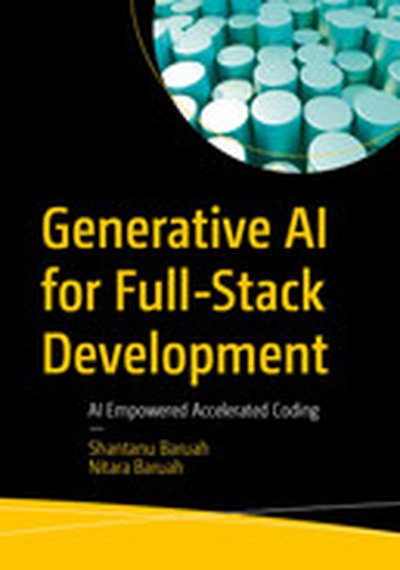
Generative AI for Full-Stack Development: AI Empowered Accelerated Coding

Gain cutting-edge skills in building a full-stack web application with AI assistance. This book will guide you in creating your own travel application using React and Node.js, with MongoDB as the database, while emphasizing the use of Gen AI platforms like Perplexity.ai and Claude for quicker development and more accurate debugging. The book’s step-by-step approach will help you bridge the gap between traditional web development methods and modern AI-assisted techniques, making it both accessible and insightful. It provides valuable lessons on professional web application development practices. By focusing on a practical example, the book offers hands-on experience that mirrors real-world scenarios, equipping you with relevant and in-demand skills that can be easily transferred to other projects. The book emphasizes the principles of responsive design, teaching you how to create web applications that adapt seamlessly to different screen sizes and devices. This includes using fluid grids, media queries, and optimizing layouts for usability across various platforms. You will also learn how to design, manage, and query databases using MongoDB, ensuring you can effectively handle data storage and retrieval in your applications. Most significantly, the book will introduce you to generative AI tools and prompt engineering techniques that can accelerate coding and debugging processes. This modern approach will streamline development workflows and enhance productivity. By the end of this book, you will not only have learned how to create a complete web application from backend to frontend, along with database management, but you will also have gained invaluable associated skills such as using IDEs, version control, and deploying applications efficiently and effectively with AI. What You Will Learn How to build a full-stack web application from scratch How to use generative AI tools to enhance coding efficiency and streamline the development process How to create user-friendly interfaces that enhance the overall experience of your web applications How to design, manage, and query databases using MongoDB Who This Book Is For Frontend developers, backend developers, and full-stack developers.

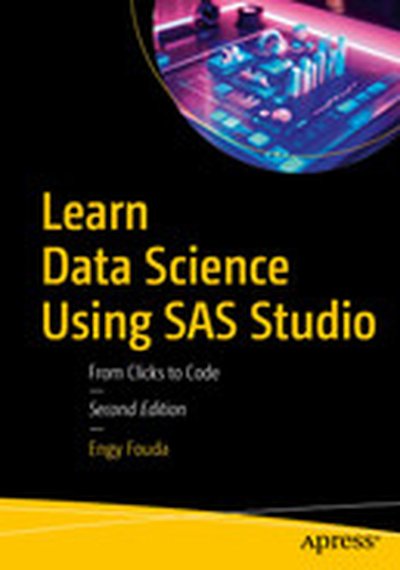
Learn Data Science Using SAS Studio : From Clicks to Code

Do you want to create data analysis reports without writing a line of code? This book introduces SAS Studio, a free, web-based data science product for educational and non-commercial purposes. The power of SAS Studio lies in its visual, point-and-click user interface, which generates SAS code. It is easier to learn SAS Studio than to learn R and Python to accomplish data cleaning, statistics, and visualization tasks. The book includes a case study analyzing the data required to predict the results of presidential elections in the state of Maine for 2016 and 2020. In addition to the presidential elections, the book provides real-life examples, including analyses of stock, oil, and gold prices, crime, marketing, and healthcare. You will see data science in action and how easily it can be performed using complicated tasks and visualizations in SAS Studio. You will learn, step by step, how to perform visualizations, including creating maps. In most cases, you will not need a line of code as you work with the SAS Studio graphical user interface. The book includes explanations of the code that SAS Studio generates automatically. You will learn how to edit this code to perform more complicated advanced tasks. What You Will Learn Become familiar with the SAS Studio IDE. How to create essential visualizations. Know the fundamental statistical analysis required in most data science and analytics reports. Clean the most common dataset problems Learn linear and logistic regression for data prediction and analysis. Write programs in SAS. How to analyze data and get insights from it for decision-making. Learn character, numeric, date, time, and datetime functions and typecasting. Who This Book Is For A general audience of people who are new to data science, students, and data analysts and scientists who are new to SAS. No prior programming or statistical knowledge is required.