talk-data.com talk-data.com

Topic

Python

programming_language data_science web_development

1446

tagged

Activity Trend

185 peak/qtr
2020-Q1 2026-Q1

Activities

1446 activities · Newest first

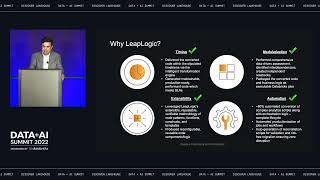
How AARP Services, Inc. automated SAS transformation to Databricks using LeapLogic

While SAS has been a standard in analytics and data science use cases, it is not cloud-native and does not scale well. Join us to learn how AARP automated the conversion of hundreds of complex data processing, model scoring, and campaign workloads to Databricks using LeapLogic, an intelligent code transformation accelerator that can transform any and all legacy ETL, analytics, data warehouse and Hadoop to modern data platforms.

In this session experts from AARP and Impetus will share about collaborating with Databricks and how they were able to: • Automate modernization of SAS marketing analytics based on coding best practices • Establish a rich library of Spark and Python equivalent functions on Databricks with the same capabilities as SAS procedures, DATA step operations, macros, and functions • Leverage Databricks-native services like Delta Live Tables to implement waterfall techniques for campaign execution and simplify pipeline monitoring

Connect with us: Website: https://databricks.com Facebook: https://www.facebook.com/databricksinc Twitter: https://twitter.com/databricks LinkedIn: https://www.linkedin.com/company/data... Instagram: https://www.instagram.com/databricksinc/

Polars: Blazingly Fast DataFrames in Rust and Python

This talk will introduce Polars a blazingly fast DataFrame library written in Rust on top of Apache Arrow. Its a DataFrame library that brings exploratory data analysis closer to the lessons learned in database research.

CPU's today's come with many cores and with their superscalar designs and SIMD registers allow for even more parallelism. Polars is written from the ground up to fully utilize the CPU's of this generation.

Besides blazingly fast algorithms, cache efficient memory layout and multi-threading, it consist of a lazy query engine, allowing Polars to do several optimizations that may improve query time and memory usage.

Read more:

https://github.com/pola-rs/polars https://www.ritchievink.com/blog/2021/02/28/i-wrote-one-of-the-fastest-dataframe-libraries/

Join the talk to learn more.

Connect with us: Website: https://databricks.com Facebook: https://www.facebook.com/databricksinc Twitter: https://twitter.com/databricks LinkedIn: https://www.linkedin.com/company/data... Instagram: https://www.instagram.com/databricksinc/

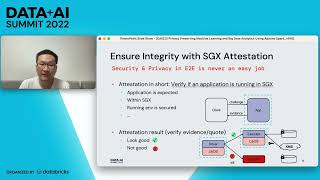
Privacy Preserving Machine Learning and Big Data Analytics Using Apache Spark

In recent years, latest privacy laws & regulations bring a fundamental shift in the protection of data and privacy, placing new challenges to data applications. To resolve these privacy & security challenges in big data ecosystem without impacting existing applications, several hardware TEE (Trusted Execution Environment) solutions have been proposed for Apache Spark, e.g., PySpark with Scone and Opaque etc. However, to the best of our knowledge, none of them provide full protection to data pipelines in Spark applications. An adversary may still get sensitive information from unprotected components and stages. Furthermore, some of them greatly narrowed supported applications, e.g., only support SparkSQL. In this presentation, we will present a new PPMLA (privacy preserving machine learning and analytics) solution built on top of Apache Spark, BigDL, Occlum and Intel SGX. It ensures all spark components and pipelines are fully protected by Intel SGX, and existing Spark applications written in Scala, Java or Python can be migrated into our platform without any code change. We will demonstrate how to build distributed end-to-end SparkML/SparkSQL workloads with our solution on untrusted cloud environment and share real-world use cases for PPMLA.

Connect with us: Website: https://databricks.com Facebook: https://www.facebook.com/databricksinc Twitter: https://twitter.com/databricks LinkedIn: https://www.linkedin.com/company/data... Instagram: https://www.instagram.com/databricksinc/

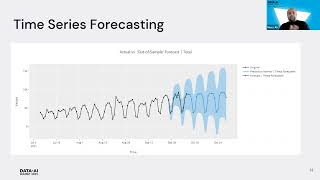
Time Series Forecasting with PyCaret

PyCaret is an open-source, low-code machine learning library in Python that automates machine learning workflows. It is an end-to-end machine learning and model management tool that speeds up the experiment cycle exponentially and makes you more productive.

This presentation will demo the time series forecasting use case using PyCaret's new low-code time series forecasting module.

Connect with us: Website: https://databricks.com Facebook: https://www.facebook.com/databricksinc Twitter: https://twitter.com/databricks LinkedIn: https://www.linkedin.com/company/data... Instagram: https://www.instagram.com/databricksinc/

Summary Data engineering is a large and growing subject, with new technologies, specializations, and "best practices" emerging at an accelerating pace. This podcast does its best to explore this fractal ecosystem, and has been at it for the past 5+ years. In this episode Joe Reis, founder of Ternary Data and co-author of "Fundamentals of Data Engineering", turns the tables and interviews the host, Tobias Macey, about his journey into podcasting, how he runs the show behind the scenes, and the other things that occupy his time.

Announcements

Hello and welcome to the Data Engineering Podcast, the show about modern data management When you’re ready to build your next pipeline, or want to test out the projects you hear about on the show, you’ll need somewhere to deploy it, so check out our friends at Linode. With their new managed database service you can launch a production ready MySQL, Postgres, or MongoDB cluster in minutes, with automated backups, 40 Gbps connections from your application hosts, and high throughput SSDs. Go to dataengineeringpodcast.com/linode today and get a $100 credit to launch a database, create a Kubernetes cluster, or take advantage of all of their other services. And don’t forget to thank them for their continued support of this show! RudderStack helps you build a customer data platform on your warehouse or data lake. Instead of trapping data in a black box, they enable you to easily collect customer data from the entire stack and build an identity graph on your warehouse, giving you full visibility and control. Their SDKs make event streaming from any app or website easy, and their state-of-the-art reverse ETL pipelines enable you to send enriched data to any cloud tool. Sign up free… or just get the free t-shirt for being a listener of the Data Engineering Podcast at dataengineeringpodcast.com/rudder. Data teams are increasingly under pressure to deliver. According to a recent survey by Ascend.io, 95% in fact reported being at or over capacity. With 72% of data experts reporting demands on their team going up faster than they can hire, it’s no surprise they are increasingly turning to automation. In fact, while only 3.5% report having current investments in automation, 85% of data teams plan on investing in automation in the next 12 months. 85%!!! That’s where our friends at Ascend.io come in. The Ascend Data Automation Cloud provides a unified platform for data ingestion, transformation, orchestration, and observability. Ascend users love its declarative pipelines, powerful SDK, elegant UI, and extensible plug-in architecture, as well as its support for Python, SQL, Scala, and Java. Ascend automates workloads on Snowflake, Databricks, BigQuery, and open source Spark, and can be deployed in AWS, Azure, or GCP. Go to dataengineeringpodcast.com/ascend and sign up for a free trial. If you’re a data engineering podcast listener, you get credits worth $5,000 when you become a customer. Your host is Tobias Macey and today we’re flipping the script. Joe Reis of Ternary Data will be interviewing me about my time as the host of this show and my perspectives on the data ecosystem

Interview

Introduction How did you get involved in the area of data management? Now I’ll hand it off to Joe…

Joe’s Notes

You do a lot of podcasts. Why? Podcast.init started in 2015, and your first episode of Data Engineering was published January 14, 2017. Walk us through the start of these podcasts. why not a data science podcast? why DE? You’ve published 306 of shows of the Data Engineering Podcast, plus 370 for the init podcast, then you’ve got a new ML podcast. How have you kept the motivation over the years? What’s the process for the show (finding guests, topics, etc….recording, publishing)? It’s a lot of work. Walk us through this process. You’ve done a ton of shows and have a lot of context with what’s going on in the field of both data engineering and Python. What have been some of the

Send us a text Today we are joined by Murilo Cunha who talks us through the good, the bad, and the ugly of the Pandas python library and its many alternatives. Pandas is widely used for data manipulation and analysis. In particular, it offers data structures and operations for manipulating numerical tables and time series.

Tour de Tools is brought to you by Dataroots Music from Uppbeat (free for Creators!)Thumbnail image is generated by Craiyon

Summary Building and maintaining reliable data assets is the prime directive for data engineers. While it is easy to say, it is endlessly complex to implement, requiring data professionals to be experts in a wide range of disparate topics while designing and implementing complex topologies of information workflows. In order to make this a tractable problem it is essential that engineers embrace automation at every opportunity. In this episode Chris Riccomini shares his experiences building and scaling data operations at WePay and LinkedIn, as well as the lessons he has learned working with other teams as they automated their own systems.

Announcements

Hello and welcome to the Data Engineering Podcast, the show about modern data management When you’re ready to build your next pipeline, or want to test out the projects you hear about on the show, you’ll need somewhere to deploy it, so check out our friends at Linode. With their new managed database service you can launch a production ready MySQL, Postgres, or MongoDB cluster in minutes, with automated backups, 40 Gbps connections from your application hosts, and high throughput SSDs. Go to dataengineeringpodcast.com/linode today and get a $100 credit to launch a database, create a Kubernetes cluster, or take advantage of all of their other services. And don’t forget to thank them for their continued support of this show! RudderStack helps you build a customer data platform on your warehouse or data lake. Instead of trapping data in a black box, they enable you to easily collect customer data from the entire stack and build an identity graph on your warehouse, giving you full visibility and control. Their SDKs make event streaming from any app or website easy, and their state-of-the-art reverse ETL pipelines enable you to send enriched data to any cloud tool. Sign up free… or just get the free t-shirt for being a listener of the Data Engineering Podcast at dataengineeringpodcast.com/rudder. Data teams are increasingly under pressure to deliver. According to a recent survey by Ascend.io, 95% in fact reported being at or over capacity. With 72% of data experts reporting demands on their team going up faster than they can hire, it’s no surprise they are increasingly turning to automation. In fact, while only 3.5% report having current investments in automation, 85% of data teams plan on investing in automation in the next 12 months. 85%!!! That’s where our friends at Ascend.io come in. The Ascend Data Automation Cloud provides a unified platform for data ingestion, transformation, orchestration, and observability. Ascend users love its declarative pipelines, powerful SDK, elegant UI, and extensible plug-in architecture, as well as its support for Python, SQL, Scala, and Java. Ascend automates workloads on Snowflake, Databricks, BigQuery, and open source Spark, and can be deployed in AWS, Azure, or GCP. Go to dataengineeringpodcast.com/ascend and sign up for a free trial. If you’re a data engineering podcast listener, you get credits worth $5,000 when you become a customer. Your host is Tobias Macey and today I’m interviewing Chris Riccomini about building awareness of data usage into CI/CD pipelines for application development

Interview

Introduction How did you get involved in the area of data management? What are the pieces of data platforms and processing that have been most difficult to scale in an organizational sense? What are the opportunities for automation to alleviate some of the toil that data and analytics engineers get caught up in? The application delivery ecosystem has been going through ongoing transformation in the form of CI/CD, infrastructure as code, etc. What are the parallels in the data ecosystem that are still nascent? What are the principles that still need to be translated for data practitioners? Which are subject to impedance mismatch and may never make sense to translate? As someone with a software engineering background and extensive e

Summary The perennial challenge of data engineers is ensuring that information is integrated reliably. While it is straightforward to know whether a synchronization process succeeded, it is not always clear whether every record was copied correctly. In order to quickly identify if and how two data systems are out of sync Gleb Mezhanskiy and Simon Eskildsen partnered to create the open source data-diff utility. In this episode they explain how the utility is implemented to run quickly and how you can start using it in your own data workflows to ensure that your data warehouse isn’t missing any records from your source systems.

Announcements

Hello and welcome to the Data Engineering Podcast, the show about modern data management When you’re ready to build your next pipeline, or want to test out the projects you hear about on the show, you’ll need somewhere to deploy it, so check out our friends at Linode. With their new managed database service you can launch a production ready MySQL, Postgres, or MongoDB cluster in minutes, with automated backups, 40 Gbps connections from your application hosts, and high throughput SSDs. Go to dataengineeringpodcast.com/linode today and get a $100 credit to launch a database, create a Kubernetes cluster, or take advantage of all of their other services. And don’t forget to thank them for their continued support of this show! Random data doesn’t do it — and production data is not safe (or legal) for developers to use. What if you could mimic your entire production database to create a realistic dataset with zero sensitive data? Tonic.ai does exactly that. With Tonic, you can generate fake data that looks, acts, and behaves like production because it’s made from production. Using universal data connectors and a flexible API, Tonic integrates seamlessly into your existing pipelines and allows you to shape and size your data to the scale, realism, and degree of privacy that you need. The platform offers advanced subsetting, secure de-identification, and ML-driven data synthesis to create targeted test data for all of your pre-production environments. Your newly mimicked datasets are safe to share with developers, QA, data scientists—heck, even distributed teams around the world. Shorten development cycles, eliminate the need for cumbersome data pipeline work, and mathematically guarantee the privacy of your data, with Tonic.ai. Data Engineering Podcast listeners can sign up for a free 2-week sandbox account, go to dataengineeringpodcast.com/tonic today to give it a try! Data teams are increasingly under pressure to deliver. According to a recent survey by Ascend.io, 95% in fact reported being at or over capacity. With 72% of data experts reporting demands on their team going up faster than they can hire, it’s no surprise they are increasingly turning to automation. In fact, while only 3.5% report having current investments in automation, 85% of data teams plan on investing in automation in the next 12 months. 85%!!! That’s where our friends at Ascend.io come in. The Ascend Data Automation Cloud provides a unified platform for data ingestion, transformation, orchestration, and observability. Ascend users love its declarative pipelines, powerful SDK, elegant UI, and extensible plug-in architecture, as well as its support for Python, SQL, Scala, and Java. Ascend automates workloads on Snowflake, Databricks, BigQuery, and open source Spark, and can be deployed in AWS, Azure, or GCP. Go to dataengineeringpodcast.com/ascend and sign up for a free trial. If you’re a data engineering podcast listener, you get credits worth $5,000 when you become a customer. RudderStack helps you build a customer data platform on your warehouse or data lake. Instead of trapping data in a black box, they enable you to easily collect customer data from the entire stack and build an identity graph on your warehouse, giving you full visibility and control. Their SDKs make event streaming from any app or

Testing is an important part of the DataOps life cycle, giving teams confidence in the integrity of their data as it moves downstream to production systems. But what happens when testing doesn’t catch all of your bad data and “unknown unknown” data quality issues fall through the cracks? Fortunately, data engineers can apply a thing or two from DevOps best practices to tackle data quality at scale with circuit breakers, a novel approach to stopping bad data from actually entering your pipelines in the first place. In this talk, Prateek Chawla, Founding Team Member and Technical Lead at Monte Carlo, will discuss what circuit breakers are, how to integrate them with your Airflow DAGs, and what this looks like in practice. Time permitting, Prateek will also walk through how to build and automate Airflow circuit breakers across multiple cascading pipelines with Python and other common tools.

Imagine if you could chain together SQL models using nothing but python, write functions that treat Snowflake tables like dataframes and dataframes like SQL tables. Imagine if you could write a SQL airflow DAG using only python or without using any python at all. With Astro SDK, we at Astronomer have gone back to the drawing board around fundamental questions of what DAG writing could look like. Our goal is to empower Data Engineers, Data Scientists, and even the Business Analysts to write Airflow DAGs with code that reflects the data movement, instead of the system configuration. Astro will allow each group to focus on producing value in their respective fields with minimal knowledge of Airflow and high amounts of flexibility between SQL or python-based systems. This is way beyond just a new way of writing DAGs. This is a universal agnostic data transfer system. Users can run the exact same code against different databases (snowflake, bigquery, etc.) and datastores (GCS, S3, etc.) with no changes except to the connection IDs. Users will be able to promote a SQL flow from their dev postgres to their prod snowflake with a single variable change. We are ecstatic to reveal over eight months of work around building a new open-source project that will significantly improve your DAG authoring experience!

At Credit Karma, we enable financial progress for more than 100 million of our members by recommending them personalized financial products when they interact with our application. In this talk we are introducing our machine learning platform to build interactive and production model-building workflows to serve relevant financial products to Credit Karma users. Vega, Credit Karma’s Machine Learning Platform, has 3 major components: 1) QueryProcessor for feature and training data generation, backed by Google BigQuery, 2) PipelineProcessor for feature transformations, offline scoring and model-analysis, backed by Apache Beam 3) ModelProcessor for running Tensorflow and Scikit models, backed by Google AI Platform, which provides data scientists the flexibility to explore different kinds of machine learning or deep learning models, ranging from gradient boosted trees to neural network with complex structures Vega exposed a unified Python API for Feature Generation, Modeling ETL, Model Training and Model Analysis. Vega supports writing interactive notebooks and python scripts to run these components in local mode with sampled data and in cloud mode for large scale distributed computing. Vega provides the ability to chain the processors provided by data scientists through Python code to define the entire workflow. Then it automatically generates the execution plan for deploying the workflow on Apache Airflow for running offline model experiments and refreshes. Overall, with the unified python API and automated Airflow DAG generation, Vega has improved the efficiency of ML Engineering. Using Airflow we deploy more than 20K features and 100 models daily

In this talk, I am going to share things that I learned while contributing to Apache Airflow. I am an Outreachy Intern for Apache Airflow. I made my first contribution to Open Source in the Apache Airflow project. I will also add a short description about myself and my experience working in Software Engineering and how i needed help in contributing to open source and ended up as an Intern for Outreachy. I also like to share about my first contribution towards Apache Airflow in its doc and how much confidence it gave me to continue contributing to it. Key things that I learned when contributing to Apache Airflow are: Clear communication in written form is very powerful. Code is not an asset and don’t worry about throwing it away. Don’t feel shy about asking questions. Open Source is a rich ecosystem where each projects help each other and thrive. Trivial things became no more trivial to me. While the above things are overall learning about open source contribution, I had specific important learnings for me which include writing unit tests, got to communicate with developers across the globe, improved written style of communication, knowing about many python libraries, understanding the CI pipeline.

Every company, regardless of size, is dealing with a barrage of data. In any typical organisation, there is more information on hand than we know how to use or manage. While every team in the organisation is screaming for analytics professionals to turn data into insight, a strong data and analytics tech stack is foundational to being able to make sense of it all. The need for a robust and efficient data and analytics tech stack has created a sprawling industry for new technology solutions that sell the promise of seamless integration and faster insights. Today, there are a plethora of data and analytics platforms available, most with very high valuations attached to them. But do we really need all these tools to make us super-powered data users? To answer this question and many more related to the data and analytics tech stack, I recently spoke to Benn Stancil. Benn is the co-founder and Chief Analytics Officer at Mode. Mode is a modern analytics and BI solution that combines SQL, Python, R and visual analysis to answer questions for its users. In this episode of Leaders of Analytics, you will learn: What the perfect analytics tech stack looks like and why.Programmatic automation of the analytics workflow.What will cutting-edge analytics tech be able to do 5-10 years from now.Why Been thinks the Chief Analytics Officer role should be redefined, and much more.Connect with Benn Benn on LinkedIn: https://www.linkedin.com/in/benn-stancil/ Benn on Twitter: https://twitter.com/bennstancil Benn's (brilliant) Substack blog: https://benn.substack.com/

Summary The most complicated part of data engineering is the effort involved in making the raw data fit into the narrative of the business. Master Data Management (MDM) is the process of building consensus around what the information actually means in the context of the business and then shaping the data to match those semantics. In this episode Malcolm Hawker shares his years of experience working in this domain to explore the combination of technical and social skills that are necessary to make an MDM project successful both at the outset and over the long term.

Announcements

Hello and welcome to the Data Engineering Podcast, the show about modern data management When you’re ready to build your next pipeline, or want to test out the projects you hear about on the show, you’ll need somewhere to deploy it, so check out our friends at Linode. With their new managed database service you can launch a production ready MySQL, Postgres, or MongoDB cluster in minutes, with automated backups, 40 Gbps connections from your application hosts, and high throughput SSDs. Go to dataengineeringpodcast.com/linode today and get a $100 credit to launch a database, create a Kubernetes cluster, or take advantage of all of their other services. And don’t forget to thank them for their continued support of this show! Random data doesn’t do it — and production data is not safe (or legal) for developers to use. What if you could mimic your entire production database to create a realistic dataset with zero sensitive data? Tonic.ai does exactly that. With Tonic, you can generate fake data that looks, acts, and behaves like production because it’s made from production. Using universal data connectors and a flexible API, Tonic integrates seamlessly into your existing pipelines and allows you to shape and size your data to the scale, realism, and degree of privacy that you need. The platform offers advanced subsetting, secure de-identification, and ML-driven data synthesis to create targeted test data for all of your pre-production environments. Your newly mimicked datasets are safe to share with developers, QA, data scientists—heck, even distributed teams around the world. Shorten development cycles, eliminate the need for cumbersome data pipeline work, and mathematically guarantee the privacy of your data, with Tonic.ai. Data Engineering Podcast listeners can sign up for a free 2-week sandbox account, go to dataengineeringpodcast.com/tonic today to give it a try! RudderStack helps you build a customer data platform on your warehouse or data lake. Instead of trapping data in a black box, they enable you to easily collect customer data from the entire stack and build an identity graph on your warehouse, giving you full visibility and control. Their SDKs make event streaming from any app or website easy, and their state-of-the-art reverse ETL pipelines enable you to send enriched data to any cloud tool. Sign up free… or just get the free t-shirt for being a listener of the Data Engineering Podcast at dataengineeringpodcast.com/rudder. Data teams are increasingly under pressure to deliver. According to a recent survey by Ascend.io, 95% in fact reported being at or over capacity. With 72% of data experts reporting demands on their team going up faster than they can hire, it’s no surprise they are increasingly turning to automation. In fact, while only 3.5% report having current investments in automation, 85% of data teams plan on investing in automation in the next 12 months. 85%!!! That’s where our friends at Ascend.io come in. The Ascend Data Automation Cloud provides a unified platform for data ingestion, transformation, orchestration, and observability. Ascend users love its declarative pipelines, powerful SDK, elegant UI, and extensible plug-in architecture, as well as its support for Python, SQL, Scala, and Java. Ascend automates workloads on Snowflake, Databricks, BigQuery, and open source Spark, and can be deployed in AWS, Azure

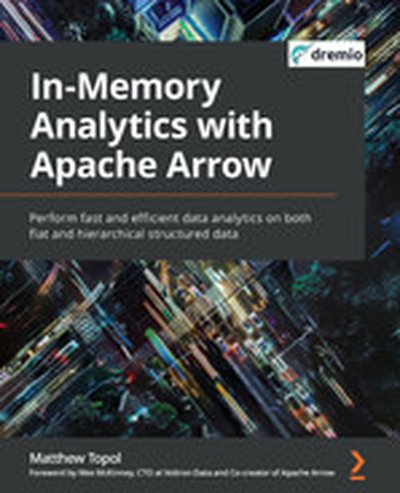
In-Memory Analytics with Apache Arrow

Discover the power of in-memory data analytics with "In-Memory Analytics with Apache Arrow." This book delves into Apache Arrow's unique capabilities, enabling you to handle vast amounts of data efficiently and effectively. Learn how Arrow improves performance, offers seamless integration, and simplifies data analysis in diverse computing environments. What this Book will help me do Gain proficiency with the datastore facilities and data types defined by Apache Arrow. Master the Arrow Flight APIs to efficiently transfer data between systems. Learn to leverage in-memory processing advantages offered by Arrow for state-of-the-art analytics. Understand how Arrow interoperates with popular tools like Pandas, Parquet, and Spark. Develop and deploy high-performance data analysis pipelines with Apache Arrow. Author(s) Matthew Topol, the author of the book, is an experienced practitioner in data analytics and Apache Arrow technology. Having contributed to the development and implementation of Arrow-powered systems, he brings a wealth of knowledge to readers. His ability to delve deep into technical concepts while keeping explanations practical makes this book an excellent guide for learners of the subject. Who is it for? This book is ideal for professionals in the data domain including developers, data analysts, and data scientists aiming to enhance their data manipulation capabilities. Beginners with some familiarity with data analysis concepts will find it beneficial, as well as engineers designing analytics utilities. Programming examples accommodate users of C, Go, and Python, making it broadly accessible.

Summary Metadata is the lifeblood of your data platform, providing information about what is happening in your systems. A variety of platforms have been developed to capture and analyze that information to great effect, but they are inherently limited in their utility due to their nature as storage systems. In order to level up their value a new trend of active metadata is being implemented, allowing use cases like keeping BI reports up to date, auto-scaling your warehouses, and automated data governance. In this episode Prukalpa Sankar joins the show to talk about the work she and her team at Atlan are doing to push this capability into the mainstream.

Announcements

Hello and welcome to the Data Engineering Podcast, the show about modern data management When you’re ready to build your next pipeline, or want to test out the projects you hear about on the show, you’ll need somewhere to deploy it, so check out our friends at Linode. With their new managed database service you can launch a production ready MySQL, Postgres, or MongoDB cluster in minutes, with automated backups, 40 Gbps connections from your application hosts, and high throughput SSDs. Go to dataengineeringpodcast.com/linode today and get a $100 credit to launch a database, create a Kubernetes cluster, or take advantage of all of their other services. And don’t forget to thank them for their continued support of this show! RudderStack helps you build a customer data platform on your warehouse or data lake. Instead of trapping data in a black box, they enable you to easily collect customer data from the entire stack and build an identity graph on your warehouse, giving you full visibility and control. Their SDKs make event streaming from any app or website easy, and their state-of-the-art reverse ETL pipelines enable you to send enriched data to any cloud tool. Sign up free… or just get the free t-shirt for being a listener of the Data Engineering Podcast at dataengineeringpodcast.com/rudder. Data teams are increasingly under pressure to deliver. According to a recent survey by Ascend.io, 95% in fact reported being at or over capacity. With 72% of data experts reporting demands on their team going up faster than they can hire, it’s no surprise they are increasingly turning to automation. In fact, while only 3.5% report having current investments in automation, 85% of data teams plan on investing in automation in the next 12 months. 85%!!! That’s where our friends at Ascend.io come in. The Ascend Data Automation Cloud provides a unified platform for data ingestion, transformation, orchestration, and observability. Ascend users love its declarative pipelines, powerful SDK, elegant UI, and extensible plug-in architecture, as well as its support for Python, SQL, Scala, and Java. Ascend automates workloads on Snowflake, Databricks, BigQuery, and open source Spark, and can be deployed in AWS, Azure, or GCP. Go to dataengineeringpodcast.com/ascend and sign up for a free trial. If you’re a data engineering podcast listener, you get credits worth $5,000 when you become a customer. Today’s episode is Sponsored by Prophecy.io – the low-code data engineering platform for the cloud. Prophecy provides an easy-to-use visual interface to design & deploy data pipelines on Apache Spark & Apache Airflow. Now all the data users can use software engineering best practices – git, tests and continuous deployment with a simple to use visual designer. How does it work? – You visually design the pipelines, and Prophecy generates clean Spark code with tests on git; then you visually schedule these pipelines on Airflow. You can observe your pipelines with built in metadata search and column level lineage. Finally, if you have existing workflows in AbInitio, Informatica or other ETL formats that you want to move to the cloud, you can import them automatically into Prophecy making them run productively on Spark. Create your free account today at dataengineeringpodcast.com/prophecy. Your host is Tobias Macey and today I’m interviewing Prukalpa Sankar about how data platforms can benefit from the idea of "active metadata" and the work that she and her team at Atlan are doing to make it a reality

Interview

Introduction How did you get involved in the area of data management? Can you describe what "active metadata" is and how it differs from the current approaches to metadata systems? What are some of the use cases that "active metadata" can enable for data producers and consumers?

What are the points of friction that those users encounter in the current formulation of metadata systems?

Central metadata systems/data catalogs came about as a solution to the challenge of integrating every data tool with every other data tool, giving a single place to integrate. What are the lessons that are being learned from the "modern data stack" that can be applied to centralized metadata? Can you describe the approach that you are taking at Atlan to enable the adoption of "active metadata"?

What are the architectural capabilities that you had to build to power the outbound traffic flows?

How are you addressing the N x M integration problem for pushing metadata into the necessary contexts at Atlan?

What are the interfaces that are necessary for receiving systems to be able to make use of the metadata that is being delivered? How does the type/category of metadata impact the type of integration that is necessary?

What are some of the automation possibilities that metadata activation offers for data teams?

What are the cases where you still need a human in the loop?

What are the most interesting, innovative, or unexpected ways that you have seen active metadata capabilities used? What are the most interesting, unexpected, or challenging lessons that you have learned while working on activating metadata for your users? When is an active approach to metadata the wrong choice? What do you have planned for the future of Atlan and active metadata?

Contact Info

LinkedIn @prukalpa on Twitter

Parting Question

From your perspective, what is the biggest gap in the tooling or technology for data management today?

Closing Announcements

Thank you for listening! Don’t forget to check out our other shows. Podcast.init covers the Python language, its community, and the innovative ways it is being used. The Machine Learning Podcast helps you go from idea to production with machine learning. Visit the site to subscribe to the show, sign up for the mailing list, and read the show notes. If you’ve learned something or tried out a project from the show then tell us about it! Email [email protected]) with your story. To help other people find the show please leave a review on Apple Podcasts and tell your friends and co-workers

Links

Atlan What is Active Metadata? Segment

Podcast Episode

Zapier ArgoCD Kubernetes Wix AWS Lambda Modern Data Culture Blog Post

The intro and outro music is from The Hug by The Freak Fandango Orchestra / CC BY-SA

Support Data Engineering Podcast

Data Democratization with Domo

Discover how to leverage the full potential of Domo, a robust cloud-based business intelligence platform, in your organization. This comprehensive guide walks you through data integration, transformation, visualization, and governance techniques, enabling you to deliver impactful, data-driven results quickly and effectively. What this Book will help me do Understand and utilize Domo's cloud data architecture for comprehensive data analysis. Seamlessly acquire and manage data using Domo connectors and tools. Create and customize dashboards that communicate data insights effectively. Build and deploy Python applications and machine learning models on Domo. Securely govern your organization's data with robust Domo features. Author(s) The author, None Burtenshaw, is an expert in business intelligence and data platforms. With years of experience working with data integration tools, their writing combines technical thoroughness with practical insights. They aim to empower professionals with the skills to excel in data-driven decision making, reflecting their passion for making technology accessible and actionable. Who is it for? This book is ideal for business intelligence professionals, including developers and analysts, looking to elevate their understanding of Domo. It is suited for those with a fundamental knowledge of data platforms seeking advanced skills in data management and visualization. BI managers will gain insights into governance and security, while analysts will find inspiration for data storytelling. If you're aiming to master the possibilities of Domo, this book is for you.

The Pandas Workshop

The Pandas Workshop offers a detailed journey into the world of data analysis using Python and the pandas library. Throughout the book, you'll build skills in accessing, transforming, visualizing, and modeling data, all while focusing on real-world data science challenges. You will gain the knowledge and confidence needed to dissect and derive insights from complex datasets. What this Book will help me do Understand how to access and load data from various formats including databases and web-based sources. Manipulate and transform data for analysis using efficient pandas techniques. Create insightful visualizations using Matplotlib integrated with pandas for clearer data presentation. Build predictive and descriptive data models and glean data-driven insights. Handle and analyze time-series data to uncover trends and seasonal effects in data patterns. Author(s) Blaine Bateman, Saikat Basak, Thomas Joseph, and William So collectively bring diverse expertise in data analysis, programming, and teaching. Their goal is to make cutting-edge data science techniques accessible through clear explanations and practical exercises, helping learners from varied backgrounds master the pandas library. Who is it for? This book is best suited for novice to intermediate programmers and data enthusiasts who are already familiar with Python but are new to the pandas library. Ideal readers are those interested in honing their skills in data analysis and visualization, as well as leveraging data for informed decision-making. Whether you're an analyst, aspiring data scientist, or business professional seeking to strengthen your analytical toolkit, this book provides beneficial insights and techniques.

Advanced Analytics with PySpark

The amount of data being generated today is staggering and growing. Apache Spark has emerged as the de facto tool to analyze big data and is now a critical part of the data science toolbox. Updated for Spark 3.0, this practical guide brings together Spark, statistical methods, and real-world datasets to teach you how to approach analytics problems using PySpark, Spark's Python API, and other best practices in Spark programming. Data scientists Akash Tandon, Sandy Ryza, Uri Laserson, Sean Owen, and Josh Wills offer an introduction to the Spark ecosystem, then dive into patterns that apply common techniques-including classification, clustering, collaborative filtering, and anomaly detection, to fields such as genomics, security, and finance. This updated edition also covers NLP and image processing. If you have a basic understanding of machine learning and statistics and you program in Python, this book will get you started with large-scale data analysis. Familiarize yourself with Spark's programming model and ecosystem Learn general approaches in data science Examine complete implementations that analyze large public datasets Discover which machine learning tools make sense for particular problems Explore code that can be adapted to many uses