talk-data.com talk-data.com

Topic

API

Application Programming Interface (API)

integration software_development data_exchange

856

tagged

Activity Trend

65 peak/qtr
2020-Q1 2026-Q1

Activities

856 activities · Newest first

Kafka Streams in Action

Kafka Streams in Action teaches you everything you need to know to implement stream processing on data flowing into your Kafka platform, allowing you to focus on getting more from your data without sacrificing time or effort. About the Technology Not all stream-based applications require a dedicated processing cluster. The lightweight Kafka Streams library provides exactly the power and simplicity you need for message handling in microservices and real-time event processing. With the Kafka Streams API, you filter and transform data streams with just Kafka and your application. About the Book Kafka Streams in Action teaches you to implement stream processing within the Kafka platform. In this easy-to-follow book, you’ll explore real-world examples to collect, transform, and aggregate data, work with multiple processors, and handle real-time events. You’ll even dive into streaming SQL with KSQL! Practical to the very end, it finishes with testing and operational aspects, such as monitoring and debugging. What's Inside Using the KStreams API Filtering, transforming, and splitting data Working with the Processor API Integrating with external systems About the Reader Assumes some experience with distributed systems. No knowledge of Kafka or streaming applications required. About the Author Bill Bejeck is a Kafka Streams contributor and Confluent engineer with over 15 years of software development experience. Quotes A great way to learn about Kafka Streams and how it is a key enabler of event-driven applications. - From the Foreword by Neha Narkhede, Cocreator of Apache Kafka A comprehensive guide to Kafka Streams—from introduction to production! - Bojan Djurkovic, Cvent Bridges the gap between message brokering and real-time streaming analytics. - Jim Mantheiy Jr., Next Century Valuable both as an introduction to streams as well as an ongoing reference. - Robin Coe, TD Bank

Summary

Every business with a website needs some way to keep track of how much traffic they are getting, where it is coming from, and which actions are being taken. The default in most cases is Google Analytics, but this can be limiting when you wish to perform detailed analysis of the captured data. To address this problem, Alex Dean co-founded Snowplow Analytics to build an open source platform that gives you total control of your website traffic data. In this episode he explains how the project and company got started, how the platform is architected, and how you can start using it today to get a clearer view of how your customers are interacting with your web and mobile applications.

Preamble

Hello and welcome to the Data Engineering Podcast, the show about modern data management When you’re ready to build your next pipeline you’ll need somewhere to deploy it, so check out Linode. With private networking, shared block storage, node balancers, and a 40Gbit network, all controlled by a brand new API you’ve got everything you need to run a bullet-proof data platform. Go to dataengineeringpodcast.com/linode to get a $20 credit and launch a new server in under a minute. You work hard to make sure that your data is reliable and accurate, but can you say the same about the deployment of your machine learning models? The Skafos platform from Metis Machine was built to give your data scientists the end-to-end support that they need throughout the machine learning lifecycle. Skafos maximizes interoperability with your existing tools and platforms, and offers real-time insights and the ability to be up and running with cloud-based production scale infrastructure instantaneously. Request a demo at dataengineeringpodcast.com/metis-machine to learn more about how Metis Machine is operationalizing data science. Go to dataengineeringpodcast.com to subscribe to the show, sign up for the mailing list, read the show notes, and get in touch. Join the community in the new Zulip chat workspace at dataengineeringpodcast.com/chat This is your host Tobias Macey and today I’m interviewing Alexander Dean about Snowplow Analytics

Interview

Introductions How did you get involved in the area of data engineering and data management? What is Snowplow Analytics and what problem were you trying to solve when you started the company? What is unique about customer event data from an ingestion and processing perspective? Challenges with properly matching up data between sources Data collection is one of the more difficult aspects of an analytics pipeline because of the potential for inconsistency or incorrect information. How is the collection portion of the Snowplow stack designed and how do you validate the correctness of the data?

Cleanliness/accuracy

What kinds of metrics should be tracked in an ingestion pipeline and how do you monitor them to ensure that everything is operating properly? Can you describe the overall architecture of the ingest pipeline that Snowplow provides?

How has that architecture evolved from when you first started? What would you do differently if you were to start over today?

Ensuring appropriate use of enrichment sources What have been some of the biggest challenges encountered while building and evolving Snowplow? What are some of the most interesting uses of your platform that you are aware of?

Keep In Touch

Alex

@alexcrdean on Twitter LinkedIn

Snowplow

@snowplowdata on Twitter

Parting Question

From your perspective, what is the biggest gap in the tooling or technology for data management today?

Links

Snowplow

GitHub

Deloitte Consulting OpenX Hadoop AWS EMR (Elastic Map-Reduce) Business Intelligence Data Warehousing Google Analytics CRM (Customer Relationship Management) S3 GDPR (General Data Protection Regulation) Kinesis Kafka Google Cloud Pub-Sub JSON-Schema Iglu IAB Bots And Spiders List Heap Analytics

Podcast Interview

Redshift SnowflakeDB Snowplow Insights Googl

Summary

Elasticsearch is a powerful tool for storing and analyzing data, but when using it for logs and other time oriented information it can become problematic to keep all of your history. Chaos Search was started to make it easy for you to keep all of your data and make it usable in S3, so that you can have the best of both worlds. In this episode the CTO, Thomas Hazel, and VP of Product, Pete Cheslock, describe how they have built a platform to let you keep all of your history, save money, and reduce your operational overhead. They also explain some of the types of data that you can use with Chaos Search, how to load it into S3, and when you might want to choose it over Amazon Athena for our serverless data analysis.

Preamble

Hello and welcome to the Data Engineering Podcast, the show about modern data management When you’re ready to build your next pipeline you’ll need somewhere to deploy it, so check out Linode. With private networking, shared block storage, node balancers, and a 40Gbit network, all controlled by a brand new API you’ve got everything you need to run a bullet-proof data platform. Go to dataengineeringpodcast.com/linode to get a $/0 credit and launch a new server in under a minute. You work hard to make sure that your data is reliable and accurate, but can you say the same about the deployment of your machine learning models? The Skafos platform from Metis Machine was built to give your data scientists the end-to-end support that they need throughout the machine learning lifecycle. Skafos maximizes interoperability with your existing tools and platforms, and offers real-time insights and the ability to be up and running with cloud-based production scale infrastructure instantaneously. Request a demo at dataengineeringpodcast.com/metis-machine to learn more about how Metis Machine is operationalizing data science. Go to dataengineeringpodcast.com to subscribe to the show, sign up for the mailing list, read the show notes, and get in touch. Join the community in the new Zulip chat workspace at dataengineeringpodcast.com/chat Your host is Tobias Macey and today I’m interviewing Pete Cheslock and Thomas Hazel about Chaos Search and their effort to bring historical depth to your Elasticsearch data

Interview

Introduction How did you get involved in the area of data management? Can you start by explaining what you have built at Chaos Search and the problems that you are trying to solve with it?

What types of data are you focused on supporting? What are the challenges inherent to scaling an elasticsearch infrastructure to large volumes of log or metric data?

Is there any need for an Elasticsearch cluster in addition to Chaos Search? For someone who is using Chaos Search, what mechanisms/formats would they use for loading their data into S3? What are the benefits of implementing the Elasticsearch API on top of your data in S3 as opposed to using systems such as Presto or Drill to interact with the same information via SQL? Given that the S3 API has become a de facto standard for many other object storage platforms, what would be involved in running Chaos Search on data stored outside of AWS? What mechanisms do you use to allow for such drastic space savings of indexed data in S3 versus in an Elasticsearch cluster? What is the system architecture that you have built to allow for querying terabytes of data in S3?

What are the biggest contributors to query latency and what have you done to mitigate them?

What are the options for access control when running queries against the data stored in S3? What are some of the most interesting or unexpected uses of Chaos Search and access to large amounts of historical log information that you have seen? What are your plans for the future of Chaos Search?

Contact Info

Pete Cheslock

@petecheslock on Twitter Website

Thomas Hazel

@thomashazel on Twitter LinkedIn

Parting Question

From your perspective, what is the biggest gap in the tool

Summary

With the proliferation of data sources to give a more comprehensive view of the information critical to your business it is even more important to have a canonical view of the entities that you care about. Is customer number 342 in your ERP the same as Bob Smith on Twitter? Using master data management to build a data catalog helps you answer these questions reliably and simplify the process of building your business intelligence reports. In this episode the head of product at Tamr, Mark Marinelli, discusses the challenges of building a master data set, why you should have one, and some of the techniques that modern platforms and systems provide for maintaining it.

Preamble

Hello and welcome to the Data Engineering Podcast, the show about modern data management When you’re ready to build your next pipeline you’ll need somewhere to deploy it, so check out Linode. With private networking, shared block storage, node balancers, and a 40Gbit network, all controlled by a brand new API you’ve got everything you need to run a bullet-proof data platform. Go to dataengineeringpodcast.com/linode to get a $20 credit and launch a new server in under a minute. You work hard to make sure that your data is reliable and accurate, but can you say the same about the deployment of your machine learning models? The Skafos platform from Metis Machine was built to give your data scientists the end-to-end support that they need throughout the machine learning lifecycle. Skafos maximizes interoperability with your existing tools and platforms, and offers real-time insights and the ability to be up and running with cloud-based production scale infrastructure instantaneously. Request a demo at dataengineeringpodcast.com/metis-machine to learn more about how Metis Machine is operationalizing data science. Go to dataengineeringpodcast.com to subscribe to the show, sign up for the mailing list, read the show notes, and get in touch. Join the community in the new Zulip chat workspace at dataengineeringpodcast.com/chat Your host is Tobias Macey and today I’m interviewing Mark Marinelli about data mastering for modern platforms

Interview

Introduction How did you get involved in the area of data management? Can you start by establishing a definition of data mastering that we can work from?

How does the master data set get used within the overall analytical and processing systems of an organization?

What is the traditional workflow for creating a master data set?

What has changed in the current landscape of businesses and technology platforms that makes that approach impractical? What are the steps that an organization can take to evolve toward an agile approach to data mastering?

At what scale of company or project does it makes sense to start building a master data set? What are the limitations of using ML/AI to merge data sets? What are the limitations of a golden master data set in practice?

Are there particular formats of data or types of entities that pose a greater challenge when creating a canonical format for them? Are there specific problem domains that are more likely to benefit from a master data set?

Once a golden master has been established, how are changes to that information handled in practice? (e.g. versioning of the data) What storage mechanisms are typically used for managing a master data set?

Are there particular security, auditing, or access concerns that engineers should be considering when managing their golden master that goes beyond the rest of their data infrastructure? How do you manage latency issues when trying to reference the same entities from multiple disparate systems?

What have you found to be the most common stumbling blocks for a group that is implementing a master data platform?

What suggestions do you have to help prevent such a project from being derailed?

What resources do you recommend for someone looking to learn more about the theoretical and practical aspects of

Summary

There are myriad reasons why data should be protected, and just as many ways to enforce it in tranist or at rest. Unfortunately, there is still a weak point where attackers can gain access to your unencrypted information. In this episode Ellison Anny Williams, CEO of Enveil, describes how her company uses homomorphic encryption to ensure that your analytical queries can be executed without ever having to decrypt your data.

Preamble

Hello and welcome to the Data Engineering Podcast, the show about modern data management When you’re ready to build your next pipeline you’ll need somewhere to deploy it, so check out Linode. With private networking, shared block storage, node balancers, and a 40Gbit network, all controlled by a brand new API you’ve got everything you need to run a bullet-proof data platform. Go to dataengineeringpodcast.com/linode to get a $20 credit and launch a new server in under a minute. Go to dataengineeringpodcast.com to subscribe to the show, sign up for the mailing list, read the show notes, and get in touch. Join the community in the new Zulip chat workspace at dataengineeringpodcast.com/chat Your host is Tobias Macey and today I’m interviewing Ellison Anne Williams about Enveil, a pioneering data security company protecting Data in Use

Interview

Introduction How did you get involved in the area of data security? Can you start by explaining what your mission is with Enveil and how the company got started? One of the core aspects of your platform is the principal of homomorphic encryption. Can you explain what that is and how you are using it?

What are some of the challenges associated with scaling homomorphic encryption? What are some difficulties associated with working on encrypted data sets?

Can you describe the underlying architecture for your data platform?

How has that architecture evolved from when you first began building it?

What are some use cases that are unlocked by having a fully encrypted data platform? For someone using the Enveil platform, what does their workflow look like? A major reason for never decrypting data is to protect it from attackers and unauthorized access. What are some of the remaining attack vectors? What are some aspects of the data being protected that still require additional consideration to prevent leaking information? (e.g. identifying individuals based on geographic data, or purchase patterns) What do you have planned for the future of Enveil?

Contact Info

LinkedIn

Parting Question

From your perspective, what is the biggest gap in the tooling or technology for data security today?

Links

Enveil NSA GDPR Intellectual Property Zero Trust Homomorphic Encryption Ciphertext Hadoop PII (Personally Identifiable Information) TLS (Transport Layer Security) Spark Elasticsearch Side-channel attacks Spectre and Meltdown

The intro and outro music is from The Hug by The Freak Fandango Orchestra / CC BY-SA Support Data Engineering Podcast

Summary

The way that you store your data can have a huge impact on the ways that it can be practically used. For a substantial number of use cases, the optimal format for storing and querying that information is as a graph, however databases architected around that use case have historically been difficult to use at scale or for serving fast, distributed queries. In this episode Manish Jain explains how DGraph is overcoming those limitations, how the project got started, and how you can start using it today. He also discusses the various cases where a graph storage layer is beneficial, and when you would be better off using something else. In addition he talks about the challenges of building a distributed, consistent database and the tradeoffs that were made to make DGraph a reality.

Preamble

Hello and welcome to the Data Engineering Podcast, the show about modern data management When you’re ready to build your next pipeline you’ll need somewhere to deploy it, so check out Linode. With private networking, shared block storage, node balancers, and a 40Gbit network, all controlled by a brand new API you’ve got everything you need to run a bullet-proof data platform. Go to dataengineeringpodcast.com/linode to get a $20 credit and launch a new server in under a minute. If you have ever wished that you could use the same tools for versioning and distributing your data that you use for your software then you owe it to yourself to check out what the fine folks at Quilt Data have built. Quilt is an open source platform for building a sane workflow around your data that works for your whole team, including version history, metatdata management, and flexible hosting. Stop by their booth at JupyterCon in New York City on August 22nd through the 24th to say Hi and tell them that the Data Engineering Podcast sent you! After that, keep an eye on the AWS marketplace for a pre-packaged version of Quilt for Teams to deploy into your own environment and stop fighting with your data. Python has quickly become one of the most widely used languages by both data engineers and data scientists, letting everyone on your team understand each other more easily. However, it can be tough learning it when you’re just starting out. Luckily, there’s an easy way to get involved. Written by MIT lecturer Ana Bell and published by Manning Publications, Get Programming: Learn to code with Python is the perfect way to get started working with Python. Ana’s experience

as a teacher of Python really shines through, as you get hands-on with the language without being drowned in confusing jargon or theory. Filled with practical examples and step-by-step lessons to take on, Get Programming is perfect for people who just want to get stuck in with Python. Get your copy of the book with a special 40% discount for Data Engineering Podcast listeners by going to dataengineeringpodcast.com/get-programming and use the discount code PodInit40! Go to dataengineeringpodcast.com to subscribe to the show, sign up for the mailing list, read the show notes, and get in touch. Join the community in the new Zulip chat workspace at dataengineeringpodcast.com/chat Your host is Tobias Macey and today I’m interviewing Manish Jain about DGraph, a low latency, high throughput, native and distributed graph database.

Interview

Introduction How did you get involved in the area of data management? What is DGraph and what motivated you to build it? Graph databases and graph algorithms have been part of the computing landscape for decades. What has changed in recent years to allow for the current proliferation of graph oriented storage systems?

The graph space is becoming crowded in recent years. How does DGraph compare to the current set of offerings?

What are some of the common uses of graph storage systems?

What are some potential uses that are often overlooked?

There are a few ways that graph structures and properties can be implemented, including the ability t

Summary

The theory behind how a tool is supposed to work and the realities of putting it into practice are often at odds with each other. Learning the pitfalls and best practices from someone who has gained that knowledge the hard way can save you from wasted time and frustration. In this episode James Meickle discusses his recent experience building a new installation of Airflow. He points out the strengths, design flaws, and areas of improvement for the framework. He also describes the design patterns and workflows that his team has built to allow them to use Airflow as the basis of their data science platform.

Preamble

Hello and welcome to the Data Engineering Podcast, the show about modern data management When you’re ready to build your next pipeline you’ll need somewhere to deploy it, so check out Linode. With private networking, shared block storage, node balancers, and a 40Gbit network, all controlled by a brand new API you’ve got everything you need to run a bullet-proof data platform. Go to dataengineeringpodcast.com/linode to get a $20 credit and launch a new server in under a minute. Go to dataengineeringpodcast.com to subscribe to the show, sign up for the mailing list, read the show notes, and get in touch. Join the community in the new Zulip chat workspace at dataengineeringpodcast.com/chat Your host is Tobias Macey and today I’m interviewing James Meickle about his experiences building a new Airflow installation

Interview

Introduction How did you get involved in the area of data management? What was your initial project requirement?

What tooling did you consider in addition to Airflow? What aspects of the Airflow platform led you to choose it as your implementation target?

Can you describe your current deployment architecture?

How many engineers are involved in writing tasks for your Airflow installation?

What resources were the most helpful while learning about Airflow design patterns?

How have you architected your DAGs for deployment and extensibility?

What kinds of tests and automation have you put in place to support the ongoing stability of your deployment? What are some of the dead-ends or other pitfalls that you encountered during the course of this project? What aspects of Airflow have you found to be lacking that you would like to see improved? What did you wish someone had told you before you started work on your Airflow installation?

If you were to start over would you make the same choice? If Airflow wasn’t available what would be your second choice?

What are your next steps for improvements and fixes?

Contact Info

@eronarn on Twitter Website eronarn on GitHub

Parting Question

From your perspective, what is the biggest gap in the tooling or technology for data management today?

Links

Quantopian Harvard Brain Science Initiative DevOps Days Boston Google Maps API Cron ETL (Extract, Transform, Load) Azkaban Luigi AWS Glue Airflow Pachyderm

Podcast Interview

AirBnB Python YAML Ansible REST (Representational State Transfer) SAML (Security Assertion Markup Language) RBAC (Role-Based Access Control) Maxime Beauchemin

Medium Blog

Celery Dask

Podcast Interview

PostgreSQL

Podcast Interview

Redis Cloudformation Jupyter Notebook Qubole Astronomer

Podcast Interview

Gunicorn Kubernetes Airflow Improvement Proposals Python Enhancement Proposals (PEP)

The intro and outro music is from The Hug by The Freak Fandango Orchestra / CC BY-SA Support Data Engineering Podcast

Cosmos DB for MongoDB Developers: Migrating to Azure Cosmos DB and Using the MongoDB API

Learn Azure Cosmos DB and its MongoDB API with hands-on samples and advanced features such as the multi-homing API, geo-replication, custom indexing, TTL, request units (RU), consistency levels, partitioning, and much more. Each chapter explains Azure Cosmos DB’s features and functionalities by comparing it to MongoDB with coding samples. Cosmos DB for MongoDB Developers starts with an overview of NoSQL and Azure Cosmos DB and moves on to demonstrate the difference between geo-replication of Azure Cosmos DB compared to MongoDB. Along the way you’ll cover subjects including indexing, partitioning, consistency, and sizing, all of which will help you understand the concepts of read units and how this calculation is derived from an existing MongoDB’s usage. The next part of the book shows you the process and strategies for migrating to Azure Cosmos DB. You will learn the day-to-day scenarios of using Azure Cosmos DB, its sizing strategies, and optimizing techniques for the MongoDB API. This information will help you when planning to migrate from MongoDB or if you would like to compare MongoDB to the Azure Cosmos DB MongoDB API before considering the switch. What You Will Learn Migrate to MongoDB and understand its strategies Develop a sample application using MongoDB’s client driver Make use of sizing best practices and performance optimization scenarios Optimize MongoDB’s partition mechanism and indexing Who This Book Is For MongoDB developers who wish to learn Azure Cosmos DB. It specifically caters to a technical audience, working on MongoDB.

Summary

One of the longest running and most popular open source database projects is PostgreSQL. Because of its extensibility and a community focus on stability it has stayed relevant as the ecosystem of development environments and data requirements have changed and evolved over its lifetime. It is difficult to capture any single facet of this database in a single conversation, let alone the entire surface area, but in this episode Jonathan Katz does an admirable job of it. He explains how Postgres started and how it has grown over the years, highlights the fundamental features that make it such a popular choice for application developers, and the ongoing efforts to add the complex features needed by the demanding workloads of today’s data layer. To cap it off he reviews some of the exciting features that the community is working on building into future releases.

Preamble

Hello and welcome to the Data Engineering Podcast, the show about modern data management When you’re ready to build your next pipeline you’ll need somewhere to deploy it, so check out Linode. With private networking, shared block storage, node balancers, and a 40Gbit network, all controlled by a brand new API you’ve got everything you need to run a bullet-proof data platform. Go to dataengineeringpodcast.com/linode to get a $20 credit and launch a new server in under a minute. Are you struggling to keep up with customer request and letting errors slip into production? Want to try some of the innovative ideas in this podcast but don’t have time? DataKitchen’s DataOps software allows your team to quickly iterate and deploy pipelines of code, models, and data sets while improving quality. Unlike a patchwork of manual operations, DataKitchen makes your team shine by providing an end to end DataOps solution with minimal programming that uses the tools you love. Join the DataOps movement and sign up for the newsletter at datakitchen.io/de today. After that learn more about why you should be doing DataOps by listening to the Head Chef in the Data Kitchen at dataengineeringpodcast.com/datakitchen Go to dataengineeringpodcast.com to subscribe to the show, sign up for the mailing list, read the show notes, and get in touch. Join the community in the new Zulip chat workspace at dataengineeringpodcast.com/chat Your host is Tobias Macey and today I’m interviewing Jonathan Katz about a high level view of PostgreSQL and the unique capabilities that it offers

Interview

Introduction How did you get involved in the area of data management? How did you get involved in the Postgres project? For anyone who hasn’t used it, can you describe what PostgreSQL is?

Where did Postgres get started and how has it evolved over the intervening years?

What are some of the primary characteristics of Postgres that would lead someone to choose it for a given project?

What are some cases where Postgres is the wrong choice?

What are some of the common points of confusion for new users of PostGreSQL? (particularly if they have prior database experience) The recent releases of Postgres have had some fairly substantial improvements and new features. How does the community manage to balance stability and reliability against the need to add new capabilities? What are the aspects of Postgres that allow it to remain relevant in the current landscape of rapid evolution at the data layer? Are there any plans to incorporate a distributed transaction layer into the core of the project along the lines of what has been done with Citus or CockroachDB? What is in store for the future of Postgres?

Contact Info

@jkatz05 on Twitter jkatz on GitHub

Parting Question

From your perspective, what is the biggest gap in the tooling or technology for data management today?

Links

PostgreSQL Crunchy Data Venuebook Paperless Post LAMP Stack MySQL PHP SQL ORDBMS Edgar Codd A Relational Model of Data for Large Shared Data Banks Relational Algebra Oracle DB UC Berkeley Dr. Michae

Summary

With the attention being paid to the systems that power large volumes of high velocity data it is easy to forget about the value of data collection at human scales. Ona is a company that is building technologies to support mobile data collection, analysis of the aggregated information, and user-friendly presentations. In this episode CTO Peter Lubell-Doughtie describes the architecture of the platform, the types of environments and use cases where it is being employed, and the value of small data.

Preamble

Hello and welcome to the Data Engineering Podcast, the show about modern data management When you’re ready to build your next pipeline you’ll need somewhere to deploy it, so check out Linode. With private networking, shared block storage, node balancers, and a 40Gbit network, all controlled by a brand new API you’ve got everything you need to run a bullet-proof data platform. Go to dataengineeringpodcast.com/linode to get a $20 credit and launch a new server in under a minute. Are you struggling to keep up with customer request and letting errors slip into production? Want to try some of the innovative ideas in this podcast but don’t have time? DataKitchen’s DataOps software allows your team to quickly iterate and deploy pipelines of code, models, and data sets while improving quality. Unlike a patchwork of manual operations, DataKitchen makes your team shine by providing an end to end DataOps solution with minimal programming that uses the tools you love. Join the DataOps movement and sign up for the newsletter at datakitchen.io/de today. After that learn more about why you should be doing DataOps by listening to the Head Chef in the Data Kitchen at dataengineeringpodcast.com/datakitchen Go to dataengineeringpodcast.com to subscribe to the show, sign up for the mailing list, read the show notes, and get in touch. Join the community in the new Zulip chat workspace at dataengineeringpodcast.com/chat Your host is Tobias Macey and today I’m interviewing Peter Lubell-Doughtie about using Ona for collecting data and processing it with Canopy

Interview

Introduction How did you get involved in the area of data management? What is Ona and how did the company get started?

What are some examples of the types of customers that you work with?

What types of data do you support in your collection platform? What are some of the mechanisms that you use to ensure the accuracy of the data that is being collected by users? Does your mobile collection platform allow for anyone to submit data without having to be associated with a given account or organization? What are some of the integration challenges that are unique to the types of data that get collected by mobile field workers? Can you describe the flow of the data from collection through to analysis? To help improve the utility of the data being collected you have started building Canopy. What was the tipping point where it became worth the time and effort to start that project?

What are the architectural considerations that you factored in when designing it? What have you found to be the most challenging or unexpected aspects of building an enterprise data warehouse for general users?

What are your plans for the future of Ona and Canopy?

Contact Info

Email pld on Github Website

Parting Question

From your perspective, what is the biggest gap in the tooling or technology for data management today?

Links

OpenSRP Ona Canopy Open Data Kit Earth Institute at Columbia University Sustainable Engineering Lab WHO Bill and Melinda Gates Foundation XLSForms PostGIS Kafka Druid Superset Postgres Ansible Docker Terraform

The intro and outro music is from The Hug by The Freak Fandango Orchestra / CC BY-SA Support Data Engineering Podcast

Summary

When working with large volumes of data that you need to access in parallel across multiple instances you need a distributed filesystem that will scale with your workload. Even better is when that same system provides multiple paradigms for interacting with the underlying storage. Ceph is a highly available, highly scalable, and performant system that has support for object storage, block storage, and native filesystem access. In this episode Sage Weil, the creator and lead maintainer of the project, discusses how it got started, how it works, and how you can start using it on your infrastructure today. He also explains where it fits in the current landscape of distributed storage and the plans for future improvements.

Preamble

Hello and welcome to the Data Engineering Podcast, the show about modern data management When you’re ready to build your next pipeline you’ll need somewhere to deploy it, so check out Linode. With private networking, shared block storage, node balancers, and a 40Gbit network, all controlled by a brand new API you’ve got everything you need to run a bullet-proof data platform. Go to dataengineeringpodcast.com/linode to get a $20 credit and launch a new server in under a minute. Are you struggling to keep up with customer request and letting errors slip into production? Want to try some of the innovative ideas in this podcast but don’t have time? DataKitchen’s DataOps software allows your team to quickly iterate and deploy pipelines of code, models, and data sets while improving quality. Unlike a patchwork of manual operations, DataKitchen makes your team shine by providing an end to end DataOps solution with minimal programming that uses the tools you love. Join the DataOps movement and sign up for the newsletter at datakitchen.io/de today. After that learn more about why you should be doing DataOps by listening to the Head Chef in the Data Kitchen at dataengineeringpodcast.com/datakitchen Go to dataengineeringpodcast.com to subscribe to the show, sign up for the mailing list, read the show notes, and get in touch. Join the community in the new Zulip chat workspace at dataengineeringpodcast.com/chat Your host is Tobias Macey and today I’m interviewing Sage Weil about Ceph, an open source distributed file system that supports block storage, object storage, and a file system interface.

Interview

Introduction How did you get involved in the area of data management? Can you start with an overview of what Ceph is?

What was the motivation for starting the project? What are some of the most common use cases for Ceph?

There are a large variety of distributed file systems. How would you characterize Ceph as it compares to other options (e.g. HDFS, GlusterFS, LionFS, SeaweedFS, etc.)? Given that there is no single point of failure, what mechanisms do you use to mitigate the impact of network partitions?

What mechanisms are available to ensure data integrity across the cluster?

How is Ceph implemented and how has the design evolved over time? What is required to deploy and manage a Ceph cluster?

What are the scaling factors for a cluster? What are the limitations?

How does Ceph handle mixed write workloads with either a high volume of small files or a smaller volume of larger files? In services such as S3 the data is segregated from block storage options like EBS or EFS. Since Ceph provides all of those interfaces in one project is it possible to use each of those interfaces to the same data objects in a Ceph cluster? In what situations would you advise someone against using Ceph? What are some of the most interested, unexpected, or challenging aspects of working with Ceph and the community? What are some of the plans that you have for the future of Ceph?

Contact Info

Email @liewegas on Twitter liewegas on GitHub

Parting Question

From your perspective, what is the biggest gap in the tooling or technology for data management today?

Links

Ceph Red Hat DreamHo

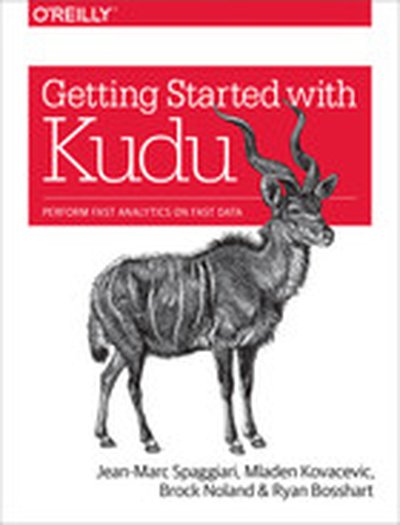
Getting Started with Kudu

Fast data ingestion, serving, and analytics in the Hadoop ecosystem have forced developers and architects to choose solutions using the least common denominator—either fast analytics at the cost of slow data ingestion or fast data ingestion at the cost of slow analytics. There is an answer to this problem. With the Apache Kudu column-oriented data store, you can easily perform fast analytics on fast data. This practical guide shows you how. Begun as an internal project at Cloudera, Kudu is an open source solution compatible with many data processing frameworks in the Hadoop environment. In this book, current and former solutions professionals from Cloudera provide use cases, examples, best practices, and sample code to help you get up to speed with Kudu. Explore Kudu’s high-level design, including how it spreads data across servers Fully administer a Kudu cluster, enable security, and add or remove nodes Learn Kudu’s client-side APIs, including how to integrate Apache Impala, Spark, and other frameworks for data manipulation Examine Kudu’s schema design, including basic concepts and primitives necessary to make your project successful Explore case studies for using Kudu for real-time IoT analytics, predictive modeling, and in combination with another storage engine

Summary

Data integration and routing is a constantly evolving problem and one that is fraught with edge cases and complicated requirements. The Apache NiFi project models this problem as a collection of data flows that are created through a self-service graphical interface. This framework provides a flexible platform for building a wide variety of integrations that can be managed and scaled easily to fit your particular needs. In this episode project members Kevin Doran and Andy LoPresto discuss the ways that NiFi can be used, how to start using it in your environment, and plans for future development. They also explained how it fits in the broad landscape of data tools, the interesting and challenging aspects of the project, and how to build new extensions.

Preamble

Hello and welcome to the Data Engineering Podcast, the show about modern data management When you’re ready to build your next pipeline you’ll need somewhere to deploy it, so check out Linode. With private networking, shared block storage, node balancers, and a 40Gbit network, all controlled by a brand new API you’ve got everything you need to run a bullet-proof data platform. Go to dataengineeringpodcast.com/linode to get a $20 credit and launch a new server in under a minute. Are you struggling to keep up with customer request and letting errors slip into production? Want to try some of the innovative ideas in this podcast but don’t have time? DataKitchen’s DataOps software allows your team to quickly iterate and deploy pipelines of code, models, and data sets while improving quality. Unlike a patchwork of manual operations, DataKitchen makes your team shine by providing an end to end DataOps solution with minimal programming that uses the tools you love. Join the DataOps movement and sign up for the newsletter at datakitchen.io/de today. After that learn more about why you should be doing DataOps by listening to the Head Chef in the Data Kitchen at dataengineeringpodcast.com/datakitchen Go to dataengineeringpodcast.com to subscribe to the show, sign up for the mailing list, read the show notes, and get in touch. Your host is Tobias Macey and today I’m interviewing Kevin Doran and Andy LoPresto about Apache NiFi

Interview

Introduction How did you get involved in the area of data management? Can you start by explaining what NiFi is? What is the motivation for building a GUI as the primary interface for the tool when the current trend is to represent everything as code? How did you get involved with the project?

Where does it sit in the broader landscape of data tools?

Does the data that is processed by NiFi flow through the servers that it is running on (á la Spark/Flink/Kafka), or does it orchestrate actions on other systems (á la Airflow/Oozie)?

How do you manage versioning and backup of data flows, as well as promoting them between environments?

One of the advertised features is tracking provenance for data flows that are managed by NiFi. How is that data collected and managed?

What types of reporting are available across this information?

What are some of the use cases or requirements that lend themselves well to being solved by NiFi?

When is NiFi the wrong choice?

What is involved in deploying and scaling a NiFi installation?

What are some of the system/network parameters that should be considered? What are the scaling limitations?

What have you found to be some of the most interesting, unexpected, and/or challenging aspects of building and maintaining the NiFi project and community? What do you have planned for the future of NiFi?

Contact Info

Kevin Doran

@kevdoran on Twitter Email

Andy LoPresto

@yolopey on Twitter Email

Parting Question

From your perspective, what is the biggest gap in the tooling or technology for data management today?

Links

NiFi HortonWorks DataFlow HortonWorks Apache Software Foundation Apple CSV XML JSON Perl Python Internet Scale Asset Management Documentum DataFlow NSA (National Security Agency) 24 (TV Show) Technology Transfer Program Agile Software Development Waterfall Spark Flink Kafka Oozie Luigi Airflow FluentD ETL (Extract, Transform, and Load) ESB (Enterprise Service Bus) MiNiFi Java C++ Provenance Kubernetes Apache Atlas Data Governance Kibana K-Nearest Neighbors DevOps DSL (Domain Specific Language) NiFi Registry Artifact Repository Nexus NiFi CLI Maven Archetype IoT Docker Backpressure NiFi Wiki TLS (Transport Layer Security) Mozilla TLS Observatory NiFi Flow Design System Data Lineage GDPR (General Data Protection Regulation)

The intro and outro music is from The Hug by The Freak Fandango Orchestra / CC BY-SA Support Data Engineering Podcast
Summary

Data is often messy or incomplete, requiring human intervention to make sense of it before being usable as input to machine learning projects. This is problematic when the volume scales beyond a handful of records. In this episode Dr. Cheryl Martin, Chief Data Scientist for Alegion, discusses the importance of properly labeled information for machine learning and artificial intelligence projects, the systems that they have built to scale the process of incorporating human intelligence in the data preparation process, and the challenges inherent to such an endeavor.

Preamble

Hello and welcome to the Data Engineering Podcast, the show about modern data management When you’re ready to build your next pipeline you’ll need somewhere to deploy it, so check out Linode. With private networking, shared block storage, node balancers, and a 40Gbit network, all controlled by a brand new API you’ve got everything you need to run a bullet-proof data platform. Go to dataengineeringpodcast.com/linode to get a $20 credit and launch a new server in under a minute. Are you struggling to keep up with customer request and letting errors slip into production? Want to try some of the innovative ideas in this podcast but don’t have time? DataKitchen’s DataOps software allows your team to quickly iterate and deploy pipelines of code, models, and data sets while improving quality. Unlike a patchwork of manual operations, DataKitchen makes your team shine by providing an end to end DataOps solution with minimal programming that uses the tools you love. Join the DataOps movement and sign up for the newsletter at datakitchen.io/de today. After that learn more about why you should be doing DataOps by listening to the Head Chef in the Data Kitchen at dataengineeringpodcast.com/datakitchen Go to dataengineeringpodcast.com to subscribe to the show, sign up for the mailing list, read the show notes, and get in touch. Your host is Tobias Macey and today I’m interviewing Cheryl Martin, chief data scientist at Alegion, about data labelling at scale

Interview

Introduction How did you get involved in the area of data management? To start, can you explain the problem space that Alegion is targeting and how you operate? When is it necessary to include human intelligence as part of the data lifecycle for ML/AI projects? What are some of the biggest challenges associated with managing human input to data sets intended for machine usage? For someone who is acting as human-intelligence provider as part of the workforce, what does their workflow look like?

What tools and processes do you have in place to ensure the accuracy of their inputs? How do you prevent bad actors from contributing data that would compromise the trained model?

What are the limitations of crowd-sourced data labels?

When is it beneficial to incorporate domain experts in the process?

When doing data collection from various sources, how do you ensure that intellectual property rights are respected? How do you determine the taxonomies to be used for structuring data sets that are collected, labeled or enriched for your customers?

What kinds of metadata do you track and how is that recorded/transmitted?

Do you think that human intelligence will be a necessary piece of ML/AI forever?

Contact Info

LinkedIn

Parting Question

From your perspective, what is the biggest gap in the tooling or technology for data management today?

Links

Alegion University of Texas at Austin Cognitive Science Labeled Data Mechanical Turk Computer Vision Sentiment Analysis Speech Recognition Taxonomy Feature Engineering

The intro and outro music is from The Hug by The Freak Fandango Orchestra / CC BY-SA Support Data Engineering Podcast
Summary

Collaboration, distribution, and installation of software projects is largely a solved problem, but the same cannot be said of data. Every data team has a bespoke means of sharing data sets, versioning them, tracking related metadata and changes, and publishing them for use in the software systems that rely on them. The CEO and founder of Quilt Data, Kevin Moore, was sufficiently frustrated by this problem to create a platform that attempts to be the means by which data can be as collaborative and easy to work with as GitHub and your favorite programming language. In this episode he explains how the project came to be, how it works, and the many ways that you can start using it today.

Preamble

Hello and welcome to the Data Engineering Podcast, the show about modern data management When you’re ready to build your next pipeline you’ll need somewhere to deploy it, so check out Linode. With private networking, shared block storage, node balancers, and a 40Gbit network, all controlled by a brand new API you’ve got everything you need to run a bullet-proof data platform. Go to dataengineeringpodcast.com/linode to get a $20 credit and launch a new server in under a minute. Are you struggling to keep up with customer request and letting errors slip into production? Want to try some of the innovative ideas in this podcast but don’t have time? DataKitchen’s DataOps software allows your team to quickly iterate and deploy pipelines of code, models, and data sets while improving quality. Unlike a patchwork of manual operations, DataKitchen makes your team shine by providing an end to end DataOps solution with minimal programming that uses the tools you love. Join the DataOps movement and sign up for the newsletter at datakitchen.io/de today. After that learn more about why you should be doing DataOps by listening to the Head Chef in the Data Kitchen at dataengineeringpodcast.com/datakitchen Go to dataengineeringpodcast.com to subscribe to the show, sign up for the mailing list, read the show notes, and get in touch. Your host is Tobias Macey and today I’m interviewing Kevin Moore about Quilt Data, a platform and tooling for packaging, distributing, and versioning data

Interview

Introduction How did you get involved in the area of data management? What is the intended use case for Quilt and how did the project get started? Can you step through a typical workflow of someone using Quilt?

How does that change as you go from a single user to a team of data engineers and data scientists?

Can you describe the elements of what a data package consists of?

What was your criteria for the file formats that you chose?

How is Quilt architected and what have been the most significant changes or evolutions since you first started? How is the data registry implemented?

What are the limitations or edge cases that you have run into? What optimizations have you made to accelerate synchronization of the data to and from the repository?

What are the limitations in terms of data volume, format, or usage? What is your goal with the business that you have built around the project? What are your plans for the future of Quilt?

Contact Info

Email LinkedIn

Parting Question

From your perspective, what is the biggest gap in the tooling or technology for data management today?

Links

Quilt Data GitHub Jobs Reproducible Data Dependencies in Jupyter Reproducible Machine Learning with Jupyter and Quilt Allen Institute: Programmatic Data Access with Quilt Quilt Example: MissingNo Oracle Pandas Jupyter Ycombinator Data.World

Podcast Episode with CTO Bryon Jacob

Kaggle Parquet HDF5 Arrow PySpark Excel Scala Binder Merkle Tree Allen Institute for Cell Science Flask PostGreSQL Docker Airflow Quilt Teams Hive Hive Metastore PrestoDB

Podcast Episode

Netflix Iceberg Kubernetes Helm

The intro and outro music is from The Hug by The Freak Fandango Orchestra / CC BY-SA Support Data Engineering Podcast

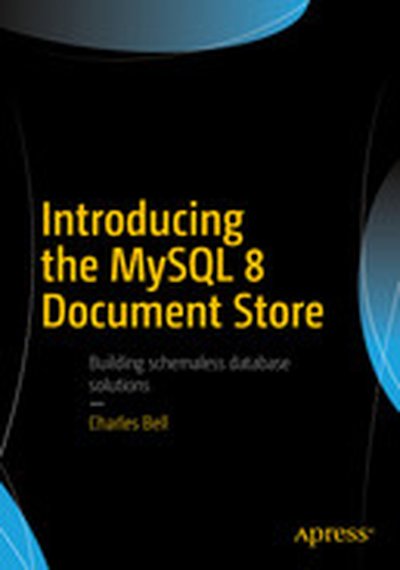
Introducing the MySQL 8 Document Store

Learn the new Document Store feature of MySQL 8 and build applications around a mix of the best features from SQL and NoSQL database paradigms. Don’t allow yourself to be forced into one paradigm or the other, but combine both approaches by using the Document Store. MySQL 8 was designed from the beginning to bridge the gap between NoSQL and SQL. Oracle recognizes that many solutions need the capabilities of both. More specifically, developers need to store objects as loose collections of schema-less documents, but those same developers also need the ability to run structured queries on their data. With MySQL 8, you can do both! Introducing the MySQL 8 Document Store presents new tools and features that make creating a hybrid database solution far easier than ever before. This book covers the vitally important MySQL Document Store, the new X Protocol for developing applications, and a new client shell called the MySQL Shell. Also covered are supporting technologies and concepts such as JSON, schema-less documents, and more. The book gives insight into how features work and how to apply them to get the most out of your MySQL experience. The book covers topics such as: The headline feature in MySQL 8 MySQL's answer to NoSQL New APIs and client protocols What You'll Learn Create NoSQL-style applications by using the Document Store Mix the NoSQL and SQL approaches by using each to its best advantage in a hybrid solution Work with the new X Protocol for application connectivity in MySQL 8 Master the new X Developer Application Programming Interfaces Combine SQL and JSON in the same database and application Migrate existing applications to MySQL Document Store Who This Book Is For Developers and database professionals wanting to learn about the most profound paradigm-changing features of the MySQL 8 Document Store

Summary

Web and mobile analytics are an important part of any business, and difficult to get right. The most frustrating part is when you realize that you haven’t been tracking a key interaction, having to write custom logic to add that event, and then waiting to collect data. Heap is a platform that automatically tracks every event so that you can retroactively decide which actions are important to your business and easily build reports with or without SQL. In this episode Dan Robinson, CTO of Heap, describes how they have architected their data infrastructure, how they build their tracking agents, and the data virtualization layer that enables users to define their own labels.

Preamble

Hello and welcome to the Data Engineering Podcast, the show about modern data management When you’re ready to build your next pipeline you’ll need somewhere to deploy it, so check out Linode. With private networking, shared block storage, node balancers, and a 40Gbit network, all controlled by a brand new API you’ve got everything you need to run a bullet-proof data platform. Go to dataengineeringpodcast.com/linode to get a $20 credit and launch a new server in under a minute. For complete visibility into the health of your pipeline, including deployment tracking, and powerful alerting driven by machine-learning, DataDog has got you covered. With their monitoring, metrics, and log collection agent, including extensive integrations and distributed tracing, you’ll have everything you need to find and fix performance bottlenecks in no time. Go to dataengineeringpodcast.com/datadog today to start your free 14 day trial and get a sweet new T-Shirt. Go to dataengineeringpodcast.com to subscribe to the show, sign up for the mailing list, read the show notes, and get in touch. Your host is Tobias Macey and today I’m interviewing Dan Robinson about Heap and their approach to collecting, storing, and analyzing large volumes of data

Interview

Introduction How did you get involved in the area of data management? Can you start by giving a brief overview of Heap? One of your differentiating features is the fact that you capture every interaction on web and mobile platforms for your customers. How do you prevent the user experience from suffering as a result of network congestion, while ensuring the reliable delivery of that data? Can you walk through the lifecycle of a single event from source to destination and the infrastructure components that it traverses to get there? Data collected in a user’s browser can often be messy due to various browser plugins, variations in runtime capabilities, etc. How do you ensure the integrity and accuracy of that information?

What are some of the difficulties that you have faced in establishing a representation of events that allows for uniform processing and storage?

What is your approach for merging and enriching event data with the information that you retrieve from your supported integrations?

What challenges does that pose in your processing architecture?

What are some of the problems that you have had to deal with to allow for processing and storing such large volumes of data?

How has that architecture changed or evolved over the life of the company? What are some changes that you are anticipating in the near future?

Can you describe your approach for synchronizing customer data with their individual Redshift instances and the difficulties that entails? What are some of the most interesting challenges that you have faced while building the technical and business aspects of Heap? What changes have been necessary as a result of GDPR? What are your plans for the future of Heap?

Contact Info

@danlovesproofs on twitter [email protected] @drob on github heapanalytics.com / @heap on twitter https://heapanalytics.com/blog/category/engineering?utm_source=rss&utm_medium=rss

Parting Question

From your perspective, what is the biggest gap in the tooling or technology for data manageme

Summary

With the increased ease of gaining access to servers in data centers across the world has come the need for supporting globally distributed data storage. With the first wave of cloud era databases the ability to replicate information geographically came at the expense of transactions and familiar query languages. To address these shortcomings the engineers at Cockroach Labs have built a globally distributed SQL database with full ACID semantics in Cockroach DB. In this episode Peter Mattis, the co-founder and VP of Engineering at Cockroach Labs, describes the architecture that underlies the database, the challenges they have faced along the way, and the ways that you can use it in your own environments today.

Preamble

Hello and welcome to the Data Engineering Podcast, the show about modern data management When you’re ready to build your next pipeline you’ll need somewhere to deploy it, so check out Linode. With private networking, shared block storage, node balancers, and a 40Gbit network, all controlled by a brand new API you’ve got everything you need to run a bullet-proof data platform. Go to dataengineeringpodcast.com/linode to get a $20 credit and launch a new server in under a minute. For complete visibility into the health of your pipeline, including deployment tracking, and powerful alerting driven by machine-learning, DataDog has got you covered. With their monitoring, metrics, and log collection agent, including extensive integrations and distributed tracing, you’ll have everything you need to find and fix performance bottlenecks in no time. Go to dataengineeringpodcast.com/datadog today to start your free 14 day trial and get a sweet new T-Shirt. Go to dataengineeringpodcast.com to subscribe to the show, sign up for the mailing list, read the show notes, and get in touch. Your host is Tobias Macey and today I’m interviewing Peter Mattis about CockroachDB, the SQL database for global cloud services

Interview

Introduction How did you get involved in the area of data management? What was the motivation for creating CockroachDB and building a business around it? Can you describe the architecture of CockroachDB and how it supports distributed ACID transactions?

What are some of the tradeoffs that are necessary to allow for georeplicated data with distributed transactions? What are some of the problems that you have had to work around in the RAFT protocol to provide reliable operation of the clustering mechanism?

Go is an unconventional language for building a database. What are the pros and cons of that choice? What are some of the common points of confusion that users of CockroachDB have when operating or interacting with it?

What are the edge cases and failure modes that users should be aware of?

I know that your SQL syntax is PostGreSQL compatible, so is it possible to use existing ORMs unmodified with CockroachDB?

What are some examples of extensions that are specific to CockroachDB?

What are some of the most interesting uses of CockroachDB that you have seen? When is CockroachDB the wrong choice? What do you have planned for the future of CockroachDB?

Contact Info

Peter

LinkedIn petermattis on GitHub @petermattis on Twitter

Cockroach Labs

@CockroackDB on Twitter Website cockroachdb on GitHub

Parting Question

From your perspective, what is the biggest gap in the tooling or technology for data management today?

Links

CockroachDB Cockroach Labs SQL Google Bigtable Spanner NoSQL RDBMS (Relational Database Management System) “Big Iron” (colloquial term for mainframe computers) RAFT Consensus Algorithm Consensus MVCC (Multiversion Concurrency Control) Isolation Etcd GDPR Golang C++ Garbage Collection Metaprogramming Rust Static Linking Docker Kubernetes CAP Theorem PostGreSQL ORM (Object Relational Mapping) Information Schema PG Catalog Interleaved Tables Vertica Spark Change Data Capture

The intro and outro music is from The Hug by The Freak Fandan

Summary

Using a multi-model database in your applications can greatly reduce the amount of infrastructure and complexity required. ArangoDB is a storage engine that supports documents, dey/value, and graph data formats, as well as being fast and scalable. In this episode Jan Steeman and Jan Stücke explain where Arango fits in the crowded database market, how it works under the hood, and how you can start working with it today.

Preamble

Hello and welcome to the Data Engineering Podcast, the show about modern data management When you’re ready to build your next pipeline you’ll need somewhere to deploy it, so check out Linode. With private networking, shared block storage, node balancers, and a 40Gbit network, all controlled by a brand new API you’ve got everything you need to run a bullet-proof data platform. Go to dataengineeringpodcast.com/linode to get a $20 credit and launch a new server in under a minute. Go to dataengineeringpodcast.com to subscribe to the show, sign up for the newsletter, read the show notes, and get in touch. Your host is Tobias Macey and today I’m interviewing Jan Stücke and Jan Steeman about ArangoDB, a multi-model distributed database for graph, document, and key/value storage.

Interview

Introduction How did you get involved in the area of data management? Can you give a high level description of what ArangoDB is and the motivation for creating it?

What is the story behind the name?

How is ArangoDB constructed?

How does the underlying engine store the data to allow for the different ways of viewing it?

What are some of the benefits of multi-model data storage?

When does it become problematic?

For users who are accustomed to a relational engine, how do they need to adjust their approach to data modeling when working with Arango? How does it compare to OrientDB? What are the options for scaling a running system?

What are the limitations in terms of network architecture or data volumes?

One of the unique aspects of ArangoDB is the Foxx framework for embedding microservices in the data layer. What benefits does that provide over a three tier architecture?

What mechanisms do you have in place to prevent data breaches from security vulnerabilities in the Foxx code? What are some of the most interesting or surprising uses of this functionality that you have seen?

What are some of the most challenging technical and business aspects of building and promoting ArangoDB? What do you have planned for the future of ArangoDB?

Contact Info

Jan Steemann

jsteemann on GitHub @steemann on Twitter

Parting Question

From your perspective, what is the biggest gap in the tooling or technology for data management today?

Links

ArangoDB Köln Multi-model Database Graph Algorithms Apache 2 C++ ArangoDB Foxx Raft Protocol Target Partners RocksDB AQL (ArangoDB Query Language) OrientDB PostGreSQL OrientDB Studio Google Spanner 3-Tier Architecture Thomson-Reuters Arango Search Dell EMC Google S2 Index ArangoDB Geographic Functionality JSON Schema

The intro and outro music is from The Hug by The Freak Fandango Orchestra / CC BY-SA Support Data Engineering Podcast

Summary

Building an ETL pipeline is a common need across businesses and industries. It’s easy to get one started but difficult to manage as new requirements are added and greater scalability becomes necessary. Rather than duplicating the efforts of other engineers it might be best to use a hosted service to handle the plumbing so that you can focus on the parts that actually matter for your business. In this episode CTO and co-founder of Alooma, Yair Weinberger, explains how the platform addresses the common needs of data collection, manipulation, and storage while allowing for flexible processing. He describes the motivation for starting the company, how their infrastructure is architected, and the challenges of supporting multi-tenancy and a wide variety of integrations.

Preamble

Hello and welcome to the Data Engineering Podcast, the show about modern data management When you’re ready to build your next pipeline you’ll need somewhere to deploy it, so check out Linode. With private networking, shared block storage, node balancers, and a 40Gbit network, all controlled by a brand new API you’ve got everything you need to run a bullet-proof data platform. Go to dataengineeringpodcast.com/linode to get a $20 credit and launch a new server in under a minute. For complete visibility into the health of your pipeline, including deployment tracking, and powerful alerting driven by machine-learning, DataDog has got you covered. With their monitoring, metrics, and log collection agent, including extensive integrations and distributed tracing, you’ll have everything you need to find and fix performance bottlenecks in no time. Go to dataengineeringpodcast.com/datadog today to start your free 14 day trial and get a sweet new T-Shirt. Go to dataengineeringpodcast.com to subscribe to the show, sign up for the newsletter, read the show notes, and get in touch. Your host is Tobias Macey and today I’m interviewing Yair Weinberger about Alooma, a company providing data pipelines as a service

Interview

Introduction How did you get involved in the area of data management? What is Alooma and what is the origin story? How is the Alooma platform architected?

I want to go into stream VS batch here What are the most challenging components to scale?

How do you manage the underlying infrastructure to support your SLA of 5 nines? What are some of the complexities introduced by processing data from multiple customers with various compliance requirements?

How do you sandbox user’s processing code to avoid security exploits?

What are some of the potential pitfalls for automatic schema management in the target database? Given the large number of integrations, how do you maintain the

What are some challenges when creating integrations, isn’t it simply conforming with an external API?

For someone getting started with Alooma what does the workflow look like? What are some of the most challenging aspects of building and maintaining Alooma? What are your plans for the future of Alooma?

Contact Info

LinkedIn @yairwein on Twitter

Parting Question

From your perspective, what is the biggest gap in the tooling or technology for data management today?

Links

Alooma Convert Media Data Integration ESB (Enterprise Service Bus) Tibco Mulesoft ETL (Extract, Transform, Load) Informatica Microsoft SSIS OLAP Cube S3 Azure Cloud Storage Snowflake DB Redshift BigQuery Salesforce Hubspot Zendesk Spark The Log: What every software engineer should know about real-time data’s unifying abstraction by Jay Kreps RDBMS (Relational Database Management System) SaaS (Software as a Service) Change Data Capture Kafka Storm Google Cloud PubSub Amazon Kinesis Alooma Code Engine Zookeeper Idempotence Kafka Streams Kubernetes SOC2 Jython Docker Python Javascript Ruby Scala PII (Personally Identifiable Information) GDPR (General Data Protection Regulation) Amazon EMR (Elastic Map Reduce) Sequoia Capital Lightspeed Investors Redis Aerospike Cassandra MongoDB

The intro and outro music is from The Hug by The Freak Fandango Orchestra / CC BY-SA Support Data Engineering Podcast